WO2009154185A1 - インク組成物、インクジェット記録用インク組成物、インクセット、インクカートリッジ、インクジェット記録方法及び記録物 - Google Patents
インク組成物、インクジェット記録用インク組成物、インクセット、インクカートリッジ、インクジェット記録方法及び記録物 Download PDFInfo
- Publication number
- WO2009154185A1 WO2009154185A1 PCT/JP2009/060902 JP2009060902W WO2009154185A1 WO 2009154185 A1 WO2009154185 A1 WO 2009154185A1 JP 2009060902 W JP2009060902 W JP 2009060902W WO 2009154185 A1 WO2009154185 A1 WO 2009154185A1
- Authority
- WO
- WIPO (PCT)
- Prior art keywords
- group
- general formula
- ink composition
- ink
- humectant
- Prior art date
- Legal status (The legal status is an assumption and is not a legal conclusion. Google has not performed a legal analysis and makes no representation as to the accuracy of the status listed.)
- Ceased
Links
- 0 CC*c(c(N=NCC)c1N)n[n]1-c1nc(*)nc(-[n]2nc(*)c(N=N*)c2N)n1 Chemical compound CC*c(c(N=NCC)c1N)n[n]1-c1nc(*)nc(-[n]2nc(*)c(N=N*)c2N)n1 0.000 description 1
Classifications
-
- C—CHEMISTRY; METALLURGY
- C09—DYES; PAINTS; POLISHES; NATURAL RESINS; ADHESIVES; COMPOSITIONS NOT OTHERWISE PROVIDED FOR; APPLICATIONS OF MATERIALS NOT OTHERWISE PROVIDED FOR
- C09B—ORGANIC DYES OR CLOSELY-RELATED COMPOUNDS FOR PRODUCING DYES, e.g. PIGMENTS; MORDANTS; LAKES
- C09B44/00—Azo dyes containing onium groups
- C09B44/10—Azo dyes containing onium groups containing cyclammonium groups attached to an azo group by a carbon atom of the ring system
- C09B44/103—Azo dyes containing onium groups containing cyclammonium groups attached to an azo group by a carbon atom of the ring system characterised by the coupling component being a heterocyclic compound
- C09B44/105—Azo dyes containing onium groups containing cyclammonium groups attached to an azo group by a carbon atom of the ring system characterised by the coupling component being a heterocyclic compound derived from pyridine, pyridone
-
- C—CHEMISTRY; METALLURGY
- C09—DYES; PAINTS; POLISHES; NATURAL RESINS; ADHESIVES; COMPOSITIONS NOT OTHERWISE PROVIDED FOR; APPLICATIONS OF MATERIALS NOT OTHERWISE PROVIDED FOR
- C09B—ORGANIC DYES OR CLOSELY-RELATED COMPOUNDS FOR PRODUCING DYES, e.g. PIGMENTS; MORDANTS; LAKES
- C09B43/00—Preparation of azo dyes from other azo compounds
- C09B43/12—Preparation of azo dyes from other azo compounds by acylation of amino groups
- C09B43/136—Preparation of azo dyes from other azo compounds by acylation of amino groups with polyfunctional acylating agents
- C09B43/16—Preparation of azo dyes from other azo compounds by acylation of amino groups with polyfunctional acylating agents linking amino-azo or cyanuric acid residues
-
- C—CHEMISTRY; METALLURGY
- C09—DYES; PAINTS; POLISHES; NATURAL RESINS; ADHESIVES; COMPOSITIONS NOT OTHERWISE PROVIDED FOR; APPLICATIONS OF MATERIALS NOT OTHERWISE PROVIDED FOR
- C09B—ORGANIC DYES OR CLOSELY-RELATED COMPOUNDS FOR PRODUCING DYES, e.g. PIGMENTS; MORDANTS; LAKES
- C09B56/00—Azo dyes containing other chromophoric systems
- C09B56/08—Styryl-azo dyes
-
- C—CHEMISTRY; METALLURGY
- C09—DYES; PAINTS; POLISHES; NATURAL RESINS; ADHESIVES; COMPOSITIONS NOT OTHERWISE PROVIDED FOR; APPLICATIONS OF MATERIALS NOT OTHERWISE PROVIDED FOR
- C09B—ORGANIC DYES OR CLOSELY-RELATED COMPOUNDS FOR PRODUCING DYES, e.g. PIGMENTS; MORDANTS; LAKES
- C09B56/00—Azo dyes containing other chromophoric systems
- C09B56/20—Triazene-azo dyes
-
- C—CHEMISTRY; METALLURGY
- C09—DYES; PAINTS; POLISHES; NATURAL RESINS; ADHESIVES; COMPOSITIONS NOT OTHERWISE PROVIDED FOR; APPLICATIONS OF MATERIALS NOT OTHERWISE PROVIDED FOR
- C09B—ORGANIC DYES OR CLOSELY-RELATED COMPOUNDS FOR PRODUCING DYES, e.g. PIGMENTS; MORDANTS; LAKES
- C09B67/00—Influencing the physical, e.g. the dyeing or printing properties of dyestuffs without chemical reactions, e.g. by treating with solvents grinding or grinding assistants, coating of pigments or dyes; Process features in the making of dyestuff preparations; Dyestuff preparations of a special physical nature, e.g. tablets, films
- C09B67/0033—Blends of pigments; Mixtured crystals; Solid solutions
- C09B67/0041—Blends of pigments; Mixtured crystals; Solid solutions mixtures containing one azo dye
-
- C—CHEMISTRY; METALLURGY
- C09—DYES; PAINTS; POLISHES; NATURAL RESINS; ADHESIVES; COMPOSITIONS NOT OTHERWISE PROVIDED FOR; APPLICATIONS OF MATERIALS NOT OTHERWISE PROVIDED FOR
- C09B—ORGANIC DYES OR CLOSELY-RELATED COMPOUNDS FOR PRODUCING DYES, e.g. PIGMENTS; MORDANTS; LAKES
- C09B67/00—Influencing the physical, e.g. the dyeing or printing properties of dyestuffs without chemical reactions, e.g. by treating with solvents grinding or grinding assistants, coating of pigments or dyes; Process features in the making of dyestuff preparations; Dyestuff preparations of a special physical nature, e.g. tablets, films
- C09B67/0033—Blends of pigments; Mixtured crystals; Solid solutions
- C09B67/0046—Mixtures of two or more azo dyes
- C09B67/0055—Mixtures of two or more disazo dyes
-
- C—CHEMISTRY; METALLURGY
- C09—DYES; PAINTS; POLISHES; NATURAL RESINS; ADHESIVES; COMPOSITIONS NOT OTHERWISE PROVIDED FOR; APPLICATIONS OF MATERIALS NOT OTHERWISE PROVIDED FOR
- C09B—ORGANIC DYES OR CLOSELY-RELATED COMPOUNDS FOR PRODUCING DYES, e.g. PIGMENTS; MORDANTS; LAKES
- C09B7/00—Indigoid dyes
-
- C—CHEMISTRY; METALLURGY
- C09—DYES; PAINTS; POLISHES; NATURAL RESINS; ADHESIVES; COMPOSITIONS NOT OTHERWISE PROVIDED FOR; APPLICATIONS OF MATERIALS NOT OTHERWISE PROVIDED FOR
- C09D—COATING COMPOSITIONS, e.g. PAINTS, VARNISHES OR LACQUERS; FILLING PASTES; CHEMICAL PAINT OR INK REMOVERS; INKS; CORRECTING FLUIDS; WOODSTAINS; PASTES OR SOLIDS FOR COLOURING OR PRINTING; USE OF MATERIALS THEREFOR
- C09D11/00—Inks
- C09D11/30—Inkjet printing inks
- C09D11/32—Inkjet printing inks characterised by colouring agents
- C09D11/328—Inkjet printing inks characterised by colouring agents characterised by dyes
-
- Y—GENERAL TAGGING OF NEW TECHNOLOGICAL DEVELOPMENTS; GENERAL TAGGING OF CROSS-SECTIONAL TECHNOLOGIES SPANNING OVER SEVERAL SECTIONS OF THE IPC; TECHNICAL SUBJECTS COVERED BY FORMER USPC CROSS-REFERENCE ART COLLECTIONS [XRACs] AND DIGESTS
- Y10—TECHNICAL SUBJECTS COVERED BY FORMER USPC
- Y10T—TECHNICAL SUBJECTS COVERED BY FORMER US CLASSIFICATION
- Y10T428/00—Stock material or miscellaneous articles
- Y10T428/24—Structurally defined web or sheet [e.g., overall dimension, etc.]
- Y10T428/24802—Discontinuous or differential coating, impregnation or bond [e.g., artwork, printing, retouched photograph, etc.]
Definitions
- the compound represented by the general formula (1) contained in the ink composition does not decompose during storage, is stable for a long period of time, and the printed image by the ink composition has light resistance and ozone resistance.
- the present invention relates to an excellent ink composition, an ink composition for ink jet recording using the ink composition, an ink set, an ink cartridge, an ink jet recording method, and a recorded matter.
- a material for forming a color image has been mainly used as an image recording material, and specifically, an ink jet recording material, a thermal transfer recording material, an electrophotographic recording material, a transfer halogen.
- Silver halide photosensitive materials, printing inks, recording pens and the like are actively used.
- Patent Document 1 In recent years, the fastness of monochromatic images to light, heat, and active gases in the environment (oxidizing gases such as NOx and ozone as well as SOx) can be improved by increasing the potential of dye molecules.
- Patent Document 2 As required performance for the ink composition, for example, pigment deposition from the ink composition or freezing of the ink composition (Patent Document 2), curling prevention when the ink composition is printed on a substrate (Patent Document 3), In addition to preventing the ink composition from decaying (Patent Document 4), the prevention of dye bleeding during printing (Patent Document 5), and the like, have been solved by using various additives in the ink composition. It was.
- Patent Document 6 attempts have been made to improve the performance of the dye and the storage stability of the ink composition with additives, but the dissolution stabilization of the dye has been improved.
- Patent Documents 7, 8, and 9 it does not satisfy the long-term storage stability of the ink composition.
- Japanese Unexamined Patent Publication No. 2007-63520 Japanese Laid-Open Patent Publication No. 2001-271013 Japanese Unexamined Patent Publication No. 6-240189 Japanese Laid-Open Patent Publication No. 6-234943 Japanese Unexamined Patent Publication No. 6-136309 Japanese Unexamined Patent Publication No. 2007-70566 Japanese Unexamined Patent Publication No. 2007-191644 Japanese Unexamined Patent Publication No. 2007-302810 Japanese Unexamined Patent Publication No. 2008-31261
- the problem to be solved by the present invention is that when a yellow ink composition is used, it has a suitably adjusted hue, and the hue does not change during storage of the ink composition, for example in a car in summer.
- the high-strength, high-potential dyes described above are excellent in fastness of monochromatic images against light, heat, and active gases in the environment (oxidizing gases such as NOx and ozone, as well as SOx), while being rich in electrons. It has become a new problem that it is easily attacked by nucleophilic species, promotes decomposition by an additive contained in the ink composition, and causes discoloration or discoloration. Presuming from the knowledge of the present inventors, as a method for maintaining the long-term storage stability of the ink composition, the potential of the dye molecule is lowered, the associative property is increased by the intermolecular interaction of the dye, and the solution stability is high. Mixing the compounds.
- the method of lowering the potential of the dye deteriorates the value as a product because the fastness of the dye to light and ozone gas deteriorates. Further, in order to enhance the association of the dye, it is carried out from the molecular design of the dye, and time and labor are required.
- the present inventor analyzed the decomposition of the high-potential dye in an ink composition containing a high-potential dye excellent in resistance to light, heat, and an active gas in the environment. It has been found that a compound having a hydroxyl group (particularly a humectant) is particularly related to the decomposition of the high potential dye. In particular, when a compound having three or more hydroxyl groups is present in a specific amount or more in the ink composition, the decomposition of the high-potential dye is remarkable, and the high-potential dye is also present when the high-potential dye concentration in the ink composition is small. It was found that the degradation of the dye was significant.
- the dye is positively associated and the dye aggregate and the humectant are not brought close to each other by steric repulsion.
- the inventors have intensively searched for a coloring material that has a kind of moisturizing agent, an amount of the moisturizing agent, an appropriate association promoting effect, and does not impair the performance as an ink composition by mixing.
- the required problem can be solved by mixing a color material having a specific structure with the high-potential dye or adjusting the type and amount of a compound having a hydroxyl group, particularly a humectant.
- the storage stability of the ink composition is improved, and even when an ink composition stored for a long period of time is used, it is possible to print an image without applying a load to the printer head in terms of ejection properties, and printing using the ink composition
- the inventors have found that the color reproduction range of an image object, light fastness and ozone gas fastness are excellent, and have completed the present invention.
- the problems of the present invention can be solved by the following means.
- An ink composition comprising a compound represented by the following general formula (1), a component (C), and a humectant, wherein the content of the compound represented by the general formula (1) is 0.1% by mass or more
- the content of the humectant having less than 7.0% by mass and having 3 or more hydroxyl groups is 10.0% by mass or less, and the humectant having 3 or more hydroxyl groups / expressed by the general formula (1)
- An ink composition, wherein the molar ratio of the compound is less than 30.0.
- Ar 1 and Ar 2 each independently represent an aromatic hydrocarbon ring group, a non-aromatic hydrocarbon ring group, an aromatic heterocyclic group or a non-aromatic heterocyclic group
- a 1 And A 2 each independently represents a hydrogen atom or a substituent, and this substituent may further have a substituent.
- Y represents —OM or —NR 1 R 2
- M represents a hydrogen atom or a metal ion
- R 1 and R 2 each independently represent a hydrogen atom, an alkyl group, an alkenyl group, an alkynyl group, an aralkyl group, an aryl group Or represents a heterocyclic group.
- Component (C) is C.I. I.
- Direct Yellow 59, 86, 132, 173, C.I. I. It is at least one selected from Acid Yellow 23 and compounds represented by the following general formulas (2) to (6).
- M in the general formulas (2) to (5) represents a hydrogen atom or a metal ion.
- R in the general formula (2) represents a hydrogen atom or a methyl group.
- M in the general formula (6) '- represents a halogen ion, an inorganic anion or an organic anion.
- ⁇ 7> The ink composition according to any one of ⁇ 1> to ⁇ 6>, wherein the content of the humectant having three or more hydroxyl groups is less than 25.0% by mass of the total humectant.
- ⁇ 8> The ink composition according to any one of ⁇ 1> to ⁇ 7>, wherein the content of the humectant having three or more hydroxyl groups is less than 20.0% by mass of the total humectant.
- ⁇ 9> The ink composition according to any one of ⁇ 1> to ⁇ 8>, wherein the content of the humectant having three or more hydroxyl groups is less than 15.0% by mass of the total humectant.
- a 1, A 2 and Y have the same meanings as A 1, A 2 and Y in the general formula (1).
- Y 1 and Y 2 each independently represent a hydrogen atom or a substituent
- X 1 and X 2 each independently represent an electron-withdrawing group having a Hammett ⁇ p value of 0.20 or more.
- Z 1 and Z 2 each independently represent a hydrogen atom, an alkyl group, an alkenyl group, an alkynyl group, an aralkyl group, an aryl group, or a heterocyclic group.
- a 1, A 2, X 1, X 2, Y 1 and Y 2 in the general formula (8) A 1, A 2 , X 1, and X 2, Y 1 and Y 2 It is synonymous.
- W 11 , W 12 , W 13 , W 14 , W 15 , W 21 , W 22 , W 23 , W 24 and W 25 each independently represent a hydrogen atom or a substituent, and M represents a hydrogen atom or a metal ion.
- a 1, A 2 and Y have the same meanings as A 1, A 2 and Y in the general formula (1).
- D 1 and D 2 each independently represents a hydrogen atom or a substituent.
- a 1, A 2, D 1 and D 2 have the same meanings as A 1, A 2, D 1 and D 2 in the general formula (10).
- M represents a hydrogen atom or a metal ion.
- ⁇ 16> ⁇ 1> to ⁇ 15> An ink composition for ink jet recording using the ink composition according to any one of ⁇ 15>.
- An ink set for use in an ink jet recording method comprising the ink composition according to any one of ⁇ 1> to ⁇ 16> as a constituent component.
- ⁇ 18> ⁇ 1> to ⁇ 15> An ink composition for ink jet recording using the ink composition according to any one of ⁇ 15>.
- ⁇ 19> An ink cartridge comprising the ink set according to ⁇ 17> integrally or independently.
- ⁇ 20> An inkjet recording method for performing recording by discharging droplets of an ink composition and attaching the droplets to a recording medium, wherein the ink set according to ⁇ 17> or ⁇ 18> or ⁇ 19> An ink-jet recording method comprising recording using the ink cartridge described above.
- ⁇ 21> A recorded matter printed by the inkjet recording method according to ⁇ 20>.
- an ink composition that has an excellent yellow hue and improved decomposition of the dye even when stored in a high temperature environment.
- an ink composition for inkjet recording that gives a printed image excellent in light fastness and ozone gas fastness.
- the ink composition of the present invention is an ink composition comprising a compound represented by the following general formula (1), a component (C), and a humectant, and containing the compound represented by the general formula (1)
- the moisturizer having a rate of 0.1% by mass or more and less than 7.0% by mass and having 3 or more hydroxyl groups is 10.0% by mass or less and having 3 or more hydroxyl groups /
- the molar ratio of the compound represented by the general formula (1) is less than 30.0.
- Hammett's substituent constant ⁇ p value used in the present specification will be described briefly.
- Hammett's rule is a method for determining the effect of substituents on the reaction or equilibrium of benzene derivatives.
- Substituent constants determined by Hammett's rule include a ⁇ p value and a ⁇ m value, and these values can be found in many general books.
- each substituent is limited or explained by Hammett's substituent constant ⁇ p, which means that it is limited only to a substituent having a known value that can be found in the above-mentioned book.
- ⁇ p Hammett's substituent constant
- the compounds represented by the general formulas (1) and (8) to (11) of the present invention are not benzene derivatives, the ⁇ p value is used as a scale indicating the electronic effect of the substituent regardless of the substitution position. In the present invention, the ⁇ p value will be used in this sense.
- Ar 1 and Ar 2 each independently represents an aromatic hydrocarbon ring group, a non-aromatic hydrocarbon ring group, an aromatic heterocyclic group or a non-aromatic heterocyclic group.
- a 1 and A 2 each independently represents a hydrogen atom or a substituent, and this substituent may further have a substituent.
- Y represents —OM or —NR 1 R 2
- M represents a hydrogen atom or a metal ion
- R 1 and R 2 each independently represents a hydrogen atom or an alkyl group, an alkenyl group, an alkynyl group, an aralkyl group, an aryl group Or represents a heterocyclic group.
- Ar 1 and Ar 2 represent an aromatic hydrocarbon ring group, a non-aromatic hydrocarbon ring group, an aromatic heterocyclic group or a non-aromatic heterocyclic group, and even if it is a single ring, another ring is condensed. You may do it.
- Each of the rings may have a substituent, and examples of the substituent include a substituent (SUB) described later.
- the substituent include a substituent (SUB) described later.
- As an aromatic hydrocarbon ring group the aryl group as described in the below-mentioned substituent (SUB) is mentioned.
- the non-aromatic hydrocarbon ring group include cycloalkyl groups and bicycloalkyl groups described in Substituents (SUB) described later.
- non-aromatic heterocyclic group examples include piperidyl group, piperidino group, morpholinyl group, morpholino group and the like.
- Ar 1 and Ar 2 are preferably aromatic heterocyclic groups, more preferably nitrogen-containing 5- to 7-membered aromatic heterocyclic groups, and 5- to 6-membered aromatic heterocyclic groups are preferable.
- Ar 1 and Ar 2 include phenyl group, imidazolyl group, benzimidazolyl group, pyrazolyl group, benzopyrazolyl group, triazolyl group, thiazolyl group, benzothiazolyl group, isothiazolyl group, benzoisothiazolyl group, oxazolyl group, benzoxayl group Zolyl, thiadiazolyl, pyrrolyl, benzopyrrolyl, indolyl, isoxazolyl, benzoisoxazolyl, thiophenyl, benzothiophenyl, furanyl, benzofuranyl, pyridinyl, quinolinyl, isoquinolinyl, pyridazinyl Group, pyrimidinyl group, pyrazinyl group, cinnolinyl group, phthalazinyl group, quinazolinyl group, quinoxalinyl group, or tri
- Ar 1 and Ar 2 are more preferably a pyridinyl group, pyrimidinyl group, pyridazinyl group, pyrrolyl group, imidazolyl group, pyrazolyl group, triazolyl group, oxazolyl group, isoxazolyl group, thiazolyl group, isothiazolyl group, or thiadiazolyl group, and more preferably Examples are a pyrazolyl group, a thiazolyl group, an isothiazolyl group, or a thiadiazolyl group. Particularly preferred is a pyrazolyl group or a thiadiazolyl group.
- These groups may further have a substituent.
- Ar 1 and Ar 2 may be substituted with a halogen atom, alkyl group, alkenyl group, alkynyl group, aralkyl group, aryl group, heterocyclic group, cyano group, hydroxy group, nitro group, carboxyl group, alkoxy group, aryl.
- halogen primitive an alkyl group, an aryl group, a heterocyclic group, a cyano group, an amino group, an acylamino group, and an alkyl or arylsulfonyl group
- alkyl group, an aryl group, a cyano group, —SO 2 CH 3 and —SO 2 Ph More preferred are a halogen primitive, an alkyl group, an aryl group, a heterocyclic group, a cyano group, an amino group, an acylamino group, and an alkyl or arylsulfonyl group, and more preferred are an alkyl group, an aryl group, a cyano group, —SO 2 CH 3 and —SO 2 Ph.
- Ar 1 and Ar 2 are preferably a pyrazolyl group, and the substituent is an alkyl group, an aryl group, a cyano group, —SO 2 CH 3 or —SO 2 Ph, and most preferably the substituent of the pyrazolyl group is an aryl group Or a cyano group.
- Ar 1 and Ar 2 are preferably a thiadiazolyl group, and the substituent is selected from an alkyl group, a phenyl group, an alkoxy group, a thioalkoxy group, a phenoxy group, an alkylthio group, an arylthio group, an alkylamino group, and an arylamino group.
- the selected group is preferably an alkyl group, a phenyl group, an alkylthio group, an arylthio group, an alkylamino group, or an arylamino group, more preferably an alkyl group or an aryl group.
- halogen atom examples include a fluorine atom, a chlorine atom, a bromine atom, and an iodine atom.
- alkyl group examples include linear, branched, and cyclic substituted or unsubstituted alkyl groups, and also include cycloalkyl groups, bicycloalkyl groups, and tricyclo structures having many ring structures.
- An alkyl group (for example, an alkyl group of an alkoxy group or an alkylthio group) in a substituent described below also represents such an alkyl group.
- the alkyl group is preferably an alkyl group having 1 to 30 carbon atoms, excluding substituents, more preferably an alkyl group having 1 to 20 carbon atoms, and substitution or substitution having 1 to 15 carbon atoms.
- An unsubstituted alkyl group is preferred.
- Examples thereof include a methyl group, an ethyl group, an n-propyl group, an isopropyl group, a t-butyl group, an n-octyl group, an eicosyl group, a 2-chloroethyl group, a 2-cyanoethyl group, and a 2-ethylhexyl group.
- the cycloalkyl group is preferably a substituted or unsubstituted cycloalkyl group having 3 to 30 carbon atoms, and more preferably a cycloalkyl group having 3 to 20 carbon atoms, excluding the substituent. More preferred are 3 to 15 cycloalkyl groups.
- the cycloalkyl group include a cyclohexyl group, a cyclopentyl group, a 4-n-dodecylcyclohexyl group, etc.
- the bicycloalkyl group is preferably a substituent having 5 to 30 carbon atoms or a substituent or a substituent.
- An unsubstituted bicycloalkyl group is preferable, a bicycloalkyl group having 5 to 20 carbon atoms is more preferable, and a bicycloalkyl group having 5 to 15 carbon atoms is still more preferable.
- a monovalent group obtained by removing one hydrogen atom from a bicycloalkane having 5 to 30 carbon atoms such as a bicyclo [1,2,2] heptan-2-yl group, bicyclo [2,2,2] octane-3 -Yl group and the like.
- substituents include a hydroxy group, an alkoxy group, a cyano group, a halogen atom, and an ionic hydrophilic group.
- the aryl group is substituted and does not include an alkyl group (aralkyl group).
- alkenyl group examples include linear, branched, and cyclic substituted or unsubstituted alkenyl groups, including cycloalkenyl groups and bicycloalkenyl groups.
- the alkenyl group is preferably substituted or unsubstituted having 2 to 30 carbon atoms, more preferably 2 to 20 carbon atoms, and still more preferably 2 to 15 carbon atoms, excluding the substituent of the alkenyl group.
- Alkenyl groups such as vinyl group, allyl group, prenyl group, geranyl group, oleyl group, etc.
- the cycloalkenyl group preferably has 3 to 30 carbon atoms in a state where the substituent of the cycloalkenyl group is removed. More preferably, it is a substituted or unsubstituted cycloalkenyl group having 3 to 20 carbon atoms, more preferably 3 to 15 carbon atoms. That is, a monovalent group obtained by removing one hydrogen atom of a cycloalkene having 3 to 30 carbon atoms, for example, a 2-cyclopenten-1-yl group, a 2-cyclohexen-1-yl group, etc.
- the substituent include a hydroxy group, an alkoxy group, a cyano group, a halogen atom, and an ionic hydrophilic group.
- the alkynyl group is preferably a substituted or unsubstituted alkynyl group having 2 to 30 carbon atoms, more preferably 2 to 20 carbon atoms, still more preferably 2 to 15 carbon atoms excluding the substituent, for example, an ethynyl group, A propargyl group, a trimethylsilylethynyl group, etc. are mentioned.
- the substituent include a hydroxy group, an alkoxy group, a cyano group, a halogen atom, and an ionic hydrophilic group.
- the aralkyl group includes an aralkyl group having a substituent and an unsubstituted aralkyl group.
- a substituted or unsubstituted aralkyl group having 7 to 30, more preferably 7 to 20, and further preferably 7 to 15 carbon atoms when a substituent is excluded is preferable.
- the aralkyl group include a benzyl group and a 2-phenethyl group.
- the substituent include a hydroxy group, an alkoxy group, a cyano group, a halogen atom, and an ionic hydrophilic group.
- the aryl group is preferably a substituted or unsubstituted aryl group having 6 to 30 carbon atoms, more preferably 6 to 20 carbon atoms, and still more preferably 6 to 15 carbon atoms, excluding substituents.
- substituents include a phenyl group, a p-tolyl group, a naphthyl group, an m-chlorophenyl group, an o-hexadecanoylaminophenyl group.
- substituent include an alkyl group, an aryl group, a hydroxy group, an alkoxy group, a cyano group, a halogen atom, and an ionic hydrophilic group.
- the heterocyclic group is preferably a monovalent group obtained by removing one hydrogen atom from a 5- or 6-membered substituted or unsubstituted aromatic or non-aromatic heterocyclic compound, and more preferably a heterocyclic ring. It is a 5- or 6-membered aromatic heterocyclic group having 2 to 30 carbon atoms, more preferably 2 to 20 carbon atoms, and still more preferably 2 to 15 carbon atoms, excluding the substituent of the group. Examples include 2-furyl group, 2-thienyl group, 2-pyrimidinyl group, 2-benzothiazolyl group and the like. Examples of the substituent include an alkyl group, an aryl group, a hydroxy group, an alkoxy group, a cyano group, a halogen atom, and an ionic hydrophilic group.
- the alkoxy group preferably represents a substituted or unsubstituted alkoxy group having 1 to 30 carbon atoms, more preferably 1 to 20 carbon atoms, still more preferably 1 to 15 carbon atoms, excluding substituents.
- substituent include an aryl group, a hydroxy group, an alkoxy group, a cyano group, a halogen atom, and an ionic hydrophilic group.
- the aryloxy group preferably represents a substituted or unsubstituted aryloxy group having 6 to 30 carbon atoms, more preferably 6 to 20 carbon atoms, still more preferably 6 to 15 carbon atoms, excluding substituents.
- substituents include phenoxy group, 2-methylphenoxy group, 4-t-butylphenoxy group, 3-nitrophenoxy group, 2-tetradecanoylaminophenoxy group and the like.
- substituent include an alkyl group, an aryl group, a hydroxy group, an alkoxy group, a cyano group, a halogen atom, and an ionic hydrophilic group.
- the silyloxy group is preferably a substituted or unsubstituted silyloxy group having 0 to 20 carbon atoms, more preferably 0 to 15 carbon atoms, excluding substituents.
- substituents include an alkyl group, an aryl group, and a heterocyclic group.
- the heterocyclic oxy group is preferably a substituted or unsubstituted heterocyclic oxy group having 2 to 30 carbon atoms, more preferably 2 to 20 carbon atoms, and still more preferably 2 to 15 carbon atoms, excluding substituents. And includes, for example, 1-phenyltetrazol-5-oxy group, 2-tetrahydropyranyloxy group and the like.
- substituents include an alkyl group, an aryl group, a hydroxy group, an alkoxy group, a cyano group, a halogen atom, and an ionic hydrophilic group.
- the acyloxy group is preferably a formyloxy group, a substituted or unsubstituted alkylcarbonyloxy group having 2 to 30 carbon atoms without a substituent, and 6 to 30 carbon atoms without a substituent.
- a substituted or unsubstituted arylcarbonyloxy group having 6 to 20 carbon atoms, more preferably 6 to 15 carbon atoms is more preferable. Examples include acetyloxy group, pivaloyloxy group, stearoyloxy group, benzoyloxy group, p-methoxyphenylcarbonyloxy group and the like.
- the substituent include an alkyl group and an aryl group.
- the carbamoyloxy group is preferably a substituted or unsubstituted carbamoyloxy group having 1 to 30 carbon atoms, more preferably 1 to 20 carbon atoms, and still more preferably 1 to 15 carbon atoms, excluding substituents.
- substituent include an alkyl group, an aryl group, and a heterocyclic group.
- the alkoxycarbonyloxy group is preferably a substituted or unsubstituted alkoxycarbonyloxy group having 2 to 30 carbon atoms, more preferably 2 to 20 carbon atoms, still more preferably 2 to 15 carbon atoms, excluding substituents, Examples thereof include a methoxycarbonyloxy group, an ethoxycarbonyloxy group, a t-butoxycarbonyloxy group, and an n-octylcarbonyloxy group.
- substituent include a hydroxy group, an alkoxy group, a cyano group, a halogen atom, and an ionic hydrophilic group.
- the aryloxycarbonyloxy group is preferably a substituted or unsubstituted aryloxycarbonyl having 7 to 30 carbon atoms, more preferably 7 to 20 carbon atoms, and still more preferably 7 to 15 carbon atoms, excluding substituents.
- An oxy group includes, for example, a phenoxycarbonyloxy group, a p-methoxyphenoxycarbonyloxy group, a pn-hexadecyloxyphenoxycarbonyloxy group, and the like.
- substituent include an alkyl group, a hydroxy group, an alkoxy group, a cyano group, a halogen atom, and an ionic hydrophilic group.
- the amino group includes an alkylamino group, an arylamino group, and a heterocyclic amino group, and preferably has 1 to 30 carbon atoms, more preferably 1 to 20 carbon atoms, more preferably 1 to 20 carbon atoms, excluding the amino group and substituent.
- 1 to 15 substituted or unsubstituted alkylamino group having 6 to 30, more preferably 6 to 20, more preferably 6 to 15, more preferably 6 to 15 carbon atoms, excluding the substituent examples thereof include a methylamino group, a dimethylamino group, an anilino group, an N-methyl-anilino group, and a diphenylamino group.
- the substituent include an alkyl group, an aryl group, a heterocyclic group, a hydroxy group, an alkoxy group, a cyano group, a halogen atom, and an ionic hydrophilic group.
- the acylamino group is preferably a formylamino group, a substituted or unsubstituted alkylcarbonylamino group having 1 to 30, more preferably 1 to 20, and even more preferably 1 to 15 carbon atoms excluding the substituent,
- substituents include a hydroxy group, an alkoxy group, a cyano group, a halogen atom, and an ionic hydrophilic group.
- the aminocarbonylamino group is preferably a substituted or unsubstituted aminocarbonylamino group having 1 to 30 carbon atoms, more preferably 1 to 20 carbon atoms, and still more preferably 1 to 15 carbon atoms, excluding substituents.
- substituents include carbamoylamino group, N, N-dimethylaminocarbonylamino group, N, N-diethylaminocarbonylamino group, morpholinocarbonylamino group and the like.
- substituent include an alkyl group, an aryl group, and a heterocyclic group.
- the alkoxycarbonylamino group is preferably a substituted or unsubstituted alkoxycarbonylamino group having 2 to 30 carbon atoms, more preferably 2 to 20 carbon atoms, and still more preferably 2 to 15 carbon atoms, excluding substituents.
- substituents include methoxycarbonylamino group, ethoxycarbonylamino group, t-butoxycarbonylamino group, n-octadecyloxycarbonylamino group, N-methyl-methoxycarbonylamino group and the like.
- substituent include a hydroxy group, an alkoxy group, a cyano group, a halogen atom, and an ionic hydrophilic group.
- the aryloxycarbonylamino group is preferably a substituted or unsubstituted aryloxycarbonyl having 7 to 30 carbon atoms, more preferably 7 to 20 carbon atoms, and still more preferably 7 to 15 carbon atoms, excluding substituents.
- Represents an amino group and examples thereof include a phenoxycarbonylamino group, a p-chlorophenoxycarbonylamino group, and an mn-octyloxyphenoxycarbonylamino group.
- substituent include a hydroxy group, an alkoxy group, a cyano group, a halogen atom, and an ionic hydrophilic group.
- the sulfamoylamino group is preferably a substituted or unsubstituted sulfamoyl group having 0 to 30 carbon atoms, more preferably 0 to 20 carbon atoms, and still more preferably 0 to 15 carbon atoms, excluding substituents.
- Amino groups such as sulfamoylamino group, N, N-dimethylaminosulfonylamino group, Nn-octylaminosulfonylamino group and the like can be mentioned.
- the substituent include an alkyl group, an aryl group, and a heterocyclic group.
- the alkyl or arylsulfonylamino group is preferably a substituted or unsubstituted alkylsulfonylamino group having 1 to 30, more preferably 1 to 20, and even more preferably 1 to 15 carbon atoms excluding the substituent.
- Examples thereof include a methylsulfonylamino group, a butylsulfonylamino group, a phenylsulfonylamino group, a 2,3,5-trichlorophenylsulfonylamino group, a p-methylphenylsulfonylamino group, and the like.
- substituent include a hydroxy group, an alkoxy group, a cyano group, a halogen atom, and an ionic hydrophilic group.
- the alkylthio group is preferably a substituted or unsubstituted alkylthio group having 1 to 30 carbon atoms, more preferably 1 to 20 carbon atoms, still more preferably 1 to 15 carbon atoms, excluding a substituent, such as methylthio. Group, ethylthio group, n-hexadecylthio group and the like.
- substituent include an aryl group, a hydroxy group, an alkoxy group, a cyano group, a halogen atom, and an ionic hydrophilic group.
- the arylthio group is preferably a substituted or unsubstituted arylthio group having 6 to 30 carbon atoms, more preferably 6 to 20 carbon atoms, and still more preferably 6 to 15 carbon atoms, excluding substituents.
- substituents include an alkyl group, an aryl group, a hydroxy group, an alkoxy group, a cyano group, a halogen atom, and an ionic hydrophilic group.
- the heterocyclic thio group is preferably a substituted or unsubstituted heterocyclic thio group having 2 to 30 carbon atoms, more preferably 2 to 20 carbon atoms, and still more preferably 2 to 15 carbon atoms, excluding substituents.
- substituents include 2-benzothiazolylthio group, 1-phenyltetrazol-5-ylthio group and the like.
- substituent include an alkyl group, an aryl group, a hydroxy group, an alkoxy group, a cyano group, a halogen atom, and an ionic hydrophilic group.
- the sulfamoyl group is preferably a substituted or unsubstituted sulfamoyl group having 0 to 30 carbon atoms, more preferably 0 to 20 carbon atoms, still more preferably 0 to 15 carbon atoms, excluding substituents.
- substituents include an alkyl group, an aryl group, and a heterocyclic group.
- the alkyl or arylsulfinyl group is preferably a substituted or unsubstituted alkylsulfinyl group having 1 to 30, more preferably 1 to 20, and even more preferably 1 to 15 carbon atoms excluding the substituent, A substituted or unsubstituted arylsulfinyl group having 6 to 30, more preferably 6 to 20, more preferably 6 to 15 carbon atoms excluding a substituent, such as a methylsulfinyl group, an ethylsulfinyl group, or a phenylsulfinyl group And p-methylphenylsulfinyl group.
- the substituent include a hydroxy group, an alkoxy group, a cyano group, a halogen atom, and an ionic hydrophilic group.
- the alkyl or arylsulfonyl group is preferably a substituted or unsubstituted alkylsulfonyl group or substituent having 1 to 30, more preferably 1 to 20, and even more preferably 1 to 15 carbon atoms excluding the substituent.
- the substituent include a hydroxy group, an alkoxy group, a cyano group, a halogen atom, and an ionic hydrophilic group.
- the acyl group is preferably a formyl group, a substituted or unsubstituted alkylcarbonyl group having 2 to 30 carbon atoms, more preferably 2 to 20, and even more preferably 2 to 15 carbon atoms excluding substituents. 7 to 30, more preferably 7 to 20, more preferably 7 to 15 carbon atoms, and more preferably 7 to 15 carbon atoms, and 2 to 30 carbon atoms excluding substituents.
- substituent include an alkyl group, an aryl group, and a heterocyclic group.
- the aryloxycarbonyl group is preferably substituted or unsubstituted having 7 to 30 carbon atoms, more preferably 7 to 20 carbon atoms, still more preferably 7 to 15 carbon atoms, excluding the aryloxycarbonyl group substituent.
- Aryloxycarbonyl groups such as phenoxycarbonyl group, o-chlorophenoxycarbonyl group, m-nitrophenoxycarbonyl group, pt-butylphenoxycarbonyl group and the like.
- the substituent include a hydroxy group, an alkoxy group, a cyano group, a halogen atom, and an ionic hydrophilic group.
- the alkoxycarbonyl group is preferably a substituted or unsubstituted alkoxycarbonyl group having 2 to 30 carbon atoms, more preferably 2 to 20 carbon atoms, still more preferably 2 to 15 carbon atoms, excluding the alkoxycarbonyl group substituent.
- Groups such as a methoxycarbonyl group, an ethoxycarbonyl group, a t-butoxycarbonyl group, and an n-octadecyloxycarbonyl group.
- the substituent include a hydroxy group, an alkoxy group, a cyano group, a halogen atom, and an ionic hydrophilic group.
- the carbamoyl group is preferably a substituted or unsubstituted carbamoyl group having 1 to 30 carbon atoms, more preferably 1 to 20 carbon atoms, and still more preferably 1 to 15 carbon atoms, excluding the carbamoyl group substituent.
- Examples thereof include a carbamoyl group, an N-methylcarbamoyl group, an N, N-dimethylcarbamoyl group, an N, N-di-n-octylcarbamoyl group, and an N- (methylsulfonyl) carbamoyl group.
- the substituent include an alkyl group, an aryl group, and a heterocyclic group.
- the aryl or heterocyclic azo group is preferably a substituted or unsubstituted arylazo group or substituent having 6 to 30, more preferably 6 to 20, more preferably 6 to 15 carbon atoms excluding the substituent.
- the substituent include a hydroxy group, an alkoxy group, a cyano group, a halogen atom, and an ionic hydrophilic group.
- the imide group is preferably a substituted or unsubstituted imide group having 0 to 30 carbon atoms, more preferably 0 to 20 carbon atoms, still more preferably 0 to 15 carbon atoms, excluding the substituent of the imide group.
- substituent include an alkyl group, an aryl group, and a heterocyclic group.
- the phosphino group is preferably a substituted or unsubstituted phosphino group having 0 to 30, more preferably 0 to 20, more preferably 0 to 15 carbon atoms excluding the substituent, such as a dimethylphosphino group. , Diphenylphosphino group, methylphenoxyphosphino group and the like.
- the phosphinyl group is preferably a substituted or unsubstituted phosphinyl group having 0 to 30, more preferably 0 to 20, more preferably 0 to 15 carbon atoms excluding the substituent, for example, phosphinyl group, dioctyl. Examples thereof include an oxyphosphinyl group and a diethoxyphosphinyl group. Examples of the substituent include an alkyl group, an aryl group, and a heterocyclic group.
- phosphinyloxy group a substituted or unsubstituted phosphinyloxy group having preferably 0 to 30, more preferably 0 to 20, and even more preferably 0 to 15 carbon atoms excluding the substituent.
- substituent include an alkyl group, an aryl group, and a heterocyclic group.
- the phosphinylamino group is preferably a substituted or unsubstituted phosphinylamino group having 0 to 30, more preferably 0 to 20, and even more preferably 0 to 15 carbon atoms excluding the substituent, Examples thereof include a dimethoxyphosphinylamino group and a dimethylaminophosphinylamino group.
- the substituent include an alkyl group, an aryl group, and a heterocyclic group.
- the silyl group is preferably a substituted or unsubstituted silyl group having 0 to 30, more preferably 0 to 20, and even more preferably 0 to 15 carbon atoms excluding substituents, such as a trimethylsilyl group, t -Butyldimethylsilyl group, phenyldimethylsilyl group and the like.
- substituents such as a trimethylsilyl group, t -Butyldimethylsilyl group, phenyldimethylsilyl group and the like.
- substituents include an alkyl group, an aryl group, and a heterocyclic group.
- Examples of the ionic hydrophilic group include a sulfo group, a carboxyl group, a phosphono group, and a quaternary ammonium group.
- a carboxyl group and a sulfo group are preferable, and a carboxyl group is particularly preferable.
- the carboxyl group and the sulfo group may be in a salt state, and examples of the counter ion forming the salt include alkali metal ions (eg, lithium ion, sodium ion, potassium ion) and organic cations (eg, tetramethyl group). Anidium ion).
- Examples of the ionic hydrophilic group in the salt state include lithium sulfonate, potassium carboxylate, and tetramethylammonium chloride.
- substituents those having a hydrogen atom may be substituted with the above substituent.
- substituents include an alkylcarbonylaminosulfonyl group, an arylcarbonylaminosulfonyl group, an alkylsulfonylaminocarbonyl group, and an arylsulfonylaminocarbonyl group.
- substituents include a methylsulfonylaminocarbonyl group, a p-methylphenylsulfonylaminocarbonyl group, an acetylaminosulfonyl group, and a benzoylaminosulfonyl group.
- a 1 and A 2 each independently represents a hydrogen atom or a substituent.
- substituent those described in the substituent (SUB) can be applied.
- a 1 and A 2 are preferably hydrogen atom, halogen atom, alkyl group, alkenyl group, alkynyl group, aralkyl group, aryl group, heterocyclic group, cyano group, hydroxy group, nitro group, carboxyl group, alkoxy group, aryloxy Group, silyloxy group, heterocyclic oxy group, acyloxy group, carbamoyloxy group, alkoxycarbonyloxy group, aryloxycarbonyloxy group, amino group, acylamino group, aminocarbonylamino group, alkoxycarbonylamino group, aryloxycarbonylamino group, Sulfamoylamino group, alkyl or arylsulfonylamino group, mercapto group, alkylthio group, arylthio group,
- a 1 and A 2 are a hydrogen atom, an alkyl group having 1 to 8 carbon atoms or an aryl group having 6 to 12 carbon atoms, and a hydrogen atom, an isopropyl group, a sec-butyl group or a tert-butyl group. Is most preferred. Each group may further have a substituent.
- Y represents —OM or —NR 1 R 2
- M represents a hydrogen atom or a metal ion
- R 1 and R 2 each independently represents a hydrogen atom or an alkyl group, an alkenyl group, an alkynyl group, an aralkyl group, an aryl group Or represents a heterocyclic group.
- Y is preferably -OM.
- M is preferably a hydrogen atom or an alkali metal ion, and more preferably an alkali metal ion.
- the alkali metal ions lithium ions, sodium ions, or potassium ions are more preferable, and lithium ions or potassium ions are still more preferable.
- R 1 and R 2 are more preferably a hydrogen atom, an alkyl group or an aryl group, still more preferably a hydrogen atom or an alkyl group, and particularly preferably a hydrogen atom.
- the general formula (1) of the present invention is preferably composed of the following combinations (a) to (c).
- Ar 1 and Ar 2 are each independently preferably a pyrazolyl group, a thiazolyl group, an isothiazolyl group, or a thiadiazolyl group, particularly preferably a pyrazolyl group or a thiadiazolyl group.
- the substituent of the pyrazolyl group is preferably an alkyl group, an aryl group, a cyano group, —SO 2 CH 3 or —SO 2 Ph, and most preferably the substituent of the pyrazolyl group is an aryl group and a cyano group, and a thiadiazolyl group Preferred as the substituent is an alkyl group or an aryl group.
- a 1 and A 2 are each independently preferably a hydrogen atom, an alkyl group having 1 to 8 carbon atoms, or an aryl group having 6 to 12 carbon atoms, preferably a hydrogen atom, an isopropyl group, a sec-butyl group, or A tert-butyl group is more preferred, and a tert-butyl group is most preferred.
- C) Y represents —OM or —NR 1 R 2, and Y is preferably —OM.
- M is preferably an alkali metal ion, and more preferably a lithium ion or a potassium ion among the alkali metal ions.
- R 1 and R 2 are each independently preferably a hydrogen atom or an alkyl group, and particularly preferably a hydrogen atom.
- the compound represented by the general formula (1) is preferably a compound in which at least one of various substituents is the above preferred group, more preferably a compound in which more of the substituents are the above preferred group, Most preferred are compounds in which the above substituents are the above preferred groups.
- a compound represented by the following general formula (8) is more preferable.
- a 1, A 2, Y has the same meaning as A 1, A 2, Y in the general formula (1).
- Y 1 and Y 2 each independently represent a hydrogen atom or a substituent.
- X 1 and X 2 each independently represent an electron-withdrawing group having a Hammett ⁇ p value of 0.20 or more.
- Z 1 and Z 2 each independently represent a hydrogen atom, an alkyl group, an alkenyl group, an alkynyl group, an aralkyl group, an aryl group, or a heterocyclic group.
- a 1 , A 2 , and Y are synonymous with the details described in the general formula (1).
- Y 1 and Y 2 are preferably a hydrogen atom, halogen atom, alkyl group, alkenyl group, alkynyl group, aralkyl group, aryl group, heterocyclic group, cyano group, carbamoyl group, alkoxycarbonyl group, aryloxycarbonyl group, acyl Group, hydroxy group, alkoxy group, aryloxy group, silyloxy group, acyloxy group, carbamoyloxy group, heterocyclic oxy group, alkoxycarbonyloxy group, aryloxycarbonyloxy group, amino group, alkyl group, aryl group or heterocyclic group An amino group, an acylamino group, an aminocarbonylamino group, a sulfamoylamino group, an alkoxycarbonylamino group, an alkyl or arylsulfonylamino group, an aryloxycarbonylamino group, a nitro group, a
- Y 1 and Y 2 are more preferably a hydrogen atom, halogen atom, alkyl group, aryl group, heterocyclic group, cyano group, alkoxy group, acylamino group, aminocarbonylamino group, alkylsulfonylamino group, arylsulfonylamino group, sulfamoyl.
- alkylsulfonyl group, arylsulfonyl group, carbamoyl group, or alkoxycarbonyl group particularly preferably a hydrogen atom, a halogen atom, an alkyl group, an aryl group, a cyano group, an alkylsulfonyl group, an arylsulfonyl group, or a heterocyclic group.
- a hydrogen atom is most preferred.
- X 1 and X 2 having a substituent ⁇ p value of 0.20 or more are preferably acyl group, acyloxy group, carboxyl group, carbamoyl group, alkoxycarbonyl group, aryloxycarbonyl group, cyano group, nitro group, dialkylphosphono group , Diarylphosphono group, diarylphosphinyl group, alkylthio group, arylthio group, alkylsulfinyl group, arylsulfinyl group, alkylsulfonyl group, arylsulfonyl group, sulfonyloxy group, acylthio group, sulfamoyl group, thiocyanate group, thiocarbonyl group A halogenated alkyl group, a halogenated alkoxy group, a halogenated aryloxy group, a halogenated alkylamino group, a halogenated alkylthio
- X 1 and X 2 are preferably a cyano group, a carbamoyl group, an alkoxycarbonyl group, an alkylsulfonyl group, an arylsulfonyl group, or a halogen atom, and more preferably a cyano group, an alkoxycarbonyl group, an alkylsulfonyl group, or an arylsulfonyl Most preferably a cyano group, an alkylsulfonyl group, or an arylsulfonyl group. Of these, a cyano group is most preferred.
- Z 1 and Z 2 are preferably alkyl groups, cycloalkyl groups, aralkyl groups, alkenyl groups, alkynyl groups, aryl groups, heterocyclic groups, alkylsulfinyl groups, arylsulfinyl groups, alkylsulfonyl groups, arylsulfonyl groups, acyl groups. , Aryloxy group, aryloxycarbonyl group, alkoxycarbonyl group, carbamoyl group, phosphino group, phosphinyl group, or silyl group, each of which may further have a substituent.
- Z 1 and Z 2 are an alkyl group, an aryl group, a heterocyclic group, an alkylsulfonyl group, an arylsulfonyl group, an acyl group (preferably an arylcarbonyl group) or a carbamoyl group, and a substituted aryl group. Further preferred.
- the general formula (8) of the present invention is preferably composed of the following combinations (a) to (e).
- (A) Y 1 and Y 2 are each independently preferably a hydrogen atom, a halogen atom, an alkyl group, an aryl group, a cyano group, an alkylsulfonyl group, an arylsulfonyl group, or a heterocyclic group, and most preferably a hydrogen atom.
- a 1 and A 2 are each independently a hydrogen atom, an alkyl group having 1 to 8 carbon atoms, or an aryl group having 6 to 12 carbon atoms, preferably an isopropyl group, a sec-butyl group, or a tert-butyl group. More preferred are tert-butyl groups.
- X 1 and X 2 are preferably a cyano group, an alkylsulfonyl group, or an arylsulfonyl group, and more preferably a cyano group.
- Z 1 and Z 2 are each independently preferably an alkyl group, an aryl group, a heterocyclic group, an alkylsulfonyl group, an arylsulfonyl group, an acyl group, an arylcarbonyl group or a carbamoyl group, and more preferably a substituted aryl group.
- the substituted aryl group is preferably a phenyl group in which at least two (preferably two) have a sulfo group or a carboxyl group as a substituent.
- Y is preferably -OM.
- M is preferably an alkali metal ion, and more preferably a lithium ion or a potassium ion among the alkali metal ions.
- the compound represented by the general formula (8) is preferably a compound in which at least one of various substituents is the above preferred group, more preferably a compound in which more of the substituents are the above preferred group, Most preferred are compounds in which the above substituents are the above preferred groups.
- a 1, A 2, X 1, X 2, Y 1, Y 2 is A 1 in the general formula (8), A 2, X 1, X 2, Y 1, Y 2 and It is synonymous.
- W 11 , W 12 , W 13 , W 14 , W 15 , W 21 , W 22 , W 23 , W 24 and W 25 each independently represent a hydrogen atom or a substituent.
- M represents a hydrogen atom or a metal ion.
- a 1 and A 2 are synonymous with the details described in the general formula (1).
- Y 1 and Y 2 are synonymous with the details described in the general formula (8).
- X 1 and X 2 are synonymous with the details described in the general formula (8).
- W 11 , W 12 , W 13 , W 14 , W 15 , W 21 , W 22 , W 23 , W 24 and W 25 are preferably hydrogen atom, halogen atom, alkyl group, aryl group, heterocyclic group, cyano Group, alkoxy group, acylamino group, aminocarbonylamino group, alkylsulfonylamino group, arylsulfonylamino group, sulfamoyl group, alkylsulfonyl group, arylsulfonyl group, carbamoyl group, alkoxycarbonyl group, sulfo group (including salts thereof) , A carboxyl group (including salts thereof), a hydroxyl group (may be a salt), a phosphono group (may be a salt), or a quaternary ammonium, and among them, a hydrogen atom, a halogen atom, an alkyl group, a s
- two of W 11 to W 15 and two of W 21 to W 25 are carboxyl groups (including salts thereof) and the other is a hydrogen atom.
- M represents a hydrogen atom or a metal ion. More preferred are a hydrogen atom and an alkali metal ion, and still more preferred is an alkali metal ion. Among alkali metal ions, lithium ion, sodium ion, or potassium ion is more preferable, and lithium ion or potassium ion is most preferable.
- the general formula (9) of the present invention is preferably composed of the following combinations (a) to (e).
- Y 1 and Y 2 are each independently preferably a hydrogen atom, a halogen atom, an alkyl group, an aryl group, a cyano group, an alkylsulfonyl group, an arylsulfonyl group, or a heterocyclic group, and preferably a hydrogen atom or an alkyl group Is more preferable, and a hydrogen atom is most preferable.
- a 1 and A 2 are each independently a hydrogen atom, an alkyl group having 1 to 8 carbon atoms, or an aryl group having 6 to 12 carbon atoms, preferably an isopropyl group, a sec-butyl group, or a tert-butyl group. More preferred are tert-butyl groups.
- X 1 and X 2 are each independently preferably a cyano group, an alkylsulfonyl group, or an arylsulfonyl group, and more preferably a cyano group.
- W 11 , W 12 , W 13 , W 14 , W 15 , W 21 , W 22 , W 23 , W 24 and W 25 are each independently a hydrogen atom, a sulfo group (including salts thereof), Or a carboxyl group (including a salt thereof) is preferable, and in particular, at least one of W 11 , W 12 , W 13 , W 14 and W 15 is a sulfo group (including a salt thereof), or a carboxyl group (a salt thereof). And at least one of W 21 , W 22 , W 23 , W 24 and W 25 is a sulfo group (including a salt thereof) or a carboxyl group (including a salt thereof).
- Two of W 11 to W 15 and two of W 21 to W 25 are preferably carboxyl groups (including salts thereof).
- E) M is preferably an alkali metal ion, more preferably a lithium ion or a potassium ion among the alkali metal ions.
- the compound represented by the general formula (9) is preferably a compound in which at least one of various substituents is the above preferred group, more preferably a compound in which more of the substituents are the above preferred group, Most preferred are compounds in which the above substituents are the above preferred groups.
- a compound represented by the following general formula (10) is more preferable.
- a 1, A 2, Y has the same meaning as A 1, A 2, Y in the general formula (1).
- D 1 and D 2 each independently represents a hydrogen atom or a substituent.
- a 1 and A 2 are synonymous with the details described in the general formula (1).
- Y is synonymous with the details described in the general formula (1).
- each of D 1 and D 2 is independently a hydrogen atom, an alkyl group, a cycloalkyl group, an aralkyl group, an alkenyl group, an alkynyl group, an aryl group, a heterocyclic group, a cyano group, a hydroxy group, a nitro group, or an alkoxy group.
- D 1 and D 2 are more preferably each independently a substituted alkyl group, a substituted aryl group, a substituted heterocyclic group, a substituted alkylthio group, a substituted arylthio group, a substituted heterocyclic thio group, a substituted alkylamino group, or a substituted arylamino group.
- a substituted aryl group and a substituted arylthio group are preferable, and a substituted aryl group is particularly preferable.
- the substituted aryl group is preferably a phenyl group in which at least two (preferably two) have a sulfo group or a carboxyl group.
- the general formula (10) of the present invention is preferably composed of the following combinations (a) to (c).
- a 1 and A 2 are each independently preferably a hydrogen atom, an alkyl group having 1 to 8 carbon atoms, or an aryl group having 6 to 12 carbon atoms, and may be an isopropyl group, sec-butyl group, or tert- A butyl group is more preferred, and a tert-butyl group is most preferred.
- D 1 and D 2 are each independently preferably a substituted alkyl group, a substituted aryl group, a substituted heterocyclic group, a substituted alkylthio group, a substituted arylthio group, or a substituted heterocyclic thio group, and among them, a substituted aryl group, or A substituted arylthio group is preferred, and a substituted aryl group is particularly preferred.
- the substituted aryl group is preferably a phenyl group in which at least two (preferably two) have a sulfo group or a carboxyl group.
- Y is preferably -OM.
- M is preferably an alkali metal ion, and more preferably a lithium ion or a potassium ion among the alkali metal ions.
- the compound represented by the general formula (10) is preferably a compound in which at least one of various substituents is the above preferred group, more preferably a compound in which more of the substituents are the above preferred group, Most preferred are compounds in which the above substituents are the above preferred groups.
- a 1, A 2, D 1, D 2 have the same meanings as A 1, A 2, D 1 , D 2 in the general formula (10).
- M is synonymous with M in the general formula (1).
- a 1 and A 2 are synonymous with the details described in the general formula (1).
- D 1 and D 2 are synonymous with the details described in the general formula (10).
- the general formula (11) of the present invention is preferably composed of the following combinations (a) to (c).
- a 1 and A 2 are each independently preferably a hydrogen atom, an alkyl group having 1 to 8 carbon atoms, or an aryl group having 6 to 12 carbon atoms, and may be an isopropyl group, sec-butyl group, or tert- A butyl group is more preferred, and a tert-butyl group is most preferred.
- D 1 and D 2 are each independently preferably a substituted alkyl group, a substituted aryl group, a substituted heterocyclic group, a substituted alkylthio group, a substituted arylthio group, or a substituted heterocyclic thio group, and among them, a substituted aryl group, or A substituted arylthio group is preferred, and a substituted aryl group is particularly preferred.
- the substituted aryl group is preferably a phenyl group in which at least two (preferably two) have a sulfo group or a carboxyl group.
- (C) M is preferably an alkali metal ion, and more preferably a lithium ion or a potassium ion among the alkali metal ions.
- the compound represented by the general formula (11) is preferably a compound in which at least one of various substituents is the above preferred group, more preferably a compound in which more of the substituents are the above preferred group, Most preferred are compounds in which the above substituents are the above preferred groups.
- the concentration of the compound represented by the general formula (1) in the ink composition is 0.1% by mass or more and less than 7.0% by mass in terms of solid content. Preferably they are 0.1 mass% or more and 6.8 mass% or less, and 0.5 mass% or more and 6.7 mass% or less are more preferable.
- Component (C) The ink composition of the present invention is characterized by having the component (C) in addition to the compound represented by the general formula (1) and the humectant.
- Component (C) is C.I. I. Direct Yellow 59, 86, 132, 173, C.I. I. Acid yellow 23 and at least one selected from the following general formulas (2) to (6). More preferably, C.I. I. Direct Yellow 59, 173, C.I. I. It is at least one selected from Acid Yellow 23 and the following general formulas (2) to (6), and more preferably at least one selected from the following general formulas (2) to (6).
- M in the general formulas (2) to (5) represents a hydrogen atom or a metal ion.
- R in the general formula (2) represents a hydrogen atom or a methyl group.
- M in the general formula (6) '- represents a halogen ion, an inorganic anion or an organic anion.
- component (C) it was estimated that the addition of component (C) to the ink composition formed an aggregate together with general formula (1), and it was found that the color gamut of general formula (1) was not harmed. This is presumed to be due to the fact that the ⁇ flatness of the component (C) is higher than that of other colorants.
- the present invention is not limited by such estimation.
- M in the general formulas (2) to (5) will be described.
- M represents a hydrogen atom or a metal ion, and M is preferably a metal ion.
- M alkali metal ions are preferable.
- Alkali metal ions represented by M include lithium ions, sodium ions, and potassium ions, with lithium ions or potassium ions being preferred.
- M ′ ⁇ in the general formula (6) will be described.
- M '- represents a halogen ion, an inorganic anion or an organic anion.
- halogen ion examples include fluorine ion, chlorine ion, bromine ion, inorganic anion includes nitrate anion, sulfate anion, tetrafluoroborate anion, hexafluorophosphate anion, etc., organic anion includes methanesulfonate anion, Preferable examples include trifluoromethanesulfonate anion, nonafluorobutanesulfonate anion, p-toluenesulfonate anion and the like.
- M '- preferably a halogen ion as a chlorine ion is more preferred.
- the amount of component (C) added will be described.
- the amount of component (C) added is preferably less than 7.0% by weight in the ink composition. More preferably, it is 0.1 mass% or more and less than 7.0 mass% in an ink composition, More preferably, it is 0.2 mass% or more and 5.0 mass% or less in an ink composition.
- Component (C) is preferably 0.01 to 10 times by mass, more preferably 0.05 to 5 times by mass, and still more preferably 0.5 to 4 times by mass with respect to the compound represented by formula (1).
- a preferable ink composition of the present invention (hereinafter, “ink composition” may be simply abbreviated as “ink”) includes at least a compound represented by the general formula (1), a humectant, component (C) and water. It is an ink to contain. However, the moisturizing agent having three or more hydroxyl groups contained in the moisturizing agent may not be added.
- the ink of the present invention can contain a medium. When a solvent is used as a medium, it is particularly suitable as an ink for ink jet recording.
- the ink of the present invention uses an oleophilic medium or an aqueous medium as a medium, and the compound represented by the general formula (1) of the present invention, the coloring material of component (C), and a solid addition It can be prepared by dissolving and / or dispersing the agent.
- the medium is preferably an aqueous medium.
- the medium has various functions.
- penetration enhancers to better penetrate the ink into paper, UV absorbers, antioxidants, antifoaming agents, viscosity modifiers, There are effects such as surface tension modifiers, dispersants, dispersion stabilizers, antifungal agents, rust preventives, pH adjusters, etc., and the physical properties and quality of ink compositions can be adjusted or improved by combining media. Is possible.
- Dispersing devices include simple stirrer, impeller stirring method, in-line stirring method, mill method (for example, colloid mill, ball mill, sand mill, attritor, roll mill, agitator mill, etc.), ultrasonic method, high pressure emulsification dispersion method (high pressure homogenizer)
- mill method for example, colloid mill, ball mill, sand mill, attritor, roll mill, agitator mill, etc.
- ultrasonic method high pressure emulsification dispersion method (high pressure homogenizer)
- high pressure homogenizer high pressure homogenizer
- Specific examples of commercially available devices include gorin homogenizers, microfluidizers, DeBEE2000, and the like.
- JP-A Nos JP-A Nos.
- the ink composition of the present invention includes a compound represented by the general formula (1) and a humectant, and the content of the compound represented by the general formula (1) is 0.1% by mass or more and 7.0% by mass.
- the content of the humectant having 3 or more hydroxyl groups is 10.0% by mass or less and the humectant having 3 or more hydroxyl groups / mol of the compound represented by the general formula (1)
- the ink composition has a ratio of less than 30.0.
- the compound represented by the general formula (1) is 0.1% by mass or more and less than 7.0% by mass in terms of solid content.
- the compound represented by the general formula (1) is used at a content of 0.1% by mass or more and less than 7.0% by mass.
- they are 0.1 mass% or more and 6.8 mass% or less, and 0.5 mass% or more and 6.7 mass% or less are still more preferable.
- the ink composition of the present invention when the compound represented by the general formula (1) of the present invention is used in an aqueous medium, the ink composition of the present invention has at least water and the general formula (1).
- the content of the compound represented by the general formula (1) is 0.1% by mass or more and less than 7.0% by mass, and includes three hydroxyl groups.
- the content ratio of the moisturizing agent is 10.0% by mass or less, and the molar ratio of the moisturizing agent having three or more hydroxyl groups / the compound represented by the general formula (1) is less than 30.0.
- An ink composition comprising an aqueous medium, preferably an ink composition further containing a humectant having 2 or less hydroxyl groups.
- Moisturizers having 2 or less hydroxyl groups and moisturizers having 3 or more hydroxyl groups can be used for other purposes such as anti-drying agents, penetration enhancers, wetting agents, etc., and are limited to these uses.
- triethanolamine has an effect as a humectant, but also has an effect as a pH adjuster. In this case, the amount of moisturizer is limited. Details of the humectant are described below.
- a humectant is a substance that dissolves in an ink composition containing at least a humectant and has a function of alleviating evaporation of water. By utilizing this property, drying (concentration) of the ink composition, which is one of the factors such as precipitation of the color material from the ink composition, can be suppressed.
- the humectant used in the present invention is preferably a hydrophilic organic solvent having a boiling point higher than water if it is liquid at 25 ° C., and preferably a compound that dissolves in water if it is solid at 25 ° C.
- the solubility is 0.1 mass% or more with respect to water, More preferably, it is 0.2 mass% or more, More preferably, it is a solid moisturizer of 0.5 mass% or more.
- the hydrophilic organic solvent refers to an organic solvent that becomes uniform without liquid separation when mixed in a certain ratio in water.
- the solubility of the hydrophilic organic solvent in water at 25 ° C. (also referred to as mutual solubility) is preferably 5% by mass or more, more preferably 10% by mass or more, and still more preferably 20% by mass or more.
- the hydrophilic organic solvent preferably has a boiling point of 100 ° C. or higher, preferably 105 ° C. or higher, more preferably 110 ° C. or higher.
- moisturizers include polyhydric alcohol derivatives, glycol ether derivatives, alkylamine derivatives, urea derivatives, carboxylic acid and its salt derivatives, amino acid and its salt derivatives, sugar derivatives, etc., preferably polyhydric alcohol derivatives Glycol ether derivatives, alkylamine derivatives, urea derivatives, derivatives of carboxylic acids and salts thereof, and polyhydric alcohol derivatives, glycol ether derivatives, alkylamine derivatives, urea derivatives, particularly urea derivatives are preferred.
- the derivative means a compound in which an appropriate substituent is modified by a substitution reaction such as alkylation, arylation, heterocyclization, esterification, etherification, halogenation, amidation, hydroxylation, amination.
- a substitution reaction such as alkylation, arylation, heterocyclization, esterification, etherification, halogenation, amidation, hydroxylation, amination.
- compounds having a molecular weight of 1000 or less are preferred, more preferably a molecular weight of 900 or less, and even more preferably 800 or less.
- Moisturizers can be broadly classified according to the presence or absence of hydroxyl groups.
- the moisturizing agent having a hydroxyl group will be described below with specific examples.
- humectants having three or more hydroxyl groups include polyhydric alcohols (for example, glycerin, erythritol, cyclohexanetriol, butanetriol, trishydroxymethylethane, trimethylolpropane, trimethylolethane, 1,2,6-hexanetriol, Heptanetriol, threitol, adonitol, xylitol, sorbitol, mannitol, inositol, benzenetriol), ether derivatives (eg dipentaerythritol), alcohol amines (eg triethanolamine, trishydroxymethylaminomethane, tetrakishydroxypropylethylenediamine, pen (Trol, glucoseamine, sodium hyaluronate), and urea derivatives such as tetrahydroxyethylurea.
- polyhydric alcohols for example, glycerin, erythritol, cyclo
- the content of the humectant having 3 or more hydroxyl groups in the ink composition is preferably 10.0% by mass or less, more preferably 8.5% by mass or less, and 4.0% by mass or less. More preferably.
- the content of the humectant having 3 or more hydroxyl groups in the ink composition is preferably 0.01% by mass or more and 10.0% by mass or less, and more preferably 0.01% by mass or more and 8.5% by mass. More preferably, it is 0.01 mass% or more and 4.0 mass% or less.
- humectant having one or two hydroxyl groups examples include ethylene glycol, propylene glycol, diethylene glycol, triethylene glycol, tetraethylene glycol, polyethylene glycol, thiodiethylene glycol, dithiodiglycol, 2-methyl-1,3-propane.
- Polyhydric alcohols typified by diols, lower alkyl ethers of polyhydric alcohols such as ethylene glycol monomethyl (or ethyl) ether, diethylene glycol monomethyl (or ethyl) ether, triethylene glycol monoethyl (or butyl) ether, ethanol Amines such as amine, diethanolamine, N-methyldiethanolamine, N-ethyldiethanolamine, serine, homoserine, 2-hydroxyethyl-2-pyro Heterocycles such as pyrrolidone.
- diols such as ethylene glycol monomethyl (or ethyl) ether, diethylene glycol monomethyl (or ethyl) ether, triethylene glycol monoethyl (or butyl) ether
- ethanol Amines such as amine, diethanolamine, N-methyldiethanolamine, N-ethyldiethanolamine, serine, homoserine, 2-hydroxyethyl-2-
- the content of the humectant having 1 or 2 hydroxyl groups in the ink composition is preferably 0.5% by mass or more and 40% by mass or less, and more preferably 5% by mass or more and 30% by mass or less. .
- the ink composition of the present invention is preferably an ink composition further containing a humectant having 0 to 2 hydroxyl groups, and more preferably an ink composition containing a humectant having 0 or 1 hydroxyl groups. .
- humectants having no hydroxyl group examples include diethylene glycol dimethyl ether, tetraethylene glycol dimethyl ether, amines (eg, morpholine, N-ethylmorpholine, ethylenediamine, diethylenetriamine, triethylenetetramine, polyethyleneimine, tetramethylpropylenediamine), polar solvents ( For example, formamide, N, N-dimethylformamide, N, N-dimethylacetamide, dimethyl sulfoxide, sulfolane, 3-sulfolene, 2-pyrrolidone, N-methyl-2-pyrrolidone, N-vinyl-2-pyrrolidone, 2-oxazolidone 1,3-dimethyl-2-imidazolidinone), urea derivatives (urea, ethylene urea, thiourea), carboxylic acid derivatives (pyridone carboxylic acid, lactic acid, citric acid and Luo salt) and the like.
- Tetraethylene glycol dimethyl ether, morpholine, sulfolane, 2-pyrrolidone, urea, and ethylene urea are preferable, and 2-pyrrolidone, urea, and ethylene urea are more preferable.
- the content of the humectant having no hydroxyl group in the ink composition is preferably 0.5% by mass or more and 30% by mass or less, and more preferably 0.5% by mass or more and 20% by mass or less.
- a preferable embodiment of the present invention includes a compound represented by the general formula (1) and a humectant having three or more hydroxyl groups, and a humectant having three or more hydroxyl groups / the compound represented by the general formula (1).
- the molar ratio is less than 30.0, preferably less than 25.0, more preferably from 0.01 to less than 25.0, still more preferably from 0.01 to less than 15.0, and even more preferably from 0.01 to 10
- the content of the humectant having 3 or more hydroxyl groups is less than 25.0% by mass, preferably 20.0% of the total humectant contained in the ink composition.
- Less than mass% more preferably 0.01 mass% or more and less than 20.0 mass%, still more preferably 0.01 mass% or more and less than 15.0 mass%, even more preferably 0.01 mass% or more and 10.0 mass% or less. It is an ink composition which is less than. Among them, an ink composition containing a humectant having 0 to 2 hydroxyl groups is preferable, and an ink composition containing a humectant having 0 or 1 hydroxyl groups is more preferable.
- Examples of the penetration enhancer used in the present invention include alcohols such as ethanol, isopropanol, butanol, di (tri) ethylene glycol monobutyl ether, 1,2-hexanediol, sodium lauryl sulfate, sodium oleate, and nonionic surfactants. Etc. can be used.
- glycol ether penetration enhancers such as diethylene glycol monobutyl ether and triethylene glycol monobutyl ether are preferably used. These are preferably used within the range of the amount of addition that does not cause printing bleeding and paper loss (print-through).
- the compound used as a penetration enhancer also corresponds to a humectant, the above-described restriction of the addition amount is applied in order to convert the addition amount as a humectant.
- Examples of the ultraviolet absorber used for improving the storability of the image in the present invention are JP-A Nos. 58-185677, 61-190537, JP-A-2-782, and JP-A-5-97075.
- Benzotriazole compounds described in JP-A-9-34057, etc. benzophenone compounds described in JP-A No. 46-2784, JP-A No. 5-194443, US Pat. No. 3,214,463, etc.
- Organic anti-fading agents can be used as the antioxidant used for improving the storage stability of images.
- Organic anti-fading agents include hydroquinones, alkoxyphenols, dialkoxyphenols, phenols, anilines, amines, indanes, chromans, alkoxyanilines, heterocycles, etc. Complex, zinc complex and the like. More specifically, Research Disclosure No. No. 17643, Nos. VII to I, J; 15162, ibid. No. 18716, page 650, left column, ibid. No. 36544, page 527, ibid. No. 307105, page 872, ibid. The compounds described in the patent cited in Japanese Patent No.
- the antifoaming agent used in the present invention is a copolymer of dimethylpolysiloxane and polyalkylene oxide, and includes a pendant type, a terminal-modified type, an ABN type, and the like, but a pendant type is preferable.
- these copolymers include FZ-2203, -2207, -2222, and -2166 (Nippon Unicar's brand name). These are preferably used at less than 5% by mass.
- the compound used as the antifoaming agent also corresponds to the humectant, the above-mentioned restriction on the amount of addition is applied in order to convert the addition amount as a humectant.
- Antifungal agents used in the present invention include sodium dehydroacetate, sodium benzoate, sodium pyridinethione-1-oxide, p-hydroxybenzoic acid ethyl ester, 1,2-benzisothiazolin-3-one and its salts. Can be mentioned. These are preferably used in an amount of 0.02 to 5.00% by mass in the ink. Details of these are described in “Encyclopedia of Antibacterial and Antifungal Agents” (edited by the Japanese Association of Antimicrobial and Antifungal Society).
- rust inhibitor examples include acidic sulfite, sodium thiosulfate, ammonium thioglycolate, diisopropyl ammonium nitrite, pentaerythritol tetranitrate, dicyclohexyl ammonium nitrite, and benzotriazole. These are preferably used in an amount of 0.02 to 5.00% by mass in the ink.
- the pH adjusting agent used in the present invention can be suitably used in terms of pH adjustment, imparting dispersion stability, and the pH of the ink at 23 ° C. is adjusted to 8 to 11, preferably 7 to 9. It is preferable. When the pH is less than 8, the solubility of the compound of the general formula (1) is lowered and the nozzle is easily clogged, and when it exceeds 11, the water resistance tends to deteriorate.
- a pH adjuster an organic base, an inorganic alkali, etc. are mentioned as a basic thing, An organic acid, an inorganic acid, etc. are mentioned as an acidic thing. Examples of the organic base include triethanolamine, diethanolamine, N-methyldiethanolamine, dimethylethanolamine and the like.
- diethanolamine More preferred are diethanolamine, N-methyldiethanolamine, and dimethylethanolamine, and still more preferred are N-methyldiethanolamine and dimethylethanolamine.
- the inorganic alkali include alkali metal hydroxides (for example, sodium hydroxide, lithium hydroxide, potassium hydroxide, etc.), carbonates (for example, sodium carbonate, sodium hydrogen carbonate, etc.), ammonium and the like.
- the organic acid include acetic acid, propionic acid, trifluoroacetic acid, and alkylsulfonic acid.
- examples of the inorganic acid include hydrochloric acid, sulfuric acid, phosphoric acid and the like.
- the above-mentioned limitation on the amount of addition is applied in order to convert the addition amount as a humectant. Since triethanolamine corresponds to a humectant having three or more hydroxyl groups, the above-mentioned limitation on the amount added is applied.
- examples of the surface tension adjusting agent include nonionic, cationic or anionic surfactants.
- anionic surfactants include fatty acid salts, alkyl sulfate esters, alkyl benzene sulfonates, alkyl naphthalene sulfonates, dialkyl sulfosuccinates, alkyl phosphate esters, naphthalene sulfonate formalin condensates, polyoxyethylene alkyl sulfates.
- nonionic surfactant examples include polyoxyethylene alkyl ether, polyoxyethylene alkyl allyl ether, polyoxyethylene fatty acid ester, sorbitan fatty acid ester, polyoxyethylene sorbitan fatty acid ester, polyoxyethylene
- examples thereof include alkylamines, glycerin fatty acid esters, and oxyethyleneoxypropylene block copolymers. These are preferably used at less than 5% by mass.
- the compound used as the surface tension adjusting agent or the like also corresponds to the humectant, the above-mentioned restriction on the addition amount is applied in order to convert the addition amount as the humectant.
- an acetylene glycol-based (preferably acetylene-based polyoxyethylene oxide) surfactant is preferably used, and examples thereof include SURFYNOLS (Air Products & Chemicals, Surfynol 465, etc.).
- the content of the surfactant is 0.001 to 15% by mass, preferably 0.005 to 10% by mass, more preferably 0.01 to 5% by mass, and particularly preferably 0.1 to 5% by mass with respect to the total amount of the ink composition. 5% by mass.
- the surface tension of the ink used in the present invention is preferably 20 to 50 mN / m or less, more preferably 20 to 40 mN / m or less at 25 ° C. in both dynamic and static surface tensions.
- the surface tension exceeds 50 mN / m, the ejection quality, bleeding at the time of color mixing, print quality such as whiskers, etc. will be significantly reduced. If the surface tension of the ink is 20 mN / m or less, there may be a printing failure due to ink adhesion to the hard surface during ejection.
- the ink viscosity of the present invention is preferably 1 to 30 mPa ⁇ s at 25 ° C. More preferably, it is 2 to 15 mPa ⁇ s, and particularly preferably 2 to 10 mPa ⁇ s. If it exceeds 30 mPa ⁇ s, the fixing speed of the recorded image becomes slow, and the discharge performance also deteriorates. If it is less than 1 mPa ⁇ s, the recorded image is blurred and the quality is lowered.
- the viscosity can be arbitrarily adjusted by adding the ink solvent.
- the ink solvent examples include glycerin, diethylene glycol, propylene glycol, triethanolamine, 2-pyrrolidone, diethylene glycol monobutyl ether, and triethylene glycol monobutyl ether. More preferred are diethylene glycol, propylene glycol, 2-pyrrolidone, diethylene glycol monobutyl ether, triethylene glycol monobutyl ether, and still more preferred are diethylene glycol, 2-pyrrolidone, triethylene glycol monobutyl ether. Since glycerin corresponds to a humectant having 3 or more hydroxyl groups, the above-mentioned limitation on the amount added is applied. A viscosity modifier may be used.
- the viscosity modifier examples include water-soluble polymers such as celluloses and polyvinyl alcohol, and nonionic surfactants.
- water-soluble polymers such as celluloses and polyvinyl alcohol
- nonionic surfactants For more details, see Chapter 9 of “Viscosity Preparation Technology” (Technical Information Association, 1999), and “Chemicals for Inkjet Printers (98 Supplement)-Material Development Trends and Perspective Survey” (CMC, 1997) 162- Page 174. These are preferably used at less than 5% by mass.
- the compound used as the viscosity modifier also corresponds to the humectant, the above-described restriction of the addition amount is applied in order to convert the addition amount as the humectant.
- the ink of the present invention is preferably used as a yellow ink. It can be used not only for forming a yellow single color image but also for forming a full color image. In addition to yellow ink, magenta ink and cyan ink can be used to form a full-color image, and black ink may be further used to adjust the color tone. The ink of the present invention may also be used for adjusting the color tone of black ink or the like.
- the magenta ink that can be used within the range having the effect of the recording method of the present invention includes, for example, aryl or heteryl azo dyes having phenols, naphthols, anilines, etc. as coupler components; Azomethine dyes such as arylidene dyes, styryl dyes, merocyanine dyes, cyanine dyes, oxonol dyes, etc .; carbonium dyes such as diphenylmethane dyes, triphenylmethane dyes, xanthene dyes, eg naphthoquinones, anthraquinones And quinone dyes such as anthrapyridone, and condensed polycyclic dyes such as dioxazine dyes.
- cyan inks examples include aryl or heteryl azo dyes having phenols, naphthols, anilines, etc. as coupler components; for example, phenols, naphthols as coupler components, Azomethine dyes having heterocyclic rings such as pyrrolotriazole; polymethine dyes such as cyanine dyes, oxonol dyes, merocyanine dyes; carbonium dyes such as diphenylmethane dyes, triphenylmethane dyes, xanthene dyes; phthalocyanine dyes; anthraquinones Dyes; Indigo / thioindigo dyes and the like can be mentioned.
- Applicable black materials include disazo, trisazo, tetraazo dyes, and carbon black dispersions.
- the ink set of the present invention is an ink set used for the ink jet recording method, and includes the ink composition of the present invention as a constituent component. From an ink cartridge that contains the yellow ink composition of the present invention and an ink composition other than yellow, such as a magenta ink composition, a cyan ink composition, and a black ink composition, integrally or independently.
- the ink set of the present invention can be formed into an ink cartridge by appropriately using a conventionally known method except that the yellow ink composition of the present invention is accommodated.
- the ink of the present invention is recorded on a recording medium.
- a known image receiving material as a recording medium, that is, plain paper, resin coated paper, such as JP-A-8-169172, 8- 27693, 2-276670, 7-276789, 9-323475, JP-A-62-238783, JP-A-10-153898, 10-217473, No. 10-235995, No. 10-337947, No. 10-217597, No.
- a polymer latex compound may be used in combination for the purpose of imparting glossiness or water resistance or improving weather resistance.
- the timing of applying the latex compound to the image receiving material may be before, after, or simultaneously with the application of the colorant, and therefore the addition location may be in the image receiving paper. It may be in ink or may be used as a liquid material of polymer latex alone.
- the methods described in JP-A No. 2002-172774 and JP-A No. 2002-172774 can be preferably used.
- the support in recording paper and recording film is made of chemical pulp such as LBKP and NBKP, mechanical pulp such as GP, PGW, RMP, TMP, CTMP, CMPMP, CGP, and waste paper pulp such as DIP.
- Additives such as known pigments, binders, sizing agents, fixing agents, cationic agents, paper strength enhancers, etc. can be mixed and manufactured using various devices such as long net paper machines and circular net paper machines. is there.
- either synthetic paper or plastic film sheets may be used.
- the thickness of the support is preferably 10 to 250 ⁇ m and the basis weight is preferably 10 to 250 g / m 2 .
- the support may be provided with an ink receiving layer and a backcoat layer as they are, or after a size press or anchor coat layer is provided with starch, polyvinyl alcohol or the like, an ink receiving layer and a backcoat layer may be provided.
- the support may be flattened by a calendar device such as a machine calendar, a TG calendar, or a soft calendar.
- a calendar device such as a machine calendar, a TG calendar, or a soft calendar.
- paper and plastic films laminated on both sides with polyolefin for example, polyethylene, polystyrene, polyethylene terephthalate, polybutene and copolymers thereof
- a white pigment for example, titanium oxide or zinc oxide
- a coloring dye for example, cobalt blue, ultramarine blue, or neodymium oxide
- the ink receiving layer provided on the support contains a pigment and an aqueous binder.
- a white pigment is preferable, and as the white pigment, calcium carbonate, kaolin, talc, clay, diatomaceous earth, synthetic amorphous silica, aluminum silicate, magnesium silicate, calcium silicate, aluminum hydroxide, alumina, lithopone, zeolite, Examples thereof include white inorganic pigments such as barium sulfate, calcium sulfate, titanium dioxide, zinc sulfide and zinc carbonate, and organic pigments such as styrene pigments, acrylic pigments, urea resins and melamine resins.
- porous inorganic pigments are preferable, and synthetic amorphous silica having a large pore area is particularly preferable.
- synthetic amorphous silica either anhydrous silicic acid obtained by a dry production method or hydrous silicic acid obtained by a wet production method can be used, but it is particularly desirable to use hydrous silicic acid.
- the ink jet recording method of the present invention is not limited to the ink jet recording method, and a known method, for example, a charge control method in which ink is ejected using electrostatic attraction, and ink droplets are formed by mechanical deformation of an electrostrictive element.
- Drop-on-demand method pressure pulse method
- an acoustic ink-jet method that discharges ink using radiation pressure by irradiating ink by converting an electrical signal into an acoustic beam
- the ink is heated to form bubbles and used in a thermal ink jet system that uses the generated pressure.
- Inkjet recording methods use a method of ejecting a large number of low-density inks called photo inks in a small volume, a method of improving image quality using a plurality of inks having substantially the same hue and different concentrations, and colorless and transparent inks.
- the method is included.
- it is preferable to perform recording by discharging droplets of an ink composition and attaching the droplets to a recording medium.
- an ink jet recording method can be used particularly preferably, but it goes without saying that it can also be used for general writing instruments, recorders, pen plotters and the like.
- the recorded matter of the present invention is printed by the ink jet recording method.
- the molar ratio of the humectant having 3 or more hydroxyl groups of the ink 1 / the compound represented by the general formula (1) is 9.42, and the humectant content having 3 or more hydroxyl groups with respect to all the humectants is 14. 0.7% by mass.
- Inks 2 to 61 were prepared according to the formulation of Ink 1 except that the compounds and additives shown in Tables 1 to 3 and their amounts were changed.
- (molar ratio) represents the molar ratio of the humectant having three or more hydroxyl groups / the compound represented by the general formula (1).
- Comparative ink 63 was prepared in the same manner except that compound (2-1) was changed to compound (2-2).
- Comparative ink 64 was similarly prepared except that compound (2-1) was changed to compound (3).
- Comparative ink 65 was prepared in the same manner except that compound (2-1) was changed to compound (4).
- Comparative ink 66 was prepared in the same manner except that compound (2-1) was changed to compound (5).
- a comparative ink 67 was prepared in the same manner except that the compound (2-1) was changed to the compound (6).
- Inks prepared with the formulations shown in Tables 1 to 3 are loaded into a cartridge of an ink jet printer PM-G800 manufactured by EPSON, and the image receiving sheet has EPSON photo paper ⁇ glossy> as paper a and photo paper Chrispier ⁇ high as paper b Glossy>, Canon's PR101 as paper c, Advanced Photo Paper from Hewlett-Packard as paper d, Fujifilm Corporation's painting as paper e, and a yellow monochromatic image pattern whose density changed stepwise Was printed with PM-G800, and image fastness was evaluated.
- the molar ratio represents the molar ratio of the humectant having three or more hydroxyl groups / the compound represented by the general formula (1).
- “mass% (* 1)” represents mass% of the moisturizer having three or more hydroxyl groups with respect to the total amount of ink
- “mass% (* 2)” represents hydroxyl groups. Represents the mass% of the moisturizer having 3 or more to the total moisturizer.
- inks 53, 54, and 55 have a dull yellow hue (broadened), which is not preferable. From the results of Tables 4 to 6, the ink composition of the present invention has good long-term storage stability, and the printed image using the ink composition is excellent in chromaticity, light fastness, and ozone gas fastness. I found out.
- an ink composition which has an excellent yellow hue and improved decomposition of the coloring matter even when stored in a high temperature environment.
- an ink composition for inkjet recording that gives a printed image excellent in light fastness and ozone gas fastness.
Landscapes
- Chemical & Material Sciences (AREA)
- Organic Chemistry (AREA)
- Chemical Kinetics & Catalysis (AREA)
- Life Sciences & Earth Sciences (AREA)
- Engineering & Computer Science (AREA)
- Materials Engineering (AREA)
- Wood Science & Technology (AREA)
- Ink Jet Recording Methods And Recording Media Thereof (AREA)
- Inks, Pencil-Leads, Or Crayons (AREA)
- Ink Jet (AREA)
Abstract
Description
一方、色材多種を併用する技術に関しては、特許文献7、8、及び9に記載されるが、インク組成物の長期保存安定性までを満足していない。
本発明の課題は、以下の手段により解決することができる。
<1>
下記一般式(1)で表される化合物、成分(C)、及び保湿剤を含むインク組成物であって、該一般式(1)で表される化合物の含有率が0.1質量%以上7.0質量%未満であり、かつ水酸基を3個以上有する保湿剤の含有率が10.0質量%以下であり、前記水酸基を3個以上有する保湿剤/前記一般式(1)で表される化合物のモル比が30.0未満であることを特徴とするインク組成物。
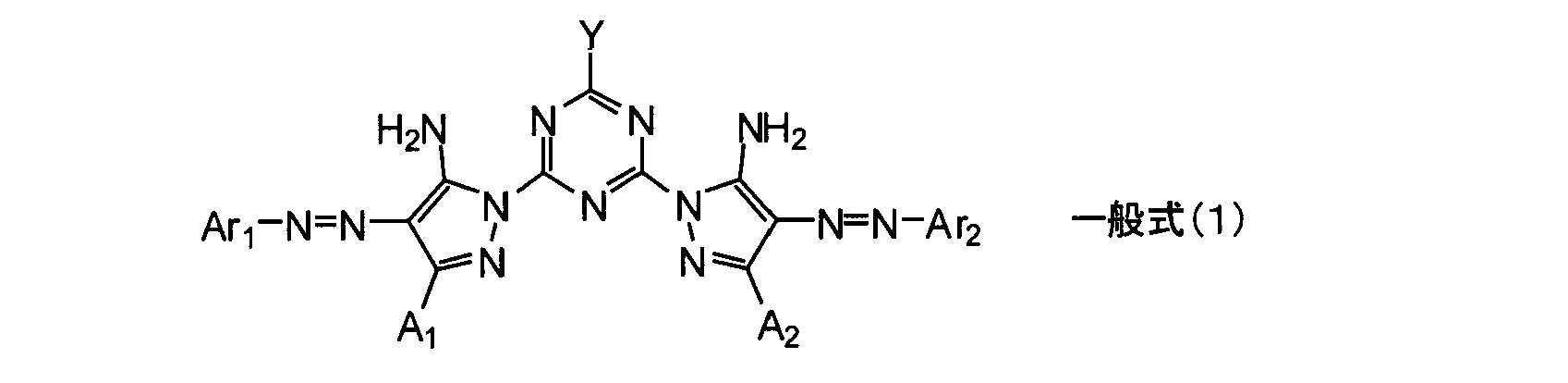
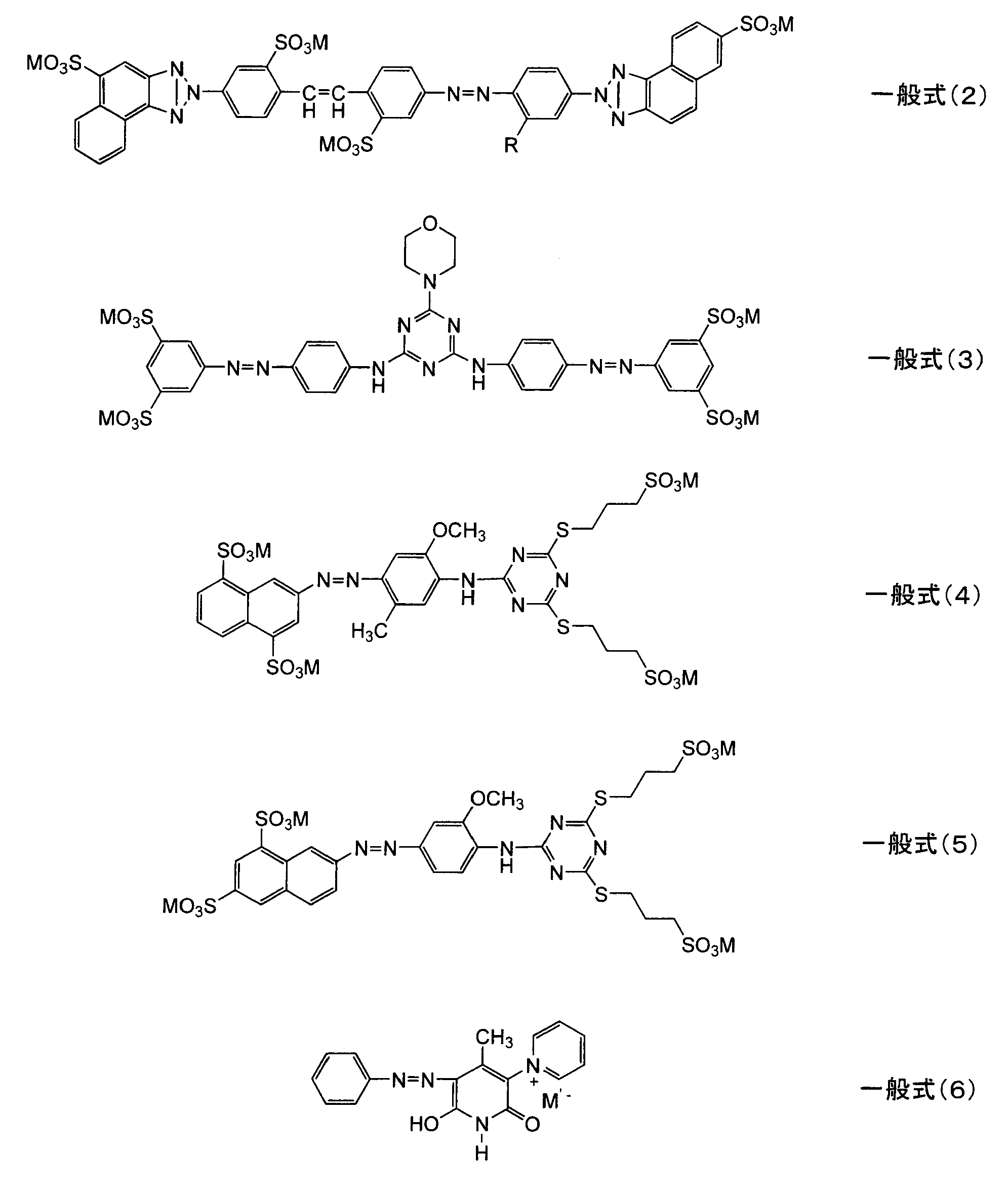
前記水酸基を3個以上有する保湿剤の含有率が8.5質量%以下であることを特徴とする<1>に記載のインク組成物。
<3>
前記モル比が25.0未満であることを特徴とする<1>または<2>に記載のインク組成物。
<4>
前記モル比が15.0未満であることを特徴とする<3>に記載のインク組成物。
<5>
前記モル比が10.0未満であることを特徴とする<3>または<4>に記載のインク組成物。
<6>
水酸基が0~2個である保湿剤をさらに含有することを特徴とする<1>~<5>のいずれかに記載のインク組成物。
<7>
前記水酸基を3個以上有する保湿剤の含有率が全保湿剤の25.0質量%未満であることを特徴とする<1>~<6>のいずれかに記載のインク組成物。
<8>
前記水酸基を3個以上有する保湿剤の含有率が全保湿剤の20.0質量%未満であることを特徴とする<1>~<7>のいずれかに記載のインク組成物。
<9>
前記水酸基を3個以上有する保湿剤の含有率が全保湿剤の15.0質量%未満であることを特徴とする<1>~<8>のいずれかに記載のインク組成物。
<10>
成分(c)が、一般式(2)~(6)で表される化合物から選ばれる少なくとも一つであることを特徴とする<1>~<9>のいずれかに記載のインク組成物。
<11>
前記一般式(1)で表される化合物が一般式(8)で表される化合物であることを特徴とする<1>~<10>のいずれかに記載のインク組成物。

<12>
前記一般式(8)で表される化合物が一般式(9)で表される化合物であることを特徴とする<11>に記載のインク組成物。

<13>
前記一般式(1)で表される化合物が一般式(10)で表される化合物であることを特徴とする<1>~<10>のいずれかに記載のインク組成物。

<14>
前記一般式(10)で表される化合物が一般式(11)で表される化合物であることを特徴とする<13>に記載のインク組成物。

<15>
更に尿素誘導体を含むことを特徴とする<1>~<14>のいずれかに記載のインク組成物。
<16>
<1>~<15>のいずれかに記載のインク組成物を使用するインクジェット記録用インク組成物。
<17>
インクジェット記録方法に用いるインクセットであって、<1>~<16>のいずれかに記載のインク組成物を構成成分として含んでなることを特徴とするインクセット。
<18>
<1>~<15>のいずれかに記載のインク組成物を使用するインクジェット記録用インク組成物。
<19>
<17>に記載のインクセットを一体的に又は独立に収容してなることを特徴とするインクカートリッジ。
<20>
インク組成物の液滴を吐出し、該液滴を記録媒体に付着させて記録を行うインクジェット記録方法であって、<17>に記載のインクセット又は<18>または<19>のいずれかに記載のインクカートリッジを用いて記録することを特徴とするインクジェット記録方法。
<21>
<20>に記載のインクジェット記録方法によって印刷されたことを特徴とする記録物。
本発明のインク組成物は、下記一般式(1)で表される化合物、成分(C)、及び保湿剤を含むインク組成物であって、該一般式(1)で表される化合物の含有率が0.1質量%以上7.0質量%未満であり、かつ水酸基を3個以上有する保湿剤の含有率が10.0質量%以下であり、前記水酸基を3個以上有する保湿剤/前記一般式(1)で表される化合物のモル比が30.0未満である。
〔一般式(1)で表される化合物〕
ハメット則はベンゼン誘導体の反応または平衡に及ぼす置換基の影響を定量的に論ずるために1935年 L.P.Hammettにより提唱された経験則であるが、これは今日広く妥当性が認められている。ハメット則に求められた置換基定数にはσp値とσm値があり、これらの値は多くの一般的な成書に見出すことができるが、例えば、J.A.Dean編、「Lange’s Handbook of Chemistry」第12版、1979年(Mc Graw-Hill)や「化学の領域」増刊、122号、96~103頁、1979年(南江堂)に詳しい。なお、本発明において各置換基をハメットの置換基定数σpにより限定したり、説明したりするが、これは上記の成書で見出せる、文献既知の値がある置換基にのみ限定されるという意味ではなく、その値が文献未知であってもハメット則に基づいて測定した場合にその範囲内に包まれるであろう置換基をも含むことはいうまでもない。本発明の一般式(1)、(8)~(11)で表される化合物はベンゼン誘導体ではないが、置換基の電子効果を示す尺度として、置換位置に関係なくσp値を使用する。本発明においては今後、σp値をこのような意味で使用する。
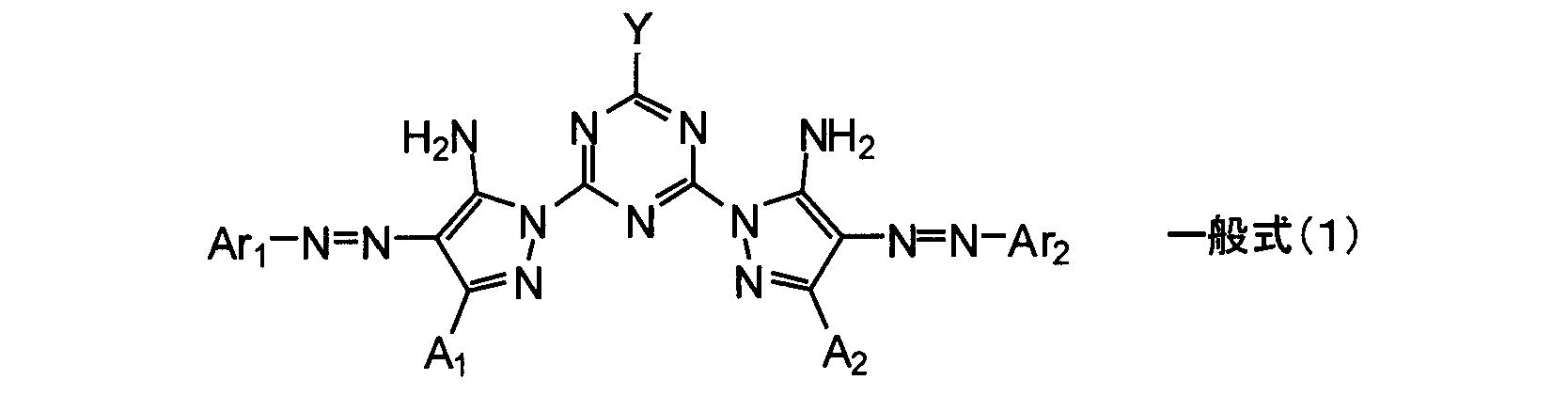
Ar1およびAr2は芳香族複素環基が好ましく、より好ましくは含窒素5~7員環の芳香族複素環基であり、5~6員環の芳香族複素環が好ましい。以下にAr1およびAr2の好ましい例、より好ましい例、更に好ましい例を示すが、Ar1およびAr2のアゾ基と結合する置換位置および、Ar1およびAr2の有しても良い置換基とその置換位置は限定されない。Ar1およびAr2の好ましい例としては、フェニル基、イミダゾリル基、ベンゾイミダゾリル基、ピラゾリル基、ベンゾピラゾリル基、トリアゾリル基、チアゾリル基、ベンゾチアゾリル基、イソチアゾリル基、ベンゾイソチアゾリル基、オキサゾリル基、ベンゾオキサゾリル基、チアジアゾリル基、ピロリル基、ベンゾピロリル基、インドリル基、イソオキサゾリル基、ベンゾイソオキサゾリル基、チオフェニル基、ベンゾチオフェニル基、フラニル基、ベンゾフラニル基、ピリジニル基、キノリニル基、イソキノリニル基、ピリダジニル基、ピリミジニル基、ピラジニル基、シンノリニル基、フタラジニル基、キナゾリニル基、キノクサリニル基、またはトリアジニル基が挙げられる。
但し、ここではアリール基が置換してアルキル基(アラルキル基)は含まないものとする。
(イ)Ar1およびAr2はそれぞれ独立に、好ましくは、ピラゾリル基、チアゾリル基、イソチアゾリル基、またはチアジアゾリル基であり、特に好ましくはピラゾリル基、またはチアジアゾリル基である。ピラゾリル基の置換基として好ましくはアルキル基、アリール基、シアノ基、-SO2CH3または-SO2Phであり、最も好ましくはピラゾリル基の置換基がアリール基、およびシアノ基であり、チアジアゾリル基の置換基として好ましくは、アルキル基またはアリール基である。
(ロ)A1およびA2はそれぞれ独立に、水素原子、総炭素数1から8のアルキル基、総炭素数6から12のアリール基が好ましく、水素原子、イソプロピル基、sec-ブチル基、またはtert-ブチル基がより好ましく、tert-ブチル基が最も好ましい。
(ハ)Yは-OMまたは-NR1R2を表し、好ましくはYは-OMである。Mはアルカリ金属イオンが好ましく、アルカリ金属イオンの中でも、リチウムイオンまたはカリウムイオンが更に好ましい。R1およびR2はそれぞれ独立に、好ましくは水素原子またはアルキル基であり、特に好ましくは水素原子である。
なお、一般式(1)で表される化合物は、種々の置換基の少なくとも1つが前記の好ましい基である化合物が好ましく、置換基のより多くが前記の好ましい基である化合物がより好ましく、全ての置換基が前記の好ましい基である化合物が最も好ましい。

(イ)Y1およびY2はそれぞれ独立に、特に水素原子、ハロゲン原子、アルキル基、アリール基、シアノ基、アルキルスルホニル基、アリールスルホニル基、または複素環基が好ましく、水素原子が最も好ましい。
(ロ)A1およびA2はそれぞれ独立に、水素原子、総炭素数1から8のアルキル基、総炭素数6から12のアリール基が好ましく、イソプロピル基、sec-ブチル基、またはtert-ブチル基がより好ましく、tert-ブチル基が最も好ましい。
(ハ)X1およびX2は、シアノ基、アルキルスルホニル基、またはアリールスルホニル基が好ましくシアノ基が更に好ましい。
(ニ)Z1およびZ2はそれぞれ独立に、アルキル基、アリール基、複素環基、アルキルスルホニル基、アリールスルホニル基、アシル基、アリールカルボニル基またはカルバモイル基がより好ましく、置換アリール基が更に好ましい。該置換アリール基は少なくとも2つ(好ましくは2つ)がスルホ基またはカルボキシル基を置換基として有するフェニル基が好ましい。
(ホ)Yは-OMが好ましい。Mはアルカリ金属イオンが好ましく、アルカリ金属イオンの中でも、リチウムイオンまたはカリウムイオンが更に好ましい。
なお、一般式(8)で表される化合物は、種々の置換基の少なくとも1つが前記の好ましい基である化合物が好ましく、置換基のより多くが前記の好ましい基である化合物がより好ましく、全ての置換基が前記の好ましい基である化合物が最も好ましい。
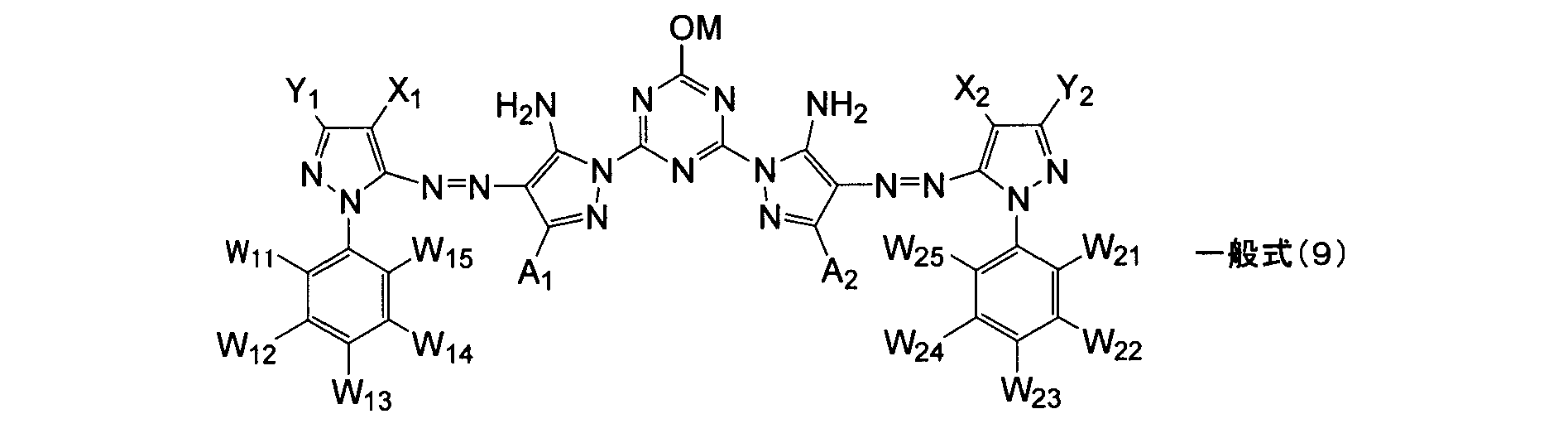
(イ)Y1およびY2はそれぞれ独立に、特に水素原子、ハロゲン原子、アルキル基、アリール基、シアノ基、アルキルスルホニル基、アリールスルホニル基、または複素環基が好ましく、水素原子、またはアルキル基がより好ましく、水素原子が最も好ましい。
(ロ)A1およびA2はそれぞれ独立に、水素原子、総炭素数1から8のアルキル基、総炭素数6から12のアリール基が好ましく、イソプロピル基、sec-ブチル基、またはtert-ブチル基がより好ましく、tert-ブチル基が最も好ましい。
(ハ)X1およびX2はそれぞれ独立に、シアノ基、アルキルスルホニル基、またはアリールスルホニル基が好ましくシアノ基が更に好ましい。
(ニ)W11、W12、W13、W14、W15、W21、W22、W23、W24及びW25はそれぞれ独立に、水素原子、スルホ基(それらの塩を含む)、またはカルボキシル基(それらの塩を含む)が好ましく、特にW11、W12、W13、W14及びW15のうち少なくとも1つがスルホ基(それらの塩を含む)、またはカルボキシル基(それらの塩を含む)で、且つW21、W22、W23、W24及びW25のうち少なくとも1つがスルホ基(それらの塩を含む)、カルボキシル基(それらの塩を含む)である場合が好ましい。W11~W15の中の2つ、かつ、W21~W25の中の2つがカルボキシル基(それらの塩を含む)である場合が好ましい。
(ホ)Mはアルカリ金属イオンが好ましく、アルカリ金属イオンの中でも、リチウムイオンまたはカリウムイオンが更に好ましい。
なお、一般式(9)で表される化合物は、種々の置換基の少なくとも1つが前記の好ましい基である化合物が好ましく、置換基のより多くが前記の好ましい基である化合物がより好ましく、全ての置換基が前記の好ましい基である化合物が最も好ましい。

(イ)A1およびA2はそれぞれ独立に、水素原子、総炭素数1から8のアルキル基、または総炭素数6から12のアリール基が好ましく、イソプロピル基、sec-ブチル基、またはtert-ブチル基がより好ましく、tert-ブチル基が最も好ましい。
(ロ)D1およびD2はそれぞれ独立に、置換アルキル基、置換アリール基、置換複素環基、置換アルキルチオ基、置換アリールチオ基、または置換複素環チオ基が好ましく、その中でも置換アリール基、または置換アリールチオ基が好ましく、特に置換アリール基が好ましい。該置換アリール基は少なくとも2つ(好ましくは2つ)がスルホ基またはカルボキシル基を有するフェニル基が好ましい。
(ハ)Yは-OMが好ましい。Mはアルカリ金属イオンが好ましく、アルカリ金属イオンの中でも、リチウムイオンまたはカリウムイオンが更に好ましい。
なお、一般式(10)で表される化合物は、種々の置換基の少なくとも1つが前記の好ましい基である化合物が好ましく、置換基のより多くが前記の好ましい基である化合物がより好ましく、全ての置換基が前記の好ましい基である化合物が最も好ましい。

(イ)A1およびA2はそれぞれ独立に、水素原子、総炭素数1から8のアルキル基、または総炭素数6から12のアリール基が好ましく、イソプロピル基、sec-ブチル基、またはtert-ブチル基がより好ましく、tert-ブチル基が最も好ましい。
(ロ)D1およびD2はそれぞれ独立に、置換アルキル基、置換アリール基、置換複素環基、置換アルキルチオ基、置換アリールチオ基、または置換複素環チオ基が好ましく、その中でも置換アリール基、または置換アリールチオ基が好ましく、特に置換アリール基が好ましい。該置換アリール基は少なくとも2つ(好ましくは2つ)がスルホ基またはカルボキシル基を有するフェニル基が好ましい。
(ハ)Mはアルカリ金属イオンが好ましく、アルカリ金属イオンの中でも、リチウムイオンまたはカリウムイオンが更に好ましい。
なお、一般式(11)で表される化合物は、種々の置換基の少なくとも1つが前記の好ましい基である化合物が好ましく、置換基のより多くが前記の好ましい基である化合物がより好ましく、全ての置換基が前記の好ましい基である化合物が最も好ましい。


本発明のインク組成物においては、一般式(1)で表される化合物、及び保湿剤に加えて、成分(C)を有することを特徴とする。成分(C)はC.I.ダイレクトイエロー59、同86、同132、同173、C.I.アシッドイエロー23および下記一般式(2)~(6)から選ばれる少なくとも一つである。より好ましくはC.I.ダイレクトイエロー59、同173、C.I.アシッドイエロー23および下記一般式(2)~(6)から選ばれる少なくとも一つであり、更に好ましくは下記一般式(2)~(6)から選ばれる少なくとも一つである。但し、一般式(2)~(5)中のMは水素原子または金属イオンを表す。一般式(2)のRは水素原子またはメチル基を表す。一般式(6)のM’-はハロゲンイオン、無機アニオン、または有機アニオンを表す。

一般式(6)中のM’-について説明する。M’-はハロゲンイオン、無機アニオン又は有機アニオンを表す。ハロゲンイオンとしてはフッ素イオン、塩素イオン、臭素イオンを挙げることでき、無機アニオンとしては硝酸アニオン、硫酸アニオン、テトラフルオロホウ酸アニオン、ヘキサフルオロリン酸アニオン等が、有機アニオンとしてはメタンスルホン酸アニオン、トリフルオロメタンスルホン酸アニオン、ノナフルオロブタンスルホン酸アニオン、p-トルエンスルホン酸アニオン等が好適に挙げられる。M’-としてはハロゲンイオンが好ましく、塩素イオンがより好ましい。
本発明の好ましいインク組成物(以降、「インク組成物」を単に「インク」と略記することあり)は、少なくとも一般式(1)で表される化合物、保湿剤および成分(C)と水を含有するインクである。ただし保湿剤に含まれる水酸基を3個以上有する保湿剤は無添加であっても良い。本発明のインクは媒体を含有させることができる。媒体として溶媒を用いた場合は特にインクジェット記録用インクとして好適である。本発明のインクは、媒体として、親油性媒体や水性媒体を用いて、それらの中に、本発明の一般式(1)で表される化合物、成分(C)の色材および固形である添加剤を溶解及び/又は分散させることによって作製することができる。媒体として好ましくは水性媒体である。媒体には様々な機能が備わっている。インクの噴射口での乾操による目詰まりを防止するための保湿剤、インクを紙によりよく浸透させるための浸透促進剤の他、紫外線吸収剤、酸化防止剤、消泡剤、粘度調整剤、表面張力調整剤、分散剤、分散安定剤、防黴剤、防錆剤、pH調整剤等の効果があり、媒体の組み合わせでインク組成物としての物性や品質を調整したり改良したりすることが可能である。
本発明のインク組成物(好ましくはインクジェット記録用インク組成物)100質量部中に、一般式(1)で表される化合物が固形分で0.1質量%以上7.0質量%未満で、即ち、一般式(1)で表される化合物の含有率0.1質量%以上7.0質量%未満で使用される。好ましくは0.1質量%以上6.8質量%以下であり、0.5質量%以上6.7質量%以下が更に好ましい。
一般に保湿剤には、多価アルコール誘導体、グリコールエーテル誘導体、アルキルアミン誘導体、尿素誘導体、カルボン酸およびその塩の誘導体、アミノ酸およびその塩の誘導体、糖誘導体などが挙げられ、好ましくは多価アルコール誘導体、グリコールエーテル誘導体、アルキルアミン誘導体、尿素誘導体、カルボン酸およびその塩の誘導体であり、更に多価アルコール誘導体、グリコールエーテル誘導体、アルキルアミン誘導体、尿素誘導体、特に尿素誘導体が好ましい。ここで誘導体とは、アルキル化、アリール化、複素環化、エステル化、エーテル化、ハロゲン化、アミド化、ヒドロキシル化、アミノ化など置換反応によって適当な置換基が修飾された化合物を言う。
保湿剤の中でも分子量が1000以下の化合物が好ましく、より好ましくは分子量が900以下であり、さらに800以下の保湿剤が好ましい。保湿剤は水酸基の有無で大別できる。以下に水酸基を有する保湿剤について具体例を挙げて説明する。
水酸基を3個以上有する保湿剤のインク組成物中の含有率は10.0質量%以下であることが好ましく、8.5質量%以下であることがより好ましく、4.0質量%以下であることが更に好ましい。より好ましくは、水酸基を3個以上有する保湿剤のインク組成物中の含有率は0.01質量%以上10.0質量%以下であることが好ましく、0.01質量%以上8.5質量%以下であることがより好ましく、0.01質量%以上4.0質量%以下であることが更に好ましい。
水酸基数が1もしくは2個である保湿剤のインク組成物中の含有率は0.5質量%以上40質量%以下であることが好ましく、5質量%以上30質量%以下であることがより好ましい。
特に、本発明の好ましい態様は、上記の条件に加え、水酸基を3個以上有する保湿剤の含有率がインク組成物中に含まれる全保湿剤の25.0質量%未満、好ましくは20.0質量%未満、より好ましくは0.01質量%以上20.0質量%未満、更に好ましくは0.01質量%以上15.0質量%未満、殊更好ましくは0.01質量%以上10.0質量%未満であるインク組成物である。
中でも、水酸基数が0~2個である保湿剤を含むインク組成物が好ましく、水酸基数が0個または1個である保湿剤を含むインク組成物が更に好ましい。
ただし、本発明では浸透促進剤として用いる化合物が保湿剤にも該当する場合は、保湿剤であるとして添加量を換算するため、前記の添加量の制限が適用される。
尚、これらの詳細については「防菌防黴剤事典」(日本防菌防黴学会事典編集委員会編)等に記載されている。
また、防錆剤としては、例えば、酸性亜硫酸塩、チオ硫酸ナトリウム、チオグリコール酸アンモン、ジイソプロピルアンモニウムニトライト、四硝酸ペンタエリスリトール、ジシクロヘキシルアンモニウムニトライト、ベンゾトリアゾール等が挙げられる。これらは、インク中に0.02~5.00質量%使用するのが好ましい。
前記有機塩基としては、トリエタノールアミン、ジエタノールアミン、N-メチルジエタノールアミン、ジメチルエタノールアミン等が挙げられる。より好ましくはジエタノールアミン、N-メチルジエタノールアミン、ジメチルエタノールアミンであり、更に好ましくはN-メチルジエタノールアミン、ジメチルエタノールアミンである。前記無機アルカリとしては、アルカリ金属の水酸化物(例えば、水酸化ナトリウム、水酸化リチウム、水酸化カリウム等)、炭酸塩(例えば、炭酸ナトリウム、炭酸水素ナトリウム等)、アンモニウム等が挙げられる。また、前記有機酸としては、酢酸、プロピオン酸、トリフルオロ酢酸、アルキルスルホン酸等が挙げられる。前記無機酸としては、塩酸、硫酸、リン酸等が挙げられる。本発明ではpH調整剤として用いる化合物が保湿剤にも該当する場合は、保湿剤であるとして添加量を換算するため、前記の添加量の制限が適用される。なおトリエタノールアミンは水酸基を3個以上有する保湿剤に該当するので、前記の添加量の制限が適用される。
本発明で用いるインクの表面張力は動的・静的表面張力のいずれも、25℃において20~50mN/m以下であることが好ましく、20~40mN/m以下であることが更に好ましい。表面張力が50mN/mを超えると吐出安定性、混色時のにじみ、ひげ等印字品質が著しく低下する。また、インクの表面張力を20mN/m以下にすると吐出時、ハード表面へのインクの付着等により印字不良となる場合がある。
粘度の調製はインク溶剤の添加量で任意に調製可能である。インク溶剤として例えば、グリセリン、ジエチレングリコール、プロピレングリコール、トリエタノールアミン、2-ピロリドン、ジエチレングリコールモノブチルエーテル、トリエチレングリコールモノブチルエーテルなどがある。より好ましくは、ジエチレングリコール、ブロピレングリコール、2-ピロリドン、ジエチレングリコールモノブチルエーテル、トリエチレングリコールモノブチルエーテルであり、更に好ましくはジエチレングリコール、2-ピロリドン、トリエチレングリコールモノブチルエーテルである。グリセリンは水酸基を3個以上有する保湿剤に該当するので、前記の添加量の制限が適用される。
また、粘度調整剤を使用してもよい。粘度調整剤としては、例えば、セルロース類、ポリビニルアルコールなどの水溶性ポリマーやノニオン系界面活性剤等が挙げられる。更に詳しくは、「粘度調製技術」(技術情報協会、1999年)第9章、及び「インクジェットプリンタ用ケミカルズ(98増補)-材料の開発動向・展望調査-」(シーエムシー、1997年)162 ~174 頁に記載されている。これらは5質量%未満での使用が好ましい。ただし、本発明では粘度調整剤として用いる化合物が保湿剤にも該当する場合は、保湿剤であるとして添加量を換算するため、前記の添加量の制限が適用される。
次に、上述のインク組成物を用いた本発明の記録方法について説明する。
本発明のインクは記録媒体に記録される。本発明の好ましいインクジェット記録方法は、前記インクジェット記録用インクにエネルギーを供与して、記録媒体としての公知の受像材料、即ち普通紙、樹脂コート紙、例えば特開平8-169172号公報、同8-27693号公報、同2-276670号公報、同7-276789号公報、同9-323475号公報、特開昭62-238783号公報、特開平10-153989号公報、同10-217473号公報、同10-235995号公報、同10-337947号公報、同10-217597号公報、同10-337947号公報等に記載されているインクジェット専用紙、フィルム、電子写真共用紙、布帛、ガラス、金属、陶磁器等に画像を形成する。なお、本発明のインクジェット記録方法として特開2003-306623号公報段落番号0093~0105の記載が適用できる。
具体的には、特開2002-166638号公報、特開2002-121440号公報、特開2002-154201号公報、特開2002-144696号公報、特開2002-080759号公報、特開2002-187342号公報、特開2002-172774号公報に記載された方法を好ましく用いることができる。
下記の成分に超純水(抵抗値18MΩ以上)を加え1リッターとした後、30~40℃で加熱しながら1時間撹拌した。その後、平均孔径0.25μmのミクロフィルターで減圧濾過してインク液1を得た。このインク液に超純水を加えてインク1の質量を1000gとした。このインク1の水酸基を3個以上有する保湿剤/前記一般式(1)で表される化合物のモル比は9.42であり、全保湿剤に対する水酸基を3個以上有する保湿剤含有率は14.7質量%である。
化合物1 65g/l
化合物(2-1) 50g/l
尿素 10g/l
トリエチレングリコール 90g/l
グリセリン 1.2g/l
トリエチレングリコールモノブチルエーテル 90g/l
2-ピロリドン 50g/l
トリエタノールアミン 7g/l
サーフィノール465(日信化学工業株式会社製) 10g/l
プロキセルXL2(富士フイルムイメージングカラランツ社製) 5g/l
表1~3に示す化合物および添加剤とそれらの量を変更した以外は、インク1の処方に従いインク2~61を作成した。
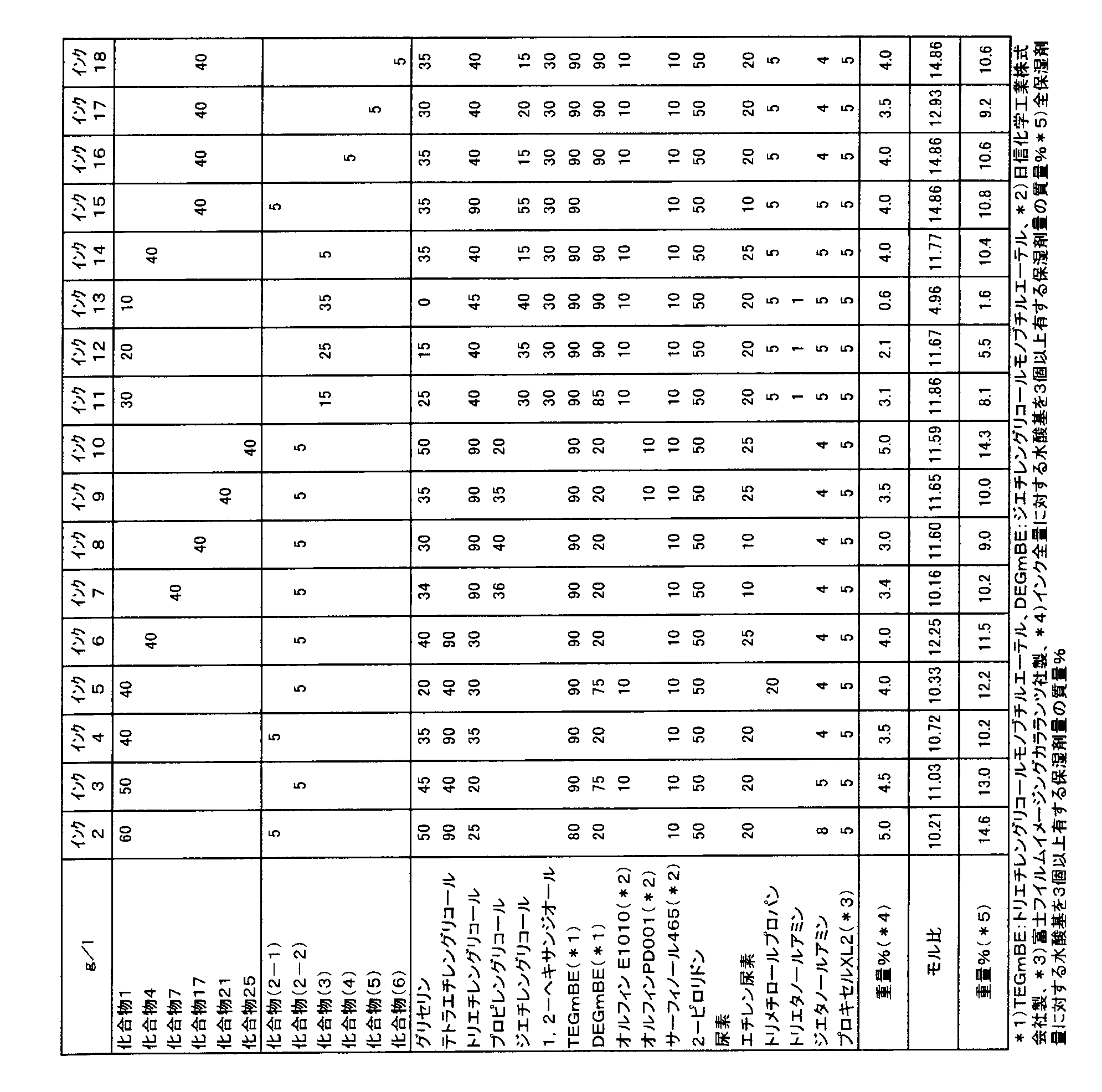
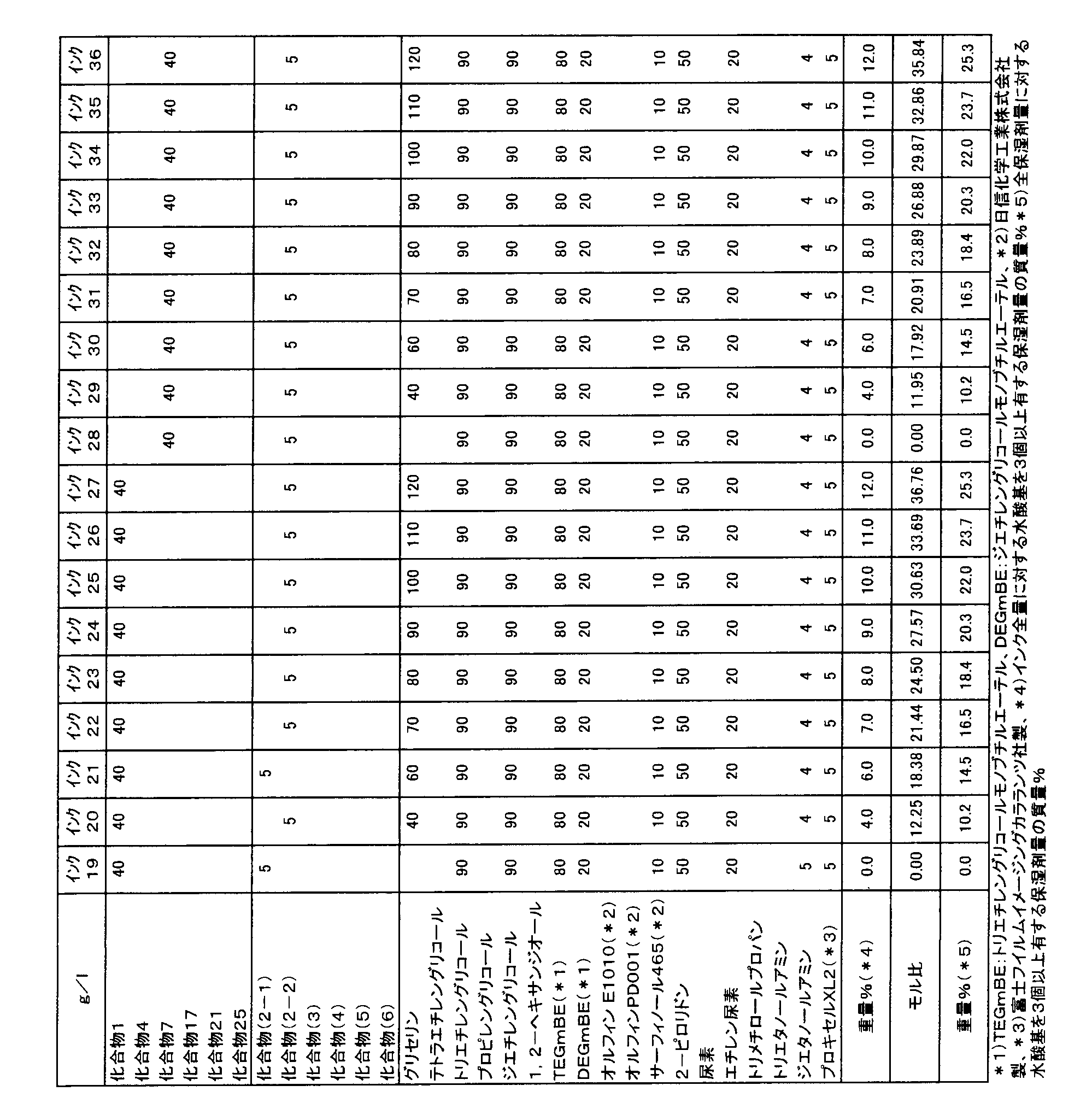


下記の成分に超純水(抵抗値18MΩ以上)を加え1リッターとした後、30~40℃で加熱しながら1時間撹拌した。その後、平均孔計0.25μmのミクロフィルターで減圧濾過してインク液を得た。このインク液に超純水を加えてインクの質量を1000gとし、インク62を調製した。
化合物(2-1) 45g/l
エチレン尿素 20g/l
トリエチレングリコール 90g/l
グリセリン 90g/l
トリエチレングリコールモノブチルエーテル 90g/l
2-ピロリドン 20g/lジエタノールアミン 7g/l
サーフィノール465(日信化学工業株式会社製) 10g/l
プロキセルXL2(富士フイルムイメージングカラランツ社製) 5g/l
上記の比較インク62の組成中、
化合物(2-1)を化合物(2-2)へ変更した以外は同様にして比較インク63を、
化合物(2-1)を化合物(3)へ変更した以外は同様にして比較インク64を、
化合物(2-1)を化合物(4)へ変更した以外は同様にして比較インク65を、
化合物(2-1)を化合物(5)へ変更した以外は同様にして比較インク66を、
化合物(2-1)を化合物(6)へ変更した以外は同様にして比較インク67を作成した。
表1~表3の処方で作成したインク10mLを、サンプル瓶に入れ、60℃で7日間保存した。化合物の残存率は高速液体クロマトグラフィー(HPLC:島津製作所製 LC-20AT)で測定を実施した。残存率がHPLCの面積%で、80%未満をF、80以上84未満%をE、84以上88未満%をD、88以上92未満%をC、92以上96未満%をB、96以上100以下%をAとして評価を行い、表4~表6中には熱安定性として表示した。
表1~表3の処方で作成したインクをEPSON社製インクジェットプリンターPM-G800のカートリッジに装填し、受像シートには、紙aとしてEPSON 写真用紙<光沢>と、紙bとして写真用紙クリスピア<高光沢>、紙cとしてCanon社製PR101を、紙dとしてHewlett-Packard社製アドバンストフォトペーパーを、紙eとして富士フイルム株式会社製画彩を使用し、階段状に濃度が変化したイエロー単色画像パターンをPM-G800にて印字させ、画像堅牢性の評価を行った。
[1]光堅牢性は印字直後の画像濃度CiをX-rite 310にて測定した後、アトラス社製ウェザーメーターを用い画像にキセノン光(10万ルックス)を7日照射した後、再び画像濃度Cfを測定し色素の残存率(Cf/Ci)×100を求め評価を行った。色素の残存率について反射濃度が0.7,1.2,2.0の3点にて評価し、いずれの濃度でも色素の残存率が85%以上の場合をA、1点が85%未満の場合をB、2点が85%未満の場合をC、3点全ての濃度で85%未満の場合をDとした。
[2]耐オゾン性については、オゾンガス濃度が5ppmに設定されたボックス内に7日間放置し、オゾンガス下放置前後の画像濃度を反射濃度計(X-Rite310TR)を用いて測定し、色素残存率として評価した。尚、前記反射濃度は、0.7、1.2及び2.0の3点で測定した。ボックス内のオゾンガス濃度は、APPLICS製オゾンガスモニター(モデル:OZG-EM-01)を用いて設定した。何れの濃度でも色素残存率が85%以上の場合をA、1点が85%未満をB、2点が85%未満の場合をC、全ての濃度で85%未満の場合をDとして、四段階で評価した。
吐出安定性については、熱安定性試験後のインク組成物を使用した。カートリッジをプリンターにセットし全ノズルからのインクの突出を確認した後、A4 20枚出力し、以下の基準で評価した。A:印刷開始から終了まで印字の乱れがない。B:印字の乱れがある出力が発生する。C:印刷開始から終了まで印字の乱れあり。
階段状に濃度が変化したイエローの単色画像パターンをGretagMacbeth製SpectroEyeにてCIE L*a*b*を測定した。反射濃度1.0におけるa*が、-6.5よりも小さい場合は○とし、-6.5以上であれば×、b*が70よりも大きければ○、70以下であれば×とし、両者が○であるときをA、一方が○であるときをB、両方が×のときをCとした。受像シートは紙a~eを使用した。
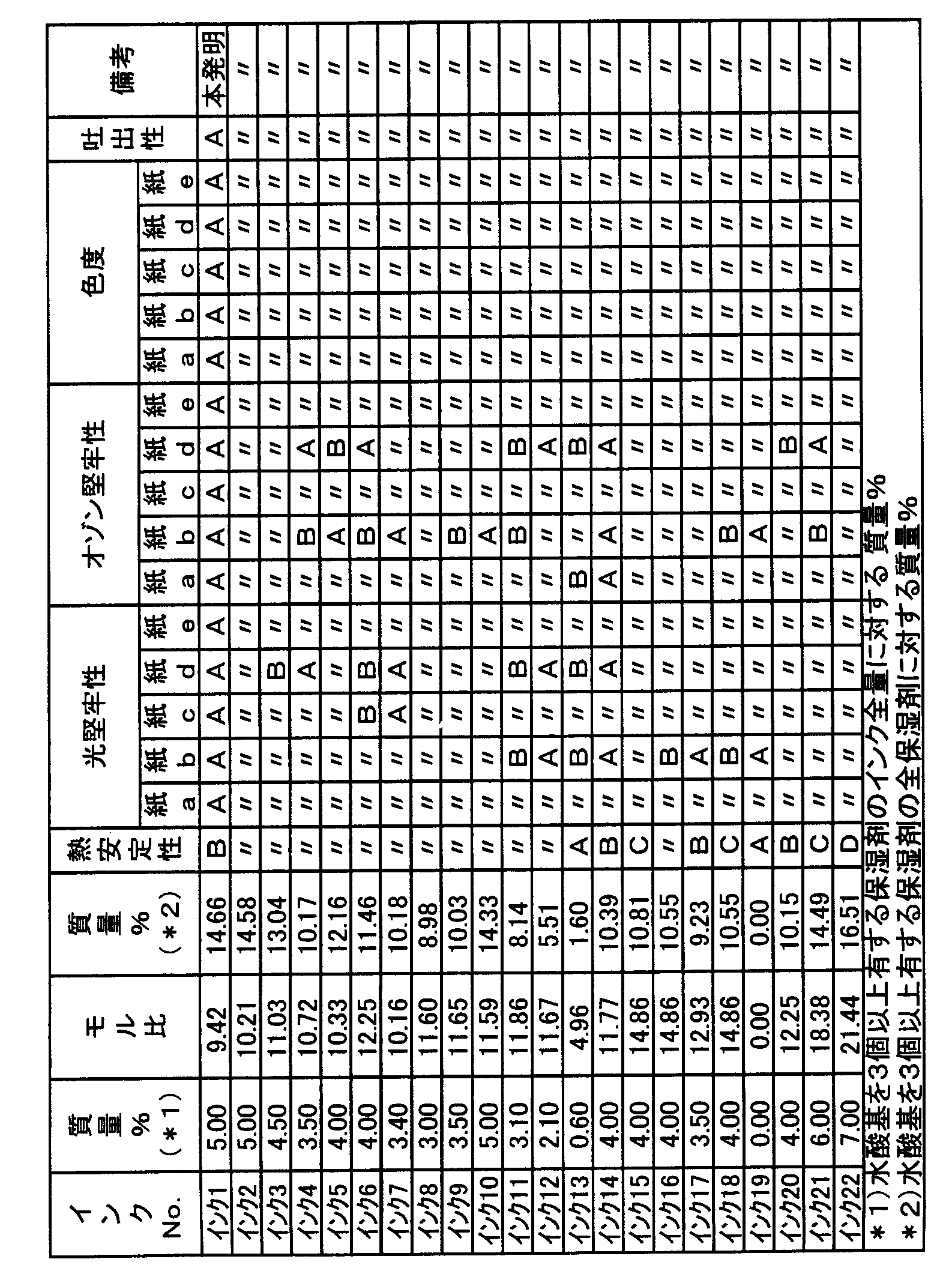


また、表4、表5および表6中で「質量%(*1)」とは水酸基を3個以上有する保湿剤のインク全量に対する質量%を表し、「質量%(*2)」とは水酸基を3個以上有する保湿剤の全保湿剤に対する質量%を表す。
表6中、インク53、54、55はイエローの色相のくすみがあり(ブロード化し)、好ましくない。
表4~表6の結果から、本発明のインク組成物は長期保存安定性が良好であり、かつ、そのインク組成物を用いた印字画像は色度、光堅牢性、オゾンガス堅牢性について優れていることが分かった。
本出願は、2008年6月16日出願の日本特許出願(特願2008-157030)に基づくものであり、その内容はここに参照として取り込まれる。
Claims (21)
- 下記一般式(1)で表される化合物、成分(C)、及び保湿剤を含むインク組成物であって、該一般式(1)で表される化合物の含有率が0.1質量%以上7.0質量%未満であり、かつ、水酸基を3個以上有する保湿剤の含有率が10.0質量%以下であり、前記水酸基を3個以上有する保湿剤/前記一般式(1)で表される化合物のモル比が30.0未満であることを特徴とするインク組成物。


- 前記水酸基を3個以上有する保湿剤の含有率が8.5質量%以下であることを特徴とする請求項1に記載のインク組成物。
- 前記モル比が25.0未満であることを特徴とする請求項1または2に記載のインク組成物。
- 前記モル比が15.0未満であることを特徴とする請求項3に記載のインク組成物。
- 前記モル比が10.0未満であることを特徴とする請求項3または4に記載のインク組成物。
- 水酸基数が0~2個である保湿剤をさらに含有することを特徴とする請求項1~5のいずれかに記載のインク組成物。
- 前記水酸基を3個以上有する保湿剤の含有率が全保湿剤の25.0質量%未満であることを特徴とする請求項1~6のいずれかに記載のインク組成物。
- 前記水酸基を3個以上有する保湿剤の含有率が全保湿剤の20.0質量%未満であることを特徴とする請求項1~7のいずれかに記載のインク組成物。
- 前記水酸基を3個以上有する保湿剤の含有率が全保湿剤の15.0質量%未満であることを特徴とする請求項1~8のいずれかに記載のインク組成物。
- 成分(C)が、一般式(2)~(6)で表される化合物から選ばれる少なくとも一つであることを特徴とする請求項1~9のいずれかに記載のインク組成物。
- 前記一般式(1)で表される化合物が一般式(8)で表される化合物であることを特徴とする請求項1~10のいずれかに記載のインク組成物。
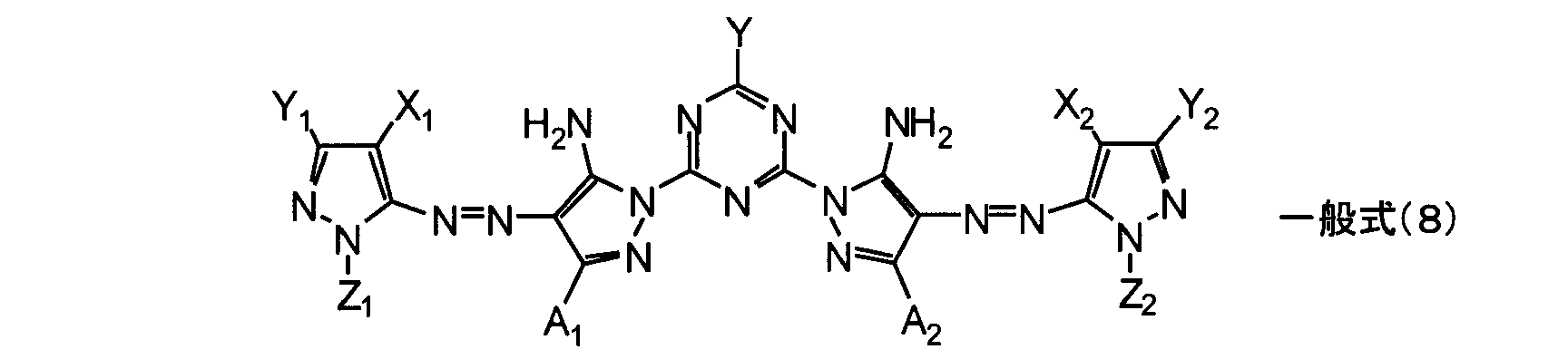
- 前記一般式(8)で表される化合物が一般式(9)で表される化合物であることを特徴とする請求項11に記載のインク組成物。

- 前記一般式(1)で表される化合物が一般式(10)で表される化合物であることを特徴とする請求項1~10のいずれかに記載のインク組成物。

- 前記一般式(10)で表される化合物が一般式(11)で表される化合物であることを特徴とする請求項13に記載のインク組成物。
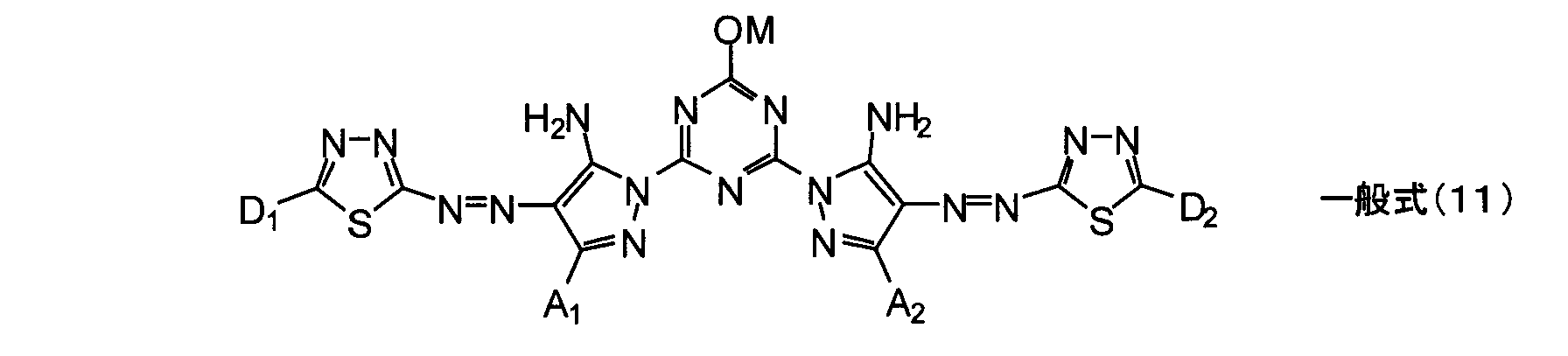
- 更に尿素誘導体を含むことを特徴とする請求項1~14のいずれかに記載のインク組成物。
- 請求項1~15のいずれかに記載のインク組成物を使用するインクジェット記録用インク組成物。
- インクジェット記録方法に用いるインクセットであって、請求項1~16のいずれかに記載のインク組成物を構成成分として含んでなることを特徴とするインクセット。
- 請求項1~16のいずれかに記載のインク組成物を含んでなることを特徴とするインクカートリッジ。
- 請求項17に記載のインクセットを一体的に又は独立に収容してなることを特徴とするインクカートリッジ。
- インク組成物の液滴を吐出し、該液滴を記録媒体に付着させて記録を行うインクジェット記録方法であって、請求項17に記載のインクセット又は請求項18または19のいずれかに記載のインクカートリッジを用いて記録することを特徴とするインクジェット記録方法。
- 請求項20に記載のインクジェット記録方法によって印刷されたことを特徴とする記録物。
Priority Applications (6)
| Application Number | Priority Date | Filing Date | Title |
|---|---|---|---|
| KR1020107028291A KR101656720B1 (ko) | 2008-06-16 | 2009-06-15 | 잉크 조성물, 잉크젯 기록용 잉크 조성물, 잉크 세트, 잉크 카트리지, 잉크젯 기록 방법 및 기록물 |
| US12/999,233 US8523990B2 (en) | 2008-06-16 | 2009-06-15 | Ink composition, inkjet recording ink composition, ink set, ink cartridge, inkjet recording method and recorded matter |
| CN2009801228277A CN102066506B (zh) | 2008-06-16 | 2009-06-15 | 墨水组合物,喷墨记录墨水组合物,墨水组,墨水盒,喷墨记录方法和记录物 |
| AU2009261211A AU2009261211B2 (en) | 2008-06-16 | 2009-06-15 | Ink composition, ink composition for inkjet recording, ink set, ink cartridge, inkjet recording method, and recorded matter |
| CA2728154A CA2728154C (en) | 2008-06-16 | 2009-06-15 | Ink composition, inkjet recording ink composition, ink set, ink cartridge, inkjet recording method and recorded matter |
| EP09766633.3A EP2290025B1 (en) | 2008-06-16 | 2009-06-15 | Ink composition, ink composition for inkjet recording, ink set, ink cartridge, inkjet recording method, and recorded matter |
Applications Claiming Priority (2)
| Application Number | Priority Date | Filing Date | Title |
|---|---|---|---|
| JP2008-157030 | 2008-06-16 | ||
| JP2008157030 | 2008-06-16 |
Publications (1)
| Publication Number | Publication Date |
|---|---|
| WO2009154185A1 true WO2009154185A1 (ja) | 2009-12-23 |
Family
ID=41434101
Family Applications (1)
| Application Number | Title | Priority Date | Filing Date |
|---|---|---|---|
| PCT/JP2009/060902 Ceased WO2009154185A1 (ja) | 2008-06-16 | 2009-06-15 | インク組成物、インクジェット記録用インク組成物、インクセット、インクカートリッジ、インクジェット記録方法及び記録物 |
Country Status (8)
| Country | Link |
|---|---|
| US (1) | US8523990B2 (ja) |
| EP (1) | EP2290025B1 (ja) |
| JP (1) | JP5637666B2 (ja) |
| KR (1) | KR101656720B1 (ja) |
| CN (1) | CN102066506B (ja) |
| AU (1) | AU2009261211B2 (ja) |
| CA (1) | CA2728154C (ja) |
| WO (1) | WO2009154185A1 (ja) |
Families Citing this family (6)
| Publication number | Priority date | Publication date | Assignee | Title |
|---|---|---|---|---|
| JP5568222B2 (ja) * | 2008-06-16 | 2014-08-06 | 富士フイルム株式会社 | インク組成物、インクジェット記録用インク組成物、インクセット、インクカートリッジ、インクジェット記録方法及び記録物 |
| EP2290025B1 (en) * | 2008-06-16 | 2017-10-11 | FUJIFILM Corporation | Ink composition, ink composition for inkjet recording, ink set, ink cartridge, inkjet recording method, and recorded matter |
| JP5401299B2 (ja) * | 2008-12-26 | 2014-01-29 | 富士フイルム株式会社 | インクセット、記録物及び印刷物 |
| US8580025B2 (en) * | 2009-09-04 | 2013-11-12 | Fujifilm Corporation | Ink set, recording method, recorded material and printed material |
| JP5835965B2 (ja) | 2011-02-28 | 2015-12-24 | 富士フイルム株式会社 | インクジェット記録用インク及びインクジェット記録方法 |
| JP2014058668A (ja) * | 2012-08-24 | 2014-04-03 | Canon Inc | 色素化合物、インク、感熱転写記録用シート、及び、カラーフィルター用レジスト組成物 |
Citations (66)
| Publication number | Priority date | Publication date | Assignee | Title |
|---|---|---|---|---|
| US3214463A (en) | 1960-05-12 | 1965-10-26 | Du Pont | Uv-absorbing sulfonated benzophenone derivatives |
| JPS462784A (ja) | 1971-03-11 | 1971-10-21 | ||
| JPS4830492B1 (ja) | 1969-10-07 | 1973-09-20 | ||
| JPS5621141B2 (ja) | 1975-10-16 | 1981-05-18 | ||
| JPS58185677A (ja) | 1982-04-22 | 1983-10-29 | Konishiroku Photo Ind Co Ltd | 紫外線吸収剤 |
| JPS61190537A (ja) | 1985-01-22 | 1986-08-25 | チバーガイギー アクチエンゲゼルシヤフト | 2―(2―ヒドロキシ―3―分枝アルキル―5―メチルフェニル)―2h―ベンゾトリアゾール混合物,該混合物の製造法,および該混合物からなる安定剤 |
| JPS62215272A (ja) | 1986-02-17 | 1987-09-21 | Fuji Photo Film Co Ltd | カラ−画像形成方法 |
| JPS62238783A (ja) | 1986-04-10 | 1987-10-19 | Nitto Boseki Co Ltd | インクジエツト記録用紙 |
| JPH01217473A (ja) | 1988-02-26 | 1989-08-31 | Canon Inc | 現像器自動交換装置 |
| JPH02782A (ja) | 1987-12-28 | 1990-01-05 | Ciba Geigy Ag | 新規な2―(2―ヒドロキシフェニル)ベンゾトリアゾール誘導体 |
| JPH02276670A (ja) | 1988-12-16 | 1990-11-13 | Asahi Glass Co Ltd | 記録用シート |
| JPH04298503A (ja) | 1990-05-10 | 1992-10-22 | Ciba Geigy Ag | 輻射線硬化性、光安定化組成物 |
| JPH05148436A (ja) | 1991-11-26 | 1993-06-15 | Canon Inc | インクジエツト記録液、その製造方法およびこれを用いるインクジエツト記録方法 |
| JPH05194483A (ja) | 1991-07-03 | 1993-08-03 | Ciba Geigy Ag | フェニルチオフェニルケトン |
| JPH05197075A (ja) | 1991-09-05 | 1993-08-06 | Ciba Geigy Ag | 紫外線吸収剤を含有する写真フィルム材料 |
| JPH05295312A (ja) | 1992-04-17 | 1993-11-09 | Canon Inc | インク、これを用いたインクジェット記録方法及びかかるインクを用いた機器 |
| JPH06136309A (ja) | 1992-10-28 | 1994-05-17 | Canon Inc | インクジェット記録方法、これに用いるインクセット、及びインクジェット記録装置 |
| JPH06234943A (ja) | 1993-02-10 | 1994-08-23 | Seiko Instr Inc | インクジェット記録用インク |
| JPH06240189A (ja) | 1992-04-16 | 1994-08-30 | Hewlett Packard Co <Hp> | 熱インクジェットインク組成物および紙のカールの減少方法 |
| JPH0782515A (ja) | 1993-06-25 | 1995-03-28 | Fuji Xerox Co Ltd | インクジェット記録用インク、インクジェット記録装置およびその方法 |
| JPH0797541A (ja) | 1992-11-09 | 1995-04-11 | Seiko Epson Corp | 黒色再現性に優れた黒色インク組成物 |
| JPH07118584A (ja) | 1993-10-20 | 1995-05-09 | Seiko Epson Corp | インクジェット記録用インク |
| JPH07276789A (ja) | 1994-04-05 | 1995-10-24 | Fuji Photo Film Co Ltd | 記録用シート |
| JPH0827693A (ja) | 1994-07-12 | 1996-01-30 | Mitsubishi Paper Mills Ltd | 記録用紙及び塗工用原紙 |
| JPH08501291A (ja) | 1992-09-07 | 1996-02-13 | チバ−ガイギー アクチエンゲゼルシャフト | ヒドロキシフェニル−s−トリアジン |
| JPH0853427A (ja) | 1994-07-27 | 1996-02-27 | Ciba Geigy Ag | 赤色側にシフトされたトリス−アリール−s−トリアジンおよびそれらにより安定化された組成物 |
| JPH08169172A (ja) | 1994-12-20 | 1996-07-02 | Mitsubishi Paper Mills Ltd | インクジェット記録シート |
| JPH08239368A (ja) | 1994-10-10 | 1996-09-17 | Ciba Geigy Ag | ビスレゾルシニルトリアジン |
| JPH0934057A (ja) | 1995-06-19 | 1997-02-07 | Eastman Kodak Co | 特定の置換基を有し、2′−ヒドロキシフェニルベンズトリアゾールを基にした紫外線吸収ポリマーおよびそれを含有する写真要素 |
| JPH09323475A (ja) | 1996-06-06 | 1997-12-16 | Konica Corp | インクジェット記録用紙およびこれを用いた記録方法 |
| JPH1088106A (ja) | 1996-08-16 | 1998-04-07 | Eastman Kodak Co | 紫外線吸収性ポリマー粒子 |
| JPH10153989A (ja) | 1996-11-22 | 1998-06-09 | Nec Home Electron Ltd | ドットクロック回路 |
| JPH10182621A (ja) | 1996-11-20 | 1998-07-07 | Ciba Specialty Chem Holding Inc | ヒドロキシフェニルトリアジン |
| JPH10217597A (ja) | 1997-02-10 | 1998-08-18 | Fuji Photo Film Co Ltd | 画像形成方法 |
| JPH10235995A (ja) | 1996-12-26 | 1998-09-08 | Fuji Photo Film Co Ltd | 画像記録媒体および画像記録方法 |
| JPH10337947A (ja) | 1997-06-04 | 1998-12-22 | Fuji Photo Film Co Ltd | 画像記録媒体 |
| JPH11286637A (ja) | 1998-02-03 | 1999-10-19 | Agfa Gevaert Ag | インキジエツトインキ |
| JP2001240763A (ja) | 1999-12-22 | 2001-09-04 | Fuji Photo Film Co Ltd | 着色微粒子分散物、インクジェット用インク及びインクジェット記録方法 |
| JP2001247788A (ja) | 2000-03-07 | 2001-09-11 | Fuji Photo Film Co Ltd | 着色微粒子分散物、インクジェット用インク及びインクジェット記録方法 |
| JP2001262039A (ja) | 2000-03-22 | 2001-09-26 | Fuji Photo Film Co Ltd | 着色微粒子分散物、それを用いたインクジェット記録用インクおよびインクジェット記録方法 |
| JP2001262018A (ja) | 2000-03-21 | 2001-09-26 | Fuji Photo Film Co Ltd | インクジェット用インク及びその製造方法、並びに、インクジェット記録方法 |
| JP2001271003A (ja) | 2000-03-27 | 2001-10-02 | Fuji Photo Film Co Ltd | 着色組成物、インクジェット用インク及びインクジェット記録方法 |
| JP2001271013A (ja) | 2000-01-31 | 2001-10-02 | Hewlett Packard Co <Hp> | 良好な凍解安定性を有するインクジェットインク組成物 |
| JP2001335734A (ja) | 2000-03-21 | 2001-12-04 | Fuji Photo Film Co Ltd | 着色微粒子分散物、インクジェット用インクおよびインクジェット記録方法 |
| JP2002080772A (ja) | 2000-03-21 | 2002-03-19 | Fuji Photo Film Co Ltd | 着色微粒子分散物、インクジェット用インクおよびインクジェット記録方法 |
| JP2002080759A (ja) | 2000-09-05 | 2002-03-19 | Fuji Photo Film Co Ltd | インクジェット記録用インク組成物及びインクジェット記録方法 |
| JP2002121440A (ja) | 2000-10-16 | 2002-04-23 | Fuji Photo Film Co Ltd | インクジェット画像記録方法 |
| JP2002144696A (ja) | 2000-11-10 | 2002-05-22 | Fuji Photo Film Co Ltd | インクジェット画像記録方法 |
| JP2002154201A (ja) | 2000-11-21 | 2002-05-28 | Fuji Photo Film Co Ltd | インクジェット画像記録方法 |
| JP2002166638A (ja) | 2000-11-29 | 2002-06-11 | Fuji Photo Film Co Ltd | インクジェット画像記録方法 |
| JP2002172774A (ja) | 2000-09-28 | 2002-06-18 | Fuji Photo Film Co Ltd | インクジェット画像記録方法 |
| JP2002187342A (ja) | 2000-09-29 | 2002-07-02 | Fuji Photo Film Co Ltd | インクジェット画像記録方法 |
| JP2002540281A (ja) * | 1999-03-30 | 2002-11-26 | アベシア・リミテッド | 耐光堅牢度の高い黄色組成物 |
| JP2003306623A (ja) | 2002-04-16 | 2003-10-31 | Fuji Photo Film Co Ltd | 水性インク |
| JP2006057076A (ja) | 2004-07-20 | 2006-03-02 | Fuji Photo Film Co Ltd | インク組成物及びインクジェット記録方法 |
| JP2006169320A (ja) * | 2004-12-14 | 2006-06-29 | Canon Inc | 混色画像を形成するためのインク及び画像形成方法 |
| JP2006199922A (ja) * | 2004-12-24 | 2006-08-03 | Canon Inc | インクジェット用インクセット、インクジェット記録方法、インクカートリッジ、記録ユニット及びインクジェット記録装置 |
| JP2006528262A (ja) * | 2003-07-18 | 2006-12-14 | ヒューレット−パッカード デベロップメント カンパニー エル.ピー. | インクジェットインク画像形成のための染料セット及びインクセット |
| JP2007063520A (ja) | 2004-10-20 | 2007-03-15 | Fujifilm Corp | 色素、インク、インクジェット用インク、インクジェット記録方法、インクシート、カラートナー及びカラーフィルター |
| JP2007070566A (ja) | 2005-09-09 | 2007-03-22 | Fujifilm Corp | インク原液およびこれを用いたインクジェット用インク組成物 |
| JP2007091867A (ja) * | 2005-09-28 | 2007-04-12 | Fujifilm Corp | インクとインク接液部材を含むインクユニット |
| JP2007191644A (ja) | 2006-01-20 | 2007-08-02 | Fujifilm Corp | インク組成物、インクセット、記録方法及びそれによる記録物 |
| JP2007217681A (ja) | 2006-01-19 | 2007-08-30 | Fujifilm Corp | アゾ化合物の製造方法 |
| JP2007302810A (ja) | 2006-05-12 | 2007-11-22 | Seiko Epson Corp | インク組成物、インクセット、該インクセットを用いたインクジェット記録方法および記録物 |
| JP2008031261A (ja) | 2006-07-27 | 2008-02-14 | Seiko Epson Corp | イエローインク組成物、インクセット、インクカートリッジ、インクジェット記録方法及び記録物 |
| JP2008157030A (ja) | 2006-12-20 | 2008-07-10 | Tokai Rika Co Ltd | リモートエンジンスタート制御装置、及び車両制御装置 |
Family Cites Families (7)
| Publication number | Priority date | Publication date | Assignee | Title |
|---|---|---|---|---|
| JP3194307B2 (ja) * | 1993-01-27 | 2001-07-30 | 富士ゼロックス株式会社 | サーマルインクジェット用インク |
| WO2005040292A1 (en) * | 2003-10-23 | 2005-05-06 | Fuji Photo Film Co., Ltd. | Ink and ink set for inkjet recording |
| CN101115803B (zh) * | 2005-02-07 | 2012-12-12 | 富士胶片株式会社 | 色料、油墨、喷墨用油墨、喷墨记录方法、彩色墨粉及彩色滤色片 |
| JP2009132891A (ja) * | 2007-10-31 | 2009-06-18 | Fujifilm Corp | インクセット、インクジェット記録方法、及び記録物 |
| EP2290025B1 (en) * | 2008-06-16 | 2017-10-11 | FUJIFILM Corporation | Ink composition, ink composition for inkjet recording, ink set, ink cartridge, inkjet recording method, and recorded matter |
| JP5568222B2 (ja) | 2008-06-16 | 2014-08-06 | 富士フイルム株式会社 | インク組成物、インクジェット記録用インク組成物、インクセット、インクカートリッジ、インクジェット記録方法及び記録物 |
| JP4941785B2 (ja) * | 2008-10-24 | 2012-05-30 | ブラザー工業株式会社 | インクジェット記録用水性インク、インクカートリッジおよびインクジェット記録装置 |
-
2009
- 2009-06-15 EP EP09766633.3A patent/EP2290025B1/en not_active Not-in-force
- 2009-06-15 JP JP2009142699A patent/JP5637666B2/ja not_active Expired - Fee Related
- 2009-06-15 CN CN2009801228277A patent/CN102066506B/zh not_active Expired - Fee Related
- 2009-06-15 KR KR1020107028291A patent/KR101656720B1/ko not_active Expired - Fee Related
- 2009-06-15 US US12/999,233 patent/US8523990B2/en not_active Expired - Fee Related
- 2009-06-15 WO PCT/JP2009/060902 patent/WO2009154185A1/ja not_active Ceased
- 2009-06-15 CA CA2728154A patent/CA2728154C/en not_active Expired - Fee Related
- 2009-06-15 AU AU2009261211A patent/AU2009261211B2/en not_active Ceased
Patent Citations (66)
| Publication number | Priority date | Publication date | Assignee | Title |
|---|---|---|---|---|
| US3214463A (en) | 1960-05-12 | 1965-10-26 | Du Pont | Uv-absorbing sulfonated benzophenone derivatives |
| JPS4830492B1 (ja) | 1969-10-07 | 1973-09-20 | ||
| JPS462784A (ja) | 1971-03-11 | 1971-10-21 | ||
| JPS5621141B2 (ja) | 1975-10-16 | 1981-05-18 | ||
| JPS58185677A (ja) | 1982-04-22 | 1983-10-29 | Konishiroku Photo Ind Co Ltd | 紫外線吸収剤 |
| JPS61190537A (ja) | 1985-01-22 | 1986-08-25 | チバーガイギー アクチエンゲゼルシヤフト | 2―(2―ヒドロキシ―3―分枝アルキル―5―メチルフェニル)―2h―ベンゾトリアゾール混合物,該混合物の製造法,および該混合物からなる安定剤 |
| JPS62215272A (ja) | 1986-02-17 | 1987-09-21 | Fuji Photo Film Co Ltd | カラ−画像形成方法 |
| JPS62238783A (ja) | 1986-04-10 | 1987-10-19 | Nitto Boseki Co Ltd | インクジエツト記録用紙 |
| JPH02782A (ja) | 1987-12-28 | 1990-01-05 | Ciba Geigy Ag | 新規な2―(2―ヒドロキシフェニル)ベンゾトリアゾール誘導体 |
| JPH01217473A (ja) | 1988-02-26 | 1989-08-31 | Canon Inc | 現像器自動交換装置 |
| JPH02276670A (ja) | 1988-12-16 | 1990-11-13 | Asahi Glass Co Ltd | 記録用シート |
| JPH04298503A (ja) | 1990-05-10 | 1992-10-22 | Ciba Geigy Ag | 輻射線硬化性、光安定化組成物 |
| JPH05194483A (ja) | 1991-07-03 | 1993-08-03 | Ciba Geigy Ag | フェニルチオフェニルケトン |
| JPH05197075A (ja) | 1991-09-05 | 1993-08-06 | Ciba Geigy Ag | 紫外線吸収剤を含有する写真フィルム材料 |
| JPH05148436A (ja) | 1991-11-26 | 1993-06-15 | Canon Inc | インクジエツト記録液、その製造方法およびこれを用いるインクジエツト記録方法 |
| JPH06240189A (ja) | 1992-04-16 | 1994-08-30 | Hewlett Packard Co <Hp> | 熱インクジェットインク組成物および紙のカールの減少方法 |
| JPH05295312A (ja) | 1992-04-17 | 1993-11-09 | Canon Inc | インク、これを用いたインクジェット記録方法及びかかるインクを用いた機器 |
| JPH08501291A (ja) | 1992-09-07 | 1996-02-13 | チバ−ガイギー アクチエンゲゼルシャフト | ヒドロキシフェニル−s−トリアジン |
| JPH06136309A (ja) | 1992-10-28 | 1994-05-17 | Canon Inc | インクジェット記録方法、これに用いるインクセット、及びインクジェット記録装置 |
| JPH0797541A (ja) | 1992-11-09 | 1995-04-11 | Seiko Epson Corp | 黒色再現性に優れた黒色インク組成物 |
| JPH06234943A (ja) | 1993-02-10 | 1994-08-23 | Seiko Instr Inc | インクジェット記録用インク |
| JPH0782515A (ja) | 1993-06-25 | 1995-03-28 | Fuji Xerox Co Ltd | インクジェット記録用インク、インクジェット記録装置およびその方法 |
| JPH07118584A (ja) | 1993-10-20 | 1995-05-09 | Seiko Epson Corp | インクジェット記録用インク |
| JPH07276789A (ja) | 1994-04-05 | 1995-10-24 | Fuji Photo Film Co Ltd | 記録用シート |
| JPH0827693A (ja) | 1994-07-12 | 1996-01-30 | Mitsubishi Paper Mills Ltd | 記録用紙及び塗工用原紙 |
| JPH0853427A (ja) | 1994-07-27 | 1996-02-27 | Ciba Geigy Ag | 赤色側にシフトされたトリス−アリール−s−トリアジンおよびそれらにより安定化された組成物 |
| JPH08239368A (ja) | 1994-10-10 | 1996-09-17 | Ciba Geigy Ag | ビスレゾルシニルトリアジン |
| JPH08169172A (ja) | 1994-12-20 | 1996-07-02 | Mitsubishi Paper Mills Ltd | インクジェット記録シート |
| JPH0934057A (ja) | 1995-06-19 | 1997-02-07 | Eastman Kodak Co | 特定の置換基を有し、2′−ヒドロキシフェニルベンズトリアゾールを基にした紫外線吸収ポリマーおよびそれを含有する写真要素 |
| JPH09323475A (ja) | 1996-06-06 | 1997-12-16 | Konica Corp | インクジェット記録用紙およびこれを用いた記録方法 |
| JPH1088106A (ja) | 1996-08-16 | 1998-04-07 | Eastman Kodak Co | 紫外線吸収性ポリマー粒子 |
| JPH10182621A (ja) | 1996-11-20 | 1998-07-07 | Ciba Specialty Chem Holding Inc | ヒドロキシフェニルトリアジン |
| JPH10153989A (ja) | 1996-11-22 | 1998-06-09 | Nec Home Electron Ltd | ドットクロック回路 |
| JPH10235995A (ja) | 1996-12-26 | 1998-09-08 | Fuji Photo Film Co Ltd | 画像記録媒体および画像記録方法 |
| JPH10217597A (ja) | 1997-02-10 | 1998-08-18 | Fuji Photo Film Co Ltd | 画像形成方法 |
| JPH10337947A (ja) | 1997-06-04 | 1998-12-22 | Fuji Photo Film Co Ltd | 画像記録媒体 |
| JPH11286637A (ja) | 1998-02-03 | 1999-10-19 | Agfa Gevaert Ag | インキジエツトインキ |
| JP2002540281A (ja) * | 1999-03-30 | 2002-11-26 | アベシア・リミテッド | 耐光堅牢度の高い黄色組成物 |
| JP2001240763A (ja) | 1999-12-22 | 2001-09-04 | Fuji Photo Film Co Ltd | 着色微粒子分散物、インクジェット用インク及びインクジェット記録方法 |
| JP2001271013A (ja) | 2000-01-31 | 2001-10-02 | Hewlett Packard Co <Hp> | 良好な凍解安定性を有するインクジェットインク組成物 |
| JP2001247788A (ja) | 2000-03-07 | 2001-09-11 | Fuji Photo Film Co Ltd | 着色微粒子分散物、インクジェット用インク及びインクジェット記録方法 |
| JP2001262018A (ja) | 2000-03-21 | 2001-09-26 | Fuji Photo Film Co Ltd | インクジェット用インク及びその製造方法、並びに、インクジェット記録方法 |
| JP2001335734A (ja) | 2000-03-21 | 2001-12-04 | Fuji Photo Film Co Ltd | 着色微粒子分散物、インクジェット用インクおよびインクジェット記録方法 |
| JP2002080772A (ja) | 2000-03-21 | 2002-03-19 | Fuji Photo Film Co Ltd | 着色微粒子分散物、インクジェット用インクおよびインクジェット記録方法 |
| JP2001262039A (ja) | 2000-03-22 | 2001-09-26 | Fuji Photo Film Co Ltd | 着色微粒子分散物、それを用いたインクジェット記録用インクおよびインクジェット記録方法 |
| JP2001271003A (ja) | 2000-03-27 | 2001-10-02 | Fuji Photo Film Co Ltd | 着色組成物、インクジェット用インク及びインクジェット記録方法 |
| JP2002080759A (ja) | 2000-09-05 | 2002-03-19 | Fuji Photo Film Co Ltd | インクジェット記録用インク組成物及びインクジェット記録方法 |
| JP2002172774A (ja) | 2000-09-28 | 2002-06-18 | Fuji Photo Film Co Ltd | インクジェット画像記録方法 |
| JP2002187342A (ja) | 2000-09-29 | 2002-07-02 | Fuji Photo Film Co Ltd | インクジェット画像記録方法 |
| JP2002121440A (ja) | 2000-10-16 | 2002-04-23 | Fuji Photo Film Co Ltd | インクジェット画像記録方法 |
| JP2002144696A (ja) | 2000-11-10 | 2002-05-22 | Fuji Photo Film Co Ltd | インクジェット画像記録方法 |
| JP2002154201A (ja) | 2000-11-21 | 2002-05-28 | Fuji Photo Film Co Ltd | インクジェット画像記録方法 |
| JP2002166638A (ja) | 2000-11-29 | 2002-06-11 | Fuji Photo Film Co Ltd | インクジェット画像記録方法 |
| JP2003306623A (ja) | 2002-04-16 | 2003-10-31 | Fuji Photo Film Co Ltd | 水性インク |
| JP2006528262A (ja) * | 2003-07-18 | 2006-12-14 | ヒューレット−パッカード デベロップメント カンパニー エル.ピー. | インクジェットインク画像形成のための染料セット及びインクセット |
| JP2006057076A (ja) | 2004-07-20 | 2006-03-02 | Fuji Photo Film Co Ltd | インク組成物及びインクジェット記録方法 |
| JP2007063520A (ja) | 2004-10-20 | 2007-03-15 | Fujifilm Corp | 色素、インク、インクジェット用インク、インクジェット記録方法、インクシート、カラートナー及びカラーフィルター |
| JP2006169320A (ja) * | 2004-12-14 | 2006-06-29 | Canon Inc | 混色画像を形成するためのインク及び画像形成方法 |
| JP2006199922A (ja) * | 2004-12-24 | 2006-08-03 | Canon Inc | インクジェット用インクセット、インクジェット記録方法、インクカートリッジ、記録ユニット及びインクジェット記録装置 |
| JP2007070566A (ja) | 2005-09-09 | 2007-03-22 | Fujifilm Corp | インク原液およびこれを用いたインクジェット用インク組成物 |
| JP2007091867A (ja) * | 2005-09-28 | 2007-04-12 | Fujifilm Corp | インクとインク接液部材を含むインクユニット |
| JP2007217681A (ja) | 2006-01-19 | 2007-08-30 | Fujifilm Corp | アゾ化合物の製造方法 |
| JP2007191644A (ja) | 2006-01-20 | 2007-08-02 | Fujifilm Corp | インク組成物、インクセット、記録方法及びそれによる記録物 |
| JP2007302810A (ja) | 2006-05-12 | 2007-11-22 | Seiko Epson Corp | インク組成物、インクセット、該インクセットを用いたインクジェット記録方法および記録物 |
| JP2008031261A (ja) | 2006-07-27 | 2008-02-14 | Seiko Epson Corp | イエローインク組成物、インクセット、インクカートリッジ、インクジェット記録方法及び記録物 |
| JP2008157030A (ja) | 2006-12-20 | 2008-07-10 | Tokai Rika Co Ltd | リモートエンジンスタート制御装置、及び車両制御装置 |
Non-Patent Citations (5)
| Title |
|---|
| "Kagaku no Rvoiki", vol. 122, 1979, NANKODO CO., LTD., pages: 96 - 103 |
| "Nendo Chosei Giiutsu", 1999, PUBLISHED BY TECHNICAL INFORMATION INSTITUTE CO., LTD. |
| "Zairyo no Kaihatsu Doko-Tenkai Chosa", 1997, CMC PUBLISHING CO., LTD., article "Inkujetto Purinta vo Kemikaruzu", pages: 162 - 174 |
| J.A. DEAN: "Lange's Handbook of Chemistry", 1979, MCGRAW-HILL |
| See also references of EP2290025A4 |
Also Published As
| Publication number | Publication date |
|---|---|
| EP2290025A4 (en) | 2012-06-20 |
| JP5637666B2 (ja) | 2014-12-10 |
| JP2010024444A (ja) | 2010-02-04 |
| CN102066506B (zh) | 2013-09-11 |
| CA2728154C (en) | 2016-01-12 |
| AU2009261211B2 (en) | 2014-04-03 |
| US8523990B2 (en) | 2013-09-03 |
| EP2290025B1 (en) | 2017-10-11 |
| EP2290025A1 (en) | 2011-03-02 |
| CA2728154A1 (en) | 2009-12-23 |
| US20110104458A1 (en) | 2011-05-05 |
| KR101656720B1 (ko) | 2016-09-12 |
| AU2009261211A1 (en) | 2009-12-23 |
| CN102066506A (zh) | 2011-05-18 |
| KR20110019375A (ko) | 2011-02-25 |
Similar Documents
| Publication | Publication Date | Title |
|---|---|---|
| JP5568222B2 (ja) | インク組成物、インクジェット記録用インク組成物、インクセット、インクカートリッジ、インクジェット記録方法及び記録物 | |
| JP4810123B2 (ja) | インク組成物及びインクジェット記録方法 | |
| JP5836200B2 (ja) | キサンテン骨格を有する化合物、着色組成物、インクジェット記録用インク、及びインクジェット記録方法 | |
| JP5802544B2 (ja) | キサンテン骨格を有する化合物、着色組成物、インクジェット記録用インク、及びインクジェット記録方法 | |
| WO2017006939A1 (ja) | 化合物、着色組成物、インクジェット記録用インク、インクジェット記録方法、インクジェットプリンタカートリッジ、及びインクジェット記録物 | |
| JP5637666B2 (ja) | インク組成物、インクジェット記録用インク組成物、インクセット、インクカートリッジ、インクジェット記録方法及び記録物 | |
| JP6062560B2 (ja) | キサンテン骨格を有する化合物、着色組成物、インクジェット記録用インク、インクジェット記録方法、インクジェットプリンタカートリッジ、及びインクジェット記録物 | |
| JP2005264085A (ja) | インク組成物、インクジェット記録用インク及びインクジェット記録方法 | |
| JP5779493B2 (ja) | 着色組成物、インクジェット記録用インク、及びインクジェット記録方法 | |
| JP5789503B2 (ja) | フタロシアニン染料、着色組成物、インクジェット用インク、インクジェット記録方法及びフタロシアニン化合物 | |
| JP2005225979A (ja) | 記録方法及びインクジェット記録方法 | |
| JP5757714B2 (ja) | インク組成物、それを用いたインクジェット記録方法及び記録物 | |
| JP4972317B2 (ja) | インク組成物、インクセット、記録方法及びそれによる記録物 | |
| JP2007191635A (ja) | インク組成物、インクセット、記録方法及びそれによる記録物 | |
| JP2007197491A (ja) | インク組成物、記録方法及びそれによる記録物 | |
| JP2007138125A (ja) | インク組成物、インクセット、記録方法及びそれによる記録物 | |
| JP2007191653A (ja) | インク組成物、インクセット、インクジェット記録方法 | |
| WO2017006940A1 (ja) | 化合物、着色組成物、インクジェット記録用インク、インクジェット記録方法、インクジェットプリンタカートリッジ、及びインクジェット記録物 |
Legal Events
| Date | Code | Title | Description |
|---|---|---|---|
| WWE | Wipo information: entry into national phase |
Ref document number: 200980122827.7 Country of ref document: CN |
|
| 121 | Ep: the epo has been informed by wipo that ep was designated in this application |
Ref document number: 09766633 Country of ref document: EP Kind code of ref document: A1 |
|
| WWE | Wipo information: entry into national phase |
Ref document number: 2728154 Country of ref document: CA Ref document number: 12999233 Country of ref document: US |
|
| ENP | Entry into the national phase |
Ref document number: 20107028291 Country of ref document: KR Kind code of ref document: A |
|
| REEP | Request for entry into the european phase |
Ref document number: 2009766633 Country of ref document: EP |
|
| WWE | Wipo information: entry into national phase |
Ref document number: 2009261211 Country of ref document: AU Ref document number: 2009766633 Country of ref document: EP |
|
| NENP | Non-entry into the national phase |
Ref country code: DE |
|
| ENP | Entry into the national phase |
Ref document number: 2009261211 Country of ref document: AU Date of ref document: 20090615 Kind code of ref document: A |