EP0328364A2 - Lichtempfindliches Material - Google Patents
Lichtempfindliches Material Download PDFInfo
- Publication number
- EP0328364A2 EP0328364A2 EP89301200A EP89301200A EP0328364A2 EP 0328364 A2 EP0328364 A2 EP 0328364A2 EP 89301200 A EP89301200 A EP 89301200A EP 89301200 A EP89301200 A EP 89301200A EP 0328364 A2 EP0328364 A2 EP 0328364A2
- Authority
- EP
- European Patent Office
- Prior art keywords
- layer
- photosensitive
- polymerizable
- photosensitive material
- image forming
- Prior art date
- Legal status (The legal status is an assumption and is not a legal conclusion. Google has not performed a legal analysis and makes no representation as to the accuracy of the status listed.)
- Granted
Links
- 239000000463 material Substances 0.000 title claims abstract description 107
- 238000000034 method Methods 0.000 claims description 96
- 229910052709 silver Inorganic materials 0.000 claims description 63
- 239000004332 silver Substances 0.000 claims description 63
- 229920000642 polymer Polymers 0.000 claims description 61
- -1 silver halide Chemical class 0.000 claims description 51
- 238000010438 heat treatment Methods 0.000 claims description 48
- 239000003638 chemical reducing agent Substances 0.000 claims description 43
- 238000006116 polymerization reaction Methods 0.000 claims description 27
- 230000000379 polymerizing effect Effects 0.000 claims description 22
- GGCZERPQGJTIQP-UHFFFAOYSA-N sodium;9,10-dioxoanthracene-2-sulfonic acid Chemical compound [Na+].C1=CC=C2C(=O)C3=CC(S(=O)(=O)O)=CC=C3C(=O)C2=C1 GGCZERPQGJTIQP-UHFFFAOYSA-N 0.000 claims description 19
- 239000003999 initiator Substances 0.000 claims description 17
- 239000002243 precursor Substances 0.000 claims description 17
- 150000001875 compounds Chemical class 0.000 claims description 10
- 125000000217 alkyl group Chemical group 0.000 claims description 9
- 125000004435 hydrogen atom Chemical group [H]* 0.000 claims description 9
- 239000002648 laminated material Substances 0.000 claims description 9
- 238000010030 laminating Methods 0.000 claims description 8
- 125000003710 aryl alkyl group Chemical group 0.000 claims description 6
- 229910052717 sulfur Inorganic materials 0.000 claims description 4
- 125000003545 alkoxy group Chemical group 0.000 claims description 3
- 125000001118 alkylidene group Chemical group 0.000 claims description 3
- 125000003118 aryl group Chemical group 0.000 claims description 3
- 125000005843 halogen group Chemical group 0.000 claims description 3
- 125000002887 hydroxy group Chemical group [H]O* 0.000 claims description 3
- 125000005647 linker group Chemical group 0.000 claims description 3
- 125000004434 sulfur atom Chemical group 0.000 claims description 3
- 239000010410 layer Substances 0.000 description 251
- BQCADISMDOOEFD-UHFFFAOYSA-N Silver Chemical compound [Ag] BQCADISMDOOEFD-UHFFFAOYSA-N 0.000 description 35
- 239000000203 mixture Substances 0.000 description 22
- ZWEHNKRNPOVVGH-UHFFFAOYSA-N 2-Butanone Chemical compound CCC(C)=O ZWEHNKRNPOVVGH-UHFFFAOYSA-N 0.000 description 15
- 230000015572 biosynthetic process Effects 0.000 description 14
- 239000000243 solution Substances 0.000 description 12
- 230000002401 inhibitory effect Effects 0.000 description 11
- 239000000839 emulsion Substances 0.000 description 10
- 239000000123 paper Substances 0.000 description 10
- 238000002360 preparation method Methods 0.000 description 10
- 229920006267 polyester film Polymers 0.000 description 9
- 239000011248 coating agent Substances 0.000 description 8
- 238000000576 coating method Methods 0.000 description 8
- UKMSUNONTOPOIO-UHFFFAOYSA-N docosanoic acid Chemical compound CCCCCCCCCCCCCCCCCCCCCC(O)=O UKMSUNONTOPOIO-UHFFFAOYSA-N 0.000 description 8
- 239000003505 polymerization initiator Substances 0.000 description 8
- 125000000391 vinyl group Chemical group [H]C([*])=C([H])[H] 0.000 description 8
- 206010070834 Sensitisation Diseases 0.000 description 7
- 239000011230 binding agent Substances 0.000 description 7
- 229920002678 cellulose Polymers 0.000 description 7
- 230000008313 sensitization Effects 0.000 description 7
- 239000001913 cellulose Substances 0.000 description 6
- 229920001577 copolymer Polymers 0.000 description 6
- 239000000975 dye Substances 0.000 description 6
- BOTGCZBEERTTDQ-UHFFFAOYSA-N 4-Methoxy-1-naphthol Chemical compound C1=CC=C2C(OC)=CC=C(O)C2=C1 BOTGCZBEERTTDQ-UHFFFAOYSA-N 0.000 description 5
- SOGAXMICEFXMKE-UHFFFAOYSA-N Butylmethacrylate Chemical compound CCCCOC(=O)C(C)=C SOGAXMICEFXMKE-UHFFFAOYSA-N 0.000 description 5
- 239000004372 Polyvinyl alcohol Substances 0.000 description 5
- PPBRXRYQALVLMV-UHFFFAOYSA-N Styrene Natural products C=CC1=CC=CC=C1 PPBRXRYQALVLMV-UHFFFAOYSA-N 0.000 description 5
- DAKWPKUUDNSNPN-UHFFFAOYSA-N Trimethylolpropane triacrylate Chemical compound C=CC(=O)OCC(CC)(COC(=O)C=C)COC(=O)C=C DAKWPKUUDNSNPN-UHFFFAOYSA-N 0.000 description 5
- 229920002451 polyvinyl alcohol Polymers 0.000 description 5
- 238000006479 redox reaction Methods 0.000 description 5
- ADZWSOLPGZMUMY-UHFFFAOYSA-M silver bromide Chemical compound [Ag]Br ADZWSOLPGZMUMY-UHFFFAOYSA-M 0.000 description 5
- XLYOFNOQVPJJNP-UHFFFAOYSA-N water Substances O XLYOFNOQVPJJNP-UHFFFAOYSA-N 0.000 description 5
- 235000021357 Behenic acid Nutrition 0.000 description 4
- LFQSCWFLJHTTHZ-UHFFFAOYSA-N Ethanol Chemical compound CCO LFQSCWFLJHTTHZ-UHFFFAOYSA-N 0.000 description 4
- KFZMGEQAYNKOFK-UHFFFAOYSA-N Isopropanol Chemical compound CC(C)O KFZMGEQAYNKOFK-UHFFFAOYSA-N 0.000 description 4
- VVQNEPGJFQJSBK-UHFFFAOYSA-N Methyl methacrylate Chemical compound COC(=O)C(C)=C VVQNEPGJFQJSBK-UHFFFAOYSA-N 0.000 description 4
- 239000007864 aqueous solution Substances 0.000 description 4
- 229940116226 behenic acid Drugs 0.000 description 4
- 238000006243 chemical reaction Methods 0.000 description 4
- 239000003795 chemical substances by application Substances 0.000 description 4
- 238000004040 coloring Methods 0.000 description 4
- 229910052736 halogen Inorganic materials 0.000 description 4
- 150000002367 halogens Chemical class 0.000 description 4
- 239000003112 inhibitor Substances 0.000 description 4
- 239000000178 monomer Substances 0.000 description 4
- 230000003287 optical effect Effects 0.000 description 4
- 150000002978 peroxides Chemical class 0.000 description 4
- 229920002037 poly(vinyl butyral) polymer Polymers 0.000 description 4
- 239000005020 polyethylene terephthalate Substances 0.000 description 4
- 229920000139 polyethylene terephthalate Polymers 0.000 description 4
- 230000001105 regulatory effect Effects 0.000 description 4
- 229920005989 resin Polymers 0.000 description 4
- 239000011347 resin Substances 0.000 description 4
- 230000035945 sensitivity Effects 0.000 description 4
- 239000000126 substance Substances 0.000 description 4
- 239000000758 substrate Substances 0.000 description 4
- XMNIXWIUMCBBBL-UHFFFAOYSA-N 2-(2-phenylpropan-2-ylperoxy)propan-2-ylbenzene Chemical compound C=1C=CC=CC=1C(C)(C)OOC(C)(C)C1=CC=CC=C1 XMNIXWIUMCBBBL-UHFFFAOYSA-N 0.000 description 3
- UHOVQNZJYSORNB-UHFFFAOYSA-N Benzene Chemical compound C1=CC=CC=C1 UHOVQNZJYSORNB-UHFFFAOYSA-N 0.000 description 3
- SJOOOZPMQAWAOP-UHFFFAOYSA-N [Ag].BrCl Chemical compound [Ag].BrCl SJOOOZPMQAWAOP-UHFFFAOYSA-N 0.000 description 3
- 239000003054 catalyst Substances 0.000 description 3
- 229920002301 cellulose acetate Polymers 0.000 description 3
- ZLFVRXUOSPRRKQ-UHFFFAOYSA-N chembl2138372 Chemical compound [O-][N+](=O)C1=CC(C)=CC=C1N=NC1=C(O)C=CC2=CC=CC=C12 ZLFVRXUOSPRRKQ-UHFFFAOYSA-N 0.000 description 3
- 238000001035 drying Methods 0.000 description 3
- 238000005485 electric heating Methods 0.000 description 3
- 238000005530 etching Methods 0.000 description 3
- 230000008569 process Effects 0.000 description 3
- 150000003378 silver Chemical class 0.000 description 3
- AQRYNYUOKMNDDV-UHFFFAOYSA-M silver behenate Chemical compound [Ag+].CCCCCCCCCCCCCCCCCCCCCC([O-])=O AQRYNYUOKMNDDV-UHFFFAOYSA-M 0.000 description 3
- 239000002904 solvent Substances 0.000 description 3
- 239000004094 surface-active agent Substances 0.000 description 3
- 238000011282 treatment Methods 0.000 description 3
- BEQKKZICTDFVMG-UHFFFAOYSA-N 1,2,3,4,6-pentaoxepane-5,7-dione Chemical compound O=C1OOOOC(=O)O1 BEQKKZICTDFVMG-UHFFFAOYSA-N 0.000 description 2
- MYRTYDVEIRVNKP-UHFFFAOYSA-N 1,2-Divinylbenzene Chemical compound C=CC1=CC=CC=C1C=C MYRTYDVEIRVNKP-UHFFFAOYSA-N 0.000 description 2
- JIHQDMXYYFUGFV-UHFFFAOYSA-N 1,3,5-triazine Chemical class C1=NC=NC=N1 JIHQDMXYYFUGFV-UHFFFAOYSA-N 0.000 description 2
- VNQXSTWCDUXYEZ-UHFFFAOYSA-N 1,7,7-trimethylbicyclo[2.2.1]heptane-2,3-dione Chemical compound C1CC2(C)C(=O)C(=O)C1C2(C)C VNQXSTWCDUXYEZ-UHFFFAOYSA-N 0.000 description 2
- UZKWTJUDCOPSNM-UHFFFAOYSA-N 1-ethenoxybutane Chemical compound CCCCOC=C UZKWTJUDCOPSNM-UHFFFAOYSA-N 0.000 description 2
- LQNGULJVMSGMOE-UHFFFAOYSA-N 2,3-dimethylpentanedioic acid Chemical compound OC(=O)CC(C)C(C)C(O)=O LQNGULJVMSGMOE-UHFFFAOYSA-N 0.000 description 2
- BTJPUDCSZVCXFQ-UHFFFAOYSA-N 2,4-diethylthioxanthen-9-one Chemical compound C1=CC=C2C(=O)C3=CC(CC)=CC(CC)=C3SC2=C1 BTJPUDCSZVCXFQ-UHFFFAOYSA-N 0.000 description 2
- DUUBQTCYVNKWFW-UHFFFAOYSA-N 2-(1-hydroxy-4-methoxynaphthalen-2-yl)-4-methoxynaphthalen-1-ol Chemical group C1=CC=CC2=C(O)C(C=3C=C(C4=CC=CC=C4C=3O)OC)=CC(OC)=C21 DUUBQTCYVNKWFW-UHFFFAOYSA-N 0.000 description 2
- OZAIFHULBGXAKX-UHFFFAOYSA-N 2-(2-cyanopropan-2-yldiazenyl)-2-methylpropanenitrile Chemical compound N#CC(C)(C)N=NC(C)(C)C#N OZAIFHULBGXAKX-UHFFFAOYSA-N 0.000 description 2
- NIXOWILDQLNWCW-UHFFFAOYSA-N 2-Propenoic acid Natural products OC(=O)C=C NIXOWILDQLNWCW-UHFFFAOYSA-N 0.000 description 2
- ONOBAJUJCVBBEF-UHFFFAOYSA-N 2-[(2-hydroxy-5-methoxyphenyl)methyl]-4-methoxyphenol Chemical compound COC1=CC=C(O)C(CC=2C(=CC=C(OC)C=2)O)=C1 ONOBAJUJCVBBEF-UHFFFAOYSA-N 0.000 description 2
- NTPLXRHDUXRPNE-UHFFFAOYSA-N 4-methoxyacetophenone Chemical compound COC1=CC=C(C(C)=O)C=C1 NTPLXRHDUXRPNE-UHFFFAOYSA-N 0.000 description 2
- LCPUWGGHEOMOJY-UHFFFAOYSA-N 5-methoxyanthracen-1-ol Chemical compound C1=CC=C2C=C3C(OC)=CC=CC3=CC2=C1O LCPUWGGHEOMOJY-UHFFFAOYSA-N 0.000 description 2
- KWOLFJPFCHCOCG-UHFFFAOYSA-N Acetophenone Chemical compound CC(=O)C1=CC=CC=C1 KWOLFJPFCHCOCG-UHFFFAOYSA-N 0.000 description 2
- CIWBSHSKHKDKBQ-JLAZNSOCSA-N Ascorbic acid Chemical compound OC[C@H](O)[C@H]1OC(=O)C(O)=C1O CIWBSHSKHKDKBQ-JLAZNSOCSA-N 0.000 description 2
- ZCVRHFYSRBZGLB-UHFFFAOYSA-N C(C)C=C(C(=O)O)C.C(C)C=C(C(=O)O)C.C(C=C/C(=O)O)(=O)O Chemical compound C(C)C=C(C(=O)O)C.C(C)C=C(C(=O)O)C.C(C=C/C(=O)O)(=O)O ZCVRHFYSRBZGLB-UHFFFAOYSA-N 0.000 description 2
- BVKZGUZCCUSVTD-UHFFFAOYSA-L Carbonate Chemical compound [O-]C([O-])=O BVKZGUZCCUSVTD-UHFFFAOYSA-L 0.000 description 2
- DQFBYFPFKXHELB-UHFFFAOYSA-N Chalcone Natural products C=1C=CC=CC=1C(=O)C=CC1=CC=CC=C1 DQFBYFPFKXHELB-UHFFFAOYSA-N 0.000 description 2
- FBPFZTCFMRRESA-FSIIMWSLSA-N D-Glucitol Natural products OC[C@H](O)[C@H](O)[C@@H](O)[C@H](O)CO FBPFZTCFMRRESA-FSIIMWSLSA-N 0.000 description 2
- JIGUQPWFLRLWPJ-UHFFFAOYSA-N Ethyl acrylate Chemical compound CCOC(=O)C=C JIGUQPWFLRLWPJ-UHFFFAOYSA-N 0.000 description 2
- BAPJBEWLBFYGME-UHFFFAOYSA-N Methyl acrylate Chemical compound COC(=O)C=C BAPJBEWLBFYGME-UHFFFAOYSA-N 0.000 description 2
- LRHPLDYGYMQRHN-UHFFFAOYSA-N N-Butanol Chemical compound CCCCO LRHPLDYGYMQRHN-UHFFFAOYSA-N 0.000 description 2
- AUNGANRZJHBGPY-SCRDCRAPSA-N Riboflavin Chemical compound OC[C@@H](O)[C@@H](O)[C@@H](O)CN1C=2C=C(C)C(C)=CC=2N=C2C1=NC(=O)NC2=O AUNGANRZJHBGPY-SCRDCRAPSA-N 0.000 description 2
- 229910021607 Silver chloride Inorganic materials 0.000 description 2
- GSEJCLTVZPLZKY-UHFFFAOYSA-N Triethanolamine Chemical compound OCCN(CCO)CCO GSEJCLTVZPLZKY-UHFFFAOYSA-N 0.000 description 2
- 229910052782 aluminium Inorganic materials 0.000 description 2
- XAGFODPZIPBFFR-UHFFFAOYSA-N aluminium Chemical compound [Al] XAGFODPZIPBFFR-UHFFFAOYSA-N 0.000 description 2
- 239000002216 antistatic agent Substances 0.000 description 2
- 230000008901 benefit Effects 0.000 description 2
- IFVTZJHWGZSXFD-UHFFFAOYSA-N biphenylene Chemical group C1=CC=C2C3=CC=CC=C3C2=C1 IFVTZJHWGZSXFD-UHFFFAOYSA-N 0.000 description 2
- 229930006711 bornane-2,3-dione Natural products 0.000 description 2
- 150000001728 carbonyl compounds Chemical class 0.000 description 2
- 150000001789 chalcones Chemical class 0.000 description 2
- 235000005513 chalcones Nutrition 0.000 description 2
- 230000000052 comparative effect Effects 0.000 description 2
- 125000004663 dialkyl amino group Chemical group 0.000 description 2
- 150000002019 disulfides Chemical class 0.000 description 2
- 230000005611 electricity Effects 0.000 description 2
- ORBFAMHUKZLWSD-UHFFFAOYSA-N ethyl 2-(dimethylamino)benzoate Chemical compound CCOC(=O)C1=CC=CC=C1N(C)C ORBFAMHUKZLWSD-UHFFFAOYSA-N 0.000 description 2
- SUPCQIBBMFXVTL-UHFFFAOYSA-N ethyl 2-methylprop-2-enoate Chemical compound CCOC(=O)C(C)=C SUPCQIBBMFXVTL-UHFFFAOYSA-N 0.000 description 2
- 238000009472 formulation Methods 0.000 description 2
- 229920000159 gelatin Polymers 0.000 description 2
- 235000019322 gelatine Nutrition 0.000 description 2
- 150000002366 halogen compounds Chemical class 0.000 description 2
- 239000007788 liquid Substances 0.000 description 2
- QSHDDOUJBYECFT-UHFFFAOYSA-N mercury Chemical compound [Hg] QSHDDOUJBYECFT-UHFFFAOYSA-N 0.000 description 2
- 229910052753 mercury Inorganic materials 0.000 description 2
- 229910052751 metal Inorganic materials 0.000 description 2
- 239000002184 metal Substances 0.000 description 2
- 150000002739 metals Chemical class 0.000 description 2
- CXKWCBBOMKCUKX-UHFFFAOYSA-M methylene blue Chemical compound [Cl-].C1=CC(N(C)C)=CC2=[S+]C3=CC(N(C)C)=CC=C3N=C21 CXKWCBBOMKCUKX-UHFFFAOYSA-M 0.000 description 2
- 229960000907 methylthioninium chloride Drugs 0.000 description 2
- 238000002156 mixing Methods 0.000 description 2
- 150000002894 organic compounds Chemical class 0.000 description 2
- PNJWIWWMYCMZRO-UHFFFAOYSA-N pent‐4‐en‐2‐one Natural products CC(=O)CC=C PNJWIWWMYCMZRO-UHFFFAOYSA-N 0.000 description 2
- 239000002985 plastic film Substances 0.000 description 2
- 229920006255 plastic film Polymers 0.000 description 2
- 229920001721 polyimide Polymers 0.000 description 2
- 230000002829 reductive effect Effects 0.000 description 2
- 230000001235 sensitizing effect Effects 0.000 description 2
- ZUNKMNLKJXRCDM-UHFFFAOYSA-N silver bromoiodide Chemical compound [Ag].IBr ZUNKMNLKJXRCDM-UHFFFAOYSA-N 0.000 description 2
- HKZLPVFGJNLROG-UHFFFAOYSA-M silver monochloride Chemical compound [Cl-].[Ag+] HKZLPVFGJNLROG-UHFFFAOYSA-M 0.000 description 2
- JHJUUEHSAZXEEO-UHFFFAOYSA-M sodium;4-dodecylbenzenesulfonate Chemical compound [Na+].CCCCCCCCCCCCC1=CC=C(S([O-])(=O)=O)C=C1 JHJUUEHSAZXEEO-UHFFFAOYSA-M 0.000 description 2
- 239000000600 sorbitol Substances 0.000 description 2
- 150000003464 sulfur compounds Chemical class 0.000 description 2
- HJUGFYREWKUQJT-UHFFFAOYSA-N tetrabromomethane Chemical compound BrC(Br)(Br)Br HJUGFYREWKUQJT-UHFFFAOYSA-N 0.000 description 2
- 125000004953 trihalomethyl group Chemical group 0.000 description 2
- WFKWXMTUELFFGS-UHFFFAOYSA-N tungsten Chemical compound [W] WFKWXMTUELFFGS-UHFFFAOYSA-N 0.000 description 2
- 229910052721 tungsten Inorganic materials 0.000 description 2
- 239000010937 tungsten Substances 0.000 description 2
- 229920002554 vinyl polymer Polymers 0.000 description 2
- 229910052724 xenon Inorganic materials 0.000 description 2
- FHNFHKCVQCLJFQ-UHFFFAOYSA-N xenon atom Chemical compound [Xe] FHNFHKCVQCLJFQ-UHFFFAOYSA-N 0.000 description 2
- LNAZSHAWQACDHT-XIYTZBAFSA-N (2r,3r,4s,5r,6s)-4,5-dimethoxy-2-(methoxymethyl)-3-[(2s,3r,4s,5r,6r)-3,4,5-trimethoxy-6-(methoxymethyl)oxan-2-yl]oxy-6-[(2r,3r,4s,5r,6r)-4,5,6-trimethoxy-2-(methoxymethyl)oxan-3-yl]oxyoxane Chemical compound CO[C@@H]1[C@@H](OC)[C@H](OC)[C@@H](COC)O[C@H]1O[C@H]1[C@H](OC)[C@@H](OC)[C@H](O[C@H]2[C@@H]([C@@H](OC)[C@H](OC)O[C@@H]2COC)OC)O[C@@H]1COC LNAZSHAWQACDHT-XIYTZBAFSA-N 0.000 description 1
- ZORJPNCZZRLEDF-UHFFFAOYSA-N (3-methoxy-3-methylbutoxy)carbonyloxy (3-methoxy-3-methylbutyl) carbonate Chemical compound COC(C)(C)CCOC(=O)OOC(=O)OCCC(C)(C)OC ZORJPNCZZRLEDF-UHFFFAOYSA-N 0.000 description 1
- NLBJAOHLJABDAU-UHFFFAOYSA-N (3-methylbenzoyl) 3-methylbenzenecarboperoxoate Chemical compound CC1=CC=CC(C(=O)OOC(=O)C=2C=C(C)C=CC=2)=C1 NLBJAOHLJABDAU-UHFFFAOYSA-N 0.000 description 1
- QGKMIGUHVLGJBR-UHFFFAOYSA-M (4z)-1-(3-methylbutyl)-4-[[1-(3-methylbutyl)quinolin-1-ium-4-yl]methylidene]quinoline;iodide Chemical compound [I-].C12=CC=CC=C2N(CCC(C)C)C=CC1=CC1=CC=[N+](CCC(C)C)C2=CC=CC=C12 QGKMIGUHVLGJBR-UHFFFAOYSA-M 0.000 description 1
- RIPYNJLMMFGZSX-UHFFFAOYSA-N (5-benzoylperoxy-2,5-dimethylhexan-2-yl) benzenecarboperoxoate Chemical compound C=1C=CC=CC=1C(=O)OOC(C)(C)CCC(C)(C)OOC(=O)C1=CC=CC=C1 RIPYNJLMMFGZSX-UHFFFAOYSA-N 0.000 description 1
- ZWKNLRXFUTWSOY-QPJJXVBHSA-N (e)-3-phenylprop-2-enenitrile Chemical compound N#C\C=C\C1=CC=CC=C1 ZWKNLRXFUTWSOY-QPJJXVBHSA-N 0.000 description 1
- YXWLKOQRKVFHCJ-WXXKFALUSA-N (e)-but-2-enedioic acid;2-methylidenebutanoic acid Chemical compound CCC(=C)C(O)=O.CCC(=C)C(O)=O.OC(=O)\C=C\C(O)=O YXWLKOQRKVFHCJ-WXXKFALUSA-N 0.000 description 1
- YXWLKOQRKVFHCJ-KSBRXOFISA-N (z)-but-2-enedioic acid;2-methylidenebutanoic acid Chemical compound CCC(=C)C(O)=O.CCC(=C)C(O)=O.OC(=O)\C=C/C(O)=O YXWLKOQRKVFHCJ-KSBRXOFISA-N 0.000 description 1
- MYWOJODOMFBVCB-UHFFFAOYSA-N 1,2,6-trimethylphenanthrene Chemical compound CC1=CC=C2C3=CC(C)=CC=C3C=CC2=C1C MYWOJODOMFBVCB-UHFFFAOYSA-N 0.000 description 1
- FRASJONUBLZVQX-UHFFFAOYSA-N 1,4-dioxonaphthalene Natural products C1=CC=C2C(=O)C=CC(=O)C2=C1 FRASJONUBLZVQX-UHFFFAOYSA-N 0.000 description 1
- BOKGTLAJQHTOKE-UHFFFAOYSA-N 1,5-dihydroxynaphthalene Chemical compound C1=CC=C2C(O)=CC=CC2=C1O BOKGTLAJQHTOKE-UHFFFAOYSA-N 0.000 description 1
- UICXTANXZJJIBC-UHFFFAOYSA-N 1-(1-hydroperoxycyclohexyl)peroxycyclohexan-1-ol Chemical compound C1CCCCC1(O)OOC1(OO)CCCCC1 UICXTANXZJJIBC-UHFFFAOYSA-N 0.000 description 1
- MUVQKFGNPGZBII-UHFFFAOYSA-N 1-anthrol Chemical class C1=CC=C2C=C3C(O)=CC=CC3=CC2=C1 MUVQKFGNPGZBII-UHFFFAOYSA-N 0.000 description 1
- DNJRKFKAFWSXSE-UHFFFAOYSA-N 1-chloro-2-ethenoxyethane Chemical compound ClCCOC=C DNJRKFKAFWSXSE-UHFFFAOYSA-N 0.000 description 1
- HDULJDRDAYLILV-UHFFFAOYSA-N 1-chloro-4-ethenoxybenzene Chemical compound ClC1=CC=C(OC=C)C=C1 HDULJDRDAYLILV-UHFFFAOYSA-N 0.000 description 1
- OZCMOJQQLBXBKI-UHFFFAOYSA-N 1-ethenoxy-2-methylpropane Chemical compound CC(C)COC=C OZCMOJQQLBXBKI-UHFFFAOYSA-N 0.000 description 1
- YXHRYLHTQVXZIK-UHFFFAOYSA-N 1-ethenoxy-4-methylbenzene Chemical compound CC1=CC=C(OC=C)C=C1 YXHRYLHTQVXZIK-UHFFFAOYSA-N 0.000 description 1
- OVGRCEFMXPHEBL-UHFFFAOYSA-N 1-ethenoxypropane Chemical compound CCCOC=C OVGRCEFMXPHEBL-UHFFFAOYSA-N 0.000 description 1
- OSSNTDFYBPYIEC-UHFFFAOYSA-N 1-ethenylimidazole Chemical compound C=CN1C=CN=C1 OSSNTDFYBPYIEC-UHFFFAOYSA-N 0.000 description 1
- KJCVRFUGPWSIIH-UHFFFAOYSA-N 1-naphthol Chemical class C1=CC=C2C(O)=CC=CC2=C1 KJCVRFUGPWSIIH-UHFFFAOYSA-N 0.000 description 1
- AWORKGJKLBXEHN-UHFFFAOYSA-N 2,2-bis(hydroxymethyl)propane-1,3-diol;2-phenylethenol Chemical compound OCC(CO)(CO)CO.OC=CC1=CC=CC=C1.OC=CC1=CC=CC=C1.OC=CC1=CC=CC=C1 AWORKGJKLBXEHN-UHFFFAOYSA-N 0.000 description 1
- DMWVYCCGCQPJEA-UHFFFAOYSA-N 2,5-bis(tert-butylperoxy)-2,5-dimethylhexane Chemical compound CC(C)(C)OOC(C)(C)CCC(C)(C)OOC(C)(C)C DMWVYCCGCQPJEA-UHFFFAOYSA-N 0.000 description 1
- CCHOOAXJUAJCMJ-UHFFFAOYSA-N 2,5-diethylthioxanthen-9-one Chemical compound C1=CC=C2C(=O)C3=CC(CC)=CC=C3SC2=C1CC CCHOOAXJUAJCMJ-UHFFFAOYSA-N 0.000 description 1
- JGBAASVQPMTVHO-UHFFFAOYSA-N 2,5-dihydroperoxy-2,5-dimethylhexane Chemical compound OOC(C)(C)CCC(C)(C)OO JGBAASVQPMTVHO-UHFFFAOYSA-N 0.000 description 1
- AGUJUBACOOIWDV-UHFFFAOYSA-N 2-(1-hydroxynaphthalen-2-yl)naphthalen-1-ol Chemical group C1=CC=CC2=C(O)C(C3=C(C4=CC=CC=C4C=C3)O)=CC=C21 AGUJUBACOOIWDV-UHFFFAOYSA-N 0.000 description 1
- URQQDYIVGXOEDA-UHFFFAOYSA-N 2-(2-ethenoxyethoxy)ethyl prop-2-enoate Chemical compound C=COCCOCCOC(=O)C=C URQQDYIVGXOEDA-UHFFFAOYSA-N 0.000 description 1
- SMZOUWXMTYCWNB-UHFFFAOYSA-N 2-(2-methoxy-5-methylphenyl)ethanamine Chemical compound COC1=CC=C(C)C=C1CCN SMZOUWXMTYCWNB-UHFFFAOYSA-N 0.000 description 1
- XZXYQEHISUMZAT-UHFFFAOYSA-N 2-[(2-hydroxy-5-methylphenyl)methyl]-4-methylphenol Chemical compound CC1=CC=C(O)C(CC=2C(=CC=C(C)C=2)O)=C1 XZXYQEHISUMZAT-UHFFFAOYSA-N 0.000 description 1
- QIAZWVFWFZWLSG-UHFFFAOYSA-N 2-[4-(1-prop-2-enoyloxypropan-2-yloxy)cyclohexyl]oxypropyl prop-2-enoate Chemical compound C=CC(=O)OCC(C)OC1CCC(OC(C)COC(=O)C=C)CC1 QIAZWVFWFZWLSG-UHFFFAOYSA-N 0.000 description 1
- FKSWWRKKUIMJLW-UHFFFAOYSA-N 2-[4-(2-prop-2-enoyloxyethoxy)cyclohexyl]oxyethyl prop-2-enoate Chemical compound C=CC(=O)OCCOC1CCC(OCCOC(=O)C=C)CC1 FKSWWRKKUIMJLW-UHFFFAOYSA-N 0.000 description 1
- DPVBRCGAPXNEIL-UHFFFAOYSA-N 2-[4-[2-(2-methylprop-2-enoyloxy)ethoxy]cyclohexyl]oxyethyl 2-methylprop-2-enoate Chemical compound CC(=C)C(=O)OCCOC1CCC(OCCOC(=O)C(C)=C)CC1 DPVBRCGAPXNEIL-UHFFFAOYSA-N 0.000 description 1
- JKFYKCYQEWQPTM-UHFFFAOYSA-N 2-azaniumyl-2-(4-fluorophenyl)acetate Chemical compound OC(=O)C(N)C1=CC=C(F)C=C1 JKFYKCYQEWQPTM-UHFFFAOYSA-N 0.000 description 1
- SBYMUDUGTIKLCR-UHFFFAOYSA-N 2-chloroethenylbenzene Chemical compound ClC=CC1=CC=CC=C1 SBYMUDUGTIKLCR-UHFFFAOYSA-N 0.000 description 1
- ZCDADJXRUCOCJE-UHFFFAOYSA-N 2-chlorothioxanthen-9-one Chemical compound C1=CC=C2C(=O)C3=CC(Cl)=CC=C3SC2=C1 ZCDADJXRUCOCJE-UHFFFAOYSA-N 0.000 description 1
- PZBASOPBSCAZSR-UHFFFAOYSA-N 2-ethenyl-1-methylimidazole Chemical compound CN1C=CN=C1C=C PZBASOPBSCAZSR-UHFFFAOYSA-N 0.000 description 1
- VGZZAZYCLRYTNQ-UHFFFAOYSA-N 2-ethoxyethoxycarbonyloxy 2-ethoxyethyl carbonate Chemical compound CCOCCOC(=O)OOC(=O)OCCOCC VGZZAZYCLRYTNQ-UHFFFAOYSA-N 0.000 description 1
- ZJZNFTMTYHKSDL-UHFFFAOYSA-N 2-ethyl-2-(hydroxymethyl)propane-1,3-diol 2-methylidenebutanoic acid Chemical compound C(C)C(C(=O)O)=C.C(C)C(C(=O)O)=C.C(C)C(C(=O)O)=C.C(O)C(CC)(CO)CO ZJZNFTMTYHKSDL-UHFFFAOYSA-N 0.000 description 1
- WFUGQJXVXHBTEM-UHFFFAOYSA-N 2-hydroperoxy-2-(2-hydroperoxybutan-2-ylperoxy)butane Chemical compound CCC(C)(OO)OOC(C)(CC)OO WFUGQJXVXHBTEM-UHFFFAOYSA-N 0.000 description 1
- CTHJQRHPNQEPAB-UHFFFAOYSA-N 2-methoxyethenylbenzene Chemical compound COC=CC1=CC=CC=C1 CTHJQRHPNQEPAB-UHFFFAOYSA-N 0.000 description 1
- TVWBTVJBDFTVOW-UHFFFAOYSA-N 2-methyl-1-(2-methylpropylperoxy)propane Chemical compound CC(C)COOCC(C)C TVWBTVJBDFTVOW-UHFFFAOYSA-N 0.000 description 1
- BQMDKTJDFSUWPK-UHFFFAOYSA-N 2-methyl-2-phenyldiazenylpropanenitrile Chemical compound N#CC(C)(C)N=NC1=CC=CC=C1 BQMDKTJDFSUWPK-UHFFFAOYSA-N 0.000 description 1
- GCKRUYYCZFUWKC-UHFFFAOYSA-N 2-methylidenebutanoic acid;oxalic acid Chemical compound OC(=O)C(O)=O.CCC(=C)C(O)=O.CCC(=C)C(O)=O GCKRUYYCZFUWKC-UHFFFAOYSA-N 0.000 description 1
- YZOJIQSUGQOFTC-UHFFFAOYSA-N 2-methylidenebutanoic acid;pentanedioic acid Chemical compound CCC(=C)C(O)=O.CCC(=C)C(O)=O.OC(=O)CCCC(O)=O YZOJIQSUGQOFTC-UHFFFAOYSA-N 0.000 description 1
- RENYVCKQVOUKIF-UHFFFAOYSA-N 2-methylidenebutanoic acid;propanedioic acid Chemical compound CCC(=C)C(O)=O.CCC(=C)C(O)=O.OC(=O)CC(O)=O RENYVCKQVOUKIF-UHFFFAOYSA-N 0.000 description 1
- WCMAHPZPJUYAGX-UHFFFAOYSA-N 2-methylpent-2-enoic acid pentanedioic acid Chemical compound C(C)C=C(C(=O)O)C.C(C)C=C(C(=O)O)C.C(CCCC(=O)O)(=O)O WCMAHPZPJUYAGX-UHFFFAOYSA-N 0.000 description 1
- VBLXZYRMCUZNTF-UHFFFAOYSA-N 2-methylpent-2-enoic acid propanedioic acid Chemical compound C(C)C=C(C(=O)O)C.C(C)C=C(C(=O)O)C.C(CC(=O)O)(=O)O VBLXZYRMCUZNTF-UHFFFAOYSA-N 0.000 description 1
- UWRZIZXBOLBCON-UHFFFAOYSA-N 2-phenylethenamine Chemical compound NC=CC1=CC=CC=C1 UWRZIZXBOLBCON-UHFFFAOYSA-N 0.000 description 1
- 125000003903 2-propenyl group Chemical group [H]C([*])([H])C([H])=C([H])[H] 0.000 description 1
- KGIGUEBEKRSTEW-UHFFFAOYSA-N 2-vinylpyridine Chemical compound C=CC1=CC=CC=N1 KGIGUEBEKRSTEW-UHFFFAOYSA-N 0.000 description 1
- KFGFVPMRLOQXNB-UHFFFAOYSA-N 3,5,5-trimethylhexanoyl 3,5,5-trimethylhexaneperoxoate Chemical compound CC(C)(C)CC(C)CC(=O)OOC(=O)CC(C)CC(C)(C)C KFGFVPMRLOQXNB-UHFFFAOYSA-N 0.000 description 1
- FRIBMENBGGCKPD-UHFFFAOYSA-N 3-(2,3-dimethoxyphenyl)prop-2-enal Chemical compound COC1=CC=CC(C=CC=O)=C1OC FRIBMENBGGCKPD-UHFFFAOYSA-N 0.000 description 1
- MESJRHHDBDCQTH-UHFFFAOYSA-N 3-(dimethylamino)phenol Chemical compound CN(C)C1=CC=CC(O)=C1 MESJRHHDBDCQTH-UHFFFAOYSA-N 0.000 description 1
- XEGLBSZEAJDYBS-UHFFFAOYSA-N 3-tert-butylperoxy-1-(tert-butylperoxymethyl)-1,5-dimethylcyclohexane Chemical compound CC1CC(OOC(C)(C)C)CC(C)(COOC(C)(C)C)C1 XEGLBSZEAJDYBS-UHFFFAOYSA-N 0.000 description 1
- VPWNQTHUCYMVMZ-UHFFFAOYSA-N 4,4'-sulfonyldiphenol Chemical class C1=CC(O)=CC=C1S(=O)(=O)C1=CC=C(O)C=C1 VPWNQTHUCYMVMZ-UHFFFAOYSA-N 0.000 description 1
- UADOHFTZVBKURX-UHFFFAOYSA-N 4,4-dimethylcyclohexane-1,2-dione Chemical compound CC1(C)CCC(=O)C(=O)C1 UADOHFTZVBKURX-UHFFFAOYSA-N 0.000 description 1
- MKTOIPPVFPJEQO-UHFFFAOYSA-N 4-(3-carboxypropanoylperoxy)-4-oxobutanoic acid Chemical compound OC(=O)CCC(=O)OOC(=O)CCC(O)=O MKTOIPPVFPJEQO-UHFFFAOYSA-N 0.000 description 1
- JLBJTVDPSNHSKJ-UHFFFAOYSA-N 4-Methylstyrene Chemical compound CC1=CC=C(C=C)C=C1 JLBJTVDPSNHSKJ-UHFFFAOYSA-N 0.000 description 1
- XNNTUZSGLWQWSA-UHFFFAOYSA-N 4-[4-(3-carboxybut-3-enoxy)phenoxy]-2-methylidenebutanoic acid Chemical compound OC(=O)C(=C)CCOC1=CC=C(OCCC(=C)C(O)=O)C=C1 XNNTUZSGLWQWSA-UHFFFAOYSA-N 0.000 description 1
- XIPGEXHSPNTBAX-UHFFFAOYSA-N 4-[4-(3-carboxypent-2-enoxy)phenoxy]-2-ethylbut-2-enoic acid Chemical compound CCC(C(O)=O)=CCOC1=CC=C(OCC=C(CC)C(O)=O)C=C1 XIPGEXHSPNTBAX-UHFFFAOYSA-N 0.000 description 1
- BLZZQGRTCZOUBX-UHFFFAOYSA-N 4-ethoxy-2-[(5-ethoxy-2-hydroxyphenyl)methyl]phenol Chemical compound CCOC1=CC=C(O)C(CC=2C(=CC=C(OCC)C=2)O)=C1 BLZZQGRTCZOUBX-UHFFFAOYSA-N 0.000 description 1
- XYHQAQRXVQZBQV-UHFFFAOYSA-N 4-ethoxynaphthalen-1-ol Chemical compound C1=CC=C2C(OCC)=CC=C(O)C2=C1 XYHQAQRXVQZBQV-UHFFFAOYSA-N 0.000 description 1
- QIEUDFDWAHQCFE-UHFFFAOYSA-N 4-ethyl-2-[(5-ethyl-2-hydroxyphenyl)methyl]phenol Chemical compound CCC1=CC=C(O)C(CC=2C(=CC=C(CC)C=2)O)=C1 QIEUDFDWAHQCFE-UHFFFAOYSA-N 0.000 description 1
- DWRFAQWCIQVVFD-UHFFFAOYSA-N 4-methoxy-2-methylnaphthalen-1-ol Chemical compound C1=CC=C2C(OC)=CC(C)=C(O)C2=C1 DWRFAQWCIQVVFD-UHFFFAOYSA-N 0.000 description 1
- DYKYKRBSMPEWMF-UHFFFAOYSA-N 4-methoxy-5-methylnaphthalen-1-ol Chemical compound C1=CC(C)=C2C(OC)=CC=C(O)C2=C1 DYKYKRBSMPEWMF-UHFFFAOYSA-N 0.000 description 1
- OYUKRQOCPFZNHR-UHFFFAOYSA-N 4-methylquinolin-8-ol Chemical compound C1=CC=C2C(C)=CC=NC2=C1O OYUKRQOCPFZNHR-UHFFFAOYSA-N 0.000 description 1
- QAVFIPHQPHUKGY-UHFFFAOYSA-N 5-[4-(4-carboxypent-3-enoxy)phenoxy]-2-methylpent-2-enoic acid Chemical compound OC(=O)C(C)=CCCOC1=CC=C(OCCC=C(C)C(O)=O)C=C1 QAVFIPHQPHUKGY-UHFFFAOYSA-N 0.000 description 1
- VNQXTZJYUPIUEX-UHFFFAOYSA-N 5-ethoxyanthracen-1-ol Chemical compound C1=CC=C2C=C3C(OCC)=CC=CC3=CC2=C1O VNQXTZJYUPIUEX-UHFFFAOYSA-N 0.000 description 1
- UXBUTPIDTDIFGN-UHFFFAOYSA-N 5-methoxy-4,8-dimethylanthracen-1-ol Chemical compound C1=CC(C)=C2C=C3C(OC)=CC=C(C)C3=CC2=C1O UXBUTPIDTDIFGN-UHFFFAOYSA-N 0.000 description 1
- BBDFGZFCRFFHKT-UHFFFAOYSA-N 5-methoxy-8-methylanthracen-1-ol Chemical compound C1=CC=C2C=C3C(OC)=CC=C(C)C3=CC2=C1O BBDFGZFCRFFHKT-UHFFFAOYSA-N 0.000 description 1
- SANIRTQDABNCHF-UHFFFAOYSA-N 7-(diethylamino)-3-[7-(diethylamino)-2-oxochromene-3-carbonyl]chromen-2-one Chemical compound C1=C(N(CC)CC)C=C2OC(=O)C(C(=O)C3=CC4=CC=C(C=C4OC3=O)N(CC)CC)=CC2=C1 SANIRTQDABNCHF-UHFFFAOYSA-N 0.000 description 1
- KCURVNYQRJVWPY-UHFFFAOYSA-N 7-methoxy-3-(7-methoxy-2-oxochromene-3-carbonyl)chromen-2-one Chemical compound C1=C(OC)C=C2OC(=O)C(C(=O)C3=CC4=CC=C(C=C4OC3=O)OC)=CC2=C1 KCURVNYQRJVWPY-UHFFFAOYSA-N 0.000 description 1
- 239000005725 8-Hydroxyquinoline Substances 0.000 description 1
- RKGNGERFCHFACR-UHFFFAOYSA-N 9-[(4-nitrophenyl)diazenyl]-9-phenyl-2h-fluoren-1-one Chemical compound C1=CC([N+](=O)[O-])=CC=C1N=NC1(C=2C=CC=CC=2)C2=CC=CC=C2C2=C1C(=O)CC=C2 RKGNGERFCHFACR-UHFFFAOYSA-N 0.000 description 1
- 229920000178 Acrylic resin Polymers 0.000 description 1
- 239000004925 Acrylic resin Substances 0.000 description 1
- 239000004342 Benzoyl peroxide Substances 0.000 description 1
- OMPJBNCRMGITSC-UHFFFAOYSA-N Benzoylperoxide Chemical compound C=1C=CC=CC=1C(=O)OOC(=O)C1=CC=CC=C1 OMPJBNCRMGITSC-UHFFFAOYSA-N 0.000 description 1
- 229930185605 Bisphenol Natural products 0.000 description 1
- CPELXLSAUQHCOX-UHFFFAOYSA-M Bromide Chemical compound [Br-] CPELXLSAUQHCOX-UHFFFAOYSA-M 0.000 description 1
- FERIUCNNQQJTOY-UHFFFAOYSA-M Butyrate Chemical compound CCCC([O-])=O FERIUCNNQQJTOY-UHFFFAOYSA-M 0.000 description 1
- FERIUCNNQQJTOY-UHFFFAOYSA-N Butyric acid Natural products CCCC(O)=O FERIUCNNQQJTOY-UHFFFAOYSA-N 0.000 description 1
- RYNOCWIBQLAFJS-UHFFFAOYSA-N C(C)C=C(C(=O)O)C.C(C)C=C(C(=O)O)C.C(C(=O)O)(=O)O Chemical compound C(C)C=C(C(=O)O)C.C(C)C=C(C(=O)O)C.C(C(=O)O)(=O)O RYNOCWIBQLAFJS-UHFFFAOYSA-N 0.000 description 1
- RTHCCVNXXVPAFS-UHFFFAOYSA-N C(C)C=C(C(=O)O)C.C(C)C=C(C(=O)O)C.C(CCC(=O)O)(=O)O Chemical compound C(C)C=C(C(=O)O)C.C(C)C=C(C(=O)O)C.C(CCC(=O)O)(=O)O RTHCCVNXXVPAFS-UHFFFAOYSA-N 0.000 description 1
- XLMACBNKQKYSPY-UHFFFAOYSA-N CC(=C(C(=O)O)C)CC.CC(=C(C(=O)O)C)CC.C(C(=O)O)(=O)O Chemical compound CC(=C(C(=O)O)C)CC.CC(=C(C(=O)O)C)CC.C(C(=O)O)(=O)O XLMACBNKQKYSPY-UHFFFAOYSA-N 0.000 description 1
- CSLOSMXSMGQCJG-UHFFFAOYSA-N CC(=C(C(=O)O)C)CC.CC(=C(C(=O)O)C)CC.C(C=CC(=O)O)(=O)O Chemical compound CC(=C(C(=O)O)C)CC.CC(=C(C(=O)O)C)CC.C(C=CC(=O)O)(=O)O CSLOSMXSMGQCJG-UHFFFAOYSA-N 0.000 description 1
- NNULPLOVAGAYED-UHFFFAOYSA-N CC(=C(C(=O)O)C)CC.CC(=C(C(=O)O)C)CC.C(CC(=O)O)(=O)O Chemical compound CC(=C(C(=O)O)C)CC.CC(=C(C(=O)O)C)CC.C(CC(=O)O)(=O)O NNULPLOVAGAYED-UHFFFAOYSA-N 0.000 description 1
- BRHGQFJFPXZTMG-UHFFFAOYSA-N CC=C(C(=O)O)CC.CC=C(C(=O)O)CC.C(C(=O)O)(=O)O Chemical compound CC=C(C(=O)O)CC.CC=C(C(=O)O)CC.C(C(=O)O)(=O)O BRHGQFJFPXZTMG-UHFFFAOYSA-N 0.000 description 1
- QCLFBTATHKXIQB-UHFFFAOYSA-N CC=C(C(=O)O)CC.CC=C(C(=O)O)CC.C(CC(=O)O)(=O)O Chemical compound CC=C(C(=O)O)CC.CC=C(C(=O)O)CC.C(CC(=O)O)(=O)O QCLFBTATHKXIQB-UHFFFAOYSA-N 0.000 description 1
- DQEFEBPAPFSJLV-UHFFFAOYSA-N Cellulose propionate Chemical compound CCC(=O)OCC1OC(OC(=O)CC)C(OC(=O)CC)C(OC(=O)CC)C1OC1C(OC(=O)CC)C(OC(=O)CC)C(OC(=O)CC)C(COC(=O)CC)O1 DQEFEBPAPFSJLV-UHFFFAOYSA-N 0.000 description 1
- 229920002284 Cellulose triacetate Polymers 0.000 description 1
- 239000004709 Chlorinated polyethylene Substances 0.000 description 1
- ZAMOUSCENKQFHK-UHFFFAOYSA-N Chlorine atom Chemical compound [Cl] ZAMOUSCENKQFHK-UHFFFAOYSA-N 0.000 description 1
- RYGMFSIKBFXOCR-UHFFFAOYSA-N Copper Chemical compound [Cu] RYGMFSIKBFXOCR-UHFFFAOYSA-N 0.000 description 1
- XDTMQSROBMDMFD-UHFFFAOYSA-N Cyclohexane Chemical compound C1CCCCC1 XDTMQSROBMDMFD-UHFFFAOYSA-N 0.000 description 1
- AUNGANRZJHBGPY-UHFFFAOYSA-N D-Lyxoflavin Natural products OCC(O)C(O)C(O)CN1C=2C=C(C)C(C)=CC=2N=C2C1=NC(=O)NC2=O AUNGANRZJHBGPY-UHFFFAOYSA-N 0.000 description 1
- QSJXEFYPDANLFS-UHFFFAOYSA-N Diacetyl Chemical group CC(=O)C(C)=O QSJXEFYPDANLFS-UHFFFAOYSA-N 0.000 description 1
- 239000001856 Ethyl cellulose Substances 0.000 description 1
- ZZSNKZQZMQGXPY-UHFFFAOYSA-N Ethyl cellulose Chemical compound CCOCC1OC(OC)C(OCC)C(OCC)C1OC1C(O)C(O)C(OC)C(CO)O1 ZZSNKZQZMQGXPY-UHFFFAOYSA-N 0.000 description 1
- YCKRFDGAMUMZLT-UHFFFAOYSA-N Fluorine atom Chemical compound [F] YCKRFDGAMUMZLT-UHFFFAOYSA-N 0.000 description 1
- 108010010803 Gelatin Proteins 0.000 description 1
- 239000001828 Gelatine Substances 0.000 description 1
- MHAJPDPJQMAIIY-UHFFFAOYSA-N Hydrogen peroxide Chemical compound OO MHAJPDPJQMAIIY-UHFFFAOYSA-N 0.000 description 1
- YIVJZNGAASQVEM-UHFFFAOYSA-N Lauroyl peroxide Chemical compound CCCCCCCCCCCC(=O)OOC(=O)CCCCCCCCCCC YIVJZNGAASQVEM-UHFFFAOYSA-N 0.000 description 1
- CERQOIWHTDAKMF-UHFFFAOYSA-N Methacrylic acid Chemical compound CC(=C)C(O)=O CERQOIWHTDAKMF-UHFFFAOYSA-N 0.000 description 1
- WHNWPMSKXPGLAX-UHFFFAOYSA-N N-Vinyl-2-pyrrolidone Chemical compound C=CN1CCCC1=O WHNWPMSKXPGLAX-UHFFFAOYSA-N 0.000 description 1
- 239000000020 Nitrocellulose Substances 0.000 description 1
- 229910019142 PO4 Inorganic materials 0.000 description 1
- 206010034972 Photosensitivity reaction Diseases 0.000 description 1
- 229920002845 Poly(methacrylic acid) Polymers 0.000 description 1
- 229920002319 Poly(methyl acrylate) Polymers 0.000 description 1
- 239000004952 Polyamide Substances 0.000 description 1
- 239000004697 Polyetherimide Substances 0.000 description 1
- 239000004698 Polyethylene Substances 0.000 description 1
- 239000004642 Polyimide Substances 0.000 description 1
- 239000004743 Polypropylene Substances 0.000 description 1
- 239000004793 Polystyrene Substances 0.000 description 1
- OFOBLEOULBTSOW-UHFFFAOYSA-N Propanedioic acid Natural products OC(=O)CC(O)=O OFOBLEOULBTSOW-UHFFFAOYSA-N 0.000 description 1
- XBDQKXXYIPTUBI-UHFFFAOYSA-M Propionate Chemical compound CCC([O-])=O XBDQKXXYIPTUBI-UHFFFAOYSA-M 0.000 description 1
- 229910021612 Silver iodide Inorganic materials 0.000 description 1
- 229920002125 Sokalan® Polymers 0.000 description 1
- 244000028419 Styrax benzoin Species 0.000 description 1
- 235000000126 Styrax benzoin Nutrition 0.000 description 1
- QAOWNCQODCNURD-UHFFFAOYSA-L Sulfate Chemical compound [O-]S([O-])(=O)=O QAOWNCQODCNURD-UHFFFAOYSA-L 0.000 description 1
- NINIDFKCEFEMDL-UHFFFAOYSA-N Sulfur Chemical compound [S] NINIDFKCEFEMDL-UHFFFAOYSA-N 0.000 description 1
- UCKMPCXJQFINFW-UHFFFAOYSA-N Sulphide Chemical compound [S-2] UCKMPCXJQFINFW-UHFFFAOYSA-N 0.000 description 1
- 235000008411 Sumatra benzointree Nutrition 0.000 description 1
- OKKRPWIIYQTPQF-UHFFFAOYSA-N Trimethylolpropane trimethacrylate Chemical compound CC(=C)C(=O)OCC(CC)(COC(=O)C(C)=C)COC(=O)C(C)=C OKKRPWIIYQTPQF-UHFFFAOYSA-N 0.000 description 1
- XTXRWKRVRITETP-UHFFFAOYSA-N Vinyl acetate Chemical group CC(=O)OC=C XTXRWKRVRITETP-UHFFFAOYSA-N 0.000 description 1
- BZHJMEDXRYGGRV-UHFFFAOYSA-N Vinyl chloride Chemical compound ClC=C BZHJMEDXRYGGRV-UHFFFAOYSA-N 0.000 description 1
- QYKIQEUNHZKYBP-UHFFFAOYSA-N Vinyl ether Chemical class C=COC=C QYKIQEUNHZKYBP-UHFFFAOYSA-N 0.000 description 1
- HCHKCACWOHOZIP-UHFFFAOYSA-N Zinc Chemical compound [Zn] HCHKCACWOHOZIP-UHFFFAOYSA-N 0.000 description 1
- NNLVGZFZQQXQNW-ADJNRHBOSA-N [(2r,3r,4s,5r,6s)-4,5-diacetyloxy-3-[(2s,3r,4s,5r,6r)-3,4,5-triacetyloxy-6-(acetyloxymethyl)oxan-2-yl]oxy-6-[(2r,3r,4s,5r,6s)-4,5,6-triacetyloxy-2-(acetyloxymethyl)oxan-3-yl]oxyoxan-2-yl]methyl acetate Chemical compound O([C@@H]1O[C@@H]([C@H]([C@H](OC(C)=O)[C@H]1OC(C)=O)O[C@H]1[C@@H]([C@@H](OC(C)=O)[C@H](OC(C)=O)[C@@H](COC(C)=O)O1)OC(C)=O)COC(=O)C)[C@@H]1[C@@H](COC(C)=O)O[C@@H](OC(C)=O)[C@H](OC(C)=O)[C@H]1OC(C)=O NNLVGZFZQQXQNW-ADJNRHBOSA-N 0.000 description 1
- YMOONIIMQBGTDU-VOTSOKGWSA-N [(e)-2-bromoethenyl]benzene Chemical compound Br\C=C\C1=CC=CC=C1 YMOONIIMQBGTDU-VOTSOKGWSA-N 0.000 description 1
- APZPSKFMSWZPKL-UHFFFAOYSA-N [3-hydroxy-2,2-bis(hydroxymethyl)propyl] 2-methylprop-2-enoate Chemical compound CC(=C)C(=O)OCC(CO)(CO)CO APZPSKFMSWZPKL-UHFFFAOYSA-N 0.000 description 1
- ZCZFEIZSYJAXKS-UHFFFAOYSA-N [3-hydroxy-2,2-bis(hydroxymethyl)propyl] prop-2-enoate Chemical compound OCC(CO)(CO)COC(=O)C=C ZCZFEIZSYJAXKS-UHFFFAOYSA-N 0.000 description 1
- XCFIVNQHHFZRNR-UHFFFAOYSA-N [Ag].Cl[IH]Br Chemical compound [Ag].Cl[IH]Br XCFIVNQHHFZRNR-UHFFFAOYSA-N 0.000 description 1
- HOLVRJRSWZOAJU-UHFFFAOYSA-N [Ag].ICl Chemical compound [Ag].ICl HOLVRJRSWZOAJU-UHFFFAOYSA-N 0.000 description 1
- KYIKRXIYLAGAKQ-UHFFFAOYSA-N abcn Chemical compound C1CCCCC1(C#N)N=NC1(C#N)CCCCC1 KYIKRXIYLAGAKQ-UHFFFAOYSA-N 0.000 description 1
- DHKHKXVYLBGOIT-UHFFFAOYSA-N acetaldehyde Diethyl Acetal Natural products CCOC(C)OCC DHKHKXVYLBGOIT-UHFFFAOYSA-N 0.000 description 1
- 150000001241 acetals Chemical class 0.000 description 1
- 150000008062 acetophenones Chemical class 0.000 description 1
- YRKCREAYFQTBPV-UHFFFAOYSA-N acetylacetone Natural products CC(=O)CC(C)=O YRKCREAYFQTBPV-UHFFFAOYSA-N 0.000 description 1
- FRHBOQMZUOWXQL-UHFFFAOYSA-L ammonium ferric citrate Chemical compound [NH4+].[Fe+3].[O-]C(=O)CC(O)(CC([O-])=O)C([O-])=O FRHBOQMZUOWXQL-UHFFFAOYSA-L 0.000 description 1
- 239000004760 aramid Substances 0.000 description 1
- 229920003235 aromatic polyamide Polymers 0.000 description 1
- 229960005070 ascorbic acid Drugs 0.000 description 1
- 235000010323 ascorbic acid Nutrition 0.000 description 1
- 239000011668 ascorbic acid Substances 0.000 description 1
- QVGXLLKOCUKJST-UHFFFAOYSA-N atomic oxygen Chemical compound [O] QVGXLLKOCUKJST-UHFFFAOYSA-N 0.000 description 1
- ZYGHJZDHTFUPRJ-UHFFFAOYSA-N benzo-alpha-pyrone Natural products C1=CC=C2OC(=O)C=CC2=C1 ZYGHJZDHTFUPRJ-UHFFFAOYSA-N 0.000 description 1
- 229960002130 benzoin Drugs 0.000 description 1
- 239000012965 benzophenone Substances 0.000 description 1
- 150000008366 benzophenones Chemical class 0.000 description 1
- 235000019400 benzoyl peroxide Nutrition 0.000 description 1
- 125000001797 benzyl group Chemical group [H]C1=C([H])C([H])=C(C([H])=C1[H])C([H])([H])* 0.000 description 1
- ZWPWLKXZYNXATK-UHFFFAOYSA-N bis(4-methylphenyl)methanone Chemical compound C1=CC(C)=CC=C1C(=O)C1=CC=C(C)C=C1 ZWPWLKXZYNXATK-UHFFFAOYSA-N 0.000 description 1
- QDVNNDYBCWZVTI-UHFFFAOYSA-N bis[4-(ethylamino)phenyl]methanone Chemical compound C1=CC(NCC)=CC=C1C(=O)C1=CC=C(NCC)C=C1 QDVNNDYBCWZVTI-UHFFFAOYSA-N 0.000 description 1
- MTAZNLWOLGHBHU-UHFFFAOYSA-N butadiene-styrene rubber Chemical compound C=CC=C.C=CC1=CC=CC=C1 MTAZNLWOLGHBHU-UHFFFAOYSA-N 0.000 description 1
- 239000001273 butane Substances 0.000 description 1
- ZJRPPKCOZKAWPJ-UHFFFAOYSA-N butanedioic acid 2,3-dimethylpent-2-enoic acid Chemical compound CC(=C(C(=O)O)C)CC.CC(=C(C(=O)O)C)CC.C(CCC(=O)O)(=O)O ZJRPPKCOZKAWPJ-UHFFFAOYSA-N 0.000 description 1
- RDDTWHVZMMUOTL-UHFFFAOYSA-N butanedioic acid;2-methylidenebutanoic acid Chemical compound CCC(=C)C(O)=O.CCC(=C)C(O)=O.OC(=O)CCC(O)=O RDDTWHVZMMUOTL-UHFFFAOYSA-N 0.000 description 1
- BXIQXYOPGBXIEM-UHFFFAOYSA-N butyl 4,4-bis(tert-butylperoxy)pentanoate Chemical compound CCCCOC(=O)CCC(C)(OOC(C)(C)C)OOC(C)(C)C BXIQXYOPGBXIEM-UHFFFAOYSA-N 0.000 description 1
- 125000000484 butyl group Chemical group [H]C([*])([H])C([H])([H])C([H])([H])C([H])([H])[H] 0.000 description 1
- HRYGOPGASPGRAD-UHFFFAOYSA-N carboxyoxy 1,2-dimethoxypropan-2-yl carbonate Chemical compound COCC(C)(OC)OC(=O)OOC(O)=O HRYGOPGASPGRAD-UHFFFAOYSA-N 0.000 description 1
- 230000003197 catalytic effect Effects 0.000 description 1
- 229920001727 cellulose butyrate Polymers 0.000 description 1
- 229920003086 cellulose ether Polymers 0.000 description 1
- 229920006218 cellulose propionate Polymers 0.000 description 1
- 239000000460 chlorine Substances 0.000 description 1
- 229910052801 chlorine Inorganic materials 0.000 description 1
- 229920006026 co-polymeric resin Polymers 0.000 description 1
- 229910052802 copper Inorganic materials 0.000 description 1
- 239000010949 copper Substances 0.000 description 1
- 235000001671 coumarin Nutrition 0.000 description 1
- 150000004775 coumarins Chemical class 0.000 description 1
- SPTHWAJJMLCAQF-UHFFFAOYSA-M ctk4f8481 Chemical compound [O-]O.CC(C)C1=CC=CC=C1C(C)C SPTHWAJJMLCAQF-UHFFFAOYSA-M 0.000 description 1
- OIWOHHBRDFKZNC-UHFFFAOYSA-N cyclohexyl 2-methylprop-2-enoate Chemical compound CC(=C)C(=O)OC1CCCCC1 OIWOHHBRDFKZNC-UHFFFAOYSA-N 0.000 description 1
- KBLWLMPSVYBVDK-UHFFFAOYSA-N cyclohexyl prop-2-enoate Chemical compound C=CC(=O)OC1CCCCC1 KBLWLMPSVYBVDK-UHFFFAOYSA-N 0.000 description 1
- XJOBOFWTZOKMOH-UHFFFAOYSA-N decanoyl decaneperoxoate Chemical compound CCCCCCCCCC(=O)OOC(=O)CCCCCCCCC XJOBOFWTZOKMOH-UHFFFAOYSA-N 0.000 description 1
- 230000007423 decrease Effects 0.000 description 1
- PKAZBZIEOSJIDC-UHFFFAOYSA-N decylsulfanylbenzene Chemical compound CCCCCCCCCCSC1=CC=CC=C1 PKAZBZIEOSJIDC-UHFFFAOYSA-N 0.000 description 1
- ISAOCJYIOMOJEB-UHFFFAOYSA-N desyl alcohol Natural products C=1C=CC=CC=1C(O)C(=O)C1=CC=CC=C1 ISAOCJYIOMOJEB-UHFFFAOYSA-N 0.000 description 1
- LSXWFXONGKSEMY-UHFFFAOYSA-N di-tert-butyl peroxide Chemical compound CC(C)(C)OOC(C)(C)C LSXWFXONGKSEMY-UHFFFAOYSA-N 0.000 description 1
- 125000000664 diazo group Chemical group [N-]=[N+]=[*] 0.000 description 1
- POSWICCRDBKBMH-UHFFFAOYSA-N dihydroisophorone Natural products CC1CC(=O)CC(C)(C)C1 POSWICCRDBKBMH-UHFFFAOYSA-N 0.000 description 1
- 125000005594 diketone group Chemical group 0.000 description 1
- BADXJIPKFRBFOT-UHFFFAOYSA-N dimedone Chemical compound CC1(C)CC(=O)CC(=O)C1 BADXJIPKFRBFOT-UHFFFAOYSA-N 0.000 description 1
- 238000002845 discoloration Methods 0.000 description 1
- 238000009826 distribution Methods 0.000 description 1
- 230000000694 effects Effects 0.000 description 1
- 239000003995 emulsifying agent Substances 0.000 description 1
- 239000003822 epoxy resin Substances 0.000 description 1
- NHOGGUYTANYCGQ-UHFFFAOYSA-N ethenoxybenzene Chemical compound C=COC1=CC=CC=C1 NHOGGUYTANYCGQ-UHFFFAOYSA-N 0.000 description 1
- 229920001249 ethyl cellulose Polymers 0.000 description 1
- 235000019325 ethyl cellulose Nutrition 0.000 description 1
- 229960004642 ferric ammonium citrate Drugs 0.000 description 1
- 229910052731 fluorine Inorganic materials 0.000 description 1
- 239000011737 fluorine Substances 0.000 description 1
- 239000008273 gelatin Substances 0.000 description 1
- 235000011852 gelatine desserts Nutrition 0.000 description 1
- 239000011521 glass Substances 0.000 description 1
- 235000019382 gum benzoic Nutrition 0.000 description 1
- LNEPOXFFQSENCJ-UHFFFAOYSA-N haloperidol Chemical compound C1CC(O)(C=2C=CC(Cl)=CC=2)CCN1CCCC(=O)C1=CC=C(F)C=C1 LNEPOXFFQSENCJ-UHFFFAOYSA-N 0.000 description 1
- IPCSVZSSVZVIGE-UHFFFAOYSA-M hexadecanoate Chemical compound CCCCCCCCCCCCCCCC([O-])=O IPCSVZSSVZVIGE-UHFFFAOYSA-M 0.000 description 1
- OWQZDAGFTUCZEH-UHFFFAOYSA-N hexanedioic acid 2-methylpent-2-enoic acid Chemical compound C(C)C=C(C(=O)O)C.C(C)C=C(C(=O)O)C.C(CCCCC(=O)O)(=O)O OWQZDAGFTUCZEH-UHFFFAOYSA-N 0.000 description 1
- NPNLLNBMCPUDOM-UHFFFAOYSA-N hexanedioic acid;2-methylidenebutanoic acid Chemical compound CCC(=C)C(O)=O.CCC(=C)C(O)=O.OC(=O)CCCCC(O)=O NPNLLNBMCPUDOM-UHFFFAOYSA-N 0.000 description 1
- XEEYBQQBJWHFJM-UHFFFAOYSA-N iron Substances [Fe] XEEYBQQBJWHFJM-UHFFFAOYSA-N 0.000 description 1
- 229910052742 iron Inorganic materials 0.000 description 1
- 239000004313 iron ammonium citrate Substances 0.000 description 1
- 235000000011 iron ammonium citrate Nutrition 0.000 description 1
- 230000005389 magnetism Effects 0.000 description 1
- 239000011976 maleic acid Substances 0.000 description 1
- DZVCFNFOPIZQKX-LTHRDKTGSA-M merocyanine Chemical compound [Na+].O=C1N(CCCC)C(=O)N(CCCC)C(=O)C1=C\C=C\C=C/1N(CCCS([O-])(=O)=O)C2=CC=CC=C2O\1 DZVCFNFOPIZQKX-LTHRDKTGSA-M 0.000 description 1
- 229920000609 methyl cellulose Polymers 0.000 description 1
- 239000001923 methylcellulose Substances 0.000 description 1
- 235000010981 methylcellulose Nutrition 0.000 description 1
- SDYRIBONPHEWCT-UHFFFAOYSA-N n,n-dimethyl-2-phenylethenamine Chemical compound CN(C)C=CC1=CC=CC=C1 SDYRIBONPHEWCT-UHFFFAOYSA-N 0.000 description 1
- IJDNQMDRQITEOD-UHFFFAOYSA-N n-butane Chemical compound CCCC IJDNQMDRQITEOD-UHFFFAOYSA-N 0.000 description 1
- OFBQJSOFQDEBGM-UHFFFAOYSA-N n-pentane Natural products CCCCC OFBQJSOFQDEBGM-UHFFFAOYSA-N 0.000 description 1
- 229920005615 natural polymer Polymers 0.000 description 1
- 229920001220 nitrocellulos Polymers 0.000 description 1
- 229910000510 noble metal Inorganic materials 0.000 description 1
- SRSFOMHQIATOFV-UHFFFAOYSA-N octanoyl octaneperoxoate Chemical compound CCCCCCCC(=O)OOC(=O)CCCCCCC SRSFOMHQIATOFV-UHFFFAOYSA-N 0.000 description 1
- 150000007524 organic acids Chemical class 0.000 description 1
- 239000001301 oxygen Substances 0.000 description 1
- 229910052760 oxygen Inorganic materials 0.000 description 1
- 229960003540 oxyquinoline Drugs 0.000 description 1
- QUPCNWFFTANZPX-UHFFFAOYSA-M paramenthane hydroperoxide Chemical compound [O-]O.CC(C)C1CCC(C)CC1 QUPCNWFFTANZPX-UHFFFAOYSA-M 0.000 description 1
- CMCWWLVWPDLCRM-UHFFFAOYSA-N phenidone Chemical compound N1C(=O)CCN1C1=CC=CC=C1 CMCWWLVWPDLCRM-UHFFFAOYSA-N 0.000 description 1
- 239000005011 phenolic resin Substances 0.000 description 1
- QIWKUEJZZCOPFV-UHFFFAOYSA-N phenyl 2-methylprop-2-enoate Chemical compound CC(=C)C(=O)OC1=CC=CC=C1 QIWKUEJZZCOPFV-UHFFFAOYSA-N 0.000 description 1
- GIAOASKNWDSLFW-UHFFFAOYSA-N phenyl-(2,3,4-triethylphenyl)diazene Chemical compound CCC1=C(CC)C(CC)=CC=C1N=NC1=CC=CC=C1 GIAOASKNWDSLFW-UHFFFAOYSA-N 0.000 description 1
- 239000010452 phosphate Substances 0.000 description 1
- NBIIXXVUZAFLBC-UHFFFAOYSA-K phosphate Chemical compound [O-]P([O-])([O-])=O NBIIXXVUZAFLBC-UHFFFAOYSA-K 0.000 description 1
- IEQIEDJGQAUEQZ-UHFFFAOYSA-N phthalocyanine Chemical compound N1C(N=C2C3=CC=CC=C3C(N=C3C4=CC=CC=C4C(=N4)N3)=N2)=C(C=CC=C2)C2=C1N=C1C2=CC=CC=C2C4=N1 IEQIEDJGQAUEQZ-UHFFFAOYSA-N 0.000 description 1
- 230000000704 physical effect Effects 0.000 description 1
- 239000000049 pigment Substances 0.000 description 1
- 229920003023 plastic Polymers 0.000 description 1
- 239000004033 plastic Substances 0.000 description 1
- 239000004014 plasticizer Substances 0.000 description 1
- 229920001485 poly(butyl acrylate) polymer Polymers 0.000 description 1
- 229920003229 poly(methyl methacrylate) Polymers 0.000 description 1
- 229920002492 poly(sulfone) Polymers 0.000 description 1
- 229920002401 polyacrylamide Polymers 0.000 description 1
- 239000004584 polyacrylic acid Substances 0.000 description 1
- 229920002239 polyacrylonitrile Polymers 0.000 description 1
- 229920002647 polyamide Polymers 0.000 description 1
- 229920001230 polyarylate Polymers 0.000 description 1
- 229920006289 polycarbonate film Polymers 0.000 description 1
- 229920000647 polyepoxide Polymers 0.000 description 1
- 229920000728 polyester Polymers 0.000 description 1
- 229920001601 polyetherimide Polymers 0.000 description 1
- 229920000573 polyethylene Polymers 0.000 description 1
- 239000004926 polymethyl methacrylate Substances 0.000 description 1
- 229920000098 polyolefin Polymers 0.000 description 1
- 229920001155 polypropylene Polymers 0.000 description 1
- 229920002223 polystyrene Polymers 0.000 description 1
- 229920002689 polyvinyl acetate Polymers 0.000 description 1
- 239000011118 polyvinyl acetate Substances 0.000 description 1
- 229920000915 polyvinyl chloride Polymers 0.000 description 1
- 239000004800 polyvinyl chloride Substances 0.000 description 1
- 229920000036 polyvinylpyrrolidone Polymers 0.000 description 1
- 239000001267 polyvinylpyrrolidone Substances 0.000 description 1
- 235000013855 polyvinylpyrrolidone Nutrition 0.000 description 1
- 239000000843 powder Substances 0.000 description 1
- 238000003825 pressing Methods 0.000 description 1
- 230000003449 preventive effect Effects 0.000 description 1
- BWJUFXUULUEGMA-UHFFFAOYSA-N propan-2-yl propan-2-yloxycarbonyloxy carbonate Chemical compound CC(C)OC(=O)OOC(=O)OC(C)C BWJUFXUULUEGMA-UHFFFAOYSA-N 0.000 description 1
- NHARPDSAXCBDDR-UHFFFAOYSA-N propyl 2-methylprop-2-enoate Chemical compound CCCOC(=O)C(C)=C NHARPDSAXCBDDR-UHFFFAOYSA-N 0.000 description 1
- 125000001436 propyl group Chemical group [H]C([*])([H])C([H])([H])C([H])([H])[H] 0.000 description 1
- 239000011241 protective layer Substances 0.000 description 1
- MCJGNVYPOGVAJF-UHFFFAOYSA-N quinolin-8-ol Chemical compound C1=CN=C2C(O)=CC=CC2=C1 MCJGNVYPOGVAJF-UHFFFAOYSA-N 0.000 description 1
- VHXJRLYFEJAIAM-UHFFFAOYSA-N quinoline-2-sulfonyl chloride Chemical compound C1=CC=CC2=NC(S(=O)(=O)Cl)=CC=C21 VHXJRLYFEJAIAM-UHFFFAOYSA-N 0.000 description 1
- PYELIMVFIITPER-UHFFFAOYSA-N quinoline-4,8-diol Chemical compound C1=CC=C2C(O)=CC=NC2=C1O PYELIMVFIITPER-UHFFFAOYSA-N 0.000 description 1
- 230000005855 radiation Effects 0.000 description 1
- 230000009257 reactivity Effects 0.000 description 1
- 230000009467 reduction Effects 0.000 description 1
- 238000006722 reduction reaction Methods 0.000 description 1
- 239000002151 riboflavin Substances 0.000 description 1
- 229960002477 riboflavin Drugs 0.000 description 1
- 235000019192 riboflavin Nutrition 0.000 description 1
- 238000000926 separation method Methods 0.000 description 1
- 229940045105 silver iodide Drugs 0.000 description 1
- FNXKBSAUKFCXIK-UHFFFAOYSA-M sodium;hydrogen carbonate;8-hydroxy-7-iodoquinoline-5-sulfonic acid Chemical class [Na+].OC([O-])=O.C1=CN=C2C(O)=C(I)C=C(S(O)(=O)=O)C2=C1 FNXKBSAUKFCXIK-UHFFFAOYSA-M 0.000 description 1
- 239000007787 solid Substances 0.000 description 1
- 239000003381 stabilizer Substances 0.000 description 1
- 238000003860 storage Methods 0.000 description 1
- 229920003048 styrene butadiene rubber Polymers 0.000 description 1
- 238000000859 sublimation Methods 0.000 description 1
- 230000008022 sublimation Effects 0.000 description 1
- 239000011593 sulfur Substances 0.000 description 1
- 238000012719 thermal polymerization Methods 0.000 description 1
- 239000002562 thickening agent Substances 0.000 description 1
- VZCYOOQTPOCHFL-UHFFFAOYSA-N trans-butenedioic acid Natural products OC(=O)C=CC(O)=O VZCYOOQTPOCHFL-UHFFFAOYSA-N 0.000 description 1
- 150000003852 triazoles Chemical class 0.000 description 1
- 238000005406 washing Methods 0.000 description 1
- 229910052725 zinc Inorganic materials 0.000 description 1
- 239000011701 zinc Substances 0.000 description 1
Images
Classifications
-
- G—PHYSICS
- G03—PHOTOGRAPHY; CINEMATOGRAPHY; ANALOGOUS TECHNIQUES USING WAVES OTHER THAN OPTICAL WAVES; ELECTROGRAPHY; HOLOGRAPHY
- G03F—PHOTOMECHANICAL PRODUCTION OF TEXTURED OR PATTERNED SURFACES, e.g. FOR PRINTING, FOR PROCESSING OF SEMICONDUCTOR DEVICES; MATERIALS THEREFOR; ORIGINALS THEREFOR; APPARATUS SPECIALLY ADAPTED THEREFOR
- G03F7/00—Photomechanical, e.g. photolithographic, production of textured or patterned surfaces, e.g. printing surfaces; Materials therefor, e.g. comprising photoresists; Apparatus specially adapted therefor
- G03F7/004—Photosensitive materials
- G03F7/027—Non-macromolecular photopolymerisable compounds having carbon-to-carbon double bonds, e.g. ethylenic compounds
- G03F7/028—Non-macromolecular photopolymerisable compounds having carbon-to-carbon double bonds, e.g. ethylenic compounds with photosensitivity-increasing substances, e.g. photoinitiators
- G03F7/0285—Silver salts, e.g. a latent silver salt image
Definitions
- the present invention relates to a photosensitive material used to form a polymer image, and an image forming method that employs it. More particularly it is concerned with a photosensitive material having a photosensitive and heat-developable layer, and, in particular, a photosensitive material capable of forming a polymer image having a superior contrast, value and chroma, and an image forming method that employs it.
- Energy used to form or record an image include light, sound, electricity, magnetism, heat, radiations such as electron rays and X-rays, and chemical energy, among which, in particular, widely used are light, electricity, heat energy, or a combination of any of these.
- a image forming method that employs the combination of light energy with chemical energy includes a silver salt photographic process and a method in which a diazo copying paper is used.
- the method that employs the combination of light energy with electric energy includes an electrophotographic system.
- the method that utilizes heat energy includes a method in which a thermo-sensitive recording paper or transfer recording paper is used.
- known as the method that utilizes electric energy is a method in which an electrostatic recording paper, electrothermal recording paper, or electrosensitive recording paper is used.
- a silver salt photographic process can obtain an image having a high resolution.
- the silver salt photographic process requires developing and fixing treatments that use complicated liquid compositions, or a drying treatment of an image (or a print).
- U.S. Patent No. 4,629,676 teaches a method in which a polymerization reaction under dry (thermal) conditions is caused by a photosensitive reaction of silver halide that acts as a trigger, to form an image comprising a polymer.
- Japanese Unexamined Patent Publication No., 62-70836 also discloses a method which comprises forming a latent image comprising silver metal produced from silver halide by imagewise exposure, and converting, under heating, a reducing agent into an oxidized product having a polymerization inhibitory power different from that of said reducing agent by utilizing a catalytic action of the above silver metal, thereby producing a difference in the polymerization inhibitory power between the reducing agent and the resulting oxidized product and also causing a thermal polymerization reaction utilizing a thermopolymerization initiator, thus forming a polymer image according to the difference in the polymerization inhibitory power.
- black silver which is formed by the metallic silver sometimes remains in the polymer image formed, and in that occasion an attempt to obtain a color image other than a black image may cause the mixing of a black color of a silver image into a color image to produce a dark color, resulting in the color image unsatisfactory in value and chroma.
- the photosensitive silver halide remains in the polymer image, and hence the color image may result in a color image unsatisfactory in that its value and chroma are not stable with time.
- U.S. Patent No. 4,649,098 discloses a method in which a reducing agent having a polymerization inhibitory power, contained in a layer containing a photosensitive silver halide, is formed into an oxidized product by imagewise consumption of itself (at exposed areas) in the course of the developing of silver halide, and then, after the reducing agent has been diffused and transferred by heating to a photopolymerizable layer on which the above layer containing a photosensitive silver halide is laminated face-to-face, light energy is uniformly applied (whole areal exposure) from the outside to cause photopolymerization at the part of the photopolymerizable layer opposing to the part (imagewise exposed area) at which the reducing agent in the above layer containing a photosensitive silver halide has been consumed, thus forming a polymer image.
- the above method has the advantage that neither the black silver formed by the metallic silver nor the photosensitive silver halide remains in the polymer image formed and therefore the color image having superiority in the value, chroma and stability with time can be obtained even in the color image. It, however, is difficult to obtain a polymer image having a sufficient contrast.
- the reducing agent used in the above method is in itself a reducing agent that acts as a polymerization inhibitor and turns not to act as the polymerization inhibitor after reducing silver halide.
- any sufficient polymerization can not be achieved at the part of the photopolymerizable layer opposing to the above imagewise exposed area.
- an attempt to apply a sufficient amount of heat energy in carrying out development so that the reducing agent in the imagewise exposed area may be sufficiently converted into an oxidized product causes an oxidation-reduction reaction even in an imagewise unexposed area.
- an attempt to apply the heat energy in a reduced amount in carrying out development so that the oxidation-reduction reaction may not be caused at the imagewise exposed area results in no sufficient conversion into the oxidized product at the imagewise exposed area.
- the part of the photopolymerizable layer opposing to the imagewise exposed area of the layer containing a photosensitive silver halide can be polymerized with difficulty, light energy must be applied in a large amount upon carrying out the whole areal exposure, so that, with increase in the amount of applying the light energy, unnecessary polymerization may also take place at the part of the photopolymerizable layer opposing to the imagewise unexposed area of the layer containing a photosensitive silver halide, finally obtaining no polymer image having a sufficient contrast.
- Japanese Unexamined Patent Publication No. 55-50246 discloses a photosensitive material comprising a support and a photopolymerizable composition layer, a transparent intermediate layer and a heat-development photosensitive composition layer which are laminated on the support, and a method which comprises subjecting the heat-development photosensitive composition layer to heat development to form a black silver image, followed by whole areal exposure from the heat-development photosensitive composition layer side to form a polymer image in the photopolymerizable composition layer, according to a difference in the amount of the light having been transmitted through the heat-developable and photosensitive composition layer.
- the method has the advantage that the color image to be obtained can be a color image having superiority in value, chroma and stability with time, but is still insufficient in obtaining a polymer image having a sufficient contrast.
- the contrast of the polymer image depends only on the difference in the amount of the light that has been transmitted through the heat-development photosensitive composition layer, and the difference between the amount of the light transmitted through an imagewise exposed area and the amount of the light transmitted through an imagewise unexposed area.
- measures can be taken to increase the amounts of the silver halide and organic silver salt in the heat-development photosensitive composition layer or to make large the layer thickness.
- a difference in polymerization inhibitory power between the reducing agent and oxidized product that have been transferred is further utilized in addition to the above-mentioned difference in the amounts of the light transmitted through the imagewise exposed area and imagewise unexposed area, so that a polymer image having a sufficient contrast can be obtained.
- U.S. Patent No. 4,649,098 further discloses various methods that utilize the difference in, for example, physical properties and between a polymerized area and an unpolymerized area.
- a treatment is made using a liquid that does not dissolve the polymerized area and dissolves the layer of the unpolymerized area, to dissolve out and remove the unpolymerized area (i.e., etching); a method in which, utilizing the difference in stickiness between the polymerized area and unpolymerized area, a sheet such as plastic film is adhered and thereafter peeled to separate the polymerized area from unpolymerized area under dry conditions (i.e., peeling-apart); in the case when a polymer image is formed into a color image, a method in which a photopolymerizable layer is previously colored with use of a pigment or dye, and then subjected to the above dissolving-out (i.e, the above etching) or peeling (i.e., the above peeling-apart) to form a color image, or a method in which, utilizing the stickiness at the unpolymerized area, a coloring powder is applied to make
- An object of the present invention is to solve all the above problems conventionally involved, and particularly to provide a photosensitive material, and an image forming method, that can form in a faster and stabler state a polymer image having a good contrast.
- Another object of the present invention is to provide a photosensitive material, and an image forming method, that can obtain a visible image or color image having superiority in value and chroma, and stability with time.
- Still another object of the present invention is to provide a photosensitive material, and an image forming method, that can obtain a visible image or color image having a superior resolution and being free of any color fog.
- the present invention provides a photosensitive material, comprising a photosensitive layer and a polymerizable layer which are laminated, wherein, when the photosensitive material is exposed to light with a wavelength of 400 to 900 nm and heated to 60 to 180°C, an area of the polymerizable layer, corresponding to an unexposed area of the photosensitive layer, is polymerized.
- the present invention provides a photosensitive material, comprising a photosensitive layer and a polymerizable layer which are laminated, wherein, when the photosensitive material is exposed to light with a wavelength of 400 to 900 nm nm, heated to 60 to 180°C, and exposed to light with a wavelength of from 250 to 700 nm, an area of the polymerizable layer, corresponding to an unexposed area of the photosensitive layer, is polymerized, the unexposed area being an area not exposed to light by the exposure to light with a wavelength of 400 to 900 nm.
- the present invention provides a photosensitive material, comprising a photosensitive layer and a polymerizable layer which are laminated, wherein said photosensitive layer contains at least one of the compounds represented respectively by the following Formula (I), (II), (III), (IV), and (V): wherein R represents a hydrogen atom, a substituted or unsubstituted alkyl group or a substituted or unsubstituted aralkyl group; R1 and R2 each represent independently a hydrogen atom, a halogen atom, an alkoxy group, a substituted or unsubstituted alkyl group, a substituted or unsubstituted aryl group or a substituted or unsubstituted aralkyl group; R3 represents a hydrogen atom, a hydroxyl group or a substituted or unsubstituted alkyl group; n is an integer of 0 or 1; Z is a divalent linking group, which represents an alkylidene
- the present invention also provides an image forming method, comprising the steps of;
- the present invention provides an image forming method, comprising the steps of;
- the present invention provides an image forming method, comprising the steps of;
- the present invention provides an image forming method, comprising the steps of;
- the present invention provides an image forming method, comprising the steps of;
- the present invention provides an image forming method, comprising the steps of;
- the present invention provides an image forming method, comprising the steps of;
- the photosensitive material of the present invention include (1) a photosensitive material, comprising a photosensitive layer and a polymerizable layer which are laminated, wherein, when the photosensitive material is exposed to light with a wavelength of 400 to 900 nm and heated to 60 to 180°C, an area in said polymerizable layer, corresponding to an unexposed area of the photosensitive layer, is polymerized (hereinafter "photosensitive material (1) ⁇ ), and (2) a photosensitive material, comprising a photosensitive layer and a polymerizable layer which are laminated, wherein, when said photosensitive material is exposed to light with a wavelength of 400 to 900 nm, heated to 60 to 180°C an area of the polymerizable layer, corresponding to an unexposed area of the photosensitive layer, is polymerized and exposed to light with a wavelength of from 250 to 700 nm, the unexposed area being an area not exposed to light by said exposure to light with a wavelength of 400 to 900 nm (hereinafter "photosensitive material (2) ⁇
- an area of the polymerizable layer, corresponding to an unexposed area of the photosensitive layer, is polymerized means that polymer polymerizable precursors in the unexposed portion are bound or linked to each other through the above processing, thereby being polymerized.
- the photosensitive layer is a layer which contains a photosensitive and heat-developable element, and also which is capable of forming metallic silver by exposure to light and heating, as described below, and more specifically a layer which contains at least a photosensitive silver halide, an organic silver salt and a reducing agent.
- the polymerizable layer is a layer capable of being polymerized by exposure to light and heating, as described below, and more specifically a layer containing at least a polymerizable polymer precursor and a polymerization initiator. Both of these layers may preferably be directly laminated.
- the photosensitive material (1) of the present invention is a photosensitive material in which only an unexposed area is polymerized when the photosensitive material is exposed to light on the surface of its photosensitive layer by the use of light, to which the silver halide has a sensitivity, with a wavelength of 400 to 900 nm and an energy of 1 mJ/cm2 at maximum from light source such as sunlight, a tungsten lamp, a mercury lamp, a halogen lamp, a xenon lamp, a fluorescent lamp, an LED or a laser, followed by heating to 60 to 180°C, preferably 70 to 150°C, for 1 to 40 seconds, preferably 1 to 30 seconds, by the use of a face heater element or a heat roller, or dielectric heating or electric heating (in which a substrate is provided and this substrate is made to serve as an electric heating layer, or an electric heating layer is provided beneath the substrate).
- the heating in the present invention may be carried out either continuously or intermittently, but in either case the heating may preferably be carried out with a temperature
- the photosensitive material (2) of the present invention is a photosensitive material in which only an unexposed area is polymerized when, after the above exposure to light and heating, the photosensitive material is subjected to exposure to light by the use of light, to which the polymerization initiator in the polymerizable layer has a sensitivity, with a wavelength of not less than 250 nm, preferably from 250 nm to 700 nm, and more preferably from 300 nm to 500 nm, and an energy of up to 500 mJ/cm2 at maximum.
- the photosensitive materials (1) and (2) of the present invention will be described below in greater detail.
- any silver halides known in photographic techniques can be used, including, for example, silver chloride, silver bromide, and silver iodide, as well as silver chlorobromide, silver chloroiodide, silver iodobromide and silver chloroiodobromide.
- the halogen composition of silver halide grains may be uniform or non-uniform in their surfaces and insides.
- the silver halide grains may preferably have a grain size of from 0.001 ⁇ m to 10 ⁇ m, more preferably from 0.001 ⁇ m to 5 ⁇ m, in average grains size.
- optical sensitization may have been subjected to chemical sensitization and optical sensitization as conventionally done with respect to usual photographic emulsions. More specifically, as the chemical sensitization, sulfur sensitization, noble metal sensitization and reduction sensitization can be used, and applicable as the optical sensitization are methods in which optical sensitizing dyes such as cyanine dyes and merocyanine dyes are used.
- the organic silver salt that can be used includes organic silver salts as described in "SHASHIN KOGAKU NO KISO (Basis of Photographic Engineering), The Volume of Non-silver-salt, p.247 ⁇ or Japanese Unexamined Patent Publication No. 59-55429, as exemplified by silver salts of an organic acid such as behenic acid, and silver salts of triazoles, which can be used alone or appropriately in combination with two or more kinds.
- aromatic hydroxyl compounds capable of producing a compound having a large polymerization inhibitory power against the polymerizable polymer precursor, contained in the polymerizable layer, by the oxidation-reduction reaction with the organic silver salt or the like under heating using silver as a catalyst (which compound is generically called an "oxidized product" in the present invention), and also capable of, when heated, transferring at least the oxidized product, among the reducing agent and oxidized product, from the photosensitive and heat-developable layer to the polymerizable layer.
- hydroxynaphthalenes More specifically, they include hydroxynaphthalenes, hydroxybinaphthyls, hydroxyanthracenes, hydroxyquinolines, and bisphenols, which, to show them using a general formula, are represented by Formula (I), (II), (III), (IV) or (V):
- R represents a hydrogen atom, a substituted or unsubstituted alkyl group or a substituted or unsubstituted aralkyl group
- R1 and R2 each represent independently a hydrogen atom, a halogen atom, an alkoxy group, a substituted or unsubstituted alkyl group, a substituted or unsubstituted aryl group or asubstituted or unsubstituted aralkyl group
- R3 represents a hydrogen atom, a hydroxyl group or a substituted or unsubstituted alkyl group
- n is an integer of 0 or 1
- Z is a divalent linking group, which represents an alkylidene group, an aralkylidene group or a sulfur atom.
- 4-methoxy-1-naphthol 4-ethoxy-1-naphthol, 2-methyl-4-methoxy-1-naphthol, 5-methyl-4-methoxy-1-naphthol, 1,5-dihydroxynaphthalene, 1,1′-dihydroxy-2,2′-binaphthyl, 4,4′-dimethoxy-1,1′-dihydroxy-2,2′-binaphthyl, 1-methoxy-5-hydroxyanthracene, 1-ethoxy-5-hydroxyanthracene, 1-methoxy-4-methyl-5-hydroxyanthracene, 1-methoxy-4,8-dimethyl-5-hydroxyanthracene, 8-hydroxyquinoline, 4-methyl-8- hydroxyquinoline, 4,8-dihydroxyquinoline, 2,2′-methylenebis(4-methoxyphenol), 2,2′-methylenebis(4-ethoxyphenol), 2,2′-methylenebis(4-
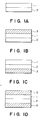
- the photosensitive layer of the photosensitive materials (1) and (2) of the present invention can be formed by dissolving or dispersing the above-described silver salt and reducing agent, which are contained as essential components, and optionally binder in water or a solvent, and coating the resulting solution on a support 3 as illustrated in Fig. 1, followed by drying.
- the photosensitive layer if the binder itself can achieve necessary strength of the photosensitive material, can be formed, without using the support 3, by incorporating the above essential components into a filmy or sheet-like member formed with the binder.
- the photosensitive layer 1 may also contain an antifogging agent, a surface active agent, a sensitizer for photography, a stabilizer, a thickening agent, an antistatic agent, a plasticizer and an alkali-generating agent.
- the photosensitive layer may have a film thickness of from 0.1 ⁇ m to 2 mm, preferably from 1 ⁇ m to 0.1 mm.
- Preferred mixing proportion of the above components in the photosensitive layer is set out below.
- the silver halide may preferably be in the proportion of from 0.1 to 100 parts by weight, and more preferably from 0.5 to 30 parts by weight, based on 100 parts by weight of the organic silver.
- the reducing agent may preferably be 0.5 to 3.0 mols, and more preferably from 0.7 to 1.3 mols, per mol of the silver salt.
- the polymerizable layer of the photosensitive materials (1) and (2) of the present invention will be described below in greater detail.
- a compound having at least one reactive vinyl group in its molecule can be utilized, and there can be used, for example, at least one selected from the group consisting of reactive vinyl group-containing monomers, reactive vinyl group-containing oligomers and reactive vinyl group-containing polymers.
- the reactive vinyl group in these compounds includes substituted or unsubstituted vinyl groups having polymerizable reactivity as exemplified by styrene vinyl groups, acrylic acid vinyl groups, methacrylic acid vinyl groups, allyl vinyl groups, and vinyl ethers, as well as ester vinyl groups such as vinyl acetate.
- polymerizable polymer precursor satisfying such conditions are as follows.
- They may include monovalent monomers as exemplified by styrene, methylstyrene, chlorostyrene, bromostyrene, methoxystyrene, dimethylaminostyrene, cyanostyrene, aminostyrene, acrylic acid, methyl acrylate, ethyl acrylate, cyclohexyl acrylate, methacrylic acid, methyl methacrylate, ethyl methacrylate, propyl methacrylate, butyl methacrylate, phenyl methacrylate, cyclohexyl methacrylate, vinyl pyridine, N-vinylpyrrolidone, N-vinylimidazole, N-methyl-2- vinylimidazole, propyl vinyl ether, butyl vinyl ether, isobutyl vinyl ether, ⁇ -chloroethyl vinyl ether, phenyl vinyl ether, p-methylphenyl vinyl
- a polymerization initiator that may accelerate the image formation attributable to the polymerization reaction, may be added to the polymerizable layer.
- a thermopolymerization initiator may preferably be used in the photosensitive material (1), and a photopolymerization initiator may be used, in the photosensitive material (2), but it is also possible to use both of them in combination.
- thermopolymerization initiator contained in the polymerizable layer of the photosensitive material (1) of the present invention which may include, for example, azo initiators and peroxide initiators.
- the azo initiator refers to an organic compound having at least one nitrogen-nitrogen double bond in its molecule, and may include, for example, azobisisobutyronitrile, azobiscyclohexanecarbonitrile, azobismethylphenethylcarbonitrile, azobis-sec-amylonitrile, azobisphenylethane, azobiscyclohexylpropylonitrile, azobismethylchloroethane, triethylazobenzene, phenylazoisobutyronitrile, and 9- (p-nitrophenylazo)-9-phenylfluorenone.
- the peroxide initiator includes almost all the compounds so long as they are organic compounds having at least one oxygen-oxygen bond in the molecule.
- it may include methyl ethyl ketone peroxide, cyclohexanone peroxide, 3,3,5-trimethylcyclohexanone peroxide, methylcyclohexanone peroxide, acetylacetone peroxide, 1,1′-bis(tertiary-butylperoxy)-3,3,5-trimethylcyclohexane, 1,1′-bis(tertiary-butylperoxy) cyclohexane, n-butyl-4,4-bis(tertiary-butylperoxy)valerate, 2,2′-bis(tertiary-butylperoxy)butane, tertiry-butyl hydroperoxide, cumene hydroperoxide, diisopropylbenzene hydroperoxide, para-menthane hydroperoxide,
- the photopolymerization initiator contained in the polymerizable layer of the photosensitive material (2) of the present invention includes, for example, carbonyl compounds, sulfur compounds, halogen compounds, and photopolymerization initiators of redox type.
- the carbonyl compounds include diketones as exemplified by benzyl, 4,4′-dimethoxybenzyl, diacetyl, and camphorquinone; benzophenones as exemplified by 4,4′-diethylaminobenzophenone, and 4,4′-dimethylbenzophenone; acetophenones as exemplified by acetophenone, 4-methoxyacetophenone; benzoin alkyl ethers; thioxanthones as exemplified by 2-chlorothioxanthone, 2,5-diethylthioxanthone, and thioxanthone-3-carboxylic acid ⁇ -methoxy ethyl ester; chalcones and styrylketones having a dialkylamino group; and cumarines as exemplified by 3,3′- carbonylbis(7-methoxycoumarin),
- the sulfur compounds include disulfides as exemplified by dibenzothiazolyl sulfide, decylphenyl sulfide and disulfides.
- the halogen compounds include, for example, carbon tetrabromide, quinolinesulfonyl chloride, and S-triazines having a trihalomethyl group.
- the photopolymerization initiators of redox type include a combination of a trivalent iron ionic compound (as exemplified by ferric ammonium citrate) with a peroxide, and a combination of a photoreducing dye such as riboflavin or Methylene Blue with a reducing agent such as triethanolamine or ascorbic acid.
- two or more compounds can also be used in combination to obtain a more efficient photopolymerization reaction.
- Such combination of the photopolymerization initiators includes a combination of chalcones having a dialkylamino group and styrylketones or coumarins, with S-triazines having a trihalomethyl group or camphorquinone.
- polymerization initiators may also be used in combination of two or more of them, or in combination with the above compounds.
- a polymerization inhibitor for the purpose of improving the storage stability of the polymerizable layer.
- a surface active agent for the purpose of improving the storage stability of the polymerizable layer.
- the polymerizable layer of the photosensitive materials (1) and (2) of the present invention can be formed by dissolving or dispersing the above-described polymerizable polymer precursor, which is contained as an essential component, and optionally a binder in water or a solvent, and coating the resulting solution on a support 3 as illustrated in Fig. 1, followed by drying.
- the layer 2 can also be used as a support without using the support 3.
- the support 3 are metals such as aluminum and copper, plastic films such as a polyester film, a polyimide film, an aromatic polyamide film, a polycarbonate film, a polysulfone film, a polyphenylene sulfite film, a polyether imide film and a fluorine-containing film, coated paper, and synthetic paper, which not only play a role to hold the photosensitive layer or polymerizable layer, but also, in the course of polymerization, when provided on both sides of the polymerizable layer so as to hold the polymerizable layer therebetween, play a role to prevent polymerization from being inhibited by oxygen and also play a role as a peel substrate used when a polymer image formed is visualized by the peel-apart method.
- plastic films such as a polyester film, a polyimide film, an aromatic polyamide film, a polycarbonate film, a polysulfone film, a polyphenylene sulfite film, a polyether imide film and a fluor
- the support 3 may be provided thereon with the polymerizable layer 2 and the photosensitive layer 1 in this order, or the support 3 may be provided thereon with the photosensitive layer 1, the polymerizable layer 2 and another support 3 in this order.
- the photosensitive layer and the polymerizable layer may also be provided separately on the support.
- the support may have a thickness of from 2 ⁇ m to 2 mm, and preferably from 3 ⁇ m to 1 mm. Further, it may be of any form including a flat sheet, a cylinder, a roll and so forth, without any particular limitations.
- Suitable binders used in the photosensitive layer 1 or the polymerizable layer 2 of the photosensitive materials (1) and (2) of the present invention can be selected from a wide range of resins.
- cellulose esters as exemplified by nitrocellulose, cellulose phosphate, cellulose sulfate, cellulose acetate, cellulose propionate, cellulose butyrate, cellulose myrystate, cellulose palmitate, cellulose acetate ⁇ propionate, and cellulose acetate ⁇ butyrate; cellulose ethers as exemplified by methyl cellulose, ethyl cellulose, propyl cellulose, and butyl cellulose; vinyl resins as exemplified by polystyrene, polyvinyl chloride, polyvinyl acetate, polyvinyl butyral, polyvinyl acetal, polyvinyl alcohol, and polyvinyl pyrrolidone; copolymer resins as exemplified by a styrene/butadiene copolymer, a styrene/acrylonitrile copolymer, a styrene/butadiene/acrylonitrile copolymer
- a binder is not an essential component. This may not necessarily be contained if the film properties, sensitivities or the like of the layer can be sufficiently secured.
- a coloring material e.g., a polymerization inhibitor, a photo-discoloration preventive agent, a solid solvent, a surface active agent, an antistatic agent, an alkali-generating agent, etc.
- the polymerizable layer may have a film thickness of from 0.1 ⁇ m to 2 mm, and preferably from 1 ⁇ m to 0.1 mm.
- the polymerization initiator may preferably be in the proportion of from 0.1 to 50 parts by weight, more preferably from 0.5 to 30 parts by weight, based on 100 parts by weight of the polymerizable polymer precursor.
- Embodiments of the photosensitive material of the present invention are shown in Figs. 1A to 1D, but the photosensitive material of the present invention is by no means limited to these so long as the photosensitive layer and polymerizable layer are directly laminated.
- the image forming method of the present invention may be either a method in which the above photosensitive material (1) or (2) is used, i.e., a method in which the photosensitive layer and polymerizable layer have been laminated from the first, or a method in which the above two layers are laminated in the course of its respective steps.
- the image forming method of the present invention can be roughly grouped into the following two, depending on whether the step of polymerizing the polymerizable layer comprises photopolymerization or thermopolymerization. Namely;
- the method of the present invention comprising the above steps, is chiefly characterized by using; (A) the photosensitive layer containing at least the photosensitive silver halide, organic silver salt and reducing agent, and (B) the polymerizable layer containing the polymerizable polymer precursor; 1) transferring at least the oxidized product, among the above reducing agent and oxidized product, from the above photosensitive layer (A) to the polymerizable layer (B), without transferring the metallic silver produced from the silver salt; and 2) polymerizing the area of the above polymerizable layer (B) to which area no oxidized product has been transferred, in other words, the area in the polymerizable layer (B), corresponding to an imagewise unexposed area of the photosensitive layer (A).
- the polymer image obtained by the method of the present invention has a good contrast and is free of inclusion of metallic silver and photosensitive silver halide, so that the image can be superior in value and chroma, and moreover superior in the stability of these properties with time.
- Step (a) in the above is the step of carrying out the writing of an image by light, where, as illustrated in Fig. 2A, a photosensitive layer 1 layer 1 is exposed to light for a desired image.
- This exposure to light may include digital exposure.
- silver metal 4 are formed from the silver halide in an exposed area 1-a, which forms the latent image.
- the silver metal 4 thus formed acts as a catalyst for the thermal reaction between the organic silver salt and reducing agent contained in the photosensitive layer 1.
- the exposure at this stage of the writing of the latent image may be carried out by appropriately selecting conditions under which any desired performances such as a sufficient contrast can be obtained in the resulting polymer image, depending on the concentration, etc. of the silver salt contained in the photosensitive layer.
- the exposure is carried out under an energy of up to 1 mJ/cm2 at maximum, through a mask having an optical density of 3.0 or more at the masked portion on the surface of the photosensitive layer, using the active light to which the silver halide has a sensitivity, as exemplified by light of 400 nm or less in the case when the silver halide is silver chloride and has not been sensitized, light of 450 nm or less in the case when the silver halide is silver bromide and has not been sensitized, light of 480 nm or less in the case when the silver halide is silver iodobromide and has not been sensitized, and light within the sensitizing region in the case when the silver halide has been sensitized (e.g.
- the light source therefor is exemplified by sunlight, a tungsten lamp, a mercury lamp, a halogen lamp, a xenon lamp, a fluorescent lamp, an LED or a laser.
- step (b) of the above the photosensitive layer on which the latent image has been formed is heated, so that, as illustrated in Fig. 2B, the silver metal 4 selectively act as a catalyst in the exposed area 1-a, where the organic silver salt is reduced to metallic silver 7 and at the same time the reducing agent 5 is oxidized to form an oxidized product 6.
- the exposed area 1-a containing the oxidized product 6 and the metallic silver 7 and an unexposed area 1-b containing the reducing agent 5.
- the reducing agent 5 used in the photosensitive layer 1 is usually an oxidized product having a polymerization inhibitory power against the polymerizable polymer precursor, which is preferably any of the compounds represented by Formula (I) to (V), an image which is ascribable to the difference in the polymerization inhibitory power, constituted by the distribution of the reducing agents 5 and oxidized products 6, is formed in the photosensitive layer 1.
- the heating in this step (b) is carried out at 60 to 150°C, preferably 70 to 140°C, for 1 to 40 seconds, preferably 1 to 30 seconds.
- the heating may be carried out by appropriately selecting conditions necessary to form inside the photosensitive material the difference in the polymerization inhibitory power, which is effective for the formation of the image.
- the heating may be carried out by appropriately selecting conditions that may make a difference in transfer performances (as exemplified by sublimation properties) between the reducing agent and oxidized product, so as to enable such selective transfer.
- step (c) with respect to a polymerizable layer 2 brought into direct contact or adjacency, as illustrated in Fig. 2C, with the photosensitive layer 1 on which the image comprised of the above reducing agent and oxidized product has been formed, at least the oxidized product among the reducing agent and oxidized product is transferred from the photosensitive layer 1 to the polymerizable layer 2, thereby separating these from the above metallic silver.
- the photosensitive layer 1 and polymerizable layer 2 may also have been laminated prior to the above step (a), or may be laminated after the above step (a) or step (b).
- the photosensitive layer 1 and polymerizable layer 2 may be laminated at least before making transfer of the reducing agent and oxidized product or the oxidized product in step (c). Provided that they may preferably be laminated after step (b) to obtain a polymer image having a better contrast.
- Fig. 2C illustrated is an embodiment in which the oxidized product 6 is transferred to the polymerizable layer 2.
- the present invention is not limited to this embodiment, and may include an embodiment in which the reducing agent 5 and oxidized product 6 are transferred together, according to which it is also possible, by transferring them, to form an image having a difference in the polymerization inhibitory power against the polymerizable precursor in the polymerizable layer 2.
- the heating for the transfer in the above step (c) is carried out under conditions of 70 to 180°C, and preferably 80 to 150°C, for 1 to 40 seconds, and preferably 1 to 30 seconds.
- step (d) energy such as heat or light is applied to the polymerizable layer 2, so that, as illustrated in Fig. 2D, a difference in a polymer formation state is produced between the area to which the oxidized product has been transferred and the area to which no oxidized product has been transferred, which difference brings about the formation of a polymer image on the area to which no oxidized product has been transferred.
- the polymerizable layer is heated at 70 to 180°C, and preferably 80 to 150°C, for 1 to 40 seconds, and preferably 1 to 30 seconds.
- the polymerizable layer is subjected to whole areal exposure by the use of light having a wavelength of not less than 250 nm, preferably from 250 to 700 nm, and more preferably from 300 to 500 nm, and an energy of up to 500 mJ/cm2 at maximum.
- the photosensitive layer 1 is separated from the polymerizable layer 2 on which the polymer image according to the present invention has been formed.
- Fig. 3A illustrates an embodiment in which the unpolymerized area in the polymerizable layer 2, which area has not been polymerized because of the polymerization inhibitory power of the oxidized product, has a stickiness and the sticky area has been transferred to the photosensitive layer 1 when the photosensitive layer is separated, leaving only the polymerized area 8 in the polymerizable layer 2,
- the present invention is by no means limited to this embodiment.
- step (c) there may be carried out the separation of the photosensitive layer 1 from the polymerizable layer 2 and then step (d).
- the method of the present invention may not be limited to the method in which the above respective steps (a) to (d) are carried out as respectively separate steps.
- the photosensitive layer 1 and polymerizable layer 2 may be brought into contact or adjacency to carry out the heating of them, so that it is possible to simultaneously achieve the "formation of the metallic silver and oxidized product" in step (b) and the "transfer of at least the oxidized product among the reducing agent and oxidized product” in step (c). It is also possible to simultaneously carry out, for example, the "transfer” in step (c) and the "polymerizing” in step (d). It is further possible to simultaneously carry out steps (b), (c) and (d).
- Methods of forming into a color image the polymer image obtained after step (d) according to the method of the present invention may include, for example, a method in which coloring materials are incorporated in the polymerizable layer, and the resulting layer is then laminated on a separate image-receiving sheet, followed by heating, pressing and so forth to transfer the unpolymerized area to the image-receiving sheet, and a method in which, as illustrated in Fig. 3B, a toner or ink 9 is adhered to the unpolymerized area 9.
- the photosensitive material and image forming method having been described above in detail enables faster and stabler formation of the polymer image having a good contrast, and also can be free of any influence of the black color of the silver image to obtain the visible image or color image having a superiority in the value and chroma and the stability of these properties with time.
- the photosensitive material and image forming method of the present invention can obtain a visible image or color image having a superior resolution and free from any color fog.
- a composition as shown below was stirred with use of a homomixer at 5,000 rpm for 10 minutes to prepare an emulsion Silver bromide 1 part Silver behenate 5 parts 4-Methoxy-1-naphthol 2 parts Behenic acid 2 parts Polyvinyl butyral (polymerization degree: 2,200) 10 parts Isopropanol 40 parts Methyl ethyl ketone 40 parts
- the resulting emulsion was coated on a polyester film with use of an applicator so as to give a dried film thickness of 4 ⁇ m, to obtain photosensitive layer (1).
- Methyl methacrylate/butyl methacrylate copolymer 60 parts Trimethylolpropane triacrylate 40 parts 2,4-Diethylthioxanthone 4 parts Ethyl dimethylaminobenzoate 3 parts Permanent Red 4R 12 parts Methyl ethyl ketone 400 parts
- this coating solution was coated on a polyester film with use of an applicator so as to give a dried film thickness of 3 ⁇ m to obtain polymerizable layer (1).
- a mask was superposed on the photosensitive layer (1), and then was exposed to light for 50 msec with a distance of 5 cm from a fluorescent lamp having a fluorescent peak at 405 nm and an electric power of 10 W, thereby forming an imagewise latent image. Then, the mask was removed, and the layer was allowed to pass for 20 seconds through a heat developing machine regulated to 95°C to cause an oxidation-reduction reaction in the photosensitive layer. Thus a silver image was imagewise formed in the latent image portion. Next, the resultant photosensitive layer (1) and polymerizable layer (1) were superposed each other so that the photosensitive layer and polymerizable layer may come into face-to-face contact, and then heated to 140°C for 2 seconds to effect transfer of the oxidized product.
- the whole area of the polymerizable layer (1) was exposed to light for 40 seconds with a distance of 2 cm from a fluorescent lamp having a fluorescent peak at 380 nm and an electric power of 15 W.
- the photosensitive layer and polymerizable layer were pealed each other to find that a red sharp polymer image corresponding to the imagewise unexposed area was formed on the polyester film of the polymerizable layer.
- Example 1 was repeated but replacing 2 parts of 4-methoxy-1-naphthol used in Example 1 with 3 parts of 2,2′-methylenebis(4-methoxyphenol), to prepare photosensitive layer (2).
- the same polymerizable layer as the polymerizable layer (1) in Example 1 was used.
- a mask was superposed on the photosensitive layer (2), and then was exposed to light for 50 msec with a distance of 5 cm from a fluorescent lamp having a fluorescent peak at 450 nm and an electric power of 10 W, thereby forming an imagewise latent image. Then, the mask was removed, and the photosensitive layer (2) and polymerizable layer (1) were superposed each other so that the photosensitive layer and the polymerizable layer (1) may come into face-to-face contact, and then heated and pressed at 115°C for 15 seconds to carry out the heat development to form a pattern of the reducing agent and oxidized product and simultaneously to perform the transfer of this pattern to the polymerizable layer (1).
- the whole area of the polymerizable layer (1) was exposed to light area for 40 seconds with a distance of 2 cm from a fluorescent lamp having a fluorescent peak at 380 nm and an electric power of 15 W.
- the polymerizable layer (1) was etched with ethanol to find that a red sharp polymer image corresponding to the imagewise unexposed area was formed on the polyester film of the polymerizable layer (1).
- Example 1 was repeated but replacing 2 parts of 4-methoxy-1-naphthol used in Example 1 with 2.5 parts of 8-hydroquinoline, to prepare an emulsion and to prepare photosensitive layer (3) so as to give a dried film thickness of 3 to 4 ⁇ m.
- the resulting coating solution was coated on the photosensitive layer (3) so as to give a dried film thickness of 3 ⁇ m, and further thereon an aqueous polyvinyl alcohol solution was coated with a thickness of 2 ⁇ m, thus preparing photosensitive material (3) comprising the photosensitive layer (3) and laminated thereon the polymerizable layer (2).
- a mask was superposed on the photosensitive material (3), and then was exposed to light for 50 msec with a distance of 5 cm from a fluorescent lamp having a fluorescent peak at 405 nm and an electric power of 10 W, thereby forming an imagewise latent image. Then, the mask was removed, and the photosensitive material (3) was allowed to pass for 20 seconds through a heat developing machine regulated to 95°C, and further heated and pressed under conditions at 150°C for 2 seconds to carry out the transfer of the reducing agent and oxidized product obtained by the heat development.
- the whole area of the photosensitive material (3) was exposed to light for 40 seconds with a distance of 2 cm from a fluorescent lamp having a fluorescent peak at 380 nm and an electric power of 15 W.
- the PVA layer on the surface of the photosensitive material (3) was removed by washing with water, and thereafter the photosensitive material (3) was sufficiently dried.
- a red toner was sprayed on the whole surface of the polymerized layer.
- a composition as shown below was stirred with use of a homomixer at 5,000 rpm for 10 minutes to prepare an emulsion.
- Silver bromide 1 part Silver behenate 5 parts 4,4′-Dimethoxy-1,1′-dihydroxy-2,2′-binaphthyl 1.8 parts
- Behenic acid 2 parts Polyvinyl butyral (polymerization degree: 2,200) 10 parts
- the resulting emulsion was coated on a polyester film with use of an applicator so as to give a dried film thickness of 4 ⁇ m, to obtain photosensitive layer (4).
- Methyl methacrylate/butyl methacrylate copolymer 60 parts Trimethylolpropane triacrylate 40 parts Dicumyl peroxide 0.3 part Permanent Red 4R 12 parts Methyl ethyl ketone 400 parts
- This coating solution was coated on a polyester film with use of an applicator so as to give a dried film thickness of 3 ⁇ m to obtain polymerizable layer (3).
- a mask was superposed on the photosensitive layer (4), and then was exposed to light for 50 msec with a distance of 5 cm from a fluorescent lamp having a fluorescent peak at 405 nm and an electric power of 10 W, thereby forming an imagewise latent image.
- the mask was removed, and the layer was allowed to pass for 20 seconds through a heat developing machine regulated to 95°C to cause a oxidation-reduction reaction in the photosensitive layer.
- a silver image was imagewise formed in the latent image portion.
- the resultant photosensitive layer (4) and polymerizable layer (3) were superposed each other so that the photosensitive and the polymerizable layer may come into face-to-face contact.
- the transfer of the reducing agent and oxidized product, or the oxidized product, and simultaneously the polymerization of the polymerizable layer were carried out at 140°C and 2 seconds.
- the area coming into face-to-face contact with the imagewise exposed area was not polymerized, and the polymerizable layer adhered to the photosensitive layer and coming into face-to-face contact with the imagewise unexposed area were polymerized.
- the photosensitive layer (4) and polymerizable layer (3) were separated each other. As a result, the imagewise exposed area which was not polymerized was transferred to the photosensitive layer, and a polymerized red sharp image was obtained on the polymerizable layer.
- Example 1 was repeated but replacing 2 parts of 4-methoxy-1-naphthol used in Example 1 with 2.5 parts of 1-methoxy-5-hydroxyanthracene, to prepare an emulsion and to prepare photosensitive layer (5) so as to give a dried film thickness of 4 ⁇ m.
- Image formation was carried out using the same polymerizable layer (1) as used in Example 1.
- Example 1 The same procedures were repeated except that the heating conditions (140°C for 2 seconds) in the image formation in Example 1 were changed to 150°C and 2 seconds. As a result, a red sharp polymer image corresponding to the imagewise unexposed area was formed on the polyester film of the polymerizable layer (1).
- a composition as shown below was dispersed with use of a homomixer at 5,000 rpm for 10 minutes to prepare an emulsion.
- Silver bromide 0.1 part
- Silver behenate 0.5 part m-Dimethylaminophenol 0.2 part
- Behenic acid 0.2 part
- Methyl methacrylate/butyl methacrylate copolymer 60 parts
- Trimethylolpropane triacrylate 40 parts
- Dicumyl peroxide 0.8 part Permanent Red 4R 12 parts Methyl ethyl ketone 400 parts
- This emulsion was coated on a polyester film so as to give a dried film thickness of 6 ⁇ m, and a heat-resistant protective layer comprising polyvinyl alcohol was provided thereon with a thickness of 2 ⁇ m, thus obtaining a conventional photosensitive image forming material.
- a latent image was formed on the above photosensitive image forming material by the same procedures as Example 1, followed by heating with use of a heat developing machine at 120°C for 30 seconds. At this stage, a silver image was formed in the latent image portion, and further the polymerization reaction took place at the same area, followed by etching to obtain a red polymer image, which, however, was a dull image with a poor chroma because of coexistence of the silver image and red image in the same area.
- Silver chlorobromide emulsion (containing 10% by weight of silver chlorobromide of a molar ratio of chlorine/bromide of 1/1) 1.5 g 10 wt% aqueous solution of gelatine 2.2 g Phenidone 0.1 g Triethanolamine 0.1 g Sorbitol 0.2 g 5 wt% aqueous solution of sodium p-dodecylbenzenesulfonate 0.15 g Water 36.0 g
- a solution of the above described formulation was applied to a polyethylene terephthalate film so as to result in a dry film thickness of 1 ⁇ m, and dried to prepare a photosensitive layer.
- the amount of silver halide coated was 0.05 g/m2 as silver.
- a mixture of the above described formulation was emulsified by a ultrasonic emulsifier for 1 hour, and it was applied to a polyethylene terephthalate film so as to result in a dry film thickness of about 7 ⁇ m, and dried to prepare a polymerizable layer.
- a latent image was formed in a manner similar to that in Example 1. Next, the mask was removed, and the layer was passed for 15 seconds through a heat developing machine regulated to 110°C. The resultant photosensitive layer and polymerizable layer (1) were superposed each other and heated at 110°C for 15 seconds, and the whole area of the polymerizable layer (1) was exposed for 30 seconds using a halogen lump at 50,000 luxes.
- the polymerized layer was etched with a developing solution composed of 1 part of ethanol and 1 part of water fo find that a blue polymer image corresponding to the imagewise exposed area was formed. But, the obtained blue image was partly etched, so that its density was low and also the edge thereof was unclear, as compared with the image obtained according to the present invention.
Landscapes
- Physics & Mathematics (AREA)
- Spectroscopy & Molecular Physics (AREA)
- General Physics & Mathematics (AREA)
- Non-Silver Salt Photosensitive Materials And Non-Silver Salt Photography (AREA)
- Photosensitive Polymer And Photoresist Processing (AREA)
Priority Applications (1)
| Application Number | Priority Date | Filing Date | Title |
|---|---|---|---|
| EP94202910A EP0633501A3 (de) | 1988-02-08 | 1989-02-07 | Lichtempfindliches Material und Bildaufzeichnungsverfahren. |
Applications Claiming Priority (2)
| Application Number | Priority Date | Filing Date | Title |
|---|---|---|---|
| JP25749/88 | 1988-02-08 | ||
| JP2574988 | 1988-02-08 |
Related Child Applications (1)
| Application Number | Title | Priority Date | Filing Date |
|---|---|---|---|
| EP94202910.9 Division-Into | 1989-02-07 |
Publications (3)
| Publication Number | Publication Date |
|---|---|
| EP0328364A2 true EP0328364A2 (de) | 1989-08-16 |
| EP0328364A3 EP0328364A3 (en) | 1990-05-02 |
| EP0328364B1 EP0328364B1 (de) | 1996-05-08 |
Family
ID=12174479
Family Applications (2)
| Application Number | Title | Priority Date | Filing Date |
|---|---|---|---|
| EP89301200A Expired - Lifetime EP0328364B1 (de) | 1988-02-08 | 1989-02-07 | Lichtempfindliches Material |
| EP94202910A Withdrawn EP0633501A3 (de) | 1988-02-08 | 1989-02-07 | Lichtempfindliches Material und Bildaufzeichnungsverfahren. |
Family Applications After (1)
| Application Number | Title | Priority Date | Filing Date |
|---|---|---|---|
| EP94202910A Withdrawn EP0633501A3 (de) | 1988-02-08 | 1989-02-07 | Lichtempfindliches Material und Bildaufzeichnungsverfahren. |
Country Status (5)
| Country | Link |
|---|---|
| US (1) | US5001032A (de) |
| EP (2) | EP0328364B1 (de) |
| AU (1) | AU619246B2 (de) |
| CA (1) | CA1336145C (de) |
| DE (1) | DE68926401T2 (de) |
Cited By (7)
| Publication number | Priority date | Publication date | Assignee | Title |
|---|---|---|---|---|
| EP0330504A3 (en) * | 1988-02-26 | 1990-05-02 | Canon Kabushiki Kaisha | Photosensitive material and image forming method |
| EP0363790A3 (en) * | 1988-10-04 | 1990-05-09 | Canon Kabushiki Kaisha | Image forming method and image forming medium |
| US5073791A (en) * | 1989-07-27 | 1991-12-17 | Canon Kabushiki Kaisha | Image forming device |
| US5171657A (en) * | 1988-10-04 | 1992-12-15 | Canon Kabushiki Kaisha | Light sensitive image forming medium |
| US5260164A (en) * | 1988-02-26 | 1993-11-09 | Canon Kabushiki Kaisha | Photosensitive material and image forming method |
| US5374496A (en) * | 1988-10-04 | 1994-12-20 | Canon Kabushiki Kaisha | Image forming method |
| EP0360014B1 (de) * | 1988-08-23 | 1996-01-03 | Canon Kabushiki Kaisha | Photoempfindliches Material und Bildherstellungsverfahren damit |
Families Citing this family (20)
| Publication number | Priority date | Publication date | Assignee | Title |
|---|---|---|---|---|
| CA2000072C (en) * | 1988-10-04 | 1997-03-18 | Akihiro Mouri | Image forming method and image forming medium |
| US5266441A (en) * | 1989-07-29 | 1993-11-30 | Canon Kabushiki Kaisha | Image forming medium and image forming method |
| US5187041A (en) * | 1990-04-04 | 1993-02-16 | Canon Kabushiki Kaisha | Image forming method and image forming apparatus |
| US5393638A (en) * | 1990-06-12 | 1995-02-28 | Canon Kabushiki Kaisha | Image forming method |
| EP0486246A1 (de) * | 1990-11-14 | 1992-05-20 | Canon Kabushiki Kaisha | Durch Wärme entwickelbare, lichtempfindliche Zusammensetzung |
| JP2590025B2 (ja) * | 1990-11-27 | 1997-03-12 | 富士写真フイルム株式会社 | 感光材料および画像形成方法 |
| DE69211752T2 (de) * | 1991-04-15 | 1997-04-17 | Canon Kk | Photoempfindliches wärmeentwickelbares Material und Bildherstellungsverfahren damit |
| JP2832765B2 (ja) * | 1991-05-07 | 1998-12-09 | 富士写真フイルム株式会社 | カラープルーフ作成方法および感光材料 |
| JP2739261B2 (ja) * | 1991-05-07 | 1998-04-15 | 富士写真フイルム株式会社 | 画像形成方法 |
| JP2832766B2 (ja) * | 1991-05-07 | 1998-12-09 | 富士写真フイルム株式会社 | カラープルーフ作成方法 |
| EP0530674A1 (de) * | 1991-08-30 | 1993-03-10 | Canon Kabushiki Kaisha | Plattenförmiges Ausgangsmaterial, Verfahren zur Herstellung einer Druckplatte aus diesem Material und Druckverfahren und Gerät in welchem diese Platte verwendet wird |
| GB9121789D0 (en) * | 1991-10-14 | 1991-11-27 | Minnesota Mining & Mfg | Positive-acting photothermographic materials |
| DE69307582T2 (de) * | 1992-04-30 | 1997-07-03 | Canon Kk | Warm entwickelbares photoempfindliches Material |
| JPH07140587A (ja) * | 1993-11-12 | 1995-06-02 | Canon Inc | 乾式銀塩感光体、及び同感光体を用いる画像形成方法 |
| EP0762196B1 (de) * | 1995-08-15 | 1999-10-27 | Fuji Photo Film Co., Ltd. | Lichtempfindliches, wärmeentwickelbares Material |
| WO1999047062A1 (en) * | 1998-03-17 | 1999-09-23 | The Cleveland Clinic Foundation | A syringe labeling system |
| US7148000B2 (en) * | 2001-04-23 | 2006-12-12 | Fuji Photo Film Co., Ltd. | Heat-developable photosensitive material and image-forming process |
| US7189783B2 (en) * | 2001-11-27 | 2007-03-13 | Fujitsu Limited | Resist pattern thickening material, resist pattern and forming process thereof, and semiconductor device and manufacturing process thereof |
| US12209172B2 (en) | 2020-04-08 | 2025-01-28 | 3M Innovative Properties Company | Curable compositions and methods of using the same |
| US11603343B2 (en) | 2020-09-02 | 2023-03-14 | Ankh Life Sciences Limited | Inhibition of DYRK1A kinase |
Family Cites Families (14)
| Publication number | Priority date | Publication date | Assignee | Title |
|---|---|---|---|---|
| US3874947A (en) * | 1968-08-20 | 1975-04-01 | Fuji Photo Film Co Ltd | Process for the production of polymer images |
| JPS5550246A (en) * | 1978-10-05 | 1980-04-11 | Fuji Photo Film Co Ltd | Photosensitive lithographic printing plate material |
| JPS55149939A (en) * | 1979-04-05 | 1980-11-21 | Asahi Chem Ind Co Ltd | Image forming method and photosensitive material used for it |
| DE3207064A1 (de) * | 1981-02-27 | 1982-12-23 | Fuji Photo Film Co., Ltd., Minami-Ashigara, Kanagawa | Verfahren zur bildung polymerer bilder |
| JPS58192032A (ja) * | 1982-05-04 | 1983-11-09 | Fuji Photo Film Co Ltd | 重合画像形成方法 |
| JPS5955429A (ja) * | 1982-09-24 | 1984-03-30 | Konishiroku Photo Ind Co Ltd | 熱現像処理カラ−画像形成方法 |
| JPS60249146A (ja) * | 1984-05-25 | 1985-12-09 | Fuji Photo Film Co Ltd | 画像記録方法 |
| EP0174634B1 (de) * | 1984-09-12 | 1987-12-09 | Fuji Photo Film Co., Ltd. | Bilderzeugungsverfahren |
| JPS6175342A (ja) * | 1984-09-21 | 1986-04-17 | Fuji Photo Film Co Ltd | 画像記録方法 |
| DE3660787D1 (en) * | 1985-04-22 | 1988-10-27 | Fuji Photo Film Co Ltd | Method for forming a polymer image and image recording material therefor |
| JPH0661002B2 (ja) * | 1985-09-24 | 1994-08-10 | 富士写真フイルム株式会社 | 画像記録方法 |
| JPH0619550B2 (ja) * | 1986-01-10 | 1994-03-16 | 富士写真フイルム株式会社 | 画像形成方法および感光材料 |
| JPH0619553B2 (ja) * | 1986-03-11 | 1994-03-16 | 富士写真フイルム株式会社 | 熱現像用感光材料 |
| JP2768481B2 (ja) * | 1988-01-29 | 1998-06-25 | オリエンタル写真工業株式会社 | 感光体、感光材料および画像形成方法 |
-
1989
- 1989-02-06 CA CA000590248A patent/CA1336145C/en not_active Expired - Fee Related
- 1989-02-07 EP EP89301200A patent/EP0328364B1/de not_active Expired - Lifetime
- 1989-02-07 EP EP94202910A patent/EP0633501A3/de not_active Withdrawn
- 1989-02-07 AU AU29713/89A patent/AU619246B2/en not_active Ceased
- 1989-02-07 DE DE68926401T patent/DE68926401T2/de not_active Expired - Fee Related
- 1989-12-19 US US07/453,162 patent/US5001032A/en not_active Expired - Lifetime
Cited By (8)
| Publication number | Priority date | Publication date | Assignee | Title |
|---|---|---|---|---|
| EP0330504A3 (en) * | 1988-02-26 | 1990-05-02 | Canon Kabushiki Kaisha | Photosensitive material and image forming method |
| US5064744A (en) * | 1988-02-26 | 1991-11-12 | Canon Kabushiki Kaisha | Photosensitive material and image forming method |
| US5260164A (en) * | 1988-02-26 | 1993-11-09 | Canon Kabushiki Kaisha | Photosensitive material and image forming method |
| EP0360014B1 (de) * | 1988-08-23 | 1996-01-03 | Canon Kabushiki Kaisha | Photoempfindliches Material und Bildherstellungsverfahren damit |
| EP0363790A3 (en) * | 1988-10-04 | 1990-05-09 | Canon Kabushiki Kaisha | Image forming method and image forming medium |
| US5171657A (en) * | 1988-10-04 | 1992-12-15 | Canon Kabushiki Kaisha | Light sensitive image forming medium |
| US5374496A (en) * | 1988-10-04 | 1994-12-20 | Canon Kabushiki Kaisha | Image forming method |
| US5073791A (en) * | 1989-07-27 | 1991-12-17 | Canon Kabushiki Kaisha | Image forming device |
Also Published As
| Publication number | Publication date |
|---|---|
| US5001032A (en) | 1991-03-19 |
| AU2971389A (en) | 1989-08-10 |
| DE68926401D1 (de) | 1996-06-13 |
| EP0633501A3 (de) | 1995-04-26 |
| DE68926401T2 (de) | 1996-09-19 |
| CA1336145C (en) | 1995-07-04 |
| EP0633501A2 (de) | 1995-01-11 |
| EP0328364B1 (de) | 1996-05-08 |
| EP0328364A3 (en) | 1990-05-02 |
| AU619246B2 (en) | 1992-01-23 |
Similar Documents
| Publication | Publication Date | Title |
|---|---|---|
| EP0328364B1 (de) | Lichtempfindliches Material | |
| US5663032A (en) | Photosensitive composition containing photosensitive and heat developable element and polymer element and image-forming method utilizing the same | |
| EP0330504B1 (de) | Lichtempfindliches Material und Bilderzeugungsverfahren | |
| EP0412851A2 (de) | Lichtempfindliches Element und Mehrfarbenerzeugungsverfahren | |
| EP0568023B1 (de) | Warm entwickelbares photoempfindliches Material | |
| US5171657A (en) | Light sensitive image forming medium | |
| EP0509740A1 (de) | Photoempfindliches wärmeentwickelbares Material und Bildherstellungsverfahren damit | |
| EP0360014A1 (de) | Photoempfindliches Material und Bildherstellungsverfahren damit | |
| EP0363790B1 (de) | Bildaufzeichnungsverfahren und Material | |
| EP0453125A2 (de) | Verfahren und Vorichtung zur Herstellung eines Bildes | |
| JPH03135564A (ja) | 画像形成方法および画像形成媒体 | |
| EP0461621B1 (de) | Bildaufzeichnungsverfahren | |
| US5374496A (en) | Image forming method | |
| JPH02110466A (ja) | 感光体および画像形成方法 | |
| US5260164A (en) | Photosensitive material and image forming method | |
| JPH043063A (ja) | 感光体及び画像形成方法 | |
| EP0453317A2 (de) | Mittel zur Bilderzeugung | |
| JPH01105239A (ja) | 感光性材料とそれを用いた画像形成方法 | |
| JPH0365951A (ja) | 感光体及び画像形成方法 | |
| JPH02309357A (ja) | 感光体と画像形成方法 | |
| JPH04348339A (ja) | 乾式銀塩感光体、及び同感光体を用いた画像形成方法 | |
| JPH02975A (ja) | 感光体および画像形成方法 | |
| JPH02151864A (ja) | 画像形成媒体 | |
| JPH0325443A (ja) | 感光体および画像形成方法 | |
| JPH03132664A (ja) | 多色画像形成方法 |
Legal Events
| Date | Code | Title | Description |
|---|---|---|---|
| PUAI | Public reference made under article 153(3) epc to a published international application that has entered the european phase |
Free format text: ORIGINAL CODE: 0009012 |
|
| AK | Designated contracting states |
Kind code of ref document: A2 Designated state(s): DE FR GB IT NL |
|
| PUAL | Search report despatched |
Free format text: ORIGINAL CODE: 0009013 |
|
| AK | Designated contracting states |
Kind code of ref document: A3 Designated state(s): DE FR GB IT NL |
|
| 17P | Request for examination filed |
Effective date: 19900918 |
|
| 17Q | First examination report despatched |
Effective date: 19921029 |
|
| GRAA | (expected) grant |
Free format text: ORIGINAL CODE: 0009210 |
|
| ITF | It: translation for a ep patent filed | ||
| AK | Designated contracting states |
Kind code of ref document: B1 Designated state(s): DE FR GB IT NL |
|
| PG25 | Lapsed in a contracting state [announced via postgrant information from national office to epo] |
Ref country code: NL Free format text: LAPSE BECAUSE OF FAILURE TO SUBMIT A TRANSLATION OF THE DESCRIPTION OR TO PAY THE FEE WITHIN THE PRESCRIBED TIME-LIMIT Effective date: 19960508 |
|
| XX | Miscellaneous (additional remarks) |
Free format text: TEILANMELDUNG 94202910.9 EINGEREICHT AM 07/02/89. |
|
| REF | Corresponds to: |
Ref document number: 68926401 Country of ref document: DE Date of ref document: 19960613 |
|
| ET | Fr: translation filed | ||
| NLV1 | Nl: lapsed or annulled due to failure to fulfill the requirements of art. 29p and 29m of the patents act | ||
| PLBE | No opposition filed within time limit |
Free format text: ORIGINAL CODE: 0009261 |
|
| STAA | Information on the status of an ep patent application or granted ep patent |
Free format text: STATUS: NO OPPOSITION FILED WITHIN TIME LIMIT |
|
| 26N | No opposition filed | ||
| REG | Reference to a national code |
Ref country code: GB Ref legal event code: IF02 |
|
| PGFP | Annual fee paid to national office [announced via postgrant information from national office to epo] |
Ref country code: GB Payment date: 20070214 Year of fee payment: 19 |
|
| PGFP | Annual fee paid to national office [announced via postgrant information from national office to epo] |
Ref country code: DE Payment date: 20070418 Year of fee payment: 19 |
|
| PGFP | Annual fee paid to national office [announced via postgrant information from national office to epo] |
Ref country code: IT Payment date: 20070612 Year of fee payment: 19 |
|
| PGFP | Annual fee paid to national office [announced via postgrant information from national office to epo] |
Ref country code: FR Payment date: 20070221 Year of fee payment: 19 |
|
| GBPC | Gb: european patent ceased through non-payment of renewal fee |
Effective date: 20080207 |
|
| REG | Reference to a national code |
Ref country code: FR Ref legal event code: ST Effective date: 20081031 |
|
| PG25 | Lapsed in a contracting state [announced via postgrant information from national office to epo] |
Ref country code: DE Free format text: LAPSE BECAUSE OF NON-PAYMENT OF DUE FEES Effective date: 20080902 |
|
| PG25 | Lapsed in a contracting state [announced via postgrant information from national office to epo] |
Ref country code: FR Free format text: LAPSE BECAUSE OF NON-PAYMENT OF DUE FEES Effective date: 20080229 |
|
| PG25 | Lapsed in a contracting state [announced via postgrant information from national office to epo] |
Ref country code: GB Free format text: LAPSE BECAUSE OF NON-PAYMENT OF DUE FEES Effective date: 20080207 |
|
| PG25 | Lapsed in a contracting state [announced via postgrant information from national office to epo] |
Ref country code: IT Free format text: LAPSE BECAUSE OF NON-PAYMENT OF DUE FEES Effective date: 20080207 |