EP1669091A2 - Therapeutischer Inhibitor von glatten Muskelzellen - Google Patents
Therapeutischer Inhibitor von glatten Muskelzellen Download PDFInfo
- Publication number
- EP1669091A2 EP1669091A2 EP06006402A EP06006402A EP1669091A2 EP 1669091 A2 EP1669091 A2 EP 1669091A2 EP 06006402 A EP06006402 A EP 06006402A EP 06006402 A EP06006402 A EP 06006402A EP 1669091 A2 EP1669091 A2 EP 1669091A2
- Authority
- EP
- European Patent Office
- Prior art keywords
- smooth muscle
- cells
- stent
- therapeutic agent
- intravascular stent
- Prior art date
- Legal status (The legal status is an assumption and is not a legal conclusion. Google has not performed a legal analysis and makes no representation as to the accuracy of the status listed.)
- Withdrawn
Links
Images









Classifications
-
- A—HUMAN NECESSITIES
- A61—MEDICAL OR VETERINARY SCIENCE; HYGIENE
- A61K—PREPARATIONS FOR MEDICAL, DENTAL OR TOILETRY PURPOSES
- A61K31/00—Medicinal preparations containing organic active ingredients
- A61K31/04—Nitro compounds
-
- A—HUMAN NECESSITIES
- A61—MEDICAL OR VETERINARY SCIENCE; HYGIENE
- A61K—PREPARATIONS FOR MEDICAL, DENTAL OR TOILETRY PURPOSES
- A61K31/00—Medicinal preparations containing organic active ingredients
-
- A—HUMAN NECESSITIES
- A61—MEDICAL OR VETERINARY SCIENCE; HYGIENE
- A61K—PREPARATIONS FOR MEDICAL, DENTAL OR TOILETRY PURPOSES
- A61K31/00—Medicinal preparations containing organic active ingredients
- A61K31/13—Amines
- A61K31/131—Amines acyclic
-
- A—HUMAN NECESSITIES
- A61—MEDICAL OR VETERINARY SCIENCE; HYGIENE
- A61K—PREPARATIONS FOR MEDICAL, DENTAL OR TOILETRY PURPOSES
- A61K31/00—Medicinal preparations containing organic active ingredients
- A61K31/13—Amines
- A61K31/135—Amines having aromatic rings, e.g. ketamine, nortriptyline
-
- A—HUMAN NECESSITIES
- A61—MEDICAL OR VETERINARY SCIENCE; HYGIENE
- A61K—PREPARATIONS FOR MEDICAL, DENTAL OR TOILETRY PURPOSES
- A61K31/00—Medicinal preparations containing organic active ingredients
- A61K31/13—Amines
- A61K31/135—Amines having aromatic rings, e.g. ketamine, nortriptyline
- A61K31/138—Aryloxyalkylamines, e.g. propranolol, tamoxifen, phenoxybenzamine
-
- A—HUMAN NECESSITIES
- A61—MEDICAL OR VETERINARY SCIENCE; HYGIENE
- A61K—PREPARATIONS FOR MEDICAL, DENTAL OR TOILETRY PURPOSES
- A61K31/00—Medicinal preparations containing organic active ingredients
- A61K31/16—Amides, e.g. hydroxamic acids
- A61K31/165—Amides, e.g. hydroxamic acids having aromatic rings, e.g. colchicine, atenolol, progabide
-
- A—HUMAN NECESSITIES
- A61—MEDICAL OR VETERINARY SCIENCE; HYGIENE
- A61K—PREPARATIONS FOR MEDICAL, DENTAL OR TOILETRY PURPOSES
- A61K31/00—Medicinal preparations containing organic active ingredients
- A61K31/16—Amides, e.g. hydroxamic acids
- A61K31/17—Amides, e.g. hydroxamic acids having the group >N—C(O)—N< or >N—C(S)—N<, e.g. urea, thiourea, carmustine
-
- A—HUMAN NECESSITIES
- A61—MEDICAL OR VETERINARY SCIENCE; HYGIENE
- A61K—PREPARATIONS FOR MEDICAL, DENTAL OR TOILETRY PURPOSES
- A61K31/00—Medicinal preparations containing organic active ingredients
- A61K31/33—Heterocyclic compounds
- A61K31/335—Heterocyclic compounds having oxygen as the only ring hetero atom, e.g. fungichromin
- A61K31/337—Heterocyclic compounds having oxygen as the only ring hetero atom, e.g. fungichromin having four-membered rings, e.g. taxol
-
- A—HUMAN NECESSITIES
- A61—MEDICAL OR VETERINARY SCIENCE; HYGIENE
- A61K—PREPARATIONS FOR MEDICAL, DENTAL OR TOILETRY PURPOSES
- A61K31/00—Medicinal preparations containing organic active ingredients
- A61K31/33—Heterocyclic compounds
- A61K31/335—Heterocyclic compounds having oxygen as the only ring hetero atom, e.g. fungichromin
- A61K31/365—Lactones
-
- A—HUMAN NECESSITIES
- A61—MEDICAL OR VETERINARY SCIENCE; HYGIENE
- A61K—PREPARATIONS FOR MEDICAL, DENTAL OR TOILETRY PURPOSES
- A61K31/00—Medicinal preparations containing organic active ingredients
- A61K31/33—Heterocyclic compounds
- A61K31/395—Heterocyclic compounds having nitrogen as a ring hetero atom, e.g. guanethidine or rifamycins
- A61K31/40—Heterocyclic compounds having nitrogen as a ring hetero atom, e.g. guanethidine or rifamycins having five-membered rings with one nitrogen as the only ring hetero atom, e.g. sulpiride, succinimide, tolmetin, buflomedil
- A61K31/4025—Heterocyclic compounds having nitrogen as a ring hetero atom, e.g. guanethidine or rifamycins having five-membered rings with one nitrogen as the only ring hetero atom, e.g. sulpiride, succinimide, tolmetin, buflomedil not condensed and containing further heterocyclic rings, e.g. cromakalim
-
- A—HUMAN NECESSITIES
- A61—MEDICAL OR VETERINARY SCIENCE; HYGIENE
- A61K—PREPARATIONS FOR MEDICAL, DENTAL OR TOILETRY PURPOSES
- A61K31/00—Medicinal preparations containing organic active ingredients
- A61K31/33—Heterocyclic compounds
- A61K31/395—Heterocyclic compounds having nitrogen as a ring hetero atom, e.g. guanethidine or rifamycins
- A61K31/40—Heterocyclic compounds having nitrogen as a ring hetero atom, e.g. guanethidine or rifamycins having five-membered rings with one nitrogen as the only ring hetero atom, e.g. sulpiride, succinimide, tolmetin, buflomedil
- A61K31/403—Heterocyclic compounds having nitrogen as a ring hetero atom, e.g. guanethidine or rifamycins having five-membered rings with one nitrogen as the only ring hetero atom, e.g. sulpiride, succinimide, tolmetin, buflomedil condensed with carbocyclic rings, e.g. carbazole
- A61K31/4035—Isoindoles, e.g. phthalimide
-
- A—HUMAN NECESSITIES
- A61—MEDICAL OR VETERINARY SCIENCE; HYGIENE
- A61K—PREPARATIONS FOR MEDICAL, DENTAL OR TOILETRY PURPOSES
- A61K31/00—Medicinal preparations containing organic active ingredients
- A61K31/33—Heterocyclic compounds
- A61K31/395—Heterocyclic compounds having nitrogen as a ring hetero atom, e.g. guanethidine or rifamycins
- A61K31/40—Heterocyclic compounds having nitrogen as a ring hetero atom, e.g. guanethidine or rifamycins having five-membered rings with one nitrogen as the only ring hetero atom, e.g. sulpiride, succinimide, tolmetin, buflomedil
- A61K31/407—Heterocyclic compounds having nitrogen as a ring hetero atom, e.g. guanethidine or rifamycins having five-membered rings with one nitrogen as the only ring hetero atom, e.g. sulpiride, succinimide, tolmetin, buflomedil condensed with other heterocyclic ring systems, e.g. ketorolac, physostigmine
-
- A—HUMAN NECESSITIES
- A61—MEDICAL OR VETERINARY SCIENCE; HYGIENE
- A61K—PREPARATIONS FOR MEDICAL, DENTAL OR TOILETRY PURPOSES
- A61K31/00—Medicinal preparations containing organic active ingredients
- A61K31/33—Heterocyclic compounds
- A61K31/395—Heterocyclic compounds having nitrogen as a ring hetero atom, e.g. guanethidine or rifamycins
- A61K31/495—Heterocyclic compounds having nitrogen as a ring hetero atom, e.g. guanethidine or rifamycins having six-membered rings with two or more nitrogen atoms as the only ring heteroatoms, e.g. piperazine or tetrazines
- A61K31/505—Pyrimidines; Hydrogenated pyrimidines, e.g. trimethoprim
- A61K31/519—Pyrimidines; Hydrogenated pyrimidines, e.g. trimethoprim ortho- or peri-condensed with heterocyclic rings
-
- A—HUMAN NECESSITIES
- A61—MEDICAL OR VETERINARY SCIENCE; HYGIENE
- A61K—PREPARATIONS FOR MEDICAL, DENTAL OR TOILETRY PURPOSES
- A61K31/00—Medicinal preparations containing organic active ingredients
- A61K31/33—Heterocyclic compounds
- A61K31/395—Heterocyclic compounds having nitrogen as a ring hetero atom, e.g. guanethidine or rifamycins
- A61K31/55—Heterocyclic compounds having nitrogen as a ring hetero atom, e.g. guanethidine or rifamycins having seven-membered rings, e.g. azelastine, pentylenetetrazole
- A61K31/551—Heterocyclic compounds having nitrogen as a ring hetero atom, e.g. guanethidine or rifamycins having seven-membered rings, e.g. azelastine, pentylenetetrazole having two nitrogen atoms, e.g. dilazep
-
- A—HUMAN NECESSITIES
- A61—MEDICAL OR VETERINARY SCIENCE; HYGIENE
- A61K—PREPARATIONS FOR MEDICAL, DENTAL OR TOILETRY PURPOSES
- A61K31/00—Medicinal preparations containing organic active ingredients
- A61K31/70—Carbohydrates; Sugars; Derivatives thereof
- A61K31/7028—Compounds having saccharide radicals attached to non-saccharide compounds by glycosidic linkages
- A61K31/7034—Compounds having saccharide radicals attached to non-saccharide compounds by glycosidic linkages attached to a carbocyclic compound, e.g. phloridzin
- A61K31/704—Compounds having saccharide radicals attached to non-saccharide compounds by glycosidic linkages attached to a carbocyclic compound, e.g. phloridzin attached to a condensed carbocyclic ring system, e.g. sennosides, thiocolchicosides, escin, daunorubicin
-
- A—HUMAN NECESSITIES
- A61—MEDICAL OR VETERINARY SCIENCE; HYGIENE
- A61K—PREPARATIONS FOR MEDICAL, DENTAL OR TOILETRY PURPOSES
- A61K47/00—Medicinal preparations characterised by the non-active ingredients used, e.g. carriers or inert additives; Targeting or modifying agents chemically bound to the active ingredient
- A61K47/50—Medicinal preparations characterised by the non-active ingredients used, e.g. carriers or inert additives; Targeting or modifying agents chemically bound to the active ingredient the non-active ingredient being chemically bound to the active ingredient, e.g. polymer-drug conjugates
- A61K47/51—Medicinal preparations characterised by the non-active ingredients used, e.g. carriers or inert additives; Targeting or modifying agents chemically bound to the active ingredient the non-active ingredient being chemically bound to the active ingredient, e.g. polymer-drug conjugates the non-active ingredient being a modifying agent
- A61K47/68—Medicinal preparations characterised by the non-active ingredients used, e.g. carriers or inert additives; Targeting or modifying agents chemically bound to the active ingredient the non-active ingredient being chemically bound to the active ingredient, e.g. polymer-drug conjugates the non-active ingredient being a modifying agent the modifying agent being an antibody, an immunoglobulin or a fragment thereof, e.g. an Fc-fragment
- A61K47/6801—Drug-antibody or immunoglobulin conjugates defined by the pharmacologically or therapeutically active agent
- A61K47/6803—Drugs conjugated to an antibody or immunoglobulin, e.g. cisplatin-antibody conjugates
- A61K47/6807—Drugs conjugated to an antibody or immunoglobulin, e.g. cisplatin-antibody conjugates the drug or compound being a sugar, nucleoside, nucleotide, nucleic acid, e.g. RNA antisense
- A61K47/6809—Antibiotics, e.g. antitumor antibiotics anthracyclins, adriamycin, doxorubicin or daunomycin
-
- A—HUMAN NECESSITIES
- A61—MEDICAL OR VETERINARY SCIENCE; HYGIENE
- A61K—PREPARATIONS FOR MEDICAL, DENTAL OR TOILETRY PURPOSES
- A61K47/00—Medicinal preparations characterised by the non-active ingredients used, e.g. carriers or inert additives; Targeting or modifying agents chemically bound to the active ingredient
- A61K47/50—Medicinal preparations characterised by the non-active ingredients used, e.g. carriers or inert additives; Targeting or modifying agents chemically bound to the active ingredient the non-active ingredient being chemically bound to the active ingredient, e.g. polymer-drug conjugates
- A61K47/51—Medicinal preparations characterised by the non-active ingredients used, e.g. carriers or inert additives; Targeting or modifying agents chemically bound to the active ingredient the non-active ingredient being chemically bound to the active ingredient, e.g. polymer-drug conjugates the non-active ingredient being a modifying agent
- A61K47/68—Medicinal preparations characterised by the non-active ingredients used, e.g. carriers or inert additives; Targeting or modifying agents chemically bound to the active ingredient the non-active ingredient being chemically bound to the active ingredient, e.g. polymer-drug conjugates the non-active ingredient being a modifying agent the modifying agent being an antibody, an immunoglobulin or a fragment thereof, e.g. an Fc-fragment
- A61K47/6801—Drug-antibody or immunoglobulin conjugates defined by the pharmacologically or therapeutically active agent
- A61K47/6803—Drugs conjugated to an antibody or immunoglobulin, e.g. cisplatin-antibody conjugates
- A61K47/6811—Drugs conjugated to an antibody or immunoglobulin, e.g. cisplatin-antibody conjugates the drug being a protein or peptide, e.g. transferrin or bleomycin
- A61K47/6817—Toxins
- A61K47/6831—Fungal toxins, e.g. alpha sarcine, mitogillin, zinniol or restrictocin
-
- A—HUMAN NECESSITIES
- A61—MEDICAL OR VETERINARY SCIENCE; HYGIENE
- A61K—PREPARATIONS FOR MEDICAL, DENTAL OR TOILETRY PURPOSES
- A61K47/00—Medicinal preparations characterised by the non-active ingredients used, e.g. carriers or inert additives; Targeting or modifying agents chemically bound to the active ingredient
- A61K47/50—Medicinal preparations characterised by the non-active ingredients used, e.g. carriers or inert additives; Targeting or modifying agents chemically bound to the active ingredient the non-active ingredient being chemically bound to the active ingredient, e.g. polymer-drug conjugates
- A61K47/51—Medicinal preparations characterised by the non-active ingredients used, e.g. carriers or inert additives; Targeting or modifying agents chemically bound to the active ingredient the non-active ingredient being chemically bound to the active ingredient, e.g. polymer-drug conjugates the non-active ingredient being a modifying agent
- A61K47/68—Medicinal preparations characterised by the non-active ingredients used, e.g. carriers or inert additives; Targeting or modifying agents chemically bound to the active ingredient the non-active ingredient being chemically bound to the active ingredient, e.g. polymer-drug conjugates the non-active ingredient being a modifying agent the modifying agent being an antibody, an immunoglobulin or a fragment thereof, e.g. an Fc-fragment
- A61K47/6835—Medicinal preparations characterised by the non-active ingredients used, e.g. carriers or inert additives; Targeting or modifying agents chemically bound to the active ingredient the non-active ingredient being chemically bound to the active ingredient, e.g. polymer-drug conjugates the non-active ingredient being a modifying agent the modifying agent being an antibody, an immunoglobulin or a fragment thereof, e.g. an Fc-fragment the modifying agent being an antibody or an immunoglobulin bearing at least one antigen-binding site
- A61K47/6843—Medicinal preparations characterised by the non-active ingredients used, e.g. carriers or inert additives; Targeting or modifying agents chemically bound to the active ingredient the non-active ingredient being chemically bound to the active ingredient, e.g. polymer-drug conjugates the non-active ingredient being a modifying agent the modifying agent being an antibody, an immunoglobulin or a fragment thereof, e.g. an Fc-fragment the modifying agent being an antibody or an immunoglobulin bearing at least one antigen-binding site the antibody targeting a material from animals or humans
-
- A—HUMAN NECESSITIES
- A61—MEDICAL OR VETERINARY SCIENCE; HYGIENE
- A61K—PREPARATIONS FOR MEDICAL, DENTAL OR TOILETRY PURPOSES
- A61K47/00—Medicinal preparations characterised by the non-active ingredients used, e.g. carriers or inert additives; Targeting or modifying agents chemically bound to the active ingredient
- A61K47/50—Medicinal preparations characterised by the non-active ingredients used, e.g. carriers or inert additives; Targeting or modifying agents chemically bound to the active ingredient the non-active ingredient being chemically bound to the active ingredient, e.g. polymer-drug conjugates
- A61K47/69—Medicinal preparations characterised by the non-active ingredients used, e.g. carriers or inert additives; Targeting or modifying agents chemically bound to the active ingredient the non-active ingredient being chemically bound to the active ingredient, e.g. polymer-drug conjugates the conjugate being characterised by physical or galenical forms, e.g. emulsion, particle, inclusion complex, stent or kit
- A61K47/6921—Medicinal preparations characterised by the non-active ingredients used, e.g. carriers or inert additives; Targeting or modifying agents chemically bound to the active ingredient the non-active ingredient being chemically bound to the active ingredient, e.g. polymer-drug conjugates the conjugate being characterised by physical or galenical forms, e.g. emulsion, particle, inclusion complex, stent or kit the form being a particulate, a powder, an adsorbate, a bead or a sphere
- A61K47/6923—Medicinal preparations characterised by the non-active ingredients used, e.g. carriers or inert additives; Targeting or modifying agents chemically bound to the active ingredient the non-active ingredient being chemically bound to the active ingredient, e.g. polymer-drug conjugates the conjugate being characterised by physical or galenical forms, e.g. emulsion, particle, inclusion complex, stent or kit the form being a particulate, a powder, an adsorbate, a bead or a sphere the form being an inorganic particle, e.g. ceramic particles, silica particles, ferrite or synsorb
-
- A—HUMAN NECESSITIES
- A61—MEDICAL OR VETERINARY SCIENCE; HYGIENE
- A61K—PREPARATIONS FOR MEDICAL, DENTAL OR TOILETRY PURPOSES
- A61K47/00—Medicinal preparations characterised by the non-active ingredients used, e.g. carriers or inert additives; Targeting or modifying agents chemically bound to the active ingredient
- A61K47/50—Medicinal preparations characterised by the non-active ingredients used, e.g. carriers or inert additives; Targeting or modifying agents chemically bound to the active ingredient the non-active ingredient being chemically bound to the active ingredient, e.g. polymer-drug conjugates
- A61K47/69—Medicinal preparations characterised by the non-active ingredients used, e.g. carriers or inert additives; Targeting or modifying agents chemically bound to the active ingredient the non-active ingredient being chemically bound to the active ingredient, e.g. polymer-drug conjugates the conjugate being characterised by physical or galenical forms, e.g. emulsion, particle, inclusion complex, stent or kit
- A61K47/6921—Medicinal preparations characterised by the non-active ingredients used, e.g. carriers or inert additives; Targeting or modifying agents chemically bound to the active ingredient the non-active ingredient being chemically bound to the active ingredient, e.g. polymer-drug conjugates the conjugate being characterised by physical or galenical forms, e.g. emulsion, particle, inclusion complex, stent or kit the form being a particulate, a powder, an adsorbate, a bead or a sphere
- A61K47/6927—Medicinal preparations characterised by the non-active ingredients used, e.g. carriers or inert additives; Targeting or modifying agents chemically bound to the active ingredient the non-active ingredient being chemically bound to the active ingredient, e.g. polymer-drug conjugates the conjugate being characterised by physical or galenical forms, e.g. emulsion, particle, inclusion complex, stent or kit the form being a particulate, a powder, an adsorbate, a bead or a sphere the form being a solid microparticle having no hollow or gas-filled cores
-
- A—HUMAN NECESSITIES
- A61—MEDICAL OR VETERINARY SCIENCE; HYGIENE
- A61K—PREPARATIONS FOR MEDICAL, DENTAL OR TOILETRY PURPOSES
- A61K47/00—Medicinal preparations characterised by the non-active ingredients used, e.g. carriers or inert additives; Targeting or modifying agents chemically bound to the active ingredient
- A61K47/50—Medicinal preparations characterised by the non-active ingredients used, e.g. carriers or inert additives; Targeting or modifying agents chemically bound to the active ingredient the non-active ingredient being chemically bound to the active ingredient, e.g. polymer-drug conjugates
- A61K47/69—Medicinal preparations characterised by the non-active ingredients used, e.g. carriers or inert additives; Targeting or modifying agents chemically bound to the active ingredient the non-active ingredient being chemically bound to the active ingredient, e.g. polymer-drug conjugates the conjugate being characterised by physical or galenical forms, e.g. emulsion, particle, inclusion complex, stent or kit
- A61K47/6957—Medicinal preparations characterised by the non-active ingredients used, e.g. carriers or inert additives; Targeting or modifying agents chemically bound to the active ingredient the non-active ingredient being chemically bound to the active ingredient, e.g. polymer-drug conjugates the conjugate being characterised by physical or galenical forms, e.g. emulsion, particle, inclusion complex, stent or kit the form being a device or a kit, e.g. stents or microdevices
-
- A—HUMAN NECESSITIES
- A61—MEDICAL OR VETERINARY SCIENCE; HYGIENE
- A61K—PREPARATIONS FOR MEDICAL, DENTAL OR TOILETRY PURPOSES
- A61K9/00—Medicinal preparations characterised by special physical form
- A61K9/0012—Galenical forms characterised by the site of application
- A61K9/0019—Injectable compositions; Intramuscular, intravenous, arterial, subcutaneous administration; Compositions to be administered through the skin in an invasive manner
- A61K9/0024—Solid, semi-solid or solidifying implants, which are implanted or injected in body tissue
-
- A—HUMAN NECESSITIES
- A61—MEDICAL OR VETERINARY SCIENCE; HYGIENE
- A61L—METHODS OR APPARATUS FOR STERILISING MATERIALS OR OBJECTS IN GENERAL; DISINFECTION, STERILISATION OR DEODORISATION OF AIR; CHEMICAL ASPECTS OF BANDAGES, DRESSINGS, ABSORBENT PADS OR SURGICAL ARTICLES; MATERIALS FOR BANDAGES, DRESSINGS, ABSORBENT PADS OR SURGICAL ARTICLES
- A61L31/00—Materials for other surgical articles, e.g. stents, stent-grafts, shunts, surgical drapes, guide wires, materials for adhesion prevention, occluding devices, surgical gloves, tissue fixation devices
- A61L31/14—Materials characterised by their function or physical properties, e.g. injectable or lubricating compositions, shape-memory materials, surface modified materials
- A61L31/148—Materials at least partially resorbable by the body
-
- A—HUMAN NECESSITIES
- A61—MEDICAL OR VETERINARY SCIENCE; HYGIENE
- A61L—METHODS OR APPARATUS FOR STERILISING MATERIALS OR OBJECTS IN GENERAL; DISINFECTION, STERILISATION OR DEODORISATION OF AIR; CHEMICAL ASPECTS OF BANDAGES, DRESSINGS, ABSORBENT PADS OR SURGICAL ARTICLES; MATERIALS FOR BANDAGES, DRESSINGS, ABSORBENT PADS OR SURGICAL ARTICLES
- A61L31/00—Materials for other surgical articles, e.g. stents, stent-grafts, shunts, surgical drapes, guide wires, materials for adhesion prevention, occluding devices, surgical gloves, tissue fixation devices
- A61L31/14—Materials characterised by their function or physical properties, e.g. injectable or lubricating compositions, shape-memory materials, surface modified materials
- A61L31/16—Biologically active materials, e.g. therapeutic substances
-
- A—HUMAN NECESSITIES
- A61—MEDICAL OR VETERINARY SCIENCE; HYGIENE
- A61P—SPECIFIC THERAPEUTIC ACTIVITY OF CHEMICAL COMPOUNDS OR MEDICINAL PREPARATIONS
- A61P35/00—Antineoplastic agents
-
- A—HUMAN NECESSITIES
- A61—MEDICAL OR VETERINARY SCIENCE; HYGIENE
- A61P—SPECIFIC THERAPEUTIC ACTIVITY OF CHEMICAL COMPOUNDS OR MEDICINAL PREPARATIONS
- A61P41/00—Drugs used in surgical methods, e.g. surgery adjuvants for preventing adhesion or for vitreum substitution
-
- A—HUMAN NECESSITIES
- A61—MEDICAL OR VETERINARY SCIENCE; HYGIENE
- A61P—SPECIFIC THERAPEUTIC ACTIVITY OF CHEMICAL COMPOUNDS OR MEDICINAL PREPARATIONS
- A61P43/00—Drugs for specific purposes, not provided for in groups A61P1/00-A61P41/00
-
- A—HUMAN NECESSITIES
- A61—MEDICAL OR VETERINARY SCIENCE; HYGIENE
- A61P—SPECIFIC THERAPEUTIC ACTIVITY OF CHEMICAL COMPOUNDS OR MEDICINAL PREPARATIONS
- A61P7/00—Drugs for disorders of the blood or the extracellular fluid
-
- A—HUMAN NECESSITIES
- A61—MEDICAL OR VETERINARY SCIENCE; HYGIENE
- A61P—SPECIFIC THERAPEUTIC ACTIVITY OF CHEMICAL COMPOUNDS OR MEDICINAL PREPARATIONS
- A61P9/00—Drugs for disorders of the cardiovascular system
- A61P9/08—Vasodilators for multiple indications
-
- A—HUMAN NECESSITIES
- A61—MEDICAL OR VETERINARY SCIENCE; HYGIENE
- A61P—SPECIFIC THERAPEUTIC ACTIVITY OF CHEMICAL COMPOUNDS OR MEDICINAL PREPARATIONS
- A61P9/00—Drugs for disorders of the cardiovascular system
- A61P9/10—Drugs for disorders of the cardiovascular system for treating ischaemic or atherosclerotic diseases, e.g. antianginal drugs, coronary vasodilators, drugs for myocardial infarction, retinopathy, cerebrovascula insufficiency, renal arteriosclerosis
-
- B—PERFORMING OPERATIONS; TRANSPORTING
- B82—NANOTECHNOLOGY
- B82Y—SPECIFIC USES OR APPLICATIONS OF NANOSTRUCTURES; MEASUREMENT OR ANALYSIS OF NANOSTRUCTURES; MANUFACTURE OR TREATMENT OF NANOSTRUCTURES
- B82Y5/00—Nanobiotechnology or nanomedicine, e.g. protein engineering or drug delivery
-
- A—HUMAN NECESSITIES
- A61—MEDICAL OR VETERINARY SCIENCE; HYGIENE
- A61L—METHODS OR APPARATUS FOR STERILISING MATERIALS OR OBJECTS IN GENERAL; DISINFECTION, STERILISATION OR DEODORISATION OF AIR; CHEMICAL ASPECTS OF BANDAGES, DRESSINGS, ABSORBENT PADS OR SURGICAL ARTICLES; MATERIALS FOR BANDAGES, DRESSINGS, ABSORBENT PADS OR SURGICAL ARTICLES
- A61L2300/00—Biologically active materials used in bandages, wound dressings, absorbent pads or medical devices
- A61L2300/40—Biologically active materials used in bandages, wound dressings, absorbent pads or medical devices characterised by a specific therapeutic activity or mode of action
- A61L2300/416—Anti-neoplastic or anti-proliferative or anti-restenosis or anti-angiogenic agents, e.g. paclitaxel, sirolimus
-
- A—HUMAN NECESSITIES
- A61—MEDICAL OR VETERINARY SCIENCE; HYGIENE
- A61L—METHODS OR APPARATUS FOR STERILISING MATERIALS OR OBJECTS IN GENERAL; DISINFECTION, STERILISATION OR DEODORISATION OF AIR; CHEMICAL ASPECTS OF BANDAGES, DRESSINGS, ABSORBENT PADS OR SURGICAL ARTICLES; MATERIALS FOR BANDAGES, DRESSINGS, ABSORBENT PADS OR SURGICAL ARTICLES
- A61L2300/00—Biologically active materials used in bandages, wound dressings, absorbent pads or medical devices
- A61L2300/60—Biologically active materials used in bandages, wound dressings, absorbent pads or medical devices characterised by a special physical form
- A61L2300/602—Type of release, e.g. controlled, sustained, slow
- A61L2300/604—Biodegradation
-
- A—HUMAN NECESSITIES
- A61—MEDICAL OR VETERINARY SCIENCE; HYGIENE
- A61L—METHODS OR APPARATUS FOR STERILISING MATERIALS OR OBJECTS IN GENERAL; DISINFECTION, STERILISATION OR DEODORISATION OF AIR; CHEMICAL ASPECTS OF BANDAGES, DRESSINGS, ABSORBENT PADS OR SURGICAL ARTICLES; MATERIALS FOR BANDAGES, DRESSINGS, ABSORBENT PADS OR SURGICAL ARTICLES
- A61L2300/00—Biologically active materials used in bandages, wound dressings, absorbent pads or medical devices
- A61L2300/60—Biologically active materials used in bandages, wound dressings, absorbent pads or medical devices characterised by a special physical form
- A61L2300/606—Coatings
-
- G—PHYSICS
- G01—MEASURING; TESTING
- G01N—INVESTIGATING OR ANALYSING MATERIALS BY DETERMINING THEIR CHEMICAL OR PHYSICAL PROPERTIES
- G01N2800/00—Detection or diagnosis of diseases
- G01N2800/32—Cardiovascular disorders
- G01N2800/323—Arteriosclerosis, Stenosis
-
- Y—GENERAL TAGGING OF NEW TECHNOLOGICAL DEVELOPMENTS; GENERAL TAGGING OF CROSS-SECTIONAL TECHNOLOGIES SPANNING OVER SEVERAL SECTIONS OF THE IPC; TECHNICAL SUBJECTS COVERED BY FORMER USPC CROSS-REFERENCE ART COLLECTIONS [XRACs] AND DIGESTS
- Y10—TECHNICAL SUBJECTS COVERED BY FORMER USPC
- Y10S—TECHNICAL SUBJECTS COVERED BY FORMER USPC CROSS-REFERENCE ART COLLECTIONS [XRACs] AND DIGESTS
- Y10S977/00—Nanotechnology
- Y10S977/70—Nanostructure
- Y10S977/773—Nanoparticle, i.e. structure having three dimensions of 100 nm or less
- Y10S977/775—Nanosized powder or flake, e.g. nanosized catalyst
-
- Y—GENERAL TAGGING OF NEW TECHNOLOGICAL DEVELOPMENTS; GENERAL TAGGING OF CROSS-SECTIONAL TECHNOLOGIES SPANNING OVER SEVERAL SECTIONS OF THE IPC; TECHNICAL SUBJECTS COVERED BY FORMER USPC CROSS-REFERENCE ART COLLECTIONS [XRACs] AND DIGESTS
- Y10—TECHNICAL SUBJECTS COVERED BY FORMER USPC
- Y10S—TECHNICAL SUBJECTS COVERED BY FORMER USPC CROSS-REFERENCE ART COLLECTIONS [XRACs] AND DIGESTS
- Y10S977/00—Nanotechnology
- Y10S977/70—Nanostructure
- Y10S977/788—Of specified organic or carbon-based composition
- Y10S977/802—Virus-based particle
- Y10S977/806—Virus-based particle with exterior chemical attachment
- Y10S977/808—Exterior attachment for targeting, e.g. drug targeting
-
- Y—GENERAL TAGGING OF NEW TECHNOLOGICAL DEVELOPMENTS; GENERAL TAGGING OF CROSS-SECTIONAL TECHNOLOGIES SPANNING OVER SEVERAL SECTIONS OF THE IPC; TECHNICAL SUBJECTS COVERED BY FORMER USPC CROSS-REFERENCE ART COLLECTIONS [XRACs] AND DIGESTS
- Y10—TECHNICAL SUBJECTS COVERED BY FORMER USPC
- Y10S—TECHNICAL SUBJECTS COVERED BY FORMER USPC CROSS-REFERENCE ART COLLECTIONS [XRACs] AND DIGESTS
- Y10S977/00—Nanotechnology
- Y10S977/902—Specified use of nanostructure
- Y10S977/904—Specified use of nanostructure for medical, immunological, body treatment, or diagnosis
- Y10S977/905—Specially adapted for travel through blood circulatory system
-
- Y—GENERAL TAGGING OF NEW TECHNOLOGICAL DEVELOPMENTS; GENERAL TAGGING OF CROSS-SECTIONAL TECHNOLOGIES SPANNING OVER SEVERAL SECTIONS OF THE IPC; TECHNICAL SUBJECTS COVERED BY FORMER USPC CROSS-REFERENCE ART COLLECTIONS [XRACs] AND DIGESTS
- Y10—TECHNICAL SUBJECTS COVERED BY FORMER USPC
- Y10S—TECHNICAL SUBJECTS COVERED BY FORMER USPC CROSS-REFERENCE ART COLLECTIONS [XRACs] AND DIGESTS
- Y10S977/00—Nanotechnology
- Y10S977/902—Specified use of nanostructure
- Y10S977/904—Specified use of nanostructure for medical, immunological, body treatment, or diagnosis
- Y10S977/906—Drug delivery
-
- Y—GENERAL TAGGING OF NEW TECHNOLOGICAL DEVELOPMENTS; GENERAL TAGGING OF CROSS-SECTIONAL TECHNOLOGIES SPANNING OVER SEVERAL SECTIONS OF THE IPC; TECHNICAL SUBJECTS COVERED BY FORMER USPC CROSS-REFERENCE ART COLLECTIONS [XRACs] AND DIGESTS
- Y10—TECHNICAL SUBJECTS COVERED BY FORMER USPC
- Y10S—TECHNICAL SUBJECTS COVERED BY FORMER USPC CROSS-REFERENCE ART COLLECTIONS [XRACs] AND DIGESTS
- Y10S977/00—Nanotechnology
- Y10S977/902—Specified use of nanostructure
- Y10S977/904—Specified use of nanostructure for medical, immunological, body treatment, or diagnosis
- Y10S977/915—Therapeutic or pharmaceutical composition
- Y10S977/916—Gene therapy
Definitions
- PTCA Percutaneous transluminal coronary angioplasty
- PTCA Percutaneous transluminal coronary angioplasty
- the use of this surgical procedure has grown rapidly, with 39,000 procedures performed in 1983, nearly 150,000 in 1987, 200,000 in 1988, 250,000 in 1989, and over 500,000 PTCAs per year are estimated by 1994 (1, 2, 3).
- Stenosis following PTCA remains a significant problem, with from 25% to 35% of the patients developing restenosis within 1 to 3 months. Restenosis results in significant morbidity and mortality and frequently necessitates further interventions such as repeat angioplasty or coronary bypass surgery. No surgical intervention or post-surgical treatment (to date) has proven effective in preventing restenosis.
- Heparin is an example of one such compound, which reportedly inhibits smooth muscle cell proliferation in vitro but when used in vivo has the potential adverse side effect of inhibiting coagulation.
- Heparin peptides while having reduced anti-coagulant activity, have the undesirable pharmacological property of having a short pharmacological half-life.
- Attempts have been made to solve such problems by using a double balloon catheter, i.e., for regional delivery of the therapeutic agent at the angioplasty site (e.g., 8; U.S. Pat. No. 4,824,436), and by using biodegradable materials impregnated with a drug, i.e., to compensate for problems of short half-life (e.g., 9; U.S. Pat. No. 4,929,602).
- Verrucarins and Roridins are trichothecene drugs produced as secondary metabolites by the soil fungi Myrothecium verrucaria and Myrothecium roridium .
- Verrucarin is a macrocyclic triester.
- Roridin is a macrocyclic diester of verrucarol (10).
- the trichothecenes are structurally related to sesquiterpenoid mycotoxins produced by several species of fungi and characterized by the 12,13-epoxytrichothec-9-ene basic structure. Their cytotoxic activity to eukaryotic cells is closely correlated with their ability to bind to the cell, to be internalized, and to inhibit protein and macromolecular synthesis in the cell.
- inhibitory agents may have systemic toxicity that could create an unacceptable level of risk for patients with cardiovascular disease.
- inhibitory agents might interfere with vascular wound healing following surgery and that could either delay healing or weaken the structure or elasticity of the newly healed vessel wall.
- inhibitory agents killing smooth muscle cells could damage surrounding endothelium and/or other medial smooth muscle cells. Dead and dying cells also release mitogenic agents that might stimulate additional smooth muscle cell proliferation and exacerbate stenosis.
- delivery of therapeutically effective levels of an inhibitory agent may be problematic from several standpoints: namely, a) delivery of a large number of molecules into the intercellular spaces between smooth muscle cells may be necessary, i.e., to establish favorable conditions for allowing a therapeutically effective dose of molecules to cross the cell membrane; b) directing an inhibitory drug into the proper intracellular compartment, i.e., where its action is exerted, may be difficult to control; and, c) optimizing the association of the inhibitory drug with its intracellular target, e.g, a ribosome, while minimizing intercellular redistribution of the drug, e.g. to neighboring cells, may be difficult.
- inhibitory drugs including cytotoxic agents
- cytotoxic agents to effectively treat smooth muscle cell proliferation. It would be highly advantageous to develop new methods for inhibiting stenosis due to proliferation of vascular smooth muscle cells following traumatic injury to vessels such as occurs during vascular surgery.
- delivery of compounds that produce inhibitory effects of extended duration to the vascular smooth muscle cells would be advantageous. Local administration of such sustained release compounds would also be useful in the treatment of other conditions where the target cell population is accessible by such administration.
- new therapeutic methods and therapeutic conjugates are provided for inhibiting vascular smooth muscle cells in a mammalian host.
- the therapeutic conjugates contain a vascular smooth muscle binding protein or peptide that binds in a specific manner to the cell membranes of a vascular smooth muscle cell or an interstitial matrix binding protein/peptide that binds in a specific manner to interstitial matrix (e.g., collagen) of the artery wall, coupled to a therapeutic agent that inhibits the activity of the cell.
- inhibition of cellular activity results in reducing, delaying, or eliminating stenosis after angioplasty or other vascular surgical procedures.
- the therapeutic conjugates of the invention achieve these advantageous effects by associating with vascular smooth muscle cells and pericytes, which may transform into smooth muscle cells.
- the therapeutic conjugate may contain: (1) therapeutic agents that alter cellular metabolism or are inhibitors of protein synthesis, cellular proliferation, or cell migration; (2) microtubule and microfilament inhibitors that affect morphology or increases in cell volume; and/or (3) inhibitors of extracellular matrix synthesis or secretion.
- the conjugates include a cytotoxic therapeutic agent that is a sesquiterpenoid mycotoxin such as a verrucarin or a roridin.
- cytostatic therapeutic agents that inhibit DNA synthesis and proliferation at doses that have a minimal effect on protein synthesis
- protein kinase inhibitors e.g., staurosporin
- suramin e.g., pirase inhibitors
- nitric oxide releasing compounds e.g., nitroglycerin
- therapeutic agents that inhibit the contraction or migration of smooth muscle cells and maintain an enlarged luminal area following, for example, angioplasty trauma (e.g. , the cytochalasins, such as cytochalasin B, cytochalasin C, cytochalasin D or the like) are also contemplated for use in accordance with the present invention.
- vascular smooth muscle binding proteins that specifically associate with a chondroitin sulfate proteoglycan (CSPG) expressed on the membranes of a vascular smooth muscle cell, and in a preferred embodiment this CSPG has a molecular weight of about 250 kDaltons.
- CSPG chondroitin sulfate proteoglycan
- the vascular smooth muscle binding protein binds to a CSPG target on the cell surface with an association constant of at least 10 -4 M.
- the vascular smooth muscle binding protein contains a sequence of amino acids found in the Fab, Fv or CDR (complementarity determining regions) of monoclonal antibody NR-AN-01 or functional equivalents thereof.
- aspects of the invention include methods for inhibiting stenosis, e.g., following angioplasty in a mammalian host, by administering to a human or animal subject in need of such treatment a therapeutically effective dosage of a therapeutic conjugate of the invention.
- the dosage of therapeutic conjugate may be administered with an infusion catheter, to achieve a 10 -3 M to 10 -12 M concentration of said therapeutic conjugate at the site of administration in a blood vessel.
- the present invention also contemplates therapeutic methods and therapeutic dosage forms involving sustained release of therapeutic agent to target cells.
- the target cells are vascular smooth muscle cells, cancer cells, somatic cells requiring modulation to ameliorate a disease state and cells involved in immune system-mediated diseases that are accessible by local administration of the dosage form. Consequently, the methods and dosage forms of this aspect of the present invention are useful for inhibiting vascular smooth muscle cells in a mammalian host, employing a therapeutic agent that inhibits the activity of the cell (e.g. , proliferation, contraction, migration or the like) but does not kill the cell and a vascular smooth muscle cell binding protein.
- a therapeutic agent that inhibits the activity of the cell (e.g. , proliferation, contraction, migration or the like) but does not kill the cell and a vascular smooth muscle cell binding protein.
- the methods and dosage forms of this aspect of the present invention are useful for inhibiting target cell proliferation or killing such target cells, employing a therapeutic agent that inhibits proliferation or is cytotoxic to the target cells and a target cell binding protein.
- the methods and dosage forms of this aspect of the present invention are useful for delivering cytostatic, cytocidal or metabolism modulating therapeutic agents to target cells, such as effector cells of the immune system, that are accessible by local administration of the dosage form, employing a target cell binding protein.
- dosage forms of the present invention are useful to reduce or eliminate pathological proliferation or hyperactivity of normal tissue (i.e. , somatic cells).
- one therapeutic method of the invention involves the in vivo placement of a metallic, plastic or biodegradable intravascular stent which comprises a therapeutic agent.
- stents comprising a therapeutic agent.
- a preferred embodiment of the invention is a stent which comprises a therapeutic agent such as a cytoskeletal inhibitor or an inhibitor of smooth muscle cell proliferation.
- a preferred cytoskeletal inhibitor of the invention is a cytochalasin, such as cytochalasin B or a structural analog thereof that is functionally equivalent.
- An alternative preferred cytoskeletal inhibitor of the invention is taxol or a structural analog thereof that is functionally equivalent.
- the stents can comprise a biodegradable coating or a porous or permeable non-biodegradable coating.
- a preferred embodiment of the invention is a stent comprising a biodegradable coating or a porous/permeable non-biodegradable coating comprising the therapeutic agent.
- a more preferred embodiment of the invention is a stent comprising a biodegradable coating or a porous or non-biodegradable non-biodegradable coating comprising a sustained-release dosage form of the therapeutic agent.
- a stent e.g., a biodegradable stent
- a biodegradable stent with the therapeutic agent impregnated therein which is further coated with a biodegradable coating or with a porous or permeable non-biodegradable coating comprising a sustained release-dosage form of a therapeutic agent is also contemplated.
- This embodiment of the invention can provide a differential release rate of the therapeutic agent, i.e., there would be a faster release of the therapeutic agent from the coating followed by delayed release of the therapeutic agent that is impregnated in the stent matrix upon degradation of the stent matrix.
- Pseudomonas exotoxin e.g., suramin and protein kinase inhibitors (e.g., staurosporin), sphingosine, or analogs or functional equivalents thereof.
- anti-proliferative agents or antimigration agents are preferred (e.g. , cytochalasins, taxol, somatostatin, somatostatin analogs, N-ethylmaleimide, antisense oligonucleotides and the like).
- the dosage forms of the present invention are targeted to a relevant target cell population by a binding protein or peptide.
- Preferred binding proteins/peptides of the present invention are vascular smooth muscle cell binding protein, tumor cell binding protein and immune system effector cell binding protein.
- Preferred vascular smooth muscle cell binding proteins specifically associate with a chondroitin sulfate proteoglycan (CSPG) expressed on the membranes of a vascular smooth muscle cell, and in a preferred embodiment this CSPG has a molecular weight of about 250 kDaltons.
- CSPG chondroitin sulfate proteoglycan
- the vascular smooth muscle binding protein binds to a CSPG target on the cell surface with an association constant of at least 10 -4 M.
- the present invention also provides therapeutic methods and therapeutic dosage forms involving administration of free (i.e. , non-targeted or non-binding partner associated) therapeutic agent to target cells.
- the target cells are vascular smooth muscle cells and the therapeutic agent is an inhibitor of vascular smooth muscle cell contraction, allowing the normal hydrostatic pressure to dilate the vascular lumen.
- Such contraction inhibition may be achieved by actin inhibition, which is preferably achievable and sustainable at a lower dose level than that necessary to inhibit protein synthesis. Consequently, the vascular smooth muscle cells synthesize protein required to repair minor cell trauma and secrete interstitial matrix, thereby facilitating the fixation of the vascular lumen in a dilated state near its maximal systolic diameter.
- This phenomenon constitutes a biological stenting effect that diminishes or prevents the undesirable recoil mechanism that occurs in up to 25% of the angioplasty procedures classified as successful based on an initial post-procedural angiogram.
- Cytochalasins which inhibit the polymerization of G- to F-actin which, in turn, inhibits the migration and contraction of vascular smooth muscle cells
- Free therapeutic agent protocols of this type effect a reduction, a delay, or an elimination of stenosis after angioplasty or other vascular surgical procedures.
- free therapeutic agent is administered directly or substantially directly to vascular smooth muscle tissue. Such administration is preferably effected by an infusion catheter, to achieve a 10 -3 M to 10 -12 M concentration of said therapeutic agent at the site of administration in a blood vessel.
- one embodiment of the present invention comprises the in vivo or ex vivo infusion of cytochalasin B solution into the wall of isolated vessels (arteries or veins) to be used for vascular grafts.
- the vessel that is to serve as the graft is excised or isolated and subsequently distended by an infusion of a solution of a therapeutic agent preferably by pressure infusion.
- the therapeutic agent will be a cytochalasin, and most preferably, the therapeutic agent employed will be cytochalasin B, or a functionally equivalent analogue thereof. This process will result in a larger luminal area by preventing the constriction or spasm that frequently occurs after vascular grafts are anastomosed to both their proximal and distal locations.
- Another embodiment of the present invention incorporates administration of a cytocidal targeted conjugate to destroy proliferating vascular smooth muscle cells involved in vascular stenosis.
- the mitogenic agents released after this biological arteromyectomy are prevented from stimulating the remaining viable vascular smooth muscle cells to proliferate and restenose the vessel by administration of the anti-contraction (antimigration) or anti-proliferative sustained release agents of the present invention.
- the majority of the sarcoplasm is occupied by thin, parallel myofilaments that may be, for the most part, oriented to the long axis of the muscle cell. These actin containing myofibrils may be arranged in bundles with mitochondria interspersed among them. Scattered through the contractile substance of the cell may also be oval dense areas, with similar dense areas distributed at intervals along the inner aspects of the plasmalemma.
- Preferred lactic acid/glycolic acid polymer containing matrix particulates of the present invention are prepared by emulsion-based processes, that constitute modified solvent extraction processes such as those described by Cowsar et al., "Poly(Lactide-Co-Glycolide) Microcapsules for Controlled Release of Steroids," Methods Enzymology, 112 :101-116, 1985 (steroid entrapment in microparticulates); Eldridge et al., "Biodegradable and Biocompatible Poly(DL-Lactide-Co-Glycolide) Microspheres as an Adjuvant for Staphylococcal Enterotoxin B Toxoid Which Enhances the Level of Toxin-Neutralizing Antibodies," Infection and Immunity, 59 :2978-2986, 1991 (toxoid entrapment); Cohen et al., “Controlled Delivery Systems for Proteins Based on Poly(Lactic/Glycolic Acid) Microspheres," Pharmaceutical Research , 8(6)
- the procedure for forming particulate dosage forms of the present invention involves dissolving the polymer in a halogenated hydrocarbon solvent, dispersing a therapeutic agent solution (preferably aqueous) therein, and adding an additional agent that acts as a solvent for the halogenated hydrocarbon solvent but not for the polymer.
- the polymer precipitates out from the polymer-halogenated hydrocarbon solution onto droplets of the therapeutic agent containing solution and entraps the therapeutic agent.
- the therapeutic agent is substantially uniformly dispersed within the sustained release dosage form of the present invention.
- they are washed and hardened with an organic solvent. Water washing and aqueous non-ionic surfactant washing steps follow, prior to drying at room temperature under vacuum.
- particulate dosage forms characterized by a therapeutic agent dispersed therein in matrix form
- Sterilization may be conducted in any convenient manner therefor.
- the particulates can be irradiated with gamma radiation, provided that exposure to such radiation does not adversely impact the structure or function of the therapeutic agent dispersed in the therapeutic agent-polymer matrix or the binding protein/peptide attached thereto. If the therapeutic agent or binding protein/peptide is so adversely impacted, the particulate dosage forms can be produced under sterile conditions.
- Functional groups required for binding protein/peptide-particulate dosage form bonding to the particles are optionally included in the particulate structure, along with the non-degradable or biodegradable polymeric units.
- Functional groups that are exploitable for this purpose include those that are reactive with peptides, such as carboxyl groups, amine groups, sulfhydryl groups and the like.
- Preferred binding enhancement moieties include the terminal carboxyl groups of the preferred (lactide-glycolide) polymer containing matrix or the like.
- Preferred tumor cell binding peptides are associated with epitopes of myc, ras, bcr/Abl, erbB and like gene products, as well as mucins, cytokine receptors such as IL-6, EGF, TGF and the like, which binding peptides localize to certain lymphomas (myc), carcinomas such as colon cancer (ras), carcinoma (erbB), adenocarcinomas (mucins), breast cancer and hepatoma (IL-6 receptor), and breast cancer (EGF and TGF), respectively.
- Preferred immune system effector cell-binding peptides are anti-TAC, IL-2 and the like, which localize to activated T cells and macrophages, respectively.
- Other preferred binding proteins/peptides useful in the practice of the present invention include moieties capable of localizing to pathologically proliferating normal tissues, such as pericytes of the intraocular vasculature implicated in degenerative eye disease.
- protein kinase inhibitors e.g., staurosporin
- inhibitors of specific enzymes such as the nuclear enzyme DNA topoisomerase II and DNA polymerase, RNA polymerase, adenyl guanyl cyclase
- superoxide dismutase inhibitors such as the nuclear enzyme DNA topoisomerase II and DNA polymerase, RNA polymerase, adenyl guanyl cyclase
- superoxide dismutase inhibitors such as the nuclear enzyme DNA topoisomerase II and DNA polymerase, RNA polymerase, adenyl guanyl cyclase
- superoxide dismutase inhibitors such as the nuclear enzyme DNA topoisomerase II and DNA polymerase, RNA polymerase, adenyl guanyl cyclase
- superoxide dismutase inhibitors such as the nuclear enzyme DNA topoisomerase II and DNA polymerase, RNA polymerase, aden
- cytokines e.g., interleukins such as IL-1
- growth factors e.g., PDGF, TGF-alpha or -beta, tumor necrosis factor, smooth muscle- and endothelial-derived growth factors, i.e., endothelin, FGF
- homing receptors e.g., for platelets or leukocytes
- extracellular matrix receptors e.g.. integrins
- cytoskeletal inhibitors include colchicine, viablastin, cytochalasins, taxol and the like that act on microtubule and microfilament networks within a cell.
- Group B simple trichothecenes include: Trichothecolone, Trichothecin, deoxynivalenol, 3-acetyldeoxynivalenol, 5-acetyldeoxynivalenol, 3,15-diacetyldeoxynivalenol, Nivalenol, 4-acetylnivalenol (Fusarenon-X), 4,15-idacetylnivalenol, 4,7,15-triacetylnivalenol, and tetra-acetylnivalenol.
- Group C simple trichothecenes include: Crotocol and Crotocin.
- anti-matrix agents include inhibitors (i.e., agonists and antagonists and competitive and non-competitive inhibitors) of matrix synthesis, secretion and assembly, organizational cross-linking (e.g., transglutaminases cross-linking collagen), and matrix remodeling (e.g., following wound healing).
- a representative example of a useful therapeutic agent in this category of anti-matrix agents is colchicine, an inhibitor of secretion of extracellular matrix.
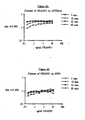
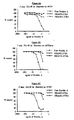
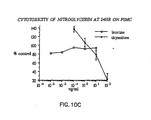
- Exemplary of such preferred therapeutic agents are protein kinase inhibitors, such as staurosporin (staurosporine is available from Sigma Chemical Co., St. Louis, Missouri) cytochalasins, such as cytochalasin B (Sigma Chemical Co.), and suramin (FBA Pharmaceuticals, West Haven, Connecticut), as well as nitroglycerin (DuPont Pharmaceuticals, Inc., Manuti, Puerto Rico) or analogs or functional equivalents thereof. These compounds are cytostatic and have been shown to exert minimal protein synthesis inhibition and cytotoxicity at concentrations where significant DNA synthesis inhibition occurs (see Example 8 and Figs. 10A-10D). A useful protocol for identifying therapeutic agents useful in sustained release dosage form embodiments of the present invention is set forth in Example 8, for example.
- Modulation of immune system-mediated disease effector cells can also be accomplished using the sustained release dosage forms of the present invention. Such modulation is preferably conducted with respect to diseases having an effector cell population that is accessible through local sustained release dosage form administration.
- Therapeutic moieties having the requisite modulating activity e.g., cytocidal, cytostatic, metabolism modulation or like activity upon lymphorecticular cells in the treatment of arthritis (intra-articular administration), sprue (oral administration), uveitis and endophthalmitis (intra-ocular administration) and keratitis (sub-conjunctival administration), are identifiable using techniques that are known in the art. These agents can also be used to reduce hyperactivity of epithelial glands and endocrine organs that results in multiple disorders.
- Vascular smooth muscle binding proteins of the invention bind to targets on the surface of vascular smooth muscle cells.
- targets e.g., polypeptides or carbohydrates, proteoglycans and the like, that are associated with the cell membranes of vascular smooth muscle cells are useful for selecting (e.g., by cloning) or constructing (e.g., by genetic engineering or chemical synthesis) appropriately specific vascular smooth muscle binding proteins.
- Particularly useful "targets” are internalized by smooth muscle cells, e.g., as membrane constituent antigen turnover occurs in renewal. Internalization by cells may also be by mechanisms involving phagolysosomes, clathrin-coated pits, receptor-mediated redistribution or endocytosis and the like.
- NR-ML-05 Monoclonal antibody NR-ML-05 and subculture NR-ML-05 No. 85-41-41-A2, freeze # A2106, have both been deposited with the American Type Culture Collection, Rockville, MD and granted Accession Nos. HB-5350 and HB-9350. respectively.
- NR-ML-05 is the parent of, and structurally and functionally equivalent to, subclone NR-AN-01, disclosed herein. It will be recognized that NR-AN-01 is just one example of a vascular smooth muscle binding protein that specifically associates with the 400 kD CSPG target, and that other binding proteins associating with this target and other epitopes in this target (14) are also useful in the therapeutic conjugates and methods of the invention.
- murine monoclonal antibody may be "chimerized” by genetically recombining the nucleotide sequence encoding the murine Fv region (i.e., containing the antigen binding sites) with the nucleotide sequence encoding a human constant domain region and an Fc region, e.g., in a manner similar to that disclosed in European Patent Application No. 0,411,893 A2.
- Humanized vascular smooth muscle binding partners will be recognized to have the advantage of decreasing the immunoreactivity of the antibody or polypeptide in the host recipient, which may thereby be useful for increasing the in vivo half-life and reducing the possibility of adverse immune reactions.
- binding peptides for restenosis treatment sustained release dosage forms of the present invention are those that localize to intercellular stroma and matrix located between and among vascular smooth muscle cells. Such binding peptides deliver the therapeutic agent to the interstitial space between the target cells. The therapeutic agent is released into such interstitial spaces for subsequent uptake by the vascular smooth muscle cells.
- Preferred binding peptides of this type are associated with epitopes on collagen, extracellular glycoproteins such as tenascin, reticulum and elastic fibers, cytokeratin and other intercellular matrix components.
- binding peptides are also useful as binding peptides in this embodiment of the present invention.
- binding peptides may be identified and constructed or isolated in accordance with known techniques.
- the interstitial matrix binding protein binds to a target epitope with an association constant of at least about 10 -4 M.
- Useful binding peptides for cancer treatment embodiments of the present invention include those associated with cell membrane and cytoplasmic epitopes of cancer cells and the like. These binding peptides localize to the surface membrane of intact cells and internal epitopes of disrupted cells, respectively, and deliver the therapeutic agent for assimilation into the target cells.
- Minimal peptides, mimetic organic compounds and human or humanized antibodies that localize to the requisite tumor cell types are also useful as binding peptides of the present invention.
- Such binding peptides may be identified and constructed or isolated in accordance with known techniques.
- Preferred binding peptides of these embodiments of the present invention bind to a target epitope with an association constant of at least about 10 -6 M.
- Binding peptides to membrane and cytoplasmic epitopes and the like that localize to immune system-mediated disease effector cells, e.g., cells of the lymphoreticular system, are also useful to deliver sustained release dosage forms of the present invention.
- the therapeutic agent is delivered to target cells for internalization therein by such sustained release dosage forms.
- Minimal peptides, mimetic organic compounds and human or humanized antibodies that localize to the requisite effector cell types are also useful as binding peptides of the present invention.
- binding peptides may be identified and constructed or isolated in accordance with known techniques.
- Preferred binding peptides of these embodiments of the present invention bind to a target epitope with an association constant of at least about. 10 -6 M.
- conjugates of monoclonal antibodies with drugs have been summarized by Morgan and Foon (Monoclonal Antibody Therapy to Cancer: Preclinical Models and Investigations, Basic and Clinical Tumor Immunology, Vol. 2, Kluwer Academic Publishers, Hingham, MA) and by Uhr J. of Immunol . 133 :i-vii, 1984).
- the conjugate contains a radionuclide cytostatic agent
- U.S. Patent No. 4,897,255, Fritzberg et al. incorporated herein by reference, is instructive of coupling methods that may be useful.
- the therapeutic conjugate contains a vascular smooth muscle binding protein coupled covalently to a trichothecene drug.
- the covalent bond of the linkage may be formed between one or more amino, sulfhydryl, or carboxyl groups of the vascular smooth muscle binding protein and a) the trichothecene itself; b) a trichothecene hemisuccinate carboxylic acid; c) a trichothecene hemisuccinate (HS) N-hydroxy succinimidate ester; or d) trichothecene complexes with poly-L-lysine or any polymeric carrier.
- Representative examples of coupling methods for preparing therapeutic conjugates containing a trichothecene therapeutic agent are described in U.S. Patents No. 4,906,452 and 4,744,981.
- Other examples using a hydrazide for forming a Schiff base linkage between binding proteins and trichothecenes are disclosed in pending U.S. patent application No. 07/415,154.
- the choice of coupling method will be influenced by the choice of vascular smooth muscle binding protein or peptide, interstitial matrix binding protein or peptide and therapeutic agent, and also by such physical properties as, e.g., shelf life stability, and/or by such biological properties as, e.g., half-life in cells and blood, intracellular compartmentalization route, and the like.
- vascular smooth muscle binding protein or peptide interstitial matrix binding protein or peptide and therapeutic agent
- physical properties e.g., shelf life stability
- biological properties e.g., half-life in cells and blood, intracellular compartmentalization route, and the like.
- hemisuccinate conjugates of the Roridin A therapeutic agent have a longer serum half-life than those of Verrucarin A, and this increased stability results in a significantly increased biological activity.
- the sustained release embodiment of the present invention includes a therapeutic agent dispersed within a non-biodegradable or biodegradable polymeric structure.
- a therapeutic agent dispersed within a non-biodegradable or biodegradable polymeric structure.
- Such dispersion is conducted in accordance with the procedure described by Cowsar et al., "Poly(Lactide-Co-Glycolide) Microcapsules for Controlled Release of Steroids," Methods Enzymology , 112 :101-116, 1985; Eldridge et al., "Biodegradable and Biocompatible Poly(DL-Lactide-Co-Glycolide) Microspheres as an Adjuvant for Staphylococcal Enterotoxin B Toxoid Which Enhances the Level of Toxin-Neutralizing Antibodies," Infection and Immunity, 59 :2978-2986, 1991; Cohen et al., “Controlled Delivery Systems for Proteins Based on Poly(Lactic/Glycolic Acid
- the benztriazole-derivatized particulates i.e., activated imidate-bearing moieties
- a protein/peptide nucleophilic moiety such as an available epsilon amino moiety.
- the binding protein or peptide is derivatized, preferably minimally, with functionalized biotin (e.g., through active ester, hydrazide, iodoacetal. maleimidyl or like functional groups).
- Ligand i.e., binding peptide or protein/ functionalized biotin attachment to the available biotin binding sites of the avidin/streptavidin primary protein shell occurs through the use of a saturating amount of biotinylated protein/peptide.
- poly-lactic/glycolic acid particulates having terminal carboxylic acid groups are activated with carbodiimide and subsequently reacted with avidin or streptavidin.
- the binding protein or peptide is reacted with biotinamidocaproate N-hydroxysuccinimide ester at a 1-3 molar offering of biotin-containing compound to the binding protein/peptide to form a biotinylated binding protein/peptide.
- a molar excess of the biotinylated binding protein/peptide is incubated with the avidin-derivatized particulates to form a targeted dosage form of the present invention.
- binding protein/peptide-particulate attachment can be achieved by adsorption of the binding peptide to the particulate, resulting from the nonionic character of the partially exposed polymer backbone of the particulate.
- high ionic strength conditions e.g., 1.0 molar NaCl
- hydrogen and hydrophobic particulate-binding protein/peptide binding are favored.
- binding protein/peptide may be partially entrapped in the particulate polymeric matrix upon formation thereof. Under these circumstances, such entrapped binding protein/peptide provides residual selective binding character to the particulate. Mild particulate formation conditions, such as those employed by Cohen et al., Pharmaceutical Research, 8: 713-720 (1991), are preferred for this embodiment of the present invention. Such entrapped binding protein is also useful in target cell reattachment of a partially degraded particulate that has undergone exocytosis.
- Other polymeric particulate dosage forms e.g., non-biodegradable dosage forms having different exposed functional groups can be bound to binding proteins or peptides in accordance with the principles discussed above.
- non-biodegradable polymers useful in the practice of the present invention are polystyrenes, polypropylenes, styrene acrylic copolymers and the like. Such non-biodegradable polymers incorporate or-can be derivatized to incorporate functional groups for attachment of binding protein/peptide, including carboxylic acid groups, aliphatic primary amino groups, aromatic amino groups and hydroxyl groups.
- Carboxylic acid functional groups are coupled to binding protein or peptide using, for example, the reaction mechanisms set forth above for poly-lactic/glycolic acid biodegradable polymeric particulate dosage forms.
- Primary amino functional groups are coupled by, for example, reaction thereof with succinic anhydride to form a terminal carboxy moiety that can be bound to binding peptide/protein as described above. Additionally, primary amino groups can be activated with cyanogen bromide and form guanidine linkages with binding protein/peptide primary amino groups.
- Aromatic amino functional groups are, for example, diazotized with nitrous acid to form diazonium moieties which react with binding protein/peptide tyrosines, thereby producing a diazo bond between the non-biodegradable particulate and the binding protein/peptide.
- Hydroxyl functional groups are coupled to binding protein/peptide primary amino groups by, for example, converting the hydroxyl moiety to a terminal carboxylic acid functional group. Such a conversion can be accomplished through reaction with chloroacetic acid followed by reaction with carbodiimide.
- Sandwich, adsorption and entrapment techniques, discussed above with respect to biodegradable particulates, are analogously applicable to non-biodegradable particulate-binding protein/peptide affixation.
- targeting is specific for potentially proliferating cells that result in increased smooth muscle in the intimal region of a traumatized vascular site, e.g., following angioplasty, e.g., pericytes and vascular smooth muscle cells.
- angioplasty e.g., pericytes and vascular smooth muscle cells.
- aspects of the invention relate to therapeutic modalities in which the therapeutic conjugate of the invention is used to delay, reduce, or eliminate smooth muscle proliferation after angioplasty, e.g., PTCA, atheroectomy and percutaneous transluminal coronary rotational atheroblation.
- targeting is specific for primary or metastatic tumor foci accessible to local administration, e.g., tumors exposed for infiltration by laparotomy or visible for fluomseopic or computerized tomography guiding and infusion needle administration to internal tumor foci or tumors confined to a small area or cavity within the mammal, e.g., ovarian cancer located in the abdomen, focal or multifocal liver tumors or the like.
- aspects of this embodiment of the invention involve therapeutical modalities wherein the therapeutic agent is cytotoxic to the target cells or metabolically modulates the cells, increasing their sensitivity to chemotherapy and/or radiation therapy.
- targeting is specific for a local administration accessible effector cell population implicated in immune system-mediated diseases, e.g., arthritis, intra-ocular immune system-mediated disease or sprue.
- immune system-mediated diseases e.g., arthritis, intra-ocular immune system-mediated disease or sprue.
- aspects of this embodiment of the present invention involve therapeutic modalities wherein the therapeutic agent is cytotoxic or modifies the biological response of the target cells to effect a therapeutic objective.
- therapeutic conjugates of the invention may only need to be delivered in an anti-proliferative therapeutic dosage sufficient to expose the proximal (6 to 9) cell layers of the intimal or tunica media cells lining the lumen to the therapeutic anti-proliferative conjugate, whereas the anti-contractile therapeutic dosage needs to expose the entire tunica media. and further that this dosage can be determined empirically, e.g., by a) infusing vessels from suitable animal model systems and using immunohistochemical methods to detect the conjugate and its effects (e.g., such as exemplified in the EXAMPLES below); and b) conducting suitable in vitro studies such as exemplified in EXAMPLES 3, 4, and 5, below).
- this therapeutically effective dosage is achieved by preparing 10 ml of a 200 ⁇ g/ml therapeutic conjugate solution, wherein the vascular smooth muscle protein binding protein is NR-AN-01 and the therapeutic agent is Roridin A, a trichothecene drug.
- 10 ml will commonly be sufficient volume to fill the catheter and infuse 1 to 1.5 ml into one to three traumatic lesion sites in the vessel wall.
- desired therapeutically effective dosages of a therapeutic conjugate according to the invention will be dependent on several factors, including, e.g.: a) the binding affinity of the vascular smooth muscle binding protein in the therapeutic conjugate; b) the atmospheric pressure applied during infusion; c) the time over which the therapeutic conjugate administered resides at the vascular site; d) the nature of the therapeutic agent employed; and/or e) the nature of the vascular trauma and therapy desired.
- Those skilled practitioners trained to deliver drugs at therapeutically effective dosages e.g., by monitoring drug levels and observing clinical effects in patients) will determine the optimal dosage for an individual patient based on experience and professional judgment.
- about 0.3 atm (i.e., 300 mm of Hg) to about 3 atm of pressure applied for 15 seconds to 3 minutes directly to the vascular wall is adequate to achieve infiltration of a therapeutic conjugate containing the NR-AN-01 binding protein into the smooth muscle layers of a mammalian artery wall.
- a therapeutic conjugate containing the NR-AN-01 binding protein into the smooth muscle layers of a mammalian artery wall.
- Sustained release dosage forms of an embodiment of the invention may only need to be delivered in an anti-proliferative therapeutic dosage sufficient to expose the proximal (6 to 9) cell layers of the tunica media smooth muscle cells lining the lumen to the dosage form.
- This dosage is determinable empirically, e.g., by a) infusing vessels from suitable animal model systems and using immunohistochemical, fluorescent or electron microscopy methods to detect the dosage form and its effects; and b) conducting suitable in vitro studies.
- this therapeutically effective dosage is achieved by determining in smooth muscle cell tissue culture the pericellular agent dosage, which at a continuous exposure results in a therapeutic effect between the toxic and minimal effective doses.
- This therapeutic level is obtained in vivo by determining the size, number and therapeutic agent concentration and release rate required for particulates infused between the smooth muscle cells of the artery wall to maintain this pericellular therapeutic dosage.
- the dosage form should release the therapeutic agent at a rate that approximates the pericellular dose of the following exemplary therapeutic agents: from about 0.01 to about 100 micrograms/ml nitroglycerin, from about 1.0 to about 1000 micrograms/ml of suramin, from about 0.001 to about 100 micrograms/ml for cytochalasin, and from about 0.01 to about 10 5 nanograms/ml of staurosporin.
- desired therapeutically effective dosages of the sustained release dosage form of the invention will be dependent on several factors, including, e.g.: a) the binding affinity of the binding protein associated with the dosage form; b) the atmospheric pressure and duration of the infusion; c) the time over which the dosage form administered resides at the target site; d) the rate of therapeutic agent release from the particulate dosage form; e) the nature of the therapeutic agent employed; f) the nature of the trauma and/or therapy desired; and/or g) the intercellular and/or intracellular localization of the particulate dosage form.
- Those skilled practitioners trained to deliver drugs at therapeutically effective dosages are capable of determining the optimal dosage for an individual patient based on experience and professional judgment.
- about 0.3 atm (i.e., 300 mm of Hg) to about 3 atm of pressure applied for 15 seconds to 3 minutes to the arterial wall is adequate to achieve infiltration of a sustained release dosage form bound to the NR-AN-01 binding protein into the smooth muscle layers of a mammalian artery wall.
- Wolinsky et al. "Direct Intraarterial Wall Injection of Microparticles Via a Catheter: A Potential Drug Delivery Strategy Following Angioplasty," Am. Heart Jour. , 122(4) :1136-1140, 1991.
- Those skilled in the art will recognize that infiltration of a sustained release dosage form into a target cell population will probably be variable and will need to be determined on an individual basis.
- therapeutic conjugates radiolabeled with alpha-, beta- or gamma-emitters of known specific activities are useful for determining the therapeutically effective dosage by using them in animal studies and human trials with quantitative imaging or autoradiography of histological tissue sections to determine the concentration of therapeutic conjugate that is required by the therapeutic protocol.
- a therapeutically effective dosage of the therapeutic conjugate or dosage form will be reached when at least three conditions are met: namely, (1) the therapeutic conjugate or dosage form is distributed in the intimal layers of the traumatically injured vessel; (2) the therapeutic conjugate or dosage form is distributed within the desired intracellular compartment of the smooth muscle cells, i.e., that compartment necessary for the action of the therapeutic agent, or the therapeutic agent released from the dosage form extracellularly is distributed within the relevant intracellular compartment; and (3) the therapeutic agent inhibits the desired cellular activity of the vascular smooth muscle cell, e.g., proliferation, migration, increased cellular volume, matrix synthesis, cell contraction and the like described above.
- the therapeutic dosage required to achieve the desired inhibitory activity for a therapeutic conjugate or dosage form can also be anticipated through the use of in vitro studies.
- the infusion catheter may be conveniently a double balloon or quadruple balloon catheter with a permeable membrane.
- a therapeutically effective dosage of a therapeutic conjugate or dosage form is useful in treating vascular trauma resulting from disease (e.g., atherosclerosis, aneurysm, or the like) or vascular surgical procedures such as angioplasty, atheroectomy, placement of a stent (e.g., in a vessel), thrombectomy, and grafting.
- Atheroectomy may be performed, for example, by surgical excision, ultrasound or laser treatment, or by high pressure fluid flow.
- Grafting may be, for example, vascular grafting using natural or synthetic materials or surgical anastomosis of vessels such as, e.g., during organ grafting.
- a therapeutic conjugate containing Roridin A and NR-AN-01 achieved a therapeutically effective dosage in vivo at a concentration which inhibited cellular protein synthesis in test cells in vitro by at least 5 to 50%, as judged by incorporation of radiolabeled amino acids.
- cell migration and cell adherence in in vitro assays may be used for determining the concentration at which a therapeutically effective dosage will be reached in the fluid space created by the infusion catheter in the vessel wall.
- While one representative embodiment of the invention relates to therapeutic methods employing an infusion catheter, it will be recognized that other methods for drug delivery or routes of administration may also be useful, e.g., injection by the intravenous, intralymphatic, intrathecal, intraarterial, local delivery by implanted osmotic pumps or other intracavity routes.
- nanoparticulate dosage forms of the present invention are preferred.
- Intravenous administration of nanoparticulates is useful, for example, where vascular permeability is increased in tumors for leakage, especially in necrotic areas of tumors having damaged vessels which allow the leakage of particles into the interstitial fluid, and where artery walls have been denuded and traumatized allowing the particles to enter the interstitial area of the tunica media.
- non-coupled vascular smooth muscle cell binding protein e.g., free NR-AN-01 antibody
- Blocking of such sites is important because vascular smooth muscle cell binding proteins will generally have some low level of cross-reactivity with cells in tissues other than the desired smooth muscle cells.
- non-coupled vascular smooth muscle binding protein is administered from about 5 minutes to about 48 hours, most preferably from about 5 minutes to about 30 minutes, prior to administration of the therapeutic conjugate or dosage form.
- the unlabeled specific "blocker" is a monovalent or bivalent form of an antibody (e.g., a whole antibody or an F(ab)' 2 , Fab, Fab', or Fv fragment of an antibody).
- the monovalent form of the antibody has the advantage of minimizing displacement of the therapeutic conjugate or dosage form while maximizing blocking of the non-specific cross-reactive sites.
- the non-coupled vascular smooth muscle cell binding protein is administered in an amount effective to blocking binding of a least a portion of the non-specific cross-reactive sites in a patient.
- the amount may vary according to such factors as the weight of the patient and the nature of the binding protein. In general, about 0.06 mg to 0.20 mg per kg body weight or more of the unlabeled specific blocker is administered to a human.
- a second irrelevant vascular smooth muscle cell binding protein may optionally be administered to a patient prior to administration of the therapeutic conjugate or dosage form to reduce non-specific binding of the therapeutic conjugate or dosage form to tissues.
- the irrelevant binding protein may be an antibody which does not bind to sites in the patient through antigen-specific binding, but instead binds in a non-specific manner, e.g., through Fc receptor binding reticuloendothelial cells, asialo-receptor binding, and by binding to ubiquitin-expressing cells.
- the irrelevant "blocker” decreases non-specific binding of the therapeutic conjugate or dosage form and thus reduces side-effects, e.g., tissue toxicity, associated with the use of the therapeutic conjugate or dosage form.
- the irrelevant “blocker” is advantageously administered from 5 minutes to 48 hours, most preferably from 15 minutes to one hour, prior to administration of the therapeutic conjugate or dosage form, although the length of time may vary depending upon the therapeutic conjugate and route or method of injection.
- Representative examples of irrelevant "blockers” include antibodies that are nonreactive with human tissues and receptors or cellular and serum proteins prepared from animal sources that when tested are found not to bind in a specific manner (e.g., with a Ka ⁇ 10 3 M -1 ) to human cell membrane targets.
- conjugates and dosage forms of the invention are not restricted in use for therapy following angioplasty; rather, the usefulness of the therapeutic conjugates and dosage forms will be proscribed by their ability to inhibit cellular activities of smooth muscle cells and pericytes in the vascular wall.
- other aspects of the invention include therapeutic conjugates and dosage forms and protocols useful in early therapeutic intervention for reducing, delaying, or eliminating (and even reversing) atherosclerotic plaques and areas of vascular wall hypertrophy and/or hyperplasia.
- Therapeutic conjugates and dosage forms of the invention also find utility for early intervention in pre-atherosclerotic conditions, e.g., they are useful in patients at a high risk of developing atherosclerosis or with signs of hypertension resulting from atherosclerotic changes in vessels or vessel stenosis due to hypertrophy of the vessel wall.
- the therapeutic conjugates and dosage forms may be used in situations in which angioplasty is not sufficient to open a blocked artery, such as those situations which require the insertion of an intravascular stent.
- a metallic, plastic or biodegradable intravascular stent is employed which comprises a therapeutic agent.
- Useful therapeutic agents include cytoskeletal inhibitors and inhibitors of smooth muscle cell proliferation.
- a preferred cytoskeletal inhibitor is a cytochalasin, such as cytochalasin B or an analog thereof which is a functional equivalent.
- Another preferred cytoskeletal inhibitor of the invention is taxol or a taxol analog which is a functional equivalent.
- the stent preferably comprises a biodegradable coating or a porous or permeable non-biodegradable coating comprising the therapeutic agent.
- a more preferred embodiment of the invention is a coated stent wherein the coating comprises a sustained-release dosage form of the therapeutic agent.
- a biodegradable stent may also have the therapeutic agent impregnated therein, i.e., in the stent matrix.
- a biodegradable stent with the therapeutic agent impregnated therein which is further coated with a biodegradable coating or with a porous non-biodegradable coating having the sustained release-dosage form of the therapeutic agent dispersed therein is also an embodiment of the invention.
- This stent can provide a differential release rate of the therapeutic agent, i.e., there can be a faster release of the therapeutic agent from the coating followed by delayed release of the therapeutic agent impregnated in the stent matrix, upon degradation of the stent matrix.
- the therapeutic agent in the coating is a cytochalasin or taxol, and most preferably is cytochalasin B or taxol, or analogs thereof which are functionally equivalent.
- the intravascular stent thus provides a mechanical means of providing an increase in luminal area of a vessel, in addition to that provided via the biological stenting action of the cytoskeletal inhibitor, such as cytochalasin B or taxol, releasably embedded therein.
- the cytoskeletal inhibitor such as cytochalasin B or taxol
- intravascular stents comprising a therapeutic agent which is an inhibitor of smooth muscle cell proliferation
- a stent which further comprises a cytochalasin to inhibit the proliferation and migration of pericytes, which can transform into smooth muscle cells and contribute to intimal thickening
- This inhibition of intimal smooth muscle cells and stroma produced by the smooth muscle and pericytes can allow more rapid and complete re-endothelization following the intraventional placement of the vascular stent.
- the increased rate of re-endothelization and stabilization of the vessel wall following stent placement can reduce the loss of luminal area and decreased blood flow which is the primary cause of vascular stent failures.
- the biodegradable microparticles containing the therapeutic agent are from about 1 to 50 microns. It is further preferred that the microparticles would biodegrade over a period of 30 to 120 days, releasing into the tunica media and intima a sustained cellular concentration of approximately from about 0.05 ⁇ g/ml to about 0.25 ⁇ g/ml of cytochalasin B into the cytosol. thus providing the diffusion of therapeutic levels of cytochalasin B without toxicity to cells adjacent to the stent/vessel wall interface.
- the therapeutic conjugates and dosage forms of the invention may also be used in therapeutic modalities for enhancing the regrowth of endothelial cells in injured vascular tissues and in many kinds of woupd sites including epithelial wounds.
- the therapeutic conjugates and dosage forms of the invention find utility in inhibiting the migration and/or proliferation of smooth muscle cells or pericytes. Smooth muscle cells and pericytes have been implicated in the production of factors in vitro that inhibit endothelial cell proliferation, and their proliferation can also result in a physical barrier to establishing a continuous endothelium.
- the therapeutic conjugates and dosage forms of the invention find utility in promoting neo-angiogenesis and increased re-endothelialization, e.g., during wound healing, vessel grafts and following vascular surgery.
- the dosage forms may also release therapeutic modalities that stimulate or speed up re-endothelialization of the damaged vessel wall.
- An exemplary therapeutic agent for this purpose is vascular permeability factor.
- Still other aspects of the invention relate to therapeutic modalities for enhancing wound healing in a vascular site and improving the structural and elastic properties of healed vascular tissues.
- these therapeutic modalities using the therapeutic conjugate or dosage form of the invention i.e., to inhibit the migration and proliferation of smooth muscle cells or pericytes in a vessel wall
- the strength and quality of healing of the vessel wall are improved.
- Smooth muscle cells in the vascular wound site contribute to the normal process of contraction of the wound site which promotes wound healing. It is presently believed that migration and proliferation of smooth muscle cells and matrix secretion by transformed smooth muscle cells may detract from this normal process and impair the long-term structural and elastic qualities of the healed vessel.
- other aspects of the invention provide for therapeutic conjugates and dosage forms that inhibit smooth muscle and pericyte proliferation and migration as well as morphological transformation, and improve the quality of the healed vasculature.
- one embodiment of the present invention comprises the in vivo or ex vivo infusion of a solution of a therapeutic agent such as cytochalasin B into the walls of isolated vessels (arteries or veins) to be used for vascular grafts.
- a therapeutic agent such as cytochalasin B
- the vessel that is to serve as the graft is excised or isolated and subsequently distended by an infusion of a solution of a therapeutic agent.
- the infusion is accomplished by a pressure infusion at a pressure of about 0.2 to I atmosphere for a time period of from about 2 to about 4 minutes. This infusion regime will result in the penetration of an efficacious dose of the therapeutic agent to the smooth muscle cells of the vessel wall.
- the therapeutic agent will be at a concentration of from about 0.1 ⁇ g/ml to about 0.8 ⁇ g/ml of infusate.
- the therapeutic agent will be a cytochalasin, and most preferably, the therapeutic agent employed will be cytochalasin B, or a functionally equivalent analogue thereof.
- peripheral vessels that are used for vascular grafts in other peripheral sites or in coronary artery bypass grafts, frequently fail due to post surgical stenosis. Since cytochalasin B infusion maintains the vascular luminal area in surgically traumatized vessels by virtue of its biological stenting activity, its administration in this process will retard the ability of the vessel to contract, resulting in a larger lumenal area.
- cytochalasin B in this manner will prevent the constriction or spasm that frequently occurs after vascular grafts are anastomosed to both their proximal and distal locations, that can lead to impaired function, if not total failure, of vascular grafts.
- the vessel stenting produced by cytochalasin b should decrease the incidence of spasms, which can occur from a few days to several months following the graft procedure.
- the present invention also provides a combination therapeutic method involving a cytocidal therapeutic conjugate and a cytostatic therapeutic agent.
- the cytocidal conjugate includes a binding partner (such as a protein or peptide) capable of specifically localizing to vascular smooth muscle cells and an active agent capable of killing such cells.
- the cytocidal conjugate is administered, preferably intravenously or through any other convenient route therefor, localizes to the target smooth muscle cells, and destroys proliferating cells involved in stenotic or restenotic events. This cellular destruction causes the release of mitogens and other metabolic events, which events generally lead, in turn, to vascular smooth muscle cell proliferation.
- sustained release anti-proliferative or anti-contractile dosage forms of the present invention are next administered, preferably through an infusion catheter or any convenient dosage form therefor.
- the sustained release dosage form retards the vascular smooth muscle cell proliferation and/or migration and contraction, thereby maintaining luminal diameter.
- This treatment methodology constitutes a biological arteromyectomy useful in stenotic vessels resulting from vascular smooth muscle cell hyperplasia and the like.
- the present invention also provides methods for the treatment of cancer and immune system-mediated diseases through local administration of a targeted particulate dosage form.
- the particulate dosage form is, for example, administered locally into primary and/or metastatic foci of cancerous target cells.
- Local administration is preferably conducted using an infusion needle or intraluminal administration route, infusing the particulate dosage form in the intercellular region of the tumor tissue or in luminal fluid surrounding the tumor cells.
- Primary foci introduction is preferably conducted with respect to target cells that are generally situated in confined areas within a mammal, e.g., ovarian carcinomas located in the abdominal cavity.
- the dosage form of the present invention binds to the target cell population and, optionally, is internalized therein for release of the therapeutic agent over time.
- Local administration of dosage forms of the present invention to such primary foci results in a localized effect on such target cells, with limited exposure of other sensitive organs, e.g., the bone marrow and kidneys, to the therapeutic agent.
- the administered microparticles and larger nanoparticles are primarily bound to the target cells situated near the infusion site and are, optionally, internalized for release of the therapeutic agent, thereby generating a marked and localized effect on the target cells immediately surrounding the infusion site.
- smaller nanoparticles follow interstitial fluid flow or lymphatic drainage channels and bind to target cells that are distal to the infusion site and undergoing lymphatic metastasis.
- the targeted dosage forms of this embodiment of the present invention can be used in combination with more commonly employed immunoconjugate therapy.
- the immunoconjugate achieves a systemic effect within the limits of systemic toxicity, while the dosage form of the present invention delivers a concentrated and sustained dose of therapeutic agent to the primary and metastatic foci, which often receive an inadequate therapeutic dose from such "systemic" immunoconjugate administration alone, and avoids or minimizes systemic toxic effects.
- the dosage forms of the present invention are utilized to control immune system-mediated diseases.
- diseases are arthritis, sprue, uveitis, endophthalmitis, keratitis and the like.
- the target cell populations implicated in these embodiments of the present invention are confined to a body cavity or space, such as joint capsules, pleural and abdominal cavity, eye and sub-conjunctival space, respectively.
- Local administration is preferably conducted using an infusion needle for a intrapleural, intraperitoneal, intraocular or sub-conjunctival administration route.
- This embodiment of the present invention provides a more intense, localized modulation of immune system cells with minimal effect on the systemic immune system cells.
- the systemic cells of the immune system are simultaneously treatable with a chemotherapeutic agent conjugated to a binding protein or peptide.
- a conjugate preferably penetrates from the vascular lumen into target immune system cells.
- the local particulate dosage form administration may also localize to normal tissues that have been stimulated to proliferate, thereby reducing or eliminating such pathological (i.e ., hyperactive) conditions.
- An example of this embodiment of the present invention involves intraocular administration of a particulate dosage form coated with a binding protein or peptide that localizes to pericytes and smooth muscle cells of neovascularizing tissue. Proliferation of these pericytes causes degenerative eye disease.
- Preferred dosage forms of the present invention release compounds capable of suppressing the pathological proliferation of the target cell population.
- the preferred dosage forms can also release compounds that increase vessel lumen area and blood flow, reducing the pathological alterations produced by this reduced blood supply.
- Still another aspect of the present invention relates to therapeutic modalities for maintaining an expanded luminal volume following angioplasty or other vessel trauma.
- a therapeutic agent capable of inhibiting the ability of vascular smooth muscle cells to contract.
- agents useful in the practice of this aspect of the present invention are those capable of causing a traumatized artery to lose vascular tone, such that normal vascular hydrostatic pressure (i.e. , blood pressure) expands the flaccid vessel to or near to its maximal physiological diameter.
- Loss of vascular tone may be caused by agents that interfere with the formation or function of contractile proteins (e.g. , actin, myosin, tropomyosin, caldesmon, calponin or the like). This interference can occur directly or indirectly through, for example, inhibition of calcium modulation, phosphorylation or other metabolic pathways implicated in contraction of vascular smooth muscle cells.
- Inhibition of cellular contraction may operate through two mechanisms to reduce the degree of vascular stenosis.
- Second, inhibition of cellular contraction causes the smooth muscle wall to relax and dilate under normal vascular hydrostatic pressure (i.e. , blood pressure).
- Therapeutic agents such as the cytochalasins, inhibit smooth muscle cell contraction without abolishing the protein synthesis necessary for traumatized, post-angioplasty or other surgically- or disease-damaged, smooth muscle cells to repair themselves: Protein synthesis is also necessary for the smooth muscle cells to secrete matrix, which fixes or retains the lumen in a state near its maximum systolic diameter as the vascular lesion stabilizes (i.e., a biologically-induced stenting effect).
- the clinician can eliminate over-inflation and its resultant trauma shock as a means to diminish or delay the vessel spasm or elastic recoil. Reduction or elimination of over-inflation decreases trauma to the muscular wall of the vessel, thereby reducing the determinants of smooth muscle cell proliferation in the intima and, therefore, reducing the incidence or severity of restenosis.
- Biological stenting also decreases the incidence of thrombus formation.
- the incidence of mural microthrombi was decreased as compared to the balloon traumatized arteries that were not treated with the therapeutic agent. This phenomenon appears to be a secondary benefit that may result from the increased blood flow through the traumatized vessel, said benefit being obtained through the practice of the present invention.
- Cytochalasins are exemplary therapeutic agents capable of generating a biological stenting effect on vascular smooth muscle cells. Cytochalasins are thought to inhibit both migration and contraction of vascular smooth muscle cells by interacting with actin. The cytochalasins interact with the ends of filamentous actin to inhibit the elongation of the actin filaments. Low doses of cytochalasins (e.g. , cytochalasin B) also disrupt microfilament networks of actin. In vitro data indicate that after vascular smooth muscle cells clear cytochalasin B, the cells regenerate enough polymerized actin to resume migration within about 24 hours. In vivo assessments reveal that vascular smooth muscle cells regain vascular tone within 2 to 4 days. It is during this recuperative period that the lumen diameter fixation and biological stenting effect occurs.
- cytochalasins are thought to inhibit both migration and contraction of vascular smooth muscle cells by interacting with actin. The cytochalasins interact with the ends of filament
- the therapeutic agent may be targeted, but is preferably administered directly to the traumatized vessel following the angioplasty or other traumatic event.
- the biological stenting effect of cytochalasin B is achievable using a single infusion of the therapeutic agent into the traumatized region of the vessel wall at a dose concentration ranging from about 0.1 microgram/ml to about 1.0 micrograms/ml.
- vascular smooth muscle cell migration has been demonstrated in the same dose range (Example 11); however, a sustained exposure of the vessel to the therapeutic agent is preferable in order to maximize these anti-migratory effects. If the vascular smooth muscle cells cannot migrate into the intima, they cannot proliferate there. Should vascular smooth muscle cells migrate to the intima, a subsequently administered anti-proliferative sustained release dosage form inhibits the intimal proliferation.
- the sustained release dosage form of the present invention incorporating a cytochalasin or other anti-proliferative therapeutic agent, can be administered in combination with a free cytochalasin therapeutic agent. In this manner, the biological stenting effect, as well as an anti-proliferative or anti-migratory effect, can be achieved in a single administration protocol.
- Agents useful in the protocols of the present invention are identifiable for example, in accordance with the following procedures.
- a potential agent for free agent (i.e. , non-targeted) administration exhibits one or more of the following characteristics:
- a therapeutic agent employed herein will have all four properties; however, the first and third are more important than the second and fourth for practice of the present invention.
- Cytochalasin B for example, was evaluated to determine suitability for use in free therapeutic agent protocols. The biological stenting effect of cytochalasin B is achievable using a single infusion of the therapeutic agent into the traumatized region of the vessel wall at a dose concentration ranging from about 0.1 microgram/ml to about 1.0 micrograms/ml.
- An agent useful in the sustained release embodiments of the present invention exhibits one or more of the following characteristics:
- the agent Upon identification of a therapeutic agent exhibiting one or more of the preceding attributes, the agent is subjected to a second testing protocol that involves longer exposure of vascular smooth muscle cells to the therapeutic agent.
- agents within the present invention demonstrate a 50% or greater inhibition of cell proliferation in the tunica media vascular smooth muscle cells, as indicated by a 1 hour "BRDU flash labeling" prior to tissue collection and histological evaluation. If an agent is effective for a period of time sufficient to inhibit intimal smooth muscle proliferation 50% or greater with a single exposure, it is an agent within the present invention that does not require administration in a sustained release dosage form.
- Agents having shorter duration activity are evaluated for sustained release if the systemic toxicity and potential therapeutic index appear to permit intravenous administration to achieve the 50% inhibition, or if the agent is amenable to local delivery to the vascular smooth muscle cells with sustained release at an effective anti-proliferative dose.
- Sustained release agents are evaluated in a sustained release dosage form for dose optimization and efficacy studies.
- anti-proliferative agents useful in the practice of the present invention decrease vascular stenosis by 50% in balloon traumatized pig femoral arteries and, more preferably, to decrease vascular stenosis to a similar extent in pig coronary arteries. Such agents are then evaluable in human clinical trials.
- Staurosporin for example, exhibits a differential between 3 H-leucine and 3 H-thymidine uptake such that it is cytostatic at administered doses. Longer duration cytotoxicity studies did not indicate that prolonged exposure to the therapeutic agent would adversely impact the target cells.
- BRDU pulsing indicated that staurosporin inhibits target cell proliferation. Any convenient method for evaluating the capability of inhibiting cell proliferation may alternatively be employed, however. Consequently, staurosporin is effective in retaining an expanded luminal volume.
- FIGURE 1 illustrates the binding of NR-AN-01 (a murine IgG2b MAb) to the smooth muscle cells in the vascular wall of an artery in a 24-year old male patient, 4 days after the i.v. administration of NR-AN-01.
- FIGURE 1 is a photomicrograph of a histological section taken through the medial region of an arterial wall of the patient after NR-AN-01 administration, where the section was reacted ex vivo with HRP-conjugated goat anti-mouse IgG.
- the reaction of the HRP-conjugate with NR-AN-01 MAb was visualized by adding 4-chloro-1-naphthol or 3,3'-diaminobenzidine tetrahydrochloride as a peroxidase substrate (chromogen).
- the reaction product of the substrate forms an insoluble purple or dark brown precipitate at the reaction site (shown at #2, FIGURE 1).
- a counter stain was used to visualize collagenous extracellular matrix material (shown at #2, FIGURE 1) or cell nuclei (#1, FIGURE 1). Smooth muscle cells are visualized under microscopic examination as purple stained cells. This photomicrograph demonstrates the ability of the MAb to specifically bind to human vascular smooth muscle in vivo, and to be internalized by the cells and remain in the cells for extended periods.
- Conjugates of NR-AN-01 and Roridin A were constructed by chemically coupling a hemisuccinate derivative of the trichothecene cytotoxin (as described below) to a monoclonal antibody designated NR-AN-01. Two conjugates were prepared, one coupled at the Roridin A 2' position and one at the 13' position. Two schemes were used in this synthesis, as depicted in FIGURE 2 and FIGURE 3. The conjugate was then purified from unreacted Roridin A by PD-10 SEPHAROSE® column chromatography (Pharmacia; Piscataway, NJ), analyzed by size exclusion high pressure liquid chromatography, and the column fractions were characterized by SDS-PAGE and isoelectric focusing (IEF), as described below.
- FIGURE 2 shows diagrammatically the first reaction scheme for synthesis of Roridin A hemisuccinyl succinimidate (RA-HS-NHS) through a two step process with reagents: succinic anhydride, triethylamine (NEt 3 ) and dimethyl amino pyridine (DMAP) present in dichloromethane (CH 2 Cl 2 ) at room temperature (RT); and, N-hydroxysuccinimide (NHS) and dicyclohexyl carbodiimide (DCC) reagents also in CH 2 Cl 2 at RT.
- reagents succinic anhydride, triethylamine (NEt 3 ) and dimethyl amino pyridine (DMAP) present in dichloromethane (CH 2 Cl 2 ) at room temperature (RT); and, N-hydroxysuccinimide (NHS) and dicyclohexyl carbodiimide (DCC) reagents also in CH 2 Cl 2 at RT.
- NHS N-hydroxysucc
- FIGURE 3 shows diagrammatically the second reaction scheme for synthesis of Roridin A hemisuccinyl succinimidate (RA-HS-NHS) through a five step process with reagents: t-butyl dimethyl silyl chloride (TBMS-Cl) and imidazole in dimethylformamide (DMF) at room temperature (RT); acetic anhydride, triethylamine (TEA), and diethylaminopyridine in dichloromethane (CH 2 Cl 2 ) at RT; succinic anhydride, triethylamine (TEA) and dimethylaminopyridine (DMAP) in (CH 2 Cl 2 ) at RT; and, N-hydroxysuccinimide (NHS) and dicyclohexyl carbodiimide (DCC) reagents.
- TBMS-Cl t-butyl dimethyl silyl chloride
- DMF dimethylformamide
- RT room temperature
- acetic anhydride tri
- Immunoassay of the Roridin A-antibody conjugates was performed by either competitive ELISA using biotinylated-Ab with Streptavidin/Peroxidase detection or by a competitive cell binding assay using 125 I-labeled antibody. Alternatively, immunoreactivity was measured under conditions of antigen saturation in a cell binding assay wherein antibody was first trace labeled with I-125 by the chloramine T method and then subsequently derivatized with 2' and 13' Roridin A precursors.
- the therapeutic conjugates of the invention be administered in less than 3 to 5 minutes, so that blood flow can be reestablished in the patient. Therefore, studies were conducted to determine the binding kinetics of a smooth muscle binding protein with a Ka of >10 9 liter/mole. Because human vascular smooth muscle cells grow slowly in culture, and baboon smooth muscle cells were found to express the human CSPG cell surface marker, BO54 baboon artery smooth muscle cells and human A375 M/M (melanoma; ATCC #CRL1619) cells bearing CSPG surface marker were used in many of the studies described in the Examples, below.
- the binding of the NR-AN-01 MAb to the A375 cells was quantified by washing to remove unbound antibody, adding HRP-conjugated goat anti-mouse IgG to react with the cell-bound MAb, washing to remove unbound goat second antibody, and adding 2,2'-azino-bis(3-ethylbenzthiamline-6-sulfonic acid) (ABTS) substrate for peroxidase. Color development was monitored after 30 minutes at both 415 nm and 490 nm (ABS415,490).
- ABTS 2,2'-azino-bis(3-ethylbenzthiamline-6-sulfonic acid)
- FIGURE 4A and FIGURE 4B show significant binding of NR-AN-01 to A375 and BO54 cells within 5 minutes at 4°C, even at the lowest dose of 20 ng/ml.
- the studies in EXAMPLE 4 include experiments to determine the effects of long-term (i.e., 24 hour) treatment with the agents.
- the studies in EXAMPLE 5 include experiments to determine the effects of "pulse” (i.e., 5 minute) treatment on cells. In both studies, the cellular specificity of the effects were evaluated by including "target" cells (i.e., cells bearing the CSPG "marker") and non-target cells.
- free-RA i.e., uncoupled
- the effects on cellular protein synthesis or metabolic activity were evaluated either immediately following the treatment, or a "recovery period" was allowed (i.e., involving incubation of the cells overnight at 37°C) to determine the long-term effects of the agents on the cell populations.
- MTT methyl-tetrazolium blue
- BO54 smooth muscle
- the HT29 and M14 cells were seeded in 96-well microtiter plates at a concentration of 5.0 x 10 3 cells/well, and the BO54 cells were seeded at 2.5 x 10 3 cells/well.
- Serial two-fold dilutions of free Roridin A and 2'RA-HS-NR-AN-01 i.e., Roridin A coupled through a hemisuccinate (HS) coupling agent at the 2' position to NR-AN-01
- HS hemisuccinate
- Test agents were added (in duplicate) to microtiter wells (100 ml/well), and the plates were wrapped in aluminum foil and incubated at 37°C in a humidified atmosphere consisting of 5% CO 2 /95% air for 24 hours. After 24 hours, medium was removed (by aspiration), fresh DMEM was added (100 ml/well), and the cells were returned to incubate for an additional overnight (i.e., 16-18 hours) "recovery period". At the end of the "recovery period” cellular metabolic activity was determined by adding 20 ml to each well of a 5mg/ml MTT solution.
- the plates were covered and incubated at 37°C for 4 hours and then the reaction was developed by adding 100 ml/well of 10% SDS/0.1 N HCl.
- the dark blue solubilized formazan reaction product was developed at room temperature after 16-18 hours and quantified using an ELISA microtiter plate reader at an absorbance of 570 nm.
- FIGURE 5A graphically depicts the results of in vitro studies in which BO54 marker-positive smooth muscle cells were incubated with different concentrations of RA-NR-AN-01 (NRAN01-RA; open squares, FIGURE 5A) or free Roridin A (Free RA; closed diamonds, FIGURE 5A) for a period of 24 hours, washed, and then returned to culture for an additional 16-18 hour overnight (o/n) recovery period prior to testing metabolic activity in an MTT assay.
- RA-NR-AN-01 NRAN01-RA; open squares, FIGURE 5A
- Free Roridin A Free RA; closed diamonds, FIGURE 5A
- FIGURE 5B graphically depicts the results of in vitro studies conducted in a manner similar to those described above in regard to FIGURE 5A, but comparing the effects of only RA-NR-AN-01 (NRAN01-RA) on three different cell types: namely, BO54 marker-positive smooth muscle cells (BO54-NRAN01-RA; open squares, FIGURE 5B); HT29 marker-negative control cells (HT29-NRAN01-RA; closed diamonds,FIGURE 5B); and, M14 marker-positive cells (M14-NRAN01-RA; closed squares, FIGURE 5B).
- the concentrations in the present experiment are expressed in terms of ug/ml of Roridin A. Metabolic activity of the cells is expressed in a manner similar to that in FIGURE 5A, i.e., as the percentage of activity measured in an untreated control culture of cells (% control).
- FIGURE 5A and FIGURE 5B show that metabolic activity measured in the MTT assay was significantly decreased in all populations of test cells, even 16-18 hours after a 24-hour incubation in either free Roridin A or the 2' or 13' RA-NR-AN-01 conjugates.
- the effects of the RA-NR-AN-01-conjugates appeared to be non-specifically inhibitory for both target (BO54 and M14) and non-target (HT29) cells (FIGURES 5A and 5B). The inhibitory effects were observed at a free Roridin A or RA-conjugate concentration of >10 ng/ml.
- PE Pseudomonas exotoxin
- FIGURE 6A graphically depicts the results of in vitro studies conducted in a manner similar to those described above in regard to FIGURE 5A, but designed to study the metabolic effects of PE-NR-AN-01 (NRAN01-PE) on cells, i.e., rather than RA-NR-AN-01.
- Three different cell types were utilized: namely, BO54 marker-positive smooth muscle cells (BO54; open squares, FIGURE 6A); HT29 marker-negative control cells (HT29; closed diamonds, FIGURE 6A); and, M14 maker-positive cells (MT14; closed squares, FIGURE 6A).
- the concentration of conjugate is expressed in ⁇ g/ml NR-AN-01 protein (plotted on a log scale), and the metabolic activity is expressed as the percentage of the MTT activity measured in an untreated control culture (% control).
- FIGURE 6B graphically depicts the results of in vitro studies conducted in manner similar to those discussed above in regard to FIGURE 6A, but designed to compare the effects obtained with free PE (PE) to those obtained above, i.e., in FIGURE 6A, with PE-NR-AN-01.
- PE free PE
- the cells, culture conditions, calculations, and presentation of the results are the same as in FIGURE 6A, above.
- FIGURE 6A and FIGURE 6B show that 24 hours exposure to PE-NR-AN-01 or free PE was non-specifically inhibitory to cells at concentrations of >100 ng/ml.
- Roridin A-NR-AN-01 coupled through a hemisuccinyl (HS) at either the 2' position (2'RA-HS-NR-AN-01) or the 13' position (13'RA-HS-NR-AN-01) were employed. (In the case of 13'RA-HS-NR-AN-01, the 2' position of Roridin A was also acetylated.)
- the RA. 2' or 13'RA-NR-AN-01 conjugates were diluted two fold in sterile DMEM over a range of concentrations from 400 ng/ml to 780 pg/ml of Roridin A.
- test samples were all normalized to Roridin A. so that direct comparisons could be made of the effects at comparable doses.
- Samples were aliquoted (in duplicate) into duplicate microtiter plates at 100 ml/well and incubated at room temperature for five minutes.
- the incubation medium was removed (i.e., by aspiration) and 3 H-leucine was added (as above).
- protein synthesis of the cells was evaluated by incubating the cells with the 3 H-leucine for 4 hours at 37°C in a humidified chamber (as above), and all results are calculated by comparison with non-treated cells (i.e., 100% control).
- the 3 H-leucine was removed, the cells were removed from the substrata by trypsin-treatment, aspirated (using a PHDTM cell harvester (Cambridge Technology, Inc., Cambridge, MA)) and collected by filtration on glass fiber filters. The glass fiber filters were dried and radioactivity quantified by liquid scintillation spectroscopy in a Beckman liquid scintillation counter.
- FIGURE 7A graphically depicts the results of in vitro studies conducted to investigate the effects on control HT29 marker-negative cells of a 5 minute exposure to different concentrations of Roridin A (Free RA; open squares, FIGURE 7A), or 2'RA-NR-AN-01 (2'RA-NRAN01; closed squares, FIGURE 7A), or 13'RA-NR-AN-01 (13'RA-NRAN01; closed triangles, FIGURE 7A) conjugates.
- Roridin A Free RA; open squares, FIGURE 7A
- 2'RA-NR-AN-01 (2'RA-NRAN01; closed squares, FIGURE 7A
- 13'RA-NR-AN-01 13'RA-NRAN01; closed triangles, FIGURE 7A
- the concentrations of Free RA, 2'RA-NR-AN-01 or 13'NR-AN-01 are expressed as the calculated concentration of Roridin A in the assay (in ⁇ g/ml plotted on a log scale), i.e., rather than the total ⁇ g/ml of NR-AN-01 protein, so that direct comparisons of the results can be made.
- the cells were treated for 5 minutes, washed, and then returned to culture for 4 hours, during which time cellular protein synthesis was evaluated by adding 0.5 mCi/ml of 3 H-leucine to the culture medium. At the end of the 4 hour period, cellular proteins were collected and radioactivity was determined. The results are expressed as the percentage of the radioactivity recorded in a control (non-treated) HT29 cell culture (i.e., %control).
- FIGURE 7B graphically depicts the results of in vitro studies investigating the effects on control HT29 marker-negative cells of a 5 minute expose to different concentrations of Free RA (open squares,FIGURE 7B). 2'RA-NRAN01 (closed squares, FIGURE 7B), or 13'RA-NRAN01 ( closed triangles, FIGURE 7B), as described above in regard to FIGURE 7A, but in the present experiments the cells were incubated for a 16-18 hour recovery period (i.e., overnight; o/n) prior to testing protein synthesis in a four hour 3 H-leucine protein synthesis assay. The results are presented in a manner similar to those above in FIGURE 7A.
- FIGURE 7A and FIGURE 7B show the short-term and long-term effects, respectively, of RA, 2'RA-HS-NR-AN-01, and 13'RA-HS-NR-AN-01 on protein synthesis by HT29 control cells.
- the results show a dose-response inhibition of cellular protein synthesis by the free Roridin A, but not by RA-NR-AN-01, in HT29 cells.
- the inhibition triggered by RA during the 5 minutes of incubation was still manifest after the 16-18 hours recovery period (FIGURE 7B).
- treatment of non-target HT29 cells with 2'RA-HS-NR-AN-01 or 13'RA-HS-NR-AN-01 did not result in detectable inhibition of protein synthesis.
- FIGURES 7C and FIGURE 7D show the short-term and long-term effects, respectively, of RA, 2'RA-HS-NR-AN-01 and 13'-RA-HS-NR-AN-01 on protein synthesis by A375 target cells.
- Treatment of target cells with either the 2' or 13'RA-NR-AN-01 therapeutic conjugate resulted in a short-term inhibition of protein synthesis, i.e., observed immediately after the 5-minute pulse treatment (FIGURE 7C).
- FIGURE 7D shows that Roridin A is non-specifically inhibitory to test cells (i.e., in a manner similar to FIGURE 7A and FIGURE 7B, above) and that its effect on the cells is manifest even after a 16-18 hour recovery period.
- the specific effects of the RA-NR-AN-01 conjugates on target cells during a "pulse” treatment appear to be a property of the NR-AN-01 binding protein.
- MTT assays were conducted at 48 hours following a 5-minute exposure of target and non-target cells to RA or RA-NR-AN-01 conjugates.
- Target cells in these studies included BO54 and A375, and non-target cells included HT29 cells.
- Sterile 96 well microtiter plates were seeded with 2500 cells/well, wrapped in aluminum foil and incubated in a humidified chamber containing 5% CO 2 /95% air for 16-18 hours.
- RA Roridin A
- 2'RA-HS-NR-AN-01 and 13'RA-HS-NR-AN-01 Serial two-fold dilutions of Roridin A (RA), 2'RA-HS-NR-AN-01 and 13'RA-HS-NR-AN-01 were prepared from 400 ng/ml to 780 pg/ml, and 100 ml aliquots of the dilutions were dispensed into duplicate wells. After 5 minutes exposure to the test samples, the cells were washed to remove the test samples, and fresh medium was added. The cells were allowed 48 hours of recovery prior to testing: i.e., plates were incubated for 48 hours, and then cellular metabolic activity was determined by adding 20 ml/well of a 5 mg/ml MTT solution.
- the plates were covered and incubated at 37°C for 4 hours and thep the reaction was developed as described above (see EXAMPLE 4, above).
- the dark blue solubilized formazan reaction product was developed at room temperature after a 16-18 hour incubation.
- the samples were quantified using an ELISA. microtiter plate reader at an absorbance of 570 nm.
- FIGURE 8A graphically depicts the results of in vitro studies investigating the effects on BO54 marker-positive smooth muscle cells of a 5 minute exposure to different concentrations of Roridin A (open squares, FIGURE 8A), 2'RA-NR-AN-O1 (NRANO1-2'RA; closed diamonds, FIGURE 8A), or 13' RA-NR-AN-01 (NRAN01-13'RA; closed squares, FIGURE 8A).
- the experiments were conducted in a manner similar to those described above in regard to FIGURE 7B, but metabolic activity was assayed by MTT assay, i.e., rather than protein synthesis as in FIGURE 7B, and cells were also given 48 hours to recover (rather than 24 hours, as in FIGURE 7B).
- the results of the experiments are plotted in a manner similar to those described (above) in regard to FIGURE 7A .
- FIGURE 8B graphically depicts the results of in vitro studies investigating the effects on A375 m/m marker-positive cells of a 5 minute exposure to different concentrations of Roridin A (open squares, FIGURE 8B), 2'RA-NR-AN-01 (NRAN01-2'RA; closed diamonds, FIGURE 8B), 13'RA-NR-AN-01 (NRAN01-13'RA; closed squares, FIGURE 8B).
- the experiments were conducted (and the results plotted) in a manner similar to those described above in regard to FIGURE 8A.
- FIGURE 8C graphically depicts the results of in vitro studies investigating the effects on HT29 marker-negative cells of a 5 minute exposure to different concentrations of Roridin A (open squares, FIGURE 8C), 2'RA-NR-AN-01 (NRAN01-2'RA; closed diamonds, FIGURE 8C), 13'RA-NR-AN-01 (NRAN01-13'RA; closed squares, FIGURE 8C).
- the experiments were conducted (and the results plotted) in a manner similar to those described above in regard to FIGURE 8A.
- FIGURES 8A-8C show slight differences between the different RA-NR-AN-01 conjugates at the highest doses, but at the lower doses the 2' and 13'RA-NR-AN-01 did not significantly inhibit target cell (i.e., BO54 and A375) or non-target cell (i.e., HT29) metabolic activity over the long-term (i.e., 48 hours).
- target cell i.e., BO54 and A375
- non-target cell i.e., HT29
- the therapeutic conjugates of the invention are useful for inhibiting stenosis following vascular trauma or disease.
- vascular trauma that is induced during angioplasty is treated during the surgical procedure by removing the catheter used to perform the angioplasty, and inserting a balloon infusion catheter into the vessel.
- the infusion catheter is positioned with the instillation port (or, alternatively, a permeable membrane region) in the traumatized area of the vessel and then pressure is applied to introduce the therapeutic conjugate.
- an infusion catheter with two balloons may be used, and when one balloon is inflated on either side of the trauma site a fluid space is created that can be filled with a suitable infusion fluid containing the therapeutic conjugate.
- HRP horseradish peroxidase
- the coronary and femoral arteries of domestic pigs or non-human primates were infused with NR-AN-01 for 45 seconds to 3 minutes at multiple pressures in the range of about 0.4 atmospheres (300 mm Hg) to 3 atmospheres.
- the vessels were flushed with sterile saline and prepared for immunohistochemistry using HRP-conjugated goat anti-mouse 1gG to detect the NR-AN-01 mouse IgG in the vessel wall. It was determined that full penetration was achieved of NR-AN-01 into these vessel walls at a pressure of 3 atmospheres after 3 minutes.
- Immunohistology was also used to determine which animal model systems expressed the target antigen for NR-AN-01.
- Vascular tissue sections from readily available experimental animal species were exposed to NR-AN-01, washed, and reacted with HRP-conjugated goat anti-mouse IgG. Only non-human primates and swine were found to share the 250kD NR-AN-01 target antigen with man.
- NR-AN-01 could bind in a specific manner to its target antigen in vivo .
- the coronary and femoral arteries of domestic pigs were infused with therapeutic conjugates using an infusion catheter, the infusion sites were flushed with sterile saline, the surgical sites were then closed, and the animals were maintained for an additional 3-5 days.
- the vascular infusion sites were excised and prepared for immunohistology, once again using goat anti-mouse IgG to identify NR-AN-01.
- NR-AN-01 was identified in the vessel wall of swine coronary and femoral arteries 3-5 days after surgery, and the NR-AN-01 appeared to be associated only with vascular smooth muscle cells.
- test protocol was conducted in domestic pigs with NR-AN-01-Roridin A conjugates.
- Localized administration of the test conjugates i.e., through a catheter into a region of traumatized vessel confined by temporary slip ligatures, was designed to reduce systemic toxicity while providing a high level of exposure for the target smooth muscle cells.
- This intra-artery route of administration in animal model studies simulates the proposed route in human coronary arteries.
- the test protocol was designed as an initial in vivo screening of intra-arteriolar, site specific, catheter administered, vascular smooth muscle binding protein (VSMBP) conjugates.
- VSMBP vascular smooth muscle binding protein
- Toxicity of free drug was also evaluated, i.e., for pathobiological effects on arteriolar smooth muscle cells.
- the therapeutically effective dosage of the Roridin A-NR-AN-01 conjugate was determined by in vitro studies, and the proper intra-arteriolar administration pressure was determined by administering free MAb and MAb conjugates to animals, as described above in Example 7.
- Test conjugates and control compounds were administered as a single intra-artery infusion at the site of endothelial denuding and trauma induced by a balloon catheter. Both the carotid and femoral arteries were abraded over 1 cm to 2 cm of endothelium by intraluminal passage of a 23 cm, size 3 (femoral) and size 4 (carotid) Uresil Vascu-Flo® silicone occlusion balloon catheter (Uresil Technology Center, Skokie, IL), sufficiently distended with saline to generate slight resistance. This technique produced slight distension of the artery.
- proximal and distal slip ligatures were placed near the ends of the abraded region, and a size 8 French, Infant Feeding Catheter (Cutter-Resiflex, Berkeley, CA) attached to an Inflation Pro® (USCI, C.R. Bard, Inc., Billetica, MA) pressure syringe was used to administer the test conjugates and control compounds directly to the denuded segment at a pressure of three atmospheres for three minutes.
- the slip ligatures were removed after the three minute exposure period and arterial blood flow was re-established.
- branches of the femoral or carotid arteries were ligated with 00 silk suture as required to attain pressurized infusion in the treated region.
- the largest distal branch of the femoral artery (the saphenous artery) was incised and used as an entry site for the catheters which were then passed into the main femoral artery. Following this catheterization procedure in the main femoral artery, the secondary branch was ligated. In these cases, ligation or incision was used to allow entry of the catheters and the opening was then closed with 3 to 4 sutures of 5-0 monosilamen polybutester (Novafil, D & G Monofil Inc., Monati. PR).
- the pigs were kept in 3 X 5 foot indoor runs with cement floors during the quarantine and surgical recovery periods. They were then transferred to indoor/outdoor pens for the remainder of the five week healing period prior to collection of tissues for histology.
- the animals recovered normally from surgery with no evidence of hemorrhage or inflammation at the surgical sites. All six animals were examined 5 to 6 days after treatment with a doppler stethoscope, and all arteries in each of the animals were patent. Post treatment all animals had normal appetite, activity and weight gain.
- the arteries were transected at 2 mm intervals and arranged in order in cryomolds with O.C.T. (optimum cutting temperature) compound (Tissue Tek®, Miles Laboratories Inc., Elkhart, IN) and frozen in liquid nitrogen.
- O.C.T. optimum cutting temperature
- the blocks were sectioned at 5 microns and stained with H&E, Massons Trichrome and Movats Pentachrome for morphological studies. Sections were also used for immunohistological staining of vascular smooth muscle.
- FIGURE 9A show (at 160x magnification) a cross-sectional of an untreated artery 5 weeks after angioplasty.
- Dominant histological features of the artery include displacement of the endothelium (see #1 in FIGURE 9A) away from the internal elastic lamina (see #2, FIGURE 9A), apparently due to intimal smooth muscle proliferation (see #3, FIGURE 9A).
- FIGURE 9B show (at 160x magnification) a cross-section of a treated artery 5 weeks after angioplasty and infusion of the RA-NR-AN-01 therapeutic conjugate.
- the vessel in this section was subjected to greater mechanical stresses than the vessel shown in FIGURE 9A, with multiple sites where the external elastic membrane was ruptured and associated proliferation of smooth muscle cells in the outer layers of the media was observed (i.e., see #4 in FIGURE 9B).
- Treatment with therapeutic conjugate inhibited intimal hypertrophy, as evidenced by the lack of displacement of the endothelium (see #1, FIGURE 9B) from the internal elastic lamina (see #2, FIGURE 9B).
- this inhibitory effect on intimal smooth muscle cells was accomplished without inhibiting hypertrophy of medial smooth muscle cells in the areas where the external elastic membrane was ruptured (see #4, FIGURE 9B).
- therapeutic conjugate administered at the site following angioplasty resulted in approximately 95% inhibition of the smooth muscle hypertrophy that restricted the lumen of the untreated vessel (FIGURE 9A).
- the therapeutic conjugate exerted its effects on the smooth muscle cells migrating from the medial smooth muscle layers into the intima, without affecting either endothelium, or producing any signs of necrosis (i.e., cell death) in the smooth muscle cells in the medial layers of the arterial wall.
- necrosis i.e., cell death
- Vascular smooth muscle cells at 40,000 cells/ml were seeded in sterile 24 well plates at 1 ml/well. The plates were incubated overnight at 37°C, 5% CO 2 , 95% air in a humidified atmosphere (saturation). Log dilutions of the therapeutic agent of interest were incubated with the vascular smooth muscle cells for 5 minutes or 24 hours. Samples of the therapeutic agents were diluted in DMEM:F-12 medium (Whittaker Bioproducts, Walkersville, Maryland) with 5% fetal bovine serum (FBS, Gibco BRL, Gaithersburg, MD) and 5% Serum Plus® (JRH Biosciences, Lenexa, KS).
- Vascular smooth muscle cells were incubated in complete medium with 5% FBS (Gibco) overnight at 37°C in a humidified, 5% CO 2 environment in sterile 24 well plates.
- the medium was aspirated from the wells and serum free medium supplemented with growth factors (DMEM: F-12 basal medium supplemented with growth factor cocktail, catalog number 11884, which contains insulin (5 micrograms/ml), transferrin (5 micrograms/ml) and sodium selenite (5 nanograms/ml), available from Sigma Chemical, St. Louis, Missouri) was added. Cells were incubated in this medium for 24 hours.
- DMEM F-12 basal medium supplemented with growth factor cocktail, catalog number 11884, which contains insulin (5 micrograms/ml), transferrin (5 micrograms/ml) and sodium selenite (5 nanograms/ml), available from Sigma Chemical, St. Louis, Missouri
- Vascular smooth muscle cells were seeded at 4.0 x 10 4 cells/ml medium/well on a commercially prepared four well slide (Nunc. Inc., Naperville. Illinois). Enough slides were seeded to accommodate two pulsed exposure lengths (5 minutes and 24 hours) and prescribed increment evaluation points (24 hours to 128 hours). All slides were run in duplicate to reveal any assay anomalies.
- the therapeutic agent was diluted in the same medium used in the 3 H-leucine and 3 H-thymidine assays.
- the medium was aspirated and subsequently replaced with 1 ml of 10% neutral buffered formalin for one hour to allow for proper fixation.
- These fixed slides were stained by hematoxylin (nuclear) and eosin (cytoplasmic) for morphologic evaluation and grading.
- results of the 24 hour 3 H-leucine protein inhibition assay and the 24 hour 3 H-thymidine DNA synthesis inhibition assay are shown in Figs. 10A-10D for suramin, staurosporin, nitroglycerin and cytochalasin B, respectively. All of the tested compounds showed an available therapeutic range (area under the curve of 3 H-leucine assay is greater than that resulting from the 3 H-thymidine assay), indicating usefulness in the practice of sustained release dosage form embodiments of the present invention. More specifically, the compounds inhibited the ability of vascular smooth muscle cells to undergo DNA synthesis in the presence of 5% FBS to a greater extent than they inhibited protein synthesis of vascular smooth muscle cells.
- the protein and DNA synthesis inhibitory effects of suramin, staurosporin, nitroglycerin and cytochalasin B during a 5 minute and 24 hour pulsed exposure are shown in Figure 10 A-D, respectively.
- vascular smooth muscle cells The ability of vascular smooth muscle cells to bind and internalize particles coated with binding protein or peptide was demonstrated with monoclonal antibody (NR-AN-01) coated gold beads both in vitro and in vivo.
- the cells were exposed to the beads as monolayer and cell suspension cultures, and were examined at six time points (i.e., 1 minute, 5 minutes, 15 minutes, 30 minutes, 60 minutes and 24 hours) for binding and internalization by electron microscopy.
- Table 3 shows the results of the experimentation, indicating that the binding to the cell surface is specific.
- FIGURE 11 shows a tangential section parallel to the inner surface of a smooth muscle cell characterized by numerous endocytic vesicles, several of which contain antibody coated gold beads in the process of being internalized by the cell. These endocytic vesicles with particles attached to cell surface antigens were stimulated to fuse with lysosomes at a higher than expected rate for normal cell surface membrane recycling. The resultant marked accumulation of internalized particles was observed at the 24 hour time point and is shown in FIGURE 12.
- NR-AN-01 coated gold beads were infused via intravascular catheter, open ended with treated area occluded proximally and distally with slip ligatures, at 3 atm pressure applied for 3 minutes into the wall of a pig femoral artery immediately following balloon trauma.
- the bead internalization rate varied with the degree of damage sustained by the vascular smooth muscle cell during the balloon trauma. Cells with minimal or no damage rapidly internalized the particles by endocytosis and phagocytosis, concentrating the internalized particles in lysosomes. Cells that were killed by the trauma exhibited surface bead binding. Cells that were damaged by the trauma but survived were characterized by bead surface binding with delayed internalization and lysosome concentration.
- FIGURE 13 shows particulate concentration in the lysosomes in vivo at one week following bead administration.
- BO54 cells (baboon smooth muscle cells) were derived from explants of aortic baboon smooth muscle cells. Cells were expanded in DMEM (Dulbecco's Modified Eagle's Medium):F-12 medium (Whittaker Bioproducts, Walkersville, Maryland) with 5% fetal bovine serum (FBS, Gibco) and 5% Serum Plus® (JRH Biologicals) ("complete medium”), and a seed lot of cells was frozen in liquid nitrogen for future use at passage seven.
- DMEM Dynabecco's Modified Eagle's Medium
- F-12 medium Woodtaker Bioproducts, Walkersville, Maryland
- Serum Plus® JRH Biologicals
- Vascular smooth muscle cells at 40,000-50,000 cells/ml were seeded and processed as described in Example 8, "5 minute exposure; 3 H-leucine uptake.”
- Log dilutions of staurosporin 200 ng/ml, 20 ng/ml, 2 ng/ml, 0.2 ng/ml and 0.02 ng/ml
- cytochalasin B log dilutions at 20 ⁇ g/ml, 2.0 ⁇ g/ml, 0.2 ⁇ g/ml, 0.02 ⁇ g/ml and 0.002 ⁇ g/ml were dispersed in complete medium. Complete medium was then added to the control wells.
- DNA Synthesis Assay vascular smooth muscle (BO54) cells were seeded and processed in 24 well plates, as described above under "5 Minute Exposure: Protein Synthesis Assay.” After 5 min incubation with the test therapeutic agent, the medium was aspirated and 1 ml/well of 1.0 ⁇ Ci/ml 3 H-thymidine (rather than 3 H-leucine) dispersed in complete medium was added. The cells were then incubated overnight at 37°C in a humidified, 5% CO 2 environment. The toxic effect of the therapeutic agent was then determined, as described in the Protein Synthesis Assay, above.
- vascular smooth muscle (BO54) cells at 20,000 cells/ml were seeded in sterile 24 well plates and incubated in complete medium (1 ml/well) overnight at 37°C, 5% CO 2 , 95% air in a humidified atmosphere (saturation).
- Log dilutions of staurosporin 100 ng/ml, 10 ng/ml, 1 ng/ml, 0.1 ng/ml and 0.01 ng/ml were dispersed sequentially in the two media, as described below.
- cytochalasin B log dilutions at 10 ⁇ g/ml, 1.0 ⁇ g/ml, 0.1 ⁇ g/ml, 0.01 ⁇ g/ml and 0.001 ⁇ g/ml were dispersed sequentially in the two media, as described below:
- each therapeutic agent was diluted in Medium (1), as noted above.
- Medium (1) was aspirated from the wells, and aliquots of therapeutic agent dilutions in Medium (1) were added in quadruplicate to the appropriate wells.
- Medium (1) was then added to the control wells.
- the medium was changed every 24 hours, and fresh therapeutic agent was added to the test wells.
- each therapeutic agent was diluted in Medium (2), as noted above.
- Medium (1) was aspirated from the wells, and aliquots of therapeutic agent dilutions in Medium (2) were added in quadruplicate to the appropriate wells.
- Medium (2) was then added to the control wells.
- test agents in 3 H-leucine were incubated overnight at 37°C, 5% CO 2 in a humidified atmosphere.
- the toxic effect of the therapeutic agents was then determined, as described in the 5 Minute Exposure: Protein Synthesis Assay, described above.
- changes in cells at each dilution were photographed using a Zeiss microscope (Zeiss, West Germany) at 320X. The medium was then aspirated, and the cells were processed with TCA, as described above.
- DNA Synthesis Assay This assay was performed according to the procedure described for "24 and 120 Hour Exposure; Protein Synthesis Assay", except Medium (2) in this 24 & 120 hr DNA Synthesis Assay is:
- the minimum effective dose (MED) of each agent was determined as a percentage of the control that was treated with medium only; 50% of control values was chosen as the cytotoxicity benchmark.
- MED minimum effective dose
- staurosporin demonstrated an MED of 100 ng/ml in the protein synthesis assay and 1 ng/ml in the DNA assay.
- the 24 hour MED for staurosporin was 10 ng/ml in the protein synthesis assay and 1 ng/ml in the DNA synthesis assay. Both assays gave an MED of 1 ng/ml for a 120 hour exposure of staurosporin.
- cytochalasin B demonstrated an MED of 10 ⁇ g/ml in the protein synthesis assay as well as in the DNA assay.
- the 24 hour MED for cytochalasin B was 1.0 ⁇ g/ml in the protein synthesis assay and 0.1 ⁇ g/ml in the DNA synthesis assay. Both assays gave an MED of approximately 0.1 ⁇ g/ml for a 120 hour exposure of staurosporin.
- Cytochalasin C and cytochalasin D therapeutic agents were tested at 24 and 48 hour exposures using the same dilutions as described for cytochalasin B, above.
- cytochalasin C demonstrated an MED of 1.0 ⁇ g/ml in the protein synthesis assay and an MED of 0.01 ⁇ g/ml in the DNA synthesis assay.
- cytochalasin C demonstrated an MED of 0.1 ⁇ g/ml in the protein synthesis assay and 0.01 ⁇ g/ml in the DNA synthesis assay.
- Vascular smooth muscle cells were derived from explants of baboon aortic smooth muscle, as described in Example 10. The cells were grown in flat bottom, six well tissue culture plates, which hold about 5 ml of medium. The vascular smooth muscle cells were plated at 200,000 cells/well and placed at 37°C in a humidified 5% CO 2 incubator for 18 hours. The wells were then scratched with a sterile portion of a single edge razor blade that was held by clamp or pliers and was brought aseptically into contact with the bottom of the well at a 90° angle. The cells from a small area along the scratch were removed by a sterile cotton tipped applicator while the blade was in contact with the bottom of the well. After incubation, the presence of cells in the "scratched" area is indicative of cell migration across the scratch line. A control incubation showed significant cellular migration, and serves as the standard against which the migration of cells exposed to the therapeutic agent is compared.
- cytochalasin B Sigma Chemical Co.
- DMSO dimethyl sulfoxide
- Table 4 shows the results of these experiments.
- the migration results are expressed as "Grade in the Cleared Area of the Well / Grade in an Undisturbed Region of the Well.”
- the toxicity values represent a grade for all cells in each well.
- cytochalasin B inhibits the migration (+1 to +2) of vascular smooth muscle cells into the cleared area adjacent to the scratch at a dose of 0.1 ⁇ g/ml with only minimal (- to +1) morphological toxicity.
- the data also show that the treated cells (0.1 ⁇ g/ml) regain the ability to migrate (+3 to +4) following removal of the therapeutic agent, even after 10 days of continuous exposure to the therapeutic agent.
- Vascular smooth muscle cells were exposed to a therapeutic agent in one of two exposure formats:
- cytochalasin B (1 ⁇ g/ml; an anti-migration/contraction effective dose) and staurosporin (1 ng/ml; an anti-proliferative effective dose) exhibited a cytotoxicity grade of 1 (minimal) and 2 (mild), respectively.
- cytotoxicity grade 1 (minimal) and 2 (mild), respectively.
- Independent studies have indicated that a grade of 3 (moderate) or less is preferred for a cytostatic, anti-proliferative agent of the present invention.
- BRDU assay In vivo vascular smooth muscle proliferation was quantitated by measuring incorporation of the base analog 5-bromo-2'-deoxyuridine (BRDU, available from Sigma Chemical Co.) into DNA during cellular DNA synthesis and proliferation. BRDU incorporation was demonstrated histochemically using commercially available anti-BRDU monoclonal antibodies. The 1 hour pulse labeling permits assessment of the number of cells undergoing division during the pulse period.
- BRDU base analog 5-bromo-2'-deoxyuridine
- the BRDU pulse labeling protocol described above is used as a standard evaluation technique with in vivo pig vascular studies. Following surgical and treatment procedures (discussed, for example, ih Examples 7 and 11 herein) and a post-surgical recovery period, pigs were sedated and pulsed with BRDU 1 hour prior to tissue collection.
- BRDU was then administered intravenously via the lateral ear vein.
- Two ml of BRDU at a concentration of 50 mg/ml was administered to each 30-40 Ib pig.
- the pigs were sacrificed by intravenously administered pentobarbital.
- Test artery segments were then removed (a segment included normal vessel located proximally and, if possible, distally with respect to the treated artery segment).
- the artery segments were transected at 2 mm intervals; arranged in order in cryomolds with O.C.T. (optimum cutting temperature) compound (Tissue Tek®, Miles Laboratories, Inc., Elkhart, IN); and frozen in liquid nitrogen.
- the blocks were sectioned at 5 microns and immunohistologically stained to detect BRDU using the following procedure.
- BRDU-labeled cell detection After BRDU (1 g BRDU diluted in 17 ml sterile.water and 3 ml 1 N NaOH) pulse labeling and test artery segment removal and sectioning (as above), immunohistochemical staining with anti-BRDU monoclonal antibody provides a visual means of determining a mitotic index over a specified time period.
- the immunohistochemical staining method was performed as follows:
- a positive immunohistological stain exhibits a brown color at the site(s) of reactivity.
- Cytocidal agents inhibited BRDU uptake relative to a PBS control; however, cytochalasin B and staurosporin inhibited BRDU uptake (i.e., cell proliferation) without killing the vascular smooth muscle cells.
- the number of vascular smooth muscle cells labeled with BRDU was assigned a grade at 400X magnification as follows:
- cytochalasin B and staurosporin inhibited proliferation for 24 hours following balloon trauma (grade 1), yielding a BRDU labeling grade equivalent to that of a pre-trauma baseline (grade 1).
- PBS and monoclonal antibody controls exhibited grade 2.5 to 4 BRDU labeling during the same time period.
- arteries treated with cytochalasin B or staurosporin, as well as PBS and monoclonal antibody controls exhibited a BRDU labeling grade of 4.
- the anti-proliferative, non-cytocidal properties of cytochalasin B and staurosporin suggest that these agents are amenable to sustained release dosage formulations for reduction of vascular stenosis.
- Balloon traumatized pig arteries that had been treated with cytochalasin B displayed a larger luminal area at the 4 day and 3 week post-treatment time points, as compared to arteries treated with other test agents or controls.
- Ten femoral arteries two arteries obtained from each of the 5 pigs that were treated according to the single dose protocol described in Example 7) were evaluated histologically. The maximal luminal area of each artery was measured and calculated from digitized microscopic images by a BQ System IV computerized morphometric analysis system (R & M Biometrics, Inc., Nashville, TN).
- the luminal area of the traumatized and cytochalasin B-treated segments of the arteries were also compared to the luminal area of the normal, untreated region of the femoral artery proximal to the test area.
- the results showed that the lumen area in the test region was approximately two times as large as the area of the normal control segment of the same artery.
- the negative control agents, PBS and monoclonal antibody NR-AN-01 showed no increase or a slight decrease in lumen area as compared to the normal control segment of the same artery.
- cytochalasin B dose response study was then conducted on 10 pigs, following the experimental protocol described in Example 7. Briefly, both arteries in each of 2 pigs were treated with one of the following doses of cytochalasin B: 0.0 ⁇ g/ml (i.e., PBS negative control); 0.01 ⁇ g/ml; 0.10 ⁇ g/ml; 1.0 ⁇ g/ml; and 10.0 ⁇ g/ml.
- the agent was delivered by intraluminal catheter at 1 atm pressure for 3 min, and the arteries were evaluated 3 weeks later by the morphometric analysis system described above. The ratio of treated artery luminal area to proximal normal artery luminal area was determined as a percent change in treated vs. normal area.
- cytochalasin B acts as a "biological stent" when delivered to traumatized arteries.
- Antibody-coated latex particles (a model of an antibody-coated, sustained release dosage form) may be obtained using the following aseptic technique:
- the reaction mixture is then diluted with 50 ml of 50 mM phosphate buffer, pH 6.6, containing 0.2% gelatin stabilizer (phosphate/gelatin buffer).
- the mixture is centrifuged at 40,000 x g for 2 hr at 4-10°C.
- the supernatant is decanted, and the pellet is resuspended in 50 ml phosphate/gelatin buffer using low level sonication for 10 sec. Centrifugation is repeated, and the pellet is resuspended two times, followed by resuspension in the phosphate/gelatin buffer.
- the conjugated particles are then lyophilized using standard protocols and sorbitol excipients.
- proteins or peptides may be directly conjugated with sustained release dosage forms of the present invention. More specifically, poly-lactic/glycolic acid particulates having terminal carboxylic acid groups will be conjugated according to the procedure described herein or the alternative procedures described in the specification hereof.
Landscapes
- Health & Medical Sciences (AREA)
- Life Sciences & Earth Sciences (AREA)
- Chemical & Material Sciences (AREA)
- General Health & Medical Sciences (AREA)
- Veterinary Medicine (AREA)
- Medicinal Chemistry (AREA)
- Animal Behavior & Ethology (AREA)
- Public Health (AREA)
- Pharmacology & Pharmacy (AREA)
- Engineering & Computer Science (AREA)
- Epidemiology (AREA)
- Bioinformatics & Cheminformatics (AREA)
- Molecular Biology (AREA)
- Immunology (AREA)
- Heart & Thoracic Surgery (AREA)
- Toxicology (AREA)
- Chemical Kinetics & Catalysis (AREA)
- General Chemical & Material Sciences (AREA)
- Nuclear Medicine, Radiotherapy & Molecular Imaging (AREA)
- Organic Chemistry (AREA)
- Vascular Medicine (AREA)
- Surgery (AREA)
- Biomedical Technology (AREA)
- Nanotechnology (AREA)
- Biotechnology (AREA)
- General Engineering & Computer Science (AREA)
- Biophysics (AREA)
- Cardiology (AREA)
- Neurosurgery (AREA)
- Dermatology (AREA)
- Inorganic Chemistry (AREA)
- Zoology (AREA)
- Microbiology (AREA)
- Mycology (AREA)
- Ceramic Engineering (AREA)
- Crystallography & Structural Chemistry (AREA)
- Biochemistry (AREA)
- Medical Informatics (AREA)
- Urology & Nephrology (AREA)
- Diabetes (AREA)
Applications Claiming Priority (3)
| Application Number | Priority Date | Filing Date | Title |
|---|---|---|---|
| US08/389,712 US6515009B1 (en) | 1991-09-27 | 1995-02-15 | Therapeutic inhibitor of vascular smooth muscle cells |
| EP04000646A EP1407786B1 (de) | 1995-02-15 | 1996-02-15 | Therapeutischer Inhibitor von glatten Muskelzellen |
| EP96906490A EP0809515B1 (de) | 1995-02-15 | 1996-02-15 | Therapeutische inhibitoren der zellen der glatten gefässmuskulatur |
Related Parent Applications (1)
| Application Number | Title | Priority Date | Filing Date |
|---|---|---|---|
| EP04000646A Division EP1407786B1 (de) | 1995-02-15 | 1996-02-15 | Therapeutischer Inhibitor von glatten Muskelzellen |
Publications (2)
| Publication Number | Publication Date |
|---|---|
| EP1669091A2 true EP1669091A2 (de) | 2006-06-14 |
| EP1669091A3 EP1669091A3 (de) | 2009-06-17 |
Family
ID=23539404
Family Applications (3)
| Application Number | Title | Priority Date | Filing Date |
|---|---|---|---|
| EP96906490A Revoked EP0809515B1 (de) | 1995-02-15 | 1996-02-15 | Therapeutische inhibitoren der zellen der glatten gefässmuskulatur |
| EP06006402A Withdrawn EP1669091A3 (de) | 1995-02-15 | 1996-02-15 | Therapeutischer Inhibitor von glatten Muskelzellen |
| EP04000646A Revoked EP1407786B1 (de) | 1995-02-15 | 1996-02-15 | Therapeutischer Inhibitor von glatten Muskelzellen |
Family Applications Before (1)
| Application Number | Title | Priority Date | Filing Date |
|---|---|---|---|
| EP96906490A Revoked EP0809515B1 (de) | 1995-02-15 | 1996-02-15 | Therapeutische inhibitoren der zellen der glatten gefässmuskulatur |
Family Applications After (1)
| Application Number | Title | Priority Date | Filing Date |
|---|---|---|---|
| EP04000646A Revoked EP1407786B1 (de) | 1995-02-15 | 1996-02-15 | Therapeutischer Inhibitor von glatten Muskelzellen |
Country Status (9)
| Country | Link |
|---|---|
| US (7) | US6515009B1 (de) |
| EP (3) | EP0809515B1 (de) |
| JP (2) | JPH11500635A (de) |
| AT (2) | ATE321573T1 (de) |
| AU (1) | AU4985196A (de) |
| CA (2) | CA2559392A1 (de) |
| DE (2) | DE69632310T2 (de) |
| ES (1) | ES2217306T3 (de) |
| WO (1) | WO1996025176A1 (de) |
Cited By (2)
| Publication number | Priority date | Publication date | Assignee | Title |
|---|---|---|---|---|
| US8257305B2 (en) | 2002-09-20 | 2012-09-04 | Bayer Pharma Aktiengesellschaft | Medical device for dispensing medicaments |
| US8389043B2 (en) | 2001-03-26 | 2013-03-05 | Bayer Pharma Aktiengesellschaft | Preparation for restenosis prevention |
Families Citing this family (393)
| Publication number | Priority date | Publication date | Assignee | Title |
|---|---|---|---|---|
| US6515009B1 (en) * | 1991-09-27 | 2003-02-04 | Neorx Corporation | Therapeutic inhibitor of vascular smooth muscle cells |
| US5811447A (en) * | 1993-01-28 | 1998-09-22 | Neorx Corporation | Therapeutic inhibitor of vascular smooth muscle cells |
| US5981568A (en) * | 1993-01-28 | 1999-11-09 | Neorx Corporation | Therapeutic inhibitor of vascular smooth muscle cells |
| US6663881B2 (en) | 1993-01-28 | 2003-12-16 | Neorx Corporation | Therapeutic inhibitor of vascular smooth muscle cells |
| US20070116761A1 (en) * | 1993-02-22 | 2007-05-24 | Desai Neil P | Novel formulations of pharmacological agents, methods for the preparation thereof and methods for the use thereof |
| US20030203976A1 (en) | 1993-07-19 | 2003-10-30 | William L. Hunter | Anti-angiogenic compositions and methods of use |
| DE69403966T3 (de) * | 1993-07-19 | 2008-04-17 | Angiotech Pharmaceuticals, Inc., Vancouver | Anti-angiogene mittel und verfahren zu deren verwendung |
| US20030083733A1 (en) * | 1997-10-10 | 2003-05-01 | Neorx Corporation | Therapeutic inhibitor of vascular smooth muscle cells |
| US20020091433A1 (en) * | 1995-04-19 | 2002-07-11 | Ni Ding | Drug release coated stent |
| US6099562A (en) * | 1996-06-13 | 2000-08-08 | Schneider (Usa) Inc. | Drug coating with topcoat |
| US5837313A (en) * | 1995-04-19 | 1998-11-17 | Schneider (Usa) Inc | Drug release stent coating process |
| US6774278B1 (en) | 1995-06-07 | 2004-08-10 | Cook Incorporated | Coated implantable medical device |
| US7550005B2 (en) | 1995-06-07 | 2009-06-23 | Cook Incorporated | Coated implantable medical device |
| US7611533B2 (en) | 1995-06-07 | 2009-11-03 | Cook Incorporated | Coated implantable medical device |
| PL189698B1 (pl) * | 1996-03-12 | 2005-09-30 | Pg Txl Co | Kompozycja farmaceutyczna zawierająca lek przeciwnowotworowy i jej zastosowania |
| US6441025B2 (en) | 1996-03-12 | 2002-08-27 | Pg-Txl Company, L.P. | Water soluble paclitaxel derivatives |
| JP2001521503A (ja) * | 1997-03-31 | 2001-11-06 | ネオルックス コーポレイション | 血管平滑筋細胞の治療的阻害物質 |
| WO1998046588A2 (en) | 1997-04-11 | 1998-10-22 | Neorx Corporation | Compounds and therapies for the prevention of vascular and non-vascular pathologies |
| US6240616B1 (en) * | 1997-04-15 | 2001-06-05 | Advanced Cardiovascular Systems, Inc. | Method of manufacturing a medicated porous metal prosthesis |
| US8172897B2 (en) * | 1997-04-15 | 2012-05-08 | Advanced Cardiovascular Systems, Inc. | Polymer and metal composite implantable medical devices |
| US10028851B2 (en) * | 1997-04-15 | 2018-07-24 | Advanced Cardiovascular Systems, Inc. | Coatings for controlling erosion of a substrate of an implantable medical device |
| US6273913B1 (en) | 1997-04-18 | 2001-08-14 | Cordis Corporation | Modified stent useful for delivery of drugs along stent strut |
| US6776792B1 (en) * | 1997-04-24 | 2004-08-17 | Advanced Cardiovascular Systems Inc. | Coated endovascular stent |
| WO1998056312A1 (en) * | 1997-06-13 | 1998-12-17 | Scimed Life Systems, Inc. | Stents having multiple layers of biodegradable polymeric composition |
| US20030199425A1 (en) * | 1997-06-27 | 2003-10-23 | Desai Neil P. | Compositions and methods for treatment of hyperplasia |
| CN101579335B (zh) * | 1997-06-27 | 2016-08-03 | 阿布拉科斯生物科学有限公司 | 药剂的制剂及其制备和应用方法 |
| US6306166B1 (en) | 1997-08-13 | 2001-10-23 | Scimed Life Systems, Inc. | Loading and release of water-insoluble drugs |
| CA2298543A1 (en) * | 1997-08-13 | 1999-02-25 | James Barry | Loading and release of water-insoluble drugs |
| US6485514B1 (en) | 1997-12-12 | 2002-11-26 | Supergen, Inc. | Local delivery of therapeutic agents |
| US20040254635A1 (en) | 1998-03-30 | 2004-12-16 | Shanley John F. | Expandable medical device for delivery of beneficial agent |
| US7208011B2 (en) * | 2001-08-20 | 2007-04-24 | Conor Medsystems, Inc. | Implantable medical device with drug filled holes |
| US7208010B2 (en) * | 2000-10-16 | 2007-04-24 | Conor Medsystems, Inc. | Expandable medical device for delivery of beneficial agent |
| US6241762B1 (en) | 1998-03-30 | 2001-06-05 | Conor Medsystems, Inc. | Expandable medical device with ductile hinges |
| US7713297B2 (en) * | 1998-04-11 | 2010-05-11 | Boston Scientific Scimed, Inc. | Drug-releasing stent with ceramic-containing layer |
| US20020099438A1 (en) * | 1998-04-15 | 2002-07-25 | Furst Joseph G. | Irradiated stent coating |
| US20030040790A1 (en) * | 1998-04-15 | 2003-02-27 | Furst Joseph G. | Stent coating |
| US7967855B2 (en) * | 1998-07-27 | 2011-06-28 | Icon Interventional Systems, Inc. | Coated medical device |
| US8070796B2 (en) * | 1998-07-27 | 2011-12-06 | Icon Interventional Systems, Inc. | Thrombosis inhibiting graft |
| WO2000006244A2 (en) * | 1998-07-30 | 2000-02-10 | Hainfeld James F | Loading metal particles into cell membrane vesicles and metal particle use for imaging and therapy |
| WO2000010622A1 (en) | 1998-08-20 | 2000-03-02 | Cook Incorporated | Coated implantable medical device |
| CA2338788A1 (en) * | 1998-09-02 | 2000-03-09 | Scimed Life Systems, Inc. | Drug delivery device for stent |
| WO2000032238A1 (en) * | 1998-12-03 | 2000-06-08 | Scimed Life Systems, Inc. | Stent having drug crystals thereon |
| US20020065546A1 (en) * | 1998-12-31 | 2002-05-30 | Machan Lindsay S. | Stent grafts with bioactive coatings |
| US20050171594A1 (en) * | 1998-12-31 | 2005-08-04 | Angiotech International Ag | Stent grafts with bioactive coatings |
| US6120847A (en) * | 1999-01-08 | 2000-09-19 | Scimed Life Systems, Inc. | Surface treatment method for stent coating |
| US6333347B1 (en) * | 1999-01-29 | 2001-12-25 | Angiotech Pharmaceuticals & Advanced Research Tech | Intrapericardial delivery of anti-microtubule agents |
| US6419692B1 (en) | 1999-02-03 | 2002-07-16 | Scimed Life Systems, Inc. | Surface protection method for stents and balloon catheters for drug delivery |
| US6156373A (en) | 1999-05-03 | 2000-12-05 | Scimed Life Systems, Inc. | Medical device coating methods and devices |
| US6290673B1 (en) | 1999-05-20 | 2001-09-18 | Conor Medsystems, Inc. | Expandable medical device delivery system and method |
| US6790228B2 (en) * | 1999-12-23 | 2004-09-14 | Advanced Cardiovascular Systems, Inc. | Coating for implantable devices and a method of forming the same |
| EP1221997B1 (de) * | 1999-10-06 | 2007-11-28 | The Penn State Research Foundation | System und vorrichtung zur vermeidung von restenose in körpergefässen |
| HK1049443A1 (zh) * | 1999-11-12 | 2003-05-16 | Angiotech Pharmaceuticals, Inc. | 用放射活性疗法和细胞循环抑制剂联合治疗疾病的组合物和方法 |
| US20030229393A1 (en) * | 2001-03-15 | 2003-12-11 | Kutryk Michael J. B. | Medical device with coating that promotes cell adherence and differentiation |
| US9522217B2 (en) | 2000-03-15 | 2016-12-20 | Orbusneich Medical, Inc. | Medical device with coating for capturing genetically-altered cells and methods for using same |
| US20070055367A1 (en) * | 2000-03-15 | 2007-03-08 | Orbus Medical Technologies, Inc. | Medical device with coating that promotes endothelial cell adherence and differentiation |
| US20160287708A9 (en) * | 2000-03-15 | 2016-10-06 | Orbusneich Medical, Inc. | Progenitor Endothelial Cell Capturing with a Drug Eluting Implantable Medical Device |
| US8088060B2 (en) | 2000-03-15 | 2012-01-03 | Orbusneich Medical, Inc. | Progenitor endothelial cell capturing with a drug eluting implantable medical device |
| WO2001068158A1 (en) * | 2000-03-15 | 2001-09-20 | Orbus Medical Technologies Inc. | Coating that promotes endothelial cell adherence |
| US20050271701A1 (en) * | 2000-03-15 | 2005-12-08 | Orbus Medical Technologies, Inc. | Progenitor endothelial cell capturing with a drug eluting implantable medical device |
| US20070141107A1 (en) * | 2000-03-15 | 2007-06-21 | Orbusneich Medical, Inc. | Progenitor Endothelial Cell Capturing with a Drug Eluting Implantable Medical Device |
| US8460367B2 (en) * | 2000-03-15 | 2013-06-11 | Orbusneich Medical, Inc. | Progenitor endothelial cell capturing with a drug eluting implantable medical device |
| US20020077290A1 (en) | 2000-03-17 | 2002-06-20 | Rama Bhatt | Polyglutamic acid-camptothecin conjugates and methods of preparation |
| WO2001070295A1 (en) * | 2000-03-22 | 2001-09-27 | Zenon Kyriakides | Coronary artery stent covered with endothelin receptor antagonist |
| ATE350077T1 (de) | 2000-04-11 | 2007-01-15 | Polyzenix Gmbh | Verwendung von folien aus poly-tri-fluor- ethoxypolyphosphazenen zur umhüllung von medizinischen vorrichtungen |
| US6527801B1 (en) * | 2000-04-13 | 2003-03-04 | Advanced Cardiovascular Systems, Inc. | Biodegradable drug delivery material for stent |
| US8109994B2 (en) | 2003-01-10 | 2012-02-07 | Abbott Cardiovascular Systems, Inc. | Biodegradable drug delivery material for stent |
| US7875283B2 (en) * | 2000-04-13 | 2011-01-25 | Advanced Cardiovascular Systems, Inc. | Biodegradable polymers for use with implantable medical devices |
| AU2001253479A1 (en) * | 2000-04-13 | 2001-10-30 | Sts Biopolymers, Inc. | Targeted therapeutic agent release devices and methods of making and using the same |
| US20050002986A1 (en) * | 2000-05-12 | 2005-01-06 | Robert Falotico | Drug/drug delivery systems for the prevention and treatment of vascular disease |
| US7300662B2 (en) | 2000-05-12 | 2007-11-27 | Cordis Corporation | Drug/drug delivery systems for the prevention and treatment of vascular disease |
| US20040243097A1 (en) * | 2000-05-12 | 2004-12-02 | Robert Falotico | Antiproliferative drug and delivery device |
| US6776796B2 (en) | 2000-05-12 | 2004-08-17 | Cordis Corportation | Antiinflammatory drug and delivery device |
| US8236048B2 (en) * | 2000-05-12 | 2012-08-07 | Cordis Corporation | Drug/drug delivery systems for the prevention and treatment of vascular disease |
| US20020051730A1 (en) * | 2000-09-29 | 2002-05-02 | Stanko Bodnar | Coated medical devices and sterilization thereof |
| WO2002026139A1 (en) * | 2000-09-29 | 2002-04-04 | Cordis Corporation | Coated medical devices |
| US7261735B2 (en) * | 2001-05-07 | 2007-08-28 | Cordis Corporation | Local drug delivery devices and methods for maintaining the drug coatings thereon |
| US20020111590A1 (en) * | 2000-09-29 | 2002-08-15 | Davila Luis A. | Medical devices, drug coatings and methods for maintaining the drug coatings thereon |
| EP1582180B1 (de) | 2000-10-16 | 2008-02-27 | Conor Medsystems, Inc. | Expandierbare medizinische Vorrichtung zum Zuführen eines Heilmittels |
| US6783793B1 (en) * | 2000-10-26 | 2004-08-31 | Advanced Cardiovascular Systems, Inc. | Selective coating of medical devices |
| US9080146B2 (en) | 2001-01-11 | 2015-07-14 | Celonova Biosciences, Inc. | Substrates containing polyphosphazene as matrices and substrates containing polyphosphazene with a micro-structured surface |
| CA2434972C (en) | 2001-01-16 | 2010-06-08 | Vascular Therapies, Llc | Implantable device containing resorbable matrix material and anti-proliferative drugs for preventing or treating failure of hemodialysis vascular access and other vascular grafts |
| US20040073294A1 (en) | 2002-09-20 | 2004-04-15 | Conor Medsystems, Inc. | Method and apparatus for loading a beneficial agent into an expandable medical device |
| US6964680B2 (en) | 2001-02-05 | 2005-11-15 | Conor Medsystems, Inc. | Expandable medical device with tapered hinge |
| US20040204756A1 (en) * | 2004-02-11 | 2004-10-14 | Diaz Stephen Hunter | Absorbent article with improved liquid acquisition capacity |
| GB0104383D0 (en) | 2001-02-22 | 2001-04-11 | Psimedica Ltd | Cancer Treatment |
| US7771468B2 (en) * | 2001-03-16 | 2010-08-10 | Angiotech Biocoatings Corp. | Medicated stent having multi-layer polymer coating |
| US6613083B2 (en) * | 2001-05-02 | 2003-09-02 | Eckhard Alt | Stent device and method |
| US6565659B1 (en) * | 2001-06-28 | 2003-05-20 | Advanced Cardiovascular Systems, Inc. | Stent mounting assembly and a method of using the same to coat a stent |
| DK1432380T3 (da) | 2001-08-17 | 2007-01-15 | Polyzenix Gmbh | Indretning baseret på nitrol med et overtræk af polyphosphazen |
| US20040249443A1 (en) * | 2001-08-20 | 2004-12-09 | Shanley John F. | Expandable medical device for treating cardiac arrhythmias |
| US7056338B2 (en) * | 2003-03-28 | 2006-06-06 | Conor Medsystems, Inc. | Therapeutic agent delivery device with controlled therapeutic agent release rates |
| US7842083B2 (en) | 2001-08-20 | 2010-11-30 | Innovational Holdings, Llc. | Expandable medical device with improved spatial distribution |
| JP2003079647A (ja) * | 2001-09-10 | 2003-03-18 | Yasuyoshi Uchida | 血管治療用器具 |
| US7285304B1 (en) * | 2003-06-25 | 2007-10-23 | Advanced Cardiovascular Systems, Inc. | Fluid treatment of a polymeric coating on an implantable medical device |
| US7989018B2 (en) * | 2001-09-17 | 2011-08-02 | Advanced Cardiovascular Systems, Inc. | Fluid treatment of a polymeric coating on an implantable medical device |
| US20030060873A1 (en) * | 2001-09-19 | 2003-03-27 | Nanomedical Technologies, Inc. | Metallic structures incorporating bioactive materials and methods for creating the same |
| US6863683B2 (en) * | 2001-09-19 | 2005-03-08 | Abbott Laboratoris Vascular Entities Limited | Cold-molding process for loading a stent onto a stent delivery system |
| US7776379B2 (en) * | 2001-09-19 | 2010-08-17 | Medlogics Device Corporation | Metallic structures incorporating bioactive materials and methods for creating the same |
| US7195640B2 (en) * | 2001-09-25 | 2007-03-27 | Cordis Corporation | Coated medical devices for the treatment of vulnerable plaque |
| US20030065377A1 (en) * | 2001-09-28 | 2003-04-03 | Davila Luis A. | Coated medical devices |
| US7108701B2 (en) * | 2001-09-28 | 2006-09-19 | Ethicon, Inc. | Drug releasing anastomosis devices and methods for treating anastomotic sites |
| US20030065345A1 (en) * | 2001-09-28 | 2003-04-03 | Kevin Weadock | Anastomosis devices and methods for treating anastomotic sites |
| US20030077310A1 (en) | 2001-10-22 | 2003-04-24 | Chandrashekhar Pathak | Stent coatings containing HMG-CoA reductase inhibitors |
| US20030077279A1 (en) * | 2001-10-24 | 2003-04-24 | Cedars-Sinai Medical Center | Methods for treating vascular disease by inhibiting toll-like receptor-4 |
| US8740973B2 (en) * | 2001-10-26 | 2014-06-03 | Icon Medical Corp. | Polymer biodegradable medical device |
| US20030088307A1 (en) * | 2001-11-05 | 2003-05-08 | Shulze John E. | Potent coatings for stents |
| US6939376B2 (en) | 2001-11-05 | 2005-09-06 | Sun Biomedical, Ltd. | Drug-delivery endovascular stent and method for treating restenosis |
| WO2003041756A1 (en) * | 2001-11-08 | 2003-05-22 | Dsb Invest Holding Sa | Endoluminal devices coated with latrunculin to prevent ingrowth of cells |
| US20030148986A1 (en) * | 2001-12-17 | 2003-08-07 | Cedars-Sinai Medical Center | Methods for treating vascular disease by inhibiting myeloid differentiation factor 88 |
| US20030194421A1 (en) * | 2001-12-28 | 2003-10-16 | Angiotech Pharmaceuticals, Inc. | Treatment of uveitis |
| AU2003256540B2 (en) | 2002-07-12 | 2008-12-11 | Cook Medical Technologies Llc | Coated medical device |
| US8016881B2 (en) * | 2002-07-31 | 2011-09-13 | Icon Interventional Systems, Inc. | Sutures and surgical staples for anastamoses, wound closures, and surgical closures |
| JP3887588B2 (ja) * | 2002-08-30 | 2007-02-28 | 株式会社リガク | X線回折による応力測定法 |
| AU2003275263A1 (en) * | 2002-09-26 | 2004-04-19 | Angiotech International Ag | Perivascular wraps |
| CA2500067A1 (en) * | 2002-09-26 | 2004-04-08 | Endovascular Devices, Inc. | Apparatus and method for delivery of mitomycin through an eluting biocompatible implantable medical device |
| EP1549254A4 (de) * | 2002-09-27 | 2007-11-07 | Medlogics Device Corp | Implantierbarer stent mit modifizierten enden |
| US20060271168A1 (en) * | 2002-10-30 | 2006-11-30 | Klaus Kleine | Degradable medical device |
| AU2003291470A1 (en) * | 2002-11-08 | 2004-06-03 | Innovational Holdings, Llc | Expandable medical device and method for treating chronic total occlusions with local delivery of an angiogenic factor |
| CA2513721C (en) * | 2002-11-08 | 2013-04-16 | Conor Medsystems, Inc. | Method and apparatus for reducing tissue damage after ischemic injury |
| US20040142014A1 (en) * | 2002-11-08 | 2004-07-22 | Conor Medsystems, Inc. | Method and apparatus for reducing tissue damage after ischemic injury |
| US8435550B2 (en) * | 2002-12-16 | 2013-05-07 | Abbot Cardiovascular Systems Inc. | Anti-proliferative and anti-inflammatory agent combination for treatment of vascular disorders with an implantable medical device |
| US7758881B2 (en) * | 2004-06-30 | 2010-07-20 | Advanced Cardiovascular Systems, Inc. | Anti-proliferative and anti-inflammatory agent combination for treatment of vascular disorders with an implantable medical device |
| CN1732022A (zh) * | 2002-12-30 | 2006-02-08 | 血管技术国际股份公司 | 含有丝的支架移植物 |
| EP2289571B1 (de) * | 2003-03-28 | 2016-08-03 | Innovational Holdings, LLC | Implantierbare medizinische vorrichtung mit kontinuerlichem gradienten einer therapeutischen substanz |
| US20040202692A1 (en) * | 2003-03-28 | 2004-10-14 | Conor Medsystems, Inc. | Implantable medical device and method for in situ selective modulation of agent delivery |
| US20050010170A1 (en) * | 2004-02-11 | 2005-01-13 | Shanley John F | Implantable medical device with beneficial agent concentration gradient |
| US8109987B2 (en) | 2003-04-14 | 2012-02-07 | Tryton Medical, Inc. | Method of treating a lumenal bifurcation |
| US7306580B2 (en) * | 2003-04-16 | 2007-12-11 | Cook Incorporated | Medical device with therapeutic agents |
| US7972616B2 (en) * | 2003-04-17 | 2011-07-05 | Nanosys, Inc. | Medical device applications of nanostructured surfaces |
| US20050038498A1 (en) * | 2003-04-17 | 2005-02-17 | Nanosys, Inc. | Medical device applications of nanostructured surfaces |
| US20050221072A1 (en) * | 2003-04-17 | 2005-10-06 | Nanosys, Inc. | Medical device applications of nanostructured surfaces |
| US7803574B2 (en) * | 2003-05-05 | 2010-09-28 | Nanosys, Inc. | Medical device applications of nanostructured surfaces |
| US7169179B2 (en) | 2003-06-05 | 2007-01-30 | Conor Medsystems, Inc. | Drug delivery device and method for bi-directional drug delivery |
| US7186789B2 (en) * | 2003-06-11 | 2007-03-06 | Advanced Cardiovascular Systems, Inc. | Bioabsorbable, biobeneficial polyester polymers for use in drug eluting stent coatings |
| US20050063937A1 (en) * | 2003-09-16 | 2005-03-24 | Cheng Li | Multiple-arm peptide compounds, methods of manufacture and use in therapy |
| US7785653B2 (en) | 2003-09-22 | 2010-08-31 | Innovational Holdings Llc | Method and apparatus for loading a beneficial agent into an expandable medical device |
| US7198675B2 (en) * | 2003-09-30 | 2007-04-03 | Advanced Cardiovascular Systems | Stent mandrel fixture and method for selectively coating surfaces of a stent |
| US7208172B2 (en) * | 2003-11-03 | 2007-04-24 | Medlogics Device Corporation | Metallic composite coating for delivery of therapeutic agents from the surface of implantable devices |
| CA2536042A1 (en) * | 2003-11-10 | 2005-06-02 | Angiotech International Ag | Medical implants and anti-scarring agents |
| WO2005044142A2 (en) * | 2003-11-10 | 2005-05-19 | Angiotech International Ag | Intravascular devices and fibrosis-inducing agents |
| US20050100577A1 (en) * | 2003-11-10 | 2005-05-12 | Parker Theodore L. | Expandable medical device with beneficial agent matrix formed by a multi solvent system |
| US20050119723A1 (en) * | 2003-11-28 | 2005-06-02 | Medlogics Device Corporation | Medical device with porous surface containing bioerodable bioactive composites and related methods |
| US20060085062A1 (en) * | 2003-11-28 | 2006-04-20 | Medlogics Device Corporation | Implantable stent with endothelialization factor |
| US7563324B1 (en) | 2003-12-29 | 2009-07-21 | Advanced Cardiovascular Systems Inc. | System and method for coating an implantable medical device |
| JP2007517550A (ja) * | 2004-01-02 | 2007-07-05 | アドヴァンスド カーディオヴァスキュラー システムズ, インコーポレイテッド | 高比重リポ蛋白をコーティングした医療デバイス |
| US7211108B2 (en) * | 2004-01-23 | 2007-05-01 | Icon Medical Corp. | Vascular grafts with amphiphilic block copolymer coatings |
| CN101141933B (zh) * | 2004-03-10 | 2015-07-29 | 祥丰医疗有限公司 | 内皮配体结合涂覆的医疗装置 |
| US20050214339A1 (en) * | 2004-03-29 | 2005-09-29 | Yiwen Tang | Biologically degradable compositions for medical applications |
| US20050220835A1 (en) * | 2004-03-30 | 2005-10-06 | Jayaraman Ramesh B | Agent eluting bioimplantable devices and polymer systems for their preparation |
| US20050220836A1 (en) * | 2004-03-31 | 2005-10-06 | Robert Falotico | Drug delivery device |
| US7553377B1 (en) | 2004-04-27 | 2009-06-30 | Advanced Cardiovascular Systems, Inc. | Apparatus and method for electrostatic coating of an abluminal stent surface |
| US20050245905A1 (en) * | 2004-04-30 | 2005-11-03 | Schmidt Steven P | Local drug-delivery system |
| WO2005107817A2 (en) * | 2004-04-30 | 2005-11-17 | Orbus Medical Technologies, Inc. | Medical device with coating for capturing genetically-altered cells and methods of using same |
| US20050288481A1 (en) * | 2004-04-30 | 2005-12-29 | Desnoyer Jessica R | Design of poly(ester amides) for the control of agent-release from polymeric compositions |
| EP1604697A1 (de) | 2004-06-09 | 2005-12-14 | J.A.C.C. GmbH | Implantierbare Vorrichtung |
| US20050277696A1 (en) * | 2004-06-14 | 2005-12-15 | Igor Sokolov | Novel use of cytotoxic drugs for treatment and prophylasxis of aging diseases by reversing the loss of elasticity of epithelial cells due to aging |
| US20050287287A1 (en) * | 2004-06-24 | 2005-12-29 | Parker Theodore L | Methods and systems for loading an implantable medical device with beneficial agent |
| WO2006004774A2 (en) * | 2004-06-28 | 2006-01-12 | Stanford University | Laulimalide analogues as therapeutic agents |
| US8568469B1 (en) | 2004-06-28 | 2013-10-29 | Advanced Cardiovascular Systems, Inc. | Stent locking element and a method of securing a stent on a delivery system |
| US8241554B1 (en) | 2004-06-29 | 2012-08-14 | Advanced Cardiovascular Systems, Inc. | Method of forming a stent pattern on a tube |
| USD516723S1 (en) | 2004-07-06 | 2006-03-07 | Conor Medsystems, Inc. | Stent wall structure |
| US20060009839A1 (en) * | 2004-07-12 | 2006-01-12 | Scimed Life Systems, Inc. | Composite vascular graft including bioactive agent coating and biodegradable sheath |
| US8778256B1 (en) | 2004-09-30 | 2014-07-15 | Advanced Cardiovascular Systems, Inc. | Deformation of a polymer tube in the fabrication of a medical article |
| US7971333B2 (en) * | 2006-05-30 | 2011-07-05 | Advanced Cardiovascular Systems, Inc. | Manufacturing process for polymetric stents |
| US7731890B2 (en) * | 2006-06-15 | 2010-06-08 | Advanced Cardiovascular Systems, Inc. | Methods of fabricating stents with enhanced fracture toughness |
| US8747878B2 (en) | 2006-04-28 | 2014-06-10 | Advanced Cardiovascular Systems, Inc. | Method of fabricating an implantable medical device by controlling crystalline structure |
| US8747879B2 (en) * | 2006-04-28 | 2014-06-10 | Advanced Cardiovascular Systems, Inc. | Method of fabricating an implantable medical device to reduce chance of late inflammatory response |
| US20060020330A1 (en) * | 2004-07-26 | 2006-01-26 | Bin Huang | Method of fabricating an implantable medical device with biaxially oriented polymers |
| US20060041102A1 (en) * | 2004-08-23 | 2006-02-23 | Advanced Cardiovascular Systems, Inc. | Implantable devices comprising biologically absorbable polymers having constant rate of degradation and methods for fabricating the same |
| US9283099B2 (en) * | 2004-08-25 | 2016-03-15 | Advanced Cardiovascular Systems, Inc. | Stent-catheter assembly with a releasable connection for stent retention |
| WO2006024488A2 (en) * | 2004-08-30 | 2006-03-09 | Interstitial Therapeutics | Medical stent provided with inhibitors of atp synthesis |
| US7229471B2 (en) * | 2004-09-10 | 2007-06-12 | Advanced Cardiovascular Systems, Inc. | Compositions containing fast-leaching plasticizers for improved performance of medical devices |
| US7901451B2 (en) | 2004-09-24 | 2011-03-08 | Biosensors International Group, Ltd. | Drug-delivery endovascular stent and method for treating restenosis |
| US8173062B1 (en) | 2004-09-30 | 2012-05-08 | Advanced Cardiovascular Systems, Inc. | Controlled deformation of a polymer tube in fabricating a medical article |
| US8043553B1 (en) | 2004-09-30 | 2011-10-25 | Advanced Cardiovascular Systems, Inc. | Controlled deformation of a polymer tube with a restraining surface in fabricating a medical article |
| US7875233B2 (en) | 2004-09-30 | 2011-01-25 | Advanced Cardiovascular Systems, Inc. | Method of fabricating a biaxially oriented implantable medical device |
| US20060088571A1 (en) * | 2004-10-21 | 2006-04-27 | Medtronic Vascular, Inc. | Biocompatible and hemocompatible polymer compositions |
| EP1802361B1 (de) * | 2004-10-21 | 2009-11-18 | Medtronic, Inc. | Angiotensin-(1-7) freisetzende polymerbeschichtete medizinische vorrichtung zur reduzierung von restenose und zur verbesserung von endothelzellfunktionen |
| US20210299056A9 (en) | 2004-10-25 | 2021-09-30 | Varian Medical Systems, Inc. | Color-Coded Polymeric Particles of Predetermined Size for Therapeutic and/or Diagnostic Applications and Related Methods |
| US9107850B2 (en) | 2004-10-25 | 2015-08-18 | Celonova Biosciences, Inc. | Color-coded and sized loadable polymeric particles for therapeutic and/or diagnostic applications and methods of preparing and using the same |
| US9114162B2 (en) | 2004-10-25 | 2015-08-25 | Celonova Biosciences, Inc. | Loadable polymeric particles for enhanced imaging in clinical applications and methods of preparing and using the same |
| US20060093647A1 (en) * | 2004-10-29 | 2006-05-04 | Villafana Manuel A | Multiple layer coating composition |
| US20060127443A1 (en) * | 2004-12-09 | 2006-06-15 | Helmus Michael N | Medical devices having vapor deposited nanoporous coatings for controlled therapeutic agent delivery |
| US7632307B2 (en) | 2004-12-16 | 2009-12-15 | Advanced Cardiovascular Systems, Inc. | Abluminal, multilayer coating constructs for drug-delivery stents |
| USH2260H1 (en) | 2005-02-17 | 2011-07-05 | Angiotech International Ag | Stents combined with paclitaxel derivatives |
| CN103169729A (zh) | 2005-02-18 | 2013-06-26 | 阿布拉科斯生物科学有限公司 | 治疗剂的组合和给予方式以及联合治疗 |
| US8735394B2 (en) | 2005-02-18 | 2014-05-27 | Abraxis Bioscience, Llc | Combinations and modes of administration of therapeutic agents and combination therapy |
| WO2006096251A2 (en) * | 2005-03-03 | 2006-09-14 | Icon Medical Corp. | Improved metal alloys for medical device |
| US20060264914A1 (en) * | 2005-03-03 | 2006-11-23 | Icon Medical Corp. | Metal alloys for medical devices |
| US9107899B2 (en) | 2005-03-03 | 2015-08-18 | Icon Medical Corporation | Metal alloys for medical devices |
| US8323333B2 (en) * | 2005-03-03 | 2012-12-04 | Icon Medical Corp. | Fragile structure protective coating |
| WO2006110197A2 (en) * | 2005-03-03 | 2006-10-19 | Icon Medical Corp. | Polymer biodegradable medical device |
| US7540995B2 (en) | 2005-03-03 | 2009-06-02 | Icon Medical Corp. | Process for forming an improved metal alloy stent |
| US20060201601A1 (en) * | 2005-03-03 | 2006-09-14 | Icon Interventional Systems, Inc. | Flexible markers |
| US20060200048A1 (en) * | 2005-03-03 | 2006-09-07 | Icon Medical Corp. | Removable sheath for device protection |
| US20060216431A1 (en) * | 2005-03-28 | 2006-09-28 | Kerrigan Cameron K | Electrostatic abluminal coating of a stent crimped on a balloon catheter |
| US20060224226A1 (en) * | 2005-03-31 | 2006-10-05 | Bin Huang | In-vivo radial orientation of a polymeric implantable medical device |
| US7381048B2 (en) * | 2005-04-12 | 2008-06-03 | Advanced Cardiovascular Systems, Inc. | Stents with profiles for gripping a balloon catheter and molds for fabricating stents |
| US7291166B2 (en) * | 2005-05-18 | 2007-11-06 | Advanced Cardiovascular Systems, Inc. | Polymeric stent patterns |
| US7622070B2 (en) * | 2005-06-20 | 2009-11-24 | Advanced Cardiovascular Systems, Inc. | Method of manufacturing an implantable polymeric medical device |
| US20070038176A1 (en) * | 2005-07-05 | 2007-02-15 | Jan Weber | Medical devices with machined layers for controlled communications with underlying regions |
| US7658880B2 (en) * | 2005-07-29 | 2010-02-09 | Advanced Cardiovascular Systems, Inc. | Polymeric stent polishing method and apparatus |
| US7297758B2 (en) * | 2005-08-02 | 2007-11-20 | Advanced Cardiovascular Systems, Inc. | Method for extending shelf-life of constructs of semi-crystallizable polymers |
| US20070038290A1 (en) * | 2005-08-15 | 2007-02-15 | Bin Huang | Fiber reinforced composite stents |
| US7476245B2 (en) * | 2005-08-16 | 2009-01-13 | Advanced Cardiovascular Systems, Inc. | Polymeric stent patterns |
| US20070045252A1 (en) * | 2005-08-23 | 2007-03-01 | Klaus Kleine | Laser induced plasma machining with a process gas |
| US20070045255A1 (en) * | 2005-08-23 | 2007-03-01 | Klaus Kleine | Laser induced plasma machining with an optimized process gas |
| US9248034B2 (en) * | 2005-08-23 | 2016-02-02 | Advanced Cardiovascular Systems, Inc. | Controlled disintegrating implantable medical devices |
| US7452372B2 (en) * | 2005-09-22 | 2008-11-18 | Boston Scientific Scimed, Inc. | Bifurcated stent |
| US7867547B2 (en) | 2005-12-19 | 2011-01-11 | Advanced Cardiovascular Systems, Inc. | Selectively coating luminal surfaces of stents |
| US20070151961A1 (en) * | 2006-01-03 | 2007-07-05 | Klaus Kleine | Fabrication of an implantable medical device with a modified laser beam |
| US20070156230A1 (en) | 2006-01-04 | 2007-07-05 | Dugan Stephen R | Stents with radiopaque markers |
| US7951185B1 (en) | 2006-01-06 | 2011-05-31 | Advanced Cardiovascular Systems, Inc. | Delivery of a stent at an elevated temperature |
| US20070179219A1 (en) * | 2006-01-31 | 2007-08-02 | Bin Huang | Method of fabricating an implantable medical device using gel extrusion and charge induced orientation |
| US20070224235A1 (en) * | 2006-03-24 | 2007-09-27 | Barron Tenney | Medical devices having nanoporous coatings for controlled therapeutic agent delivery |
| US8187620B2 (en) * | 2006-03-27 | 2012-05-29 | Boston Scientific Scimed, Inc. | Medical devices comprising a porous metal oxide or metal material and a polymer coating for delivering therapeutic agents |
| US20070231361A1 (en) * | 2006-03-28 | 2007-10-04 | Medtronic Vascular, Inc. | Use of Fatty Acids to Inhibit the Growth of Aneurysms |
| US7964210B2 (en) * | 2006-03-31 | 2011-06-21 | Abbott Cardiovascular Systems Inc. | Degradable polymeric implantable medical devices with a continuous phase and discrete phase |
| US20070254012A1 (en) * | 2006-04-28 | 2007-11-01 | Ludwig Florian N | Controlled degradation and drug release in stents |
| US8304012B2 (en) | 2006-05-04 | 2012-11-06 | Advanced Cardiovascular Systems, Inc. | Method for drying a stent |
| US7985441B1 (en) | 2006-05-04 | 2011-07-26 | Yiwen Tang | Purification of polymers for coating applications |
| US8069814B2 (en) | 2006-05-04 | 2011-12-06 | Advanced Cardiovascular Systems, Inc. | Stent support devices |
| US20070264303A1 (en) * | 2006-05-12 | 2007-11-15 | Liliana Atanasoska | Coating for medical devices comprising an inorganic or ceramic oxide and a therapeutic agent |
| US7761968B2 (en) * | 2006-05-25 | 2010-07-27 | Advanced Cardiovascular Systems, Inc. | Method of crimping a polymeric stent |
| US7951194B2 (en) | 2006-05-26 | 2011-05-31 | Abbott Cardiovascular Sysetms Inc. | Bioabsorbable stent with radiopaque coating |
| US20130325107A1 (en) | 2006-05-26 | 2013-12-05 | Abbott Cardiovascular Systems Inc. | Stents With Radiopaque Markers |
| US8343530B2 (en) * | 2006-05-30 | 2013-01-01 | Abbott Cardiovascular Systems Inc. | Polymer-and polymer blend-bioceramic composite implantable medical devices |
| US7842737B2 (en) | 2006-09-29 | 2010-11-30 | Abbott Cardiovascular Systems Inc. | Polymer blend-bioceramic composite implantable medical devices |
| US20070282434A1 (en) * | 2006-05-30 | 2007-12-06 | Yunbing Wang | Copolymer-bioceramic composite implantable medical devices |
| US7959940B2 (en) * | 2006-05-30 | 2011-06-14 | Advanced Cardiovascular Systems, Inc. | Polymer-bioceramic composite implantable medical devices |
| US20080058916A1 (en) * | 2006-05-31 | 2008-03-06 | Bin Huang | Method of fabricating polymeric self-expandable stent |
| US20070282433A1 (en) * | 2006-06-01 | 2007-12-06 | Limon Timothy A | Stent with retention protrusions formed during crimping |
| US8486135B2 (en) | 2006-06-01 | 2013-07-16 | Abbott Cardiovascular Systems Inc. | Implantable medical devices fabricated from branched polymers |
| US8034287B2 (en) | 2006-06-01 | 2011-10-11 | Abbott Cardiovascular Systems Inc. | Radiation sterilization of medical devices |
| US20070281073A1 (en) * | 2006-06-01 | 2007-12-06 | Gale David C | Enhanced adhesion of drug delivery coatings on stents |
| US20080124372A1 (en) * | 2006-06-06 | 2008-05-29 | Hossainy Syed F A | Morphology profiles for control of agent release rates from polymer matrices |
| US20070286941A1 (en) * | 2006-06-13 | 2007-12-13 | Bin Huang | Surface treatment of a polymeric stent |
| US8603530B2 (en) | 2006-06-14 | 2013-12-10 | Abbott Cardiovascular Systems Inc. | Nanoshell therapy |
| US8048448B2 (en) * | 2006-06-15 | 2011-11-01 | Abbott Cardiovascular Systems Inc. | Nanoshells for drug delivery |
| US8535372B1 (en) | 2006-06-16 | 2013-09-17 | Abbott Cardiovascular Systems Inc. | Bioabsorbable stent with prohealing layer |
| US20070290412A1 (en) * | 2006-06-19 | 2007-12-20 | John Capek | Fabricating a stent with selected properties in the radial and axial directions |
| US8333000B2 (en) | 2006-06-19 | 2012-12-18 | Advanced Cardiovascular Systems, Inc. | Methods for improving stent retention on a balloon catheter |
| US8017237B2 (en) | 2006-06-23 | 2011-09-13 | Abbott Cardiovascular Systems, Inc. | Nanoshells on polymers |
| US9072820B2 (en) * | 2006-06-26 | 2015-07-07 | Advanced Cardiovascular Systems, Inc. | Polymer composite stent with polymer particles |
| US8128688B2 (en) * | 2006-06-27 | 2012-03-06 | Abbott Cardiovascular Systems Inc. | Carbon coating on an implantable device |
| US20070299511A1 (en) * | 2006-06-27 | 2007-12-27 | Gale David C | Thin stent coating |
| US8815275B2 (en) | 2006-06-28 | 2014-08-26 | Boston Scientific Scimed, Inc. | Coatings for medical devices comprising a therapeutic agent and a metallic material |
| US8771343B2 (en) * | 2006-06-29 | 2014-07-08 | Boston Scientific Scimed, Inc. | Medical devices with selective titanium oxide coatings |
| US7794776B1 (en) | 2006-06-29 | 2010-09-14 | Abbott Cardiovascular Systems Inc. | Modification of polymer stents with radiation |
| US7740791B2 (en) * | 2006-06-30 | 2010-06-22 | Advanced Cardiovascular Systems, Inc. | Method of fabricating a stent with features by blow molding |
| US20080009938A1 (en) * | 2006-07-07 | 2008-01-10 | Bin Huang | Stent with a radiopaque marker and method for making the same |
| US7823263B2 (en) | 2006-07-11 | 2010-11-02 | Abbott Cardiovascular Systems Inc. | Method of removing stent islands from a stent |
| US7998404B2 (en) * | 2006-07-13 | 2011-08-16 | Advanced Cardiovascular Systems, Inc. | Reduced temperature sterilization of stents |
| US7757543B2 (en) * | 2006-07-13 | 2010-07-20 | Advanced Cardiovascular Systems, Inc. | Radio frequency identification monitoring of stents |
| WO2008008291A2 (en) * | 2006-07-13 | 2008-01-17 | Icon Medical Corp. | Stent |
| US20080014244A1 (en) * | 2006-07-13 | 2008-01-17 | Gale David C | Implantable medical devices and coatings therefor comprising physically crosslinked block copolymers |
| US7794495B2 (en) * | 2006-07-17 | 2010-09-14 | Advanced Cardiovascular Systems, Inc. | Controlled degradation of stents |
| US7886419B2 (en) * | 2006-07-18 | 2011-02-15 | Advanced Cardiovascular Systems, Inc. | Stent crimping apparatus and method |
| US8016879B2 (en) * | 2006-08-01 | 2011-09-13 | Abbott Cardiovascular Systems Inc. | Drug delivery after biodegradation of the stent scaffolding |
| US20080091262A1 (en) * | 2006-10-17 | 2008-04-17 | Gale David C | Drug delivery after biodegradation of the stent scaffolding |
| US8703169B1 (en) | 2006-08-15 | 2014-04-22 | Abbott Cardiovascular Systems Inc. | Implantable device having a coating comprising carrageenan and a biostable polymer |
| US9173733B1 (en) | 2006-08-21 | 2015-11-03 | Abbott Cardiovascular Systems Inc. | Tracheobronchial implantable medical device and methods of use |
| US20080051881A1 (en) * | 2006-08-24 | 2008-02-28 | Feng James Q | Medical devices comprising porous layers for the release of therapeutic agents |
| US7923022B2 (en) * | 2006-09-13 | 2011-04-12 | Advanced Cardiovascular Systems, Inc. | Degradable polymeric implantable medical devices with continuous phase and discrete phase |
| WO2008033711A2 (en) | 2006-09-14 | 2008-03-20 | Boston Scientific Limited | Medical devices with drug-eluting coating |
| WO2008045184A1 (en) * | 2006-10-05 | 2008-04-17 | Boston Scientific Limited | Polymer-free coatings for medical devices formed by plasma electrolytic deposition |
| WO2008045949A2 (en) | 2006-10-10 | 2008-04-17 | Celonova Biosciences, Inc. | Bioprosthetic heart valve with polyphosphazene |
| US20080103584A1 (en) | 2006-10-25 | 2008-05-01 | Biosensors International Group | Temporal Intraluminal Stent, Methods of Making and Using |
| WO2008052179A2 (en) * | 2006-10-27 | 2008-05-02 | Medtronic, Inc. | Angiotensin (1-7) eluting stent |
| US7981150B2 (en) | 2006-11-09 | 2011-07-19 | Boston Scientific Scimed, Inc. | Endoprosthesis with coatings |
| US8414525B2 (en) | 2006-11-20 | 2013-04-09 | Lutonix, Inc. | Drug releasing coatings for medical devices |
| US8414910B2 (en) | 2006-11-20 | 2013-04-09 | Lutonix, Inc. | Drug releasing coatings for medical devices |
| US9700704B2 (en) | 2006-11-20 | 2017-07-11 | Lutonix, Inc. | Drug releasing coatings for balloon catheters |
| US8414526B2 (en) | 2006-11-20 | 2013-04-09 | Lutonix, Inc. | Medical device rapid drug releasing coatings comprising oils, fatty acids, and/or lipids |
| US8998846B2 (en) | 2006-11-20 | 2015-04-07 | Lutonix, Inc. | Drug releasing coatings for balloon catheters |
| US8425459B2 (en) | 2006-11-20 | 2013-04-23 | Lutonix, Inc. | Medical device rapid drug releasing coatings comprising a therapeutic agent and a contrast agent |
| US9737640B2 (en) | 2006-11-20 | 2017-08-22 | Lutonix, Inc. | Drug releasing coatings for medical devices |
| US20080276935A1 (en) | 2006-11-20 | 2008-11-13 | Lixiao Wang | Treatment of asthma and chronic obstructive pulmonary disease with anti-proliferate and anti-inflammatory drugs |
| US8414909B2 (en) | 2006-11-20 | 2013-04-09 | Lutonix, Inc. | Drug releasing coatings for medical devices |
| US8099849B2 (en) | 2006-12-13 | 2012-01-24 | Abbott Cardiovascular Systems Inc. | Optimizing fracture toughness of polymeric stent |
| US8597673B2 (en) | 2006-12-13 | 2013-12-03 | Advanced Cardiovascular Systems, Inc. | Coating of fast absorption or dissolution |
| US8070797B2 (en) | 2007-03-01 | 2011-12-06 | Boston Scientific Scimed, Inc. | Medical device with a porous surface for delivery of a therapeutic agent |
| US8431149B2 (en) | 2007-03-01 | 2013-04-30 | Boston Scientific Scimed, Inc. | Coated medical devices for abluminal drug delivery |
| US20080243228A1 (en) * | 2007-03-28 | 2008-10-02 | Yunbing Wang | Implantable medical devices fabricated from block copolymers |
| US8067054B2 (en) | 2007-04-05 | 2011-11-29 | Boston Scientific Scimed, Inc. | Stents with ceramic drug reservoir layer and methods of making and using the same |
| US8262723B2 (en) | 2007-04-09 | 2012-09-11 | Abbott Cardiovascular Systems Inc. | Implantable medical devices fabricated from polymer blends with star-block copolymers |
| US8147769B1 (en) | 2007-05-16 | 2012-04-03 | Abbott Cardiovascular Systems Inc. | Stent and delivery system with reduced chemical degradation |
| US7976915B2 (en) * | 2007-05-23 | 2011-07-12 | Boston Scientific Scimed, Inc. | Endoprosthesis with select ceramic morphology |
| US9056155B1 (en) | 2007-05-29 | 2015-06-16 | Abbott Cardiovascular Systems Inc. | Coatings having an elastic primer layer |
| US7829008B2 (en) * | 2007-05-30 | 2010-11-09 | Abbott Cardiovascular Systems Inc. | Fabricating a stent from a blow molded tube |
| US7959857B2 (en) * | 2007-06-01 | 2011-06-14 | Abbott Cardiovascular Systems Inc. | Radiation sterilization of medical devices |
| US8202528B2 (en) * | 2007-06-05 | 2012-06-19 | Abbott Cardiovascular Systems Inc. | Implantable medical devices with elastomeric block copolymer coatings |
| US20080306582A1 (en) * | 2007-06-05 | 2008-12-11 | Yunbing Wang | Implantable medical devices with elastomeric copolymer coatings |
| US8293260B2 (en) * | 2007-06-05 | 2012-10-23 | Abbott Cardiovascular Systems Inc. | Elastomeric copolymer coatings containing poly (tetramethyl carbonate) for implantable medical devices |
| US8425591B1 (en) | 2007-06-11 | 2013-04-23 | Abbott Cardiovascular Systems Inc. | Methods of forming polymer-bioceramic composite medical devices with bioceramic particles |
| US8048441B2 (en) | 2007-06-25 | 2011-11-01 | Abbott Cardiovascular Systems, Inc. | Nanobead releasing medical devices |
| US8109904B1 (en) | 2007-06-25 | 2012-02-07 | Abbott Cardiovascular Systems Inc. | Drug delivery medical devices |
| US7901452B2 (en) * | 2007-06-27 | 2011-03-08 | Abbott Cardiovascular Systems Inc. | Method to fabricate a stent having selected morphology to reduce restenosis |
| US7955381B1 (en) | 2007-06-29 | 2011-06-07 | Advanced Cardiovascular Systems, Inc. | Polymer-bioceramic composite implantable medical device with different types of bioceramic particles |
| US9192697B2 (en) | 2007-07-03 | 2015-11-24 | Hemoteq Ag | Balloon catheter for treating stenosis of body passages and for preventing threatening restenosis |
| US7942926B2 (en) * | 2007-07-11 | 2011-05-17 | Boston Scientific Scimed, Inc. | Endoprosthesis coating |
| US8002823B2 (en) * | 2007-07-11 | 2011-08-23 | Boston Scientific Scimed, Inc. | Endoprosthesis coating |
| JP2010533563A (ja) | 2007-07-19 | 2010-10-28 | ボストン サイエンティフィック リミテッド | 吸着抑制表面を有する内部人工器官 |
| US7931683B2 (en) | 2007-07-27 | 2011-04-26 | Boston Scientific Scimed, Inc. | Articles having ceramic coated surfaces |
| US8815273B2 (en) * | 2007-07-27 | 2014-08-26 | Boston Scientific Scimed, Inc. | Drug eluting medical devices having porous layers |
| US8221822B2 (en) * | 2007-07-31 | 2012-07-17 | Boston Scientific Scimed, Inc. | Medical device coating by laser cladding |
| JP2010535541A (ja) * | 2007-08-03 | 2010-11-25 | ボストン サイエンティフィック リミテッド | 広い表面積を有する医療器具用のコーティング |
| US20090118813A1 (en) * | 2007-11-02 | 2009-05-07 | Torsten Scheuermann | Nano-patterned implant surfaces |
| US8216632B2 (en) | 2007-11-02 | 2012-07-10 | Boston Scientific Scimed, Inc. | Endoprosthesis coating |
| US20090118809A1 (en) * | 2007-11-02 | 2009-05-07 | Torsten Scheuermann | Endoprosthesis with porous reservoir and non-polymer diffusion layer |
| US7938855B2 (en) * | 2007-11-02 | 2011-05-10 | Boston Scientific Scimed, Inc. | Deformable underlayer for stent |
| US8029554B2 (en) * | 2007-11-02 | 2011-10-04 | Boston Scientific Scimed, Inc. | Stent with embedded material |
| US20090118818A1 (en) * | 2007-11-02 | 2009-05-07 | Boston Scientific Scimed, Inc. | Endoprosthesis with coating |
| US8319002B2 (en) * | 2007-12-06 | 2012-11-27 | Nanosys, Inc. | Nanostructure-enhanced platelet binding and hemostatic structures |
| WO2009073854A1 (en) | 2007-12-06 | 2009-06-11 | Nanosys, Inc. | Resorbable nanoenhanced hemostatic structures and bandage materials |
| WO2009131911A2 (en) | 2008-04-22 | 2009-10-29 | Boston Scientific Scimed, Inc. | Medical devices having a coating of inorganic material |
| US8932346B2 (en) | 2008-04-24 | 2015-01-13 | Boston Scientific Scimed, Inc. | Medical devices having inorganic particle layers |
| EP2285443B1 (de) | 2008-05-01 | 2016-11-23 | Bayer Intellectual Property GmbH | Wirkstoffhafttechniken und verfahren für katheterballon |
| EP2303350A2 (de) | 2008-06-18 | 2011-04-06 | Boston Scientific Scimed, Inc. | Endoprothesen-beschichtung |
| US8128951B2 (en) | 2008-09-15 | 2012-03-06 | Cv Ingenuity Corp. | Local delivery of water-soluble or water-insoluble therapeutic agents to the surface of body lumens |
| US8114429B2 (en) | 2008-09-15 | 2012-02-14 | Cv Ingenuity Corp. | Local delivery of water-soluble or water-insoluble therapeutic agents to the surface of body lumens |
| US8257722B2 (en) | 2008-09-15 | 2012-09-04 | Cv Ingenuity Corp. | Local delivery of water-soluble or water-insoluble therapeutic agents to the surface of body lumens |
| US9198968B2 (en) | 2008-09-15 | 2015-12-01 | The Spectranetics Corporation | Local delivery of water-soluble or water-insoluble therapeutic agents to the surface of body lumens |
| WO2010033294A1 (en) | 2008-09-22 | 2010-03-25 | Cedars-Sinai Medical Center | Short-form human md-2 as a negative regulator of toll-like receptor 4 signaling |
| US9512196B2 (en) | 2008-09-22 | 2016-12-06 | Cedars-Sinai Medical Center | Short-form human MD-2 as a negative regulator of toll-like receptor 4 signaling |
| US8226603B2 (en) * | 2008-09-25 | 2012-07-24 | Abbott Cardiovascular Systems Inc. | Expandable member having a covering formed of a fibrous matrix for intraluminal drug delivery |
| US8049061B2 (en) | 2008-09-25 | 2011-11-01 | Abbott Cardiovascular Systems, Inc. | Expandable member formed of a fibrous matrix having hydrogel polymer for intraluminal drug delivery |
| US8076529B2 (en) * | 2008-09-26 | 2011-12-13 | Abbott Cardiovascular Systems, Inc. | Expandable member formed of a fibrous matrix for intraluminal drug delivery |
| US8231980B2 (en) * | 2008-12-03 | 2012-07-31 | Boston Scientific Scimed, Inc. | Medical implants including iridium oxide |
| US8071156B2 (en) * | 2009-03-04 | 2011-12-06 | Boston Scientific Scimed, Inc. | Endoprostheses |
| UA93922C2 (ru) | 2009-03-20 | 2011-03-25 | Михаил Викторович Разуменко | Способ получения пептидов, которые специфически распознают клетки определенного типа, и предназначены для терапевтических целей |
| US20100274352A1 (en) * | 2009-04-24 | 2010-10-28 | Boston Scientific Scrimed, Inc. | Endoprosthesis with Selective Drug Coatings |
| US8287937B2 (en) * | 2009-04-24 | 2012-10-16 | Boston Scientific Scimed, Inc. | Endoprosthese |
| EP2424581B1 (de) | 2009-04-28 | 2017-03-01 | SurModics, Inc. | Vorrichtungen und verfahren zur abgabe von biologisch wirksamen mitteln |
| US20100285085A1 (en) * | 2009-05-07 | 2010-11-11 | Abbott Cardiovascular Systems Inc. | Balloon coating with drug transfer control via coating thickness |
| US8992601B2 (en) | 2009-05-20 | 2015-03-31 | 480 Biomedical, Inc. | Medical implants |
| US8137396B2 (en) * | 2009-05-20 | 2012-03-20 | 480 Biomedical, Inc | Medical implant |
| US20110319987A1 (en) | 2009-05-20 | 2011-12-29 | Arsenal Medical | Medical implant |
| US9265633B2 (en) | 2009-05-20 | 2016-02-23 | 480 Biomedical, Inc. | Drug-eluting medical implants |
| US9309347B2 (en) | 2009-05-20 | 2016-04-12 | Biomedical, Inc. | Bioresorbable thermoset polyester/urethane elastomers |
| US8888840B2 (en) * | 2009-05-20 | 2014-11-18 | Boston Scientific Scimed, Inc. | Drug eluting medical implant |
| US8366763B2 (en) | 2009-07-02 | 2013-02-05 | Tryton Medical, Inc. | Ostium support for treating vascular bifurcations |
| ES2550634T3 (es) | 2009-07-10 | 2015-11-11 | Boston Scientific Scimed, Inc. | Uso de nanocristales para un balón de suministro de fármaco |
| JP5933434B2 (ja) | 2009-07-17 | 2016-06-08 | ボストン サイエンティフィック サイムド,インコーポレイテッドBoston Scientific Scimed,Inc. | 薬剤送達バルーンの製造方法 |
| US8372133B2 (en) | 2009-10-05 | 2013-02-12 | 480 Biomedical, Inc. | Polymeric implant delivery system |
| US9149544B2 (en) * | 2009-11-06 | 2015-10-06 | The Penn State Research Foundation | Bioconjugation of calcium phosphosilicate nanoparticles for selective targeting of cells in vivo |
| US8808353B2 (en) | 2010-01-30 | 2014-08-19 | Abbott Cardiovascular Systems Inc. | Crush recoverable polymer scaffolds having a low crossing profile |
| US8568471B2 (en) | 2010-01-30 | 2013-10-29 | Abbott Cardiovascular Systems Inc. | Crush recoverable polymer scaffolds |
| US8398916B2 (en) | 2010-03-04 | 2013-03-19 | Icon Medical Corp. | Method for forming a tubular medical device |
| WO2011119536A1 (en) | 2010-03-22 | 2011-09-29 | Abbott Cardiovascular Systems Inc. | Stent delivery system having a fibrous matrix covering with improved stent retention |
| KR20130028727A (ko) | 2010-03-29 | 2013-03-19 | 아브락시스 바이오사이언스, 엘엘씨 | 치료제의 약물 전달 및 유효성 향상 방법 |
| US9393318B2 (en) | 2010-03-29 | 2016-07-19 | Abraxis Bioscience, Llc | Methods of treating cancer |
| EP2380604A1 (de) | 2010-04-19 | 2011-10-26 | InnoRa Gmbh | Verbesserte Beschichtungsformulierung zum Einritzen oder Schneiden von Ballonkathetern |
| KR20130088116A (ko) | 2010-06-04 | 2013-08-07 | 아브락시스 바이오사이언스, 엘엘씨 | 췌장암의 치료 방법 |
| US8889211B2 (en) | 2010-09-02 | 2014-11-18 | Boston Scientific Scimed, Inc. | Coating process for drug delivery balloons using heat-induced rewrap memory |
| US9861727B2 (en) | 2011-05-20 | 2018-01-09 | Surmodics, Inc. | Delivery of hydrophobic active agent particles |
| US10213529B2 (en) | 2011-05-20 | 2019-02-26 | Surmodics, Inc. | Delivery of coated hydrophobic active agent particles |
| US9757497B2 (en) | 2011-05-20 | 2017-09-12 | Surmodics, Inc. | Delivery of coated hydrophobic active agent particles |
| US8726483B2 (en) | 2011-07-29 | 2014-05-20 | Abbott Cardiovascular Systems Inc. | Methods for uniform crimping and deployment of a polymer scaffold |
| WO2013028208A1 (en) | 2011-08-25 | 2013-02-28 | Boston Scientific Scimed, Inc. | Medical device with crystalline drug coating |
| CN104168927B (zh) | 2012-03-27 | 2016-10-05 | 泰尔茂株式会社 | 涂布组合物及医疗器械 |
| WO2013146377A1 (ja) | 2012-03-27 | 2013-10-03 | テルモ株式会社 | コーティング組成物および医療機器 |
| US9956385B2 (en) | 2012-06-28 | 2018-05-01 | The Spectranetics Corporation | Post-processing of a medical device to control morphology and mechanical properties |
| US11504450B2 (en) | 2012-10-26 | 2022-11-22 | Urotronic, Inc. | Drug-coated balloon catheters for body lumens |
| US10898700B2 (en) | 2012-10-26 | 2021-01-26 | Urotronic, Inc. | Balloon catheters for body lumens |
| US10881839B2 (en) | 2012-10-26 | 2021-01-05 | Urotronic, Inc. | Drug-coated balloon catheters for body lumens |
| US11938287B2 (en) | 2012-10-26 | 2024-03-26 | Urotronic, Inc. | Drug-coated balloon catheters for body lumens |
| US10850076B2 (en) | 2012-10-26 | 2020-12-01 | Urotronic, Inc. | Balloon catheters for body lumens |
| US10806830B2 (en) | 2012-10-26 | 2020-10-20 | Urotronic, Inc. | Drug-coated balloon catheters for body lumens |
| US10668188B2 (en) | 2012-10-26 | 2020-06-02 | Urotronic, Inc. | Drug coated balloon catheters for nonvascular strictures |
| US11246963B2 (en) | 2012-11-05 | 2022-02-15 | Surmodics, Inc. | Compositions and methods for delivery of hydrophobic active agents |
| WO2014071387A1 (en) | 2012-11-05 | 2014-05-08 | Surmodics, Inc. | Composition and method for delivery of hydrophobic active agents |
| US10525171B2 (en) | 2014-01-24 | 2020-01-07 | The Spectranetics Corporation | Coatings for medical devices |
| BR112016030273A8 (pt) | 2014-06-24 | 2021-05-18 | Icon Medical Corp | dispositivo médico e método para formar o referido dispositivo |
| US9999527B2 (en) | 2015-02-11 | 2018-06-19 | Abbott Cardiovascular Systems Inc. | Scaffolds having radiopaque markers |
| EP3285820A4 (de) | 2015-04-24 | 2018-12-12 | Urotronic, Inc. | Medikamentenbeschichtete ballonkatheter für nichtvaskuläre strukturen |
| US11904072B2 (en) | 2015-04-24 | 2024-02-20 | Urotronic, Inc. | Drug coated balloon catheters for nonvascular strictures |
| US9700443B2 (en) | 2015-06-12 | 2017-07-11 | Abbott Cardiovascular Systems Inc. | Methods for attaching a radiopaque marker to a scaffold |
| WO2017004598A1 (en) * | 2015-07-02 | 2017-01-05 | Nsvascular, Inc. | Thin-film micromesh medical devices and related methods |
| US11766506B2 (en) | 2016-03-04 | 2023-09-26 | Mirus Llc | Stent device for spinal fusion |
| CN109715224B (zh) | 2016-09-19 | 2022-02-22 | 百多力股份公司 | 无聚合物的药物洗脱血管支架 |
| US10898446B2 (en) | 2016-12-20 | 2021-01-26 | Surmodics, Inc. | Delivery of hydrophobic active agents from hydrophilic polyether block amide copolymer surfaces |
| US11826492B2 (en) | 2016-12-22 | 2023-11-28 | Biotronik Ag | Intratumoral drug delivery materials and methods for treating breast cancer |
| CN110582242B (zh) | 2017-05-03 | 2023-03-10 | 美敦力瓦斯科尔勒公司 | 组织移除导管 |
| US11690645B2 (en) | 2017-05-03 | 2023-07-04 | Medtronic Vascular, Inc. | Tissue-removing catheter |
| JP7101674B2 (ja) * | 2017-07-14 | 2022-07-15 | 株式会社堀場製作所 | 担体に固相化された真核細胞膜またはエクソソームの表面分子に対する結合性タンパク質への非特異的結合を抑制する方法 |
| US11648135B2 (en) | 2017-09-13 | 2023-05-16 | Boston Scientific Scimed, Inc. | Coated stent |
| WO2020146031A1 (en) * | 2018-10-18 | 2020-07-16 | The Regents Of The University Of California | Methods for fabricating modular hydrogels from macromolecules with orthogonal physico-chemical responsivity |
| CN112996447B (zh) | 2018-11-16 | 2024-07-23 | 美敦力瓦斯科尔勒公司 | 组织去除导管 |
| CN118454075A (zh) | 2019-02-22 | 2024-08-09 | 优敦力公司 | 用于体腔的药物涂布的球囊导管 |
| US11819236B2 (en) | 2019-05-17 | 2023-11-21 | Medtronic Vascular, Inc. | Tissue-removing catheter |
| US12226552B2 (en) | 2019-09-30 | 2025-02-18 | Surmodics, Inc. | Active agent depots formed in situ |
| EP4106828B1 (de) | 2020-02-21 | 2026-03-11 | Tonic Medical, Inc. | Polymerverkapselte wirkstoffpartikel |
Family Cites Families (585)
| Publication number | Priority date | Publication date | Assignee | Title |
|---|---|---|---|---|
| US2914563A (en) | 1957-08-06 | 1959-11-24 | Wm S Merrell Co | Therapeutic composition |
| NL110122C (de) | 1957-02-05 | |||
| US3168565A (en) | 1959-11-20 | 1965-02-02 | Richardson Merrell Inc | Trifluoromethyl derivatives of amino triarylethanols, -ethanes, and -ethylenes |
| GB1015787A (en) | 1962-08-03 | 1966-01-05 | Giuseppe Carlo Sigurta | Tris-(p-methoxyphenyl)ethylene derivatives |
| US3279996A (en) | 1962-08-28 | 1966-10-18 | Jr David M Long | Polysiloxane carrier for controlled release of drugs and other agents |
| BE637389A (de) | 1962-09-13 | |||
| US3288806A (en) | 1964-03-23 | 1966-11-29 | Parke Davis & Co | Alpha-(aminoethoxyphenyl)-alpha-alkylstilbenes |
| US3445473A (en) | 1965-04-10 | 1969-05-20 | Hoechst Ag | 3-anilino-thiophene-4-carboxylic acids,esters,and amides |
| GB1205743A (en) | 1966-07-15 | 1970-09-16 | Nat Res Dev | Surgical dilator |
| US3526005A (en) | 1967-06-29 | 1970-09-01 | Gulf General Atomic Inc | Method of preparing an intravascular defect by implanting a pyrolytic carbon coated prosthesis |
| US3634517A (en) | 1968-08-19 | 1972-01-11 | Richardson Merrell Inc | Triarylalkenones |
| US3738365A (en) | 1969-07-22 | 1973-06-12 | R Schulte | Spring reinforced extensible catheter |
| US4221785A (en) | 1978-05-30 | 1980-09-09 | Sorenson John R J | Anti-inflammatory and anti-ulcer compounds and process |
| US5082834A (en) | 1978-05-30 | 1992-01-21 | Sorensen John R J | Anti-inflammatory and anti-ulcer compounds and process |
| US5521171A (en) | 1975-03-31 | 1996-05-28 | Sorenson; John R. J. | Anti-inflammatory and anti-ulcer compounds and process |
| US3879516A (en) | 1972-12-07 | 1975-04-22 | Technibiotics | Method of constructing a catheter |
| JPS5640710B2 (de) | 1973-01-18 | 1981-09-22 | ||
| US4070484A (en) | 1973-01-18 | 1978-01-24 | Kissei Pharmaceutical Co., Ltd. | Antiallergic composition containing aromatic carboxylic amide derivatives and method of using the same |
| IT1070993B (it) | 1973-12-24 | 1985-04-02 | Bioindustria Spa | Derivati del tiofene ad attivita antimicotica e tricomonicida |
| US3932627A (en) | 1974-02-04 | 1976-01-13 | Rescue Products, Inc. | Siver-heparin-allantoin complex |
| US3952334A (en) | 1974-11-29 | 1976-04-27 | General Atomic Company | Biocompatible carbon prosthetic devices |
| US4093709A (en) | 1975-01-28 | 1978-06-06 | Alza Corporation | Drug delivery devices manufactured from poly(orthoesters) and poly(orthocarbonates) |
| US4133814A (en) | 1975-10-28 | 1979-01-09 | Eli Lilly And Company | 2-Phenyl-3-aroylbenzothiophenes useful as antifertility agents |
| US4230862A (en) | 1975-10-28 | 1980-10-28 | Eli Lilly And Company | Antifertility compounds |
| US4323707A (en) | 1975-10-28 | 1982-04-06 | Eli Lilly And Company | Antifertility compounds |
| CH628628A5 (en) | 1976-08-23 | 1982-03-15 | Hoffmann La Roche | Process for the preparation of cyclic compounds |
| US4428963A (en) | 1976-08-23 | 1984-01-31 | Hoffmann-La Roche Inc. | Novel thiophene derivatives |
| US4317915A (en) | 1976-08-23 | 1982-03-02 | Hoffmann-La Roche Inc. | Novel thiophene derivatives |
| JPS6012381B2 (ja) | 1976-10-06 | 1985-04-01 | 久光製薬株式会社 | 温熱湿布剤 |
| US4235988A (en) | 1976-12-13 | 1980-11-25 | Imperial Chemical Industries Limited | Delivery means for biologically active agents |
| US4391797A (en) | 1977-01-05 | 1983-07-05 | The Children's Hospital Medical Center | Systems for the controlled release of macromolecules |
| DE2861560D1 (en) | 1977-11-28 | 1982-03-04 | Barry Boettcher | Complexes of bivalent copper, methods of preparation thereof and compositions containing said complexes |
| DE2817157A1 (de) | 1978-04-17 | 1979-10-25 | Schering Ag | Verwendung von antioestrogenen und antigonadotrop wirkenden antiandrogenen zur prophylaxe und therapie der prostatahyperplasie |
| US4440754A (en) | 1978-05-30 | 1984-04-03 | Sorenson John R J | Anti-inflammatory and anti-ulcer compounds and process |
| US4233968A (en) * | 1978-07-26 | 1980-11-18 | Shaw Jr Seth T | IUD Arrangement |
| US4219520A (en) | 1978-08-30 | 1980-08-26 | Medical Evaluation Devices And Instruments Corp. | Method of making thrombo-resistant non-thrombogenic objects formed from a uniform mixture of a particulate resin and colloidal graphite |
| US4239778A (en) | 1978-09-12 | 1980-12-16 | The University Of Illinois Foundation | Azaprostanoic acid analogs and their use as inhibitors of platelet aggregation |
| US4732763A (en) | 1978-10-17 | 1988-03-22 | Stolle Research And Development Corporation | Active/passive immunization of the internal female reproductive organs |
| US4219656A (en) | 1978-10-24 | 1980-08-26 | American Cyanamid Company | 3,4-Disubstituted thiophenes |
| US4315028A (en) | 1978-12-22 | 1982-02-09 | Scheinberg Israel H | Method of treatment of rheumatoid arthritis |
| US4292965A (en) | 1978-12-29 | 1981-10-06 | The Population Council, Inc. | Intravaginal ring |
| EP0019377B1 (de) | 1979-05-15 | 1982-08-04 | Imperial Chemical Industries Plc | 1-Hydrocarbyloxyphenyl-1.2-diphenylalken-Derivate, ihre Herstellung und sie enthaltende pharmazeutische Zusammensetzung |
| US4382143A (en) | 1979-07-23 | 1983-05-03 | American Cyanamid Company | Hypolipidemic and antiatherosclerotic novel (monosubstituted-amino)heteroaryl carboxylic acids and analogs |
| AU532174B2 (en) | 1979-08-15 | 1983-09-22 | Stephen James Beveridge | Copper chelate compounds |
| US4487780A (en) | 1979-09-18 | 1984-12-11 | Scheinberg Israel H | Method of treatment of rheumatoid arthritis |
| US4300244A (en) | 1979-09-19 | 1981-11-17 | Carbomedics, Inc. | Cardiovascular grafts |
| US4879315A (en) | 1982-03-30 | 1989-11-07 | The Board Of Regents For The University Of Oklahoma | Cyclopropyl analogs as anti-estrogenic, anti-tumor and female fertility agents |
| US5658951A (en) | 1980-03-07 | 1997-08-19 | Research Corporation Technologies | Diphenylcyclopropyl analogs |
| US4282246A (en) | 1980-03-07 | 1981-08-04 | Pfizer Inc. | Antidiabetic furancarboxylic and thiphenecarboxylic acids |
| US5324736A (en) | 1980-03-07 | 1994-06-28 | Research Corporation Technologies, Inc. | Diphenylcyclopropyl analogs as antiestrogenic and antitumor agents |
| US5658927A (en) | 1980-03-07 | 1997-08-19 | Research Corporation Technologies | Diphenylcyclopropyl analogs |
| US5098903A (en) | 1980-03-07 | 1992-03-24 | Board Of Regents Of The University Of Oklahoma | Diphenylcyclopropyl analogs as antiestrogenic and antitumor agents |
| EP0038867B1 (de) | 1980-04-29 | 1983-09-28 | Blendax-Werke R. Schneider GmbH & Co. | Zahnpasta |
| DE3065016D1 (en) | 1980-04-29 | 1983-11-03 | Blendax Werke Schneider Co | Toothpaste |
| US4442119A (en) | 1980-07-07 | 1984-04-10 | The Board Of Regents For The University Of Oklahoma | Cyclopropyl analogs as estrogenic and anti-fertility agents |
| JPS5737905A (en) * | 1980-08-14 | 1982-03-02 | Toshiba Corp | Envelope curve wave detecting circuit |
| US4389330A (en) | 1980-10-06 | 1983-06-21 | Stolle Research And Development Corporation | Microencapsulation process |
| US4956129A (en) | 1984-03-30 | 1990-09-11 | Ici Americas Inc. | Microencapsulation process |
| US4675189A (en) | 1980-11-18 | 1987-06-23 | Syntex (U.S.A.) Inc. | Microencapsulation of water soluble active polypeptides |
| DE3046719C2 (de) | 1980-12-11 | 1983-02-17 | Klinge Pharma GmbH, 8000 München | 1,1,2-Triphenyl-but-1-en-Derivate, Verfahren zu ihrer Herstellung und Arzneimittel |
| US4380635A (en) | 1981-04-03 | 1983-04-19 | Eli Lilly And Company | Synthesis of acylated benzothiophenes |
| US4418068A (en) | 1981-04-03 | 1983-11-29 | Eli Lilly And Company | Antiestrogenic and antiandrugenic benzothiophenes |
| US4678466A (en) | 1981-06-25 | 1987-07-07 | Rosenwald Peter L | Internal medication delivery method and vehicle |
| US4670428A (en) | 1982-02-01 | 1987-06-02 | International Copper Research Association, Inc. | Method for treating convulsions and epilepsy with organic copper compounds |
| SE8200751L (sv) | 1982-02-09 | 1983-08-10 | Olle Larm | Forfarande for kovalent koppling for framstellning av konjugat och hervid erhallna produkter |
| US4485096A (en) | 1982-02-26 | 1984-11-27 | Massachusetts Institute Of Technology | Tissue-equivalent and method for preparation thereof |
| US4867973A (en) | 1984-08-31 | 1989-09-19 | Cytogen Corporation | Antibody-therapeutic agent conjugates |
| US4389393A (en) | 1982-03-26 | 1983-06-21 | Forest Laboratories, Inc. | Sustained release therapeutic compositions based on high molecular weight hydroxypropylmethylcellulose |
| US5015666A (en) | 1982-03-30 | 1991-05-14 | Board of Reagents of the University of Oklahoma | Triarylcyclopropanes as antiestrogens and antitumor agents |
| SE445884B (sv) | 1982-04-30 | 1986-07-28 | Medinvent Sa | Anordning for implantation av en rorformig protes |
| DE3245665A1 (de) | 1982-05-04 | 1983-11-10 | Boehringer Mannheim Gmbh, 6800 Mannheim | Verfahren zur herstellung permanenter tierischer und humaner zellinien und deren verwendung |
| US4485097A (en) | 1982-05-26 | 1984-11-27 | Massachusetts Institute Of Technology | Bone-equivalent and method for preparation thereof |
| US4952607A (en) | 1982-05-27 | 1990-08-28 | International Copper Research Association, Inc. | Copper complex for treating cancer |
| FI77839C (fi) | 1982-05-27 | 1989-05-10 | Farmos Oy | Foerfarande foer framstaellning av nya terapeutiskt effektiva trifenylalkan- och alkenderivat. |
| US4657928A (en) | 1982-05-27 | 1987-04-14 | International Copper Research Association, Inc. | Organic copper complexes as radioprotectants |
| GB2126576B (en) | 1982-06-25 | 1985-06-19 | Farmos Group Limited | Alkane and alkene derivatives |
| USRE33403E (en) | 1982-06-03 | 1990-10-23 | Stolle Research & Development Corporation | Method for treating disorders of the vascular and pulmonary systems |
| US5491173A (en) | 1982-06-25 | 1996-02-13 | Orion-Yhtyma Oy | Tri-phenyl alkene derivatives and their preparation and use |
| US5705477A (en) | 1982-09-24 | 1998-01-06 | The United States Of America As Represented By The Department Of Health And Human Services | Compositions of transforming growth factor β(TGF-β) which promotes wound healing and methods for their use |
| US5656587A (en) | 1982-09-24 | 1997-08-12 | The United States Of America As Represented By The Secretary Of The Department Of Health And Human Services | Promotion of cell proliferation by use of transforming growth factor beta (TGF-β) |
| US4512762A (en) | 1982-11-23 | 1985-04-23 | The Beth Israel Hospital Association | Method of treatment of atherosclerosis and a balloon catheter for same |
| US4577636A (en) | 1982-11-23 | 1986-03-25 | The Beth Israel Hospital Association | Method for diagnosis of atherosclerosis |
| US4491574A (en) | 1983-03-02 | 1985-01-01 | Albert Einstein College Of Medicine Of Yeshiva University, A Division Of Yeshiva University | Reduction of high dose aspirin toxicity by dietary vitamin A |
| US4629694A (en) | 1983-07-12 | 1986-12-16 | Cornell Research Foundation, Inc. | Detecting and distinguishing between plasminogen activators |
| US4656083A (en) | 1983-08-01 | 1987-04-07 | Washington Research Foundation | Plasma gas discharge treatment for improving the biocompatibility of biomaterials |
| US5034265A (en) | 1983-08-01 | 1991-07-23 | Washington Research Foundation | Plasma gas discharge treatment for improving the compatibility of biomaterials |
| JPS6041489A (ja) | 1983-08-12 | 1985-03-05 | Kyowa Hakko Kogyo Co Ltd | 新規生理活性物質k―252 |
| IL69686A (en) | 1983-09-11 | 1988-03-31 | Yeda Res & Dev | Compositions containing cell membrane proteins and process for their preparation |
| US4549913A (en) | 1984-01-27 | 1985-10-29 | Sony Corporation | Wafer construction for making single-crystal semiconductor device |
| US5197977A (en) | 1984-01-30 | 1993-03-30 | Meadox Medicals, Inc. | Drug delivery collagen-impregnated synthetic vascular graft |
| US4687482A (en) | 1984-04-27 | 1987-08-18 | Scripps Clinic And Research Foundation | Vascular prosthesis |
| US4753652A (en) | 1984-05-04 | 1988-06-28 | Children's Medical Center Corporation | Biomaterial implants which resist calcification |
| US4664097A (en) | 1984-05-09 | 1987-05-12 | The Wistar Institute Of Anatomy & Biology | Nuclear transplantation in the mammalian embryo by microsurgery and cell fusion |
| DE3564636D1 (en) | 1984-07-31 | 1988-09-29 | Mitsubishi Petrochemical Co | Copper-type conductive coating composition |
| CA1289077C (en) | 1984-08-13 | 1991-09-17 | Harry H. Leveen | Treatment of cancer with phlorizin and its derivatives |
| US4758554A (en) | 1984-08-14 | 1988-07-19 | International Copper Research Association | Method for treating convulsions and epilepsy with organic copper compounds |
| US4758555A (en) | 1984-08-14 | 1988-07-19 | International Copper Research Association | Method for treating convulsions and epilepsy with organic copper compounds |
| US4757059A (en) | 1984-08-14 | 1988-07-12 | International Copper Research Association | Method for treating convulsions and epilepsy with organic copper compounds |
| US5226430A (en) | 1984-10-24 | 1993-07-13 | The Beth Israel Hospital | Method for angioplasty |
| DE3442736C2 (de) | 1984-11-23 | 1987-03-05 | Tassilo Dr.med. 7800 Freiburg Bonzel | Dilatationskatheter |
| IT1196390B (it) | 1984-12-28 | 1988-11-16 | Consiglio Nazionale Ricerche | Uso di derivati del tiofene nel trattamento dei tumori,composizioni farmaceutiche che li contengono e composti atti allo scopo |
| US4897255A (en) | 1985-01-14 | 1990-01-30 | Neorx Corporation | Metal radionuclide labeled proteins for diagnosis and therapy |
| US4760051A (en) | 1985-01-24 | 1988-07-26 | Pickart Loren R | Use of GHL-Cu as a wound-healing and anti-inflammatory agent |
| US4605644A (en) | 1985-02-07 | 1986-08-12 | Regents Of The University Of Minnesota | Method for stimulating recovery from ischemia employing ribose and adenine |
| US4689046A (en) | 1985-03-11 | 1987-08-25 | Carbomedics, Inc. | Heart valve prosthesis |
| US5284763A (en) | 1985-03-22 | 1994-02-08 | Genentech, Inc. | Nucleic acid encoding TGF-β and its uses |
| US4824436A (en) | 1985-04-09 | 1989-04-25 | Harvey Wolinsky | Method for the prevention of restenosis |
| US5262319A (en) | 1985-04-19 | 1993-11-16 | Oncogene Science, Inc. | Method for obtaining bone marrow free of tumor cells using transforming growth factor β3 |
| US4826672A (en) | 1985-06-07 | 1989-05-02 | President And Fellows Of Harvard College | Astatinated organic compounds |
| WO1986007541A1 (fr) | 1985-06-19 | 1986-12-31 | Yasushi Zyo | Composition susceptible d'avoir une activite anti-thrombotique et appareil medical devant etre en contact avec le sang |
| US5470876A (en) | 1985-07-18 | 1995-11-28 | Proctor; Peter H. | Topical sod for treating hair loss |
| DE3532860C1 (de) | 1985-09-14 | 1987-03-12 | Blendax Werke Schneider Co | Mittel zur oralen Hygiene |
| US4853377A (en) | 1985-10-15 | 1989-08-01 | Pollack Robert L | Method and composition for increasing production of serotonin |
| US4744981A (en) | 1985-10-17 | 1988-05-17 | Neorx Corporation | Trichothecene antibody conjugates |
| US5102417A (en) | 1985-11-07 | 1992-04-07 | Expandable Grafts Partnership | Expandable intraluminal graft, and method and apparatus for implanting an expandable intraluminal graft |
| US4733665C2 (en) | 1985-11-07 | 2002-01-29 | Expandable Grafts Partnership | Expandable intraluminal graft and method and apparatus for implanting an expandable intraluminal graft |
| DE3640745A1 (de) | 1985-11-30 | 1987-06-04 | Ernst Peter Prof Dr M Strecker | Katheter zum herstellen oder erweitern von verbindungen zu oder zwischen koerperhohlraeumen |
| DE3544663A1 (de) | 1985-12-13 | 1987-06-19 | Schering Ag | Thrombosebehandlung mit fibrinolytika und prostacyclinen |
| US5120535A (en) | 1986-11-26 | 1992-06-09 | Oncogen | Oncostatin M and novel compositions having anti-neoplastic activity |
| EP0556940A1 (de) | 1986-02-24 | 1993-08-25 | Robert E. Fischell | Intravaskulärer Stent |
| DE3608158A1 (de) | 1986-03-12 | 1987-09-17 | Braun Melsungen Ag | Mit vernetzter gelatine impraegnierte gefaessprothese und verfahren zu ihrer herstellung |
| JPS62220196A (ja) | 1986-03-20 | 1987-09-28 | Kyowa Hakko Kogyo Co Ltd | 新規物質ucn―01 |
| US5955584A (en) | 1986-03-31 | 1999-09-21 | Charter Ventures | Atherosclerotic plaque specific antigens, antibodies thereto, and uses thereof |
| US5040548A (en) | 1989-06-01 | 1991-08-20 | Yock Paul G | Angioplasty mehtod |
| US5350395A (en) | 1986-04-15 | 1994-09-27 | Yock Paul G | Angioplasty apparatus facilitating rapid exchanges |
| US5061273A (en) | 1989-06-01 | 1991-10-29 | Yock Paul G | Angioplasty apparatus facilitating rapid exchanges |
| US4859585A (en) | 1986-04-17 | 1989-08-22 | Trustees Of Tufts College | In-vitro methods for identifying compositions which are agonists and antagonists of estrogens |
| SE453258B (sv) | 1986-04-21 | 1988-01-25 | Medinvent Sa | Elastisk, sjelvexpanderande protes samt forfarande for dess framstellning |
| US4919939A (en) * | 1986-04-29 | 1990-04-24 | Pharmetrix Corporation | Periodontal disease treatment system |
| US4962091A (en) | 1986-05-23 | 1990-10-09 | Syntex (U.S.A.) Inc. | Controlled release of macromolecular polypeptides |
| US4879225A (en) | 1986-06-20 | 1989-11-07 | Neorx Corporation | Enhanced production of antibodies utilizing insolubilized immune complexes |
| DE3621350A1 (de) | 1986-06-26 | 1988-01-14 | Bonzel Tassilo | Dilatationskatheter mit einem aufweitbaren ballon |
| US4786500A (en) | 1986-06-26 | 1988-11-22 | Alza Corporation | Programmable agent delivery system |
| US5264422A (en) | 1986-06-30 | 1993-11-23 | Fidia S.P.A. | Esters of alginic acid with steroidal alcohols |
| US5314679A (en) | 1986-07-03 | 1994-05-24 | Advanced Magnetics Inc. | Vascular magnetic resonance imaging agent comprising nanoparticles |
| US5216021A (en) | 1986-08-28 | 1993-06-01 | Sorenson John R J | Analgesic method |
| US4999347A (en) | 1986-08-28 | 1991-03-12 | Sorenson John R J | Analgesic method |
| DE3762617D1 (de) | 1986-09-11 | 1990-06-13 | Nat Res Dev | Tamoxifenderivate. |
| HU199281B (en) | 1986-10-17 | 1990-02-28 | Biogal Gyogyszergyar | Synergetic unsenziting face- and body-cosmetics |
| US4793348A (en) | 1986-11-15 | 1988-12-27 | Palmaz Julio C | Balloon expandable vena cava filter to prevent migration of lower extremity venous clots into the pulmonary circulation |
| US4994384A (en) | 1986-12-31 | 1991-02-19 | W. R. Grace & Co.-Conn. | Multiplying bovine embryos |
| US4748982A (en) | 1987-01-06 | 1988-06-07 | Advanced Cardiovascular Systems, Inc. | Reinforced balloon dilatation catheter with slitted exchange sleeve and method |
| US4959355A (en) | 1987-03-16 | 1990-09-25 | The Trustees Of Columbia University In The City Of New York | Method of inhibiting osmotic water flow |
| US5075321A (en) | 1987-03-24 | 1991-12-24 | University Of Pennsylvania | Methods of treating diseases characterized by interactions of IgG-containing immune complexes with macrophage Fc receptors using antiestrogenic benzothiophenes |
| US4968350A (en) | 1987-04-16 | 1990-11-06 | Christian Bindschaedler | Process for preparing a powder of water-insoluble polymer which can be redispersed in a liquid phase, the resulting powder and utilization thereof |
| ATE80152T1 (de) | 1987-04-21 | 1992-09-15 | Heumann Pharma Gmbh & Co | Stabile loesungsmitteladdukte von z-1-(p-betadimethylamino-ethoxyphenyl)-1-(p-hydroxyphenyl) 2-phenylbut-1-en. |
| US5114719A (en) | 1987-04-29 | 1992-05-19 | Sabel Bernhard A | Extended drug delivery of small, water-soluble molecules |
| AU1539188A (en) | 1987-05-04 | 1988-11-10 | Bristol-Myers Squibb Company | TGF-B2 and novel compositions having anti-neoplastic activity |
| SE8702254D0 (sv) | 1987-05-29 | 1987-05-29 | Kabivitrum Ab | Novel heparin derivatives |
| US5093330A (en) | 1987-06-15 | 1992-03-03 | Ciba-Geigy Corporation | Staurosporine derivatives substituted at methylamino nitrogen |
| WO1988010259A1 (en) | 1987-06-19 | 1988-12-29 | Syracuse University | Cytochalasin purification methods and compositions |
| US5527337A (en) | 1987-06-25 | 1996-06-18 | Duke University | Bioabsorbable stent and method of making the same |
| US4835002A (en) | 1987-07-10 | 1989-05-30 | Wolf Peter A | Microemulsions of oil in water and alcohol |
| US5216024A (en) | 1987-07-28 | 1993-06-01 | Baylor College Of Medicine | Cell growth inhibitors and methods of treating cancer and cell proliferative diseases |
| US5221620A (en) | 1987-10-06 | 1993-06-22 | Oncogen | Cloning and expression of transforming growth factor β2 |
| US4886062A (en) | 1987-10-19 | 1989-12-12 | Medtronic, Inc. | Intravascular radially expandable stent and method of implant |
| DE3737340A1 (de) | 1987-11-04 | 1989-05-24 | Bayer Ag | Neue fluormethoxyphenyl-dihydropyridine, verfahren zur herstellung und ihre verwendung in arzneimitteln |
| US4929602A (en) | 1987-11-25 | 1990-05-29 | Scripps Clinic And Research Foundation | Method of inhibiting platelet dependent arterial thrombosis |
| US5185408A (en) | 1987-12-17 | 1993-02-09 | Allied-Signal Inc. | Medical devices fabricated totally or in part from copolymers of recurring units derived from cyclic carbonates and lactides |
| US4916193A (en) | 1987-12-17 | 1990-04-10 | Allied-Signal Inc. | Medical devices fabricated totally or in part from copolymers of recurring units derived from cyclic carbonates and lactides |
| US4997652A (en) | 1987-12-22 | 1991-03-05 | Visionex | Biodegradable ocular implants |
| JP2702953B2 (ja) | 1988-01-30 | 1998-01-26 | オリンパス光学工業株式会社 | 薬液含浸セラミックス |
| US5030637A (en) | 1988-02-08 | 1991-07-09 | Regents Of The University Of Minnesota | Anisodamine to prevent and treat eye disease |
| US5019096A (en) | 1988-02-11 | 1991-05-28 | Trustees Of Columbia University In The City Of New York | Infection-resistant compositions, medical devices and surfaces and methods for preparing and using same |
| US5234957A (en) | 1991-02-27 | 1993-08-10 | Noven Pharmaceuticals, Inc. | Compositions and methods for topical administration of pharmaceutically active agents |
| US5446070A (en) | 1991-02-27 | 1995-08-29 | Nover Pharmaceuticals, Inc. | Compositions and methods for topical administration of pharmaceutically active agents |
| US4942184A (en) * | 1988-03-07 | 1990-07-17 | The United States Of America As Represented By The Department Of Health And Human Services | Water soluble, antineoplastic derivatives of taxol |
| DE68927479T2 (de) | 1988-05-02 | 1997-04-03 | Phanos Tech Inc | Verbindungen, zusammensetzungen und verfahren zum binden von bio-affektions-substanzen an oberflächenmembranen von bioteilchen |
| US4973601A (en) | 1988-06-01 | 1990-11-27 | The United States Of America, As Represented By The Secretary Of Agriculture | Control of insects by fungal tremorgenic mycotoxins |
| US5262451A (en) | 1988-06-08 | 1993-11-16 | Cardiopulmonics, Inc. | Multifunctional thrombo-resistant coatings and methods of manufacture |
| US5182317A (en) | 1988-06-08 | 1993-01-26 | Cardiopulmonics, Inc. | Multifunctional thrombo-resistant coatings and methods of manufacture |
| US5338770A (en) | 1988-06-08 | 1994-08-16 | Cardiopulmonics, Inc. | Gas permeable thrombo-resistant coatings and methods of manufacture |
| DE3821544C2 (de) | 1988-06-25 | 1994-04-28 | H Prof Dr Med Just | Dilatationskatheter |
| US5705609A (en) | 1988-06-28 | 1998-01-06 | La Jolla Cancer Research Foundation | Decorin fragments inhibiting cell regulatory factors |
| US5468746A (en) | 1988-07-29 | 1995-11-21 | Zambon Group S.P.A. | Compounds active on the cardiovascular system |
| US5167960A (en) | 1988-08-03 | 1992-12-01 | New England Deaconess Hospital Corporation | Hirudin-coated biocompatible substance |
| US5328471A (en) | 1990-02-26 | 1994-07-12 | Endoluminal Therapeutics, Inc. | Method and apparatus for treatment of focal disease in hollow tubular organs and other tissue lumens |
| US5634946A (en) | 1988-08-24 | 1997-06-03 | Focal, Inc. | Polymeric endoluminal paving process |
| US5213580A (en) | 1988-08-24 | 1993-05-25 | Endoluminal Therapeutics, Inc. | Biodegradable polymeric endoluminal sealing process |
| US5019090A (en) * | 1988-09-01 | 1991-05-28 | Corvita Corporation | Radially expandable endoprosthesis and the like |
| US5092877A (en) | 1988-09-01 | 1992-03-03 | Corvita Corporation | Radially expandable endoprosthesis |
| US5226913A (en) | 1988-09-01 | 1993-07-13 | Corvita Corporation | Method of making a radially expandable prosthesis |
| US5053048A (en) | 1988-09-22 | 1991-10-01 | Cordis Corporation | Thromboresistant coating |
| US5066789A (en) | 1988-09-30 | 1991-11-19 | Neorx Corporation | Targeting substance-diagnostic/therapeutic agent conjugates having Schiff base linkages |
| SE462364B (sv) | 1988-09-30 | 1990-06-18 | Goeran Hansson | Anvaendning av gamma-interferon foer beredning av ett preparat foer behandling av vaskulaer stenos |
| CA1322628C (en) | 1988-10-04 | 1993-10-05 | Richard A. Schatz | Expandable intraluminal graft |
| US4956188A (en) | 1988-10-20 | 1990-09-11 | Zinpro Corporation | Copper complexes with alpha hydroxy organic acids and their use as nutritional supplements |
| US4886811A (en) | 1988-10-24 | 1989-12-12 | Merrell Dow Pharmaceuticals | Qunolyloxazole-2-ones useful as proteinkinase C inhibitors |
| US5393785A (en) | 1988-10-31 | 1995-02-28 | Endorecherche, Inc. | Therapeutic antiestrogens |
| US5395842A (en) | 1988-10-31 | 1995-03-07 | Endorecherche Inc. | Anti-estrogenic compounds and compositions |
| CA2002011A1 (en) | 1988-11-14 | 1990-05-14 | Anthony F. Purchio | Normal human growth regulatory receptor for tgf-beta |
| US5162430A (en) | 1988-11-21 | 1992-11-10 | Collagen Corporation | Collagen-polymer conjugates |
| US5268358A (en) | 1988-12-08 | 1993-12-07 | Cor Therapeutics, Inc. | PDGF receptor blocking peptides |
| US5304541A (en) | 1988-12-15 | 1994-04-19 | Bristol-Myers Squibb Company | Methods using novel chimeric transforming growth factor-β1/β2 |
| CA2005120A1 (en) | 1988-12-15 | 1990-06-15 | Anthony F. Purchio | Tgf-beta 1/beta 2: a novel chimeric transforming growth factor-beta |
| US5032679A (en) | 1988-12-15 | 1991-07-16 | Glycomed, Inc. | Heparin fragments as inhibitors of smooth muscle cell proliferation |
| US5380716A (en) | 1988-12-15 | 1995-01-10 | Glycomed, Inc. | Sulfated polysaccharides as inhibitors of smooth muscle cell proliferation |
| US5571714A (en) | 1988-12-22 | 1996-11-05 | Celtrix Pharmaceuticals, Inc. | Monoclonal antibodies which bind both transforming growth factors β1 and β2 and methods of use |
| DE3844247A1 (de) | 1988-12-29 | 1990-07-12 | Minnesota Mining & Mfg | Vorrichtung, insbesondere pflaster zum transdermalen verabreichen eines medikaments |
| US4900561A (en) | 1989-01-03 | 1990-02-13 | Zinpro Corporation | Copper complexes of alpha-amino acids that contain terminal amino groups, and their use as nutritional supplements |
| US4948594A (en) | 1989-01-03 | 1990-08-14 | Zinpro Corporation | Copper complexes of alpha-amino acids that contain terminal amino groups, and their use as nutritional supplements |
| US5284869A (en) | 1991-12-17 | 1994-02-08 | Emil Bisaccia | Photophoresis methods for treating atherosclerosis and for preventing restenosis following angioplasty |
| US5356630A (en) | 1989-02-22 | 1994-10-18 | Massachusetts Institute Of Technology | Delivery system for controlled release of bioactive factors |
| US6146358A (en) | 1989-03-14 | 2000-11-14 | Cordis Corporation | Method and apparatus for delivery of therapeutic agent |
| US5015578A (en) | 1989-03-23 | 1991-05-14 | Bristol-Myers Squibb Company | BMY-41950 antitumor antibiotic |
| US5073633A (en) | 1989-03-23 | 1991-12-17 | Bristol-Myers Company | BMY-41950 antitumor antibiotic |
| US5019504A (en) | 1989-03-23 | 1991-05-28 | The United States Of America As Represented By The Secretary Of Agriculture | Production of taxol or taxol-like compounds in cell culture |
| FR2645160B1 (de) | 1989-03-31 | 1992-10-02 | Rhone Poulenc Chimie | |
| US5364632A (en) | 1989-04-05 | 1994-11-15 | Yissum Research Development Company Of The Hebrew University Of Jerusalem | Medicinal emulsions |
| US5026537A (en) | 1989-04-06 | 1991-06-25 | Centocor, Inc. | Methods for imaging atherosclerotic plaque |
| EP0429585A4 (en) | 1989-04-28 | 1992-03-25 | Syracuse University | Cytochalasin compositions and therapeutic methods |
| US5288735A (en) | 1989-05-02 | 1994-02-22 | Trager Seymour F | Treatment of glaucoma |
| WO1990013361A1 (en) | 1989-05-04 | 1990-11-15 | Southern Research Institute | Improved encapsulation process and products therefrom |
| US4990158A (en) | 1989-05-10 | 1991-02-05 | United States Surgical Corporation | Synthetic semiabsorbable tubular prosthesis |
| WO1990013332A1 (en) * | 1989-05-11 | 1990-11-15 | Cedars-Sinai Medical Center | Stent with sustained drug delivery |
| US4994071A (en) | 1989-05-22 | 1991-02-19 | Cordis Corporation | Bifurcating stent apparatus and method |
| US5118791A (en) | 1989-05-25 | 1992-06-02 | Genentech, Inc. | Biologically active polypeptides based on transforming growth factor-β |
| US4994033A (en) | 1989-05-25 | 1991-02-19 | Schneider (Usa) Inc. | Intravascular drug delivery dilatation catheter |
| US5268455A (en) | 1989-05-25 | 1993-12-07 | Genentech, Inc. | Process for making biologically active polypeptides based on transforming growth factor-βsequences |
| DE3918736C2 (de) | 1989-06-08 | 1998-05-14 | Christian Dr Vallbracht | Kunststoffüberzogene Metallgitterstents |
| US5248764A (en) | 1989-06-16 | 1993-09-28 | Merck Frosst Canada, Inc. | Chelate derivatives of atrial natriuretic factor (ANF) |
| US5208238A (en) | 1989-06-19 | 1993-05-04 | Burroughs Wellcome Company | Agents for potentiating the effects of antitumor agents and combating multiple drug resistance |
| GB8914040D0 (en) | 1989-06-19 | 1989-08-09 | Wellcome Found | Agents for potentiating the effects of antitumour agents and combating multiple drug resistance |
| GB8914061D0 (en) | 1989-06-19 | 1989-08-09 | Wellcome Found | Agents for potentiating the effects of antitumour agents and combating multiple drug resistance |
| GB8914060D0 (en) | 1989-06-19 | 1989-08-09 | Wellcome Found | Agents for potentiating the effects of antitumour agents and combating multiple drug resistance |
| US5242397A (en) | 1989-06-20 | 1993-09-07 | Cedars-Sinai Medical Center | Catheter device and method of use for intramural delivery of protein kinase C and tyrosine protein kinase inhibitors to prevent restenosis after balloon angioplasty |
| HU212760B (en) | 1989-06-20 | 1997-02-28 | Denes | Method and device for the apportion of chemical materials into the vein wall |
| AU5751290A (en) | 1989-06-27 | 1991-01-03 | C.R. Bard Inc. | Coaxial ptca catheter with anchor joint |
| DE3924538A1 (de) | 1989-07-25 | 1991-01-31 | Goedecke Ag | Indolocarbazol und dessen verwendung |
| US5580774A (en) | 1989-07-31 | 1996-12-03 | Eli Lilly And Company | Chimeric antibodies directed against a human glycoprotein antigen |
| US5100885A (en) | 1989-08-01 | 1992-03-31 | Johnson Matthey, Inc. | Copper radiosensitizers |
| US5240913A (en) | 1989-08-18 | 1993-08-31 | Biogen, Inc. | Inhibitors of thrombin |
| US4990538A (en) | 1989-08-23 | 1991-02-05 | Harris Adrian L | Use of toremifene and its metabolites for the reversal of multidrug resistance of cancer cells against cytotoxic drugs |
| US5145838A (en) | 1989-08-30 | 1992-09-08 | Procyte Corporation | Methods and compositions for healing ulcers |
| US5023237A (en) | 1989-08-30 | 1991-06-11 | Procyte Corporation | Methods and compositions for healing ulcers |
| IL95500A (en) | 1989-09-11 | 1997-03-18 | Matrix Pharma | ANTI-PROLIFERATIVE COMPOSITIONS CONTAINING TGF-b PROTEIN IN A VISCOUS MATRIX AND THEIR USE |
| US5126348A (en) | 1989-09-26 | 1992-06-30 | The University Of Colorado Foundation, Inc. | Bioavailability enhancers |
| US4984594A (en) | 1989-10-27 | 1991-01-15 | Shell Oil Company | Vacuum method for removing soil contamination utilizing surface electrical heating |
| US5009659A (en) | 1989-10-30 | 1991-04-23 | Schneider (Usa) Inc. | Fiber tip atherectomy catheter |
| JP2911927B2 (ja) | 1989-11-29 | 1999-06-28 | 株式会社町田製作所 | 可撓管の製造方法 |
| US5176617A (en) | 1989-12-11 | 1993-01-05 | Medical Innovative Technologies R & D Limited Partnership | Use of a stent with the capability to inhibit malignant growth in a vessel such as a biliary duct |
| US5059166A (en) | 1989-12-11 | 1991-10-22 | Medical Innovative Technologies R & D Limited Partnership | Intra-arterial stent with the capability to inhibit intimal hyperplasia |
| KR920000459B1 (ko) | 1989-12-13 | 1992-01-14 | 재단법인 한국화학연구소 | 다당류 유도체가 도포된 인공혈관과 그 제조방법 |
| US5304121A (en) | 1990-12-28 | 1994-04-19 | Boston Scientific Corporation | Drug delivery system making use of a hydrogel polymer coating |
| DE69016983T2 (de) | 1989-12-29 | 1995-07-06 | Med Inst Inc | Flexibler knickbeständiger Katheter. |
| US5232911A (en) | 1990-01-03 | 1993-08-03 | Ventech Research Inc. | Mixture of a non-covalent heterodimer complex and a basic amphiphatic peptide as cytotoxic agent |
| US5049132A (en) | 1990-01-08 | 1991-09-17 | Cordis Corporation | Balloon catheter for delivering therapeutic agents |
| US5171812A (en) | 1990-01-19 | 1992-12-15 | Nova Pharmaceutical Corporation | Polyanhydrides of oligomerized unsaturated aliphatic acids |
| US5175235A (en) | 1990-06-04 | 1992-12-29 | Nova Pharmaceutical Corporation | Branched polyanhydrides |
| ES2052369T3 (es) | 1990-01-30 | 1994-07-01 | Akzo Nv | Articulo para el suministro controlado de una sustancia activa, que comprende un espacio hueco completamente cerrado por una pared y lleno en su totalidad o en parte con una o mas sustancias activas. |
| ATE120377T1 (de) * | 1990-02-08 | 1995-04-15 | Howmedica | Aufblasbarer dilatator. |
| US5199939B1 (en) | 1990-02-23 | 1998-08-18 | Michael D Dake | Radioactive catheter |
| EP0470246B1 (de) | 1990-02-28 | 1995-06-28 | Medtronic, Inc. | Intraluminale prothese mit wirkstoffeluierung |
| US5545208A (en) | 1990-02-28 | 1996-08-13 | Medtronic, Inc. | Intralumenal drug eluting prosthesis |
| US5108989A (en) | 1990-04-04 | 1992-04-28 | Genentech, Inc. | Method of predisposing mammals to accelerated tissue repair |
| ES2124702T3 (es) | 1990-04-11 | 1999-02-16 | Brigham & Womens Hospital | Usos terapeuticos de compuestos que se unen a actina. |
| US5180376A (en) | 1990-05-01 | 1993-01-19 | Cathco, Inc. | Non-buckling thin-walled sheath for the percutaneous insertion of intraluminal catheters |
| US5290271A (en) | 1990-05-14 | 1994-03-01 | Jernberg Gary R | Surgical implant and method for controlled release of chemotherapeutic agents |
| AU7998091A (en) | 1990-05-17 | 1991-12-10 | Harbor Medical Devices, Inc. | Medical device polymer |
| US5199951A (en) | 1990-05-17 | 1993-04-06 | Wayne State University | Method of drug application in a transporting medium to an arterial wall injured during angioplasty |
| US5166143A (en) | 1990-05-31 | 1992-11-24 | E. R. Squibb & Sons, Inc. | Method for preventing onset of restenosis after angioplasty employing an ace inhibitor |
| US5140012A (en) | 1990-05-31 | 1992-08-18 | E. R. Squibb & Sons, Inc. | Method for preventing onset of restenosis after angioplasty employing pravastatin |
| US5731144A (en) | 1990-06-11 | 1998-03-24 | Nexstar Pharmaceuticals, Inc. | High affinity TGFβ nucleic acid ligands |
| US5731424A (en) | 1990-06-11 | 1998-03-24 | Nexstar Pharmaceuticals, Inc. | High affinity TGFβ nucleic acid ligands and inhibitors |
| US5216115A (en) | 1990-06-12 | 1993-06-01 | Rutgers, The State University Of New Jersey | Polyarylate containing derivatives of the natural amino acid L-tyrosine |
| DE69110467T2 (de) | 1990-06-15 | 1996-02-01 | Cortrak Medical Inc | Vorrichtung zur abgabe von medikamenten. |
| US5064435A (en) | 1990-06-28 | 1991-11-12 | Schneider (Usa) Inc. | Self-expanding prosthesis having stable axial length |
| US5401730A (en) | 1990-07-06 | 1995-03-28 | The Hope Heart Institute | Method for reducing platelet aggregation |
| DE4022956A1 (de) | 1990-07-19 | 1992-02-06 | Sebastian Dr Freudenberg | Endoluminalschiene |
| ATE130517T1 (de) | 1990-08-08 | 1995-12-15 | Takeda Chemical Industries Ltd | Intravaskulär embolisierendes mittel mit gehalt an einem die angiogenesis hemmenden stoff. |
| US5189046A (en) | 1990-08-14 | 1993-02-23 | Nova Pharmaceutical Corporation | Protein kinase C modulators |
| US5189212A (en) | 1990-09-07 | 1993-02-23 | University Of Georgia Research Foundation, Inc. | Triarylethylene carboxylic acids with estrogenic activity |
| US5258020A (en) | 1990-09-14 | 1993-11-02 | Michael Froix | Method of using expandable polymeric stent with memory |
| US5163952A (en) | 1990-09-14 | 1992-11-17 | Michael Froix | Expandable polymeric stent with memory and delivery apparatus and method |
| US5639738A (en) | 1992-02-20 | 1997-06-17 | Hyal Pharmaceutical Corporation | Treatment of basal cell carcinoma and actinic keratosis employing hyaluronic acid and NSAIDs |
| US5219548A (en) | 1990-10-01 | 1993-06-15 | Board Of Regents, The University Of Texas System | High affinity halogenated-tamoxifen derivatives and uses thereof |
| US5238714A (en) | 1990-10-02 | 1993-08-24 | Board Of Regents, The University Of Texas System | Efficient microcapsule preparation and method of use |
| US5222971A (en) | 1990-10-09 | 1993-06-29 | Scimed Life Systems, Inc. | Temporary stent and methods for use and manufacture |
| US5053033A (en) | 1990-10-10 | 1991-10-01 | Boston Advanced Technologies, Inc. | Inhibition of restenosis by ultraviolet radiation |
| US5180366A (en) | 1990-10-10 | 1993-01-19 | Woods W T | Apparatus and method for angioplasty and for preventing re-stenosis |
| KR930006431B1 (ko) | 1990-10-11 | 1993-07-16 | 재단법인 한국화학연구소 | 약물의 미세캡슐화 방법 |
| US5486357A (en) | 1990-11-08 | 1996-01-23 | Cordis Corporation | Radiofrequency plasma biocompatibility treatment of inside surfaces |
| JPH06505965A (ja) | 1990-11-16 | 1994-07-07 | セルトリックス ファーマシューティカルズ,インコーポレイテッド | β型トランスフォーミング成長因子 |
| US5824647A (en) | 1990-12-12 | 1998-10-20 | Postlethwaite; Arnold E. | Chemotactic wound healing peptides |
| WO1992011872A1 (en) | 1991-01-03 | 1992-07-23 | The Salk Institute For Biological Studies | Mitotoxin for treatment of vascular injury |
| US5102402A (en) | 1991-01-04 | 1992-04-07 | Medtronic, Inc. | Releasable coatings on balloon catheters |
| US5145684A (en) | 1991-01-25 | 1992-09-08 | Sterling Drug Inc. | Surface modified drug nanoparticles |
| US5399363A (en) | 1991-01-25 | 1995-03-21 | Eastman Kodak Company | Surface modified anticancer nanoparticles |
| CA2060067A1 (en) | 1991-01-28 | 1992-07-29 | Lilip Lau | Stent delivery system |
| US5378475A (en) | 1991-02-21 | 1995-01-03 | University Of Kentucky Research Foundation | Sustained release drug delivery devices |
| WO1992015286A1 (en) | 1991-02-27 | 1992-09-17 | Nova Pharmaceutical Corporation | Anti-infective and anti-inflammatory releasing systems for medical devices |
| US5332576A (en) | 1991-02-27 | 1994-07-26 | Noven Pharmaceuticals, Inc. | Compositions and methods for topical administration of pharmaceutically active agents |
| US5171217A (en) | 1991-02-28 | 1992-12-15 | Indiana University Foundation | Method for delivery of smooth muscle cell inhibitors |
| US5280016A (en) | 1991-03-29 | 1994-01-18 | Glycomed Incorporated | Non-anticoagulant heparin derivatives |
| US5116864A (en) | 1991-04-09 | 1992-05-26 | Indiana University Foundation | Method for preventing restenosis following reconfiguration of body vessels |
| JPH04312526A (ja) | 1991-04-09 | 1992-11-04 | Fujisawa Pharmaceut Co Ltd | 骨疾患治療剤 |
| IT1247527B (it) | 1991-04-24 | 1994-12-17 | Medea Res Srl | Agente antiarteriosclerotico, sua preparazione ed uso |
| US5147332A (en) | 1991-05-17 | 1992-09-15 | C.R. Bard, Inc. | Multi-valve catheter for improved reliability |
| US5286497A (en) | 1991-05-20 | 1994-02-15 | Carderm Capital L.P. | Diltiazem formulation |
| US5458568A (en) | 1991-05-24 | 1995-10-17 | Cortrak Medical, Inc. | Porous balloon for selective dilatation and drug delivery |
| GB9111439D0 (en) | 1991-05-28 | 1991-07-17 | Thrombosis Res Inst | Inhibition of vascular smooth muscle cell proliferation |
| GB9112267D0 (en) | 1991-06-07 | 1991-07-24 | Biocompatibles Ltd | Polymeric coating |
| US5213576A (en) | 1991-06-11 | 1993-05-25 | Cordis Corporation | Therapeutic porous balloon catheter |
| CA2070243A1 (en) | 1991-06-14 | 1992-12-15 | Akira Shiozawa | Chroman derivatives |
| US5229495A (en) | 1991-06-18 | 1993-07-20 | Ludwig Institute For Cancer Research | Substantially pure receptor like TGF-β 1 binding molecules and uses thereof |
| US5216126A (en) | 1991-06-19 | 1993-06-01 | Genentech, Inc. | Receptor polypeptides and their production and uses |
| JP3446214B2 (ja) | 1991-06-21 | 2003-09-16 | ライオン株式会社 | 液状透明口腔用組成物 |
| US5990095A (en) | 1991-07-03 | 1999-11-23 | Hyal Pharmaceutical Corporation | Use of hyaluronic acid and forms to prevent arterial restenosis |
| CA2079205C (en) | 1992-09-25 | 1998-02-10 | Rudolf Edgar Falk | Use of hyaluronic acid and forms to prevent arterial restenosis |
| US6022866A (en) | 1991-07-03 | 2000-02-08 | Hyal Pharmaceutical Corporation | Use of hyaluronic acid and forms to prevent arterial restenosis |
| FR2679230B1 (fr) | 1991-07-16 | 1993-11-19 | Rhone Poulenc Rorer Sa | Nouveaux derives d'analogues du taxol, leur preparation et les compositions qui les contiennent. |
| CA2074304C (en) | 1991-08-02 | 1996-11-26 | Cyril J. Schweich, Jr. | Drug delivery catheter |
| US5356433A (en) | 1991-08-13 | 1994-10-18 | Cordis Corporation | Biocompatible metal surfaces |
| US5166191A (en) | 1991-08-19 | 1992-11-24 | Genentech, Inc. | Use of relaxin in cardiovascular therapy |
| US5185260A (en) | 1991-08-29 | 1993-02-09 | The United States Of America As Represented By The United States Department Of Energy | Method for distinguishing normal and transformed cells using G1 kinase inhibitors |
| WO1994007529A1 (en) | 1992-09-25 | 1994-04-14 | Neorx Corporation | Therapeutic inhibitor of vascular smooth muscle cells |
| US5811447A (en) | 1993-01-28 | 1998-09-22 | Neorx Corporation | Therapeutic inhibitor of vascular smooth muscle cells |
| US6515009B1 (en) | 1991-09-27 | 2003-02-04 | Neorx Corporation | Therapeutic inhibitor of vascular smooth muscle cells |
| US5500013A (en) | 1991-10-04 | 1996-03-19 | Scimed Life Systems, Inc. | Biodegradable drug delivery vascular stent |
| WO1993006792A1 (en) | 1991-10-04 | 1993-04-15 | Scimed Life Systems, Inc. | Biodegradable drug delivery vascular stent |
| US5464450A (en) | 1991-10-04 | 1995-11-07 | Scimed Lifesystems Inc. | Biodegradable drug delivery vascular stent |
| CA2380683C (en) | 1991-10-28 | 2006-08-08 | Advanced Cardiovascular Systems, Inc. | Expandable stents and method for making same |
| EP0612249A4 (en) | 1991-11-11 | 1995-11-08 | Univ Pennsylvania | Methods of inhibiting restenosis. |
| AU2738392A (en) | 1991-11-11 | 1993-05-13 | Ciba-Geigy Ag | Novel hybrid transforming growth factors |
| US5304325A (en) | 1991-11-13 | 1994-04-19 | Hemagen/Pfc | Emulsions containing alkyl- or alkylglycerophosphoryl choline surfactants and methods of use |
| US5270047A (en) | 1991-11-21 | 1993-12-14 | Kauffman Raymond F | Local delivery of dipyridamole for the treatment of proliferative diseases |
| US5238950A (en) | 1991-12-17 | 1993-08-24 | Schering Corporation | Inhibitors of platelet-derived growth factor |
| EP0746202A4 (de) | 1992-01-06 | 1997-06-25 | Health Maintenance Programs | Pharmazeutisch aktive antioxidant enthaltende zusammensetzung und verfahren zu ihrer verwendung in der vorbeugung und behandlung vom restenosis nach angioplastie |
| US5516781A (en) | 1992-01-09 | 1996-05-14 | American Home Products Corporation | Method of treating restenosis with rapamycin |
| CA2086642C (en) | 1992-01-09 | 2004-06-15 | Randall E. Morris | Method of treating hyperproliferative vascular disease |
| DK0622076T3 (da) | 1992-01-17 | 1997-06-02 | Daiichi Seiyaku Co | Inhibitor for restenose efter perkutan coronar arterioplasti |
| CA2127877A1 (en) | 1992-01-21 | 1993-07-22 | Robert M. Platz | Improved process for preparing micronized polypeptide drugs |
| US5280109A (en) | 1992-01-27 | 1994-01-18 | Ludwig Institute For Cancer Research | Isolated, large latent complexes of TGF-β2 and TGF-β3, and new binding protein for latent form TGF-β1, TGF-β2 and TGF-β3 LTBP-2 |
| CA2087132A1 (en) | 1992-01-31 | 1993-08-01 | Michael S. Williams | Stent capable of attachment within a body lumen |
| US5444164A (en) | 1992-02-05 | 1995-08-22 | Bristol-Myers Squibb Company | TGF-β induced gene |
| WO1993017668A1 (en) * | 1992-03-12 | 1993-09-16 | Alkermes Controlled Therapeutics, Inc. | Controlled release acth containing microspheres |
| WO1993019177A1 (en) | 1992-03-18 | 1993-09-30 | The General Hospital Corporation | FOUR NOVEL RECEPTORS OF THE TGF-β RECEPTOR FAMILY |
| US5599352A (en) | 1992-03-19 | 1997-02-04 | Medtronic, Inc. | Method of making a drug eluting stent |
| US5282823A (en) | 1992-03-19 | 1994-02-01 | Medtronic, Inc. | Intravascular radially expandable stent |
| US5571166A (en) | 1992-03-19 | 1996-11-05 | Medtronic, Inc. | Method of making an intraluminal stent |
| US5591224A (en) | 1992-03-19 | 1997-01-07 | Medtronic, Inc. | Bioelastomeric stent |
| EP0566245B1 (de) | 1992-03-19 | 1999-10-06 | Medtronic, Inc. | Intraluminales Erweiterungsgerät |
| US5510077A (en) | 1992-03-19 | 1996-04-23 | Dinh; Thomas Q. | Method of making an intraluminal stent |
| GB9207437D0 (en) | 1992-04-03 | 1992-05-20 | Orion Yhtymae Oy | Topical administration of toremifene and its metabolites |
| CA2094858C (en) | 1992-04-28 | 2004-06-15 | Robert D. Mitchell | Method of treating hyperproliferative vascular disease |
| US5288711A (en) | 1992-04-28 | 1994-02-22 | American Home Products Corporation | Method of treating hyperproliferative vascular disease |
| DE4214215A1 (de) | 1992-04-30 | 1993-11-04 | Behringwerke Ag | Verwendung von inhibitoren von plasminogenaktivatoren zur behandlung von entzuendungen |
| AU4406793A (en) | 1992-06-04 | 1993-12-30 | Clover Consolidated, Limited | Water-soluble polymeric carriers for drug delivery |
| US5383928A (en) * | 1992-06-10 | 1995-01-24 | Emory University | Stent sheath for local drug delivery |
| EP0575955B1 (de) | 1992-06-22 | 1999-09-15 | Kyowa Hakko Kogyo Co., Ltd. | Verfahren zur Herstellung von Staurosporin-Derivaten |
| JP3297469B2 (ja) | 1992-06-23 | 2002-07-02 | 出光興産株式会社 | 電子写真感光体 |
| US5767079A (en) | 1992-07-08 | 1998-06-16 | Celtrix Pharmaceuticals, Inc. | Method of treating ophthalmic disorders using TGF -β |
| DE4222380A1 (de) | 1992-07-08 | 1994-01-13 | Ernst Peter Prof Dr M Strecker | In den Körper eines Patienten perkutan implantierbare Endoprothese |
| US5283257A (en) | 1992-07-10 | 1994-02-01 | The Board Of Trustees Of The Leland Stanford Junior University | Method of treating hyperproliferative vascular disease |
| TW366342B (en) | 1992-07-28 | 1999-08-11 | Lilly Co Eli | The use of 2-phenyl-3-aroylbenzothiophenes in inhibiting bone loss |
| JPH08500246A (ja) | 1992-08-10 | 1996-01-16 | ケンブリッジ ニューロサイエンス インコーポレーテッド | 細胞増殖の阻害剤,その調製および用途 |
| EP0659085A4 (de) | 1992-08-12 | 1996-06-12 | Bio Technology General Corp | Verfahren zur verhüttung der zellvermehrung mittels apolipoprotein-e. |
| US5460807A (en) | 1992-08-19 | 1995-10-24 | Merrell Dow Pharmaceuticals Inc. | Antiproliferative oligomers |
| US5632981A (en) | 1992-08-24 | 1997-05-27 | The United States Of America As Represented By The Department Of Health And Human Services | Biopolymer-bound nitric oxide-releasing compositions, pharmaceutical compositions incorporating same and methods of treating biological disorders using same |
| US5405919A (en) | 1992-08-24 | 1995-04-11 | The United States Of America As Represented By The Secretary Of Health And Human Services | Polymer-bound nitric oxide/nucleophile adduct compositions, pharmaceutical compositions and methods of treating biological disorders |
| US5650447A (en) | 1992-08-24 | 1997-07-22 | The United States Of America As Represented By The Secretary Of The Department Of Health And Human Services | Nitric oxide-releasing polymers to treat restenosis and related disorders |
| US6200558B1 (en) | 1993-09-14 | 2001-03-13 | The United States Of America As Represented By The Department Of Health And Human Services | Biopolymer-bound nitric oxide-releasing compositions, pharmaceutical compositions incorporating same and methods of treating biological disorders using same |
| US5525357A (en) | 1992-08-24 | 1996-06-11 | The United States Of America As Represented By The Department Of Health And Human Services | Polymer-bound nitric oxide/nucleophile adduct compositions, pharmaceutical compositions incorporating same and methods of treating biological disorders using same |
| US5821234A (en) | 1992-09-10 | 1998-10-13 | The Board Of Trustees Of The Leland Stanford Junior University | Inhibition of proliferation of vascular smooth muscle cell |
| JP2617407B2 (ja) | 1992-09-14 | 1997-06-04 | キッセイ薬品工業株式会社 | 血管内膜細胞過剰増殖疾患の予防および治療剤 |
| US5817625A (en) | 1992-09-21 | 1998-10-06 | Oncogene Science, Inc. | Methods of prevention of oral mucositis with transforming growth factor beta |
| US6251920B1 (en) | 1993-05-13 | 2001-06-26 | Neorx Corporation | Prevention and treatment of cardiovascular pathologies |
| US5770609A (en) | 1993-01-28 | 1998-06-23 | Neorx Corporation | Prevention and treatment of cardiovascular pathologies |
| US6306421B1 (en) | 1992-09-25 | 2001-10-23 | Neorx Corporation | Therapeutic inhibitor of vascular smooth muscle cells |
| US5302584A (en) | 1992-10-13 | 1994-04-12 | American Home Products Corporation | Carbamates of rapamycin |
| US5411967A (en) | 1992-10-13 | 1995-05-02 | American Home Products Corporation | Carbamates of rapamycin |
| AU669256B2 (en) | 1992-10-29 | 1996-05-30 | Celtrix Pharmaceuticals, Inc. | Uses of TGF-beta receptor fragment as a therapeutic agent |
| EP0597593A1 (de) | 1992-10-30 | 1994-05-18 | Medtronic, Inc. | Gerinnungsbeständige Gegenstände |
| US5449382A (en) | 1992-11-04 | 1995-09-12 | Dayton; Michael P. | Minimally invasive bioactivated endoprosthesis for vessel repair |
| US5578075B1 (en) | 1992-11-04 | 2000-02-08 | Daynke Res Inc | Minimally invasive bioactivated endoprosthesis for vessel repair |
| US5342348A (en) * | 1992-12-04 | 1994-08-30 | Kaplan Aaron V | Method and device for treating and enlarging body lumens |
| US5346702A (en) | 1992-12-04 | 1994-09-13 | Sterling Winthrop Inc. | Use of non-ionic cloud point modifiers to minimize nanoparticle aggregation during sterilization |
| US5443458A (en) | 1992-12-22 | 1995-08-22 | Advanced Cardiovascular Systems, Inc. | Multilayered biodegradable stent and method of manufacture |
| EP0604022A1 (de) * | 1992-12-22 | 1994-06-29 | Advanced Cardiovascular Systems, Inc. | Mehrschichtiges resorbierbares Stent und Verfahren zu dessen Herstellung |
| GB2273873A (en) | 1992-12-23 | 1994-07-06 | Univ Sheffield | Treatment of psoriasis |
| US5354774A (en) | 1992-12-24 | 1994-10-11 | Yale University | Inhibition of smooth muscle cell proliferation by 8-methoxypsoralen photoactivated by visible light |
| US5393527A (en) | 1993-01-04 | 1995-02-28 | Becton, Dickinson And Company | Stabilized microspheres and methods of preparation |
| BR9405707A (pt) | 1993-01-07 | 1996-08-06 | Univ Jefferson | Inibiçao anti-sentido de c-myc para modular a proliferaçao de células de músculo liso |
| US5429634A (en) | 1993-09-09 | 1995-07-04 | Pdt Systems | Biogenic implant for drug delivery and method |
| WO1994015583A1 (en) * | 1993-01-08 | 1994-07-21 | Pdt Systems, Inc. | Medicament dispensing stents |
| US5419760A (en) | 1993-01-08 | 1995-05-30 | Pdt Systems, Inc. | Medicament dispensing stent for prevention of restenosis of a blood vessel |
| US5420243A (en) | 1993-01-26 | 1995-05-30 | Celtrix Pharmaceuticals, Inc. | Biologically active TGF-β2 peptides |
| US6491938B2 (en) | 1993-05-13 | 2002-12-10 | Neorx Corporation | Therapeutic inhibitor of vascular smooth muscle cells |
| US6663881B2 (en) | 1993-01-28 | 2003-12-16 | Neorx Corporation | Therapeutic inhibitor of vascular smooth muscle cells |
| US5981568A (en) | 1993-01-28 | 1999-11-09 | Neorx Corporation | Therapeutic inhibitor of vascular smooth muscle cells |
| EP2324829A1 (de) | 1993-01-28 | 2011-05-25 | Boston Scientific Limited | Therapeutische Inhibitoren der Zellen der glatten Gefässmuskulatur |
| US5595722A (en) | 1993-01-28 | 1997-01-21 | Neorx Corporation | Method for identifying an agent which increases TGF-beta levels |
| AU6171194A (en) | 1993-02-05 | 1994-08-29 | Affymax Technologies N.V. | Receptor-binding antiproliferative peptides |
| DE69419141D1 (de) | 1993-02-12 | 1999-07-22 | Corvas Int Inc | Inhibitoren gegen thrombose |
| DE4401554A1 (de) | 1993-02-16 | 1994-08-18 | Freund Andreas | Präparat zur Therapie und Prophylaxe von Erkrankungen, die bei Imbalancen von Plasmalipiden auftreten |
| US5252579A (en) | 1993-02-16 | 1993-10-12 | American Home Products Corporation | Macrocyclic immunomodulators |
| US5358844A (en) | 1993-02-18 | 1994-10-25 | Brigham And Women's Hospital, Inc. | Preservation of blood platelets |
| US5512591A (en) | 1993-02-18 | 1996-04-30 | President And Fellows Of Harvard College | Treatments for diseases characterized by neovascularization |
| US5358959A (en) | 1993-02-18 | 1994-10-25 | President And Fellows Of Harvard University | Methods for treating arteriosclerosis |
| US5362478A (en) | 1993-03-26 | 1994-11-08 | Vivorx Pharmaceuticals, Inc. | Magnetic resonance imaging with fluorocarbons encapsulated in a cross-linked polymeric shell |
| US5391378A (en) | 1993-02-22 | 1995-02-21 | Elizabeth-Hata International, Inc. | Two-part medicinal tablet and method of manufacture |
| US5441734A (en) | 1993-02-25 | 1995-08-15 | Schering Corporation | Metal-interferon-alpha crystals |
| US5308862A (en) | 1993-03-05 | 1994-05-03 | Boehringer Mannheim Pharmaceuticals Corporation - Smithkline Beecham Corp., Ltd. Partnership No. 1 | Use of, and method of treatment using, carbazolyl-(4)-oxypropanolamine compounds for inhibition of smooth muscle cell proliferation |
| WO1994020096A1 (en) | 1993-03-05 | 1994-09-15 | Boehringer Mannheim Pharmaceuticals Corporation - Smithkline Beckman Corporation Limited | Method of employing carbazolyl-(4)-oxypropanolamine compounds for inhibition of smooth muscle cell proliferation |
| US5280040A (en) | 1993-03-11 | 1994-01-18 | Zymogenetics, Inc. | Methods for reducing bone loss using centchroman derivatives |
| US5451603A (en) | 1993-03-11 | 1995-09-19 | Zymogenetics, Inc. | 3,4-diarylchromans for treatment of dermatitis |
| JPH08507715A (ja) | 1993-03-18 | 1996-08-20 | シーダーズ サイナイ メディカル センター | 生体人工部材のための薬剤導入性および放出性重合性コーティング |
| US5482949A (en) | 1993-03-19 | 1996-01-09 | Eli Lilly And Company | Sulfonate derivatives of 3-aroylbenzo[b]thiophenes |
| JP3734262B2 (ja) | 1993-03-25 | 2006-01-11 | メルク エンド カンパニー インコーポレーテッド | 血管内皮細胞増殖因子阻害剤 |
| US5474563A (en) | 1993-03-25 | 1995-12-12 | Myler; Richard | Cardiovascular stent and retrieval apparatus |
| US5607463A (en) | 1993-03-30 | 1997-03-04 | Medtronic, Inc. | Intravascular medical device |
| AU6525894A (en) | 1993-03-31 | 1994-10-24 | George Cooper IV | A method for treating abnormal cardiac contraction |
| EP0619314A1 (de) * | 1993-04-09 | 1994-10-12 | Eli Lilly And Company | 4-Phenyl-4H-Naphtho 2,1-b pyran Derivate und ihre Verwendung als Arzneimittel |
| US5523092A (en) | 1993-04-14 | 1996-06-04 | Emory University | Device for local drug delivery and methods for using the same |
| US5399352A (en) | 1993-04-14 | 1995-03-21 | Emory University | Device for local drug delivery and methods for using the same |
| US5504091A (en) | 1993-04-23 | 1996-04-02 | American Home Products Corporation | Biotin esters of rapamycin |
| ATE164056T1 (de) | 1993-04-23 | 1998-04-15 | Schneider Europ Ag | Stent mit einer beschichtung aus elastischem material und verfahren zum anbringen der beschichtung auf dem stent |
| US5824048A (en) | 1993-04-26 | 1998-10-20 | Medtronic, Inc. | Method for delivering a therapeutic substance to a body lumen |
| US5464650A (en) | 1993-04-26 | 1995-11-07 | Medtronic, Inc. | Intravascular stent and method |
| DE69412474T2 (de) | 1993-04-28 | 1998-12-17 | Focal, Inc., Lexington, Mass. | Vorrichtung, produkt und verwendung betreffend die intraluminale photothermoformgebung |
| SE9301422D0 (sv) | 1993-04-28 | 1993-04-28 | Kabi Pharmacia Ab | Method and means for inhibiting posterior capsule opacification |
| ATE178797T1 (de) | 1993-05-03 | 1999-04-15 | Physion Srl | Neue morphinzusammensetzungen für iontophoretische verabreichung |
| DE69435137D1 (de) | 1993-05-13 | 2008-10-16 | Poniard Pharmaceuticals Inc | Prävention und behandlung von pathologien, die mit einer abnormalen proliferationglatter muskelzellen verbunden sind |
| DE69435120D1 (de) * | 1993-05-13 | 2008-09-04 | Poniard Pharmaceuticals Inc | Ein Inhibitor für glatte Gefässmuskelzellen für therapeutische Nutzung |
| US5478860A (en) | 1993-06-04 | 1995-12-26 | Inex Pharmaceuticals Corp. | Stable microemulsions for hydrophobic compound delivery |
| US5342926A (en) | 1993-06-08 | 1994-08-30 | The Regents Of The University Of California | Analogs of cytochalasin B as radiopharmaceuticals for nuclear imaging of trans-membrane glucose transport |
| EP0702518B1 (de) | 1993-06-11 | 2003-04-02 | The Board Of Trustees Of The Leland Stanford Junior University | Behandlung degenerativer gefaesserkrankungen durch modulation der endogenen stickoxidproduktion oder-aktivitaet |
| IL109990A (en) | 1993-06-21 | 1999-06-20 | Lilly Co Eli | Materials and methods for screening anti-osteoporosis agents |
| US5445941A (en) | 1993-06-21 | 1995-08-29 | Eli Lilly And Company | Method for screening anti-osteoporosis agents |
| DE4320898A1 (de) | 1993-06-24 | 1995-01-05 | Denecke Rainer Dr Med Vet | Präparat zur Therapie und Prophylaxe von Erkrankungen, die bei Imbalancen von Plasmalipiden auftreten |
| ATE157869T1 (de) | 1993-06-24 | 1997-09-15 | Lilly Co Eli | Antiöstrogene 2-phenyl-3-aroylbenzothiophene als hypoglykämische mittel |
| DE4320896A1 (de) | 1993-06-24 | 1995-01-05 | Denecke Rainer Dr Med Vet | Präparat zur Therapie und Prophylaxe von Demenz-Erkrankungen |
| US5994341A (en) | 1993-07-19 | 1999-11-30 | Angiogenesis Technologies, Inc. | Anti-angiogenic Compositions and methods for the treatment of arthritis |
| DE69403966T3 (de) | 1993-07-19 | 2008-04-17 | Angiotech Pharmaceuticals, Inc., Vancouver | Anti-angiogene mittel und verfahren zu deren verwendung |
| EG20321A (en) * | 1993-07-21 | 1998-10-31 | Otsuka Pharma Co Ltd | Medical material and process for producing the same |
| TW303299B (de) | 1993-07-22 | 1997-04-21 | Lilly Co Eli | |
| US5453492A (en) | 1993-07-28 | 1995-09-26 | La Jolla Cancer Research Foundation | 60 kDa transforming growth factor-β-binding protein and its use to detect or purify TGF-β |
| US5422362A (en) | 1993-07-29 | 1995-06-06 | Quadra Logic Technologies, Inc. | Method to inhibit restenosis |
| AU7476894A (en) | 1993-07-29 | 1995-02-28 | Government Of The United States Of America, As Represented By The Secretary Of The Department Of Health And Human Services, The | Method of treating atherosclerosis or restenosis using microtubule stabilizing agent |
| US5387680A (en) | 1993-08-10 | 1995-02-07 | American Home Products Corporation | C-22 ring stabilized rapamycin derivatives |
| US5354801A (en) | 1993-08-12 | 1994-10-11 | Cytec Technology Corp. | Process for producing small polymer phase droplet microemulsions by multistep aqueous phase addition |
| CA2129288C (en) | 1993-08-17 | 2000-05-16 | Jerzy Golik | Phosphonooxymethyl esters of taxane derivatives |
| US5441947A (en) | 1993-08-25 | 1995-08-15 | Eli Lilly And Company | Methods of inhibiting vascular restenosis |
| US5380299A (en) | 1993-08-30 | 1995-01-10 | Med Institute, Inc. | Thrombolytic treated intravascular medical device |
| GB9318844D0 (en) | 1993-09-10 | 1993-10-27 | Esselte Letraset Ltd | Nibb units for pens |
| US6087479A (en) | 1993-09-17 | 2000-07-11 | Nitromed, Inc. | Localized use of nitric oxide-adducts to prevent internal tissue damage |
| US5324739A (en) | 1993-10-07 | 1994-06-28 | State Of Oregon Acting By And Through The State Board Of Higher Education On Behalf Of Oregon State University | Compound exhibiting antiproliferative activity against cells |
| US5462966A (en) | 1993-10-15 | 1995-10-31 | Carter-Wallace Inc. | Methods for the prevention and control of cellular damage resulting from coronary artery occlusion-reperfusion |
| US5391557A (en) | 1993-10-15 | 1995-02-21 | Eli Lilly And Company | Methods for the treatment of peri-menopausal syndrome |
| US5482950A (en) | 1993-10-15 | 1996-01-09 | Eli Lilly And Company | Methods for lowering serum cholesterol |
| US5418252A (en) | 1993-10-15 | 1995-05-23 | Eli Lilly And Company | Method for inhibiting cartilage degradation |
| CN1058390C (zh) | 1993-10-15 | 2000-11-15 | 伊莱利利公司 | 苯并噻吩类化合物的用途 |
| US6133242A (en) | 1993-10-15 | 2000-10-17 | Thomas Jefferson Univerisity | Inhibition of extracellular matrix synthesis by antisense compounds directed to nuclear proto-oncogenes |
| US5461065A (en) | 1993-10-15 | 1995-10-24 | Eli Lilly And Company | Methods for inhibiting endometriosis |
| US5457113A (en) | 1993-10-15 | 1995-10-10 | Eli Lilly And Company | Methods for inhibiting vascular smooth muscle cell proliferation and restinosis |
| US5441964A (en) | 1993-10-15 | 1995-08-15 | Eli Lilly And Company | Methods for inhibiting bone loss using substituted benzothiophene |
| US5457116A (en) | 1993-10-15 | 1995-10-10 | Eli Lilly And Company | Methods of inhibiting uterine fibrosis |
| WO1995010989A1 (en) | 1993-10-19 | 1995-04-27 | Scimed Life Systems, Inc. | Intravascular stent pump |
| US5411988A (en) | 1993-10-27 | 1995-05-02 | Bockow; Barry I. | Compositions and methods for inhibiting inflammation and adhesion formation |
| CA2117967A1 (en) | 1993-10-27 | 1995-04-28 | Thomas W. Sander | Tissue repair device and apparatus and method for fabricating same |
| US5480904A (en) | 1993-10-28 | 1996-01-02 | Eli Lilly And Company | Methods for inhibiting uterine fibrosis |
| US5436243A (en) | 1993-11-17 | 1995-07-25 | Research Triangle Institute Duke University | Aminoanthraquinone derivatives to combat multidrug resistance |
| JPH09508892A (ja) | 1993-11-17 | 1997-09-09 | マサチューセッツ インスティテュート オブ テクノロジー | ヘパリナーゼを用いる血管形成の阻害方法 |
| US5393772A (en) | 1993-11-24 | 1995-02-28 | Boehringer Mannheim Pharmaceuticals Corporation | Use of, and method of treatment using, hydroxycarbazole compounds for inhibition of smooth muscle migration and proliferation |
| HU213407B (en) | 1993-12-09 | 1997-06-30 | Egyt Gyogyszervegyeszeti Gyar | Process for producing tablet with diffusive-osmotic release |
| US5451590A (en) | 1993-12-21 | 1995-09-19 | Eli Lilly & Co. | Methods of inhibiting sexual precocity |
| US5552415A (en) | 1993-12-21 | 1996-09-03 | Eli Lilly And Company | Method of inhibiting Alzheimer's Disease |
| US5574047A (en) | 1993-12-21 | 1996-11-12 | Eli Lilly And Company | Methods of inhibiting imperfect tissue repair |
| RU2127592C1 (ru) | 1993-12-21 | 1999-03-20 | Эли Лилли Энд Компани | Средство для ингибирования окисления липидов низкой плотности и подавления атеросклероза |
| US6417198B1 (en) | 1993-12-21 | 2002-07-09 | Eli Lilly And Company | Methods of inhibiting CNS problems in post-menopausal women |
| US5492927A (en) | 1993-12-21 | 1996-02-20 | Eli Lilly And Company | Non-peptide tachykinin receptor antagonists to treat allergy |
| US5708009A (en) | 1993-12-21 | 1998-01-13 | Eli Lilly And Company | Methods of inhibiting myeloperoxidase activity |
| US5446053A (en) | 1993-12-21 | 1995-08-29 | Eli Lilly And Company | Methods of inhibiting dysfunctional uterine bleeding |
| US5441966A (en) | 1993-12-21 | 1995-08-15 | Eli Lilly And Company | Methods of inhibiting Turner's syndrome |
| US5461064A (en) | 1993-12-21 | 1995-10-24 | Eli Lilly And Company | Methods of inhibiting atrophy of the skin and vagina |
| US5593987A (en) | 1993-12-21 | 1997-01-14 | Eli Lilly And Company | Methods of inhibiting breast disorders |
| US5462949A (en) | 1993-12-21 | 1995-10-31 | Eli Lilly And Company | Methods of inhibiting fertility in women |
| US5441965A (en) | 1993-12-21 | 1995-08-15 | Eli Lilly And Company | Methods of inhibiting thrombin |
| US5439931A (en) | 1993-12-21 | 1995-08-08 | Eli Lilly And Company | Method for increasing libido in post-menopausal women |
| US5451589A (en) | 1993-12-21 | 1995-09-19 | Eli Lilly And Company | Methods of inhibiting ovarian dysgenesis, delayed puberty, or sexual infantilism |
| US5521198A (en) | 1993-12-21 | 1996-05-28 | Eli Lilly And Company | Methods of inhibiting autoimmune diseases |
| US5534526A (en) | 1993-12-21 | 1996-07-09 | Eli Lilly And Company | Methods for inhibiting vasomotor symptoms and attending psychological disturbances surrounding post-menopausal syndrome |
| US5447941A (en) | 1993-12-21 | 1995-09-05 | Eli Lilly And Company | Methods of inhibiting pulmonary hypertensive diseases with raloxifene and related benzothiophenes |
| US5462950A (en) | 1993-12-21 | 1995-10-31 | Eli Lilly And Company | Methods of treating menstrual symptoms and compositions therefore |
| US5439923A (en) | 1993-12-21 | 1995-08-08 | Eli Lilly And Company | Method of inhibiting seborrhea and acne |
| US5389670A (en) | 1993-12-21 | 1995-02-14 | Eli Lilly Company | Methods of inhibiting the symptoms of premenstrual syndrome/late luteal phase dysphoric disorder |
| US5519042A (en) | 1994-01-13 | 1996-05-21 | Hoechst Aktiengesellschaft | Method of treating hyperproliferative vascular disease |
| US5591753A (en) | 1994-01-28 | 1997-01-07 | Eli Lilly And Company | Combination treatment for osteoporosis |
| US5407955A (en) | 1994-02-18 | 1995-04-18 | Eli Lilly And Company | Methods for lowering serum cholesterol and inhibiting smooth muscle cell proliferation, restenosis, endometriosis, and uterine fibroid disease |
| US5478847A (en) | 1994-03-02 | 1995-12-26 | Eli Lilly And Company | Methods of use for inhibiting bone loss and lowering serum cholesterol |
| IL112746A (en) | 1994-03-02 | 1999-12-31 | Lilly Co Eli | Orally administrable pharmaceutical formulation comprising raloxifene hydrochoride |
| US5484772A (en) | 1994-03-04 | 1996-01-16 | Eli Lilly And Company | Antithrombotic agents |
| US5451414A (en) | 1994-03-15 | 1995-09-19 | Heritage Environmental Services, Inc. | Micronutrient supplement |
| US5733303A (en) | 1994-03-17 | 1998-03-31 | Medinol Ltd. | Flexible expandable stent |
| US5843120A (en) | 1994-03-17 | 1998-12-01 | Medinol Ltd. | Flexible-expandable stent |
| US6461381B2 (en) | 1994-03-17 | 2002-10-08 | Medinol, Ltd. | Flexible expandable stent |
| CA2145614A1 (en) | 1994-03-31 | 1995-10-01 | Jeffrey A. Dodge | Intermediates and processes for preparing benzothiophene compounds |
| US5525610A (en) | 1994-03-31 | 1996-06-11 | American Home Products Corporation | 42-Epi-rapamycin and pharmaceutical compositions thereof |
| US5362718A (en) | 1994-04-18 | 1994-11-08 | American Home Products Corporation | Rapamycin hydroxyesters |
| US5681835A (en) | 1994-04-25 | 1997-10-28 | Glaxo Wellcome Inc. | Non-steroidal ligands for the estrogen receptor |
| US5455275A (en) | 1994-05-11 | 1995-10-03 | Eli Lilly And Company | Methods for inhibiting endometriosis and uterine fibroid disease with 1,1,2-triphenylbut-1-ene derivatives |
| US5426123A (en) | 1994-05-11 | 1995-06-20 | Eli Lilly And Company | Method for lowering serum cholesterol with 1,1,2-triphenylbut-1-ene derivatives |
| US5384332A (en) | 1994-05-11 | 1995-01-24 | Eli Lilly And Company | Methods for inhibiting aortal smooth muscle cell proliferation and restenosis with 1,1,2-triphenylbut-1-ene derivatives |
| US5470883A (en) | 1994-05-23 | 1995-11-28 | Stromberg; Brent V. | Method of treating peripheral vasoconstriction with tamoxifen citrate |
| US5580898A (en) | 1994-05-24 | 1996-12-03 | The Trustees Of The University Of Pennsylvania | Method of stabilizing microtubules |
| US5656450A (en) | 1994-05-27 | 1997-08-12 | Board Of Regents, The University Of Texas System | Activation of latent transforming growth factor β by matrix vesicles |
| JPH07316192A (ja) | 1994-05-27 | 1995-12-05 | Hoechst Japan Ltd | L−リシル−グリシル−l−ヒスチジンおよびこれを含有する創傷治療剤 |
| US5466810A (en) | 1994-06-10 | 1995-11-14 | Eli Lilly And Company | 2-amino-3-aroyl-benzo[β]thiophenes and methods for preparing and using same to produce 6-hydroxy-2-(4-hydroxyphenyl)-3-[4-(2-aminoethoxy)-benzoyl]benzo[β]thiophenes |
| US5424331A (en) | 1994-06-10 | 1995-06-13 | Bio-Virus Research Incorporated | Pharmaceutical compositions and dietary soybean food products for the prevention of osteoporosis |
| US6492106B1 (en) | 1994-06-27 | 2002-12-10 | The Johns Hopkins University | Mammalian proteins that bind to FKBP12 in a rapamycin-dependent fashion |
| US5629077A (en) | 1994-06-27 | 1997-05-13 | Advanced Cardiovascular Systems, Inc. | Biodegradable mesh and film stent |
| US6476200B1 (en) | 1994-06-27 | 2002-11-05 | The Johns Hopkins University | Mammalian proteins that bind to FKBP12 in a rapamycin-dependent fashion |
| US5441986A (en) | 1994-07-19 | 1995-08-15 | Pfizer Inc. | Estrogen agonists as remedies for prostate and cardiovascular diseases |
| US5496828A (en) | 1994-08-22 | 1996-03-05 | Eli Lilly And Company | Methods of inhibiting ulcerative mucositis |
| US5434166A (en) | 1994-08-22 | 1995-07-18 | Eli Lilly And Company | Methods of inhibiting demyelinating and desmyelinating diseases |
| US5491159A (en) | 1994-08-30 | 1996-02-13 | American Home Products Corporation | 2-(3,5-di-tert-butyl-4-hydroxy-phenyl)-oxazoles as anti-atherosclerotic agents |
| US5731436A (en) | 1994-08-31 | 1998-03-24 | Eli Lilly And Company | Process for preparing benzoic acid derivative intermediates and benzothiophene pharmaceutical agents |
| US5660873A (en) | 1994-09-09 | 1997-08-26 | Bioseal, Limited Liability Corporaton | Coating intraluminal stents |
| US7501441B1 (en) | 1994-09-20 | 2009-03-10 | Eli Lilly And Company | Naphthyl compounds, intermediates, processes, compositions, and methods |
| US6399634B1 (en) | 1994-09-20 | 2002-06-04 | Eli Lilly And Company | Benzothiophene compounds, compositions, and methods |
| US5649977A (en) | 1994-09-22 | 1997-07-22 | Advanced Cardiovascular Systems, Inc. | Metal reinforced polymer stent |
| US5583153A (en) | 1994-10-06 | 1996-12-10 | Regents Of The University Of California | Use of taxol in the treatment of rheumatoid arthritis |
| US5521191A (en) | 1994-10-17 | 1996-05-28 | Washington University | Method for treatment of arterial stenosis |
| US5643580A (en) | 1994-10-17 | 1997-07-01 | Surface Genesis, Inc. | Biocompatible coating, medical device using the same and methods |
| US5516807A (en) | 1994-10-25 | 1996-05-14 | Warner-Lambert Company | Method for treating vascular proliferative disorders following balloon angioplasty |
| US5498775A (en) | 1994-11-07 | 1996-03-12 | American Home Products Corporation | Polyanionic benzylglycosides as inhibitors of smooth muscle cell proliferation |
| US5563145A (en) | 1994-12-07 | 1996-10-08 | American Home Products Corporation | Rapamycin 42-oximes and hydroxylamines |
| US5637113A (en) | 1994-12-13 | 1997-06-10 | Advanced Cardiovascular Systems, Inc. | Polymer film for wrapping a stent structure |
| CA2163837C (en) | 1994-12-13 | 1999-07-20 | Robert K. Perrone | Crystalline paclitaxel hydrates |
| US5700559A (en) | 1994-12-16 | 1997-12-23 | Advanced Surface Technology | Durable hydrophilic surface coatings |
| US5489587A (en) | 1995-01-20 | 1996-02-06 | Eli Lilly And Company | Benzofurans used to inhibit bone loss |
| US5571808A (en) | 1995-01-31 | 1996-11-05 | Eli Lilly And Company | Method for treating smoking-related bone loss |
| US5484808A (en) | 1995-02-09 | 1996-01-16 | Eli Lilly And Company | Methods of inhibiting cell-cell adhesion |
| US5510357A (en) | 1995-02-28 | 1996-04-23 | Eli Lilly And Company | Benzothiophene compounds as anti-estrogenic agents |
| US5605696A (en) | 1995-03-30 | 1997-02-25 | Advanced Cardiovascular Systems, Inc. | Drug loaded polymeric material and method of manufacture |
| US5563054A (en) | 1995-03-31 | 1996-10-08 | Eli Lilly And Company | Process for preparation of benzo[B]thiophene glucuronides |
| US20020091433A1 (en) | 1995-04-19 | 2002-07-11 | Ni Ding | Drug release coated stent |
| US6099562A (en) | 1996-06-13 | 2000-08-08 | Schneider (Usa) Inc. | Drug coating with topcoat |
| US6120536A (en) | 1995-04-19 | 2000-09-19 | Schneider (Usa) Inc. | Medical devices with long term non-thrombogenic coatings |
| US5837313A (en) | 1995-04-19 | 1998-11-17 | Schneider (Usa) Inc | Drug release stent coating process |
| CA2216943C (en) | 1995-04-19 | 2003-06-17 | Boston Scientific Limited | Drug release coated stent |
| US5688855A (en) | 1995-05-01 | 1997-11-18 | S.K.Y. Polymers, Inc. | Thin film hydrophilic coatings |
| US5622975A (en) | 1995-06-01 | 1997-04-22 | Eli Lilly And Company | Methods for inhibiting vascular smooth muscle cell migration |
| US5639274A (en) | 1995-06-02 | 1997-06-17 | Fischell; Robert E. | Integrated catheter system for balloon angioplasty and stent delivery |
| US5609629A (en) * | 1995-06-07 | 1997-03-11 | Med Institute, Inc. | Coated implantable medical device |
| AU716005B2 (en) | 1995-06-07 | 2000-02-17 | Cook Medical Technologies Llc | Implantable medical device |
| US5877224A (en) | 1995-07-28 | 1999-03-02 | Rutgers, The State University Of New Jersey | Polymeric drug formulations |
| US5726186A (en) | 1995-09-08 | 1998-03-10 | Eli Lilly And Company | Pentacyclic compounds, intermediates, processes, compositions, and methods |
| US6001622A (en) | 1995-12-21 | 1999-12-14 | Sunnybrook Health Science Centre | Integrin-linked kinase and its use |
| US5722984A (en) | 1996-01-16 | 1998-03-03 | Iso Stent, Inc. | Antithrombogenic radioactive coating for an intravascular stent |
| US6783543B2 (en) | 2000-06-05 | 2004-08-31 | Scimed Life Systems, Inc. | Intravascular stent with increasing coating retaining capacity |
| US5797898A (en) | 1996-07-02 | 1998-08-25 | Massachusetts Institute Of Technology | Microchip drug delivery devices |
| US6086910A (en) | 1997-09-19 | 2000-07-11 | The Howard Foundation | Food supplements |
| US5980972A (en) | 1996-12-20 | 1999-11-09 | Schneider (Usa) Inc | Method of applying drug-release coatings |
| US5863285A (en) | 1997-01-30 | 1999-01-26 | Cordis Corporation | Balloon catheter with radioactive means |
| US5994388A (en) | 1997-03-18 | 1999-11-30 | The Children's Medical Center Corporation | Cytochalasin and isoindolinone derivatives as inhibitors of angiogenesis |
| US5824054A (en) | 1997-03-18 | 1998-10-20 | Endotex Interventional Systems, Inc. | Coiled sheet graft stent and methods of making and use |
| JP2001521503A (ja) | 1997-03-31 | 2001-11-06 | ネオルックス コーポレイション | 血管平滑筋細胞の治療的阻害物質 |
| US5779732A (en) | 1997-03-31 | 1998-07-14 | Medtronic, Inc. | Method and apparatus for implanting a film with an exandable stent |
| US5948639A (en) | 1997-04-10 | 1999-09-07 | Millennium Pharmaceuticals, Inc. | TGF-β pathway genes |
| US5879697A (en) | 1997-04-30 | 1999-03-09 | Schneider Usa Inc | Drug-releasing coatings for medical devices |
| US5976067A (en) | 1997-05-28 | 1999-11-02 | Ablation Technologies, Inc. | Combination radioactive and temperature self-regulating thermal seed implant for treating tumors |
| US6106454A (en) | 1997-06-17 | 2000-08-22 | Medtronic, Inc. | Medical device for delivering localized radiation |
| US6203536B1 (en) | 1997-06-17 | 2001-03-20 | Medtronic, Inc. | Medical device for delivering a therapeutic substance and method therefor |
| US6110483A (en) | 1997-06-23 | 2000-08-29 | Sts Biopolymers, Inc. | Adherent, flexible hydrogel and medicated coatings |
| US6309414B1 (en) | 1997-11-04 | 2001-10-30 | Sorin Biomedica Cardio S.P.A. | Angioplasty stents |
| SE9704401D0 (sv) | 1997-11-28 | 1997-11-28 | Astra Ab | Matrix pellets for greasy, oily or sticky drug substances |
| KR100228188B1 (ko) | 1997-12-24 | 1999-11-01 | 김성년 | 방사성 스텐트 및 그의 제조방법 |
| JP2001526926A (ja) | 1997-12-31 | 2001-12-25 | ファーマソニックス,インコーポレイテッド | 血管過形成を抑制するための方法およびシステム |
| US6241762B1 (en) | 1998-03-30 | 2001-06-05 | Conor Medsystems, Inc. | Expandable medical device with ductile hinges |
| US6099499A (en) | 1998-04-28 | 2000-08-08 | Medtronic, Inc. | Device for in vivo radiation delivery and method for delivery |
| US6013099A (en) | 1998-04-29 | 2000-01-11 | Medtronic, Inc. | Medical device for delivering a water-insoluble therapeutic salt or substance |
| US6093142A (en) | 1998-04-30 | 2000-07-25 | Medtronic Inc. | Device for in vivo radiation delivery and method for delivery |
| US6129757A (en) | 1998-05-18 | 2000-10-10 | Scimed Life Systems | Implantable members for receiving therapeutically useful compositions |
| US6168619B1 (en) | 1998-10-16 | 2001-01-02 | Quanam Medical Corporation | Intravascular stent having a coaxial polymer member and end sleeves |
| US6198016B1 (en) | 1998-12-01 | 2001-03-06 | 3M Innovative Properties Company | Wet skin adhesive article |
| WO2001020015A1 (en) | 1999-09-17 | 2001-03-22 | Whitehead Institute For Biomedical Research | Reverse transfection method |
| EP1229901B1 (de) | 1999-11-17 | 2009-03-18 | Boston Scientific Limited | Miniaturisierte vorrichtungen zur abgabe von molekülen in einer trägerflüssigkeit |
| US6491617B1 (en) | 1999-12-30 | 2002-12-10 | St. Jude Medical, Inc. | Medical devices that resist restenosis |
| US6395326B1 (en) | 2000-05-31 | 2002-05-28 | Advanced Cardiovascular Systems, Inc. | Apparatus and method for depositing a coating onto a surface of a prosthesis |
| US6764507B2 (en) | 2000-10-16 | 2004-07-20 | Conor Medsystems, Inc. | Expandable medical device with improved spatial distribution |
| US6656216B1 (en) | 2001-06-29 | 2003-12-02 | Advanced Cardiovascular Systems, Inc. | Composite stent with regioselective material |
| US6497647B1 (en) | 2001-07-18 | 2002-12-24 | Ati Medical, Inc. | Radiation and thermal energy source |
| US20030065377A1 (en) | 2001-09-28 | 2003-04-03 | Davila Luis A. | Coated medical devices |
| US20040236416A1 (en) | 2003-05-20 | 2004-11-25 | Robert Falotico | Increased biocompatibility of implantable medical devices |
-
1995
- 1995-02-15 US US08/389,712 patent/US6515009B1/en not_active Expired - Lifetime
- 1995-10-23 US US08/546,794 patent/US6171609B1/en not_active Expired - Lifetime
-
1996
- 1996-02-15 EP EP96906490A patent/EP0809515B1/de not_active Revoked
- 1996-02-15 EP EP06006402A patent/EP1669091A3/de not_active Withdrawn
- 1996-02-15 AT AT04000646T patent/ATE321573T1/de not_active IP Right Cessation
- 1996-02-15 WO PCT/US1996/002125 patent/WO1996025176A1/en not_active Ceased
- 1996-02-15 DE DE69632310T patent/DE69632310T2/de not_active Expired - Lifetime
- 1996-02-15 JP JP8525163A patent/JPH11500635A/ja active Pending
- 1996-02-15 EP EP04000646A patent/EP1407786B1/de not_active Revoked
- 1996-02-15 AT AT96906490T patent/ATE265233T1/de not_active IP Right Cessation
- 1996-02-15 CA CA002559392A patent/CA2559392A1/en not_active Abandoned
- 1996-02-15 DE DE69635968T patent/DE69635968T2/de not_active Revoked
- 1996-02-15 AU AU49851/96A patent/AU4985196A/en not_active Abandoned
- 1996-02-15 CA CA002212537A patent/CA2212537C/en not_active Expired - Fee Related
- 1996-02-15 ES ES96906490T patent/ES2217306T3/es not_active Expired - Lifetime
-
2001
- 2001-07-20 US US09/910,387 patent/US6599928B2/en not_active Expired - Fee Related
-
2006
- 2006-09-27 JP JP2006263350A patent/JP2007075623A/ja active Pending
-
2007
- 2007-01-04 US US11/650,059 patent/US8158670B2/en not_active Expired - Fee Related
- 2007-02-27 US US11/679,650 patent/US8097642B2/en not_active Expired - Fee Related
-
2011
- 2011-08-15 US US13/209,956 patent/US20110300221A1/en not_active Abandoned
-
2012
- 2012-04-13 US US13/446,760 patent/US20120195951A1/en not_active Abandoned
Non-Patent Citations (1)
| Title |
|---|
| None * |
Cited By (5)
| Publication number | Priority date | Publication date | Assignee | Title |
|---|---|---|---|---|
| US8389043B2 (en) | 2001-03-26 | 2013-03-05 | Bayer Pharma Aktiengesellschaft | Preparation for restenosis prevention |
| US9066990B2 (en) | 2001-03-26 | 2015-06-30 | Bayer Intellectual Property Gmbh | Preparation for restenosis prevention |
| US8257305B2 (en) | 2002-09-20 | 2012-09-04 | Bayer Pharma Aktiengesellschaft | Medical device for dispensing medicaments |
| US8439868B2 (en) | 2002-09-20 | 2013-05-14 | Bayer Pharma AG | Medical device for dispersing medicaments |
| US9649476B2 (en) | 2002-09-20 | 2017-05-16 | Bayer Intellectual Property Gmbh | Medical device for dispersing medicaments |
Also Published As
| Publication number | Publication date |
|---|---|
| EP1669091A3 (de) | 2009-06-17 |
| DE69632310T2 (de) | 2004-09-09 |
| US20120195951A1 (en) | 2012-08-02 |
| EP1407786B1 (de) | 2006-03-29 |
| JP2007075623A (ja) | 2007-03-29 |
| CA2212537C (en) | 2006-12-19 |
| US6171609B1 (en) | 2001-01-09 |
| EP0809515B1 (de) | 2004-04-28 |
| DE69632310D1 (de) | 2004-06-03 |
| WO1996025176A1 (en) | 1996-08-22 |
| ATE321573T1 (de) | 2006-04-15 |
| EP0809515A1 (de) | 1997-12-03 |
| ATE265233T1 (de) | 2004-05-15 |
| EP1407786A1 (de) | 2004-04-14 |
| US20070148207A1 (en) | 2007-06-28 |
| US20020040064A1 (en) | 2002-04-04 |
| DE69635968T2 (de) | 2007-01-25 |
| US8158670B2 (en) | 2012-04-17 |
| AU4985196A (en) | 1996-09-04 |
| US6515009B1 (en) | 2003-02-04 |
| CA2212537A1 (en) | 1996-08-22 |
| US6599928B2 (en) | 2003-07-29 |
| CA2559392A1 (en) | 1996-08-22 |
| ES2217306T3 (es) | 2004-11-01 |
| US20110300221A1 (en) | 2011-12-08 |
| JPH11500635A (ja) | 1999-01-19 |
| DE69635968D1 (de) | 2006-05-18 |
| US8097642B2 (en) | 2012-01-17 |
| US20070134314A1 (en) | 2007-06-14 |
Similar Documents
| Publication | Publication Date | Title |
|---|---|---|
| US6599928B2 (en) | Therapeutic inhibitor of vascular smooth muscle cells | |
| US8067022B2 (en) | Therapeutic inhibitor of vascular smooth muscle cells | |
| CA2154698C (en) | Therapeutic inhibitor of vascular smooth muscle cells | |
| EP0752885B1 (de) | Therapeutischer inhibitor der vaskulären glatten muskelzellen | |
| US6358989B1 (en) | Therapeutic inhibitor of vascular smooth muscle cells | |
| US6569441B2 (en) | Therapeutic inhibitor of vascular smooth muscle cells | |
| US6663881B2 (en) | Therapeutic inhibitor of vascular smooth muscle cells | |
| US6306421B1 (en) | Therapeutic inhibitor of vascular smooth muscle cells | |
| US20040219223A1 (en) | Therapeutic inhibitor of vascular smooth muscle cells | |
| EP1350523B1 (de) | Therapeutische Konjugate die die vaskuläre glatten Muskelzellen inhibitieren | |
| EP1826280A2 (de) | Therapeutische Konjugate zum Hemmen von glatten Gefäßmuskelzellen |
Legal Events
| Date | Code | Title | Description |
|---|---|---|---|
| PUAI | Public reference made under article 153(3) epc to a published international application that has entered the european phase |
Free format text: ORIGINAL CODE: 0009012 |
|
| AC | Divisional application: reference to earlier application |
Ref document number: 0809515 Country of ref document: EP Kind code of ref document: P Ref document number: 1407786 Country of ref document: EP Kind code of ref document: P |
|
| AK | Designated contracting states |
Kind code of ref document: A2 Designated state(s): AT BE CH DE DK ES FR GB GR IE IT LI LU MC NL PT SE |
|
| RIN1 | Information on inventor provided before grant (corrected) |
Inventor name: KUNZ, LAWRENCE L. |
|
| PUAL | Search report despatched |
Free format text: ORIGINAL CODE: 0009013 |
|
| AK | Designated contracting states |
Kind code of ref document: A3 Designated state(s): AT BE CH DE DK ES FR GB GR IE IT LI LU MC NL PT SE |
|
| RIC1 | Information provided on ipc code assigned before grant |
Ipc: A61P 35/00 20060101ALI20090508BHEP Ipc: A61P 41/00 20060101ALI20090508BHEP Ipc: A61F 2/82 20060101ALI20090508BHEP Ipc: A61K 47/48 20060101AFI20060421BHEP Ipc: A61K 31/337 20060101ALI20090508BHEP Ipc: A61L 31/16 20060101ALI20090508BHEP Ipc: A61K 31/407 20060101ALI20090508BHEP |
|
| 17P | Request for examination filed |
Effective date: 20091214 |
|
| AKX | Designation fees paid |
Designated state(s): AT BE CH DE DK ES FR GB GR IE IT LI LU MC NL PT SE |
|
| 17Q | First examination report despatched |
Effective date: 20100219 |
|
| RAP1 | Party data changed (applicant data changed or rights of an application transferred) |
Owner name: BOSTON SCIENTIFIC LIMITED |
|
| STAA | Information on the status of an ep patent application or granted ep patent |
Free format text: STATUS: EXAMINATION IS IN PROGRESS |
|
| STAA | Information on the status of an ep patent application or granted ep patent |
Free format text: STATUS: THE APPLICATION IS DEEMED TO BE WITHDRAWN |
|
| 18D | Application deemed to be withdrawn |
Effective date: 20170603 |