WO2000061658A1 - Resine polyimide, composition de resine a resistance amelioree a l'humidite la comprenant, solution adhesive, colle en film adhesif en couches et leurs procedes de production - Google Patents
Resine polyimide, composition de resine a resistance amelioree a l'humidite la comprenant, solution adhesive, colle en film adhesif en couches et leurs procedes de production Download PDFInfo
- Publication number
- WO2000061658A1 WO2000061658A1 PCT/JP2000/002181 JP0002181W WO0061658A1 WO 2000061658 A1 WO2000061658 A1 WO 2000061658A1 JP 0002181 W JP0002181 W JP 0002181W WO 0061658 A1 WO0061658 A1 WO 0061658A1
- Authority
- WO
- WIPO (PCT)
- Prior art keywords
- polyimide
- resin
- film
- group
- resin composition
- Prior art date
- Legal status (The legal status is an assumption and is not a legal conclusion. Google has not performed a legal analysis and makes no representation as to the accuracy of the status listed.)
- Ceased
Links
Classifications
-
- C—CHEMISTRY; METALLURGY
- C08—ORGANIC MACROMOLECULAR COMPOUNDS; THEIR PREPARATION OR CHEMICAL WORKING-UP; COMPOSITIONS BASED THEREON
- C08G—MACROMOLECULAR COMPOUNDS OBTAINED OTHERWISE THAN BY REACTIONS ONLY INVOLVING UNSATURATED CARBON-TO-CARBON BONDS
- C08G73/00—Macromolecular compounds obtained by reactions forming a linkage containing nitrogen with or without oxygen or carbon in the main chain of the macromolecule, not provided for in groups C08G12/00 - C08G71/00
- C08G73/06—Polycondensates having nitrogen-containing heterocyclic rings in the main chain of the macromolecule
- C08G73/10—Polyimides; Polyester-imides; Polyamide-imides; Polyamide acids or similar polyimide precursors
- C08G73/1057—Polyimides containing other atoms than carbon, hydrogen, nitrogen or oxygen in the main chain
- C08G73/1064—Polyimides containing other atoms than carbon, hydrogen, nitrogen or oxygen in the main chain containing sulfur
-
- C—CHEMISTRY; METALLURGY
- C08—ORGANIC MACROMOLECULAR COMPOUNDS; THEIR PREPARATION OR CHEMICAL WORKING-UP; COMPOSITIONS BASED THEREON
- C08G—MACROMOLECULAR COMPOUNDS OBTAINED OTHERWISE THAN BY REACTIONS ONLY INVOLVING UNSATURATED CARBON-TO-CARBON BONDS
- C08G73/00—Macromolecular compounds obtained by reactions forming a linkage containing nitrogen with or without oxygen or carbon in the main chain of the macromolecule, not provided for in groups C08G12/00 - C08G71/00
- C08G73/06—Polycondensates having nitrogen-containing heterocyclic rings in the main chain of the macromolecule
- C08G73/10—Polyimides; Polyester-imides; Polyamide-imides; Polyamide acids or similar polyimide precursors
-
- C—CHEMISTRY; METALLURGY
- C08—ORGANIC MACROMOLECULAR COMPOUNDS; THEIR PREPARATION OR CHEMICAL WORKING-UP; COMPOSITIONS BASED THEREON
- C08G—MACROMOLECULAR COMPOUNDS OBTAINED OTHERWISE THAN BY REACTIONS ONLY INVOLVING UNSATURATED CARBON-TO-CARBON BONDS
- C08G73/00—Macromolecular compounds obtained by reactions forming a linkage containing nitrogen with or without oxygen or carbon in the main chain of the macromolecule, not provided for in groups C08G12/00 - C08G71/00
- C08G73/06—Polycondensates having nitrogen-containing heterocyclic rings in the main chain of the macromolecule
- C08G73/10—Polyimides; Polyester-imides; Polyamide-imides; Polyamide acids or similar polyimide precursors
- C08G73/1003—Preparatory processes
- C08G73/1007—Preparatory processes from tetracarboxylic acids or derivatives and diamines
- C08G73/101—Preparatory processes from tetracarboxylic acids or derivatives and diamines containing chain terminating or branching agents
-
- C—CHEMISTRY; METALLURGY
- C08—ORGANIC MACROMOLECULAR COMPOUNDS; THEIR PREPARATION OR CHEMICAL WORKING-UP; COMPOSITIONS BASED THEREON
- C08G—MACROMOLECULAR COMPOUNDS OBTAINED OTHERWISE THAN BY REACTIONS ONLY INVOLVING UNSATURATED CARBON-TO-CARBON BONDS
- C08G73/00—Macromolecular compounds obtained by reactions forming a linkage containing nitrogen with or without oxygen or carbon in the main chain of the macromolecule, not provided for in groups C08G12/00 - C08G71/00
- C08G73/06—Polycondensates having nitrogen-containing heterocyclic rings in the main chain of the macromolecule
- C08G73/10—Polyimides; Polyester-imides; Polyamide-imides; Polyamide acids or similar polyimide precursors
- C08G73/1003—Preparatory processes
- C08G73/1007—Preparatory processes from tetracarboxylic acids or derivatives and diamines
- C08G73/1028—Preparatory processes from tetracarboxylic acids or derivatives and diamines characterised by the process itself, e.g. steps, continuous
- C08G73/1032—Preparatory processes from tetracarboxylic acids or derivatives and diamines characterised by the process itself, e.g. steps, continuous characterised by the solvent(s) used
-
- C—CHEMISTRY; METALLURGY
- C08—ORGANIC MACROMOLECULAR COMPOUNDS; THEIR PREPARATION OR CHEMICAL WORKING-UP; COMPOSITIONS BASED THEREON
- C08G—MACROMOLECULAR COMPOUNDS OBTAINED OTHERWISE THAN BY REACTIONS ONLY INVOLVING UNSATURATED CARBON-TO-CARBON BONDS
- C08G73/00—Macromolecular compounds obtained by reactions forming a linkage containing nitrogen with or without oxygen or carbon in the main chain of the macromolecule, not provided for in groups C08G12/00 - C08G71/00
- C08G73/06—Polycondensates having nitrogen-containing heterocyclic rings in the main chain of the macromolecule
- C08G73/10—Polyimides; Polyester-imides; Polyamide-imides; Polyamide acids or similar polyimide precursors
- C08G73/1039—Polyimides; Polyester-imides; Polyamide-imides; Polyamide acids or similar polyimide precursors comprising halogen-containing substituents
-
- C—CHEMISTRY; METALLURGY
- C08—ORGANIC MACROMOLECULAR COMPOUNDS; THEIR PREPARATION OR CHEMICAL WORKING-UP; COMPOSITIONS BASED THEREON
- C08G—MACROMOLECULAR COMPOUNDS OBTAINED OTHERWISE THAN BY REACTIONS ONLY INVOLVING UNSATURATED CARBON-TO-CARBON BONDS
- C08G73/00—Macromolecular compounds obtained by reactions forming a linkage containing nitrogen with or without oxygen or carbon in the main chain of the macromolecule, not provided for in groups C08G12/00 - C08G71/00
- C08G73/06—Polycondensates having nitrogen-containing heterocyclic rings in the main chain of the macromolecule
- C08G73/10—Polyimides; Polyester-imides; Polyamide-imides; Polyamide acids or similar polyimide precursors
- C08G73/1046—Polyimides containing oxygen in the form of ether bonds in the main chain
- C08G73/105—Polyimides containing oxygen in the form of ether bonds in the main chain with oxygen only in the diamino moiety
-
- C—CHEMISTRY; METALLURGY
- C08—ORGANIC MACROMOLECULAR COMPOUNDS; THEIR PREPARATION OR CHEMICAL WORKING-UP; COMPOSITIONS BASED THEREON
- C08G—MACROMOLECULAR COMPOUNDS OBTAINED OTHERWISE THAN BY REACTIONS ONLY INVOLVING UNSATURATED CARBON-TO-CARBON BONDS
- C08G73/00—Macromolecular compounds obtained by reactions forming a linkage containing nitrogen with or without oxygen or carbon in the main chain of the macromolecule, not provided for in groups C08G12/00 - C08G71/00
- C08G73/06—Polycondensates having nitrogen-containing heterocyclic rings in the main chain of the macromolecule
- C08G73/10—Polyimides; Polyester-imides; Polyamide-imides; Polyamide acids or similar polyimide precursors
- C08G73/14—Polyamide-imides
-
- C—CHEMISTRY; METALLURGY
- C09—DYES; PAINTS; POLISHES; NATURAL RESINS; ADHESIVES; COMPOSITIONS NOT OTHERWISE PROVIDED FOR; APPLICATIONS OF MATERIALS NOT OTHERWISE PROVIDED FOR
- C09J—ADHESIVES; NON-MECHANICAL ASPECTS OF ADHESIVE PROCESSES IN GENERAL; ADHESIVE PROCESSES NOT PROVIDED FOR ELSEWHERE; USE OF MATERIALS AS ADHESIVES
- C09J7/00—Adhesives in the form of films or foils
- C09J7/10—Adhesives in the form of films or foils without carriers
-
- C—CHEMISTRY; METALLURGY
- C09—DYES; PAINTS; POLISHES; NATURAL RESINS; ADHESIVES; COMPOSITIONS NOT OTHERWISE PROVIDED FOR; APPLICATIONS OF MATERIALS NOT OTHERWISE PROVIDED FOR
- C09J—ADHESIVES; NON-MECHANICAL ASPECTS OF ADHESIVE PROCESSES IN GENERAL; ADHESIVE PROCESSES NOT PROVIDED FOR ELSEWHERE; USE OF MATERIALS AS ADHESIVES
- C09J7/00—Adhesives in the form of films or foils
- C09J7/20—Adhesives in the form of films or foils characterised by their carriers
- C09J7/22—Plastics; Metallised plastics
-
- C—CHEMISTRY; METALLURGY
- C09—DYES; PAINTS; POLISHES; NATURAL RESINS; ADHESIVES; COMPOSITIONS NOT OTHERWISE PROVIDED FOR; APPLICATIONS OF MATERIALS NOT OTHERWISE PROVIDED FOR
- C09J—ADHESIVES; NON-MECHANICAL ASPECTS OF ADHESIVE PROCESSES IN GENERAL; ADHESIVE PROCESSES NOT PROVIDED FOR ELSEWHERE; USE OF MATERIALS AS ADHESIVES
- C09J7/00—Adhesives in the form of films or foils
- C09J7/20—Adhesives in the form of films or foils characterised by their carriers
- C09J7/22—Plastics; Metallised plastics
- C09J7/25—Plastics; Metallised plastics based on macromolecular compounds obtained otherwise than by reactions involving only carbon-to-carbon unsaturated bonds
-
- C—CHEMISTRY; METALLURGY
- C09—DYES; PAINTS; POLISHES; NATURAL RESINS; ADHESIVES; COMPOSITIONS NOT OTHERWISE PROVIDED FOR; APPLICATIONS OF MATERIALS NOT OTHERWISE PROVIDED FOR
- C09J—ADHESIVES; NON-MECHANICAL ASPECTS OF ADHESIVE PROCESSES IN GENERAL; ADHESIVE PROCESSES NOT PROVIDED FOR ELSEWHERE; USE OF MATERIALS AS ADHESIVES
- C09J7/00—Adhesives in the form of films or foils
- C09J7/30—Adhesives in the form of films or foils characterised by the adhesive composition
- C09J7/35—Heat-activated
-
- C—CHEMISTRY; METALLURGY
- C09—DYES; PAINTS; POLISHES; NATURAL RESINS; ADHESIVES; COMPOSITIONS NOT OTHERWISE PROVIDED FOR; APPLICATIONS OF MATERIALS NOT OTHERWISE PROVIDED FOR
- C09J—ADHESIVES; NON-MECHANICAL ASPECTS OF ADHESIVE PROCESSES IN GENERAL; ADHESIVE PROCESSES NOT PROVIDED FOR ELSEWHERE; USE OF MATERIALS AS ADHESIVES
- C09J2203/00—Applications of adhesives in processes or use of adhesives in the form of films or foils
- C09J2203/326—Applications of adhesives in processes or use of adhesives in the form of films or foils for bonding electronic components such as wafers, chips or semiconductors
-
- C—CHEMISTRY; METALLURGY
- C09—DYES; PAINTS; POLISHES; NATURAL RESINS; ADHESIVES; COMPOSITIONS NOT OTHERWISE PROVIDED FOR; APPLICATIONS OF MATERIALS NOT OTHERWISE PROVIDED FOR
- C09J—ADHESIVES; NON-MECHANICAL ASPECTS OF ADHESIVE PROCESSES IN GENERAL; ADHESIVE PROCESSES NOT PROVIDED FOR ELSEWHERE; USE OF MATERIALS AS ADHESIVES
- C09J2463/00—Presence of epoxy resin
-
- C—CHEMISTRY; METALLURGY
- C09—DYES; PAINTS; POLISHES; NATURAL RESINS; ADHESIVES; COMPOSITIONS NOT OTHERWISE PROVIDED FOR; APPLICATIONS OF MATERIALS NOT OTHERWISE PROVIDED FOR
- C09J—ADHESIVES; NON-MECHANICAL ASPECTS OF ADHESIVE PROCESSES IN GENERAL; ADHESIVE PROCESSES NOT PROVIDED FOR ELSEWHERE; USE OF MATERIALS AS ADHESIVES
- C09J2479/00—Presence of polyamine or polyimide
- C09J2479/08—Presence of polyamine or polyimide polyimide
-
- C—CHEMISTRY; METALLURGY
- C09—DYES; PAINTS; POLISHES; NATURAL RESINS; ADHESIVES; COMPOSITIONS NOT OTHERWISE PROVIDED FOR; APPLICATIONS OF MATERIALS NOT OTHERWISE PROVIDED FOR
- C09J—ADHESIVES; NON-MECHANICAL ASPECTS OF ADHESIVE PROCESSES IN GENERAL; ADHESIVE PROCESSES NOT PROVIDED FOR ELSEWHERE; USE OF MATERIALS AS ADHESIVES
- C09J2479/00—Presence of polyamine or polyimide
- C09J2479/08—Presence of polyamine or polyimide polyimide
- C09J2479/086—Presence of polyamine or polyimide polyimide in the substrate
-
- H—ELECTRICITY
- H05—ELECTRIC TECHNIQUES NOT OTHERWISE PROVIDED FOR
- H05K—PRINTED CIRCUITS; CASINGS OR CONSTRUCTIONAL DETAILS OF ELECTRIC APPARATUS; MANUFACTURE OF ASSEMBLAGES OF ELECTRICAL COMPONENTS
- H05K1/00—Printed circuits
- H05K1/02—Details
- H05K1/03—Use of materials for the substrate
- H05K1/0313—Organic insulating material
- H05K1/032—Organic insulating material consisting of one material
- H05K1/0346—Organic insulating material consisting of one material containing N
-
- H—ELECTRICITY
- H05—ELECTRIC TECHNIQUES NOT OTHERWISE PROVIDED FOR
- H05K—PRINTED CIRCUITS; CASINGS OR CONSTRUCTIONAL DETAILS OF ELECTRIC APPARATUS; MANUFACTURE OF ASSEMBLAGES OF ELECTRICAL COMPONENTS
- H05K3/00—Apparatus or processes for manufacturing printed circuits
- H05K3/38—Improvement of the adhesion between the insulating substrate and the metal
- H05K3/386—Improvement of the adhesion between the insulating substrate and the metal by the use of an organic polymeric bonding layer, e.g. adhesive
-
- Y—GENERAL TAGGING OF NEW TECHNOLOGICAL DEVELOPMENTS; GENERAL TAGGING OF CROSS-SECTIONAL TECHNOLOGIES SPANNING OVER SEVERAL SECTIONS OF THE IPC; TECHNICAL SUBJECTS COVERED BY FORMER USPC CROSS-REFERENCE ART COLLECTIONS [XRACs] AND DIGESTS
- Y10—TECHNICAL SUBJECTS COVERED BY FORMER USPC
- Y10T—TECHNICAL SUBJECTS COVERED BY FORMER US CLASSIFICATION
- Y10T428/00—Stock material or miscellaneous articles
- Y10T428/31504—Composite [nonstructural laminate]
-
- Y—GENERAL TAGGING OF NEW TECHNOLOGICAL DEVELOPMENTS; GENERAL TAGGING OF CROSS-SECTIONAL TECHNOLOGIES SPANNING OVER SEVERAL SECTIONS OF THE IPC; TECHNICAL SUBJECTS COVERED BY FORMER USPC CROSS-REFERENCE ART COLLECTIONS [XRACs] AND DIGESTS
- Y10—TECHNICAL SUBJECTS COVERED BY FORMER USPC
- Y10T—TECHNICAL SUBJECTS COVERED BY FORMER US CLASSIFICATION
- Y10T428/00—Stock material or miscellaneous articles
- Y10T428/31504—Composite [nonstructural laminate]
- Y10T428/31721—Of polyimide
Definitions
- the present invention relates to a novel polyimide resin, a resin composition comprising the same, an adhesive solution, a film-like joining member, and an adhesive laminated film.
- INDUSTRIAL APPLICABILITY The present invention is useful as a material such as a flexible printed circuit board, a tape for TAB (Tape Automated Bonding), a composite lead frame, and an adhesive having excellent heat resistance and adhesiveness used for a laminated material.
- the present invention relates to a laminated film suitable for coating a superconducting wire. Background art
- acrylic, phenolic, epoxy, and polyimide adhesives have been known as adhesives having good mechanical properties, heat resistance properties, and insulating properties in semiconductor packages and other mounting materials.
- Polyimide is used to solve these problems. Since polyimide has excellent heat resistance among various organic polymers, it is widely used in the space and aviation fields, as well as in the electronic communication field, and is also used as an adhesive. However, polyimide adhesives with high heat resistance require high temperatures and high pressures of around 300 ° C to bond, and the bonding strength is not so high. In addition, conventional polyimide-based adhesives have a high water absorption rate and contain a large amount of residual volatiles (moisture-absorbed water and the solvent used when preparing the adhesive). When the frame was immersed in a solder bath, there was a problem that blisters and the like were easily generated.
- Polyimides have very poor solubility in organic solvents, and can be dissolved in only a few types of solvents such as DMF, DMAC, and NMP (N-methylpyrrolidone). However, these high-boiling solvents cannot be completely removed even after the adhesive solution is applied onto the film and dried, and it has been clarified that the solvent remaining in the film causes foaming and the like.
- An accelerator is a device that accelerates elementary particles such as protons and protons, electrons and electrons, collides and decomposes them, and examines particles generated therefrom. Due to the nature of the accelerator, a large amount of radiation is generated. Therefore, the insulating coating materials and adhesives used in superconducting magnets are required to have excellent radiation resistance.
- a superconducting wire has been coated with a laminate of a polyimide film and a thermosetting resin mainly composed of epoxy resin.
- the epoxy resin does not show sufficient radiation resistance, and it is expected that the amount of radiation generated will increase as the energy of the accelerator increases in the future.
- polyimide can be cited as a heat-fusible layer having excellent radiation resistance, but a commonly used heat-fusible polyimide requires a high temperature for bonding, and a polyimide that can be bonded at a low temperature has heat resistance and bonding properties.
- the problem is that the adhesiveness and the resin running out during pressing are inferior.
- an object of the present invention is to provide a polyimide resin excellent in low water absorption, solder heat resistance, heat resistance and adhesiveness.
- Another object of the present invention is to provide a resin composition using a polyimide resin, which can be adhesively cured at a relatively low temperature, is soluble in a solvent, and is excellent in heat resistance and adhesiveness.
- the present invention provides an adhesive solution capable of easily removing a solvent from a film while maintaining heat resistance and adhesiveness, and a film-like laminated member obtained by using the adhesive solution.
- the purpose is to do.
- an object of the present invention is to develop an adhesive laminated film for coating a wire, which does not cause deterioration of the wire when coated with the wire and has excellent flexibility and adhesiveness. Disclosure of the invention
- the pod resin of the present invention is the pod resin of the present invention.
- X represents one (CH 2 ) k — or a divalent group containing an aromatic ring, and is an integer of 1 or more and 10 or less.
- n represents an integer from 0 to 4, wherein n 1 ⁇ are the same or different
- X represents one (CH 2 ) k — or a divalent group containing an aromatic ring, and k is an integer of 1 or more and 10 or less.
- X represents one (CH 2 ) k — or a divalent group containing an aromatic ring, and k is an integer of 1 or more and 10 or less.
- Aromatic diamine is a bonding group selected from the group consisting of groups represented by the following formulas, and P and Q each represent an integer of 1 to 5.
- Aromatic diamine represented by the formula and Z or general formula (3)
- One, one S—, -SO,- R 2 , R 3: and R 4 are an alkyl group, a fluorine-substituted alkyl group, an alkoxyl group, or a halogen group, the same or different.
- X, y, z, and m, n represent an integer of 0 to 4, and (m + 1) A may be the same or different.
- These polyimide resins have a glass transition temperature of 100 ° C. to 250 ° C. and a water absorption of 1.5% or less.
- the resin composition of the present invention includes the polyimide resin of the present invention and a thermosetting resin.
- the resin composition of the present invention may have a water absorption of 1.5% or less after curing.
- the resin composition of the present invention may have a residual volatile content of 3% by weight or less after curing.
- the polyimide resin may be a polyimide-oligomer having an amine terminal.
- the cured resin of the present invention obtained by curing the above resin composition has a water absorption of 1.
- the residual volatile matter may be 3% by weight or less.
- the polyimide adhesive solution of the present invention comprises the polyimide resin and the epoxy resin. And a polyimide adhesive solution in which the curing agent is dissolved,
- Residue and the organic solvent may contain a cyclic ether solvent.
- the gist of the film-like joining member of the present invention is that a thermosetting resin is laminated on one or both sides of a base film containing the polyimide resin as a main component.
- Another aspect of the film-like joining member of the present invention is that the above resin composition is laminated on one or both sides of a polyimide base film.
- the film-like joining member of the present invention is obtained by dissolving the resin composition in an organic solvent, casting or applying the solution on a support, and peeling off the dried resin composition coating film from the support.
- the obtained film-shaped resin composition layer is laminated on a polyimide base film.
- the resin composition is obtained by dissolving the resin composition in an organic solvent, casting or applying the solution on at least one surface of a polyimide base film, and then drying.
- the polyimide adhesive solution is cast or applied on a support, and the dried adhesive film is peeled off from the support.
- it can be obtained by casting or coating the polyimide-based adhesive solution on at least one surface of a polyimide-based base film, and then drying.
- the adhesive laminated film for wire coating of the present invention can use the above-mentioned film-like joining member.
- FIG. 1 is a perspective explanatory view for explaining a method for coating a wire with an adhesive laminated film for coating a wire according to the present invention.
- FIG. 2 is a perspective explanatory view for explaining another method for coating the wire with the adhesive laminated film for wire coating according to the present invention.
- FIG. 3 is a perspective explanatory view for explaining another method for coating the wire with the adhesive laminated film for wire coating according to the present invention.
- FIG. 4 is a perspective explanatory view for explaining another method of coating the wire of the adhesive laminated film for wire coating according to the present invention.
- FIG. 4 (a) is a view showing a coating step
- FIG. b) is a view showing a coated state after processing.
- 5 (a) and 5 (b) are perspective explanatory views for explaining another method of coating the wire laminated with the wire laminated adhesive laminate film according to the present invention.
- FIG. 6 is an explanatory cross-sectional view of the adhesive laminated film for wire coating according to the present invention shown in FIG. 5 after the wire is coated.
- FIG. 7 is a perspective explanatory view illustrating an example of application of the wire coated with the adhesive laminated film for wire coating of the present invention shown in FIGS. 5-6 to acceleration.
- the polyimide resin of the present invention comprises a tetracarboxylic dianhydride containing an ester dianhydride represented by the formula (1) (wherein, X represents a divalent group including an aromatic ring). , And / or a diamine of formula (2) and / or formula (3).
- the ester dianhydride has the formula (1)
- X represents one (CH 2 ) k — or a divalent group containing an aromatic ring, and k is an integer of 1 or more and 10 or less.
- the polyimide resin using the ester dianhydride represented by the general formula (1) has excellent low heat absorption because of excellent low heat absorption.
- Preferred examples of the ester dianhydride used in the present invention include 2,2-bis (4-hydroxyphenyl) propanedibenzoethanol 3,3 ′, 4,4′-tetracarboxylic dianhydride , P-Phenylene bis (trimellitic acid monoester anhydride), 3, 3 ', 4, 4'-Ethylene glycol benzoate tetracarboxylic dianhydride, 4, 4'-biphenylene bis (trimellitic acid monoester) Acid anhydride), 1,4-naphthalenebis (trimellitic acid monoester acid anhydride), 1,2-ethylenebis (trimellitic acid monoester acid anhydride), 1,3-trimethylenebis (trimellitic acid) Monoester anhydride), 1,4-tetramethylenebis (trimellitic acid monoester anhydride), 1,5-pent
- the diamine used in the present invention is an aliphatic diamine or a compound represented by formula (2):
- diamines are used alone or as a mixture of two or more.
- Aliphatic diamines include 1,2-diaminoethane, 1,3-diaminopentane, 1,3-diaminopropane, 1,4-diaminobutane, 1,5-diaminopentane, 1,6-diaminohexane, 1, Examples include 7-diaminoheptane, 1,8-diaminooctane, 1,9-diaminononane, and 1,10-diaminodecane.
- Examples of the aromatic diamine represented by the general formula (2) and / or the general formula (3) include o-phenylenediamine, m-phenylenediamine, p-phenylenediamine, 2,4-toluenediamine, 3,3 '-Diaminodiphenyl ether, 3,4' diaminodiphenyl ether, 4, 4 'diaminodiphenyl ether, 3, 3'-diaminodiphenylstanne, 3, 4 '-diaminodiphenylmethane, 4.
- polyimide it is preferable to use an aromatic diamine rather than an aliphatic diamine as a diamine component from the viewpoint of heat resistance and the like.
- the use of the aromatic diamines represented is preferred.
- a plurality of Ys may be the same or two or more substituents.
- hydrogen of each benzene ring can be appropriately substituted with various substituents within a range that can be considered by those skilled in the art.
- the diamine used in the polyimide resin according to the present invention further includes, in addition to the diamine,
- R 5 and R 6 are divalent aliphatic groups having 1 to 4 carbon atoms or divalent aromatic
- R 7 , R 3 , R 9 , and R 1 Q are monovalent Is an aliphatic group having 1 to 4 carbon atoms or a monovalent aromatic group
- n is an integer of 1 or more and 10 or less.
- the ratio of each diamine is not particularly limited, but the ratio of siloxane diamine to all diamines is preferably 1 to 30 mol%.
- the polyimide resin of the present invention containing siloxane diamine has increased solubility in low-boiling solvents and is easy to handle when used as an adhesive.
- the ratio of the siloxane diamine is less than 1 mol%, the solubility of the obtained resin composition in a low boiling point solvent is poor, and when it is more than 30 mol%, the heat resistance of the obtained resin composition is poor.
- ⁇ ⁇ ⁇ is a bonding group selected from the group consisting of groups represented by the following formulas, and p and Q represent integers of 1 to 5.
- the diamines represented by the general formulas (4) and (6) can be used alone or in combination of two or more.
- the polyimide resin according to the present invention has a general formula (1)
- X represents one (CH 2 ) k — or a divalent group containing an aromatic ring, and k is an integer of 1 or more and 10 or less.
- X represents one (CH 2 ) k — or a divalent group containing an aromatic ring, and k is an integer of 1 or more and 10 or less.
- ESDA Tetracarboxylic acid containing 2-bis (4-hydroxyphenyl) propanedibenzoate —3,3 ', 4,4'-tetracarboxylic dianhydride (ESDA) It can also be obtained by an imidization reaction between dianhydride and diamine.
- the polyimide resin of the present invention uses a tetracarboxylic dianhydride whose residual impurities contained in the tetracarboxylic dianhydride containing ESDA are 1% by weight or less of the whole tetracarboxylic dianhydride. obtain.
- it is obtained by imidizing a tetracarboxylic dianhydride containing ESDA having a residual impurity of 1% by weight or less, more preferably 0.5% by weight or less, with diamine.
- the residual impurities in the present invention are all substances other than tetracarboxylic dianhydride, and are mainly trimellitic anhydride or derivatives thereof.
- the compound (1) is mainly trimellitic anhydride or derivatives thereof.
- Residual impurities act as polymerization inhibitors during purification of the polyimide precursor polyamic acid. Therefore, when the content of residual impurities in tetracarboxylic dianhydride or ESDA exceeds 1%, the polymerization inhibitory action becomes large, and the degree of polymerization sufficient to form a polyimide film cannot be obtained, and the resulting film Are less self-supporting and vulnerable.
- ESDA As a specific method, taking ESDA as an example, 100 parts by weight of crude ESDA, 100 parts by weight of a solvent belonging to the group (A), a solvent belonging to the group (B), or 100 parts by weight of an aliphatic acid anhydride And 100 to 100 parts by weight, and heat and dissolve to about 100 to 20 o :. Subsequently, ESDA crystals are precipitated by gradually cooling the system to room temperature. The crystals are separated by filtration by a known means and subsequently dried to obtain ESDA having a residual impurity of 1% by weight or less.
- the solvent belonging to the group (A) and the solvent belonging to the group (B) are used alone. However, they may be used in combination. Further, when an aliphatic acid anhydride is used for recrystallization, it can be further treated with a solvent belonging to the group (A) and a solvent belonging to the group Z or (B).
- Examples of the solvent belonging to the group (A) include hydrocarbon solvents which are inert to ESDA and have a solubility in ESDA at 25 ° C. of 3 g / 100 g or less.
- Examples thereof include aromatic hydrocarbons such as benzene, toluene, xylene, ethylbenzene, and isopropylbenzene, and aliphatic hydrocarbons such as heptane, hexane, octane, and cyclohexane.
- Examples of the solvent belonging to the group (B) include solvents which are inert to ESDA and have a solubility in ESDA at 25 ° C of 5 g / 100 g or more.
- diisopropyl ketone Ketones such as methyl ethyl ketone, methyl isopropyl ketone, acetyl aceton, acetophenone, cyclohexanone, ethers such as diisopropyl ether, ethyl butyl ether, dichloro isopropyl ether, ethyl acetate, butyl acetate;
- Esters such as cellosolve acetate, carbitol acetate, methyl acetate, methyl propionate, methyl butyrate, and methyl phthalate are exemplified.
- Aliphatic anhydrides include, but are not limited to, acetic anhydride.
- ESDA can be used in combination with other tetracarboxylic dianhydrides to the extent that they do not degrade the properties of the polyimide.
- tetracarboxylic dianhydride that can be used in combination include, for example, pyromellitic dianhydride, benzophenone tetracarboxylic dianhydride, biphenyl tetracarboxylic dianhydride, diphenyl ether tetracarboxylic dianhydride, Naphthalene lentetracarboxylic acid dianhydride, diphenylsulfonetetracarbonic acid dianhydride and the like can be mentioned, and these may be used as a mixture of two or more kinds in combination with ESDA.
- ESDA is contained in an amount of 5% by weight or more and 100% by weight or less, preferably 10% by weight or more and 100% by weight or less of the total tetracarboxylic dianhydride. More preferably, the ESDA is at least 30% by weight of the total tetracarboxylic dianhydride. % By weight or less.
- the polyimide resin of the present invention can be obtained by dehydrating and cyclizing a polyamic acid polymer as a precursor thereof.
- the polyamic acid polymer includes an ester dianhydride represented by the above formula (1) and the above formula (2) and / or formula (3), particularly, formula (4) and Z or formula (6).
- one or more diamine components represented by the formula (4) are obtained by substantially equimolar polymerization.
- the polymerization is usually performed in an organic polar solvent.
- substantially equimolar means that the ratio of acid dianhydride to diamine is in the range of 0.98: 1 to 1.02: 1.
- the above general formulas (2) and Z or the general formula (3), particularly the general formulas (4) and Z, are preferably used in an inert atmosphere such as argon or nitrogen.
- Dissolving or diffusing one or more diamine components represented by the general formula (6) and an acid dianhydride selected from the ester dianhydrides represented by the general formula (1) in an organic polar solvent Then, polymerization is performed to obtain a solution of a polyamic acid polymer.
- the term “dissolve” means not only the case where the solvent completely dissolves the solute, but also the state where the solute is uniformly dispersed or diffused in the solvent and substantially dissolved. Including the case.
- an acid dianhydride may be first added to an organic polar solvent, and a diamine component may be added.
- a part of the diamine component may be first added to the organic polar solvent as appropriate, then the acid dianhydride may be added, and the remaining diamine component may be added to form a solution of the polyamic acid polymer.
- various addition methods known to those skilled in the art can be used.
- an organic polar solvent is preferable.
- the organic polar solvent include, for example, sulfoxide solvents such as dimethyl sulfoxide and diethyl sulfoxide, and formamide solvents such as N, N-dimethylformamide and N, N-getylformamide.
- Acetate solvents such as N, N-dimethylacetamide, N, N-getylacetamide, pyrrolidone solvents such as N-methyl-12-pyrrolidone, phenol, 0-, m- or p-pheno, such as cresol, xylenol, halogenated funinol, catechol Alcohol solvents, hexamethylphosphoramide, carboxylactone and the like.
- these organic polar solvents can be used in combination with xylene or an aromatic hydrocarbon such as toluene.
- the polyamide acid polymer of the present invention can be obtained by subjecting the thus obtained polyamic acid polymer to dehydration and ring closure by, for example, a thermal or chemical method.
- Examples of the imidation method include a thermal method of dehydrating a polyamic acid solution by heat treatment, and a chemical method of dehydration using a dehydrating agent, and any of them can be used.
- the thermal dehydration ring closure method the solvent of the polyamic acid solution is evaporated.
- a stoichiometric or more dehydrating agent and a catalyst are added to the above polyamic acid solution to evaporate the organic solvent.
- the evaporation of the organic solvent is preferably performed at a temperature of 160 ° C. or lower for a time period of about 5 to 90 minutes.
- the heating temperature for imidization is appropriately selected from the range of room temperature to about 250 ° C.
- the imidization may be performed at room temperature. It is preferable to heat gradually.
- the dehydrating agent that can be used when performing the chemical method include aliphatic acid anhydrides such as acetic anhydride, and aromatic acid anhydrides.
- the catalyst include aliphatic tertiary amines such as triethylamine, aromatic tertiary amines such as dimethylaniline, and heterocyclic tertiary amines such as pyridine and isoquinoline.
- a thermal method and a chemical method may be used in combination.
- the polyimide resin of the present invention thus obtained has a low water absorption and a glass transition temperature at a relatively low temperature. Specifically, those having a glass transition temperature of 100 to 250 ° C., and having a water absorption of 1.5% or less and a dielectric constant of 3.2 or less, have processability, It is preferable because it has excellent durability and insulation properties.
- the glass transition temperature is 100 ° C or lower, the heat resistance is poor.
- the glass transition temperature is 250 ° C or higher, the processing temperature increases, which is not preferable from the viewpoint of workability. Since the glass transition temperature is 100 ° C to 250 ° C, it can be melted by laminating at a temperature close to the glass transition temperature within this temperature range. It is preferably used because the thermosetting resin can be easily cured. More preferably, the temperature is 100 to 200 ° C. In addition, if the water absorption is more than 1.5%, swelling may occur, which is not preferable.
- the polyimide resin according to the present invention has a water absorption of 1.5% or less, and This is preferable because the performance of the film is not deteriorated due to the adsorption of water. More preferably, it is at most 1.3%, particularly preferably at most 1.0%. .
- the polyimide resin according to the present invention is capable of coating the wire with a dielectric constant of 3.2 or less. This is preferable in that the dielectric loss when energizing is small. More preferably, it is 3.0 or less.
- a silane coupling agent, a nonionic surfactant or the like may be appropriately added to the polyimide resin according to the present invention.
- silane coupling agent to be used examples include vinyl trichlorosilane, vinyl triethoxy silane, and methacryloxypropyl trimethoxy silane, and the amount of the silane coupling agent is 0.01 to 5 wt. %.
- Titanium-based coupling agents include, for example, isopropyl triisostearoyl titanate, isopropyl tridecylbenzenesulfonyl titanate, and the amount thereof is 0.01 to 5 with respect to the total amount of the polyimide resin. % By weight.
- nonionic surfactants include fatty acid monoglycerin esters, aliphatic polyglycol esters, aliphatic alcohol amides, and the like.
- the compounding amount is 0.01 to 5% by weight based on the total amount of the polyimide resin. is there.
- the resin composition of the present invention uses the above polyimide resin as one of the constituent components. For this reason, when the resin composition of the present invention is cured, in a preferred embodiment, an excellent low content of 1.5% or less, more preferably 1.3% or less, and particularly preferably 1.0% or less. It is possible to express a water absorption rate. Further, when the resin composition of the present invention is cured, the excellent heat resistance and low water absorption characteristics of the polyimide resin can be imparted with good adhesion by using an epoxy resin.
- the resin composition of the present invention is obtained by uniformly stirring and mixing the polyimide resin of the present invention obtained as described above and a thermosetting resin, for example, an epoxy resin and a curing agent and other components used as necessary. Is obtained by In the resin composition of the present invention, By using an epoxy resin for the resin, in addition to the properties of the polyimide resin used in the present invention, it is possible to impart even better adhesion.
- thermosetting resin used here it is particularly preferable to use an epoxy resin in view of a balance of various properties that can use bismaleimide, bisarylnamidide, phenol resin, cyanate resin and the like.
- epoxy resin any epoxy resin can be used in the present invention.
- bisphenol epoxy resin halogenated bisphenol epoxy resin, phenol novolak epoxy resin, halogenated phenol nopolak epoxy resin, alkylphenol novolak epoxy resin, polyphenol epoxy resin, polyglycol epoxy resin
- Polyoxy resin cycloaliphatic epoxy resin, cresol novolak epoxy resin, glycidylamine epoxy resin, urethane-modified epoxy resin, rubber-modified epoxy resin, epoxy-modified polysiloxane and the like
- bisphenol epoxy resin halogenated bisphenol epoxy resin
- phenol novolak epoxy resin halogenated phenol nopolak epoxy resin
- alkylphenol novolak epoxy resin alkylphenol novolak epoxy resin
- polyphenol epoxy resin polyglycol epoxy resin
- Polyoxy resin cycloaliphatic epoxy resin
- cresol novolak epoxy resin glycidylamine epoxy resin
- urethane-modified epoxy resin rubber-modified epoxy resin
- epoxy-modified polysiloxane and the like can be used.
- bisphenol A-type resin such as Epicoat 82 8 (manufactured by Yuka Shell), orthocresol nopolak resin such as 180 S65 (manufactured by Yuka Shell), 157 S70 ( Bisphenol A novolak resin such as Yuka Shell Co., Ltd .; trishydroxyphenylmethane novolak resin such as 1032 H60 (manufactured by Yuka Shell Co.); naphthalene aralkyl novolak resin such as ESN 375; Nirolethane 1 0 3 1 S (Yuika Shell Co., Ltd.), YGD4 14 S (Toto Kasei), Trishydroxyphenyl methane E PPN 50 2H (Nippon Kayaku), Special bisphenol VG 3101 L (Mitsui ), Glycidylamine-type resins such as specialty naphthol NC 7000 (Nippon Kayaku), TETRAD-X, TETRAD-I-C (manufactured by Mitsubishi Gas Chemical Co., Ltd.
- thermosetting resin such as a phenol resin and a cyanate resin may be used in combination.
- the epoxy equivalent is obtained by dividing the molecular weight of the epoxy resin by the number of epoxy groups.
- the mixing ratio of the thermosetting resin, particularly the epoxy resin is preferably 1 to 50 parts by weight, and more preferably 5 to 30 parts by weight, based on 100 parts by weight of the polyimide resin. . If the amount is too small, the adhesive strength is low. If the amount is too large, flexibility, heat resistance, and
- the resin composition of the present invention further includes, in addition to the above-mentioned thermosetting resins, generally, acid dianhydride-based, amine-based, imidazole-based, etc.
- the used epoxy curing agent, accelerator and various force coupling agents may be used in combination.
- the polyimide resin contained in the resin composition may be a polyimide oligomer having an amine terminal.
- the polyimide-oligomer having an amine terminal can be obtained by dehydrating and cyclizing a polyamic acid-oligomer having an amine terminal which is a precursor thereof.
- the polyamic acid / oligomer having an amine terminal includes an ester dianhydride represented by the above formula (1) and one or more diamines represented by the above formulas (4) and Z or the formula (6). It is obtained by polymerizing the components in a formulation that substantially results in an excess of the diamine component. Preferably, for example, it is obtained by polymerizing a diamine component in a proportion of 1.02 mol to 1.1 mol per 1 mol of ester dianhydride. The polymerization is usually performed in an organic polar solvent.
- the polyamide-oligomer having an amine terminal can be obtained by dehydrating and ring-closing a polyamic acid-oligomer having an amine terminal which is a precursor thereof.
- the polyamic acid / oligomer having a fluoramine terminal comprises an ester dianhydride represented by the above formula (1) and one or more diamine components represented by the above formula (4) or (6). It can be obtained by polymerization in a composition in which the diamine component is substantially excessive. Preferably, for example, it is obtained by polymerizing a diamine component in a proportion of 1.02 mol to 1.1 mol with respect to 1 mol of ester dianhydride. The polymerization is usually performed in an organic polar solvent.
- one or more diamines represented by the formulas (4) and / or (6) and a compound represented by the formula (1) are preferably prepared in an inert atmosphere such as argon or nitrogen.
- An acid dianhydride selected from the ester dianhydrides is dissolved or diffused in an organic polar solvent to carry out polymerization to obtain a solution of a polyamic acid oligomer.
- the process of synthesizing the polyamide 'oligomer can be performed in the same manner as in the polyimide resin according to the present invention.
- the number average molecular weight of the polyimide oligomer is preferably 2000 to 5000 0, more preferably 3,000 to 4,000, and still more preferably 5,000 to 3,000.
- the number average polyimide 'oligomer having terminal amino groups When the molecular weight is 500,000 or less, the amount of the amino group serving as a reaction point with the epoxy resin is relatively appropriate with respect to the epoxy group, the crosslink density is appropriate, and there is no empty space and the structure is structurally safe. As a result, it is possible to prevent the invasion of solvents, etc., and to improve the retention of peel strength after pCT (Pressure Cooker Test), which is a reliability test for electronic materials. Can be.
- pCT Pressure Cooker Test
- the thus-obtained amide group of the polyimide-oligomer having an amine terminal and the epoxy group of the epoxy resin are cross-linked by a chemical reaction to form new chemical bonds at multiple points.
- the polyimide oligomer has the same action and effect as the curing agent of the epoxy resin, so that the crosslink density increases and the water absorption decreases.
- the polyimide / oligomer portion that has not reacted with the epoxy group has a glass transition temperature at a relatively low temperature, low water absorption and low-temperature bonding can be achieved as a whole.
- the amine end of the polyimide oligomer has the characteristic that it can be chemically bonded to the epoxy resin.
- the amine terminal of the polyimide 'oligomer may or may not be chemically bonded to the epoxy resin.
- the effects of the present invention can be obtained if a chemical bond is formed between the amine terminal of the polyimide / oligomer and the epoxy resin before the adhesive resin composition finally cures. Therefore, the effects of the present invention can be obtained irrespective of whether or not a chemical bond between the amine terminal of the polyimide-oligomer and the epoxy resin is formed in the resin composition of the present invention before curing.
- the polyimide or oligomer amide end is chemically bonded to the epoxy resin, which has multiple points of cross-linking, makes the structure dense, and reduces penetration of solvents. It has the advantage that.
- the peel strength retention rate after PCT (Pressure Cooker Test) treatment which is a reliability test for electronics materials, is preferably 60% or more, more preferably Or more preferably 70% or more, and more preferably 80% or more.
- the residual volatile content of the organic solvent contained after curing of the resin composition can be suppressed to 3% by weight or less.
- the one or more solvents contained in the resin composition of the present invention are not particularly limited as long as they can dissolve the polyimide and the epoxy resin, but the residual volatile matter after curing is suppressed to 3% by weight or less. Limited to the types and amounts that can be performed. Further, a low boiling point solvent having a boiling point of 160 or less is preferable in view of economy and workability. In this specification, the term “low-boiling solvent” refers to a solvent having a boiling point of 160 ° C. or lower.
- a solvent having a boiling point of 130 or lower is more preferable, and a solvent having a boiling point of 105 ° C or lower is more preferable.
- a low boiling point solvent preferably, tetrahydrofuran (hereinafter abbreviated as THF; boiling point is 66), 1,4-dioxane (hereinafter abbreviated as dioxane, boiling point: 103 T :), 1,2 —Dimethoxyethane (monoglyme) (boiling point: 84 ° C). These may be used alone or in combination of two or more.
- the residual volatile content in the cured product of the resin composition is 3% by weight or less, preferably 2% by weight or less, particularly preferably 1% by weight or less.
- the residual volatile matter can be easily measured by, for example, a gas chromatography method.
- a cured product for measuring residual volatile matter is prepared as follows. The adhesive was cast on a glass plate, dried at 100 ° C for 10 minutes, peeled off from the glass plate, fixed on an iron frame, and dried at 150 ° C for 20 minutes, and the thickness was 25. Get a sheet of xm. The obtained sheet is sandwiched between a polyimide film (Avical 50 AH, manufactured by Kanegabuchi Chemical Industry Co., Ltd.) and a copper foil having a thickness of 25 wm. Heat and pressurize for a minute to obtain a copper-clad flexible laminate.
- the cured adhesive in the laminate is dissolved using a solvent different from the solvent present in the cured product to produce a sample with a fixed concentration (for example, 5% by weight), vaporized in a carrier gas, and
- the weight of residual volatile matter can be measured with a detector such as the above.
- a detector such as the above.
- a single solvent was prepared for each candidate solvent for residual volatile matter, and solutions were prepared at various concentrations in a solvent different from the residual volatile matter. • Easily measured by vaporizing in the carrier gas in a chromatography column and creating a calibration curve to measure the weight of the remaining volatiles using a detector such as an FID.
- the resin composition can be used as an adhesive, for example.
- the adhesive strength is very good.
- the peel strength retention after PCT (Pressure Cooker Test) treatment which is a reliability test of electronic materials, is preferably 60% or more, more preferably 70% or more, and further preferably A high retention of 80% or more can be achieved.
- the water absorption of the resin composition of the present invention can be easily adjusted by those skilled in the art by appropriately adjusting the composition of the resin composition.
- the cured product obtained by curing the composition of the present invention has a water absorption of 1.5% or less.
- the cured resin for measuring the water absorption is prepared as follows.
- the adhesive was cast on a glass plate, dried at 100 ° C for 10 minutes, peeled off from the glass plate, fixed on an iron frame, and dried at 150 ° C for 20 minutes to obtain a thickness of 25 Get a sheet.
- the obtained sheet is sandwiched between a polyimide film (Avical 50 AH, manufactured by Kanegabuchi Chemical Industry Co., Ltd.) and a copper foil having a thickness of 25 m, and heated at a temperature of 200 ° C and a pressure of 3 MPa for 20 minutes. Press to obtain a copper-clad flexible laminate.
- the water absorption of the cured adhesive in this laminate can be measured by any known method. For example, it can be calculated by measurement based on ASTM D570.
- a resin solution containing a thermoplastic polyimide and a thermosetting resin can be made into a resin solution by adding the thermosetting resin to the thermoplastic polyimide solution as it is.
- a resin solution can be prepared by adding a low-boiling solvent to a thermoplastic polyimide solution, further adding a thermosetting resin, and stirring and mixing.
- a polyimide solution is poured into a poor solvent used in the polymerization of polyamide acid to precipitate a polyimide resin, remove unreacted monomers, purify, dry, and dry a solid polyimide. From the mid resin, the resin composition of the present invention can be appropriately obtained.
- Poor solvents have the property of dissolving the solvent satisfactorily but not of polyimide, and examples thereof include acetone, methanol, ethanol, isopropanol, benzene, methylcellosolve, and methylethylketone. However, it is not limited to this. Further, although not particularly limited, the solid thermoplastic polyimide resin purified as described above is dissolved in an organic solvent again together with the thermosetting resin when used, when the purified polyimide resin is used. Can also be obtained as The organic solvent used at this time is not particularly limited, and any organic solvent known to those skilled in the art can be used.
- the resin composition of the present invention has good adhesion to a metal foil such as a copper foil or a polyimide film. Further, the resin composition of the present invention has good solubility in an organic solvent, and thus has excellent workability when used. In addition, it has good solubility in organic solvents and has properties such as bonding at low temperatures. That is, specifically, the water absorption after reaction curing has an excellent low water absorption of 1.5% or less, preferably 1.3% or less, and 1.0% or less.
- a solution of a polyimide and an epoxy resin obtained by imidizing the polyamide acid polymer can be used in a state of being directly formed into a sheet.
- it can be used as it is as a printed wiring board.
- it has characteristics that it can be suitably used for electronic devices, particularly flexible printed circuit boards, TAB tapes, composite lead frames, laminated materials, and the like as bonding members.
- the amine terminal of the composition of the present invention can be chemically bonded to the epoxy resin. And the structure becomes dense, and the penetration of solvent and the like is reduced.
- PCT P ressure Co oker Test
- the polyimide-based adhesive solution according to the present invention is obtained by dissolving the above-obtained thermoplastic polyimide resin of the present invention, the above-described epoxy resin, and a curing agent in an organic solvent. Since the polyimide-based adhesive solution of the present invention using an organic solvent containing a system solvent can dry and remove the solvent at a relatively low temperature, it exhibits strong adhesive strength in subsequent lamination.
- cyclic ether solvent tetrahydrofuran (THF), 1,4-dioxane, or dioxolane can be preferably used.
- THF tetrahydrofuran
- 1,4-dioxane 1,4-dioxane
- dioxolane dioxolane
- the present invention preferably contains a cyclic ether solvent in an amount of 30% by weight or more, preferably 50% by weight or more. The effect is easy to manifest.
- Organic polar solvents used in combination with cyclic ether solvents include sulfoxide solvents such as dimethyl sulfoxide and getyl sulfoxide; formamide solvents such as N, N-dimethylformamide and N, N-getylformamide; Acetamide solvents such as N-dimethylacetamide and N, N-getylacetamide.
- thermoplastic polyimide resin used in the adhesive solution of the present invention at least 50 mol% of the acid dianhydride residues contained in the molecule have the general formula (1)
- X represents one (CH 2 ) k — or a divalent group containing an aromatic ring, and k is an integer of 1 or more and 10 or less. It is a residue. Due to this structure, solubility in the above-mentioned organic solvent is good.
- Preferred examples of the acid dianhydride represented by the general formula (1) include 2,2-bis (4-hydroxyphenyl) propanedibenzoate-1,3 ', 4,4'-tetracarboxylic acid Dianhydride, p-phenylenebis (trimellitic acid monoester anhydride), 4,4'-biphenylenebis (trimellitic acid monoester anhydride), 1,4 naphthalenebis (trimellitic acid monoester anhydride) ), 1,2-ethylenebis (trimellitic acid monoester anhydride), 1,3-trimethylenebis (trimellitic acid monoester anhydride), 1,4-tetramethylenebis (trimellitic acid monoester anhydride) Products), 1,5-pentamethylenebis (trimellitic acid monoester anhydride), 1,6-hexamethylenebis (trimellitic acid monoester anhydride), and the like. (7)
- the diamine compounds represented, especially bis (aminophenoxyphenyl) sulfone, are preferred.
- a plurality of Ys may be the same or different between each repeating unit, and hydrogen of each benzene ring may be appropriately substituted with various substituents within a range conceivable by those skilled in the art. Can be replaced. Examples thereof include hydrocarbon groups such as a methyl group and an ethyl group, and halogen groups such as Br and C1, but are not limited to these substituents.
- the diamine compound represented by the general formula (4) the diamine compound represented by the general formula (6) having an amino group at the meta position has a solubility in a thermoplastic polyimide in an organic solvent using the diamine compound. It is preferable that an adhesive solution having excellent workability is obtained because of good properties.
- the diamine compound represented by the general formula (4) may be used as a mixture of two or more kinds.
- the polyamide resin obtained from the diamine compound and the ester dianhydride is soluble in an organic solvent containing the cyclic ether-based solvent, in which most conventional thermoplastic polyimides are insoluble or hardly soluble.
- the polyamide resin and the epoxy resin described above are dissolved in an organic solvent containing the cyclic ether solvent.
- the mixing ratio of the epoxy resin is preferably 1 to 50 parts by weight, more preferably 5 to 30 parts by weight, based on 100 parts by weight of the thermoplastic resin, polyimide. If the amount is too small, the adhesive strength is low. If the amount is too large, the flexibility, heat resistance, and radiation resistance are poor. Other curing agents, accelerators, or various coupling agents may be mixed.
- the concentration of the adhesive solution is 5 to 50% by weight, preferably 10 to 40% by weight, particularly preferably 10 to 40% by weight, based on the solid content (thermoplastic polyimide + epoxy resin + curing agent) whose denominator is the solution weight. It is preferably 15 to 30% by weight.
- the dissolution procedure and the like may be appropriately determined in consideration of workability and the like.
- thermosetting The resin can be obtained by laminating one side or both sides of a base film containing the thermoplastic polyimide resin obtained above and drying by heating. Alternatively, it can be obtained by casting the thermosetting resin on a support, removing the solvent to form a sheet, and then bonding the sheet to a base film containing a thermoplastic polyimide resin.
- the thickness of the thermosetting resin layer laminated on the polyimide film is preferably in the range of 0.5 to 5 m. Further, the range of 0.5 to 3 zm is preferable. If the thickness is less than 0.5 zm, the adhesive strength is not sufficient, and if it is more than 5 m, the mechanical strength is low and the film becomes brittle.
- a resin composition obtained by uniformly stirring and mixing a thermoplastic polyimide resin, a thermosetting resin, and other components on a polyimide film is laminated on one or both surfaces.
- a resin composition solution containing a thermoplastic polyimide and a thermosetting resin used in the present invention is obtained by obtaining a polyimide resin solution obtained by dissolving a thermoplastic polyimide resin in a solvent, and then preparing a thermosetting resin, And other components are added to form a resin composition solution, which can be applied to a polyimide film and dried.
- the resin composition solution obtained as described above may be cast on a support, the solvent may be removed to form a sheet, and the sheet may be attached to a polyimide film.
- the polyimide film for laminating the resin composition layer generally known avical, Kapton, Iupirex, or the like can be used, but is not limited thereto.
- the thickness of the polyimide film can be appropriately selected in use. Further, the thickness of the resin composition layer containing the thermoplastic polyimide and the thermosetting resin to be laminated on the polyimide film can be appropriately selected according to the requirements at the time of use, but the thickness is 5 to 30 zm. Is preferred. If the thickness is too small, the adhesiveness may decrease. If the thickness is too large, drying and removal of the organic solvent become difficult and foaming may occur.
- the bonding condition of the film-shaped joining member of the present invention may be any bonding condition that can sufficiently bond and cure.
- the conditions are a heating temperature of 150 ° C. to 250 ° C., a pressure of 0.1 to 10 MPa, and a heating time of about 5 to 20 minutes.
- the film-like joining member according to the present invention includes, for example, copper foil, aluminum foil '42 This metal foil can be used when bonding another film, printed circuit board, etc. by heating and pressing.
- the type of the other film is not particularly limited, and examples thereof include a polyimide film and a polyester film.
- the bonding conditions in this case are not particularly limited as long as the bonding conditions are necessary and sufficient for bonding and curing.
- the heating temperature is 150 ° C. to 250 ° C.
- the pressure is 0. It is preferable to perform heating and pressurization under the conditions of l to 10 MPa and a heating time of about 5 to 20 minutes, but it is not limited to these conditions.
- the film-like joining member of the present invention is suitably used for flexible printed circuit boards, TAB tapes, composite lead frames, laminated materials, and the like.
- the film-like joining member according to the present invention since the film-like joining member according to the present invention has excellent properties such as workability at low temperatures, flexibility, and radiation resistance, it can be used as an adhesive laminated film for coating a wire. Suitable for coating conductive wires.
- the adhesive laminated film for covering a wire rod according to the present invention is formed by laminating a polyimide film and an adhesive layer containing a thermosetting resin and the thermoplastic polyimide resin obtained above.
- the polyimide film for laminating the adhesive layer is not limited to the force that can use generally known avical, cubone, pentix, and the like.
- the thickness of the polyimide film is 5 to 300 zm, preferably 10 to 125 m.
- the thickness of the adhesive layer containing the thermoplastic polyimide and the thermosetting resin to be laminated on the polyimide film is 1 to 20 m, preferably 3 to 10 m.
- a resin composition of the present invention comprising a thermoplastic polyimide resin and a thermosetting resin obtained as described above is used as a film. It can be obtained by laminating on a polyimide film and thermocompression bonding.
- the adhesive laminated film for covering a wire rod of the present invention is prepared by laminating the thermoplastic polyimide resin and the thermosetting resin of the present invention formed into a film and a release paper and thermocompression bonding, and peeling off the release paper at the time of use. May be configured.
- the resin composition of the present invention comprising a thermoplastic polyimide and a thermosetting resin
- a solution in which the compound is dissolved in an organic solvent in particular, the adhesive solution of the present invention may be directly cast and applied to a polyimide film and then dried to obtain a desired adhesive laminated film for coating a wire.
- the obtained adhesive laminated film for wire coating according to the present invention may be wound, for example, as it is, or a film such as polyethylene terephthalate, polypropylene, or polyethylene may be used as the adhesive laminated film for wire coating. It can be provided as a spacer on the adhesive layer side and wound up, appropriately formed into a predetermined width, and provided for coating a wire.
- the coating of the wire with the adhesive laminated film for coating a wire is performed by appropriately selecting from the usual methods. For example, it is performed as follows. For example, as shown in FIG. 1, an adhesive laminated film 10 for covering a wire having a fixed width is spirally wound around the outer periphery of the wire 12 so that both ends of the laminated film 10 overlap with each other, and then heated to a predetermined temperature. By heating, the polyimide film 16 is adhered to the wire 12 via the adhesive layer 14. In addition, as shown in FIG. 2, both ends of the adhesive laminated film 10 for covering a wire can be wound so that they are in contact with each other and do not overlap. Further, as shown in FIG. 3, the width of the adhesive laminated film for wire coating 10 is formed to be slightly longer than the length of the outer periphery of the wire 12, and the adhesive laminated film for wire coating 10 is formed into a wire 12. And the ends may be glued or crimped.
- FIG. 4 (a) after laminating the laminated film 10 around the outer periphery of the wire rod 12 so that the adhesive layer 14 is on the outside, another film having no adhesive property is further wound on the outside. 18 Wrap the ends of 8 slightly overlapping or with a gap between the ends. Then, the adhesive layer 14 is melted by heating and pressing, and the polyimide films 16 in the overlapping portion of the end portions of the laminated film 10 are adhered to each other, and also adhered to the film 18 wound around the outside. According to this method, the laminated film of the present invention is bonded to another film 18 to form a tube, as shown in FIG. 4 (b).
- the outer periphery of the wire 12 can be covered in a state where it does not adhere to the wire.
- excellent characteristics suitable for the wire such as flexibility, adhesiveness, workability and the like are recognized without causing deterioration of the wire, which is preferable.
- New The film 18 may be the same as or different from the above-described polyimide 16 constituting the laminated film 10 of the present invention.
- the adhesive laminated film for covering a wire rod of the present invention can be used particularly for an accelerator, as shown in FIGS.
- a polyimide film 18 having a fixed width is wound around the outer periphery of the superconducting wire rod 12 for the accelerator so that the ends overlap.
- the adhesive laminate film 10 for covering a wire having a constant width according to the present invention is disposed between the both end portions of the laminate film 10 with the adhesive layer 14 on the outside. To make a gap and wind it spirally.
- FIG. 6 is a diagram showing the cross section.
- the wire coated with the adhesive laminated film for wire coating can be used in an accelerator in a manner as shown in FIG.
- an adhesive laminated film for covering a wire rod according to the present invention in which another polyimide film and an adhesive layer are laminated in advance, handling and workability are facilitated, and productivity is improved.
- the adhesive film made of a thermoplastic polyimide and a thermosetting resin used as the adhesive layer in the present invention can be used as an insulating coating material itself, and can be used as a film-shaped thermoplastic polyimide and a thermosetting resin.
- the resin made of resin and release paper may be overlapped and wound around a wire, thermocompression bonded, and then the release paper may be peeled off.
- a film-like adhesive film composed of a thermoplastic resin and a thermosetting resin and another commercially available polyimide film such as, for example, Avical (manufactured by Kaneka Chemical Co., Ltd.) are used.
- the wire may be wound around a wire and directly thermo-compressed to cover the wire.
- the adhesive laminated film for wire coating of the present invention is excellent in workability at low temperatures, flexibility, and radiation resistance, and has little performance deterioration due to moisture absorption, and dielectric loss when the wire is coated and energized. With less adhesiveness. That is, the thermoplastic polyimide used as a component of the adhesive layer in the present invention has a clear glass transition temperature in the range of 100 ° C. to 250 ° C. depending on its composition, and its glass transition temperature By laminating at a temperature close to, the resin melts and can accelerate the curing of the thermosetting resin. Therefore, the laminated film of the present invention is wound around a wire, for example, with the adhesive layer inside, and then heated to a glass transition temperature of around 100 ° C.
- the laminated film is bonded to the wire, so the wire is not significantly affected by heating and does not deteriorate, and the thermoplastic polyimide resin used for the adhesive layer is compared to the conventional polyimide. It exhibits a significantly lower water absorption rate, less performance degradation due to moisture absorption, and a small dielectric constant of 3.2 or less, so that when conducting electricity to the wire, there is little dielectric loss, that is, heating of the wire It has also been confirmed to show excellent properties in radiation resistance.
- the water absorption was calculated by measurement based on ASTM D570.
- a film-shaped composition sheet having a thickness of 25 im was heated at 150 ° C. for 3 hours to obtain a cured composition sheet.
- the cured sheet is further dried at 150 ° C for 30 minutes, and the weight is defined as W1.
- the intrinsic viscosity of the polyamic acid was measured with a Oswald viscometer at 30 ° C. The higher the intrinsic viscosity, the higher the degree of polymerization and the better the final polyimide mechanical properties. Specifically, several concentrations of different solutions were determined, the viscosity / concentration was plotted against the concentration, and the obtained straight line was extrapolated to zero concentration.
- the endothermic onset temperature was measured at a heating rate of 1 O / min. This endothermic onset temperature was defined as the glass transition temperature. The lower the glass transition temperature, the better the workability.
- the test was performed in accordance with JISK-1 5400.
- the score is a maximum of 10 points, and the higher the score, the better the adhesion.
- PCT Pressure Cooker Test
- Carrier gas Helium
- the weight of the resin composition as a W 3 the Zan ⁇ onset amount equivalent weight as determined by gas chromatography of the Act and W 4, the following formula:
- Residual volatiles W 4 ⁇ W 3 X 100
- the sample film is put into the thermal decomposition device and decomposed and vaporized.
- ⁇ Remaining solvent amount was calculated from the weight ratio of the solvent decomposed as the sample and the calculated weight of the solvent.
- the calibration curve is prepared by the following method.
- the amount of solvent contained in the film can be determined by associating this calibration curve with the peak quencher obtained by pyrolyzing the film and measuring by GC-MS.
- the measuring device and measuring conditions are as follows.
- peel strength The peel strength when the laminated member and the copper foil were bonded was measured in the following procedure.
- the film-like laminated member and an 18 / m electrolytic copper foil were overlapped and heated and pressed at a temperature of 200 ° C. and a pressure of 3 MPa for 20 minutes to obtain a copper-clad flexible laminate.
- the peel strength of the obtained copper-clad flexible laminate was measured according to JIS C6481. However, the conductor width was measured at 3 mm.
- the glass transition temperature was calculated from the dynamic viscoelasticity data using DMS 200 (JEOL) according to the DMA method.
- DMF dimethylformamide
- BAP P-M 3'-Bis (aminophenoxyphenyl) propane
- ESDA 2,3-bis (4-hydroxyphenyl) propanedibenzoate-1,3 ', 4,4'-tetracarboxylic acid
- ESDA 2,3-bis (4-hydroxyphenyl) propanedibenzoate-1,3 ', 4,4'-tetracarboxylic acid
- ESDA 2,3-bis (4-hydroxyphenyl) propanedibenzoate-1,3 ', 4,4'-tetracarboxylic acid
- the obtained sheet is sandwiched between a polyimide film (Avical 50AH, manufactured by Kanegabuchi Chemical Industry Co., Ltd.) and a copper foil having a thickness of 25 m, and heated and pressed at a temperature of 200 ° C and a pressure of 3 MPa for 20 minutes. , A copper-clad flexible laminate was obtained.
- a polyimide film (Avical 50AH, manufactured by Kanegabuchi Chemical Industry Co., Ltd.)
- a copper foil having a thickness of 25 m
- Example 1 The varnish obtained in Example 1 was applied to a polyimide film (Avical 50AH, manufactured by Kanegafuchi Chemical Industry Co., Ltd.), and heated at 100 ° C. for 10 minutes and further at 150 ° C. for 20 minutes. After drying, an adhesive layer having a thickness of 25 m was formed. The single-sided polyimide film with the adhesive layer and the 25 copper foil were heated at a temperature of 200 ° C. and a pressure of 3 MPa for 20 minutes to obtain a copper-clad flexible laminate.
- a polyimide film (Avical 50AH, manufactured by Kanegafuchi Chemical Industry Co., Ltd.)
- Example 2 20 g of the polyimide powder obtained in Example 1, 5 g of daricidylamine-type epoxy resin; TETRAD-C (manufactured by Mitsubishi Gas Chemical Co., Ltd.) were dissolved in 83 g of DMF.
- the obtained varnish was cast on a glass plate, dried at 100 ° C for 10 minutes, peeled off from the glass plate, fixed on an iron frame, and further dried at 150 ° C for 20 minutes to obtain a thickness of 2
- a sheet of 5 m was obtained.
- the obtained sheet was sandwiched between a polyimide film (Avical 50 AH, manufactured by Kanegabuchi Chemical Industry Co., Ltd.) and a copper foil having a thickness of 25, and heated and pressed at a temperature of 200 ° C. and a pressure of 3 MPa for 20 minutes.
- a copper-clad flexible laminate was obtained.
- a polyamic acid polymer solution was obtained in the same manner as in Example 1 except that the diamine component was changed to 4,4 ′-(1,3-phenylenebis (1-methylethylidene)) bisaniline (para type). Powder was obtained.
- the polyimide powder obtained above was used in the same manner as in Example 1 to obtain a copper-clad flexible laminate.
- a polyamic acid polymer solution was obtained in the same manner as in Example 1 except that the diamine component was 4,4'-bis (aminophenoxyphenyl) propane (para type), and a polyimide powder was obtained.
- the polyimide powder obtained above was used in the same manner as in Example 1 to obtain a copper-clad flexible laminate.
- Example 6 A polyamic acid polymer solution was obtained in the same manner as in Example 1 except that the diamine component was changed to 3, 3′-bis (aminophenoxyphenyl) sulfone (BAPS-M), and a polyimide powder was obtained.
- BAPS-M 3′-bis (aminophenoxyphenyl) sulfone
- the polyimide powder obtained above was used in the same manner as in Example 1 to obtain a copper-clad flexible laminate.
- BAP P-M 3,3'-bis (aminophenoxyphenyl) propane
- Example 2 20 g of the polyimide powder obtained in Example 1 was dissolved in 83 g of DMF. Got The varnish was cast on a glass plate, dried at 100 ° C for 10 minutes, peeled off from the glass plate, fixed on an iron frame, and dried at 150 ° C for 20 minutes, and the thickness was 25 m. Sheet was obtained. The obtained sheet was sandwiched between a polyimide film (Avical 50 AH, manufactured by Kanegabuchi Chemical Industry Co., Ltd.) and a copper foil of 25 // m, and heated and pressed at a temperature of 200 ° C and a pressure of 3 MPa for 20 minutes. A copper-clad flexible laminate was obtained.
- a polyimide film (Avical 50 AH, manufactured by Kanegabuchi Chemical Industry Co., Ltd.)
- a copper foil of 25 // m 25 // m
- the obtained sheet is sandwiched between polyimide film (Avical 50 AH, manufactured by Kanegabuchi Chemical Industry Co., Ltd.) and copper foil of 25, and heated and pressurized at a temperature of 200 ° C. and a pressure of 3 MPa for 20 minutes.
- a flexible laminate was obtained.
- the peel strength and solder heat resistance of the flexible copper-clad laminates obtained in Examples 16 and Comparative Examples 13 and 14 were evaluated.
- the water absorption of each adhesive sheet was also evaluated. The results are shown in Table 1.
- DMF dimethylformamide
- male type: BAP-P male type: BAP-P
- ⁇ , ⁇ -bis (3-aminopropyl) polydimethylsiloxane (APPS) 0.01487 mol
- ES DA 2,3-bis (4-hydroxyphenyl) propanedibenzoate 3,3 ', 4,4'-tetracarboxylic acid Dianhydride 0.148 7 mo 1 was gradually added while paying attention to the viscosity. When the viscosity reached 1000 pise, the addition of ESDA was stopped to obtain a polyamic acid polymer solution.
- Example 7 The varnish obtained in Example 7 was applied on a polyimide film (Avical 50AH, manufactured by Kanegabuchi Chemical Industry Co., Ltd.), and was heated and dried at 10 Ot: for 10 minutes and further at 150 ° C. for 20 minutes. An adhesive layer having a thickness of 25 zm was formed.
- the obtained single-sided polyimide film with an adhesive layer and a 25-m copper foil were heated at a temperature of 200 ° C. and a pressure of 3 MPa for 20 minutes to obtain a copper-clad flexible laminate.
- Example 7 20 g of the polyimide powder obtained in Example 7 and 5 g of glycidylamine-type epoxy resin TETRAD-C (manufactured by Mitsubishi Gas Chemical Co., Ltd.) were dissolved in 83 g of THF to obtain pudding.
- the obtained varnish was cast on a glass plate, dried at 100 ° C. for 10 minutes, peeled off from the glass plate, fixed on an iron frame, and further dried at 150 ° C. for 20 minutes to obtain a thickness.
- a sheet of 25 m was obtained.
- the obtained sheet was sandwiched between a polyimide film (Avical 50 AH, manufactured by Kanegabuchi Chemical Industry Co., Ltd.) and a copper foil of 25, and heated and pressed at a temperature of 200 ° C. and a pressure of 3 MPa for 20 minutes.
- a copper-clad flexible laminate was obtained.
- BTDA benzophenonetetracarboxylic dianhydride
- the obtained sheet was sandwiched between a polyimide film (Avical 50AH, manufactured by Kanegabuchi Chemical Industry Co., Ltd.) and a copper foil of 25 / m, heated and pressed at a temperature of 200 ° C and a pressure of 3MFa for 20 minutes.
- a copper-clad flexible laminate was obtained.
- dimethylformamide (DMF) 280 g 3,3'-bis (aminophenoxyphenyl) propane (hereinafter referred to as BAP P-M) 0.148 7 mo Charge 1 and dissolve with stirring in a nitrogen atmosphere. Further, while cooling the solution with ice water and stirring while replacing the atmosphere in the flask with nitrogen, 0.14877 mol of pyromellitic dianhydride was gradually added while paying attention to the viscosity. When the viscosity reached 1000 p0 ise, the addition of pyromellitic dianhydride was stopped to obtain a polyamic acid polymer solution.
- DMF dimethylformamide
- BAP P-M 3,3'-bis (aminophenoxyphenyl) propane
- Example 7 20 g of the polyimide powder obtained in Example 7 was dissolved in 83 g of THF to obtain a varnish.
- the obtained varnish was cast on a glass plate, dried at 100 for 10 minutes, peeled off from the glass plate, fixed to an iron frame, dried at 150 ° C for 20 minutes, and dried to a thickness of 25 m. I got a sheet.
- the obtained sheet is sandwiched between a polyimide film (Avical 50 AH, manufactured by Kanegabuchi Chemical Industry Co., Ltd.) and a copper foil of 25, and heated and pressed at a temperature of 200 and a pressure of 3 MPa for 20 minutes to form a copper-clad flexible laminate. Obtained.
- the obtained sheet is sandwiched between a polyimide film (Avical 50AH, manufactured by Kanegabuchi Chemical Industry Co., Ltd.) and a copper foil of 25, and heated and pressed at a temperature of 200 ° C. and a pressure of 3 MPa for 20 minutes to form a copper-clad flexible laminate. I got a board.
- ESDA crude tetracarboxylic dianhydride
- This polyamide acid solution was applied on a PET film by casting, heated at 80 ° C for 30 minutes to peel off the PET film, and then removed at 150 ° C, 200 ° C and 250 ° C. After heating for 30 minutes each at, finally, heating was performed at 300 ° C. for 10 minutes to obtain 25 tough polyimide films.
- the polyamide acid solution was cast on an aluminum plate (JIS H4000A1500P) and a soft soda glass plate with a doctor knife, and then placed in a fine oven at 80 ° 1 ⁇ 0 ° C> 200 ° C. After heating at C and 250 ° C for 30 minutes each, finally heating at 300 ° C for 10 minutes to obtain a polyimide coating of 20 to 25, and a cross-cut tape test was performed. However, both the coatings on the aluminum and glass plates scored 10 points.
- a polyamic acid having an intrinsic viscosity of 1.1 was obtained in the same manner as in Example 10, except that the order of adding 0.3% by weight of SDA and DDE was reversed. Further, a polyimide film and a polyimide film were obtained in the same manner as in Example 10. This polyimide resin was confirmed by IR measurement to have an absorption due to imido groups at 178 cm- 1 . Further, the glass transition temperature of the polyimide film was 2 25 and the tensile strength was 15.2 kg / cm 2 . On the other hand, the cross-cut tape test of the polyimide film scored 10 points for both aluminum and glass plates.
- Example 10 The same operation as in Example 10 was carried out except that diamine was replaced with 4,4'-diaminodiphenylmethane (DAM) 19.8 g (10 Ommo 1) in place of DDE, and an intrinsic viscosity of 1.0 was obtained. A polyamic acid solution was obtained. Further, a tough polyimide film and a polyimide film were obtained in the same manner as in Example 10. This polyimide resin was confirmed by IR measurement to have an absorption at 178 cm- 1 due to the imido group. Further, the glass transition temperature of the polyimide film was 220 ° C., and the tensile strength was 15.2 kg gZcm 2 . On the other hand, the cross-cut tape test of the polyimide film scored 10 points for both aluminum and glass plates.
- DAM 4,4'-diaminodiphenylmethane
- a polyamide having an intrinsic viscosity of 1.0 was obtained by performing the same operation as in Example 10 except that diamin was changed to 2,2-bis [4- (4-aminophenoxy) phenyl] propane (BAPP) instead of DDE. An acid solution was obtained. Further, by the same method as in Example 10, A tough polyimide film and polyimide film were obtained. It was confirmed by IR measurement that this polyimide had an absorption due to an imido group at 178 cm- 1 . Further, the glass transition temperature of the polyimide film was 205 ° C., and the tensile strength was 14.5 kg / cm 2 . On the other hand, the cross-cut tape test of the polyimide film scored 10 points for both aluminum and glass plates.
- Example 10 The same operation as in Example 10 was carried out except for using 50-5.7 g (residual E SDA pure content) of 1.0% by weight as an acid component, with a residual impurity content of 1.0% by weight.
- a polyamic acid solution having a degree of 0.8 was obtained.
- a tough polyimide film and a polyimide film were obtained in the same manner as in Example 10. This imide was confirmed to have an absorption by the imido group at 1780 cm- 1 by IR measurement. Furthermore, the glass transition temperature of the polyimide film was 2 15 and the tensile strength was 12.5 kg / cm 2 .
- the cross-cut tape test of the polyimide film was 10 points for both aluminum and glass plates.
- Example 10 The same operation as in Example 10 was carried out except that 57.7 g (10 Ommo 1 in pure ESDA) of E SDA having a content of 1.5% by weight of the compound (1) was used as the acid component. As a result, a polyamic acid solution having an intrinsic viscosity of 0.24 was obtained. Further, a polyimide film and a polyimide film were obtained in the same manner as in Example 10. This imide was confirmed by IR measurement to have absorption at 178 cm- 1 due to the imido group. The film was not self-supporting and was very brittle. Therefore, it was impossible to measure the tensile strength. The grid test was 2 points.
- Example 10 The same operation as in Example 10 except that the compound (2) was used, and the content of the compound (2) was 1.55% by weight of £ 505.77 g (10 Ommo1 in pure ESDA). Was performed to obtain a polyamic acid solution having an intrinsic viscosity of 0.28. Further, a polyimide film and a polyimide film were obtained in the same manner as in Example 10. This imide was confirmed by IR measurement to have absorption at 178 cm- 1 due to the imido group. Film is self There was no support and it was very brittle. Therefore, it was impossible to measure the tensile strength. The grid test was 3 points.
- DMF dimethylformamide
- BAPP-M 3,3'-bis (aminophenoxyphenyl) propane
- 0.148 7 mol was charged and dissolved by stirring under a nitrogen atmosphere. Further, the solution is stirred while cooling the solution with ice water under a nitrogen-substituted atmosphere in the flask, and the 2,2-bis (4-hydroxyphenyl) propanedibenzoate 3,3 ', 4,4'tetracarboxylic acid is stirred.
- ESDA 2,2-bis (4-hydroxyphenyl) propanedibenzoate 3,3 ', 4,4'tetracarboxylic acid
- Filamentous polyimide precipitated in methanol was dried at 100 ° C for 30 minutes, then powdered with a mixer, washed with methanol and washed with methanol, and dried at 100 for 2 hours to obtain a polyimide powder. .
- Example 15 The varnish obtained in Example 15 was applied to polyimide film (Avical 50AH, Kanegafuchi Chemical Co., Ltd.) and dried by heating at 100 ° C. for 10 minutes and further at 150 ° C. for 20 minutes to form an adhesive layer having a thickness of 25.
- the obtained single-sided polyimide film with an adhesive layer and a 25-m copper foil were heated at a temperature of 200 ° C. and a pressure of 3 MPa for 2 minutes to obtain a copper-clad flexible laminate.
- Example 15 20 g of the polyimide powder obtained in Example 15 and 5 g of daricidylamine-type epoxy resin; TETRAD-C (manufactured by Mitsubishi Gas Chemical Co., Ltd.) were added to 83 g of a 1: 1 mixed solvent in a weight ratio of dioxane and THF. Dissolved.
- the obtained varnish was cast on a glass plate, dried at 100 ° C. for 10 minutes, peeled off from the glass plate, fixed on an iron frame, further dried at 150 at 20 minutes, and dried. A sheet of zm was obtained.
- the obtained sheet was sandwiched between a polyimide film (Avical 50AH, manufactured by Kanegabuchi Chemical Industry Co., Ltd.) and a copper foil having a thickness of 25 m, and heated and pressed at a temperature of 200 ° C and a pressure of 3 MPa for 20 minutes.
- a copper-clad flexible laminate was obtained.
- a polyamic acid polymer solution was prepared in the same manner as in Example 15 except that the diamine component was changed to 4,4 '-(1,3-phenylenebis (1-methylethylidene)) bisaniline (para type). To obtain a polyimide powder. A copper-clad flexible laminate was obtained from the polyimide powder obtained above in the same manner as in Example 15.
- a polyamic acid polymer solution was obtained in the same manner as in Example 15, except that the diamine component was changed to 4,4′-bis (aminophenoxyphenyl) propane (para type). .
- the polyimide powder obtained above was used in the same manner as in Example 15 to obtain a copper-clad flexible laminate.
- a polyamic acid polymer solution was obtained in the same manner as in Example 15 except that the diamine component was changed to 3,3′-bis (aminofuninoxyphenyl) sulfone (BAPS—M). A powder was obtained. The polyimide powder obtained above was used in the same manner as in Example 15 to obtain a copper-clad flexible laminate. (Example 21)
- Example 1 was different from Example 1 except that the polyimide powder obtained in Example 15, bisphenol A-based epoxy resin (Epicoat 828), and 2-ethyl-4-methylimidazole as a curing accelerator were dissolved in DMF. In the same manner as in 5, a copper-clad flexible laminate was obtained.
- the obtained sheet is sandwiched between polyimide film (Avical 50AH, manufactured by Kanegabuchi Chemical Industry Co., Ltd.) and a copper foil of 25 m, and heated and pressurized at a temperature of 200 ° C and a pressure of 3 MPa for 20 minutes to form a copper-clad flexible sheet.
- a laminate was obtained.
- the polyimide powder obtained in Comparative Example 10 was mixed with dioxane and THF at a weight ratio of 1: 1.
- a copper-clad flexible laminate was obtained in the same manner as in Comparative Example 10, except that it was dissolved in the mixed solvent.
- Example 15 20 g of the polyimide powder obtained in Example 15 was dissolved in 83 g of DMF. The obtained varnish was cast on a glass plate, dried at 100 ° C for 10 minutes, peeled off from the glass plate, fixed on an iron frame, dried at 150 ° C for 20 minutes, and dried to a thickness of 25 zm. I got a sheet. The resulting sheet is sandwiched between a polyimide film (Avical 50AH, manufactured by Kaneka Chemical Co., Ltd.) and a 25 m copper foil, and heated and pressed at a temperature of 200 ° C and a pressure of 3 MPa for 20 minutes to form a copper-clad flexible laminate. I got
- a copper-clad flexible resin was prepared in the same manner as in Comparative Example 12, except that the polyimide powder obtained in Example 15 was dissolved in a 1: 1 mixed solvent of dioxane and THF in a weight ratio of Comparative Example 12. A laminate was obtained.
- Comparative Example 14 except that Platabond M1276, Epikote 828, and diaminodiphenylsulfone were dissolved in a 1: 1 mixed solvent in a weight ratio of dioxane and THF, a copper was produced in the same manner as in Comparative Example 5. A flexible flexible laminate was obtained.
- DMF dimethylformamide
- BAPP-M 3,3'-bis (aminophenoxyphenyl) propane
- ESDA 2,2-bis (4-hydroxyphenyl) propanedibenzoate 3,3 ′, 4,4′-tetracarboxylic dianhydride
- the obtained sheet is sandwiched between a polyimide film (Avical 50AH, manufactured by Kaneka Corporation) and a copper foil having a thickness of 25 xm, and is heated and pressed at a temperature of 200 ° C and a pressure of 3 MPa for 20 minutes to form a copper sheet.
- a flexible flexible laminate was obtained.
- Example 22 The varnish obtained in Example 22 was applied to a polyimide film (Avical 50AH, manufactured by Kanegabuchi Chemical Industry Co., Ltd.) and dried by heating at 100 ° C. for 10 minutes and further at 150 ° C. for 20 minutes. Thus, an adhesive layer having a thickness of 25 m was formed. Single-sided poly with adhesive layer obtained
- the obtained sheet was sandwiched between a polyimide film (Avical 50 AH, manufactured by Kaneka Chemical Co., Ltd.) and a copper foil having a thickness of 25, and heated and pressed at a temperature of 20 O and a pressure of 3 MPa for 20 minutes.
- a copper-clad flexible laminate was obtained.
- a polyamic acid / oligomer solution was prepared in the same manner as in Example 22 except that the diamine component was changed to 4,4 '-(1,3-phenylenebis (1-methylethylidene)) bisaniline (para-form). To give a polyimide 'oligomer powder (molecular weight 40000).
- a copper-clad flexible laminate was obtained in the same manner as in Example 22 using the obtained polyimide / oligomer powder.
- a polyamic acid / oligomer solution was obtained in the same manner as in Example 22 except that the diamine component was changed to 4,4′-bis (aminophenoxyphenyl) propane (para-type). 0000).
- the polyimide ′ oligomer powder obtained above was used in the same manner as in Example 22 to obtain a copper-clad flexible laminate.
- a polyamic acid-oligomer solution was obtained in the same manner as in Example 22 except that the diamine component was changed to 3,3′-bis (aminophenoxyphenyl) sulfone (BAPS—M). An oligomer powder (molecular weight: 1000) was obtained.
- the polyimide-oligomer powder obtained above was treated in the same manner as in Example 22 with copper-clad foil. A flexible laminate was obtained.
- a polyamic acid 'oligomer solution 50 g of DMF, 35 g of 3-picoline, 35 g of 3-picoline, g, and the mixture was stirred for 1 hour, and further stirred for 1 hour at 100 ° C. to give an imidation, and then the solution was dripped little by little into methanol stirred at a high speed.
- the polyimide 'oligomer was dried at 100 for 30 minutes, then powdered with a mixer, washed with methanol by Soxhlet, and dried at 100 for 2 hours to obtain a polyimide powder (molecular weight 30,000).
- the obtained sheet is sandwiched between a polyimide film (Avical 50AH, manufactured by Kanegabuchi Chemical Industry Co., Ltd.) and a copper foil of 25, and heated and pressurized at a temperature of 200 ° C and a pressure of 3 MPa for 20 minutes to obtain copper-clad flexible.
- a laminate was obtained.
- Example 22 20 g of the polyimide 'oligomer powder obtained in Example 22 was dissolved in 83 g of DMF.
- the obtained varnish was cast on a glass plate, dried at 100 ° C for 10 minutes, peeled off from the glass plate, fixed to an iron frame, dried at 150 ° C for 20 minutes, and dried to a thickness of 25%. I got a sheet.
- the obtained sheet is sandwiched between polyimide film (Avical 50AH, Kaneka Chemical Industry Co., Ltd.) and 25 copper foils, at a temperature of 200 ° C and a pressure of 3 MPa. Heating and pressing were performed for 20 minutes to obtain a copper-clad flexible laminate.
- Example 22 An equimolar amount of ESDA 0.148 7 mol 1 was gradually added to BAP P-MO. 1487 mol while paying attention to the viscosity to obtain a polyimide polymer powder (molecular weight 100000).
- a copper-clad flexible laminate was obtained in the same manner as in Example 22, except for the differences.
- Example 22 1.3 1.1 1.2 0.9 92 82 ⁇ 0.4
- Example 23 1.3 1.1 1.2 0.9 92 82 ⁇ 0.3
- Example 24 1.5
- Example 25 1.4
- 1.2 1.3
- Example 26 1.3 1.1 1.2 1.0 92 91 O 0.6
- Example 27 1.3 1.1 1.2 1.0 92 91 ⁇ 0.8
- Comparative example 16 1.1 0.9 0.2 0.1 18 11 1.8
- Comparative example 17 0.3 0.2 0.0 0.0 0 0 ⁇ 0.4
- Comparative example 18 1.3 0.2 0.2 0.0 15 0 o 0.4
- Comparative example 19 1.0 0.8 0.5 0.4 50 50 ⁇ 0.5
- DMF dimethylformamide
- BAPS-M 3,3'-bis (aminophenoxyphenyl) sulfone
- ESDA 2,2-bis (4-hydroxyphenyl) propanedibenzoate 3,3 ', 4,4'-tetracarboxylic dianhydride
- DMF dimeterformamide
- DMA c dimethylacetamide
- Example 28 The polyimide adhesive solution obtained in Example 8 was cast on a polyimide film (Avical 25 AH, manufactured by Kanegafuchi Chemical Industry Co., Ltd.) having a thickness of 25 m, and dried at 100 ° C. for 10 minutes. Then, Example 28a was dried at 180 ° C, Example 28b was at 200 ° C, and Example 28c was dried at 220T: for 10 minutes to obtain a 30 m-thick film-like joining member. Obtained.
- a polyimide film Al 25 AH, manufactured by Kanegafuchi Chemical Industry Co., Ltd.
- Example 29 Except that the polyimide-based adhesive solution obtained in Example 29 was used, the film-like joining members of Examples 29a, 29b, and 29c were formed in the same procedure as in Examples 28a to 28c. Obtained.
- Examples 30a, 30b, 30c (Comparative Examples 20a, 20b, 20c, 21a, 2lb, 21c, 22a, 22b, 22c)
- Table 5 shows the results of evaluating the characteristics of the film-shaped laminated members of Example 28-30 and Comparative Example 20-22.
- BAPS-M 3,3'-Bis (aminophenoxyphenyl) sulfone
- DMF dimethylformamide
- ES DA 2,3-bis (4-hydroxyphenyl) propanedibenzoate-1,3 ', 4,4'-tetracarboxylic acid Di-anhydride
- ES DA 2,3-bis (4-hydroxyphenyl) propanedibenzoate-1,3 ', 4,4'-tetracarboxylic acid Di-anhydride
- the film-like joining member obtained as described above is sandwiched between a polyimide film (Avical 25AH, manufactured by Kanegabuchi Chemical Industry Co., Ltd.) and a 25-m-thick copper foil, at a temperature of 200 and a pressure of 3 MPa. For 20 minutes to obtain a copper-clad flexible laminate. The peel strength and solder heat resistance of the obtained copper-clad flexible laminate were measured. Table 6 shows the measurement results. Table 6
- Example 33 1.0 0.8 ⁇ 0.5
- Polyimide powder was obtained in the same manner as in Example 31 except that the diamine component was changed to 4,4′-bis (aminophenoxyphenyl) propane.
- the glass transition temperature of the obtained polyimide was 190 ° C.
- a film-like joining member was obtained in the same manner as in Example 31.
- the water absorption was measured.
- a flexible copper-clad laminate using this was obtained.
- the peel strength and solder heat resistance of the obtained copper-clad flexible laminate were measured. Table 6 shows the measurement results.
- a polyimide powder was obtained in the same manner as in Example 31 except that the diamine component was changed to 4,4′-one [1,4-phenylenebis (1-methylethylidene)].
- the glass transition temperature of the obtained polyimide was 210 ° C.
- a film-like joining member was obtained in the same manner as in Example 31.
- the water absorption was measured.
- a flexible copper-clad laminate using this was obtained.
- the peel strength and solder heat resistance of the obtained copper-clad flexible laminate were measured. Table 6 shows the measurement results.
- thermosetting resin component was changed to TETRAD-C (manufactured by Mitsubishi Gas Chemical Company).
- TETRAD-C manufactured by Mitsubishi Gas Chemical Company
- Example 31 In the same manner as in Example 31, 20 g of the polyimide powder was dissolved in 83 g of DMF. The obtained varnish was cast on a glass plate, dried at 100 ° C for 10 minutes, peeled off from the glass plate, fixed on an iron frame, and dried at 150 ° C for 30 minutes to obtain a thickness of 2 Got 5 im sheets. The obtained sheet is sandwiched between a polyimide film (Avical 50 AH, manufactured by Kanegafuchi Chemical Co., Ltd.) and a copper foil of 25 m, and heated at a temperature of 200 ° C. and a pressure of 3 MHz for 20 minutes. Then, a copper-clad flexible laminate was obtained.
- a polyimide film Alignal 50 AH, manufactured by Kanegafuchi Chemical Co., Ltd.
- the obtained film-like joining member was sandwiched between polyimide film (Avical 50AH, manufactured by Kaneka Chemical Co., Ltd.) and a 25-thick copper foil, and heated at a temperature of 200 ° C and a pressure of 3 MPa for 20 minutes. Then, a copper-clad flexible laminate was obtained.
- a polyimide powder was obtained in the same manner as in Example 31 except that ESDA was changed to benzophenonetetracarboxylic dianhydride (BTDA). 2 g of the obtained polyimide powder was dissolved in 83 g of DMF. The obtained varnish was cast on a glass plate, dried at 100 ° C for 10 minutes, peeled off from the glass plate, fixed on an iron frame, and dried at 150 ° C for 20 minutes to obtain a thickness 2 5 sheets were obtained. After drying, Epicoat 1032 H60 (manufactured by Yuka Shell Co., Ltd.) was applied to the surface of the obtained sheet so as to have a thickness of 3 m, and dried at 130 for 10 minutes to obtain a film-like joining member. The water absorption was measured.
- BTDA benzophenonetetracarboxylic dianhydride
- the obtained film-like joining member is sandwiched between a polyimide film (Avical 50 AH, manufactured by Kaneka Chemical Co., Ltd.) and a copper foil of 25 m thickness, at a temperature of 200 t: and a pressure of 3 MPa for 20 minutes. Heat and pressure were applied to obtain a copper-clad flexible laminate.
- a polyimide film Alignment 50 AH, manufactured by Kaneka Chemical Co., Ltd.
- Comparative Example 26 The peel strength and solder heat resistance of the flexible copper-clad laminate obtained in 6-28 were measured. Table 6 shows the results of the above measurements.
- BAPS-M 3,3'-bis (aminophenoxyphenyl) sulfone
- 0.148 7 mo 1 2,2-bis (4-hydroxyphenyl) propanedibenzoethanol 3,34,4'-tetracarboxylic dianhydride
- the obtained film-like joining member is sandwiched between a polyimide film (Avical 50 AH, manufactured by Kanegabuchi Chemical Industry Co., Ltd.) and a copper foil of 25 m thickness, at a temperature of 200 ° C. and a pressure of 3 MPa for 20 minutes. Heat and pressure were applied to obtain a copper-clad flexible laminate. The peel strength and solder heat resistance of the obtained copper-clad flexible laminate were measured. Table 7 shows the results of each measurement.
- a polyimide powder was obtained in the same manner as in Example 35 except that the diamine component was changed to 4,4'-bis (aminophenoxyphenyl) propane.
- the glass transition temperature of the obtained polyimide was 190 ° C.
- the water absorption was 0.5.
- a film-like joining member was obtained from this polyimide powder in the same manner as in Example 35.
- a copper-clad flexible laminate was obtained in the same manner as in Example 35.
- the peel strength and solder heat resistance of the obtained copper-clad flexible laminate were measured. Table 7 shows the results of each measurement.
- a polyimide powder was obtained in the same manner as in Example 35 except that the diamine component was changed to 4,4 ′-[1,4-phenylenebis (1-methylethylidene)].
- the glass transition temperature of the obtained polyimide was 210, and the water absorption was 0.5.
- a film-like joining member was obtained from this polyimide powder in the same manner as in Example 35.
- a copper-clad flexible laminate was obtained in the same manner as in Example 35. The peel strength and solder heat resistance of the obtained copper-clad flexible laminate were measured. Table 7 shows the measurement results.
- a polyimide powder was obtained in the same manner as in Example 35, except that ESDA was benzophenonetetracarboxylic dianhydride. 20 g of the obtained polyimide powder, 5 g of Epikote 103 2 H60 (manufactured by Yuka Shell Co., Ltd.), and 0.5 g of 4,4 ′ diaminodiphenyl sulfone were dissolved in 83 g of DMF. . Polyimi obtained varnish Cast film (Avical 25 AH, manufactured by Kanegabuchi Chemical Industry Co., Ltd.), dried at 100 for 10 minutes, and then dried at 150 ° C for 10 minutes to obtain a 30 m thick film Shaped joining members were obtained.
- the obtained film-like joining member is sandwiched between a polyimide film (Avical 50 AH, manufactured by Kanegabuchi Chemical Industry Co., Ltd.) and a copper foil of 25 m, and heated and pressed at a temperature of 200 ° C and a pressure of 3 MHa for 20 minutes.
- a copper-clad flexible laminate was obtained.
- Example 35 20 g of the polyimide powder obtained in Example 35 was dissolved in 83 g of DMF.
- the obtained varnish was cast on polyimide film (Avical 25 AH, manufactured by Kanegabuchi Chemical Industry Co., Ltd.), dried at 10 °: 10 minutes, and further dried at 150 ° C. for 10 minutes.
- a film-shaped joining member having a thickness of 30 xm was obtained.
- the obtained film-like joining member is sandwiched between a polyimide film (Avical 50 AH, manufactured by Kanegabuchi Chemical Industry Co., Ltd.) and a copper foil of 25 / m, and heated at a temperature of 200 ° C and a pressure of 3 MHz for 20 minutes. Pressure was applied to obtain a copper-clad flexible laminate.
- Platabond Ml 276 (copolymerized nylon, manufactured by Nippon Rilsan Co., Ltd.), 5 g of Epoxy 1032 H60, 3 g of 4,4 ′ diaminodiphenylsulfone and 83 g of DMF was dissolved.
- the resulting varnish was cast on a 25-m-thick polyimide film (Avical 25AH, manufactured by Kaneka Corporation), dried at 100 ° C for 10 minutes, and further dried at 150 at 10 minutes. After drying, a film-like joining member having a thickness of 30 m was obtained.
- the obtained film-like joining member is sandwiched between a polyimide film (Avical 50 AH, manufactured by Kanegabuchi Chemical Industry Co., Ltd.) and a copper foil of 25 m thickness, and heated at a temperature of 200 ° C and a pressure of 3 MPa for 20 minutes. Pressure was applied to obtain a copper-clad flexible laminate.
- a polyimide film (Avical 50 AH, manufactured by Kanegabuchi Chemical Industry Co., Ltd.)
- the obtained sheet was laminated with polyimide film (Avical 50 AH, manufactured by Kaneka Chemical Industry Co., Ltd.) and release paper in order, and was laminated at a temperature of 150 T: at a speed of 2.2 cmZmin.
- An intended adhesive laminated film for covering a wire was obtained.
- thermoplastic polyimide The glass transition temperature of the obtained thermoplastic polyimide was 140. The water absorption was 0.9%. The dielectric constant was 2.95.
- the bond strength of the resulting wire coating adhesive laminated film and wire copper foil is disposed peel off the release paper of the laminated film, 1 80 ° C, 30 kg Bruno cm 2, After 10 minutes of pressure bonding, the peel strength was measured and found to be 1. lkgf / cm.
- a radiation resistance test was performed on the obtained adhesive laminated film for covering a wire, no discoloration or change in performance of the film occurred. Table 8 shows these results. The radiation resistance test was performed using a 2MeV electron beam. 5 MG y irradiation-Table 8
- a polyamic acid was obtained in the same manner as in Example 39, except that the diamine component was changed to 4,4'-bis (aminophenoxyphenyl) propane.
- the polyamic acid was cast on the polyimide film (Avical (registered trademark), manufactured by Kanegabuchi Chemical Industry Co., Ltd.) used in Example 39, and heated at 80 ° C. for 25 minutes. Later, 1 50, 2 50,
- Heating was performed at 270 ° C. and 300 ° C. for 5 minutes each to imidize, and an adhesive laminated film for wire coating was obtained.
- the glass transition temperature of the polyimide resin layer was 190 ° C
- the water absorption was 0.8%
- the dielectric constant was 2.90. there were.
- a polyamic acid was obtained in the same manner as in Example 39, except that the diamine component was changed to 4,4 ′-[1,4-phenylenebis (1-methylethylidene)] bisaniline. Then, the polyamide acid was cast and applied onto the polyimide film (Avical (registered trademark), manufactured by Kaneka Kagaku Kogyo Co., Ltd.) used in Example 39. The polyamide acid was applied at 80 ° C. for 25 minutes. After heating, the mixture was heated at 150 ° C., 250 ° C., 270 ° C., and 300 ° C. for 5 minutes to imidize, thereby obtaining an adhesive laminated film for coating a wire.
- the polyimide film Avical (registered trademark), manufactured by Kaneka Kagaku Kogyo Co., Ltd.
- the properties of the obtained film were measured in the same manner as in Example 39.
- the glass transition temperature of the polyimide resin layer was 210: the water absorption rate was 0.8%, and the dielectric constant was 2.
- Example 8 was eight.
- the peel strength of the obtained adhesive laminated film for covering a wire was measured in the same manner as in Example 39, and it was 1.1 kgf / cm.
- a radiation resistance test was performed in the same manner as in Example 39, and no discoloration or change in performance of the film was found. Table 8 shows the results.
- thermosetting resin An adhesive laminated film for covering a wire made of a thermoplastic polyimide and a thermosetting resin was obtained in the same manner as in Example 39 except that the thermosetting component was T ETRAD-C (manufactured by Mitsubishi Gas Chemical Company). .
- the glass transition temperature of the polyimide resin layer was 140 ° C
- the water absorption was 0.9%
- the dielectric constant was 2.
- Polyamic acid was obtained from pimellitic dianhydride and ODA (oxydianline) in substantially the same manner as in the example. Then, the polyamic acid was cast and applied onto the polyimide film (Avical (registered trademark), manufactured by Kanegafuchi Chemical Industry Co., Ltd.) used in Example 39, and heated at 80 for 25 minutes. , 150 ° C., 250 ° C., 270 ° C., and 300 ° C. for 5 minutes each to form an imid, thereby obtaining an adhesive laminated film for wire coating.
- the polyimide film Avical (registered trademark), manufactured by Kanegafuchi Chemical Industry Co., Ltd.
- the polyimide resin of the present invention has a novel structure, and has excellent adhesiveness and low water absorption in addition to the heat resistance, mechanical strength, and electrical properties of polyimide.
- the resin composition of the present invention can be bonded at a relatively low temperature, for example, at a temperature of about 250 ° C. Unlike conventional heat-resistant adhesives, it does not require high temperatures for bonding, exhibits high adhesive strength to polyimide films, and maintains high adhesive strength up to high temperatures. Further, a low water absorption of 1.5% or less can be achieved.
- the peel strength after the PCT treatment is high, so that it has solder heat resistance that does not cause swelling when immersed in a solder bath.
- the polyimide resin an amine-terminated polyimide oligomer, it has multiple points of cross-linking by bonding with the epoxy resin and makes the structure more dense, thereby suppressing the invasion of solvents and reducing the use of materials for electronics.
- the retention of peel strength after PCT treatment, which is a reliability test, can be kept high.
- the adhesive solution of the present invention uses the polyimide resin of the present invention and a specific solvent.
- the solvent can be dried and removed at a relatively low temperature, so that the subsequent lamination exhibits a strong adhesive force.
- the polyimide resin, the resin composition, and the adhesive solution of the present invention have an advantage that they are extremely useful industrially as electronics materials requiring high reliability and heat resistance.
- the adhesive laminated film for coating a wire rod according to the present invention includes polyimide having excellent heat resistance, free-radiation resistance, electrical properties, chemical resistance, low-temperature properties, and the like, and a glass transition temperature of 100. Up to 250 ° C, and a thermoplastic resin with a water absorption of 1.5% or less and a dielectric constant of 3.2 or less, and a thermosetting resin that exhibits excellent adhesion at low temperatures And the layers are laminated. Therefore, it has excellent workability, flexibility and adhesion at low temperatures, has little deterioration in performance due to moisture absorption, has low dielectric loss when energized by coating wire, and has excellent radiation resistance. It has excellent characteristics.
- the adhesive laminate film for covering a wire according to the present invention is coated on the wire, the wire can be adhered by heating within a temperature range that hardly deteriorates the properties of the wire, and the wire is coated with the adhesive laminate film for covering a wire.
- the wire material is a superconducting wire material
- the film can be coated without impairing the superconducting properties.
Landscapes
- Chemical & Material Sciences (AREA)
- Organic Chemistry (AREA)
- Chemical Kinetics & Catalysis (AREA)
- Health & Medical Sciences (AREA)
- Medicinal Chemistry (AREA)
- Polymers & Plastics (AREA)
- Macromolecular Compounds Obtained By Forming Nitrogen-Containing Linkages In General (AREA)
- Adhesives Or Adhesive Processes (AREA)
Description


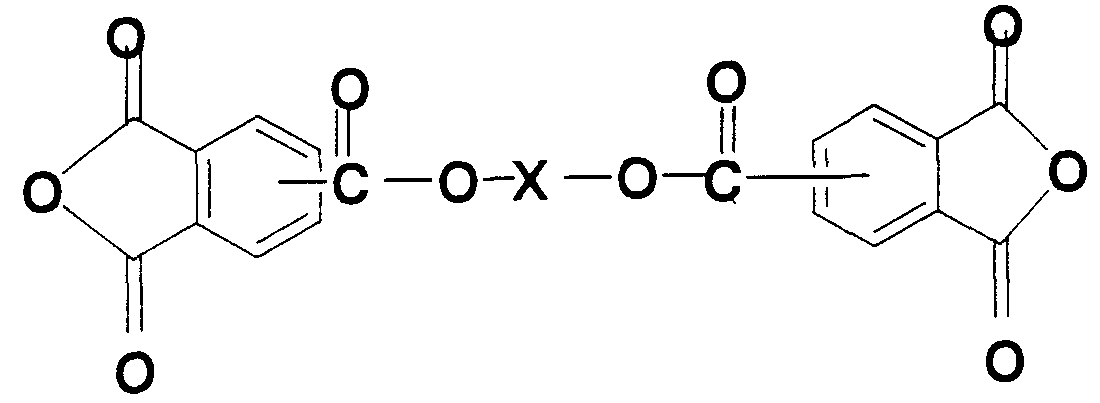


Claims

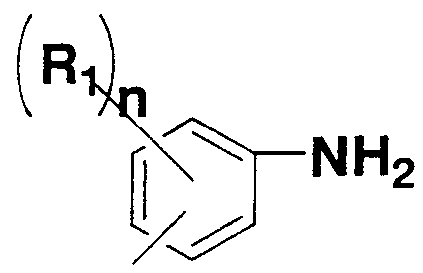


Priority Applications (4)
| Application Number | Priority Date | Filing Date | Title |
|---|---|---|---|
| US09/958,612 US6693162B2 (en) | 1999-04-09 | 2000-04-04 | Polyimide resin and resin composition, adhesive solution, film-state joining component,and adhesive laminate film improved in moisture resistance using it, and production methods therefor |
| DE2000616217 DE60016217T2 (de) | 1999-04-09 | 2000-04-04 | Polyimidharzzusammensetzung mit verbesserter feuchtigkeitsbeständigkeit, leimlösung, mehrlagiger klebefilm und verfahren zu deren herstellung |
| JP2000611595A JP4743732B2 (ja) | 1999-04-09 | 2000-04-04 | 線材被覆用接着性積層フィルム |
| EP20000913104 EP1193280B1 (en) | 1999-04-09 | 2000-04-04 | Polyimide resin composition with improved moisture resistance, adhesive solution, filmy bonding member, layered adhesive film, and processes for producing these |
Applications Claiming Priority (14)
| Application Number | Priority Date | Filing Date | Title |
|---|---|---|---|
| JP10206699 | 1999-04-09 | ||
| JP11/102066 | 1999-04-09 | ||
| JP11419199 | 1999-04-21 | ||
| JP11422499 | 1999-04-21 | ||
| JP11/114191 | 1999-04-21 | ||
| JP11379699 | 1999-04-21 | ||
| JP11/113796 | 1999-04-21 | ||
| JP11/114224 | 1999-04-21 | ||
| JP31603599 | 1999-11-05 | ||
| JP11/316034 | 1999-11-05 | ||
| JP11/316035 | 1999-11-05 | ||
| JP31603499 | 1999-11-05 | ||
| JP2000045542 | 2000-02-23 | ||
| JP2000/45542 | 2000-02-23 |
Publications (1)
| Publication Number | Publication Date |
|---|---|
| WO2000061658A1 true WO2000061658A1 (fr) | 2000-10-19 |
Family
ID=27565662
Family Applications (1)
| Application Number | Title | Priority Date | Filing Date |
|---|---|---|---|
| PCT/JP2000/002181 Ceased WO2000061658A1 (fr) | 1999-04-09 | 2000-04-04 | Resine polyimide, composition de resine a resistance amelioree a l'humidite la comprenant, solution adhesive, colle en film adhesif en couches et leurs procedes de production |
Country Status (5)
| Country | Link |
|---|---|
| US (1) | US6693162B2 (ja) |
| EP (1) | EP1193280B1 (ja) |
| JP (1) | JP4743732B2 (ja) |
| DE (1) | DE60016217T2 (ja) |
| WO (1) | WO2000061658A1 (ja) |
Cited By (17)
| Publication number | Priority date | Publication date | Assignee | Title |
|---|---|---|---|---|
| JP2002309218A (ja) * | 2001-04-11 | 2002-10-23 | Kanegafuchi Chem Ind Co Ltd | 加速器ビームチューブ被覆用接着性積層フィルム |
| JP2003027034A (ja) * | 2001-07-17 | 2003-01-29 | Kanegafuchi Chem Ind Co Ltd | 接着性カバーフィルム |
| JP2003082301A (ja) * | 2001-09-10 | 2003-03-19 | Japan Gore Tex Inc | 接着テープ及び半導体装置 |
| JP2004259789A (ja) * | 2003-02-25 | 2004-09-16 | Mitsui Chemicals Inc | リードフレーム固定用接着基材 |
| WO2005100433A1 (ja) * | 2004-04-19 | 2005-10-27 | Kaneka Corporation | 熱硬化性樹脂組成物、及びそれを用いてなる積層体、回路基板 |
| WO2006118105A1 (ja) * | 2005-04-28 | 2006-11-09 | Ni Material Co., Ltd. | 熱硬化性樹脂組成物 |
| JP2007091799A (ja) * | 2005-09-27 | 2007-04-12 | Kaneka Corp | 熱硬化性樹脂組成物、及びその利用 |
| JP2008001877A (ja) * | 2006-05-23 | 2008-01-10 | Asahi Kasei Corp | ポリエステルイミドおよびその製造方法 |
| JP2008169318A (ja) * | 2007-01-12 | 2008-07-24 | Nitto Denko Corp | 高屈折率透明酸化チタン/樹脂組成物とそのような組成物を製造するためのコーティング組成物の製造方法 |
| JP2008255252A (ja) * | 2007-04-05 | 2008-10-23 | Asahi Kasei Corp | ポリエステルイミド前駆体及びポリエステルイミド |
| JP2009013422A (ja) * | 2008-09-03 | 2009-01-22 | Kaneka Corp | コーティング材 |
| WO2013180133A1 (ja) * | 2012-05-29 | 2013-12-05 | 日東電工株式会社 | 接着剤およびそれを用いた透明基板 |
| JP2014205828A (ja) * | 2013-03-21 | 2014-10-30 | 東洋紡株式会社 | ポリエステルイミド樹脂フィルム、並びにこれに用いる樹脂および樹脂組成物 |
| JP2014205827A (ja) * | 2013-03-21 | 2014-10-30 | 東洋紡株式会社 | 透明ポリエステルイミド樹脂フィルム、並びにこれに用いる樹脂および樹脂組成物 |
| WO2021117686A1 (ja) * | 2019-12-10 | 2021-06-17 | ユニチカ株式会社 | イミド基含有化合物、イミド基含有硬化剤ならびにエポキシ樹脂硬化物およびそれを用いた電気絶縁性材料 |
| CN113322011A (zh) * | 2020-02-28 | 2021-08-31 | 利诺士尖端材料有限公司 | 粘结膜、包括其的粘结膜附着层叠体及金属箔层叠体 |
| JP2021155602A (ja) * | 2020-03-27 | 2021-10-07 | 積水化学工業株式会社 | 樹脂材料及び多層プリント配線板 |
Families Citing this family (29)
| Publication number | Priority date | Publication date | Assignee | Title |
|---|---|---|---|---|
| WO2001057112A1 (en) * | 2000-02-01 | 2001-08-09 | Nippon Steel Chemical Co., Ltd. | Adhesive polyimide resin and adhesive laminate |
| KR100599544B1 (ko) * | 2000-04-12 | 2006-07-13 | 가부시키가이샤 가네카 | 적층체 및 그것을 사용한 다층 배선판 |
| TWI293315B (en) * | 2000-12-26 | 2008-02-11 | Ngk Spark Plug Co | Wiring substrate |
| KR100638623B1 (ko) * | 2001-09-04 | 2006-10-26 | 미쓰이 가가쿠 가부시키가이샤 | 신규한 방향족 디아민 및 그의 폴리이미드 |
| CN1309786C (zh) * | 2002-03-08 | 2007-04-11 | 钟渊化学工业株式会社 | 热固性树脂组合物,用该组合物构成的叠层制品及电路基板 |
| JP2004079826A (ja) * | 2002-08-20 | 2004-03-11 | Nippon Steel Chem Co Ltd | 配線基板用積層体 |
| WO2004067665A1 (de) * | 2003-01-29 | 2004-08-12 | Tesa Ag | Verfahren zur verklebung von fpcb′s |
| JP4359242B2 (ja) * | 2003-05-14 | 2009-11-04 | 三井化学株式会社 | 接着性樹脂組成物及びフィルム状接着剤並びにそれを用いた半導体装置 |
| US7220490B2 (en) * | 2003-12-30 | 2007-05-22 | E. I. Du Pont De Nemours And Company | Polyimide based adhesive compositions useful in flexible circuit applications, and compositions and methods relating thereto |
| WO2005080466A1 (ja) * | 2004-02-25 | 2005-09-01 | Kaneka Corporation | 熱硬化性樹脂組成物およびその利用 |
| JP2008510621A (ja) * | 2004-08-25 | 2008-04-10 | 松下電器産業株式会社 | 半田組成物及び半田接合方法並びに半田接合構造 |
| US7816487B2 (en) * | 2004-09-30 | 2010-10-19 | Intel Corporation | Die-attach films for chip-scale packaging, packages made therewith, and methods of assembling same |
| WO2007094561A1 (en) * | 2006-02-17 | 2007-08-23 | Cheil Industries Inc. | High molocular electrolyte membrane for fuel cell, and membrane-electrode assembly thereby, fuel cell |
| US20070290379A1 (en) * | 2006-06-15 | 2007-12-20 | Dueber Thomas E | Hydrophobic compositions for electronic applications |
| US8168726B2 (en) * | 2006-06-22 | 2012-05-01 | Sabic Innovative Plastics Ip B.V. | Process for making polysiloxane/polymide copolymer blends |
| US8071693B2 (en) * | 2006-06-22 | 2011-12-06 | Sabic Innovative Plastics Ip B.V. | Polysiloxane/polyimide copolymers and blends thereof |
| US8491997B2 (en) * | 2006-06-22 | 2013-07-23 | Sabic Innovative Plastics Ip B.V. | Conductive wire comprising a polysiloxane/polyimide copolymer blend |
| US8159825B1 (en) | 2006-08-25 | 2012-04-17 | Hypres Inc. | Method for fabrication of electrical contacts to superconducting circuits |
| JP5380805B2 (ja) * | 2006-08-31 | 2014-01-08 | Jnc株式会社 | インクジェット用インク |
| US20080236864A1 (en) * | 2007-03-28 | 2008-10-02 | General Electric Company | Cross linked polysiloxane/polyimide copolymers, methods of making, blends thereof, and articles derived therefrom |
| JP2008255141A (ja) * | 2007-03-31 | 2008-10-23 | Ube Ind Ltd | ポリイミドフィルムの製造方法およびポリイミドフィルム |
| JP2008266416A (ja) * | 2007-04-18 | 2008-11-06 | Ube Ind Ltd | ポリイミドフィルムの製造方法およびポリイミドフィルム |
| US10240000B2 (en) * | 2013-09-26 | 2019-03-26 | Polyone Corporation | Aromatic polyimides suitable for 3D printing processes |
| US11432400B2 (en) * | 2016-08-12 | 2022-08-30 | Showa Denko Materials Co., Ltd. | Interlayer insulating film and method for producing same |
| WO2019169394A1 (en) | 2018-03-02 | 2019-09-06 | Kaneka Americas Holding, Inc. | Polyimides for temporary bonding adhesives, methods for manufacturing of thermoplastic polyimide materials, and methods for thin wafer bonding using the same |
| JP7269095B2 (ja) * | 2019-05-29 | 2023-05-08 | 古河電気工業株式会社 | ガラス加工用テープ |
| KR20210048012A (ko) * | 2019-10-22 | 2021-05-03 | 주식회사 엘지화학 | 반도체용 접착제 조성물 및 이를 이용한 반도체용 접착 필름 |
| JP7763038B2 (ja) * | 2021-03-31 | 2025-10-31 | Tdk株式会社 | 樹脂複合積層体、樹脂複合積層体の製造方法および伸縮性デバイス |
| CN115536816B (zh) * | 2022-10-28 | 2024-02-20 | 中国科学院兰州化学物理研究所 | 一种热固性环氧树脂形状记忆聚合物及其制备方法 |
Citations (55)
| Publication number | Priority date | Publication date | Assignee | Title |
|---|---|---|---|---|
| DE2357297A1 (de) * | 1973-11-16 | 1975-05-22 | Akzo Gmbh | Verfahren zur herstellung von polyamidcarbonsaeuren |
| EP0163518A2 (en) * | 1984-06-01 | 1985-12-04 | National Starch And Chemical Investment Holding Corporation | Improved polyamide acids, polyimides, poly(esterimides) |
| JPS63117075A (ja) * | 1986-10-31 | 1988-05-21 | Hitachi Chem Co Ltd | 導電性ペ−スト組成物 |
| JPS63189490A (ja) * | 1987-01-30 | 1988-08-05 | Hitachi Chem Co Ltd | フイルム状接合部材 |
| JPH029848A (ja) * | 1988-06-28 | 1990-01-12 | Hitachi Chem Co Ltd | 新規ジアミン |
| JPH029847A (ja) * | 1988-06-28 | 1990-01-12 | Hitachi Chem Co Ltd | 新規ジアミンの製造法 |
| JPH0211633A (ja) * | 1988-06-28 | 1990-01-16 | Hitachi Chem Co Ltd | 新規なポリエステルイミドの製造法 |
| JPH02245070A (ja) * | 1989-03-17 | 1990-09-28 | Hitachi Chem Co Ltd | 導電性ペースト組成物 |
| JPH02245071A (ja) * | 1989-03-17 | 1990-09-28 | Hitachi Chem Co Ltd | 導電性ペースト組成物 |
| JPH03195732A (ja) * | 1989-12-25 | 1991-08-27 | Hitachi Chem Co Ltd | 新規なポリエステルイミド |
| EP0456515A1 (en) * | 1990-05-10 | 1991-11-13 | Hitachi Chemical Co., Ltd. | Polyimides and thermosetting resin compositions containing the same |
| JPH04222831A (ja) * | 1990-12-26 | 1992-08-12 | Hitachi Chem Co Ltd | ポリイミド、ポリアミド酸及びポリイミド系樹脂の製造法 |
| JPH0586183A (ja) * | 1991-09-30 | 1993-04-06 | Hitachi Chem Co Ltd | 熱硬化性ポリイミド及びその製造法 |
| JPH05331116A (ja) * | 1992-05-28 | 1993-12-14 | Kanegafuchi Chem Ind Co Ltd | ジアミン及びその製造方法 |
| JPH06128462A (ja) * | 1992-10-15 | 1994-05-10 | Hitachi Chem Co Ltd | 熱硬化性樹脂組成物、接着剤シート、接着剤付きポリイミドフィルム及び金属はく張りポリイミドフィルム |
| JPH06184904A (ja) * | 1992-12-17 | 1994-07-05 | Kanegafuchi Chem Ind Co Ltd | 耐熱不織布用バインダー |
| JPH06184903A (ja) * | 1992-12-17 | 1994-07-05 | Kanegafuchi Chem Ind Co Ltd | 耐熱不織布用バインダー |
| JPH06248241A (ja) * | 1993-02-22 | 1994-09-06 | Hitachi Chem Co Ltd | 複合接着シ−トの製造法 |
| JPH06256472A (ja) * | 1993-01-06 | 1994-09-13 | Hitachi Chem Co Ltd | 熱硬化性樹脂組成物 |
| EP0618614A2 (en) * | 1993-03-29 | 1994-10-05 | Hitachi Chemical Co., Ltd. | Heat-resistant adhesive for the fabrication of a semiconductor package |
| JPH06340808A (ja) * | 1993-05-31 | 1994-12-13 | Hitachi Chem Co Ltd | 低比誘電率フィルム |
| JPH073019A (ja) * | 1993-06-18 | 1995-01-06 | Kanegafuchi Chem Ind Co Ltd | 新規芳香族ポリイミド重合体及びポリアミド酸重合体 |
| WO1995004100A1 (en) * | 1993-08-03 | 1995-02-09 | Kanegafuchi Kagaku Kogyo Kabushiki Kaisha | Thermoplastic polyimide polymer, thermoplastic polyimide film, polyimide laminate, and process for producing the laminate |
| JPH0762096A (ja) * | 1993-08-23 | 1995-03-07 | Kanegafuchi Chem Ind Co Ltd | 新規芳香族ポリアミド酸共重合体及びポリイミド共重合体 |
| JPH0762097A (ja) * | 1993-08-23 | 1995-03-07 | Kanegafuchi Chem Ind Co Ltd | 新規な共重合体とその製造方法 |
| US5397849A (en) * | 1992-08-28 | 1995-03-14 | Shin-Etsu Chemical Co., Ltd. | Process for preventing polymer scale using an alkaline solution of a condensation product of an aromatic compound having at least two amino groups and an aromatic bisester anhydride |
| JPH0770539A (ja) * | 1993-09-03 | 1995-03-14 | Kanegafuchi Chem Ind Co Ltd | カバーレイ用接着剤及びカバーレイフィルム |
| JPH0770318A (ja) * | 1993-09-06 | 1995-03-14 | Kanegafuchi Chem Ind Co Ltd | 耐熱性接着剤 |
| JPH07137196A (ja) * | 1993-11-18 | 1995-05-30 | Kanegafuchi Chem Ind Co Ltd | フレキシブル金属箔張り積層板の製造方法 |
| JPH07198090A (ja) * | 1993-12-28 | 1995-08-01 | Kanegafuchi Chem Ind Co Ltd | 積層断熱材及びその製造方法 |
| JPH07205255A (ja) * | 1994-01-10 | 1995-08-08 | Kanegafuchi Chem Ind Co Ltd | 熱可塑性ポリイミド系チューブ状フィルム及びその製造方法 |
| JPH0845900A (ja) * | 1994-05-24 | 1996-02-16 | Hitachi Chem Co Ltd | 半導体基板上に所望のパターンの樹脂膜を形成する方法、半導体チップ、半導体パッケージ、及びレジスト像剥離液 |
| JPH08100062A (ja) * | 1994-09-28 | 1996-04-16 | Kanegafuchi Chem Ind Co Ltd | 新規芳香族ポリイミド粉粒体及びその製造方法 |
| JPH08143668A (ja) * | 1994-11-23 | 1996-06-04 | Kanegafuchi Chem Ind Co Ltd | 新規芳香族ポリアミド酸共重合体及びポリイミド共重合体 |
| JPH08176524A (ja) * | 1994-12-22 | 1996-07-09 | Sumitomo Bakelite Co Ltd | シリコーンポリイミド接着剤 |
| JPH08199124A (ja) * | 1995-01-26 | 1996-08-06 | Kanegafuchi Chem Ind Co Ltd | ボンディングシート |
| JPH08197695A (ja) * | 1995-01-20 | 1996-08-06 | Kanegafuchi Chem Ind Co Ltd | 接着性絶縁フィルム及びその製造方法 |
| JPH08217877A (ja) * | 1995-02-17 | 1996-08-27 | Kanegafuchi Chem Ind Co Ltd | ポリイミド樹脂及びポリイミドフィルム |
| JPH08273974A (ja) * | 1995-03-31 | 1996-10-18 | Kanegafuchi Chem Ind Co Ltd | コンデンサ |
| JPH08294993A (ja) * | 1995-04-27 | 1996-11-12 | Kanegafuchi Chem Ind Co Ltd | フレキシブル銅張積層板 |
| JPH091723A (ja) * | 1995-04-17 | 1997-01-07 | Kanegafuchi Chem Ind Co Ltd | 耐熱性ボンディングシート |
| JPH0977871A (ja) * | 1995-09-11 | 1997-03-25 | Japan Synthetic Rubber Co Ltd | 結晶性ポリイミド |
| JPH0977869A (ja) * | 1995-09-13 | 1997-03-25 | Kanegafuchi Chem Ind Co Ltd | ポリイミド粉粒体の製造方法及びポリイミド粉粒体 |
| JPH09286858A (ja) * | 1996-04-24 | 1997-11-04 | Kanegafuchi Chem Ind Co Ltd | ポリイミド樹脂組成物とその製造方法 |
| JPH09291151A (ja) * | 1995-07-14 | 1997-11-11 | Kanegafuchi Chem Ind Co Ltd | 熱融着性を有する新規な共重合体及び該共重合体組成物とその製造方法 |
| JPH09302091A (ja) * | 1996-05-10 | 1997-11-25 | Kanegafuchi Chem Ind Co Ltd | 新規な高弾性ポリイミド樹脂組成物 |
| JPH10130594A (ja) * | 1996-10-29 | 1998-05-19 | Kanegafuchi Chem Ind Co Ltd | 耐熱性ボンディングシート |
| JPH10219110A (ja) * | 1997-02-07 | 1998-08-18 | Kanegafuchi Chem Ind Co Ltd | 樹脂組成物並びにそれからなる管状物及びその製法 |
| JPH10226751A (ja) * | 1997-02-17 | 1998-08-25 | Kanegafuchi Chem Ind Co Ltd | 改良されたポリイミド樹脂組成物及びそれからなる耐熱性樹脂フィルム |
| JPH10237300A (ja) * | 1997-02-25 | 1998-09-08 | Kanegafuchi Chem Ind Co Ltd | 樹脂組成物 |
| JPH1150037A (ja) * | 1997-08-05 | 1999-02-23 | Kanegafuchi Chem Ind Co Ltd | 液状接合部材 |
| JPH1197578A (ja) * | 1997-09-22 | 1999-04-09 | Hitachi Ltd | 半導体装置及び製造方法 |
| JPH11158277A (ja) * | 1997-12-01 | 1999-06-15 | Kanegafuchi Chem Ind Co Ltd | 電池電極用バインダー樹脂とその製造方法 |
| JPH11228693A (ja) * | 1998-02-16 | 1999-08-24 | Kanegafuchi Chem Ind Co Ltd | ポリイミド樹脂溶液とその製造方法 |
| JP2000109645A (ja) * | 1998-10-05 | 2000-04-18 | Kanegafuchi Chem Ind Co Ltd | 樹脂組成物 |
Family Cites Families (10)
| Publication number | Priority date | Publication date | Assignee | Title |
|---|---|---|---|---|
| KR0159287B1 (ko) * | 1991-01-24 | 1999-01-15 | 윤종용 | 실록산 변성 폴리이미드 수지의 제조방법 |
| CA2111294A1 (en) * | 1992-12-16 | 1994-06-17 | Hiroyuki Furutani | Thermoplastic polyimide, polyamide acid, and thermally fusible laminated film for covering conductive wires |
| US6046072A (en) | 1993-03-29 | 2000-04-04 | Hitachi Chemical Company, Ltd. | Process for fabricating a crack resistant resin encapsulated semiconductor chip package |
| KR100372995B1 (ko) | 1994-05-24 | 2003-03-31 | 히다치 가세고교 가부시끼가이샤 | 반도체기판위에목적하는패턴의수지막을형성하는방법,반도체칩,반도체패키지,및레지스트상박리액 |
| EP0775716B1 (en) * | 1995-01-11 | 1999-07-28 | Kanegafuchi Kagaku Kogyo Kabushiki Kaisha | Novel heat-fusible copolymer, and powder, film, laminated heat insulator, electronic module, and capacitor produced from said copolymer, and process for producing the same |
| JP3195732B2 (ja) | 1995-12-26 | 2001-08-06 | 株式会社コロナ | 温風暖房機 |
| JP3700311B2 (ja) * | 1997-02-05 | 2005-09-28 | 日本メクトロン株式会社 | シロキサンポリイミドおよびそれを含有する耐熱性接着剤 |
| JP4032449B2 (ja) * | 1997-03-25 | 2008-01-16 | 東洋紡績株式会社 | 絶縁電線 |
| JP3069649B2 (ja) * | 1997-12-26 | 2000-07-24 | 株式会社ソフィア | 遊技機 |
| KR20000035259A (ko) * | 1998-11-05 | 2000-06-26 | 다케다 마사토시 | 폴리이미드 필름 및 이를 사용한 전기/전자 기기용 기판 |
-
2000
- 2000-04-04 DE DE2000616217 patent/DE60016217T2/de not_active Expired - Lifetime
- 2000-04-04 WO PCT/JP2000/002181 patent/WO2000061658A1/ja not_active Ceased
- 2000-04-04 US US09/958,612 patent/US6693162B2/en not_active Expired - Lifetime
- 2000-04-04 JP JP2000611595A patent/JP4743732B2/ja not_active Expired - Lifetime
- 2000-04-04 EP EP20000913104 patent/EP1193280B1/en not_active Expired - Lifetime
Patent Citations (55)
| Publication number | Priority date | Publication date | Assignee | Title |
|---|---|---|---|---|
| DE2357297A1 (de) * | 1973-11-16 | 1975-05-22 | Akzo Gmbh | Verfahren zur herstellung von polyamidcarbonsaeuren |
| EP0163518A2 (en) * | 1984-06-01 | 1985-12-04 | National Starch And Chemical Investment Holding Corporation | Improved polyamide acids, polyimides, poly(esterimides) |
| JPS63117075A (ja) * | 1986-10-31 | 1988-05-21 | Hitachi Chem Co Ltd | 導電性ペ−スト組成物 |
| JPS63189490A (ja) * | 1987-01-30 | 1988-08-05 | Hitachi Chem Co Ltd | フイルム状接合部材 |
| JPH029848A (ja) * | 1988-06-28 | 1990-01-12 | Hitachi Chem Co Ltd | 新規ジアミン |
| JPH029847A (ja) * | 1988-06-28 | 1990-01-12 | Hitachi Chem Co Ltd | 新規ジアミンの製造法 |
| JPH0211633A (ja) * | 1988-06-28 | 1990-01-16 | Hitachi Chem Co Ltd | 新規なポリエステルイミドの製造法 |
| JPH02245070A (ja) * | 1989-03-17 | 1990-09-28 | Hitachi Chem Co Ltd | 導電性ペースト組成物 |
| JPH02245071A (ja) * | 1989-03-17 | 1990-09-28 | Hitachi Chem Co Ltd | 導電性ペースト組成物 |
| JPH03195732A (ja) * | 1989-12-25 | 1991-08-27 | Hitachi Chem Co Ltd | 新規なポリエステルイミド |
| EP0456515A1 (en) * | 1990-05-10 | 1991-11-13 | Hitachi Chemical Co., Ltd. | Polyimides and thermosetting resin compositions containing the same |
| JPH04222831A (ja) * | 1990-12-26 | 1992-08-12 | Hitachi Chem Co Ltd | ポリイミド、ポリアミド酸及びポリイミド系樹脂の製造法 |
| JPH0586183A (ja) * | 1991-09-30 | 1993-04-06 | Hitachi Chem Co Ltd | 熱硬化性ポリイミド及びその製造法 |
| JPH05331116A (ja) * | 1992-05-28 | 1993-12-14 | Kanegafuchi Chem Ind Co Ltd | ジアミン及びその製造方法 |
| US5397849A (en) * | 1992-08-28 | 1995-03-14 | Shin-Etsu Chemical Co., Ltd. | Process for preventing polymer scale using an alkaline solution of a condensation product of an aromatic compound having at least two amino groups and an aromatic bisester anhydride |
| JPH06128462A (ja) * | 1992-10-15 | 1994-05-10 | Hitachi Chem Co Ltd | 熱硬化性樹脂組成物、接着剤シート、接着剤付きポリイミドフィルム及び金属はく張りポリイミドフィルム |
| JPH06184904A (ja) * | 1992-12-17 | 1994-07-05 | Kanegafuchi Chem Ind Co Ltd | 耐熱不織布用バインダー |
| JPH06184903A (ja) * | 1992-12-17 | 1994-07-05 | Kanegafuchi Chem Ind Co Ltd | 耐熱不織布用バインダー |
| JPH06256472A (ja) * | 1993-01-06 | 1994-09-13 | Hitachi Chem Co Ltd | 熱硬化性樹脂組成物 |
| JPH06248241A (ja) * | 1993-02-22 | 1994-09-06 | Hitachi Chem Co Ltd | 複合接着シ−トの製造法 |
| EP0618614A2 (en) * | 1993-03-29 | 1994-10-05 | Hitachi Chemical Co., Ltd. | Heat-resistant adhesive for the fabrication of a semiconductor package |
| JPH06340808A (ja) * | 1993-05-31 | 1994-12-13 | Hitachi Chem Co Ltd | 低比誘電率フィルム |
| JPH073019A (ja) * | 1993-06-18 | 1995-01-06 | Kanegafuchi Chem Ind Co Ltd | 新規芳香族ポリイミド重合体及びポリアミド酸重合体 |
| WO1995004100A1 (en) * | 1993-08-03 | 1995-02-09 | Kanegafuchi Kagaku Kogyo Kabushiki Kaisha | Thermoplastic polyimide polymer, thermoplastic polyimide film, polyimide laminate, and process for producing the laminate |
| JPH0762096A (ja) * | 1993-08-23 | 1995-03-07 | Kanegafuchi Chem Ind Co Ltd | 新規芳香族ポリアミド酸共重合体及びポリイミド共重合体 |
| JPH0762097A (ja) * | 1993-08-23 | 1995-03-07 | Kanegafuchi Chem Ind Co Ltd | 新規な共重合体とその製造方法 |
| JPH0770539A (ja) * | 1993-09-03 | 1995-03-14 | Kanegafuchi Chem Ind Co Ltd | カバーレイ用接着剤及びカバーレイフィルム |
| JPH0770318A (ja) * | 1993-09-06 | 1995-03-14 | Kanegafuchi Chem Ind Co Ltd | 耐熱性接着剤 |
| JPH07137196A (ja) * | 1993-11-18 | 1995-05-30 | Kanegafuchi Chem Ind Co Ltd | フレキシブル金属箔張り積層板の製造方法 |
| JPH07198090A (ja) * | 1993-12-28 | 1995-08-01 | Kanegafuchi Chem Ind Co Ltd | 積層断熱材及びその製造方法 |
| JPH07205255A (ja) * | 1994-01-10 | 1995-08-08 | Kanegafuchi Chem Ind Co Ltd | 熱可塑性ポリイミド系チューブ状フィルム及びその製造方法 |
| JPH0845900A (ja) * | 1994-05-24 | 1996-02-16 | Hitachi Chem Co Ltd | 半導体基板上に所望のパターンの樹脂膜を形成する方法、半導体チップ、半導体パッケージ、及びレジスト像剥離液 |
| JPH08100062A (ja) * | 1994-09-28 | 1996-04-16 | Kanegafuchi Chem Ind Co Ltd | 新規芳香族ポリイミド粉粒体及びその製造方法 |
| JPH08143668A (ja) * | 1994-11-23 | 1996-06-04 | Kanegafuchi Chem Ind Co Ltd | 新規芳香族ポリアミド酸共重合体及びポリイミド共重合体 |
| JPH08176524A (ja) * | 1994-12-22 | 1996-07-09 | Sumitomo Bakelite Co Ltd | シリコーンポリイミド接着剤 |
| JPH08197695A (ja) * | 1995-01-20 | 1996-08-06 | Kanegafuchi Chem Ind Co Ltd | 接着性絶縁フィルム及びその製造方法 |
| JPH08199124A (ja) * | 1995-01-26 | 1996-08-06 | Kanegafuchi Chem Ind Co Ltd | ボンディングシート |
| JPH08217877A (ja) * | 1995-02-17 | 1996-08-27 | Kanegafuchi Chem Ind Co Ltd | ポリイミド樹脂及びポリイミドフィルム |
| JPH08273974A (ja) * | 1995-03-31 | 1996-10-18 | Kanegafuchi Chem Ind Co Ltd | コンデンサ |
| JPH091723A (ja) * | 1995-04-17 | 1997-01-07 | Kanegafuchi Chem Ind Co Ltd | 耐熱性ボンディングシート |
| JPH08294993A (ja) * | 1995-04-27 | 1996-11-12 | Kanegafuchi Chem Ind Co Ltd | フレキシブル銅張積層板 |
| JPH09291151A (ja) * | 1995-07-14 | 1997-11-11 | Kanegafuchi Chem Ind Co Ltd | 熱融着性を有する新規な共重合体及び該共重合体組成物とその製造方法 |
| JPH0977871A (ja) * | 1995-09-11 | 1997-03-25 | Japan Synthetic Rubber Co Ltd | 結晶性ポリイミド |
| JPH0977869A (ja) * | 1995-09-13 | 1997-03-25 | Kanegafuchi Chem Ind Co Ltd | ポリイミド粉粒体の製造方法及びポリイミド粉粒体 |
| JPH09286858A (ja) * | 1996-04-24 | 1997-11-04 | Kanegafuchi Chem Ind Co Ltd | ポリイミド樹脂組成物とその製造方法 |
| JPH09302091A (ja) * | 1996-05-10 | 1997-11-25 | Kanegafuchi Chem Ind Co Ltd | 新規な高弾性ポリイミド樹脂組成物 |
| JPH10130594A (ja) * | 1996-10-29 | 1998-05-19 | Kanegafuchi Chem Ind Co Ltd | 耐熱性ボンディングシート |
| JPH10219110A (ja) * | 1997-02-07 | 1998-08-18 | Kanegafuchi Chem Ind Co Ltd | 樹脂組成物並びにそれからなる管状物及びその製法 |
| JPH10226751A (ja) * | 1997-02-17 | 1998-08-25 | Kanegafuchi Chem Ind Co Ltd | 改良されたポリイミド樹脂組成物及びそれからなる耐熱性樹脂フィルム |
| JPH10237300A (ja) * | 1997-02-25 | 1998-09-08 | Kanegafuchi Chem Ind Co Ltd | 樹脂組成物 |
| JPH1150037A (ja) * | 1997-08-05 | 1999-02-23 | Kanegafuchi Chem Ind Co Ltd | 液状接合部材 |
| JPH1197578A (ja) * | 1997-09-22 | 1999-04-09 | Hitachi Ltd | 半導体装置及び製造方法 |
| JPH11158277A (ja) * | 1997-12-01 | 1999-06-15 | Kanegafuchi Chem Ind Co Ltd | 電池電極用バインダー樹脂とその製造方法 |
| JPH11228693A (ja) * | 1998-02-16 | 1999-08-24 | Kanegafuchi Chem Ind Co Ltd | ポリイミド樹脂溶液とその製造方法 |
| JP2000109645A (ja) * | 1998-10-05 | 2000-04-18 | Kanegafuchi Chem Ind Co Ltd | 樹脂組成物 |
Non-Patent Citations (1)
| Title |
|---|
| See also references of EP1193280A4 * |
Cited By (21)
| Publication number | Priority date | Publication date | Assignee | Title |
|---|---|---|---|---|
| JP2002309218A (ja) * | 2001-04-11 | 2002-10-23 | Kanegafuchi Chem Ind Co Ltd | 加速器ビームチューブ被覆用接着性積層フィルム |
| JP2003027034A (ja) * | 2001-07-17 | 2003-01-29 | Kanegafuchi Chem Ind Co Ltd | 接着性カバーフィルム |
| JP2003082301A (ja) * | 2001-09-10 | 2003-03-19 | Japan Gore Tex Inc | 接着テープ及び半導体装置 |
| JP2004259789A (ja) * | 2003-02-25 | 2004-09-16 | Mitsui Chemicals Inc | リードフレーム固定用接着基材 |
| JP5019874B2 (ja) * | 2004-04-19 | 2012-09-05 | 株式会社カネカ | 熱硬化性樹脂組成物、及びそれを用いてなる積層体、回路基板 |
| WO2005100433A1 (ja) * | 2004-04-19 | 2005-10-27 | Kaneka Corporation | 熱硬化性樹脂組成物、及びそれを用いてなる積層体、回路基板 |
| JPWO2005100433A1 (ja) * | 2004-04-19 | 2008-03-06 | 株式会社カネカ | 熱硬化性樹脂組成物、及びそれを用いてなる積層体、回路基板 |
| WO2006118105A1 (ja) * | 2005-04-28 | 2006-11-09 | Ni Material Co., Ltd. | 熱硬化性樹脂組成物 |
| JP5054516B2 (ja) * | 2005-04-28 | 2012-10-24 | 株式会社野田スクリーン | 熱硬化性樹脂組成物 |
| JP2007091799A (ja) * | 2005-09-27 | 2007-04-12 | Kaneka Corp | 熱硬化性樹脂組成物、及びその利用 |
| JP2008001877A (ja) * | 2006-05-23 | 2008-01-10 | Asahi Kasei Corp | ポリエステルイミドおよびその製造方法 |
| JP2008169318A (ja) * | 2007-01-12 | 2008-07-24 | Nitto Denko Corp | 高屈折率透明酸化チタン/樹脂組成物とそのような組成物を製造するためのコーティング組成物の製造方法 |
| JP2008255252A (ja) * | 2007-04-05 | 2008-10-23 | Asahi Kasei Corp | ポリエステルイミド前駆体及びポリエステルイミド |
| JP2009013422A (ja) * | 2008-09-03 | 2009-01-22 | Kaneka Corp | コーティング材 |
| WO2013180133A1 (ja) * | 2012-05-29 | 2013-12-05 | 日東電工株式会社 | 接着剤およびそれを用いた透明基板 |
| JP2014205828A (ja) * | 2013-03-21 | 2014-10-30 | 東洋紡株式会社 | ポリエステルイミド樹脂フィルム、並びにこれに用いる樹脂および樹脂組成物 |
| JP2014205827A (ja) * | 2013-03-21 | 2014-10-30 | 東洋紡株式会社 | 透明ポリエステルイミド樹脂フィルム、並びにこれに用いる樹脂および樹脂組成物 |
| WO2021117686A1 (ja) * | 2019-12-10 | 2021-06-17 | ユニチカ株式会社 | イミド基含有化合物、イミド基含有硬化剤ならびにエポキシ樹脂硬化物およびそれを用いた電気絶縁性材料 |
| CN113322011A (zh) * | 2020-02-28 | 2021-08-31 | 利诺士尖端材料有限公司 | 粘结膜、包括其的粘结膜附着层叠体及金属箔层叠体 |
| JP2021155602A (ja) * | 2020-03-27 | 2021-10-07 | 積水化学工業株式会社 | 樹脂材料及び多層プリント配線板 |
| JP7478008B2 (ja) | 2020-03-27 | 2024-05-02 | 積水化学工業株式会社 | 樹脂材料及び多層プリント配線板 |
Also Published As
| Publication number | Publication date |
|---|---|
| US20030045669A1 (en) | 2003-03-06 |
| DE60016217T2 (de) | 2005-04-07 |
| DE60016217D1 (de) | 2004-12-30 |
| US6693162B2 (en) | 2004-02-17 |
| EP1193280A4 (en) | 2002-07-31 |
| EP1193280A1 (en) | 2002-04-03 |
| JP4743732B2 (ja) | 2011-08-10 |
| EP1193280B1 (en) | 2004-11-24 |
Similar Documents
| Publication | Publication Date | Title |
|---|---|---|
| JP4743732B2 (ja) | 線材被覆用接着性積層フィルム | |
| KR102485693B1 (ko) | 폴리이미드, 접착제, 필름상 접착재, 접착층, 접착 시트, 수지 부착 동박, 동피복 적층판, 프린트 배선판, 그리고 다층 배선판 및 그 제조 방법 | |
| TWI716524B (zh) | 覆銅積層體及印刷線路板 | |
| JPWO2000061658A1 (ja) | ポリイミド樹脂およびそれを用いた耐湿性が改良された樹脂組成物、接着剤溶液、フィルム状接合部材、接着性積層フィルムならびにそれらの製造方法 | |
| CN107325285B (zh) | 聚酰亚胺、聚酰亚胺类胶粘剂、胶粘材料、胶粘层、胶粘片、层叠板、布线板及其制造方法 | |
| CN108690194B (zh) | 聚酰亚胺、胶粘剂、胶粘材料、胶粘层、胶粘片、铜箔、覆铜层叠板、布线板及制造方法 | |
| CN108690552B (zh) | 胶粘剂、胶粘材料、胶粘层、胶粘片、铜箔、覆铜层叠板、布线板及制造方法 | |
| JP6686619B2 (ja) | ポリイミド系接着剤、フィルム状接着材、接着層、接着シート、銅張積層板及びプリント配線板、並びに多層配線板及びその製造方法 | |
| JP5232386B2 (ja) | 熱硬化性樹脂組成物およびその利用 | |
| JP2016069651A (ja) | ポリイミド樹脂組成物、接着剤組成物、プライマー組成物、積層体及び樹脂付き銅箔 | |
| KR100960174B1 (ko) | 열경화성 수지 조성물, 이를 이용한 적층체 및 회로 기판 | |
| JP5019874B2 (ja) | 熱硬化性樹脂組成物、及びそれを用いてなる積層体、回路基板 | |
| JP4426774B2 (ja) | 熱硬化性樹脂組成物、及びそれを用いてなる積層体、回路基板 | |
| WO2001034678A1 (fr) | Polyimide soluble et composition contenant ce dernier, feuille de liaison, film lamine adhesif utilise pour recouvrir un tube de faisceau d'accelerateur et film lamine adhesif utilise pour recouvrir un fil conducteur destine a un dispositif de chauffe refroidissant un accelerateur | |
| JP3635384B2 (ja) | 耐熱性ボンディングシート | |
| JP4071958B2 (ja) | ポリイミド樹脂組成物 | |
| JP5014587B2 (ja) | 活性エステル化合物およびその利用 | |
| JP2001329246A (ja) | 耐湿特性が改良された接着剤用硬化性樹脂組成物、それより得られる硬化物およびその製造方法。 | |
| WO2005027597A1 (ja) | フレキシブルプリント配線板用基板及びその製造方法 | |
| JP2002060620A (ja) | 保存安定性に優れたポリイミド溶液、ポリイミド系接着剤溶液およびそれを用いて得られるフィルム状積層部材 | |
| JP2001348556A (ja) | ボンディングシート | |
| JP2000143981A (ja) | 樹脂組成物 | |
| JPH06176622A (ja) | 被覆電気導電体 | |
| JPH09286858A (ja) | ポリイミド樹脂組成物とその製造方法 | |
| JP2000143983A5 (ja) |
Legal Events
| Date | Code | Title | Description |
|---|---|---|---|
| AK | Designated states |
Kind code of ref document: A1 Designated state(s): JP US |
|
| AL | Designated countries for regional patents |
Kind code of ref document: A1 Designated state(s): AT BE CH CY DE DK ES FI FR GB GR IE IT LU MC NL PT SE |
|
| DFPE | Request for preliminary examination filed prior to expiration of 19th month from priority date (pct application filed before 20040101) | ||
| 121 | Ep: the epo has been informed by wipo that ep was designated in this application | ||
| ENP | Entry into the national phase |
Ref country code: JP Ref document number: 2000 611595 Kind code of ref document: A Format of ref document f/p: F |
|
| WWE | Wipo information: entry into national phase |
Ref document number: 09958612 Country of ref document: US |
|
| WWE | Wipo information: entry into national phase |
Ref document number: 2000913104 Country of ref document: EP |
|
| WWP | Wipo information: published in national office |
Ref document number: 2000913104 Country of ref document: EP |
|
| WWG | Wipo information: grant in national office |
Ref document number: 2000913104 Country of ref document: EP |