WO2016017761A1 - 表面被覆材、塗布膜及び親水撥油性材 - Google Patents
表面被覆材、塗布膜及び親水撥油性材 Download PDFInfo
- Publication number
- WO2016017761A1 WO2016017761A1 PCT/JP2015/071661 JP2015071661W WO2016017761A1 WO 2016017761 A1 WO2016017761 A1 WO 2016017761A1 JP 2015071661 W JP2015071661 W JP 2015071661W WO 2016017761 A1 WO2016017761 A1 WO 2016017761A1
- Authority
- WO
- WIPO (PCT)
- Prior art keywords
- oil
- repellent
- hydrophilic
- hydrophilic oil
- group
- Prior art date
- Legal status (The legal status is an assumption and is not a legal conclusion. Google has not performed a legal analysis and makes no representation as to the accuracy of the status listed.)
- Ceased
Links
- 0 C(*1)C2C1CCC2 Chemical compound C(*1)C2C1CCC2 0.000 description 8
Images

Classifications
-
- C—CHEMISTRY; METALLURGY
- C09—DYES; PAINTS; POLISHES; NATURAL RESINS; ADHESIVES; COMPOSITIONS NOT OTHERWISE PROVIDED FOR; APPLICATIONS OF MATERIALS NOT OTHERWISE PROVIDED FOR
- C09D—COATING COMPOSITIONS, e.g. PAINTS, VARNISHES OR LACQUERS; FILLING PASTES; CHEMICAL PAINT OR INK REMOVERS; INKS; CORRECTING FLUIDS; WOODSTAINS; PASTES OR SOLIDS FOR COLOURING OR PRINTING; USE OF MATERIALS THEREFOR
- C09D7/00—Features of coating compositions, not provided for in group C09D5/00; Processes for incorporating ingredients in coating compositions
- C09D7/40—Additives
- C09D7/60—Additives non-macromolecular
- C09D7/63—Additives non-macromolecular organic
-
- A—HUMAN NECESSITIES
- A41—WEARING APPAREL
- A41D—OUTERWEAR; PROTECTIVE GARMENTS; ACCESSORIES
- A41D13/00—Professional, industrial or sporting protective garments, e.g. surgeons' gowns or garments protecting against blows or punches
- A41D13/04—Aprons; Fastening devices for aprons
-
- A—HUMAN NECESSITIES
- A41—WEARING APPAREL
- A41D—OUTERWEAR; PROTECTIVE GARMENTS; ACCESSORIES
- A41D19/00—Gloves
- A41D19/015—Protective gloves
- A41D19/01547—Protective gloves with grip improving means
- A41D19/01558—Protective gloves with grip improving means using a layer of grip improving material
-
- A—HUMAN NECESSITIES
- A43—FOOTWEAR
- A43B—CHARACTERISTIC FEATURES OF FOOTWEAR; PARTS OF FOOTWEAR
- A43B13/00—Soles; Sole-and-heel integral units
- A43B13/02—Soles; Sole-and-heel integral units characterised by the material
- A43B13/04—Plastics, rubber or vulcanised fibre
-
- A—HUMAN NECESSITIES
- A43—FOOTWEAR
- A43B—CHARACTERISTIC FEATURES OF FOOTWEAR; PARTS OF FOOTWEAR
- A43B13/00—Soles; Sole-and-heel integral units
- A43B13/14—Soles; Sole-and-heel integral units characterised by the constructive form
- A43B13/22—Soles made slip-preventing or wear-resisting, e.g. by impregnation or spreading a wear-resisting layer
- A43B13/223—Profiled soles
-
- A—HUMAN NECESSITIES
- A43—FOOTWEAR
- A43B—CHARACTERISTIC FEATURES OF FOOTWEAR; PARTS OF FOOTWEAR
- A43B7/00—Footwear with health or hygienic arrangements
- A43B7/12—Special watertight footwear
-
- B—PERFORMING OPERATIONS; TRANSPORTING
- B05—SPRAYING OR ATOMISING IN GENERAL; APPLYING FLUENT MATERIALS TO SURFACES, IN GENERAL
- B05D—PROCESSES FOR APPLYING FLUENT MATERIALS TO SURFACES, IN GENERAL
- B05D5/00—Processes for applying liquids or other fluent materials to surfaces to obtain special surface effects, finishes or structures
-
- B—PERFORMING OPERATIONS; TRANSPORTING
- B05—SPRAYING OR ATOMISING IN GENERAL; APPLYING FLUENT MATERIALS TO SURFACES, IN GENERAL
- B05D—PROCESSES FOR APPLYING FLUENT MATERIALS TO SURFACES, IN GENERAL
- B05D7/00—Processes, other than flocking, specially adapted for applying liquids or other fluent materials to particular surfaces or for applying particular liquids or other fluent materials
- B05D7/24—Processes, other than flocking, specially adapted for applying liquids or other fluent materials to particular surfaces or for applying particular liquids or other fluent materials for applying particular liquids or other fluent materials
-
- B—PERFORMING OPERATIONS; TRANSPORTING
- B32—LAYERED PRODUCTS
- B32B—LAYERED PRODUCTS, i.e. PRODUCTS BUILT-UP OF STRATA OF FLAT OR NON-FLAT, e.g. CELLULAR OR HONEYCOMB, FORM
- B32B27/00—Layered products comprising a layer of synthetic resin
- B32B27/18—Layered products comprising a layer of synthetic resin characterised by the use of special additives
-
- C—CHEMISTRY; METALLURGY
- C09—DYES; PAINTS; POLISHES; NATURAL RESINS; ADHESIVES; COMPOSITIONS NOT OTHERWISE PROVIDED FOR; APPLICATIONS OF MATERIALS NOT OTHERWISE PROVIDED FOR
- C09D—COATING COMPOSITIONS, e.g. PAINTS, VARNISHES OR LACQUERS; FILLING PASTES; CHEMICAL PAINT OR INK REMOVERS; INKS; CORRECTING FLUIDS; WOODSTAINS; PASTES OR SOLIDS FOR COLOURING OR PRINTING; USE OF MATERIALS THEREFOR
- C09D201/00—Coating compositions based on unspecified macromolecular compounds
-
- C—CHEMISTRY; METALLURGY
- C09—DYES; PAINTS; POLISHES; NATURAL RESINS; ADHESIVES; COMPOSITIONS NOT OTHERWISE PROVIDED FOR; APPLICATIONS OF MATERIALS NOT OTHERWISE PROVIDED FOR
- C09D—COATING COMPOSITIONS, e.g. PAINTS, VARNISHES OR LACQUERS; FILLING PASTES; CHEMICAL PAINT OR INK REMOVERS; INKS; CORRECTING FLUIDS; WOODSTAINS; PASTES OR SOLIDS FOR COLOURING OR PRINTING; USE OF MATERIALS THEREFOR
- C09D201/00—Coating compositions based on unspecified macromolecular compounds
- C09D201/02—Coating compositions based on unspecified macromolecular compounds characterised by the presence of specified groups, e.g. terminal or pendant functional groups
-
- C—CHEMISTRY; METALLURGY
- C09—DYES; PAINTS; POLISHES; NATURAL RESINS; ADHESIVES; COMPOSITIONS NOT OTHERWISE PROVIDED FOR; APPLICATIONS OF MATERIALS NOT OTHERWISE PROVIDED FOR
- C09D—COATING COMPOSITIONS, e.g. PAINTS, VARNISHES OR LACQUERS; FILLING PASTES; CHEMICAL PAINT OR INK REMOVERS; INKS; CORRECTING FLUIDS; WOODSTAINS; PASTES OR SOLIDS FOR COLOURING OR PRINTING; USE OF MATERIALS THEREFOR
- C09D201/00—Coating compositions based on unspecified macromolecular compounds
- C09D201/02—Coating compositions based on unspecified macromolecular compounds characterised by the presence of specified groups, e.g. terminal or pendant functional groups
- C09D201/025—Coating compositions based on unspecified macromolecular compounds characterised by the presence of specified groups, e.g. terminal or pendant functional groups containing nitrogen atoms
-
- C—CHEMISTRY; METALLURGY
- C09—DYES; PAINTS; POLISHES; NATURAL RESINS; ADHESIVES; COMPOSITIONS NOT OTHERWISE PROVIDED FOR; APPLICATIONS OF MATERIALS NOT OTHERWISE PROVIDED FOR
- C09D—COATING COMPOSITIONS, e.g. PAINTS, VARNISHES OR LACQUERS; FILLING PASTES; CHEMICAL PAINT OR INK REMOVERS; INKS; CORRECTING FLUIDS; WOODSTAINS; PASTES OR SOLIDS FOR COLOURING OR PRINTING; USE OF MATERIALS THEREFOR
- C09D201/00—Coating compositions based on unspecified macromolecular compounds
- C09D201/02—Coating compositions based on unspecified macromolecular compounds characterised by the presence of specified groups, e.g. terminal or pendant functional groups
- C09D201/04—Coating compositions based on unspecified macromolecular compounds characterised by the presence of specified groups, e.g. terminal or pendant functional groups containing halogen atoms
-
- C—CHEMISTRY; METALLURGY
- C09—DYES; PAINTS; POLISHES; NATURAL RESINS; ADHESIVES; COMPOSITIONS NOT OTHERWISE PROVIDED FOR; APPLICATIONS OF MATERIALS NOT OTHERWISE PROVIDED FOR
- C09D—COATING COMPOSITIONS, e.g. PAINTS, VARNISHES OR LACQUERS; FILLING PASTES; CHEMICAL PAINT OR INK REMOVERS; INKS; CORRECTING FLUIDS; WOODSTAINS; PASTES OR SOLIDS FOR COLOURING OR PRINTING; USE OF MATERIALS THEREFOR
- C09D201/00—Coating compositions based on unspecified macromolecular compounds
- C09D201/02—Coating compositions based on unspecified macromolecular compounds characterised by the presence of specified groups, e.g. terminal or pendant functional groups
- C09D201/06—Coating compositions based on unspecified macromolecular compounds characterised by the presence of specified groups, e.g. terminal or pendant functional groups containing oxygen atoms
-
- C—CHEMISTRY; METALLURGY
- C09—DYES; PAINTS; POLISHES; NATURAL RESINS; ADHESIVES; COMPOSITIONS NOT OTHERWISE PROVIDED FOR; APPLICATIONS OF MATERIALS NOT OTHERWISE PROVIDED FOR
- C09D—COATING COMPOSITIONS, e.g. PAINTS, VARNISHES OR LACQUERS; FILLING PASTES; CHEMICAL PAINT OR INK REMOVERS; INKS; CORRECTING FLUIDS; WOODSTAINS; PASTES OR SOLIDS FOR COLOURING OR PRINTING; USE OF MATERIALS THEREFOR
- C09D201/00—Coating compositions based on unspecified macromolecular compounds
- C09D201/02—Coating compositions based on unspecified macromolecular compounds characterised by the presence of specified groups, e.g. terminal or pendant functional groups
- C09D201/06—Coating compositions based on unspecified macromolecular compounds characterised by the presence of specified groups, e.g. terminal or pendant functional groups containing oxygen atoms
- C09D201/08—Carboxyl groups
-
- C—CHEMISTRY; METALLURGY
- C09—DYES; PAINTS; POLISHES; NATURAL RESINS; ADHESIVES; COMPOSITIONS NOT OTHERWISE PROVIDED FOR; APPLICATIONS OF MATERIALS NOT OTHERWISE PROVIDED FOR
- C09D—COATING COMPOSITIONS, e.g. PAINTS, VARNISHES OR LACQUERS; FILLING PASTES; CHEMICAL PAINT OR INK REMOVERS; INKS; CORRECTING FLUIDS; WOODSTAINS; PASTES OR SOLIDS FOR COLOURING OR PRINTING; USE OF MATERIALS THEREFOR
- C09D5/00—Coating compositions, e.g. paints, varnishes or lacquers, characterised by their physical nature or the effects produced; Filling pastes
-
- C—CHEMISTRY; METALLURGY
- C09—DYES; PAINTS; POLISHES; NATURAL RESINS; ADHESIVES; COMPOSITIONS NOT OTHERWISE PROVIDED FOR; APPLICATIONS OF MATERIALS NOT OTHERWISE PROVIDED FOR
- C09D—COATING COMPOSITIONS, e.g. PAINTS, VARNISHES OR LACQUERS; FILLING PASTES; CHEMICAL PAINT OR INK REMOVERS; INKS; CORRECTING FLUIDS; WOODSTAINS; PASTES OR SOLIDS FOR COLOURING OR PRINTING; USE OF MATERIALS THEREFOR
- C09D5/00—Coating compositions, e.g. paints, varnishes or lacquers, characterised by their physical nature or the effects produced; Filling pastes
- C09D5/16—Antifouling paints; Underwater paints
-
- C—CHEMISTRY; METALLURGY
- C09—DYES; PAINTS; POLISHES; NATURAL RESINS; ADHESIVES; COMPOSITIONS NOT OTHERWISE PROVIDED FOR; APPLICATIONS OF MATERIALS NOT OTHERWISE PROVIDED FOR
- C09D—COATING COMPOSITIONS, e.g. PAINTS, VARNISHES OR LACQUERS; FILLING PASTES; CHEMICAL PAINT OR INK REMOVERS; INKS; CORRECTING FLUIDS; WOODSTAINS; PASTES OR SOLIDS FOR COLOURING OR PRINTING; USE OF MATERIALS THEREFOR
- C09D7/00—Features of coating compositions, not provided for in group C09D5/00; Processes for incorporating ingredients in coating compositions
- C09D7/40—Additives
-
- C—CHEMISTRY; METALLURGY
- C09—DYES; PAINTS; POLISHES; NATURAL RESINS; ADHESIVES; COMPOSITIONS NOT OTHERWISE PROVIDED FOR; APPLICATIONS OF MATERIALS NOT OTHERWISE PROVIDED FOR
- C09K—MATERIALS FOR MISCELLANEOUS APPLICATIONS, NOT PROVIDED FOR ELSEWHERE
- C09K3/00—Materials not provided for elsewhere
-
- A—HUMAN NECESSITIES
- A41—WEARING APPAREL
- A41D—OUTERWEAR; PROTECTIVE GARMENTS; ACCESSORIES
- A41D2500/00—Materials for garments
- A41D2500/50—Synthetic resins or rubbers
- A41D2500/54—Synthetic resins or rubbers in coated form
-
- A—HUMAN NECESSITIES
- A41—WEARING APPAREL
- A41D—OUTERWEAR; PROTECTIVE GARMENTS; ACCESSORIES
- A41D2600/00—Uses of garments specially adapted for specific purposes
- A41D2600/20—Uses of garments specially adapted for specific purposes for working activities
Definitions
- the present invention relates to a surface coating material, a coating film, and a hydrophilic oil-repellent material.
- the present application is Japanese Patent Application No. 2014-155553 and Japanese Patent Application No. 2014-155554 filed in Japan on July 30, 2014, and Japanese Patent Application No. 2014-206782 filed in Japan on October 7, 2014. , Japanese Patent Application No. 2014-206793, Japanese Patent Application No. 2014-206795, and Japanese Patent Application No. 2015-078567 filed in Japan on April 7, 2015. Incorporate.
- Patent Document 1 describes a technique for performing glass surface treatment using a conventional water and oil repellent agent.
- a hydrophilic oil repellent treatment agent that combines both a fluorine-containing silane compound and a hydrophilic silane compound has been proposed.
- Patent Document 2 discloses a surface modifier made of a copolymer of a fluorine-based vinyl monomer having a fluoroalkyl group and a cationic, anionic, or nonionic vinyl monomer. Furthermore, Patent Document 2 imparts antifouling properties and antifogging properties by applying this surface modifier to a slide glass and forming a hydrophilic oil-repellent layer on the surface of the slide glass as a base material. A method is disclosed.
- Patent Document 3 discloses that a film is formed on a glass surface by performing plasma treatment in an atmosphere containing a perfluorocarbon and an oxygen atom and containing an oxygen-containing compound having neither a C—H bond nor a halogen atom. And a method for imparting durability, easy cleaning properties and antifogging properties is disclosed.
- Patent Document 4 discloses that a coating containing a fluorine-based oligomer having a hydrophilic group and an oil-repellent group cannot provide sufficient antifouling properties with water- and oil-repellent coating or hydrophilic lipophilic coating. A method of exhibiting antifouling properties and easy cleaning properties is disclosed.
- Patent Documents 1 to 4 are expected to be applied to uses that impart hydrophilic oil repellency to the substrate (surface) and require antifouling properties and antifogging properties.
- Patent Documents 1 to 4 have a problem in sustaining the effect because the hydrophilic oil repellency disappears once they are washed once they are soiled.
- the surface modifier disclosed in Patent Document 2 since the silane compound is used, there is a problem that the base material is limited to glass.
- the subject that the hydrophilic oil-repellent agent applicable also to another base material was not found.
- hydrophilic oil repellency is to be expressed by a combination of compounds, it is difficult to orient the functions of the hydrophilic group and the oil repellent group in a balanced manner, and the coating film formed on the surface of the substrate is sufficiently hydrophilic. There was a problem of not exhibiting oil repellency.
- the present invention has been made in view of the above circumstances, and is capable of imparting sufficient hydrophilic oil repellency to various substrates, and has a hydrophilic oil repellency excellent in sustainability of the effect of hydrophilic oil repellency.
- a surface covering material capable of forming an oil layer (coating film).
- the hydrophilic oil-repellent material provided with the hydrophilic oil-repellent layer (coating film) that expresses the hydrophilic oil-repellent property on part or all of the surface of the substrate is provided.
- the treated surface when a fluorine compound is used as a surface treatment agent, the treated surface usually exhibits water and oil repellency, and the water repellency generally increases as the number of carbon atoms in the fluorine structure increases.
- a hydrophilicity-imparting group is added to a specific nitrogen-containing fluorine-based compound, a unique characteristic that cannot be realized by a conventional fluorine-based compound called hydrophilic oil repellency is achieved.
- the present invention relates to a surface coating material, a coating film, and a hydrophilic oil-repellent material that have solved the above problems with the following configuration.
- a surface coating material for forming a hydrophilic oil-repellent layer on at least a part of the surface of a substrate A surface coating material comprising one or more fluorine-based compounds represented by the following formulas (1) to (4), a binder, and a solvent.
- Rf 1 and Rf 2 are the same or different from each other and each represent a linear or branched perfluoroalkyl group having 1 to 6 carbon atoms.
- Rf 3 is a linear or branched perfluoroalkylene group having 1 to 6 carbon atoms.
- Rf 4 , Rf 5, and Rf 6 are the same or different from each other and are linear or branched perfluoroalkylene groups having 1 to 6 carbon atoms.
- Z includes any of an oxygen atom, a nitrogen atom, a CF 2 group, and a CF group.
- R is a coupling group which is a bivalent organic group.
- X is any one hydrophilic imparting group selected from the group consisting of an anionic type, a cationic type and an amphoteric type.
- a base material and a hydrophilic oil-repellent layer provided on part or all of the surface of the base material, A hydrophilic oil-repellent material, wherein the hydrophilic oil-repellent layer contains one or more fluorine-based compounds represented by the above formulas (1) to (4).
- the base material is any one of a group consisting of glass, plastic, metal, ceramics, stainless steel, aluminum, wood, stone, cement, concrete, fiber, cloth, paper, leather, or two or more.
- hydrophilic oil-repellent material according to any one of [8] to [11], wherein the binder is an organic binder or an inorganic binder.
- Rf 1 and Rf 2 are the same or different from each other and are linear or branched perfluoroalkyl groups having 1 to 6 carbon atoms.
- Rf 3 is a linear or branched perfluoroalkylene group having 1 to 6 carbon atoms.
- Rf 4 , Rf 5, and Rf 6 are the same or different from each other and are linear or branched perfluoroalkylene groups having 1 to 6 carbon atoms.
- Z includes any of an oxygen atom, a nitrogen atom, a CF 2 group, and a CF group.
- Y is CO or SO 2 .
- A is any one halogen atom selected from the group consisting of fluorine, chlorine, bromine and iodine.
- the method for producing a fluorine-based compound (hydrophilic oil repellent) having such a structure uses a carboxylic acid halide or a sulfonic acid halide having a nitrogen-containing perfluoroalkyl group as a raw material, various derivatives can be easily synthesized. it can.
- the alcohol solvent contains one or more of the group consisting of methanol, ethanol, 1-propanol, 2-propanol, n-butanol, sec-butanol, and t-butanol.
- the dirt adhesion preventing film is a member with a dirt adhesion preventing film containing one or more fluorine compounds represented by the above formulas (1) to (4).
- the dirt adhesion preventing film corresponds to the surface coating layer in the hydrophilic oil repellent material.
- the coating film corresponds to the surface coating layer containing the binder or the dirt adhesion preventing film.
- the antifouling and easy cleaning properties are provided because the antifouling film containing a fluorine-based compound that is a hydrophilic oil repellent is provided on at least a part of the surface of the member main body. Excellent.
- An oil antifouling protective device for preventing oil from sticking A base material that covers a part of the body, and an oil-water separator formed on at least a part of the base material and having hydrophilic oil repellency,
- the oil / water separator is an oil antifouling protective device comprising a fluorine-based compound having an oil repellency-imparting group and a hydrophilicity-imparting group.
- the oil antifouling protective device having such a configuration, it is possible to suppress adhesion of oils and fats to the oil antifouling protective device, and even if oil adheres to the oil antifouling protective device, washing with water is possible. Can easily wash away the adhering oil. That is, the oil / water separator formed on the base material imparts hydrophilic oil repellency to the base material. When oil comes into contact with the base material on which the oil / water separator is formed, the oil is aggregated as oil droplets having a large static contact angle due to the oil repellency of the oil / water separator.
- the water becomes a water layer with a small static contact angle and spreads along the substrate surface, and the oil droplets are easily peeled off and washed away.
- the oil / water separator comprises an oil / water separation layer containing the fluorine-based compound and a binder, and the oil / water separation layer is formed so as to cover at least a part of the base material. Or the oil-proof antifouling protective equipment as described in [22].
- the surface coating material of the present invention contains a fluorine-based compound that is a hydrophilic oil repellent, a binder, and a solvent, it has excellent coating properties and imparts sufficient hydrophilic oil repellent properties to various substrates. It is possible to form a water / oil repellent layer (coating film) excellent in the durability of the hydrophilic oil repellency effect.
- the coating film of the present invention contains a fluorine-based compound that is a hydrophilic oil repellent and a binder, it has excellent adhesion to various substrates, and when provided on at least a part of the surface of the substrate. In addition, sufficient hydrophilic oil repellency can be imparted.
- the hydrophilic oil-repellent material of the present invention exhibits hydrophilic oil-repellent property because the hydrophilic oil-repellent layer is provided on at least a part of the surface of the base material by the surface covering material described above.
- the surface coating material of this embodiment forms a hydrophilic oil-repellent layer (or “coating film”) that exhibits hydrophilic oil-repellency on a part or all of the surface of the substrate by applying it to various substrates.
- the surface covering material of the present embodiment includes a nitrogen-containing fluorine-based compound (fluorine-based compound) represented by the following formulas (1) to (4), a binder, and a solvent.
- Rf 1 and Rf 2 are the same or different, each having 1 to 6 carbon atoms and a linear or branched perfluoroalkyl group.
- Rf 3 is a linear or branched perfluoroalkylene group having 1 to 6 carbon atoms.
- Rf 1 and Rf 2 are preferably the same or different from each other, and are linear or branched perfluoroalkyl groups having 1 to 4 carbon atoms.
- Rf 3 is preferably a linear or branched perfluoroalkylene group having 1 to 4 carbon atoms.
- Rf 4 , Rf 5 and Rf 6 are the same or different from each other and are linear or branched perfluoroalkylene groups having 1 to 6 carbon atoms.
- Z includes any of an oxygen atom, a nitrogen atom, a CF 2 group, and a CF group.
- Z contains a nitrogen atom or a CF group, a perfluoroalkyl group branched from Z may be bonded to Z.
- Rf 4 , Rf 5 and Rf 6 are each preferably a linear or branched perfluoroalkylene group having 1 to 4 carbon atoms which is the same or different from each other.
- R is a linking group that is a divalent organic group.
- R may be a linear or branched organic group.
- R may or may not contain one or more types of bonds selected from ether bonds, ester bonds, amide bonds and urethane bonds in the molecular chain.
- X is any one hydrophilicity-providing group selected from the group consisting of an anionic type, a cationic type and an amphoteric type.
- the nitrogen-containing fluorine-based compounds represented by the above formulas (1) to (4) are hydrophilic oil repellents containing an oil repellency imparting group and a hydrophilic property imparting group in the molecule.
- the surface coating material of this embodiment is a hydrophilic repellent mixture of one or two or more fluorine compounds selected from the group consisting of nitrogen-containing fluorine compounds represented by the above formulas (1) to (4). You may use as an oil agent.
- the hydrophilic oil repellent will be described in detail for each nitrogen-containing fluorine-based compound.
- Cyclic nitrogen-containing fluorine compounds In the cyclic nitrogen-containing fluorine-based compound represented by the above formula (3) or the above formula (4), a nitrogen-containing perfluoroalkylene group composed of Rf 4 , Rf 5 and Rf 6 and further Z constitutes an oil repellency-imparting group. To do. Further, in the nitrogen-containing fluorine-based compound represented by the above formula (3) or the above formula (4), the total number of carbons bonded with fluorine in Rf 4 to Rf 6 and Z which are the oil repellency imparting groups is 4 to A range of 18 is preferable, and a range of 5 to 12 is more preferable. If the number of carbons to which fluorine is bonded is less than 4, it is not preferable because the oil repellent effect is insufficient.
- R is a coupling group which connects an oil repellency provision group and a hydrophilicity provision group in a molecular chain.
- the structure of the linking group R is not particularly limited as long as it is a divalent organic group.
- the linking group R may contain one or more selected from a polyoxyalkylene group and an epoxy group.
- the hydrocarbon group may be a saturated hydrocarbon group or an unsaturated hydrocarbon group.
- the hydrocarbon group may be a chain hydrocarbon group or a cyclic hydrocarbon group.
- the chain hydrocarbon group may be linear or branched. Examples of the hydrocarbon group include an alkylene group, an alkenylene group, and an arylene group.
- the imino group and the hydrocarbon group may have a substituent.
- the linking group R may or may not contain one or more types of bonds selected from ether bonds, ester bonds, amide bonds and urethane bonds in the molecular chain.
- the amide bond includes a carboxylic acid amide bond and a sulfonamide bond.
- the ester bond includes a carboxylic acid ester bond, a sulfonic acid ester bond, and a phosphate ester bond.
- the linking group R is appropriately selected and introduced according to the characteristics to be imparted to the nitrogen-containing fluorine-based compound. Specifically, for example, when it is desired to adjust the solubility in a solvent, when it is desired to improve the durability by improving the adhesion with the base material, or when it is desired to improve the compatibility with the resin component, etc. It is done.
- the methods include adjusting the chain length of hydrocarbon groups in a linear or branched structure, adjusting the presence or type of polar groups that affect intermolecular interactions, and the chemicals contained in the substrate and resin components. For example, a structure similar to a part of the structure is introduced.
- X represents any one hydrophilicity-providing group selected from the group consisting of an anionic type, a cationic type and an amphoteric type.
- hydrophilic oil repellent nitrogen-containing fluorine-based compound
- “Anion type” In the case where the hydrophilicity-imparting group X is an anion type, the above X is terminated with “—CO 2 M 1 ”, “—SO 3 M 1 ”, “—OSO 3 M 1 ”, “—OP (OH) O 2. “M 1 ”, “—OPO 3 M 1 2 ”, “ ⁇ O 2 PO 2 M 1 ” or “—PO (OH) y (OM 1 ) 2-y ” (M 1 is an alkali metal, alkaline earth metal , Mg, Al, R 1 R 2 R 3 R 4 N + ; R 1 to R 4 are each a hydrogen atom or an independent straight chain or branched chain having 1 to 20 carbon atoms, preferably 1 to 10 carbon atoms.
- An alkyl group, y is an integer of 0 to 2.
- the example of the terminal structure described above shows a case where M 1 is monovalent.
- M 1 is divalent, two identical anions may be bonded to M 1 , or two different types of anions may be bonded.
- alkali metal examples include lithium (Li), sodium (Na), potassium (K), and cesium (Cs).
- alkaline earth metal examples include calcium (Ca), strontium (Sr), and barium (Ba).
- R 1 to R 4 are each a hydrogen atom or independently have 1 to 20 carbon atoms, preferably 1 to 10 carbon atoms. There is no particular limitation as long as it is a linear or branched alkyl group. Here, it is preferable that the alkyl group has 20 or less carbon atoms because the hydrophilic oil repellency is not impaired. More specifically, examples of the compound in which R 1 R 2 R 3 R 4 are all the same include (CH 3 ) 4 N + , (C 2 H 5 ) 4 N + , and (C 3 H 7 ) 4 N +.
- R 4 H 9 ) 4 N + (C 5 H 11 ) 4 N + , (C 6 H 13 ) 4 N + , (C 7 H 15 ) 4 N + , (C 8 H 17 ) 4 N + , (C 9 H 19 ) 4 N + , (C 10 H 21 ) 4 N + and the like.
- R 4 is (C 2 H 5 ), (C 6 H 13 ), (C 8 H 17 ), (C 9 H 19 )
- Examples of the compound include (C 10 H 21 ), (C 12 H 25 ), (C 14 H 29 ), (C 16 H 33 ), and (C 18 H 37 ).
- R 1 R 2 are methyl groups
- all of R 3 R 4 are (C 8 H 17 ), (C 10 H 21 ), (C 12 H 25 ), (C 14 H 29 ). , (C 16 H 33 ), (C 18 H 37 ) and the like.
- examples of the case where R 1 is a methyl group include compounds in which R 2 R 3 R 4 are all (C 4 H 9 ), (C 8 H 17 ), and the like.
- the (A) nitrogen-containing fluorine-based compound in the hydrophilic oil repellent used in the surface coating material of the present embodiment is a poorly soluble compound having low solubility in water. That is, in the hydrophilic oil repellent used for the surface coating material of the present embodiment, when the hydrophilicity imparting group X is an anion type, the above-mentioned M 1 that is a counter ion is preferably an alkaline earth metal, Mg, or Al. In particular, Ca, Ba, and Mg are preferable because they have excellent hydrophilic oil repellency and low solubility in water.
- hydrophilic imparting group X is anionic
- a specific example of the structure of the hydrophilic oil repellent that is, a linear nitrogen-containing fluorine-based compound represented by the above formula (1) or the above formula (2)
- Examples of the structure include structures of the following formulas (50) to (117).
- hydrophilic imparting group X is a cationic type
- a specific example of the structure of the hydrophilic oil repellent that is, a linear nitrogen-containing fluorine-based compound represented by the above formula (1) or the above formula (2)
- Examples of the structure include structures of the following formulas (190) to (223).
- hydrophilic oil repellent that is, a cyclic nitrogen-containing fluorine-based compound represented by the above formula (3) or the above formula (4) include, for example, the following formulas (224) to ( 258).
- R 8 and R 9 are a hydrogen atom or an alkyl group having 1 to 10 carbon atoms
- R 10 is a hydrogen atom, an alkyl group having 1 to 10 carbon atoms, or an alkyl group having 1 to 10 carbon atoms. Alkylene group).
- the number of carbon atoms is 10 or less because the hydrophilic oil repellency is not impaired.
- hydrophilic imparting group X is an amphoteric type
- a specific example of the structure of the hydrophilic oil repellent that is, a linear nitrogen-containing fluorine-based compound represented by the above formula (1) or the above formula (2)
- Examples of the structure include structures of the following formulas (259) to (309).
- hydrophilic oil repellent that is, a cyclic nitrogen-containing fluorine-based compound represented by the above formula (3) or the above formula (4) include, for example, the following formulas (310) to (310) 375).
- the specific example of the structure of the hydrophilic oil repellent used for the surface coating material of this embodiment mentioned above is an example, Comprising:
- the technical scope of this invention is not limited to the said specific example. That is, the hydrophilic oil repellent used in the surface coating material of the present embodiment includes an oil repellency-imparting group composed of a nitrogen-containing perfluoroalkyl group and a hydrophilic imparting group of any one of anionic type, cationic type and amphoteric type in the molecule. It is sufficient that each has at least one or more.
- hydrophilic oil repellent used for the surface coating material of the present embodiment described above sufficiently exhibits hydrophilic oil repellency, but the practical environment includes various acids, alkalis, oils, etc. When durability is taken into account, it is desirable to enhance durability against the actual environment by appropriately combining hydrophilic oil repellents.
- the hydrophilic oil repellent used in the surface coating material of the present invention can be variously modified without departing from the spirit of the present invention.
- Rf shown in the formula (1) and the formula (2) is used as the oil repellent imparting group composed of a nitrogen-containing perfluoroalkyl group.
- 1 and Rf 2 has been described for the case is symmetric, it is not limited thereto, it may be asymmetric.
- the hydrophilic oil repellent used for the surface covering material of the present embodiment may have two or more oil repellent imparting groups in the molecule. Further, when two or more oil repellency-imparting groups are present in the molecule, they may be provided at both ends of the molecule or in the molecular chain.
- hydrophilic oil repellent used in the surface covering material of the present embodiment may have two or more hydrophilic imparting groups in the molecule.
- the hydrophilic oil repellent used for the surface coating material of the present embodiment may have two or more same or different bonds in the linking group.
- the linking group is a polymer type, the number of repeating units and the bonding order are not particularly limited.
- hydrophilicity and oil repellency of the nitrogen-containing fluorine-based compound (hydrophilic oil repellent) represented by the above formulas (1) to (4) will be described.
- the evaluation of hydrophilicity and oil repellency can be specifically performed by contact angle measurement (droplet method).
- a nitrogen-containing fluorine compound represented by the above formulas (1) to (4) is dissolved in methanol to obtain a methanol solution.
- a nitrogen-containing fluorine compound represented by the above formulas (1) to (4) is dissolved in methanol to obtain a methanol solution.
- pure water washing and acetone washing were performed, and a dried soda glass plate was dipped (dip coated) in the methanol solution.
- Methanol is removed by drying to form a coating film on the glass plate.
- the nitrogen-containing fluorine-based compound has hydrophilic oil repellency (that is, The nitrogen-containing fluorine-based compound is a hydrophilic oil repellent).
- the manufacturing method of the hydrophilic oil repellent used for the surface coating material of this embodiment uses the carboxylic acid halide or sulfonic acid halide having a nitrogen-containing perfluoroalkyl group represented by the following formula (5) or (6) as a raw material. Nitrogen-containing fluorine compounds represented by the formulas (1) to (4) are produced.
- the nitrogen-containing fluorine represented by the above formula (1) or the above formula (2) A system compound is produced.
- the nitrogen-containing fluorine-type compound shown to the said Formula (3) or the said Formula (4) is manufactured from the carboxylic acid halide or sulfonic-acid halide which has a nitrogen-containing perfluoroalkyl group shown by following formula (6). To do.
- Rf 1 and Rf 2 are the same or different from each other and each represent a linear or branched perfluoroalkyl group having 1 to 6 carbon atoms.
- Rf 3 is a linear or branched perfluoroalkylene group having 1 to 6 carbon atoms.
- Rf 1 and Rf 2 are preferably the same or different from each other, and are linear or branched perfluoroalkyl groups having 1 to 4 carbon atoms.
- Rf 3 is preferably a linear or branched perfluoroalkylene group having 1 to 4 carbon atoms.
- Rf 4 , Rf 5, and Rf 6 are the same or different from each other and are linear or branched perfluoroalkylene groups having 1 to 6 carbon atoms.
- Rf 4 , Rf 5 and Rf 6 are each preferably a linear or branched perfluoroalkylene group having 1 to 4 carbon atoms which is the same or different from each other.
- Z includes any of an oxygen atom, a nitrogen atom, a CF 2 group, and a CF group. When Z contains a nitrogen atom or a CF group, a perfluoroalkyl group branched from Z may be bonded to Z.
- Y is CO or SO 2 .
- A is any one halogen atom selected from the group consisting of fluorine, chlorine, bromine and iodine.
- the manufacturing method of the hydrophilic oil repellent used for the surface coating material of the present embodiment is a manufacturing method that differs depending on the type of X shown in the above formulas (1) to (4). In the following, description will be made for each case.
- M (A) melt-One by-product, extracting the desired product from the M (A) 2 or M (A) 3 is obtained by dryness using a solvent insoluble individuals, further the extraction solvent to dryness As a result, the object can be obtained.
- this salt can be converted to carboxylic acid or sulfonic acid using an acid such as sulfuric acid, and after distillation, the salt can be purified again with M (OH) m to obtain a high purity. is there.
- nitrogen-containing fluorine-type compound shown to the said Formula (2) or the said Formula (4) is manufactured.
- a linking group R having an amide bond is introduced between an oil repellency-imparting group (nitrogen-containing perfluoroalkyl group) and an anionic hydrophilicity-imparting group
- nitrogen-containing perfluoroalkylcarbonyl is introduced.
- An alkali metal salt of a carboxylic acid or sulfonic acid having an amide bond is obtained by reacting fluoride or sulfonyl fluoride with aminoalkyl carboxylic acid or aminophenyl sulfonic acid and then reacting with alkali hydroxide. It is done.
- a linking group R having an ester bond is introduced between an oil repellency-imparting group (nitrogen-containing perfluoroalkyl group) and an anionic hydrophilicity-imparting group, first, nitrogen-containing perfluoroalkylcarbonyl fluoride or A sulfonyl fluoride is reacted with a hydroxyphenyl organic acid and then reacted with an alkali hydroxide to obtain an alkali metal salt of a carboxylic acid or sulfonic acid having an ester bond.
- an oil repellency-imparting group nitrogen-containing perfluoroalkyl group
- anionic hydrophilicity-imparting group first, nitrogen-containing perfluoroalkylcarbonyl fluoride or A sulfonyl fluoride is reacted with a hydroxyphenyl organic acid and then reacted with an alkali hydroxide to obtain an alkali metal salt of a carboxylic acid or sulfonic acid having an este
- a linking group R having an ether bond is introduced between an oil repellency-imparting group (nitrogen-containing perfluoroalkyl group) and an anionic hydrophilicity-imparting group
- nitrogen-containing perfluoroalkylcarbonyl fluoride is introduced.
- Reduction with lithium aluminum hydride (LiAlH 4 ) or sodium borohydride (NaBH 4 ) produces an alcohol having a nitrogen-containing perfluoroalkyl group.
- an alkali metal salt of a carboxylic acid having an ether bond is obtained.
- “Cation type” Specifically, for example, among the raw materials represented by the above formula (5) or (6), a nitrogen-containing perfluoroalkylcarbonyl fluoride or sulfonyl fluoride and an N, N-dialkylaminoalkyleneamine are bonded with an amide bond.
- an alkylating agent such as methyl iodide (CH 3 I), methyl bromide (CH 3 Br), or dimethyl sulfate ((CH 3 ) 2 SO 4 ).
- an alkylating agent such as methyl iodide (CH 3 I), methyl bromide (CH 3 Br), or dimethyl sulfate ((CH 3 ) 2 SO 4 .
- a nitrogen-containing perfluoroalkylcarbonyl fluoride or sulfonyl fluoride and an N, N-dialkylaminoalkylene alcohol are ether-bonded to form a terminal group.
- an alkylating agent such as methyl iodide (CH 3 I), methyl bromide (CH 3 Br), dimethyl sulfate ((CH 3 ) 2 SO 4 )
- CH 3 I methyl iodide
- CH 3 Br methyl bromide
- dimethyl sulfate (CH 3 ) 2 SO 4 )
- “Bisexual type” Specifically, for example, in the case of the carboxybetaine type, first, among the raw materials represented by the above formula (5) or the above formula (6), nitrogen-containing perfluoroalkylcarbonyl fluoride or sulfonyl fluoride, and N, N-dialkyl Amido bond with aminoalkyleneamine or ether bond with N, N-dialkylaminoalkylene alcohol to form terminal tertiary amine, and then react with sodium monochloroacetate to give amphoteric hydrophilicity A nitrogen-containing fluorine-based compound having a group is obtained.
- sulfobetaine type after forming a terminal tertiary amine as described above, it is reacted with a cyclic sulfonate compound represented by 1,3-propane sultone, etc. A nitrogen-containing fluorine-based compound having an imparting group is obtained.
- a nitrogen-containing fluorine-based compound having an amphoteric type hydrophilicity-imparting group can be obtained by making a terminal tertiary amine as described above and then reacting with hydrogen peroxide.
- a nitrogen-containing perfluorocarbonyl fluoride is reduced to an alcohol form, or a nitrogen-containing perfluoroalkylsulfonyl fluoride is sulfonamidated with an amino alcohol and a hydroxyl group is introduced at the terminal.
- a base such as trimethylamine
- dichlorophosphate ester having a nitrogen-containing perfluoroalkyl group is reacted with bromoethanol, then reacted with trimethylamine in the presence of a silver carbonate catalyst to form a quaternary ammonium salt, and finally hydrolyzed.
- a nitrogen-containing fluorine-based compound having a hydrophilicity-imparting group of the type is obtained.
- the surface covering material of this embodiment contains a binder.
- the surface coating material contains a binder
- the surface coating material is applied to the surface of the base material to be treated, and a surface coating layer (coating film) is formed on at least a part of the surface of the base material.
- the adhesion between the substrate surface and the surface coating layer (coating film) can be enhanced.
- the binder contained in the surface coating material wraps the hydrophilic oil repellent (nitrogen-containing fluorine-based compound), thereby reducing the area in contact with the environment of the hydrophilic oil repellent itself. It has a function and can improve the persistence of the effect of hydrophilic oil repellency.
- the binder include resin and inorganic glass.
- the resin include a thermoplastic resin, a thermoplastic elastomer, a thermosetting resin, a UV curable resin, and more specifically, for example, polyvinyl chloride, polyethylene, polypropylene, polycarbonate, polyester, polystyrene, silicone resin, polyvinyl Acetal, polyvinyl alcohol, acrylic polyol resins, polyester polyol resins, urethane resins, fluororesins, thermoplastic resins such as thermoplastic acrylic resins, thermosetting resins such as epoxy resins, phenol resins, thermosetting acrylic resins, etc. Is mentioned.
- hydrophilic polymer as a binder in order to maximize the hydrophilic oil repellency.
- hydrophilic polymers those containing a hydroxyl group that brings about an adhesion such as adhesion to a base material and an interaction such as hydrogen bonding with a hydrophilic oil-repellent complex are preferable.
- hydrophilic polymer examples include polysaccharides such as polyvinyl alcohol, polyvinyl butyral, and cellulose, and derivatives thereof. These may be used alone or in combination of two or more.
- the hydrophilic polymer may be crosslinked with a crosslinking agent. Such cross-linking improves the durability of the paint.
- the crosslinking agent is not particularly limited and can be appropriately selected according to the purpose. Specific examples include an epoxy compound, an isocyanate compound, an aldehyde compound, an aldehyde compound, an ultraviolet crosslinking compound, a leaving group-containing compound, a carboxylic acid compound, and a urea compound.
- the inorganic glass examples include trialkoxysilane represented by the chemical formula [R 14 Si (OR 15 ) 3 ] and chemical formula [Si (OR 16 ) 4 ] (R 14 to R 16 are each an independent carbon.
- silane compounds such as tetraalkoxysilane, water glass, and the like. Among these, water glass is preferable because the effect of improving durability is high.
- the mass composition ratio of the above-described fluorine-based compound (hydrophilic oil repellent) and the binder is in the range of 0.2 to 99.9 to 99.8 to 0.1. More preferably, it is in the range of 2 to 98 to 98 to 2, and still more preferably in the range of 10 to 90 to 90 to 10. It is preferable for the mass composition ratio of the hydrophilic oil repellent to be 0.2 or more because sufficient hydrophilic oil repellency can be obtained.
- solvent examples of the solvent that can be used for the surface covering material of the present embodiment include water, an organic solvent, or a mixture of water and an organic solvent.
- organic solvent methanol, ethanol, IPA, tetrahydrofuran, hexane, chloroform, toluene, ethyl acetate, DMSO, DMF, acetone, a fluorine-type solvent etc.
- water, alcohols such as methanol, ethanol, and IPA, or a mixture of water and alcohol are preferable from the viewpoint of easy drying and use, and environmental impact.
- solvents include ether solvents such as tetrahydrofuran, aliphatic hydrocarbon solvents such as hexane, halogenated hydrocarbon solvents such as chloroform, and aromatic hydrocarbon solvents such as toluene. And ester solvents such as ethyl acetate, ketone solvents such as acetone, and fluorine solvents such as hexafluoroxylene.
- the mass composition ratio of the fluorine-based compound (hydrophilic oil repellent) and the solvent is preferably in the range of 0.05 to 50: 99.95 to 50, more preferably 1 to 20:99 to It is in the range of 80, more preferably in the range of 2-10 to 98-90.
- the mass composition ratio of the fluorine-based compound (hydrophilic oil repellent) in the surface coating material is 0.05 or more, the entire substrate can be made sufficiently hydrophilic and oil repellent when processed, which is preferable.
- the mass composition ratio of the fluorine-based compound in the surface coating material is preferably 50 or less because the solution dispersion stability of the surface coating material is excellent.
- the mass composition ratio of the fluorine-based compound and the solvent in the surface coating material is preferably in the range of 2 to 10 to 98 to 90.
- a silane compound is used when imparting hydrophilic oil repellency to a substrate.
- the base material used as a process target had the subject that it was limited to glass.
- the binder can be appropriately selected according to the type and shape of the base material to be treated, or the use, and therefore, for various base materials.
- the binder can be appropriately selected according to the type and shape of the base material to be treated, or the use, and therefore, for various base materials.
- it is possible to impart sufficient hydrophilic oil repellency and improve the durability of the hydrophilic oil repellency effect.
- the surface coating material includes pigments, conductivity-imparting agents, leveling agents, etc. in addition to the above-described fluorine-based compounds (hydrophilic oil repellants), binders and solvents. You may further contain an additive as an arbitrary component.
- the method for producing the surface covering material of the present embodiment is not particularly limited as long as it is a mixing method in which a fluorine-based compound (hydrophilic oil repellent) can be dispersed or dissolved in a solvent.
- a mixing method include a ball mill, a roll mill, a sand mill, a paint shaker, a homogenizer, an impeller stirrer, an ultrasonic disperser, and a magnetic stirrer.
- the mass composition ratio of the fluorine-based compound (hydrophilic oil repellent) and the binder in the coating film is preferably in the range of 0.2 to 99.9 to 99.8 to 0.1.
- the mass composition ratio of the fluorine-based compound is 0.2 or more because sufficient hydrophilic oil repellency can be obtained.
- the range of 2 to 98 to 98 to 2 is more preferable, and the range of 10 to 90 to 90 to 10 is particularly preferable.
- ⁇ Method for forming coating film> As a method for forming the coating film (surface coating layer) (that is, a method of using the surface coating material), specifically, for example, after applying the surface coating material described above to at least a part of the surface of the substrate, the solvent Dry to remove. Thereby, a coating film (surface coating layer) can be formed on at least a part of the surface of the substrate.
- the substrate is not particularly limited, but glass, plastic, metal, ceramics, stainless steel, aluminum, wood, stone, cement, concrete, fiber, fabric, paper, leather, combinations thereof, structures, laminates, and the like. Can be used.
- the method for applying the surface coating material to the surface of the base material is not particularly limited. Specifically, for example, a dipping method in which a substrate is immersed in a surface coating material, a bar coater method, a method using a coating method such as spray, brush, roller, or a method using a printing method can be used. Thereby, a coating film (surface coating layer) can be formed in part or all of the surface of a base material.
- the conditions for the drying treatment of the formed coating film (surface coating layer) vary depending on the type and content of the solvent contained in the surface coating material, for example, drying at room temperature for 1 to 24 hours, Examples include drying by heating to such an extent that it does not affect.
- the coating film (hydrophilic oil repellent layer) containing the nitrogen-containing fluorine-based compound (hydrophilic oil repellent) described above can be formed on part or all of the surface of the substrate.
- part or all of the surface of the substrate can be covered with the coating film (hydrophilic oil repellent layer). That is, it is possible to obtain a hydrophilic oil repellent material in which a coating film (hydrophilic oil repellent layer) is provided on part or all of the surface of the substrate.
- hydrophilic oil-repellent material as an embodiment to which the present invention is applied will be described.
- the hydrophilic oil-repellent material of the present embodiment is one in which a hydrophilic oil-repellent layer (coating film) is provided on part or all of the surface of the base material by the surface coating material described above.
- the base material (to-be-processed material) illustrated as a process target of the surface covering material mentioned above can be used.
- a transparent resin base material such as a PET film or a transparent inorganic material base material such as a plate-like glass (that is, a glass plate).
- a plate-like glass that is, a glass plate.
- the hydrophilic oil-repellent layer is a coating film formed on a part or all of the surface of the substrate using the surface coating material described above. Accordingly, the hydrophilic oil-repellent layer contains one or more nitrogen-containing fluorine-based compounds represented by the above formulas (1) to (4) and a binder.
- the mass composition ratio of the nitrogen-containing fluorine-based compound and the binder in the hydrophilic oil-repellent layer is 0.2-99.9 to 99.8-0.1, similar to the mass composition ratio in the surface coating material. A range is preferable.
- the mass composition ratio of the fluorine-based compound is 0.2 or more because sufficient hydrophilic oil repellency can be obtained.
- the range of 2 to 98 to 98 to 2 is more preferable, and the range of 10 to 90 to 90 to 10 is particularly preferable.
- hydrophilicity and oil-repellent evaluation can be performed by contact angle measurement similarly to the surface coating material mentioned above.
- the static contact angle of water with respect to the hydrophilic oil-repellent layer that is, the coating film formed by the surface coating material described above
- the base material has hydrophilic oil repellency (that is, a hydrophilic oil repellency material). This makes it difficult for oil stains to adhere to the surface of the hydrophilic oil-repellent substrate.
- hydrophilic oil repellency that is, a hydrophilic oil repellency material.
- the static contact angle of water in the hydrophilic oil-repellent layer provided on the surface of the substrate is 15 ° or less, and the static contact angle of hexadecane is 65 ° or more. Is preferred.
- a hydrophilic oil-repellent material having excellent oil repellency-imparting groups and hydrophilicity-imparting groups and having low oil stain adhesion (that is, antifouling properties) and easy washing with water are achieved when the above range is satisfied. Can be realized.
- the durability of the hydrophilic oil-repellent effect was evaluated by immersing the hydrophilic oil-repellent material in water at room temperature for 1 hour and drying it. Later, the measurement can be performed by measuring the water and oil static contact angles of the hydrophilic oil-repellent layer (coating film) provided on the surface of the hydrophilic oil-repellent material.
- the static contact angle measurement of water and oil if the difference between the static contact angle measurement values of water and oil before and after immersion and drying is within 5 °, the sustainability of the hydrophilic oil repellency effect is good. Judge that there is.
- the hydrophilic oil-repellent layer provided on the surface of the base material is suitable for improving the adhesion to the base material and the durability to water.
- the composition includes a binder. For this reason, since a hydrophilic oil-repellent layer is excellent in adhesiveness with a base material and durability to water, even if it is a case where it wash
- the transparency can be evaluated by the total light transmittance (%).
- the total light transmittance (%) can be measured using a commercially available haze meter (for example, “NDH-300A” manufactured by Nippon Denshoku Industries Co., Ltd.). Specifically, the total light transmittance (%) of the entire hydrophilic oil-repellent material including the hydrophilic oil-repellent layer is measured, and when the total light transmittance is 90% or more, it is determined that the hydrophilic oil-repellent material has excellent transparency. can do.
- the hydrophilic and oil-repellent material that is excellent in antifouling property and easy cleaning and can be replaced with a conventional member that requires transparency. Thereby, in the case of an application requiring transparency, for example, when it is necessary to ensure visibility, the transparency can be easily maintained over a long period of time.
- the hydrophilic oil-repellent material using a transparent glass plate by replacing it with the use using a conventional glass plate, the antifouling property and easy cleaning can be easily performed for the glass plate of the use. Sex can be imparted.
- the hydrophilic oil-repellent material using a PET film that is excellent in flexibility and transparent by providing the PET film as a protective film on the surface of the other member, it is simpler than the other member. Antifouling properties and easy cleaning properties can be imparted.
- the surface coating material of the present embodiment since a specific nitrogen-containing fluorine-based compound is contained as a hydrophilic oil repellent, it has excellent hydrophilicity and oil repellency with respect to a substrate to be treated. (Hydrophilic oil repellency) can be imparted. Furthermore, the surface coating material of the present embodiment contains a binder appropriately selected according to the type of base material to be treated, etc. in a required mass composition ratio with respect to the nitrogen-containing fluorine-based compound, and is hydrophilic.
- hydrophilic oil-repellent layer coating film
- the base material that exhibits oil repellency improve the durability of the hydrophilic oil-repellent layer itself, and improve the durability against water, The persistence of the effect of hydrophilic oil repellency can be improved.
- the substrate is not impaired without impairing the transparency of the substrate.
- a hydrophilic oil-repellent layer coating film that exhibits hydrophilic oil-repellency can be formed.
- the hydrophilic oil repellent agent contains only the nitrogen-containing fluorine-based compounds represented by the above formulas (1) to (4), and the number of continuously bonded carbon atoms is 8 or more. Because it does not contain any perfluoroalkyl group, it has excellent hydrophilic oil repellency to the substrate while having a chemical structure that does not cause PFOS or PFOA to be a problem in terms of bioaccumulation and environmental adaptability. It is possible.
- the hydrophilic oil-repellent layer that expresses the hydrophilic oil-repellent property is provided on the surface of the base material by the surface covering material described above, the antifouling property and the easy cleaning property are excellent. Furthermore, since the adhesiveness between the hydrophilic oil-repellent layer (coating film) and the substrate, the durability of the hydrophilic oil-repellent layer itself and the durability against water are excellent, the durability of the effect is also excellent.
- hydrophilic oil-repellent material excellent in transparency it can be easily replaced with a conventional member (for example, a glass plate) that requires transparency, and the member can be easily antifouled. And easy cleaning properties can be imparted.
- the member with a dirt adhesion preventing film which is one aspect of the above-described hydrophilic oil-repellent material includes a member main body (base material) and a dirt adhesion preventing film (coating film or surface coating) formed on at least a part of the surface of the member main body. Layer).
- the member main body to which the dirt adhesion preventing film is applied is not particularly limited as long as it is difficult to adhere to the surface of the member and it is desired to easily remove the dirt by washing with water. .
- Examples of such a member include a kitchen member and a sanitary member.
- kitchen members include kitchen panels, range hoods, gas tables, and cooking utensils.
- sanitary member specifically, for example, a member used in sanitary equipment such as a washroom, bathroom, toilet, etc., for example, a toilet, a ceiling of a bathroom and toilet, a wall, a door, a mirror, a washbasin A table, a bathtub, a toilet bowl, etc. are mentioned.
- a resin film such as a PET film having a total light transmittance of 90% or more may be used as the member main body of the member with the dirt adhesion preventing film of this aspect.
- a resin film such as a PET film with excellent transparency as a member body, it shows low dirt adhesion performance such as splashing oil (here, hexadecane) and spraying oil droplets when sprayed with air.
- a hydrophilic oil-repellent film that is well-familiar with water (static contact angle of water, 15 ° at the maximum).
- the transparency of the resin film can be evaluated based on the total light transmittance (%).
- the total light transmittance (%) can be measured using a commercially available haze meter (for example, “NDH-300A” manufactured by Nippon Denshoku Industries Co., Ltd.). Specifically, when the total light transmittance (%) of the entire member main body is measured and the total light transmittance is 90% or more, it can be used as the member main body of this aspect.
- the dirt adhesion preventing film of this aspect is a film (corresponding to the coating film and the surface coating layer described above) provided over part or all of the surface of the member main body and exhibiting hydrophilic oil repellency.
- the surface of the member main body is not particularly limited, but at least an arbitrary place such as a place where dirt is likely to adhere and a place where dirt is desired to be prevented can be selected.
- the antifouling film may be a continuous film or a discontinuous film.
- the hydrophilicity and oil repellency can be evaluated by measuring the contact angle similarly to the above-described hydrophilic oil repellency material.
- the static contact angle of water with respect to the dirt adhesion preventing film provided on the surface of the member body is 15 ° or less, and the static contact angle of n-hexadecane is 65 ° or more.
- the member has hydrophilic oil repellency (that is, a member with a dirt adhesion preventing film). This makes it difficult for oil stains to adhere to the surface of the member body that has become hydrophilic and oil-repellent.
- hydrophilic oil repellency that is, a member with a dirt adhesion preventing film.
- water can easily enter between the dirt adhesion prevention film (coating film, surface coating layer) and dirt, making it easy to lift the dirt. Can be removed.
- the static contact angle of water in the dirt adhesion preventing film provided on the surface of the member main body is 15 ° or less, and the static contact angle of hexadecane is 65 ° or more.
- the static contact angle of hexadecane is 65 ° or more.
- it is in the above range, it is excellent in the action of the oil repellency-imparting group and the hydrophilicity-imparting group, so it has a dirt adhesion prevention film with excellent oil dirt low adhesion (that is, antifouling property) and easy washing with water.
- a member can be realized.
- the transparency can be evaluated by the total light transmittance (%).
- the total light transmittance (%) can be measured using a commercially available haze meter (for example, “NDH-300A” manufactured by Nippon Denshoku Industries Co., Ltd.). Specifically, the total light transmittance (%) of the entire member with the dirt adhesion prevention film including the dirt adhesion prevention film (coating film, surface coating layer) is measured, and the total light transmittance is 90% or more, It can be determined that the member has a dirt adhesion preventing film with excellent transparency.
- the PET film is provided as a protection film on the surface of another member.
- a method for producing a member with a dirt adhesion preventing film according to this aspect that is, a method for forming a dirt adhesion preventing film
- a coating film can be formed on the surface of the member main body.
- surface modifiers particularly hydrophilic and oil-repellent materials
- hydrophilic and oil-repellent materials have both hydrophilic and oil-repellent properties. It is necessary to design and synthesize at least two kinds of compounds in order to give them, to study the blending ratio and the combination method for adjusting the balance between hydrophilicity and oil repellency, Due to the fact that it is difficult to handle, there has been a problem that sufficient antifouling properties and easy cleaning properties have not been obtained.
- the dirt adhesion preventing film (coating film, surface coating layer) that expresses the hydrophilic oil repellency on the surface of the member main body by the surface coating material described above can be simply used. Can be provided. Moreover, since the member with a dirt adhesion preventing film in this embodiment is provided with a dirt adhesion preventing film containing the above-described specific nitrogen-containing fluorine-based compound as a hydrophilic oil repellent, it is excellent in antifouling properties and easy cleaning properties. Furthermore, since the adhesion between the dirt adhesion preventing film and the surface of the member body and the durability of the dirt adhesion preventing film itself are excellent, the durability of the effect is also excellent.
- the member with a dirt adhesion prevention film using a PET film having excellent flexibility and transparency by providing the PET film as a protective film on the surface of the other member, It is possible to easily impart antifouling properties and easy cleaning properties.
- the hydrophilic oil-repellent agent contains only the nitrogen-containing fluorine-based compound represented by the above formulas (1) to (4) and is continuously bonded to carbon. Since it does not contain a perfluoroalkyl group of several 8 or more, it exhibits excellent hydrophilic oil repellency while having a chemical structure that does not have the concern of generating PFOS or PFOA, which is problematic in terms of bioaccumulation and environmental adaptability. Is possible.
- An oil antifouling protective device which is another aspect of the above-described hydrophilic oil-repellent material is an oil antifouling protective device that prevents oil from adhering, and includes a base material that covers a part of the body, And an oil / water separator having hydrophilic oil repellency formed at least in part, and the oil / water separator includes a fluorine-based compound having an oil repellency-imparting group and a hydrophilicity-imparting group.
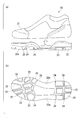
- FIG. 1A is a side plan view showing a work shoe (oil antifouling protective equipment) in the first example
- FIG. 1B is a plan view showing a ground contact surface of a shoe sole of the work shoe. is there.
- the work shoe (oil antifouling protective equipment) 20 in the first example includes an upper portion 21 and a shoe sole (base material) 22 joined to the upper portion 21.
- the upper portion 21 is formed of, for example, a flexible cloth or leather whose surface is waterproofed.
- the sole 22 is made of a synthetic resin having elasticity as a whole, such as ethylene vinyl acetate (EVA) or polyvinyl chloride (PVC).
- EVA ethylene vinyl acetate
- PVC polyvinyl chloride
- a plurality of island-like tread patterns 23 are formed on the ground contact surface 22a of the shoe sole 22 to prevent slipping during walking.
- the individual tread patterns 23 are partitioned by groove portions 24.
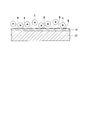
- the oil-water separator 14 is applied in a layered manner to the groove 24 (see FIG. 1) of the shoe sole (base material) 22.
- the oil-water separator 14 is made of a material containing a fluorine-based compound having an oil repellency imparting group and a hydrophilic property imparting group.
- the oil repellency imparting group is a functional group that forms oil droplets on the surface of the oil / water separator 14 with a static contact angle of, for example, 65 ° or more.
- the hydrophilicity imparting group is a functional group that imparts wettability to moisture on the surface of the oil / water separator 14 with a static contact angle of, for example, 15 ° or less. Such a contact angle can be measured by, for example, an automatic contact angle meter (manufactured by Kyowa Interface Science Co., Ltd., “Drop Master 701”).
- the oil / water separator 14 imparts hydrophilic oil repellency to the groove 24 of the shoe sole (base material) 22 due to the presence of the oil repellency imparting group and the hydrophilicity imparting group.
- an oil component oil or fat
- the oil component is an oil droplet (oil block) G having a large static contact angle due to the oil repellency of the oil / water separator 14.
- the oil / water separator 14 can flip the oil without fixing it to the shoe sole (base material) 22 and can easily wash away the oil by washing with water due to the hydrophilic property.
- Examples of the fluorine compound constituting the oil-water separator 14 include at least one or two or more of the fluorine compounds represented by the above formulas (1) to (4).
- the fluorine compounds represented by the above formulas (1) to (4) are hydrophilic oil repellents containing an oil repellency-imparting group and a hydrophilic property-imparting group in the molecule.
- a mixture containing one or more fluorine compounds selected from the group consisting of fluorine compounds represented by the above formulas (1) to (4) may be used as the oil-water separator 14.
- a nitrogen-containing fluorine-based compound (hydrophilic oil repellent) represented by the above formulas (1) to (4) is used alone or combined with a binder on a base material such as a shoe sole.
- the fluorine compound (hydrophilic oil repellent) constituting the oil / water separator 14 is present on the base material.
- the fluorine compound is preferably fixed to the base material as the oil-water separator 14 so that the fluorine compound is not lost due to moisture or the like.
- a part or all of the surface of the substrate 22 is a coating film (coating film) containing a nitrogen-containing fluorine-based compound (hydrophilic oil repellent) represented by the above formulas (1) to (4), or the above It may be coated with a coating film (coating film) containing a nitrogen-containing fluorine compound represented by the formulas (1) to (4) and a binder.
- a coating film coating film containing a nitrogen-containing fluorine-based compound (hydrophilic oil repellent) represented by the above formulas (1) to (4), or the above It may be coated with a coating film (coating film) containing a nitrogen-containing fluorine compound represented by the formulas (1) to (4) and a binder.
- the coating film may be composed of only the above-mentioned fluorine-based compound (hydrophilic oil repellent) or may contain a binder.
- the mass composition ratio of the hydrophilic oil repellent and the binder is preferably in the range of 0.2 to 99.9 to 99.8 to 0.1, more preferably 2 to 98 pairs. It is in the range of 98-2, more preferably in the range of 10-90 to 90-10. It is preferable for the mass composition ratio of the hydrophilic oil repellent to be 0.2 or more because sufficient hydrophilic oil repellency can be obtained.
- binder examples include the above-described organic binder (resin) and inorganic binder (inorganic glass).
- a hydrophilic polymer is preferably used as the binder. Moreover, as a hydrophilic polymer, what contains a hydroxyl group is preferable.
- hydrophilic polymer examples include polysaccharides such as polyvinyl alcohol, polyvinyl butyral, and cellulose, and derivatives thereof. These may be used alone or in combination of two or more.
- the hydrophilic polymer may be crosslinked with the above-described crosslinking agent. Such cross-linking improves the durability of the coating film.
- the inorganic binder include a silane compound and water glass as described above.
- water glass is preferable because the effect of improving durability is high.
- Inorganic particles such as fumed silica and colloidal silica can also be used as inorganic reinforcing materials, and by adding inorganic reinforcing materials, the elution of nitrogen-containing fluorine compounds into water and the strength of coating films are improved. be able to.
- the oil / water separator 14 When the oil / water separator 14 is actually formed on a base material such as the shoe sole 22, it is preferable to apply the oil / water separator 14 as a paint containing a solvent and a binder to form an oil / water separation layer.
- Base material Although it does not specifically limit as an organic substance which can be utilized as the base material 22 of the work shoes in a 1st example, Specifically, for example, ethylene vinyl acetate (EVA), polyvinyl chloride (PVC), cellulose Made fabric (polyester, polyethylene, polypropylene, polytetrafluoroethylene, nylon, polyimide, polyacrylonitrile, polysulfone, polyethersulfone, polyphenylene sulfide, etc.), non-woven fabric (polyester, polyethylene, polypropylene, rayon, nylon, polyphenylene sulfide, etc.), Examples thereof include fibers (resin, glass, ceramics, metal) and the like.
- EVA ethylene vinyl acetate
- PVC polyvinyl chloride
- cellulose Made fabric polyyester, polyethylene, polypropylene, polytetrafluoroethylene, nylon, polyimide, polyacrylonitrile, polysulfone, polyethersulfone, polyphenylene
- the oil / water separator 14 supports a fluorine compound (hydrophilic oil repellent) represented by the above formulas (1) to (4) on a substrate.
- a fluorine compound hydrophilic oil repellent
- the substrate to be supported is immersed in the solution or dispersion of the fluorine compound (hydrophilic oil repellent), or the substrate on which the solution or dispersion is supported.
- a technique of removing the solvent by spray coating and drying can be applied.
- the oil / water separator 14 provides functions other than hydrophilic oil repellency, such as a fluidity improver, a surfactant, a flame retardant, a conductivity imparting agent, and an antifungal agent, in addition to the hydrophilic oil repellant, the binder, and the inorganic reinforcing material. Therefore, an additive may be further included as an optional component.
- the work shoe which is an example of the oil antifouling protective equipment having the above configuration
- oil (fat) adheres to the groove 24 of the shoe sole (base material) 22.
- the attached oil can be easily washed away by washing with water. That is, the oil / water separator 14 formed in the groove portion 24 of the shoe sole 22 imparts hydrophilic oil repellency to the groove portion 24 of the shoe sole 22.
- oil component such as lard comes into contact with the groove portion 24 where the oil / water separator 14 is applied in layers
- the oil component is an oil droplet (oil block) G having a large static contact angle due to the oil repellency of the oil / water separator 14.
- oil droplets (oil lump) G Is easily peeled off and washed away.
- water is repelled by the water repellency of the resin and it is difficult to remove oil by washing. Further, it is possible to prevent an increase in environmental load due to the use of a surfactant (detergent) and wear of the shoe sole due to the use of a brush or the like.
- FIG. 3 is a plan view showing a glove (oil antifouling protective equipment) in the second example.
- a glove (oil antifouling protective device) 30 in the second example includes a bag-like base material 31 that is shaped like a palm, and a large number of protrusions 32 made of resin formed on the gripping surface of the base material 31. Prepare.
- the protrusion 32 is made of an elastic resin that prevents slippage.
- the base material 31 of such a glove (oil antifouling protective equipment) 30 is formed of a fibrous material, for example, a woven fabric.
- An oil / water separator 14 as shown in FIG. 2 is formed on the base 31.
- the glove (oil antifouling protective equipment) 30 of the second example as described above even if oil is adhered to the base material 31, it is possible to easily wash away the adhered oil by washing with water. That is, since the oil / water separator 14 formed on the base material 31 imparts hydrophilic oil repellency, even if machine oil or the like adheres to the fibrous base material 31, the oil is formed as oil droplets having a large static contact angle. Aggregate. Then, just by washing the glove 30 with water, due to the hydrophilicity of the oil / water separator 14, the water becomes a water layer with a small static contact angle and soaks into the base material 31 to lift the oil droplets. Thereby, even if it does not use surfactant (detergent) etc., the oil component adhering to the glove 30 can be easily removed only by washing with water.
- surfactant detergent
- the oil antifouling protective device which is another aspect of the above-described hydrophilic oil-repellent material prevents oil adhesion in an environment where oil exists. Applicable to various protective equipment.
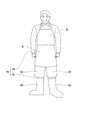
- FIG. 4 it can also be applied to a front hook 41 that covers the chest and waist of the body, a knee pad 42 that covers the lower limb including the knee, or a boot 43.
- a front hook 41 that covers the chest and waist of the body
- a knee pad 42 that covers the lower limb including the knee
- a boot 43 By forming an oil / water separator on the base of the apron 41, the knee pad 42, or the boots 43, hydrophilic oil repellency is imparted, and the attached oil can be easily removed only by washing with water.
- an oil-water separator on a base material (cloth) that constitutes work clothes 46 such as upper garments 44 and trousers 45 worn by workers.
- a base material cloth
- work clothes 46 such as upper garments 44 and trousers 45 worn by workers.
- Example A1 Nitrogen-containing compound synthesized in Synthesis Example 1 using as a solvent a solution in which hexafluoro-m-xylene, ethanol, and n-butanol were mixed at a ratio of 57.0% by mass, 38.0% by mass, and 5.0% by mass, respectively.
- a surface coating material of Example A1 was prepared by adding and dissolving a fluorine-based compound and polyvinyl butyral resin (S-LEC BL-1 manufactured by Sekisui Chemical Co., Ltd.) as a binder in a solvent. In addition, it prepared so that the mass composition ratio of the nitrogen-containing fluorine-type compound and binder in a surface coating material might be 0.2 mass% and 0.2 mass%, respectively.
- the prepared surface coating material was used as a bar coater No. 3 was applied to a PET film (Panac Corporation, product name: Lumirror, product number: 100T60), the solvent was removed by natural drying at room temperature, and a coating film was provided on the surface. Was made.
- the production conditions are shown in Table 1 below.
- Example A2 The surface coating material of Example A2 is the same as Example A1 except that the mass composition ratios of the nitrogen-containing fluorine-based compound and the binder in the surface coating material are 16.7% by mass and 16.7% by mass, respectively. Was made. Moreover, the evaluation base material of Example A2 was produced like Example A1 except having used the surface coating material of Example A2. The production conditions are shown in Table 1 below.
- Example A3 In place of the nitrogen-containing fluorine-based compound of Synthesis Example 1, the nitrogen-containing fluorine-based compound of Synthesis Example 2 was used, and the mass composition ratio of the nitrogen-containing fluorine-based compound and the binder in the surface coating material was 0.2 mass respectively. %, 1.8% by mass A surface covering material of Example A3 was produced in the same manner as Example A1. Moreover, the evaluation base material of Example A3 was produced like Example A1 except having used the surface coating material of Example A3. The production conditions are shown in Table 1 below.
- Example A4 The surface coating material of Example A4 was the same as Example A3 except that the mass composition ratios of the nitrogen-containing fluorine-based compound and the binder in the surface coating material were changed to 33.3 mass% and 0.3 mass%, respectively. Was made. Next, the prepared surface coating material was subjected to bar coater No. 3 was applied to a glass substrate, the solvent was removed by natural drying at room temperature, and an evaluation substrate of Example A4 in which a coating film was provided on the surface was produced. The production conditions are shown in Table 1 below.
- Example A5 0.5% by mass of the nitrogen-containing fluorine-based compound synthesized in Synthesis Example 3, 4.5% by mass of water glass (No. 3 manufactured by Fuji Chemical Co., Ltd.) as a binder, and 95.0% by mass of methanol as a solvent To obtain the surface coating material of Example A5. Next, the glass plate was dipped on the adjusted surface covering material, pulled up, and then methanol was removed by natural drying. This produced the evaluation base material of Example A5 in which the coating film was provided on the glass plate. The production conditions are shown in Table 1 below.
- Example A6 1.0% by mass of the nitrogen-containing fluorine-based compound synthesized in Synthesis Example 4, 5.0% by mass of polyvinyl butyral (Sekisui Chemical Co., Ltd. ESREC BL-1) as a binder, and 94.0% by mass of ethanol as a solvent
- the surface coating material of Example A6 was prepared.
- the prepared surface coating material was subjected to bar coater No. 3 was applied to a PET film (Panac Corporation, product name: Lumirror, product number: 100T60), the solvent was removed by natural drying at room temperature, and the coating film was provided on the surface. Was made.
- the production conditions are shown in Table 1 below.
- Example A7 2.0% by mass of the nitrogen-containing fluorine-based compound synthesized in Synthesis Example 5, 2.0% by mass of polyvinyl butyral resin (Sleek BL-1 manufactured by Sekisui Chemical Co., Ltd.) as a binder, and 96.0 of methanol as a solvent.
- the surface coating material of Example A7 was produced by blending at a mass percentage. Next, the prepared surface coating material is applied on the surface of ABS resin (As One Co., Ltd., product name: test piece, ABS black) by the dipping method (dip method), and the solvent is removed by natural drying at room temperature.
- an evaluation base material of Example A7 having a coating film provided on the surface was prepared.
- the production conditions are shown in Table 1 below.
- Example A8 The nitrogen-containing fluorine-based compound synthesized in Synthesis Example 1 is 5.0% by mass, the binder is 20.0% by mass of a fluororesin (AGC Cortec Corp. Bonflon # 6200), and the solvent has a mass ratio of 20:20:60.
- a surface coating material of Example A8 was prepared by blending xylene, ethylbenzene, and methyl isobutyl ketone in a proportion of 75.0% by mass and fully dispersing the mixture.
- Example A8 a coating film of a surface coating material was prepared on a SUS substrate (As One Co., Ltd., product name: test piece, material: SUS304) in the same manner as in Example A1, except that the drying temperature was 120 ° C. for 1 hour.
- the evaluation base material of Example A8 was produced. The production conditions are shown in Table 1 below.
- Example A9 5.0% by mass of the nitrogen-containing fluorine-based compound synthesized in Synthesis Example 2, 25.0% by mass of UV curable urethane acrylate resin (U-10HA manufactured by Shin-Nakamura Chemical Co., Ltd.) as a binder, and a mass ratio of 97 pairs as a solvent
- the surface coating material of Example A9 was prepared by blending 3 isobutyl ketone and ethanol mixed solution at a ratio of 70.0% by mass and sufficiently dispersing the mixture. Next, the prepared surface coating material was subjected to bar coater No. 3 was applied to a glass substrate, and after natural drying, the coating film was cured by irradiating with 150 mJ / cm 2 ultraviolet rays at 70 ° C. for 30 seconds to prepare an evaluation substrate of Example A9.
- the production conditions are shown in Table 1 below.
- Example A10 0.9% by mass of the nitrogen-containing fluorine-based compound synthesized in Synthesis Example 6, 0.9% by mass of polyvinyl butyral resin (Sleek BL-1 manufactured by Sekisui Chemical Co., Ltd.) as a binder, and tetraethoxysilane (Wako Pure Chemical Industries, Ltd.)
- the surface coating material of Example A10 was prepared by adding 8.2% by mass of Reagent) and 90.0% by mass of methanol as a solvent. Next, a glass plate was dipped on the surface covering material thus prepared, and after lifting, methanol was removed by natural drying. This produced the evaluation base material of Example A10 in which the coating film was provided on the glass plate.
- the production conditions are shown in Table 1 below.
- Example A11 0.2% by mass of the nitrogen-containing fluorine-based compound synthesized in Synthesis Example 7 and 7.0% by mass of polycarbonate (Acrit WAN-1000U manufactured by Taisei Fine Chemical Co., Ltd.) and polyester (Acryt WAN-6000 manufactured by Taisei Fine Chemical Co., Ltd.)
- a surface coating material of Example A11 was prepared by blending 3.0% by mass of water and an ethanol mixed solution having a mass ratio of 85:15 as a solvent at a ratio of 89.8% by mass and sufficiently dispersing the mixture.
- Example 1 a coating film of a surface covering material was formed on a SUS base material (As One Co., Ltd., product name: test piece, material: SUS304), and an evaluation base material in Example A11 was prepared.
- SUS base material As One Co., Ltd., product name: test piece, material: SUS304
- Example A12 0.2% by mass of the nitrogen-containing fluorine compound synthesized in Synthesis Example 7, 10.0% by mass of polyvinyl alcohol (Kanto Chemical Co., Inc.) as a binder, and a water / ethanol mixed solution having a mass ratio of 90:10 as a solvent.
- the surface coating material of Example A12 was prepared by blending at a ratio of 89.8% by mass and fully dispersing. Next, the prepared surface coating material was subjected to bar coater No. 3 was applied to a PET film (Panac Corporation, product name: Lumirror, product number: 100T60) and dried at 110 ° C. for 1 hour to prepare an evaluation base material of Example A12 in which a coating film was provided on the surface. .
- the production conditions are shown in Table 1 below.
- Example A13 0.2% by mass of the nitrogen-containing fluorine-based compound synthesized in Synthesis Example 8, 5.0% by mass of polyester (Superflex 150, manufactured by Daiichi Kogyo Seiyaku Co., Ltd.) and polyurethane as a binder (Plus Coat Z221, manufactured by Mutsumi Chemical)
- the surface coating material of Example A13 was prepared by blending 5.0 mass% water and ethanol mixed solution of 85:15 as a solvent in a ratio of 89.8 mass% and fully dispersing the mixture.
- Example 1 a coating film of a surface coating material was prepared on a SUS base material (As One Co., Ltd., product name: test piece, material: SUS304), and an evaluation base material in Example A13 was prepared.
- SUS base material As One Co., Ltd., product name: test piece, material: SUS304
- Example A14 5.0% by mass of the nitrogen-containing fluorine-based compound synthesized in Synthesis Example 8, 20.0% by mass of urethane acrylic resin (SU-100 manufactured by Japan Coating Resin Co., Ltd.) as a binder, and a mass ratio of 90:10 as a solvent
- the surface coating material of Example A14 was produced by blending water and ethanol mixed solution at a ratio of 75.0% by mass and sufficiently dispersing.
- a coating film of a surface coating material was formed on a SUS substrate (As One Co., Ltd., product name: test piece, material: SUS304).
- An evaluation base material of A14 was produced. The production conditions are shown in Table 2 below.
- Example A15 0.2% by mass of the nitrogen-containing fluorine-based compound synthesized in Synthesis Example 9, 10.0% by mass of polyester (Pesresin A-125S manufactured by Takamatsu Yushi Kogyo Co., Ltd.) as a binder, and water having a mass ratio of 85:15 as a solvent And an ethanol mixed solution at a ratio of 89.8% by mass and sufficiently dispersed to prepare a surface coating material of Example A15.
- a surface coating material was applied to a SUS substrate (As One Co., Ltd., product name: test piece, material: SUS304), and then dried at 110 ° C. for 1 hour to form a coating film.
- the evaluation base material of Example A15 was produced. The production conditions are shown in Table 2 below.
- Example A16 0.2% by mass of the nitrogen-containing fluorine compound synthesized in Synthesis Example 9, 10.0% by mass of sodium silicate (Kanto Chemical Co., Ltd.) as a binder, and a water / ethanol mixed solution having a mass ratio of 97: 3 as a solvent Was mixed in a ratio of 89.8% by mass and sufficiently dispersed to prepare a surface coating material of Example A16.
- the prepared surface coating material was subjected to bar coater No. 3 was applied to a glass substrate and dried at 110 ° C. for 1 hour to prepare an evaluation substrate of Example A16 having a coating film on the surface.
- the production conditions are shown in Table 2 below.
- Example A17 1.3% by mass of the nitrogen-containing fluorine-based compound synthesized in Synthesis Example 10, 0.6% by mass of polyvinyl butyral resin (Eslek KX-5 manufactured by Sekisui Chemical Co., Ltd.) as a binder, and 98.1% of methanol as a solvent. %, And the surface coating material of Example A17 was obtained. Next, a glass plate was dipped on the surface covering material thus prepared, and after lifting, methanol was removed by natural drying. This produced the evaluation base material of Example A17 in which the coating film was provided on the glass plate. The production conditions are shown in Table 2 below.
- Example A18 0.2% by mass of the nitrogen-containing fluorine-based compound obtained in Synthesis Example 11, 10.0% by mass of polyvinyl butyral (manufactured by Sekisui Chemical Co., Ltd., “S-Lec B BL-1”) as a binder, and a mass ratio of 57 /
- a surface coating material of Example A18 was prepared by blending at a ratio of 89.8% by mass of a 38/5 hexafluoro-m-xylene / ethanol / n-butanol mixed solution.
- bar coater No. 3 was applied to a PET film (Panac Corporation, product name: Lumirror, product number: 100T60), the solvent was removed by natural drying at room temperature, and the coating film was provided on the surface. Was made.
- the production conditions are shown in Table 2 below.
- Example A19 0.2% by mass of the nitrogen-containing fluorine-based compound obtained in Synthesis Example 12, 10.0% by mass of polyvinyl butyral (manufactured by Sekisui Chemical Co., Ltd., “S-Lec B BL-1”) as a binder, and a mass ratio of 57 /
- a surface coating material of Example A19 was prepared by blending at a ratio of 89.8% by mass of a 38/5 hexafluoro-m-xylene / ethanol / n-butanol mixed solution. Next, the prepared surface coating material was subjected to bar coater No.
- Example A20 0.9% by mass of the nitrogen-containing fluorine-based compound synthesized in Synthesis Example 13, 0.9% by mass of polyvinyl butyral resin (Surek BL-1 manufactured by Sekisui Chemical Co., Ltd.) as a binder, and tetraethoxysilane (Wako Pure Chemical Industries, Ltd.) (Company Reagent) was blended in a proportion of 8.2% by mass and methanol as a solvent in a proportion of 90.0% by mass to obtain a surface coating material of Example A20. Next, a glass plate was dipped on the surface covering material thus prepared, and after lifting, methanol was removed by natural drying. This produced the evaluation base material of Example A20 in which the coating film was provided on the glass plate. The production conditions are shown in Table 2 below.
- Example A21 0.06% by mass of the nitrogen-containing fluorine-based compound synthesized in Synthesis Example 7, 4.5% by mass of polyester (Superflex 150, manufactured by Daiichi Kogyo Seiyaku Co., Ltd.) and polyurethane (plus coat Z221, manufactured by Kyoyo Chemical Co., Ltd.)
- the surface coating material of Example A21 was blended in an amount of 84.9% by mass of 10.5% by mass of water and an ethanol mixed solution having a mass ratio of 77.5: 22.5 as a solvent in a ratio of 84.9% by mass. Produced.
- Example A21 a coating film of a surface coating material was prepared on a SUS base material (As One Co., Ltd., product name: test piece, material: SUS304), and an evaluation base material in Example A21 was prepared.
- SUS base material As One Co., Ltd., product name: test piece, material: SUS304
- Comparative Example A1 Using the nitrogen-containing fluorine-based compound synthesized in Synthesis Example 1 and the same binder as in Example 1, the mass composition ratio of the nitrogen-containing fluorine-based compound and the binder in the surface coating material was 34.0% by mass, The surface coating material of Comparative Example A1 was prepared using 33.0% by mass of a solvent having the same composition as Example A1. Moreover, the evaluation base material of comparative example A1 was produced like Example A1 except having used the surface coating material of comparative example A1. The production conditions are shown in Table 2 below.
- Comparative Example A2 Except for using the nitrogen-containing fluorine-based compound synthesized in Synthesis Example 2 and setting the mass composition ratios of the nitrogen-containing fluorine-based compound and the binder in the surface coating material to 25.0 mass% and 0.02 mass%, respectively.
- a surface covering material of Comparative Example A2 was produced.
- the evaluation base material of Comparative Example A2 was produced like Comparative Example A1 except having used the surface coating material of Comparative Example A2. The production conditions are shown in Table 2 below.
- the evaluation substrates of Examples A1 to A21 were measured for contact angles.
- the static contact angle of water was 15 ° or less and n-hexadecane was used.
- the static contact angle was 65 ° or more. Therefore, it was confirmed that the coating film obtained from the surface coating materials of Examples A1 to A21 was a hydrophilic oil-repellent layer, and the evaluation base material was a hydrophilic oil-repellent material.
- the evaluation base materials of Examples A1 to A21 had good durability against water in any of the coating films.
- the evaluation substrates of Examples A1 to A6, A9, A10, A12, and A16 to A20 have a total light transmittance of 90% or more for any of the evaluation substrates as a result of the total light transmittance evaluation. It was confirmed that this is a hydrophilic oil-repellent material having excellent transparency.
- the evaluation base material of Comparative Example A1 was confirmed to have a total light transmittance of less than 90% although it exhibits hydrophilic oil repellency due to the large amount of the fluorine compound relative to the solvent.
- the coating film for the evaluation base material of Comparative Example A2 does not have durability because the amount of the binder with respect to the fluorine-based compound is small.
- Example B ⁇ Production of member with dirt adhesion prevention film> (Example B1) 2.0% by mass of the nitrogen-containing fluorine-based compound synthesized in Synthesis Example 1, 4.0% by mass of polyvinyl butyral resin (Sleek BL-1 manufactured by Sekisui Chemical Co., Ltd.) as a binder, and 94.0% of ethanol as a solvent.
- the surface coating material B1 was produced by adding and dissolving a nitrogen-containing fluorine-based compound and a binder in a solvent so that the ratio was%.
- the adjusted surface coating material is applied on the surface of a SUS substrate (As One Co., Ltd., product name: test piece, material: SUS304) by a dipping method (dip method), and the solvent is removed by natural drying at room temperature.
- the evaluation base material of Example B1 by which it removed and the coating film was provided in the surface was produced.
- Example B2 An evaluation base material of Example B2 was produced in the same manner as in Example B1 except that the SUS base material was changed to a PE base material (As One Co., Ltd., product name: polyethylene plate, material: PE).
- Example B3 An evaluation base material of Example B3 was produced in the same manner as in Example B1 except that the SUS base material was changed to an acrylic base material (As One Corporation, product name: acrylic plate, material: acrylic).
- Example B4 0.3% by mass of the nitrogen-containing fluorine-based compound synthesized in Synthesis Example 1, 0.5% by mass of Dainal BR-80 (Mitsubishi Rayon) as a binder, and 5% by mass of ethanol and toluene as solvents, respectively.
- a surface coating material B4 was produced by adding and dissolving a nitrogen-containing fluorine-based compound and a binder in a solvent so that the solution mixed at a ratio of mass% was 99.2 mass%.
- Example B4 was applied on the surface of the SUS base material by dipping (dip method), the solvent was removed by natural drying at room temperature, and a coating film was provided on the surface.
- the evaluation base material of Example B4 was produced.
- Example B5 An evaluation base material of Example B5 was produced in the same manner as in Example B4 except that the SUS base material was a PE base material.
- Example B6 An evaluation base material of Example B6 was produced in the same manner as in Example B4 except that the SUS base material was an acrylic base material.
- Example B7 An evaluation base material of Example B7 was prepared in the same manner as in Example B4 except that the SUS base material was a PET film (Panac Corporation, product name: Lumirror, product number: 100T60).
- the evaluation base materials of Examples B1 to B7 and Comparative Examples B1 to B3 were subjected to contact angle measurement (droplet method) to evaluate antifouling properties. Specifically, water and n-hexadecane (hereinafter referred to as oil) were dropped onto the coating films provided on the surfaces of the evaluation base materials of Examples B1 to B7 and Comparative Examples B1 to B3, respectively.
- Hexadecane is dropped on the surface of the coating film (dirt adhesion preventing film) obtained in Examples B1 to B7 and Comparative Examples B1 to B3, and Aeroduster (Engineer's spray can ZC-32) is sprayed on the oil droplets. The spread of oil droplets was observed.
- the transparency can be evaluated by the total light transmittance (%).
- the total light transmittance (%) was measured using a haze meter “NDH-300A” manufactured by Nippon Denshoku Industries Co., Ltd.
- NDH-300A a haze meter manufactured by Nippon Denshoku Industries Co., Ltd.
- the total light transmittance (%) of the entire member with the dirt adhesion preventing film including the dirt adhesion preventing film that is, the hydrophilic oil repellent layer
- the total light transmittance is 90% or more
- the evaluation base materials of Examples B1 to B7 had a static contact angle of n-hexadecane of 65 ° or more for any coating film as a result of contact angle measurement. Therefore, it was confirmed that the coating film provided on the evaluation base materials of Examples B1 to B7 was an antifouling film because it had oil repellency (that is, antifouling property).
- the evaluation base materials of Examples B1 to B7 had a static contact angle of water of 15 ° or less for any of the coating films. Therefore, it was confirmed that the coating film provided on the evaluation base materials of Examples B1 to B7 had hydrophilicity.
- the evaluation base material of Example B7 was confirmed to be a member with a dirt adhesion prevention film having a total light transmittance of 90% and excellent transparency.
- Comparative Examples B1 to B3 were confirmed to be water-repellent and lipophilic because no coating film (dirt adhesion preventing film) was provided on the surface.
- Example C ⁇ Production of protective equipment for evaluation> (Example C1) After using a commercially available lightweight work shoe for the food industry (High Grip H-700N made by Midori Safety Co., Ltd., sole / material: EVA / synthetic rubber) to clean the sole with detergent and plastic scrubber, Covered with masking tape, and in the groove portion, 0.5% by mass of the nitrogen-containing fluorine-based compound synthesized in Synthesis Example 2 as a hydrophilic oil repellent, polyvinyl butyral (Sekisui Chemical Co., Ltd., ESREC BL-1) 1 as a binder 0.0 mass%, silica sol (organosilica sol IPA-ST, manufactured by Nissan Chemical Co., Ltd.) 0.5 mass% (as SiO 2 ), solvent 98.0 mass% (hexafluoroxylene 57.0 mass parts, ethanol 38) The liquid (surface coating material) prepared to 0.0 parts by mass and 5.0 parts by mass of n-butanol was spray-co
- Example C2 For commercially available safety boots for the food industry (High Grip HG1000 Super Sole Material: PVC manufactured by Midori Safety Co., Ltd.), wash the sole with detergent and plastic scrubbing, then cover the grounding part of the sole with masking tape, The surface was spray-coated with the same surface coating material as in Example C1 and air dried.
- Example C3 A commercially available work gloves (100% cotton) was dipped in the same surface covering material as in Example C1 and air dried.
- Example C4 After washing commercially available work clothes (Men's Safety Co., Ltd. men's slacks SE19 antistatic performance 80% polyester-20% cotton), the right sleeve was dipped in the same surface coating material as in Example C1 and air dried. .
- Example C5 A commercially available rubber glove (Jjertemless No. 283 polyurethane manufactured by Showa Grove Co., Ltd.) was thoroughly washed with a detergent, then dipped in the same surface coating material as in Example C1, and naturally dried.
- Comparative Examples C1 to C5 Using the same base materials as in Examples C1 to C5, the protective coating of Comparative Examples C1 to C5 was obtained without treating the surface coating material.
- the surface coating material and hydrophilic oil-repellent material of the present invention can simultaneously impart hydrophilicity and oil repellency to the base material by the surface coating layer (coating film), kitchen equipment (range hood), bathroom / toilet, bathroom Hydrophobic oil repellency such as mirrors, sewer piping, residential wallpaper, automobile side mirrors, railways, outer walls, tunnels, outdoor advertising, road materials, electric wires, FPD cover films, solar cells (surface protective materials), clothing, cosmetics, etc. It can be applied in a wide range of applications where is desired.
- the member with the dirt adhesion preventing film which is an aspect of the hydrophilic oil-repellent material of the present invention is a kitchen member such as a kitchen panel, a range hood, a gas table, a kitchen heating cooker, a wash basin, a wall or ceiling in a bathroom.
- Industrial use is possible in a wide range of applications where antifouling and easy cleaning properties are desired, such as toiletries such as toilets.
- oil and oil repellent protective device which is one embodiment of the hydrophilic oil repellent material of the present invention can simultaneously impart oil repellency and hydrophilicity by the oil / water separator, and therefore various protections that may be contaminated with oil It can be widely applied to tools.
- Oil-water separator 20 Work shoes (Oil antifouling protective equipment) 21 Upper part 22 Shoe sole (base material) 23 Tread Pattern 24 Groove 30 Gloves (Oil Antifouling Protective Equipment) 41 Apron (Oil antifouling protective equipment) 42 Knee pads (oil-fouling protective equipment) 43 Boots (Oil antifouling protective equipment) 44 Top (oil antifouling protective equipment) 45 Trousers (Oil antifouling protective equipment) 46 Work clothes (oil antifouling protective equipment)
Landscapes
- Chemical & Material Sciences (AREA)
- Engineering & Computer Science (AREA)
- Materials Engineering (AREA)
- Life Sciences & Earth Sciences (AREA)
- Wood Science & Technology (AREA)
- Organic Chemistry (AREA)
- Health & Medical Sciences (AREA)
- Textile Engineering (AREA)
- General Health & Medical Sciences (AREA)
- Physical Education & Sports Medicine (AREA)
- Epidemiology (AREA)
- Public Health (AREA)
- Paints Or Removers (AREA)
- Materials Applied To Surfaces To Minimize Adherence Of Mist Or Water (AREA)
- Laminated Bodies (AREA)
- Application Of Or Painting With Fluid Materials (AREA)
Abstract
Description
本願は、2014年7月30日に、日本に出願された、特願2014-155553号、特願2014-155554号、2014年10月7日に、日本に出願された、特願2014-206782号、特願2014-206793号、特願2014-206795、及び、2015年4月7日に、日本に出願された、特願2015-078567号に基づき優先権を主張し、その内容をここに援用する。
また、特許文献2に開示された表面改質剤によれば、シラン系化合物を使用していることから基材がガラスに限定されてしまうという課題があった。なお、その他の基材にも適用可能な親水撥油剤が見出されていないという課題があった。
さらに、化合物の組み合わせによって親水撥油性を発現させようとした場合、親水基と撥油基との機能をバランスよく配向させることが困難であり、基材の表面に形成した塗布膜が十分な親水撥油性を発揮しないという課題があった。
下記式(1)~(4)で示される、一種又は二種以上のフッ素系化合物と、結合剤と、溶媒と、を含む、表面被覆材。




上記式(3)及び(4)中、Rf4、Rf5及びRf6は、それぞれ同一または互いに異なる、炭素数1~6であって直鎖状又は分岐状のペルフルオロアルキレン基である。また、Zは、酸素原子、窒素原子、CF2基及びCF基のいずれかを含む。
また、上記式(2)及び(4)中、Rは、2価の有機基である連結基である。
また、上記式(1)~(4)中、Xは、アニオン型、カチオン型及び両性型からなる群から選択されるいずれか1の親水性賦与基である。
[4] 前記フッ素系化合物と前記結合剤との質量組成比が、0.2~99.9対99.8~0.1の範囲である、上記[1]乃至[3]のいずれか一項に記載の表面被覆材。
前記親水撥油層が、上記式(1)~(4)で示される、一種又は二種以上のフッ素系化合物を含む、親水撥油性材。
[15] 前記基材が、油分の固着を防止する油防汚性保護具である、上記[7]乃至[13]のいずれか一項に記載の親水撥油性材。
下記式(5)又は(6)で示される含窒素ペルフルオロアルキル基を有するカルボン酸ハロゲン化物又はスルホン酸ハロゲン化物を原料とする、フッ素系化合物(親水撥油剤)の製造方法。


上記式(6)中、Rf4、Rf5及びRf6は、それぞれ同一または互いに異なる、炭素数1~6であって直鎖状又は分岐状のペルフルオロアルキレン基である。また、Zは、酸素原子、窒素原子、CF2基及びCF基のいずれかを含む。
また、上記式(5)及び(6)中、Yは、CO又はSO2である。
さらに、上記式(5)及び(6)中、Aは、フッ素、塩素、臭素及びヨウ素からなる群から選択されるいずれか1のハロゲン原子である。
[18] 前記アルコール系溶媒が、メタノール、エタノール、1-プロパノール、2-プロパノール、n-ブタノール、sec-ブタノール、t-ブタノールからなる群のうち、1種又は2種以上を含有するものである、前記[17]に記載の表面被覆材。
前記汚れ付着防止膜は、上記式(1)~(4)で示される、一種又は二種以上のフッ素系化合物を含む、汚れ付着防止膜付き部材。
また、上記塗布膜は、上記結合剤を含む上記表面被覆層あるいは上記汚れ付着防止膜に対応する。
身体の一部を覆う基材と、該基材の少なくとも一部に形成された、親水撥油性を有する油水分離体と、を備え、
前記油水分離体は、撥油性付与基および親水性付与基を有するフッ素系化合物を含む、油防汚性保護具。
先ず、本発明を適用した一実施形態である表面被覆材の構成について説明する。
本実施形態の表面被覆材は、様々な基材に塗布することにより、上記基材の表面の一部又は全部に、親水撥油性を発現させる親水撥油層(あるいは、「塗布膜」)を形成するものである。
具体的には、本実施形態の表面被覆材は、下記式(1)~(4)で示される含窒素フッ素系化合物(フッ素系化合物)と、結合剤と、溶媒と、を含むものである。




Rf1及びRf2は、それぞれ同一または互いに異なる、炭素数1~4であって直鎖状又は分岐状のペルフルオロアルキル基であることが好ましい。また、Rf3は、炭素数1~4であって、直鎖状又は分岐状のペルフルオロアルキレン基であることが好ましい。
Rf4、Rf5及びRf6は、それぞれ同一または互いに異なる、炭素数1~4であって直鎖状又は分岐状のペルフルオロアルキレン基であることが好ましい。
以下、親水撥油剤について、含窒素フッ素系化合物ごとに詳細に説明する。
「直鎖状の含窒素フッ素系化合物」
上記式(1)又は上記式(2)に示す、直鎖状(又は分岐状)の含窒素フッ素系化合物では、Rf1とRf2からなる含窒素ペルフルオロアルキル基およびRf3からなる含窒素ペルフルオロアルキレン基が、撥油性付与基を構成する。
また、上記式(1)又は上記式(2)に示す含窒素フッ素系化合物では、上記撥油性付与基であるRf1~Rf3中の、フッ素が結合した炭素数の合計が4~18個の範囲であることが好ましい。フッ素が結合した炭素数が4未満であると、撥油効果が不十分であるために好ましくない。


















上記式(3)又は上記式(4)に示す、環状の含窒素フッ素系化合物では、Rf4、Rf5およびRf6からなる含窒素ペルフルオロアルキレン基、さらにはZが、撥油性付与基を構成する。
また、上記式(3)又は上記式(4)に示す含窒素フッ素系化合物では、上記撥油性付与基であるRf4~Rf6及びZ中の、フッ素が結合した炭素数の合計が4~18個の範囲であることが好ましく、5~12個の範囲にあることがより好ましい。フッ素が結合した炭素数が4未満であると、撥油効果が不十分であるために好ましくない。




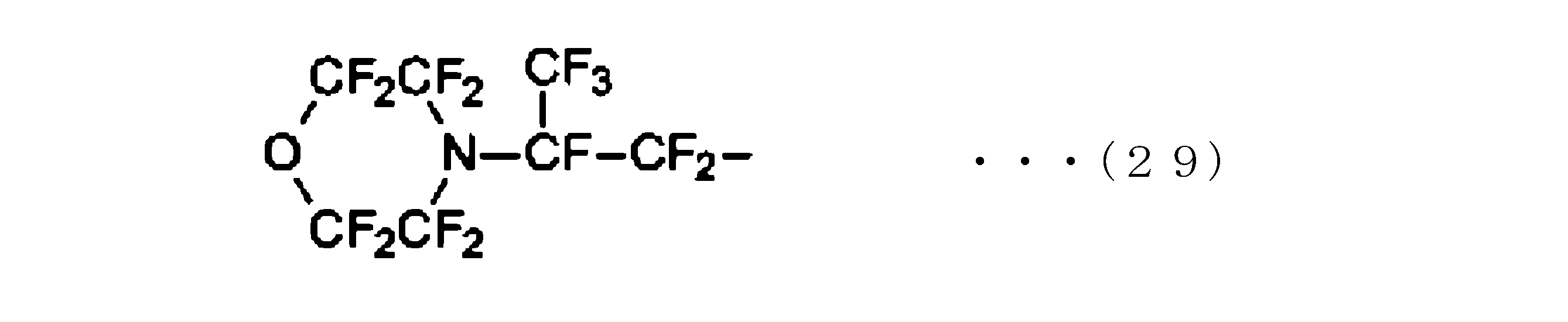





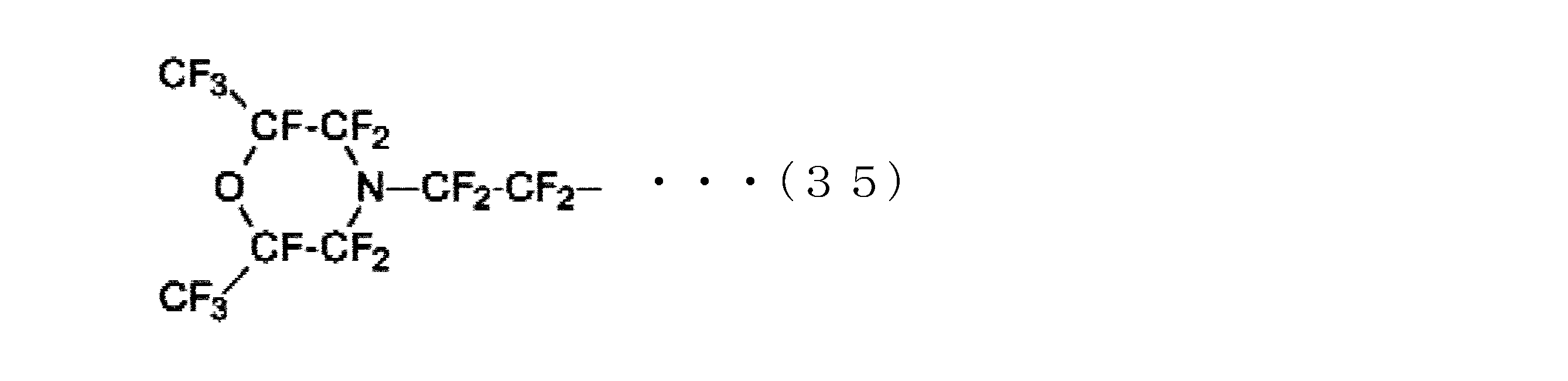
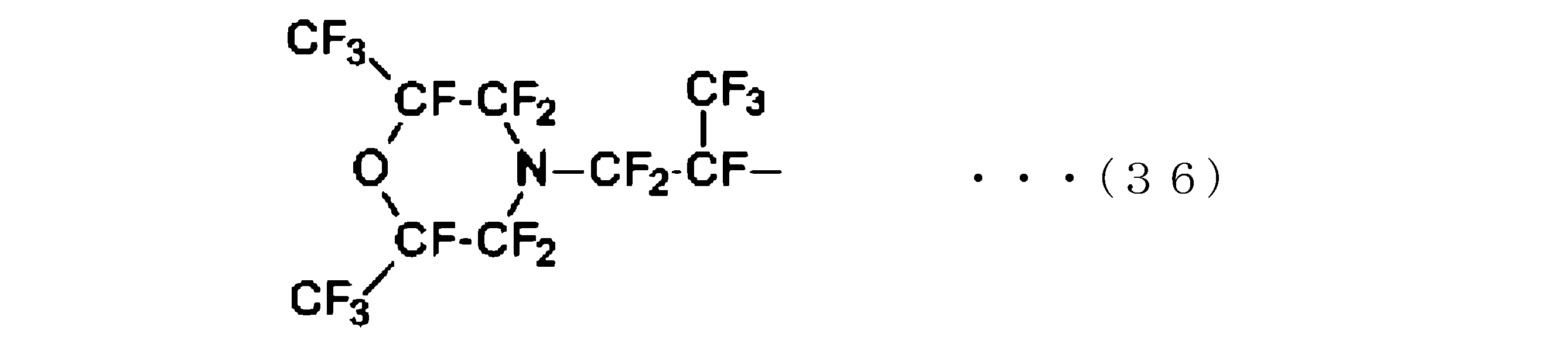













以下、親水性付与基Xを場合分けして、本実施形態の表面被覆材に用いる親水撥油剤(含窒素フッ素系化合物)の構造を説明する。
親水性付与基Xがアニオン型である場合、上記Xは、末端に「-CO2M1」、「-SO3M1」、「-OSO3M1」、「-OP(OH)O2M1」、「-OPO3M1 2」、「=O2PO2M1」又は「-PO(OH)y(OM1)2-y」(M1は、アルカリ金属、アルカリ土類金属、Mg、Al、R1R2R3R4N+;R1~R4は水素原子またはそれぞれ独立した炭素数1~20まで、好ましくは炭素数1~10までの直鎖もしくは分岐状のアルキル基、yは0~2の整数)を有する。なお、上述した末端の構造例は、上記M1が1価の場合を示したものである。また、上記M1が2価の場合、上記M1に同一のアニオンが2個結合していてもよいし、異なる2種のアニオンが結合していてもよい。




















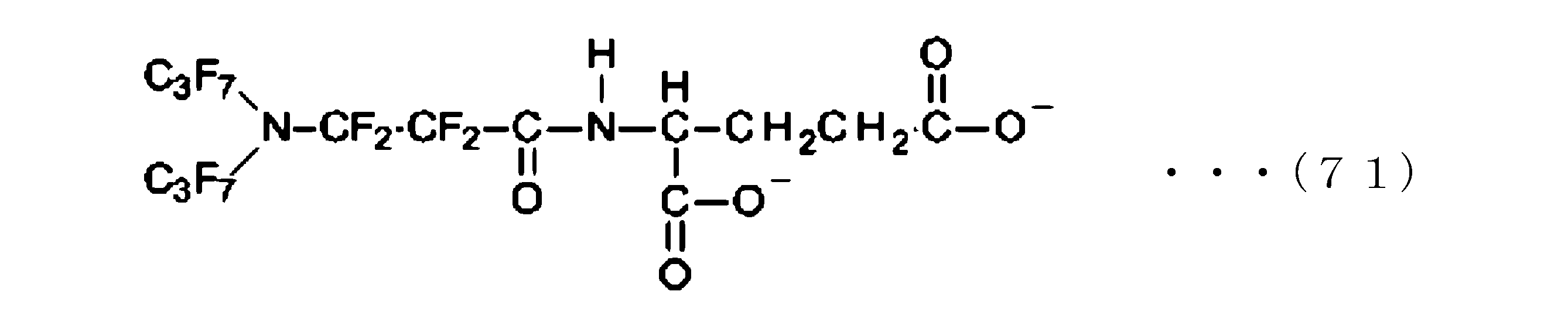

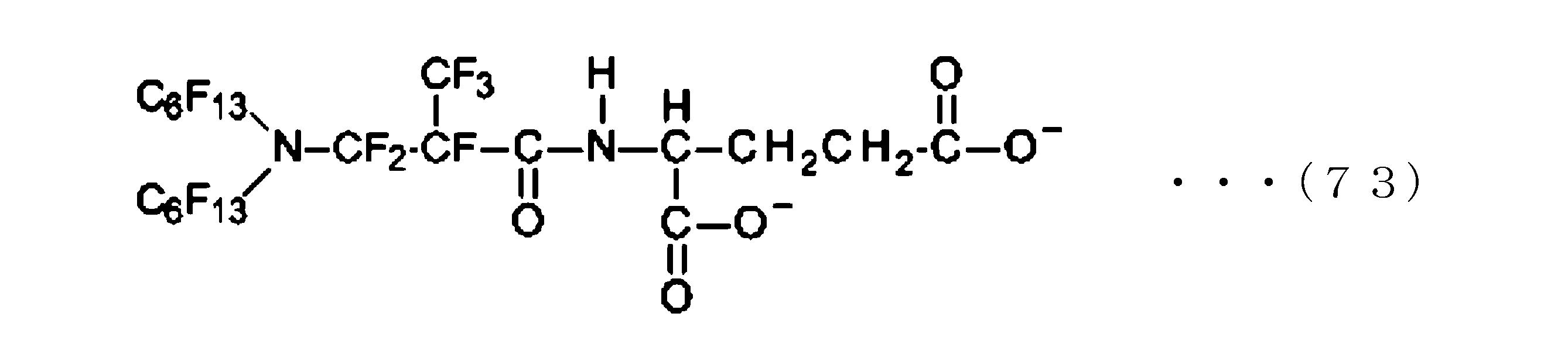



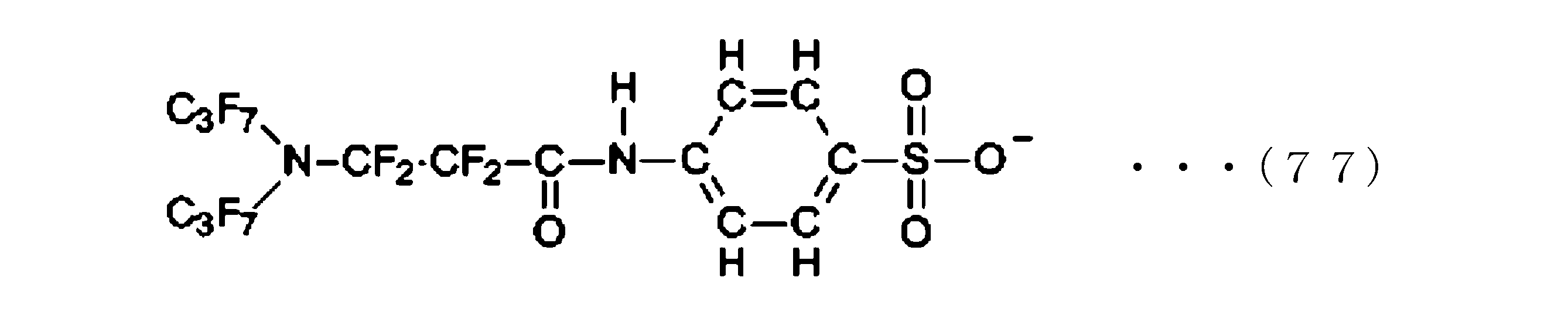
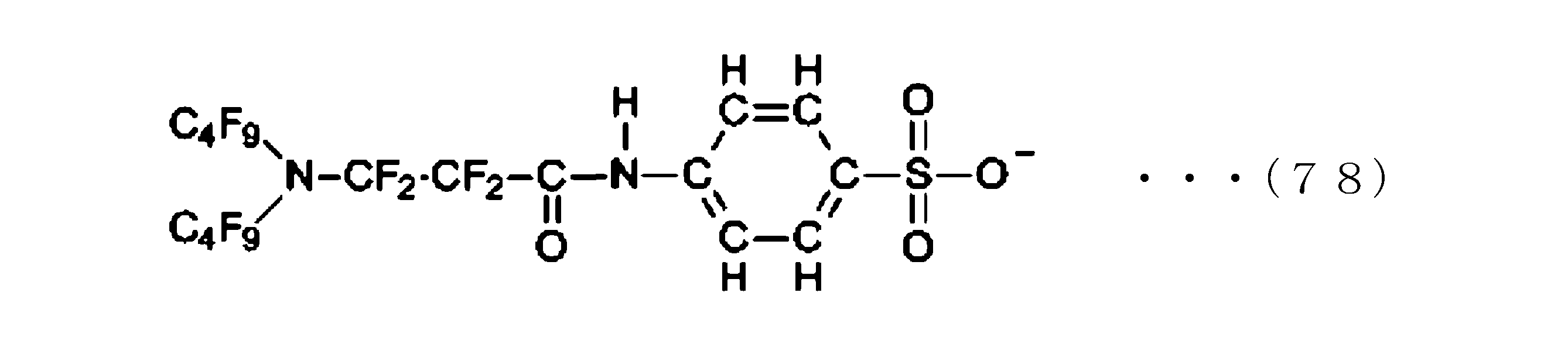
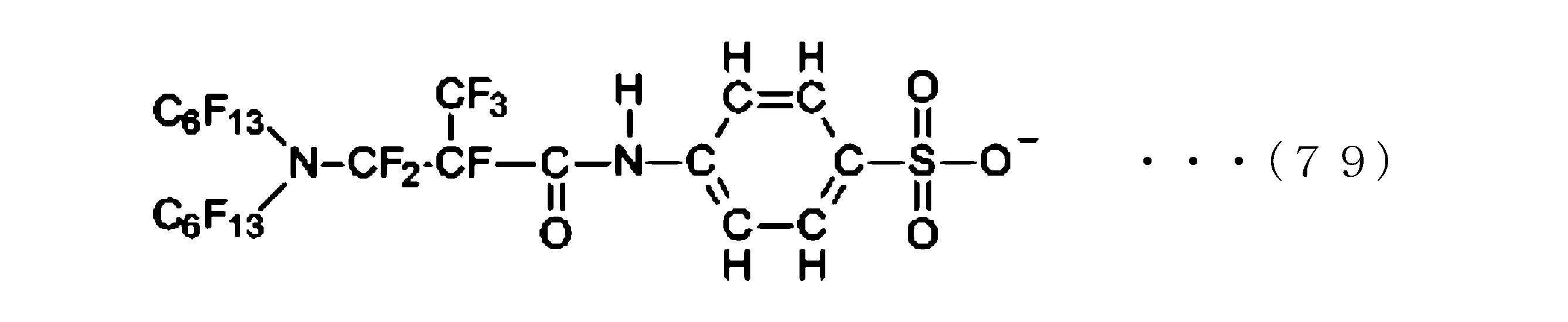
































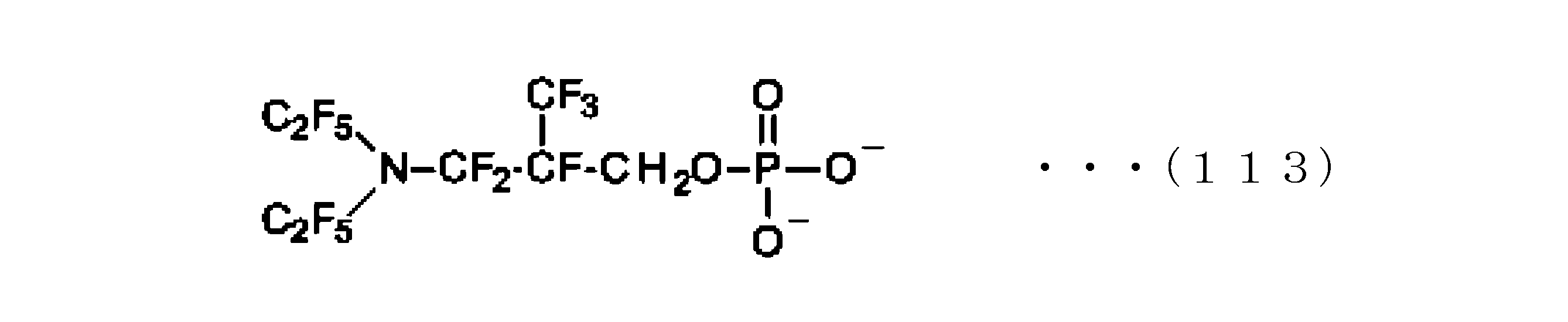






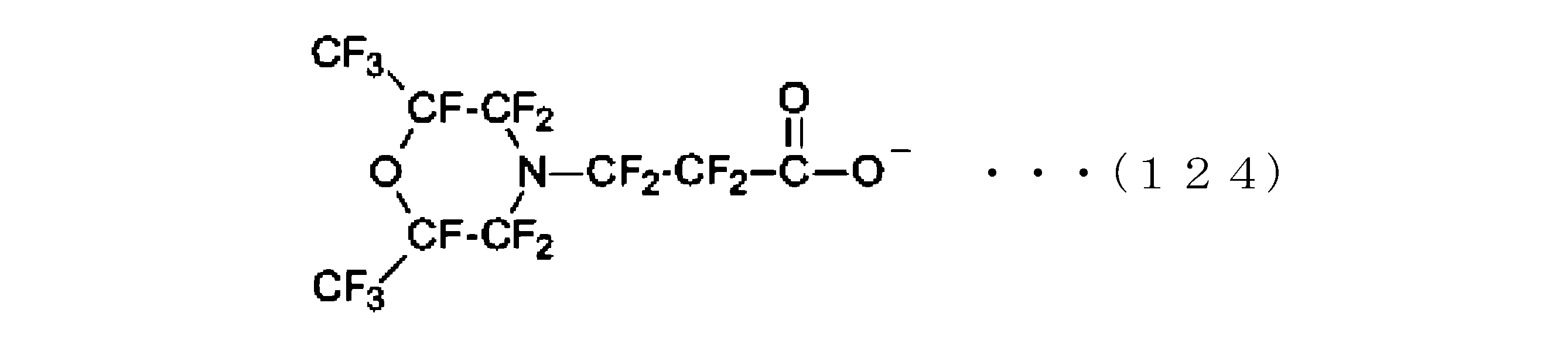
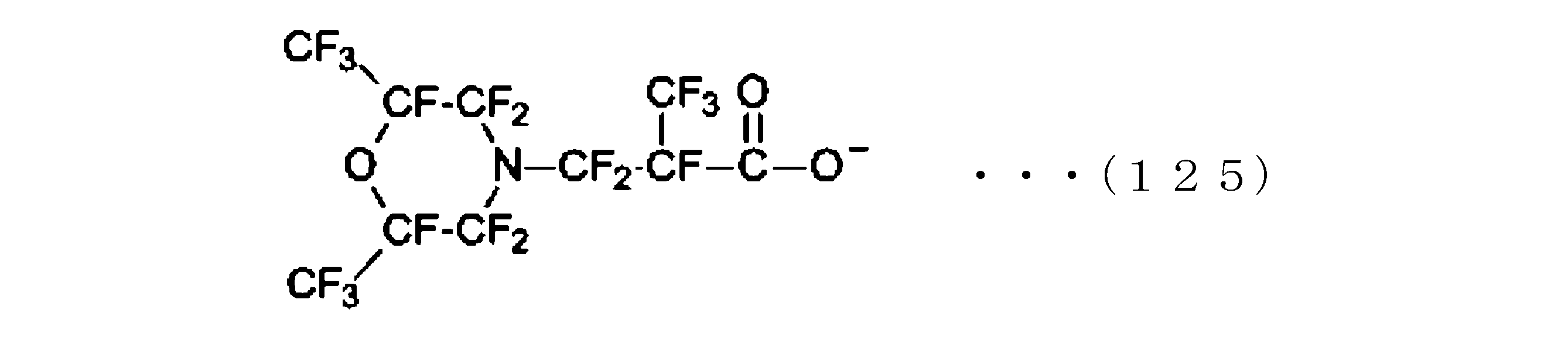






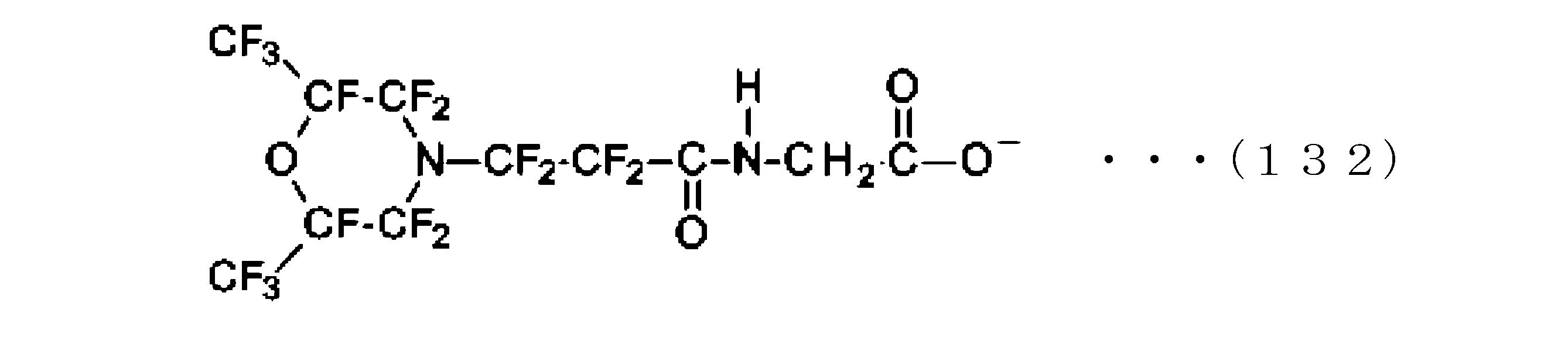


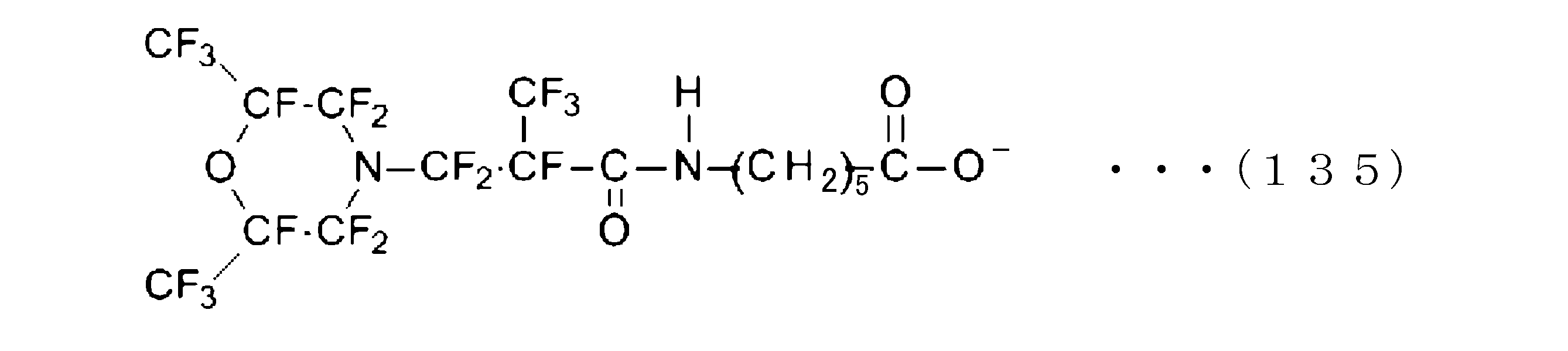

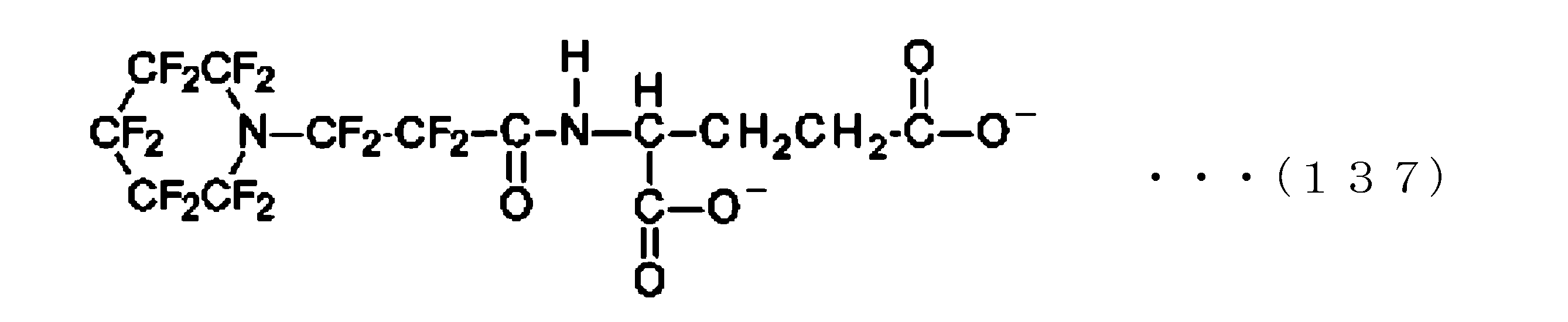
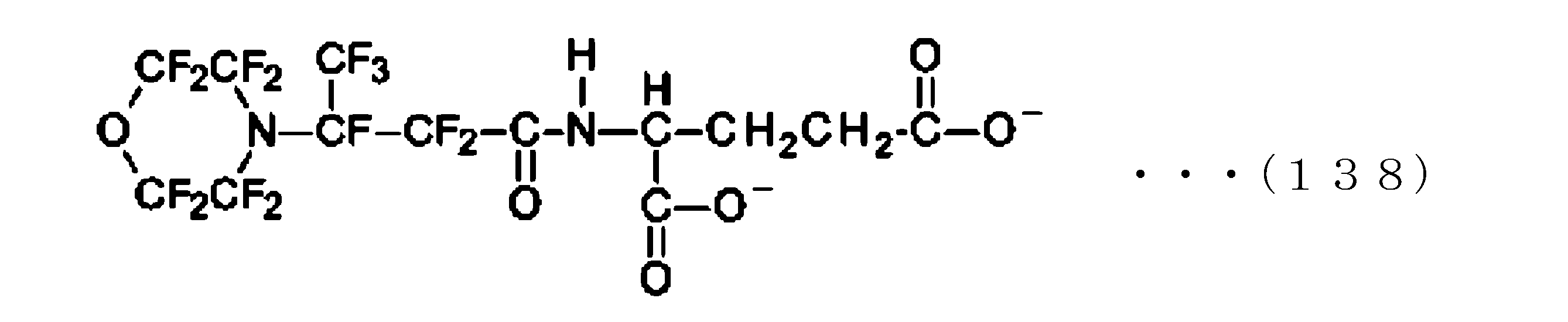
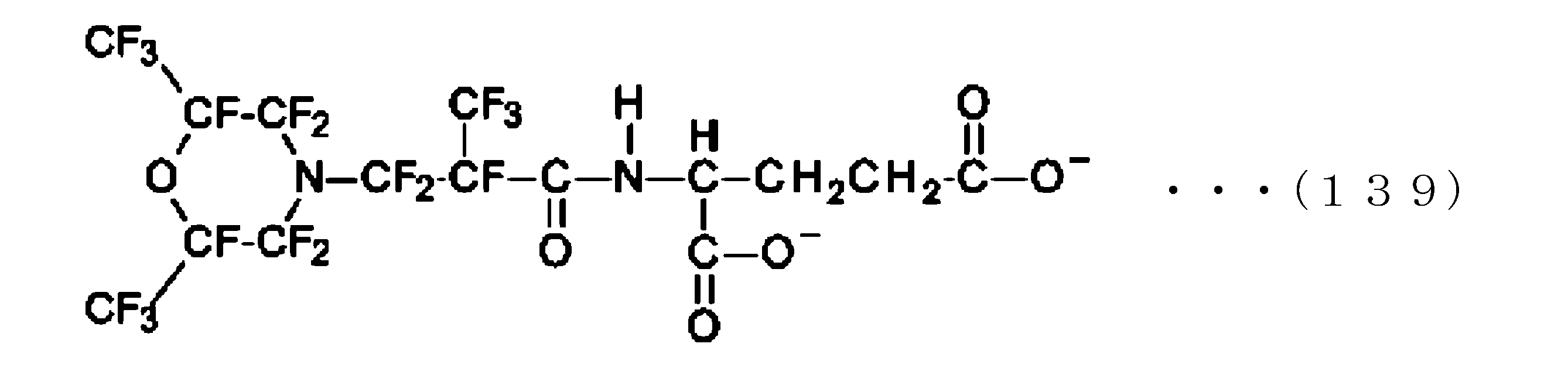
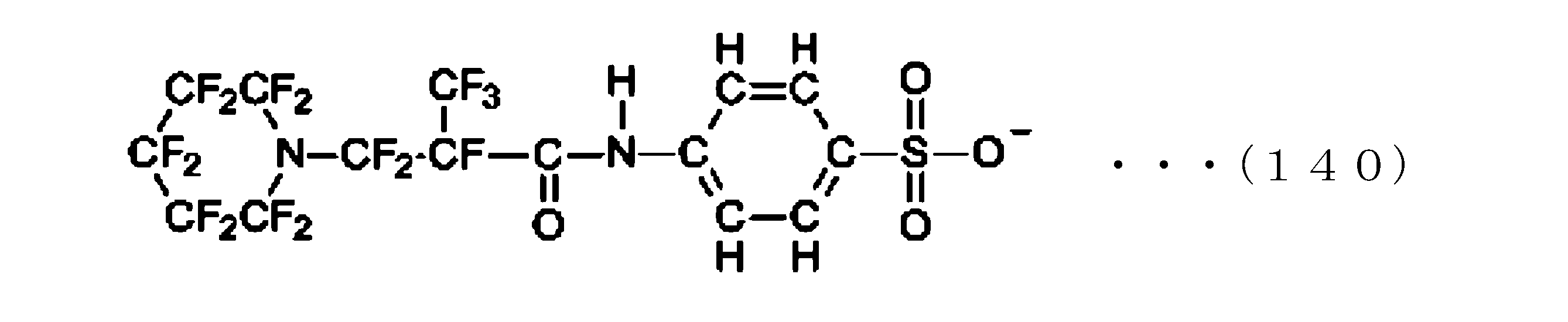


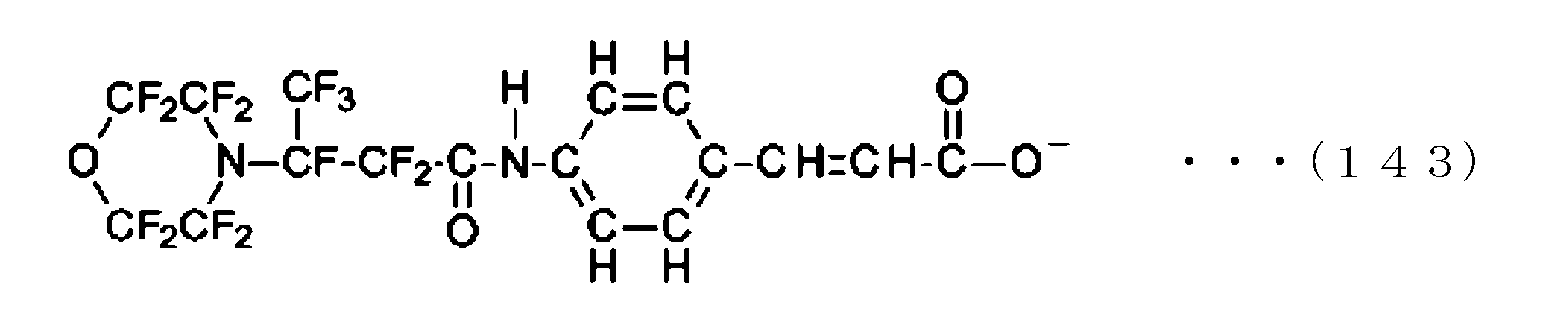





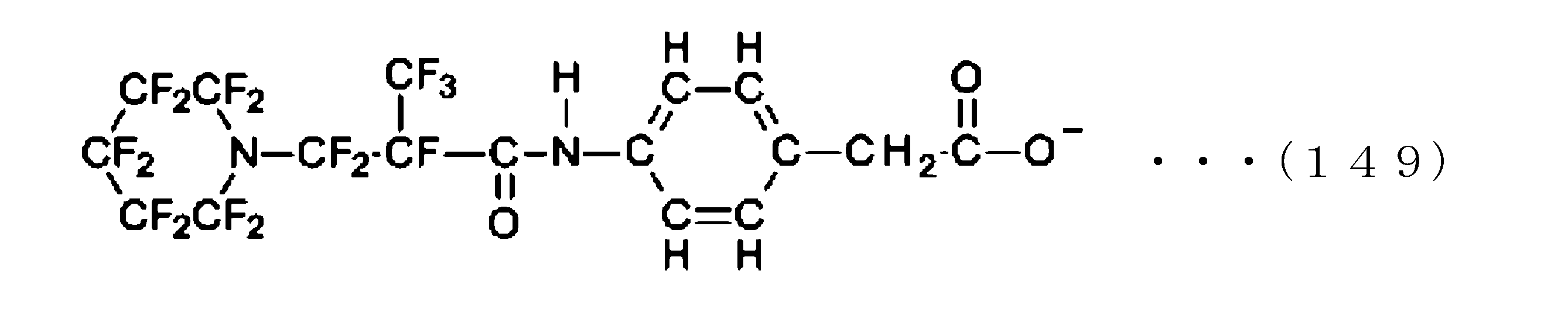

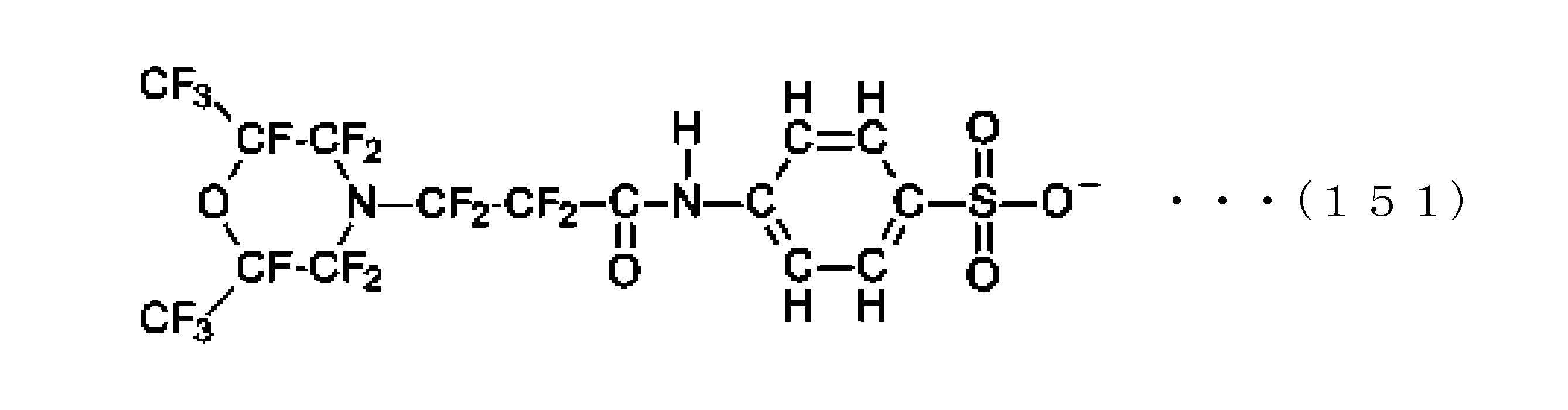



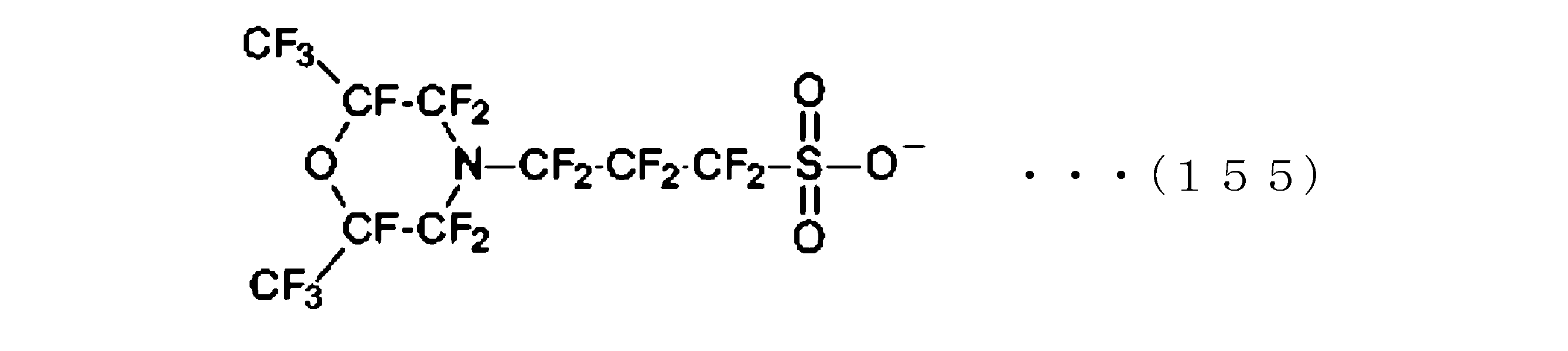


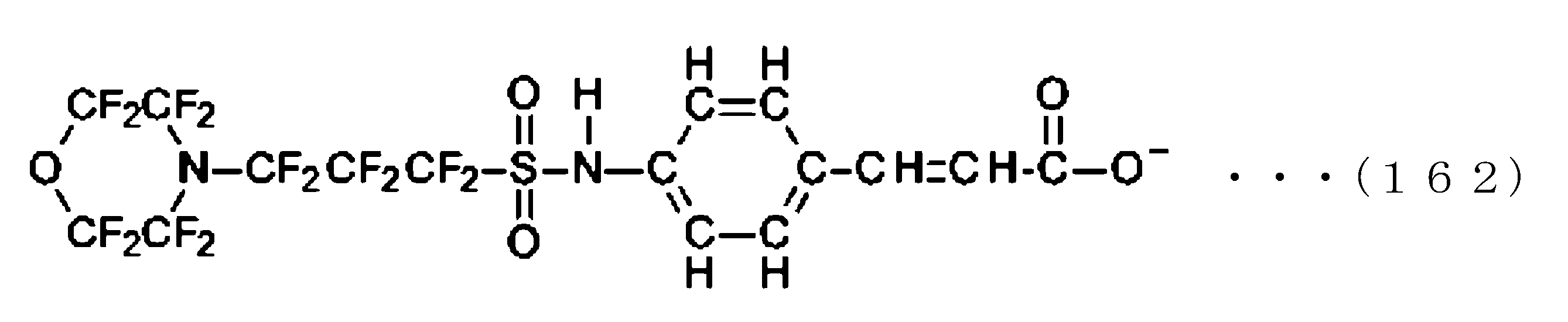
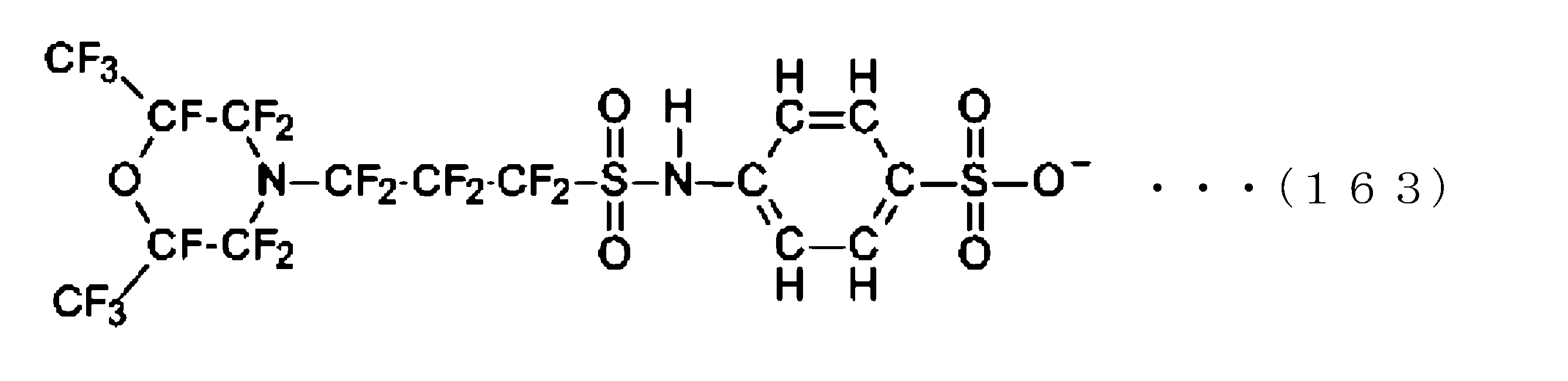






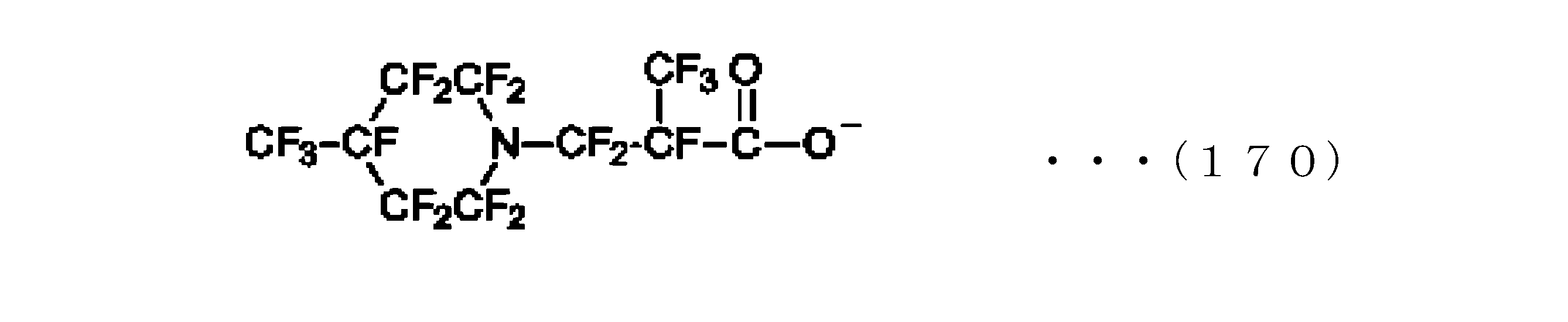




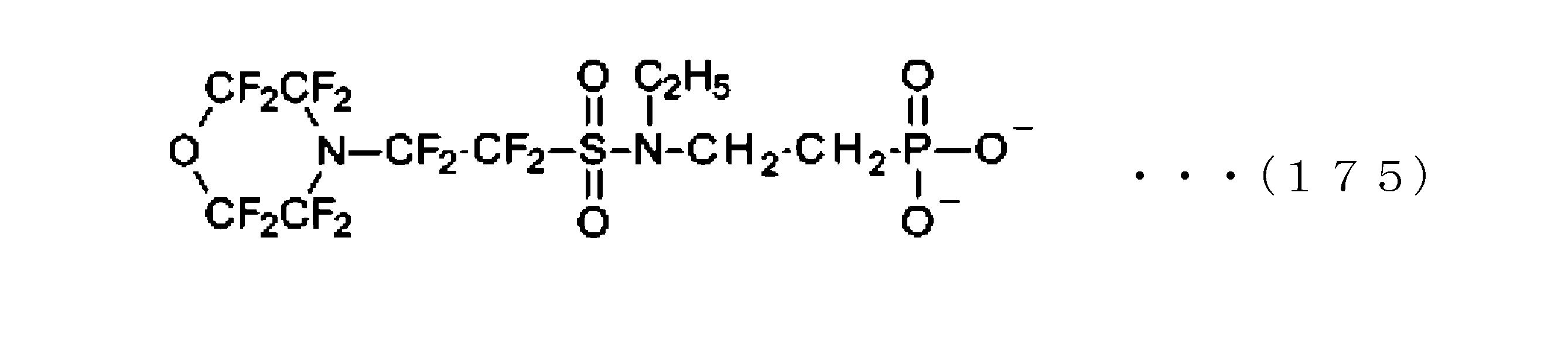



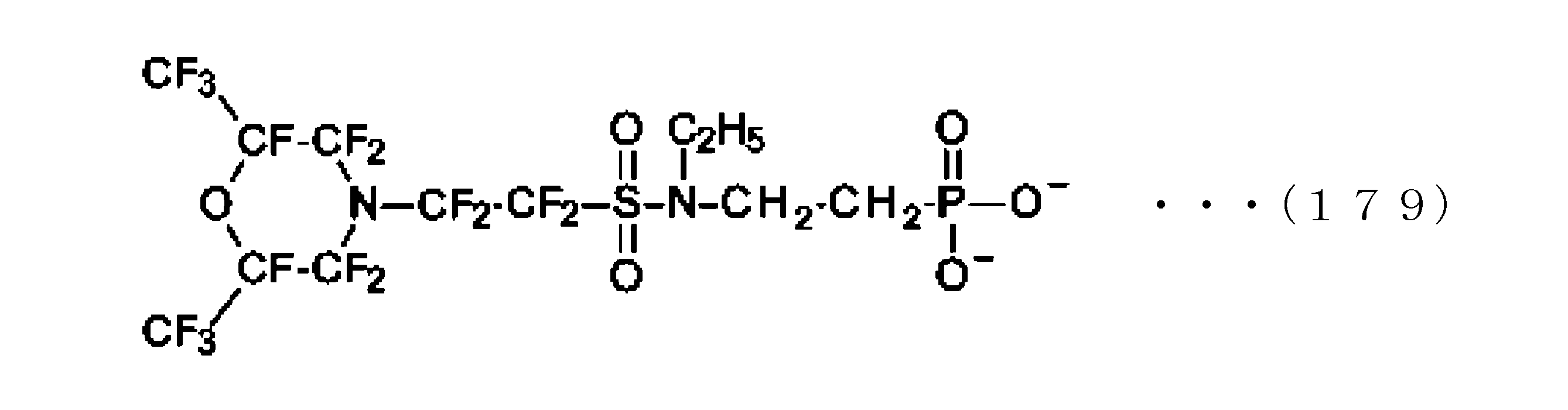
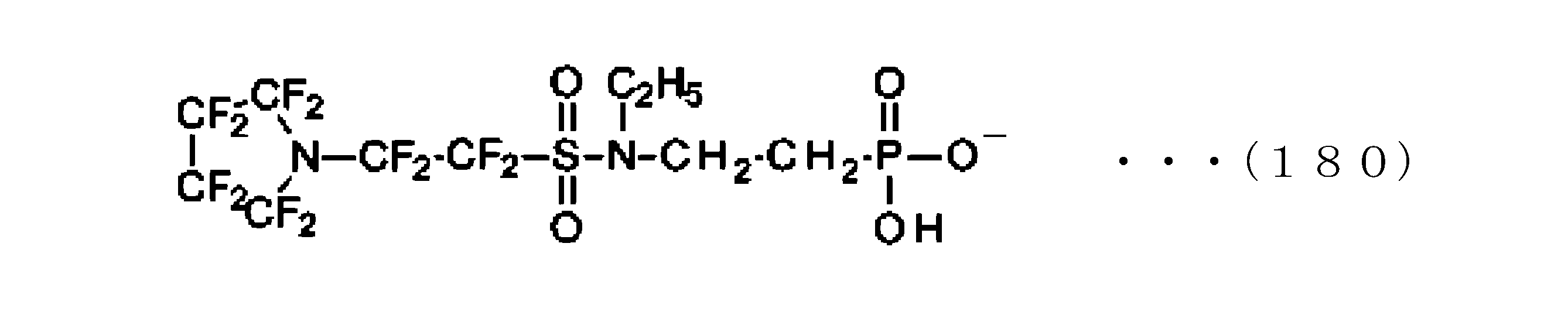






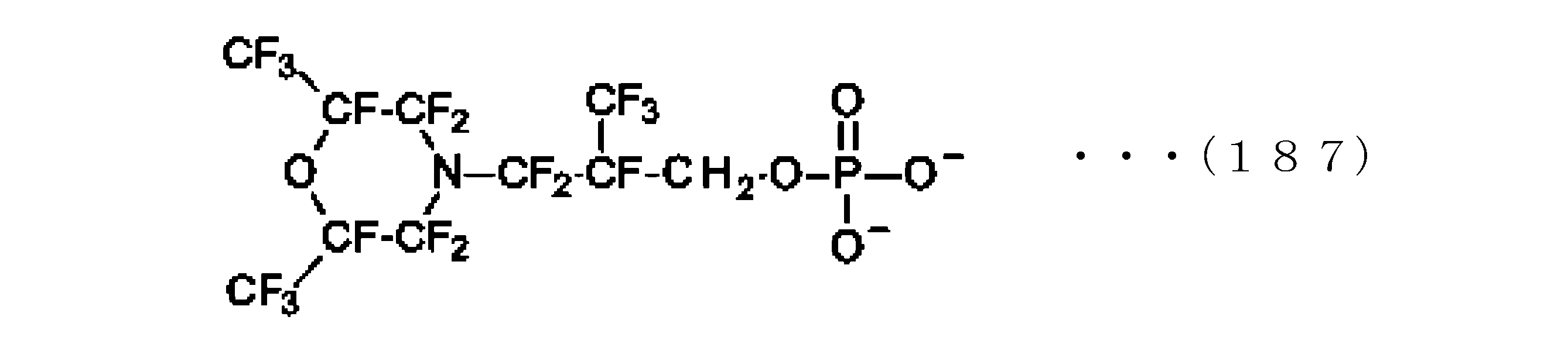
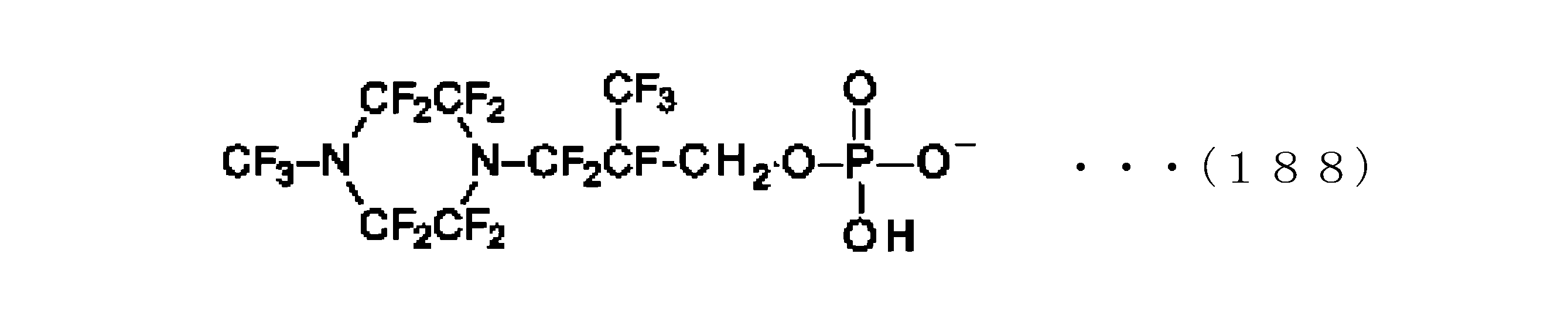
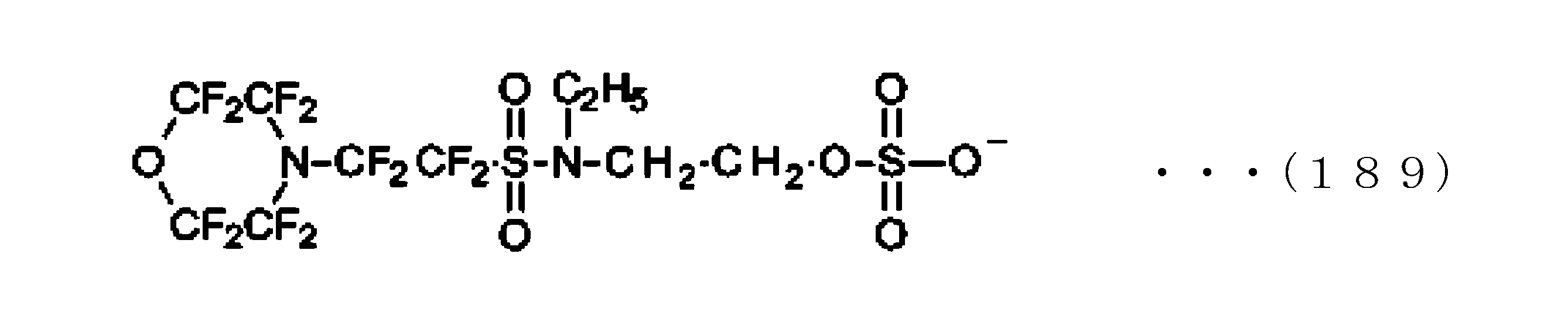
親水性賦与基Xがカチオン型である場合、上記Xは、末端に「-N+R5R6R7・Cl-」、「-N+R5R6R7・Br-」、「-N+R5R6R7・I-」、「-N+R5R6R7・CH3SO3 -」、「-N+R5R6R7・R7SO4 -」、「-N+R5R6R7・NO3 -」、「(-N+R5R6R7)2CO3 2-」又は「(-N+R5R6R7)2SO4 2-」(R5~R7は水素原子またはそれぞれ独立した炭素数1~20まで、好ましくは炭素数1~10までの直鎖もしくは分岐状のアルキル基)を有する。ここで、炭素数が20以下であれば、親水撥油性を損なうことがないために好ましい。



























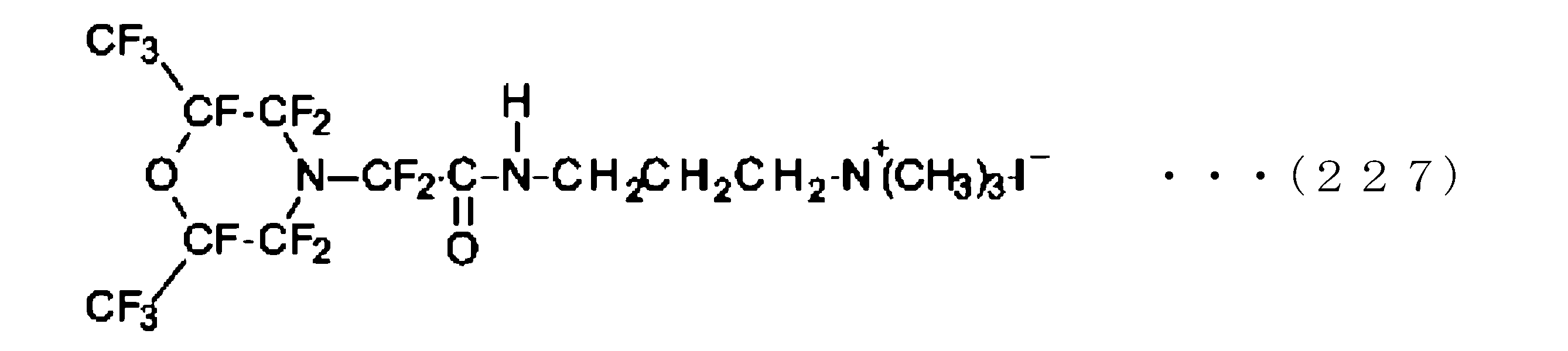



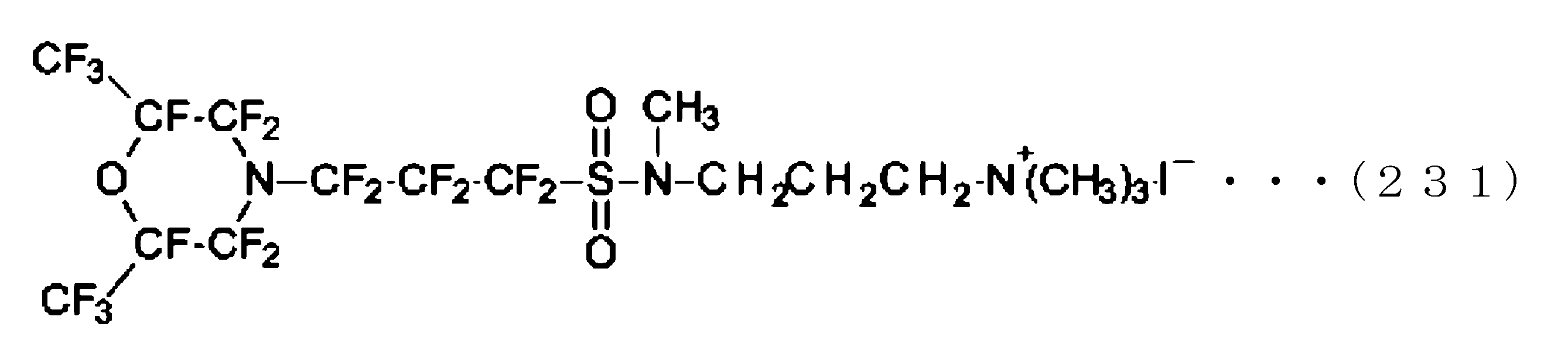


















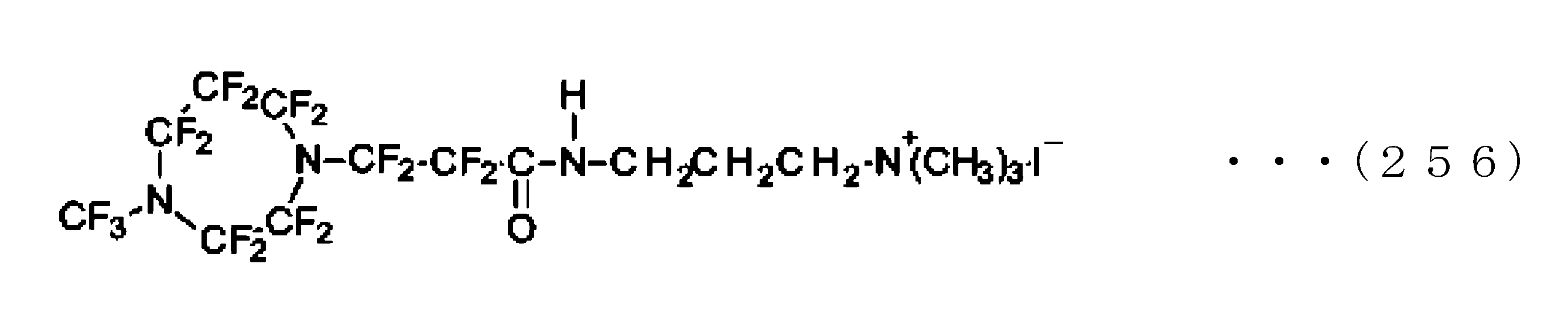


親水性付与基Xが両性型である場合、上記Xは、末端に、カルボキシベタイン型の「-N+R8R9(CH2)nCO2 -」、スルホベタイン型の「-N+R8R9(CH2)nSO3 -」、アミンオキシド型の「-N+R8R9O-」又はホスホベタイン型の「-OPO3 -(CH2)nN+R8R9R10」(nは1~5の整数、R8及びR9は水素原子または炭素数1~10のアルキル基、R10は水素原子または炭素数1~10のアルキル基または炭素数1~10のアルキレン基)を有する。ここで、炭素数が10以下であれば、親水撥油性を損なうことがないために好ましい。















































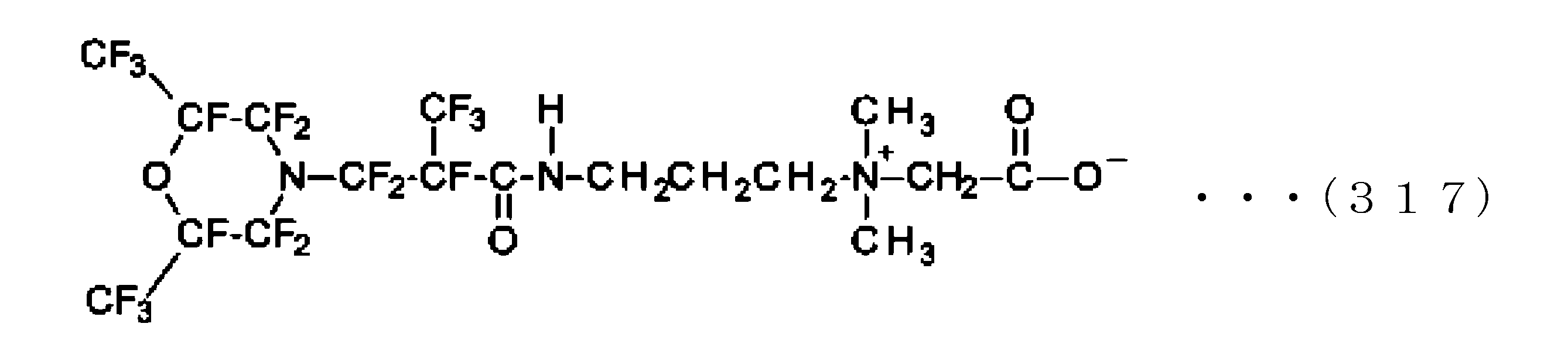






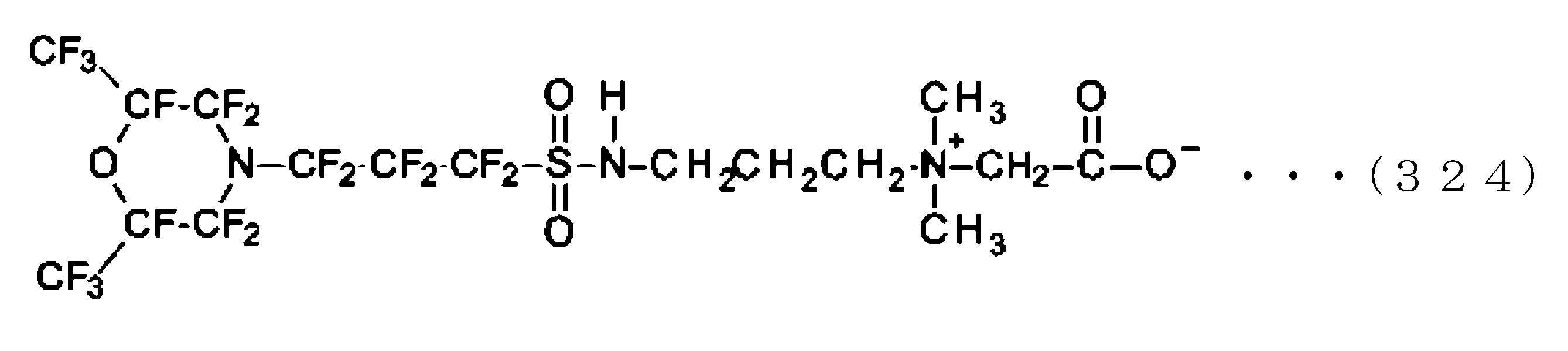























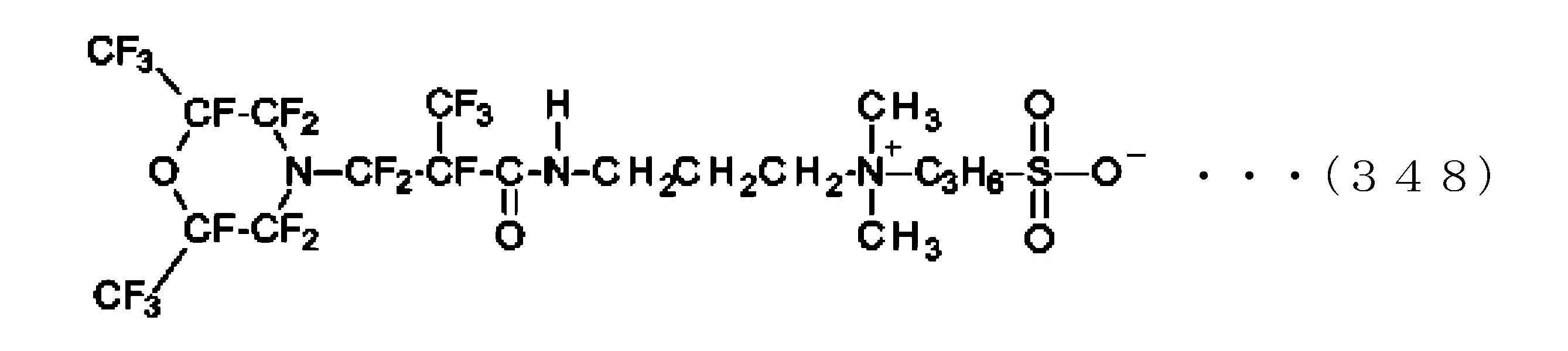


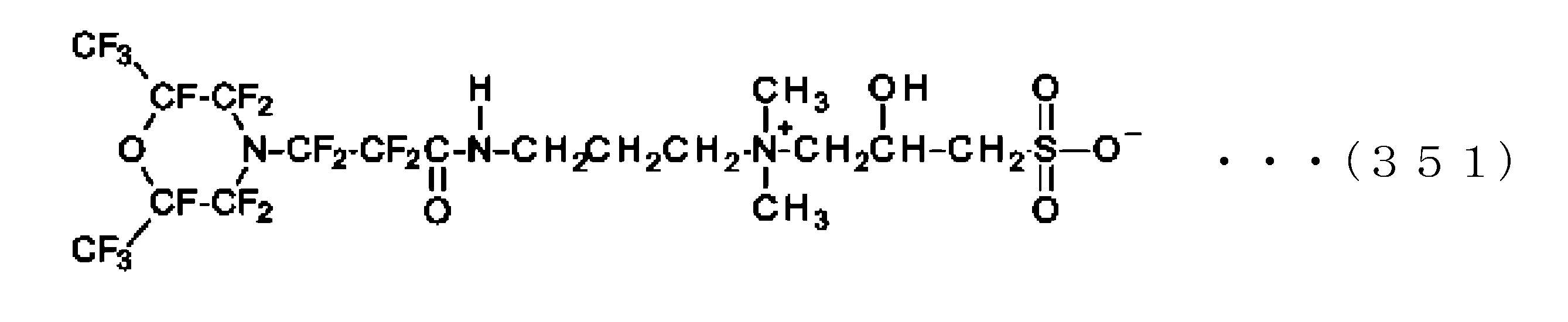















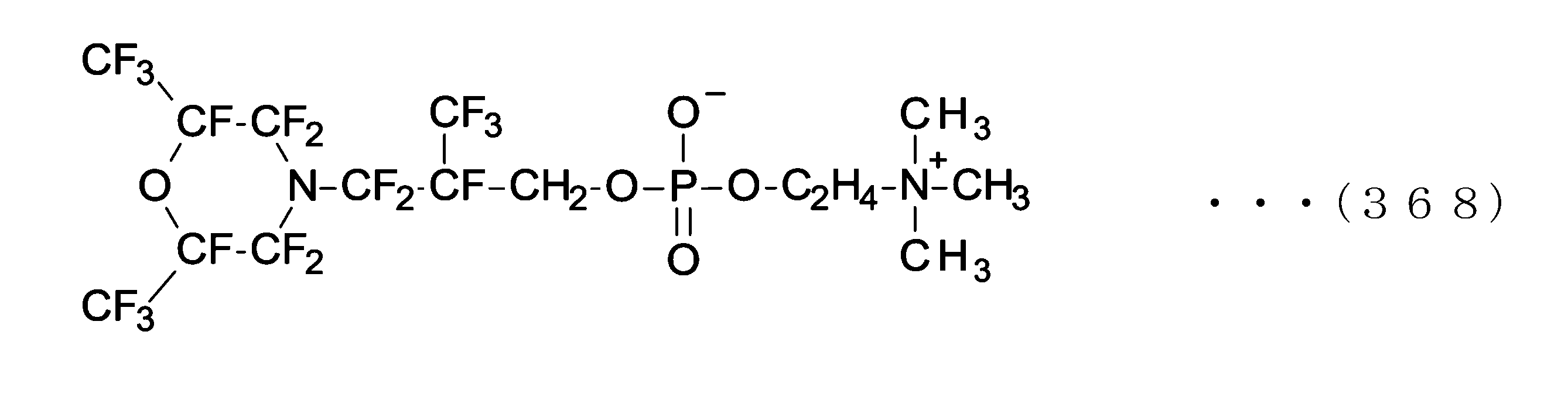





滴下容量:2μL/滴(水)
滴下容量:2μL/滴(n-ヘキサデカン)
測定温度:室温(22±1℃)
次に、本実施形態の表面被覆材に用いる親水撥油剤の製造方法について説明する。
本実施形態の表面被覆材に用いる親水撥油剤の製造方法は、下記式(5)又は(6)で示される含窒素ペルフルオロアルキル基を有するカルボン酸ハロゲン化物又はスルホン酸ハロゲン化物を原料として、上記式(1)~(4)に示す含窒素フッ素系化合物を製造する。より具体的には、下記式(5)で示される含窒素ペルフルオロアルキル基を有するカルボン酸ハロゲン化物又はスルホン酸ハロゲン化物を原料として、上記式(1)又は上記式(2)に示す含窒素フッ素系化合物を製造する。また、下記式(6)で示される含窒素ペルフルオロアルキル基を有するカルボン酸ハロゲン化物又はスルホン酸ハロゲン化物を原料として、上記式(3)又は上記式(4)に示す含窒素フッ素系化合物を製造する。


Rf1及びRf2は、それぞれ同一または互いに異なる、炭素数1~4であって直鎖状又は分岐状のペルフルオロアルキル基であることが好ましい。また、Rf3は、炭素数1~4であって、直鎖状又は分岐状のペルフルオロアルキレン基であることが好ましい。
Rf4、Rf5及びRf6は、それぞれ同一または互いに異なる、炭素数1~4であって直鎖状又は分岐状のペルフルオロアルキレン基であることが好ましい。
また、Zは、酸素原子、窒素原子、CF2基及びCF基のいずれかを含む。また、Zが窒素原子又はCF基を含む場合、Zから分岐したペルフルオロアルキル基が当該Zに結合していてもよい。
さらに、上記式(5)及び(6)中、Aは、フッ素、塩素、臭素及びヨウ素からなる群から選択されるいずれか1のハロゲン原子である。
先ず、上記式(1)又は上記式(3)に示す含窒素フッ素系化合物を製造する場合について説明する。
上記式(5)又は上記式(6)に示す原料のうち、YがCOの場合(カルボン酸系の場合)は水溶液化したM(OH)m(MはLi,Na,K,Ca,Mg,Al等、mは、Li,Na,K等1価カチオンの場合は1、Ca,Mg等2価カチオンの場合は2、Al等3価カチオンの場合は3)へ、YがSO2の場合(スルホン酸系の場合)は水溶液化したM(OH)m(MはLi,Na,K,R1R2R3R4N+,Ca,Mg,Al等、mは、Li,Na,K等1価カチオンの場合は1、Ca,Mg等2価カチオンの場合は2、Al等3価カチオンの場合は3、R1~R4は水素原子またはそれぞれ独立した炭素数1~20までの直鎖もしくは分岐状のアルキル基)へ、それぞれ滴下して中和反応させた後に乾固し、目的物が可溶かつ副生するM(A)、M(A)2またはM(A)3が不溶の溶媒を用いて乾固して得た個体から目的物を抽出し、さらにこの抽出溶媒を乾固することにより、目的物を得ることができる。必要に応じて、この塩を硫酸等の酸を用いてカルボン酸またはスルホン酸に変換し、蒸留した後に再度M(OH)mで所望の塩にすることで、高純度化することも可能である。
具体的には、例えば、撥油性付与基(含窒素ペルフルオロアルキル基)とアニオン型の親水性付与基との間に、アミド結合を有する連結基Rを導入する場合、先ず、含窒素ペルフルオロアルキルカルボニルフルオリド又はスルホニルフルオリドと、アミノアルキルカルボン酸やアミノフェニルスルホン酸とを反応させて、次に、水酸化アルカリと反応させることにより、アミド結合を有するカルボン酸又はスルホン酸のアルカリ金属塩が得られる。
具体的には、例えば、上記式(5)又は上記式(6)に示す原料のうち、含窒素ペルフルオロアルキルカルボニルフルオリド又はスルホニルフルオリドと、N,N-ジアルキルアミノアルキレンアミンとをアミド結合させて末端第3級アミンにした後、ヨウ化メチル(CH3I)や臭化メチル(CH3Br)、ジメチル硫酸((CH3)2SO4)等のアルキル化剤によって第4級化することにより、カチオン型の親水性付与基を有する含窒素フッ素系化合物が得られる。
具体的には、例えば、カルボキシベタイン型の場合、先ず、上記式(5)又は上記式(6)に示す原料のうち、含窒素ペルフルオロアルキルカルボニルフルオリド又はスルホニルフルオリドと、N,N-ジアルキルアミノアルキレンアミンとをアミド結合させて、または、N,N-ジアルキルアミノアルキレンアルコールとエーテル結合させて、末端第3級アミンにした後、モノクロル酢酸ナトリウムと反応させることにより、両性型の親水性付与基を有する含窒素フッ素系化合物が得られる。
本実施形態の表面被覆材は、結合剤を含んでいる。表面被覆材に結合剤が含まれているため、処理対象となる基材の表面に表面被覆材を塗布して上記基材の表面の少なくとも一部に表面被覆層(塗布膜)を形成した際、基材表面と表面被覆層(塗布膜)との密着性を高めることができる。さらに、表面被覆層(塗布膜)を形成した際、表面被覆材に含まれる結合剤が親水撥油剤(含窒素フッ素系化合物)を包み込んで、親水撥油剤自体の環境に接触する面積を低減する機能を有し、親水撥油性の効果の持続性を向上させることができる。
本実施形態の表面被覆材に用いることができる溶媒としては、水、有機溶媒又は水と有機溶媒との混合物が挙げられる。また、有機溶媒としては、例えば、メタノール、エタノール、IPA、テトラヒドロフラン、ヘキサン、クロロホルム、トルエン、酢酸エチル、DMSO、DMF、アセトン、フッ素系溶剤などが挙げられる。特に、乾燥が容易で使用しやすく、また環境影響等の観点から、水やメタノール、エタノール、IPAなどのアルコール類、又は水とアルコールとの混合物が好ましい。また、これら溶媒と相溶性のある溶媒を混合した混合溶媒を用いることも可能である。このような溶媒としては、具体的には、例えば、テトラヒドロフラン等のエーテル系溶剤、ヘキサン等の脂肪族炭化水素系溶剤、クロロホルム等のハロゲン化炭化水素系溶剤、トルエン等の芳香族炭化水素系溶剤、酢酸エチル等のエステル系溶剤、アセトン等のケトン系溶剤、ヘキサフルオロキシレン等のフッ素系溶剤などが挙げられる。
本実施形態の表面被覆材の製造方法としては、フッ素系化合物(親水撥油剤)が溶媒中に分散又は溶解できる混合方法であれば特に限定されるものではない。このような混合方法としては、具体的には、例えば、ボールミル、ロールミル、サンドミル、ペイントシェーカー、ホモジナイザー、インペラー式攪拌機、超音波分散機、マグネチックスターラー等が挙げられる。
上述した表面被覆材を用いることにより、基材の表面の少なくとも一部を塗布膜(表面被覆層)によって被覆することができる。上記塗布膜における、フッ素系化合物(親水撥油剤)と結合剤との質量組成比は、0.2~99.9対99.8~0.1の範囲であることが好ましい。ここで、フッ素系化合物の質量組成比が0.2以上であると、十分な親水撥油性が得られるために好ましい。基材との密着性や塗布膜の耐久性を加味すると、2~98対98~2の範囲がより好ましく、10~90対90~10の範囲が特に好ましい。
塗布膜(表面被覆層)の形成方法(すなわち、表面被覆材の使用方法)としては、具体的には、例えば、基材の表面の少なくとも一部に上述した表面被覆材を塗布した後に、溶剤を除去するために乾燥処理する。これにより、基材の表面の少なくとも一部に塗布膜(表面被覆層)を形成することができる。
すなわち、基材の表面の一部又は全部に塗布膜(親水撥油層)が設けられた親水撥油性材を得ることができる。
本発明を適用した一実施形態である親水撥油性材について、説明する。本実施形態の親水撥油性材は、上述した表面被覆材によって、基材の表面の一部又は全部に親水撥油層(塗布膜)が設けられたものである。
これらの基材の中でも、例えばPETフィルム等の透明な樹脂製の基材や、板状のガラス(すなわち、ガラス板)等の透明な無機材料基材を用いることが好ましい。これにより、透明性に優れた親水撥油性材を提供することができる。
本実施形態の親水撥油性材について、親水性及び撥油性の評価は、上述した表面被覆材と同様に、接触角測定によって行うことができる。
本実施形態の親水撥油性材について、親水撥油性効果の持続性(すなわち、親水撥油効果の耐久性)の評価は、親水撥油性材を室温下において水に1時間浸漬させ、乾燥させた後に、親水撥油性材の表面に設けられた親水撥油層(塗布膜)の水および油の静的接触角を測定することで行うことができる。そして、水および油の静的接触角測定の結果、浸漬・乾燥の前後における水および油の静的接触角測定値の差が5°以内であれば、親水撥油性効果の持続性は良好であると判定する。
透明な基材からなる親水撥油性材について、透明性の評価は、全光透過率(%)によって行うことができる。ここで、全光透過率(%)は、市販のヘーズメーター(例えば、日本電色工業社製、「NDH-300A」等)を用いて測定することができる。具体的には、親水撥油層を含む親水撥油性材全体の全光透過率(%)を測定し、全光透過率が90%以上である場合、透明性に優れた親水撥油性材と判定することができる。
以下、上述した親水撥油性材の具体的な態様として、汚れ付着防止膜付き部材について、詳細に説明する。
汚れ付着防止膜を付与する部材本体としては、当該部材の表面に汚れが付着し難く、かつ水洗にて簡単に汚れを落とせることが望まれている部材であれば、特に限定されるものではない。このような部材としては、例えば、厨房用部材やサニタリー用部材が挙げられる。
本態様の汚れ付着防止膜は、部材本体の表面の一部又は全部にわたって設けられた、親水撥油性を発現する被膜(上述した塗布膜及び表面被覆層に対応する)である。部材本体の表面としては、特に限定されるものではないが、少なくとも、汚れが付着しやすい個所、汚れの付着を防止したい個所等、任意の場所を選択することができる。また、汚れ防止膜は、連続膜であっても不連続膜であってもよい。
本態様の汚れ付着防止膜付き部材について、親水性及び撥油性の評価は、上述した親水撥油性材と同様に、接触角測定によって行うことができる。
透明な部材本体からなる汚れ付着防止膜付き部材について、透明性の評価は、全光透過率(%)によって行うことができる。ここで、全光透過率(%)は、市販のヘーズメーター(例えば、日本電色工業社製、「NDH-300A」等)を用いて測定することができる。具体的には、汚れ付着防止膜(塗布膜、表面被覆層)を含む汚れ付着防止膜付き部材全体の全光透過率(%)を測定し、全光透過率が90%以上である場合、透明性に優れた汚れ付着防止膜付き部材と判定することができる。
本態様の汚れ付着防止膜付き部材の製造方法(すなわち、汚れ付着防止膜を形成する方法)としては、具体的には、例えば、部材本体の表面に上述した表面被覆材を塗布した後に、上記表面被覆材に含まれる溶媒成分を除去するために乾燥処理する。これにより、部材本体の表面に塗布膜(汚れ付着防止膜)を形成することができる。
次に、上述した親水撥油性材の具体的な態様として、油防汚性保護具について、図面を参照して詳細に説明する。なお、以下の説明で用いる図面は、本発明の特徴をわかりやすくするために、便宜上、要部となる部分を拡大して示している場合があり、各構成要素の寸法比率などが実際と同じであるとは限らない。
上述した親水撥油性材の他の態様である油防汚性保護具の第1の例として、油脂が床面に存在する作業場等で用いる作業靴を例示する。
図1(a)は、第1の例における作業靴(油防汚性保護具)を示す側面平面図であり、図1(b)は、作業靴の靴底の接地面を示す平面図である。
第1の例における作業靴(油防汚性保護具)20は、アッパー部21と、このアッパー部21に接合される靴底(基材)22とからなる。アッパー部21は、例えば、表面に防水加工が施された柔軟な布や皮革などから形成されている。
第1の例における油水分離体14は、靴底などの基材に上記式(1)~(4)で示される含窒素フッ素系化合物(親水撥油剤)が単独または結合剤と複合化されたものである。換言すると、基材に油水分離体14を構成する上記フッ素系化合物(親水撥油剤)が存在するものである。また、水分などによって上記フッ素系化合物が流失しないために、基材に当該フッ素系化合物が油水分離体14として固着されていることが好ましい。
また、無機補強材として、ヒュームドシリカやコロイダルシリカ等の無機粒子も活用でき、無機補強材を加えることで、含窒素フッ素化合物の水中への溶出性の低減や塗布膜の強度の向上が図ることができる。
第1の例における作業靴の基材22として利用可能な有機物としては、特に限定されるものではないが、具体的には、例えば、エチレン酢酸ビニル(EVA)、ポリ塩化ビニル(PVC)、セルロース製の布(ポリエステル、ポリエチレン、ポリプロピレン、ポリテトラフルオロエチレン、ナイロン、ポリイミド、ポリアクリロニトリル、ポリスルホン、ポリエーテルスルホン、ポリフェニレンサルファイド等)、不織布(ポリエステル、ポリエチレン、ポリプロピレン、レーヨン、ナイロン、ポリフェニレンサルファイド等)、繊維(樹脂、ガラス、セラミックス、金属)などが挙げられる。
フッ素系化合物を基材に担持させる方法としては、上記フッ素系化合物(親水撥油剤)の溶解液または分散液に、担持させる基材を浸漬、あるいは前記溶解液または分散液を担持させる基材にスプレーコートし、乾燥により溶媒を除去する手法などが適用可能である。
油水分離体14は、親水撥油剤と結合剤および無機補強材のほかに、流動性改善剤、界面活性剤、難燃剤、導電付与剤、防カビ剤等の親水撥油以外の機能を付与するために添加剤を任意成分としてさらに含んでもよい。
例えば、第1の例における作業靴(油防汚性保護具)20を、厨房や食品加工工場などで使用した際に、靴底(基材)22の溝部24に油分(油脂)が付着しても、水洗いによって容易に付着した油分を洗い流すことができる。即ち、靴底22の溝部24に形成された油水分離体14によって、靴底22の溝部24には親水撥油性が付与される。
次に、油防汚性保護具の第2の例として、機械油等が存在する工場で用いる作業用の手袋を例示する。
図3は、第2の例における手袋(油防汚性保護具)を示す平面図である。
第2の例における手袋(油防汚性保護具)30は、掌を象った袋状の基材31と、この基材31の把持面に形成された樹脂からなる多数の突起32とを備える。突起32は、滑り止めを成し、弾性のある樹脂から構成されている。
こうした手袋(油防汚性保護具)30の基材31は、繊維質の材料、例えば織布から形成されている。そして、この基材31には、図2示すような油水分離体14が形成されている。
第1の例の作業靴や第2の例の手袋以外にも、上述した親水撥油性材の他の態様である油防汚性保護具は、油が存在する環境での油の付着を防止する各種保護具に適用可能である。
「2-[3-[[ペルフルオロ(3-ジブチルアミノプロパノイル)]アミノ]プロピル-ジメチル-アンモニウム]アセテートの合成」
3-ジブチルアミノプロピオン酸メチルの電解フッ素化により得られたペルフルオロ(3-ジブチルアミノプロピオン酸)フルオリド20gを、IPE溶媒50mlにジメチルアミノプロピルアミン4gを溶解した溶液に、氷浴下で滴下した。室温で2時間撹拌した後にろ過を行い、ろ液のIPE層をNaHCO3水溶液と、NaCl水溶液とで洗浄処理し、分液した後に水洗を行った。その後、IPEを留去したところ、粗生成物として、(C4F9)2NC2F4CONHC3H6N(CH3)2を14g得た(収率60%)。

「2-[3-[[ペルフルオロ(2-メチル-3-ジブチルアミノプロパノイル)]アミノ]プロピル-ジメチル-アンモニウム]アセテートの合成」
2-メチル-3-ジブチルアミノプロピオン酸メチルの電解フッ素化により得られたペルフルオロ(2-メチル-3-ジブチルアミノプロピオン酸)フルオリド160gを、ジメチルアミノプロピルアミン50gをIPE溶媒500mlに溶解した溶液に、氷浴下滴下した。室温で2時間撹拌した後にろ過を行い、ろ液のIPE層をNaHCO3水溶液と、NaCl水溶液とで洗浄処理し、分液した後に水洗を行った。その後、IPEを留去し、さらに蒸留して、粗生成物として、(C4F9)2NCF2CF(CF3)CONHC3H6N(CH3)2を94g得た(収率52%)。
次いで、得られた(C4F9)2NCF2CF(CF3)CONHC3H6N(CH3)2を66g、エタノール中での撹拌下、モノクロル酢酸ナトリウムと一晩還流させ、ろ過、濃縮後、下記式(377)に示すジメチルベタイン体を65g得た(収率91%)。

「ペルフルオロ(3-ジブチルアミノプロピオン酸)カルシウムの合成」
2Lガラスフラスコに、12.5%(質量パーセント濃度、以下同様)水酸化ナトリウム水溶液352gを仕込み、3-ジブチルアミノプロピオン酸メチルの電解フッ素化により得られたペルフルオロ(3-ジブチルアミノプロピオン酸)フルオリド837gを滴下して反応を行った。滴下後、酢酸エチル500mLを加え、ペルフルオロ(3-ジブチルアミノプロピオン酸)ナトリウムを抽出した。酢酸エチル層と水とを分離した後、ロータリーエバポレーターにて酢酸エチルを留去して、淡黄色固体のペルフルオロ(3-ジブチルアミノプロピオン酸)ナトリウム488gを得た。

「3-[[ペルフルオロ(3-ジブチルアミノプロパノイル)]アミノ]プロピル-トリメチル-アンモニウム アイオダイドの合成」
3-ジブチルアミノプロピオン酸メチルの電解フッ素化により得られたペルフルオロ(3-ジブチルアミノプロピオン酸)フルオリド10gを、ジメチルアミノプロピルアミン4gをIPE溶媒50mlに溶解した溶液に、氷浴下滴下した。室温で2時間撹拌した後にろ過を行い、ろ液のIPE層をNaHCO3水溶液と、NaCl水溶液とで洗浄処理し、分液した後に水洗を行った。その後、IPEを留去したところ、粗生成物として、(C4F9)2NC2F4CONHC3H6N(CH3)2を7g得た(収率62%)。
次いで、得られた粗生成物にメチルエチルケトン中でヨウ化メチルを加え、室温で一晩撹拌した。反応終了後にろ別回収して、下記式(379)に示す4級アンモニウムアイオダイド体を6g得た(収率71%)。
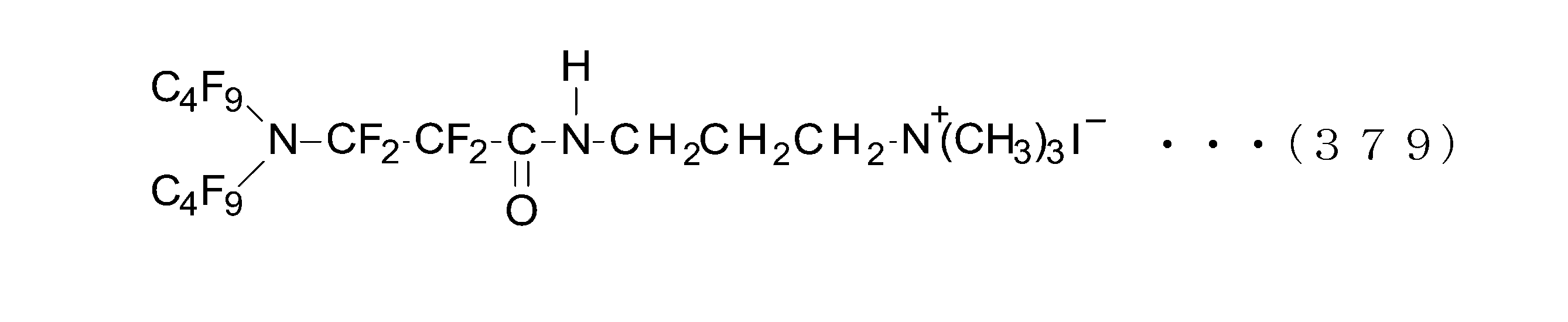
「2-[3-[[ペルフルオロ(2-ジエチルアミノエチルスルホニル)]アミノ]プロピル-ジメチル-アンモニウム]アセテートの合成」
3-ジエチルアミノプロピオン酸メチルの電解フッ素化で得られたペルフルオロ(3-ジエチルアミノ)プロピオニルフルオリドを、日本国特許第4406700号公報に記載の方法により、ペルフルオロ[2-(ジエチルアミノ)エタンスルホン酸フルオリドに誘導し、その50gを、ジメチルアミノプロピルアミン24.1gをIPE溶媒250mlに溶解した溶液に、氷浴下滴下した。室温で2時間撹拌した後にろ過を行い、ろ液のIPE層をNaHCO3水溶液と、NaCl水溶液とで洗浄処理し、分液した後に水洗を行った。その後、IPEを留去し、さらに蒸留して、粗生成物として、(C2F5)2NCF2CF2SO2NHC3H6N(CH3)2を29.4g得た(収率50%)。
次いで、得られた(C2F5)2NCF2CF2SO2NHC3H6N(CH3)2を10g、エタノール中での撹拌下、モノクロル酢酸ナトリウムと一晩還流させ、ろ過、濃縮後、下記式(380)に示すジメチルベタイン体を11g得た(収率99%)。
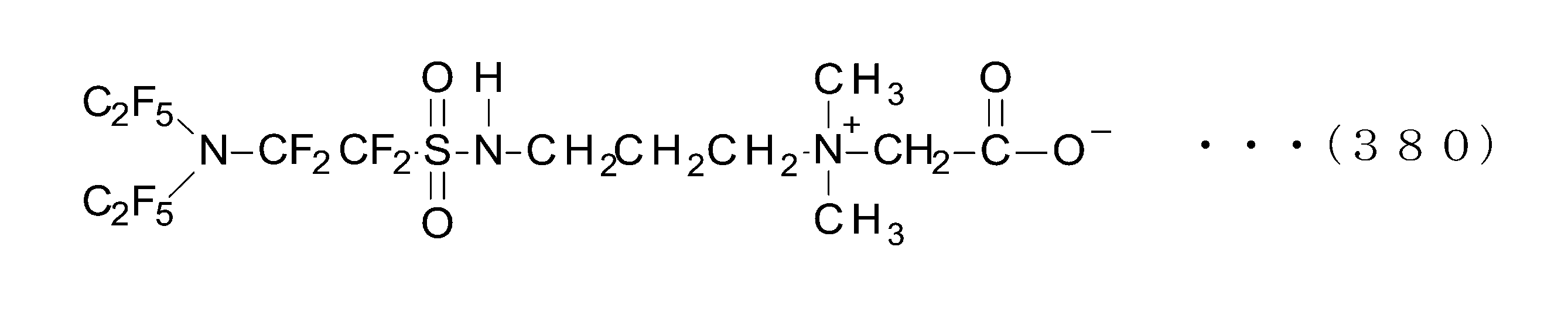
「2-[3-[[ペルフルオロ(2-メチル-3-ジヘキシルアミノプロパノイル)]アミノ]プロピル-ジメチル-アンモニウム]アセテートの合成」
2-メチル-3-ジヘキシルアミノプロピオン酸メチルの電解フッ素化により得られたペルフルオロ(2-メチル-3-ジヘキシルアミノプロピオン酸)フルオリド20gを、ジメチルアミノプロピルアミン5gをIPE溶媒50mlに溶解した溶液に、氷浴下滴下した。室温で2時間撹拌した後にろ過を行い、ろ液のIPE層をNaHCO3水溶液と、NaCl水溶液とで洗浄処理し、分液した後に水洗を行った。その後、IPEを留去し、さらに蒸留して、粗生成物として(C6F13)2NCF2CF(CF3)CONHC3H6N(CH3)2を7.7g得た(収率35%)。
次いで、得られた(C6F13)2NCF2CF(CF3)CONHC3H6N(CH3)2を5g、エタノール中での撹拌下、モノクロル酢酸ナトリウムと一晩還流させ、ろ過、濃縮後、下記式(381)に示すジメチルベタイン体を5.2g得た(収率97%)。

「3-[3-[[ペルフルオロ(2-メチル-3-ジブチルアミノプロパノイル)]アミノ]プロピル-ジメチル-アンモニウム]プロパンスルホネートの合成」
2-メチル-3-ジブチルアミノプロピオン酸メチルの電解フッ素化により得られたペルフルオロ(2-メチル-3-ジブチルアミノプロピオン酸)フルオリド120gを、ジメチルアミノプロピルアミン39gをIPE溶媒500mlに溶解した溶液に、氷浴下滴下した。室温で2時間撹拌した後にろ過を行い、ろ液のIPE層をNaHCO3水溶液と、NaCl水溶液とで洗浄処理し、分液した後に水洗を行った。その後、IPEを留去し、さらに蒸留して、粗生成物として、(C4F9)2NCF2CF(CF3)CONHC3H6N(CH3)2を64g得た(収率47%)。
次いで、得られた(C4F9)2NCF2CF(CF3)CONHC3H6N(CH3)2を1.5g、アセトニトリル中での撹拌下、1,3-プロパンスルトンと23時間還流させた後、フッ素系溶剤(旭硝子製:AK225)とIPE混合溶剤中で再沈殿を行って、下記式(382)に示すスルホベタイン体を1.3g得た(収率75%)。

「4-[3-[[ペルフルオロ(2-メチル-3-ジブチルアミノプロパノイル)]アミノ]プロピル-ジメチル-アンモニウムブタンスルホネートの合成」
2-メチル-3-ジブチルアミノプロピオン酸メチルの電解フッ素化により得られたペルフルオロ(2-メチル-3-ジブチルアミノプロピオン酸)フルオリド120gを、ジメチルアミノプロピルアミン39gをIPE溶媒500mlに溶解した溶液に、氷浴下滴下した。室温で2時間撹拌した後にろ過を行い、ろ液のIPE層をNaHCO3水溶液と、NaCl水溶液とで洗浄処理し、分液した後に水洗を行った。その後、IPEを留去し、さらに蒸留して、粗生成物として(C4F9)2NCF2CF(CF3)CONHC3H6N(CH3)2を64g得た(収率47%)。
次いで、得られた(C4F9)2NCF2CF(CF3)CONHC3H6N(CH3)2を15g、アセトニトリル中での撹拌下、1,4-ブタンスルトン4.2gと18時間還流させた後、フッ素系溶剤(旭硝子製:AK225)とIPE混合溶剤中で再沈殿を行い、下記式(383)に示すスルホベタイン体を13.3g得た(収率75%)。

「3-[3-[[ペルフルオロ(2-メチル-3-ジブチルアミノプロパノイル)]アミノ]プロピル-ジメチル-アンモニウム]2-ヒドロキシプロパン-1-スルホネートの合成」
2-メチル-3-ジブチルアミノプロピオン酸メチルの電解フッ素化により得られたペルフルオロ(2-メチル-3-ジブチルアミノプロピオン酸)フルオリド120gを、ジメチルアミノプロピルアミン39gをIPE溶媒500mlに溶解した溶液に、氷浴下滴下した。室温で2時間撹拌した後にろ過を行い、ろ液のIPE層をNaHCO3水溶液と、NaCl水溶液とで洗浄処理し、分液した後に水洗を行った。その後、IPEを留去し、さらに蒸留して、粗生成物として(C4F9)2NCF2CF(CF3)CONHC3H6N(CH3)2を64g得た(収率47%)。
次いで、得られた(C4F9)2NCF2CF(CF3)CONHC3H6N(CH3)2を5.0g、3-クロロ-2-ヒドロキシプロパンスルホン酸ナトリウム2.0g、エタノール10ml、水2.1gを混合し、20時間還流させた。その後、炭酸ナトリウム0.7gを添加し、さらに4時間還流させた。反応終了後、反応液を水に投入し、析出した固体をフッ素系溶剤(旭硝子製:AK225)とIPE混合溶剤中で再沈殿を行い、下記式(384)に示すスルホベタイン体を3.5g得た(収率59%)。
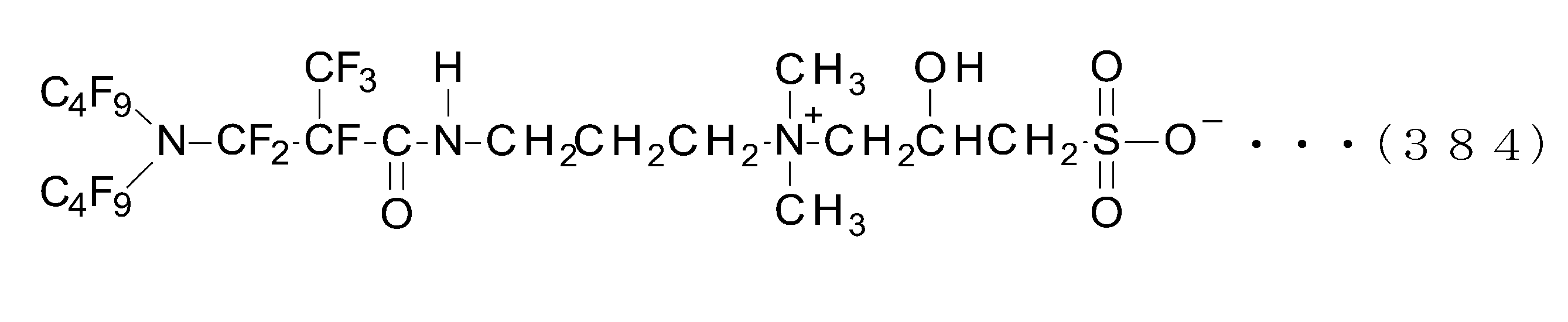
「2-[3-[[ペルフルオロ(2-メチル-3-ピペリジノノプロパノイル)]アミノ]プロピル-ジメチル-アンモニウム]アセテートの合成」
2-メチル-3-ピペリジノプロピオン酸メチルの電解フッ素化により得られたペルフルオロ(2-メチル-3-ピペリジノプロピオン酸)フルオリド20gを、ジメチルアミノプロピルアミン9gをIPE溶媒110mlに溶解した溶液に氷浴下で滴下した。室温で2時間撹拌した後にろ過を行い、ろ液のIPE層をNaHCO3水溶液と、NaCl水溶液で洗浄処理し、分液した後に水洗を行った後、IPEを留去したところ、粗生成物として、CF2(CF2CF2)2NCF2CF(CF3)CONHC3H6N(CH3)2を18g得た(粗収率76%)。
次いで、得られた粗成生物CF2(CF2CF2)2NCF2CF(CF3)CONHC3H6N(CH3)210gを、エタノール中での撹拌下、モノクロル酢酸ナトリウム3gと一晩還流させて、下記式(385)に示すジメチルベタイン体を11g得た(収率99%)。

「2-[3-[ペルフルオロ(2-メチル-3-モルホリノプロパノイル)]オキシプロピル-ジメチル-アンモニウム]アセテートの合成」
2-メチル-3-モルホリノプロピオン酸メチルの電解フッ素化により得られたペルフルオロ(3-メチル-3-モルホリノプロピオン酸)フルオリド21gを、N,N-ジメチルプロパノールアミン10gをIPE溶媒100mLに溶解した溶液に氷浴下で滴下した。その後、室温下で2時間撹拌した後にろ過を行い、ろ液のIPE層をNaHCO3水溶液と、NaCl水溶液で洗浄処理し、分液した後に水洗を行った後、IPEを留去したところ、粗生成物として、O(CF(CF3)CF2)2NCF2COOC3H6N(CH3)2を22g得た(粗収率88%)。
次いで、得られた粗成生物O(CF(CF3)CF2)2NCF2COOC3H6N(CH3)210gを、エタノール中での撹拌下、モノクロル酢酸ナトリウム3gと一晩還流させて、下記式(386)に示すジメチルベタイン体を11g得た(収率99%)。

「3-[3-[[ペルフルオロ(2-メチル-3-モルホリノプロパノイル)]アミノ]プロピル-ジメチル-アンモニウム]プロパンスルホネートの合成」
2-メチル-3-モルホリノプロピオン酸メチルの電解フッ素化により得られたペルフルオロ(3-メチル-3-モルホリノプロピオン酸)フルオリド21gを、ジメチルアミノプロピルアミン10gをIPE溶媒100mlに溶解した溶液に氷浴下で滴下した。その後、室温下で2時間撹拌した後にろ過を行い、ろ液のIPE層をNaHCO3水溶液と、NaCl水溶液で洗浄処理し、分液した後に水洗を行った後、IPEを留去したところ、粗生成物として、O(CF2CF2)2NCF2CF(CF3)CONHC3H6N(CH3)2を22g得た(粗収率88%)。
次いで、得られたO(CF2CF2)2NCF2CF(CF3)CONHC3H6N(CH3)2を2g、塩化メチレン中での撹拌下、1,3-プロパンスルトンと一晩還流させた後、フッ素系溶剤(旭硝子製:AK225)とIPEとの混合溶剤中で再沈殿を行い、下記式(387)に示すスルホベタイン体を2.2g得た(収率98%)。

「2-[3-[[ペルフルオロ(2-メチル-3-(4-メチル-1-ピペラジル)プロパノイル)]アミノ]プロピル-ジメチル-アンモニウム]アセテートの合成」
2-メチル-3-(4-メチル-1-ピペラジル)プロピオン酸メチルの電解フッ素化により得られたペルフルオロ(2-メチル-3-(4-メチル-1-ピペラジル)プロピオン酸)フルオリド20gを、ジメチルアミノプロピルアミン8.5gをIPE溶媒100mlに溶解した溶液に氷浴下で滴下した。その後、室温下で2時間撹拌した後にろ過を行い、ろ液のIPE層をNaHCO3水溶液と、NaCl水溶液で洗浄処理し、分液した後に水洗を行った後、IPEを留去したところ、粗生成物として、CF3N(CF2CF2)2NCF2CF(CF3)CONHC3H6N(CH3)2を19.8g得た(粗収率85%)。
次いで、得られた粗成生物 CF3N(CF2CF2)2NCF2CF(CF3)CONHC3H6N(CH3)2を10g、エタノール中での撹拌下、モノクロル酢酸ナトリウム3gと一晩還流させて、下記式(388)に示すジメチルベタイン体を10.9g得た(収率99%)。

<親水撥油性基材の作製>
(実施例A1)
ヘキサフルオロ-m-キシレン、エタノール、n-ブタノールをそれぞれ57.0質量%、38.0質量%、5.0質量%の比率で混合した溶液を溶媒とし、合成例1にて合成した含窒素フッ素系化合物と、結合剤としてポリビニルブチラール樹脂(積水化学工業製エスレックBL-1)と、を溶媒に添加・溶解させて、実施例A1の表面被覆材を作製した。なお、表面被覆材中の含窒素フッ素系化合物及び結合剤の質量組成比は、それぞれ0.2質量%、0.2質量%となるように調製した。
表面被覆材中の含窒素フッ素系化合物及び結合剤の質量組成比を、それぞれ16.7質量%、16.7質量%とした以外は実施例A1と同様にして、実施例A2の表面被覆材を作製した。
また、実施例A2の表面被覆材を用いた以外は実施例A1と同様にして、実施例A2の評価基材を作製した。下記の表1に作製条件を示す。
合成例1の含窒素フッ素系化合物に代えて、合成例2の含窒素フッ素系化合物を用いるとともに、表面被覆材中の含窒素フッ素系化合物及び結合剤の質量組成比を、それぞれ0.2質量%、1.8質量%とした以外は実施例A1と同様にして、実施例A3の表面被覆材を作製した。
また、実施例A3の表面被覆材を用いた以外は実施例A1と同様にして、実施例A3の評価基材を作製した。下記の表1に作製条件を示す。
表面被覆材中の含窒素フッ素系化合物及び結合剤の質量組成比を、それぞれ33.3質量%、0.3質量%とした以外は実施例A3と同様にして、実施例A4の表面被覆材を作製した。
次に、調製した表面被覆材をバーコーターNo.3を用いてガラス基材に塗布し、室温下、自然乾燥により溶媒を除去して、表面に塗布膜が設けられた実施例A4の評価基材を作製した。下記の表1に作製条件を示す。
合成例3にて合成した含窒素フッ素系化合物を0.5質量%、結合剤として水ガラス(富士化学社製3号)を4.5質量%、溶媒としてメタノールを95.0質量%の割合で配合して、実施例A5の表面被覆材とした。
次に、調整した表面被覆材にガラス板をディップし、引き揚げた後、自然乾燥によりメタノールを除去した。これにより、ガラス板上に塗布膜が設けられた実施例A5の評価基材を作製した。下記の表1に作製条件を示す。
合成例4にて合成した含窒素フッ素系化合物を1.0質量%、結合剤としてポリビニルブチラール(積水化学工業製エスレックBL-1)を5.0質量%、溶媒としてエタノールを94.0質量%の割合で配合して、実施例A6の表面被覆材を作製した。
次に、調製した表面被覆材をバーコーターNo.3を用いてPETフィルム(パナック株式会社、品名:ルミラー、品番:100T60)に塗布し、室温下、自然乾燥により溶媒を除去して、表面に塗布膜が設けられた実施例A6の評価基材を作製した。下記の表1に作製条件を示す。
合成例5にて合成した含窒素フッ素系化合物を2.0質量%、結合剤としてポリビニルブチラール樹脂(積水化学社製エスレックBL-1)を2.0質量%、溶媒として、メタノールを96.0質量%の割合で配合して、実施例A7の表面被覆材を作製した。
次に、調整した表面被覆材を浸漬法(ディップ法)にて、ABS樹脂(アズワン株式会社、品名:テストピース、ABS 黒)の表面上に塗布し、室温下、自然乾燥により溶媒を除去して、表面に塗布膜が設けられた実施例A7の評価基材を作製した。下記の表1に作製条件を示す。
合成例1にて合成した含窒素フッ素系化合物を5.0質量%、結合剤としてフッ素樹脂(AGCコーテック社製ボンフロン#6200)20.0質量%、溶媒として質量比が20対20対60のキシレン、エチルベンゼン、メチルイソブチルケトン混合液を75.0質量%の割合で配合し、十分に分散させて、実施例A8の表面被覆材を作製した。
次に、乾燥温度を120℃、1時間とした他は実施例A1と同様にして、SUS基材(アズワン株式会社、品名:テストピース、材質:SUS304)に表面被覆材の塗布膜を作成し、実施例A8の評価基材を作製した。下記の表1に作製条件を示す。
合成例2にて合成した含窒素フッ素系化合物を5.0質量%、結合剤としてUV硬化ウレタンアクリレート樹脂(新中村化学社製U-10HA)25.0質量%、溶媒として質量比が97対3のイソブチルケトンとエタノール混合液を70.0質量%の割合で配合し、十分に分散させて、実施例A9の表面被覆材を作製した。
次に、調製した表面被覆材をバーコーターNo.3を用いてガラス基材に塗布し、自然乾燥後に150mJ/cm2の紫外線を70℃で30秒間照射して塗布膜の硬化処理を行い、実施例A9の評価基材を作製した。下記の表1に作製条件を示す。
合成例6にて合成した含窒素フッ素系化合物を0.9質量%、結合剤としてポリビニルブチラール樹脂(積水化学社製エスレックBL-1)を0.9質量%、さらにテトラエトキシシラン(和光純薬社試薬)を8.2質量%、溶媒としてメタノールを90.0質量%の割合で配合し、実施例A10の表面被覆材とした。
次に、調製した表面被覆材にガラス板をディップし、引き揚げた後、自然乾燥によりメタノールを除去した。これにより、ガラス板上に塗布膜が設けられた実施例A10の評価基材を作製した。下記の表1に作製条件を示す。
合成例7にて合成した含窒素フッ素系化合物を0.2質量%、結合剤としてポリカーボネート(大成ファインケミカル社製アクリットWAN-1000U)7.0質量%とポリエステル(大成ファインケミカル社製アクリットWAN-6000)3.0質量%、溶媒として質量比が85対15の水とエタノール混合液を89.8質量%の割合で配合し、十分に分散させて、実施例A11の表面被覆材を作製した。
次に、実施例1と同様にして、SUS基材(アズワン株式会社、品名:テストピース、材質:SUS304)に表面被覆材の塗布膜を作成し、実施例A11の評価基材を作製した。下記の表1に作製条件を示す。
合成例7にて合成した含窒素フッ素系化合物を0.2質量%、結合剤としてポリビニルアルコール(関東化学社)10.0質量%、溶媒として質量比が90対10の水とエタノール混合液を89.8質量%の割合で配合し、十分に分散させて、実施例A12の表面被覆材を作製した。
次に、調製した表面被覆材をバーコーターNo.3を用いてPETフィルム(パナック株式会社、品名:ルミラー、品番:100T60)に塗布し、110℃で1時間乾燥して、表面に塗布膜が設けられた実施例A12の評価基材を作製した。下記の表1に作製条件を示す。
合成例8にて合成した含窒素フッ素系化合物を0.2質量%、結合剤としてポリエステル(第一工業製薬社製スーパーフレックス150)5.0質量%とポリウレタン(互応化学社製プラスコートZ221)5.0質量%、溶媒として質量比が85対15の水とエタノール混合液を89.8質量%の割合で配合し、十分に分散させて、実施例A13の表面被覆材を作製した。
次に、実施例1と同様にして、SUS基材(アズワン株式会社、品名:テストピース、材質:SUS304)に表面被覆材の塗布膜を作成し、実施例A13の評価基材を作製した。下記の表2に作製条件を示す。
合成例8にて合成した含窒素フッ素系化合物を5.0質量%、結合剤としてウレタンアクリル樹脂(ジャパンコーティングレジン社製SU-100)20.0質量%、溶媒として質量比が90対10の水とエタノール混合液を75.0質量%の割合で配合し、十分に分散させて、実施例A14の表面被覆材を作製した。
次に、乾燥温度を70℃とした他は実施例A1と同様にして、SUS基材(アズワン株式会社、品名:テストピース、材質:SUS304)に表面被覆材の塗布膜を作成し、実施例A14の評価基材を作製した。下記の表2に作製条件を示す。
合成例9にて合成した含窒素フッ素系化合物を0.2質量%、結合剤としてポリエステル(高松油脂工業社製ペスレジンA-125S)10.0質量%、溶媒として質量比が85対15の水とエタノール混合液を89.8質量%の割合で配合し、十分に分散させて、実施例A15の表面被覆材を作製した。
次に、実施例A1と同様にして、SUS基材(アズワン株式会社、品名:テストピース、材質:SUS304)に表面被覆材を塗布した後、110℃で1時間乾燥して塗布膜を作成し、実施例A15の評価基材を作製した。下記の表2に作製条件を示す。
合成例9にて合成した含窒素フッ素系化合物を0.2質量%、結合剤としてケイ酸ソーダ(関東化学社)10.0質量%、溶媒として質量比が97対3の水とエタノール混合液を89.8質量%の割合で配合し、十分に分散させて、実施例A16の表面被覆材を作製した。
次に、調製した表面被覆材をバーコーターNo.3を用いてガラス基材に塗布し、110℃で1時間乾燥して、表面に塗布膜が設けられた実施例A16の評価基材を作製した。下記の表2に作製条件を示す。
合成例10にて合成した含窒素フッ素系化合物を1.3質量%、結合剤としてポリビニルブチラール樹脂(積水化学社製エスレックKX-5)を0.6質量%、溶媒としてメタノールを98.1質量%の割合で配合し、実施例A17の表面被覆材とした。
次に、調製した表面被覆材にガラス板をディップし、引き揚げた後、自然乾燥によりメタノールを除去した。これにより、ガラス板上に塗布膜が設けられた実施例A17の評価基材を作製した。下記の表2に作製条件を示す。
合成例11で得られた含窒素フッ素系化合物を0.2質量%、結合剤としてポリビニルブチラール(積水化学製、「エスレックB BL-1」)を10.0質量%、溶媒として質量比57/38/5のヘキサフルオロ-m-キシレン/エタノール/n-ブタノールの混合液89.8質量%の割合で配合して、実施例A18の表面被覆材を作製した。
次に、調製した表面被覆材をバーコーターNo.3を用いてPETフィルム(パナック株式会社、品名:ルミラー、品番:100T60)に塗布し、室温下、自然乾燥により溶媒を除去して、表面に塗布膜が設けられた実施例A18の評価基材を作製した。下記の表2に作製条件を示す。
合成例12で得られた含窒素フッ素系化合物を0.2質量%、結合剤としてポリビニルブチラール(積水化学製、「エスレックB BL-1」)を10.0質量%、溶媒として質量比57/38/5のヘキサフルオロ-m-キシレン/エタノール/n-ブタノールの混合液89.8質量%の割合で配合して、実施例A19の表面被覆材を作製した。
次に、調製した表面被覆材をバーコーターNo.3を用いてPETフィルム(パナック株式会社、品名:ルミラー、品番:100T60)に塗布し、室温下、自然乾燥により溶媒を除去して、表面に塗布膜が設けられた実施例A19の評価基材を作製した。下記の表2に作製条件を示す。
合成例13にて合成した含窒素フッ素系化合物を0.9質量%、結合剤としてポリビニルブチラール樹脂(積水化学社製エスレックBL-1)を0.9質量%、さらにテトラエトキシシラン(和光純薬社試薬)を8.2質量%、溶媒としてメタノールを90.0質量%の割合で配合し、実施例A20の表面被覆材とした。
次に、調製した表面被覆材にガラス板をディップし、引き揚げた後、自然乾燥によりメタノールを除去した。これにより、ガラス板上に塗布膜が設けられた実施例A20の評価基材を作製した。下記の表2に作製条件を示す。
合成例7にて合成した含窒素フッ素系化合物を0.06質量%、結合剤としてポリエステル(第一工業製薬社製スーパーフレックス150)4.5質量%とポリウレタン(互応化学社製プラスコートZ221)10.5質量%、溶媒として質量比が77.5対22.5の水とエタノール混合液を84.9質量%の割合で配合し、十分に分散させて、実施例A21の表面被覆材を作製した。
次に、実施例A1と同様にして、SUS基材(アズワン株式会社、品名:テストピース、材質:SUS304)に表面被覆材の塗布膜を作成し、実施例A21の評価基材を作製した。下記の表2に作製条件を示す。
合成例1にて合成した含窒素フッ素系化合物および実施例1と同様の結合剤を用い、表面被覆材中の含窒素フッ素系化合物及び結合剤の質量組成比を、それぞれ34.0質量%、33.0質量%とし、実施例A1と同組成の溶媒を用いて、比較例A1の表面被覆材を作製した。
また、比較例A1の表面被覆材を用いた以外は実施例A1と同様にして、比較例A1の評価基材を作製した。下記の表2に作製条件を示す。
合成例2にて合成した含窒素フッ素系化合物を用い、表面被覆材中の含窒素フッ素系化合物及び結合剤の質量組成比を、それぞれ25.0質量%、0.02質量%とした以外は比較例A1と同様にして、比較例A2の表面被覆材を作製した。
また、比較例A2の表面被覆材を用いた以外は比較例A1と同様にして、比較例A2の評価基材を作製した。下記の表2に作製条件を示す。
実施例A1~A21及び比較例A1~A3の評価基材について、接触角測定(液滴法)を行い、親水性及び撥油性の評価を行った。
具体的には、実施例A1~A21及び比較例A1~A2の評価基材の表面に設けられた塗布膜の上に、水及びn-ヘキサデカン(以下、油という)をそれぞれ滴下し、評価基材と液滴との接触部位で形成される角度(静的接触角 単位:°(度)、1°=(π/180)rad)を、自動接触角計(協和界面科学社製、「Drop Master 701」)により測定した。
なお、水及びn-ヘキサデカンの滴下方法としては、下記の条件を用いた。
滴下容量:2μL/滴(水)
滴下容量:2μL/滴(n-ヘキサデカン)
測定温度:室温(22±1℃)
したがって、親水性及び撥油性の評価では、接触角測定の結果、塗布膜に対する水の静的接触角が15°以下、かつn-ヘキサデカンの静的接触角が65°以上である場合に、塗布膜が親水撥油性を有する(塗布膜が、親水撥油層である)というものとする。すなわち、評価基材が親水撥油性材であるというものとする。結果を下記の表1及び表2に示す。
実施例A1~A21及び比較例A1~A2の評価基材を室温下、水に1時間浸漬させた後、乾燥させた。浸漬・乾燥後の評価基材の水および油の静的接触角を測定し、浸漬・乾燥前後における静的接触角の測定値の差が5°以内であれば塗布膜の水に対する耐久性(すなわち、親水撥油性効果の持続性)は良好と判定(表1中には「A」と表す)し、5°を超える場合は耐久性を有さないと判定(表1中には「B」と表す)した。結果を下記の表1及び表2に示す。
実施例A1~A21及び比較例A1~A2の評価基材に設けられた塗布膜の全光透過率(%)を、日本電色工業社製ヘーズメーター(型番:NDH-300A)を用いて測定した。全光透過率が90%以上である場合、透明性に優れた親水撥油性基材であると判定した。結果を下記の表1及び表2に示す。

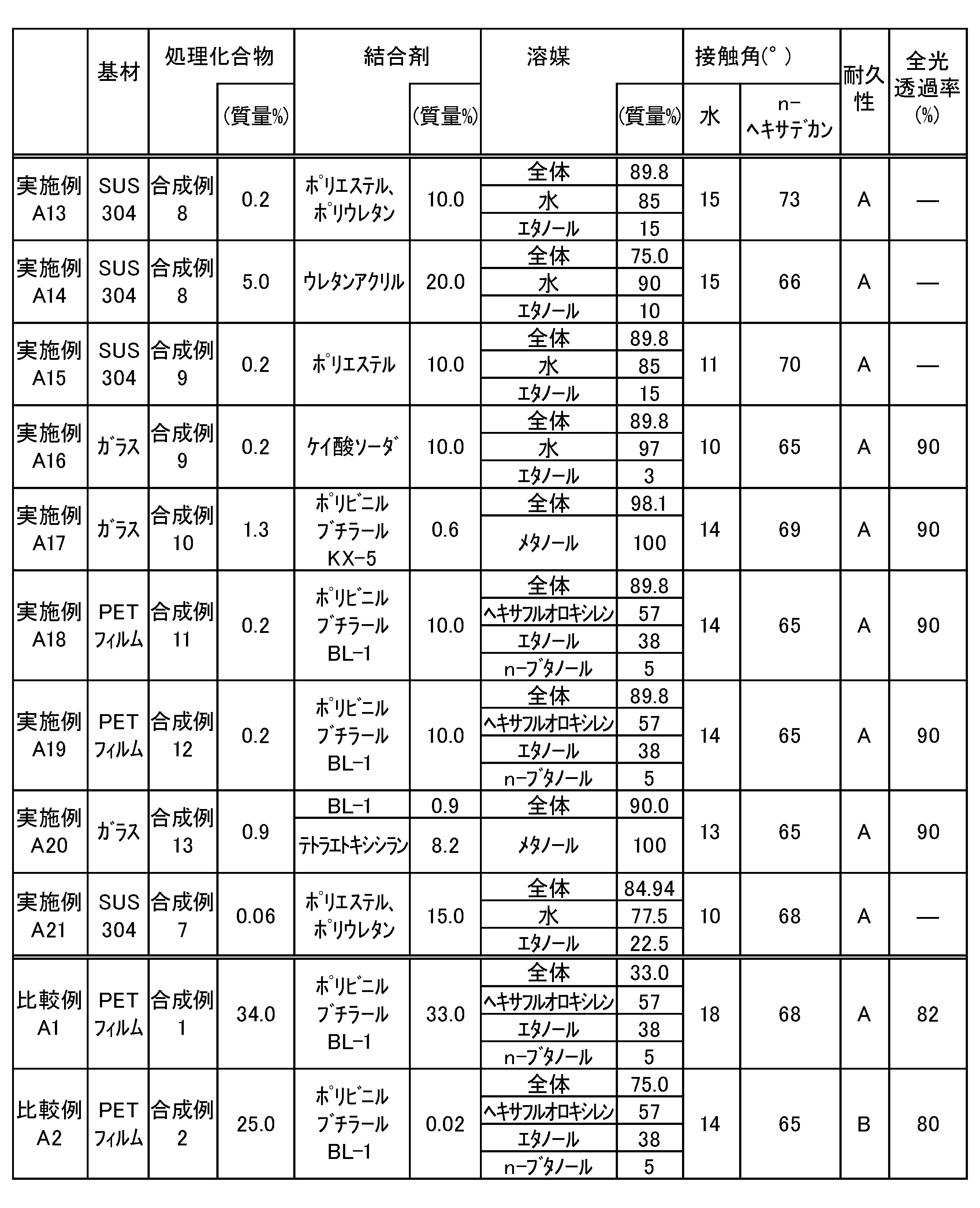
さらに、実施例実施例A1~A6,A9,A10,A12,A16~A20の評価基材は、全光透過率評価の結果、いずれの評価基材についても全光透過率が90%以上であり、透明性に優れた親水撥油性材であることが確認された。
<汚れ付着防止膜付き部材の作製>
(実施例B1)
合成例1にて合成した含窒素フッ素系化合物を2.0質量%、結合剤としてポリビニルブチラール樹脂(積水化学工業製エスレックBL-1)を4.0質量%、溶媒としてエタノールを94.0質量%となるように、溶媒に含窒素フッ素系化合物と結合剤とを添加し溶解させて、表面被覆材B1を作製した。
SUS基材をPE基材(アズワン株式会社、品名:ポリエチレン板、材質:PE)とした以外は実施例B1と同様にして、実施例B2の評価基材を作製した。
SUS基材をアクリル基材(アズワン株式会社、品名:アクリル板、材質:アクリル)とした以外は実施例B1と同様にして、実施例B3の評価基材を作製した。
合成例1にて合成した含窒素フッ素系化合物を0.3質量%、結合剤としてダイヤナールBR-80(三菱レイヨン)を0.5質量%、溶媒としてエタノール、トルエンをそれぞれ5質量%、95質量%の比率で混合させた溶液を99.2質量%となるように、溶媒に含窒素フッ素系化合物と結合剤とを添加し溶解させて、表面被覆材B4を作製した。
SUS基材をPE基材とした以外は実施例B4と同様にして、実施例B5の評価基材を作製した。
SUS基材をアクリル基材とした以外は実施例B4と同様にして、実施例B6の評価基材を作製した。
SUS基材をPETフィルム(パナック株式会社、品名:ルミラー、品番:100T60)とした以外は実施例B4と同様にして、実施例B7の評価基材を作製した。
表面被覆材による処理を行わない、未処理のSUS基材、PE基材及びアクリル基材を、それぞれ比較例B1~B3の評価基材とした。
実施例B1~B7及び比較例B1~B3の評価基材について、接触角測定(液滴法)を行い、防汚性の評価を行った。
具体的には、実施例B1~B7及び比較例B1~B3の評価基材の表面に設けられた塗布膜の上に、水及びn-ヘキサデカン(以下、油という)をそれぞれ滴下し、評価基材と液滴との接触部位で形成される角度(静的接触角 単位:°(度)、1°=(π/180)rad)を、自動接触角計(協和界面科学社製、「Drop Master 701」)により測定した。
なお、水及びn-ヘキサデカンの滴下方法としては、下記の条件を用いた。
滴下容量:2μL/滴(水)
滴下容量:2μL/滴(n-ヘキサデカン)
測定温度:室温(22±1℃)
したがって、防汚性の評価では、接触角測定の結果、塗布膜に対する水の静的接触角が15°以下、かつn-ヘキサデカンの静的接触角が65°以上である場合に、塗布膜が親水撥油性を有する(すなわち、塗布膜が、汚れ付着防止膜である)というものとする。結果を下記表3に示す。
実施例B1~B7及び比較例B1~B3で得られた塗布膜(汚れ付着防止膜)表面上にヘキサデカンを滴下し、この油滴にエアロダスター(エンジニア社製スプレー缶 ZC-32)を吹き掛けた際の油滴の広がり具合を観察した。
実施例B7の評価基材について、透明性の評価は、全光透過率(%)によって行うことができる。ここで、全光透過率(%)は、日本電色工業社製のヘーズメーター「NDH-300A」を用いて測定した。具体的には、汚れ付着防止膜(すなわち、親水撥油層)を含む汚れ付着防止膜付き部材全体の全光透過率(%)を測定し、全光透過率が90%以上である場合、透明性に優れた汚れ付着防止膜付き部材と云える。
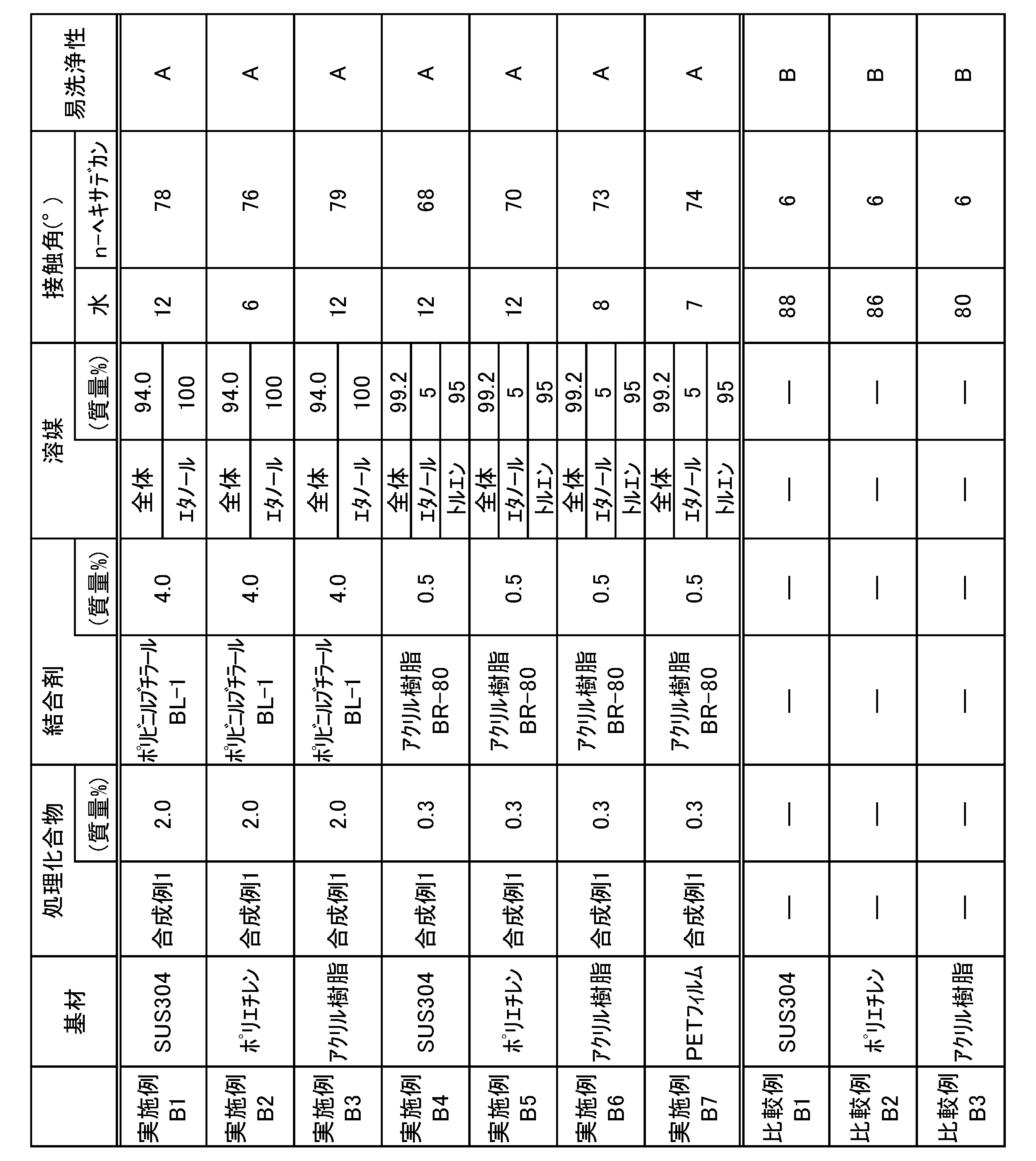
また、易洗浄性の評価の結果、いずれも「B」判定であることから、易洗浄性を有しないことが確認された。
<評価用保護具の作製>
(実施例C1)
市販の食品産業向け軽量作業靴(ミドリ安全株式会社製 ハイグリップ H-700N 靴底材質:EVA/合成ゴム)を用いて、靴底を洗剤とプラスチックタワシで洗浄した後、靴底の接地部分をマスキングテープで覆い、溝の部分に、親水撥油剤として合成例2にて合成した含窒素フッ素系化合物0.5質量%、結合剤としてポリビニルブチラール(積水化学工業株式会社製 エスレックBL-1)1.0質量%、無機化合物としてシリカゾル(日産化学株式会社製 オルガノシリカゾルIPA-ST)0.5質量%(SiO2として)、溶媒98.0質量%(ヘキサフルオロキシレン57.0質量部、エタノール38.0質量部、n-ブタノール5.0質量部)に調製した液(表面被覆材)をスプレーコーティングし、自然乾燥した。
市販の食品産業向け安全長靴(ミドリ安全株式会社製 ハイグリップ HG1000スーパー 靴底材質:PVC)について、靴底を洗剤とプラスチックタワシで洗浄した後、靴底の接地部分をマスキングテープで覆い、溝の部分に、実施例C1と同様の表面被覆材をスプレーコーティングし、自然乾燥した。
市販の軍手(綿100%)を、実施例C1と同様の表面被覆材に浸漬処理し、自然乾燥した。
市販の作業服(ミドリ安全株式会社製 メンズスラックス SE19 帯電防止性能 ポリエステル80%-綿20%)を洗濯した後、右袖部分を実施例C1と同様の表面被覆材に浸漬処理し、自然乾燥した。
市販のゴム手袋(ショーワグローブ株式会社製 ジャージテムレス No.283 ポリウレタン)を洗剤で良く洗浄した後、実施例C1と同様の表面被覆材に浸漬処理し、自然乾燥した。
実施例C1~実施例C5と同様の基材を用いて、表面被覆材を処理せずに、比較例C1~比較例C5の保護具とした。
表面被覆材で処理した実施例C1~C5の保護具及び表面被覆材で処理しない比較例C1~C5に、各種の食用油を滴下して目視判定によりぬれ性を評価した。この結果を表4に示す。
なお、各種油類の滴下方法としては、下記の条件を用いた。
滴下容量:(20~25)μL/滴
滴下高さ:基材(保護具)の表面から5cm
滴下冶具:ポリスポイト
A:(油を)はじく
B:(油で)ぬれる
C:(油が)浸透する
表面被覆材で処理した実施例C1~C5の保護具及び表面被覆材で処理しない比較例C1~C5に、各種の食用油を滴下した後、その部分にポリスポイトで水道水5mlを吹きかけて、油の除去具合を目視判定した。この結果を表4に示す。
A:油を完全に除去することができた
B:油の付着跡が残った
C:油を除去できなかった

20 作業靴(油防汚性保護具)
21 アッパー部
22 靴底(基材)
23 トレッドパターン
24 溝部
30 手袋(油防汚性保護具)
41 前掛け(油防汚性保護具)
42 膝当て(油防汚性保護具)
43 長靴(油防汚性保護具)
44 上衣(油防汚性保護具)
45 ズボン(油防汚性保護具)
46 作業着(油防汚性保護具)
Claims (15)
- 基材の表面の少なくとも一部に親水撥油層を形成する表面被覆材であって、
下記式(1)~(4)で示される、一種又は二種以上のフッ素系化合物と、結合剤と、溶媒と、を含む、表面被覆材。




上記式(1)及び(2)中、Rf1、Rf2は、それぞれ同一または互いに異なる、炭素数1~6であって直鎖状又は分岐状のペルフルオロアルキル基である。また、Rf3は、炭素数1~6であって、直鎖状又は分岐状のペルフルオロアルキレン基である。
上記式(3)及び(4)中、Rf4、Rf5及びRf6は、それぞれ同一または互いに異なる、炭素数1~6であって直鎖状又は分岐状のペルフルオロアルキレン基である。また、Zは、酸素原子、窒素原子、CF2基及びCF基のいずれかを含む。
また、上記式(2)及び(4)中、Rは、2価の有機基である連結基である。
また、上記式(1)~(4)中、Xは、アニオン型、カチオン型及び両性型からなる群から選択されるいずれか1の親水性賦与基である。 - 前記フッ素系化合物と前記溶媒との質量組成比が、0.05~50対99.95~50の範囲である、請求項1に記載の表面被覆材。
- 前記結合剤が、樹脂、水溶性樹脂及び水ガラスのいずれかを含む、請求項1又は2に記載の表面被覆材。
- 前記フッ素系化合物と前記結合剤との質量組成比が、0.2~99.9対99.8~0.1の範囲である、請求項1乃至3のいずれか一項に記載の表面被覆材。
- 前記溶媒が、水、有機溶媒又は水と有機溶媒との混合物である、請求項1乃至4のいずれか一項に記載の表面被覆材。
- 上記式(1)~(4)で示される、一種又は二種以上のフッ素系化合物と、結合剤と、を含む、塗布膜。
- 基材と、前記基材の表面の一部又は全部に設けられた親水撥油層と、を備え、
前記親水撥油層が、上記式(1)~(4)で示される、一種又は二種以上のフッ素系化合物を含む、親水撥油性材。 - 前記親水撥油層が、さらに結合剤を含む、請求項8に記載の親水撥油性材。
- 前記基材が、ガラス、プラスチック、金属、セラミックス、ステンレス、アルミニウム、木材、石、セメント、コンクリート、繊維、布、紙、皮革からなる群のうち、いずれか一つ、又は二以上の組み合わせである、請求項7又は8に記載の親水撥油性材。
- 前記基材が、PETフィルム又はガラス板である、請求項7又は8に記載の親水撥油性材。
- 全光透過率が90%以上である、請求項10に記載の親水撥油性材。
- 前記結合剤が、有機結合剤又は無機結合剤である、請求項8乃至11のいずれか一項に記載の親水撥油性材。
- 親水撥油層が設けられた前記基材の表面における水の静的接触角が15°以下であり、かつ、ヘキサデカンの静的接触角が65°以上である、請求項7乃至12のいずれか一項に記載の親水撥油性材。
- 前記基材が、厨房で使用される厨房用部材、又は、サニタリー設備において用いられるサニタリー用部材である、請求項7乃至13のいずれか一項に記載の親水撥油性材。
- 前記基材が、油分の固着を防止する油防汚性保護具である、請求項7乃至13のいずれか一項に記載の親水撥油性材。
Priority Applications (4)
| Application Number | Priority Date | Filing Date | Title |
|---|---|---|---|
| EP15827185.8A EP3176236A4 (en) | 2014-07-30 | 2015-07-30 | Surface-coating material, coated film, and hydrophilic/oil-repellent material |
| US15/329,426 US10364360B2 (en) | 2014-07-30 | 2015-07-30 | Surface coating material, coating film, and hydrophilic oil repellent member |
| CN201580041417.5A CN106574166B (zh) | 2014-07-30 | 2015-07-30 | 表面包覆材料、涂布膜及亲水拒油性材料 |
| JP2015556295A JP5909604B1 (ja) | 2014-07-30 | 2015-07-30 | 表面被覆材、塗布膜及び親水撥油性材 |
Applications Claiming Priority (12)
| Application Number | Priority Date | Filing Date | Title |
|---|---|---|---|
| JP2014-155554 | 2014-07-30 | ||
| JP2014-155553 | 2014-07-30 | ||
| JP2014155554 | 2014-07-30 | ||
| JP2014155553 | 2014-07-30 | ||
| JP2014-206795 | 2014-10-07 | ||
| JP2014206793 | 2014-10-07 | ||
| JP2014206782 | 2014-10-07 | ||
| JP2014-206782 | 2014-10-07 | ||
| JP2014206795 | 2014-10-07 | ||
| JP2014-206793 | 2014-10-07 | ||
| JP2015078567 | 2015-04-07 | ||
| JP2015-078567 | 2015-04-07 |
Publications (1)
| Publication Number | Publication Date |
|---|---|
| WO2016017761A1 true WO2016017761A1 (ja) | 2016-02-04 |
Family
ID=55217658
Family Applications (1)
| Application Number | Title | Priority Date | Filing Date |
|---|---|---|---|
| PCT/JP2015/071661 Ceased WO2016017761A1 (ja) | 2014-07-30 | 2015-07-30 | 表面被覆材、塗布膜及び親水撥油性材 |
Country Status (5)
| Country | Link |
|---|---|
| US (1) | US10364360B2 (ja) |
| EP (1) | EP3176236A4 (ja) |
| JP (1) | JP5909604B1 (ja) |
| CN (1) | CN106574166B (ja) |
| WO (1) | WO2016017761A1 (ja) |
Cited By (2)
| Publication number | Priority date | Publication date | Assignee | Title |
|---|---|---|---|---|
| JP2024019197A (ja) * | 2017-11-22 | 2024-02-08 | Toto株式会社 | 浴室 |
| JP2024019196A (ja) * | 2017-11-22 | 2024-02-08 | Toto株式会社 | 浴室 |
Families Citing this family (12)
| Publication number | Priority date | Publication date | Assignee | Title |
|---|---|---|---|---|
| USD791452S1 (en) * | 2015-02-02 | 2017-07-11 | Under Armour, Inc. | Sole structure for an article of footwear |
| JP6584124B2 (ja) * | 2015-04-28 | 2019-10-02 | 三菱マテリアル株式会社 | 被膜形成用組成物及びその製造方法、並びに被膜 |
| US11229248B2 (en) * | 2015-12-02 | 2022-01-25 | Showa Glove Co. | Supporting glove and method for manufacturing the supporting glove |
| JP6694718B2 (ja) * | 2016-01-28 | 2020-05-20 | 三菱マテリアル株式会社 | 親水撥油性回復剤及び親水撥油性被膜の親水撥油性の回復方法、並びに親水撥油性被膜 |
| JP6619505B2 (ja) * | 2016-04-05 | 2019-12-11 | 日本電信電話株式会社 | センサ中継装置およびセンサ中継システム |
| CN110582529B (zh) * | 2017-03-03 | 2022-05-31 | 汉阳大学校产学协力团埃丽卡校区 | 用于使聚合物基底的表面改性的方法以及具有由此改性的表面的聚合物基底 |
| CN110028662B (zh) * | 2019-04-22 | 2021-07-16 | 深圳市玉瓶科技有限公司 | 一种全氟代液态聚合物及其制备方法、用途 |
| CN111057804B (zh) * | 2020-01-02 | 2022-05-06 | 兴业皮革科技股份有限公司 | 花纹皮革制作方法、皮革及皮革制品 |
| JP7749344B2 (ja) * | 2021-05-24 | 2025-10-06 | 三菱マテリアル電子化成株式会社 | 親水撥油性膜形成用液組成物及びその製造方法、親水撥油性膜及び親水撥油性不織布 |
| CN113521882B (zh) * | 2021-07-06 | 2022-04-01 | 哈尔滨工业大学 | 一种基于无尘纸的柔性水处理材料及其制备方法 |
| US20230048522A1 (en) * | 2021-08-11 | 2023-02-16 | Emem Stephen | Aprons That Protect |
| USD1018002S1 (en) * | 2023-04-17 | 2024-03-19 | Skechers U.S.A., Inc. Ii | Shoe outsole bottom |
Citations (11)
| Publication number | Priority date | Publication date | Assignee | Title |
|---|---|---|---|---|
| JPH056006B2 (ja) * | 1983-06-13 | 1993-01-25 | Honda Motor Co Ltd | |
| JPH0558970A (ja) * | 1991-08-27 | 1993-03-09 | Agency Of Ind Science & Technol | 含窒素ペルフルオロカルボン酸の光学活性体及びその製造方法 |
| JPH05331455A (ja) * | 1992-05-29 | 1993-12-14 | Shin Etsu Chem Co Ltd | 親水撥油処理剤 |
| JPH107742A (ja) * | 1996-06-20 | 1998-01-13 | Showa Denko Kk | フルオロシリコーン系機能性付与剤 |
| JP2001220374A (ja) * | 2000-02-08 | 2001-08-14 | Natl Inst Of Advanced Industrial Science & Technology Meti | フッ素系界面活性化合物及びその製造方法 |
| JP2004298711A (ja) * | 2003-03-31 | 2004-10-28 | National Institute Of Advanced Industrial & Technology | 二酸化炭素溶媒中で用いるフッ素系界面活性剤 |
| JP2005330354A (ja) * | 2004-05-19 | 2005-12-02 | Ohara Palladium Kagaku Kk | 親水・撥油加工剤ならびにそれで処理した繊維製品 |
| JP2007326836A (ja) * | 2006-06-09 | 2007-12-20 | National Institute Of Advanced Industrial & Technology | 新規なフッ素化合物およびこのものを含有してなる難燃化剤 |
| JP2007326821A (ja) * | 2006-06-09 | 2007-12-20 | National Institute Of Advanced Industrial & Technology | 新規なオニウム塩 |
| JP2014148504A (ja) * | 2013-01-11 | 2014-08-21 | Mitsubishi Materials Corp | フッ素系界面活性剤及びその製造方法 |
| JP2014148670A (ja) * | 2013-01-11 | 2014-08-21 | Mitsubishi Materials Corp | 乳化重合用乳化剤及びそれを用いたフルオロポリマーの製造方法 |
Family Cites Families (94)
| Publication number | Priority date | Publication date | Assignee | Title |
|---|---|---|---|---|
| US2266350A (en) | 1940-04-13 | 1941-12-16 | Womack Isabelle Jones | Absorber |
| US3471484A (en) | 1965-05-03 | 1969-10-07 | Minnesota Mining & Mfg | Perfluorinated beta amino propionic acid fluorides |
| JPS4631802Y1 (ja) | 1968-04-25 | 1971-11-04 | ||
| US3645398A (en) | 1969-07-24 | 1972-02-29 | Exxon Research Engineering Co | Coalescer cartridge and coalescer for oily water |
| JPS5112463A (ja) | 1974-07-21 | 1976-01-31 | Somar Mfg | Yusuibunrirokatai |
| JPS5112462A (ja) | 1974-07-21 | 1976-01-31 | Somar Mfg | Yusuibunrirokatai |
| JPS5159133U (ja) | 1974-11-05 | 1976-05-10 | ||
| FR2317955A1 (fr) | 1975-07-18 | 1977-02-11 | Anvar | Procede de separation d'une phase organique en emulsion dans une phase aqueuse et materiaux de coalescence pour sa mise en oeuvre |
| JPS5221130U (ja) | 1975-07-31 | 1977-02-15 | ||
| JPS5274960A (en) | 1975-12-18 | 1977-06-23 | Nikku Ind Co | Oil and water separating device |
| JPS5290861A (en) | 1976-01-26 | 1977-07-30 | Mitsubishi Rayon Co Ltd | Method and apparatus for separating oil from oil c containing water |
| JPS53109266A (en) | 1977-03-07 | 1978-09-22 | Dainippon Ink & Chemicals | Deeoiler |
| JPS5934404B2 (ja) | 1977-03-10 | 1984-08-22 | 大日本インキ化学工業株式会社 | 水と油を分離する方法 |
| JPS5461362A (en) | 1977-10-21 | 1979-05-17 | Shizuoka Prefecture | Filter for separation of oil and water |
| JPS6018186U (ja) | 1983-07-13 | 1985-02-07 | タキロン株式会社 | 埋込式油分離除去槽 |
| JPS60139306A (ja) | 1983-12-28 | 1985-07-24 | Toyota Motor Corp | 排水処理用濾過器の運転制御方法 |
| JPS61257211A (ja) | 1985-05-09 | 1986-11-14 | Asahi Chem Ind Co Ltd | 微小油滴の粗粒化分離方法 |
| JPS6337187U (ja) | 1986-08-29 | 1988-03-10 | ||
| JP2508760B2 (ja) | 1987-10-20 | 1996-06-19 | 旭硝子株式会社 | 汚れ離脱性を有する撥水撥油剤 |
| JPH0360791A (ja) | 1989-07-28 | 1991-03-15 | Hesco | 油水分離槽 |
| JPH03144006A (ja) | 1989-10-28 | 1991-06-19 | Ebiox System Ag | 水に対する保安装置 |
| JP3004432B2 (ja) | 1991-11-22 | 2000-01-31 | ダイセル化学工業株式会社 | 排水処理方法およびその装置 |
| JPH05177766A (ja) | 1991-12-27 | 1993-07-20 | Sumitomo Metal Ind Ltd | 耐候性、耐汚れ性に優れた樹脂被覆金属材 |
| JPH05272027A (ja) | 1992-03-25 | 1993-10-19 | Taiyo Kogyo Kk | 収縮性織物、固定具及び水中張設構造物 |
| JPH05285305A (ja) | 1992-04-14 | 1993-11-02 | Nippon Health Kogyo Kk | エマルジョン性含油廃水の油水分離による廃水処理方法 |
| JP2859777B2 (ja) | 1992-05-28 | 1999-02-24 | 建設省関東地方建設局長 | 流出油の回収装置および回収方法 |
| JPH0724212A (ja) | 1992-06-19 | 1995-01-27 | Zeotetsuku L R C Kk | 油水分離装置 |
| JPH06134300A (ja) | 1992-10-26 | 1994-05-17 | Sankei:Kk | 油分含有液の吸収体 |
| US5443724A (en) | 1992-12-23 | 1995-08-22 | Pall Corporation | Apparatus for separating the components of a liquid/liquid mixture |
| DE4308369C2 (de) | 1993-03-16 | 2001-02-01 | Gore & Ass | Oleophob modifizierte mikroporöse Polymere |
| JP2607781Y2 (ja) | 1993-06-28 | 2002-07-08 | シバタ工業株式会社 | 汚濁防止膜 |
| JPH07204505A (ja) | 1994-01-20 | 1995-08-08 | Daiichi Eizai Kk | 流出油回収マット |
| JPH07265605A (ja) | 1994-02-10 | 1995-10-17 | Nippon Shokubai Co Ltd | 油中水分脱水方法 |
| JPH07284606A (ja) | 1994-04-18 | 1995-10-31 | Yasukawa Setsubi Giken Kk | 油水分離装置 |
| JP2573798B2 (ja) | 1994-04-25 | 1997-01-22 | 株式会社エフエスケー | 油水分離方法および装置 |
| JPH08243558A (ja) | 1995-03-01 | 1996-09-24 | Elf Antar Fr | 浮上油回収用ベルト |
| JPH0994401A (ja) | 1995-10-02 | 1997-04-08 | Kako Kogyosho:Kk | 油用濾過材 |
| JP3003593B2 (ja) | 1995-12-22 | 2000-01-31 | 東陶機器株式会社 | 光触媒性親水性部材 |
| AU1698297A (en) | 1996-04-02 | 1997-10-22 | W.L. Gore & Associates, Inc. | Water and oil repellent polyurethane film |
| JPH106973A (ja) | 1996-06-21 | 1998-01-13 | Nissan Diesel Motor Co Ltd | 液圧ブレーキ用オイルリザーバ |
| JPH10103816A (ja) | 1996-09-27 | 1998-04-24 | Sanyo Electric Co Ltd | 冷凍装置および密閉型圧縮機 |
| JPH10204860A (ja) | 1997-01-22 | 1998-08-04 | Hiroshi Fujita | 浮遊物回収器具 |
| JPH1121866A (ja) | 1997-06-30 | 1999-01-26 | Mitsubishi Heavy Ind Ltd | オイルフェンス |
| JPH11279527A (ja) | 1997-06-30 | 1999-10-12 | Asahi Glass Co Ltd | 防汚加工剤組成物、その製造方法およびそれを用いた被処理物 |
| JP4125810B2 (ja) | 1997-10-09 | 2008-07-30 | オリオン機械株式会社 | 油水分離装置及び油水分離方法 |
| JPH11156104A (ja) | 1997-11-21 | 1999-06-15 | Seiren Co Ltd | 油水分離フィルターとその製造方法 |
| JPH11244671A (ja) | 1998-02-27 | 1999-09-14 | Mitsubishi Rayon Co Ltd | 原油処理用中空糸膜モジュールならびにこれを用いた原油処理方法および原油処理装置 |
| US6196708B1 (en) | 1998-05-14 | 2001-03-06 | Donaldson Company, Inc. | Oleophobic laminated articles, assemblies of use, and methods |
| JP3058326B2 (ja) | 1998-05-18 | 2000-07-04 | 飛島道路株式会社 | 舗装補強兼防水シート及びそれを用いた舗装方法 |
| JP2000024656A (ja) | 1998-07-14 | 2000-01-25 | World Chemical:Kk | 浮上油回収装置 |
| JP2000096082A (ja) * | 1998-09-18 | 2000-04-04 | Isao Kosan Kk | 油分凝集分離型洗剤 |
| JP2000126505A (ja) | 1998-10-29 | 2000-05-09 | Nippon Rokaki Kk | フィルタ装置及び油分離装置 |
| JP3010291B1 (ja) | 1998-12-28 | 2000-02-21 | ホーコス株式会社 | グリ―ストラップ装置 |
| JP2000288303A (ja) | 1999-04-06 | 2000-10-17 | Asahi Chem Ind Co Ltd | 油水分離フィルターおよび油水混合液の粗粒化分離方法 |
| JP2000342359A (ja) | 1999-06-04 | 2000-12-12 | Hitachi Chem Co Ltd | 厨房家具 |
| JP2001000960A (ja) | 1999-06-23 | 2001-01-09 | Hitachi Cable Ltd | 排水処理の制御方法 |
| GB2354458A (en) | 1999-09-22 | 2001-03-28 | Mantis Oil Separation Ltd | Controlling level using adjustable height weir; Separating oil and water |
| JP3134930B1 (ja) | 1999-12-09 | 2001-02-13 | 東亜紡織株式会社 | 油吸着マット |
| JP2001004125A (ja) | 2000-01-01 | 2001-01-12 | Toyotomi Co Ltd | 油水分離瀘過フィルタの製法 |
| JP2002105433A (ja) | 2000-10-02 | 2002-04-10 | Lion Corp | フッ素含有表面処理剤 |
| JP2002113301A (ja) | 2000-10-11 | 2002-04-16 | Suehiro Tadashi | 油水分離装置 |
| JP2002266329A (ja) | 2001-03-12 | 2002-09-18 | Toa Shoji Kk | 遮断体 |
| JP2003166173A (ja) | 2001-09-20 | 2003-06-13 | Mitsui Chemicals Inc | 繊維シート及び作業用保護衣類 |
| JP2003227117A (ja) | 2002-02-01 | 2003-08-15 | Sumitomo Rubber Ind Ltd | 防水用具および該防水用具を使用する防水方法 |
| JP4500987B2 (ja) | 2002-03-13 | 2010-07-14 | 独立行政法人産業技術総合研究所 | フッ素系カルボン酸及びその塩の使用方法 |
| JP2004098047A (ja) | 2002-07-19 | 2004-04-02 | Heisei Takara Shokai:Kk | 含油処理廃液の浄化・再生装置 |
| JP3973570B2 (ja) | 2003-01-30 | 2007-09-12 | 新日本ウエックス株式会社 | 含油排水の処理方法 |
| JP2005074316A (ja) | 2003-08-29 | 2005-03-24 | Toshiba Plant Systems & Services Corp | コンプレッサードレンの処理装置 |
| JP2005144436A (ja) | 2003-10-22 | 2005-06-09 | Kao Corp | 油処理材 |
| CN100415337C (zh) | 2004-03-10 | 2008-09-03 | 笹仓机械工程有限公司 | 油水分离装置 |
| JP4406700B2 (ja) | 2004-06-15 | 2010-02-03 | 独立行政法人産業技術総合研究所 | 新規な含窒素ペルフルオロアルカンスルホン酸塩 |
| JP2006110452A (ja) | 2004-10-14 | 2006-04-27 | Katsumi Otsuka | 油分回収システム及びこのシステムを用いた油分回収方法 |
| JP2006130743A (ja) | 2004-11-04 | 2006-05-25 | Sumitomo Electric Fine Polymer Inc | フッ素樹脂被覆材、調理器具、電磁誘導加熱容器および該電磁誘導加熱容器の形成方法 |
| JP4568611B2 (ja) | 2005-01-18 | 2010-10-27 | 株式会社ササクラ | 油水分離装置 |
| JP2006200269A (ja) | 2005-01-21 | 2006-08-03 | Chugoku Electric Power Co Inc:The | オイルフェンスの展張方法、オイルフェンスの展張方法の決定を支援する情報処理装置及びプログラム |
| JP4270160B2 (ja) | 2005-04-14 | 2009-05-27 | パナソニック株式会社 | レンジフード |
| JP2007144239A (ja) | 2005-11-24 | 2007-06-14 | Fujiyama Kesao | 油水分離装置および排水処理装置 |
| JP5072001B2 (ja) | 2006-02-20 | 2012-11-14 | Jx日鉱日石エネルギー株式会社 | 油吸着材およびその製造方法 |
| JP2008031511A (ja) | 2006-07-27 | 2008-02-14 | Asahi Glass Co Ltd | 親水撥油性物品の製造方法 |
| JP5082347B2 (ja) | 2006-09-05 | 2012-11-28 | 旭硝子株式会社 | 分離膜の製造方法および水処理用分離膜 |
| US20090317621A1 (en) | 2006-11-30 | 2009-12-24 | Youngblood Jeffrey P | Stimuli-Responsive Polymeric Surface Materials |
| JP4780503B2 (ja) | 2007-09-05 | 2011-09-28 | 独立行政法人港湾空港技術研究所 | 流出油回収処理装置 |
| JP2009133173A (ja) | 2007-09-19 | 2009-06-18 | Kankyo System Kaihatsu:Kk | グリーストラップ装置 |
| JP2009127015A (ja) | 2007-11-27 | 2009-06-11 | Panasonic Electric Works Co Ltd | キッチン部材 |
| JP2010159563A (ja) | 2009-01-07 | 2010-07-22 | Maeda Kosen Co Ltd | オイルフェンス |
| JP2010201321A (ja) | 2009-03-02 | 2010-09-16 | Yasuo Umehara | グリーストラップ内の汚水中の油脂分の回収方法および油脂分固化装置 |
| JP2011011172A (ja) | 2009-07-03 | 2011-01-20 | Seiwa Kogyo Kk | 油分捕捉具 |
| JP5389196B2 (ja) | 2012-01-23 | 2014-01-15 | 株式会社東芝 | 水処理方法及び水処理装置 |
| JP5826683B2 (ja) | 2012-03-13 | 2015-12-02 | 株式会社東芝 | 水処理用磁性粉 |
| JP5583162B2 (ja) | 2012-03-29 | 2014-09-03 | 株式会社東芝 | 水処理用ろ過助剤及び水処理方法 |
| JP2014036931A (ja) | 2012-08-17 | 2014-02-27 | Kansai Electric Power Co Inc:The | 油水分離装置 |
| JP2014057920A (ja) | 2012-09-18 | 2014-04-03 | Toshiba Corp | 水処理方法 |
| JP5710664B2 (ja) | 2013-02-19 | 2015-04-30 | 株式会社東芝 | ろ過助材濃度管理装置を利用した水処理方法、水処理装置及びろ過助材濃度管理装置 |
| KR101554865B1 (ko) | 2013-06-26 | 2015-09-22 | 한국과학기술원 | 초친유성 표면, 이의 제조 방법 및 이를 이용한 수용액내 포함된 기름의 분리 방법 |
-
2015
- 2015-07-30 EP EP15827185.8A patent/EP3176236A4/en not_active Withdrawn
- 2015-07-30 CN CN201580041417.5A patent/CN106574166B/zh not_active Expired - Fee Related
- 2015-07-30 JP JP2015556295A patent/JP5909604B1/ja not_active Expired - Fee Related
- 2015-07-30 US US15/329,426 patent/US10364360B2/en active Active
- 2015-07-30 WO PCT/JP2015/071661 patent/WO2016017761A1/ja not_active Ceased
Patent Citations (11)
| Publication number | Priority date | Publication date | Assignee | Title |
|---|---|---|---|---|
| JPH056006B2 (ja) * | 1983-06-13 | 1993-01-25 | Honda Motor Co Ltd | |
| JPH0558970A (ja) * | 1991-08-27 | 1993-03-09 | Agency Of Ind Science & Technol | 含窒素ペルフルオロカルボン酸の光学活性体及びその製造方法 |
| JPH05331455A (ja) * | 1992-05-29 | 1993-12-14 | Shin Etsu Chem Co Ltd | 親水撥油処理剤 |
| JPH107742A (ja) * | 1996-06-20 | 1998-01-13 | Showa Denko Kk | フルオロシリコーン系機能性付与剤 |
| JP2001220374A (ja) * | 2000-02-08 | 2001-08-14 | Natl Inst Of Advanced Industrial Science & Technology Meti | フッ素系界面活性化合物及びその製造方法 |
| JP2004298711A (ja) * | 2003-03-31 | 2004-10-28 | National Institute Of Advanced Industrial & Technology | 二酸化炭素溶媒中で用いるフッ素系界面活性剤 |
| JP2005330354A (ja) * | 2004-05-19 | 2005-12-02 | Ohara Palladium Kagaku Kk | 親水・撥油加工剤ならびにそれで処理した繊維製品 |
| JP2007326836A (ja) * | 2006-06-09 | 2007-12-20 | National Institute Of Advanced Industrial & Technology | 新規なフッ素化合物およびこのものを含有してなる難燃化剤 |
| JP2007326821A (ja) * | 2006-06-09 | 2007-12-20 | National Institute Of Advanced Industrial & Technology | 新規なオニウム塩 |
| JP2014148504A (ja) * | 2013-01-11 | 2014-08-21 | Mitsubishi Materials Corp | フッ素系界面活性剤及びその製造方法 |
| JP2014148670A (ja) * | 2013-01-11 | 2014-08-21 | Mitsubishi Materials Corp | 乳化重合用乳化剤及びそれを用いたフルオロポリマーの製造方法 |
Non-Patent Citations (1)
| Title |
|---|
| See also references of EP3176236A4 * |
Cited By (4)
| Publication number | Priority date | Publication date | Assignee | Title |
|---|---|---|---|---|
| JP2024019197A (ja) * | 2017-11-22 | 2024-02-08 | Toto株式会社 | 浴室 |
| JP2024019196A (ja) * | 2017-11-22 | 2024-02-08 | Toto株式会社 | 浴室 |
| JP7601191B2 (ja) | 2017-11-22 | 2024-12-17 | Toto株式会社 | 浴室 |
| JP7601190B2 (ja) | 2017-11-22 | 2024-12-17 | Toto株式会社 | 浴室 |
Also Published As
| Publication number | Publication date |
|---|---|
| JPWO2016017761A1 (ja) | 2017-04-27 |
| EP3176236A1 (en) | 2017-06-07 |
| CN106574166A (zh) | 2017-04-19 |
| EP3176236A4 (en) | 2018-05-16 |
| JP5909604B1 (ja) | 2016-04-26 |
| CN106574166B (zh) | 2018-10-02 |
| US10364360B2 (en) | 2019-07-30 |
| US20170210916A1 (en) | 2017-07-27 |
Similar Documents
| Publication | Publication Date | Title |
|---|---|---|
| JP5909604B1 (ja) | 表面被覆材、塗布膜及び親水撥油性材 | |
| CN102803207B (zh) | 含氟表面活性剂 | |
| CA2739903C (en) | Highly durable superhydrophobic, oleophobic and anti-icing coatings and methods and compositions for their preparation | |
| US20120264884A1 (en) | Amphiphobic Surfaces from Block Copolymers | |
| CN101679548B (zh) | 氟化组合物以及由其制备的表面处理剂 | |
| JP5449179B2 (ja) | エポキシ化合物とアミノシランのコポリマーによって処理される改善された湿潤強度を持つ布 | |
| TWI723964B (zh) | 撥水撥油塗覆組成物及透明皮膜 | |
| JP5879014B1 (ja) | 親水撥油剤及びその製造方法、並びに表面被覆材、塗布膜、樹脂組成物、油水分離濾材、多孔質体 | |
| JP6522308B2 (ja) | 親水撥油剤、表面被覆材、塗布膜、樹脂組成物、油水分離濾材及び多孔質体 | |
| JP6914711B2 (ja) | 組成物 | |
| TWI732888B (zh) | 含氟聚合物 | |
| JP2011523432A (ja) | エチレンテトラフルオロエチレン(メタ)アクリレート共重合体 | |
| JP5909605B1 (ja) | 表面被覆材、塗布膜、親水撥油複合体、親水撥油複合体の製造方法及び油水分離濾材 | |
| KR20160143878A (ko) | 투습 방수 포백 및 그 제법 | |
| JP6563041B2 (ja) | 親水撥油剤及びその製造方法、並びに表面被覆材、塗布膜、樹脂組成物、油水分離濾材、多孔質体 | |
| JP5879012B1 (ja) | 親水撥油複合体及びその製造方法、並びに表面被覆材、塗布膜、樹脂組成物、油水分離濾材 | |
| JP2016074828A (ja) | 親水撥油剤、表面被覆材、塗布膜、樹脂組成物、油水分離濾材及び多孔質体 | |
| JP4211313B2 (ja) | フッ素系界面活性剤組成物 | |
| JP2009126926A (ja) | 上塗り塗膜の耐汚れ処理剤及び上塗り塗膜の耐汚れ処理方法 | |
| CN110067132B (zh) | 一种基于超疏水耐久防污自清洁面料的制备方法 | |
| EP3898862A1 (en) | Composition including polysiloxane phosphate or phosphonate and method of making a treated article | |
| JP2011505488A (ja) | カチオン性ポリマー系フッ素化エーテルシラン組成物及び使用方法 |
Legal Events
| Date | Code | Title | Description |
|---|---|---|---|
| ENP | Entry into the national phase |
Ref document number: 2015556295 Country of ref document: JP Kind code of ref document: A |
|
| 121 | Ep: the epo has been informed by wipo that ep was designated in this application |
Ref document number: 15827185 Country of ref document: EP Kind code of ref document: A1 |
|
| WWE | Wipo information: entry into national phase |
Ref document number: 15329426 Country of ref document: US |
|
| NENP | Non-entry into the national phase |
Ref country code: DE |
|
| REEP | Request for entry into the european phase |
Ref document number: 2015827185 Country of ref document: EP |
|
| WWE | Wipo information: entry into national phase |
Ref document number: 2015827185 Country of ref document: EP |