EP2267108A1 - Procedé de démucilagination de l'huile par des enzymes - Google Patents
Procedé de démucilagination de l'huile par des enzymes Download PDFInfo
- Publication number
- EP2267108A1 EP2267108A1 EP10174207A EP10174207A EP2267108A1 EP 2267108 A1 EP2267108 A1 EP 2267108A1 EP 10174207 A EP10174207 A EP 10174207A EP 10174207 A EP10174207 A EP 10174207A EP 2267108 A1 EP2267108 A1 EP 2267108A1
- Authority
- EP
- European Patent Office
- Prior art keywords
- seq
- amino acid
- sterol
- lipid acyltransferase
- oil
- Prior art date
- Legal status (The legal status is an assumption and is not a legal conclusion. Google has not performed a legal analysis and makes no representation as to the accuracy of the status listed.)
- Withdrawn
Links
Images














Classifications
-
- C—CHEMISTRY; METALLURGY
- C11—ANIMAL OR VEGETABLE OILS, FATS, FATTY SUBSTANCES OR WAXES; FATTY ACIDS THEREFROM; DETERGENTS; CANDLES
- C11B—PRODUCING, e.g. BY PRESSING RAW MATERIALS OR BY EXTRACTION FROM WASTE MATERIALS, REFINING OR PRESERVING FATS, FATTY SUBSTANCES, e.g. LANOLIN, FATTY OILS OR WAXES; ESSENTIAL OILS; PERFUMES
- C11B3/00—Refining fats or fatty oils
-
- C—CHEMISTRY; METALLURGY
- C12—BIOCHEMISTRY; BEER; SPIRITS; WINE; VINEGAR; MICROBIOLOGY; ENZYMOLOGY; MUTATION OR GENETIC ENGINEERING
- C12N—MICROORGANISMS OR ENZYMES; COMPOSITIONS THEREOF; PROPAGATING, PRESERVING, OR MAINTAINING MICROORGANISMS; MUTATION OR GENETIC ENGINEERING; CULTURE MEDIA
- C12N9/00—Enzymes; Proenzymes; Compositions thereof; Processes for preparing, activating, inhibiting, separating or purifying enzymes
- C12N9/10—Transferases (2.)
- C12N9/1025—Acyltransferases (2.3)
- C12N9/1029—Acyltransferases (2.3) transferring groups other than amino-acyl groups (2.3.1)
-
- A—HUMAN NECESSITIES
- A21—BAKING; EDIBLE DOUGHS
- A21D—TREATMENT OF FLOUR OR DOUGH FOR BAKING, e.g. BY ADDITION OF MATERIALS; BAKING; BAKERY PRODUCTS
- A21D8/00—Methods for preparing or baking dough
- A21D8/02—Methods for preparing dough; Treating dough prior to baking
- A21D8/04—Methods for preparing dough; Treating dough prior to baking treating dough with microorganisms or enzymes
- A21D8/042—Methods for preparing dough; Treating dough prior to baking treating dough with microorganisms or enzymes with enzymes
-
- A—HUMAN NECESSITIES
- A23—FOODS OR FOODSTUFFS; TREATMENT THEREOF, NOT COVERED BY OTHER CLASSES
- A23J—PROTEIN COMPOSITIONS FOR FOODSTUFFS; WORKING-UP PROTEINS FOR FOODSTUFFS; PHOSPHATIDE COMPOSITIONS FOR FOODSTUFFS
- A23J7/00—Phosphatide compositions for foodstuffs, e.g. lecithin
-
- C—CHEMISTRY; METALLURGY
- C11—ANIMAL OR VEGETABLE OILS, FATS, FATTY SUBSTANCES OR WAXES; FATTY ACIDS THEREFROM; DETERGENTS; CANDLES
- C11B—PRODUCING, e.g. BY PRESSING RAW MATERIALS OR BY EXTRACTION FROM WASTE MATERIALS, REFINING OR PRESERVING FATS, FATTY SUBSTANCES, e.g. LANOLIN, FATTY OILS OR WAXES; ESSENTIAL OILS; PERFUMES
- C11B3/00—Refining fats or fatty oils
- C11B3/003—Refining fats or fatty oils by enzymes or microorganisms, living or dead
-
- C—CHEMISTRY; METALLURGY
- C11—ANIMAL OR VEGETABLE OILS, FATS, FATTY SUBSTANCES OR WAXES; FATTY ACIDS THEREFROM; DETERGENTS; CANDLES
- C11C—FATTY ACIDS FROM FATS, OILS OR WAXES; CANDLES; FATS, OILS OR FATTY ACIDS BY CHEMICAL MODIFICATION OF FATS, OILS, OR FATTY ACIDS OBTAINED THEREFROM
- C11C3/00—Fats, oils, or fatty acids by chemical modification of fats, oils, or fatty acids obtained therefrom
-
- C—CHEMISTRY; METALLURGY
- C12—BIOCHEMISTRY; BEER; SPIRITS; WINE; VINEGAR; MICROBIOLOGY; ENZYMOLOGY; MUTATION OR GENETIC ENGINEERING
- C12N—MICROORGANISMS OR ENZYMES; COMPOSITIONS THEREOF; PROPAGATING, PRESERVING, OR MAINTAINING MICROORGANISMS; MUTATION OR GENETIC ENGINEERING; CULTURE MEDIA
- C12N9/00—Enzymes; Proenzymes; Compositions thereof; Processes for preparing, activating, inhibiting, separating or purifying enzymes
- C12N9/14—Hydrolases (3)
- C12N9/16—Hydrolases (3) acting on ester bonds (3.1)
- C12N9/18—Carboxylic ester hydrolases (3.1.1)
- C12N9/20—Triglyceride splitting, e.g. by means of lipase
-
- C—CHEMISTRY; METALLURGY
- C12—BIOCHEMISTRY; BEER; SPIRITS; WINE; VINEGAR; MICROBIOLOGY; ENZYMOLOGY; MUTATION OR GENETIC ENGINEERING
- C12P—FERMENTATION OR ENZYME-USING PROCESSES TO SYNTHESISE A DESIRED CHEMICAL COMPOUND OR COMPOSITION OR TO SEPARATE OPTICAL ISOMERS FROM A RACEMIC MIXTURE
- C12P7/00—Preparation of oxygen-containing organic compounds
- C12P7/64—Fats; Fatty oils; Ester-type waxes; Higher fatty acids, i.e. having at least seven carbon atoms in an unbroken chain bound to a carboxyl group; Oxidised oils or fats
- C12P7/6409—Fatty acids
- C12P7/6418—Fatty acids by hydrolysis of fatty acid esters
-
- C—CHEMISTRY; METALLURGY
- C12—BIOCHEMISTRY; BEER; SPIRITS; WINE; VINEGAR; MICROBIOLOGY; ENZYMOLOGY; MUTATION OR GENETIC ENGINEERING
- C12P—FERMENTATION OR ENZYME-USING PROCESSES TO SYNTHESISE A DESIRED CHEMICAL COMPOUND OR COMPOSITION OR TO SEPARATE OPTICAL ISOMERS FROM A RACEMIC MIXTURE
- C12P7/00—Preparation of oxygen-containing organic compounds
- C12P7/64—Fats; Fatty oils; Ester-type waxes; Higher fatty acids, i.e. having at least seven carbon atoms in an unbroken chain bound to a carboxyl group; Oxidised oils or fats
- C12P7/6436—Fatty acid esters
- C12P7/6445—Glycerides
-
- C—CHEMISTRY; METALLURGY
- C12—BIOCHEMISTRY; BEER; SPIRITS; WINE; VINEGAR; MICROBIOLOGY; ENZYMOLOGY; MUTATION OR GENETIC ENGINEERING
- C12P—FERMENTATION OR ENZYME-USING PROCESSES TO SYNTHESISE A DESIRED CHEMICAL COMPOUND OR COMPOSITION OR TO SEPARATE OPTICAL ISOMERS FROM A RACEMIC MIXTURE
- C12P7/00—Preparation of oxygen-containing organic compounds
- C12P7/64—Fats; Fatty oils; Ester-type waxes; Higher fatty acids, i.e. having at least seven carbon atoms in an unbroken chain bound to a carboxyl group; Oxidised oils or fats
- C12P7/6436—Fatty acid esters
- C12P7/6445—Glycerides
- C12P7/6481—Phosphoglycerides
-
- C—CHEMISTRY; METALLURGY
- C12—BIOCHEMISTRY; BEER; SPIRITS; WINE; VINEGAR; MICROBIOLOGY; ENZYMOLOGY; MUTATION OR GENETIC ENGINEERING
- C12Y—ENZYMES
- C12Y301/00—Hydrolases acting on ester bonds (3.1)
- C12Y301/01—Carboxylic ester hydrolases (3.1.1)
- C12Y301/01003—Triacylglycerol lipase (3.1.1.3)
Definitions
- the present invention relates to a method for enzymatically degumming edible oils using a lipid acyltransferase.
- the present invention further relates to one or more lipid acyltransferases.
- the present invention yet further relates to the use of a lipid acyltransferase to the degumming of edible oils.
- the present invention provides a method for the enzymatic degumming of vegetable oils or edible oils using a lipid acyltransferase as defined herein.
- the present invention also provides a process of enzymatic degumming of vegetable or edible oils, comprising treating the edible or vegetable oil with a lipid acyl transferase according to the present invention so as to remove a major part of the phospholipid.
- the present invention also provides a process of enzymatic degumming of vegetable or edible oils, comprising treating the edible or vegetable oil with a lipid acyl transferase according to the present invention so as to transfer an acyl group from a major part of the phospholipid to one or more acyl acceptors, for example to one or more sterols and/or stanols.
- the present invention provides one or more lipid acyltransferases.
- the present invention provides a lipid acyltransferase comprising the amino acid sequence shown as SEQ ID No. 16.
- the present invention provides a lipid acyltransferase comprising the amino acid sequence shown as SEQ ID No. 16, or an amino acid sequence which has 75% or more, preferably 85% or more, more preferably 90% or more, even more preferably 95% or more, even more preferably 98% or more, or even more preferably 99% or more identity to SEQ ID No. 16.
- the present invention provides the use of a lipid acyltransferase in the degumming of edible oils (i) to remove phospholipids (such as phosphatidylcholine) and/or (ii) to increase the formation of sterol esters and/or stanol esters in the oil and/or (iii) to remove phospholipids (such as phosphatidylcholine) and/or to increase the formation of sterol esters and/or stanol esters in the oil without significantly increasing free fatty acids in the oil.
- phospholipids such as phosphatidylcholine
- stanol esters such as phosphatidylcholine
- the lipid acyltransferase for use in the present invention may be a natural lipid acyltransferase or may be a variant lipid acyltransferase.
- the lipid acyltransferase for use in the method and uses of the present invention may be one as described in WO2004/064537 or WO2004/064987 , or PCT/IB2004/004378 or GB0513859.9 , for example.
- lipid acyltransferase as used herein means an enzyme that has acyltransferase activity (generally classified as E.C. 2.3.1.x), whereby the enzyme is capable of transferring an acyl group from a lipid to one or more acceptor substrates, such as one or more of the following: a sterol; a stanol; a carbohydrate; a protein; a protein subunit; glycerol - preferably a sterol and/or a stanol.
- the lipid acyltransferase according to the present invention or for use in the methods and/or uses of the present invention is capable of transferring an acyl group from a lipid (as defined herein) to one or more of the following acyl acceptor substrates: a sterol or a stanol, preferably a sterol.
- the "acyl acceptor” according to the present invention may be any compound comprising a hydroxy group (-OH), such as for example, polyvalent alcohols, including glycerol; sterols; stanols; carbohydrates; hydroxy acids including fruit acids, citric acid, tartaric acid, lactic acid and ascorbic acid; proteins or a sub-unit thereof, such as amino acids, protein hydrolysates and peptides (partly hydrolysed protein) for example; and mixtures and derivatives thereof.
- the "acyl acceptor” according to the present invention is not water.
- the acyl acceptor is preferably not a monoglyceride.
- the lipid acyltransferase according to the present invention or for use in the methods and/or uses of the present invention may, as well as being able to transfer an acyl group from a lipid to a sterol and/or a stanol, additionally be able to transfer the acyl group from a lipid to one or more of the following: a carbohydrate, a protein, a protein subunit, glycerol.
- the lipid substrate upon which the lipid acyltransferase according to the present invention acts is one or more of the following lipids: a phospholipid, such as a lecithin, e.g. phosphatidylcholine.
- a phospholipid such as a lecithin, e.g. phosphatidylcholine.
- lipid substrate may be referred to herein as the "lipid acyl donor".
- lecithin as used herein encompasses phosphatidylcholine, phosphatidylethanolamine, phosphatidylinositol, phosphatidylserine and phosphatidylglycerol.
- the lipid substrate upon which the lipid acyltransferase according to the present invention or for use in the method and/or uses of the present invention acts as a phospholipid, such as lecithin, for example phosphatidylcholine.
- the lipid acyltransferase according to the present invention or for use in the method and/or uses of the present invention is incapable, or substantially incapable, of acting on a triglyceride and/or a 1-monoglyceride and/or 2-monoglyceride.
- the lipid acyltransferase according to the present invention or for use in the method and/or uses of the present invention may exhibit one or more of the following phospholipase activities: phospholipase A2 activity (E.C. 3.1.1.4) or phospholipase A1 activity (E.C. 3.1.1.32).
- the lipid acyltransferase according to the present invention or for use in the method and/or uses of the present invention may be capable of transferring an acyl group from a phospholipid to a sterol and/or a stanol.
- the lipid acyltransferase according to the present invention or for use in methods and/or uses of the present invention is capable of transferring an acyl group from a phospholipid to a sterol and/or a stanol to form at least a sterol ester and/or a stanol ester.
- the lipid acyltransferase according to the present invention or for use in the method and/or uses of the present invention does not exhibit triacylglycerol lipase activity (E.C. 3.1.1.3) or does not exhibit significant triacylglycerol lipase activity (E.C. 3.1.1.3).
- the lipid acyltransferase according to the present invention or for use in the method and/or uses of the present invention may be capable of transferring an acyl group from a lipid to a sterol and/or a stanol.
- the "acyl acceptor" according to the present invention may be either a sterol or a stanol or a combination of both a sterol and a stanol.
- the lipid acyltransferase enzyme according to the present invention or for use in methods and uses of the present invention may be characterised using the following criteria:
- X of the GDSX motif is L or Y. More preferably, X of the GDSX motif is L.
- the enzyme according to the present invention comprises the amino acid sequence motif GDSL.
- the GDSX motif is comprised of four conserved amino acids.
- the serine within the motif is a catalytic serine of the lipid acyltransferase enzyme.
- the serine of the GDSX motif may be in a position corresponding to Ser-16 in Aeromonas hydrophila lipolytic enzyme taught in Brumlik & Buckley (Journal of Bacteriology Apr. 1996, Vol. 178, No. 7, p 2060-2064 ).
- the sequence is preferably compared with the hidden markov model profiles (HMM profiles) of the pfam database in accordance with the procedures taught in WO2004/064537 or WO2004/064987 .
- Pfam is a database of protein domain families. Pfam contains curated multiple sequence alignments for each family as well as profile hidden Markov models (profile HMMs) for identifying these domains in new sequences. An introduction to Pfam can be found in Bateman A et al. (2002) Nucleic Acids Res. 30; 276-280 . Hidden Markov models are used in a number of databases that aim at classifying proteins, for review see Bateman A and Haft DH (2002) Brief Bioinform 3; 236-245 .
- the GDSX motif can be identified using the Hammer software package, the instructions are provided in Durbin R, Eddy S, and Krogh A (1998) Biological sequence analysis; probabilistic models of proteins and nucleic acids. Cambridge University Press, ISBN 0-521-62041-4 and the references therein, and the HMMER2 profile provided within this specification.
- the PFAM database can be accessed, for example, through several servers which are currently located at the following websites. http://www.sanger.ac.uk/Software/Pfam/index.shtml http://pfam.wust1.edu/ http://pfam.jouy.inra.fr/ http://pfam.cgb.ki.se/
- the database offers a search facility where one can enter a protein sequence. Using the default parameters of the database the protein sequence will then be analysed for the presence of Pfam domains.
- the GDSX domain is an established domain in the database and as such its presence in any query sequence will be recognised.
- the database will return the alignment of the Pfam00657 consensus sequence to the query sequence.
- the lipid acyltransferase enzyme for use in methods and uses of the invention can be aligned using the Pfam00657 consensus sequence (for a full explanation see WO2004/064537 or WO2004/064987 ).
- a positive match with the hidden markov model profile (HMM profile) of the pfam00657 domain family indicates the presence of the GDSL or GDSX domain according to the present invention.
- the lipid acyltransferase for use in the methods or uses of the invention may have at least one, preferably more than one, preferably more than two, of the following, a GDSx block, a GANDY block, a HPT block.
- the lipid acyltransferase may have a GDSx block and a GANDY block.
- the enzyme may have a GDSx block and a HPT block.
- the enzyme comprises at least a GDSx block.
- residues of the GANDY motif are selected from GANDY, GGNDA, GGNDL, most preferably GANDY.
- the enzyme for use in the methods or uses of the invention have at least one, preferably more than one, preferably more than two, preferably more than three, preferably more than four, preferably more than five, preferably more than six, preferably more than seven, preferably more than eight, preferably more than nine, preferably more than ten, preferably more than eleven, preferably more than twelve, preferably more than thirteen, preferably more than fourteen, of the following amino acid residues when compared to the reference A .
- hydrophilia polypeptide sequence namely SEQ ID No.
- the pfam00657 GDSX domain is a unique identifier which distinguishes proteins possessing this domain from other enzymes.
- the pfam00657 consensus sequence is presented in Figure 12 as SEQ ID No. 2. This is derived from the identification of the pfam family 00657, database version 6, which may also be referred to as pfam00657.6 herein.
- the consensus sequence may be updated by using further releases of the pfam database (for example see WO2004/064537 or WO2004/064987 ).
- the lipid acyltransferase enzyme for use in methods and uses of the present invention may be characterised using the following criteria:
- amino acid residue of the GDSX motif is L.
- SEQ ID No. 3 or SEQ ID No. 1 the first 18 amino acid residues form a signal sequence. His-309 of the full length sequence, that is the protein including the signal sequence, equates to His-291 of the mature part of the protein, i.e. the sequence without the signal sequence.
- the lipid acyltransferase enzyme for use in methods and uses of the present invention comprises the following catalytic triad: Ser-34, Asp-134 and His-309 or comprises a serine residue, an aspartic acid residue and a histidine residue, respectively, at positions corresponding to Ser-34, Asp-134 and His-309 in the Aeromonas hydrophila lipid acyltransferase enzyme shown in Figure 13 (SEQ ID No. 3) or Figure 11 (SEQ ID No. 1). As stated above, in the sequence shown in SEQ ID No. 3 or SEQ ID No. 1 the first 18 amino acid residues form a signal sequence.
- Ser-34, Asp-134 and His-309 of the full length sequence that is the protein including the signal sequence, equate to Ser-16, Asp-116 and His-291 of the mature part of the protein, i.e. the sequence without the signal sequence.
- the active site residues correspond to Ser-7, Asp-157 and His-348.
- the lipid acyltransferase enzyme for use in methods and uses of the present invention may be characterised using the following criteria:
- the lipid acyltransferase enzyme for use in methods and uses of present invention comprises one or more of the following amino acid sequences:
- the lipid acyltransferase enzyme for use in methods and uses of the present invention comprises either the amino acid sequence shown as SEQ ID No. 3 or as SEQ ID No. 4 or SEQ ID No. 1 or SEQ ID No. 15 or comprises an amino acid sequence which has 75% or more, preferably 80% or more, preferably 85% or more, preferably 90% or more, preferably 95% or more, identity with the amino acid sequence shown as SEQ ID No. 3 or the amino acid sequence shown as SEQ ID No. 4 or the amino acid sequence shown as SEQ ID No. 1 or the amino acid sequence shown as SEQ ID No. 15.
- the lipid acyltransferase enzyme for use in methods and uses of the present invention comprises an amino acid sequence which has 80% or more, preferably 85% or more, more preferably 90% or more and even more preferably 95% or more identity with any one of the sequences shown as SEQ ID No. 3, SEQ ID No. 4, SEQ ID No. 5, SEQ ID No. 6, SEQ ID No. 7, SEQ ID No. 8, SEQ ID No. 9, SEQ ID No. 10, SEQ ID No. 11, SEQ ID No. 12, SEQ ID No. 13, SEQ ID No. 14, SEQ ID No. 1, or SEQ ID No. 15.
- the lipid acyltransferase enzyme for use in methods and uses of the present invention comprises one or more of the following amino acid sequences:
- the lipid acyltransferase enzyme for use in methods and uses of the present invention comprises one or more of the following amino acid sequences:
- the lipid acyltransferase for use in the method and uses of the present invention may be the lipid acyl transferase from Candida parapsilosis as taught in EP 1 275 711 .
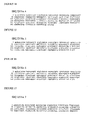
- the lipid acyltransferase for use in the method and uses of the present invention may be a lipid acyltransferase comprising one of the amino acid sequences taught in SEQ ID No. 17 ( Figure 28 ) or SEQ ID No. 18 ( Figure 29 ).
- the lipid acyltransferase for use in the method and uses of the present invention may be a lipid acyltransferase comprising the amino acid sequence shown as SEQ ID No. 16 ( Figure 10 ), or an amino acid sequence which has 75% or more, preferably 85% or more, more preferably 90% or more, even more preferably 95% or more, even more preferably 98% or more, or even more preferably 99% or more identity to SEQ ID No. 16.
- This enzyme could be considered a variant enzyme.
- the lipid acyltransferase for use in the methods and uses of the present invention may be a lecithin:cholesterol acyltransferase (LCAT) or variant thereof (for example a variant made by molecular evolution)
- LCAT lecithin:cholesterol acyltransferase
- variant thereof for example a variant made by molecular evolution
- Suitable LCATs are known in the art and may be obtainable from one or more of the following organisms for example: mammals, rat, mice, chickens, Drosophila melanogaster, plants, including Arabidopsis and Oryza sativa, nematodes, fungi and yeast.
- the lipid acyltransferase enzyme for use in the methods and uses of the present invention may be the lipid acyltransferase obtainable, preferably obtained, from the E. coli strains TOP 10 harbouring pPet12aAhydro and pPet12aASalmo deposited by Danisco A/S of Langebrogade 1, DK-1001 Copenhagen K, Denmark under the Budapest Treaty on the International Recognition of the Deposit of Microorganisms for the purposes of Patent Procedure at the National Collection of Industrial, Marine and Food Bacteria (NCIMB) 23 St. Machar Street, Aberdeen Scotland, GB on 22 December 2003 under accession numbers NICMB 41204 and NCIMB 41205, respectively.
- NCIMB National Collection of Industrial, Marine and Food Bacteria
- Highly preferred lipid acyl transferases for use in the methods of the invention include those isolated from Aeromonas spp., preferably Aeromonas hydrophila or A. salmonicida, most preferable A. salmonicida.
- Most preferred lipid acyl transferases for use in the present invention are encoded by SEQ ID No.s 1, 3, 4, 15, 16. It will be recognised by the skilled person that it is preferable that the signal peptides of the acyl transferase has been cleaved during expression of the transferase.
- the signal peptide of SEQ ID 1, 3, 4, 15 and 16 are amino acids 1-18. Therefore the most preferred regions are amino acids 19-335 for SEQ ID No. 1 and SEQ ID No. 3 ( A.
- amino acids 19-335 for SEQ ID No. 1 and 3 amino acids 19-336 for SEQ ID No.s 4, 15 and 16.
- amino acids 19-336 for SEQ ID No.s 4, 15 and 16. amino acids 19-336 for SEQ ID No.s 4, 15 and 16.
- SEQ ID 34 and 35 are mature protein sequences of the highly preferred lipid acyl transferases from A. hydrophilia and A . salmonicida respectively.
- a lipid acyl transferase for use in the invention may also be isolated from Thermobifida, preferably T. fusca, most preferably that encoded by SEQ ID No. 28.
- a lipid acyl transferase for use in the invention may also be isolated from Streptomyces, preferable S . avermitis, most preferably that encoded by SEQ ID No. 32.
- Other possible enzymes for use in the present invention from Streptomyces include those encoded by SEQ ID No.s 5, 6, 9,10,11,12,13,14, 31,33. The examples show that the enzyme encoded by SEQ ID No. 33 is highly effective in enzymatic degumming.
- An enzyme for use in the invention may also be isolated from Corynebacterium, preferably C . efficiens, most preferably that encoded by SEQ ID No. 29.
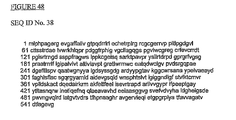
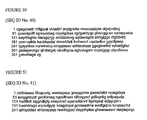
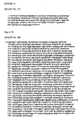
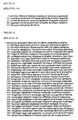
- the lipid acyltransferase for use in the methods and uses according to the present invention may be a lipid acyltransferase comprising any one of the amino acid sequences shown as SEQ ID No.s 37, 38, 40, 41, 43, 45, or 47 or an amino acid sequence which has at least 70%, 75%, 80%, 85%, 90%, 95%, 96%, 97% or 98% identity therewith, or encoded by any one of the nucleotide sequences shown as SEQ ID No.s 36, 39, 42, 44, 46, or 48 or a nucleotide sequence which has at least 70%, 75%, 80%, 85%, 90%, 95%, 96%, 97% or 98% identity therewith.
- the lipid acyltransferase for use in the methods and uses according to the present invention is a lipid acyltransferase capable of hydrolysing at least galactolipids and/or capable of transferring an acyl group from at least a galactolipid to one or more acyl acceptor substrates, wherein the enzyme is obtainable, preferably obtained, from Streptomyces species.
- the lipid acyltransferase for use in the methods and uses according to the present invention is preferably a lipid acyltransferase capable of hydrolysing at least galactolipids and/or capable of transferring an acyl group from at least a galactolipid to one or more acyl acceptor substrates, wherein the enzyme is encoded by a nucleic acid selected from the group consisting of:
- the lipid acyltransferase for use in the methods and uses according to the present invention is preferably a lipid acyltransferase comprising an amino acid sequence as shown in SEQ ID No. 37 or an amino acid sequence which has at least 60% identity thereto.
- the lipid acyltransferase for use in the methods and uses according to the present invention is preferably a lipid acyltransferase capable of hydrolysing at least a galactolipid and/or capable of transferring an acyl group from at least a galactolipid to one or more acyl acceptor substrates, wherein the enzyme comprises an amino acid sequence as shown in SEQ ID No. 37 or an amino acid sequence which has at least 60% identity thereto.
- the lipid acyltransferase for use in the methods and uses according to the present invention is a lipid acyltransferase capable of hydrolysing at least galactolipids and/or capable of transferring an acyl group from at least a galactolipid to one or more acyl acceptor substrates, wherein the enzyme is obtainable, preferably obtained, from Thermobifida species, preferably Thermobifida fusca.
- the lipid acyltransferase for use in the methods and uses according to the present invention is a lipolytic enzyme capable of hydrolysing at least galactolipids and/or capable of transferring an acyl group from at least a galactolipid to one or more acyl acceptor substrates, wherein the enzyme is obtainable, preferably obtained, from Corynebacterium species, preferably Corynebacterium efficiens.
- the lipid acyltransferase for use in the methods and uses according to the present invention may be a lipid acyltransferase comprising any one of the amino acid sequences shown as SEQ ID No. 37, 38, 40, 41, 43, 45 or 47 or an amino acid sequence which has at least 70%, 75%, 80%, 85%, 90%, 95%, 96%, 97% or 98% identity therewith, or encoded by any one of the nucleotide sequences shown as SEQ ID No. 39, 42, 44, 46 or 48 or a nucleotide sequence which has at least 70%, 75%, 80%, 85%, 90%, 95%, 96%, 97% or 98% identity therewith.
- the lipid acyltransferase for use in the methods and uses according to the present invention may be a lipid acyltransferase comprising any one of amino sequences shown as SEQ ID No. 38, 40, 41, 45 or 47 or an amino acid sequence which has at least 70%, 75%, 80%, 85%, 90%, 95%, 96%, 97% or 98% identity therewith for the uses described herein.
- the lipid acyltransferase for use in the methods and uses according to the present invention may be a lipid acyltransferase comprising any one of amino sequences shown as SEQ ID No. 38, 40, or 47 or an amino acid sequence which has at least 70%, 75%, 80%, 85%, 90%, 95%, 96%, 97% or 98% identity therewith for the uses described herein.
- the lipid acyltransferase for use in the methods and uses according to the present invention may be a lipid acyltransferase comprising the amino acid sequence shown as SEQ ID No. 47 or an amino acid sequence which has at least 70%, 75%, 80%, 85%, 90%, 95%, 96%, 97% or 98% identity therewith.
- the lipid acyltransferase for use in the methods and uses according to the present invention may be a lipid acyltransferase comprising the amino acid sequence shown as SEQ ID No. 43 or 44 or an amino acid sequence which has at least 80%, 85%, 90%, 95%, 96%, 97% or 98% identity therewith.
- the lipid acyltransferase for use in the methods and uses according to the present invention may be a lipid acyltransferase comprising the amino acid sequence shown as SEQ ID No. 41 or an amino acid sequence which has at least 70%, 75%, 80%, 85%, 90%, 95%, 96%, 97% or 98% identity therewith.
- the lipid acyltransferase for use in the methods and uses according to the present invention may be a lipid acyltransferase capable of hydrolysing at least galactolipids and/or capable of transferring an acyl group from at least a galactolipid to one or more acyl acceptor substrates, wherein the enzyme is encoded by a nucleic acid selected from the group consisting of:
- the lipid acyltransferase according to the present invention may be a lipid acyltransferase obtainable, preferably obtained, from the Streptomyces strains L130 or L131 deposited by Danisco A/S of Langebrogade 1, DK-1001 Copenhagen K, Denmark under the Budapest Treaty on the International Recognition of the Deposit of Microorganisms for the purposes of Patent Procedure at the National Collection of Industrial, Marine and Food Bacteria (NCIMB) 23 St. Machar Street, Aberdeen Scotland, GB on 25 June 2004 under accession numbers NCIMB 41226 and NCIMB 41227, respectively.
- NCIMB National Collection of Industrial, Marine and Food Bacteria
- Suitable lipid acyltransferases for use in accordance with the present invention and/or in the methods of the present invention may comprise any one of the following amino acid sequences and/or be encoded by the following nucleotide sequences:
- a suitable lipid acyl-transferase enzyme for use in the methods of the invention may also be identified by alignment to the L131 (SEQ ID No. 37) sequence using Align X, the Clustal W pairwise alignment algorithm of VectorNTI using default settings.
- the lipid acyltransferase for use in the methods or uses of the present invention may be a variant lipid acyltransferase, in which case the enzyme may be characterised in that the enzyme comprises the amino acid sequence motif GDSX, wherein X is one or more of the following amino acid residues L, A, V, I, F, Y, H, Q, T, N, M or S, and wherein the variant enzyme comprises one or more amino acid modifications compared with a parent sequence at any one or more of the amino acid residues defined in set 2 or set 4 or set 6 or set 7 (defined hereinbelow).
- GDSX amino acid sequence motif GDSX
- X is one or more of the following amino acid residues L, A, V, I, F, Y, H, Q, T, N, M or S
- the variant enzyme comprises one or more amino acid modifications compared with a parent sequence at any one or more of the amino acid residues defined in set 2 or set 4 or set 6 or set 7 (defined hereinbelow).
- the variant lipid acyltransferase enzyme for use in the methods or uses of the present invention may be characterised in that the enzyme comprises the amino acid sequence motif GDSX, wherein X is one or more of the following amino acid residues L, A, V, I, F, Y, H, Q, T, N, M or S, and wherein the variant enzyme comprises one or more amino acid modifications compared with a parent sequence at any one or more of the amino acid residues detailed in set 2 or set 4 or set 6 or set 7 (defined hereinbelow) identified by said parent sequence being structurally aligned with the structural model of P10480 defined herein, which is preferably obtained by structural alignment of P10480 crystal structure coordinates with 1IVN.PDB and/or 1DEO.PDB as taught herein.
- GDSX amino acid sequence motif GDSX
- X is one or more of the following amino acid residues L, A, V, I, F, Y, H, Q, T, N, M or S
- the variant enzyme comprises one or more amino
- the variant lipid acyltransferase enzyme for use in the methods or uses of the present invention may be characterised in that the enzyme comprises the amino acid sequence motif GDSX, wherein X is one or more of the following amino acid residues L, A, V, I, F, Y, H, Q, T, N, M or S, and wherein the variant enzyme comprises one or more amino acid modifications compared with a parent sequence at any one or more of the amino acid residues taught in set 2 identified when said parent sequence is aligned to the pfam consensus sequence (SEQ ID No. 2 - Figure 12 ) and modified according to a structural model of P10480 to ensure best fit overlap (see Figure 30 ) as taught herein.
- GDSX amino acid sequence motif GDSX
- X is one or more of the following amino acid residues L, A, V, I, F, Y, H, Q, T, N, M or S
- the variant enzyme comprises one or more amino acid modifications compared with a parent sequence at any one or more of the amino acid
- the variant lipid acyltransferase enzyme may comprise an amino acid sequence, which amino acid sequence is shown as SEQ ID No. 34, SEQ ID No. 3, SEQ ID No. 4, SEQ ID No. 5, SEQ ID No. 6, SEQ ID No. 7, SEQ ID No. 8, SEQ ID No. 19, SEQ ID No. 10, SEQ ID No. 11, SEQ ID No. 12, SEQ ID No. 13, SEQ ID No. 14, SEQ ID No. 1, SEQ ID No. 15, SEQ ID No. 25, SEQ ID No. 26, SEQ ID No. 27, SEQ ID No. 28, SEQ ID No. 29, SEQ ID No. 30, , SEQ ID No. 32, or SEQ ID No. 33 except for one or more amino acid modifications at any one or more of the amino acid residues defined in set 2 or set 4 or set 6 or set 7 (hereinafter defined) identified by sequence alignment with SEQ ID No. 34.
- the variant lipid acyltransferase enzyme may be a variant enzyme comprising an amino acid sequence, which amino acid sequence is shown as SEQ ID No. 34, SEQ ID No. 3, SEQ ID No. 4, SEQ ID No. 5, SEQ ID No. 6, SEQ ID No. 7, SEQ ID No. 8, SEQ ID No. 19, SEQ No. 10, SEQ ID No. 11, SEQ ID No. 12, SEQ ID No. 13, SEQ ID No. 14, SEQ ID No. 1, SEQ ID No. 15, SEQ ID No. 25, SEQ ID No. 26, SEQ ID No. 27, SEQ ID No. 28, SEQ ID No. 29, SEQ ID No. 30, , SEQ ID No. 32, or SEQ ID No.
- the variant lipid acyltransferase enzyme may be a variant enzyme comprising an amino acid sequence, which amino acid sequence is shown as SEQ ID No. 34, SEQ ID No. 3, SEQ ID No. 4, SEQ ID No. 5, SEQ ID No. 6, SEQ ID No. 7, SEQ ID No. 8, SEQ ID No. 19, SEQ ID No. 10, SEQ ID No. 11, SEQ ID No. 12, SEQ ID No. 13, SEQ ID No. 14, SEQ ID No. 1, SEQ ID No. 15, SEQ ID No. 25, SEQ ID No. 26, SEQ ID No. 27, SEQ ID No. 28, SEQ ID No. 29, SEQ ID No. 30, , SEQ ID No. 32, or SEQ ID No.
- modifying means adding, substituting and/or deleting.
- modifying means "substituting”.
- substitution is not intended to cover the replacement of an amino acid with the same amino acid.
- the parent enzyme is an enzyme which comprises the amino acid sequence shown as SEQ ID No. 34 and/or SEQ ID No. 15 and/or SEQ ID No. 35.
- the variant enzyme is an enzyme which comprises an amino acid sequence, which amino acid sequence is shown as SEQ ID No. 34 or SEQ ID No. 35 except for one or more amino acid modifications at any one or more of the amino acid residues defined in set 2 or set 4 or set 6 or set 7.
- the variant enzyme comprises one or more amino acid modifications compared with the parent sequence at at least one of the amino acid residues defined in set 4.
- the variant enzyme comprises one or more of the following amino acid modifications compared with the parent enzyme:
- X of the GDSX motif is L.
- the parent enzyme comprises the amino acid motif GDSL.
- the method of producing a variant lipid acyltransferase enzyme further comprises one or more of the following steps:
- the structural homology mapping may comprise one or more of the following steps:
- amino acid residue selected may reside within a 9, preferably within a 8, 7, 6, 5, 4, or 3 ⁇ sphere centred on the central carbon atom of the glycerol molecule in the active site (see Figure 47 ).
- the structural homology mapping may comprise one or more of the following steps:
- amino acid residue selected may reside within a 9, preferably within a 8, 7, 6, 5, 4, or 3 ⁇ sphere centred on the central carbon atom of the glycerol molecule in the active site (see Figure 47 ).
- the structural homology mapping can be performed by selecting specific loop regions (LRs) or intervening regions (IVRs) derived from the pfam alignment (Alignment 2, Figure 48 ) overlaid with the P10480 model and 1IVN.
- LRs loop regions
- IVRs intervening regions
- loop regions or intervening regions (IVRs) are defined in the Table below: P10480 amino acid positions (SEQ ID No 34) IVR1 1-19 Loop1 (LR1) 20-41 IVR2 42-76 Loop2 (LR2) 77-89 IVR3 90-117 Loop3 (LR3) 118-127 IVR4 128-145 Loop4 (LR4) 146-176 IVR5 177-207 Loop5 (LR5) 208-287 IVR6 288-317
- the variant acyltransferase enzyme for use in the methods and uses of the present invention not only comprises an amino acid modifications at one or more of the amino acids defined in any one of sets 1-4 and 6-7, but also comprises at least one amino acid modification in one or more of the above defined intervening regions (IVR1-6) (preferably in one or more of the IVRs 3, 5 and 6, more preferably in IVR 5 or IVR 6) and/or in one or more of the above-defined loop regions (LR1-5) (preferably in one or more of LR1, LR2 or LR5, more preferably in LR5).
- IVR1-6 intervening regions
- LR1-5 preferably in one or more of the above-defined loop regions
- the variant acyltransferase for use in the methods and uses of the present invention may comprise one or more amino acid modification which is not only defined by one or more of set 2, 4, 6 and 7, but also is within one or more of the IVRs 1-6 (preferably within IVR 3, 5 or 6, more preferably within in IVR 5 or IVR 6) or within one or more of the LRs 1-5 (preferably within LR1, LR2 or LR5, more preferably within LR5).
- the variant acyltransferase for use in the methods and uses of the present invention may comprise one or more amino acid modification which is not only in set 1 or 2, but also is within IVR 3.
- the variant acyltransferase for use in the methods and uses of the present invention may comprise one or more amino acid modification which is not only in set 1 or 2, but also is within IVR 5.
- the variant acyltransferase for use in the methods and uses of the present invention may comprise one or more amino acid modification which is not only in set 1 or 2, but also is within IVR 6.
- the variant acyltransferase for use in the methods and uses of the present invention may comprise one or more amino acid modification which is not only in set 1 or 2, but also is within LR 1.
- the variant acyltransferase for use in the methods and uses of the present invention may comprise one or more amino acid modification which is not only in set 1 or 2, but also is within LR 2.
- the variant acyltransferase enzyme for use in the methods and uses of the present invention not only comprises an amino acid modification at one or more amino acid residues which reside within a 10, preferably within a 9, 8, 7, 6, 5, 4, or 3, ⁇ sphere centred on the central carbon atom of the glycerol molecule in the active site (see Figure 47 ), but also comprises at least one amino acid modification in one or more of the above defined intervening regions (IVR1-6) (preferably in one or more of IVRs 3, 5 and 6, more preferably in IVR 5 or IVR 6) and/or in one or more of the above-defined loop regions (LR1-5) (preferably in one or more of LR1, LR2 or LR5, more preferably in LR5).
- IVR1-6 intervening regions
- LR1-5 preferably in one or more of LR1, LR2 or LR5, more preferably in LR5
- the amino acid modification is at one or more amino acid residues which reside within a 10 ⁇ sphere and also within LR5.
- the structural homology mapping may comprise one or more of the following steps:
- amino acid residue selected may reside within a 9 ⁇ sphere, preferably within an 8, 7, 6, 5, 4, or 3 ⁇ sphere centred on the central carbon atom of the glycerol molecule in the active site (see Figure 47 ).
- the structural homology mapping may comprise one or more of the following steps:
- the one or more amino acids selected in the methods detailed above are not only within a 10 ⁇ sphere centred on the central carbon atom of the glycerol molecule in the active site (see Figure 47 ) (such as one or more of the amino acid residues defined in set 1 or set 2), but are also within one or more of the IVRs 1-6 (preferably within IVR 3, 5 or 6, more preferably within in IVR 5 or IVR 6) or within one or more of the LRs 1-5 (preferably within LR1, LR2 or LR5, more preferably within LR5).
- the one or more amino acid modifications is/are within LR5.
- the modification is not one which is defined in set 5.
- the one or more amino acid modifications not only fall with the region defined by LR5, but also constitute an amino acid within one or more of set 2, set 4, set 6 or set 7.
- sequence homology alignment may comprise one or more of the following steps:
- sequence homology alignment may comprise one or more of the following steps:
- said first parent lipid acyltransferase may comprise any one of the following amino acid sequences: SEQ ID No. 34, SEQ ID No. 3, SEQ ID No. 4, SEQ ID No. 5, SEQ ID No. 6, SEQ ID No. 7, SEQ ID No. 8, SEQ ID No. 19, SEQ ID No. 10, SEQ ID No. 11, SEQ ID No. 12, SEQ ID No. 13, SEQ ID No. 14, SEQ ID No. 1, SEQ ID No. 15, SEQ ID No. 25, SEQ ID No. 26, SEQ ID No. 27, SEQ ID No. 28, SEQ ID No. 29, SEQ ID No. 30, , SEQ ID No. 32 or SEQ ID No. 33.
- said second related lipid acyltransferase may comprise any one of the following amino acid sequences: SEQ ID No. 3, SEQ ID No. 34, SEQ ID No. 4, SEQ ID No. 5, SEQ ID No. 6, SEQ ID No. 7, SEQ ID No. 8, SEQ ID No. 19, SEQ ID No. 10, SEQ ID No. 11, SEQ ID No. 12, SEQ ID No. 13, SEQ ID No. 14, SEQ ID No. 1, SEQ ID No. 15, SEQ ID No. 25, SEQ ID No. 26, SEQ ID No. 27, SEQ ID No. 28, SEQ ID No. 29, SEQ ID No. 30,, SEQ ID No. 32 or SEQ ID No. 33.
- the variant enzyme must comprise at least one amino acid modification compared with the parent enzyme.
- the variant enzyme may comprise at least 2, preferably at least 3, preferably at least 4, preferably at least 5, preferably at least 6, preferably at least 7, preferably at least 8, preferably at least 9, preferably at least 10 amino acid modifications compared with the parent enzyme.
- the variant enzyme comprises one or more of the following amino acid substitutions:
- the additional C-terminal extension is comprised of one or more aliphatic amino acids, preferably a non-polar amino acid, more preferably of I, L, V or G.
- the present invention further provides for a variant enzyme comprising one or more of the following C-terminal extensions: 318I, 318L, 318V, 318G.
- Variant enzymes which have a decreased hydrolytic activity against a phospholipid such as phosphatidylcholine (PC) may also have an increased transferase activity from a phospholipid.
- PC phosphatidylcholine
- Variants enzymes which have an increased transferase activity from a phospholipid such as phosphatidylcholine (PC) may also have an increased hydrolytic activity against a phospholipid.
- a phospholipid such as phosphatidylcholine (PC)
- PC phosphatidylcholine
- one or more of the following sites may be involved in substrate binding: Leu17; Ala114; Tyr179; His180; Asn181; Met209; Leu210; Arg211; Asn215; Lys284; Met285; Gln289; Va1290.
- the lipid acyltransferase according to the present invention comprises SEQ ID No. 35.
- the lipid acyltransferase for use in the method and uses of the present invention may be a lipid acyltransferase comprising the amino acid sequence shown as SEQ ID No. 16 ( Figure 10 ), or an amino acid sequence which has 75% or more, preferably 85% or more, more preferably 90% or more, even more preferably 95% or more, even more preferably 98% or more, or even more preferably 99% or more identity to SEQ ID No. 16.
- This enzyme may be considered a variant enzyme.
- the degree of identity is based on the number of sequence elements which are the same.
- the degree of identity in accordance with the present invention may be suitably determined by means of computer programs known in the art, such as GAP provided in the GCG program package (Program Manual for the Wisconsin Package, Version 8, August 1994, Genetics Computer Group, 575 Science Drive, Madison, Wisconsin, US53711) ( Needleman & Wunsch (1970), J. of Molecular Biology 48, 443-45 ) using the following settings for polypeptide sequence comparison: GAP creation penalty of 3.0 and GAP extension penalty of 0.1.
- the degree of identity with regard to an amino acid sequence is determined over at least 20 contiguous amino acids, preferably over at least 30 contiguous amino acids, preferably over at least 40 contiguous amino acids, preferably over at least 50 contiguous amino acids, preferably over at least 60 contiguous amino acids.
- the lipid acyltransferase enzyme according to the present invention may be obtainable, preferably obtained, from organisms from one or more of the following genera: Aeromonas, Streptomyces, Saccharomyces, Lactococcus, Mycobacterium, Streptococcus, Lactobacillus, Desulfitobacterium, Bacillus, Campylobacter, Vibrionaceae, Xylella, Sulfolobus, Aspergillus, Schizosaccharomyces, Listeria, Neisseria, Mosorhizobium, Ralstonia, Xanthomonas, Candida, Thermobifida and Corynebacterium.
- the lipid acyltransferase enzyme according to the present invention may be obtainable, preferably obtained, from one or more of the following organisms:
- the lipid acyltransferase enzyme according to the present invention is obtainable, preferably obtained, from one or more of Aeromonas hydrophila or Aeromonas salmonicida.
- the sterol and/or stanol may comprise one or more of the following structural features:
- Suitable sterol acyl acceptors include cholesterol and phytosterols, for example alpha-sitosterol, beta-sitosterol, stigmasterol, ergosterol, campesterol, 5,6-dihydrosterol, brassicasterol, alpha-spinasterol, beta-spinasterol, gamma-spinasterol, deltaspinasterol, fucosterol, dimosterol, ascosterol, serebisterol, episterol, anasterol, hyposterol, chondrillasterol, desmosterol, chalinosterol, poriferasterol, clionasterol, sterol glycosides, tocopherol, tocotrienol and other natural or synthetic isomeric forms and derivatives.
- phytosterols for example alpha-sitosterol, beta-sitosterol, stigmasterol, ergosterol, campesterol, 5,6-dihydrosterol, brassicasterol, alpha-spinasterol
- the sterol acyl acceptor is tocopherol.
- the tocopherol may be one or more of gamma, delta, beta or d-alpha tocopherol - including d-alpha tocopherol acid succinate for example.
- the sterol acyl acceptor is alpha-tocopherol.
- the method according to the present invention includes the step of adding tocopherol, preferably alpha-tocopherol, to the oil.
- the sterol acyl acceptor is cholesterol.
- the sterol and/or stanol acyl acceptor is a sterol and/or a stanol other than cholesterol.
- suitably more than one sterol and/or stanol may act as the acyl acceptor, suitably more than two sterols and/or stanols may act as the acyl acceptor.
- suitably more than one sterol ester and/or stanol ester may be produced.
- the present invention provides a method for the in situ production of both a tocopherol ester and at least one other sterol or stanol ester in combination.
- the lipid acyltransferase for some aspects of the present invention may transfer an acyl group from a lipid to both tocopherol and at least one further sterol and/or at least one stanol.
- the oil prepared in accordance with the present invention may be used to reduce the risk of cardiovascular diseases.
- the oil prepared in accordance with the present invention may be used to reduce blood serum cholesterol and/or to reduce low density lipoprotein.
- Blood serum cholesterol and low density lipoproteins have both been associated with certain diseases in humans, such as atherosclerosis and/or heart disease for example.
- the oils prepared in accordance with the present invention may be used to reduce the risk of such diseases.
- the present invention provides the use of an edible oil according to the present invention for use in the treatment and/or prevention of cardiovascular diseases.
- the present invention provides the use of an edible oil according to the present invention for use in the treatment and/or prevention of atherosclerosis and/or heart disease.
- the present invention provides a medicament comprising an edible oil according to the present invention.
- the present invention provides a method of treating and/or preventing a disease in a human or animal patient which method comprising administering to the patient an effective amount of an edible oil according to the present invention.
- the sterol acyl acceptor may be one which is naturally found in edible or vegetable oils.
- the sterol acyl acceptor may be one which added to the edible or vegetable oil.
- the sterol and/or stanol may be added before, simultaneously with, and/or after the addition of the lipid acyltransferase according to the present invention.
- the present invention may encompass the addition of exogenous sterols/stanols, particularly phytosterols/phytostanols, to an edible or vegetable oil prior to or simultaneously with the addition of the enzyme according to the present invention.
- one or more sterols present in the edible oil may be converted to one or more stanols prior to or at the same time as the lipid acyltransferase is added according to the present invention.
- Any suitable method for converting sterols to stanols may be employed.
- the conversion may be carried out by chemical hydrogenation for example.
- the conversion may be conducted prior to the addition of the lipid acyltransferase in accordance with the present invention or simultaneously with the addition of the lipid acyltransferase in accordance with the present invention.
- Suitably enzymes for the conversion of sterols to stanols are taught in WO00/061771 .
- the present invention may be employed to produce phytostanol esters in situ in an edible oil.
- Phytostanol esters have increased solubility through lipid membranes, bioavailability and enhanced health benefits (see for example WO92/99640 ).
- An advantage of the present invention is that sterol and/or stanol esters are produced in the edible oil during the degumming thereof.
- a further advantage is that enzyme is degummed without an increase, or a substantial, increase, in the free fatty acid content of the edible oil. The production of free fatty acids can be detrimental in the edible oil.
- the method according to the present invention results in the degumming of an edible oil wherein the accumulation of free fatty acids is reduced and/or eliminated.
- the fatty acid which is removed from the lipid is transferred by the lipid acyltransferase to an acyl acceptor, for example a sterol and/or a stanol.
- the overall level of free fatty acids in the foodstuff does not increase or increases only to an insignificant degree. This is in sharp contradistinction to the situation when phospholipases, such as Lecitase UltraTM are used in enzymatic degumming of edible oils.
- the use of such phospholipases can result in an increased amount of free fatty acid in the edible oil, which can be detrimental.
- the accumulation of free fatty acids is reduced and/or eliminated when compared with the amount of free fatty acids which would have been accumulated had a phospholipase A enzyme, such as Lecitase UltraTM, been used in place of the lipid acyltransferase in accordance with the present invention.
- a lipid acyl transferase according to the present invention may be suitable for use in the enzymatic degumming of vegetable or edible oils.
- the edible or vegetable oil is treated with a lipid acyl transferase according to the present invention so as to hydrolyse a major part of the phospholipid.
- the fatty acyl groups are transferred from the polar lipids to an acyl acceptor.
- the degumming process typically results in the reduction of the content of the polar lipids, particularly of phospholipids, in an edible oil due to hydrolysis of a major part (i.e. more than 50%) of the phospholipid.
- the aqueous phase containing the hydrolysed phospholipid is separated from the oil.
- the edible or vegetable oil may initially (pre-treatment with the enzyme according to the present invention) have a phosphorus content of 50-250 ppm.
- degumming means the refining of oil by converting phosphatides (such as lecithin, phospholipids and occluded oil) into hydratable phosphatides. Oil which has been degummed is more fluid and thus has better handling properties than oil which has not been degummed.
- phosphatides such as lecithin, phospholipids and occluded oil
- transferase as used herein is interchangeable with the term “lipid acyltransferase”.
- the lipid acyltransferase as defined herein catalyses one or more of the following reactions: interesterification, transesterification, alcoholysis, hydrolysis.
- interesterification refers to the enzymatic catalysed transfer of acyl groups between a lipid donor and lipid acceptor, wherein the lipid donor is not a free acyl group.
- transesterification means the enzymatic catalysed transfer of an acyl group from a lipid donor (other than a free fatty acid) to an acyl acceptor (other than water).
- alcoholysis refers to the enzymatic cleavage of a covalent bond of an acid derivative by reaction with an alcohol ROH so that one of the products combines with the H of the alcohol and the other product combines with the OR group of the alcohol.
- alcohol refers to an alkyl compound containing a hydroxyl group.
- hydrolysis refers to the enzymatic catalysed transfer of an acyl group from a lipid to the OH group of a water molecule.
- the term "without increasing or without substantially increasing the free fatty acids" as used herein means that preferably the lipid acyl transferase according to the present invention has 100% transferase activity (i.e. transfers 100% of the acyl groups from an acyl donor onto the acyl acceptor, with no hydrolytic activity); however, the enzyme may transfer less than 100% of the acyl groups present in the lipid acyl donor to the acyl acceptor.
- the acyltransferase activity accounts for at least 5%, more preferably at least 10%, more preferably at least 20%, more preferably at least 30%, more preferably at least 40%, more preferably 50%, more preferably at least 60%, more preferably at least 70%, more preferably at least 80%, more preferably at least 90% and more preferably at least 98% of the total enzyme activity.
- the % transferase activity i.e. the transferase activity as a percentage of the total enzymatic activity may be determined by the following protocol:
- Free fatty acid in the samples was analyzed by using the NEFA C kit from WAKO GmbH.
- Enzyme activity PLU-7 at pH 7 was calculated as micromole fatty acid produced per minute under assay conditions.
- lipid acyl-transferase will also have transferase activity as defined by the protocol below:
- An edible oil to which a lipid acyltransferase according to the present invention has been added may be extracted following the enzymatic reaction with CHC13:CH3OH 2:1 and the organic phase containing the lipid material is isolated and analysed by GLC and HPLC according to the procedure detailed hereinbelow. From the GLC and HPLC analyses the amount of free fatty acids and one or more of sterol/stanol esters; are determined. A control edible oil to which no enzyme according to the present invention has been added, is analysed in the same way.
- ⁇ % fatty acid % Fatty acid enzyme - % fatty acid control
- Mv fatty acid average molecular weight of the fatty acids
- A ⁇ % sterol ester / Mv sterol ester
- ⁇ % sterol ester % sterol / stanol ester enzyme - % sterol / stanol ester control
- Mv sterol ester average molecular weight of the sterol / stanol esters ;
- the free fatty acids are increased in the edible oil they are preferably not increased substantially, i.e. to a significant degree. By this we mean, that the increase in free fatty acid does not adversely affect the quality of the edible oil.
- the edible oil used for the acyltransferase activity assay is preferably the soya bean oil supplemented with plant sterol (1%) and phosphatidylcholine (2%) oil using the method in Example 3.
- the enzyme dosage used is preferably 0.2 PLU-7/g oil, more preferably 0.08 PLU-7/g oil.
- the level of phospholipid present in the oil and/or the % conversion of sterol is preferably determined after 4 hours, more preferably after 20 hours.
- the term "without substantially increasing free fatty acids" as used herein means that the amount of free fatty acid in a edible oil treated with an lipid acyltransferase according to the present invention is less than the amount of free fatty acid produced in the edible oil when an enzyme other than a lipid acyltransferase according to the present invention had been used, such as for example as compared with the amount of free fatty acid produced when a conventional phospholipase enzyme, e.g. Lecitase UltraTM (Novozymes A/S, Denmark), had been used.
- a conventional phospholipase enzyme e.g. Lecitase UltraTM (Novozymes A/S, Denmark
- lipid acyl transferase enzymes In addition to, or instead of, assessing the % transferase activity in an oil (above), to identify the lipid acyl transferase enzymes most preferable for use in the methods of the invention the following assay entitled "Protocol for identifying lipid acyltransferases for use in the present invention" can be employed.
- a lipid acyltransferase in accordance with the present invention is on which results in:
- the enzyme dosage used may be 0.2 PLU-7/g oil, preferably 0.08 PLU-7/g oil.
- the level of phospholipid present in the oil and/or the conversion (% conversion) of sterol is preferably determined after 4 hours, more preferably after 20 hours.
- the level of phospholipid present in an oil after degumming is determined by first preparing the oil sample according to the sample preparation taught in the AOAC Official Method 999.10 (>Lead, Cadmium, Zinc, Copper, and Iron in Foods Atomic Absorption Spectrophotometry after Microwave Digestion, First Action 1999 NMKL-AOAC Method). The amount of phospholipids in the oil is then measured by analysing the phosphorus content in the oil sample after degumming according to the AOAC Official Method 985.01 (>Metals and Other Elements in Plants and Pet Foods Inductively Coupled Plasma Spectroscopic Method First Action 1985 Final Action 1988).
- the amount of phosphorus present in the oil after degumming is preferably less than 50 ppm, preferably less than 40ppm, preferably less than 30ppm, preferably less than 20ppm, preferably less than 10ppm, preferably less than 5ppm.
- the oil after degumming, as illustrated in the examples may be substantially free of phospholipid, i.e. contain less than 1ppm phospholipid.
- the % conversion of the sterol present in the oil is at least 1%, preferably at least 5%, preferably at least 10%, preferably at least 20%, preferably at least 30%, preferably at least 40%, preferably at least 50%, preferably at least 60%, preferably at least 70%, preferably at least 80%, preferably at least 90%, preferably at least 95%.
- the % conversion of the sterol present in the oil is at least 5%, preferably at least 20%.
- the enzymatic degumming can be performed in a very low water environment. Some water may still be required, for example when adding the enzyme to the oil the enzyme may be added in small amount of water, such as less than 1%, preferably 0.5%, more preferably less than 0.2%, more preferably less than 1 %.
- the water content of the edible oil in the processes and uses according to the present invention is less than 1%, preferably less than 0.5%, more preferably less than 0.2%, more preferably less than 0.1%.
- one advantage of the present invention is that when only a small amount of water (i.e. ⁇ 5%, preferably ⁇ 1%, preferably ⁇ 0.5%, preferably ⁇ 0.2%) is used during the enzymatic degumming the gums (i.e. the phosphorus containing portion) separates from the oil, for example in the form of a solid precipitate.
- the solid precipitate can be readily removed from the degummed oil by methods such as simply decanting the oil or removing or the gum by filtration for example.
- the gum may be removed by adjusting the oil to 5% water followed by centrifugation of the oil. (see “ Enzyme-catalyzed degumming of vegetable oils” by Buchold, H. and Laurgi A.-G., Fettmaschine Technologie (1993), 95(8), 300-4 ).
- the invention provides a process for the degumming of an edible oil, such as a crude edible oil (for example a crude soya oil), without the need for either a prewashing step prior to degumming and/or a step of removing the water added during degumming, which is required when using conventional phospholipases such as pancreatic phospholipase and Lecitase UltraTM.
- an edible oil such as a crude edible oil (for example a crude soya oil)
- conventional phospholipases such as pancreatic phospholipase and Lecitase UltraTM.
- the edible oil has a less than a 4.5% water content, more preferably less than 4%, less than 3%, less than 2%, less than 1%, less than 0.5%.
- the edible oil may contain at least 0.1% water, such as at least 0.3%, 0.4% or 0.5%.
- Preferred lipid acyltransferases for use in the present invention are identified as those which have a high activity such as high phospholipid hydrolytic activity or high phospholipid transferase activity on phospholipids in an oil environment, most preferably lipid acyl transferases for use in enzymatic degumming have a high phospholipid to sterol transferase activity.
- acyl-transferases suitable for use in the methods of the invention may be identified by identifying the presence of the GDSx, GANDY and HPT blocks either by alignment of the pFam00657 consensus sequence (SEQ ID No 1), and/or alignment to a GDSX, acyltransferase, for example SEQ ID No 28.
- SEQ ID No 1 the pFam00657 consensus sequence
- SEQ ID No 28 the acyltransferase
- acyltransferases are tested using the "Protocol for the determination of % acyltransferase activity" assay detailed hereinabove.
- the present invention relates to the use of a lipid acyl transferase according to the present invention in degumming edible vegetable oils and/or edible oils and to methods for degumming edible or vegetable oils.
- the present invention may provide a method comprising using a lipid acyl transferase to remove the non-hydratable phosphorus (NHP) content in oil comprising a relatively high amount of NHP.
- NHP non-hydratable phosphorus
- edible oil as uses herein may encompass vegetable oils.
- the edible oil prior to treatment in accordance with the present invention comprises a non-hydratable phosphorus content of 50-250ppm, preferably at least 60 ppm, more preferably at least 100 ppm, and even more preferably at least 200 ppm, even more preferably above 250ppm.
- the edible oil prior to treatment in accordance with the present invention comprises a non-hydratable phosphorous content in the range of 60-500 ppm, more preferably in the range of 100-500 ppm, and even more preferably in the range of 200-500 ppm.
- An edible oil as referred to herein may be any oil having a relatively high amount of a non-hydratable phosphorus, this may include water degummed oil, or more preferably this is a crude-oil or a semi-crude oil.
- the crude edible oil has, prior to carrying out the method of the invention, a phosphorous content above 350 ppm, more preferably above 400 ppm, even more preferably above 500 ppm, and most preferably above 600 ppm.
- Oils encompassed by the method according to the present invention may include, but are not limited to, one or more of soya bean oil, canola oil, corn oil, cottonseed oil, palm oil, coconut oil, peanut oil, olive oil, safflower oil, palm kernel oil, rape seed oil and sunflower oil.
- the oil is one or more of soya bean oil, sunflower oil and rape seed oil (sometimes referred to as canola oil).
- the oil is one or more of soya bean oil, sunflower oil or rape seed oil.
- the oil is soya bean oil.
- oils may be in the form of a crude oil, a semicrude oil, or a water-degummed oil.
- crude oil may be a pressed or extracted oil or a mixture thereof from e.g. rapeseed, soybean, or sunflower.
- the phosphatide content in a crude oil may vary from 0.5-3% w/w corresponding to a phosphorus content in the range of 200-1200 ppm, more preferably in the range of 250-1200 ppm.
- the crude oil also contains small concentrations of carbohydrates, sugar compounds and metal/phosphatide acid complexes of Ca, Mg and Fe.
- semiconductor oil refers to any oil which is not a crude oil, but which has a phosphatide content above 250 ppm, more preferably above 500 ppm. Such an oil could e.g. be obtained by subjecting a crude oil to a process similar to the "water degumming" process described below.
- water-degummed oil may be typically be obtained by a “water degumming process” comprising mixing 1-3% w/w of hot water with warm (60-90°C) crude oil. Usual treatment periods are 30-60 minutes.
- the water-degumming step removes the phosphatides and mucilaginous gums which become insoluble in the oil when hydrated.
- the hydrated phosphatides and gums can be separated from the oil by settling, filtration or centrifugation - centrifugation being the more prevalent practice.
- the essential object in said water-degumming process is to separate the hydrated phosphatides from the oil.
- the mixing of hot water into the oil described above, should herein be understood broadly as mixing of an aqueous solution into the oil according to standard water-degumming procedures in the art.
- the method and uses of the present invention enable degumming of edible oils in a low water ( ⁇ 5%, preferably less than 2%, more preferably less than 1%) environments. Therefore degumming can be performed with adding less water than when using conventional enzymes.
- a further advantage of the present invention is the production of sterol esters (in particular tocopherol esters) in the oil.
- a yet further advantage of the present invention is removal (preferably complete removal) of phospholipids.
- a further advantage of the present invention is the removal (preferably complete removal) of phospholipids without removal of phytosterol, and in particular tocopherol. It is preferred that, due to the esterification of the phytosterol, there is no significant removal of phytosterols such as tocopherol from the oil instead they are simply esterified.
- the amount of phytosterol such as tocopherol may be reduced.
- the absolute levels of phytosterol such as tocopherol may be reduced by preferably no more than 10%, alternatively no more than 25%, alternatively no more than 50%, alternatively no more than 75%.
- a yet further advantage of the present invention is the removal (preferably complete removal) of phospholipids without hydrolysis of triglycerides.
- Amino acid set 1 Gly8, Asp9, Ser10 , Leu11, Ser12, Tyr15, Gly44, Asp45, Thr46, Glu69, Leu70, Gly71 , Gly72, Asn73, Asp74 , Gly75, Leu76, Gln106, Ile107, Arg108, Leu109, Pro110, Tyr113, Phe121, The139, The140, Net141, Tyr145, Met151, Asp154 , His157 , Gly155, Ile156, Pro158
- set 1 defines the amino acid residues within 10 ⁇ of the central carbon atom of a glycerol in the active site of the 1IVN model.
- Amino acid set 2 (note that the numbering of the amino acids refers to the amino acids in the P 10480 mature sequence) Leu17, Lys22, Met23, Gly40, Asn80, Pro81, Lys82, Asn87, Asn88, Trp111, Val112, Ala114, Tyr117, Leu118, Pro156, Gly159, Glu160, Asn161, Pro162, Ser163, Alga164, Arg165, Ser166, Gln167, Lys168, Val169, Val170, Glu171, Ala172, Tyr179, His180, Asn181, Met209, Leu210, Arg211, Asn215, Lys284, Met285, Gln289 and Va1290.
- Amino acid set 3 is identical to set 2 but refers to the Aeromonas salmonicida (SEQ ID No. 28) coding sequence, i.e. the amino acid residue numbers are 18 higher in set 3 as this reflects the difference between the amino acid numbering in the mature protein (SEQ ID No. 2) compared with the protein including a signal sequence (SEQ ID No. 28).
- Aeromonas salmonicida GDSX SEQ ID No. 28
- Aeromonas hydrophila GDSX SEQ ID No. 26
- the mature proteins of Aeromonas salmonicida GDSX differ in five amino acids. These are Thr3Ser, Cln182Lys, Glu309Ala, Ser310Asn, Gly318-, where the salmonicida residue is listed first and the hydrophila residue is listed last ( FIGURE 59 ).
- the hydrophila protein is only 317 amino acids long and lacks a residue in position 318.
- the Aeromonas salmonicidae GDSX has considerably high activity on polar lipids such as galactolipid substrates than the Aeromonas hydrophila protein. Site scanning was performed on all five amino acid positions.
- Amino acid set 4 is S3, Q182, E309, S310, and -318.
- Amino acid set 6 is Ser3, Leu17, Lys22, Met23, Gly40, Asn80, Pro81, Lys82, Asn 87, Asn88, Trp111, Val112, Ala114, Tyr117, Leu118, Pro156, Gly159, Gln160, Asn161, Pro162, Ser163, Ala164, Arg165, Ser166, Gln167, Lys168, Val169, Val170, Glu171, Ala172, Tyr179, His180, Asn181, Gln182, Met209, Leu210, Arg211, Asn215, Lys284, Met285, Gln289, Val290, Glu309, Ser310, -318.
- the numbering of the amino acids in set 6 refers to the amino acids residues in P 10480 (SEQ ID No. 2) - corresponding amino acids in other sequence backbones can be determined by homology alignment and/or structural alignment to P10480 and/or 1IVN.
- Amino acid set 7 is Ser3, Leu17, Lys22, Met23, Gly40, Asn80, Pro81, Lys82, Asn 87, Asn88, Trp111, Vat112, Ala114, Tyr117, Leu118, Pro156, Gly159, Gln160, Asn161, Pro162, Sar163, Ala164, Arg165, Ser166, Gln167, Lys168, Val169, Val170, Glu171, Ala172, Tyr179, His180, Asn181, Gln182, Met209, Leu210, Arg211, Asn215, Lys284, Met285, Gln289, Val290, Glu309, Ser310, -318, Y30X (where X is selected from A, C, D, E, G, H, I, K, L, M, N, P, Q, R, S, T, V, or W), Y226X (where X is selected from A, C, D, E, G, H, I,
- the numbering of the amino acids in set 7 refers to the amino acids residues in P10480 (SEQ ID No. 2) - corresponding amino acids in other sequence backbones can be determined by homology alignment and/or structural alignment to P10480 and/or 1IVN).
- polypeptide or protein for use in the present invention is in an isolated form.
- isolated means that the sequence is at least substantially free from at least one other component with which the sequence is naturally associated in nature and as found in nature.
- the polypeptide or protein for use in the present invention is in a purified form.
- purified means that the sequence is in a relatively pure state - e.g. at least about 51% pure, or at least about 75%, or at least about 80%, or at least about 90% pure, or at least about 95% pure or at least about 98% pure.
- a nucleotide sequence encoding either a polypeptide which has the specific properties as defined herein or a polypeptide which is suitable for modification may be isolated from any cell or organism producing said polypeptide. Various methods are well known within the art for the isolation of nucleotide sequences.
- a genomic DNA and/or cDNA library maybe constructed using chromosomal DNA or messenger RNA from the organism producing the polypeptide. If the amino acid sequence of the polypeptide is known, labelled oligonucleotide probes may be synthesised and used to identify polypeptide-encoding clones from the genomic library prepared from the organism. Alternatively, a labelled oligonucleotide probe containing sequences homologous to another known polypeptide gene could be used to identify polypeptide-encoding clones. In the latter case, hybridisation and washing conditions of lower stringency are used.
- polypeptide-encoding clones could be identified by inserting fragments of genomic DNA into an expression vector, such as a plasmid, transforming enzyme-negative bacteria with the resulting genomic DNA library, and then plating the transformed bacteria onto agar containing an enzyme inhibited by the polypeptide, thereby allowing clones expressing the polypeptide to be identified.
- an expression vector such as a plasmid, transforming enzyme-negative bacteria with the resulting genomic DNA library
- the nucleotide sequence encoding the polypeptide may be prepared synthetically by established standard methods, e.g. the phosphoroamidite method described by Beucage S.L. et al (1981) Tetrahedron Letters 22, p 1859-1869 , or the method described by Matthes et al (1984) EMBO J. 3, p 801-805 .
- the phosphoroamidite method oligonucleotides are synthesised, e.g. in an automatic DNA synthesiser, purified, annealed, ligated and cloned in appropriate vectors.
- the nucleotide sequence may be of mixed genomic and synthetic origin, mixed synthetic and cDNA origin, or mixed genomic and cDNA origin, prepared by ligating fragments of synthetic, genomic or cDNA origin (as appropriate) in accordance with standard techniques. Each ligated fragment corresponds to various parts of the entire nucleotide sequence.
- the DNA sequence may also be prepared by polymerase chain reaction (PCR) using specific primers, for instance as described in US 4,683,202 or in Saiki R K et al (Science (1988) 239, pp 487-491 ).
- nucleotide sequences encoding polypeptides having the specific properties as defined herein.
- nucleotide sequence refers to an oligonucleotide sequence or polynucleotide sequence, and variant, homologues, fragments and derivatives thereof (such as portions thereof).
- the nucleotide sequence may be of genomic or synthetic or recombinant origin, which may be doublestranded or single-stranded whether representing the sense or antisense strand.
- nucleotide sequence in relation to the present invention includes genomic DNA, cDNA, synthetic DNA, and RNA. Preferably it means DNA, more preferably cDNA for the coding sequence.
- the nucleotide sequence per se encoding a polypeptide having the specific properties as defined herein does not cover the native nucleotide sequence in its natural environment when it is linked to its naturally associated sequence(s) that is/are also in its/their natural environment.
- the term "non-native nucleotide sequence" means an entire nucleotide sequence that is in its native environment and when operatively linked to an entire promoter with which it is naturally associated, which promoter is also in its native environment.
- the polypeptide of the present invention can be expressed by a nucleotide sequence in its native organism but wherein the nucleotide sequence is not under the control of the promoter with which it is naturally associated within that organism.
- the polypeptide is not a native polypeptide.
- native polypeptide means an entire polypeptide that is in its native environment and when it has been expressed by its native nucleotide sequence.
- nucleotide sequence encoding polypeptides having the specific properties as defined herein is prepared using recombinant DNA techniques (i.e. recombinant DNA).
- recombinant DNA i.e. recombinant DNA
- the nucleotide sequence could be synthesised, in whole or in part, using chemical methods well known in the art (see Caruthers MH et al (1980) Nuc Acids Res Symp Ser 215-23 and Horn T et al (1980) Nuc Acids Res Symp Ser 225-232 ).
- an enzyme-encoding nucleotide sequence has been isolated, or a putative enzyme-encoding nucleotide sequence has been identified, it may be desirable to modify the selected nucleotide sequence, for example it may be desirable to mutate the sequence in order to prepare an enzyme in accordance with the present invention.
- Mutations may be introduced using synthetic oligonucleotides. These oligonucleotides contain nucleotide sequences flanking the desired mutation sites.
- EP 0 583 265 refers to methods of optimising PCR based mutagenesis, which can also be combined with the use of mutagenic DNA analogues such as those described in EP 0 866 796 .
- Error prone PCR technologies are suitable for the production of variants of lipid acyl transferases with preferred characteristics.
- WO0206457 refers to molecular evolution of lipases.
- a third method to obtain novel sequences is to fragment non-identical nucleotide sequences, either by using any number of restriction enzymes or an enzyme such as Dnase I, and reassembling full nucleotide sequences coding for functional proteins. Alternatively one can use one or multiple non-identical nucleotide sequences and introduce mutations during the reassembly of the full nucleotide sequence.
- DNA shuffling and family shuffling technologies are suitable for the production of variants of lipid acyl transferases with preferred characteristics. Suitable methods for performing 'shuffling' can be found in EP0 752 008 , EP1 138 763 , EP1 103 606 . Shuffling can also be combined with other forms of DNA mutagenesis as described in US 6,180,406 and WO 01/34835 .
- mutations or natural variants of a polynucleotide sequence can be recombined with either the wild type or other mutations or natural variants to produce new variants.
- Such new variants can also be screened for improved functionality of the encoded polypeptide.
- an enzyme may be altered to improve the functionality of the enzyme.
- the lipid acyltransferase used in the invention may be a variant, i.e. may contain at least one amino acid substitution, deletion or addition, when compared to a parental enzyme.
- Variant enzymes retain at least 1%, 2%, 3%, 5%, 10%, 15%, 20%, 30%, 40%, 50 %, 60%, 70%, 80%, 90%, 95%, 97%, 99% homology with the parent enzyme.
- Suitable parent enzymes may include any enzyme with esterase or lipase activity.
- the parent enzyme aligns to the pfam00657 consensus sequence.
- a variant lipid acyltransferase enzyme retains or incorporates at least one or more of the pfam00657 consensus sequence amino acid residues found in the GDSx, GAUDY and HPT blocks.
- Enzymes such as lipases with no or low lipid acyltransferase activity in an aqueous environment may be mutated using molecular evolution tools to introduce or enhance the transferase activity, thereby producing a lipid acyltransferase enzyme with significant transferase activity suitable for use in the compositions and methods of the present invention.
- the lipid acyltransferase for use in the invention may be a variant with enhanced enzyme activity phospholipids when compared to the parent enzyme.
- such variants also have low or no activity on lyso polar lipids.
- the enhanced activity on phospholipids may be the result of hydrolysis and/or transferase activity or a combination of both.
- Variant lipid acyltransferases for use in the invention may have decreased activity on triglycerides, and/or monoglycerides and/or diglycerides compared with the parent enzyme.
- the variant enzyme may have no activity on triglycerides and/or monoglycerides and/or diglycerides.
- the variant enzyme for use in the invention may have increased activity on triglycerides, and/or may also have increased activity on one or more of the following, polar lipids, phospholipids, lecithin, phosphatidylcholine.
- variants of lipid acyltransferases are known, and one or more of such variants may be suitable for use in the methods and uses according to the present invention and/or in the enzyme compositions according to the present invention.
- variants of lipid acyltransferases are described in the following references may be used in accordance with the present invention: Hilton & Buckley J Biol. Chem. 1991 Jan 15: 266 (2): 997-1000 ; Robertson et al J. Biol. Chem. 1994 Jan 21; 269(3):2146-50 ; Brumlik et al J. Bacteriol 1996 Apr; 178 (7): 2060-4 ; Peelman et al Protein Sci. 1998 Mar; 7(3):587-99 .
- the present invention also encompasses amino acid sequences of polypeptides having the specific properties as defined herein.
- amino acid sequence is synonymous with the term “polypeptide” and/or the term “protein”. In some instances, the term “amino acid sequence” is synonymous with the term “peptide”.
- amino acid sequence may be prepared/isolated from a suitable source, or it may be made synthetically or it may be prepared by use of recombinant DNA techniques.
- amino acid sequences may be obtained from the isolated polypeptides taught herein by standard techniques.
- the resulting peptides may be separated by reverse phase HPLC on a VYDAC C18 column (0.46x15cm;10 ⁇ m; The Separation Group, California, USA) using solvent A: 0.1% TFA in water and solvent B: 0.1% TFA in acetonitrile.
- Selected peptides may be re-chromatographed on a Develosil C18 column using the same solvent system, prior to N-terminal sequencing. Sequencing may be done using an Applied Biosystems 476A sequencer using pulsed liquid fast cycles according to the manufacturer's instructions (Applied Biosystems, California, USA).
- the present invention also encompasses the use of sequences having a degree of sequence identity or sequence homology with amino acid sequence(s) of a polypeptide having the specific properties defined herein or of any nucleotide sequence encoding such a polypeptide (hereinafter referred to as a "homologous sequence(s)").
- sequences having a degree of sequence identity or sequence homology with amino acid sequence(s) of a polypeptide having the specific properties defined herein or of any nucleotide sequence encoding such a polypeptide hereinafter referred to as a "homologous sequence(s)"
- the term “homologue” means an entity having a certain homology with the subject amino acid sequences and the subject nucleotide sequences.
- the term “homology” can be equated with "identity”.
- the homologous amino acid sequence and/or nucleotide sequence should provide and/or encode a polypeptide which retains the functional activity and/or enhances the activity of the enzyme.
- a homologous sequence is taken to include an amino acid sequence which may be at least 75, 85 or 90% identical, preferably at least 95 or 98% identical to the subject sequence.
- the homologues will comprise the same active sites etc. as the subject amino acid sequence.
- homology can also be considered in terms of similarity (i.e. amino acid residues having similar chemical properties/functions), in the context of the present invention it is preferred to express homology in terms of sequence identity.
- a homologous sequence is taken to include a nucleotide sequence which may be at least 75, 85 or 90% identical, preferably at least 95 or 98% identical to a nucleotide sequence encoding a polypeptide of the present invention (the subject sequence).
- the homologues will comprise the same sequences that code for the active sites etc. as the subject sequence.
- homology can also be considered in terms of similarity (i.e. amino acid residues having similar chemical properties/functions), in the context of the present invention it is preferred to express homology in terms of sequence identity.
- Homology comparisons can be conducted by eye, or more usually, with the aid of readily available sequence comparison programs. These commercially available computer programs can calculate % homology between two or more sequences.
- % homology may be calculated over contiguous sequences, i.e. one sequence is aligned with the other sequence and each amino acid in one sequence is directly compared with the corresponding amino acid in the other sequence, one residue at a time. This is called an "ungapped" alignment. Typically, such ungapped alignments are performed only over a relatively short number of residues.
- GCG Bestfit program A new tool, called BLAST 2 Sequences is also available for comparing protein and nucleotide sequence (see FEMS Microbiol Lett 1999 174(2): 247-50 ; FEMS Microbiol Lett 1999 177(1): 187-8 and tatiana@ncbi.nlm.nih.gov).
- a scaled similarity score matrix is generally used that assigns scores to each pairwise comparison based on chemical similarity or evolutionary distance.
- An example of such a matrix commonly used is the BLOSUM62 matrix - the default matrix for the BLAST suite of programs.
- GCG Wisconsin programs generally use either the public default values or a custom symbol comparison table if supplied (see user manual for further details). For some applications, it is preferred to use the public default values for the GCG package, or in the case of other software, the default matrix, such as BLOSUM62.
- percentage homologies may be calculated using the multiple alignment feature in DNASISTM (Hitachi Software), based on an algorithm, analogous to CLUSTAL ( Higgins DO & Sharp PM (1988), Gene 73(1),237-244 ).
- % homology preferably % sequence identity.
- the software typically does this as part of the sequence comparison and generates a numerical result.
- the following software and settings for calculating percentage homology/identity are used.
- percentage of identities or "positives” are calculated by the AlignX VectorNTI (Vector NTI Advance 9.1 from Invitrogen Corporation, Carlsbad, California, USA.)
- AlignX VectorNTI Vector NTI Advance 9.1 from Invitrogen Corporation, Carlsbad, California, USA.
- Settings are default parameters (Gap opening penalty-10, Gap extension penalty 0.1).
- sequences may also have deletions, insertions or substitutions of amino acid residues which produce a silent change and result in a functionally equivalent substance.
- Deliberate amino acid substitutions may be made on the basis of similarity in polarity, charge, solubility, hydrophobicity, hydrophilicity, and/or the amphipathic nature of the residues as long as the secondary binding activity of the substance is retained.
- negatively charged amino acids include aspartic acid and glutamic acid; positively charged amino acids include lysine and arginine; and amino acids with uncharged polar head groups having similar hydrophilicity values include leucine, isoleucine, valine, glycine, alanine, asparagine, glutamine, serine, threonine, phenylalanine, and tyrosine.
- the present invention also encompasses homologous substitution (substitution and replacement are both used herein to mean the interchange of an existing amino acid residue, with an alternative residue) that may occur i.e. like-for-like substitution such as basic for basic, acidic for acidic, polar for polar etc.
- Non-homologous substitution may also occur i.e.
- Z ornithine
- B diaminobutyric acid ornithine
- O norleucine ornithine
- pyriylalanine thienylalanine
- naphthylalanine phenylglycine
- Replacements may also be made by unnatural amino acids.
- Variant amino acid sequences may include suitable spacer groups that may be inserted between any two amino acid residues of the sequence including alkyl groups such as methyl, ethyl or propyl groups in addition to amino acid spacers such as glycine or ⁇ -alanine residues.
- alkyl groups such as methyl, ethyl or propyl groups
- amino acid spacers such as glycine or ⁇ -alanine residues.
- a further form of variation involves the presence of one or more amino acid residues in peptoid form, will be well understood by those skilled in the art.
- the peptoid form is used to refer to variant amino acid residues wherein the ⁇ -carbon substituent group is on the residue's nitrogen atom rather than the ⁇ -carbon.
- Nucleotide sequences for use in the present invention or encoding a polypeptide having the specific properties defined herein may include within them synthetic or modified nucleotides.
- a number of different types of modification to oligonucleotides are known in the art. These include methylphosphonate and phosphorothioate backbones and/or the addition of acridine or polylysine chains at the 3' and/or 5° ends of the molecule.
- the nucleotide sequences described herein may be modified by any method available in the art. Such modifications may be carried out in order to enhance the in vivo activity or life span of nucleotide sequences.
- the present invention also encompasses the use of nucleotide sequences that are complementary to the sequences discussed herein, or any derivative, fragment or derivative thereof. If the sequence is complementary to a fragment thereof then that sequence can be used as a probe to identify similar coding sequences in other organisms etc.
- Polynucleotides which are not 100% homologous to the sequences of the present invention but fall within the scope of the invention can be obtained in a number of ways.
- Other variants of the sequences described herein may be obtained for example by probing DNA libraries made from a range of individuals, for example individuals from different populations.
- other viral/bacterial, or cellular homologues particularly cellular homologues found in mammalian cells e.g. rat, mouse, bovine and primate cells
- such homologues and fragments thereof in general will be capable of selectively hybridising to the sequences shown in the sequence listing herein.
- sequences may be obtained by probing cDNA libraries made from or genomic DNA libraries from other animal species, and probing such libraries with probes comprising all or part of any one of the sequences in the attached sequence listings under conditions of medium to high stringency. Similar considerations apply to obtaining species homologues and allelic variants of the polypeptide or nucleotide sequences of the invention.
- Variants and strain/species homologues may also be obtained using degenerate PCR which will use primers designed to target sequences within the variants and homologues encoding conserved amino acid sequences within the sequences of the present invention.
- conserved sequences can be predicted, for example, by aligning the amino acid sequences from several variants/homologues. Sequence alignments can be performed using computer software known in the art. For example the GCG Wisconsin PileUp program is widely used.
- the primers used in degenerate PCR will contain one or more degenerate positions and will be used at stringency conditions lower than those used for cloning sequences with single sequence primers against known sequences.
- polynucleotides may be obtained by site directed mutagenesis of characterised sequences. This may be useful where for example silent codon sequence changes are required to optimise codon preferences for a particular host cell in which the polynucleotide sequences are being expressed. Other sequence changes may be desired in order to introduce restriction polypeptide recognition sites, or to alter the property or function of the polypeptides encoded by the polynucleotides.
- Polynucleotides (nucleotide sequences) of the invention maybe used to produce a primer, e.g. a PCR primer, a primer for an alternative amplification reaction, a probe e.g. labelled with a revealing label by conventional means using radioactive or non-radioactive labels, or the polynucleotides may be cloned into vectors.
- a primer e.g. a PCR primer, a primer for an alternative amplification reaction, a probe e.g. labelled with a revealing label by conventional means using radioactive or non-radioactive labels, or the polynucleotides may be cloned into vectors.
- primers, probes and other fragments will be at least 15, preferably at least 20, for example at least 25, 30 or 40 nucleotides in length, and are also encompassed by the term polynucleotides of the invention as used herein.
- Polynucleotides such as DNA polynucleotides and probes according to the invention may be produced recombinantly, synthetically, or by any means available to those of skill in the art. They may also be cloned by standard techniques.
- primers will be produced by synthetic means, involving a stepwise manufacture of the desired nucleic acid sequence one nucleotide at a time. Techniques for accomplishing this using automated techniques are readily available in the art.
- Longer polynucleotides will generally be produced using recombinant means, for example using a PCR (polymerase chain reaction) cloning techniques. This will involve making a pair of primers (e.g. of about 15 to 30 nucleotides) flanking a region of the lipid targeting sequence which it is desired to clone, bringing the primers into contact with mRNA or cDNA obtained from an animal or human cell, performing a polymerase chain reaction under conditions which bring about amplification of the desired region, isolating the amplified fragment (e.g. by purifying the reaction mixture on an agarose gel) and recovering the amplified DNA.
- the primers may be designed to contain suitable restriction enzyme recognition sites so that the amplified DNA can be cloned into a suitable cloning vector.
- the present invention also encompasses sequences that are complementary to the sequences of the present invention or sequences that are capable of hybridising either to the sequences of the present invention or to sequences that are complementary thereto.
- hybridisation shall include “the process by which a strand of nucleic acid joins with a complementary strand through base pairing” as well as the process of amplification as carried out in polymerase chain reaction (PCR) technologies.
- the present invention also encompasses the use of nucleotide sequences that are capable of hybridising to the sequences that are complementary to the subject sequences discussed herein, or any derivative, fragment or derivative thereof.
- the present invention also encompasses sequences that are complementary to sequences that are capable of hybridising to the nucleotide sequences discussed herein.
- Hybridisation conditions are based on the melting temperature (Tm) of the nucleotide binding complex, as taught in Berger and Kimmel (1987, Guide to Molecular Cloning Techniques, Methods in Enzymology, Vol. 152, Academic Press, San Diego CA ), and confer a defined "stringency” as explained below.
- Maximum stringency typically occurs at about Tm-5°C (5°C below the Tm of the probe); high stringency at about 5°C to 10°C below Tm; intermediate stringency at about 10°C to 20°C below Tm; and low stringency at about 20°C to 25°C below Tm.
- a maximum stringency hybridisation can be used to identify or detect identical nucleotide sequences while an intermediate (or low) stringency hybridisation can be used to identify or detect similar or related polynucleotide sequences.
- the present invention encompasses sequences that are complementary to sequences that are capable of hybridising under high stringency conditions or intermediate stringency conditions to nucleotide sequences encoding polypeptides haying the specific properties as defined herein.
- the present invention also relates to nucleotide sequences that can hybridise to the nucleotide sequences discussed herein (including complementary sequences of those discussed herein).
- the present invention also relates to nucleotide sequences that are complementary to sequences that can hybridise to the nucleotide sequences discussed herein (including complementary sequences of those discussed herein).
- polynucleotide sequences that are capable of hybridising to the nucleotide sequences discussed herein under conditions of intermediate to maximal stringency.
- the present invention covers nucleotide sequences that can hybridise to the nucleotide sequences discussed herein, or the complement thereof, under stringent conditions (e.g. 50°C and 0.2xSSC).
- stringent conditions e.g. 50°C and 0.2xSSC.
- the present invention covers nucleotide sequences that can hybridise to the nucleotide sequences discussed herein, or the complement thereof, under high stringent conditions (e.g. 65°C and 0.1xSSC).
- high stringent conditions e.g. 65°C and 0.1xSSC.
- a nucleotide sequence for use in the present invention or for encoding a polypeptide having the specific properties as defined herein can be incorporated into a recombinant replicable vector.
- the vector may be used to replicate and express the nucleotide sequence, in polypeptide form, in and/or from a compatible host cell. Expression may be controlled using control sequences which include promoters/enhancers and other expression regulation signals. Prokaryotic promoters and promoters functional in eukaryotic cells may be used. Tissue specific or stimuli specific promoters may be used. Chimeric promoters may also be used comprising sequence elements from two or more different promoters described above.
- the polypeptide produced by a host recombinant cell by expression of the nucleotide sequence may be secreted or may be contained intracellularly depending on the sequence and/or the vector used.
- the coding sequences can be designed with signal sequences which direct secretion of the substance coding sequences through a particular prokaryotic or eukaryotic cell membrane.
- expression vector means a construct capable of in vivo or in vitro expression.
- the expression vector is incorporated in the genome of the organism.
- the term "incorporated” preferably covers stable incorporation into the genome.
- nucleotide sequence of the present invention or coding for a polypeptide having the specific properties as defined herein may be present in a vector, in which the nucleotide sequence is operably linked to regulatory sequences such that the regulatory sequences are capable of providing the expression of the nucleotide sequence by a suitable host organism, i.e. the vector is an expression vector.
- the vectors of the present invention may be transformed into a suitable host cell as described below to provide for expression of a polypeptide having the specific properties as defined herein.
- vector e.g. plasmid, cosmid, virus or phage vector
- plasmid e.g. plasmid, cosmid, virus or phage vector
- the vectors may contain one or more selectable marker genes - such as a gene which confers antibiotic resistance e.g. ampicillin, kanamycin, chloramphenicol or tetracyclin resistance.
- selectable marker genes such as a gene which confers antibiotic resistance e.g. ampicillin, kanamycin, chloramphenicol or tetracyclin resistance.
- the selection may be accomplished by co-transformation (as described in WO91/17243 ).
- Vectors may be used in vitro, for example for the production of RNA or used to transfect or transform a host cell.
- the invention provides a method of making nucleotide sequences of the present invention or nucleotide sequences encoding polypeptides having the specific properties as defined herein by introducing a nucleotide sequence into a replicable vector, introducing the vector into a compatible host cell, and growing the host cell under conditions which bring about replication of the vector.
- the vector may further comprise a nucleotide sequence enabling the vector to replicate in the host cell in question.
- sequences are the origins of replication ofplasmids pUC19, pACYC177, pUB110, pE194, pAMB1 and pIJ702.
- a nucleotide sequence for use in the present invention or a nucleotide sequence encoding a polypeptide having the specific properties as defined herein may be operably linked to a regulatory sequence which is capable of providing for the expression of the nucleotide sequence, such as by the chosen host cell.
- the present invention covers a vector comprising the nucleotide sequence of the present invention operably linked to such a regulatory sequence, i.e. the vector is an expression vector.
- operably linked refers to a juxtaposition wherein the components described are in a relationship permitting them to function in their intended manner.
- a regulatory sequence "operably linked" to a coding sequence is ligated in such a way that expression of the coding sequence is achieved under conditions compatible with the control sequences.
- regulatory sequences includes promoters and enhancers and other expression regulation signals.
- promoter is used in the normal sense of the art, e.g. an RNA polymerase binding site.
- Enhanced expression of the nucleotide sequence encoding the enzyme having the specific properties as defined herein may also be achieved by the selection of heterologous regulatory regions, e.g. promoter, secretion leader and terminator regions.
- heterologous regulatory regions e.g. promoter, secretion leader and terminator regions.
- the nucleotide sequence of the present invention may be operably linked to at least a promoter.
- Suitable promoters for directing the transcription of the nucleotide sequence in a bacterial, fungal or yeast host are well known in the art.
- construct which is synonymous with terms such as “conjugate”, “cassette” and “hybrid” - includes a nucleotide sequence encoding a polypeptide having the specific properties as defined herein for use according to the present invention directly or indirectly attached to a promoter.
- An example of an indirect attachment is the provision of a suitable spacer group such as an intron sequence, such as the Sh1-intron or the ADH intron, intermediate the promoter and the nucleotide sequence of the present invention.
- fused in relation to the present invention which includes direct or indirect attachment. In some cases, the terms do not cover the natural combination of the nucleotide sequence coding for the protein ordinarily associated with the wild type gene promoter and when they are both in their natural environment.
- the construct may even contain or express a marker which allows for the selection of the genetic construct.
- the construct comprises at least a nucleotide sequence of the present invention or a nucleotide sequence encoding a polypeptide having the specific properties as defined herein operably linked to a promoter.
- host cell in relation to the present invention includes any cell that comprises either a nucleotide sequence encoding a polypeptide having the specific properties as defined herein or an expression vector as described above and which is used in the recombinant production of a polypeptide having the specific properties as defined herein.
- a further embodiment of the present invention provides host cells transformed or transfected with a nucleotide sequence of the present invention or a nucleotide sequence that expresses a polypeptide having the specific properties as defined herein.
- the cells will be chosen to be compatible with the said vector and may for example be prokaryotic (for example bacterial), fungal, yeast or plant cells.
- the host cells are not human cells.
- Suitable bacterial host organisms are gram negative bacterium or gram positive bacteria.
- eukaryotic hosts such as yeasts or other fungi may be preferred.
- yeast cells are preferred over fungal cells because they are easier to manipulate.
- some proteins are either poorly secreted from the yeast cell, or in some cases are not processed properly (e.g. hyperglycosylation in yeast). In these instances, a different fungal host organism should be selected.
- suitable host cells such as yeast, fungal and plant host cells - may provide for post-translational modifications (e.g. myristoylation, glycosylation, truncation, lapidation and tyrosine, serine or threonine phosphorylation) as may be needed to confer optimal biological activity on recombinant expression products of the present invention.
- post-translational modifications e.g. myristoylation, glycosylation, truncation, lapidation and tyrosine, serine or threonine phosphorylation
- the host cell may be a protease deficient or protease minus strain.
- organism in relation to the present invention includes any organism that could comprise a nucleotide sequence according to the present invention or a nucleotide sequence encoding for a polypeptide having the specific properties as defined herein and/or products obtained therefrom.
- Suitable organisms may include a prokaryote, fungus, yeast or a plant.
- transgenic organism in relation to the present invention includes any organism that comprises a nucleotide sequence coding for a polypeptide having the specific properties as defined herein and/or the products obtained therefrom, and/or wherein a promoter can allow expression of the nucleotide sequence coding for a polypeptide having the specific properties as defined herein within the organism.
- a promoter can allow expression of the nucleotide sequence coding for a polypeptide having the specific properties as defined herein within the organism.
- the nucleotide sequence is incorporated in the genome of the organism.
- transgenic organism does not cover native nucleotide coding sequences in their natural environment when they are under the control of their native promoter which is also in its natural environment.
- the transgenic organism of the present invention includes an organism comprising any one of, or combinations of, a nucleotide sequence coding for a polypeptide having the specific properties as defined herein, constructs as defined herein, vectors as defined herein, plasmids as defined herein, cells as defined herein, or the products thereof.
- the transgenic organism can also comprise a nucleotide sequence coding for a polypeptide having the specific properties as defined herein under the control of a heterologous promoter.
- the host organism can be a prokaryotic or a eukaryotic organism.
- suitable prokaryotic hosts include E . coli and Bacillus subtilis.
- the host cell is a bacteria, preferably a gram-positive bacteria, preferably a host cell selected from Actinobacteria, such as Biofidobacteria and Aeromonas, particularly preferably Aeromonas salmonicida. Still more preferred are Actinomicetales such as Corynebacteria, in particular Corynebacterium glutamicum and Nocardia. Particularly preferred are Streptomycetaceae, such as Streptomyces, especially S. lividans.
- Actinobacteria such as Biofidobacteria and Aeromonas, particularly preferably Aeromonas salmonicida.
- Actinomicetales such as Corynebacteria, in particular Corynebacterium glutamicum and Nocardia.
- Streptomycetaceae such as Streptomyces, especially S. lividans.
- a microbial host can be used for expression of the galactolipase gene, e.g. Eubacteria, Archea or Fungi , including yeast.
- Eubacteria for example, Firmicutes (low GC-Gram positive bacteria), such as Bacillus subtilis and other bacillus species, lactic acid bacteria such as species of genera Lactobacillus and Lactococcus.
- Gram-negative Proteobacteria in particular Gammaproteobacteria, such as host species belonging to the genera Pseudomonas, Xanthomonas, Citrobacter and Escherichia, especially Escherichia coli.
- the host species is a Gram positive expression host such as Aeromonas salmonicida, Streptomyces lividans or Corynebacterium glutamicum as detailed in GB application number 0513859.9
- the host cell is the same genus as the native host species, i.e. the recombinant gene is re-introduced and expressed in a species from the same genus as the species from which the recombinant gene was isolated.
- the host cell is the native host species, i.e. the recombinant gene is re-introduced and expressed in the same species from which the recombinant gene was isolated.
- the transgenic organism can be a yeast.
- Filamentous fungi cells may be transformed using various methods known in the art - such as a process involving protoplast formation and transformation of the protoplasts followed by regeneration of the cell wall in a manner known.
- Aspergillus as a host microorganism is described in EP 0 238 023 .
- Another host organism can be a plant.
- a review of the general techniques used for transforming plants may be found in articles by Potrykus (Annu Rev Plant Physiol Plant Mol Biol [1991] 42:205-225 ) and Christou (Agro-Food-Industry Hi-Tech March/April 1994 17-27 ). Further teachings on plant transformation may be found in EP-A-0449375 .
- a host organism may be a fungus - such as a filamentous fungus.
- suitable such hosts include any member belonging to the genera Thermomyces, Acremonium, Aspergillus, Penicillium, Mucor, Neurospora, Trichoderma and the like.
- the host organism can be of the genus Aspergillus, such as Aspergillus niger.
- a transgenic Aspergillus according to the present invention can also be prepared by following, for example, the teachings of Turner G. 1994 (Vectors for genetic manipulation. In: Martinelli S.D., Kinghorn J.R.(Editors) Aspergillus: 50 years on. Progress in industrial microbiology vol 29. Elsevier Amsterdam 1994. pp. 641-666 ).
- the transgenic organism can be a yeast.
- yeast - such as the species Saccharomyces cerevisi or Pichia pastoris (see FEMS Microbiol Rev (2000 24(1):45-66 ), may be used as a vehicle for heterologous gene expression.
- transgenic Saccharomyces can be prepared by following the teachings of Hinnen et al., (1978, Proceedings of the National Academy of Sciences of the USA 75, 1929 ); Beggs, J D (1978, Nature, London, 275, 104 ); and Ito, H et al (1983, J Bacteriology 153, 163-168 ).
- the transformed yeast cells may be selected using various selective markers - such as auxotrophic markers dominant antibiotic resistance markers.
- a suitable yeast host organism can be selected from the biotechnologically relevant yeasts species such as, but not limited to, yeast species selected from Pichia spp., Hansenula spp., Kluyveromyces, Yarrowinia spp., Saccharomyces spp., including S . cerevisiae, or Schizosaccharomyce spp. including Schizosaccharomyce pombe.
- a strain of the methylotrophic yeast species Pichia pastoris may be used as the host organism.
- the host organism may be a Hansenula species, such as H. polymorpha (as described in WO01/39544 ).
- a host organism suitable for the present invention may be a plant.
- a review of the general techniques may be found in articles by Potrykus (Annu Rev Plant Physiol Plant Mol Biol [1991] 42:205-225 ) and Christou (Agro-Food-Industry Hi-Tech March/April 1994 17-27 ), or in WO01/16308 .
- the polypeptide may be secreted from the expression host into the culture medium from where the enzyme may be more easily recovered.
- the secretion leader sequence may be selected on the basis of the desired expression host.
- Hybrid signal sequences may also be used with the context of the present invention.
- heterologous secretion leader sequences are those originating from the fungal amyloglucosidase (AG) gene ( glaA - both 18 and 24 amino acid versions e.g. from Aspengillus ), the a-factor gene (yeasts e.g. Saccharomyces, Kluyveromyces and Hansenula ) or the a-amylase gene ( Bacillus ).
- AG fungal amyloglucosidase
- glaA both 18 and 24 amino acid versions e.g. from Aspengillus
- a-factor gene e.g. Saccharomyces, Kluyveromyces and Hansenula
- Bacillus a-amylase gene
- ELISA enzyme-linked immunosorbent assay
- RIA radioimmunoassay
- FACS fluorescent activated cell sorting
- Suitable reporter molecules or labels include those radionuclides, enzymes, fluorescent, chemilummescent, or chromogenic agents as well as substrates, cofactors, inhibitors, magnetic particles and the like. Patents teaching the use of such labels include US-A-3,817,837 ; US-A-3,850,752 ; US-A-3,939,350 ; US-A-3,996,345 ; US-A-4,277,437 ; US-A-4,275,149 and US-A-4,366,241 .
- recombinant immunoglobulins may be produced as shown in US-A-4,816,567 .
- a polypeptide having the specific properties as defined herein may be produced as a fusion protein, for example to aid in extraction and purification thereof.
- fusion protein partners include glutathione-S-transferase (GST), 6xHis, GAL4 (DNA binding and/or transcriptional activation domains) and ⁇ -galactosidase. It may also be convenient to include a proteolytic cleavage site between the fusion protein partner and the protein sequence of interest to allow removal of fusion protein sequences. Preferably the fusion protein will not hinder the activity of the protein sequence.
- the amino acid sequence of a polypeptide having the specific properties as defined herein may be ligated to a heterologous sequence to encode a fusion protein.
- a heterologous sequence to encode a fusion protein.
- it may be useful to encode a chimeric substance expressing a heterologous epitope that is recognised by a commercially available antibody.
- lipid acyltransferase sometimes referred to herein as a glycerophospholipid Cholesterol Acyl-Transferase (GCAT)
- GCAT glycerophospholipid Cholesterol Acyl-Transferase
- lipid acyltransferase mutant (particularly GCATs) catalyse the acyl-transfer of fatty acid from phospholipid to sterols to form lysolecithin and sterol esters.
- the present study was conducted in a model based on refined soya bean oil where phosphatidylcholine and plant sterols were added. This model was selected because it is easier to analyse reaction product in a model system instead of using crude soya oil.
- Enzymatic degumming processes of plant oils including soya oil and rape seed oil is expanding in recent years because this process is a cheaper and better process to remove lecithins from oil.
- the enzyme used for oil degumming is a phospholipase A1 (Lecitase UltraTM or pancreatic phospholipase A2 - Novozymes A/S, Denmark).
- One advantage of the enzyme of the present invention when used in degumming compared with prior art phospholipase A1 is that the enzyme according to the present invention facilitates the formation of sterol esters during the degumming process and contributes to the accumulation of sterol esters, which is not achieved with the currently used phospholipase A1 (Lecitase UltraTM).
- Free fatty acid in the samples was analyzed by using the NEFA C kit from WAKO GmbH.
- Enzyme activity PLU-NEFA pH 7 was calculated as micromole fatty acid produced per minute under assay conditions.
- the plate is dried in an oven at 160°C for 10 minutes, cooled, and dipped into 6% cupri acetate in 16% H 3 PO 4 . Dried additionally 10 minutes at 160°C and evaluated directly.
- Sample The sample lipid acyltransferase (Asn80Asp) (SEQ ID No. 16) was filtered through 0.8/0.22 ⁇ m filter. 510 ml filtrate was collected.
- the Sephadex column was prepared as described by the manufacturer (Amersham biosciences). The column was equilibrated with 20 mM Na-P-buffer, pH 8.0. The sample (510 ml) was applied to the column at a flow rate of 25 ml/min. 815 ml desalted sample was collected and kept at +4°C.
- Step 2 Anion exchange chromatography, Q-Sepharose FF 300 ml gel (XK 50) Q-Sepharose FF column was prepared as described by the manufacturer (Amersham biosciences). The column was equilibrated with 20 mM Na-P-buffer, pH 8.0. The desalted sample was applied to the column at a flow rate of 15 ml/min. The column was then washed with buffer A. The lipase was eluted with a linear gradient of 0-0.4 M NaCl in 20 mM Na-P-buffer (pH 8.0, buffer B). Fractions of 15 ml were collected during the entire run. The lipase was eluted at approx. 0.2 M NaCl, and no lipase activity was detected in running through fractions.
- the assay was performed using PNP-Capylate as substrate as follows:
- SDS-PAGE was carried out on a 4-12% Nu-PAGE gel (+DTT) and Coomassie stained according to the manufacturers instructions (Novex, USA).
- the standard marker was See Blue Plus2 and was obtained from Novex, USA.
- Fig.1 The chromatogram from Ion Exchange Chromatography (IEC) purification of the lipid acyltransferase mutant N80D is shown in Fig.1 .
- the fractions collected were analyzed for lipase activity (based on PNP-Caprylate assay).
- the activity of the fractions is illustrated in Fig 1-a .
- the fractions containing lipid acyltransferase activity (27-39, 195 ml) were pooled.
- the final recovery of the partly purified lipid acyltransferase was approx. 80% (based on pNP-Caprylate assay).
- the SDS-PAGE gel revealed lipid acyltransferase protein with a molecular weight of approx. 28 KDa.
- the partly purified lipid acyltransferase contained a minor impurity at approx 10 KDa (see Figure 2 ).
- the lipid acyltransferase pool 27-39 after IEC was analysed for phospholipase activity with the result of 20.4 PLU-7/ml.
- the lipid acyltransferase sample from Example 1 was used for degumming studies in the formulations shown in Table 2.
- Plant sterol, alpha-tocopherol and phosphatidylcholine were dissolved in soya bean oil by heating the oil to 90 °C. The oil was then cooled to approx 40 °C and the enzyme was added. The sample was placed at 40 °C for 17 hours during agitation and then a sample was taken out for HPTLC analysis by dissolving the sample in Chloroform :Methanol 2:1. Table 2. Soya bean oil models with alpha-tocopherol and plant sterol, used for testing of the lipid acyltransferase.
- Plant sterol and phosphatidylcholine were dissolved in soya bean oil by heating to 95°C during agitation. The oil was then cooled to 40 °C and the enzymes were added. The sample was maintained at 40 °C with magnetic stirring and samples were taken out after 4 and 20 hours and analysed by TLC. The results from the HPTLC analysis of samples taken out after 4 and 20 hours are shown in Figures 6 to 9 .
- the HPTLC results indicate that the lowest dosage of the lipid acyltransferase (0.4% corresponding to 0.08 PLU-7/g oil) is sufficient to remove phosphatidylcholine in soya bean oil after 20h reaction time. It is also observed that the highest dosage of water (5%) seems to have a detrimental effect on the lipid acyltransferase for the hydrolysis of phosphatidylcholine in the oil. It is therefore expected that the lower degree of hydrolysis in the sample with highest dosage of the lipid acyltransferase conversion is explained by that fact that more water is also added to the sample.
- Lecitase UltraTM has a lower degree of hydrolysis of phosphatidylcholine in the lowest dosage of water (1%), whereas Lecitase UltraTM almost completely removes phosphatidylcholine in the sample with 5% water.
- lipid acyltransferase provides beneficial health properties.
- sterols esters including tocopherol ester
- deodorising the sterol esters (and tocopherol ester) resist deodorisation and thus remain in the oil. Accumulation of sterol esters in the oil is attractive because it has been shown that higher intake of plant sterol esters reduces the risk for cardiovascular diseases in humans.
- the experiment also indicates that the lipid acyltransferase is able to make tocopherol esters, which will also accumulate in the oil.
- the TLC analysis in Figure 26 indicate that the lipid acyltransferase efficiently removes the phospholipids in crude soya oil without leaving any lysolecithin in the sample (sample 3, 4, 6 and 7).
- Lecitase UltraTM also removes the phospholipid (PC), but some bands are remaining in the chromatogram, which is expected to be lysolecithin. It is also observed that lipid acyltransferase works in very low water environment, but Lecitase UltraTM needs 1% to 5% water to work.
- the effect of the lipid acyl transferase of the present invention on crude soya oil confirms that the lipid acyl transferase of the present invention effectively removes phospholipids in the crude soya oil concomitant with the formation of sterol esters.
- Enzymatic degumming processes of plant oils including soya oil and rape seed oil are currently expanding because this process is a less expensive and better process to remove lecithins from plant oils.
- the enzyme commercially used for oil degumming is a microbial phospholipase A1 or an animal derived phospholipase A2.
- a (phospho)lipid acyl transferase Streptomyces thermosacchari L131 is another enzyme, which can be used for degumming.
- Streptomyces thermosacchari L131 lipid acyltransferase from Streptomyces thermosacchari L131 would be a suitable enzyme for degumming. From the studies described above Streptomyces thermosacchari L131 is known to have hydrolytic properties against galactolipids and phospholipids without showing any activity on triglycerides, and it is expected that this enzyme also facilitates transferase reactions in certain environments with low water content. This study was conducted in crude soya oil with the natural content of phospholipids.
- the free fatty acid content of samples was analyzed by using the NEFA C kit from WAKO GmbH.
- Enzyme activity PLU-NEFA pH 7 was calculated as micromole fatty acid produced per minute under assay conditions.
- Perkin Elmer 8420 Capillary Gas Chromatography equipped with WCOT fused silica column 12.5 m x 0.25 mm ID x 0.1 ⁇ m 5%phenyl-methyl-silicone (CP Sil 8 CB from Crompack).
- Sample preparation Lipid extracted from 0,2 gram sample was dissolved in 2 mL heptane: pyridine 2:1 containing an internal standard heptadecane, 2 mg/mL. 500 ⁇ L of the sample was transferred to a crimp vial. 100 ⁇ L MSTFA (N-Methyl-N-trimethylsilyl-trifluoracetamid) was added and the reaction incubated for 15 minutes at 90°C.
- MSTFA N-Methyl-N-trimethylsilyl-trifluoracetamid
- the plate was dried in an oven for 10 minutes at 160°C, cooled, and dipped into 6% cupri acetate in 16% H 3 PO 4 . Dried additionally 10 minutes at 160°C and evaluated directly.
- Streptomyces thermosacchari L131 was used for degumming studies in the formulations shown in table 6.
- the lipid acyltransferase from Streptomyces thermosacchari L131 effectively hydrolysis phospholipids in crude soya oil during formation of free fatty acids.
- the invention also relates to the following aspects as defined in the following numbered paragraphs:
Landscapes
- Chemical & Material Sciences (AREA)
- Life Sciences & Earth Sciences (AREA)
- Organic Chemistry (AREA)
- Engineering & Computer Science (AREA)
- Wood Science & Technology (AREA)
- Zoology (AREA)
- Health & Medical Sciences (AREA)
- Microbiology (AREA)
- Genetics & Genomics (AREA)
- Bioinformatics & Cheminformatics (AREA)
- Biochemistry (AREA)
- General Engineering & Computer Science (AREA)
- General Health & Medical Sciences (AREA)
- Biotechnology (AREA)
- Chemical Kinetics & Catalysis (AREA)
- Oil, Petroleum & Natural Gas (AREA)
- General Chemical & Material Sciences (AREA)
- Food Science & Technology (AREA)
- Medicinal Chemistry (AREA)
- Molecular Biology (AREA)
- Biomedical Technology (AREA)
- Polymers & Plastics (AREA)
- Preparation Of Compounds By Using Micro-Organisms (AREA)
- Enzymes And Modification Thereof (AREA)
- Micro-Organisms Or Cultivation Processes Thereof (AREA)
- Fats And Perfumes (AREA)
- Seeds, Soups, And Other Foods (AREA)
- Immobilizing And Processing Of Enzymes And Microorganisms (AREA)
- Seasonings (AREA)
- General Preparation And Processing Of Foods (AREA)
Applications Claiming Priority (4)
| Application Number | Priority Date | Filing Date | Title |
|---|---|---|---|
| GBGB0416035.4A GB0416035D0 (en) | 2004-07-16 | 2004-07-16 | Protein |
| US59118504P | 2004-07-26 | 2004-07-26 | |
| GB0513859A GB0513859D0 (en) | 2005-07-07 | 2005-07-07 | Method |
| EP05761577A EP1791933B1 (fr) | 2004-07-16 | 2005-07-18 | Procede de demucilagination enzymatique |
Related Parent Applications (1)
| Application Number | Title | Priority Date | Filing Date |
|---|---|---|---|
| EP05761577.5 Division | 2005-07-18 |
Publications (1)
| Publication Number | Publication Date |
|---|---|
| EP2267108A1 true EP2267108A1 (fr) | 2010-12-29 |
Family
ID=38895985
Family Applications (5)
| Application Number | Title | Priority Date | Filing Date |
|---|---|---|---|
| EP05761577A Expired - Lifetime EP1791933B1 (fr) | 2004-07-16 | 2005-07-18 | Procede de demucilagination enzymatique |
| EP05773820.5A Expired - Lifetime EP1776455B1 (fr) | 2004-07-16 | 2005-07-18 | Enzymes lipotiques, utilisations de ceux-ci dans l'industrie alimentaire |
| EP10174207A Withdrawn EP2267108A1 (fr) | 2004-07-16 | 2005-07-18 | Procedé de démucilagination de l'huile par des enzymes |
| EP10174040A Withdrawn EP2267107A3 (fr) | 2004-07-16 | 2005-07-18 | Enzyme lipolytique. Utilisations associées dans l'industrie alimentaire |
| EP10175653A Withdrawn EP2275522A3 (fr) | 2004-07-16 | 2005-07-18 | Procédé de démucilagination de l'huile par des enzymes |
Family Applications Before (2)
| Application Number | Title | Priority Date | Filing Date |
|---|---|---|---|
| EP05761577A Expired - Lifetime EP1791933B1 (fr) | 2004-07-16 | 2005-07-18 | Procede de demucilagination enzymatique |
| EP05773820.5A Expired - Lifetime EP1776455B1 (fr) | 2004-07-16 | 2005-07-18 | Enzymes lipotiques, utilisations de ceux-ci dans l'industrie alimentaire |
Family Applications After (2)
| Application Number | Title | Priority Date | Filing Date |
|---|---|---|---|
| EP10174040A Withdrawn EP2267107A3 (fr) | 2004-07-16 | 2005-07-18 | Enzyme lipolytique. Utilisations associées dans l'industrie alimentaire |
| EP10175653A Withdrawn EP2275522A3 (fr) | 2004-07-16 | 2005-07-18 | Procédé de démucilagination de l'huile par des enzymes |
Country Status (17)
| Country | Link |
|---|---|
| US (5) | US8192782B2 (fr) |
| EP (5) | EP1791933B1 (fr) |
| JP (1) | JP5604032B2 (fr) |
| KR (1) | KR101226156B1 (fr) |
| CN (7) | CN102533440B (fr) |
| AT (1) | ATE514767T1 (fr) |
| AU (4) | AU2005263954B2 (fr) |
| BR (2) | BRPI0513438A2 (fr) |
| CA (2) | CA2571694C (fr) |
| DK (2) | DK1776455T3 (fr) |
| EA (1) | EA014985B1 (fr) |
| ES (1) | ES2539006T3 (fr) |
| MX (2) | MX2007000627A (fr) |
| NZ (1) | NZ551378A (fr) |
| PL (2) | PL1776455T3 (fr) |
| PT (1) | PT1791933E (fr) |
| WO (2) | WO2006008653A2 (fr) |
Families Citing this family (64)
| Publication number | Priority date | Publication date | Assignee | Title |
|---|---|---|---|---|
| US6936289B2 (en) | 1995-06-07 | 2005-08-30 | Danisco A/S | Method of improving the properties of a flour dough, a flour dough improving composition and improved food products |
| GB0112226D0 (en) * | 2001-05-18 | 2001-07-11 | Danisco | Method of improving dough and bread quality |
| EP1433852B1 (fr) | 1997-04-09 | 2006-06-28 | Danisco A/S | Utilisation de lipase pour améliorer des pâtes à pain et des produits de boulangerie |
| DK1098988T4 (da) | 1998-07-21 | 2007-09-03 | Danisco | Födevare |
| NZ528260A (en) | 2001-05-18 | 2005-09-30 | Danisco | Method of improving dough and bread quality with the addition of an enzyme that hydrolyses a glycolipid and a phospholipid and incapable of hydrolysing a triglyceride or monoglyceride |
| US7955814B2 (en) | 2003-01-17 | 2011-06-07 | Danisco A/S | Method |
| US20050196766A1 (en) | 2003-12-24 | 2005-09-08 | Soe Jorn B. | Proteins |
| MXPA05007654A (es) | 2003-01-17 | 2005-09-30 | Danisco | Metodo. |
| US7906307B2 (en) | 2003-12-24 | 2011-03-15 | Danisco A/S | Variant lipid acyltransferases and methods of making |
| US7718408B2 (en) | 2003-12-24 | 2010-05-18 | Danisco A/S | Method |
| GB0716126D0 (en) * | 2007-08-17 | 2007-09-26 | Danisco | Process |
| GB0405637D0 (en) | 2004-03-12 | 2004-04-21 | Danisco | Protein |
| EA014985B1 (ru) | 2004-07-16 | 2011-04-29 | Даниско А/С | Способ ферментативного рафинирования пищевых масел гидратацией и применение липидацилтрансферазы для осуществления способа |
| BRPI0611892A2 (pt) | 2005-06-13 | 2011-01-04 | Novozymes As | método para produzir alquil ésteres de ácidos graxos de teor de fósforo reduzido |
| CN102559627B (zh) * | 2007-01-25 | 2014-09-10 | 杜邦营养生物科学有限公司 | 由地衣芽孢杆菌转化细胞制备脂酰基转移酶 |
| AU2007344910B2 (en) | 2007-01-25 | 2013-03-28 | Dupont Nutrition Biosciences Aps | Production of a lipid acyltransferase from transformed Bacillus licheniformis cells |
| US8338133B2 (en) | 2007-01-30 | 2012-12-25 | Mitsubishi-Kagaku Foods Corporation | DNA encoding glyceroglycolipid lipase |
| EP2602263B1 (fr) | 2007-11-21 | 2019-07-17 | Roskilde Universitet | Polypeptides comprenant une activité de liaison à la glace |
| NZ585870A (en) * | 2007-12-21 | 2012-04-27 | Danisco | Process for edible oil refining using a lipid acyltransferase |
| GB0807161D0 (en) * | 2008-04-18 | 2008-05-21 | Danisco | Process |
| GB0812559D0 (en) | 2008-07-09 | 2008-08-13 | Danisco | Method |
| GB0905367D0 (en) * | 2009-03-27 | 2009-05-13 | Danisco | Method |
| US8945644B2 (en) * | 2009-06-15 | 2015-02-03 | Cavitation Technologies, Inc. | Process to remove impurities from triacylglycerol oil |
| EP2281874A1 (fr) | 2009-07-31 | 2011-02-09 | Max-Planck-Gesellschaft zur Förderung der Wissenschaften e.V. | Production de cellules ß |
| CN102656264A (zh) | 2009-10-15 | 2012-09-05 | 丹尼斯科公司 | 脂质酰基转移酶蛋白及其制备方法 |
| GB0920089D0 (en) | 2009-11-17 | 2009-12-30 | Danisco | Method |
| WO2011110967A1 (fr) | 2010-03-12 | 2011-09-15 | Danisco A/S | Procédé |
| GB201007668D0 (en) | 2010-05-07 | 2010-06-23 | Danisco | Method |
| BR112012032176A2 (pt) | 2010-06-17 | 2015-09-08 | Dupont Nutrition Biosci Aps | processo de tratamento de sementes que contém óleo, método de obtenção de óleo de sementes vegetais, processo de produção de um óleo vegetal refinado e óleo vegetal bruto ou refinado que pode ser obtido por meio de um método ou processo |
| WO2012114232A1 (fr) | 2011-02-23 | 2012-08-30 | Dupont Nutrition Biosciences Aps | Procédé |
| ES2649912T3 (es) | 2011-02-23 | 2018-01-16 | Dupont Nutrition Biosciences Aps | Tratamiento enzimático de la clorofila en los aceites vegetales |
| US10039306B2 (en) | 2012-03-16 | 2018-08-07 | Impossible Foods Inc. | Methods and compositions for consumables |
| KR102724112B1 (ko) | 2011-07-12 | 2024-10-31 | 임파서블 푸즈 인크. | 소비재를 위한 방법 및 조성물 |
| US20140220217A1 (en) | 2011-07-12 | 2014-08-07 | Maraxi, Inc. | Method and compositions for consumables |
| BR112014000681B1 (pt) | 2011-07-12 | 2020-03-10 | Maraxi, Inc. | Réplica de queijo contendo proteínas de origem vegetal e gorduras derivadas de nozes, leguminosas ou sementes, bactéria, fungo ou alga |
| WO2013104660A1 (fr) | 2012-01-13 | 2013-07-18 | Dupont Nutrition Biosciences Aps | Procédé de traitement d'une huile végétale comprenant l'hydrolyse de chlorophylle ou d'un dérivé de chlorophylle et une neutralisation caustique partielle |
| WO2013104659A2 (fr) | 2012-01-13 | 2013-07-18 | Dupont Nutrition Biosciences Aps | Procédé |
| DK2814924T3 (en) | 2012-02-17 | 2018-07-16 | Clariant Produkte Deutschland | Method for enzymatic slimming |
| WO2013160372A1 (fr) | 2012-04-27 | 2013-10-31 | Dupont Nutrition Biosciences Aps | Procédé de traitement d'huile végétale comprenant l'ajout de doses successives de chlorophylle ou d'une enzyme de dégradation de dérivé de chlorophylle |
| WO2013160374A1 (fr) | 2012-04-27 | 2013-10-31 | Dupont Nutrition Biosciences Aps | Procédé de raffinage d'huile végétale brute comprenant une hydrolyse enzymatique et un recyclage de gommes |
| UA114514C2 (uk) | 2012-06-14 | 2017-06-26 | БАНДЖ ГЛОБАЛ ІННОВЕЙШН ЕлЕлСі | Спосіб одержання низьконасичених олій |
| JP5926801B2 (ja) * | 2012-07-17 | 2016-05-25 | 国立大学法人福島大学 | プラスマローゲンの加水分解方法、プラスマローゲンの測定方法 |
| CN104955944B (zh) * | 2012-09-14 | 2021-03-09 | 基因组股份公司 | 具有改善的酯合酶特性的酶变体 |
| CN102907552B (zh) * | 2012-10-08 | 2015-08-05 | 云南冷云食品饮料有限责任公司 | 一种添加脂肪分解酶的低脂冰淇淋及其制作工艺 |
| SI2943072T1 (en) | 2013-01-11 | 2018-07-31 | Impossible Foods Inc. | Methods and compositions for affecting the flavor and aroma profile of consumables |
| BR112015016651A2 (pt) | 2013-01-11 | 2017-07-11 | Impossible Foods Inc | réplica de queijo não láctea compreendendo um coacervado |
| US10584602B2 (en) | 2013-03-15 | 2020-03-10 | United Technologies Corporation | Multi-airfoil split and rejoin method |
| EP2792735A1 (fr) * | 2013-04-16 | 2014-10-22 | Clariant Produkte (Deutschland) GmbH | Procédé d'amélioration de la démucilagination enzymatique aqueuse d'huiles végétales |
| EP2799531A1 (fr) | 2013-05-03 | 2014-11-05 | Clariant Produkte (Deutschland) GmbH | Utilisation de phosphatases pour la démucilagination enzymatique de triglycérides |
| JP6759103B2 (ja) | 2014-03-31 | 2020-09-23 | インポッシブル フーズ インコーポレイテッド | ひき肉レプリカ |
| WO2015150372A1 (fr) | 2014-04-01 | 2015-10-08 | Dupont Nutrition Biosciences Aps | Procédé permettant l'augmentation de rendements de production d'huile de palme brute |
| BR112017001105A2 (pt) | 2014-07-18 | 2018-07-24 | REG Life Sciences, LLC | produção microbiana de dióis graxos |
| DK3234083T3 (en) | 2014-12-19 | 2019-04-01 | Dupont Nutrition Biosci Aps | RECOVERY OF OIL FROM PALM SUSPENSION |
| US10982171B2 (en) | 2015-07-17 | 2021-04-20 | Keclon Sa | Methods for oil degumming |
| CA3051770A1 (fr) | 2017-02-20 | 2018-08-23 | Novozymes A/S | Enzyme lipolytique a utiliser pour la cuisson |
| US11820951B2 (en) | 2018-03-21 | 2023-11-21 | Cargill, Incorporated | Dielectric fluids comprising natural bio-sourced oil with increased stability |
| CN110699178B (zh) * | 2019-10-17 | 2022-10-25 | 贵州长顺八妹农副产品开发有限公司 | 一种菜籽油中不饱和脂肪酸的提取方法 |
| WO2021170799A1 (fr) | 2020-02-28 | 2021-09-02 | Chr. Hansen A/S | Lipases, compositions, procédés et utilisations de celles-ci |
| CN112574975B (zh) * | 2020-09-30 | 2022-04-01 | 华南理工大学 | 甘油酯脂肪酶突变体g28c-p206c及其编码基因与应用 |
| GB202015772D0 (en) | 2020-10-05 | 2020-11-18 | Univ Newcastle | Pngase enzymes |
| CN112450421B (zh) * | 2020-10-19 | 2022-09-23 | 杭州师范大学 | 一种低油腻味的蛋黄酱及制备方法 |
| KR20220095932A (ko) | 2020-12-30 | 2022-07-07 | 주식회사 아데니스 | 고 hlb 레시틴의 제조시스템 및 그를 이용하여 제조된 고 hlb 레시틴 |
| WO2023031266A1 (fr) | 2021-09-01 | 2023-03-09 | Chr. Hansen A/S | Yarrowia lipolytica et son utilisation pour la production de lipases libérant spécifiquement des acides gras à chaîne courte |
| MX2024005861A (es) * | 2021-11-17 | 2024-08-06 | Int N&H Denmark Aps | Modificación enzimática mejorada de galactolípidos en los alimentos. |
Citations (30)
| Publication number | Priority date | Publication date | Assignee | Title |
|---|---|---|---|---|
| US3817837A (en) | 1971-05-14 | 1974-06-18 | Syva Corp | Enzyme amplification assay |
| US3850752A (en) | 1970-11-10 | 1974-11-26 | Akzona Inc | Process for the demonstration and determination of low molecular compounds and of proteins capable of binding these compounds specifically |
| US3939350A (en) | 1974-04-29 | 1976-02-17 | Board Of Trustees Of The Leland Stanford Junior University | Fluorescent immunoassay employing total reflection for activation |
| US3996345A (en) | 1974-08-12 | 1976-12-07 | Syva Company | Fluorescence quenching with immunological pairs in immunoassays |
| US4275149A (en) | 1978-11-24 | 1981-06-23 | Syva Company | Macromolecular environment control in specific receptor assays |
| US4277437A (en) | 1978-04-05 | 1981-07-07 | Syva Company | Kit for carrying out chemically induced fluorescence immunoassay |
| US4366241A (en) | 1980-08-07 | 1982-12-28 | Syva Company | Concentrating zone method in heterogeneous immunoassays |
| US4683202A (en) | 1985-03-28 | 1987-07-28 | Cetus Corporation | Process for amplifying nucleic acid sequences |
| EP0238023A2 (fr) | 1986-03-17 | 1987-09-23 | Novo Nordisk A/S | Procédé de production de produits protéiniques dans aspergillus oryzae et promoteur à utiliser dans aspergillus |
| US4816567A (en) | 1983-04-08 | 1989-03-28 | Genentech, Inc. | Recombinant immunoglobin preparations |
| EP0449375A2 (fr) | 1990-03-23 | 1991-10-02 | Gist-Brocades N.V. | L'expression de phytase dans des plantes |
| WO1991017243A1 (fr) | 1990-05-09 | 1991-11-14 | Novo Nordisk A/S | Preparation de cellulase comprenant un enzyme d'endoglucanase |
| WO1992019640A1 (fr) | 1991-05-03 | 1992-11-12 | Raision Margariini Oy | Substance servant a abaisser un taux de cholesterol eleve dans un serum, et procede de preparation de cette substance |
| EP0583265A1 (fr) | 1991-04-16 | 1994-02-23 | Evotec BioSystems GmbH | Procede de preparations de nouveaux biopolymeres |
| EP0752008A1 (fr) | 1994-02-17 | 1997-01-08 | Affymax Technologies N.V. | Mutagenese d'adn par fragmentation aleatoire et reassemblage |
| US5674707A (en) | 1992-12-10 | 1997-10-07 | Gist-Brocades N.V. | Production of heterologous proteins in filamentous fungi |
| US5741665A (en) | 1994-05-10 | 1998-04-21 | University Of Hawaii | Light-regulated promoters for production of heterologous proteins in filamentous fungi |
| EP0866796A1 (fr) | 1995-09-22 | 1998-09-30 | Medical Research Council | Ameliorations relative a la mutagenese d'acides nucleiques |
| WO2000058517A1 (fr) | 1999-03-26 | 2000-10-05 | Diversa Corporation | Reassemblage d'acide nucleique en evolution dirigee induit par l'exonuclease |
| US6180406B1 (en) | 1994-02-17 | 2001-01-30 | Maxygen, Inc. | Methods for generating polynucleotides having desired characteristics by iterative selection and recombination |
| WO2001016308A2 (fr) | 1999-08-30 | 2001-03-08 | Monsanto Technology Llc | Acyltransferases sterol d'origine vegetale |
| WO2001034835A2 (fr) | 1999-11-09 | 2001-05-17 | Max-Planck Gesellschaft zur Förderung der Wissenschaften e.V. | Procede de production de biopolymeres a proprietes modifiees |
| WO2001039544A1 (fr) | 1999-11-25 | 2001-05-31 | Natural Colour Kari Kirjavainen Oy | Film electromecanique et element acoustique |
| WO2002006457A2 (fr) | 2000-07-13 | 2002-01-24 | Maxygen, Inc. | Genes de lipase |
| US6344328B1 (en) | 1995-12-07 | 2002-02-05 | Diversa Corporation | Method for screening for enzyme activity |
| US6361974B1 (en) | 1995-12-07 | 2002-03-26 | Diversa Corporation | Exonuclease-mediated nucleic acid reassembly in directed evolution |
| EP1275711A1 (fr) | 2001-07-11 | 2003-01-15 | Cognis Deutschland GmbH & Co. KG | Lipase/acyltransferase de Candida parapsilosis |
| WO2003100044A1 (fr) * | 2002-05-29 | 2003-12-04 | Scandinavian Biotechnology Research (Scanbi) Ab | Nouvelle acyltransferase amelioree |
| US20040005399A1 (en) * | 2002-05-30 | 2004-01-08 | Council Of Scientific And Industrial Research | Process for the pre-treatment of vegetable oils for physical refining |
| WO2004064987A2 (fr) | 2003-01-17 | 2004-08-05 | Danisco A/S | Procede |
Family Cites Families (333)
| Publication number | Priority date | Publication date | Assignee | Title |
|---|---|---|---|---|
| AT110768B (de) | 1927-09-29 | 1928-10-10 | Patiag Patentverwertungs Und I | Windkraftmaschine. |
| US2888385A (en) | 1952-11-28 | 1959-05-26 | Grandel Felix | Process of making a preparation containing lipases and oxidases |
| US3260606A (en) | 1964-04-29 | 1966-07-12 | Taiyo Food Co Ltd | Enzymatic treatment of egg |
| GB1092775A (en) | 1965-07-07 | 1967-11-29 | Knud Aunstrup | Preparation of amyloglucosidase |
| DK109695C (da) | 1966-02-09 | 1968-06-10 | Dansk Siemens Aktieselskab | Kobling til automatisk udsendelse af forud bestemte signalfølger, navnlig kaldenumre i telekommunikationsanlæg, samt kodekort til brug i koblingen. |
| US3368903A (en) | 1966-02-18 | 1968-02-13 | Vanderbilt Co R T | Baked goods dough and method |
| CH461935A (fr) | 1966-05-03 | 1968-08-31 | Menzi Robert | Procédé de fabrication de pâtes alimentaires séchées |
| DE1900959A1 (de) | 1969-01-09 | 1970-08-27 | Unilever Nv | Verfahren zur Herstellung von Pflanzenphosphatiden mit universeller Emulgierkraft |
| US3634195A (en) | 1969-09-08 | 1972-01-11 | Miles Lab | Production of lipase |
| GB1375783A (fr) | 1972-02-04 | 1974-11-27 | ||
| GB1442418A (en) | 1972-12-14 | 1976-07-14 | Procter & Gamble | Method of cleansing polyester-containing fabrics |
| IL46862A (en) | 1974-04-08 | 1977-12-30 | Baxter Travenol Lab | Lipolytic enzyme flavoring system for fat-containing food |
| US3973042A (en) | 1974-05-10 | 1976-08-03 | Cornell Research Foundation, Inc. | Flavor development by microbial lipases in pasteurized milk blue cheese |
| GB1525929A (en) | 1974-11-25 | 1978-09-27 | Unilever Ltd | Stabilised emulsions comprising phospholipoprotein |
| GB1577933A (en) | 1976-02-11 | 1980-10-29 | Unilever Ltd | Fat process and composition |
| US4160848A (en) | 1977-04-18 | 1979-07-10 | Pennwalt Corporation | Antistaling agent for bakery products |
| JPS6049477B2 (ja) | 1977-04-19 | 1985-11-01 | 協和醗酵工業株式会社 | グリセロ−ル酸化酵素およびその製造法ならびにグリセロ−ル酸化酵素を用いるグリセロ−ルの定量法 |
| JPS5850719B2 (ja) | 1978-10-18 | 1983-11-11 | 協和醗酵工業株式会社 | トリグリセライドの定量方法 |
| JPS602279Y2 (ja) | 1979-03-06 | 1985-01-22 | 日本板硝子株式会社 | コンクリ−トまたはモルタル注入装置 |
| US4399218A (en) | 1980-02-05 | 1983-08-16 | Boehringer Mannheim Gmbh | Method and reagent for the determination of glycerin |
| WO1982003873A1 (fr) | 1981-05-07 | 1982-11-11 | Halling Peter James | Traitement de matieres grasses |
| JPS57189637U (fr) | 1981-05-29 | 1982-12-01 | ||
| JPS57189638U (fr) | 1981-05-29 | 1982-12-01 | ||
| JPS58148696U (ja) | 1982-03-31 | 1983-10-05 | 三菱重工業株式会社 | 高速増殖炉 |
| JPS6030488B2 (ja) | 1982-11-10 | 1985-07-17 | 協和醗酵工業株式会社 | 生地の改良剤およびそれを含有してなる生地 |
| JPS59172485A (ja) | 1983-03-18 | 1984-09-29 | Tetsuzo Kato | 2,2−ジメチル−1,3−ジオキシン−4−オン誘導体の製造法 |
| JPS59183881U (ja) | 1983-05-25 | 1984-12-07 | 東商株式会社 | スナツク飲料のセツト収納袋 |
| DK289083A (da) | 1983-06-23 | 1984-12-24 | Novo Industri As | Lipase, fremgangsmaade til fremstilling deraf og anvendelse deraf |
| DK152763C (da) | 1983-09-05 | 1988-10-24 | Novo Industri As | Fremgangsmaade til fremstilling af et immobiliseret lipasepraeparat |
| DK402583D0 (da) | 1983-09-05 | 1983-09-05 | Novo Industri As | Fremgangsmade til fremstilling af et immobiliseret lipasepraeparat og anvendelse deraf |
| JPS6078529U (ja) | 1983-11-04 | 1985-05-31 | オムロン株式会社 | 押しボタンスイツチ |
| US4707364A (en) | 1984-01-27 | 1987-11-17 | Miles Laboratories, Inc. | Composition for accelerating cheese aging |
| JPS60147578U (ja) | 1984-03-13 | 1985-10-01 | トヨタ車体株式会社 | クオ−タインナパネル等内板のカバ−取付構造 |
| JPS60258766A (ja) | 1984-06-05 | 1985-12-20 | Matsushita Electric Ind Co Ltd | 光情報記録再生装置 |
| US4636468A (en) | 1984-06-25 | 1987-01-13 | Genencor, Inc. | Lipolytic enzyme derived from a aspergillus microorganism having an accelerating effect on cheese flavor development |
| CA1262654A (fr) | 1984-08-10 | 1989-11-07 | Takaoki Torigoe | Agent ameliorant la qualite des aliments |
| NL8402979A (nl) | 1984-09-28 | 1986-04-16 | Tno | Werkwijze voor het bestrijden van vaatverwelkingsziekten bij gewassen, in het bijzonder de iepeziekte. |
| JPS61181390A (ja) | 1985-02-06 | 1986-08-14 | Amano Pharmaceut Co Ltd | 酵素によるグリセライドの製造法 |
| US4689297A (en) | 1985-03-05 | 1987-08-25 | Miles Laboratories, Inc. | Dust free particulate enzyme formulation |
| DE3672270D1 (de) | 1985-03-06 | 1990-08-02 | Yoshikawa Oil & Fat | Verfahren zur herstellung von fettsaeureestern. |
| US5219733A (en) | 1985-03-06 | 1993-06-15 | Yoshikawa Oil & Fat Co., Ltd. | Process for preparing fatty acid esters |
| JPS61242542A (ja) | 1985-04-22 | 1986-10-28 | Fuji Oil Co Ltd | チ−ズ風味材の製造法 |
| US5310679A (en) | 1985-05-13 | 1994-05-10 | Artiss Joseph D | Composition for reducing turbidity in samples of biological fluids |
| GB8514707D0 (en) | 1985-06-11 | 1985-07-10 | Unilever Plc | Enzymatic detergent composition |
| GB8514708D0 (en) | 1985-06-11 | 1985-07-10 | Unilever Plc | Enzymatic detergent composition |
| DK154572C (da) | 1985-08-07 | 1989-04-24 | Novo Industri As | Enzymatisk detergentadditiv, detergent og fremgangsmaade til vask af tekstiler |
| GB8525012D0 (en) | 1985-10-10 | 1985-11-13 | Cpc International Inc | Carbohydrate refining process |
| JPH065501Y2 (ja) | 1986-01-21 | 1994-02-09 | 丸井産業株式会社 | 沓摺盗み用金具 |
| GB2185990B (en) | 1986-02-05 | 1990-01-24 | Unilever Plc | Margarine fat |
| US5536661A (en) | 1987-03-10 | 1996-07-16 | Novo Nordisk A/S | Process for the production of protein products in aspergillus |
| US5874558A (en) | 1986-03-17 | 1999-02-23 | Novo Nordisk | Nucleic acid encoding a recombinant humicola sp. lipase |
| US5766912A (en) | 1986-03-17 | 1998-06-16 | Novo Nordisk A/S | Humicola lipase produced in aspergillus |
| JPH0324096Y2 (fr) | 1986-04-14 | 1991-05-27 | ||
| JPS62262997A (ja) | 1986-05-02 | 1987-11-16 | ノボ ノルディスク アクティーゼルスカブ | ワツクスの製造方法 |
| JPS62285749A (ja) | 1986-06-03 | 1987-12-11 | 日東製粉株式会社 | パン類の製造方法 |
| JPS6344892A (ja) | 1986-08-13 | 1988-02-25 | Kao Corp | 油脂類のエステル交換反応方法 |
| EP0258068B1 (fr) | 1986-08-29 | 1994-08-31 | Novo Nordisk A/S | Additif enzymatique pour détergent |
| DK157560C (da) | 1986-08-29 | 1990-06-11 | Novo Nordisk As | Enzymatisk detergentadditiv, detergent indeholdende det enzymatiske detergentadditiv og fremgangsmaade til vask af tekstiler. |
| EP0260573A3 (fr) | 1986-09-18 | 1989-03-22 | Lucas Meyer GmbH & Co | Procédé de préparation d'une lécithine hydrolysée, ainsi que l'application de la lécithine hydrolysée |
| JP2628667B2 (ja) | 1986-10-17 | 1997-07-09 | ノボ ノルディスク アクティーゼルスカブ | 位置非特異性リパーゼ |
| US5273898A (en) | 1986-10-17 | 1993-12-28 | Noro Nordisk A/S | Thermally stable and positionally non-specific lipase isolated from Candida |
| EP0438386A4 (en) | 1986-11-05 | 1991-09-11 | George Weston Foods Limited | Novel improvers for flour and yeast raised baked goods |
| US5108457A (en) | 1986-11-19 | 1992-04-28 | The Clorox Company | Enzymatic peracid bleaching system with modified enzyme |
| KR900003014B1 (ko) | 1986-12-27 | 1990-05-04 | 도오아 야꾸힌 고오교오 가부시끼가이샤 | 양식어(養殖魚)용 사료 첨가제 |
| JPH088866B2 (ja) * | 1987-03-10 | 1996-01-31 | 株式会社ヤクルト本社 | ホスホリパ−ゼdおよびその製造法 |
| US5219744A (en) | 1987-08-26 | 1993-06-15 | Ajinomoto Co., Inc. | Process for modifying fats and oils |
| DE3854249T2 (de) | 1987-08-28 | 1996-02-29 | Novonordisk As | Rekombinante Humicola-Lipase und Verfahren zur Herstellung von rekombinanten Humicola-Lipasen. |
| EP0321811B2 (fr) | 1987-12-21 | 1999-12-22 | Dsm N.V. | Méthode pour l'amélioration de la pâte de farine |
| DK6488D0 (da) | 1988-01-07 | 1988-01-07 | Novo Industri As | Enzymer |
| JPH0726965B2 (ja) | 1988-01-14 | 1995-03-29 | ノボ‐ノルディスク アクティーゼルスカブ | 血液試料の凝固時間の測定装置 |
| DK77788A (da) | 1988-02-16 | 1989-08-17 | Novo Industri As | Fremgangsmaade til fremstilling af kokosnoedolie |
| JP3079276B2 (ja) | 1988-02-28 | 2000-08-21 | 天野製薬株式会社 | 組換え体dna、それを含むシュードモナス属菌及びそれを用いたリパーゼの製造法 |
| EP0334462B2 (fr) | 1988-03-25 | 2002-04-24 | Genencor International, Inc. | Clonage et expression moléculaire de gènes codant pour enzymes lipolytiques |
| US5232846A (en) | 1988-08-09 | 1993-08-03 | Unitika Ltd. | Method for producing a thermostable lipoprotein lipase from streptomyces |
| JP2709736B2 (ja) | 1988-08-11 | 1998-02-04 | 昭和産業株式会社 | 油脂の精製方法 |
| GB8906837D0 (en) | 1989-03-23 | 1989-05-10 | Unilever Plc | Bread improvers |
| DE3920561A1 (de) | 1989-06-23 | 1991-01-10 | Knoll Ag | Verfahren zur vermeidung von verdauungsstoerungen bei pflanzenfressenden tieren |
| ATE160176T1 (de) | 1989-07-07 | 1997-11-15 | Unilever Nv | Verfahren zur herstellung eines proteins mittels eines durch mehrfachkopieintegrierung eines expressionsvektors transformierten pilzes |
| US5213968A (en) | 1989-08-21 | 1993-05-25 | Nestec S.A. | Process for preparing emulsifying agents |
| EP0426211B1 (fr) | 1989-09-29 | 1993-11-24 | Unilever N.V. | Produit alimentaire contenant une lyso-phospholipoprotéine séchée |
| US5677160A (en) | 1989-10-30 | 1997-10-14 | Henkel Corporation | Fat splitting process |
| WO1991006661A1 (fr) | 1989-11-03 | 1991-05-16 | Opta Food Ingredients, Inc. | Production in situ de monoglycerides et de diglycerides catalysee par lipase |
| US5288619A (en) | 1989-12-18 | 1994-02-22 | Kraft General Foods, Inc. | Enzymatic method for preparing transesterified oils |
| JPH03262492A (ja) | 1990-03-06 | 1991-11-22 | P Macneil Gerald | モノグリセリドの製造方法 |
| DK19991D0 (da) | 1991-02-06 | 1991-02-06 | Novo Nordisk As | Proteinpraeparationer |
| IL97645A (en) | 1990-03-23 | 1997-03-18 | Gist Brocades Nv | Production of enzymes in seeds and their use |
| US5814501A (en) | 1990-06-04 | 1998-09-29 | Genencor International, Inc. | Process for making dust-free enzyme-containing particles from an enzyme-containing fermentation broth |
| EP0468731A1 (fr) | 1990-07-26 | 1992-01-29 | Oriental Yeast Co., Ltd. | Composition d'amélioration du pain et méthode de production de pain |
| JP3006085B2 (ja) | 1990-11-30 | 2000-02-07 | オリエンタル酵母工業株式会社 | 製パン改良剤及びそれを用いる製パン法 |
| US5892013A (en) | 1990-09-13 | 1999-04-06 | Novo Nordisk A/S | Lipase variants |
| US5869438A (en) | 1990-09-13 | 1999-02-09 | Novo Nordisk A/S | Lipase variants |
| DK0548228T3 (da) | 1990-09-13 | 1999-05-10 | Novo Nordisk As | Lipasevarianter |
| CA2058056C (fr) | 1990-12-21 | 1996-11-05 | Chiaki Saito | Methode de diminution de la concentration de cholesterol dans les aliments |
| JPH06505148A (ja) | 1991-02-13 | 1994-06-16 | シュナイダー,マンフレット ペー. | 親水性基質の酵素的逆加水分解−両親媒性化合物の製法 |
| PH31068A (en) | 1991-03-07 | 1998-02-05 | Ici Plc | Process for the production of terephthalic acid. |
| JPH06507071A (ja) | 1991-05-01 | 1994-08-11 | ノボザイムス アクティーゼルスカブ | 安定化酵素 |
| DE4115938A1 (de) | 1991-05-16 | 1992-11-19 | Metallgesellschaft Ag | Enzymatisches verfahren zur verminderung des gehaltes an phosphorhaltigen bestandteilen in pflanzlichen und tierischen oelen |
| GB9114734D0 (en) | 1991-07-09 | 1991-08-28 | Univ London | Process for modifying proteins |
| CA2077020A1 (fr) | 1991-09-03 | 1993-03-04 | Yoshikazu Isono | Methode de production d'une substance a base de lipoproteines a faible teneur en lipides et aliment renfermant la substance ainsi produite |
| US5879920A (en) | 1991-10-07 | 1999-03-09 | Genencor International, Inc. | Coated enzyme-containing granule |
| ES2082354T3 (es) | 1991-11-11 | 1996-03-16 | Akzo Nobel Nv | Procedimiento para la preparacion de granulados de sal. |
| MX9206979A (es) | 1991-12-04 | 1993-07-01 | Novo Nordisk As | Metodo de clonacion de proteinas en levaduras |
| SK279641B6 (sk) | 1991-12-20 | 1999-01-11 | Novo Nordisk A/S | Stabilizovaný farmaceutický prípravok obsahujúci r |
| EP0558112A1 (fr) | 1992-02-25 | 1993-09-01 | Unilever N.V. | Elimination enzymatique de diglycérides |
| CA2079839A1 (fr) | 1992-02-28 | 1993-08-29 | Vincent Destefanis | Utilisation de compositions de peroxyde de calcium et d'acide ascorbique comme substituts au bromate pour la fabrication du pain |
| GB2267033B (en) | 1992-03-07 | 1996-01-24 | David Garnett | Lysophospholipid Animal Feed Supplement |
| DK42092D0 (fr) | 1992-03-27 | 1992-03-27 | Novo Nordisk As | |
| DK73592D0 (da) | 1992-06-03 | 1992-06-03 | Novo Nordisk As | Nyt enzym |
| PT575133E (pt) | 1992-06-16 | 2002-11-29 | Sankyo Co | Nova fosfolipase a1 processo para a sua preparacao e sua utilizacao |
| DK88892D0 (da) | 1992-07-06 | 1992-07-06 | Novo Nordisk As | Forbindelse |
| EP0580252A2 (fr) | 1992-07-20 | 1994-01-26 | Quest International B.V. | Améliorations de la pectine méthyl esterase |
| ES2087646T3 (es) | 1992-07-27 | 1996-07-16 | Gist Brocades Nv | Producto enzimatico y metodo para mejorar la calidad del pan. |
| DK104592D0 (da) | 1992-08-21 | 1992-08-21 | Novo Nordisk As | Fremgangsmaade |
| JP3507076B2 (ja) | 1992-12-22 | 2004-03-15 | ノボザイムス アクティーゼルスカブ | アルカリリパーゼ |
| DK154292D0 (da) | 1992-12-23 | 1992-12-23 | Novo Nordisk As | Nyt enzym |
| JP2937746B2 (ja) | 1993-04-25 | 1999-08-23 | 昭和産業株式会社 | 油脂の精製方法 |
| EP0675952A1 (fr) | 1993-05-18 | 1995-10-11 | Genencor International, Inc. | Procede de production d'enzyme exempte de poussiere |
| ZA943640B (en) | 1993-06-07 | 1995-01-26 | Buckman Labor Inc | Synergistically stabilized liquid enzymatic compositions |
| JP2859520B2 (ja) | 1993-08-30 | 1999-02-17 | ノボ ノルディスク アクティーゼルスカブ | リパーゼ及びそれを生産する微生物及びリパーゼ製造方法及びリパーゼ含有洗剤組成物 |
| WO1995009909A1 (fr) | 1993-10-04 | 1995-04-13 | Novo Nordisk A/S | Preparation comportant une enzyme modifiee |
| ATE211621T1 (de) | 1993-10-29 | 2002-01-15 | Dsm Nv | Backverbesserende zusammensetzungen |
| EP0652289A1 (fr) | 1993-11-05 | 1995-05-10 | Unilever Plc | Interestérification statistique de graisses triglycéridiques |
| DE4339556C1 (de) | 1993-11-19 | 1995-02-02 | Metallgesellschaft Ag | Verfahren zum Entschleimen von Pflanzenöl mittels Enzymen |
| PT659344E (pt) | 1993-12-24 | 2001-12-28 | Dsm Nv | Composicoes de levedura seca traducao |
| AU1806595A (en) | 1994-02-21 | 1995-09-04 | Novo Nordisk A/S | Method for production of an immobilized enzyme preparation and use of the immobilized enzyme preparation |
| MX9603542A (es) | 1994-02-22 | 1997-03-29 | Novo Nordisk As | Metodo para preparar una variante de una enzima lipolitica. |
| AU695391B2 (en) | 1994-05-03 | 1998-08-13 | Novozymes A/S | Alkaline glucose oxidase |
| US5834280A (en) | 1994-05-03 | 1998-11-10 | Novo Nordisk A/S | Glucose oxidases obtained from a cladosporium |
| WO1995030744A2 (fr) | 1994-05-04 | 1995-11-16 | Genencor International Inc. | Lipases a resistance aux tensioactifs amelioree |
| DE69501228T2 (de) | 1994-05-11 | 1998-05-07 | Amano Pharma Co Ltd | Ascorbatoxidase, dafür kodierendes Gen, Verfahren zu ihrer Herstellung und dieselbe verwendende Reagens-Zusammensetzung |
| MX9600483A (es) | 1994-06-16 | 1997-06-28 | Firmenich & Cie | Composicion saborizante o sazonadora y proceso. |
| ATE197371T1 (de) | 1994-06-17 | 2000-11-11 | Dsm Nv | Zusammensetzung zur brotverbesserung |
| EP0782396A1 (fr) | 1994-09-21 | 1997-07-09 | Genencor International Inc. | Procede pour extraire efficacement des matieres grasses de produits contenant de l'amidon |
| WO1996013579A1 (fr) | 1994-10-26 | 1996-05-09 | Novo Nordisk A/S | Nouvelles enzymes lipolytiques |
| US5929017A (en) | 1994-10-26 | 1999-07-27 | Novonordisk A/S | Enzymatic detergent composition |
| CN1167503A (zh) | 1994-10-26 | 1997-12-10 | 诺沃挪第克公司 | 一种具有脂解活性的酶 |
| GB2296011B (en) | 1994-12-13 | 1999-06-16 | Solvay | Novel fusarium isolate and lipases, cutinases and enzyme compositions derived therefrom |
| US6093562A (en) | 1996-02-05 | 2000-07-25 | Novo Nordisk A/S | Amylase variants |
| PL322505A1 (en) | 1995-02-22 | 1998-02-02 | Chris Ritter | Method of reducing content of steroles and free fatty acids in animal fat |
| JPH08228778A (ja) | 1995-02-27 | 1996-09-10 | Showa Denko Kk | 新規なリパーゼ遺伝子及びそれを用いたリパーゼの製造方法 |
| JP3359777B2 (ja) | 1995-03-06 | 2002-12-24 | 日清製粉株式会社 | 油揚げ即席麺およびその製造方法 |
| DE69632630T2 (de) | 1995-03-16 | 2005-05-25 | Novozymes A/S | Enzym mit aminopeptidaseactivität |
| JPH11502411A (ja) | 1995-03-30 | 1999-03-02 | ノボ ノルディスク アクティーゼルスカブ | アルカリ脂肪分解酵素 |
| US5919746A (en) | 1995-03-30 | 1999-07-06 | Novo Nordisk A/S | Alkaline lipolytic enzyme |
| WO1996032472A1 (fr) | 1995-04-11 | 1996-10-17 | Novo Nordisk A/S | Additifs ameliorant la qualite du pain et contenant un enzyme xylanolytique |
| US5989599A (en) | 1995-04-24 | 1999-11-23 | Nestec S.A. | Process for the interesterification of phospholipids |
| EP0743017B1 (fr) | 1995-05-15 | 2004-09-29 | DSM IP Assets B.V. | Utilisation de phospholipases dans l'alimentation animale |
| GB2301103B (en) | 1995-05-23 | 1999-12-22 | Danisco | An enzyme system comprising ferulic acid esterase |
| WO1996040935A1 (fr) | 1995-06-07 | 1996-12-19 | Bioteknologisk Institut | Hexose oxydase de recombinaison, procede de production et utilisation de cette enzyme |
| US6936289B2 (en) | 1995-06-07 | 2005-08-30 | Danisco A/S | Method of improving the properties of a flour dough, a flour dough improving composition and improved food products |
| GB0211975D0 (en) * | 2002-05-24 | 2002-07-03 | Danisco | Method |
| GB0112226D0 (en) | 2001-05-18 | 2001-07-11 | Danisco | Method of improving dough and bread quality |
| WO1996039851A1 (fr) | 1995-06-07 | 1996-12-19 | Danisco A/S | Procede d'amelioration des proprietes d'une pate a base de farine, composition d'amelioration de la pate et produit alimentaire ameliore |
| US6495357B1 (en) | 1995-07-14 | 2002-12-17 | Novozyme A/S | Lipolytic enzymes |
| EP0839186B1 (fr) | 1995-07-14 | 2004-11-10 | Novozymes A/S | Enzyme modifiee a activite lipolytique |
| DE19527274A1 (de) | 1995-07-26 | 1997-01-30 | Metallgesellschaft Ag | Enzymatisches Verfahren zur Entschleimung von pflanzlichen Ölen mit Aspergillus-Phospholipase |
| JP4068142B2 (ja) | 1995-08-11 | 2008-03-26 | ノボザイムス アクティーゼルスカブ | 新規の脂肪分解酵素 |
| DK0843725T3 (da) | 1995-08-11 | 2002-08-12 | Novozymes As | Fremgangmåde til fremstilling af polypeptidvarianter |
| FR2739860B1 (fr) | 1995-10-17 | 1998-01-02 | Coletica | Complexes amphiphiles, procede pour leur preparation et compositions en renfermant |
| DE69618749D1 (de) | 1995-12-01 | 2002-03-14 | Unilever Nv | Mikrowellen erhitzbare knusperige Brötchen |
| US5756328A (en) | 1995-12-20 | 1998-05-26 | Cornell Research Foundation, Inc. | Acyltransferase and cDNA encoding acyltransferase |
| KR100311696B1 (ko) | 1996-01-22 | 2001-12-17 | 피아 스타르 | 환식올리고머의효소적가수분해 |
| EP0876489A2 (fr) | 1996-01-24 | 1998-11-11 | Novo Nordisk Biotech, Inc. | Acides nucleiques codant des polypeptides presentant l'activite de la lipase d'absidia |
| US5942430A (en) | 1996-02-16 | 1999-08-24 | Diversa Corporation | Esterases |
| US6001586A (en) | 1996-03-29 | 1999-12-14 | Genencor International, Inc. | Compartmentalization method for screening microorganisms |
| AU2382397A (en) | 1996-04-25 | 1997-11-19 | Novo Nordisk A/S | Alkaline lipolytic enzyme |
| AU716960B2 (en) | 1996-05-02 | 2000-03-09 | Novo Nordisk A/S | Use of a dextrin glycosyl transferase in baking |
| CN1216902A (zh) | 1996-05-02 | 1999-05-19 | 诺沃挪第克公司 | 分支酶在烘烤中的用途 |
| DE19620649A1 (de) | 1996-05-22 | 1997-11-27 | Roehm Gmbh | Rekombinant hergestellte Lysophospholipase aus Aspergillus |
| JP2000513231A (ja) | 1996-07-01 | 2000-10-10 | ノボ ノルディスク アクティーゼルスカブ | ベーキングにおけるデアミダーゼの利用 |
| WO1998008939A1 (fr) | 1996-08-27 | 1998-03-05 | Novo Nordisk A/S | Nouvelles enzymes lipolytiques |
| CN1231691A (zh) | 1996-09-26 | 1999-10-13 | 诺沃挪第克公司 | 一种具有环麦芽糖糊精葡聚糖转移酶活性的酶 |
| CA2267647C (fr) | 1996-09-30 | 2007-04-10 | Genencor International, Inc. | Enzymes esterases, adn les codant, et vecteurs et cellules hotes les contenant |
| JPH10155493A (ja) | 1996-10-04 | 1998-06-16 | Sankyo Co Ltd | アスペルギルス属由来のホスホリパーゼa1をコードする遺伝子 |
| AU4451897A (en) | 1996-10-11 | 1998-05-11 | Novo Nordisk A/S | Use of a carbohydrate binding domain in baking |
| JP3182381B2 (ja) | 1996-10-25 | 2001-07-03 | 日清製粉株式会社 | 麺類の機械製麺法 |
| WO1998018912A1 (fr) | 1996-10-31 | 1998-05-07 | Novo Nordisk A/S | Nouvelle phospholipase, sa production et son utilisation |
| DE19648343C1 (de) | 1996-11-22 | 1998-02-12 | Roehm Gmbh | Verfahren zur Herstellung von Backwaren mit verbesserter Frischhaltung |
| JP3582265B2 (ja) | 1996-11-28 | 2004-10-27 | 味の素株式会社 | 改質穀粉及びこれを使用した穀粉加工食品 |
| US6103505A (en) | 1996-12-09 | 2000-08-15 | Novo Nordisk A/S | Method for reducing phosphorus content of edible oils |
| DE69716711T3 (de) | 1996-12-09 | 2010-06-10 | Novozymes A/S | Verringerung von phosphorhaltigen Substanzen in Speiseölen mit hohem Anteil an nicht-hydratisierbarem Phosphor unter Verwendung einer Phospholipase, eine Phospholipase aus fädenförmigen Pilz, welche eine Phospholipase A und/oder B-Aktivität aufweist |
| DE19701348A1 (de) | 1997-01-16 | 1998-07-23 | Roehm Gmbh | Protein mit Phospholipaseaktivität |
| US5821102A (en) | 1997-01-21 | 1998-10-13 | Novo Nordisk Biotech Inc. | Nucleic acids encoding polyeptides having absidia lipase activity |
| JP4018769B2 (ja) | 1997-01-28 | 2007-12-05 | 日本ケミテック株式会社 | 膵リパーゼ活性阻害剤、機能性食品及び食品添加物 |
| NZ337910A (en) | 1997-03-18 | 2001-10-26 | Novo Nordisk As | Shuffling of heterologous DNA sequences using conserved regions |
| EP1433852B1 (fr) | 1997-04-09 | 2006-06-28 | Danisco A/S | Utilisation de lipase pour améliorer des pâtes à pain et des produits de boulangerie |
| GB9709161D0 (en) | 1997-05-06 | 1997-06-25 | Danisco | A process of preparing an anti-oxidant |
| WO1998051163A2 (fr) | 1997-05-16 | 1998-11-19 | Novo Nordisk Biotech, Inc. | Procedes de production d'hydrolysats proteiques |
| EP0882797B1 (fr) | 1997-06-04 | 2003-07-16 | Loders Croklaan B.V. | Préparation de triglycérides symétriques aba |
| RU2140751C1 (ru) | 1997-06-11 | 1999-11-10 | Ассоциация "Ассоя" | Пищевая добавка для производства хлеба и хлебобулочных изделий |
| JP4121186B2 (ja) | 1997-06-16 | 2008-07-23 | 株式会社日立製作所 | セラミックス管の検査方法及びその装置 |
| CA2294925A1 (fr) | 1997-06-23 | 1998-12-30 | The Procter & Gamble Company | Compositions detergentes enzymatiques |
| EP0913468A3 (fr) | 1997-07-22 | 2001-06-13 | Dsm N.V. | Composition pour l'amélioration du pain |
| EP0897667B2 (fr) | 1997-07-31 | 2008-11-12 | DSM IP Assets B.V. | Composition pour améliorer le pain |
| US6355282B1 (en) | 1997-10-31 | 2002-03-12 | Amano Pharmaceutical Co., Ltd. | Dough composition and preparation thereof |
| US6156548A (en) | 1997-12-23 | 2000-12-05 | Novo Nordisk A/S | Immobilization of enzymes with a fluidized bed for use in an organic medium |
| ATE254170T1 (de) | 1997-12-23 | 2003-11-15 | Novozymes As | Verfahren zur immobilisierung von enzymen |
| JP2002500019A (ja) | 1997-12-24 | 2002-01-08 | ジェネンコア インターナショナル インコーポレーテッド | 好ましい酵素および/または好ましい洗剤組成物についての改良された分析方法 |
| GB9801408D0 (en) | 1998-01-22 | 1998-03-18 | Unilever Plc | Frozen food product |
| JPH11228986A (ja) | 1998-02-10 | 1999-08-24 | Agency Of Ind Science & Technol | 固定化ホスホリパーゼによる脱ガム法 |
| AU3247699A (en) | 1998-02-17 | 1999-09-06 | Novo Nordisk A/S | Lipase variant |
| ES2241267T3 (es) | 1998-04-01 | 2005-10-16 | Danisco A/S | Exoamilasas no maltogenicas y su utilizacion en el retraso de la retrogradacion del almidon. |
| WO1999053001A1 (fr) | 1998-04-08 | 1999-10-21 | Novo Nordisk A/S | Procede de demucilagination de l'huile par des enzymes |
| JPH11290078A (ja) | 1998-04-09 | 1999-10-26 | Kansai Kagaku Kikai Seisaku Kk | 細胞表層にリパーゼを有する酵母並びにその利用 |
| US6815190B1 (en) | 1998-04-12 | 2004-11-09 | Novozymes A/S | Cutinase variants |
| DK1073339T4 (da) | 1998-04-20 | 2008-08-18 | Novozymes As | Fremstilling af dej og bagte produkter |
| US6365204B1 (en) | 1998-04-20 | 2002-04-02 | Novozymes | Preparation of dough and baked products |
| BR9909605A (pt) | 1998-04-30 | 2001-09-11 | Du Pont | Fragmento de ácido nucléico isolado codificador de toda ou uma parte substancial de uma lipase de triacilglicerol ácida, gene quimérico, célula hospedeira transformada, polipeptìdio lipase de triacilglicerol ácida e neutra, método de alteração do nivel de expressão de uma lipase de triacilglicerol em uma célula hospedeira, método de obtenção de um fragmento de ácido nucléico codificador de toda ou uma parte substancial da sequência de aminoácido codificadora de uma lipase de triacilglicerol e produto |
| US6866837B2 (en) | 1998-06-05 | 2005-03-15 | Mallinckrodt Inc. | Radiolabeled peptides for the diagnosis and treatment of breast and prostate tumors and metastases of such tumors |
| US20030074695A1 (en) | 1998-06-24 | 2003-04-17 | Farese Robert V. | Plant diacylglycerol O-acyltransferase and uses thereof |
| DE69941390D1 (de) | 1998-07-02 | 2009-10-22 | Calgene Llc | Diacylglyzerin-acyltransferase proteine |
| SE510497C2 (sv) | 1998-07-15 | 1999-05-31 | Biofeed Thailand Co Ltd | Funktionellt födoämne innehållande mikroorganismer |
| DK1098988T4 (da) | 1998-07-21 | 2007-09-03 | Danisco | Födevare |
| JP3414652B2 (ja) | 1998-10-12 | 2003-06-09 | 敷島製パン株式会社 | 小麦粉焼成品、その製造方法および品質改良剤 |
| FI115527B (fi) | 1998-10-16 | 2005-05-31 | Upm Kymmene Oyj | Kasvisterolijohdannaisten käyttö ja niitä sisältäviä tuotteita |
| US6489154B1 (en) | 1998-11-10 | 2002-12-03 | Novozymes Biotech, Inc. | Polypeptides having lysophospholipase activity and nucleic acids encoding same |
| US7312062B2 (en) | 1998-11-27 | 2007-12-25 | Novozymes A/S | Lipolytic enzyme variants |
| RU2235775C2 (ru) | 1998-11-27 | 2004-09-10 | Новозимс А/С | Способ получения варианта липолитического фермента и липолитический фермент (варианты) |
| CA2715086A1 (fr) * | 1998-11-27 | 2000-06-08 | Novozymes A/S | Variants d'enzyme lipolytique |
| EP1131416B1 (fr) | 1998-11-27 | 2009-09-02 | Novozymes A/S | Variants d'enzyme lipolytique |
| EP1137761B1 (fr) | 1998-12-04 | 2007-08-01 | Novozymes A/S | Variantes de cutinase |
| JP2000226335A (ja) | 1998-12-04 | 2000-08-15 | Amano Pharmaceut Co Ltd | 経口用酵素製剤、酵素含有食材及び酵素製剤の服用方法 |
| CA2349897C (fr) | 1998-12-04 | 2014-09-09 | Novozymes A/S | Variantes de cutinase |
| ATE340861T1 (de) | 1998-12-17 | 2006-10-15 | Ca Nat Research Council | Diacylglyzerin-acyltransferase gen aus pflanzen |
| DE60012301D1 (de) | 1999-01-22 | 2004-08-26 | Hunza Di Pistolesi Elvira & C | Lipoproteinkomplexe und zusammensetzungen, die diese enthalten |
| JP4885359B2 (ja) | 1999-02-16 | 2012-02-29 | セネスコ,インコーポレイティド | 植物リパーゼをコードするdna、トランスジェニック植物及び植物の老化を制御する方法 |
| US6399121B1 (en) | 1999-03-16 | 2002-06-04 | Novozymes A/S | Process for producing cheese |
| DE60018267T3 (de) | 1999-03-16 | 2014-02-06 | Novozymes A/S | Verfahren zur herstellung von käse |
| AU3418400A (en) | 1999-03-30 | 2000-10-23 | Novozymes A/S | Preparation of dough and baked products |
| KR20010108379A (ko) | 1999-03-31 | 2001-12-07 | 피아 스타르 | 리파제 변이체 |
| BR0010597A (pt) | 1999-04-12 | 2002-02-13 | Monsanto Technology Llc | Plantas transgênicas contendo nìveis alterados de compostos esterol e tocoferóis |
| US6162260A (en) | 1999-05-24 | 2000-12-19 | Novo Nordisk Biochem North America, Inc. | Single-bath biopreparation and dyeing of textiles |
| DE60040980D1 (de) | 1999-06-02 | 2009-01-15 | Novozymes As | Chemisch veränderte, lipolytische enzyme |
| EP1057415A1 (fr) | 1999-06-04 | 2000-12-06 | Societe Des Produits Nestle S.A. | Pâtes alimentaires traitées par une lipase et procédé de fabrication |
| US6254645B1 (en) | 1999-08-20 | 2001-07-03 | Genencor International, Inc. | Enzymatic modification of the surface of a polyester fiber or article |
| US6337187B1 (en) | 1999-11-05 | 2002-01-08 | Millennium Pharmaceuticals, Inc. | 18891, a novel human lipase |
| DE10030529A1 (de) | 1999-09-30 | 2001-04-19 | Biotechnolog Forschung Gmbh | DNA-Sequenzen, die Estergruppen spaltende Enzyme kodieren |
| AU783277B2 (en) | 1999-10-14 | 2005-10-06 | Novozymes A/S | Lysophospholipase from aspergillus |
| US6146869A (en) | 1999-10-21 | 2000-11-14 | Novo Nordisk Biotech, Inc. | Polypeptides having phospholipase B activity and nucleic acids encoding same |
| BR0016068A (pt) | 1999-12-03 | 2002-08-06 | Danisco | Método para melhorar a qualidade da massa e do pão |
| GB2358784B (en) | 1999-12-03 | 2004-06-30 | Danisco | Method of improving dough and bread quality |
| GB9928968D0 (en) | 1999-12-07 | 2000-02-02 | Danisco | Enzyme |
| WO2001047363A1 (fr) | 1999-12-23 | 2001-07-05 | Dsm N.V. | Ameliorant de pain comprenant un sel biliaire et de la phospholipase a |
| US7078205B2 (en) | 2000-02-17 | 2006-07-18 | Millennium Pharmaceuticals, Inc. | Nucleic acid sequences encoding melanoma associated antigen molecules, aminotransferase molecules, atpase molecules, acyltransferase molecules, pyridoxal-phosphate dependent enzyme molecules and uses therefor |
| DK1263941T3 (da) | 2000-03-08 | 2011-03-14 | Danisco | Xylanasevarianter med ændret sensitivitet overfor xylanaseinhibitorer |
| IL135466A (en) | 2000-04-04 | 2006-07-05 | Sobhi Basheer | Process for selective alcoholysis of free sterols in fat-based product with an insoluble matrix-immobilized lipase complex |
| DE60140385D1 (de) | 2000-04-14 | 2009-12-17 | Novozymes Inc | Pektinase-Behandlung von Kartoffelprodukten |
| DE10018787A1 (de) | 2000-04-15 | 2001-05-03 | Nikolaus Weber | Enzymatisches Verfahren zur Herstellung von Carbonsäure-sterylestern |
| CA2406621A1 (fr) | 2000-04-28 | 2001-11-08 | Novozymes A/S | Variants de proteines a immunogenicite modifiee |
| ES2248328T3 (es) | 2000-06-02 | 2006-03-16 | Novozymes A/S | Variantes de cutinasa. |
| EP2119773A1 (fr) * | 2000-06-26 | 2009-11-18 | Novozymes A/S | Enzyme lipolytique des souches fusarium ou acremonium |
| US6509182B2 (en) | 2000-06-26 | 2003-01-21 | Novozymes A/S | Lipolytic enzymes |
| US6432898B1 (en) | 2000-10-31 | 2002-08-13 | Novozymes Biotech, Inc. | Polypeptides having lipase activity and nucleic acids encoding same |
| US6511837B2 (en) | 2000-06-26 | 2003-01-28 | Novozymes A/S | Lipolytic enzymes |
| US6558715B1 (en) | 2000-10-31 | 2003-05-06 | Novozymes Biotech, Inc. | Methods for using lipases in baking |
| US6506588B2 (en) | 2000-06-26 | 2003-01-14 | Novozymes, A/S | Lipolytic enzymes |
| EP1298205A4 (fr) | 2000-07-03 | 2004-06-16 | Mochida Pharm Co Ltd | Nouvelle lipase |
| EP1301080B1 (fr) * | 2000-07-06 | 2011-09-14 | Novozymes A/S | Procede de preparation d'une pate ou d'un produit de cuisson a partir d'une pate avec apport d'enzymes lipolytiques |
| EP1303633B1 (fr) | 2000-07-19 | 2009-02-25 | Novozymes A/S | Cgtase et sequence d'adn codant celle-ci |
| US20020182734A1 (en) | 2000-08-11 | 2002-12-05 | Diaz-Torres Maria R. | Bacillus transformation, transformants and mutant libraries |
| DE10042636C1 (de) * | 2000-08-30 | 2002-04-11 | Epcos Ag | Elektrisches Bauelement und Verfahren zu dessen Herstellung |
| KR100380804B1 (ko) * | 2000-09-15 | 2003-04-18 | 한국과학기술원 | 내열성을 갖는 포스포리파제 a1의 돌연변이체 및 그의제조방법 |
| AU2001289588A1 (en) | 2000-09-25 | 2002-04-02 | Novozymes A/S | Phospholipase from zygoascus hellenicus |
| US7241463B2 (en) | 2000-09-25 | 2007-07-10 | Novozymes A/S | Methods for processing crustacean material |
| EP1326497B1 (fr) | 2000-10-12 | 2006-05-24 | Novozymes A/S | Preparation d'un produit de boulangerie a base de pate de cuisson |
| JP3739274B2 (ja) | 2000-10-31 | 2006-01-25 | Kddi株式会社 | 2系統映像の位置ずれ補正装置 |
| JP4147107B2 (ja) | 2000-11-17 | 2008-09-10 | ダニスコ エイ/エス | タンパク質、ペプチドまたはアミノ酸および還元糖を含む食品におけるマイラード反応の予防ならびに/あるいは減少のためのプロセス |
| US6660491B2 (en) | 2000-11-24 | 2003-12-09 | Ikeda Food Research Co., Ltd. | Process for producing dietary sterol fatty acid esters |
| CA2431972C (fr) | 2001-01-10 | 2012-10-23 | Novozymes A/S | Variants d'enzyme lipolytique |
| JP4287149B2 (ja) | 2001-02-07 | 2009-07-01 | ノボザイムス アクティーゼルスカブ | リパーゼ変異体 |
| EP1363506B1 (fr) | 2001-02-21 | 2005-11-23 | Novozymes A/S | Production de produits feculents |
| JP2004522448A (ja) | 2001-02-23 | 2004-07-29 | ノボザイムス アクティーゼルスカブ | 脂質分解酵素遺伝子 |
| NZ528260A (en) * | 2001-05-18 | 2005-09-30 | Danisco | Method of improving dough and bread quality with the addition of an enzyme that hydrolyses a glycolipid and a phospholipid and incapable of hydrolysing a triglyceride or monoglyceride |
| US6645749B2 (en) | 2001-05-25 | 2003-11-11 | Novozymes A/S | Lipolytic enzyme |
| US7630836B2 (en) | 2001-05-30 | 2009-12-08 | The Kitasato Institute | Polynucleotides |
| US7419658B2 (en) | 2001-07-09 | 2008-09-02 | Euroscreen S.A. | Isolated ligand of ChemerinR |
| EP1285969B1 (fr) | 2001-08-22 | 2006-10-11 | Härting, Thomas Francis | Procédé de préparation d'esters stéroliques ou stanoliques par transesterification enzymatique dans des milieux exemptes de solvant et d'eau |
| DE10142014B4 (de) | 2001-08-28 | 2004-11-11 | Degussa Bioactives Deutschland Gmbh & Co. Kg | Verfahren zur Herstellung von Phosphatidylserin |
| GB0121387D0 (en) | 2001-09-04 | 2001-10-24 | Danisco | Modified hydrolases |
| WO2003040091A2 (fr) | 2001-11-05 | 2003-05-15 | Novozymes A/S | Procede de dissociation de graisses |
| DK2295556T3 (en) | 2002-01-16 | 2015-01-26 | Novozymes As | Lipolytic Enzyme Variants and Method of Preparation thereof. |
| CN1638647A (zh) | 2002-02-20 | 2005-07-13 | 诺维信公司 | 制备干酪的方法 |
| US7010968B2 (en) | 2002-04-18 | 2006-03-14 | Schrader Bridgeport International, Inc. | Determination of wheel sensor position using a wireless solution |
| PT1497418E (pt) | 2002-04-19 | 2013-01-25 | Dsm Ip Assets Bv | Fosfolípases, ácidos nucleicos que as codificam e métodos para as preparar e utilizar |
| US7226771B2 (en) | 2002-04-19 | 2007-06-05 | Diversa Corporation | Phospholipases, nucleic acids encoding them and methods for making and using them |
| WO2003097835A2 (fr) | 2002-05-16 | 2003-11-27 | Molecular Engines Laboratories | Compositions et procedes destines au traitement du cancer |
| PL373887A1 (en) | 2002-05-21 | 2005-09-19 | Dsm Ip Assets B.V. | Novel phospholipases and uses thereof |
| WO2004000655A1 (fr) | 2002-06-24 | 2003-12-31 | Campbell Soup Company | Systeme et procede de distribution |
| US20040203791A1 (en) | 2002-06-26 | 2004-10-14 | Pan Shaowei | Method and apparatus for implementing bi-directional soft handovers between wireless networks via mobile station control |
| JP2004024199A (ja) * | 2002-06-28 | 2004-01-29 | National Food Research Institute | マンノースイソメラーゼ活性を有するタンパク質および該タンパク質をコードするポリヌクレオチド |
| AU2003243928B2 (en) | 2002-07-03 | 2009-03-12 | Novozymes A/S | Treatment of dough with a lipoxygenase and a lipolytic enzyme |
| AR042417A1 (es) | 2002-08-19 | 2005-06-22 | Dsm Ip Assets Bv | Lipasas y usos de las mismas |
| CA2403025A1 (fr) | 2002-10-08 | 2004-04-08 | Cognis Deutschland Gmbh & Co. Kg | Enzymes ayant une activite de lipase/acyltransferase |
| US6773731B2 (en) * | 2002-10-18 | 2004-08-10 | James S. Campbell | Liquid egg yolk product comprising lysophospholipoprotein |
| GB2379165A (en) | 2002-10-22 | 2003-03-05 | Dsm Nv | Animal feed |
| JP4300839B2 (ja) | 2002-11-14 | 2009-07-22 | セイコーエプソン株式会社 | 画像処理装置、画像処理方法および画像処理プログラム |
| US20060035800A1 (en) | 2002-12-11 | 2006-02-16 | Novozymes A/S | Detergent composition |
| DE60319872T2 (de) | 2002-12-12 | 2009-03-05 | Novozymes A/S | Verfahren zur auswahl eines lipolytischen enzyms |
| EP1579057A4 (fr) | 2002-12-23 | 2007-08-01 | Novozymes North America Inc | Procede de traitement de tissus polyester |
| US7955814B2 (en) | 2003-01-17 | 2011-06-07 | Danisco A/S | Method |
| MXPA05007654A (es) | 2003-01-17 | 2005-09-30 | Danisco | Metodo. |
| ES2215482B1 (es) | 2003-03-28 | 2005-12-16 | Consejo Sup. De Invest. Cientificas | Composicion mejoradora de masas para panaderia y pasteleria. |
| AU2004234472B2 (en) | 2003-04-28 | 2009-01-08 | Novozymes A/S | Phospholipase and method of producing it |
| US20060251763A1 (en) | 2003-06-19 | 2006-11-09 | Patkar Shamkant A | Phospholipase variants |
| WO2005005977A2 (fr) | 2003-06-30 | 2005-01-20 | Applera Corporation | Dosages de phospholipases fluorescentes et compositions |
| US7371552B2 (en) | 2003-07-07 | 2008-05-13 | Danisco A/S | Polypeptide |
| JP4327536B2 (ja) | 2003-09-01 | 2009-09-09 | レシップ株式会社 | 券硬貨投入口及びそれを備えた券硬貨分離装置 |
| DK2664670T3 (da) | 2003-12-03 | 2015-07-27 | Danisco Us Inc | Perhydrolase |
| KR101169265B1 (ko) * | 2003-12-24 | 2012-08-02 | 대니스코 에이/에스 | 단백질 |
| WO2005066351A2 (fr) | 2003-12-24 | 2005-07-21 | Danisco A/S | Procede |
| US7906307B2 (en) | 2003-12-24 | 2011-03-15 | Danisco A/S | Variant lipid acyltransferases and methods of making |
| US7718408B2 (en) * | 2003-12-24 | 2010-05-18 | Danisco A/S | Method |
| GB0716126D0 (en) | 2007-08-17 | 2007-09-26 | Danisco | Process |
| US20050197270A1 (en) | 2004-02-24 | 2005-09-08 | Novozymes A/S | Enzyme stabilization in liquid detergents |
| GB0405637D0 (en) | 2004-03-12 | 2004-04-21 | Danisco | Protein |
| BRPI0509671A (pt) | 2004-04-08 | 2007-10-30 | Genencor Internation Inc | alfa-amilases mutante |
| EA014985B1 (ru) | 2004-07-16 | 2011-04-29 | Даниско А/С | Способ ферментативного рафинирования пищевых масел гидратацией и применение липидацилтрансферазы для осуществления способа |
| DE602004002866T2 (de) | 2004-08-06 | 2007-05-24 | De Smet Engineering N.V. | Verfahren zum Rückgewinnen von Öl |
| US8557551B2 (en) | 2004-09-10 | 2013-10-15 | Dsm Ip Assets B.V. | Compositions and methods for making and modifying oils |
| ATE499439T1 (de) | 2004-09-21 | 2011-03-15 | Novozymes As | Subtilasen |
| EP2298872A3 (fr) | 2004-09-30 | 2011-08-10 | Novozymes A/S | Polypeptides dotés d'activité lipase et polynucléotides les codant |
| ES2349125T3 (es) | 2004-10-25 | 2010-12-28 | Nestec S.A. | Producto a base de cacao modificado y proceso para su fabricacion. |
| MX2007007257A (es) | 2004-12-21 | 2007-08-14 | Novozymes As | Metodo para producir fracciones de una composicion lactea. |
| DE102005039836A1 (de) | 2005-08-23 | 2007-03-01 | Cognis Ip Management Gmbh | Sterolesterpulver |
| EP1788080A1 (fr) | 2005-11-22 | 2007-05-23 | Süd-Chemie Ag | Utilisation d'une phospholipase thermostable pour dégommer une huile ou une graisse, et méthode pour obtenir une phospholipase thermostable |
| EP1876222A1 (fr) | 2006-07-06 | 2008-01-09 | Cognis IP Management GmbH | Procede de production d 'acides gras, d'esters d'acides gras et d'esters de sterol à partir de solution savonneuse |
| CA2663001A1 (fr) | 2006-09-21 | 2008-03-27 | Verenium Corporation | Phospholipases, acides nucleiques codant pour elles et leurs methodes d'obtention et d'utilisation |
| AU2007344910B2 (en) | 2007-01-25 | 2013-03-28 | Dupont Nutrition Biosciences Aps | Production of a lipid acyltransferase from transformed Bacillus licheniformis cells |
| MX2009007919A (es) | 2007-01-30 | 2009-08-27 | Bunge Oils Inc | Desgomado enzimatico que utiliza una mezcla de fosfolipasas pla y plc. |
| WO2009002480A2 (fr) | 2007-06-26 | 2008-12-31 | Danisco Us, Inc., Genencor Division | Acyltransférase à spécificité de substrat modifiée |
| CN101200754B (zh) | 2007-12-07 | 2010-06-02 | 中国农业科学院油料作物研究所 | 无溶剂系统中固定化全细胞酶催化生产植物甾醇酯的方法 |
| NZ585870A (en) | 2007-12-21 | 2012-04-27 | Danisco | Process for edible oil refining using a lipid acyltransferase |
| JP5211852B2 (ja) | 2008-05-23 | 2013-06-12 | 株式会社Ihi | 加圧浮上装置及び加圧浮上方法 |
-
2005
- 2005-07-18 EA EA200700040A patent/EA014985B1/ru not_active IP Right Cessation
- 2005-07-18 WO PCT/IB2005/002602 patent/WO2006008653A2/fr not_active Ceased
- 2005-07-18 CA CA2571694A patent/CA2571694C/fr not_active Expired - Fee Related
- 2005-07-18 CN CN201110462189.2A patent/CN102533440B/zh not_active Expired - Fee Related
- 2005-07-18 EP EP05761577A patent/EP1791933B1/fr not_active Expired - Lifetime
- 2005-07-18 PL PL05773820T patent/PL1776455T3/pl unknown
- 2005-07-18 PT PT05761577T patent/PT1791933E/pt unknown
- 2005-07-18 ES ES05773820.5T patent/ES2539006T3/es not_active Expired - Lifetime
- 2005-07-18 EP EP05773820.5A patent/EP1776455B1/fr not_active Expired - Lifetime
- 2005-07-18 BR BRPI0513438-2A patent/BRPI0513438A2/pt not_active Application Discontinuation
- 2005-07-18 CN CN2011101083351A patent/CN102277231A/zh active Pending
- 2005-07-18 PL PL05761577T patent/PL1791933T3/pl unknown
- 2005-07-18 NZ NZ551378A patent/NZ551378A/en not_active IP Right Cessation
- 2005-07-18 BR BRPI0511835-2A patent/BRPI0511835A/pt not_active Application Discontinuation
- 2005-07-18 DK DK05773820.5T patent/DK1776455T3/da active
- 2005-07-18 CN CN201010151115A patent/CN101818177A/zh active Pending
- 2005-07-18 EP EP10174207A patent/EP2267108A1/fr not_active Withdrawn
- 2005-07-18 CN CNA2005800239825A patent/CN1984982A/zh active Pending
- 2005-07-18 AT AT05761577T patent/ATE514767T1/de active
- 2005-07-18 EP EP10174040A patent/EP2267107A3/fr not_active Withdrawn
- 2005-07-18 CA CA002572843A patent/CA2572843A1/fr not_active Abandoned
- 2005-07-18 CN CN201010151132.6A patent/CN102154391B/zh not_active Expired - Fee Related
- 2005-07-18 JP JP2007520902A patent/JP5604032B2/ja not_active Expired - Fee Related
- 2005-07-18 AU AU2005263954A patent/AU2005263954B2/en not_active Ceased
- 2005-07-18 MX MX2007000627A patent/MX2007000627A/es active IP Right Grant
- 2005-07-18 KR KR1020067024273A patent/KR101226156B1/ko not_active Expired - Fee Related
- 2005-07-18 CN CN2005800240038A patent/CN101052702B/zh not_active Expired - Fee Related
- 2005-07-18 DK DK05761577.5T patent/DK1791933T3/da active
- 2005-07-18 AU AU2005264077A patent/AU2005264077B2/en not_active Ceased
- 2005-07-18 EP EP10175653A patent/EP2275522A3/fr not_active Withdrawn
- 2005-07-18 CN CN2012102580799A patent/CN102876739A/zh active Pending
- 2005-07-18 MX MX2007000626A patent/MX2007000626A/es active IP Right Grant
- 2005-07-18 WO PCT/GB2005/002823 patent/WO2006008508A1/fr not_active Ceased
-
2007
- 2007-01-16 US US11/623,689 patent/US8192782B2/en not_active Expired - Fee Related
- 2007-01-16 US US11/623,607 patent/US7666618B2/en not_active Expired - Fee Related
-
2010
- 2010-02-01 US US12/697,718 patent/US8889371B2/en not_active Expired - Fee Related
- 2010-02-01 US US12/697,693 patent/US8535900B2/en not_active Expired - Fee Related
- 2010-08-30 AU AU2010214723A patent/AU2010214723B2/en not_active Ceased
- 2010-08-30 AU AU2010214721A patent/AU2010214721B2/en not_active Ceased
-
2011
- 2011-06-29 US US13/172,679 patent/US8927036B2/en not_active Expired - Fee Related
Patent Citations (35)
| Publication number | Priority date | Publication date | Assignee | Title |
|---|---|---|---|---|
| US3850752A (en) | 1970-11-10 | 1974-11-26 | Akzona Inc | Process for the demonstration and determination of low molecular compounds and of proteins capable of binding these compounds specifically |
| US3817837A (en) | 1971-05-14 | 1974-06-18 | Syva Corp | Enzyme amplification assay |
| US3939350A (en) | 1974-04-29 | 1976-02-17 | Board Of Trustees Of The Leland Stanford Junior University | Fluorescent immunoassay employing total reflection for activation |
| US3996345A (en) | 1974-08-12 | 1976-12-07 | Syva Company | Fluorescence quenching with immunological pairs in immunoassays |
| US4277437A (en) | 1978-04-05 | 1981-07-07 | Syva Company | Kit for carrying out chemically induced fluorescence immunoassay |
| US4275149A (en) | 1978-11-24 | 1981-06-23 | Syva Company | Macromolecular environment control in specific receptor assays |
| US4366241A (en) | 1980-08-07 | 1982-12-28 | Syva Company | Concentrating zone method in heterogeneous immunoassays |
| US4366241B1 (fr) | 1980-08-07 | 1988-10-18 | ||
| US4816567A (en) | 1983-04-08 | 1989-03-28 | Genentech, Inc. | Recombinant immunoglobin preparations |
| US4683202B1 (fr) | 1985-03-28 | 1990-11-27 | Cetus Corp | |
| US4683202A (en) | 1985-03-28 | 1987-07-28 | Cetus Corporation | Process for amplifying nucleic acid sequences |
| EP0238023A2 (fr) | 1986-03-17 | 1987-09-23 | Novo Nordisk A/S | Procédé de production de produits protéiniques dans aspergillus oryzae et promoteur à utiliser dans aspergillus |
| EP0449375A2 (fr) | 1990-03-23 | 1991-10-02 | Gist-Brocades N.V. | L'expression de phytase dans des plantes |
| WO1991017243A1 (fr) | 1990-05-09 | 1991-11-14 | Novo Nordisk A/S | Preparation de cellulase comprenant un enzyme d'endoglucanase |
| EP0583265A1 (fr) | 1991-04-16 | 1994-02-23 | Evotec BioSystems GmbH | Procede de preparations de nouveaux biopolymeres |
| WO1992019640A1 (fr) | 1991-05-03 | 1992-11-12 | Raision Margariini Oy | Substance servant a abaisser un taux de cholesterol eleve dans un serum, et procede de preparation de cette substance |
| US5674707A (en) | 1992-12-10 | 1997-10-07 | Gist-Brocades N.V. | Production of heterologous proteins in filamentous fungi |
| EP0752008A1 (fr) | 1994-02-17 | 1997-01-08 | Affymax Technologies N.V. | Mutagenese d'adn par fragmentation aleatoire et reassemblage |
| US6180406B1 (en) | 1994-02-17 | 2001-01-30 | Maxygen, Inc. | Methods for generating polynucleotides having desired characteristics by iterative selection and recombination |
| US5741665A (en) | 1994-05-10 | 1998-04-21 | University Of Hawaii | Light-regulated promoters for production of heterologous proteins in filamentous fungi |
| EP0866796A1 (fr) | 1995-09-22 | 1998-09-30 | Medical Research Council | Ameliorations relative a la mutagenese d'acides nucleiques |
| EP1138763A2 (fr) | 1995-11-30 | 2001-10-04 | Maxygen, Inc. | Procédé d'élaboration de polynucléotides présentant des caractéristiques désirées par sélection itérative et recombinaison |
| EP1103606A2 (fr) | 1995-11-30 | 2001-05-30 | Maxygen, Inc. | Procédé d'élaboration de polynucléotides présentant des caractéristiques désirées par sélection itérative et recombinaison |
| US6361974B1 (en) | 1995-12-07 | 2002-03-26 | Diversa Corporation | Exonuclease-mediated nucleic acid reassembly in directed evolution |
| US6344328B1 (en) | 1995-12-07 | 2002-02-05 | Diversa Corporation | Method for screening for enzyme activity |
| WO2000058517A1 (fr) | 1999-03-26 | 2000-10-05 | Diversa Corporation | Reassemblage d'acide nucleique en evolution dirigee induit par l'exonuclease |
| WO2001016308A2 (fr) | 1999-08-30 | 2001-03-08 | Monsanto Technology Llc | Acyltransferases sterol d'origine vegetale |
| WO2001034835A2 (fr) | 1999-11-09 | 2001-05-17 | Max-Planck Gesellschaft zur Förderung der Wissenschaften e.V. | Procede de production de biopolymeres a proprietes modifiees |
| WO2001039544A1 (fr) | 1999-11-25 | 2001-05-31 | Natural Colour Kari Kirjavainen Oy | Film electromecanique et element acoustique |
| WO2002006457A2 (fr) | 2000-07-13 | 2002-01-24 | Maxygen, Inc. | Genes de lipase |
| EP1275711A1 (fr) | 2001-07-11 | 2003-01-15 | Cognis Deutschland GmbH & Co. KG | Lipase/acyltransferase de Candida parapsilosis |
| WO2003100044A1 (fr) * | 2002-05-29 | 2003-12-04 | Scandinavian Biotechnology Research (Scanbi) Ab | Nouvelle acyltransferase amelioree |
| US20040005399A1 (en) * | 2002-05-30 | 2004-01-08 | Council Of Scientific And Industrial Research | Process for the pre-treatment of vegetable oils for physical refining |
| WO2004064987A2 (fr) | 2003-01-17 | 2004-08-05 | Danisco A/S | Procede |
| WO2004064537A2 (fr) | 2003-01-17 | 2004-08-05 | Danisco A/S | Procede |
Non-Patent Citations (46)
| Title |
|---|
| ALTSCHUL ET AL., J. MOL. BIOL., 1990, pages 403 - 410 |
| ARCHER; PEBERDY, CRIT REV BIOTECHNOL, vol. 17, no. 4, 1997, pages 273 - 306 |
| AUSUBEL ET AL.: "Short Protocols in Molecular Biology, 4th Ed -", 1999 |
| BATEMAN A ET AL., NUCLEIC ACIDS RES., vol. 30, 2002, pages 276 - 280 |
| BATEMAN A; HAFT DH, BRIEF BIOINFORM, vol. 3, 2002, pages 236 - 245 |
| BEGGS, J D, NATURE, vol. 275, 1978, pages 104 |
| BERGER; KIMMEL: "Methods in Enzymology", vol. 152, 1987, ACADEMIC PRESS, article "Guide to Molecular Cloning Techniques" |
| BEUCAGE S.L. ET AL., TETRAHEDRON LETTERS, vol. 22, 1981, pages 1859 - 1869 |
| BRUMLIK ET AL., J. BACTERIOL, vol. 178, no. 7, April 1996 (1996-04-01), pages 2060 - 4 |
| BRUMLIK; BUCKLEY, JOURNAL OF BACTERIOLOGY, vol. 178, no. 7, April 1996 (1996-04-01), pages 2060 - 2064 |
| BUCHOLD, H.; LAURGI A.-G.: "Enzyme-catalyzed degumming of vegetable oils", FETT WISSENSCHAFT TECHNOLOGIE, vol. 95, no. 8, 1993, pages 300 - 4 |
| CHRISTOU, AGRO-FOOD-INDUSTRY HI-TECH, March 1994 (1994-03-01), pages 17 - 27 |
| CURR OPIN BIOTECHNOL, vol. 8, no. 5, October 1997 (1997-10-01), pages 554 - 60 |
| CURR. OPIN. BIOTECHNOL., vol. 6, no. 5, 1995, pages 501 - 6 |
| DATABASE EMBL [Online] EBI; 1 March 2001 (2001-03-01), LACHMANN,I., GUDMUNDSDOTTIR,B., ATREYA,C.,: "Glycerophospholipid-cholesterol acyltransferase", XP002350670, retrieved from EBI Database accession no. Q9F7Y6 * |
| DAVIS; DE SERRES, METHODS ENZYMOL, vol. 17A, 1971, pages 79 - 143 |
| DEVEREUX ET AL., NUC. ACIDS RESEARCH, vol. 12, 1984, pages 387 |
| DURBIN R; EDDY S; KROGH A: "Biological sequence analysis; probabilistic models of proteins and nucleic acids", 1998, CAMBRIDGE UNIVERSITY PRESS |
| DURBIN R; EDDY S; KROGH A: "Biological sequence analysis; probabilistic models of proteins and nucleic acids", CAMBRIDGE UNIVERSITY PRESS |
| E HINCHCLIFFE; E KENNY: "Yeasts, 2nd edition,", vol. 5, 1993, ACADEMIC PRESS LTD., article "Yeast as a vehicle for the expression of heterologous genes" |
| FEMS MICROBIOL LETT, vol. 174, no. 2, 1999, pages 247 - 50 |
| FEMS MICROBIOL LETT, vol. 177, no. 1, 1999, pages 187 - 8 |
| FEMS MICROBIOL REV, vol. 24, no. 1, 2000, pages 45 - 66 |
| HIGGINS DG; SHARP PM, GENE, vol. 73, no. 1, 1988, pages 237 - 244 |
| HILTON; BUCKLEY, J BIOL. CHEM., vol. 266, no. 2, 15 January 1991 (1991-01-15), pages 997 - 1000 |
| HINNEN ET AL., PROCEEDINGS OF THE NATIONAL ACADEMY OF SCIENCES OFTHE USA, vol. 75, 1978, pages 1929 |
| HORWELL DC, TRENDS BIOTECHNOL., vol. 13, no. 4, 1995, pages 132 - 134 |
| ITO, H ET AL., J BACTERIOLOGY, vol. 153, 1983, pages 163 - 168 |
| J. GRAILLE: "Possible applications of acyl-transferases in oleotechnology", LIPID TECHNOLOGY, vol. 5, no. 1, 1993, GBBARKING ESSEX, pages 11 - 16, XP008054101 * |
| KIM CLAUSEN: "Enzymatic oil-degumming by a novel microbial phospholipase", EUROPEAN JOURNAL OF LIPID SCIENCE AND TECHNOLOGY., vol. 103, 2001, DEWILEY VCH VERLAG, WEINHEIM., pages 333 - 340, XP002350666 * |
| KIM CLAUSEN: "New enzyme for degumming", OILS AND FATS INTERNATIONAL, vol. 17, no. 4, June 2001 (2001-06-01), GB INTERNATIONAL TRADE PUBLICATIONS, REDHILL,, pages 24 - 25, XP008054279 * |
| MATTHES ET AL., EMBO J., vol. 3, 1984, pages 801 - 805 |
| METALS AND OTHER ELEMENTS IN PLANTS AND PET FOODS INDUCTIVELY COUPLED PLASMA SPECTROSCOPIC METHOD FIRST ACTION 1985 FINAL ACTIO, 1988 |
| METHODS MOL BIOL, vol. 49, 1995, pages 341 - 54 |
| MONJUR HOSSEN AND ERNESTO HERNANDEZ: "Phospholipase D-catalyzed synthesis of novel phospholipid-phytosterol conjugates", LIPIDS, vol. 39, August 2004 (2004-08-01), USCHAMPAIGN, IL, pages 777 - 782, XP008054148 * |
| MORINAGA ET AL., BIOTECHNOLOGY, vol. 2, 1984, pages 646 - 649 |
| NEEDLEMAN; WUNSCH, J. OF MOLECULAR BIOLOGY, vol. 48, 1970, pages 443 - 45 |
| NELSON; LONG, ANALYTICAL BIOCHEMISTRY, vol. 180, 1989, pages 147 - 151 |
| PEELMAN ET AL., PROTEIN SCI., vol. 7, no. 3, March 1998 (1998-03-01), pages 587 - 99 |
| POTRYKUS, ANNU REV PLANT PHYSIOL PLANT MOL BIOL, vol. 42, 1991, pages 205 - 225 |
| PUNT ET AL., TRENDS BIOTECHNOL, vol. 20, no. 5, May 2002 (2002-05-01), pages 200 - 6 |
| ROBERTSON ET AL., J. BIOL. CHEM., vol. 269, no. 3, 21 January 1994 (1994-01-21), pages 2146 - 50 |
| SAIKI R K ET AL., SCIENCE, vol. 239, 1988, pages 487 - 491 |
| SAMBROOK ET AL.: "Molecular Cloning: A Laboratory Manual, 2nd edition,", 1989, COLD SPRING HARBOR LABORATORY PRESS |
| SIMON RJ ET AL., PNAS, vol. 89, no. 20, 1992, pages 9367 - 9371 |
| TURNER G.: "Aspergillus: 50 years on. Progress in industrial microbiology", vol. 29, 1994, ELSEVIER, article "Vectors for genetic manipulation", pages: 641 - 666 |
Also Published As
Similar Documents
| Publication | Publication Date | Title |
|---|---|---|
| EP1791933B1 (fr) | Procede de demucilagination enzymatique | |
| EP2235151B1 (fr) | Procédé de raffinage d'huiles comestibles utilisant une acyltransférase de lipides | |
| JP5697294B2 (ja) | 糖脂質アシル基転移酵素変異体及びその製造方法 | |
| JP2007516717A6 (ja) | タンパク質 | |
| US8030044B2 (en) | Lipid acyltransferases | |
| AU2011203285B2 (en) | Enzymatic Oil-Degumming Method | |
| ES2367511T3 (es) | Método de desgomado. | |
| DK1704236T3 (en) | PROTEINS | |
| HK1152544A (en) | Enzymatic oil-degumming method | |
| HK1101189B (en) | Enzymatic oil-degumming method | |
| HK1149288B (en) | Process for edible oil refining using a lipid acyltransferase | |
| HK1137484A (en) | Proteins | |
| MXPA06007423A (en) | Proteins |
Legal Events
| Date | Code | Title | Description |
|---|---|---|---|
| PUAI | Public reference made under article 153(3) epc to a published international application that has entered the european phase |
Free format text: ORIGINAL CODE: 0009012 |
|
| AC | Divisional application: reference to earlier application |
Ref document number: 1791933 Country of ref document: EP Kind code of ref document: P |
|
| AK | Designated contracting states |
Kind code of ref document: A1 Designated state(s): AT BE BG CH CY CZ DE DK EE ES FI FR GB GR HU IE IS IT LI LT LU LV MC NL PL PT RO SE SI SK TR |
|
| 17P | Request for examination filed |
Effective date: 20110617 |
|
| REG | Reference to a national code |
Ref country code: HK Ref legal event code: DE Ref document number: 1152544 Country of ref document: HK |
|
| RAP1 | Party data changed (applicant data changed or rights of an application transferred) |
Owner name: DUPONT NUTRITION BIOSCIENCES APS |
|
| RAP1 | Party data changed (applicant data changed or rights of an application transferred) |
Owner name: DUPONT NUTRITION BIOSCIENCES APS |
|
| RAP1 | Party data changed (applicant data changed or rights of an application transferred) |
Owner name: DUPONT NUTRITION BIOSCIENCES APS |
|
| RIC1 | Information provided on ipc code assigned before grant |
Ipc: A23J 7/00 20060101AFI20170523BHEP |
|
| GRAP | Despatch of communication of intention to grant a patent |
Free format text: ORIGINAL CODE: EPIDOSNIGR1 |
|
| STAA | Information on the status of an ep patent application or granted ep patent |
Free format text: STATUS: GRANT OF PATENT IS INTENDED |
|
| INTG | Intention to grant announced |
Effective date: 20171017 |
|
| GRAJ | Information related to disapproval of communication of intention to grant by the applicant or resumption of examination proceedings by the epo deleted |
Free format text: ORIGINAL CODE: EPIDOSDIGR1 |
|
| GRAP | Despatch of communication of intention to grant a patent |
Free format text: ORIGINAL CODE: EPIDOSNIGR1 |
|
| REG | Reference to a national code |
Ref country code: HK Ref legal event code: WD Ref document number: 1152544 Country of ref document: HK |
|
| INTG | Intention to grant announced |
Effective date: 20180202 |
|
| STAA | Information on the status of an ep patent application or granted ep patent |
Free format text: STATUS: THE APPLICATION IS DEEMED TO BE WITHDRAWN |
|
| 18D | Application deemed to be withdrawn |
Effective date: 20180613 |