EP0200502B1 - Matériau photographique couleur à l'halogénure d'argent sensible à la lumière - Google Patents
Matériau photographique couleur à l'halogénure d'argent sensible à la lumière Download PDFInfo
- Publication number
- EP0200502B1 EP0200502B1 EP19860303155 EP86303155A EP0200502B1 EP 0200502 B1 EP0200502 B1 EP 0200502B1 EP 19860303155 EP19860303155 EP 19860303155 EP 86303155 A EP86303155 A EP 86303155A EP 0200502 B1 EP0200502 B1 EP 0200502B1
- Authority
- EP
- European Patent Office
- Prior art keywords
- silver halide
- sensitive silver
- halide emulsion
- layer
- emulsion layer
- Prior art date
- Legal status (The legal status is an assumption and is not a legal conclusion. Google has not performed a legal analysis and makes no representation as to the accuracy of the status listed.)
- Expired
Links
- -1 silver halide Chemical class 0.000 title claims description 273
- 229910052709 silver Inorganic materials 0.000 title claims description 210
- 239000004332 silver Substances 0.000 title claims description 210
- 239000000463 material Substances 0.000 title claims description 50
- 239000000839 emulsion Substances 0.000 claims description 159
- 239000003112 inhibitor Substances 0.000 claims description 81
- 230000035945 sensitivity Effects 0.000 claims description 66
- 230000002401 inhibitory effect Effects 0.000 claims description 50
- 238000011161 development Methods 0.000 claims description 31
- 239000003795 chemical substances by application Substances 0.000 claims description 21
- 125000004432 carbon atom Chemical group C* 0.000 claims description 9
- 238000006243 chemical reaction Methods 0.000 claims description 9
- 239000002243 precursor Substances 0.000 claims description 9
- 238000009792 diffusion process Methods 0.000 claims description 6
- 125000002887 hydroxy group Chemical group [H]O* 0.000 claims description 6
- 125000004435 hydrogen atom Chemical group [H]* 0.000 claims description 5
- 230000003647 oxidation Effects 0.000 claims description 4
- 238000007254 oxidation reaction Methods 0.000 claims description 4
- 125000001931 aliphatic group Chemical group 0.000 claims 2
- QRUDEWIWKLJBPS-UHFFFAOYSA-N benzotriazole Chemical group C1=CC=C2N[N][N]C2=C1 QRUDEWIWKLJBPS-UHFFFAOYSA-N 0.000 claims 2
- 239000010410 layer Substances 0.000 description 288
- 239000000975 dye Substances 0.000 description 67
- 150000001875 compounds Chemical class 0.000 description 31
- 108010010803 Gelatin Proteins 0.000 description 30
- 239000008273 gelatin Substances 0.000 description 30
- 229920000159 gelatin Polymers 0.000 description 30
- 235000019322 gelatine Nutrition 0.000 description 30
- 235000011852 gelatine desserts Nutrition 0.000 description 30
- 238000000034 method Methods 0.000 description 29
- 230000001235 sensitizing effect Effects 0.000 description 28
- BQCADISMDOOEFD-UHFFFAOYSA-N Silver Chemical compound [Ag] BQCADISMDOOEFD-UHFFFAOYSA-N 0.000 description 25
- 239000000243 solution Substances 0.000 description 22
- 125000003118 aryl group Chemical group 0.000 description 14
- 238000012545 processing Methods 0.000 description 14
- 230000000694 effects Effects 0.000 description 13
- 230000003449 preventive effect Effects 0.000 description 12
- 238000000576 coating method Methods 0.000 description 11
- XLYOFNOQVPJJNP-UHFFFAOYSA-N water Substances O XLYOFNOQVPJJNP-UHFFFAOYSA-N 0.000 description 11
- 125000000217 alkyl group Chemical group 0.000 description 10
- 238000004061 bleaching Methods 0.000 description 10
- 239000011248 coating agent Substances 0.000 description 10
- 238000005406 washing Methods 0.000 description 9
- 125000000623 heterocyclic group Chemical group 0.000 description 8
- 230000006872 improvement Effects 0.000 description 8
- 230000005764 inhibitory process Effects 0.000 description 8
- 239000000126 substance Substances 0.000 description 8
- 239000002253 acid Substances 0.000 description 7
- 239000011241 protective layer Substances 0.000 description 7
- ANRHNWWPFJCPAZ-UHFFFAOYSA-M thionine Chemical compound [Cl-].C1=CC(N)=CC2=[S+]C3=CC(N)=CC=C3N=C21 ANRHNWWPFJCPAZ-UHFFFAOYSA-M 0.000 description 7
- OKKJLVBELUTLKV-UHFFFAOYSA-N Methanol Chemical compound OC OKKJLVBELUTLKV-UHFFFAOYSA-N 0.000 description 6
- ZMXDDKWLCZADIW-UHFFFAOYSA-N N,N-Dimethylformamide Chemical compound CN(C)C=O ZMXDDKWLCZADIW-UHFFFAOYSA-N 0.000 description 6
- 238000005859 coupling reaction Methods 0.000 description 6
- 125000004093 cyano group Chemical group *C#N 0.000 description 6
- DOIRQSBPFJWKBE-UHFFFAOYSA-N dibutyl phthalate Chemical compound CCCCOC(=O)C1=CC=CC=C1C(=O)OCCCC DOIRQSBPFJWKBE-UHFFFAOYSA-N 0.000 description 6
- DZVCFNFOPIZQKX-LTHRDKTGSA-M merocyanine Chemical compound [Na+].O=C1N(CCCC)C(=O)N(CCCC)C(=O)C1=C\C=C\C=C/1N(CCCS([O-])(=O)=O)C2=CC=CC=C2O\1 DZVCFNFOPIZQKX-LTHRDKTGSA-M 0.000 description 6
- 229910052717 sulfur Inorganic materials 0.000 description 6
- 239000004094 surface-active agent Substances 0.000 description 6
- 239000000654 additive Substances 0.000 description 5
- 125000003277 amino group Chemical group 0.000 description 5
- 125000005843 halogen group Chemical group 0.000 description 5
- 239000000203 mixture Substances 0.000 description 5
- 239000004848 polyfunctional curative Substances 0.000 description 5
- 238000011160 research Methods 0.000 description 5
- 230000002441 reversible effect Effects 0.000 description 5
- 239000002904 solvent Substances 0.000 description 5
- 230000000087 stabilizing effect Effects 0.000 description 5
- 125000001424 substituent group Chemical group 0.000 description 5
- 125000004442 acylamino group Chemical group 0.000 description 4
- 125000003545 alkoxy group Chemical group 0.000 description 4
- 125000004453 alkoxycarbonyl group Chemical group 0.000 description 4
- 125000004397 aminosulfonyl group Chemical group NS(=O)(=O)* 0.000 description 4
- 238000009835 boiling Methods 0.000 description 4
- 125000003917 carbamoyl group Chemical group [H]N([H])C(*)=O 0.000 description 4
- 239000000298 carbocyanine Substances 0.000 description 4
- 230000008878 coupling Effects 0.000 description 4
- 238000010168 coupling process Methods 0.000 description 4
- XLYOFNOQVPJJNP-UHFFFAOYSA-M hydroxide Chemical compound [OH-] XLYOFNOQVPJJNP-UHFFFAOYSA-M 0.000 description 4
- 229920000126 latex Polymers 0.000 description 4
- 125000000449 nitro group Chemical group [O-][N+](*)=O 0.000 description 4
- 229920000642 polymer Polymers 0.000 description 4
- IOLCXVTUBQKXJR-UHFFFAOYSA-M potassium bromide Chemical compound [K+].[Br-] IOLCXVTUBQKXJR-UHFFFAOYSA-M 0.000 description 4
- 230000009467 reduction Effects 0.000 description 4
- 230000003595 spectral effect Effects 0.000 description 4
- UMGDCJDMYOKAJW-UHFFFAOYSA-N thiourea Chemical compound NC(N)=S UMGDCJDMYOKAJW-UHFFFAOYSA-N 0.000 description 4
- ZWEHNKRNPOVVGH-UHFFFAOYSA-N 2-Butanone Chemical compound CCC(C)=O ZWEHNKRNPOVVGH-UHFFFAOYSA-N 0.000 description 3
- CSCPPACGZOOCGX-UHFFFAOYSA-N Acetone Chemical compound CC(C)=O CSCPPACGZOOCGX-UHFFFAOYSA-N 0.000 description 3
- WEVYAHXRMPXWCK-UHFFFAOYSA-N Acetonitrile Chemical compound CC#N WEVYAHXRMPXWCK-UHFFFAOYSA-N 0.000 description 3
- XEKOWRVHYACXOJ-UHFFFAOYSA-N Ethyl acetate Chemical compound CCOC(C)=O XEKOWRVHYACXOJ-UHFFFAOYSA-N 0.000 description 3
- MUBZPKHOEPUJKR-UHFFFAOYSA-N Oxalic acid Natural products OC(=O)C(O)=O MUBZPKHOEPUJKR-UHFFFAOYSA-N 0.000 description 3
- ZLMJMSJWJFRBEC-UHFFFAOYSA-N Potassium Chemical compound [K] ZLMJMSJWJFRBEC-UHFFFAOYSA-N 0.000 description 3
- 206010070834 Sensitisation Diseases 0.000 description 3
- HEMHJVSKTPXQMS-UHFFFAOYSA-M Sodium hydroxide Chemical compound [OH-].[Na+] HEMHJVSKTPXQMS-UHFFFAOYSA-M 0.000 description 3
- NINIDFKCEFEMDL-UHFFFAOYSA-N Sulfur Chemical compound [S] NINIDFKCEFEMDL-UHFFFAOYSA-N 0.000 description 3
- 239000006096 absorbing agent Substances 0.000 description 3
- 238000010521 absorption reaction Methods 0.000 description 3
- 229910052783 alkali metal Inorganic materials 0.000 description 3
- 125000003342 alkenyl group Chemical group 0.000 description 3
- 125000004466 alkoxycarbonylamino group Chemical group 0.000 description 3
- 125000004390 alkyl sulfonyl group Chemical group 0.000 description 3
- 125000004414 alkyl thio group Chemical group 0.000 description 3
- 125000005162 aryl oxy carbonyl amino group Chemical group 0.000 description 3
- 239000007844 bleaching agent Substances 0.000 description 3
- KRKNYBCHXYNGOX-UHFFFAOYSA-N citric acid Chemical compound OC(=O)CC(O)(C(O)=O)CC(O)=O KRKNYBCHXYNGOX-UHFFFAOYSA-N 0.000 description 3
- 239000000084 colloidal system Substances 0.000 description 3
- 150000002148 esters Chemical class 0.000 description 3
- 238000005562 fading Methods 0.000 description 3
- PCHJSUWPFVWCPO-UHFFFAOYSA-N gold Chemical compound [Au] PCHJSUWPFVWCPO-UHFFFAOYSA-N 0.000 description 3
- 229910052737 gold Inorganic materials 0.000 description 3
- 239000010931 gold Substances 0.000 description 3
- LOCAIGRSOJUCTB-UHFFFAOYSA-N indazol-3-one Chemical compound C1=CC=C2C(=O)N=NC2=C1 LOCAIGRSOJUCTB-UHFFFAOYSA-N 0.000 description 3
- 239000004816 latex Substances 0.000 description 3
- 238000002156 mixing Methods 0.000 description 3
- 125000004430 oxygen atom Chemical group O* 0.000 description 3
- QWYZFXLSWMXLDM-UHFFFAOYSA-M pinacyanol iodide Chemical compound [I-].C1=CC2=CC=CC=C2N(CC)C1=CC=CC1=CC=C(C=CC=C2)C2=[N+]1CC QWYZFXLSWMXLDM-UHFFFAOYSA-M 0.000 description 3
- 229910052700 potassium Inorganic materials 0.000 description 3
- 239000011591 potassium Substances 0.000 description 3
- 238000002360 preparation method Methods 0.000 description 3
- 238000003672 processing method Methods 0.000 description 3
- MCSKRVKAXABJLX-UHFFFAOYSA-N pyrazolo[3,4-d]triazole Chemical compound N1=NN=C2N=NC=C21 MCSKRVKAXABJLX-UHFFFAOYSA-N 0.000 description 3
- 230000005070 ripening Effects 0.000 description 3
- 150000003839 salts Chemical class 0.000 description 3
- 229910052711 selenium Inorganic materials 0.000 description 3
- 239000011669 selenium Substances 0.000 description 3
- 230000008313 sensitization Effects 0.000 description 3
- ZUNKMNLKJXRCDM-UHFFFAOYSA-N silver bromoiodide Chemical compound [Ag].IBr ZUNKMNLKJXRCDM-UHFFFAOYSA-N 0.000 description 3
- 239000011593 sulfur Substances 0.000 description 3
- ZRHUHDUEXWHZMA-UHFFFAOYSA-N 1,4-dihydropyrazol-5-one Chemical compound O=C1CC=NN1 ZRHUHDUEXWHZMA-UHFFFAOYSA-N 0.000 description 2
- 150000005208 1,4-dihydroxybenzenes Chemical class 0.000 description 2
- JKFYKCYQEWQPTM-UHFFFAOYSA-N 2-azaniumyl-2-(4-fluorophenyl)acetate Chemical compound OC(=O)C(N)C1=CC=C(F)C=C1 JKFYKCYQEWQPTM-UHFFFAOYSA-N 0.000 description 2
- XRZDIHADHZSFBB-UHFFFAOYSA-N 3-oxo-n,3-diphenylpropanamide Chemical compound C=1C=CC=CC=1NC(=O)CC(=O)C1=CC=CC=C1 XRZDIHADHZSFBB-UHFFFAOYSA-N 0.000 description 2
- XBTWVJKPQPQTDW-UHFFFAOYSA-N 4-n,4-n-diethyl-2-methylbenzene-1,4-diamine Chemical compound CCN(CC)C1=CC=C(N)C(C)=C1 XBTWVJKPQPQTDW-UHFFFAOYSA-N 0.000 description 2
- SOGAXMICEFXMKE-UHFFFAOYSA-N Butylmethacrylate Chemical compound CCCCOC(=O)C(C)=C SOGAXMICEFXMKE-UHFFFAOYSA-N 0.000 description 2
- 229920002284 Cellulose triacetate Polymers 0.000 description 2
- HEDRZPFGACZZDS-UHFFFAOYSA-N Chloroform Chemical compound ClC(Cl)Cl HEDRZPFGACZZDS-UHFFFAOYSA-N 0.000 description 2
- KCXVZYZYPLLWCC-UHFFFAOYSA-N EDTA Chemical compound OC(=O)CN(CC(O)=O)CCN(CC(O)=O)CC(O)=O KCXVZYZYPLLWCC-UHFFFAOYSA-N 0.000 description 2
- LFQSCWFLJHTTHZ-UHFFFAOYSA-N Ethanol Chemical compound CCO LFQSCWFLJHTTHZ-UHFFFAOYSA-N 0.000 description 2
- XEEYBQQBJWHFJM-UHFFFAOYSA-N Iron Chemical compound [Fe] XEEYBQQBJWHFJM-UHFFFAOYSA-N 0.000 description 2
- KDLHZDBZIXYQEI-UHFFFAOYSA-N Palladium Chemical compound [Pd] KDLHZDBZIXYQEI-UHFFFAOYSA-N 0.000 description 2
- ISWSIDIOOBJBQZ-UHFFFAOYSA-N Phenol Chemical compound OC1=CC=CC=C1 ISWSIDIOOBJBQZ-UHFFFAOYSA-N 0.000 description 2
- BUGBHKTXTAQXES-UHFFFAOYSA-N Selenium Chemical compound [Se] BUGBHKTXTAQXES-UHFFFAOYSA-N 0.000 description 2
- 229910021612 Silver iodide Inorganic materials 0.000 description 2
- PPBRXRYQALVLMV-UHFFFAOYSA-N Styrene Chemical compound C=CC1=CC=CC=C1 PPBRXRYQALVLMV-UHFFFAOYSA-N 0.000 description 2
- YSMRWXYRXBRSND-UHFFFAOYSA-N TOTP Chemical compound CC1=CC=CC=C1OP(=O)(OC=1C(=CC=CC=1)C)OC1=CC=CC=C1C YSMRWXYRXBRSND-UHFFFAOYSA-N 0.000 description 2
- WYURNTSHIVDZCO-UHFFFAOYSA-N Tetrahydrofuran Chemical compound C1CCOC1 WYURNTSHIVDZCO-UHFFFAOYSA-N 0.000 description 2
- XSQUKJJJFZCRTK-UHFFFAOYSA-N Urea Natural products NC(N)=O XSQUKJJJFZCRTK-UHFFFAOYSA-N 0.000 description 2
- NNLVGZFZQQXQNW-ADJNRHBOSA-N [(2r,3r,4s,5r,6s)-4,5-diacetyloxy-3-[(2s,3r,4s,5r,6r)-3,4,5-triacetyloxy-6-(acetyloxymethyl)oxan-2-yl]oxy-6-[(2r,3r,4s,5r,6s)-4,5,6-triacetyloxy-2-(acetyloxymethyl)oxan-3-yl]oxyoxan-2-yl]methyl acetate Chemical compound O([C@@H]1O[C@@H]([C@H]([C@H](OC(C)=O)[C@H]1OC(C)=O)O[C@H]1[C@@H]([C@@H](OC(C)=O)[C@H](OC(C)=O)[C@@H](COC(C)=O)O1)OC(C)=O)COC(=O)C)[C@@H]1[C@@H](COC(C)=O)O[C@@H](OC(C)=O)[C@H](OC(C)=O)[C@H]1OC(C)=O NNLVGZFZQQXQNW-ADJNRHBOSA-N 0.000 description 2
- 230000002378 acidificating effect Effects 0.000 description 2
- 239000012670 alkaline solution Substances 0.000 description 2
- 239000007864 aqueous solution Substances 0.000 description 2
- 125000003710 aryl alkyl group Chemical group 0.000 description 2
- 125000005161 aryl oxy carbonyl group Chemical group 0.000 description 2
- 125000005110 aryl thio group Chemical group 0.000 description 2
- 230000015572 biosynthetic process Effects 0.000 description 2
- 125000001951 carbamoylamino group Chemical group C(N)(=O)N* 0.000 description 2
- 239000002738 chelating agent Substances 0.000 description 2
- 239000000470 constituent Substances 0.000 description 2
- 229920001577 copolymer Polymers 0.000 description 2
- HGCIXCUEYOPUTN-UHFFFAOYSA-N cyclohexene Chemical compound C1CCC=CC1 HGCIXCUEYOPUTN-UHFFFAOYSA-N 0.000 description 2
- 235000019441 ethanol Nutrition 0.000 description 2
- 229920001519 homopolymer Polymers 0.000 description 2
- 150000007524 organic acids Chemical class 0.000 description 2
- 150000002989 phenols Chemical class 0.000 description 2
- BASFCYQUMIYNBI-UHFFFAOYSA-N platinum Chemical compound [Pt] BASFCYQUMIYNBI-UHFFFAOYSA-N 0.000 description 2
- 239000003755 preservative agent Substances 0.000 description 2
- JEXVQSWXXUJEMA-UHFFFAOYSA-N pyrazol-3-one Chemical class O=C1C=CN=N1 JEXVQSWXXUJEMA-UHFFFAOYSA-N 0.000 description 2
- 229940045105 silver iodide Drugs 0.000 description 2
- CDBYLPFSWZWCQE-UHFFFAOYSA-L sodium carbonate Substances [Na+].[Na+].[O-]C([O-])=O CDBYLPFSWZWCQE-UHFFFAOYSA-L 0.000 description 2
- 239000003381 stabilizer Substances 0.000 description 2
- 238000010186 staining Methods 0.000 description 2
- 125000004434 sulfur atom Chemical group 0.000 description 2
- VZGDMQKNWNREIO-UHFFFAOYSA-N tetrachloromethane Chemical compound ClC(Cl)(Cl)Cl VZGDMQKNWNREIO-UHFFFAOYSA-N 0.000 description 2
- NAWXUBYGYWOOIX-SFHVURJKSA-N (2s)-2-[[4-[2-(2,4-diaminoquinazolin-6-yl)ethyl]benzoyl]amino]-4-methylidenepentanedioic acid Chemical compound C1=CC2=NC(N)=NC(N)=C2C=C1CCC1=CC=C(C(=O)N[C@@H](CC(=C)C(O)=O)C(O)=O)C=C1 NAWXUBYGYWOOIX-SFHVURJKSA-N 0.000 description 1
- QLAJNZSPVITUCQ-UHFFFAOYSA-N 1,3,2-dioxathietane 2,2-dioxide Chemical compound O=S1(=O)OCO1 QLAJNZSPVITUCQ-UHFFFAOYSA-N 0.000 description 1
- GLFGFXDDVYKLKP-UHFFFAOYSA-N 1,3-benzothiazol-2-yl acetate Chemical compound C1=CC=C2SC(OC(=O)C)=NC2=C1 GLFGFXDDVYKLKP-UHFFFAOYSA-N 0.000 description 1
- SBXXBWUBUAZTKV-UHFFFAOYSA-N 1,3-benzoxazol-2-yl acetate Chemical compound C1=CC=C2OC(OC(=O)C)=NC2=C1 SBXXBWUBUAZTKV-UHFFFAOYSA-N 0.000 description 1
- YHMYGUUIMTVXNW-UHFFFAOYSA-N 1,3-dihydrobenzimidazole-2-thione Chemical compound C1=CC=C2NC(S)=NC2=C1 YHMYGUUIMTVXNW-UHFFFAOYSA-N 0.000 description 1
- RYHBNJHYFVUHQT-UHFFFAOYSA-N 1,4-Dioxane Chemical compound C1COCCO1 RYHBNJHYFVUHQT-UHFFFAOYSA-N 0.000 description 1
- DZSVIVLGBJKQAP-UHFFFAOYSA-N 1-(2-methyl-5-propan-2-ylcyclohex-2-en-1-yl)propan-1-one Chemical compound CCC(=O)C1CC(C(C)C)CC=C1C DZSVIVLGBJKQAP-UHFFFAOYSA-N 0.000 description 1
- GGZHVNZHFYCSEV-UHFFFAOYSA-N 1-Phenyl-5-mercaptotetrazole Chemical compound SC1=NN=NN1C1=CC=CC=C1 GGZHVNZHFYCSEV-UHFFFAOYSA-N 0.000 description 1
- KJCVRFUGPWSIIH-UHFFFAOYSA-N 1-naphthol Chemical compound C1=CC=C2C(O)=CC=CC2=C1 KJCVRFUGPWSIIH-UHFFFAOYSA-N 0.000 description 1
- YXSMLNGUZJTGRM-UHFFFAOYSA-N 1-pentadecyl-3-[2-[2-(3-pentadecylphenyl)ethoxy]ethyl]benzene Chemical compound CCCCCCCCCCCCCCCC1=CC=CC(CCOCCC=2C=C(CCCCCCCCCCCCCCC)C=CC=2)=C1 YXSMLNGUZJTGRM-UHFFFAOYSA-N 0.000 description 1
- HFZLSTDPRQSZCQ-UHFFFAOYSA-N 1-pyrrolidin-3-ylpyrrolidine Chemical compound C1CCCN1C1CNCC1 HFZLSTDPRQSZCQ-UHFFFAOYSA-N 0.000 description 1
- UVRFNSBXRRNDRU-UHFFFAOYSA-N 1h-benzimidazol-2-yl acetate Chemical compound C1=CC=C2NC(OC(=O)C)=NC2=C1 UVRFNSBXRRNDRU-UHFFFAOYSA-N 0.000 description 1
- FITNPEDFWSPOMU-UHFFFAOYSA-N 2,3-dihydrotriazolo[4,5-b]pyridin-5-one Chemical compound OC1=CC=C2NN=NC2=N1 FITNPEDFWSPOMU-UHFFFAOYSA-N 0.000 description 1
- CLDZVCMRASJQFO-UHFFFAOYSA-N 2,5-bis(2,4,4-trimethylpentan-2-yl)benzene-1,4-diol Chemical compound CC(C)(C)CC(C)(C)C1=CC(O)=C(C(C)(C)CC(C)(C)C)C=C1O CLDZVCMRASJQFO-UHFFFAOYSA-N 0.000 description 1
- JZODKRWQWUWGCD-UHFFFAOYSA-N 2,5-di-tert-butylbenzene-1,4-diol Chemical compound CC(C)(C)C1=CC(O)=C(C(C)(C)C)C=C1O JZODKRWQWUWGCD-UHFFFAOYSA-N 0.000 description 1
- SIMWFXSMDQBKED-UHFFFAOYSA-N 2-(1,3-benzothiazol-2-yl)acetamide Chemical compound C1=CC=C2SC(CC(=O)N)=NC2=C1 SIMWFXSMDQBKED-UHFFFAOYSA-N 0.000 description 1
- KYRRAGIOAZNKGO-UHFFFAOYSA-N 2-(1,3-benzoxazol-2-yl)acetamide Chemical compound C1=CC=C2OC(CC(=O)N)=NC2=C1 KYRRAGIOAZNKGO-UHFFFAOYSA-N 0.000 description 1
- STRDCKXOEFPOCT-UHFFFAOYSA-N 2-(1h-benzimidazol-2-yl)acetamide Chemical compound C1=CC=C2NC(CC(=O)N)=NC2=C1 STRDCKXOEFPOCT-UHFFFAOYSA-N 0.000 description 1
- XXXFZKQPYACQLD-UHFFFAOYSA-N 2-(2-hydroxyethoxy)ethyl acetate Chemical compound CC(=O)OCCOCCO XXXFZKQPYACQLD-UHFFFAOYSA-N 0.000 description 1
- IBDVWXAVKPRHCU-UHFFFAOYSA-N 2-(2-methylprop-2-enoyloxy)ethyl 3-oxobutanoate Chemical compound CC(=O)CC(=O)OCCOC(=O)C(C)=C IBDVWXAVKPRHCU-UHFFFAOYSA-N 0.000 description 1
- YJQCPPZYIKJFNQ-UHFFFAOYSA-N 2-(4-amino-3-methylanilino)ethanol Chemical compound CC1=CC(NCCO)=CC=C1N YJQCPPZYIKJFNQ-UHFFFAOYSA-N 0.000 description 1
- QTLHLXYADXCVCF-UHFFFAOYSA-N 2-(4-amino-n-ethyl-3-methylanilino)ethanol Chemical compound OCCN(CC)C1=CC=C(N)C(C)=C1 QTLHLXYADXCVCF-UHFFFAOYSA-N 0.000 description 1
- WFXLRLQSHRNHCE-UHFFFAOYSA-N 2-(4-amino-n-ethylanilino)ethanol Chemical compound OCCN(CC)C1=CC=C(N)C=C1 WFXLRLQSHRNHCE-UHFFFAOYSA-N 0.000 description 1
- XNCSCQSQSGDGES-UHFFFAOYSA-N 2-[2-[bis(carboxymethyl)amino]propyl-(carboxymethyl)amino]acetic acid Chemical compound OC(=O)CN(CC(O)=O)C(C)CN(CC(O)=O)CC(O)=O XNCSCQSQSGDGES-UHFFFAOYSA-N 0.000 description 1
- YHLGXAYUMALQRI-UHFFFAOYSA-N 2-[4-[4-[2,5-di(pentan-2-yl)phenyl]butoxy]butyl]-1,4-di(pentan-2-yl)benzene Chemical compound CCCC(C)C1=CC=C(C(C)CCC)C(CCCCOCCCCC=2C(=CC=C(C=2)C(C)CCC)C(C)CCC)=C1 YHLGXAYUMALQRI-UHFFFAOYSA-N 0.000 description 1
- KRTDQDCPEZRVGC-UHFFFAOYSA-N 2-nitro-1h-benzimidazole Chemical compound C1=CC=C2NC([N+](=O)[O-])=NC2=C1 KRTDQDCPEZRVGC-UHFFFAOYSA-N 0.000 description 1
- BCHZICNRHXRCHY-UHFFFAOYSA-N 2h-oxazine Chemical group N1OC=CC=C1 BCHZICNRHXRCHY-UHFFFAOYSA-N 0.000 description 1
- KWYJDIUEHHCHCZ-UHFFFAOYSA-N 3-[2-[bis(2-carboxyethyl)amino]ethyl-(2-carboxyethyl)amino]propanoic acid Chemical compound OC(=O)CCN(CCC(O)=O)CCN(CCC(O)=O)CCC(O)=O KWYJDIUEHHCHCZ-UHFFFAOYSA-N 0.000 description 1
- RYYXDZDBXNUPOG-UHFFFAOYSA-N 4,5,6,7-tetrahydro-1,3-benzothiazole-2,6-diamine;dihydrochloride Chemical compound Cl.Cl.C1C(N)CCC2=C1SC(N)=N2 RYYXDZDBXNUPOG-UHFFFAOYSA-N 0.000 description 1
- QNGVNLMMEQUVQK-UHFFFAOYSA-N 4-n,4-n-diethylbenzene-1,4-diamine Chemical compound CCN(CC)C1=CC=C(N)C=C1 QNGVNLMMEQUVQK-UHFFFAOYSA-N 0.000 description 1
- FFAJEKUNEVVYCW-UHFFFAOYSA-N 4-n-ethyl-4-n-(2-methoxyethyl)-2-methylbenzene-1,4-diamine Chemical compound COCCN(CC)C1=CC=C(N)C(C)=C1 FFAJEKUNEVVYCW-UHFFFAOYSA-N 0.000 description 1
- HPIVZWOZEIGINZ-UHFFFAOYSA-N 4-n-ethyl-4-n-[2-(2-methoxyethoxy)ethyl]-2-methylbenzene-1,4-diamine Chemical compound COCCOCCN(CC)C1=CC=C(N)C(C)=C1 HPIVZWOZEIGINZ-UHFFFAOYSA-N 0.000 description 1
- LRUDIIUSNGCQKF-UHFFFAOYSA-N 5-methyl-1H-benzotriazole Chemical compound C1=C(C)C=CC2=NNN=C21 LRUDIIUSNGCQKF-UHFFFAOYSA-N 0.000 description 1
- NIXOWILDQLNWCW-UHFFFAOYSA-M Acrylate Chemical compound [O-]C(=O)C=C NIXOWILDQLNWCW-UHFFFAOYSA-M 0.000 description 1
- 102000009027 Albumins Human genes 0.000 description 1
- 108010088751 Albumins Proteins 0.000 description 1
- QGZKDVFQNNGYKY-UHFFFAOYSA-O Ammonium Chemical compound [NH4+] QGZKDVFQNNGYKY-UHFFFAOYSA-O 0.000 description 1
- DKPFZGUDAPQIHT-UHFFFAOYSA-N Butyl acetate Natural products CCCCOC(C)=O DKPFZGUDAPQIHT-UHFFFAOYSA-N 0.000 description 1
- 229920002134 Carboxymethyl cellulose Polymers 0.000 description 1
- VEXZGXHMUGYJMC-UHFFFAOYSA-M Chloride anion Chemical compound [Cl-] VEXZGXHMUGYJMC-UHFFFAOYSA-M 0.000 description 1
- RYGMFSIKBFXOCR-UHFFFAOYSA-N Copper Chemical compound [Cu] RYGMFSIKBFXOCR-UHFFFAOYSA-N 0.000 description 1
- MQIUGAXCHLFZKX-UHFFFAOYSA-N Di-n-octyl phthalate Natural products CCCCCCCCOC(=O)C1=CC=CC=C1C(=O)OCCCCCCCC MQIUGAXCHLFZKX-UHFFFAOYSA-N 0.000 description 1
- PYGXAGIECVVIOZ-UHFFFAOYSA-N Dibutyl decanedioate Chemical compound CCCCOC(=O)CCCCCCCCC(=O)OCCCC PYGXAGIECVVIOZ-UHFFFAOYSA-N 0.000 description 1
- 239000003109 Disodium ethylene diamine tetraacetate Substances 0.000 description 1
- 239000004354 Hydroxyethyl cellulose Substances 0.000 description 1
- 229920000663 Hydroxyethyl cellulose Polymers 0.000 description 1
- DGAQECJNVWCQMB-PUAWFVPOSA-M Ilexoside XXIX Chemical compound C[C@@H]1CC[C@@]2(CC[C@@]3(C(=CC[C@H]4[C@]3(CC[C@@H]5[C@@]4(CC[C@@H](C5(C)C)OS(=O)(=O)[O-])C)C)[C@@H]2[C@]1(C)O)C)C(=O)O[C@H]6[C@@H]([C@H]([C@@H]([C@H](O6)CO)O)O)O.[Na+] DGAQECJNVWCQMB-PUAWFVPOSA-M 0.000 description 1
- XUJNEKJLAYXESH-REOHCLBHSA-N L-Cysteine Chemical compound SC[C@H](N)C(O)=O XUJNEKJLAYXESH-REOHCLBHSA-N 0.000 description 1
- 229920000881 Modified starch Polymers 0.000 description 1
- CWNSVVHTTQBGQB-UHFFFAOYSA-N N,N-Diethyldodecanamide Chemical compound CCCCCCCCCCCC(=O)N(CC)CC CWNSVVHTTQBGQB-UHFFFAOYSA-N 0.000 description 1
- QPCDCPDFJACHGM-UHFFFAOYSA-N N,N-bis{2-[bis(carboxymethyl)amino]ethyl}glycine Chemical compound OC(=O)CN(CC(O)=O)CCN(CC(=O)O)CCN(CC(O)=O)CC(O)=O QPCDCPDFJACHGM-UHFFFAOYSA-N 0.000 description 1
- 125000005118 N-alkylcarbamoyl group Chemical group 0.000 description 1
- 239000000020 Nitrocellulose Substances 0.000 description 1
- 229910019142 PO4 Inorganic materials 0.000 description 1
- 206010034960 Photophobia Diseases 0.000 description 1
- 206010034972 Photosensitivity reaction Diseases 0.000 description 1
- 239000004952 Polyamide Substances 0.000 description 1
- 239000004698 Polyethylene Substances 0.000 description 1
- 239000004743 Polypropylene Substances 0.000 description 1
- 239000004793 Polystyrene Substances 0.000 description 1
- 239000004372 Polyvinyl alcohol Substances 0.000 description 1
- XBDQKXXYIPTUBI-UHFFFAOYSA-M Propionate Chemical compound CCC([O-])=O XBDQKXXYIPTUBI-UHFFFAOYSA-M 0.000 description 1
- KJTLSVCANCCWHF-UHFFFAOYSA-N Ruthenium Chemical compound [Ru] KJTLSVCANCCWHF-UHFFFAOYSA-N 0.000 description 1
- FJWGYAHXMCUOOM-QHOUIDNNSA-N [(2s,3r,4s,5r,6r)-2-[(2r,3r,4s,5r,6s)-4,5-dinitrooxy-2-(nitrooxymethyl)-6-[(2r,3r,4s,5r,6s)-4,5,6-trinitrooxy-2-(nitrooxymethyl)oxan-3-yl]oxyoxan-3-yl]oxy-3,5-dinitrooxy-6-(nitrooxymethyl)oxan-4-yl] nitrate Chemical compound O([C@@H]1O[C@@H]([C@H]([C@H](O[N+]([O-])=O)[C@H]1O[N+]([O-])=O)O[C@H]1[C@@H]([C@@H](O[N+]([O-])=O)[C@H](O[N+]([O-])=O)[C@@H](CO[N+]([O-])=O)O1)O[N+]([O-])=O)CO[N+](=O)[O-])[C@@H]1[C@@H](CO[N+]([O-])=O)O[C@@H](O[N+]([O-])=O)[C@H](O[N+]([O-])=O)[C@H]1O[N+]([O-])=O FJWGYAHXMCUOOM-QHOUIDNNSA-N 0.000 description 1
- 150000003869 acetamides Chemical group 0.000 description 1
- 150000001242 acetic acid derivatives Chemical class 0.000 description 1
- KXKVLQRXCPHEJC-UHFFFAOYSA-N acetic acid trimethyl ester Natural products COC(C)=O KXKVLQRXCPHEJC-UHFFFAOYSA-N 0.000 description 1
- 150000007513 acids Chemical class 0.000 description 1
- 230000009471 action Effects 0.000 description 1
- 125000004423 acyloxy group Chemical group 0.000 description 1
- 150000001298 alcohols Chemical class 0.000 description 1
- 239000003513 alkali Substances 0.000 description 1
- 229910001508 alkali metal halide Inorganic materials 0.000 description 1
- 150000008045 alkali metal halides Chemical class 0.000 description 1
- SWLVFNYSXGMGBS-UHFFFAOYSA-N ammonium bromide Chemical compound [NH4+].[Br-] SWLVFNYSXGMGBS-UHFFFAOYSA-N 0.000 description 1
- XYXNTHIYBIDHGM-UHFFFAOYSA-N ammonium thiosulfate Chemical compound [NH4+].[NH4+].[O-]S([O-])(=O)=S XYXNTHIYBIDHGM-UHFFFAOYSA-N 0.000 description 1
- 125000002490 anilino group Chemical group [H]N(*)C1=C([H])C([H])=C([H])C([H])=C1[H] 0.000 description 1
- 239000003945 anionic surfactant Substances 0.000 description 1
- 239000002518 antifoaming agent Substances 0.000 description 1
- 239000002216 antistatic agent Substances 0.000 description 1
- 125000004391 aryl sulfonyl group Chemical group 0.000 description 1
- 125000004104 aryloxy group Chemical group 0.000 description 1
- 239000000987 azo dye Substances 0.000 description 1
- QVQLCTNNEUAWMS-UHFFFAOYSA-N barium oxide Chemical compound [Ba]=O QVQLCTNNEUAWMS-UHFFFAOYSA-N 0.000 description 1
- 229910001864 baryta Inorganic materials 0.000 description 1
- 150000001556 benzimidazoles Chemical class 0.000 description 1
- 125000001164 benzothiazolyl group Chemical group S1C(=NC2=C1C=CC=C2)* 0.000 description 1
- 125000003354 benzotriazolyl group Chemical group N1N=NC2=C1C=CC=C2* 0.000 description 1
- ZJRCIQAMTAINCB-UHFFFAOYSA-N benzoylacetonitrile Chemical compound N#CCC(=O)C1=CC=CC=C1 ZJRCIQAMTAINCB-UHFFFAOYSA-N 0.000 description 1
- 239000011230 binding agent Substances 0.000 description 1
- BJQHLKABXJIVAM-UHFFFAOYSA-N bis(2-ethylhexyl) phthalate Chemical compound CCCCC(CC)COC(=O)C1=CC=CC=C1C(=O)OCC(CC)CCCC BJQHLKABXJIVAM-UHFFFAOYSA-N 0.000 description 1
- CYNJQGPDCDNZBL-UHFFFAOYSA-N bis(6-methylheptyl) nonanedioate Chemical compound CC(C)CCCCCOC(=O)CCCCCCCC(=O)OCCCCCC(C)C CYNJQGPDCDNZBL-UHFFFAOYSA-N 0.000 description 1
- 150000001649 bromium compounds Chemical class 0.000 description 1
- CQEYYJKEWSMYFG-UHFFFAOYSA-N butyl acrylate Chemical compound CCCCOC(=O)C=C CQEYYJKEWSMYFG-UHFFFAOYSA-N 0.000 description 1
- 150000004657 carbamic acid derivatives Chemical class 0.000 description 1
- 125000003178 carboxy group Chemical group [H]OC(*)=O 0.000 description 1
- 239000001768 carboxy methyl cellulose Substances 0.000 description 1
- 235000010948 carboxy methyl cellulose Nutrition 0.000 description 1
- 239000008112 carboxymethyl-cellulose Substances 0.000 description 1
- 239000005018 casein Substances 0.000 description 1
- BECPQYXYKAMYBN-UHFFFAOYSA-N casein, tech. Chemical compound NCCCCC(C(O)=O)N=C(O)C(CC(O)=O)N=C(O)C(CCC(O)=N)N=C(O)C(CC(C)C)N=C(O)C(CCC(O)=O)N=C(O)C(CC(O)=O)N=C(O)C(CCC(O)=O)N=C(O)C(C(C)O)N=C(O)C(CCC(O)=N)N=C(O)C(CCC(O)=N)N=C(O)C(CCC(O)=N)N=C(O)C(CCC(O)=O)N=C(O)C(CCC(O)=O)N=C(O)C(COP(O)(O)=O)N=C(O)C(CCC(O)=N)N=C(O)C(N)CC1=CC=CC=C1 BECPQYXYKAMYBN-UHFFFAOYSA-N 0.000 description 1
- 235000021240 caseins Nutrition 0.000 description 1
- 125000002091 cationic group Chemical group 0.000 description 1
- 229920002301 cellulose acetate Polymers 0.000 description 1
- 238000003776 cleavage reaction Methods 0.000 description 1
- 229910017052 cobalt Inorganic materials 0.000 description 1
- 239000010941 cobalt Substances 0.000 description 1
- GUTLYIVDDKVIGB-UHFFFAOYSA-N cobalt atom Chemical compound [Co] GUTLYIVDDKVIGB-UHFFFAOYSA-N 0.000 description 1
- 239000003086 colorant Substances 0.000 description 1
- 230000000295 complement effect Effects 0.000 description 1
- 238000007796 conventional method Methods 0.000 description 1
- 229910052802 copper Inorganic materials 0.000 description 1
- 239000010949 copper Substances 0.000 description 1
- 238000007766 curtain coating Methods 0.000 description 1
- 125000006165 cyclic alkyl group Chemical group 0.000 description 1
- 125000004122 cyclic group Chemical group 0.000 description 1
- 125000000753 cycloalkyl group Chemical group 0.000 description 1
- HPXRVTGHNJAIIH-UHFFFAOYSA-N cyclohexanol Chemical compound OC1CCCCC1 HPXRVTGHNJAIIH-UHFFFAOYSA-N 0.000 description 1
- XUJNEKJLAYXESH-UHFFFAOYSA-N cysteine Natural products SCC(N)C(O)=O XUJNEKJLAYXESH-UHFFFAOYSA-N 0.000 description 1
- 235000018417 cysteine Nutrition 0.000 description 1
- 230000007423 decrease Effects 0.000 description 1
- 230000003247 decreasing effect Effects 0.000 description 1
- NZZIMKJIVMHWJC-UHFFFAOYSA-N dibenzoylmethane Chemical compound C=1C=CC=CC=1C(=O)CC(=O)C1=CC=CC=C1 NZZIMKJIVMHWJC-UHFFFAOYSA-N 0.000 description 1
- 229960002380 dibutyl phthalate Drugs 0.000 description 1
- 238000007598 dipping method Methods 0.000 description 1
- 235000019301 disodium ethylene diamine tetraacetate Nutrition 0.000 description 1
- 238000004090 dissolution Methods 0.000 description 1
- 238000001035 drying Methods 0.000 description 1
- 150000002170 ethers Chemical class 0.000 description 1
- 125000001301 ethoxy group Chemical group [H]C([H])([H])C([H])([H])O* 0.000 description 1
- 230000001747 exhibiting effect Effects 0.000 description 1
- 238000002474 experimental method Methods 0.000 description 1
- 239000010419 fine particle Substances 0.000 description 1
- 125000002541 furyl group Chemical group 0.000 description 1
- 239000011521 glass Substances 0.000 description 1
- 229920000578 graft copolymer Polymers 0.000 description 1
- 150000004820 halides Chemical class 0.000 description 1
- 229910052736 halogen Inorganic materials 0.000 description 1
- 150000002367 halogens Chemical class 0.000 description 1
- 125000005842 heteroatom Chemical group 0.000 description 1
- FUZZWVXGSFPDMH-UHFFFAOYSA-N hexanoic acid Chemical compound CCCCCC(O)=O FUZZWVXGSFPDMH-UHFFFAOYSA-N 0.000 description 1
- 229930195733 hydrocarbon Natural products 0.000 description 1
- 150000002430 hydrocarbons Chemical class 0.000 description 1
- 150000003840 hydrochlorides Chemical class 0.000 description 1
- XMBWDFGMSWQBCA-UHFFFAOYSA-N hydrogen iodide Chemical compound I XMBWDFGMSWQBCA-UHFFFAOYSA-N 0.000 description 1
- 235000019447 hydroxyethyl cellulose Nutrition 0.000 description 1
- 125000002883 imidazolyl group Chemical group 0.000 description 1
- 125000005462 imide group Chemical group 0.000 description 1
- NBZBKCUXIYYUSX-UHFFFAOYSA-N iminodiacetic acid Chemical compound OC(=O)CNCC(O)=O NBZBKCUXIYYUSX-UHFFFAOYSA-N 0.000 description 1
- 230000000977 initiatory effect Effects 0.000 description 1
- 229910052741 iridium Inorganic materials 0.000 description 1
- GKOZUEZYRPOHIO-UHFFFAOYSA-N iridium atom Chemical compound [Ir] GKOZUEZYRPOHIO-UHFFFAOYSA-N 0.000 description 1
- 229910052742 iron Inorganic materials 0.000 description 1
- 150000002576 ketones Chemical class 0.000 description 1
- 208000013469 light sensitivity Diseases 0.000 description 1
- WRIRWRKPLXCTFD-UHFFFAOYSA-N malonamide Chemical compound NC(=O)CC(N)=O WRIRWRKPLXCTFD-UHFFFAOYSA-N 0.000 description 1
- 230000000873 masking effect Effects 0.000 description 1
- 229910021645 metal ion Inorganic materials 0.000 description 1
- 238000013508 migration Methods 0.000 description 1
- 230000005012 migration Effects 0.000 description 1
- 235000019426 modified starch Nutrition 0.000 description 1
- 125000002950 monocyclic group Chemical group 0.000 description 1
- 239000000178 monomer Substances 0.000 description 1
- 239000000983 mordant dye Substances 0.000 description 1
- OMNKZBIFPJNNIO-UHFFFAOYSA-N n-(2-methyl-4-oxopentan-2-yl)prop-2-enamide Chemical compound CC(=O)CC(C)(C)NC(=O)C=C OMNKZBIFPJNNIO-UHFFFAOYSA-N 0.000 description 1
- AJDUTMFFZHIJEM-UHFFFAOYSA-N n-(9,10-dioxoanthracen-1-yl)-4-[4-[[4-[4-[(9,10-dioxoanthracen-1-yl)carbamoyl]phenyl]phenyl]diazenyl]phenyl]benzamide Chemical compound O=C1C2=CC=CC=C2C(=O)C2=C1C=CC=C2NC(=O)C(C=C1)=CC=C1C(C=C1)=CC=C1N=NC(C=C1)=CC=C1C(C=C1)=CC=C1C(=O)NC1=CC=CC2=C1C(=O)C1=CC=CC=C1C2=O AJDUTMFFZHIJEM-UHFFFAOYSA-N 0.000 description 1
- YKYONYBAUNKHLG-UHFFFAOYSA-N n-Propyl acetate Natural products CCCOC(C)=O YKYONYBAUNKHLG-UHFFFAOYSA-N 0.000 description 1
- PEIVHTCIMKJVJF-UHFFFAOYSA-N n-[2-amino-5-(dimethylamino)phenyl]acetamide Chemical compound CN(C)C1=CC=C(N)C(NC(C)=O)=C1 PEIVHTCIMKJVJF-UHFFFAOYSA-N 0.000 description 1
- QNILTEGFHQSKFF-UHFFFAOYSA-N n-propan-2-ylprop-2-enamide Chemical compound CC(C)NC(=O)C=C QNILTEGFHQSKFF-UHFFFAOYSA-N 0.000 description 1
- 150000004780 naphthols Chemical class 0.000 description 1
- 230000007935 neutral effect Effects 0.000 description 1
- 238000006386 neutralization reaction Methods 0.000 description 1
- MGFYIUFZLHCRTH-UHFFFAOYSA-N nitrilotriacetic acid Chemical compound OC(=O)CN(CC(O)=O)CC(O)=O MGFYIUFZLHCRTH-UHFFFAOYSA-N 0.000 description 1
- 229920001220 nitrocellulos Polymers 0.000 description 1
- 229910052757 nitrogen Inorganic materials 0.000 description 1
- 125000004433 nitrogen atom Chemical group N* 0.000 description 1
- LYGJENNIWJXYER-UHFFFAOYSA-N nitromethane Chemical compound C[N+]([O-])=O LYGJENNIWJXYER-UHFFFAOYSA-N 0.000 description 1
- 229910000510 noble metal Inorganic materials 0.000 description 1
- 239000002736 nonionic surfactant Substances 0.000 description 1
- SNQQPOLDUKLAAF-UHFFFAOYSA-N nonylphenol Chemical compound CCCCCCCCCC1=CC=CC=C1O SNQQPOLDUKLAAF-UHFFFAOYSA-N 0.000 description 1
- 238000010606 normalization Methods 0.000 description 1
- 239000003960 organic solvent Substances 0.000 description 1
- 235000006408 oxalic acid Nutrition 0.000 description 1
- 125000002971 oxazolyl group Chemical group 0.000 description 1
- 229910052760 oxygen Inorganic materials 0.000 description 1
- 150000004989 p-phenylenediamines Chemical class 0.000 description 1
- 239000006179 pH buffering agent Substances 0.000 description 1
- 229910052763 palladium Inorganic materials 0.000 description 1
- MTGYZMXZHZOFCT-UHFFFAOYSA-N pentadecoxybenzene Chemical compound CCCCCCCCCCCCCCCOC1=CC=CC=C1 MTGYZMXZHZOFCT-UHFFFAOYSA-N 0.000 description 1
- LQPLDXQVILYOOL-UHFFFAOYSA-I pentasodium;2-[bis[2-[bis(carboxylatomethyl)amino]ethyl]amino]acetate Chemical compound [Na+].[Na+].[Na+].[Na+].[Na+].[O-]C(=O)CN(CC([O-])=O)CCN(CC(=O)[O-])CCN(CC([O-])=O)CC([O-])=O LQPLDXQVILYOOL-UHFFFAOYSA-I 0.000 description 1
- 229960003330 pentetic acid Drugs 0.000 description 1
- WVDDGKGOMKODPV-ZQBYOMGUSA-N phenyl(114C)methanol Chemical compound O[14CH2]C1=CC=CC=C1 WVDDGKGOMKODPV-ZQBYOMGUSA-N 0.000 description 1
- 239000010452 phosphate Substances 0.000 description 1
- 230000036211 photosensitivity Effects 0.000 description 1
- 229910052697 platinum Inorganic materials 0.000 description 1
- 229920002006 poly(N-vinylimidazole) polymer Polymers 0.000 description 1
- 229920002401 polyacrylamide Polymers 0.000 description 1
- 229920002647 polyamide Polymers 0.000 description 1
- 229920000768 polyamine Polymers 0.000 description 1
- 229920006289 polycarbonate film Polymers 0.000 description 1
- 229920006267 polyester film Polymers 0.000 description 1
- 229920000573 polyethylene Polymers 0.000 description 1
- 229920000139 polyethylene terephthalate Polymers 0.000 description 1
- 239000005020 polyethylene terephthalate Substances 0.000 description 1
- 229920001155 polypropylene Polymers 0.000 description 1
- 229920002223 polystyrene Polymers 0.000 description 1
- 229920002451 polyvinyl alcohol Polymers 0.000 description 1
- ZNNZYHKDIALBAK-UHFFFAOYSA-M potassium thiocyanate Chemical compound [K+].[S-]C#N ZNNZYHKDIALBAK-UHFFFAOYSA-M 0.000 description 1
- 229940116357 potassium thiocyanate Drugs 0.000 description 1
- 230000002265 prevention Effects 0.000 description 1
- 125000002924 primary amino group Chemical group [H]N([H])* 0.000 description 1
- 230000001737 promoting effect Effects 0.000 description 1
- 229940090181 propyl acetate Drugs 0.000 description 1
- 235000018102 proteins Nutrition 0.000 description 1
- 108090000623 proteins and genes Proteins 0.000 description 1
- 102000004169 proteins and genes Human genes 0.000 description 1
- 125000004076 pyridyl group Chemical group 0.000 description 1
- 125000005493 quinolyl group Chemical group 0.000 description 1
- 239000002516 radical scavenger Substances 0.000 description 1
- 229910052703 rhodium Inorganic materials 0.000 description 1
- 239000010948 rhodium Substances 0.000 description 1
- MHOVAHRLVXNVSD-UHFFFAOYSA-N rhodium atom Chemical compound [Rh] MHOVAHRLVXNVSD-UHFFFAOYSA-N 0.000 description 1
- 229910052707 ruthenium Inorganic materials 0.000 description 1
- 230000007017 scission Effects 0.000 description 1
- 150000003378 silver Chemical class 0.000 description 1
- 239000010802 sludge Substances 0.000 description 1
- 229910052708 sodium Inorganic materials 0.000 description 1
- 239000011734 sodium Substances 0.000 description 1
- 229910000029 sodium carbonate Inorganic materials 0.000 description 1
- DZCAZXAJPZCSCU-UHFFFAOYSA-K sodium nitrilotriacetate Chemical compound [Na+].[Na+].[Na+].[O-]C(=O)CN(CC([O-])=O)CC([O-])=O DZCAZXAJPZCSCU-UHFFFAOYSA-K 0.000 description 1
- VGTPCRGMBIAPIM-UHFFFAOYSA-M sodium thiocyanate Chemical compound [Na+].[S-]C#N VGTPCRGMBIAPIM-UHFFFAOYSA-M 0.000 description 1
- AKHNMLFCWUSKQB-UHFFFAOYSA-L sodium thiosulfate Chemical compound [Na+].[Na+].[O-]S([O-])(=O)=S AKHNMLFCWUSKQB-UHFFFAOYSA-L 0.000 description 1
- 235000019345 sodium thiosulphate Nutrition 0.000 description 1
- QGRSLAYMCFPMHW-UHFFFAOYSA-M sodium;3-(2-methylprop-2-enoyloxy)propane-1-sulfonate Chemical compound [Na+].CC(=C)C(=O)OCCCS([O-])(=O)=O QGRSLAYMCFPMHW-UHFFFAOYSA-M 0.000 description 1
- 238000000527 sonication Methods 0.000 description 1
- 125000005504 styryl group Chemical group 0.000 description 1
- LSNNMFCWUKXFEE-UHFFFAOYSA-L sulfite Chemical class [O-]S([O-])=O LSNNMFCWUKXFEE-UHFFFAOYSA-L 0.000 description 1
- 125000000020 sulfo group Chemical group O=S(=O)([*])O[H] 0.000 description 1
- 125000000565 sulfonamide group Chemical group 0.000 description 1
- 150000003467 sulfuric acid derivatives Chemical class 0.000 description 1
- 230000000153 supplemental effect Effects 0.000 description 1
- 230000002195 synergetic effect Effects 0.000 description 1
- 229920001059 synthetic polymer Polymers 0.000 description 1
- 229920001897 terpolymer Polymers 0.000 description 1
- YLQBMQCUIZJEEH-UHFFFAOYSA-N tetrahydrofuran Natural products C=1C=COC=1 YLQBMQCUIZJEEH-UHFFFAOYSA-N 0.000 description 1
- 125000000335 thiazolyl group Chemical group 0.000 description 1
- 239000002562 thickening agent Substances 0.000 description 1
- DLFVBJFMPXGRIB-UHFFFAOYSA-N thioacetamide Natural products CC(N)=O DLFVBJFMPXGRIB-UHFFFAOYSA-N 0.000 description 1
- 150000003568 thioethers Chemical class 0.000 description 1
- 125000003396 thiol group Chemical group [H]S* 0.000 description 1
- JOXIMZWYDAKGHI-UHFFFAOYSA-N toluene-4-sulfonic acid Chemical class CC1=CC=C(S(O)(=O)=O)C=C1 JOXIMZWYDAKGHI-UHFFFAOYSA-N 0.000 description 1
- 125000001425 triazolyl group Chemical group 0.000 description 1
- SFENPMLASUEABX-UHFFFAOYSA-N trihexyl phosphate Chemical compound CCCCCCOP(=O)(OCCCCCC)OCCCCCC SFENPMLASUEABX-UHFFFAOYSA-N 0.000 description 1
- USFMMZYROHDWPJ-UHFFFAOYSA-N trimethyl-[2-(2-methylprop-2-enoyloxy)ethyl]azanium Chemical compound CC(=C)C(=O)OCC[N+](C)(C)C USFMMZYROHDWPJ-UHFFFAOYSA-N 0.000 description 1
- XZZNDPSIHUTMOC-UHFFFAOYSA-N triphenyl phosphate Chemical compound C=1C=CC=CC=1OP(OC=1C=CC=CC=1)(=O)OC1=CC=CC=C1 XZZNDPSIHUTMOC-UHFFFAOYSA-N 0.000 description 1
- 150000003672 ureas Chemical class 0.000 description 1
- NQPDZGIKBAWPEJ-UHFFFAOYSA-N valeric acid Chemical compound CCCCC(O)=O NQPDZGIKBAWPEJ-UHFFFAOYSA-N 0.000 description 1
- 239000000080 wetting agent Substances 0.000 description 1
- 239000001043 yellow dye Substances 0.000 description 1
Classifications
-
- G—PHYSICS
- G03—PHOTOGRAPHY; CINEMATOGRAPHY; ANALOGOUS TECHNIQUES USING WAVES OTHER THAN OPTICAL WAVES; ELECTROGRAPHY; HOLOGRAPHY
- G03C—PHOTOSENSITIVE MATERIALS FOR PHOTOGRAPHIC PURPOSES; PHOTOGRAPHIC PROCESSES, e.g. CINE, X-RAY, COLOUR, STEREO-PHOTOGRAPHIC PROCESSES; AUXILIARY PROCESSES IN PHOTOGRAPHY
- G03C7/00—Multicolour photographic processes or agents therefor; Regeneration of such processing agents; Photosensitive materials for multicolour processes
- G03C7/30—Colour processes using colour-coupling substances; Materials therefor; Preparing or processing such materials
- G03C7/305—Substances liberating photographically active agents, e.g. development-inhibiting releasing couplers
- G03C7/30594—Combination of substances liberating photographically active agents
-
- Y—GENERAL TAGGING OF NEW TECHNOLOGICAL DEVELOPMENTS; GENERAL TAGGING OF CROSS-SECTIONAL TECHNOLOGIES SPANNING OVER SEVERAL SECTIONS OF THE IPC; TECHNICAL SUBJECTS COVERED BY FORMER USPC CROSS-REFERENCE ART COLLECTIONS [XRACs] AND DIGESTS
- Y10—TECHNICAL SUBJECTS COVERED BY FORMER USPC
- Y10S—TECHNICAL SUBJECTS COVERED BY FORMER USPC CROSS-REFERENCE ART COLLECTIONS [XRACs] AND DIGESTS
- Y10S430/00—Radiation imagery chemistry: process, composition, or product thereof
- Y10S430/156—Precursor compound
- Y10S430/158—Development inhibitor releaser, DIR
Definitions
- This invention relates to a light-sensitive silver halide colour photographic material giving an increased inter-image effect (hereinafter called I.I.E.) as well as improved colour reproduction and image sharpness.
- I.I.E. inter-image effect
- a light-sensitive silver halide color photographic material has three kinds of silver halide emulsion layers for photography; these are spectrally sensitized selectively to have sensitivity to blue light, green light and red light and are coated on a support.
- a blue-sensitive silver halide emulsion layer, a green-sensitive silver halide emulsion layer and a red-sensitive silver halide emulsion layer are generally coated in that order from the side exposed.
- a yellow filter layer capable of bleaching is provided between the blue-sensitive silver halide emulsion layer and the green-sensitive halide emulsion layer for absorption of the blue light passed through the blue-sensitive silver halide emulsion layer.
- other intermediate layers are commonly provided for various special purposes between the respective emulsion layers and an outermost protective layer.
- the respective light-sensitive silver halide emulsion layers may also be provided in arrangements different from that described above.
- the exposed silver halide grains are developed using, for example, an aromatic primary amine type colour developing agent, and the dye image is formed by the reaction between the oxidized product of the colour developing agent and a dye forming coupler.
- phenol or naphthol type cyan couplers to form cyan, magenta and yellow dye images, phenol or naphthol type cyan couplers; 5-pyrazolone type, pyrazolinobenzimidazole type, pyrazolotriazole type, indazolone type or cyanoacetyl type magenta couplers; and acylacetamide type yellow couplers respectively are used.
- These dye forming couplers are either contained in the light-sensitive silver halide emulsion layer or the developing solution.
- the light-sensitive silver halide colour photographic material of the present invention contains the coupler, previously made non-diffusible, in the silver halide emulsion layer.
- One of the required characteristics for the light-sensitive colour photographic material is an absence of colour turbidity, namely high colour purity, during the formation of a dye image in one colour-sensitive layer by colour formation of other colour-sensitive layers by the oxidized product of the colour developing agent formed therein.
- an interception layer which is also called the intermediate layer between different colour-sensitive layers; to this a scavenger of the oxidized product of the colour developing agent or a non-colour-indicating coupler, or a diffusion preventive for the sensitizing dye (such as fine particulate silver halide grains, a cationic hydrophilic synthetic polymer, of a polymer latex) may be added.
- a scavenger of the oxidized product of the colour developing agent or a non-colour-indicating coupler or a diffusion preventive for the sensitizing dye (such as fine particulate silver halide grains, a cationic hydrophilic synthetic polymer, of a polymer latex) may be added.
- DIR couplers which form colour-forming dyes through the oxidized product of a colour developing agent simultaneously with release of a developing inhibitor during development
- DIR substances which release a developing inhibitor through the reaction with the oxidized product of a colour developing agent but do not form a colour forming dye
- timing DIR compounds 195643/1984, No. 206834/1984, No. 206836/1984, No. 210440/1984 and No. 7429/1985 (hereinafter called timing DIR compounds).
- DIR compounds compounds exhibiting the above DIR effect are referred to generally as DIR compounds.
- DIR compounds When these DIR compounds are used in light-sensitive silver halide colour materials, developing inhibitors can be released from them during development, and this has the effect of inhibiting the development in other silver halide emulsion layers, namely I.I.E.
- DIR compounds capable of releasing the so-called diffusive inhibiting groups or diffusive developing inhibitor precursors are effective and have been used for silver halide colour films.
- a first technical task of the present invention is to improve colour reproducibility, particularly reproduction of saturation (chroma), by increasing I.I.E in both directions between different colour-sensitive layers.
- a second technical task of the present invention is to improve the sharpness of an image by emphasizing I.I.E. in both directions by use of a DIR compound in a suitable method.
- GB-A-2,070,266 discloses a silver halide colour photographic material comprising at least one layer which comprises a DIR compound which is capable of releasing a diffusive development-inhibiting substance having an amino group in a coupling reaction with an oxidation product of an aromatic primary amine developing agent, and a DIR compound which is capable of releasing a diffusive development-inhibiting substance having no amino group in a coupling reaction with an oxidation product of an aromatic primary amine developing agent.
- the present invention provides a light-sensitive silver halide photographic material comprising a support and first and second colour-sensitive silver halide emulsion layers having different colour sensitivities and each layer comprising a DIR compound capable of releasing a development inhibitor or development inhibitor precursor on reaction with the oxidation product of a developing agent; characterised in that each development inhibitor or development inhibitor precursor has a diffusiveness of greater than 0.34, and, in that the development inhibitors are selected such that (a) the first development inhibitor, when released in the first layer exerts, in that layer, a development inhibiting power w and is capable of exerting, on diffusion into the second layer, a development inhibiting power x wherein x > w: and (b) the second development inhibitor when released in the second layer exerts, in that layer, a development inhibiting power y and is capable of exerting, on diffusion into the first layer, a development inhibiting power z wherein z > y: provided that
- the layer is subject to a certain developing inhibiting power by the developing inhibitor of the DIR compound in its own layer. For this reason, the developing inhibiting effect by the developing inhibitor supplied from other layers cannot fully be exhibited.
- I.I.E. in both directions is desired between the two colour-sensitive layers, either the I.I.E. decreases in both directions or it becomes strong in one direction and markedly weak in the other.
- the developing inhibitor released exhibits different developing inhibiting powers in different colour-sensitive layers and also that the manner in which the developing inhibiting powers differ depends on the kind of developing inhibitor used.
- a developing inhibitor A and a developing inhibitor B are used in equal moles in a green-sensitive silver halide emulsion layer and a red-sensitive silver halide emulsion layer, respectively, when A > B with respect to the developing inhibiting power for the green-sensitive silver halide emulsion layer and A ⁇ B with respect to the developing inhibiting power for the red-sensitive silver halide emulsion layer, the addition of a DIR compound having the developing inhibitor B in the green-sensitive silver halide emulsion layer and a DIR compound having the developing inhibitor A in the red-sensitive silver halide emulsion layer, makes it possible to weaken the self-layer inhibitions in respective layers while giving greater influences [greater I.I.E.] to the other colour-sensitive layers and thus giving rise to a great improvement of I.I.E. in both directions.
- the manner of using such a DIR compound namely the method of determining the colour-sensitive layer in which the DIR compound is to be added, is not only applicable to the above example, namely between the green-sensitive silver halide emulsion layer and the red-sensitive silver halide emulsion layer, but also between colour-sensitive layers of different kinds.
- a developing inhibitor C and a developing inhibitor D are used in equal moles in a blue-sensitive silver halide emulsion layer and a green-sensitive silver halide emulsion layer, respectively, when C > D with respect to the developing inhibiting power for the blue-sensitive silver halide emulsion layer and C ⁇ D with respect to the developing inhibiting power for the green-sensitive silver halide emulsion layer, the addition of a DIR compound having the silver halide emulsion layer developing inhibitor D to the blue-sensitive silver halide emulsion layer and a DIR compound having the developing inhibitor C to the green-sensitive silver halide emulsion layer, makes it possible to weaken the self-layer inhibitions in respective layers while giving greater influences [greater I.I.E.] to other colour-sensitive layers, and thus giving rise to a great improvement of I.I.E. in both directions.
- a developing inhibitor E and a developing inhibitor F are used in equal moles in a blue-sensitive silver halide emulsion layer and a red-sensitive silver halide emulsion layer, respectively, when E ⁇ F with respect to the developing inhibiting power for the blue-sensitive silver halide emulsion layer and E > F with respect to the developing inhibiting power for the red--sensitive silver halide emulsion layer, the addition of a DIR compound having the developing inhibitor E to the blue-sensitive silver halide emulsion layer and a DIR compound having the developing inhibitor F to the red-sensitive silver halide emulsion layer, makes it possible to weaken the self-layer inhibitions in respective layers while giving greater influences [greater I.I.E.] to other colour-sensitive layers, thus giving rise to a great improvement of I.I.E. in both directions.
- the present invention is not limited to use of the developing inhibitors in equal moles; it is also possible to increase I.I.E in both directions by increasing or decreasing the amounts of the respective developing inhibitors.
- a developing inhibitor G and a developing inhibitor H are used; and G » H with respect to developing inhibiting power for a green-sensitive silver halide emulsion layer and G > H with respect to developing inhibiting power for a red-sensitive silver halide emulsion layer when each is used in equal moles
- a reduction in the amount of developing inhibitor G added (hereinafter expressed as the developing inhibitor G') gives the relationship G' > H in the green-sensitive silver halide emulsion layer and G' ⁇ H in the red-sensitive silver halide emulsion layer.
- the selection of the inhibiting group of the DIR compound may be carried out, for example, by the method below.
- a gelatin coating solution containing a low-sensitivity red-sensitive silver halide emulsion layer described in Examples 1 and 2 hereinafter and 0.08 mole of the coupler (C-7) per mole of silver is applied to a coated silver amount of 1.4 g/ M 2 .
- a gelatin coating solution containing a low-sensitivity green-sensitive silver halide emulsion layer described in Examples 1 and 2 hereinafter and 0.07 mole of the coupler (M-2) per mole of silver is applied to a coated silver amount of 1.1 g/m 2 .
- a gelatin coating solution containing a low-sensitivity blue-sensitive silver halide emulsion layer described in Examples 1 and 2 hereinafter and 0.34 mole of the coupler (Y-4) per mole of silver is applied to a coated silver amount of 0.5 g/m 2 .
- the respective layers contain gelatin hardeners and surfactants in addition to the above components.
- the samples (I) to (lll) are subjected to white light exposure by use of a wedge and processed in the same manner as the processing method in Example 1 below except for making the developing time 1 min. 45 sec. for (I), 2 min. 40 sec. for (II) and 3 min. 15 sec. for (III).
- the developing time closely corresponds to the developability of each color-sensitive layer of a multi-layered sample in a single-layered sample.
- various kinds of developing inhibitors in various amounts are added so that the developing inhibiting power in the sample (II) may be equal; or alternatively no inhibitor is added.
- the difference ( ⁇ S) between the sensitivity * 1 (So) of the respective samples (I) to (III) processed with the developer containing no developing inhibitor, and the sensitivity * 2 (S) of the respective samples obtained by development of a developing solution containing the developing inhibitors, is used as a measure of the developing inhibiting power in the respective color-sensitive layers by the respective developing inhibitors.
- the DIR couplers having the above developing inhibitors A-1 to A-6 can be used in a combination such that developing inhibition is small in the layer itself added and developing inhibition is great in another layer.
- the amount of developing inhibitor added to the respective colour-sensitive layers in this system does not affect the order of developing inhibiting power exemplified in Table 1. Therefore, in order to form a preferred combination between a red-sensitive silver halide emulsion layer and a blue-sensitive silver halide emulsion layer, for example, the values in the red-sensitive silver halide emulsion layer (Sample (I)) are normalized to values for one compound. The values of the blue-sensitive silver halide emulsion layer (Sample (III)) divided by the ratio obtained by this normalization can then be determined (see Table 2).
- preferred combinations with smaller inhibition in the added layer and greater inhibition in another layer can be selected between the green-sensitive silver halide emulsion layer and the blue-sensitive silver halide emulsion layer, and between the red-sensitive silver halide emulsion layer and the blue-sensitive silver halide emulsion layer.
- the action distance of the inhibiting groups should be great in order to emphasise I.I.E. That is, the so-called diffusiveness should preferably be great.
- the diffusiveness of the inhibiting group can be evaluated according to the method described below.
- a gelatin coating solution containing a silver iodobromide (silver iodide 6 mole%, average grain size 0.48 pm) spectrally sensitized to green light and 0.07 mole of the exemplary coupler (M-2) per mole of silver was applied such that a coated silver amount of 1.1 g/m 2 and a gelatin attached amount of 3.0 g/m 2 was obtained.
- a coating of a protective layer comprising a gelatin coating solution containing silver iodobromide (silver iodide 2 mole%, average grain size 0.08 pm) not applied with chemical sensitization and spectral sensitization such that a coated silver amount of 0.1 g/m 2 and a gelatin attached amount of 0.8 g/m 2 was obtained.
- a gelatin coating solution containing silver iodobromide silver iodide 2 mole%, average grain size 0.08 pm
- gelatin hardeners and surfactants are present in addition to the above components.
- the samples (IV) and (V) are exposed to white light and then processed according to the processing method in Example 1 except for changing the developing time to 2 min. 40 sec.
- the sensitivity of the sample (IV) is defined as So and the sensitivity of the sample (V) as S o ', whereas when developing inhibitor is added, the sensitivity of the sample (IV) is defined as S IV and the sensitivity of the sample (V) as S v .
- Diffusiveness ⁇ S/ ⁇ S 0 .
- the sensitivities are all defined as the logarithmic values of the reciprocal of exposure dose (-log E) at the density point with fog density +0.3.
- Example 1 As is apparent from Example 1 shown below, a compound with relatively smaller diffusiveness (A-5: 0.34 or less) is correspondingly small in I.I.E.; therefore a compound with a diffusiveness exceeding 0.34 is necessary. In the present invention, compounds with diffusiveness of 0.4 or higher are preferred.
- the respective emulsion layers with the same sensitivity can be divided into three layers or more, but it is preferred, for diffusiveness of the inhibitor or the inhibitor precursor formed from the DIR compound of the present invention, that the number of the layers should not exceed 3.
- the present invention is highly suitable for application in such a highly sensitive light-sensitive silver halide colour photographic material.
- the following layer constitutions are known.
- a layer constitution in which, for a part or all of the light-sensitive silver halide emulsion layers, substantially the same colour-sensitive layers are separated into a high sensitivity silver halide emulsion layer (hereinafter called high sensitivity emulsion layer) and a low sensitivity silver halide emulsion layer (hereinafter called low sensitivity emulsion layer) containing diffusion-resistant couplers colour formed mutually to substantially the same hue, which are overlaid adjacent to each other.
- This layer constitution is hereinafter referred to as the high sensitivity normal order layer constitution.
- These light-sensitive silver halide colour photographic materials with the constitutions [A], [B] and [C] (hereinafter referred to as high sensitivity reverse layer constitution) all have at least a high sensitivity red-sensitive silver halide emulsion layer with a high sensitivity green-sensitive silver halide emulsion layer and a lower sensitivity green-sensitive silver halide emulsion layer and they are an effective means for achieving high sensitivity and high image quality.
- the present invention may be used in any of the light-sensitive silver halide colour photographic materials with the high sensitivity normal order layer constitution or the high sensitivity reverse order constitution as described above.
- the high sensitivity reverse order layer constitutions [A] - [C] are generally preferred, particularly the high sensitivity reverse order layer constitution [C] in which the adjacent light-sensitive layers are all different.
- the DIR compound when the present invention is used with a number of the same colour-sensitive layers, the DIR compound may be added into one of the layers; alternatively, it may be used to greater effect in each of the same colour-sensitive layers.
- the DIR compound When there is more than one of the same colour-sensitive layer, and the DIR compound is added in one layer only, it is advantageous to add it to the layer in which silver is most enriched.
- the silver halide grains used in the present invention may be obtained by any known preparation method such as the acidic method, the neutral method or the ammoniacal method.
- seed grains may be prepared by the acidic method and then grown by the ammoniacal method to the desired size with a rapid growth speed.
- the silver halide grains it is preferable to control pH, pAg, etc. in a reactor and inject successively aliquots comprising silver ions and halide ions in amounts corresponding to the growth speed of the silver halide grains. This is described, for example, in Japanese Provisonal Patent Publication No. 48521/1979.
- composition comprising the silver halide grains is referred to as the silver halide emulsion in the present specification.
- silver halide emulsions may be chemically sensitized either with a single sensitizer or with a suitable combination of sensitizers (e.g. a combination of a gold sensitizer and a sulfur sensitizer, or a combination of a gold sensitizer and a selenium sensitizer).
- a suitable combination of sensitizers e.g. a combination of a gold sensitizer and a sulfur sensitizer, or a combination of a gold sensitizer and a selenium sensitizer.
- Such sensitizers may include activated gelatin; sulfur sensitizers such as arylthiocarbamide, thiourea and cysteine; selenium sensitizers; reducing sensitizers such as stannous salts, thiourea dioxide, and polyamines; noble metal sensitizers such as gold sensitizers including potassium aurithiocyanate, potassium chloroaurate, and 2-aurothio-3-methylbenzothiazolium chloride; or sensitizers of water soluble salts of, for example, ruthenium, palladium, platinum, rhodium, iridium, such as ammonium chloropalladate, potassium chloroplatinate and sodium chloropalladate (some of these may act either as sensitizers or as fogging inhibitors, depending on the amount present).
- sulfur sensitizers such as arylthiocarbamide, thiourea and cysteine
- selenium sensitizers such as stannous salts, thiour
- the silver halide emulsion according to the present invention may be prepared by carrying out a chemical ripening with the addition of a sulfur-containing compound and incorporating at least one hydroxytetrazaindene and at least one nitrogen-containing heterocyclic compound having a mercapto group before, during or after the chemical ripening.
- the silver halides to be used in the present invention may also be optically sensitized by the addition of from 5 x 10- 8 to 3 x 10- 3 mole of a suitable sensitizing dye, in order to impart photosensitivity to the desired photosensitive wavelength regions.
- a suitable sensitizing dye in order to impart photosensitivity to the desired photosensitive wavelength regions.
- Various dyes can be used for this purpose and a combination comprising two or more dyes can also be used. Examples of suitable sensitizing dyes which can be used in the present invention are mentioned below.
- Examples of the sensitizing dye to be used in the blue-sensitive silver halide emulsion include those disclosed in West German Patent No. 929,080; U.S. Patents No. 2,231,658, No. 2,493,748, No. 2,503,776, No. 2,519,001, No. 2,912,329, No. 3,656,959, No. 3,672,897, No. 3,694,217, No. 4,025,349 and No. 4,046,572; U.K. Patent No. 1,242,588; Japanese Patent Publications No. 14030/1969 and No. 24844/1977.
- Suitable sensitizing dyes for use in the green-sensitive silver halide emulsion include cyanine dyes, merocyanine dyes or complex cyanine dyes as disclosed in, for example, U.S. Patents No. 1,939,201, No. 2,072,908, No. 2,739,149 and No. 2,945,763; and U.K. Patent No. 505,979.
- Examples of the sensitizing dye to be used in the red-sensitive silver halide emulsion include cyanine dyes, merocyanine dyes or complex cyanine dyes such as disclosed in, for example, U.S. Patents No. 2,269,234, No. 2,270,378, No. 2,442,710, No. 2,454,629 and No.
- cyanine dyes, merocyanine dyes or complex cyanine dyes as disclosed in U.S. Patents No. 2,213,995, No, 2,493,748 and No. 2,519,001 and West German Patent No. 929,080 are also suitable for use in both the green-sensitive silver halide emulsion and the red-sensitive silver halide emulsion.
- the sensitizing dyes may be used either singly or in combination.
- the light-sensitive photographic material of the present invention may also be optically sensitized to a desired wavelength region by using cyanine or merocyanine dyes, either singly or in combination.
- spectral sensitizing dye examples include the combination of benzimidazolocarbocyanine and benzooxazolocarbocyanine as disclosed in Japanese Patent Publications No. 4936/1968, No. 22884/1968, No. 18433/1970, No. 37443/1972, No. 28293/1973, No. 6209/1974, No. 12375/ 1978; Japanese Provisional Patent Publications No. 23931/1977, No. 51932/1977, No. 80118/1979, No. 153926/1983, No. 116646/1984 and No. 116647/1984.
- carbocyanine having a benzimidazole nucleus is disclosed in for example, Japanese Patent Publications No. 25831/1970, No. 11114/1972, No. 25379/1972, No. 38406/1973, No. 38407/1973, No. 34535/1979 and No. 1569/1980; Japanese Provisional Patent Publications No. 33220/1975, No. 38526/1975, No. 107127/1976, No. 115820/1976, No. 135528/1976, No. 104916/1977 and No. 104917/1977.
- Benzoxazolocarbocyanine (oxa-carbocyanine) and other carbocyanines are disclosed in, for example, Japanese Patent Publications No. 32753/1969 and No. 11627/1971; Japanese Provisional Patent Publication No. 1483/1982; the combination with merocyanines, is disclosed in, for example, Japanese Patent Publications No. 38408/1973, No. 41204/1973 and No. 40662/1975; Japanese Provisional Patent Publications No. 25728/1981, No. 10753/1983, No. 91445/1983, No. 116645/1984 and No. 33828/1975.
- thiacarbocyanine with other carbocyanines is disclosed in, for example, Japanese Patent Publications No. 4932/1968, No. 4933/1968, No. 26470/1970, No. 18107/1971 and No. 8741/1972; Japanese Provisional Patent Publication No. 114533/1984.
- the method as disclosed in Japanese Patent Publication No. 6207/1974 using zeromethyne or dimethynemelocyanine, monomethyne or trimethynecyanine and a styryl dye may also be used.
- sensitizing dyes may be added to the silver halide emulsion according to the present invention in solution, whereby they are dissolved in hydrophilic solvents such as methyl alcohol, ethyl alcohol, acetone and dimethylformamide, or fluorinated alcohols as disclosed in Japanese Patent Publication No. 40659/1975.
- hydrophilic solvents such as methyl alcohol, ethyl alcohol, acetone and dimethylformamide, or fluorinated alcohols as disclosed in Japanese Patent Publication No. 40659/1975.
- these dyes can also be added immediately before coating of the emulsion.
- the light-sensitive silver halide color photographic material of the present invention may also incorporate water-soluble dyes to act as filter dyes in hydrophilic colloid layers, or to serve various other purposes such as irradiation prevention.
- Such dyes may include oxonol dyes, hemioxonol dyes, merocyanine dyes and azo dyes. Oxonol dyes, hemioxonol dyes and merocyanine dyes are particularly useful. Examples of suitable dyes are disclosed in U.K. Patents No. 584,609 and No. 1,277,429; Japanese Provisional Patent Publications No. 85130/1973, No. 99620/1974, No. 114420/1974, No. 129537/1974, No.
- the diffusive DIR compounds of the present invention are represented by the formula shown below.
- Formula (A) of diffusive DIR compound wherein A represents a coupler component, m represents 1 or 2 and Y is a group which is bonded to the coupler component A at its coupling position and may be eliminated through the reaction with the oxidized product of a color developing agent, representing a developing inhibitor with great diffusiveness or a compound capable of releasing a developing inhibitor.
- the group A may have the properties of a coupler and is not necessarily required to form a dye through coupling.
- Y represents one of formulae (2A) to (5) shown below.
- R represents an alkyl group, an alkoxy group, an acylamino group, a halogen atom, an alkoxycarbonyl group, a thiazolylideneamino group, an aryloxycarbonyl group, an acyloxy group, a carbamoyl group, an N-alkylcarbamoyl group, an N,N-dialkylcarbamoyl group, a nitro group, an amino group, an N-arylcarbamoyloxy group, a sulfamoyl group, an N-alkylcarbamoyloxy group, a hydroxy group, an alkoxycarbonylamino group, an alkylthio group, an arylthio group, an aryl group, a heterocyclic group, a cyano group, an alkylsulfonyl group or an aryloxycarbonylamino group.
- R 2 in the above formula (2E) has the same meaning as R, in (2A) to (2D), X represents an oxygen atom or a sulfur atom and R 2 in the formula (4) represents an alkyl group, an aryl group or a heterocyclic group.
- R 3 represents a hydrogen atom, an alkyl group, an aryl group or a heterocyclic group
- R 4 represents a hydrogen atom, an alkyl group, an aryl group, a halogen atom, an acylamino group, an alkoxycarbonylamino group, an aryloxycarbonylamino group, an alkanesulfonamide group, a cyano group, a heterocyclic group, an alkylthio group or an amino group.
- R 1, R 2 , R 3 or R 4 represent an alkyl group, it may be either substituted or unsubstituted, straight or branched, or it may also be a cyclic alkyl group.
- the substituents may include a halogen atom, a nitro group, a cyano group, an aryl group, an alkoxy group, an aryloxy group, an alkoxycarbonyl group, an aryloxycarbonyl group, a sulfamoyl group, a carbamoyl group, a hydroxy group, an alkanesulfonyl group, an arylsulfonyl group, an alkylthio group or an arylthio group.
- R, R 2 , R 3 or R 4 represent an aryl group
- the aryl group may be substituted.
- the substituents may include an alkyl group, an alkenyl group, an alkoxy group, an alkoxycarbonyl group, a halogen atom, a nitro group, an amino group, a sulfamoyl group, a hydroxy group, a carbamoyl group, an aryloxycarbonylamino group, an alkoxycarbonylamino group, an acylamino group, a cyano group or a ureido group.
- R i , R 2 , R 3 or R 4 represent a heterocyclic group
- the latter is a 5- or 6-membered monocyclic or fused ring containing a nitrogen atom, oxygen atom or sulfur atom as the hetero atom, and may be, for example, a pyridyl group, a quinolyl group, a furyl group, a benzothiazolyl group, an oxazolyl group, an imidazolyl group, a thiazolyl group, a triazolyl group, a benzotriazolyl group, an imide group, an oxazine group and the like; these groups may be further substituted with substituents as enumerated above for the aryl group.
- the TIME group is a group which is bonded to the coupler at its coupling position, can be cleaved through the reaction with a color developing inhibition, and can release the INHIBIT group after cleavage from the coupler with moderate control; and the INHIBIT group is a developing inhibitor.
- the -TIME-INHIBIT group represents formulae (7) to (13) shown below: Diffusive DIR compound formula (7):
- R 5 represents a hydrogen atom, a halogen atom, an alkyl group, an alkenyl group, an aralkyl group, an alkoxy group, an alkoxycarbonyl group, an anilino group, an acylamino group, a ureido group, a cyano group, a nitro group, a sulfonamide group, a sulfamoyl group, a carbamoyl group, an aryl group, a carboxy group, a sulfo group, a hydroxy group or an alkanesulfonyl group.
- k represents an integer of from 0 to 2.
- R 6 represents an alkyl group, an alkenyl group, an aralkyl group, a cycloalkyl group or an aryl group.
- B represents an oxygen atom or the group (R 6 has the same meaning as defined above).
- the INHIBIT group has the same definition given for the formulae (2A), (2B), (3), (4) and (5), except for the number of carbon atoms.
- the total number of carbon atoms contained in each R, in one molecule is 1 to 32, while the number of carbon atoms contained in R2. in the formula (4) is 1 to 32 and the total number of carbon atoms contained in R 3 and R 4 in the formula (5) is 0 to 32.
- R 5 and R 6 represent alkyl groups, they may be either substituted or unsubstituted, straight or cyclic. Substituents may include those as enumerated for the alkyl groups of R, to R 4 .
- R 5 and R 6 represent aryl groups
- the aryl group may be substituted.
- Substituents may include those as enumerated for the aryl groups of R, to R 4 .
- Suitable yellow color image forming coupler residues represented by A in formula (1) include the coupler residues of pivaloylacetanilide type, benzoylacetanilide type, malondiester type, malondiamide type, dibenzoylmethane type, benzothiazolylacetamide type, malonestermonoamide type, benzothiazolyl acetate type, benzoxazolylacetamide type, benzoxazolyl acetate type, malondiester type, benzimidazolylacetamide type, or benzimidazolyl acetate type; the coupler residues derived from heterocyclic substituted acetamide or heterocyclic substituted acetate included in U.S. Patent No.
- the magenta color image forming coupler residue represented by A may suitably be a coupler residue having a 5-oxo-2-pyrazoline nucleus, pyrazolone-[1,5-a]-benzimidazole nucleus or a cyanoacetophenone type coupler residue.
- the cyano color image forming coupler residue represented by A may suitably be a coupler residue having a phenol nucleus, an a-naphthol nucleus, indazolone type or pyrazolotriazole type coupler residue.
- This type of coupler residue represented by A may include the coupler residues disclosed in U.S. Patents No. 4,052,213, No. 4,088,491, No. 3,632,345, No. 3,958,993 or No. 3,961,959.
- a conventional colored magenta coupler can also be incorporated in the green-sensitive emulsion layer of the present invention.
- Suitable magenta couplers include those disclosed in U.S. Patents 2,801,171 and 3,519,429 and Japanese Patent Publication No. 27930/1973.
- a conventional colored cyan coupler can be used in the red-sensitive emulsion layer of the present invention.
- Suitable cyan couplers include those disclosed in Japanese Patent Publication No. 32461/1980, and U.K. Patent No. 1,084,480.
- the complementary colour forming couplers described above can be contained in the light-sensitive emulsion layer of the light-sensitive material of the present invention.
- a yellow dye-forming coupler examples include open-chain ketomethylene type couplers.
- benzoylacetanilide type and pivaloylacetanilide type compounds are suitable.
- suitable yellow color forming couplers include those disclosed in Japanese Provisional Patent Publications No. 26133/1972, No. 29432/1973, No. 87650/1975, No. 17438/1976 and No. 102636/1976; Japanese Patent Publication No. 19956/1970; U.S. Patents No. 2,875,057, No. 3,408,194 and No. 3,519,429; Japanese Patent Publications No. 33410/1976, No. 10783/1976 and No. 19031/1971.
- Suitable magenta color forming couplers for use in the light-sensitive material of the present invention include pyrazolone type compounds, indazolone type compounds, cyanoacetyl compounds, pyrazolotriazole compounds, especially pyrazolone type compounds.
- magenta color forming couplers are disclosed in Japanese Provisional Patent Publication No. 111631/1974, Japanese Patent Publication No. 27930/1973, Japanese Provisional Patent Publication No. 29236/1981, U.S. Patents No. 2,600,788, No. 3,062,653, No. 3,408,194 and No. 3,519,429, Japanese Provisional Patent Publication No. 94752/1982 annd Research Disclosure No. 12443.
- Suitable cyan color forming couplers for use in the light-sensitive material of the present invention include phenol type compounds and naphthol type compounds.
- couplers other than the diffusive DIR compound of the present invention include non-diffusive DIR compounds, non-diffusive couplers capable of forming an appropriately penetrable diffusive dye by reaction with the oxidized product of a developing agent, polymer couplers and others.
- Examples of such non-diffusive DIR compounds and non-diffusive couplers are described in Japanese Patent Application No. 193611/1984 by the present Applicant, while examples of the polymer couplers are disclosed in Japanese Patent Application No. 172151/1984.
- the total amount of coupler used in each layer is determined individually, since the maximum concentration differs according to the individual colour forming characteristics of the respective couplers. In general, however, an amount of about 0.01 to 0.30 mole per mole of silver halide is suitable.
- the diffusive DIR compounds and couplers of the present invention are alkali-soluble, they may be added to the silver halide emulsion in the form of an alkaline solution; when they are oil-soluble, they can be dispersed in fine particles before addition to the silver halide emulsion by dissolution in a high boiling point solvent, optionally together with a low boiling point solvent, such as disclosed in U.S. Patents No. 2,332,027, No. 2,801,170, No. 2,801,171, No. 2,272,191 and No. 2,304,940.
- a hydroquinone derivative, a UV-ray absorber, a colour fading preventive, etc. may also be used in the silver halide emulsion.
- a mixture of two or more kinds of couplers may be used.
- one or more of the diffusive DIR compounds and couplers are dissolved in a high boiling point solvent, chosen from organic acid amides, carbamates, esters, ketones, urea derivatives, ethers, hydrocarbons, specifically di-n-butylphthalate, tricresyl phosphate, triphenyl phosphate, di-iso-octylazelate, di-n-butylsebacate, tri-n-hexylphosphate, N,N-diethylcaprylamidobutyl, N,N-diethyllaurylamide, n-pentadecylphenylether, dioctylphthalate, n-nonyl
- a high boiling point solvent chosen from organic acid amides, carbamates, esters, ketones, urea derivatives, ethers, hydrocarbons, specifically di-n-butylphthalate, tricresyl phosphate, triphenyl phosphate, di-
- the resulting solution is first mixied with an aqueous solution comprising an anionic surfactant such as alkylbenzenesulfonic acid and alkylnaphthalenesulfonic acid and/or a nonionic surfactant such as sorbitane sesquioleic acid ester and sorbitane monolauryl acid ester and/or an aqueous solution comprising a hydrophilic binder such as gelatin; it is then emulsified by means of a high speed rotary mixer, a colloid mill or a sonication dispersing device; and is finally added to the silver halide emulsion.
- an anionic surfactant such as alkylbenzenesulfonic acid and alkylnaphthalenesulfonic acid and/or a nonionic surfactant such as sorbitane sesquioleic acid ester and sorbitane monolauryl acid ester
- a hydrophilic binder such as gelatin
- the above coupler may also be dispersed by the latex dispersing method.
- the latex dispersing method and its effect are described in Japanese Provisional Patent Publications No. 74538/1974, No. 59943/1976 and No. 32552/1979 and Research Disclosure No. 14850, August, 1976, pp. 77-79.
- Suitable latices include homopolymers, copolymers or terpolymers of monomers such as styrene, acrylate, n-butyl acrylate, n-butyl methacrylate, 2-acetoacetoxyethyl methacrylate, 2-(methacryloyloxy)ethyltrimethylammonium methosulfate, sodium 3-(methacryloyloxy)propane-1-sulfonate, N-isopropylacrylamide, N-[2-(2-methyl-4-oxopentyl)]-acrylamide, and 2-acrylamide-2-methylpropanesulfonic acid.
- the light-sensitive silver halide color photographic material of the present invention may also include various other additives for photography.
- color staining preventives as disclosed in Japanese Provisional Patent Publication No. 2128/1971 and U.S. Patent 2,728,659, antifoggants, stabilizers, UV-ray absorbers, color staining preventives, color image fading preventives, antistatic agents, film hardeners, surfactants, plastifiers, and wetting agents, as disclosed in Research Disclosure No. 17643.
- color staining preventives as disclosed in Japanese Provisional Patent Publication No. 2128/1971 and U.S. Patent 2,728,659
- antifoggants stabilizers
- UV-ray absorbers color staining preventives
- color image fading preventives antistatic agents
- film hardeners film hardeners
- surfactants plastifiers
- wetting agents as disclosed in Research Disclosure No. 17643.
- the hydrophilic colloid used for preparation of the emulsion for the photographic material of the invention may comprise gelatin, gelatin derivatives, graft polymer of gelatin with other polymers; proteins such as albumin and casein; cellullose derivatives such as hydroxyethyl cellulose and carboxymethyl cellulose; starch derivatives, and synthetic hydrophilic homopolymers or copolymers such as polyvinyl alcohol, polyvinyl imidazole and polyacrylamide.
- Suitable supports for the light-sensitive silver halide color photographic material of the present invention include, for example, baryta paper, polyethylene-coated paper, polypropylene synthetic paper, transparent supports provided with a reflective layer or employing a reflective material in combination, such as glass plate, cellulose acetate, cellulose nitrate or polyester films such as polyethyleneterephthalate, polyamide films, polycarbonate film, polystyrene film, etc.
- Conventional transparent supports may also be used, and these supports may be selected to suit the intended purpose of the light-sensitive material.
- Various coating methods may be used to coat the emulsion layers and other constituent layers of the present invention; these include dipping coating, air doctor coating, curtain coating and hopper coating. Also two or more layers can be coated simultaneously as disclosed in U.S. Patents 2,761,791 and 2,941,898.
- the light-sensitive silver halide colour photographic material of the present invention may be preserved for a period of up to several years.
- Most film-processing methods are suitable for processing the light-sensitive photographic material of the present invention.
- Typical examples include the method in which, after colour development, a bleach-fixing processing is performed and followed optionally by water washing and/or stabilizing processing; the method in which, after colour development, bleaching and fixing are performed separately and followed optionally by water washing and/or stabilizing processing; the method in which pre-film-hardening, neutralization, colour developing, stopping fixing, water washing, bleaching, fixing, water washing, post- film-hardening and water washing are performed in this order; the method in which color developing, water washing, supplemental colour developing, stopping, bleaching, fixing, water washing and stabilizing are performed in this order; and the developing method in which the developed silver formed by color developing is subjected to halogen bleaching, followed by color developing again to increase the amount of the dye formed.
- the colour developing solution used in processing the silver halide emulsion layer of the present invention is an aqueous alkaline solution, containing a color developing agent, having a pH of 8 or higher, preferably of 9 to 12.
- a suitable color developing agent is an aromatic primary amine in which the aromatic ring bears a primary amino-group.
- a precursor capable of forming such a compound may also be added, if necessary.
- Typical examples of the above color developing agent include p-phenylenediamine type compounds, such as: 4-amino-N,N-diethylaniline, 3-methyl-4-amino-N,N-diethylaniline, 4-amino-N-ethyl-N- ⁇ -hydroxyethylaniline, 3-methyl-4-amino-N- ⁇ -hydroxyethylaniline, 3-methyl-4-amino-N-ethyl-N- ⁇ -methoxyethyl- aniline, 3-methyl-4-amino-N-ethyl-N-[3-methanesulfonamidoethylaniline, 3-methoxy-4-amino-N-ethyi-N-P-hydroxyethylaniline, 3-methyoxy-4-amino-N-ethyl-N- ⁇ -methoxyethylaniline, 3-acetamido-4-amino-N,N-dimethylaniline,
- the amount of these aromatic primary amino compounds used may be determined according to the activity of the developing solution set; the amount used may be increased in order to increase the activity.
- the amount used may be from 0.00022 mole/litre to 0.7 mole/litre. Also, depending on the purpose, two or more compounds may be used together.
- suitable combinations include 3-methyl-4-amino-N,N-diethyl-aniline with 3-methyl-4-amino-N-ethyl-N-I3-methanesulfon-amidoethylaniline; and 3-methyl-4-amino-N-ethyl-N-(3-methanesulfonamidoethylaniline with 3-methyl-4-amino-N-ethyl-N- ⁇ -hydroxyethylaniline.
- Various conventional additives may also be incorporated in the colour developing solution to be used in the present invention.
- alkalis such as sodium hydroxide and sodium carbonate
- alkali metal sulfites such as sodium hydroxide and sodium carbonate
- alkali metal hydrogen sulfites such as sodium hydroxide and sodium carbonate
- alkali metal thiocyanates such as sodium benzyl alcohol
- alkali metal halides such as sodium hydroxide and sodium carbonate
- alkali metal sulfites such as sodium hydroxide and sodium carbonate
- alkali metal sulfites such as sodium hydroxide and sodium carbonate
- alkali metal hydrogen sulfites such as sodium hydrogen sulfites
- alkali metal thiocyanates such as sodium benzyl alcohol, water softeners, thickeners, and development promoters.
- bromides e.g. potassium bromide, ammonium bromide
- alkali iodide nitrobenzimidazole
- mercaptobenzimidazole 5-methyl-benzotriazole
- stain preventives sludge preventives
- preservatives overlaying effect promoting agents, and chelating agents.
- the bleaching agent to be used in the bleaching solution or the bleach-fixing solution in the bleaching step may suitably be an aminopolycarboxylic acid or other organic acid such as oxalic or citric acid, having metal ions such as those of iron, cobalt and copper, coordinated.
- aminopolycarboxylic acids include the following:
- the bleaching solution may also contain various other additives together with the bleaching agent.
- a bleach-fixing solution is used in the bleaching step, a solution comprising a silver halide fixing agent in addition to the above bleaching agent is applied.
- the bleach-fixing solution may also contain a silver halide compound such as potassium bromide.
- Other various additives such as pH buffering agents, defoaming agents, surfactants, preservatives, chelating agents, stabilizers and organic solvents may also be added.
- Suitable silver halide fixing agents include, for example, sodium thiosulfate, ammonium thiosulfate, potassium thiocyanate, sodium thiocyanate, and compounds capable of forming water-soluble silver salts through the reaction with silver halides conventionally used in fixing processing, such as thiourea and thioethers.
- the processing temperature in the various processing steps such as color developing, bleach-fixing (or bleaching and fixing), further water washing, stabilizing and drying is preferably 30°C or higher to achieve rapid processing.
- the light-sensitive silver halide color photographic material may also be subjected to stabilizing processing as a substitute for water washing, as disclosed in Japanese Provisional Patent Publications No. 14834/1983, No. 105145/1983, No. 1346345/1983 and No. 18631/1983 and Japanese Patent Applications No. 2709/1983 and No. 89288/1984.
- the light-sensitive silver halide color photographic material of the present invention increases I.I.E. in both directions between the different color-sensitive layers, giving improved color reproduction, particularly saturation (chroma) reproduction, as well as improved image sharpness.
- the amounts added in the light-sensitive silver halide color photographic material are indicated in amount per 1 m 2 , and the silver halide and colloidal silver calculated on silver.
- the used sensitizing dyes I to IV are as follows:
- Each sample was given green light, red light, green light + red light through a wedge, and processed according to the following processing steps to obtain a dye image.
- the processing solutions used in the respective processing steps had the following compositions.
- the characteristic values obtained are shown in Table 4.
- the amount of the DIR compound added into each color-sensitive layer is controlled so that sensitivity reduction and density lowering in its own layer may be substantially equal to each other.
- yAG/yNG represents the greatness of 1.I.E.received by the green-sensitive silver halide emulsion layer.
- yAR/ yNR represents the greatness of I.I.E. received by the red-sensitive silver halide emulsion. As the I.I.E. received is greater, yA/yN becomes greater.
- each DIR compound is added so that the self-layer developing inhibiting power in each layer alone may be substantially equal, and the amount added clearly shows that the combination of the present invention is smaller in the self-layer developing inhibiting power (added in larger amount), with the I.I.E. mutually between the color-sensitive layer also becoming greater. Thus, the effectiveness of the present invention is exhibited.
- sensitizing dyes I to IV are the same as those used in Example 1, respectively and the sensitizing dye V is as follows:
- the Samples No. 23 to No. 25, No. 27 and No. 28 of the present invention are very great in V A/ V N in respective color-sensitive layers as compared with Control samples, thus enabling reproduction of high chroma color. Also, MTF with the green light which is most sensitive to human eyes is high, whereby an image of high sharpness can be reproduced.
- each DIR compound is added in an amount so that the self-layer developing inhibiting power may be substantially equal in each layer alone and, from the value of the amount of the DIR compound, the combination of the present invention is clearly smaller in self-layer developing inhibiting power (usable in greater amount), resulting in greater I.I.E. mutually between the color-sensitive layers.
Landscapes
- Physics & Mathematics (AREA)
- General Physics & Mathematics (AREA)
- Silver Salt Photography Or Processing Solution Therefor (AREA)
Claims (8)


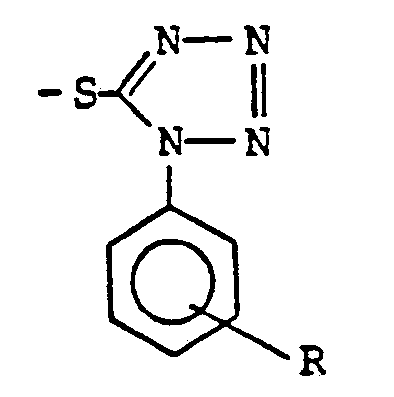

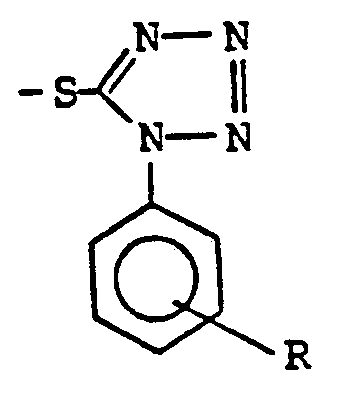


Applications Claiming Priority (2)
| Application Number | Priority Date | Filing Date | Title |
|---|---|---|---|
| JP9341185 | 1985-04-30 | ||
| JP93411/85 | 1985-04-30 |
Publications (3)
| Publication Number | Publication Date |
|---|---|
| EP0200502A2 EP0200502A2 (fr) | 1986-11-05 |
| EP0200502A3 EP0200502A3 (en) | 1986-12-17 |
| EP0200502B1 true EP0200502B1 (fr) | 1990-09-19 |
Family
ID=14081554
Family Applications (1)
| Application Number | Title | Priority Date | Filing Date |
|---|---|---|---|
| EP19860303155 Expired EP0200502B1 (fr) | 1985-04-30 | 1986-04-25 | Matériau photographique couleur à l'halogénure d'argent sensible à la lumière |
Country Status (4)
| Country | Link |
|---|---|
| US (1) | US4725529A (fr) |
| EP (1) | EP0200502B1 (fr) |
| JP (1) | JPH0713734B2 (fr) |
| DE (1) | DE3674239D1 (fr) |
Families Citing this family (9)
| Publication number | Priority date | Publication date | Assignee | Title |
|---|---|---|---|---|
| JPS6224252A (ja) * | 1985-07-24 | 1987-02-02 | Fuji Photo Film Co Ltd | ハロゲン化銀カラ−写真感光材料 |
| DE3688224T2 (de) * | 1985-09-03 | 1993-07-29 | Konishiroku Photo Ind | Lichtempfindliches farbphotographisches silberhalogenidmaterial. |
| JP2519031B2 (ja) * | 1986-02-20 | 1996-07-31 | コニカ株式会社 | ハロゲン化銀写真感光材料 |
| DE3633713A1 (de) * | 1986-10-03 | 1988-04-14 | Agfa Gevaert Ag | Farbfotografischer negativ-film |
| EP0296784A3 (en) * | 1987-06-21 | 1990-01-31 | Konica Corporation | Silver halide reversal photographic light-sensitive material |
| US4782012A (en) * | 1987-07-17 | 1988-11-01 | Eastman Kodak Company | Photographic material containing a novel dir-compound |
| US4980267A (en) * | 1988-08-30 | 1990-12-25 | Eastman Kodak Company | Photographic element and process comprising a development inhibitor releasing coupler and a yellow dye-forming coupler |
| EP0481422A1 (fr) * | 1990-10-15 | 1992-04-22 | Konica Corporation | Matériaux photographiques couleur à l'halogénure d'argent sensibles à la lumière |
| US5352570A (en) * | 1991-06-28 | 1994-10-04 | Eastman Kodak Company | Method and photographic material and process comprising a benzotriazole compound |
Family Cites Families (154)
| Publication number | Priority date | Publication date | Assignee | Title |
|---|---|---|---|---|
| US3125448A (en) | 1964-03-17 | J-ethyl-z | ||
| US1939201A (en) | 1932-02-20 | 1933-12-12 | Eastman Kodak Co | Dibenzoxacarbocyanines and process of preparing them |
| US2072908A (en) | 1932-12-17 | 1937-03-09 | Agfa Ansco Corp | Naphthoxo-trimethine cyanines |
| DE890249C (de) | 1937-11-09 | 1953-09-17 | Hoechst Ag | Verfahren zur Herstellung von Farbstoffen |
| US2270378A (en) | 1937-11-11 | 1942-01-20 | Du Pont Film Mfg Corp | Photographic sensitizing dye |
| GB505979A (en) | 1937-11-16 | 1939-05-16 | Ig Farbenindustrie Ag | Manufacture of sensitised photographic silver halide emulsions |
| US2274782A (en) | 1937-11-24 | 1942-03-03 | Chromogen Inc | Light-sensitive photographic material |
| US2213995A (en) | 1938-03-08 | 1940-09-10 | Gen Aniline & Film Corp | Photographic emulsion |
| NL63641C (fr) | 1939-01-23 | |||
| GB540365A (en) | 1939-12-29 | 1941-10-15 | Eastman Kodak Co | Improvements in and relating to photographic materials |
| US2454629A (en) | 1940-01-27 | 1948-11-23 | Eastman Kodak Co | Polymethine dyes |
| BE470936A (fr) | 1940-02-24 | |||
| US2269234A (en) | 1940-10-18 | 1942-01-06 | Eastman Kodak Co | Polymethine dye intermediates |
| FR956702A (fr) | 1942-01-14 | 1950-02-06 | ||
| US2332027A (en) | 1942-02-02 | 1943-10-19 | Standard Railway Devices Co | Refrigerator |
| US2367531A (en) | 1942-06-12 | 1945-01-16 | Eastman Kodak Co | Acylaminophenol photographic couplers |
| GB584609A (en) | 1944-12-30 | 1947-01-20 | Harry Derek Edwards | Improvements in or relating to photographic light-sensitive materials |
| US2533472A (en) | 1947-01-17 | 1950-12-12 | Eastman Kodak Co | Unsymmetrical oxonol filter and antihalation dyes |
| US2474293A (en) | 1947-09-10 | 1949-06-28 | Eastman Kodak Co | 1-naphthol-2-carboxylic acid amide couplers for color photography |
| US2600788A (en) | 1949-06-07 | 1952-06-17 | Eastman Kodak Co | Halogen-substituted pyrazolone couplers for color photography |
| BE526524A (fr) | 1953-02-27 | |||
| BE529273A (fr) | 1953-06-03 | |||
| BE542012A (fr) | 1954-10-14 | |||
| BE543744A (fr) | 1954-12-20 | |||
| BE543745A (fr) | 1954-12-20 | |||
| BE543742A (fr) | 1954-12-20 | |||
| CA557259A (fr) | 1955-02-23 | 1958-05-13 | Canadian Kodak Co. Limited | Tremie de plusieurs couches pour l'enduisage de plusieurs plis de tissu |
| BE553517A (fr) | 1955-12-19 | |||
| US2895826A (en) | 1956-10-08 | 1959-07-21 | Eastman Kodak Co | Photographic color couplers containing fluoroalkylcarbonamido groups |
| US2941898A (en) | 1957-12-16 | 1960-06-21 | Ilford Ltd | Production of multilayer photographic materials |
| US2956879A (en) | 1958-01-07 | 1960-10-18 | Eastman Kodak Co | Filter and absorbing dyes for use in photographic emulsions |
| BE579594A (fr) | 1958-06-19 | |||
| BE619301A (fr) | 1959-04-06 | |||
| US3062653A (en) | 1960-02-18 | 1962-11-06 | Eastman Kodak Co | Photographic emulsion containing pyrazolone magenta-forming couplers |
| US3247127A (en) | 1960-04-14 | 1966-04-19 | Eastman Kodak Co | Light-absorbing water-permeable colloid layer containing an oxonol dye |
| BE627309A (fr) | 1962-01-22 | |||
| BE627808A (fr) | 1962-02-03 | |||
| GB1077874A (en) | 1963-10-01 | 1967-08-02 | Eastman Kodak Co | New open-chain reactive methylene compounds and their use as photographic colour couplers |
| US3476563A (en) | 1965-08-30 | 1969-11-04 | Eastman Kodak Co | Photographic silver halide elements containing two equivalent cyan couplers |
| US3519429A (en) | 1966-05-16 | 1970-07-07 | Eastman Kodak Co | Silver halide emulsions containing a stabilizer pyrazolone coupler |
| DE1547640A1 (de) * | 1967-04-10 | 1969-12-04 | Agfa Gevaert Ag | Verbessertes photographisches Material |
| GB1210253A (en) | 1967-06-16 | 1970-10-28 | Agfa Gevaert Nv | Coloured colloid materials |
| US3617291A (en) | 1967-10-10 | 1971-11-02 | Eastman Kodak Co | Two-equivalent couplers for photography |
| GB1265485A (fr) | 1968-05-21 | 1972-03-01 | ||
| US3575704A (en) | 1968-07-09 | 1971-04-20 | Eastman Kodak Co | High contrast light sensitive materials |
| GB1277429A (en) | 1968-12-03 | 1972-06-14 | Secr Defence | Improvements in or relating to static electricity discharger systems |
| US3578447A (en) | 1969-05-02 | 1971-05-11 | Polaroid Corp | Dye developer color liffusion transfer processes and elements comprising alpha and gamma hydroxy and gamma amino substituted pyridines |
| JPS4838406B1 (fr) | 1969-06-25 | 1973-11-17 | ||
| JPS4828293B1 (fr) | 1969-10-13 | 1973-08-31 | ||
| BE758115A (fr) | 1969-10-29 | 1971-04-01 | Fuji Photo Film Co Ltd | Emulsion photographique a l'halogenure d'argent soumise a une sensibilisation spectrale |
| DE2009498A1 (de) | 1970-02-28 | 1971-09-09 | Agfa Gevaert AG, 5090 Leverkusen | Lichtempfindliches fotografisches Material |
| CA918643A (en) | 1970-10-19 | 1973-01-09 | Blackwell John | Green-yellow monazo paper dyes derived from barbituric acid |
| JPS4917734B1 (fr) | 1970-12-18 | 1974-05-02 | ||
| US3718472A (en) | 1971-03-04 | 1973-02-27 | Eastman Kodak Co | Filter dyes for photographic elements |
| JPS5110783B2 (fr) | 1971-04-26 | 1976-04-06 | ||
| JPS4827930A (fr) | 1971-08-13 | 1973-04-13 | ||
| JPS4838408A (fr) | 1971-09-17 | 1973-06-06 | ||
| PL77036B1 (fr) | 1971-09-27 | 1975-02-28 | ||
| JPS4864932A (fr) | 1971-12-03 | 1973-09-07 | ||
| JPS5146607B2 (fr) | 1972-02-10 | 1976-12-10 | ||
| JPS5224844B2 (fr) | 1971-12-28 | 1977-07-04 | ||
| CA972642A (en) | 1972-04-17 | 1975-08-12 | William L. Kingsbury | Exhaust gas recirculation control valve |
| JPS496207A (fr) | 1972-05-12 | 1974-01-19 | ||
| JPS5139853B2 (fr) | 1972-11-16 | 1976-10-30 | ||
| JPS5116141B2 (fr) | 1972-11-29 | 1976-05-21 | ||
| JPS4999620A (fr) | 1973-01-29 | 1974-09-20 | ||
| JPS5119987B2 (fr) | 1973-02-05 | 1976-06-22 | ||
| JPS5333846B2 (fr) | 1973-02-22 | 1978-09-18 | ||
| JPS5510059B2 (fr) | 1973-02-28 | 1980-03-13 | ||
| JPS5534933B2 (fr) | 1973-03-23 | 1980-09-10 | ||
| JPS5731984B2 (fr) | 1973-03-23 | 1982-07-08 | ||
| DE2315304C2 (de) | 1973-03-27 | 1983-01-05 | Agfa-Gevaert Ag, 5090 Leverkusen | Photographisches Aufzeichnungsmaterial |
| US3841880A (en) | 1973-04-03 | 1974-10-15 | Eastman Kodak Co | Silver halide emulsion containing ketomethylene photographic color-forming couplers |
| JPS5235370B2 (fr) | 1973-07-23 | 1977-09-08 | ||
| JPS5638937B2 (fr) | 1973-07-24 | 1981-09-09 | ||
| JPS5638938B2 (fr) | 1973-08-06 | 1981-09-09 | ||
| JPS5040659A (fr) | 1973-08-10 | 1975-04-14 | ||
| US4070352A (en) | 1973-11-23 | 1978-01-24 | Eastman Kodak Company | Benzoisothiazoleazobenzmorpholine of tetrahydroquinone compounds |
| GB1474128A (en) | 1973-11-28 | 1977-05-18 | Eastman Kodak Co | Photographic multilayer silver halide colour materials |
| JPS551569B2 (fr) | 1973-12-06 | 1980-01-16 | ||
| JPS5312375B2 (fr) | 1973-12-19 | 1978-04-28 | ||
| JPS5437822B2 (fr) | 1974-02-08 | 1979-11-17 | ||
| JPS50130442A (fr) | 1974-04-02 | 1975-10-15 | ||
| JPS51102636A (en) | 1974-04-03 | 1976-09-10 | Fuji Photo Film Co Ltd | Karaashashingazo no keiseihoho |
| JPS5416860B2 (fr) | 1974-04-03 | 1979-06-26 | ||
| JPS50139738A (fr) | 1974-04-24 | 1975-11-08 | ||
| IT1018702B (it) | 1974-06-26 | 1977-10-20 | Minnesota Mining & Mfg | Copulanti fotografici pivalilaceta nilidici elementi fotografici che comprendono tali copulanti e.o i co loranti formati per sviluppo cromo geno di detti copulanti e metodo per formare una immagine fotografi ca a coloranti in presenza di det ti copulanti |
| GB1500497A (en) | 1974-07-09 | 1978-02-08 | Kodak Ltd | Photographic silver halide multilayer colour materials |
| AR205392A1 (es) | 1974-07-11 | 1976-04-30 | Westinghouse Brake & Signal | Dispositivo de valvula de maniobra de freno operable por presion de fluido |
| JPS5110783A (fr) | 1974-07-17 | 1976-01-28 | Hitachi Ltd | |
| JPS5113239A (en) | 1974-07-23 | 1976-02-02 | Fuji Photo Film Co Ltd | Karaashashingazono keiseihoho |
| JPS5114313A (en) | 1974-07-26 | 1976-02-04 | Fuji Photo Film Co Ltd | Harogenkaginshashinnyuzai |
| CA1079432A (fr) | 1974-09-17 | 1980-06-10 | Tsang J. Chen | Distribution uniforme et efficace de matieres hydrophobes a travers des couches colloides hydrophiles, et produits utiles a ces fins |
| DE2502892A1 (de) | 1975-01-24 | 1976-07-29 | Agfa Gevaert Ag | Lichtempfindliches farbphotographisches material |
| DE2503099A1 (de) | 1975-01-25 | 1976-07-29 | Agfa Gevaert Ag | Farbphotographisches material mit diphenylpropionylacetamid gelbkuppler |
| JPS5195849A (ja) | 1975-02-10 | 1976-08-23 | Karaashashinyogenzozai | |
| JPS599891B2 (ja) | 1975-03-18 | 1984-03-06 | 富士写真フイルム株式会社 | 放射線写真用ハロゲン化銀感光材料 |
| JPS599892B2 (ja) | 1975-04-03 | 1984-03-06 | 富士写真フイルム株式会社 | 放射線写真を得る方法 |
| JPS51135528A (en) | 1975-05-19 | 1976-11-24 | Fuji Photo Film Co Ltd | Spectrally sensitized silver halide photographic emulsions |
| JPS5223931A (en) | 1975-08-19 | 1977-02-23 | Konishiroku Photo Ind Co Ltd | Silver halide photographic emulsion |
| DE2540959C3 (de) | 1975-09-13 | 1981-12-10 | Agfa-Gevaert Ag, 5090 Leverkusen | Farbphotographisches Aufzeichnungsmaterial |
| JPS5251932A (en) | 1975-10-22 | 1977-04-26 | Konishiroku Photo Ind Co Ltd | Color sensitized silver halide photographic light sensitive material |
| DE2552505C3 (de) | 1975-11-22 | 1978-12-21 | Agfa-Gevaert Ag, 5090 Leverkusen | Farbphotographisches Entwicklungsverfahren und farbphotographisches Aufzeichnungsmaterial |
| JPS5269624A (en) | 1975-12-09 | 1977-06-09 | Fuji Photo Film Co Ltd | Photographic coupler |
| JPS5853329B2 (ja) | 1976-02-27 | 1983-11-29 | 富士写真フイルム株式会社 | ハロゲン化銀写真乳剤 |
| JPS5853330B2 (ja) | 1976-02-27 | 1983-11-29 | 富士写真フイルム株式会社 | ハロゲン化銀写真乳剤 |
| JPS52108115A (en) | 1976-03-09 | 1977-09-10 | Mitsubishi Paper Mills Ltd | Dye contained halogenated silver photosensitive material |
| DE2704826A1 (de) | 1977-02-05 | 1978-08-17 | Agfa Gevaert Ag | Farbphotographisches aufzeichnungsmaterial |
| JPS5432552A (en) | 1977-08-17 | 1979-03-09 | Konishiroku Photo Ind | Method of making impregnating polymer latex composition |
| JPS5448521A (en) | 1977-09-16 | 1979-04-17 | Konishiroku Photo Ind Co Ltd | Manufacture of silver halide crystais |
| JPS5829504B2 (ja) | 1977-11-23 | 1983-06-23 | コニカ株式会社 | ハロゲン化銀写真感光材料 |
| JPS5480118A (en) | 1977-12-09 | 1979-06-26 | Konishiroku Photo Ind Co Ltd | Silver halide photosensitive material |
| CA1134818A (fr) * | 1977-12-23 | 1982-11-02 | Philip T.S. Lau | Copulants et emulsions, et elements et procedes photographiques utilisant ceux-ci |
| JPS5532461A (en) | 1978-08-30 | 1980-03-07 | Tokyo Shibaura Electric Co | Overload relay |
| JPS5547379A (en) | 1978-10-02 | 1980-04-03 | Takehiko Takahashi | Manufacture of boron nitride coated film by chemical vapor deposition |
| JPS6024930B2 (ja) | 1979-08-08 | 1985-06-15 | 富士写真フイルム株式会社 | ハロゲン化銀写真感光材料 |
| JPS5933905B2 (ja) | 1979-08-16 | 1984-08-18 | コニカ株式会社 | マゼンタ色素画像の形成方法 |
| JPS56116029A (en) * | 1980-01-16 | 1981-09-11 | Konishiroku Photo Ind Co Ltd | Silver halide color photographic sensitive material |
| JPS56114946A (en) | 1980-02-15 | 1981-09-09 | Konishiroku Photo Ind Co Ltd | Silver halide photographic sensitive material |
| JPS571483A (en) | 1980-06-05 | 1982-01-06 | Ebara Infilco Co Ltd | Disposal of cyanide-contng. solid waste |
| JPS5756837A (en) | 1980-09-24 | 1982-04-05 | Konishiroku Photo Ind Co Ltd | Photographic sensitive silver halide material |
| JPS5793344A (en) | 1980-12-02 | 1982-06-10 | Konishiroku Photo Ind Co Ltd | Color photographic sensitive silver halide material |
| JPS5794752A (en) | 1980-12-05 | 1982-06-12 | Fuji Photo Film Co Ltd | Color photographic sensitive silver halide material |
| JPS57154234A (en) * | 1981-03-19 | 1982-09-24 | Konishiroku Photo Ind Co Ltd | Phtotographic sensitive silver halide material |
| JPS582709A (ja) | 1981-06-30 | 1983-01-08 | Sumitomo Electric Ind Ltd | 燃料残量検出装置 |
| JPS5810753A (ja) | 1981-07-13 | 1983-01-21 | Ricoh Co Ltd | 画像調整方法 |
| JPS5814834A (ja) | 1981-07-21 | 1983-01-27 | Konishiroku Photo Ind Co Ltd | ハロゲン化銀カラ−写真感光材料の安定化処理方法 |
| JPS5818631A (ja) | 1981-07-28 | 1983-02-03 | Fuji Photo Film Co Ltd | カラ−写真材料の処理方法 |
| JPS5891445A (ja) | 1981-11-27 | 1983-05-31 | Konishiroku Photo Ind Co Ltd | ハロゲン化銀写真乳剤 |
| JPS58111941A (ja) * | 1981-12-16 | 1983-07-04 | Konishiroku Photo Ind Co Ltd | ハロゲン化銀カラ−写真感光材料 |
| JPS58105145A (ja) | 1981-12-17 | 1983-06-22 | Konishiroku Photo Ind Co Ltd | ハロゲン化銀写真感光材料の処理方法 |
| JPS58134634A (ja) | 1982-01-26 | 1983-08-10 | Konishiroku Photo Ind Co Ltd | ハロゲン化銀カラ−写真感光材料 |
| JPS58153926A (ja) | 1982-03-09 | 1983-09-13 | Konishiroku Photo Ind Co Ltd | ハロゲン化銀写真感光材料 |
| JPS58162949A (ja) | 1982-03-20 | 1983-09-27 | Konishiroku Photo Ind Co Ltd | ハロゲン化銀カラ−写真感光材料 |
| JPS58205150A (ja) | 1982-05-26 | 1983-11-30 | Fuji Photo Film Co Ltd | ハロゲン化銀カラ−感光材料 |
| JPS5925845A (ja) | 1982-08-05 | 1984-02-09 | Canon Inc | 記録液 |
| JPS5933899A (ja) | 1982-08-19 | 1984-02-23 | 松下電器産業株式会社 | 取手装置 |
| JPS5989288A (ja) | 1982-11-09 | 1984-05-23 | Mitsui Eng & Shipbuild Co Ltd | ワイヤロ−プの定位置検出方法 |
| JPS59116647A (ja) | 1982-12-13 | 1984-07-05 | Konishiroku Photo Ind Co Ltd | ハロゲン化銀写真感光材料 |
| JPS59116645A (ja) | 1982-12-13 | 1984-07-05 | Konishiroku Photo Ind Co Ltd | ハロゲン化銀写真感光材料 |
| JPS59116646A (ja) | 1982-12-14 | 1984-07-05 | Konishiroku Photo Ind Co Ltd | ハロゲン化銀写真感光材料 |
| JPS59114533A (ja) | 1982-12-22 | 1984-07-02 | Fuji Photo Film Co Ltd | ハロゲン化銀写真乳剤 |
| JPS59131934A (ja) * | 1983-01-19 | 1984-07-28 | Fuji Photo Film Co Ltd | ハロゲン化銀カラ−写真感光材料 |
| JPS59131937A (ja) | 1983-01-19 | 1984-07-28 | Fuji Photo Film Co Ltd | ハロゲン化銀多層カラ−写真感光材料 |
| JPS59149359A (ja) * | 1983-02-15 | 1984-08-27 | Konishiroku Photo Ind Co Ltd | ハロゲン化銀写真感光材料 |
| JPS59172151A (ja) | 1983-03-20 | 1984-09-28 | Hitachi Maxell Ltd | 磁気記録媒体 |
| JPS59177551A (ja) | 1983-03-28 | 1984-10-08 | Konishiroku Photo Ind Co Ltd | ハロゲン化銀カラ−写真感光材料 |
| JPS59193611A (ja) | 1983-04-16 | 1984-11-02 | Nec Corp | 低雑音増幅装置 |
| JPS59195643A (ja) | 1983-04-21 | 1984-11-06 | Fuji Photo Film Co Ltd | ハロゲン化銀カラ−写真感光材料 |
| JPS59206836A (ja) | 1983-05-10 | 1984-11-22 | Fuji Photo Film Co Ltd | ハロゲン化銀カラ−感光材料 |
| JPS59206834A (ja) | 1983-05-11 | 1984-11-22 | Fuji Photo Film Co Ltd | ハロゲン化銀カラ−写真感光材料 |
| JPS59210440A (ja) | 1983-05-13 | 1984-11-29 | Fuji Photo Film Co Ltd | ハロゲン化銀カラ−写真感光材料 |
| DE3319428A1 (de) | 1983-05-28 | 1984-11-29 | Agfa-Gevaert Ag, 5090 Leverkusen | Fotografisches aufzeichnungsmaterial mit einer vorlaeuferverbindung einer fotografisch wirksamen verbindung |
| JPS6143745A (ja) * | 1984-08-08 | 1986-03-03 | Fuji Photo Film Co Ltd | ハロゲン化銀カラ−写真感光材料 |
-
1986
- 1986-04-21 US US06/854,141 patent/US4725529A/en not_active Expired - Lifetime
- 1986-04-25 EP EP19860303155 patent/EP0200502B1/fr not_active Expired
- 1986-04-25 DE DE8686303155T patent/DE3674239D1/de not_active Expired - Fee Related
- 1986-04-30 JP JP10167486A patent/JPH0713734B2/ja not_active Expired - Fee Related
Also Published As
| Publication number | Publication date |
|---|---|
| JPH0713734B2 (ja) | 1995-02-15 |
| DE3674239D1 (de) | 1990-10-25 |
| EP0200502A3 (en) | 1986-12-17 |
| EP0200502A2 (fr) | 1986-11-05 |
| JPS6254255A (ja) | 1987-03-09 |
| US4725529A (en) | 1988-02-16 |
Similar Documents
| Publication | Publication Date | Title |
|---|---|---|
| EP0167173B1 (fr) | Matériaux photographiques couleurs | |
| EP0115304A2 (fr) | Matériel photographique couleur multicouche à l'halogénure d'argent sensible à la lumière | |
| EP0114674B1 (fr) | Matériel photographique couleur à l'halogénure d'argent sensible à la lumière | |
| US4477560A (en) | Light-sensitive silver halide color photographic material | |
| US4772542A (en) | Silver halide photographic material | |
| JPH0336205B2 (fr) | ||
| US4599301A (en) | Silver halide color photographic material | |
| US4725529A (en) | Developing inhibitor arrangment in light-sensitive silver halide color photographic materials | |
| EP0174871B1 (fr) | Matériau photographique couleur à l'halogénure d'argent | |
| EP0228914B1 (fr) | Procédé de traitement d'un matériau photographique couleur à l'halogénure d'argent sensible à la lumière | |
| JPH0454938B2 (fr) | ||
| US5821042A (en) | Silver halide color photographic element having improved bleachability | |
| EP0214832B1 (fr) | Matériau photographique couleur à l'halogénure d'argent sensible à la lumière | |
| EP0114306B1 (fr) | Matériel photographique couleur multicouche doté d'une sensibilité et d'un pouvoir de développement élevés | |
| EP0193397B1 (fr) | Matériau photographique couleur à l'halogénure d'argent sensible à la lumière | |
| JP2613371B2 (ja) | ハロゲン化銀写真感光材料 | |
| EP1055967B1 (fr) | Eléments photographiques couleur à l'halogénure d'argent sensibles à la lumière ayant une qualité d'image améliorée | |
| EP0889358B1 (fr) | Eléments photographiques couleur à l'halogénure d'argent sensible à la lumière contenant des coupleurs magenta 5-pyrazolone à 2 équivalents | |
| US6043011A (en) | Silver halide color photographic element having improved bleachability | |
| JPH01198749A (ja) | ハロゲン化銀カラー反転反射プリント感光材料 | |
| JP2881330B2 (ja) | 色相再現に優れたカラー写真感光材料 | |
| JPS63189861A (ja) | 粒状性及び鮮鋭性の改良されたハロゲン化銀カラ−写真感光材料 | |
| JPH07117723B2 (ja) | ハロゲン化銀カラ−写真感光材料 | |
| JPH044579B2 (fr) | ||
| JPH0711689B2 (ja) | ハロゲン化銀カラ−写真感光材料 |
Legal Events
| Date | Code | Title | Description |
|---|---|---|---|
| PUAI | Public reference made under article 153(3) epc to a published international application that has entered the european phase |
Free format text: ORIGINAL CODE: 0009012 |
|
| PUAL | Search report despatched |
Free format text: ORIGINAL CODE: 0009013 |
|
| AK | Designated contracting states |
Kind code of ref document: A2 Designated state(s): DE FR GB |
|
| AK | Designated contracting states |
Kind code of ref document: A3 Designated state(s): DE FR GB |
|
| 17P | Request for examination filed |
Effective date: 19870602 |
|
| 17Q | First examination report despatched |
Effective date: 19880212 |
|
| GRAA | (expected) grant |
Free format text: ORIGINAL CODE: 0009210 |
|
| AK | Designated contracting states |
Kind code of ref document: B1 Designated state(s): DE FR GB |
|
| PG25 | Lapsed in a contracting state [announced via postgrant information from national office to epo] |
Ref country code: FR Effective date: 19900919 |
|
| RAP4 | Party data changed (patent owner data changed or rights of a patent transferred) |
Owner name: KONICA CORPORATION |
|
| REF | Corresponds to: |
Ref document number: 3674239 Country of ref document: DE Date of ref document: 19901025 |
|
| EN | Fr: translation not filed | ||
| PLBE | No opposition filed within time limit |
Free format text: ORIGINAL CODE: 0009261 |
|
| STAA | Information on the status of an ep patent application or granted ep patent |
Free format text: STATUS: NO OPPOSITION FILED WITHIN TIME LIMIT |
|
| 26N | No opposition filed | ||
| PGFP | Annual fee paid to national office [announced via postgrant information from national office to epo] |
Ref country code: GB Payment date: 19960416 Year of fee payment: 11 |
|
| PG25 | Lapsed in a contracting state [announced via postgrant information from national office to epo] |
Ref country code: GB Effective date: 19970425 |
|
| GBPC | Gb: european patent ceased through non-payment of renewal fee |
Effective date: 19970425 |
|
| PGFP | Annual fee paid to national office [announced via postgrant information from national office to epo] |
Ref country code: DE Payment date: 19990430 Year of fee payment: 14 |
|
| PG25 | Lapsed in a contracting state [announced via postgrant information from national office to epo] |
Ref country code: DE Free format text: LAPSE BECAUSE OF NON-PAYMENT OF DUE FEES Effective date: 20010201 |