EP0481734A2 - Lichtventil Vorrichtung - Google Patents
Lichtventil Vorrichtung Download PDFInfo
- Publication number
- EP0481734A2 EP0481734A2 EP91309495A EP91309495A EP0481734A2 EP 0481734 A2 EP0481734 A2 EP 0481734A2 EP 91309495 A EP91309495 A EP 91309495A EP 91309495 A EP91309495 A EP 91309495A EP 0481734 A2 EP0481734 A2 EP 0481734A2
- Authority
- EP
- European Patent Office
- Prior art keywords
- thin film
- light
- film
- channel region
- semiconductor
- Prior art date
- Legal status (The legal status is an assumption and is not a legal conclusion. Google has not performed a legal analysis and makes no representation as to the accuracy of the status listed.)
- Granted
Links
Images


Classifications
-
- H—ELECTRICITY
- H10—SEMICONDUCTOR DEVICES; ELECTRIC SOLID-STATE DEVICES NOT OTHERWISE PROVIDED FOR
- H10D—INORGANIC ELECTRIC SEMICONDUCTOR DEVICES
- H10D86/00—Integrated devices formed in or on insulating or conducting substrates, e.g. formed in silicon-on-insulator [SOI] substrates or on stainless steel or glass substrates
- H10D86/01—Manufacture or treatment
- H10D86/021—Manufacture or treatment of multiple TFTs
-
- G—PHYSICS
- G02—OPTICS
- G02F—OPTICAL DEVICES OR ARRANGEMENTS FOR THE CONTROL OF LIGHT BY MODIFICATION OF THE OPTICAL PROPERTIES OF THE MEDIA OF THE ELEMENTS INVOLVED THEREIN; NON-LINEAR OPTICS; FREQUENCY-CHANGING OF LIGHT; OPTICAL LOGIC ELEMENTS; OPTICAL ANALOGUE/DIGITAL CONVERTERS
- G02F1/00—Devices or arrangements for the control of the intensity, colour, phase, polarisation or direction of light arriving from an independent light source, e.g. switching, gating or modulating; Non-linear optics
- G02F1/01—Devices or arrangements for the control of the intensity, colour, phase, polarisation or direction of light arriving from an independent light source, e.g. switching, gating or modulating; Non-linear optics for the control of the intensity, phase, polarisation or colour
- G02F1/13—Devices or arrangements for the control of the intensity, colour, phase, polarisation or direction of light arriving from an independent light source, e.g. switching, gating or modulating; Non-linear optics for the control of the intensity, phase, polarisation or colour based on liquid crystals, e.g. single liquid crystal display cells
- G02F1/133—Constructional arrangements; Operation of liquid crystal cells; Circuit arrangements
- G02F1/1333—Constructional arrangements; Manufacturing methods
- G02F1/1345—Conductors connecting electrodes to cell terminals
- G02F1/13454—Drivers integrated on the active matrix substrate
-
- G—PHYSICS
- G02—OPTICS
- G02F—OPTICAL DEVICES OR ARRANGEMENTS FOR THE CONTROL OF LIGHT BY MODIFICATION OF THE OPTICAL PROPERTIES OF THE MEDIA OF THE ELEMENTS INVOLVED THEREIN; NON-LINEAR OPTICS; FREQUENCY-CHANGING OF LIGHT; OPTICAL LOGIC ELEMENTS; OPTICAL ANALOGUE/DIGITAL CONVERTERS
- G02F1/00—Devices or arrangements for the control of the intensity, colour, phase, polarisation or direction of light arriving from an independent light source, e.g. switching, gating or modulating; Non-linear optics
- G02F1/01—Devices or arrangements for the control of the intensity, colour, phase, polarisation or direction of light arriving from an independent light source, e.g. switching, gating or modulating; Non-linear optics for the control of the intensity, phase, polarisation or colour
- G02F1/13—Devices or arrangements for the control of the intensity, colour, phase, polarisation or direction of light arriving from an independent light source, e.g. switching, gating or modulating; Non-linear optics for the control of the intensity, phase, polarisation or colour based on liquid crystals, e.g. single liquid crystal display cells
- G02F1/133—Constructional arrangements; Operation of liquid crystal cells; Circuit arrangements
- G02F1/136—Liquid crystal cells structurally associated with a semi-conducting layer or substrate, e.g. cells forming part of an integrated circuit
- G02F1/1362—Active matrix addressed cells
- G02F1/136209—Light shielding layers, e.g. black matrix, incorporated in the active matrix substrate, e.g. structurally associated with the switching element
-
- G—PHYSICS
- G02—OPTICS
- G02F—OPTICAL DEVICES OR ARRANGEMENTS FOR THE CONTROL OF LIGHT BY MODIFICATION OF THE OPTICAL PROPERTIES OF THE MEDIA OF THE ELEMENTS INVOLVED THEREIN; NON-LINEAR OPTICS; FREQUENCY-CHANGING OF LIGHT; OPTICAL LOGIC ELEMENTS; OPTICAL ANALOGUE/DIGITAL CONVERTERS
- G02F1/00—Devices or arrangements for the control of the intensity, colour, phase, polarisation or direction of light arriving from an independent light source, e.g. switching, gating or modulating; Non-linear optics
- G02F1/01—Devices or arrangements for the control of the intensity, colour, phase, polarisation or direction of light arriving from an independent light source, e.g. switching, gating or modulating; Non-linear optics for the control of the intensity, phase, polarisation or colour
- G02F1/13—Devices or arrangements for the control of the intensity, colour, phase, polarisation or direction of light arriving from an independent light source, e.g. switching, gating or modulating; Non-linear optics for the control of the intensity, phase, polarisation or colour based on liquid crystals, e.g. single liquid crystal display cells
- G02F1/133—Constructional arrangements; Operation of liquid crystal cells; Circuit arrangements
- G02F1/136—Liquid crystal cells structurally associated with a semi-conducting layer or substrate, e.g. cells forming part of an integrated circuit
- G02F1/1362—Active matrix addressed cells
- G02F1/1368—Active matrix addressed cells in which the switching element is a three-electrode device
-
- H—ELECTRICITY
- H10—SEMICONDUCTOR DEVICES; ELECTRIC SOLID-STATE DEVICES NOT OTHERWISE PROVIDED FOR
- H10D—INORGANIC ELECTRIC SEMICONDUCTOR DEVICES
- H10D30/00—Field-effect transistors [FET]
- H10D30/01—Manufacture or treatment
- H10D30/021—Manufacture or treatment of FETs having insulated gates [IGFET]
- H10D30/031—Manufacture or treatment of FETs having insulated gates [IGFET] of thin-film transistors [TFT]
- H10D30/0321—Manufacture or treatment of FETs having insulated gates [IGFET] of thin-film transistors [TFT] comprising silicon, e.g. amorphous silicon or polysilicon
- H10D30/0323—Manufacture or treatment of FETs having insulated gates [IGFET] of thin-film transistors [TFT] comprising silicon, e.g. amorphous silicon or polysilicon comprising monocrystalline silicon
-
- H—ELECTRICITY
- H10—SEMICONDUCTOR DEVICES; ELECTRIC SOLID-STATE DEVICES NOT OTHERWISE PROVIDED FOR
- H10D—INORGANIC ELECTRIC SEMICONDUCTOR DEVICES
- H10D30/00—Field-effect transistors [FET]
- H10D30/60—Insulated-gate field-effect transistors [IGFET]
- H10D30/67—Thin-film transistors [TFT]
- H10D30/6704—Thin-film transistors [TFT] having supplementary regions or layers in the thin films or in the insulated bulk substrates for controlling properties of the device
- H10D30/6723—Thin-film transistors [TFT] having supplementary regions or layers in the thin films or in the insulated bulk substrates for controlling properties of the device having light shields
-
- H—ELECTRICITY
- H10—SEMICONDUCTOR DEVICES; ELECTRIC SOLID-STATE DEVICES NOT OTHERWISE PROVIDED FOR
- H10D—INORGANIC ELECTRIC SEMICONDUCTOR DEVICES
- H10D30/00—Field-effect transistors [FET]
- H10D30/60—Insulated-gate field-effect transistors [IGFET]
- H10D30/67—Thin-film transistors [TFT]
- H10D30/6729—Thin-film transistors [TFT] characterised by the electrodes
- H10D30/673—Thin-film transistors [TFT] characterised by the electrodes characterised by the shapes, relative sizes or dispositions of the gate electrodes
- H10D30/6733—Multi-gate TFTs
-
- H—ELECTRICITY
- H10—SEMICONDUCTOR DEVICES; ELECTRIC SOLID-STATE DEVICES NOT OTHERWISE PROVIDED FOR
- H10D—INORGANIC ELECTRIC SEMICONDUCTOR DEVICES
- H10D30/00—Field-effect transistors [FET]
- H10D30/60—Insulated-gate field-effect transistors [IGFET]
- H10D30/67—Thin-film transistors [TFT]
- H10D30/6729—Thin-film transistors [TFT] characterised by the electrodes
- H10D30/673—Thin-film transistors [TFT] characterised by the electrodes characterised by the shapes, relative sizes or dispositions of the gate electrodes
- H10D30/6733—Multi-gate TFTs
- H10D30/6734—Multi-gate TFTs having gate electrodes arranged on both top and bottom sides of the channel, e.g. dual-gate TFTs
-
- H—ELECTRICITY
- H10—SEMICONDUCTOR DEVICES; ELECTRIC SOLID-STATE DEVICES NOT OTHERWISE PROVIDED FOR
- H10D—INORGANIC ELECTRIC SEMICONDUCTOR DEVICES
- H10D30/00—Field-effect transistors [FET]
- H10D30/60—Insulated-gate field-effect transistors [IGFET]
- H10D30/67—Thin-film transistors [TFT]
- H10D30/674—Thin-film transistors [TFT] characterised by the active materials
- H10D30/6741—Group IV materials, e.g. germanium or silicon carbide
- H10D30/6743—Silicon
- H10D30/6744—Monocrystalline silicon
-
- H—ELECTRICITY
- H10—SEMICONDUCTOR DEVICES; ELECTRIC SOLID-STATE DEVICES NOT OTHERWISE PROVIDED FOR
- H10D—INORGANIC ELECTRIC SEMICONDUCTOR DEVICES
- H10D86/00—Integrated devices formed in or on insulating or conducting substrates, e.g. formed in silicon-on-insulator [SOI] substrates or on stainless steel or glass substrates
- H10D86/01—Manufacture or treatment
-
- H—ELECTRICITY
- H10—SEMICONDUCTOR DEVICES; ELECTRIC SOLID-STATE DEVICES NOT OTHERWISE PROVIDED FOR
- H10D—INORGANIC ELECTRIC SEMICONDUCTOR DEVICES
- H10D86/00—Integrated devices formed in or on insulating or conducting substrates, e.g. formed in silicon-on-insulator [SOI] substrates or on stainless steel or glass substrates
- H10D86/01—Manufacture or treatment
- H10D86/03—Manufacture or treatment wherein the substrate comprises sapphire, e.g. silicon-on-sapphire [SOS]
-
- H—ELECTRICITY
- H10—SEMICONDUCTOR DEVICES; ELECTRIC SOLID-STATE DEVICES NOT OTHERWISE PROVIDED FOR
- H10D—INORGANIC ELECTRIC SEMICONDUCTOR DEVICES
- H10D86/00—Integrated devices formed in or on insulating or conducting substrates, e.g. formed in silicon-on-insulator [SOI] substrates or on stainless steel or glass substrates
- H10D86/201—Integrated devices formed in or on insulating or conducting substrates, e.g. formed in silicon-on-insulator [SOI] substrates or on stainless steel or glass substrates the substrates comprising an insulating layer on a semiconductor body, e.g. SOI
-
- H—ELECTRICITY
- H10—SEMICONDUCTOR DEVICES; ELECTRIC SOLID-STATE DEVICES NOT OTHERWISE PROVIDED FOR
- H10D—INORGANIC ELECTRIC SEMICONDUCTOR DEVICES
- H10D86/00—Integrated devices formed in or on insulating or conducting substrates, e.g. formed in silicon-on-insulator [SOI] substrates or on stainless steel or glass substrates
- H10D86/40—Integrated devices formed in or on insulating or conducting substrates, e.g. formed in silicon-on-insulator [SOI] substrates or on stainless steel or glass substrates characterised by multiple TFTs
-
- H—ELECTRICITY
- H10—SEMICONDUCTOR DEVICES; ELECTRIC SOLID-STATE DEVICES NOT OTHERWISE PROVIDED FOR
- H10D—INORGANIC ELECTRIC SEMICONDUCTOR DEVICES
- H10D86/00—Integrated devices formed in or on insulating or conducting substrates, e.g. formed in silicon-on-insulator [SOI] substrates or on stainless steel or glass substrates
- H10D86/40—Integrated devices formed in or on insulating or conducting substrates, e.g. formed in silicon-on-insulator [SOI] substrates or on stainless steel or glass substrates characterised by multiple TFTs
- H10D86/60—Integrated devices formed in or on insulating or conducting substrates, e.g. formed in silicon-on-insulator [SOI] substrates or on stainless steel or glass substrates characterised by multiple TFTs wherein the TFTs are in active matrices
-
- G—PHYSICS
- G02—OPTICS
- G02F—OPTICAL DEVICES OR ARRANGEMENTS FOR THE CONTROL OF LIGHT BY MODIFICATION OF THE OPTICAL PROPERTIES OF THE MEDIA OF THE ELEMENTS INVOLVED THEREIN; NON-LINEAR OPTICS; FREQUENCY-CHANGING OF LIGHT; OPTICAL LOGIC ELEMENTS; OPTICAL ANALOGUE/DIGITAL CONVERTERS
- G02F1/00—Devices or arrangements for the control of the intensity, colour, phase, polarisation or direction of light arriving from an independent light source, e.g. switching, gating or modulating; Non-linear optics
- G02F1/01—Devices or arrangements for the control of the intensity, colour, phase, polarisation or direction of light arriving from an independent light source, e.g. switching, gating or modulating; Non-linear optics for the control of the intensity, phase, polarisation or colour
- G02F1/13—Devices or arrangements for the control of the intensity, colour, phase, polarisation or direction of light arriving from an independent light source, e.g. switching, gating or modulating; Non-linear optics for the control of the intensity, phase, polarisation or colour based on liquid crystals, e.g. single liquid crystal display cells
- G02F1/133—Constructional arrangements; Operation of liquid crystal cells; Circuit arrangements
- G02F1/1333—Constructional arrangements; Manufacturing methods
- G02F1/1335—Structural association of cells with optical devices, e.g. polarisers or reflectors
- G02F1/133509—Filters, e.g. light shielding masks
- G02F1/133512—Light shielding layers, e.g. black matrix
-
- G—PHYSICS
- G02—OPTICS
- G02F—OPTICAL DEVICES OR ARRANGEMENTS FOR THE CONTROL OF LIGHT BY MODIFICATION OF THE OPTICAL PROPERTIES OF THE MEDIA OF THE ELEMENTS INVOLVED THEREIN; NON-LINEAR OPTICS; FREQUENCY-CHANGING OF LIGHT; OPTICAL LOGIC ELEMENTS; OPTICAL ANALOGUE/DIGITAL CONVERTERS
- G02F1/00—Devices or arrangements for the control of the intensity, colour, phase, polarisation or direction of light arriving from an independent light source, e.g. switching, gating or modulating; Non-linear optics
- G02F1/01—Devices or arrangements for the control of the intensity, colour, phase, polarisation or direction of light arriving from an independent light source, e.g. switching, gating or modulating; Non-linear optics for the control of the intensity, phase, polarisation or colour
- G02F1/13—Devices or arrangements for the control of the intensity, colour, phase, polarisation or direction of light arriving from an independent light source, e.g. switching, gating or modulating; Non-linear optics for the control of the intensity, phase, polarisation or colour based on liquid crystals, e.g. single liquid crystal display cells
- G02F1/133—Constructional arrangements; Operation of liquid crystal cells; Circuit arrangements
- G02F1/136—Liquid crystal cells structurally associated with a semi-conducting layer or substrate, e.g. cells forming part of an integrated circuit
- G02F1/13613—Liquid crystal cells structurally associated with a semi-conducting layer or substrate, e.g. cells forming part of an integrated circuit the semiconductor element being formed on a first substrate and thereafter transferred to the final cell substrate
-
- G—PHYSICS
- G02—OPTICS
- G02F—OPTICAL DEVICES OR ARRANGEMENTS FOR THE CONTROL OF LIGHT BY MODIFICATION OF THE OPTICAL PROPERTIES OF THE MEDIA OF THE ELEMENTS INVOLVED THEREIN; NON-LINEAR OPTICS; FREQUENCY-CHANGING OF LIGHT; OPTICAL LOGIC ELEMENTS; OPTICAL ANALOGUE/DIGITAL CONVERTERS
- G02F2202/00—Materials and properties
- G02F2202/10—Materials and properties semiconductor
- G02F2202/105—Materials and properties semiconductor single crystal Si
-
- Y—GENERAL TAGGING OF NEW TECHNOLOGICAL DEVELOPMENTS; GENERAL TAGGING OF CROSS-SECTIONAL TECHNOLOGIES SPANNING OVER SEVERAL SECTIONS OF THE IPC; TECHNICAL SUBJECTS COVERED BY FORMER USPC CROSS-REFERENCE ART COLLECTIONS [XRACs] AND DIGESTS
- Y10—TECHNICAL SUBJECTS COVERED BY FORMER USPC
- Y10S—TECHNICAL SUBJECTS COVERED BY FORMER USPC CROSS-REFERENCE ART COLLECTIONS [XRACs] AND DIGESTS
- Y10S148/00—Metal treatment
- Y10S148/012—Bonding, e.g. electrostatic for strain gauges
-
- Y—GENERAL TAGGING OF NEW TECHNOLOGICAL DEVELOPMENTS; GENERAL TAGGING OF CROSS-SECTIONAL TECHNOLOGIES SPANNING OVER SEVERAL SECTIONS OF THE IPC; TECHNICAL SUBJECTS COVERED BY FORMER USPC CROSS-REFERENCE ART COLLECTIONS [XRACs] AND DIGESTS
- Y10—TECHNICAL SUBJECTS COVERED BY FORMER USPC
- Y10S—TECHNICAL SUBJECTS COVERED BY FORMER USPC CROSS-REFERENCE ART COLLECTIONS [XRACs] AND DIGESTS
- Y10S148/00—Metal treatment
- Y10S148/15—Silicon on sapphire SOS
-
- Y—GENERAL TAGGING OF NEW TECHNOLOGICAL DEVELOPMENTS; GENERAL TAGGING OF CROSS-SECTIONAL TECHNOLOGIES SPANNING OVER SEVERAL SECTIONS OF THE IPC; TECHNICAL SUBJECTS COVERED BY FORMER USPC CROSS-REFERENCE ART COLLECTIONS [XRACs] AND DIGESTS
- Y10—TECHNICAL SUBJECTS COVERED BY FORMER USPC
- Y10S—TECHNICAL SUBJECTS COVERED BY FORMER USPC CROSS-REFERENCE ART COLLECTIONS [XRACs] AND DIGESTS
- Y10S438/00—Semiconductor device manufacturing: process
- Y10S438/977—Thinning or removal of substrate
Definitions
- the present invention relates to light valve devices of a flat plate type, such as active matrix liquid crystal panels for displays of a direct viewing type or of a projection type. More specifically, the invention relates to a semiconductor device for providing a substrate of such a liquid crystal panel.
- An active matrix device is based on a simple principle, in which each pixel is equipped with a switching element and, when a particular pixel is selected, the corresponding switching element is made to be conductive and, when it is not selected, the switching element is made to be non-conductive.
- the switching elements are formed on a glass substrate which forms part of the device. Therefore, the technology for miniaturising the switching elements and making them thin is very important. Thin film transistors are ordinarily used as such switching elements.
- a thin film transistor has so far been formed on a thin silicon film that is deposited on the glass substrate.
- Such transistors are generally of an insulated gate field effect type.
- a transistor of this type has a channel region formed in the thin silicon film and a gate electrode formed so as to cover the channel region.
- a predetermined voltage is applied to the gate electrode to control the conductance of the channel region and to carry out the switching operation.
- the conventional insulated gate-type thin film transistors have a problem in that a leakage current may flow into the channel region through the back side of the thin film even when the channel region is made non-conductive by controlling the gate voltage. That is, so-called “back channel” or “backgating” takes place impairing the proper operation of the active matrix device.
- the conductance ratio of the switching elements, between the conductive state and the non-conductive state must be greater than 106 . In fact, however, the back-gating makes it difficult to obtain the required switching performance.
- the channel region of the thin-film transistor tends to exhibit an increased conductance if light from an external source falls thereon, the semiconductor device being used under an illuminated condition, and this causes leakage current in the drain and source in the non-conductive state. Further, the ratio of this leakage current to the leakage current when no light enters increases with an increase in the quality of the semiconductor thin film, such as a single crystal film, that forms the channel regions, causing another problem.
- an object of the present invention at least in its preferred form to provide a semiconductor device for driving light valves of a flat plate type, which has thin film transistors with a structure capable of effectively preventing back-gating and of blocking incident light.
- a semiconductor device for use in a light valve device comprising a support substrate; a semiconductor thin film on the support substrate; a switching transistor having a channel region formed in the semiconductor thin film and a main gate electrode for controlling the channel region; and an electrode electrically connected to the switching transistor for energisation by the switching transistor; characterised in that a leakage current inhibiting layer is disposed on the side of the channel region opposite the main gate electrode.
- a semiconductor according to the present invention comprises a substrate having a stacked structure, which includes an insulating support substrate made of a light-transmitting material, a light-shielding thin film provided on the support substrate, and a semiconductor thin film provided on the light-shielding thin film via an insulating film.
- Transparent electrodes for driving light valves i.e. pixel electrodes
- switching elements are provided for selectively exciting the pixel electrodes.
- Each of the switching elements comprises an insulated gate field effect transistor having a channel region and main gate electrode for controlling the channel region.
- a channel region is formed in the semiconductor thin film, and the main gate electrode is formed so as to cover the channel region.
- the light-shielding thin film is provided on the side of the channel region opposite the main gate electrode so that the channel region is sandwiched between the main gate electrode and the light-shielding thin film in the vertical direction.
- the main gate electrode is also made of a light-shielding material and together with the light-shielding thin film substantially entirely blocks light from reaching the channel region from the outside.
- the light-shielding thin film is made of an electrically conductive material to eliminate back-gating.
- the light-shielding thin film may serve as a sub-gate electrode, and may be arranged to receive an electric current in order to control back-gating.
- the channel region can be precisely fabricated to within the order of sub-microns using ordinary LSI technology.
- the conductance of the channel region of each of a plurality of transistors is controlled by main gate and sub-gate electrodes provided on both sides of the semi-conductor thin film via insulating films. Therefore, no back-gating develops, by contrast with the conventional construction, in which a single gate electrode is provided on only one surface of the channel region of a thin film transistor. In other words, the sub-gate electrodes serve to suppress the back-gating.
- each transistor is covered by a couple of light-shielding gate electrodes from both the upper and the lower sides, light incident on the device passes through the electrode but is nearly completely blocked from the channel region, rendering it possible effectively to prevent the generation of photoelectric current.
- a method of fabricating a semiconductor device characterised by steps of forming a substrate by laminating a light-shielding thin layer, an insulating film and a semiconductor thin film on a support substrate; forming a light-shielding layer pattern by selectively etching said laminated layers; forming a switching transistor having a channel region in said semiconductor thin film and a main gate electrode covering said channel region; and forming an electrode electrically connected to the switching element on said substrate.
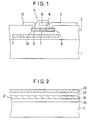
- Figure 1 is a schematic partial sectional view of a semiconductor device for driving a light valve device of a flat plate type.
- the semiconductor device comprises a laminated layer structure 2 formed on a support substrate 1.
- the laminated layer structure 2 includes a light-shielding thin film and a semiconductor thin film formed on the light-shielding thin film via an insulating film as described below.
- a transparent electrode for driving a respective light valve, i.e. a pixel electrode 3 is formed on the surface of the composite substrate including the stacked-layer structure 2. Further, a corresponding switching element 4 is formed in the stacked-layer structure 2 for selectively exciting the pixel electrode 3.
- the switching element 4 has a drain region 5 and a source region 6, both formed in the semiconductor thin film and spaced apart from each other.
- the drain region 5 is connected to a signal line 12 and the source region 6 is connected to the corresponding pixel electrode 3.
- a channel region 7 is provided between the drain region 5 and the source region 6.
- a main gate electrode 9 is formed on the front surface of the channel region 7 via the gate insulating film 8.
- the main gate electrode 9 is connected to a scanning line (not shown) and controls the conductance of the channel region 7 in order to turn the switching element 4 on or off.
- the light-shielding thin film forms a light-shielding layer 11 arranged on the back surface side of the channel region 7 via an insulating layer 10 provided by the insulating film. That is, the light-shielding layer 11 is arranged on the side of the channel region 7 opposite to the main gate electrode 9.
- the light-shielding layer 11 is provided by the aforementioned light-shielding thin film as mentioned above and, in this instance, is electrically conductive so that it also serves as a sub-gate electrode to control back-gating.
- the pair of main and sub-gate electrodes 9 and 11 arranged on both sides of the channel region 7 are made of light-shielding material and, hence, completely prevent light from falling on the channel region 7.
- the channel region 7 is formed of a single silicon crystal semiconductor thin film, to which ordinary LSI processing technogoloy can be directly adapted. Therefore, the channel length can be shortened to the order of submicrons.
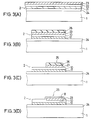
- Figure 2 is a schematic partial sectional view of the composite substrate employed for fabricating the semiconductor device of Figure 1.
- the composite substrate consists of the support substrate 1 and the stacked-layer structure 2 formed thereon as shown.
- the support substrate 1 is composed of a light-transmitting insulating material, such as a heat-resistant quartz consisting chiefly of silicon oxide or aluminium oxide.
- a light-transmitting insulating material such as a heat-resistant quartz consisting chiefly of silicon oxide or aluminium oxide.
- Aluminium oxide exhibits a coefficient of thermal expansion which is close to that of silicon and gives advantages in terms of stress suppresion. Furthermore, since single crystals of aluminium oxide can be formed, it is possible to grow a single crystal semiconductor film hetero-epitaxially thereon.
- the laminated structure 2 adhered to the support substrate 1 has a light-shielding thin film 21 arranged on the support substrate 1, an insulating film 22 arranged on the above light-shielding thin film 21, and a semi-conductor thin film 23, arranged on the insulating film 22 and composed of a single crystal material.
- the light-shielding thin film 21 is composed of an electrically conductive material such as polysilicon.
- a metal film such as a silicide or aluminium instead of the above semiconductor materials.
- aluminium oxide i.e. sapphire
- a single crystal silicon can be hetero-epitaxially grown thereon to form the light-shielding thin film.
- the stacked-layer structure 2 may include a ground film 24 interposed between the support substrate 1 and the light-shielding thin film 21.
- the ground film 24 is provided to improve the adhesion between the support substrate 1 and the stacked-layer structure 2.
- the support substrate 1 is quartz that consists mainly of silicon oxide
- silicon oxide can be used as the ground film 24.
- the ground film 24 should be composed of a layer of silicon nitride or oxynitride, or a multilayer film of at least one of these and silicon oxide.
- oxinitride is advantageous, since it is capable of accommodating stress.
- the insulating film 24 is used as a gate insulating film for the sub-gate electrode, provided by the light-shielding thin film 21, and is composed of, for instance, silicon oxide or silocon nitride.
- the insulating film 22 may be a multilayer film of silicon nitride and silicon oxide.
- the semiconductor thin film 23 positioned on the top of the stacked-layer structure 2 is made, for example, of silicon.
- This silicon may be of a single crystalline form, a polycrystalline form or an amorphous form.
- An amorphous silicon thin film or a polycristalline silicon thin film can easily be deposited on a glass substrate by chemical vapour deposition, and is adaptable to manufacture of an active matrix device having a relatively large screen.
- the active matrix liquid crystal device can have a screen size of about three inches (7.62 cm) to ten inches (25.4 cm).
- the amorphous silicon film can be formed at a temperature as low as 350° or less, and is suitable for liquid crystal panels of large area.
- a polycrystal silicon thin film it is possible to make a small liquid crystal panel of about 2 ⁇ (5.08 cm).
- the switching element has a channel length of the order of microns, a high channel mobility makes it possible to realize a high-speed operation. It is further possible to integrate peripheral circuits for controlling the switching elements on the same support substrate in a large scale and to control the array of switching elements at high speeds, so that the light valve device manufactured using the semiconductor thin film of single crystal silicon is indispensable for displaying very fine moving pictures.
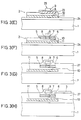
- a composite substrate is prepared as shown in Figure 3(A). That is, the ground film 24 of silicon oxide is formed on the support substrate 1 of polished quartz plate by a chemical vapour deposition method or by sputtering.
- the light-shielding thin film 21 made of polysilicon is deposited on the ground film 24 by a chemical vapour deposition method.
- the insulating film 22 made of silicon oxide is formed on the light-shielding thin film 21 by a thermal oxidation method or by a chemical deposition method.
- the semiconductor thin film 23 of single crystal silicon is formed on the insulating film 22.
- the semiconductor thin film 23 is obtained by adhering a semiconductor substrate of single crystal silicon to the insulating film 22 and then polishing it until its thickness becomes several ⁇ m.
- the single crystal silicon semiconductor substrate to be used is preferably a silicon wafer of high quality that is used for manufacturing LSIs having uniform crystal orientation within a range of [100] 0.0 ⁇ 1.0 and a single crystal lattice defect density of smaller than 500 defects/cm2.
- the surface of the silicon wafer having such physical properties is, first, finished precisely and smoothly.
- the smoothly finished surface is superposed on the insulating film 22 followed by heating to adhere the silicon wafer to the support substrate 1 by thermo-compression bonding.
- the silicon wafer and the support substrate 1 are firmly adhered to each other.
- the silicon wafer is polished until a desired thickness is obtained. It is also possible to carry out an etching process instead of the polishing.
- the thus obtained single crystal silicon semiconductor thin film 23 substantially retains the quality of the silicon wafer, and therefore a semiconductor substrate material is obtained having excellent uniformity in crystal orientation and a low lattice defect density.
- the surface of the silicon wafer that is adhered by thermo-compression bonding has electrical defects to some extent, and the following process is preferred: Si02 is formed in the single crystal wafer by thermal oxidation or chemical vapour deposition. Then, polysilicon is formed by chemical vapour deposition and the surface is polished as required. Thereafter, Si02 is formed by thermal oxidation or chemical vapour deposition, a silicon nitride film is formed by chemical vapour deposition, and Si02 is formed by thermal oxidation or chemical vapour deposition in the order mentioned. The silicon wafer is adhered by thermo-compression bonding onto a quartz support substrate or a quartz support substrate coated with Si02 by chemical vapour deposition and is, then, polished.
- the stacked-layer structure 2, except for the ground film 24, is etched in order to form the light-shielding layer 11 from the light-shielding thin film 21 on the undermost layer, namely, the ground film 24.
- the gate oxide film 10 from the insulating film 22 is formed on the light-shielding layer 11.
- the light-shielding layer 11 is formed by applying a photosensitive film 26 onto the whole surface of the composite substrate followed by patterning it into a desired shape and, then, effecting etching selectively using the patterned photosensitive film 26 as a mask.
- an element region 25 is formed on the two-layer structure consisting of the patterned light-shielding layer 11 and the gate oxide film 10.
- the element region 25 is obtained by selectively etching only the semiconductor thin film 23 into a desired shape.
- the semiconductor thin film 23 is selectively etched by using, as a mask, the photosensitive film 26 that is further patterned to the shape of the element region 25.
- a step shown in Figure 3(D) furthermore, the photosensitive film 26 is removed and, then, a thermally oxidized film is formed on the whole surface inclusive of the surface of the semiconductor thin film 23 that is exposed. As a result, a gate oxide film 8 is formed on the surface of the semiconductor thin film 23.
- a polycrystal silicon film is so deposited by a chemical vapour deposition method as to cover the element region 25.
- the polycrystalline silicon film is selectively etched using a photosensitive film (not shown) that is patterned into a desired shape in order to form the main gate electrode 9.
- the main gate electrode 9 is positioned above the semiconductor thin film 23 via the gate oxide film 8.
- impurity ions are injected through the gate oxide film 8 using the main gate electrode 9 as a mask, in order to form the drain region 5 and the source region 6 in the semiconductor thin film 23.
- transistor channel region 7 that contains no impurity under the main gate electrode 9 between the drain region 5 and the source region 6.
- a protective film 27 is formed so as to cover the element region 25.
- the switching element that includes the light-shielding layer 11 and the main gate electrode 9 is buried under the protective film 27.
- the gate oxide film 8 on the source region 6 is partly removed to form a contact hole, and a transparent pixel electrode 3 is formed so as to cover this portion.
- the pixel electrode 3 is made of a transparent material such as ITO.
- the protective film 27 provided on the lower side of the pixel electrode 3 is made, for example, of silicon oxide and is transparent.
- the support substrate 1 of quartz glass on the lower side thereof is transparent too. Therefore, the three-layer structure consisting of the pixel electorde 3, protective film 27 and quartz glass support substrate 1, is optically transparent and can be utilized for a light valve device of a transmission type.
- the pair of main gate and sub-gate electrodes 9 and 11 that sandwich the channel region 7 vertically are made of polysilicon, which is optically opaque in contrast to the above three-layer structure, and hence they block the entering light and prevent leakage current from flowing into the channel region.
- the incident light can be perfectly blocked by using a material having a low band gap such as silicon, germanium or the like.
- the semiconductor thin film 23 of high-quality single crystal silicon is processed at a temperature higher than 600°C, followed by a photolithoetching technique with high resolution and by ion implantation, making it possible to form an insulated gate field-effect transistor having a size of the order of microns or submicrons.
- a single crystal silicon film of a very high quality is used, and, hence, the obtained insulated gate transistor exhibits excellent electric characteristics.
- the pixel electrode 3 can be formed to a size of the order of microns by miniaturization technology, making it possible to fabricate a semiconductor device for an active matrix liquid crystal panel having a high density and a fine structure.
- FIG 3 shows an embodiment in which the single crystal semiconductor film 23 is formed by thermo-compression bonding.
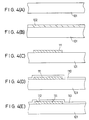
- Figure 4 another embodiment, where the single crystal semiconductor film is formed by an epitaxial method instead of thermo-compression bonding, is illustrated.
- a transparent aluminium oxide substrate 101 such as sapphire
- Figure 4(B) a single crystal silicon film 102 is hetero-epitaxially grown using the crystal of the aluminium oxide 101 as a seed.
- aluminium oxide has a coefficient of thermal expansion that is closer to that of silicon than that of quartz. If polycrystalline aluminium oxide is used as the support substrate of the embodiment shown in Figure 3, the thermal stress is small and the crystallinity of the single crystal silicon film formed thereon can be maintained even after the semiconductor processing at a high temperature.
- Figure 4 showing a process where single crystal aluminium oxide is used, it is possible to grow the single crystal silicon film 102 hetero-epitaxially thereon as shown in Figure 4(B).
- the single crystal silicon film 102 that is grown is patterned as shown in Figure 4(C) to form a light-shielding film 111.
- an insulating film 110 is formed as shown in Figure 4(D), and a hole 112 is made in a portion thereof, so that the surface of the single crystal silicon film 111 is partially exposed as shown in Figure 4(E).
- an amorphous or polycrystalline semiconductor film 123 is formed as shown in Figure 4(F).
- the single crystal silicon crystal film 111 and the semiconductor film 123 are in contact with each other by way of the hole 112. If the heat treatment is carried out in this state at a high temperature, the semiconductor 123 grows laterally and epitaxially with the single crystal silicon film 111 in the hole as a seed. As shown in Figure 4(G), therefore, the region 123A close to the hole is transformed into a single crystal. The region 123B that is not transformed into a single crystal is kept in a polycrystalline form.
- Figure 4(F) illustrates an example in which the polycrystalline semiconductor film 123 is, first, formed and is then grown laterally and epitaxially by a heat treatment
- the single crystal semiconductor film as shown in Figure 4(G) can also be formed by gas-source epitaxy or liquid-phase epitaxy from the state shown in Figure 4(E).
- Use can be made of a silicon film or a GaAs film as a semiconductor film.
- a region 124 that serves as the substrate of a transistor is patterned.
- a gate insulating film 108 is formed and, finally, a transistor is formed in which a transparent electrode 103 is connected with a drain region 106 as shown in Figure 4(J).
- the conductance of a channel region 107 between a source region 105 and the drain region 106 is controlled through a gate electrode 125 and the light-shielding film 111.
- Figure 4(J) illustrates an example in which the light-shielding film 11 is connected to the source region 105, which, however, is not necessary.
- the single crystal region is grown laterally and epitaxially by a length of 3 m to 5 ⁇ m, enabling a single crystal transistor to be formed on the insulating film as shown in Figure 4(J).
- Figure 5 shows an optical valve device that is assembled using the semiconductor device of the present invention.
- the light valve device comprises a semiconductor device 28, a substrate 29 facing the semiconductor device 28, and a layer of an electro-optical material, for example, a liquid crystal layer 30, between the semiconductor device 28 and the facing substrate 29.
- the semiconductor device 28 there are pixel electrodes or drive electrodes 3 that define pixels, and switching elements 4 for activating the drive electrodes 3 in response to predetermined signals.
- the semiconductor device 28 consists of the support substrate 1 composed of quartz glass and the laminated layer structure 2 formed on the support substrate 1. In addition, a polarizer plate 31 is adhered to the back surface of the support substrate 1.
- the switching elements 4 are formed in the single crystal silicon semiconductor thin film included in the stacked-layer structure 2.
- the switching elements 4 are constituted by a plurality of insulated gate field-effect transistors arranged in a matrix. The source region of each transistor is connected to a corresponding pixel electrode 3, the main gate electrode is connected to a scanning line 32, and the drain electrode is connected to a signal line 7.
- the semiconductor device 28 further includes an X-driver 33 connected to the signal lines 7 arranged in columns, and a Y-driver 34 connected to the scanning lines 32 arranged in rows.
- the facing substrate 29 comprises a glass substrate 35, a polarizing plate 36 adhered to the outer surface of the glass substrate 35, and a facing electrode or common electrode 37 formed on the inner surface of the glass substrate 35.
- the light-shielding layer or the sub-gate electrode included in each switching element 4 is preferably connected to the scanning line 32 together with the main electrode.
- the above connection makes it possible effectively to prevent leakage current from flowing into the channel region of the transistor that constitutes the switching element.
- the light-shielding layer can be connected to the source region or the drain region of the corresponding transistor.
- a predetermined voltage is applied to the light-shielding layer to effectively prevent leakage current from flowing due to the back gating.
- the threshold voltage of the channel region can be set to a desired value.
- each switching element 4 is connected in common to the scanning line 32, and are supplied with scanning signals from the Y-driver 34. Therefore, the turn-on/off of the switching elements 4 is controlled line by line.
- a data signal output from the X-driver 33 is applied, via the signal line 7, to a selected switching element 4 that has been turned on.
- the applied data signal is transmitted to the corresponding pixel electrode 3 to excite it and acts upon the liquid crystal layer 30, so that its transmission factor becomes substantially 100%.
- the switching element 4 is left non-conductive and maintains the data signal written on the pixel electrode as electric charge.
- the liquid crystal layer 30 has a large resistivity and usually operates a capacitive element.
- An on/off current ratio is used to represent the switching performance of the switching elements 4.
- the current ratio necessary for operating the liquid crystal can easily be found from the write time and the holding time. For instance, when the data signal is a televison signal, more than 90% of the data signal must be written within about 60 ⁇ sec of one scanning period. On the other hand, more than 90% of the electric charge must be retained for a period of one field, which is about 16 msec. Therefore, the current ratio must be at least of the order of ten thousand.
- the conductance of the channel region is controlled from both surfaces thereof by the main gate and sub-gate electrodes, and the leakage current is substantially wholly eliminated during the off period.
- the on/off ratio of the switching elements having such a structure is of the order of a hundred thousand or greater. It is, therefore, possible to obtain a light valve device of an active matrix type having a very fast signal response characteristic.
- a pair of main gate and sub-gate electrodes arranged on both sides of the transistor channel region are formed using a light-shielding material, such as polysilicon, whereby light is effectively blocked from entering the channel region from outside, making it possible effectively to prevent the occurrence of leakage current by the photo-electric effect.
- a light-shielding material such as polysilicon
- a semiconductor device for driving light valves of a flat plate type can be obtained, which features very high response characteristics and is free from erroneous operation.
- the switching elements consisting of insulated gate field-effect transistors in the semiconductor thin film of single crystal silicon, it is possible to obtain a flat-type semiconductor device for driving light valves that has a very fine and very large scale integration structure.
Landscapes
- Physics & Mathematics (AREA)
- Nonlinear Science (AREA)
- Mathematical Physics (AREA)
- Chemical & Material Sciences (AREA)
- Crystallography & Structural Chemistry (AREA)
- General Physics & Mathematics (AREA)
- Optics & Photonics (AREA)
- Engineering & Computer Science (AREA)
- Microelectronics & Electronic Packaging (AREA)
- Liquid Crystal (AREA)
- Thin Film Transistor (AREA)
Applications Claiming Priority (3)
| Application Number | Priority Date | Filing Date | Title |
|---|---|---|---|
| JP27743690 | 1990-10-16 | ||
| JP27743690A JPH0824193B2 (ja) | 1990-10-16 | 1990-10-16 | 平板型光弁駆動用半導体装置の製造方法 |
| JP277436/90 | 1990-10-16 |
Publications (3)
| Publication Number | Publication Date |
|---|---|
| EP0481734A2 true EP0481734A2 (de) | 1992-04-22 |
| EP0481734A3 EP0481734A3 (en) | 1993-08-25 |
| EP0481734B1 EP0481734B1 (de) | 1999-12-29 |
Family
ID=17583540
Family Applications (1)
| Application Number | Title | Priority Date | Filing Date |
|---|---|---|---|
| EP91309495A Expired - Lifetime EP0481734B1 (de) | 1990-10-16 | 1991-10-15 | Lichtventil Vorrichtung |
Country Status (5)
| Country | Link |
|---|---|
| US (6) | US5233211A (de) |
| EP (1) | EP0481734B1 (de) |
| JP (1) | JPH0824193B2 (de) |
| KR (1) | KR100238640B1 (de) |
| DE (1) | DE69131879T2 (de) |
Cited By (11)
| Publication number | Priority date | Publication date | Assignee | Title |
|---|---|---|---|---|
| EP0853254A3 (de) * | 1992-09-11 | 1998-10-14 | Kopin Corporation | Flüssigkristall-Anzeigevorrichtung |
| EP0862077A3 (de) * | 1997-02-27 | 1999-07-14 | Seiko Epson Corporation | Flüssigkristallvorrichtung, ihr Herstellungsverfahren und Projektionsanzeigevorrichtung |
| EP0997769A2 (de) * | 1998-10-28 | 2000-05-03 | Sony Corporation | Aktivmatix-Flüssigkristallanzeigevorrichtung |
| US6313012B1 (en) * | 1993-09-06 | 2001-11-06 | Hitachi, Ltd. | Method of fabricating multi-layered structure having single crystalline semiconductor film formed on insulator |
| EP1209748A1 (de) * | 2000-11-15 | 2002-05-29 | Matsushita Electric Industrial Co., Ltd. | TFT-Displaymatrix mit Pixelelektroden, die gleichzeitig mit dem TFT-Kanalbereich hergestellt werden |
| US6511187B1 (en) | 1992-02-20 | 2003-01-28 | Kopin Corporation | Method of fabricating a matrix display system |
| EP0991126B1 (de) * | 1997-12-09 | 2006-10-18 | Seiko Epson Corporation | Herstellungsverfahren einer elektrooptischen Vorrichtung |
| US7501685B2 (en) | 1999-08-31 | 2009-03-10 | Semiconductor Energy Laboratory Co., Ltd. | Display device comprising pixel portion |
| US7541618B2 (en) | 1999-09-27 | 2009-06-02 | Semiconductor Energy Laboratory Co., Ltd. | Liquid crystal device having a thin film transistor |
| CN100557491C (zh) * | 1992-06-09 | 2009-11-04 | 株式会社半导体能源研究所 | 半导体器件 |
| CN100559246C (zh) * | 1992-05-29 | 2009-11-11 | 株式会社半导体能源研究所 | 有源矩阵液晶显示装置 |
Families Citing this family (90)
| Publication number | Priority date | Publication date | Assignee | Title |
|---|---|---|---|---|
| JPH0824193B2 (ja) * | 1990-10-16 | 1996-03-06 | 工業技術院長 | 平板型光弁駆動用半導体装置の製造方法 |
| US5347154A (en) * | 1990-11-15 | 1994-09-13 | Seiko Instruments Inc. | Light valve device using semiconductive composite substrate |
| US5256562A (en) * | 1990-12-31 | 1993-10-26 | Kopin Corporation | Method for manufacturing a semiconductor device using a circuit transfer film |
| US6627953B1 (en) | 1990-12-31 | 2003-09-30 | Kopin Corporation | High density electronic circuit modules |
| US5475514A (en) * | 1990-12-31 | 1995-12-12 | Kopin Corporation | Transferred single crystal arrayed devices including a light shield for projection displays |
| US5499124A (en) * | 1990-12-31 | 1996-03-12 | Vu; Duy-Phach | Polysilicon transistors formed on an insulation layer which is adjacent to a liquid crystal material |
| US6593978B2 (en) | 1990-12-31 | 2003-07-15 | Kopin Corporation | Method for manufacturing active matrix liquid crystal displays |
| US6143582A (en) | 1990-12-31 | 2000-11-07 | Kopin Corporation | High density electronic circuit modules |
| JP3092761B2 (ja) * | 1991-12-02 | 2000-09-25 | キヤノン株式会社 | 画像表示装置及びその製造方法 |
| US5317433A (en) * | 1991-12-02 | 1994-05-31 | Canon Kabushiki Kaisha | Image display device with a transistor on one side of insulating layer and liquid crystal on the other side |
| JP2821830B2 (ja) * | 1992-05-14 | 1998-11-05 | セイコーインスツルメンツ株式会社 | 半導体薄膜素子その応用装置および半導体薄膜素子の製造方法 |
| US5923071A (en) * | 1992-06-12 | 1999-07-13 | Seiko Instruments Inc. | Semiconductor device having a semiconductor film of low oxygen concentration |
| CN100465742C (zh) | 1992-08-27 | 2009-03-04 | 株式会社半导体能源研究所 | 有源矩阵显示器 |
| KR100268007B1 (ko) * | 1992-12-22 | 2000-10-16 | 구본준 | 액정표시소자 제조방법 |
| US5982002A (en) * | 1993-01-27 | 1999-11-09 | Seiko Instruments Inc. | Light valve having a semiconductor film and a fabrication process thereof |
| KR100294026B1 (ko) * | 1993-06-24 | 2001-09-17 | 야마자끼 순페이 | 전기광학장치 |
| JP3644980B2 (ja) * | 1993-09-06 | 2005-05-11 | 株式会社ルネサステクノロジ | 半導体装置の製造方法 |
| US7081938B1 (en) | 1993-12-03 | 2006-07-25 | Semiconductor Energy Laboratory Co., Ltd. | Electro-optical device and method for manufacturing the same |
| JPH07159974A (ja) * | 1993-12-09 | 1995-06-23 | Ryoden Semiconductor Syst Eng Kk | パターン転写マスクおよびその製造方法 |
| JPH07302912A (ja) | 1994-04-29 | 1995-11-14 | Semiconductor Energy Lab Co Ltd | 半導体装置 |
| JP2900229B2 (ja) | 1994-12-27 | 1999-06-02 | 株式会社半導体エネルギー研究所 | 半導体装置およびその作製方法および電気光学装置 |
| JP3364081B2 (ja) | 1995-02-16 | 2003-01-08 | 株式会社半導体エネルギー研究所 | 半導体装置の作製方法 |
| US5757456A (en) * | 1995-03-10 | 1998-05-26 | Semiconductor Energy Laboratory Co., Ltd. | Display device and method of fabricating involving peeling circuits from one substrate and mounting on other |
| US5834327A (en) | 1995-03-18 | 1998-11-10 | Semiconductor Energy Laboratory Co., Ltd. | Method for producing display device |
| JPH0943628A (ja) * | 1995-08-01 | 1997-02-14 | Toshiba Corp | 液晶表示装置 |
| TW439003B (en) * | 1995-11-17 | 2001-06-07 | Semiconductor Energy Lab | Display device |
| US6800875B1 (en) * | 1995-11-17 | 2004-10-05 | Semiconductor Energy Laboratory Co., Ltd. | Active matrix electro-luminescent display device with an organic leveling layer |
| TW309633B (de) * | 1995-12-14 | 1997-07-01 | Handotai Energy Kenkyusho Kk | |
| JP2734444B2 (ja) * | 1996-03-22 | 1998-03-30 | 日本電気株式会社 | 液晶表示装置 |
| JP3565983B2 (ja) * | 1996-04-12 | 2004-09-15 | 株式会社半導体エネルギー研究所 | 半導体装置の作製方法 |
| JP3082679B2 (ja) * | 1996-08-29 | 2000-08-28 | 日本電気株式会社 | 薄膜トランジスタおよびその製造方法 |
| JP3570410B2 (ja) * | 1997-02-27 | 2004-09-29 | セイコーエプソン株式会社 | 液晶装置用基板、液晶装置及び投写型表示装置 |
| KR100248507B1 (ko) * | 1997-09-04 | 2000-03-15 | 윤종용 | 소이 트랜지스터 및 그의 제조 방법 |
| JP3750303B2 (ja) * | 1997-09-11 | 2006-03-01 | ソニー株式会社 | 液晶表示装置 |
| JPH11160734A (ja) * | 1997-11-28 | 1999-06-18 | Semiconductor Energy Lab Co Ltd | 液晶電気光学装置 |
| US6004837A (en) * | 1998-02-18 | 1999-12-21 | International Business Machines Corporation | Dual-gate SOI transistor |
| JP3980167B2 (ja) * | 1998-04-07 | 2007-09-26 | 株式会社日立製作所 | Tft電極基板 |
| JP2000012864A (ja) * | 1998-06-22 | 2000-01-14 | Semiconductor Energy Lab Co Ltd | 半導体装置の作製方法 |
| JP4476390B2 (ja) | 1998-09-04 | 2010-06-09 | 株式会社半導体エネルギー研究所 | 半導体装置の作製方法 |
| JP2000111945A (ja) * | 1998-10-01 | 2000-04-21 | Sony Corp | 電気光学装置、電気光学装置用の駆動基板、及びこれらの製造方法 |
| US6492190B2 (en) * | 1998-10-05 | 2002-12-10 | Sony Corporation | Method of producing electrooptical device and method of producing driving substrate for driving electrooptical device |
| JP4076648B2 (ja) | 1998-12-18 | 2008-04-16 | 株式会社半導体エネルギー研究所 | 半導体装置 |
| JP4008133B2 (ja) | 1998-12-25 | 2007-11-14 | 株式会社半導体エネルギー研究所 | 半導体装置 |
| JP4202502B2 (ja) | 1998-12-28 | 2008-12-24 | 株式会社半導体エネルギー研究所 | 半導体装置 |
| US8158980B2 (en) | 2001-04-19 | 2012-04-17 | Semiconductor Energy Laboratory Co., Ltd. | Semiconductor device having a pixel matrix circuit that includes a pixel TFT and a storage capacitor |
| EP1020920B1 (de) * | 1999-01-11 | 2010-06-02 | Sel Semiconductor Energy Laboratory Co., Ltd. | Halbleiteranordnung mit Treiber-TFT und Pixel-TFT auf einem Substrat |
| US6475836B1 (en) | 1999-03-29 | 2002-11-05 | Semiconductor Energy Laboratory Co., Ltd. | Semiconductor device and manufacturing method thereof |
| JP3086906B1 (ja) * | 1999-05-28 | 2000-09-11 | 工業技術院長 | 電界効果トランジスタ及びその製造方法 |
| US6358759B1 (en) * | 1999-07-16 | 2002-03-19 | Seiko Epson Corporation | Method for manufacturing electro-optical device, electro-optical device, and electronic equipment |
| JP2001066631A (ja) * | 1999-08-25 | 2001-03-16 | Sony Corp | 液晶表示装置およびその製造方法 |
| JP4403329B2 (ja) * | 1999-08-30 | 2010-01-27 | ソニー株式会社 | 液晶表示装置の製造方法 |
| JP4907003B2 (ja) * | 1999-12-27 | 2012-03-28 | 株式会社半導体エネルギー研究所 | アクティブマトリクス型表示装置およびそれを用いた電気器具 |
| JP3524029B2 (ja) * | 2000-01-04 | 2004-04-26 | インターナショナル・ビジネス・マシーンズ・コーポレーション | トップゲート型tft構造を形成する方法 |
| US6780687B2 (en) * | 2000-01-28 | 2004-08-24 | Semiconductor Energy Laboratory Co., Ltd. | Method of manufacturing a semiconductor device having a heat absorbing layer |
| TW495854B (en) * | 2000-03-06 | 2002-07-21 | Semiconductor Energy Lab | Semiconductor device and manufacturing method thereof |
| WO2001081994A1 (en) * | 2000-04-21 | 2001-11-01 | Seiko Epson Corporation | Electrooptic device, projection type display and method for manufacturing electrooptic device |
| US6563131B1 (en) | 2000-06-02 | 2003-05-13 | International Business Machines Corporation | Method and structure of a dual/wrap-around gate field effect transistor |
| US6542205B2 (en) * | 2000-08-04 | 2003-04-01 | Semiconductor Energy Laboratory Co., Ltd. | Display device |
| DE10065895C1 (de) * | 2000-11-17 | 2002-05-23 | Infineon Technologies Ag | Elektronisches Bauteil mit Abschirmung und Verfahren zu seiner Herstellung |
| JP4210041B2 (ja) * | 2001-03-30 | 2009-01-14 | 東京エレクトロン株式会社 | 熱処理装置 |
| JP4212255B2 (ja) * | 2001-03-30 | 2009-01-21 | 株式会社東芝 | 半導体パッケージ |
| US7027109B2 (en) | 2001-08-03 | 2006-04-11 | Nec Corporation | TFT array substrate and active-matrix addressing liquid-crystal display device |
| JP3909583B2 (ja) * | 2001-08-27 | 2007-04-25 | セイコーエプソン株式会社 | 電気光学装置の製造方法 |
| JP4798907B2 (ja) | 2001-09-26 | 2011-10-19 | 株式会社半導体エネルギー研究所 | 半導体装置 |
| JP2003243668A (ja) * | 2001-12-12 | 2003-08-29 | Seiko Epson Corp | 電気光学装置、液晶装置ならびに投射型表示装置 |
| JP4179800B2 (ja) * | 2002-05-24 | 2008-11-12 | ソニー株式会社 | 表示装置及びその製造方法 |
| US6919238B2 (en) * | 2002-07-29 | 2005-07-19 | Intel Corporation | Silicon on insulator (SOI) transistor and methods of fabrication |
| JP4051237B2 (ja) * | 2002-07-30 | 2008-02-20 | 株式会社 日立ディスプレイズ | 液晶表示装置 |
| TWI242680B (en) * | 2002-07-30 | 2005-11-01 | Hitachi Displays Ltd | Liquid crystal display device |
| US7453129B2 (en) * | 2002-12-18 | 2008-11-18 | Noble Peak Vision Corp. | Image sensor comprising isolated germanium photodetectors integrated with a silicon substrate and silicon circuitry |
| JP3744521B2 (ja) * | 2003-02-07 | 2006-02-15 | セイコーエプソン株式会社 | 電気光学装置及び電子機器 |
| JP2005109148A (ja) * | 2003-09-30 | 2005-04-21 | Sanyo Electric Co Ltd | 半導体装置 |
| KR100692685B1 (ko) * | 2003-12-29 | 2007-03-14 | 비오이 하이디스 테크놀로지 주식회사 | 반사투과형 액정표시장치용 어레이 기판 및 그의 제조 방법 |
| KR100538150B1 (ko) * | 2003-12-31 | 2005-12-21 | 동부아남반도체 주식회사 | 이미지 센서 및 그 제조방법 |
| JP4419577B2 (ja) * | 2004-01-19 | 2010-02-24 | セイコーエプソン株式会社 | 電気光学装置、電気光学装置の製造方法、及び電子機器 |
| KR100526887B1 (ko) * | 2004-02-10 | 2005-11-09 | 삼성전자주식회사 | 전계효과 트랜지스터 및 그의 제조방법 |
| KR100663360B1 (ko) * | 2005-04-20 | 2007-01-02 | 삼성전자주식회사 | 박막 트랜지스터를 갖는 반도체 소자들 및 그 제조방법들 |
| JP2008545155A (ja) * | 2005-06-30 | 2008-12-11 | ポリマー、ビジョン、リミテッド | 電界遮蔽体の使用による画素性能の向上 |
| JP5066836B2 (ja) * | 2005-08-11 | 2012-11-07 | セイコーエプソン株式会社 | 電気光学装置及び電子機器 |
| US20080070423A1 (en) * | 2006-09-15 | 2008-03-20 | Crowder Mark A | Buried seed one-shot interlevel crystallization |
| CN100536117C (zh) * | 2006-12-07 | 2009-09-02 | 广富群光电股份有限公司 | 薄膜晶体管面板的制造方法 |
| JP2011216759A (ja) * | 2010-04-01 | 2011-10-27 | Seiko Epson Corp | 結晶化シリコン層の製造方法、半導体装置の製造方法、電気光学装置の製造方法、半導体装置、電気光学装置および投射型表示装置 |
| US20120037925A1 (en) * | 2010-08-10 | 2012-02-16 | Sheen Calvin W | Engineered Substrate for Light Emitting Diodes |
| KR20130136063A (ko) * | 2012-06-04 | 2013-12-12 | 삼성디스플레이 주식회사 | 박막 트랜지스터, 이를 포함하는 박막 트랜지스터 표시판 및 그 제조 방법 |
| KR102002858B1 (ko) | 2012-08-10 | 2019-10-02 | 삼성디스플레이 주식회사 | 박막 트랜지스터 기판 및 그 제조 방법 |
| KR102819878B1 (ko) | 2019-03-15 | 2025-06-12 | 삼성디스플레이 주식회사 | 표시 장치 |
| KR102105005B1 (ko) * | 2019-07-17 | 2020-04-28 | 삼성디스플레이 주식회사 | 박막 트랜지스터 기판 및 그 제조 방법 |
| EP4270480A4 (de) | 2021-06-29 | 2024-04-10 | BOE Technology Group Co., Ltd. | Anzeigesubstrat und herstellungsverfahren dafür sowie anzeigevorrichtung |
| WO2023272505A1 (zh) * | 2021-06-29 | 2023-01-05 | 京东方科技集团股份有限公司 | 显示基板及其制备方法、显示装置 |
| WO2023245539A1 (zh) * | 2022-06-23 | 2023-12-28 | 京东方科技集团股份有限公司 | 显示基板、显示面板及显示装置 |
Family Cites Families (29)
| Publication number | Priority date | Publication date | Assignee | Title |
|---|---|---|---|---|
| JPS56116627A (en) * | 1980-02-20 | 1981-09-12 | Chiyou Lsi Gijutsu Kenkyu Kumiai | Thin film semiconductor device |
| JPS57167655A (en) * | 1981-04-08 | 1982-10-15 | Jido Keisoku Gijutsu Kenkiyuukumiai | Manufacture of insulating isolation substrate |
| JPS5878455A (ja) * | 1981-10-08 | 1983-05-12 | Nec Corp | 半導体装置の製造方法 |
| JPS5878454A (ja) * | 1981-10-08 | 1983-05-12 | Nec Corp | 半導体装置の製造方法 |
| JPS58218169A (ja) * | 1982-06-14 | 1983-12-19 | Seiko Epson Corp | 半導体集積回路装置 |
| JPS59126639A (ja) * | 1983-01-10 | 1984-07-21 | Nec Corp | 半導体装置用基板の製造方法 |
| JPS59204274A (ja) * | 1983-05-06 | 1984-11-19 | Seiko Instr & Electronics Ltd | 薄膜トランジスタ |
| JPS59224165A (ja) * | 1983-06-03 | 1984-12-17 | Agency Of Ind Science & Technol | 半導体装置 |
| JPS6045219A (ja) * | 1983-08-23 | 1985-03-11 | Toshiba Corp | アクテイブマトリクス型表示装置 |
| JPS6081869A (ja) * | 1983-10-12 | 1985-05-09 | Seiko Epson Corp | 薄膜トランジスタの駆動方法 |
| JPS60136509A (ja) * | 1983-12-26 | 1985-07-20 | Japan Atom Energy Res Inst | サンドイッチ構造をもつ徐放性複合体の製造方法 |
| JPS60143666A (ja) * | 1983-12-29 | 1985-07-29 | Hitachi Ltd | マトリツクス型半導体装置 |
| US4748485A (en) * | 1985-03-21 | 1988-05-31 | Hughes Aircraft Company | Opposed dual-gate hybrid structure for three-dimensional integrated circuits |
| US4751196A (en) | 1985-04-01 | 1988-06-14 | Motorola Inc. | High voltage thin film transistor on PLZT and method of manufacture thereof |
| JPH0617957B2 (ja) * | 1985-05-15 | 1994-03-09 | セイコー電子工業株式会社 | 液晶表示装置 |
| JPS625661A (ja) * | 1985-07-01 | 1987-01-12 | Nec Corp | 薄膜トランジスタ |
| US5264072A (en) * | 1985-12-04 | 1993-11-23 | Fujitsu Limited | Method for recrystallizing conductive films by an indirect-heating with a thermal-conduction-controlling layer |
| JPH0777264B2 (ja) * | 1986-04-02 | 1995-08-16 | 三菱電機株式会社 | 薄膜トランジスタの製造方法 |
| JPH0691252B2 (ja) * | 1986-11-27 | 1994-11-14 | 日本電気株式会社 | 薄膜トランジスタアレイ |
| US4875086A (en) * | 1987-05-22 | 1989-10-17 | Texas Instruments Incorporated | Silicon-on-insulator integrated circuits and method |
| JPS6453460A (en) * | 1987-08-24 | 1989-03-01 | Sony Corp | Mos transistor |
| JPH01226167A (ja) * | 1988-03-07 | 1989-09-08 | Seiko Epson Corp | 半導体装置基板の製造方法 |
| JPH01259565A (ja) * | 1988-04-11 | 1989-10-17 | Hitachi Ltd | 薄膜トランジスタおよびその製造方法 |
| US5108843A (en) * | 1988-11-30 | 1992-04-28 | Ricoh Company, Ltd. | Thin film semiconductor and process for producing the same |
| JPH02154232A (ja) * | 1988-12-06 | 1990-06-13 | Nec Corp | 液晶表示基板とその製造方法 |
| JPH0355822A (ja) * | 1989-07-25 | 1991-03-11 | Shin Etsu Handotai Co Ltd | 半導体素子形成用基板の製造方法 |
| US5198379A (en) * | 1990-04-27 | 1993-03-30 | Sharp Kabushiki Kaisha | Method of making a MOS thin film transistor with self-aligned asymmetrical structure |
| US5075237A (en) * | 1990-07-26 | 1991-12-24 | Industrial Technology Research Institute | Process of making a high photosensitive depletion-gate thin film transistor |
| JPH0824193B2 (ja) * | 1990-10-16 | 1996-03-06 | 工業技術院長 | 平板型光弁駆動用半導体装置の製造方法 |
-
1990
- 1990-10-16 JP JP27743690A patent/JPH0824193B2/ja not_active Expired - Lifetime
-
1991
- 1991-10-04 US US07/771,756 patent/US5233211A/en not_active Ceased
- 1991-10-15 EP EP91309495A patent/EP0481734B1/de not_active Expired - Lifetime
- 1991-10-15 DE DE69131879T patent/DE69131879T2/de not_active Expired - Lifetime
- 1991-10-16 KR KR1019910018236A patent/KR100238640B1/ko not_active Expired - Lifetime
-
1993
- 1993-05-07 US US08/060,163 patent/US5672518A/en not_active Expired - Lifetime
-
1995
- 1995-06-29 US US08/496,540 patent/US5759878A/en not_active Expired - Lifetime
- 1995-08-02 US US08/510,422 patent/USRE36836E/en not_active Expired - Lifetime
-
1997
- 1997-04-14 US US08/834,168 patent/US6040200A/en not_active Expired - Lifetime
-
1998
- 1998-06-02 US US09/089,465 patent/US5926699A/en not_active Expired - Lifetime
Cited By (22)
| Publication number | Priority date | Publication date | Assignee | Title |
|---|---|---|---|---|
| US6511187B1 (en) | 1992-02-20 | 2003-01-28 | Kopin Corporation | Method of fabricating a matrix display system |
| US6558008B1 (en) | 1992-02-20 | 2003-05-06 | Kopin Corporation | Method of fabricating a matrix display system |
| CN100559246C (zh) * | 1992-05-29 | 2009-11-11 | 株式会社半导体能源研究所 | 有源矩阵液晶显示装置 |
| CN100557491C (zh) * | 1992-06-09 | 2009-11-04 | 株式会社半导体能源研究所 | 半导体器件 |
| EP0853254A3 (de) * | 1992-09-11 | 1998-10-14 | Kopin Corporation | Flüssigkristall-Anzeigevorrichtung |
| US6313012B1 (en) * | 1993-09-06 | 2001-11-06 | Hitachi, Ltd. | Method of fabricating multi-layered structure having single crystalline semiconductor film formed on insulator |
| US6704068B2 (en) | 1997-02-27 | 2004-03-09 | Seiko Epson Corporation | LCD having a particular light-shield and connection |
| US6717633B2 (en) | 1997-02-27 | 2004-04-06 | Seiko Epson Corporatoin | Apparatus for providing light shielding in a liquid crystal display |
| CN1318888C (zh) * | 1997-02-27 | 2007-05-30 | 精工爱普生株式会社 | 具有显示区的装置、液晶装置和投影型显示装置 |
| CN100426107C (zh) * | 1997-02-27 | 2008-10-15 | 精工爱普生株式会社 | 具有显示区的装置、液晶装置和投影型显示装置 |
| EP0862077A3 (de) * | 1997-02-27 | 1999-07-14 | Seiko Epson Corporation | Flüssigkristallvorrichtung, ihr Herstellungsverfahren und Projektionsanzeigevorrichtung |
| EP0991126B1 (de) * | 1997-12-09 | 2006-10-18 | Seiko Epson Corporation | Herstellungsverfahren einer elektrooptischen Vorrichtung |
| EP0997769A2 (de) * | 1998-10-28 | 2000-05-03 | Sony Corporation | Aktivmatix-Flüssigkristallanzeigevorrichtung |
| US7982267B2 (en) | 1999-08-31 | 2011-07-19 | Semiconductor Energy Laboratory Co., Ltd. | Projector including display device |
| US7501685B2 (en) | 1999-08-31 | 2009-03-10 | Semiconductor Energy Laboratory Co., Ltd. | Display device comprising pixel portion |
| US8253140B2 (en) | 1999-08-31 | 2012-08-28 | Semiconductor Energy Laboratory Co., Ltd. | Display device having capacitor wiring |
| US8552431B2 (en) | 1999-08-31 | 2013-10-08 | Semiconductor Energy Laboratory Co., Ltd. | Semiconductor device comprising pixel portion |
| US8933455B2 (en) | 1999-08-31 | 2015-01-13 | Semiconductor Energy Laboratory Co., Ltd. | Display device comprising pixel |
| US9250490B2 (en) | 1999-08-31 | 2016-02-02 | Semiconductor Energy Laboratory Co., Ltd. | Liquid crystal display device including light shielding film |
| US9466622B2 (en) | 1999-08-31 | 2016-10-11 | Semiconductor Energy Laboratory Co., Ltd. | Display device comprising a thin film transistor and a storage capacitor |
| US7541618B2 (en) | 1999-09-27 | 2009-06-02 | Semiconductor Energy Laboratory Co., Ltd. | Liquid crystal device having a thin film transistor |
| EP1209748A1 (de) * | 2000-11-15 | 2002-05-29 | Matsushita Electric Industrial Co., Ltd. | TFT-Displaymatrix mit Pixelelektroden, die gleichzeitig mit dem TFT-Kanalbereich hergestellt werden |
Also Published As
| Publication number | Publication date |
|---|---|
| US5233211A (en) | 1993-08-03 |
| EP0481734B1 (de) | 1999-12-29 |
| US5926699A (en) | 1999-07-20 |
| US6040200A (en) | 2000-03-21 |
| DE69131879T2 (de) | 2000-05-04 |
| KR920008945A (ko) | 1992-05-28 |
| KR100238640B1 (ko) | 2000-01-15 |
| JPH04152574A (ja) | 1992-05-26 |
| DE69131879D1 (de) | 2000-02-03 |
| US5759878A (en) | 1998-06-02 |
| USRE36836E (en) | 2000-08-29 |
| US5672518A (en) | 1997-09-30 |
| EP0481734A3 (en) | 1993-08-25 |
| JPH0824193B2 (ja) | 1996-03-06 |
Similar Documents
| Publication | Publication Date | Title |
|---|---|---|
| EP0481734B1 (de) | Lichtventil Vorrichtung | |
| US5166816A (en) | Liquid crystal display panel with reduced pixel defects | |
| US4723838A (en) | Liquid crystal display device | |
| US6265730B1 (en) | Thin-film transistor and method of producing the same | |
| EP1074047B1 (de) | Herstellungsmethode einer elektrisch-adressierbaren silizium-auf-safir-lichtweiche | |
| US5537234A (en) | Relective liquid crystal display including driver devices integrally formed in monocrystalline semiconductor layer and method of fabricating the display | |
| EP0020929A1 (de) | Feldeffekttransistoren | |
| JPH08236780A (ja) | 製 品 | |
| JP3062698B2 (ja) | 光弁基板用単結晶薄膜半導体装置 | |
| JP2979196B2 (ja) | 光弁用半導体基板装置及びその製造方法 | |
| JPH0611729A (ja) | 液晶表示装置およびその製造方法 | |
| JP2835580B2 (ja) | 平板型光弁駆動用半導体装置 | |
| JP2838612B2 (ja) | 光弁装置とその製造方法 | |
| JP2934717B2 (ja) | マトリクス回路駆動装置およびその製造方法 | |
| JPH04133034A (ja) | 光弁基板用単結晶薄膜半導体装置 | |
| US5828083A (en) | Array of thin film transistors without a step region at intersection of gate bus and source bus electrodes | |
| JPH04133036A (ja) | 光弁基板用単結晶薄膜半導体装置 | |
| KR19980072356A (ko) | 액정 표시 장치 및 그 제조 방법 | |
| JPH09258200A (ja) | 液晶表示装置、およびその製造方法 | |
| JPH0961851A (ja) | 液晶表示装置 | |
| HK1036524B (en) | Method for fabricating an electrically addressable silicon-on-sapphire light valve | |
| JPH1154763A (ja) | 半導体装置、光弁装置およびプロジェクション装置 | |
| JPH0367409A (ja) | 半導体装置 | |
| JPH04313734A (ja) | 光弁装置、半導体装置とその製造方法 | |
| JPH06148674A (ja) | 液晶表示装置 |
Legal Events
| Date | Code | Title | Description |
|---|---|---|---|
| PUAI | Public reference made under article 153(3) epc to a published international application that has entered the european phase |
Free format text: ORIGINAL CODE: 0009012 |
|
| AK | Designated contracting states |
Kind code of ref document: A2 Designated state(s): DE FR GB IT |
|
| PUAL | Search report despatched |
Free format text: ORIGINAL CODE: 0009013 |
|
| AK | Designated contracting states |
Kind code of ref document: A3 Designated state(s): DE FR GB IT |
|
| 17P | Request for examination filed |
Effective date: 19940127 |
|
| 17Q | First examination report despatched |
Effective date: 19951017 |
|
| GRAG | Despatch of communication of intention to grant |
Free format text: ORIGINAL CODE: EPIDOS AGRA |
|
| GRAG | Despatch of communication of intention to grant |
Free format text: ORIGINAL CODE: EPIDOS AGRA |
|
| GRAH | Despatch of communication of intention to grant a patent |
Free format text: ORIGINAL CODE: EPIDOS IGRA |
|
| RIC1 | Information provided on ipc code assigned before grant |
Free format text: 6H 01L 27/12 A, 6H 01L 29/78 B, 6G 02F 1/136 B |
|
| GRAH | Despatch of communication of intention to grant a patent |
Free format text: ORIGINAL CODE: EPIDOS IGRA |
|
| GRAA | (expected) grant |
Free format text: ORIGINAL CODE: 0009210 |
|
| AK | Designated contracting states |
Kind code of ref document: B1 Designated state(s): DE FR GB IT |
|
| REF | Corresponds to: |
Ref document number: 69131879 Country of ref document: DE Date of ref document: 20000203 |
|
| ET | Fr: translation filed | ||
| ITF | It: translation for a ep patent filed | ||
| PLBE | No opposition filed within time limit |
Free format text: ORIGINAL CODE: 0009261 |
|
| STAA | Information on the status of an ep patent application or granted ep patent |
Free format text: STATUS: NO OPPOSITION FILED WITHIN TIME LIMIT |
|
| 26N | No opposition filed | ||
| REG | Reference to a national code |
Ref country code: GB Ref legal event code: IF02 |
|
| PGFP | Annual fee paid to national office [announced via postgrant information from national office to epo] |
Ref country code: FR Payment date: 20101020 Year of fee payment: 20 |
|
| PGFP | Annual fee paid to national office [announced via postgrant information from national office to epo] |
Ref country code: DE Payment date: 20101013 Year of fee payment: 20 |
|
| PGFP | Annual fee paid to national office [announced via postgrant information from national office to epo] |
Ref country code: IT Payment date: 20101018 Year of fee payment: 20 Ref country code: GB Payment date: 20101013 Year of fee payment: 20 |
|
| REG | Reference to a national code |
Ref country code: DE Ref legal event code: R071 Ref document number: 69131879 Country of ref document: DE |
|
| REG | Reference to a national code |
Ref country code: DE Ref legal event code: R071 Ref document number: 69131879 Country of ref document: DE |
|
| REG | Reference to a national code |
Ref country code: GB Ref legal event code: PE20 Expiry date: 20111014 |
|
| PG25 | Lapsed in a contracting state [announced via postgrant information from national office to epo] |
Ref country code: GB Free format text: LAPSE BECAUSE OF EXPIRATION OF PROTECTION Effective date: 20111014 |
|
| PG25 | Lapsed in a contracting state [announced via postgrant information from national office to epo] |
Ref country code: DE Free format text: LAPSE BECAUSE OF EXPIRATION OF PROTECTION Effective date: 20111016 |