EP3569610A2 - Moleküle mit verlängerter halbwertzeit, zusammensetzungen und verwendungen dafür - Google Patents
Moleküle mit verlängerter halbwertzeit, zusammensetzungen und verwendungen dafür Download PDFInfo
- Publication number
- EP3569610A2 EP3569610A2 EP19153658.0A EP19153658A EP3569610A2 EP 3569610 A2 EP3569610 A2 EP 3569610A2 EP 19153658 A EP19153658 A EP 19153658A EP 3569610 A2 EP3569610 A2 EP 3569610A2
- Authority
- EP
- European Patent Office
- Prior art keywords
- seq
- antibody
- igg
- amino acid
- constant domain
- Prior art date
- Legal status (The legal status is an assumption and is not a legal conclusion. Google has not performed a legal analysis and makes no representation as to the accuracy of the status listed.)
- Withdrawn
Links
Images




Classifications
-
- C—CHEMISTRY; METALLURGY
- C07—ORGANIC CHEMISTRY
- C07K—PEPTIDES
- C07K16/00—Immunoglobulins [IG], e.g. monoclonal or polyclonal antibodies
- C07K16/18—Immunoglobulins [IG], e.g. monoclonal or polyclonal antibodies against material from animals or humans
- C07K16/28—Immunoglobulins [IG], e.g. monoclonal or polyclonal antibodies against material from animals or humans against receptors, cell surface antigens or cell surface determinants
- C07K16/2803—Immunoglobulins [IG], e.g. monoclonal or polyclonal antibodies against material from animals or humans against receptors, cell surface antigens or cell surface determinants against the immunoglobulin superfamily
- C07K16/283—Immunoglobulins [IG], e.g. monoclonal or polyclonal antibodies against material from animals or humans against receptors, cell surface antigens or cell surface determinants against the immunoglobulin superfamily against Fc-receptors, e.g. CD16, CD32, CD64
-
- A—HUMAN NECESSITIES
- A61—MEDICAL OR VETERINARY SCIENCE; HYGIENE
- A61K—PREPARATIONS FOR MEDICAL, DENTAL OR TOILETRY PURPOSES
- A61K47/00—Medicinal preparations characterised by the non-active ingredients used, e.g. carriers or inert additives; Targeting or modifying agents chemically bound to the active ingredient
- A61K47/50—Medicinal preparations characterised by the non-active ingredients used, e.g. carriers or inert additives; Targeting or modifying agents chemically bound to the active ingredient the non-active ingredient being chemically bound to the active ingredient, e.g. polymer-drug conjugates
- A61K47/51—Medicinal preparations characterised by the non-active ingredients used, e.g. carriers or inert additives; Targeting or modifying agents chemically bound to the active ingredient the non-active ingredient being chemically bound to the active ingredient, e.g. polymer-drug conjugates the non-active ingredient being a modifying agent
- A61K47/68—Medicinal preparations characterised by the non-active ingredients used, e.g. carriers or inert additives; Targeting or modifying agents chemically bound to the active ingredient the non-active ingredient being chemically bound to the active ingredient, e.g. polymer-drug conjugates the non-active ingredient being a modifying agent the modifying agent being an antibody, an immunoglobulin or a fragment thereof, e.g. an Fc-fragment
- A61K47/6835—Medicinal preparations characterised by the non-active ingredients used, e.g. carriers or inert additives; Targeting or modifying agents chemically bound to the active ingredient the non-active ingredient being chemically bound to the active ingredient, e.g. polymer-drug conjugates the non-active ingredient being a modifying agent the modifying agent being an antibody, an immunoglobulin or a fragment thereof, e.g. an Fc-fragment the modifying agent being an antibody or an immunoglobulin bearing at least one antigen-binding site
-
- A—HUMAN NECESSITIES
- A61—MEDICAL OR VETERINARY SCIENCE; HYGIENE
- A61K—PREPARATIONS FOR MEDICAL, DENTAL OR TOILETRY PURPOSES
- A61K49/00—Preparations for testing in vivo
- A61K49/0002—General or multifunctional contrast agents, e.g. chelated agents
-
- A—HUMAN NECESSITIES
- A61—MEDICAL OR VETERINARY SCIENCE; HYGIENE
- A61K—PREPARATIONS FOR MEDICAL, DENTAL OR TOILETRY PURPOSES
- A61K49/00—Preparations for testing in vivo
- A61K49/0004—Screening or testing of compounds for diagnosis of disorders, assessment of conditions, e.g. renal clearance, gastric emptying, testing for diabetes, allergy, rheuma, pancreas functions
-
- A—HUMAN NECESSITIES
- A61—MEDICAL OR VETERINARY SCIENCE; HYGIENE
- A61P—SPECIFIC THERAPEUTIC ACTIVITY OF CHEMICAL COMPOUNDS OR MEDICINAL PREPARATIONS
- A61P11/00—Drugs for disorders of the respiratory system
-
- A—HUMAN NECESSITIES
- A61—MEDICAL OR VETERINARY SCIENCE; HYGIENE
- A61P—SPECIFIC THERAPEUTIC ACTIVITY OF CHEMICAL COMPOUNDS OR MEDICINAL PREPARATIONS
- A61P31/00—Antiinfectives, i.e. antibiotics, antiseptics, chemotherapeutics
- A61P31/12—Antivirals
-
- A—HUMAN NECESSITIES
- A61—MEDICAL OR VETERINARY SCIENCE; HYGIENE
- A61P—SPECIFIC THERAPEUTIC ACTIVITY OF CHEMICAL COMPOUNDS OR MEDICINAL PREPARATIONS
- A61P31/00—Antiinfectives, i.e. antibiotics, antiseptics, chemotherapeutics
- A61P31/12—Antivirals
- A61P31/14—Antivirals for RNA viruses
-
- A—HUMAN NECESSITIES
- A61—MEDICAL OR VETERINARY SCIENCE; HYGIENE
- A61P—SPECIFIC THERAPEUTIC ACTIVITY OF CHEMICAL COMPOUNDS OR MEDICINAL PREPARATIONS
- A61P31/00—Antiinfectives, i.e. antibiotics, antiseptics, chemotherapeutics
- A61P31/12—Antivirals
- A61P31/14—Antivirals for RNA viruses
- A61P31/16—Antivirals for RNA viruses for influenza or rhinoviruses
-
- A—HUMAN NECESSITIES
- A61—MEDICAL OR VETERINARY SCIENCE; HYGIENE
- A61P—SPECIFIC THERAPEUTIC ACTIVITY OF CHEMICAL COMPOUNDS OR MEDICINAL PREPARATIONS
- A61P37/00—Drugs for immunological or allergic disorders
-
- A—HUMAN NECESSITIES
- A61—MEDICAL OR VETERINARY SCIENCE; HYGIENE
- A61P—SPECIFIC THERAPEUTIC ACTIVITY OF CHEMICAL COMPOUNDS OR MEDICINAL PREPARATIONS
- A61P37/00—Drugs for immunological or allergic disorders
- A61P37/02—Immunomodulators
- A61P37/04—Immunostimulants
-
- C—CHEMISTRY; METALLURGY
- C07—ORGANIC CHEMISTRY
- C07K—PEPTIDES
- C07K14/00—Peptides having more than 20 amino acids; Gastrins; Somatostatins; Melanotropins; Derivatives thereof
- C07K14/435—Peptides having more than 20 amino acids; Gastrins; Somatostatins; Melanotropins; Derivatives thereof from animals; from humans
- C07K14/705—Receptors; Cell surface antigens; Cell surface determinants
- C07K14/70503—Immunoglobulin superfamily
-
- C—CHEMISTRY; METALLURGY
- C07—ORGANIC CHEMISTRY
- C07K—PEPTIDES
- C07K16/00—Immunoglobulins [IG], e.g. monoclonal or polyclonal antibodies
-
- C—CHEMISTRY; METALLURGY
- C07—ORGANIC CHEMISTRY
- C07K—PEPTIDES
- C07K2/00—Peptides of undefined number of amino acids; Derivatives thereof
-
- A—HUMAN NECESSITIES
- A61—MEDICAL OR VETERINARY SCIENCE; HYGIENE
- A61K—PREPARATIONS FOR MEDICAL, DENTAL OR TOILETRY PURPOSES
- A61K39/00—Medicinal preparations containing antigens or antibodies
- A61K2039/505—Medicinal preparations containing antigens or antibodies comprising antibodies
-
- A—HUMAN NECESSITIES
- A61—MEDICAL OR VETERINARY SCIENCE; HYGIENE
- A61K—PREPARATIONS FOR MEDICAL, DENTAL OR TOILETRY PURPOSES
- A61K38/00—Medicinal preparations containing peptides
-
- A—HUMAN NECESSITIES
- A61—MEDICAL OR VETERINARY SCIENCE; HYGIENE
- A61K—PREPARATIONS FOR MEDICAL, DENTAL OR TOILETRY PURPOSES
- A61K39/00—Medicinal preparations containing antigens or antibodies
-
- C—CHEMISTRY; METALLURGY
- C07—ORGANIC CHEMISTRY
- C07K—PEPTIDES
- C07K2317/00—Immunoglobulins specific features
- C07K2317/10—Immunoglobulins specific features characterized by their source of isolation or production
- C07K2317/14—Specific host cells or culture conditions, e.g. components, pH or temperature
-
- C—CHEMISTRY; METALLURGY
- C07—ORGANIC CHEMISTRY
- C07K—PEPTIDES
- C07K2317/00—Immunoglobulins specific features
- C07K2317/20—Immunoglobulins specific features characterized by taxonomic origin
- C07K2317/21—Immunoglobulins specific features characterized by taxonomic origin from primates, e.g. man
-
- C—CHEMISTRY; METALLURGY
- C07—ORGANIC CHEMISTRY
- C07K—PEPTIDES
- C07K2317/00—Immunoglobulins specific features
- C07K2317/20—Immunoglobulins specific features characterized by taxonomic origin
- C07K2317/24—Immunoglobulins specific features characterized by taxonomic origin containing regions, domains or residues from different species, e.g. chimeric, humanized or veneered
-
- C—CHEMISTRY; METALLURGY
- C07—ORGANIC CHEMISTRY
- C07K—PEPTIDES
- C07K2317/00—Immunoglobulins specific features
- C07K2317/50—Immunoglobulins specific features characterized by immunoglobulin fragments
- C07K2317/52—Constant or Fc region; Isotype
-
- C—CHEMISTRY; METALLURGY
- C07—ORGANIC CHEMISTRY
- C07K—PEPTIDES
- C07K2317/00—Immunoglobulins specific features
- C07K2317/50—Immunoglobulins specific features characterized by immunoglobulin fragments
- C07K2317/52—Constant or Fc region; Isotype
- C07K2317/53—Hinge
-
- C—CHEMISTRY; METALLURGY
- C07—ORGANIC CHEMISTRY
- C07K—PEPTIDES
- C07K2317/00—Immunoglobulins specific features
- C07K2317/90—Immunoglobulins specific features characterized by (pharmaco)kinetic aspects or by stability of the immunoglobulin
- C07K2317/94—Stability, e.g. half-life, pH, temperature or enzyme-resistance
-
- C—CHEMISTRY; METALLURGY
- C07—ORGANIC CHEMISTRY
- C07K—PEPTIDES
- C07K2319/00—Fusion polypeptide
-
- C—CHEMISTRY; METALLURGY
- C07—ORGANIC CHEMISTRY
- C07K—PEPTIDES
- C07K2319/00—Fusion polypeptide
- C07K2319/30—Non-immunoglobulin-derived peptide or protein having an immunoglobulin constant or Fc region, or a fragment thereof, attached thereto
-
- Y—GENERAL TAGGING OF NEW TECHNOLOGICAL DEVELOPMENTS; GENERAL TAGGING OF CROSS-SECTIONAL TECHNOLOGIES SPANNING OVER SEVERAL SECTIONS OF THE IPC; TECHNICAL SUBJECTS COVERED BY FORMER USPC CROSS-REFERENCE ART COLLECTIONS [XRACs] AND DIGESTS
- Y10—TECHNICAL SUBJECTS COVERED BY FORMER USPC
- Y10S—TECHNICAL SUBJECTS COVERED BY FORMER USPC CROSS-REFERENCE ART COLLECTIONS [XRACs] AND DIGESTS
- Y10S435/00—Chemistry: molecular biology and microbiology
- Y10S435/81—Packaged device or kit
Definitions
- the present invention relates to molecules whose in vivo half-lives are increased by modification of an IgG constant domain, or FcRn (Fc Receptor-neonate) binding domain thereof. Specifically, these molecules have amino acid modifications that increase the affinity of the constant domain or fragment thereof for the FcRn.
- FcRn Fc Receptor-neonate binding domain thereof.
- Increasing the half-life of therapeutic and diagnostic IgGs and other bioactive molecules using methods of the invention has many benefits including reducing the amount and/or frequency of dosing of these molecules, for example, in vaccines, passive immunotherapy and other therapeutic and prophylactic methods.
- the invention further relates to fusion proteins containing all or a portion (a FcRn binding portion) of an IgG constant domain having one or more of these amino acid modifications and a non-IgG protein or non-protein molecule conjugated to such a modified IgG constant domain, where the presence of the modified IgG constant domain increases the in vivo half-life of the non-IgG protein or molecule.
- immunoglobulins as therapeutic agents has increased dramatically in recent years and have expanded to different areas of medical treatments. Such uses include treatment of agammaglobulinemia and hypogammaglobulinemia, as immunosuppressive agents for treating autoimmune diseases and graft-vs.-host (GVH) diseases, the treatment of lymphoid malignancies, and passive immunotherapies for the treatment of various systemic and infectious diseases. Also, immunoglobulins are useful as in vivo diagnostic tools, for example, in diagnostic imaging procedures.
- IgG is the most prevalent immunoglobulin class in humans and other mammals and is utilized in various types of immunotherapies and diagnostic procedures.
- the mechanism of IgG catabolism in the circulation has been elucidated through studies related to the transfer of passive immunity from mother to fetus/neonate through the placenta or yolk sac or through colostrum (maternofetal transfer of IgG via transcytosis) in rodents ( Brambell, Lancet, ii:1087-1093, 1966 ; Rodewald, J. Cell Biol., 71:666-670, 1976 ; Morris et al., In: Antigen Absorption by the Gut, pp. 3-22, 1978, University Park Press, Baltimore ; Jones et al., J. Clin. Invest., 51:2916-2927, 1972 ).
- Brambell et al. suggested, based on the observation that heterologous IgGs interfered with the transmission of a specific antibody, that IgG molecules from various species might have sufficiently similar structures or sequences that bind to common receptors ( Brambell et al., Proc. R. Soc. B., 149:1-11, 1958 ).
- FcRn A high-affinity Fc receptor, FcRn, has been implicated in this transfer mechanism.
- the FcRn receptor has been isolated from duodenal epithelial brush borders of suckling rats ( Rodewald et al., J. Cell Biol., 99:154s-164s, 1984 ; Simister et al., Eur. J. Immunol., 15:733-738, 1985 ) and the corresponding gene has been cloned ( Simister et al., Nature, 337:184, 1989 and Cold Spring Harbor Symp. Quant. Biol., LIV, 571-580, 1989 ).
- the later clonings of FcRn-encoding genes from mice Ahouse et al., J.
- Brambell also suggested that the mechanisms involved in maternofetal transfer of IgG and catabolism of IgG may be either the same or, at least, very closely related ( Brambell, Lancet, ii:1087-1093, 1966 ).
- PCT publication WO 93/22332 discloses various recombinant mouse IgGs whose in vivo half-lives are reduced by mutations between about residue 253 and about residue 434. Particularly, substitutions of isoleucine at position 253; histidine at position 310; glutamine at position 311; His at position 433; and asparagine at position 434 were found to reduce IgG half-life.
- the present invention is based upon the inventors' identification of several mutations in the constant domain of a human IgG molecule that increase the affinity of the IgG molecule for the FcRn.
- the present inventors have screened libraries of human IgG1 constant domains with random amino acid mutations introduced into particular regions of the constant domain for increased affinity for FcRn.
- the present invention relates to a modified molecule (preferably a protein, but may be a non-protein agent) that has an increased in vivo half-life by virtue of the presence of a modified IgG constant domain, or FcRn-binding portion thereof (preferably the Fc or hinge-Fc domain) (preferably from a human IgG) wherein the IgG constant domain, or fragment thereof, is modified ( e.g., by amino acid substitution, deletion or insertion) to increase the affinity for the FcRn.
- the present invention relates to modified IgGs, whose in vivo half-lives are extended by the modification of amino acid residues identified to be involved in the interaction of the hinge-Fc domain with the FcRn receptor.
- the constant domain or fragment thereof has higher affinity for FcRn at pH 6.0 than at pH 7.4.
- modifications may also alter ( i.e ., increase or decrease) the bioavailability (e.g ., transport to mucosal surfaces, or other target tissues) of the molecules.
- the invention also relates to other types of immunoglobulins or fragments thereof (i.e ., non-IgG immunoglobulins), non-immunoglobulin proteins and non-protein agents that are fused or conjugated to, or engineered to contain, an IgG constant domain, or FcRn-binding fragment thereof, having one or more such amino acid modifications.
- the present invention provides molecules, particularly, immunoglobulins whose in vivo half-lives are extended by the presence of an IgG constant domain, or FcRn binding fragment thereof (preferably, Fc or hinge-Fc domain), that has modifications of one or more of amino acid residues 251-256, 285-290, 308-314, 385-389, and 428-436 that increase the affinity of the constant domains or fragments thereof for FcRn.
- these modifications preferably exclude residues 252, 254, and 256, in particular when the IgG constant domain or fragment thereof, is murine.
- the modification is at one or more surface-exposed residues, and the modification is a substitution with a residue of similar charge, polarity or hydrophobicity to the residue being substituted.
- the modified IgG constant domain, or fragment thereof binds with higher affinity to FcRn at pH 6.0 than at pH 7.4.
- the constant domain, or fragment thereof is modified by substitution of one or more of amino acid residues 251-256, 285-290, 308-314, 385-389, and 428-436 that increase the affinity of the constant domain or FcRn-binding fragments thereof for FcRn.
- substitutions of residue 252 with leucine, residue 254 with serine, and/or residue 256 with phenylalanine are excluded, particularly when the constant domain or fragment thereof is derived from a mouse IgG.
- the invention provides immunoglobulins or other bioactive molecules that contain an IgG1 constant domain, or FcRn-binding fragment thereof (preferably Fc or hinge-Fc domain) (preferably human), having amino acid modifications at one or more of position 308, 309, 311, 312, and 314, more specifically, having substitutions at one or more of positions 308, 309, 311, 312 and 314 with threonine, proline, serine, aspartic acid and leucine respectively.
- residues at one or more of positions 308, 309, and 311 are substituted with isoleucine, proline, and glutamic acid, respectively.
- residues at one or more of positions 308, 309, 311, 312, and 314, are substituted with threonine, proline, serine, aspartic acid, and leucine, respectively.
- the invention further relates to combinations of these amino acid substitutions.
- the invention provides immunoglobulins or other bioactive molecules that contain an IgG1 constant domain, or FcRn-binding fragment thereof (preferably, Fc or hinge-Fc domain) (preferably human), having amino acid modifications at one or more of positions 251, 252, 254, 255, and 256, more specifically, having substitutions at one or more of these positions.
- an IgG1 constant domain, or FcRn-binding fragment thereof preferably, Fc or hinge-Fc domain
- amino acid modifications at one or more of positions 251, 252, 254, 255, and 256, more specifically, having substitutions at one or more of these positions.
- residue 251 is substituted with leucine or arginine
- residue 252 is substituted with tyrosine, phenylalanine, serine, tryptophan or threonine
- residue 254 is substituted with threonine or serine
- residue 255 is substituted with leucine, glycine, isoleucine or arginine
- residue 256 is substituted with serine, arginine, glutamine, glutamic acid, aspartic acid, alanine, asparagine or threonine.
- residue 251 is substituted with leucine
- residue 252 is substituted with tyrosine
- residue 254 is substituted with threonine or serine
- residue 255 is substituted with arginine
- residue 252 is substituted with phenylalanine and/or residue 256 is substituted with aspartic acid.
- residue 251 is substituted with leucine
- residue 252 is substituted with tyrosine
- residue 254 is substituted with threonine or serine
- residue 255 is substituted with arginine.
- the invention further relates to any combination of these substitutions.
- the invention provides immunoglobulins or other bioactive molecules that contain an IgG1 constant domain, or FcRn-binding fragment thereof (preferably, Fc or hinge-Fc domain) (preferably human), having amino acid modifications at one or more of positions 428, 433, 434, and 436, more specifically, having substitutions at one or more of these positions.
- residue 428 is substituted with methionine, threonine, leucine, phenylalanine, or serine
- residue 433 is substituted with lysine, arginine, serine, isoleucine, proline, glutamine, or histidine
- residue 434 is substituted with phenylalanine, tyrosine, or histidine
- residue 436 is substituted with histidine, asparagine, arginine, threonine, lysine, methionine, or threonine.
- residues at one or more positions 433, 434, and 436 are substituted with lysine, phenylalanine, and histidine, respectively.
- residue 428 is substituted with methionine and/or residue 434 is substituted with tyrosine.
- the invention provides immunoglobulins or other bioactive molecules that contain an IgG1 constant domain, or FcRn-binding fragment thereof (preferably, Fc or hinge-Fc domain) (preferably human), having amino acid modifications at one or more positions 385, 386, 387, and 389, more specifically, having substitutions at one or more of these positions.
- residue 385 is substituted with arginine, aspartic acid, serine, threonine, histidine, lysine, or alanine
- residue 386 is substituted with threonine, proline, aspartic acid, serine, lysine, arginine, isoleucine, or methionine
- residue 387 is substituted with arginine, histidine, serine, threonine, alanine, or proline
- residue 389 is substituted with proline or serine.
- residues at one or more positions 385, 386, 387, and 389 are substituted with arginine, threonine, arginine, and proline, respectively.
- residues at one or more positions 385, 386, and 389 are substituted with aspartic acid, proline, and serine, respectively.
- Molecules of the invention include any combination of the above-described substitutions at one or more of residues 251, 252, 254, 255, 256, 308, 309, 311, 312, 385, 386, 387, 389, 428, 433, 434, and/or 436.
- the molecule of the invention contains a Fc region, or FcRn-binding domain thereof, having one or more of the following substitutions: leucine at residue 251, tyrosine at residue 252, threonine or serine at residue 254, arginine at residue 255, threonine at residue 308, proline at residue 309, serine at residue 311, aspartic acid at residue 312, leucine at residue 314, arginine at residue 385, threonine at residue 386, arginine at residue 387, proline at residue 389, methionine at residue 428, and/or tyrosine at residue 434.
- the invention provides an anti-respiratory syncytial virus (RSV) antibody useful to treat or prevent RSV infection, such as SYNAGIS® (see U.S. Patent No. 5,824,307 and Johnson et al., J.
- RSV anti-respiratory syncytial virus
- the sequences are aligned for optimal comparison purposes (e.g ., gaps can be introduced in the sequence of a first amino acid or nucleic acid sequence for optimal alignment with a second amino acid or nucleic acid sequence).
- the amino acid residues or nucleotides at corresponding amino acid positions or nucleotide positions are then compared. When a position in the first sequence is occupied by the same amino acid residue or nucleotide as the corresponding position in the second sequence, then the molecules are identical at that position.
- the two sequences are the same length.
- the determination of percent identity between two sequences can also be accomplished using a mathematical algorithm.
- a preferred, non-limiting example of a mathematical algorithm utilized for the comparison of two sequences is the algorithm of Karlin and Altschul, 1990, Proc. Natl. Acad. Sci. U.S.A. 87:2264-2268 , modified as in Karlin and Altschul, 1993, Proc. Natl. Acad. Sci. U.S.A. 90:5873-5877 .
- Such an algorithm is incorporated into the NBLAST and XBLAST programs of Altschul et al., 1990, J. Mol. Biol. 215:403 .
- Gapped BLAST can be utilized as described in Altschul et al., 1997, Nucleic Acids Res. 25:3389-3402 .
- PSI-BLAST can be used to perform an iterated search which detects distant relationships between molecules ( Id .).
- the default parameters of the respective programs e.g ., of XBLAST and NBLAST
- Another preferred, non-limiting example of a mathematical algorithm utilized for the comparison of sequences is the algorithm of Myers and Miller, 1988, CABIOS 4:11-17 .
- Such an algorithm is incorporated in the ALIGN program (version 2.0) which is part of the GCG sequence alignment software package.
- ALIGN program version 2.0
- the percent identity between two sequences can be determined using techniques similar to those described above, with or without allowing gaps. In calculating percent identity, typically only exact matches are counted.
- the present invention relates to molecules, particularly proteins, more particularly immunoglobulins, that have an increased in vivo half-life and comprise an IgG constant domain, or fragment thereof that binds to an FcRn (preferably a Fc or hinge-Fc domain), that contains one or more amino acid modifications relative to a wild type IgG constant domain which modifications increase the affinity of the IgG constant domain, or fragment thereof, for the FcRn.
- FcRn preferably a Fc or hinge-Fc domain
- the invention particularly relates to the modification of human or humanized IgGs and other bioactive molecules containing FcRn-binding portions of human IgGs, which have particular use in human therapy, prophylaxis and diagnosis.
- the present invention is based upon identification of amino acid modifications in particular portions of the IgG constant domain that interact with the FcRn, which modifications increase the affinity of the IgG, or fragment thereof, for the FcRn.
- the invention relates to molecules, preferably proteins, more preferably immunoglobulins, that comprise an IgG constant domain, or FcRn binding fragment thereof (preferably a Fc or hinge-Fc domain fragment), having one or more amino acid modifications ( i . e., substitutions, insertions or deletions) in one or more regions that interact with the FcRn, which modifications increase the affinity of the IgG or fragment thereof, for the FcRn, and also increase the in vivo half-life of the molecule.
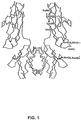
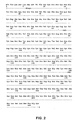
- the one or more amino acid modifications are made in one or more of residues 251-256, 285-290, 308-314, 385-389, and 428-436 of the IgG hinge-Fc region (for example, as in the human IgG1 hinge-Fc region depicted in Figure 4 , SEQ ID NO:83), or analogous residues thereof, as determined by amino acid sequence alignment, in other IgG hinge-Fc regions.
- the amino acid modifications are made in a human IgG constant domain, or FcRn-binding domain thereof.
- the modifications are not made at residues 252, 254, or 256 ( i.e., all are made at one or more of residues 251, 253, 255, 285-290, 308-314, 385-389, or 428-436) of the IgG constant domain.
- the amino acid modifications are not the substitution with leucine at residue 252, with serine at 254, and/or with phenylalanine at position 256.
- such modifications are not made when the IgG constant domain, hinge-Fc domain, hinge-Fc domain or other FcRn-binding fragment thereof is derived from a mouse.
- the amino acid modifications may be any modification, preferably at one or more of residues 251-256, 285-290, 308-314, 385-389, and 428-436, that increases the in vivo half-life of the IgG constant domain, or FcRn-binding fragment thereof (e.g., Fc or hinge-Fc domain), and any molecule attached thereto, and increases the affinity of the IgG, or fragment thereof, for FcRn.
- the one or more modifications also result in a higher binding affinity of the constant domain, or FcRn-binding fragment thereof, for FcRn at pH 6.0 than at pH 7.4.
- the modifications alter (i.e., increase or decrease) bioavailability of the molecule, in particular, alters ( i.e ., increases or decreases) transport (or concentration or half-life) of the molecule to mucosal surfaces ( e.g ., of the lungs) or other portions of a target tissue.
- the amino acid modifications alter (preferably, increase) transport or concentration or half-life of the molecule to the lungs.
- the amino acid modifications alter (preferably, increase) transport (or concentration or half-life) of the molecule to the heart, pancreas, liver, kidney, bladder, stomach, large or small intestine, respiratory tract, lymph nodes, nervous tissue (central and/or peripheral nervous tissue), muscle, epidermis, bone, cartilage, joints, blood vessels, bone marrow, prostate, ovary, uterine, tumor or cancer tissue, etc.
- the amino acid modifications do not abolish, or, more preferably, do not alter, other immune effector or receptor binding functions of the constant domain, for example, but not limited to complement fixation, ADCC and binding to Fc ⁇ RI, Fc ⁇ RII, and Fc ⁇ RIII, as can be determined by methods well-known and routine in the art.
- the modified FcRn binding fragment of the constant domain does not contain sequences that mediate immune effector functions or other receptor binding. Such fragments may be particularly useful for conjugation to a non-IgG or non-immunoglobulin molecule to increase the in vivo half-life thereof.
- the effector functions are selectively altered (e.g., to reduce or increase effector functions).
- the amino acid modifications are substitutions at one or more of residues 308, 309, 311, 312 and 314, particularly a substitution with threonine at position 308, proline at position 309, serine at position 311, aspartic acid at position 312, and/or leucine at position 314.
- the modification is the substitution with an isoleucine at position 308, proline at position 309, and/or a glutamic acid at position 311.
- residues at one or more of positions 308, 309, 311, 312, and 314 are substituted with threonine, proline, leucine, alanine, and alanine, respectively.
- the residue at position 308 is substituted with threonine or isoleucine
- the residue at position 309 is substituted with proline
- the residue at position 311 is substituted with serine, glutamic acid or leucine
- the residue at position 312 is substituted with alanine
- the residue at position 314 is substituted with leucine or alanine.
- the substitution is a threonine at position 308, a proline at position 309, a serine at position 311, an aspartic acid at position 312, and/or a leucine at position 314.
- amino acid modifications are substitutions at one or more of residues 251, 252, 254, 255, and 256.
- residue 251 is substituted with leucine or arginine
- residue 252 is substituted with tyrosine, phenylalanine, serine, tryptophan or threonine
- residue 254 is substituted with threonine or serine
- residue 255 is substituted with arginine, leucine, glycine, or isoleucine
- residue 256 is substituted with serine, arginine, glutamine, glutamic acid, aspartic acid, alanine, asparagine or threonine.
- residue 251 is substituted with leucine
- residue 252 is substituted with tyrosine
- residue 254 is substituted with threonine or serine
- residue 255 is substituted with arginine
- residue 256 is substituted with glutamic acid.
- amino acid modifications are substitutions at one or more of residues 428, 433, 434, and 436.
- residue 428 is substituted with threonine, methionine, leucine, phenylalanine, or serine
- residue 433 is substituted with lysine
- arginine, serine isoleucine, proline, glutamine or histidine
- residue 434 is substituted with phenylalanine, tyrosine, or histidine
- residue 436 is substituted with histidine, asparagine, arginine, threonine, lysine, or methionine.
- residues at position 428 and/or 434 are substituted with methionine, and/or histidine respectively.
- amino acid modifications are substitutions at one or more of residues 385, 386, 387, and 389, more specifically, having substitutions at one or more of these positions.
- residue 385 is substituted with arginine, aspartic acid, serine, threonine, histidine, lysine, alanine or glycine
- residue 386 is substituted with threonine, proline, aspartic acid, serine, lysine, arginine, isoleucine, or methionine
- residue 387 is substituted with arginine, proline, histidine, serine, threonine, or alanine
- residue 389 is substituted with proline, serine or asparagine.
- residues at one or more positions 385, 386, 387, and 389 are substituted with arginine, threonine, arginine, and proline, respectively. In yet another specific embodiment, residues at one or more positions 385, 386, and 389 are substituted with aspartic acid, proline, and serine, respectively.
- amino acid modifications are made at one or a combination of residues 251, 252, 254, 255, 256, 308, 309, 311, 312, 314, 385, 386, 387, 389, 428, 433, 434, and/or 436, particularly where the modifications are one or more of the amino acid substitutions described immediately above for these residues.
- the molecule of the invention contains a Fc region, or FcRn-binding domain thereof, having one or more of the following substitutions: leucine at residue 251, tyrosine at residue 252, threonine or serine at residue 254, arginine at residue 255, threonine at residue 308, proline at residue 309, serine at residue 311, aspartic acid at residue 312, leucine at residue 314, arginine at residue 385, threonine at residue 386, arginine at residue 387, proline at residue 389, methionine at residue 428, and/or tyrosine at residue 434.
- the FcRn binding domain has a substitution at 1, 2, 3, 4, 5, 6, 7, 8, 9, 10, 12, 14, 16 or all 18 of residues 251, 252, 254, 255, 256, 308, 309, 311, 312, 314, 385, 386, 387, 389, 428, 433, 434, and/or 436.
- Amino acid modifications can be made by any method known in the art and many such methods are well known and routine for the skilled artisan. For example, but not by way of limitation, amino acid substitutions, deletions and insertions may be accomplished using any well-known PCR-based technique. Amino acid substitutions may be made by site-directed mutagenesis (see, for example, Zoller and Smith, Nucl. Acids Res. 10:6487-6500, 1982 ; Kunkel, Proc. Natl. Acad. Sci USA 82:488, 1985 , which are hereby incorporated by reference in their entireties).
- Mutants that result in increased affinity for FcRn and increased in vivo half-life may readily be screened using well-known and routine assays, such as those described in Section 5.11, infra.
- amino acid substitutions are introduced at one or more residues in the IgG constant domain or FcRn-binding fragment thereof and the mutated constant domains or fragments are expressed on the surface of bacteriophage which are then screened for increased FcRn binding affinity (see, in particular, Section 5.2 and 5.11, infra ).
- the amino acid residues to be modified are surface exposed residues.
- the amino acid residue to be substituted is a conservative amino acid substitution, for example, a polar residue is substituted with a polar residue, a hydrophilic residue with a hydrophilic residue, hydrophobic residue with a hydrophobic residue, a positively charged residue with a positively charged residue, or a negatively charged residue with a negatively charged residue.
- the amino acid residue to be modified is not highly or completely conserved across species and/or is critical to maintain the constant domain tertiary structure or to FcRn binding. For example, but not by way of limitation, modification of the histidine at residue 310 is not preferred.
- mutants of the Fc domain that have increased affinity for FcRn were isolated after the third-round panning (as described in Section 6) from a library of mutant human IgG1 molecules having mutations at residues 308-314 (histidine at position 310 and tryptophan at position 313 are fixed), those isolated after the fifth-round panning of the library for residues 251-256 (isoleucine at position 253 is fixed), those isolated after fourth-round panning of the library for residues 428-436 (histidine at position 429, glutamic acid at position 430, alanine at position 431, leucine at position 432, and histidine at position 435 are fixed), and those isolated after sixth-round panning of the library for residues 385-389 (glutamic acid at position 388 is fixed) are listed in Table I.
- the wild type human IgG1 has a sequence Val-Leu-His-Gln-Asp-Trp-Leu (SEQ ID NO:86) at positions 308-314, Leu-Met-Ile-Ser-Arg-Thr (SEQ ID NO:87) at positions 251-256, Met-His-Glu-Ala-Leu-His-Asn-His-Tyr (SEQ ID NO:88) at positions 428-436, and Gly-Gln-Pro-Glu-Asn (SEQ ID NO:89) at positions 385-389.
- underlined sequences in Table I correspond to sequences that occurred 10 to 20 times in the final round of panning and the sequences in italics correspond to sequences that occurred 2 to 5 times in the final round of panning. Those sequences that are neither underlined nor italicized occurred once in the final round of panning.
- the invention provides modified immunoglobulin molecules (e.g., various antibodies) that have increased in vivo half-life and affinity for FcRn relative to unmodified molecules (and, in preferred embodiments, altered bioavailabilty such as increased or decreased transport to mucosal surfaces or other target tissues).
- modified immunoglobulin molecules e.g., various antibodies
- bioavailabilty such as increased or decreased transport to mucosal surfaces or other target tissues.
- Such immunoglobulin molecules include IgG molecules that naturally contain an FcRn binding domain and other non-IgG immunoglobulins (e.g ., IgE, IgM, IgD, IgA and IgY) or fragments of immunoglobulins that have been engineered to contain an FcRn-binding fragment (i.e., fusion proteins comprising non-IgG immunoglobulin or a portion thereof and an FcRn binding domain). In both cases the FcRn-binding domain has one or more amino acid modifications that increase the affinity of the constant domain fragment for FcRn.
- the modified immunoglobulins include any immunoglobulin molecule that binds (preferably, immunospecifically, i . e., competes off non-specific binding), as determined by immunoassays well known in the art for assaying specific antigen-antibody binding) an antigen and contains an FcRn-binding fragment.
- Such antibodies include, but are not limited to, polyclonal, monoclonal, bi-specific, multi-specific, human, humanized, chimeric antibodies, single chain antibodies, Fab fragments, F(ab') 2 fragments, disulfide-linked Fvs, and fragments containing either a VL or VH domain or even a complementary determining region (CDR) that specifically binds an antigen, in certain cases, engineered to contain or fused to an FcRn binding domain.
- CDR complementary determining region
- the IgG molecules of the invention, and FcRn-binding fragments thereof, are preferably IgG1 subclass of IgGs, but may also be any other IgG subclasses of given animals.
- the IgG class includes IgG1, IgG2, IgG3, and IgG4; and mouse IgG includes IgG1, IgG2a, IgG2b, IgG2c and IgG3. It is known that certain IgG subclasses, for example, mouse IgG2b and IgG2c, have higher clearance rates than, for example, IgG1 ( Medesan et al., Eur. J. Immunol., 28:2092-2100, 1998 ).
- IgG subclasses other than IgG1 it may be advantageous to substitute one or more of the residues, particularly in the CH2 and CH3 domains, that differ from the IgG1 sequence with those of IgG1, thereby increasing the in vivo half-life of the other types of IgG.
- the immunoglobulins may be from any animal origin including birds and mammals.
- the antibodies are human, rodent (e.g., mouse and rat), donkey, sheep, rabbit, goat, guinea pig, camel, horse, or chicken.
- "human” antibodies include antibodies having the amino acid sequence of a human immunoglobulin and include antibodies isolated from human immunoglobulin libraries or from animals transgenic for one or more human immunoglobulin and that do not express endogenous immunoglobulins, as described infra and, for example, in U.S. Patent No. 5,939,598 by Kucherlapati et al.
- the antibodies of the present invention may be monospecific, bispecific, trispecific or of greater multispecificity. Multispecific antibodies may be specific for different epitopes of a polypeptide or may be specific for heterologous epitopes, such as a heterologous polypeptide or solid support material. See, e.g., PCT publications WO 93/17715 ; WO 92/08802 ; WO 91/00360 ; WO 92/05793 ; Tutt, et al., J. Immunol., 147:60-69, 1991 ; U.S. Patent Nos. 4,474,893 ; 4,714,681 ; 4,925,648 ; 5,573,920 ; 5,601,819 ; Kostelny et al., J. Immunol., 148:1547-1553, 1992 .
- the antibodies of the invention include derivatives that are otherwise modified, i.e., by the covalent attachment of any type of molecule to the antibody such that covalent attachment does not prevent the antibody from binding antigen and/or generating an anti-idiotypic response.
- the antibody derivatives include antibodies that have been modified, e.g., by glycosylation, acetylation, pegylation, phosphorylation, amidation, derivatization by known protecting/blocking groups, proteolytic cleavage, linkage to a cellular ligand or other protein, etc. Any of numerous chemical modifications may be carried out by known techniques, including, but not limited to, specific chemical cleavage, acetylation, formylation, metabolic synthesis of tunicamycin, etc. Additionally, the derivative may contain one or more non-classical amino acids.
- Monoclonal antibodies can be prepared using a wide variety of techniques known in the art including the use of hybridoma, recombinant, and phage display technologies, or a combination thereof.
- monoclonal antibodies can be produced using hybridoma techniques including those known in the art and taught, for example, in Harlow et al., Antibodies: A Laboratory Manual, (Cold Spring Harbor Laboratory Press, 2nd ed. 1988 ); Hammerling, et al., in: Monoclonal Antibodies and T-Cell Hybridomas, pp. 563-681 (Elsevier, N.Y., 1981 ) (both of which are incorporated herein by reference in their entireties).
- the term “monoclonal antibody” as used herein is not limited to antibodies produced through hybridoma technology.
- the term “monoclonal antibody” refers to an antibody that is derived from a single clone, including any eukaryotic, prokaryotic, or phage clone, and not the method by which it is produced.
- mice can be immunized with an antigen of interest or a cell expressing such an antigen.
- an immune response e.g ., antibodies specific for the antigen are detected in the mouse serum
- the mouse spleen is harvested and splenocytes isolated.
- the splenocytes are then fused by well known techniques to any suitable myeloma cells.
- Hybridomas are selected and cloned by limiting dilution.
- the hybridoma clones are then assayed by methods known in the art for cells that secrete antibodies capable of binding the antigen.
- Ascites fluid which generally contains high levels of antibodies, can be generated by inoculating mice intraperitoneally with positive hybridoma clones.
- Antibody fragments which recognize specific epitopes may be generated by known techniques.
- Fab and F(ab') 2 fragments may be produced by proteolytic cleavage of immunoglobulin molecules, using enzymes such as papain (to produce Fab fragments) or pepsin (to produce F(ab') 2 fragments).
- F(ab') 2 fragments contain the complete light chain, and the variable region, the CH1 region and the hinge region of the heavy chain.
- antibodies can also be generated using various phage display methods known in the art.
- phage display methods functional antibody domains are displayed on the surface of phage particles which carry the polynucleotide sequences encoding them.
- phage can be utilized to display antigen binding domains, such as Fab and Fv or disulfide-bond stabilized Fv, expressed from a repertoire or combinatorial antibody library ( e.g ., human or murine).
- Phage expressing an antigen binding domain that binds the antigen of interest can be selected or identified with antigen, e.g ., using labeled antigen or antigen bound or captured to a solid surface or bead.
- Phage used in these methods are typically filamentous phage, including fd and M13.
- the antigen binding domains are expressed as a recombinantly fused protein to either the phage gene III or gene VIII protein.
- the modified FcRn binding portion of immunoglobulins of the present invention can be also expressed in a phage display system.
- Examples of phage display methods that can be used to make the immunoglobulins, or fragments thereof, of the present invention include those disclosed in Brinkman et al., J. Immunol. Methods, 182:41-50, 1995 ; Ames et al., J. Immunol. Methods, 184:177-186, 1995 ; Kettleborough et al., Eur. J.
- the antibody coding regions from the phage can be isolated and used to generate whole antibodies, including human antibodies, or any other desired fragments, and expressed in any desired host, including mammalian cells, insect cells, plant cells, yeast, and bacteria, e.g ., as described in detail below.
- a chimeric antibody is a molecule in which different portions of the antibody are derived from different animal species, such as antibodies having a variable region derived from a murine monoclonal antibody and a constant region derived from a human immunoglobulin.
- Methods for producing chimeric antibodies are known in the art. See e.g ., Morrison, Science, 229:1202, 1985 ; Oi et al., BioTechniques, 4:214 1986 ; Gillies et al., J. Immunol. Methods, 125:191-202, 1989 ; U.S. Patent Nos.
- Humanized antibodies are antibody molecules from non-human species that bind the desired antigen having one or more complementarity determining regions (CDRs) from the non-human species and framework regions from a human immunoglobulin molecule.
- CDRs complementarity determining regions
- framework residues in the human framework regions will be substituted with the corresponding residue from the CDR donor antibody to alter, preferably improve, antigen binding.
- framework substitutions are identified by methods well known in the art, e.g., by modeling of the interactions of the CDR and framework residues to identify framework residues important for antigen binding and sequence comparison to identify unusual framework residues at particular positions.
- Antibodies can be humanized using a variety of techniques known in the art including, for example, CDR-grafting ( EP 239,400 ; PCT publication WO 91/09967 ; U.S. Patent Nos.
- Human antibodies are particularly desirable for therapeutic treatment of human patients.
- Human antibodies can be made by a variety of methods known in the art including phage display methods described above using antibody libraries derived from human immunoglobulin sequences. See U.S. Patent Nos. 4,444,887 and 4,716,111 ; and PCT publications WO 98/46645 ; WO 98/50433 ; WO 98/24893 ; WO 98/16654 ; WO 96/34096 ; WO 96/33735 ; and WO 91/10741 , each of which is incorporated herein by reference in its entirety.
- Human antibodies can also be produced using transgenic mice which are incapable of expressing functional endogenous immunoglobulins, but which can express human immunoglobulin genes.
- transgenic mice which are incapable of expressing functional endogenous immunoglobulins, but which can express human immunoglobulin genes.
- human antibodies see Lonberg and Huszar, Int. Rev. Immunol., 13:65-93, 1995 .
- Completely human antibodies which recognize a selected epitope can be generated using a technique referred to as "guided selection.”
- a selected non-human monoclonal antibody e.g ., a mouse antibody
- Jespers et al., Bio/technology, 12:899-903, 1988 is used to guide the selection of a completely human antibody recognizing the same epitope.
- the modified antibodies have in vivo therapeutic and/or prophylactic uses.
- therapeutic and prophylactic antibodies which may be so modified include, but are not limited to, SYNAGIS® (MedImmune, MD) which is a humanized anti-respiratory syncytial virus (RSV) monoclonal antibody for the treatment of patients with RSV infection; HERCEPTIN® (Trastuzumab) (Genentech, CA) which is a humanized anti-HER2 monoclonal antibody for the treatment of patients with metastatic breast cancer; REMICADE® (infliximab) (Centocor, PA) which is a chimeric anti-TNFa monoclonal antibody for the treatment of patients with Crone's disease; REOPRO® (abciximab) (Centocor) which is an anti-glycoprotein IIb/IIIa receptor on the platelets for the prevention of clot formation; ZENAPAX® (daclizumab) (Roche Pharmaceuticals
- a humanized anti-CD18 F(ab') 2 (Genentech); CDP860 which is a humanized anti-CD 18 F(ab') 2 (Celltech, UK); PRO542 which is an anti-HIV gp120 antibody fused with CD4 (Progenics/Genzyme Transgenics); Ostavir which is a human anti Hepatitis B virus antibody (Protein Design Lab/Novartis); PROTOVIRTM which is a humanized anti-CMV IgG1 antibody (Protein Design Lab/Novartis); MAK-195 (SEGARD) which is a murine anti-TNF- ⁇ F(ab') 2 (Knoll Pharma/BASF); IC14 which is an anti-CD14 antibody (ICOS Pharm); a humanized anti-VEGF IgG1 antibody (Genentech); OVAREXTM which is a murine anti-CA 125 antibody (Altarex); PANOREXTM which is a murine anti-17-IA
- the invention provides modified antibodies having one or more of the mutations described herein and that immunospecifically bind RSV, e.g., SYNAGIS®.
- the present invention also provides modified antibodies having one or more of the mutations described herein and that comprise a variable heavy (VH) and/or variable light (VL) domain having the amino acid sequence of any VH and/or VL domain listed in Table III.
- VH variable heavy
- VL variable light
- the present invention further encompasses anti-RSV antibodies comprising one or more VH complementarity determining regions (CDRs) and/or one or more VL CDRs having the amino acid sequence of one or more VH CDRs and/or VL CDRS listed in Table III or one or more of the CDRs listed in Table II wherein one or more of the bolded and underlined residues has an amino acid substitution, preferably that increases the affinity of the antibody for RSV.
- CDRs VH complementarity determining regions
- the antibody to be modified is AFFF, p12f2, p12f4, p11d4, Ale109, A12a6, A13c4, A17d4, A4B4, A8C7, 1X-493L1FR, H3-3F4, M3H9, Y10H6, DG, AFFF(1), 6H8, L1-7E5, L215B10, A13A11, A1H5, A4B4(1), A4B4L1FR-S28R, A4B4-F52S. Table II.
- the antibody is a modified anti- ⁇ v ⁇ 3 antibody, preferably a Vitaxin antibody (see, PCT publications WO 98/33919 and WO 00/78815, both by Huse et al ., and both of which are incorporated by reference herein in their entireties).
- Modified IgGs of the present invention having longer half-lives than wild type may also include IgGs whose bioactive sites, such as antigen-binding sites, Fc-receptor binding sites, or complement-binding sites, are modified by genetic engineering to increase or reduce such activities compared to the wild type.
- bioactive sites such as antigen-binding sites, Fc-receptor binding sites, or complement-binding sites
- Modification of these and other therapeutic antibodies to increase the in vivo half-life permits administration of lower effective dosages and/or less frequent dosing of the therapeutic antibody.
- Such modification to increase in vivo half-life can also be useful to improve diagnostic immunoglobulins as well, for example, permitting administration of lower doses to achieve sufficient diagnostic sensitivity.
- the present invention also provides fusion proteins comprising a bioactive molecule and an hinge-Fc region or a fragment thereof (preferably human) having one or more modifications ( i . e ., substitutions, deletions, or insertions) in amino acid residues identified to be involved in the interaction between the hinge-Fc region and the FcRn receptor.
- the present invention provides fusion proteins comprising a bioactive molecule recombinantly fused or chemically conjugated (including both covalent and non-covalent conjugations) to a CH2 domain having one or more modifications in amino acid residues 251-256, 285-290, and/or amino acid residues 308-314, and/or to a CH3 domain having one or more modifications in amino acid residues 385-389 and/or 428-436, in particular, one or more of the amino acid substitutions discussed above.
- the fusion of a bioactive molecule to a constant domain or a fragment thereof with one or more of such modifications increases the in vivo half-life of the bioactive molecule.
- fusion proteins of the invention comprise a bioactive molecule recombinantly fused or chemically conjugated to a CH2 domain having one or more amino acid residue substitutions in amino acid residues 251-256, 285-290, and/or amino acid residues 308-314, and/or to a CH3 domain having one or more modifications in amino acid residues 385-389 and/or 428-436.
- a fusion protein comprises a CH2 domain of IgG molecule in which amino acid residues 253, 310, and 313 are not modified.
- a fusion protein comprises a CH3 domain of IgG molecule in which amino acid residues 388, 429, 430, 431, 432, and 435 are not modified.
- a bioactive molecule can be any polypeptide or synthetic drug known to one of skill in the art.
- a bioactive molecule is a polypeptide consisting of at least 5, preferably at least 10, at least 20, at least 30, at least 40, at least 50, at least 60, at least 70, at least 80, at least 90 or at least 100 amino acid residues.
- bioactive polypeptides include, but are not limited to, various types of antibodies, cytokines (e.g., IL-2, IL-3, IL-4, IL-5, IL-6, IL-7, IL-10, IL-12, IL-15, IFN- ⁇ , IFN- ⁇ , and IFN- ⁇ ), cell adhesion molecules (e.g., CTLA4, CD2, and CD28), ligands (e.g ., TNF- ⁇ " TNF- ⁇ , and an anti-angiogenic factor such as endostatin), receptors, antibodies and growth factors (e.g ., PDGF, EGF, NGF, and KGF).
- cytokines e.g., IL-2, IL-3, IL-4, IL-5, IL-6, IL-7, IL-10, IL-12, IL-15, IFN- ⁇ , IFN- ⁇ , and IFN- ⁇
- cell adhesion molecules e.g., CTLA4, CD2, and CD28
- a bioactive molecule can also be a therapeutic moiety such as a cytotoxin (e.g ., a cytostatic or cytocidal agent), a therapeutic agent or a radioactive element (e.g ., alpha-emitters, gamma-emitters, etc.).
- a cytotoxin e.g ., a cytostatic or cytocidal agent
- a therapeutic agent e.g a cytostatic or cytocidal agent
- a radioactive element e.g ., alpha-emitters, gamma-emitters, etc.
- cytostatic or cytocidal agents include, but are not limited to, paclitaxol, cytochalasin B, gramicidin D, ethidium bromide, emetine, mitomycin, etoposide, tenoposide, vincristine, vinblastine, colchicin, doxorubicin, daunorubicin, dihydroxy anthracin dione, mitoxantrone, mithramycin, actinomycin D, 1-dehydrotestosterone, glucocorticoids, procaine, tetracaine, lidocaine, propranolol, and puromycin and analogs or homologs thereof.
- Therapeutic agents include, but are not limited to, antimetabolites (e.g ., methotrexate, 6-mercaptopurine, 6-thioguanine, cytarabine, 5-fluorouracil decarbazine), alkylating agents (e.g ., mechlorethamine, thioepa chlorambucil, melphalan, carmustine (BSNU) and lomustine (CCNU), cyclothosphamide, busulfan, dibromomannitol, streptozotocin, mitomycin C, and cisdichlorodiamine platinum (II) (DDP) cisplatin), anthracyclines (e.g ., daunorubicin (formerly daunomycin) and doxorubicin), antibiotics ( e.g ., dactinomycin (formerly actinomycin), bleomycin, mithramycin, and anthramycin (AMC)), and anti-mitotic
- the present invention also provides polynucleotides comprising a nucleotide sequence encoding a modified IgG of the invention and fragments thereof which contain the modified FcRn binding sites with increased affinity and vectors comprising said polynucleotides. Furthermore, the invention includes polynucleotides that hybridize under stringent or lower stringent hybridization conditions to polynucleotides encoding modified IgGs of the present invention.
- nucleotide sequence of modified IgGs and the polynucleotides encoding the same may be obtained by any methods known in the art, including general DNA sequencing method, such as dideoxy chain termination method (Sanger sequencing), and oligonucleotide priming in combination with PCR, respectively.
- One or more modifications in amino acid residues 251-256, 285-290, 308-314, 385-389, and 428-436 of the constant domain may be introduced utilizing any technique known to those of skill in the art.
- the constant domain or fragment thereof having one or more modifications in amino acid residues 251-256, 285-290, 308-314, 385-389, and 428-436 may be screened by, for example, a binding assay to identify the constant domain or fragment thereof with increased affinity for the FcRn receptor ( e.g., as described in section 5.11, infra ).
- modifications in the hinge-Fc domain or the fragments thereof which increase the affinity of the constant domain or fragment thereof for the FcRn receptor can be introduced into antibodies to increase the in vivo half-lives of said antibodies.
- those modifications in the constant domain or the fragment thereof which increase the affinity of the constant domain or fragment thereof for the FcRn can be fused to bioactive molecules to increase the in vivo half-lives of said bioactive molecules (and, preferably alter (increase or decrease) the bioavailability of the molecule, for example, to increase or decrease transport to mucosal surfaces (or other target tissue) (e.g., the lungs).
- Mutagenesis may be performed in accordance with any of the techniques known in the art including, but not limited to, synthesizing an oligonucleotide having one or more modifications within the sequence of the constant domain of an antibody or a fragment thereof (e.g., the CH2 or CH3 domain) to be modified.
- Site-specific mutagenesis allows the production of mutants through the use of specific oligonucleotide sequences which encode the DNA sequence of the desired mutation, as well as a sufficient number of adjacent nucleotides, to provide a primer sequence of sufficient size and sequence complexity to form a stable duplex on both sides of the deletion junction being traversed.
- a primer of about 17 to about 75 nucleotides or more in length is preferred, with about 10 to about 25 or more residues on both sides of the junction of the sequence being altered.
- a number of such primers introducing a variety of different mutations at one or more positions may be used to generated a library of mutants.
- site-directed mutagenesis is performed by first obtaining a single-stranded vector or melting apart of two strands of a double stranded vector which includes within its sequence a DNA sequence which encodes the desired peptide.
- An oligonucleotide primer bearing the desired mutated sequence is prepared, generally synthetically.
- This primer is then annealed with the single-stranded vector, and subjected to DNA polymerizing enzymes such as T7 DNA polymerase, in order to complete the synthesis of the mutation-bearing strand.
- DNA polymerizing enzymes such as T7 DNA polymerase
- This heteroduplex vector is then used to transform or transfect appropriate cells, such as E. coli cells, and clones are selected which include recombinant vectors bearing the mutated sequence arrangement.
- the technique typically employs a phage vector which exists in both a single stranded and double stranded form.
- Typical vectors useful in site-directed mutagenesis include vectors such as the M13 phage. These phage are readily commercially available and their use is generally well known to those skilled in the art. Double stranded plasmids are also routinely employed in site directed mutagenesis which eliminates the step of transferring the gene of interest from a plasmid to a phage.
- PCRTM with commercially available thermostable enzymes such as Taq DNA polymerase may be used to incorporate a mutagenic oligonucleotide primer into an amplified DNA fragment that can then be cloned into an appropriate cloning or expression vector.
- thermostable enzymes such as Taq DNA polymerase
- thermostable ligase employing a thermostable ligase in addition to a thermostable polymerase may also be used to incorporate a phosphorylated mutagenic oligonucleotide into an amplified DNA fragment that may then be cloned into an appropriate cloning or expression vector (see e.g., Michael, Biotechniques, 16(3):410-2, 1994 , which is hereby incorporated by reference in its entirety).
- sequence variants of the Fc domain of an antibody or a fragment thereof can be used.
- recombinant vectors encoding the amino acid sequence of the constant domain of an antibody or a fragment thereof may be treated with mutagenic agents, such as hydroxylamine, to obtain sequence variants.
- Vectors in particular, phage, expressing constant domains or fragments thereof having one or more modifications in amino acid residues 251-256, 285-290, 308-314, 385-389, and/or 428-436 can be screened to identify constant domains or fragments thereof having increased affinity for FcRn to select out the highest affinity binders from a population of phage.
- Immunoassays which can be used to analyze binding of the constant domain or fragment thereof having one or more modifications in amino acid residues 251-256, 285-290, 308-314, 385-389, and/or 428-436 to the FcRn include, but are not limited to, radioimmunoassays, ELISA (enzyme linked immunosorbent assay), "sandwich” immunoassays, and fluorescent immunoassays.
- radioimmunoassays ELISA (enzyme linked immunosorbent assay)
- sandwich immunoassays enzyme linked immunosorbent assay
- fluorescent immunoassays are routine and well known in the art (see, e.g., Ausubel et al., eds, 1994, Current Protocols in Molecular Biology, Vol. 1, John Wiley & Sons, Inc., New York , which is incorporated by reference herein in its entirety).
- BIAcore kinetic analysis can also be used to determine the binding on and off rates of a constant domain or a fragment thereof having one or more modifications in amino acid residues 251-256, 285-290, 308-314, 385-389, and/or 428-436 to the FcRn.
- BIAcore kinetic analysis comprises analyzing the binding and dissociation of a constant domain or a fragment thereof having one or more modifications in amino acid residues 251-256, 285-290, 308-314, 385-389, and/or 428-436 from chips with immobilized FcRn on their surface (see section 5.1 and the Example section infra ).
- sequencing reactions Any of a variety of sequencing reactions known in the art can be used to directly sequence the nucleotide sequence encoding constant domains or fragments thereof having one or more modifications in amino acid residues 251-256, 285-290, 308-314, 385-389, and/or 428-436.
- Examples of sequencing reactions include those based on techniques developed by Maxim and Gilbert (Proc. Natl. Acad. Sci. USA, 74:560, 1977 ) or Sanger (Proc. Natl. Acad. Sci. USA, 74:5463, 1977 ).
- the antibodies of the invention or fragments thereof can be produced by any method known in the art for the synthesis of antibodies, in particular, by chemical synthesis or preferably, by recombinant expression techniques.
- nucleotide sequence encoding an antibody may be obtained from any information available to those of skill in the art (i.e., from Genbank, the literature, or by routine cloning). If a clone containing a nucleic acid encoding a particular antibody or an epitope-binding fragment thereof is not available, but the sequence of the antibody molecule or epitope-binding fragment thereof is known, a nucleic acid encoding the immunoglobulin may be chemically synthesized or obtained from a suitable source (e.g., an antibody cDNA library, or a cDNA library generated from, or nucleic acid, preferably poly A + RNA, isolated from any tissue or cells expressing the antibody, such as hybridoma cells selected to express an antibody) by PCR amplification using synthetic primers hybridizable to the 3' and 5' ends of the sequence or by cloning using an oligonucleotide probe specific for the particular gene sequence to identify, e.g., a c
- nucleotide sequence of the antibody may be manipulated using methods well known in the art for the manipulation of nucleotide sequences, e.g ., recombinant DNA techniques, site directed mutagenesis, PCR, etc.
- antibodies having a different amino acid sequence by, for example, introducing amino acid substitutions, deletions, and/or insertions into the epitope-binding domain regions of the antibodies and preferably, into the hinge-Fc regions of the antibodies which are involved in the interaction with the FcRn.
- antibodies having one or more modifications in amino acid residues 251-256, 285-290, 308-314, 385-389, and 428-436 are generated.
- Recombinant expression of an antibody requires construction of an expression vector containing a nucleotide sequence that encodes the antibody.
- a nucleotide sequence encoding an antibody molecule or a heavy or light chain of an antibody, or portion thereof (preferably, but not necessarily, containing the heavy or light chain variable region) may be obtained by recombinant DNA technology using techniques well known in the art.
- methods for preparing a protein by expressing a polynucleotide containing an antibody encoding nucleotide sequence are described herein. Methods which are well known to those skilled in the art can be used to construct expression vectors containing antibody coding sequences and appropriate transcriptional and translational control signals.
- the invention provides replicable vectors comprising a nucleotide sequence encoding the constant region of the antibody molecule with one or more modifications in the amino acid residues involved in the interaction with the FcRn (see, e.g., PCT Publication WO 86/05807 ; PCT Publication WO 89/01036 ; and U.S. Patent No. 5,122,464 ).
- the nucleotide sequence encoding the heavy-chain variable region, light-chain variable region, both the heavy-chain and light-chain variable regions, an epitope-binding fragment of the heavy- and/or light-chain variable region, or one or more complementarity determining regions (CDRs) of an antibody may be cloned into such a vector for expression.
- the expression vector is transferred to a host cell by conventional techniques and the transfected cells are then cultured by conventional techniques to produce an antibody having an increased affinity for the FcRn and an increased in vivo half-life.
- the invention includes host cells containing a polynucleotide encoding an antibody, a constant domain or a FcRn binding fragment thereof having one or more modifications in amino acid residues 251-256, 285-290, 308-314, 385-389, and/or 428-436, preferably, operably linked to a heterologous promoter.
- host-expression vector systems may be utilized to express the antibody molecules of the invention.
- Such host-expression systems represent vehicles by which the coding sequences of interest may be produced and subsequently purified, but also represent cells which may, when transformed or transfected with the appropriate nucleotide coding sequences, express an antibody molecule of the invention in situ.
- These include, but are not limited to, microorganisms such as bacteria ( e.g., E. coli and B.
- subtilis transformed with recombinant bacteriophage DNA, plasmid DNA or cosmid DNA expression vectors containing antibody coding sequences; yeast ( e.g., Saccharomyces and Pichia ) transformed with recombinant yeast expression vectors containing antibody coding sequences; insect cell systems infected with recombinant virus expression vectors (e.g., baculovirus) containing antibody coding sequences; plant cell systems infected with recombinant virus expression vectors ( e.g ., cauliflower mosaic virus, CaMV; and tobacco mosaic virus, TMV) or transformed with recombinant plasmid expression vectors ( e.g ., Ti plasmid) containing antibody coding sequences; and mammalian cell systems ( e.g ., COS, CHO, BHK, 293, 3T3 and NSO cells) harboring recombinant expression constructs containing promoters derived from the genome of mammalian cells (e.g.,
- bacterial cells such as Escherichia coli, and more preferably, eukaryotic cells, especially for the expression of whole recombinant antibody molecule, are used for the expression of a recombinant antibody molecule.
- mammalian cells such as Chinese hamster ovary cells (CHO), in conjunction with a vector such as the major intermediate early gene promoter element from human cytomegalovirus is an effective expression system for antibodies ( Foecking et al., Gene, 45:101, 1986 , and Cockett et al., Bio/Technology, 8:2, 1990 ).
- a number of expression vectors may be advantageously selected depending upon the use intended for the antibody molecule being expressed. For example, when a large quantity of such a protein is to be produced, for the generation of pharmaceutical compositions of an antibody molecule, vectors which direct the expression of high levels of fusion protein products that are readily purified may be desirable. Such vectors include, but are not limited to, the E.
- coli expression vector pUR278 ( Ruther et al., EMBO, 12:1791, 1983 ), in which the antibody coding sequence may be ligated individually into the vector in frame with the lacZ coding region so that a fusion protein is produced; and pIN vectors ( Inouye & Inouye, Nucleic Acids Res., 13:3101-3109, 1985 and Van Heeke & Schuster, J. Biol. Chem., 24:5503-5509, 1989 ).
- Autographa californica nuclear polyhedrosis virus (AcNPV) is used as a vector to express foreign genes.
- the virus grows in Spodoptera frugiperda cells.
- the antibody coding sequence may be cloned individually into non-essential regions (for example the polyhedrin gene) of the virus and placed under control of an AcNPV promoter (for example the polyhedrin promoter).
- a number of viral-based expression systems may be utilized to express an antibody molecule of the invention.
- the antibody coding sequence of interest may be ligated to an adenovirus transcription/translation control complex, e.g ., the late promoter and tripartite leader sequence. This chimeric gene may then be inserted in the adenovirus genome by in vitro or in vivo recombination.
- Insertion in a non-essential region of the viral genome will result in a recombinant virus that is viable and capable of expressing the antibody molecule in infected hosts (e.g., see Logan & Shenk, Proc. Natl. Acad. Sci. USA, 81:355-359, 1984 ).
- Specific initiation signals may also be required for efficient translation of inserted antibody coding sequences. These signals include the ATG initiation codon and adjacent sequences. Furthermore, the initiation codon must be in phase with the reading frame of the desired coding sequence to ensure translation of the entire insert.
- These exogenous translational control signals and initiation codons can be of a variety of origins, both natural and synthetic. The efficiency of expression may be enhanced by the inclusion of appropriate transcription enhancer elements, transcription terminators, etc. (see, e.g., Bitter et al., Methods in Enzymol., 153:516-544, 1987 ).
- a host cell strain may be chosen which modulates the expression of the antibody sequences, or modifies and processes the antibody in the specific fashion desired. Such modifications (e.g., glycosylation) and processing (e.g., cleavage) of protein products may be important for the function of the antibody.
- Different host cells have characteristic and specific mechanisms for the post-translational processing and modification of proteins and gene products. Appropriate cell lines or host systems can be chosen to ensure the correct modification and processing of the antibody expressed.
- eukaryotic host cells which possess the cellular machinery for proper processing of the primary transcript, glycosylation, and phosphorylation of the gene product may be used.
- Such mammalian host cells include but are not limited to CHO, VERY, BHK, HeLa, COS, MDCK, 293, 3T3, W138, and in particular, myeloma cells such as NS0 cells, and related cell lines, see, for example, Morrison et al., U.S. Patent No. 5,807,715 , which is hereby incorporated by reference in its entirety.
- cell lines which stably express the antibody molecule may be engineered.
- host cells can be transformed with DNA controlled by appropriate expression control elements (e.g ., promoter, enhancer, sequences, transcription terminators, polyadenylation sites, etc.), and a selectable marker.
- appropriate expression control elements e.g ., promoter, enhancer, sequences, transcription terminators, polyadenylation sites, etc.
- engineered cells may be allowed to grow for 1-2 days in an enriched media, and then are switched to a selective media.
- the selectable marker in the recombinant plasmid confers resistance to the selection and allows cells to stably integrate the plasmid into their chromosomes and grow to form foci which in turn can be cloned and expanded into cell lines.
- This method may advantageously be used to engineer cell lines which express the antibody molecule.
- Such engineered cell lines may be particularly useful in screening and evaluation of compositions that interact directly or indirectly with the antibody molecule.
- a number of selection systems may be used, including but not limited to, the herpes simplex virus thymidine kinase ( Wigler et al., Cell, 11:223, 1977 ), hypoxanthineguanine phosphoribosyltransferase ( Szybalska & Szybalski, Proc. Natl. Acad. Sci. USA, 48:202, 1992 ), and adenine phosphoribosyltransferase ( Lowy et al., Cell, 22:8-17, 1980 ) genes can be employed in tk - , hgprt - or aprt - cells, respectively.
- antimetabolite resistance can be used as the basis of selection for the following genes: dhfr , which confers resistance to methotrexate ( Wigler et al., Natl. Acad. Sci. USA, 77:357, 1980 and O'Hare et al., Proc. Natl. Acad. Sci. USA, 78:1527, 1981 ); gpt, which confers resistance to mycophenolic acid ( Mulligan & Berg, Proc. Natl. Acad. Sci. USA, 78:2072, 1981 ); neo, which confers resistance to the aminoglycoside G-418 ( Wu and Wu, Biotherapy, 3:87-95, 1991 ; Tolstoshev, Ann. Rev.
- the expression levels of an antibody molecule can be increased by vector amplification (for a review, see Bebbington and Hentschel, 1987, The use of vectors based on gene amplification for the expression of cloned genes in mammalian cells in DNA cloning, Vol.3. Academic Press, New York ).
- vector amplification for a review, see Bebbington and Hentschel, 1987, The use of vectors based on gene amplification for the expression of cloned genes in mammalian cells in DNA cloning, Vol.3. Academic Press, New York ).
- a marker in the vector system expressing antibody is amplifiable
- increase in the level of inhibitor present in culture of host cell will increase the number of copies of the marker gene. Since the amplified region is associated with the antibody gene, production of the antibody will also increase ( Crouse et al., Mol., Cell. Biol., 3:257, 1983 ).
- the host cell may be co-transfected with two expression vectors of the invention, the first vector encoding a heavy chain derived polypeptide and the second vector encoding a light chain derived polypeptide.
- the two vectors may contain identical selectable markers which enable equal expression of heavy and light chain polypeptides or different selectable markers to ensure maintenance of both plasmids.
- a single vector may be used which encodes, and is capable of expressing, both heavy and light chain polypeptides. In such situations, the light chain should be placed before the heavy chain to avoid an excess of toxic free heavy chain ( Proudfoot, Nature, 322:52, 1986 ; and Kohler, Proc. Natl. Acad. Sci. USA, 77:2 197, 1980 ).
- the coding sequences for the heavy and light chains may comprise cDNA or genomic DNA.
- an antibody molecule of the invention may be purified by any method known in the art for purification of an immunoglobulin molecule, for example, by chromatography (e.g ., ion exchange, affinity, particularly by affinity for the specific antigen after Protein A purification, and sizing column chromatography), centrifugation, differential solubility, or by any other standard techniques for the purification of proteins.
- chromatography e.g ., ion exchange, affinity, particularly by affinity for the specific antigen after Protein A purification, and sizing column chromatography
- centrifugation e.g., centrifugation, differential solubility, or by any other standard techniques for the purification of proteins.
- the antibodies of the present invention or fragments thereof may be fused to heterologous polypeptide sequences described herein or otherwise known in the art to facilitate purification.
- the present invention encompasses antibodies recombinantly fused or chemically conjugated (including both covalently and non-covalently conjugations) to heterologous polypeptides (i.e ., an unrelated polypeptide; or portion thereof, preferably at least 10, at least 20, at least 30, at least 40, at least 50, at least 60, at least 70, at least 80, at least 90 or at least 100 amino acids of the polypeptide) to generate fusion proteins.
- the fusion does not necessarily need to be direct, but may occur through linker sequences.
- Antibodies fused or conjugated to heterologous polypeptides may also be used in in vitro immunoassays and purification methods using methods known in the art. See e.g., PCT Publication No.
- Antibodies can be fused to marker sequences, such as a peptide to facilitate purification.
- the marker amino acid sequence is a hexa-histidine peptide, such as the tag provided in a pQE vector (QIAGEN, Inc., 9259 Eton Avenue, Chatsworth, CA, 91311), among others, many of which are commercially available.
- a pQE vector QIAGEN, Inc., 9259 Eton Avenue, Chatsworth, CA, 91311
- hexa-histidine provides for convenient purification of the fusion protein.
- peptide tags useful for purification include, but are not limited to, the hemagglutinin "HA” tag, which corresponds to an epitope derived from the influenza hemagglutinin protein ( Wilson et al., Cell, 37:767 1984 ) and the "flag” tag ( Knappik et al., Biotechniques, 17(4):754-761, 1994 ).
- HA hemagglutinin
- the present invention also encompasses antibodies conjugated to a diagnostic or therapeutic agent or any other molecule for which in vivo half-life is desired to be increased.
- the antibodies can be used diagnostically to, for example, monitor the development or progression of a disease, disorder or infection as part of a clinical testing procedure to, e.g., determine the efficacy of a given treatment regimen. Detection can be facilitated by coupling the antibody to a detectable substance. Examples of detectable substances include various enzymes, prosthetic groups, fluorescent materials, luminescent materials, bioluminescent materials, radioactive materials, positron emitting metals, and nonradioactive paramagnetic metal ions.
- the detectable substance may be coupled or conjugated either directly to the antibody or indirectly, through an intermediate (such as, for example, a linker known in the art) using techniques known in the art. See, for example, U.S. Patent No. 4,741,900 for metal ions which can be conjugated to antibodies for use as diagnostics according to the present invention.
- suitable enzymes include horseradish peroxidase, alkaline phosphatase, ⁇ -galactosidase, or acetylcholinesterase;
- suitable prosthetic group complexes include streptavidin/biotin and avidin/biotin;
- suitable fluorescent materials include umbelliferone, fluorescein, fluorescein isothiocyanate, rhodamine, dichlorotriazinylamine fluorescein, dansyl chloride or phycoerythrin;
- an example of a luminescent material includes luminol;
- examples of bioluminescent materials include luciferase, luciferin, and aequorin;
- suitable radioactive material include 125 I, 131 I, 111 In or 99 m Tc.
- An antibody may be conjugated to a therapeutic moiety such as a cytotoxin (e.g ., a cytostatic or cytocidal agent), a therapeutic agent or a radioactive element (e.g ., alpha-emitters, gamma-emitters, etc.).
- cytotoxin e.g ., a cytostatic or cytocidal agent
- therapeutic agent e.g ., a cytostatic or cytocidal agent
- a radioactive element e.g ., alpha-emitters, gamma-emitters, etc.
- Cytotoxins or cytotoxic agents include any agent that is detrimental to cells.
- Examples include paclitaxol, cytochalasin B, gramicidin D, ethidium bromide, emetine, mitomycin, etoposide, tenoposide, vincristine, vinblastine, colchicin, doxorubicin, daunorubicin, dihydroxy anthracin dione, mitoxantrone, mithramycin, actinomycin D, 1-dehydrotestosterone, glucocorticoids, procaine, tetracaine, lidocaine, propranolol, and puromycin and analogs or homologs thereof.
- Therapeutic agents include, but are not limited to, antimetabolites (e.g ., methotrexate, 6-mercaptopurine, 6-thioguanine, cytarabine, 5-fluorouracil decarbazine), alkylating agents (e.g ., mechlorethamine, thioepa chlorambucil, melphalan, carmustine (BSNU) and lomustine (CCNU), cyclothosphamide, busulfan, dibromomannitol, streptozotocin, mitomycin C, and cisdichlorodiamine platinum (II) (DDP) cisplatin), anthracyclines (e.g ., daunorubicin (formerly daunomycin) and doxorubicin), antibiotics ( e.g ., dactinomycin (formerly actinomycin), bleomycin, mithramycin, and anthramycin (AMC)), and anti-mitotic
- an antibody may be conjugated to a therapeutic agent or drug moiety that modifies a given biological response.
- Therapeutic agents or drug moieties are not to be construed as limited to classical chemical therapeutic agents.
- the drug moiety may be a protein or polypeptide possessing a desired biological activity.
- proteins may include, for example, a toxin such as abrin, ricin A, pseudomonas exotoxin, or diphtheria toxin; a protein such as tumor necrosis factor, ⁇ -interferon (IFN- ⁇ ), ⁇ -interferon (IFN- ⁇ ), nerve growth factor (NGF), platelet derived growth factor (PDGF), tissue plasminogen activator (TPA), an apoptotic agent ( e .
- IFN- ⁇ ⁇ -interferon
- IFN- ⁇ nerve growth factor
- PDGF platelet derived growth factor
- TPA tissue plasminogen activator
- an apoptotic agent e .
- a thrombotic agent or an anti-angiogenic agent e.g., angiostatin or endostatin
- a biological response modifier such as, for example, a lymphokine (e.g., interleukin-1 ("IL- 1"), interleukin-2 (“IL-2”), interleukin-6 (“IL-6”), granulocyte macrophage colony stimulating factor (“GM-CSF”), and granulocyte colony stimulating factor (“G-CSF”)), or a growth factor (e.g., growth hormone (“GH”)).
- IL-1 interleukin-1
- IL-2 interleukin-2
- IL-6 interleukin-6
- GM-CSF granulocyte macrophage colony stimulating factor
- G-CSF granulocyte colony stimulating factor
- GH growth hormone
- An antibody or fragment thereof, with or without a therapeutic moiety conjugated to it, administered alone or in combination with cytotoxic factor(s) and/or cytokine(s) can be used as a therapeutic.
- an antibody can be conjugated to a second antibody to form an antibody heteroconjugate as described by Segal in U.S. Patent No. 4,676,980 , which is incorporated herein by reference in its entirety.
- Antibodies may also be attached to solid supports, which are particularly useful for immunoassays or purification of the target antigen.
- solid supports include, but are not limited to, glass, cellulose, polyacrylamide, nylon, polystyrene, polyvinyl chloride or polypropylene.
- Fusion proteins can be produced by standard recombinant DNA techniques or by protein synthetic techniques, e.g ., by use of a peptide synthesizer.
- a nucleic acid molecule encoding a fusion protein can be synthesized by conventional techniques including automated DNA synthesizers.
- PCR amplification of gene fragments can be carried out using anchor primers which give rise to complementary overhangs between two consecutive gene fragments which can subsequently be annealed and reamplified to generate a chimeric gene sequence ( see, e.g., Current Protocols in Molecular Biology, Ausubel et al., eds., John Wiley & Sons, 1992 ).
- a nucleic acid encoding a bioactive molecule can be cloned into an expression vector containing the Fc domain or a fragment thereof such that the bioactive molecule is linked in-frame to the constant domain or fragment thereof.
- the nucleotide sequence encoding a bioactive molecule may be obtained from any information available to those of skill in the art (e.g., from Genbank, the literature, or by routine cloning), and the nucleotide sequence encoding a constant domain or a fragment thereof with increased affinity for the FcRn may be determined by sequence analysis of mutants produced using techniques described herein, or may be obtained from Genbank or the literature.
- the nucleotide sequence coding for a fusion protein can be inserted into an appropriate expression vector, i.e., a vector which contains the necessary elements for the transcription and translation of the inserted protein-coding sequence.
- a variety of host-vector systems may be utilized in the present invention to express the protein-coding sequence.
- mammalian cell systems infected with virus e.g., vaccinia virus, adenovirus, etc.
- insect cell systems infected with virus e.g., baculovirus
- microorganisms such as yeast containing yeast vectors; or bacteria transformed with bacteriophage, DNA, plasmid DNA, or cosmid DNA.
- the expression elements of vectors vary in their strengths and specificities. Depending on the host-vector system utilized, any one of a number of suitable transcription and translation elements may be used.
- a fusion protein may be controlled by any promoter or enhancer element known in the art.
- Promoters which may be used to control the expression of the gene encoding fusion protein include, but are not limited to, the SV40 early promoter region ( Bernoist and Chambon, Nature, 290:304-310, 1981 ), the promoter contained in the 3' long terminal repeat of Rous sarcoma virus ( Yamamoto, et al., Cell, 22:787-797, 1980 ), the herpes thymidine kinase promoter ( Wagner et al., Proc. Natl. Acad. Sci.
- ribulose biphosphate carboxylase ribulose biphosphate carboxylase
- promoter elements from yeast or other fungi such as the Gal 4 promoter, the ADC (alcohol dehydrogenase) promoter, PGK (phosphoglycerol kinase) promoter, alkaline phosphatase promoter, and the following animal transcriptional control regions, which exhibit tissue specificity and have been utilized in transgenic animals: elastase I gene control region which is active in pancreatic acinar cells ( Swift et al., Cell 38:639-646, 1984 ; Ornitz et al., 50:399-409, Cold Spring Harbor Symp.
- BDNF brain-derived neurotrophic factor
- GFAP glial fibrillary acidic protein
- the expression of a fusion protein is regulated by a constitutive promoter.
- the expression of a fusion protein is regulated by an inducible promoter.
- the promoter may be a tissue-specific promoter.
- a vector in a specific embodiment, comprises a promoter operably linked to a fusion protein-encoding nucleic acid, one or more origins of replication, and, optionally, one or more selectable markers (e.g ., an antibiotic resistance gene).
- a number of viral-based expression systems may be utilized.
- the fusion protein coding sequence may be ligated to an adenovirus transcription/translation control complex, e.g., the late promoter and tripartite leader sequence.
- This chimeric gene may then be inserted in the adenovirus genome by in vitro or in vivo recombination. Insertion in a non-essential region of the viral genome (e.g ., region E1 or E3) will result in a recombinant virus that is viable and capable of expressing the antibody molecule in infected hosts (e.g ., see Logan & Shenk, Proc.
- Specific initiation signals may also be required for efficient translation of inserted fusion protein coding sequences. These signals include the ATG initiation codon and adjacent sequences. Furthermore, the initiation codon must be in phase with the reading frame of the desired coding sequence to ensure translation of the entire insert. These exogenous translational control signals and initiation codons can be of a variety of origins, both natural and synthetic. The efficiency of expression may be enhanced by the inclusion of appropriate transcription enhancer elements, transcription terminators, etc. (see Bitter et al., Methods in Enzymol., 153:516-544, 1987 ).
- Expression vectors containing inserts of a gene encoding a fusion protein can be identified by three general approaches: (a) nucleic acid hybridization, (b) presence or absence of "marker" gene functions, and (c) expression of inserted sequences.
- the presence of a gene encoding a fusion protein in an expression vector can be detected by nucleic acid hybridization using probes comprising sequences that are homologous to an inserted gene encoding the fusion protein.
- the recombinant vector/host system can be identified and selected based upon the presence or absence of certain "marker" gene functions (e.g ., thymidine kinase activity, resistance to antibiotics, transformation phenotype, occlusion body formation in baculovirus, etc.) caused by the insertion of a nucleotide sequence encoding a fusion protein in the vector.
- certain "marker" gene functions e.g thymidine kinase activity, resistance to antibiotics, transformation phenotype, occlusion body formation in baculovirus, etc.
- recombinant expression vectors can be identified by assaying the gene product (i.e ., fusion protein) expressed by the recombinant.
- assays can be based, for example, on the physical or functional properties of the fusion protein in in vitro assay systems, e.g., binding with anti-bioactive molecule antibody.
- a host cell strain may be chosen which modulates the expression of the inserted sequences, or modifies and processes the gene product in the specific fashion desired. Expression from certain promoters can be elevated in the presence of certain inducers; thus, expression of the genetically engineered fusion protein may be controlled.
- different host cells have characteristic and specific mechanisms for the translational and post-translational processing and modification (e.g ., glycosylation, phosphorylation of proteins). Appropriate cell lines or host systems can be chosen to ensure the desired modification and processing of the foreign protein expressed. For example, expression in a bacterial system will produce an unglycosylated product and expression in yeast will produce a glycosylated product.
- Eukaryotic host cells which possess the cellular machinery for proper processing of the primary transcript, glycosylation, and phosphorylation of the gene product may be used.
- mammalian host cells include but are not limited to CHO, VERY, BHK, HeLa, COS, MDCK, 293, 3T3, WI38, and in particular, neuronal cell lines such as, for example, SK-N-AS, SK-N-FI, SK-N-DZ human neuroblastomas ( Sugimoto et al., J. Natl. Cancer Inst., 73: 51-57, 1984 ), SK-N-SH human neuroblastoma ( Biochim. Biophys.
- cell lines which stably express the fusion protein may be engineered.
- host cells can be transformed with DNA controlled by appropriate expression control elements (e.g ., promoter, enhancer, sequences, transcription terminators, polyadenylation sites, etc.), and a selectable marker.
- appropriate expression control elements e.g ., promoter, enhancer, sequences, transcription terminators, polyadenylation sites, etc.
- engineered cells may be allowed to grow for 1-2 days in an enriched medium, and then are switched to a selective medium.
- the selectable marker in the recombinant plasmid confers resistance to the selection and allows cells to stably integrate the plasmid into their chromosomes and grow to form foci which in turn can be cloned and expanded into cell lines.
- This method may advantageously be used to engineer cell lines that express the differentially expressed or pathway gene protein.
- Such engineered cell lines may be particularly useful in screening and evaluation of compounds that affect the endogenous activity of the differentially expressed or pathway gene protein.
- a number of selection systems may be used, including but not limited to the herpes simplex virus thymidine kinase ( Wigler, et al., Cell, 11:223, 1997 ), hypoxanthine-guanine phosphoribosyltransferase ( Szybalska & Szybalski, Proc. Natl. Acad. Sci. USA, 48:2026, 1962 ), and adenine phosphoribosyltransferase ( Lowy, et al., 1980, Cell, 22:817, 1980 ) genes can be employed in tk-, hgprt- or aprt- cells, respectively.
- antimetabolite resistance can be used as the basis of selection for dhfr, which confers resistance to methotrexate ( Wigler, et al., Natl. Acad. Sci. USA, 77:3567, 1980 ; O'Hare, et al., Proc. Natl. Acad. Sci. USA, 78:1527, 1981 ); gpt, which confers resistance to mycophenolic acid ( Mulligan & Berg, Proc. Natl. Acad. Sci. USA, 78:2072, 1981 ); neo, which confers resistance to the aminoglycoside G-418 ( Colberre-Garapin, et al., J. Mol. Biol., 150:1, 1981 ); and hygro, which confers resistance to hygromycin ( Santerre, et al., Gene, 30:147, 1984 ) genes.
- a fusion protein of the invention may be purified by any method known in the art for purification of a protein, for example, by chromatography (e.g., ion exchange, affinity, particularly by affinity for the specific antigen after Protein A, and sizing column chromatography), centrifugation, differential solubility, or by any other standard technique for the purification of proteins.
- chromatography e.g., ion exchange, affinity, particularly by affinity for the specific antigen after Protein A, and sizing column chromatography
- centrifugation e.g., centrifugation, differential solubility, or by any other standard technique for the purification of proteins.
- the present invention encompasses antibody-based therapies which involve administering antibodies to an animal, preferably a mammal, and most preferably a human, for preventing, treating, or ameliorating symptoms associated with a disease, disorder, or infection.
- Prophylactic and therapeutic compounds of the invention include, but are not limited to, antibodies and nucleic acids encoding antibodies.
- Antibodies may be provided in pharmaceutically acceptable compositions as known in the art or as described herein.
- Antibodies of the present invention that function as antagonists of a disease, disorder, or infection can be administered to an animal, preferably a mammal and most preferably a human, to treat, prevent or ameliorate one or more symptoms associated with the disease, disorder, or infection.
- antibodies which disrupt or prevent the interaction between a viral antigen and its host cell receptor may be administered to an animal, preferably a mammal and most preferably a human, to treat, prevent or ameliorate one or more symptoms associated with a viral infection.
- an antibody or fragment thereof prevents a viral or bacterial antigen from binding to its host cell receptor by at least 99%, at least 95%, at least 90%, at least 85%, at least 80%, at least 75%, at least 70%, at least 60%, at least 50%, at least 45%, at least 40%, at least 45%, at least 35%, at least 30%, at least 25%, at least 20%, or at least 10% relative to antigen binding to its host cell receptor in the absence of said antibodies.
- a combination of antibodies prevent a viral or bacterial antigen from binding to its host cell receptor by at least 99%, at least 95%, at least 90%, at least 85%, at least 80%, at least 75%, at least 70%, at least 60%, at least 50%, at least 45%, at least 40%, at least 45%, at least 35%, at least 30%, at least 25%, at least 20%, or at least 10% relative to antigen binding to its host cell receptor in the absence of said antibodies.
- the antibody is used to treat or prevent RSV infection
- Antibodies which do not prevent a viral or bacterial antigen from binding its host cell receptor but inhibit or downregulate viral or bacterial replication can also be administered to an animal to treat, prevent or ameliorate one or more symptoms associated with a viral or bacterial infection.
- the ability of an antibody to inhibit or downregulate viral or bacterial replication may be determined by techniques described herein or otherwise known in the art. For example, the inhibition or downregulation of viral replication can be determined by detecting the viral titer in the animal.
- an antibody inhibits or downregulates viral or bacterial replication by at least 99%, at least 95%, at least 90%, at least 85%, at least 80%, at least 75%, at least 70%, at least 60%, at least 50%, at least 45%, at least 40%, at least 45%, at least 35%, at least 30%, at least 25%, at least 20%, or at least 10% relative to viral or bacterial replication in absence of said antibody.
- a combination of antibodies inhibit or downregulate viral or bacterial replication by at least 99%, at least 95%, at least 90%, at least 85%, at least 80%, at least 75%, at least 70%, at least 60%, at least 50%, at least 45%, at least 40%, at least 45%, at least 35%, at least 30%, at least 25%, at least 20%, or at least 10% relative to viral or bacterial replication in absence of said antibodies.
- Antibodies can also be used to prevent, inhibit or reduce the growth or metastasis of cancerous cells.
- an antibody inhibits or reduces the growth or metastasis of cancerous cells by at least 99%, at least 95%, at least 90%, at least 85%, at least 80%, at least 75%, at least 70%, at least 60%, at least 50%, at least 45%, at least 40%, at least 45%, at least 35%, at least 30%, at least 25%, at least 20%, or at least 10% relative to the growth or metastasis in absence of said antibody.
- a combination of antibodies inhibits or reduces the growth or metastasis of cancer by at least 99%, at least 95%, at least 90%, at least 85%, at least 80%, at least 75%, at least 70%, at least 60%, at least 50%, at least 45%, at least 40%, at least 45%, at least 35%, at least 30%, at least 25%, at least 20%, or at least 10% relative to the growth or metastasis in absence of said antibodies.
- cancers include, but are not limited to, leukemia (e.g ., acute leukemia such as acute lymphocytic leukemia and acute myelocytic leukemia), neoplasms, tumors (e.g ., fibrosarcoma, myxosarcoma, liposarcoma, chondrosarcoma, osteogenic sarcoma, chordoma, angiosarcoma, endothelio sarcoma, lymphangiosarcoma, lymphangioendothelio sarcoma, synovioma, mesothelioma, Ewing's tumor, leiomyosarcoma, rhabdomyosarcoma, colon carcinoma, pancreatic cancer, breast cancer, ovarian cancer, prostate cancer, squamous cell carcinoma, basal cell carcinoma, adenocarcinoma, sweat gland carcinoma, sebaceous gland carcinoma, papillary carcinoma, papillary adenocar
- Antibodies can also be used to reduce the inflammation experienced by animals, particularly mammals, with inflammatory disorders.
- an antibody reduces the inflammation in an animal by at least 99%, at least 95%, at least 90%, at least 85%, at least 80%, at least 75%, at least 70%, at least 60%, at least 50%, at least 45%, at least 40%, at least 45%, at least 35%, at least 30%, at least 25%, at least 20%, or at least 10% relative to the inflammation in an animal in the not administered said antibody.
- a combination of antibodies reduce the inflammation in an animal by at least 99%, at least 95%, at least 90%, at least 85%, at least 80%, at least 75%, at least 70%, at least 60%, at least 50%, at least 45%, at least 40%, at least 45%, at least 35%, at least 30%, at least 25%, at least 20%, or at least 10% relative to the inflammation in an animal in not administered said antibodies.
- inflammatory disorders include, but are not limited to, rheumatoid arthritis, spondyloarthropathies, inflammatory bowel disease and asthma.
- the antibody used for treatment of inflammation is a modified anti- ⁇ v ⁇ 3 antibody, preferably a Vitaxin antibody (see, PCT publications WO 98/33919 and WO 00/78815, both by Huse et al ., and both of which are incorporated by reference herein in their entireties).
- Antibodies can also be used to prevent the rejection of transplants. Antibodies can also be used to prevent clot formation. Further, antibodies that function as agonists of the immune response can also be administered to an animal, preferably a mammal, and most preferably a human, to treat, prevent or ameliorate one or more symptoms associated with the disease, disorder, or infection.
- One or more antibodies that immunospecifically bind to one or more antigens may be used locally or systemically in the body as a therapeutic.
- the antibodies of this invention may also be advantageously utilized in combination with other monoclonal or chimeric antibodies, or with lymphokines or hematopoietic growth factors (such as, e.g., IL-2, IL-3 and IL-7), which, for example, serve to increase the number or activity of effector cells which interact with the antibodies.
- the antibodies of this invention may also be advantageously utilized in combination with other monoclonal or chimeric antibodies, or with lymphokines or hematopoietic growth factors (such as, e.g., IL-2, IL-3 and IL-7), which, for example, serve to increase the immune response.
- the antibodies of this invention may also be advantageously utilized in combination with one or more drugs used to treat a disease, disorder, or infection such as, for example anti-cancer agents, anti-inflammatory agents or anti-viral agents.
- anti-cancer agents include, but are not limited to, isplatin, ifosfamide, paclitaxel, taxanes, topoisomerase I inhibitors (e.g ., CPT-11, topotecan, 9-AC, and GG-211), gemcitabine, vinorelbine, oxaliplatin, 5-fluorouracil (5-FU), leucovorin, vinorelbine, temodal, and taxol.
- anti-viral agents include, but are not limited to, cytokines (e.g ., IFN- ⁇ , IFN- ⁇ , IFN- ⁇ ), inhibitors of reverse transcriptase (e.g ., AZT, 3TC, D4T, ddC, ddI, d4T, 3TC, adefovir, efavirenz, delavirdine, nevirapine, abacavir, and other dideoxynucleosides or dideoxyfluoronucleosides), inhibitors of viral mRNA capping, such as ribavirin, inhibitors of proteases such HIV protease inhibitors ( e.g ., amprenavir, indinavir, nelfinavir, ritonavir, and saquinavir,), amphotericin B, castanospermine as an inhibitor of glycoprotein processing, inhibitors of neuraminidase such as influenza virus neuramini
- anti-inflammatory agents include, but are not limited to, nonsteroidal anti-inflammatory drugs such as COX-2 inhibitors (e.g ., meloxicam, celecoxib, rofecoxib, flosulide, and SC-58635, and MK-966), ibuprofen and indomethacin, and steroids (e.g ., deflazacort, dexamethasone and methylprednisolone).
- COX-2 inhibitors e.g meloxicam, celecoxib, rofecoxib, flosulide, and SC-58635, and MK-966
- ibuprofen and indomethacin e.g ., ibuprofen and indomethacin
- steroids e.g ., deflazacort, dexamethasone and methylprednisolone.
- antibodies administered to an animal are of a species origin or species reactivity that is the same species as that of the animal.
- human or humanized antibodies, or nucleic acids encoding human or human are administered to a human patient for therapy or prophylaxis.
- immunoglobulins having extended in vivo half-lives are used in passive immunotherapy (for either therapy or prophylaxis). Because of the extended half-life, passive immunotherapy or prophylaxis can be accomplished using lower doses and/or less frequent administration of the therapeutic resulting in fewer side effects, better patient compliance, less costly therapy/prophylaxis, etc.
- the therapeutic/prophylactic is an antibody that binds RSV, for example, SYNAGIS® or other anti-RSV antibody.
- SYNAGIS® anti-RSV antibody
- fusion proteins administered to an animal are of a species origin or species reactivity that is the same species as that of the animal.
- human fusion proteins or nucleic acids encoding human fusion proteins are administered to a human subject for therapy or prophylaxis.
- the present invention encompasses fusion protein-based and conjugated molecule-based therapies which involve administering fusion proteins or conjugated molecules to an animal, preferably a mammal and most preferably a human, for preventing, treating, or ameliorating symptoms associated with a disease, disorder, or infection.
- Prophylactic and therapeutic compounds of the invention include, but are not limited to, fusion proteins and nucleic acids encoding fusion proteins and conjugated molecules. Fusion proteins and conjugated molecules may be provided in pharmaceutically acceptable compositions as known in the art or as described herein.
- Fusion proteins and conjugated molecules of the present invention that function as antagonists of a disease, disorder, or infection can be administered to an animal, preferably a mammal, and most preferably a human, to treat, prevent or ameliorate one or more symptoms associated with the disease, disorder, or infection.
- fusion proteins and conjugated molecules of the present invention that function as agonists of the immune response may be administered to an animal, preferably a mammal, and most preferably a human, to treat, prevent or ameliorate one or more symptoms associated with the disease, disorder, or infection.
- One or more fusion proteins and conjugated molecules may be used locally or systemically in the body as a therapeutic.
- the fusion proteins and conjugated molecules of this invention may also be advantageously utilized in combination with monoclonal or chimeric antibodies, or with lymphokines or hematopoietic growth factors (such as, e.g., IL-2, IL-3 and IL-7), which, for example, serve to increase the number or activity of effector cells which interact with the antibodies.
- lymphokines or hematopoietic growth factors such as, e.g., IL-2, IL-3 and IL-7
- the fusion proteins and conjugated molecules of this invention may also be advantageously utilized in combination with monoclonal or chimeric antibodies, or with lymphokines or hematopoietic growth factors (such as, e.g., IL-2, IL-3 and IL-7), which, for example, serve to increase the immune response.
- lymphokines or hematopoietic growth factors such as, e.g., IL-2, IL-3 and IL-7
- the fusion proteins and conjugated molecules of this invention may also be advantageously utilized in combination with one or more drugs used to treat a disease, disorder, or infection such as, for example anti-cancer agents, anti-inflammatory agents or anti-viral agents.
- anti-cancer agents include, but are not limited to, isplatin, ifosfamide, paclitaxel, taxanes, topoisomerase I inhibitors (e.g ., CPT-11, topotecan, 9-AC, and GG-211), gemcitabine, vinorelbine, oxaliplatin, 5-fluorouracil (5-FU), leucovorin, vinorelbine, temodal, and taxol.
- anti-viral agents include, but are not limited to, cytokines (e.g ., IFN- ⁇ , IFN- ⁇ , IFN- ⁇ ), inhibitors of reverse transcriptase (e.g ., AZT, 3TC, D4T, ddC, ddI, d4T, 3TC, adefovir, efavirenz, delavirdine, nevirapine, abacavir, and other dideoxynucleosides or dideoxyfluoronucleosides), inhibitors of viral mRNA capping, such as ribavirin, inhibitors of proteases such HIV protease inhibitors ( e.g ., amprenavir, indinavir, nelfinavir, ritonavir, and saquinavir,), amphotericin B, castanospermine as an inhibitor of glycoprotein processing, inhibitors of neuraminidase such as influenza virus neuramini
- anti-inflammatory agents include, but are not limted to, nonsteroidal anti-inflammatory drugs such as COX-2 inhibitors (e.g ., meloxicam, celecoxib, rofecoxib, flosulide, and SC-58635, and MK-966), ibuprofen and indomethacin, and steroids (e.g ., deflazacort, dexamethasone and methylprednisolone).
- COX-2 inhibitors e.g meloxicam, celecoxib, rofecoxib, flosulide, and SC-58635, and MK-966
- ibuprofen and indomethacin e.g ., ibuprofen and indomethacin
- steroids e.g ., deflazacort, dexamethasone and methylprednisolone.
- the invention provides methods of treatment, prophylaxis, and amelioration of one or more symptoms associated with a disease, disorder or infection by administrating to a subject of an effective amount of an antibody of the invention, or pharmaceutical composition comprising an antibody of the invention.
- the invention also provides methods of treatment, prophylaxis, and amelioration of one or more symptoms associated with a disease, disorder or infection by administering to a subject an effective amount of a fusion protein or conjugated molecule of the invention, or a pharmaceutical composition comprising a fusion protein or conjugated molecules of the invention.
- an antibody or fusion protein or conjugated molecule is substantially purified ( i.e ., substantially free from substances that limit its effect or produce undesired side-effects).
- the subject is an animal, preferably a mammal such as non-primate (e.g. , cows, pigs, horses, cats, dogs, rats etc.) and a primate (e.g. , monkey such as a cynomolgous monkey and a human).
- non-primate e.g. , cows, pigs, horses, cats, dogs, rats etc.
- a primate e.g. , monkey such as a cynomolgous monkey and a human.
- the subject is a human.
- an antibody or fusion protein or conjugated molecule of the invention e.g ., encapsulation in liposomes, microparticles, microcapsules, recombinant cells capable of expressing the antibody or fusion protein, receptor-mediated endocytosis (see, e.g. , Wu and Wu, J. Biol. Chem., 262:4429-4432, 1987 ), construction of a nucleic acid as part of a retroviral or other vector, etc.
- Methods of administering an antibody, a fusion protein or conjugated molecule, or pharmaceutical composition include, but are not limited to, parenteral administration (e.g ., intradermal, intramuscular, intraperitoneal, intravenous and subcutaneous), epidural, and mucosal ( e.g ., intranasal and oral routes).
- parenteral administration e.g ., intradermal, intramuscular, intraperitoneal, intravenous and subcutaneous
- epidural e.g ., epidural
- mucosal e.g ., intranasal and oral routes.
- antibodies, fusion proteins, conjugated molecules, or pharmaceutical compositions are administered intramuscularly, intravenously, or subcutaneously.
- compositions may be administered by any convenient route, for example by infusion or bolus injection, by absorption through epithelial or mucocutaneous linings (e.g ., oral mucosa, rectal and intestinal mucosa, etc.) and may be administered together with other biologically active agents. Administration can be systemic or local.
- pulmonary administration can also be employed, e.g ., by use of an inhaler or nebulizer, and formulation with an aerosolizing agent. See, e.g. , U.S. Patent Nos.
- an antibody, a fusion protein, conjugated molecules, or a pharmaceutical composition is administered using Alkermes AIRTM pulmonary drug delivery technology (Alkermes, Inc., Cambridge, MA).
- the invention also provides that an antibody, a fusion protein, or conjugated molecule is packaged in a hermetically sealed container such as an ampoule or sachette indicating the quantity of antibody, fusion protein, or conjugated molecule.
- a hermetically sealed container such as an ampoule or sachette indicating the quantity of antibody, fusion protein, or conjugated molecule.
- the antibody, fusion protein, or conjugated molecule is supplied as a dry sterilized lyophilized powder or water free concentrate in a hermetically sealed container and can be reconstituted, e.g ., with water or saline to the appropriate concentration for administration to a subject.
- the antibody, fusion protein, or conjugated molecule is supplied as a dry sterile lyophilized powder in a hermetically sealed container at a unit dosage of at least 5 mg, more preferably at least 10 mg, at least 15 mg, at least 25 mg, at least 35 mg, at least 45 mg, at least 50 mg, or at least 75 mg.
- the lyophilized antibody, fusion protein, or conjugated molecule should be stored at between 2 and 8°C in its original container and the antibody, fusion protein, or conjugated molecules should be administered within 12 hours, preferably within 6 hours, within 5 hours, within 3 hours, or within 1 hour after being reconstituted.
- an antibody, fusion protein, or conjugated molecule is supplied in liquid form in a hermetically sealed container indicating the quantity and concentration of the antibody, fusion protein, or conjugated molecule.
- the liquid form of the antibody, fusion protein, or conjugated molecule is supplied in a hermetically sealed container at least 1 mg/ml, more preferably at least 2.5 mg/ml, at least 5 mg/ml, at least 8 mg/ml, at least 10 mg/ml, at least 15 mg/kg, or at least 25 mg/ml.
- compositions of the invention may be desirable to administer locally to the area in need of treatment; this may be achieved by, for example, and not by way of limitation, local infusion, by injection, or by means of an implant, said implant being of a porous, non-porous, or gelatinous material, including membranes, such as sialastic membranes, or fibers.
- an implant being of a porous, non-porous, or gelatinous material, including membranes, such as sialastic membranes, or fibers.
- care must be taken to use materials to which the antibody or the fusion protein does not absorb.
- the composition can be delivered in a vesicle, in particular a liposome (see Langer, Science, 249:1527-1533, 1990 ; Treat et al., in Liposomes in the Therapy of Infectious Disease and Cancer, Lopez-Berestein and Fidler (eds.), Liss, New York, pp. 353- 365 (1989 ); Lopez-Berestein, ibid., pp. 3 17-327 ; see generally ibid.).
- a liposome see Langer, Science, 249:1527-1533, 1990 ; Treat et al., in Liposomes in the Therapy of Infectious Disease and Cancer, Lopez-Berestein and Fidler (eds.), Liss, New York, pp. 353- 365 (1989 ); Lopez-Berestein, ibid., pp. 3 17-327 ; see generally ibid.).
- the composition can be delivered in a controlled release or sustained release system. Any technique known to one of skill in the art can be used to produce sustained release formulations comprising one or more antibodies, or one or more fusion proteins. See, e.g., U.S. Patent No.
- a pump may be used in a controlled release system (see Langer, supra; Sefton, CRC Crit. Ref. Biomed. Eng., 14:20, 1987 ; Buchwald et al., Surgery, 88:507, 1980 ; and Saudek et al., N. Engl. J. Med., 321:574, 1989 ).
- polymeric materials can be used to achieve controlled release of antibodies or fusion proteins (see e.g., Medical Applications of Controlled Release, Langer and Wise (eds.), CRC Pres., Boca Raton, Florida (1974 ); Controlled Drug Bioavailability, Drug Product Design and Performance, Smolen and Ball (eds.), Wiley, New York (1984 ); Ranger and Peppas, J., Macromol. Sci. Rev. Macromol. Chem., 23:61, 1983 ; see also Levy et al., Science, 228:190, 1985 ; During et al., Ann. Neurol., 25:351, 1989 ; Howard et al., J.
- a controlled release system can be placed in proximity of the therapeutic target (e.g., the lungs), thus requiring only a fraction of the systemic dose (see, e.g., Goodson, in Medical Applications of Controlled Release, supra, vol. 2, pp. 115-138 (1984 )).
- the nucleic acid can be administered in vivo to promote expression of its encoded antibody or fusion protein, by constructing it as part of an appropriate nucleic acid expression vector and administering it so that it becomes intracellular, e.g ., by use of a retroviral vector (see U.S. Patent No.
- a nucleic acid can be introduced intracellularly and incorporated within host cell DNA for expression by homologous recombination.
- compositions comprise a prophylactically or therapeutically effective amount of an antibody, fusion protein or conjugated molecule, and a pharmaceutically acceptable carrier.
- pharmaceutically acceptable means approved by a regulatory agency of the Federal or a state government or listed in the U.S. Pharmacopeia or other generally recognized pharmacopeia for use in animals, and more particularly in humans.
- carrier refers to a diluent, adjuvant (e.g ., Freund's complete and incomplete, mineral gels such as aluminum hydroxide, surface active substances such as lysolecithin, pluronic polyols, polyanions, peptides, oil emulsions, keyhole limpet hemocyanins, dinitrophenol, and potentially useful adjuvants for humans such as BCG (Bacille Calmette-Guerin) and Corynebacterium parvum ), excipient, or vehicle with which the therapeutic is administered.
- adjuvant e.g ., Freund's complete and incomplete, mineral gels such as aluminum hydroxide, surface active substances such as lysolecithin, pluronic polyols, polyanions, peptides, oil emulsions, keyhole limpet hemocyanins, dinitrophenol, and potentially useful adjuvants for humans such as BCG (Bacille Calmette-Guerin) and Corynebacterium parvum
- Such pharmaceutical carriers can be sterile liquids, such as water and oils, including those of petroleum, animal, vegetable or synthetic origin, such as peanut oil, soybean oil, mineral oil, sesame oil and the like. Water is a preferred carrier when the pharmaceutical composition is administered intravenously. Saline solutions and aqueous dextrose and glycerol solutions can also be employed as liquid carriers, particularly for injectable solutions. Suitable pharmaceutical excipients include starch, glucose, lactose, sucrose, gelatin, malt, rice, flour, chalk, silica gel, sodium stearate, glycerol monostearate, talc, sodium chloride, dried skim milk, glycerol, propylene, glycol, water, ethanol and the like.
- compositions can also contain minor amounts of wetting or emulsifying agents, or pH buffering agents.
- These compositions can take the form of solutions, suspensions, emulsion, tablets, pills, capsules, powders, sustained-release formulations and the like.
- Oral formulation can include standard carriers such as pharmaceutical grades of mannitol, lactose, starch, magnesium stearate, sodium saccharine, cellulose, magnesium carbonate, etc. Examples of suitable pharmaceutical carriers are described in "Remington's Pharmaceutical Sciences" by E.W. Martin.
- compositions will contain a prophylactically or therapeutically effective amount of the antibody or fragment thereof, or fusion protein or conjugated molecule, preferably in purified form, together with a suitable amount of carrier so as to provide the form for proper administration to the patient.
- the formulation should suit the mode of administration.
- the composition is formulated in accordance with routine procedures as a pharmaceutical composition adapted for intravenous administration to human beings.
- compositions for intravenous administration are solutions in sterile isotonic aqueous buffer.
- the composition may also include a solubilizing agent and a local anesthetic such as lignocaine to ease pain at the site of the injection.
- compositions of the invention are supplied either separately or mixed together in unit dosage form, for example, as a dry lyophilized powder or water free concentrate in a hermetically sealed container such as an ampoule or sachette indicating the quantity of active agent.
- a hermetically sealed container such as an ampoule or sachette indicating the quantity of active agent.
- the composition is to be administered by infusion, it can be dispensed with an infusion bottle containing sterile pharmaceutical grade water or saline.
- an ampoule of sterile water for injection or saline can be provided so that the ingredients may be mixed prior to administration.
- compositions of the invention can be formulated as neutral or salt forms.
- Pharmaceutically acceptable salts include those formed with anions such as those derived from hydrochloric, phosphoric, acetic, oxalic, tartaric acids, etc., and those formed with cations such as those derived from sodium, potassium, ammonium, calcium, ferric hydroxides, isopropylamine, triethylamine, 2-ethylamino ethanol, histidine, procaine, etc.
- the amount of the composition of the invention which will be effective in the treatment, prevention or amelioration of one or more symptoms associated with a disease, disorder, or infection can be determined by standard clinical techniques.
- the precise dose to be employed in the formulation will depend on the route of administration, the age of the subject, and the seriousness of the disease, disorder, or infection, and should be decided according to the judgment of the practitioner and each patient's circumstances. Effective doses may be extrapolated from dose-response curves derived from in vitro or animal model (e.g. , the cotton rat or Cynomolgous monkey) test systems.
- the therapeutically or prophylactically effective dosage administered to a subject ranges from about 0.001 to 50 mg/kg body weight, preferably about 0.01 to 25 mg/kg body weight, more preferably about 0.1 to 20 mg/kg body weight, and even more preferably about 1 to 10 mg/kg, 2 to 9 mg/kg, 3 to 8 mg/kg, 4 to 7 mg/kg, or 5 to 6 mg/kg body weight.
- the therapeutically or prophylactically effective dosage administered to a subject is typically 0.1 mg/kg to 200 mg/kg of the subject's body weight.
- the dosage administered to a subject is between 0.1 mg/kg and 20 mg/kg of the subject's body weight and more preferably the dosage administered to a subject is between 1 mg/kg to 10 mg/kg of the subject's body weight.
- the dosage will, however, depend upon the extent to which the in vivo half-life of the molecule has been increased Generally, human antibodies and human fusion proteins have longer half-lives within the human body than antibodies of fusion proteins from other species due to the immune response to the foreign polypeptides. Thus, lower dosages of human antibodies or human fusion proteins and less frequent administration is often possible. Further, the dosage and frequency of administration of antibodies, fusion proteins, or conjugated molecules may be reduced also by enhancing uptake and tissue penetration ( e.g ., into the lung) of the antibodies or fusion proteins by modifications such as, for example, lipidation.
- Treatment of a subject with a therapeutically or prophylactically effective amount of an antibody, fusion protein, or conjugated molecule can include a single treatment or, preferably, can include a series of treatments.
- a subject is treated with an antibody, fusion protein, or conjugated molecule in the range of between about 0.1 to 30 mg/kg body weight, one time per week for between about 1 to 10 weeks, preferably between 2 to 8 weeks, more preferably between about 3 to 7 weeks, and even more preferably for about 4, 5, or 6 weeks.
- the pharmaceutical composition of the invention is administered once a day, twice a day, or three times a day.
- the pharmaceutical composition is administered once a week, twice a week, once every two weeks, once a month, once every six weeks, once every two months, twice a year or once per year. It will also be appreciated that the effective dosage of the antibody, fusion protein, or conjugated molecule used for treatment may increase or decrease over the course of a particular treatment.
- nucleic acids comprising sequences encoding antibodies or fusion proteins, are administered to treat, prevent or ameliorate one or more symptoms associated with a disease, disorder, or infection, by way of gene therapy.
- Gene therapy refers to therapy performed by the administration to a subject of an expressed or expressible nucleic acid.
- the nucleic acids produce their encoded antibody or fusion protein that mediates a therapeutic or prophylactic effect.
- a composition of the invention comprises nucleic acids encoding an antibody, said nucleic acids being part of an expression vector that expresses the antibody in a suitable host.
- nucleic acids have promoters, preferably heterologous promoters, operably linked to the antibody coding region, said promoter being inducible or constitutive, and, optionally, tissue-specific.
- nucleic acid molecules are used in which the antibody coding sequences and any other desired sequences are flanked by regions that promote homologous recombination at a desired site in the genome, thus providing for intrachromosomal expression of the antibody encoding nucleic acids ( Koller and Smithies, Proc. Natl. Acad. Sci. USA, 86:8932-8935, 1989 ; and Zijlstra et al., Nature, 342:435-438, 1989 ).
- a composition of the invention comprises nucleic acids encoding a fusion protein, said nucleic acids being a part of an expression vector that expression the fusion protein in a suitable host.
- nucleic acids have promoters, preferably heterologous promoters, operably linked to the coding region of a fusion protein, said promoter being inducible or constitutive, and optionally, tissue-specific.
- nucleic acid molecules are used in which the coding sequence of the fusion protein and any other desired sequences are flanked by regions that promote homologous recombination at a desired site in the genome, thus providing for intrachromosomal expression of the fusion protein encoding nucleic acids.
- Delivery of the nucleic acids into a subject may be either direct, in which case the subject is directly exposed to the nucleic acid or nucleic acid-carrying vectors, or indirect, in which case, cells are first transformed with the nucleic acids in vitro, then transplanted into the subject. These two approaches are known, respectively, as in vivo or ex vivo gene therapy.
- the nucleic acid sequences are directly administered in vivo, where it is expressed to produce the encoded product.
- This can be accomplished by any of numerous methods known in the art, e.g., by constructing them as part of an appropriate nucleic acid expression vector and administering it so that they become intracellular, e.g ., by infection using defective or attenuated retroviral or other viral vectors (see U.S. Patent No.
- microparticle bombardment e.g ., a gene gun; Biolistic, Dupont
- coating lipids or cell-surface receptors or transfecting agents, encapsulation in liposomes, microparticles, or microcapsules, or by administering them in linkage to a peptide which is known to enter the nucleus, by administering it in linkage to a ligand subject to receptor-mediated endocytosis (see, e.g., Wu and Wu, J. Biol. Chem., 262:4429-4432, 1987 ) (which can be used to target cell types specifically expressing the receptors), etc.
- nucleic acid-ligand complexes can be formed in which the ligand comprises a fusogenic viral peptide to disrupt endosomes, allowing the nucleic acid to avoid lysosomal degradation.
- the nucleic acid can be targeted in vivo for cell specific uptake and expression, by targeting a specific receptor (see, e.g., PCT Publications WO 92/06180 ; WO 92/22635 ; WO 92/20316 ; WO 93/14188 ; WO 93/20221 ).
- the nucleic acid can be introduced intracellularly and incorporated within host cell DNA for expression, by homologous recombination ( Koller and Smithies, Proc. Natl. Acad. Sci. USA, 86:8932-8935, 1989 ; and Zijlstra et al., Nature, 342:435-438, 1989 ).
- viral vectors that contain nucleic acid sequences encoding an antibody or a fusion protein are used.
- a retroviral vector can be used (see Miller et al., Meth. Enzymol., 217:581-599, 1993 ). These retroviral vectors contain the components necessary for the correct packaging of the viral genome and integration into the host cell DNA.
- the nucleic acid sequences encoding the antibody or a fusion protein to be used in gene therapy are cloned into one or more vectors, which facilitates delivery of the nucleotide sequence into a subject.
- retroviral vectors More detail about retroviral vectors can be found in Boesen et al., Biotherapy, 6:291-302, 1994 , which describes the use of a retroviral vector to deliver the mdr 1 gene to hematopoietic stem cells in order to make the stem cells more resistant to chemotherapy.
- Other references illustrating the use of retroviral vectors in gene therapy are: Clowes et al., J. Clin. Invest., 93:644-651, 1994 ; Klein et al., Blood 83:1467-1473, 1994 ; Salmons and Gunzberg, Human Gene Therapy, 4:129-141, 1993 ; and Grossman and Wilson, Curr. Opin. in Genetics and Devel., 3:110-114, 1993 .
- Adenoviruses are other viral vectors that can be used in gene therapy. Adenoviruses are especially attractive vehicles for delivering genes to respiratory epithelia. Adenoviruses naturally infect respiratory epithelia where they cause a mild disease. Other targets for adenovirus-based delivery systems are liver, the central nervous system, endothelial cells, and muscle. Adenoviruses have the advantage of being capable of infecting non-dividing cells. Kozarsky and Wilson, Current Opinion in Genetics and Development, 3:499-503, 1993 , present a review of adenovirus-based gene therapy.
- adenovirus vectors are used.
- Adeno-associated virus has also been proposed for use in gene therapy (see, e.g., Walsh et al., Proc. Soc. Exp. Biol. Med., 204:289-300, 1993 , and U.S. Patent No. 5,436,146 ).
- Another approach to gene therapy involves transferring a gene to cells in tissue culture by such methods as electroporation, lipofection, calcium phosphate mediated transfection, or viral infection.
- the method of transfer includes the transfer of a selectable marker to the cells. The cells are then placed under selection to isolate those cells that have taken up and are expressing the transferred gene. Those cells are then delivered to a subject.
- the nucleic acid is introduced into a cell prior to administration in vivo of the resulting recombinant cell.
- introduction can be carried out by any method known in the art, including but not limited to transfection, electroporation, microinjection, infection with a viral or bacteriophage vector containing the nucleic acid sequences, cell fusion, chromosome-mediated gene transfer, microcellmediated gene transfer, spheroplast fusion, etc.
- Numerous techniques are known in the art for the introduction of foreign genes into cells (see, e.g., Loeffler and Behr, Meth. Enzymol., 217:599-618, 1993 ; Cohen et al., Meth.
- the technique should provide for the stable transfer of the nucleic acid to the cell, so that the nucleic acid is expressible by the cell and preferably heritable and expressible by its cell progeny.
- Recombinant blood cells e.g ., hematopoietic stem or progenitor cells
- Recombinant blood cells are preferably administered intravenously.
- the amount of cells envisioned for use depends on the desired effect, patient state, etc., and can be determined by one skilled in the art.
- Cells into which a nucleic acid can be introduced for purposes of gene therapy encompass any desired, available cell type, and include but are not limited to epithelial cells, endothelial cells, keratinocytes, fibroblasts, muscle cells, hepatocytes; blood cells such as T lymphocytes, B lymphocytes, monocytes, macrophages, neutrophils, eosinophils, megakaryocytes, granulocytes; various stem or progenitor cells, in particular hematopoietic stem or progenitor cells, e.g., as obtained from bone marrow, umbilical cord blood, peripheral blood, fetal liver, etc.
- the cell used for gene therapy is autologous to the subject.
- nucleic acid sequences encoding an antibody or a fusion protein are introduced into the cells such that they are expressible by the cells or their progeny, and the recombinant cells are then administered in vivo for therapeutic effect.
- stem or progenitor cells are used. Any stem and/or progenitor cells which can be isolated and maintained in vitro can potentially be used in accordance with this embodiment of the present invention (see e.g., PCT Publication WO 94/08598 ; Stemple and Anderson, Cell, 7 1:973-985, 1992 ; Rheinwald, Meth. Cell Bio., 21A:229, 1980 ; and Pittelkow and Scott, Mayo Clinic Proc., 61:771, 1986 ).
- the nucleic acid to be introduced for purposes of gene therapy comprises an inducible promoter operably linked to the coding region, such that expression of the nucleic acid is controllable by controlling the presence or absence of the appropriate inducer of transcription.
- Antibodies, fusion proteins, and conjugated molecules of the present invention may be characterized in a variety of ways.
- antibodies of the invention may be assayed for the ability to immunospecifically bind to an antigen.
- Such an assay may be performed in solution ( e.g. , Houghten, Bio/Techniques, 13:412-421, 1992 ), on beads ( Lam, Nature, 354:82-84, 1991 , on chips ( Fodor, Nature, 364:555-556, 1993 ), on bacteria ( U.S. Patent No. 5,223,409 ), on spores ( U.S. Patent Nos.
- Immunoassays which can be used to analyze immunospecific binding and cross-reactivity include, but are not limited to, competitive and non-competitive assay systems using techniques such as western blots, radioimmunoassays, ELISA (enzyme linked immunosorbent assay), "sandwich” immunoassays, immunoprecipitation assays, precipitin reactions, gel diffusion precipitin reactions, immunodiffusion assays, agglutination assays, complement-fixation assays, immunoradiometric assays, fluorescent immunoassays, protein A immunoassays, to name but a few.
- Immunoprecipitation protocols generally comprise lysing a population of cells in a lysis buffer such as RIPA buffer (1% NP-40 or Triton X-100, 1% sodium deoxycholate, 0.1% SDS, 0.15 M NaCl, 0.01 M sodium phosphate at pH 7.2, 1% Trasylol) supplemented with protein phosphatase and/or protease inhibitors (e.g ., EDTA, PMSF, aprotinin, sodium vanadate), adding the antibody of interest to the cell lysate, incubating for a period of time (e.g.
- a lysis buffer such as RIPA buffer (1% NP-40 or Triton X-100, 1% sodium deoxycholate, 0.1% SDS, 0.15 M NaCl, 0.01 M sodium phosphate at pH 7.2, 1% Trasylol
- protein phosphatase and/or protease inhibitors e.g EDTA, PMSF, aprot
- Western blot analysis generally comprises preparing protein samples, electrophoresis of the protein samples in a polyacrylamide gel (e.g. , 8%- 20% SDS-PAGE depending on the molecular weight of the antigen), transferring the protein sample from the polyacrylamide gel to a membrane such as nitrocellulose, PVDF or nylon, blocking the membrane in blocking solution (e.g ., PBS with 3% BSA or non-fat milk), washing the membrane in washing buffer (e.g ., PBS-Tween 20), blocking the membrane with primary antibody (the antibody of interest) diluted in blocking buffer, washing the membrane in washing buffer, blocking the membrane with a secondary antibody (which recognizes the primary antibody, e.g., an anti-human antibody) conjugated to an enzymatic substrate (e.g.
- a polyacrylamide gel e.g. , 8%- 20% SDS-PAGE depending on the molecular weight of the antigen
- a membrane such as nitrocellulose, PVDF or nylon
- blocking solution e.g
- ELISAs comprise preparing antigen, coating the well of a 96 well microtiter plate with the antigen, adding the antibody of interest conjugated to a detectable compound such as an enzymatic substrate (e.g ., horseradish peroxidase or alkaline phosphatase) to the well and incubating for a period of time, and detecting the presence of the antigen.
- a detectable compound such as an enzymatic substrate (e.g ., horseradish peroxidase or alkaline phosphatase)
- a detectable compound such as an enzymatic substrate (e.g ., horseradish peroxidase or alkaline phosphatase)
- a second antibody conjugated to a detectable compound may be added following the addition of the antigen of interest to the coated well.
- ELISAs see, e.g ., Ausubel et al, eds, 1994, Current Protocols in Molecular Biology, Vol. 1, John Wiley & Sons, Inc., New York at 11.2.1 .
- the binding affinity of an antibody to an antigen and the off-rate of an antibody-antigen interaction can be determined by competitive binding assays.
- a competitive binding assay is a radioimmunoassay comprising the incubation of labeled antigen (e.g ., 3 H or 125 I) with the antibody of interest in the presence of increasing amounts of unlabeled antigen, and the detection of the antibody bound to the labeled antigen.
- the affinity of the antibody of the present invention or a fragment thereof for the antigen and the binding off-rates can be determined from the saturation data by scatchard analysis. Competition with a second antibody can also be determined using radioimmunoassays.
- the antigen is incubated with an antibody of the present invention or a fragment thereof conjugated to a labeled compound (e.g ., 3 H or 125 I) in the presence of increasing amounts of an unlabeled second antibody.
- BIAcore kinetic analysis is used to determine the binding on and off rates of antibodies to an antigen.
- BIAcore kinetic analysis comprises analyzing the binding and dissociation of an antigen from chips with immobilized antibodies on their surface (see the Example section infra ).
- the antibodies of the invention as well as fusion proteins and conjugated molecules can also be assayed for their ability to inhibit the binding of an antigen to its host cell receptor using techniques known to those of skill in the art. For example, cells expressing the receptor for a viral antigen can be contacted with virus in the presence or absence of an antibody and the ability of the antibody to inhibit viral antigen's binding can measured by, for example, flow cytometry or a scintillation counter.
- the antigen or the antibody can be labeled with a detectable compound such as a radioactive label (e.g ., 32 P, 35 S, and 125 I) or a fluorescent label (e.g ., fluorescein isothiocyanate, rhodamine, phycoerythrin, phycocyanin, allophycocyanin, o-phthaldehyde and fluorescamine) to enable detection of an interaction between the antigen and its host cell receptor.
- a detectable compound such as a radioactive label (e.g ., 32 P, 35 S, and 125 I) or a fluorescent label (e.g ., fluorescein isothiocyanate, rhodamine, phycoerythrin, phycocyanin, allophycocyanin, o-phthaldehyde and fluorescamine) to enable detection of an interaction between the antigen and its host cell receptor.
- a detectable compound such as a radioactive label (e.g
- virus or a viral antigen e.g ., RSV F glycoprotein
- virus or a viral antigen can be contacted in a cell-free assay with an antibody and the ability of the antibody to inhibit the virus or the viral antigen from binding to its host cell receptor can be determined.
- the antibody is immobilized on a solid support and the antigen is labeled with a detectable compound.
- the antigen is immobilized on a solid support and the antibody is labeled with a detectable compound.
- the antigen may be partially or completely purified (e.g ., partially or completely free of other polypeptides) or part of a cell lysate.
- the antigen may be a fusion protein comprising the viral antigen and a domain such as glutathionine-S-transferase.
- an antigen can be biotinylated using techniques well known to those of skill in the art (e.g ., biotinylation kit, Pierce Chemicals; Rockford, IL).
- the antibodies, fusion proteins, and conjugated molecules of the invention can also be assayed for their ability to inhibit or downregulate viral or bacterial replication using techniques known to those of skill in the art.
- viral replication can be assayed by a plaque assay such as described, e.g., by Johnson et al., Journal of Infectious Diseases, 176:1215-1224, 1997 .
- the antibodies, fusion proteins, and conjugated molecules of the invention of the invention can also be assayed for their ability to inhibit or downregulate the expression of viral or bacterial polypeptides.
- the antibodies, fusion proteins, conjugated molecules, and compositions of the invention are preferably tested in vitro, and then in vivo for the desired therapeutic or prophylactic activity, prior to use in humans.
- in vitro assays which can be used to determine whether administration of a specific antibody, a specific fusion protein, a specific conjugated molecule, or a composition of the present invention is indicated, include in vitro cell culture assays in which a subject tissue sample is grown in culture, and exposed to or otherwise administered an antibody, a fusion protein, conjugated molecule, or composition of the present invention, and the effect of such an antibody, a fusion protein, conjugated molecule, or a composition of the present invention upon the tissue sample is observed.
- in vitro assays can be carried out with representative cells of cell types involved in a disease or disorder, to determine if an antibody, a fusion protein, conjugated molecule, or composition of the present invention has a desired effect upon such cell types.
- the antibodies, the fusion proteins, the conjugated molecules, or compositions of the invention are also tested in in vitro assays and animal model systems prior to administration to humans.
- Antibodies, fusion proteins, conjugated molecules, or compositions of the present invention for use in therapy can be tested for their toxicity in suitable animal model systems, including but not limited to rats, mice, cows, monkeys, and rabbits.
- suitable animal model systems including but not limited to rats, mice, cows, monkeys, and rabbits.
- any animal model system known in the art may be used.
- Efficacy in treating or preventing viral infection may be demonstrated by detecting the ability of an antibody, a fusion protein, a conjugated molecule, or a composition of the invention to inhibit the replication of the virus, to inhibit transmission or prevent the virus from establishing itself in its host, or to prevent, ameliorate or alleviate one or more symptoms associated with viral infection.
- the treatment is considered therapeutic if there is, for example, a reduction is viral load, amelioration of one or more symptoms or a decrease in mortality and/or morbidity following administration of an antibody, a fusion protein, a conjugated molecule, or a composition of the invention.
- Antibodies, fusion proteins, conjugated molecules, or compositions of the invention can also be tested for their ability to inhibit viral replication or reduce viral load in in vitro and in vivo assays.
- Efficacy in treating or preventing bacterial infection may be demonstrated by detecting the ability of an antibody, a fusion protein or a composition of the invention to inhibit the bacterial replication, or to prevent, ameliorate or alleviate one or more symptoms associated with bacterial infection.
- the treatment is considered therapeutic if there is, for example, a reduction is bacterial numbers, amelioration of one or more symptoms or a decrease in mortality and/or morbidity following administration of an antibody, a fusion protein or a composition of the invention.
- Efficacy in treating cancer may be demonstrated by detecting the ability of an antibody, a fusion protein, a conjugated molecule, or a composition of the invention to inhibit or reduce the growth or metastasis of cancerous cells or to ameliorate or alleviate one or more symptoms associated with cancer.
- the treatment is considered therapeutic if there is, for example, a reduction in the growth or metastasis of cancerous cells, amelioration of one or more symptoms associated with cancer, or a decrease in mortality and/or morbidity following administration of an antibody, a fusion protein, a conjugated molecule, or a composition of the invention.
- Antibodies, fusion proteins or compositions of the invention can be tested for their ability to reduce tumor formation in in vitro, ex vivo, and in vivo assays.
- Efficacy in treating inflammatory disorders may be demonstrated by detecting the ability of an antibody, a fusion protein, a conjugated molecule, or a composition of the invention to reduce or inhibit the inflammation in an animal or to ameliorate or alleviate one or more symptoms associated with an inflammatory disorder.
- the treatment is considered therapeutic if there is, for example, a reduction is in inflammation or amelioration of one or more symptoms following administration of an antibody, a fusion proteins, a conjugated molecule, or a composition of the invention.
- Antibodies, fusion proteins, conjugated molecules, or compositions of the invention can be tested in vitro and in vivo for the ability to induce the expression of cytokines (e.g ., IFN- ⁇ , IFN- ⁇ , IFN- ⁇ , IL-2, IL-3, IL-4, IL-5, IL-6, IL10, IL-12, and IL-15) and activation markers (e.g ., CD28, ICOS, and SLAM). Techniques known to those of skill in the art can be used to measure the level of expression of cytokines and activation markers.
- cytokines e.g ., IFN- ⁇ , IFN- ⁇ , IFN- ⁇ , IL-2, IL-3, IL-4, IL-5, IL-6, IL10, IL-12, and IL-15
- activation markers e.g ., CD28, ICOS, and SLAM.
- the level of expression of cytokines can be measured by analyzing the level of RNA of cytokines by, for example, RT-PCR and Northern blot analysis, and by analyzing the level of cytokines by, for example, immunoprecipitation followed by Western blot analysis or ELISA.
- Antibodies, fusion proteins, conjugated molecules, or compositions of the invention can be tested in vitro and in vivo for their ability to modulate the biological activity of immune cells, preferably human immune cells (e.g ., T-cells, B-cells, and Natural Killer cells).
- the ability of an antibody, a fusion protein, a conjugated molecule, or a composition of the invention to modulate the biological activity of immune cells can be assessed by detecting the expression of antigens, detecting the proliferation of immune cells, detecting the activation of signaling molecules, detecting the effector function of immune cells, or detecting the differentiation of immune cells. Techniques known to those of skill in the art can be used for measuring these activities.
- cellular proliferation can be assayed by 3H-thymidine incorporation assays and trypan blue cell counts.
- Antigen expression can be assayed, for example, by immunoassays including, but are not limited to, competitive and non-competitive assay systems using techniques such as Western blots, immunohistochemistry, radioimmunoassays, ELISA (enzyme linked immunosorbent assay), "sandwich” immunoassays, immunoprecipitation assays, precipitin reactions, gel diffusion precipitin reactions, immunodiffusion assays, agglutination assays, complement-fixation assays, immunoradiometric assays, fluorescent immunoassays, protein A immunoassays and FACS analysis.
- the activation of signaling molecules can be assayed, for example, by kinase assays and electrophoretic shift assays (EMSAs).
- Antibodies, fusion proteins, conjugated molecules, or compositions of the invention can also be tested for their ability to increase the survival period of animals, preferably mammals and most preferably humans, suffering from a disease, disorder, or infection by at least 25%, preferably at least 50%, at least 60%, at least 75%, at least 85%, at least 95%, or at least 99%. Further, antibodies, fusion proteins, conjugated molecules, or compositions of the invention can be tested for their ability reduce the hospitalization period of animals, preferably mammals and most preferably humans, suffering from a disease, disorder, or infection by at least 60%, preferably at least 75%, at least 85%, at least 95%, or at least 99%. Techniques known to those of skill in the art can be used to analyze the function of the antibodies or compositions of the invention in vivo.
- Labeled antibodies, fusion proteins, and conjugated molecules of the invention can be used for diagnostic purposes to detect, diagnose, or monitor diseases, disorders or infections.
- the invention provides for the detection or diagnosis of a disease, disorder or infection, comprising: (a) assaying the expression of an antigen in cells or a tissue sample of a subject using one or more antibodies that immunospecifically bind to the antigen; and (b) comparing the level of the antigen with a control level, e.g. , levels in normal tissue samples, whereby an increase in the assayed level of antigen compared to the control level of the antigen is indicative of the disease, disorder or infection.
- a control level e.g. , levels in normal tissue samples
- the invention also provides for the detection or diagnosis of a disease, disorder or infection, comprising (a) assaying the expression of an antigen in cells or a tissue sample of a subject using one or fusion proteins or conjugated molecules of the invention that bind to the antigen; and (b) comparing the level of the antigen with a control level, e.g., levels in normal tissue samples, whereby an increase of antigen compared to the control level of the antigen is indicative of the disease, disorder or infection.
- the fusion protein or conjugated molecule comprises a bioactive molecule such as a ligand, cytokine or growth factor and the hinge-Fc region or fragments thereof, wherein the fusion protein or conjugated molecule is capable of binding to an antigen being detected.
- Antibodies of the invention can be used to assay antigen levels in a biological sample using classical immunohistological methods as described herein or as known to those of skill in the art (e.g ., see Jalkanen et al., J. Cell. Biol., 101:976-985, 1985 ; Jalkanen et al., J. Cell. Biol., 105:3087-3096, 1987 ).
- Other antibody-based methods useful for detecting protein gene expression include immunoassays, such as the enzyme linked immunosorbent assay (ELISA) and the radioimmunoassay (RIA).
- Suitable antibody assay labels include enzyme labels, such as, alkaline phosphatase, glucose oxidase; radioisotopes, such as iodine ( 125 I, 131 I), carbon ( 14 C), sulfur ( 35 S), tritium ( 3 H), indium ( 121 In), and technetium ( 99 m Tc); luminescent labels, such as luminol; and fluorescent labels, such as fluorescein and rhodamine.
- enzyme labels such as, alkaline phosphatase, glucose oxidase
- radioisotopes such as iodine ( 125 I, 131 I), carbon ( 14 C), sulfur ( 35 S), tritium ( 3 H), indium ( 121 In), and technetium ( 99 m Tc)
- luminescent labels such as luminol
- fluorescent labels such as fluorescein and rhodamine.
- Fusion proteins can be used to assay antigen levels in a biological sample using, for example, SDS-PAGE and immunoassays known to those of skill in the art.
- diagnosis comprises: a) administering (for example, parenterally, subcutaneously, or intraperitoneally) to a subject an effective amount of a labeled antibody that immunospecifically binds to an antigen; b) waiting for a time interval following the administration for permitting the labeled antibody to preferentially concentrate at sites in the subject where the antigen is expressed (and for unbound labeled molecule to be cleared to background level); c) determining background level; and d) detecting the labeled antibody in the subject, such that detection of labeled antibody above the background level indicates that the subject has the disease, disorder, or infection.
- the antibody is labeled with an imaging moiety which is detectable using an imaging system known to one of skill in the art.
- Background level can be determined by various methods including, comparing the amount of labeled molecule detected to a standard value previously determined for a particular system.
- diagnosis comprises: a) administering (for example, parenterally, subcutaneously, or intraperitoneally) to a subject an effective amount of a labeled fusion protein or conjugated molecule that binds to an antigen or some other molecule; b) waiting for a time interval following the administration for permitting the labeled fusion protein or conjugated molecule to preferentially concentrate at sites in the subject where the antigen or other molecule is expressed (and for unbound labeled molecule to be cleared to background level); c) determining background level; and d) detecting the labeled fusion protein or conjugated molecule in the subject, such that detection of labeled fusion protein above the background level indicates that the subject has the disease, disorder, or infection.
- administering for example, parenterally, subcutaneously, or intraperitoneally
- the fusion protein or conjugated molecule comprises a bioactive molecule such as a ligand, cytokine or growth factor and a hinge-Fc region or a fragment thereof, wherein said fusion protein or conjugated molecule is labeled with an imaging moiety and is capable of binding to the antigen being detected.
- the size of the subject and the imaging system used will determine the quantity of imaging moiety needed to produce diagnostic images.
- the quantity of radioactivity injected will normally range from about 5 to 20 millicuries of 99 m Tc.
- the labeled antibody will then preferentially accumulate at the location of cells which contain the specific protein.
- In vivo tumor imaging is described in S.W. Burchiel et al., "Immunopharmacokinetics of Radiolabeled Antibodies and Their Fragments," Chapter 13 in Tumor Imaging: The Radiochemical Detection of Cancer, S.W. Burchiel and B. A. Rhodes, eds., Masson Publishing Inc. (1982 ).
- the time interval following the administration for permitting the labeled molecule to preferentially concentrate at sites in the subject and for unbound labeled molecule to be cleared to background level is 6 to 48 hours or 6 to 24 hours or 6 to 12 hours. In another embodiment the time interval following administration is 5 to 20 days or 5 to 10 days.
- monitoring of a disease, disorder or infection is carried out by repeating the method for diagnosing the disease, disorder or infection, for example, one month after initial diagnosis, six months after initial diagnosis, one year after initial diagnosis, etc.
- Presence of the labeled molecule can be detected in the subject using methods known in the art for in vivo scanning. These methods depend upon the type of label used. Skilled artisans will be able to determine the appropriate method for detecting a particular label. Methods and devices that may be used in the diagnostic methods of the invention include, but are not limited to, computed tomography (CT), whole body scan such as position emission tomography (PET), magnetic resonance imaging (MRI), and sonography.
- CT computed tomography
- PET position emission tomography
- MRI magnetic resonance imaging
- sonography sonography
- the molecule is labeled with a radioisotope and is detected in the patient using a radiation responsive surgical instrument ( Thurston et al., U.S. Patent No. 5,441,050 ).
- the molecule is labeled with a fluorescent compound and is detected in the patient using a fluorescence responsive scanning instrument.
- the molecule is labeled with a positron emitting metal and is detected in the patient using positron emission-tomography.
- the molecule is labeled with a paramagnetic label and is detected in a patient using magnetic resonance imaging (MRI).
- MRI magnetic resonance imaging
- the invention also provides a pharmaceutical pack or kit comprising one or more containers filled with one or more of the ingredients of the pharmaceutical compositions of the invention.
- a pharmaceutical pack or kit comprising one or more containers filled with one or more of the ingredients of the pharmaceutical compositions of the invention.
- Optionally associated with such container(s) can be a notice in the form prescribed by a governmental agency regulating the manufacture, use or sale of pharmaceuticals or biological products, which notice reflects approval by the agency of manufacture, use or sale for human administration.
- kits that can be used in the above methods.
- a kit comprises an antibody, fusion protein, or conjugated molecule, of the invention, preferably in a purified form, in one or more containers.
- the kits of the present invention contain a substantially isolated antigen as a control.
- the kits of the present invention further comprise a control antibody, fusion protein, or conjugated molecule which does not react with the antigen included in the kit.
- the kits of the present invention contain a means for detecting the binding of an antibody, fusion protein, or conjugated molecule, to an antigen (e.g.
- the antibody, fusion protein, or conjugated molecule may be conjugated to a detectable substrate such as a fluorescent compound, an enzymatic substrate, a radioactive compound or a luminescent compound, or a second antibody which recognizes the first antibody may be conjugated to a detectable substrate).
- the kit may include a recombinantly produced or chemically synthesized antigen.
- the antigen provided in the kit may also be attached to a solid support.
- the detecting means of the above-described kit includes a solid support to which antigen is attached.
- Such a kit may also include a non-attached reporter-labeled anti-human antibody. In this embodiment, binding of the antibody to the antigen can be detected by binding of the said reporter-labeled antibody.
- the modified IgG or fragments thereof and the wild type IgG can be radio-labeled and reacted with FcRn-expressing cells in vitro. The radioactivity of the cell-bound fractions can be then counted and compared.
- the cells expressing FcRn to be used for this assay are preferably endothelial cell lines including mouse pulmonary capillary endothelial cells (B10, D2.PCE) derived from lungs of B10.DBA/2 mice and SV40 transformed endothelial cells (SVEC) ( Kim et al., J.
- Immunol., 40:457-465, 1994 derived from C3H/HeJ mice.
- other types of cells such as intestinal brush borders isolated from 10- to 14-day old suckling mice, which express sufficient number of FcRn can be also used.
- mammalian cells which express recombinant FcRn of a species of choice can be also utilized. After counting the radioactivity of the bound fraction of modified IgG or that of wild type, the bound molecules can be then extracted with the detergent, and the percent release per unit number of cells can be calculated and compared.
- Affinity of modified IgGs for FcRn can be measured by surface plasmon resonance (SPR) measurement using, for example, a BIAcore 2000 (BIAcore Inc.) as described previously ( Popov et al., Mol. Immunol., 33:493-502, 1996 ; Karlsson et al., J. Immunol. Methods, 145:229-240, 1991 , both of which are incorporated by reference in their entireties).
- SPR surface plasmon resonance
- CM5 chip by Pharmacia CM5 chip by Pharmacia
- binding of modified IgG to the immobilized FcRn is measured at a certain flow rate to obtain sensorgrams using BIA evaluation 2.1 software, based on which on- and off-rates of the modified IgG, constant domains, or fragments thereof, to FcRn can be calculated.
- Relative affinities of modified IgGs or fragments thereof, and the wild type IgG for FcRn can be also measured by a simple competition binding assay. Unlabeled modified IgG or wild type IgG is added in different amounts to the wells of a 96-well plate in which FcRn is immobilize. A constant amount of radio-labeled wild type IgG is then added to each well. Percent radioactivity of the bound fraction is plotted against the amount of unlabeled modified IgG or wild type IgG and the relative affinity of the modified hinge-Fc can be calculated from the slope of the curve.
- affinities of modified IgGs or fragments thereof, and the wild type IgG for FcRn can be also measured by a saturation study and the Scatchard analysis.
- Transfer of modified IgG or fragments thereof across the cell by FcRn can be measured by in vitro transfer assay using radiolabeled IgG or fragments thereof and FcRn-expressing cells and comparing the radioactivity of the one side of the cell monolayer with that of the other side.
- transfer can be measured in vivo by feeding 10- to 14-day old suckling mice with radiolabeled, modified IgG and periodically counting the radioactivity in blood samples which indicates the transfer of the IgG through the intestine to the circulation (or any other target tissue, e.g., the lungs).
- modified IgG or fragments thereof can be measure by pharmacokinetic studies according to the method described by Kim et al. (Eur. J. of Immuno. 24:542, 1994 ), which is incorporated by reference herein in its entirety.
- radiolabeled modified IgG or fragments thereof is injected intravenously into mice and its plasma concentration is periodically measured as a function of time, for example, at 3 minutes to 72 hours after the injection.
- the clearance curve thus obtained should be biphasic, that is, ⁇ -phase and ⁇ -phase.
- the clearance rate in ⁇ -phase is calculated and compared with that of the wild type IgG.
- the amino acid sequences of human and mouse FcRn are SEQ ID NOs. 84 and 85, respectively (see also Firan et al., Intern. Immunol., 13:993-1002, 2001 and Popov et al., Mol. Immunol., 33:521-530, 1996 , both of which are incorporated herein by reference in their entireties).
- Human FcRn was also obtained following isolation from human placenta cDNA (Clontech, Palo Alto, CA) of the genes for human ⁇ 2-microglobulin ( Kabat et al., 1991, Sequences of Proteins of Immunological Interest, U.S.
- High-Five cells were infected at a multiplicity of infection of 3 with the baculoviruses encoding ⁇ and ⁇ 2 chains using commercially available protocols (Invitrogen).
- Recombinant human FcRn was purified as follows: supernatant of infected insect cells was dialyzed into 50 mM MES (2-N-[Morpholino]ethansulfonic acid) pH 6.0 and applied to a 10 ml human IgG Sepharose 6 Fast Flow column (APBiotech, Piscataway, NJ). Resin was washed with 200 ml 50 mM MES pH 6.0 and FcRn eluted with 0.1 M Tris-Cl pH 8.0. Purified FcRn was dialyzed against 50 mM MES pH 6.0, flash frozen and stored at -70°C. The purity of proteins was checked by SDS-PAGE and HPLC.
- the culture was transferred to 500 ml of 2 x YT medium supplemented with 0.25 ⁇ g/ml uridine, 10 ⁇ g/ml chloramphenicol, 30 ⁇ g/ml kanamycin, 100 ⁇ g/ml ampicillin and grown overnight at 37°C.
- Phage were precipitated with PEG6000 using standard protocols ( Sambrook et al., 1989, Molecular Cloning: A Laboratory Manual, Cold Spring Harbor Press, Cold Spring Harbor, New York, Vols. 1-3 ) and purified using the Qiaprep Spin M13 Kit (Qiagen, Valencia, CA) according to the manufacturer's instructions.
- each uracil-containing TAAssDNA template was then combined with 0.6 ⁇ g of the following phosphorylated oligonucleotides (randomized regions underlined) in 50 mM Tris-HCl, 10 mM MgCl 2 , pH 7.5 in a final volume of 250 ⁇ l:
- oligonucleotides were phosphorylated in the presence of T4 polynucleotide kinase using the standard protocol. Ten to 30 ⁇ g of ssDNA U template and 0.6 ⁇ g of phosphorylated oligonucleotide were combined in 50 mM Tris-HCl containing 10 mM MgCl 2 , pH 7.5, to a final volume of 250 ⁇ l and incubated at 90°C for 2 minutes, 50°C for 3 minutes, and 20°C for 5 minutes.
- heteroduplex DNA was carried out by adding 30 units of both T4 DNA ligase and T7 DNA polymerase in the presence of 0.4 mM ATP, 1 mM dNTPs and 6 mM DTT and the mixture was incubated for 4 hours at 20°C.
- the heteroduplex DNA thus produced was then purified and desalted using Qiagen Qiaquick DNA purification Kit (Qiagen, CA).
- the pulsed cells were incubated in 50 ml SOC medium for 30 minutes at 37°C under agitation, centrifuged, and resuspended in 500 ml 2xYT containing 100 ⁇ g/ml ampicillin and 10 10 pfu/ml of VCSM13 helper phage.
- the culture was incubated overnight at 37°C and the cells were pelleted by centrifugation.
- the phage in the supernatant which express mutated hinge-Fc portion on its GIII-coat protein were precipitated with PEG6000 as previously described (Sambrook et al ., 1989, supra ) and resuspended in 5 ml of 20 mM MES, pH 6.0.
- Phage were panned using an ELISA-based approach.
- a 96-well ELISA plate was coated with 100 ⁇ l/well of 0.01 mg/ml murine FcRn in sodium carbonate buffer, pH 9.0, at 4°C overnight and then blocked with 4% skimmed milk at 37°C for 2 hours.
- 100-150 ⁇ l of the phage suspension (about 10 13 phage in total) in 20 mM MES, pH 6.0, containing 5% milk and 0.05% Tween 20, were placed and incubated at 37°C for two to three hours with agitation.
- the wells were washed with 20 mM MES, pH 6.0, containing 0.2% Tween 20 and 0.3 M NaCl about thirty times at room temperature.
- the bound phage were eluted with 100 ⁇ l/well of PBS, pH 7.4, at 37°C for 30 minutes.
- the eluted phage were then added to the culture of exponentially growing E . coli cells and propagation was carried out overnight at 37°C in 250 ml 2xYT supplemented with 100 ⁇ g/ml ampicillin and 10 10 pfu/ml of VCSM13 helper phage. Propagated phage were collected by centrifugation followed by precipitation with PEG and the panning process was repeated up to a total of six times.
- the phage expressing hinge-Fc region with higher affinities for FcRn were enriched by each panning process as shown in Table IV.
- the panning results of the library for the mutations in the residues 251-256 (1253 fixed) and that of the library for the mutations in the residues 428-436 (H429, E430, A431, L432, and H435 fixed), are shown in Tables V and VI, respectively.
- the panning results of the library for the mutations in the residues 385-389 (E388 fixed) is shown in Table VII.
- phage were isolated and the nucleic acids encoding the expressed peptides which bound to FcRn were sequenced by a standard sequencing method such as by dideoxynucleotide sequencing ( Sanger et al., Proc. Natl. Acad. Sci USA, 74:5463-5467, 1977 ) using a ABI3000 genomic analyzer (Applied Biosystems, Foster City, CA).
- mutants were isolated from the phage library containing mutations in residues 308-314 (H310 and W313 fixed), thirteen mutants from the library for residues 251-256 (1253 fixed), six mutants from the library for residues 428-436 (H429, E430, A431, L432, and H435 fixed), and nine mutants from the library for residues 385-389 (E388 fixed).
- the mutants isolated from the libraries are listed in Table VIII.
- underlined sequences in Table VIII correspond to sequences that occurred 10 to 20 times in the final round of panning and the sequences in italics correspond to sequences that occurred 2 to 5 times in the final round of panning. Those sequences that are neither underlined nor italicized occurred once in the final round of panning.
- mutated hinge-Fc fragments are excised with appropriate restriction enzymes and recloned into an expression vector, for example, V ⁇ pelBhis ( Ward, J. Mol. Biol., 224:885-890, 1992 ).
- Vectors containing any other type of tag sequence such as c-myc tag, decapeptide tag ( Huse et al., Science, 246:1275-1281, 1989 ), FlagTM (Immunex) tags, can be used.
- Recombinant clones such as E .
- coli are grown and induced to express soluble hinge-Fc fragments, which can be isolated from the culture media or cell lysate after osmotic shock, based on the tag used, or by any other purification methods well known to those skilled in the art and characterized by the methods as listed below.
- Fc mutations such as I253A, M252Y/S254T/T256E, M252W, M252Y, M252Y/T256Q, M252F/T256D, V308T/L309P/Q311S, G385D/Q386P/N389S, G385R/Q386T/P387R/N389P, H433K/N434F/Y436H, and N434F/Y436 were incorporated into the human IgG1 MEDI-493 (SYNAGIS®) (Johnson et al ., 1997, supra ).
- the heavy chain was subjected to site-directed mutagenesis using a Quick Change Mutagenesis kit (Stratagene, La Jolla, CA) according to the manufacturer's instructions and sequences were verified by didoxynucleotide sequencing using a ABI3000 (Applied Biosystems, Foster City, CA) sequencer.
- the different constructions were expressed transiently in human embryonic kidney 293 cells using a CMV immediate-early promoter and dicistronic operon in which IgG1/V H is cosecreted with IgG1/V L (Johnson et al ., 1997, supra ). Transfection was carried out using Lipofectamine 2000 (Invitrogen, Carlsbad, CA) and standard protocols. IgGs were purified from the conditioned media directly on 1 ml HiTrap protein A columns according to the manufacterer's instructions (APBiotech).
- Binding activity of modified hinge-Fc fragments can be measured by incubating radio-labeled wild-type hinge-Fc or modified hinge-Fc with the cells expressing either mouse or human FcRn.
- endothelial cell lines such as SV40 transformed endothelial cells (SVEC) ( Kim et al., J. Immunol., 40:457-465, 1994 ) are used. After incubation with the hinge-Fc fragments at 37°C for 16-18 hours, the cells are washed with medium and then detached by incubation with 5 mM Na 2 EDTA in 50 mM phosphate buffer, pH 7.5, for 5 minutes. The radioactivity per 10 7 cells is measured.
- SVEC SV40 transformed endothelial cells
- the cells are resuspended in 2 ml of 2.5 mg/ml CHAPS, 0.1 M Tris-HCl pH 8.0 containing 0.3 mg/ml PMSF, 25 mg/ml pepstatin and 0.1 mg/ml aprotinin and incubated for 30 minutes at room temperature.
- the cell suspension is then centrifuged and the supernatant separated. The radioactivity of the supernatant is measured and used to calculate the amount of the hinge-Fc fragments extracted per 10 7 cells.
- Efficient binding of human Fc to murine FcRn apparently requires the presence of several wild type Fc residues.
- leucine is very conserved at 251, arginine at 255, aspartic acid at 310, leucine at 314 and methionine at 428 ( FIG. 6 ).
- Another specificity trend is observed when one considers positions 308, 309, and 311 where threonine, proline, and serine, respectively, are very strongly favored over the corresponding wild type residues ( FIG. 6 ).
- Increases in affinity can be strongly dependent upon residue substitution at one 'hot spot' position.
- the single mutation M252Y causes an increase in binding to murine FcRn by 9-fold, whereas additional mutations bring little (M252Y/S254T/T256E) or no (M252Y/T256Q) added benefit.
- M252Y/S254T/T256E shows a marked improvement of 2.5-fold in affinity compared to M252Y. This probably reflects the differences between the binding site of human and murine FcRn ( West and Bjorkman, Biochemistry, 39:9698-9708, 2000 ).
- Phage-derived IgG1 mutants exhibiting a significant increase in affinity towards murine FcRn also showed significant binding activity to the receptor at pH 7.2 when compared to wild type IgG1 ( FIGs. 8A-H ).
- IgG1 mutants with moderate increase in affinity ( ⁇ G ⁇ 0.3 kcal/mol) bound very poorly at pH 7.2 (data not shown).
- IgG1 mutants with large ( ⁇ G > 1.0 kcal/mol) increase in affinity towards human FcRn exhibited only minimal binding at pH 7.4 when compared to wild type IgG1 ( FIGs. 8A-H ).
- This assay follows the protocol disclosed in PCT publication WO 97/34631 . Radiolabeled modified hinge-Fc fragments at various concentration (1 ⁇ g/ml-1 mg/ml) are added to the one side of the transwell and the transfer of the fragments mediated by FcRn-expressing monolayer of the cells can be quantitated by measuring the radioactivity on the other side of the transwell.
- modified hinge-Fc fragments are radio labelled with 125 I (approximate specific activity of 10 7 cpm/ ⁇ g) and dissolved in saline (pH 7.2).
- the solution is injected intravenously into BALB/c mice (Harlan, Indianapolis, IN), which have been given NaI-containing water previously to block the thyroid, in a volume not more than 150 ⁇ l and with a radioactivity of 10 x 10 6 -50 x 10 6 cpm.
- the mice are bled from the retro-orbital sinus at various time points, for example, at 3 minutes to 72 hours after the injection, into heparinized capillary tubes and the plasma collected from each sample is counted for radioactivity.
- CM5 sensor chip Pulse Biosensor
- Amine Coupling Kit as described (Johnson et al ., supra ).
- the protein concentrations ranged from 3-5 ⁇ g/ml in 10 mM sodium acetate, pH 5.0.
- the activation period was set for 7 minutes at a flow rate of 10 ⁇ l/min and the immobilization period was set to between 10 and 20 minutes at a flow rate of 10 ⁇ l/min.
- Excess reactive esters were quenched by injection of 70 ⁇ l of 1.0 methanolamine hydrochloride, pH 8.5. This typically resulted in the immobilization of between 500 and 4000 resonance units (RU).
- K A S Association constants
- the concentration of free analyte (human or murine FcRn) is equal to the bulk analyte concentration since analyte is constantly replenished during sample injection.
- FIG. 6 Representative mutations identified after panning libraries 1 through 4 ( FIG. 6 , Table VIII) were introduced into the Fc portion of a human IgG1. Injection of different concentrations of human or murine FcRn over the immobilized IgG1 variants gave concentration-dependent binding. Typical resonance profiles for equilibrium binding of the mutant M252Y/S254T/T256E to murine and human FcRn are shown in FIGs. 7A and B . To estimate apparent K A S, concentrations of FcRn ranging from 120 to 1 ⁇ g/ml were used. In all cases, equilibrium (or near-equilibrium) binding levels were reached within 50 minutes.
- BIAcore analysis was also used to compare the affinity of wild type IgG1 and IgG1 mutants.
- Phage-derived IgG1 mutants exhibiting a significant increase in affinity towards murine FcRn at pH 6.0 ( ⁇ G ⁇ 1.0 kcal/mol) also shoed significant binding to the mouse receptor at pH 7.2 with SPR signal pH7.4 /SPR signal pH6.0 > 0.6 at saturation.
- IgG1 mutants exhibiting large affinity increase towards human FcRn at pH 6.0 only showed minimal binding to the human receptor at pH 7.4 with SPR signal pH7.4 /SPR signal pH6.0 ⁇ 0.15 at saturation.
Landscapes
- Health & Medical Sciences (AREA)
- Life Sciences & Earth Sciences (AREA)
- Chemical & Material Sciences (AREA)
- Organic Chemistry (AREA)
- General Health & Medical Sciences (AREA)
- Immunology (AREA)
- Medicinal Chemistry (AREA)
- Veterinary Medicine (AREA)
- Public Health (AREA)
- Animal Behavior & Ethology (AREA)
- Molecular Biology (AREA)
- Pharmacology & Pharmacy (AREA)
- Proteomics, Peptides & Aminoacids (AREA)
- Biophysics (AREA)
- Biochemistry (AREA)
- Genetics & Genomics (AREA)
- Engineering & Computer Science (AREA)
- Nuclear Medicine, Radiotherapy & Molecular Imaging (AREA)
- General Chemical & Material Sciences (AREA)
- Chemical Kinetics & Catalysis (AREA)
- Virology (AREA)
- Epidemiology (AREA)
- Bioinformatics & Cheminformatics (AREA)
- Toxicology (AREA)
- Gastroenterology & Hepatology (AREA)
- Oncology (AREA)
- Communicable Diseases (AREA)
- Cell Biology (AREA)
- Zoology (AREA)
- Pulmonology (AREA)
- Biomedical Technology (AREA)
- Diabetes (AREA)
- Endocrinology (AREA)
- Pathology (AREA)
- Rheumatology (AREA)
- Urology & Nephrology (AREA)
- Peptides Or Proteins (AREA)
- Micro-Organisms Or Cultivation Processes Thereof (AREA)
- Medicines Containing Antibodies Or Antigens For Use As Internal Diagnostic Agents (AREA)
- Preparation Of Compounds By Using Micro-Organisms (AREA)
Applications Claiming Priority (5)
| Application Number | Priority Date | Filing Date | Title |
|---|---|---|---|
| US25488400P | 2000-12-12 | 2000-12-12 | |
| US28976001P | 2001-05-09 | 2001-05-09 | |
| PCT/US2001/048432 WO2002060919A2 (en) | 2000-12-12 | 2001-12-12 | Molecules with extended half-lives, compositions and uses thereof |
| EP01997063A EP1355919B1 (de) | 2000-12-12 | 2001-12-12 | Moleküle mit längeren halbwertszeiten, zusammensetzungen und deren verwendung |
| EP10010679.8A EP2341060B1 (de) | 2000-12-12 | 2001-12-12 | Moleküle mit längeren Halbwertszeiten, Zusammensetzungen und deren Verwendung |
Related Parent Applications (2)
| Application Number | Title | Priority Date | Filing Date |
|---|---|---|---|
| EP10010679.8A Division EP2341060B1 (de) | 2000-12-12 | 2001-12-12 | Moleküle mit längeren Halbwertszeiten, Zusammensetzungen und deren Verwendung |
| EP01997063A Division EP1355919B1 (de) | 2000-12-12 | 2001-12-12 | Moleküle mit längeren halbwertszeiten, zusammensetzungen und deren verwendung |
Publications (2)
| Publication Number | Publication Date |
|---|---|
| EP3569610A2 true EP3569610A2 (de) | 2019-11-20 |
| EP3569610A3 EP3569610A3 (de) | 2020-03-18 |
Family
ID=26944296
Family Applications (5)
| Application Number | Title | Priority Date | Filing Date |
|---|---|---|---|
| EP01997063A Expired - Lifetime EP1355919B1 (de) | 2000-12-12 | 2001-12-12 | Moleküle mit längeren halbwertszeiten, zusammensetzungen und deren verwendung |
| EP19153658.0A Withdrawn EP3569610A3 (de) | 2000-12-12 | 2001-12-12 | Moleküle mit verlängerter halbwertzeit, zusammensetzungen und verwendungen dafür |
| EP10010681A Withdrawn EP2357187A1 (de) | 2000-12-12 | 2001-12-12 | Moleküle mit längeren Halbwertszeiten, Zusammensetzungen und deren Verwendung |
| EP10010679.8A Expired - Lifetime EP2341060B1 (de) | 2000-12-12 | 2001-12-12 | Moleküle mit längeren Halbwertszeiten, Zusammensetzungen und deren Verwendung |
| EP10010680.6A Expired - Lifetime EP2354149B1 (de) | 2000-12-12 | 2001-12-12 | Moleküle mit längeren halbwertszeiten, zusammensetzungen und deren verwendung |
Family Applications Before (1)
| Application Number | Title | Priority Date | Filing Date |
|---|---|---|---|
| EP01997063A Expired - Lifetime EP1355919B1 (de) | 2000-12-12 | 2001-12-12 | Moleküle mit längeren halbwertszeiten, zusammensetzungen und deren verwendung |
Family Applications After (3)
| Application Number | Title | Priority Date | Filing Date |
|---|---|---|---|
| EP10010681A Withdrawn EP2357187A1 (de) | 2000-12-12 | 2001-12-12 | Moleküle mit längeren Halbwertszeiten, Zusammensetzungen und deren Verwendung |
| EP10010679.8A Expired - Lifetime EP2341060B1 (de) | 2000-12-12 | 2001-12-12 | Moleküle mit längeren Halbwertszeiten, Zusammensetzungen und deren Verwendung |
| EP10010680.6A Expired - Lifetime EP2354149B1 (de) | 2000-12-12 | 2001-12-12 | Moleküle mit längeren halbwertszeiten, zusammensetzungen und deren verwendung |
Country Status (12)
| Country | Link |
|---|---|
| US (8) | US7083784B2 (de) |
| EP (5) | EP1355919B1 (de) |
| JP (7) | JP4336498B2 (de) |
| AT (1) | ATE489395T1 (de) |
| AU (1) | AU2002248184C1 (de) |
| CA (1) | CA2431600C (de) |
| CY (1) | CY1111283T1 (de) |
| DE (1) | DE60143544D1 (de) |
| DK (1) | DK1355919T3 (de) |
| ES (2) | ES2649037T3 (de) |
| PT (1) | PT1355919E (de) |
| WO (1) | WO2002060919A2 (de) |
Cited By (1)
| Publication number | Priority date | Publication date | Assignee | Title |
|---|---|---|---|---|
| US12110324B2 (en) | 2022-07-22 | 2024-10-08 | Flagship Pioneering Innovations Vi, Llc | Antigen binding molecules targeting thymic stromal lymphopoietin (TSLP) |
Families Citing this family (977)
| Publication number | Priority date | Publication date | Assignee | Title |
|---|---|---|---|---|
| US6528624B1 (en) | 1998-04-02 | 2003-03-04 | Genentech, Inc. | Polypeptide variants |
| US6737056B1 (en) * | 1999-01-15 | 2004-05-18 | Genentech, Inc. | Polypeptide variants with altered effector function |
| HUP0104865A3 (en) * | 1999-01-15 | 2004-07-28 | Genentech Inc | Polypeptide variants with altered effector function |
| US7183387B1 (en) | 1999-01-15 | 2007-02-27 | Genentech, Inc. | Polypeptide variants with altered effector function |
| CA2398466A1 (en) * | 2000-01-27 | 2001-08-02 | Medimmune, Inc. | Ultra high affinity neutralizing antibodies |
| JP2003525061A (ja) | 2000-03-01 | 2003-08-26 | メディミューン,インコーポレイテッド | 高効力組換え抗体およびその産生法 |
| US6855493B2 (en) | 2000-11-28 | 2005-02-15 | Medimmune, Inc. | Methods of administering/dosing anti-RSV antibodies for prophylaxis and treatment |
| US7179900B2 (en) * | 2000-11-28 | 2007-02-20 | Medimmune, Inc. | Methods of administering/dosing anti-RSV antibodies for prophylaxis and treatment |
| US7658921B2 (en) * | 2000-12-12 | 2010-02-09 | Medimmune, Llc | Molecules with extended half-lives, compositions and uses thereof |
| EP1355919B1 (de) * | 2000-12-12 | 2010-11-24 | MedImmune, LLC | Moleküle mit längeren halbwertszeiten, zusammensetzungen und deren verwendung |
| US20040002587A1 (en) * | 2002-02-20 | 2004-01-01 | Watkins Jeffry D. | Fc region variants |
| US8093357B2 (en) | 2002-03-01 | 2012-01-10 | Xencor, Inc. | Optimized Fc variants and methods for their generation |
| US20070148171A1 (en) * | 2002-09-27 | 2007-06-28 | Xencor, Inc. | Optimized anti-CD30 antibodies |
| US8188231B2 (en) | 2002-09-27 | 2012-05-29 | Xencor, Inc. | Optimized FC variants |
| US7317091B2 (en) * | 2002-03-01 | 2008-01-08 | Xencor, Inc. | Optimized Fc variants |
| US20090042291A1 (en) * | 2002-03-01 | 2009-02-12 | Xencor, Inc. | Optimized Fc variants |
| US20040132101A1 (en) * | 2002-09-27 | 2004-07-08 | Xencor | Optimized Fc variants and methods for their generation |
| US20100311954A1 (en) * | 2002-03-01 | 2010-12-09 | Xencor, Inc. | Optimized Proteins that Target Ep-CAM |
| US20080254027A1 (en) * | 2002-03-01 | 2008-10-16 | Bernett Matthew J | Optimized CD5 antibodies and methods of using the same |
| US20080260731A1 (en) * | 2002-03-01 | 2008-10-23 | Bernett Matthew J | Optimized antibodies that target cd19 |
| US20050152899A1 (en) * | 2002-05-10 | 2005-07-14 | Kinch Michael S. | EphA2 agonistic monoclonal antibodies and methods of use thereof |
| EP1575509B1 (de) * | 2002-05-10 | 2011-10-26 | Purdue Research Foundation | Epha2 agonistische monoklonale antikörper und deren anwendungsverfahren |
| EP1519956B1 (de) * | 2002-05-10 | 2011-09-21 | Medimmune, Inc. | Epha2 monoklonale antikörper und deren anwendungsverfahren |
| US7425618B2 (en) | 2002-06-14 | 2008-09-16 | Medimmune, Inc. | Stabilized anti-respiratory syncytial virus (RSV) antibody formulations |
| US7132100B2 (en) * | 2002-06-14 | 2006-11-07 | Medimmune, Inc. | Stabilized liquid anti-RSV antibody formulations |
| US8968730B2 (en) | 2002-08-14 | 2015-03-03 | Macrogenics Inc. | FcγRIIB specific antibodies and methods of use thereof |
| US8946387B2 (en) | 2002-08-14 | 2015-02-03 | Macrogenics, Inc. | FcγRIIB specific antibodies and methods of use thereof |
| US20060235208A1 (en) * | 2002-09-27 | 2006-10-19 | Xencor, Inc. | Fc variants with optimized properties |
| US7361740B2 (en) | 2002-10-15 | 2008-04-22 | Pdl Biopharma, Inc. | Alteration of FcRn binding affinities or serum half-lives of antibodies by mutagenesis |
| US7217797B2 (en) * | 2002-10-15 | 2007-05-15 | Pdl Biopharma, Inc. | Alteration of FcRn binding affinities or serum half-lives of antibodies by mutagenesis |
| US7365168B2 (en) * | 2002-10-15 | 2008-04-29 | Pdl Biopharma, Inc. | Alteration of FcRn binding affinities or serum half-lives of antibodies by mutagenesis |
| ATE480562T1 (de) * | 2002-10-15 | 2010-09-15 | Facet Biotech Corp | Veränderung von fcrn-bindungsaffinitäten oder von serumhalbwertszeiten von antikörpern mittels mutagenese |
| US7960512B2 (en) | 2003-01-09 | 2011-06-14 | Macrogenics, Inc. | Identification and engineering of antibodies with variant Fc regions and methods of using same |
| US7355008B2 (en) | 2003-01-09 | 2008-04-08 | Macrogenics, Inc. | Identification and engineering of antibodies with variant Fc regions and methods of using same |
| AU2004204817C1 (en) | 2003-01-13 | 2011-01-20 | Macrogenics, Inc. | Soluble FcyR fusion proteins and methods of use thereof |
| US20090010920A1 (en) * | 2003-03-03 | 2009-01-08 | Xencor, Inc. | Fc Variants Having Decreased Affinity for FcyRIIb |
| US8388955B2 (en) | 2003-03-03 | 2013-03-05 | Xencor, Inc. | Fc variants |
| US8084582B2 (en) | 2003-03-03 | 2011-12-27 | Xencor, Inc. | Optimized anti-CD20 monoclonal antibodies having Fc variants |
| CN1798767B (zh) * | 2003-04-10 | 2011-02-16 | 晶面生物技术公司 | 通过诱变来改变抗体对FcRn的结合亲和力或血清半衰期 |
| EP1617864A4 (de) * | 2003-04-11 | 2006-06-21 | Medimmune Inc | Epha2 und nicht-neoplastische hyperproliferative zellstörungen |
| KR101224235B1 (ko) | 2003-04-11 | 2013-01-25 | 메디뮨 엘엘씨 | 재조합 il9 항체 및 그의 용도 |
| US9051373B2 (en) | 2003-05-02 | 2015-06-09 | Xencor, Inc. | Optimized Fc variants |
| TWI353991B (en) | 2003-05-06 | 2011-12-11 | Syntonix Pharmaceuticals Inc | Immunoglobulin chimeric monomer-dimer hybrids |
| DK1639014T3 (da) * | 2003-06-13 | 2011-01-17 | Biogen Idec Inc | Aglycosyl-anti-CD154 (CD40-ligand)-antistoffer og anvendelser deraf |
| JP4178514B2 (ja) * | 2003-06-27 | 2008-11-12 | 東洋紡績株式会社 | 抗体のスクリーニング方法 |
| US20050106667A1 (en) | 2003-08-01 | 2005-05-19 | Genentech, Inc | Binding polypeptides with restricted diversity sequences |
| AU2004266159A1 (en) * | 2003-08-22 | 2005-03-03 | Biogen Idec Ma Inc. | Improved antibodies having altered effector function and methods for making the same |
| DK2520654T3 (en) * | 2003-08-26 | 2017-05-01 | Univ Colorado Regents | Inhibitors of serine protease activity and their use in methods and compositions for the treatment of bacterial infections |
| US8101720B2 (en) | 2004-10-21 | 2012-01-24 | Xencor, Inc. | Immunoglobulin insertions, deletions and substitutions |
| US9714282B2 (en) | 2003-09-26 | 2017-07-25 | Xencor, Inc. | Optimized Fc variants and methods for their generation |
| EP1673395A1 (de) | 2003-10-15 | 2006-06-28 | PDL BioPharma, Inc. | Veränderungen der serum-halbwertszeiten von fc-fusionsprotein durch mutagenese der position 250, 314 und/oder 428 der schweren kette der konstanten region von ig |
| WO2005063815A2 (en) * | 2003-11-12 | 2005-07-14 | Biogen Idec Ma Inc. | Fcϝ receptor-binding polypeptide variants and methods related thereto |
| WO2005047327A2 (en) | 2003-11-12 | 2005-05-26 | Biogen Idec Ma Inc. | NEONATAL Fc RECEPTOR (FcRn)-BINDING POLYPEPTIDE VARIANTS, DIMERIC Fc BINDING PROTEINS AND METHODS RELATED THERETO |
| EP1697520A2 (de) * | 2003-12-22 | 2006-09-06 | Xencor, Inc. | Fc-polypeptide mit neuen fc-ligandenbindungsstellen |
| US7276585B2 (en) | 2004-03-24 | 2007-10-02 | Xencor, Inc. | Immunoglobulin variants outside the Fc region |
| AU2005249360B2 (en) | 2004-04-12 | 2011-07-21 | Medimmune, Llc | Anti-IL-9 antibody formulations and uses thereof |
| NZ551180A (en) | 2004-06-01 | 2009-10-30 | Genentech Inc | Antibody drug conjugates and methods |
| US20150010550A1 (en) | 2004-07-15 | 2015-01-08 | Xencor, Inc. | OPTIMIZED Fc VARIANTS |
| AU2005287406B2 (en) * | 2004-07-26 | 2011-08-18 | Biogen Ma Inc. | Anti-CD154 antibodies |
| BRPI0514068B8 (pt) | 2004-08-04 | 2021-05-25 | Applied Molecular Evolution Inc | anticorpo anti-cd20, e, composição farmacêutica |
| AU2005277641A1 (en) * | 2004-08-16 | 2006-03-02 | Medimmune, Llc | Eph receptor Fc variants with enhanced antibody dependent cell-mediated cytotoxicity activity |
| CA2577133A1 (en) * | 2004-08-19 | 2006-03-23 | Genentech, Inc. | Polypeptide variants with altered effector function |
| US20060074225A1 (en) * | 2004-09-14 | 2006-04-06 | Xencor, Inc. | Monomeric immunoglobulin Fc domains |
| WO2006047639A2 (en) | 2004-10-27 | 2006-05-04 | Medimmune, Inc. | Modulation of antibody specificity by tailoring the affinity to cognate antigens |
| CA2585891A1 (en) * | 2004-10-29 | 2006-05-11 | Medimmune, Inc. | Methods of preventing and treating rsv infections and related conditions |
| AU2005335714B2 (en) | 2004-11-10 | 2012-07-26 | Macrogenics, Inc. | Engineering Fc antibody regions to confer effector function |
| US8546543B2 (en) | 2004-11-12 | 2013-10-01 | Xencor, Inc. | Fc variants that extend antibody half-life |
| US8367805B2 (en) | 2004-11-12 | 2013-02-05 | Xencor, Inc. | Fc variants with altered binding to FcRn |
| US8802820B2 (en) | 2004-11-12 | 2014-08-12 | Xencor, Inc. | Fc variants with altered binding to FcRn |
| US9200079B2 (en) | 2004-11-12 | 2015-12-01 | Xencor, Inc. | Fc variants with altered binding to FcRn |
| US20070135620A1 (en) * | 2004-11-12 | 2007-06-14 | Xencor, Inc. | Fc variants with altered binding to FcRn |
| US7450994B1 (en) | 2004-12-16 | 2008-11-11 | Advanced Bionics, Llc | Estimating flap thickness for cochlear implants |
| ATE423140T1 (de) | 2005-01-05 | 2009-03-15 | F Star Biotech Forsch & Entw | Synthetische immunoglobulindomänen mit in regionen des moleküls, die sich von den die komplementarität bestimmenden bereichen unterscheiden, modifizierten bindeeigenschaften |
| CA2595169A1 (en) * | 2005-01-12 | 2006-07-20 | Xencor, Inc. | Antibodies and fc fusion proteins with altered immunogenicity |
| CA2591914C (en) * | 2005-01-24 | 2017-04-25 | Board Of Regents, The University Of Texas System | Fc-fusion constructs binding to phosphatidylserine and their therapeutic use |
| PT1853718E (pt) | 2005-02-15 | 2015-11-12 | Univ Duke | Anticorpos anti-cd19 e usos em oncologia |
| US20060263357A1 (en) | 2005-05-05 | 2006-11-23 | Tedder Thomas F | Anti-CD19 antibody therapy for autoimmune disease |
| US8999943B2 (en) | 2005-03-14 | 2015-04-07 | Board Of Regents, The University Of Texas System | Antigene oligomers inhibit transcription |
| KR101374454B1 (ko) | 2005-03-31 | 2014-03-17 | 추가이 세이야쿠 가부시키가이샤 | 회합제어에 의한 폴리펩티드 제조방법 |
| US9284375B2 (en) | 2005-04-15 | 2016-03-15 | Macrogenics, Inc. | Covalent diabodies and uses thereof |
| US11254748B2 (en) | 2005-04-15 | 2022-02-22 | Macrogenics, Inc. | Covalent diabodies and uses thereof |
| US9963510B2 (en) | 2005-04-15 | 2018-05-08 | Macrogenics, Inc. | Covalent diabodies and uses thereof |
| JP5838021B2 (ja) | 2005-04-15 | 2015-12-24 | マクロジェニクス,インコーポレーテッド | 共有結合型ダイアボディとその使用 |
| CA2606102C (en) * | 2005-04-26 | 2014-09-30 | Medimmune, Inc. | Modulation of antibody effector function by hinge domain engineering |
| CN101198624B (zh) | 2005-05-06 | 2012-10-10 | 津莫吉尼蒂克斯公司 | Il-31单克隆抗体及使用方法 |
| WO2006130834A2 (en) | 2005-05-31 | 2006-12-07 | Board Of Regents, The University Of Texas System | IGGl ANTIBODIES WITH MUTATED FC PORTION FOR INCREASED BINDING TO FCRN RECEPTOR AND USES THEREOF |
| WO2007094842A2 (en) | 2005-12-02 | 2007-08-23 | Genentech, Inc. | Binding polypeptides and uses thereof |
| WO2007005612A2 (en) * | 2005-07-01 | 2007-01-11 | Medimmune, Inc. | An integrated approach for generating multidomain protein therapeutics |
| WO2007008943A2 (en) | 2005-07-08 | 2007-01-18 | Xencor, Inc. | Optimized anti-ep-cam antibodies |
| DK2573114T3 (en) | 2005-08-10 | 2016-07-04 | Macrogenics Inc | The identification and production of antibodies with variant Fc regions, and methods of using same |
| DK1931709T3 (en) * | 2005-10-03 | 2017-03-13 | Xencor Inc | FC VARIETIES WITH OPTIMIZED FC RECEPTOR BINDING PROPERTIES |
| JP4860703B2 (ja) | 2005-10-06 | 2012-01-25 | ゼンコー・インコーポレイテッド | 最適化された抗cd30抗体 |
| AU2006304387A1 (en) | 2005-10-14 | 2007-04-26 | Medimmune, Llc | Cell display of antibody libraries |
| EP1957531B1 (de) | 2005-11-07 | 2016-04-13 | Genentech, Inc. | Bindungspolypeptide mit diversifizierten und konsensus-vh/vl-hypervariablen sequenzen |
| CA2629664A1 (en) | 2005-11-17 | 2007-08-02 | Board Of Regents, The University Of Texas System | Modulation of gene expression by oligomers targeted to chromosomal dna |
| US20070122413A1 (en) | 2005-11-28 | 2007-05-31 | Sivakumar Pallavur V | Il-21 antagonists |
| KR101866623B1 (ko) * | 2005-11-28 | 2018-07-04 | 젠맵 에이/에스 | 재조합 1가 항체 및 그의 제조 방법 |
| JP2009525986A (ja) * | 2006-02-03 | 2009-07-16 | メディミューン,エルエルシー | タンパク質製剤 |
| EP2650306A1 (de) | 2006-03-06 | 2013-10-16 | Aeres Biomedical Limited | Humanisierte Anti-CD22-Antikörper und ihre Verwendung bei der Behandlung von Krebs, Transplantationen und Autoimmunerkrankungen |
| JP5144499B2 (ja) * | 2006-03-31 | 2013-02-13 | 中外製薬株式会社 | 二重特異性抗体を精製するための抗体改変方法 |
| EP4793360A2 (de) * | 2006-03-31 | 2026-08-19 | Chugai Seiyaku Kabushiki Kaisha | Verfahren zur kontrolle der blut-pharmazeutizität von antikörpern |
| PT2032606E (pt) | 2006-05-30 | 2014-02-05 | Genentech Inc | Anticorpos e imunoconjugados e respetivas utilizações |
| EP2032159B1 (de) | 2006-06-26 | 2015-01-07 | MacroGenics, Inc. | Kombination aus fcgammariib-antikörpern und cd20-spezifischen antikörpern sowie verwendungsverfahren dafür |
| EP2029173B1 (de) | 2006-06-26 | 2016-07-20 | MacroGenics, Inc. | Fc-riib-spezifische antikörper und verfahren zu ihrer anwendung |
| AT503861B1 (de) | 2006-07-05 | 2008-06-15 | F Star Biotech Forsch & Entw | Verfahren zur manipulation von t-zell-rezeptoren |
| AT503889B1 (de) | 2006-07-05 | 2011-12-15 | Star Biotechnologische Forschungs Und Entwicklungsges M B H F | Multivalente immunglobuline |
| AT503902B1 (de) | 2006-07-05 | 2008-06-15 | F Star Biotech Forsch & Entw | Verfahren zur manipulation von immunglobulinen |
| WO2008112004A2 (en) | 2006-08-03 | 2008-09-18 | Astrazeneca Ab | ANTIBODIES DIRECTED TO αVβ6 AND USES THEREOF |
| CL2007002225A1 (es) | 2006-08-03 | 2008-04-18 | Astrazeneca Ab | Agente de union especifico para un receptor del factor de crecimiento derivado de plaquetas (pdgfr-alfa); molecula de acido nucleico que lo codifica; vector y celula huesped que la comprenden; conjugado que comprende al agente; y uso del agente de un |
| KR20090058512A (ko) | 2006-08-04 | 2009-06-09 | 아스트라제네카 아베 | Erbb2에 대한 인간 항체 |
| RS53263B (sr) | 2006-08-14 | 2014-08-29 | Xencor Inc. | Optimizovana antitela usmerena na cd19 |
| EP2061811A2 (de) | 2006-09-01 | 2009-05-27 | ZymoGenetics, Inc. | Sequenzen der variablen region von monoklonalen antikörpern gegen il-31 und anwendungsverfahren |
| US8323653B2 (en) | 2006-09-08 | 2012-12-04 | Medimmune, Llc | Humanized anti-CD19 antibodies and their use in treatment of oncology, transplantation and autoimmune disease |
| EP2064240A2 (de) | 2006-09-18 | 2009-06-03 | Xencor, Inc. | Optimierte auf hm1.24 abzielende antikörper |
| EP2064335A4 (de) * | 2006-10-16 | 2011-03-30 | Medimmune Llc | Moleküle mit reduzierter halbwertzeit, zusammensetzungen und ihre verwendung |
| PT2845866T (pt) | 2006-10-27 | 2017-08-09 | Genentech Inc | Anticorpos e imunoconjugados e utilizações dos mesmos |
| CN101678100A (zh) | 2006-12-06 | 2010-03-24 | 米迪缪尼有限公司 | 治疗系统性红斑狼疮的方法 |
| US8652466B2 (en) | 2006-12-08 | 2014-02-18 | Macrogenics, Inc. | Methods for the treatment of disease using immunoglobulins having Fc regions with altered affinities for FcγRactivating and FcγRinhibiting |
| US20080248033A1 (en) | 2006-12-19 | 2008-10-09 | Genentech, Inc. | VEGF-specific antagonists for adjuvant and neoadjuvant therapy and the treatment of early stage tumors |
| EP3199180B1 (de) | 2007-03-08 | 2022-01-05 | Humanigen, Inc. | Ep ha3-antikörper zur behandlung von soliden tumoren |
| EP1980269A1 (de) * | 2007-04-13 | 2008-10-15 | Katholieke Universiteit Leuven | Prävention von Staphylokokken-Biofilmbildung |
| BRPI0811466A2 (pt) | 2007-05-07 | 2014-10-14 | Medimmune Llc | Anticorpo anti-icos isolado, ácido nucleico, vetor, célula isolada, métodos para produzir um anticorpo, para tratar uma doença ou distúrbio, para tratar ou prevenir a rejeição em um paciente de transplante humano, para tratar uma malignidade de célula t em um ser humano, para esgotar células t que expressam icos em um paciente humano, para romper a arquitetura do centro germinal em um órgão linfóide secundário de um primata, para esgotar células b centrais germinais de órgão linfóide secundário de um primata, e para esgotar células b comutadas em classes circulantes em um primata, e, composição farmacêutica. |
| CA2693053C (en) | 2007-05-30 | 2021-01-05 | Xencor, Inc. | Methods and compositions for inhibiting cd32b expressing cells |
| EP1997830A1 (de) | 2007-06-01 | 2008-12-03 | AIMM Therapeutics B.V. | RSV-spezifische Bindemoleküle und Mittel zu ihrer Herstellung |
| US7580304B2 (en) * | 2007-06-15 | 2009-08-25 | United Memories, Inc. | Multiple bus charge sharing |
| PL3241842T3 (pl) | 2007-06-26 | 2024-06-10 | F-Star Therapeutics Limited | Prezentacja środków wiążących |
| US20110077383A1 (en) * | 2007-07-03 | 2011-03-31 | Medimmune, Llc | Hinge domain engineering |
| CN101952312A (zh) | 2007-07-31 | 2011-01-19 | 米迪缪尼有限公司 | 多特异性表位结合蛋白及其应用 |
| PE20090499A1 (es) | 2007-08-09 | 2009-05-18 | Boehringer Ingelheim Int | Anticuerpos anti-cd37 |
| MX2010000232A (es) * | 2007-08-21 | 2010-06-02 | Morphosys Ag | Metodos mejorados para la formacion de enlaces disulfuro. |
| ES2687808T3 (es) | 2007-09-26 | 2018-10-29 | Chugai Seiyaku Kabushiki Kaisha | Región constante de anticuerpo modificado |
| EP3127921A1 (de) | 2007-09-26 | 2017-02-08 | Chugai Seiyaku Kabushiki Kaisha | Verfahren zur modifizierung eines isoelektrischen punkts eines antikörpers über aminosäuresubstition in cdr |
| AU2008324800B2 (en) | 2007-11-05 | 2014-03-27 | Astrazeneca Ab | Methods of treating scleroderma |
| WO2009060198A1 (en) | 2007-11-09 | 2009-05-14 | Peregrine Pharmaceuticals, Inc. | Anti-vegf antibody compositions and methods |
| EP2217268B1 (de) | 2007-12-07 | 2016-05-04 | ZymoGenetics, Inc. | Monoklonale antii-human-il-21-antikörper |
| SI2796466T1 (en) | 2007-12-07 | 2018-01-31 | Zymogenetics, Inc. | Molecules of Humanized Specifics Specifiable for IL-31 |
| WO2009117030A2 (en) | 2007-12-19 | 2009-09-24 | Macrogenics, Inc. | Improved compositions for the prevention and treatment of smallpox |
| MX2010006735A (es) | 2007-12-21 | 2010-09-30 | Medimmune Ltd | Miembros de union para receptor alfa de interleucina-4 (il-4ra) - 173. |
| US8092804B2 (en) * | 2007-12-21 | 2012-01-10 | Medimmune Limited | Binding members for interleukin-4 receptor alpha (IL-4Rα)-173 |
| KR101616758B1 (ko) | 2007-12-26 | 2016-04-29 | 젠코어 인코포레이티드 | FcRn에 대한 변경된 결합성을 갖는 Fc 변이체 |
| KR20100107501A (ko) | 2008-01-18 | 2010-10-05 | 메디뮨 엘엘씨 | 부위 특이적 접합을 위한 시스테인 조작 항체 |
| EP2080770A1 (de) * | 2008-01-21 | 2009-07-22 | MorphoSys AG | Proteinöse Bindemoleküle mit Reinigungstags |
| MX2010008578A (es) | 2008-02-08 | 2010-11-10 | Medimmune Llc | Anticuerpos anti-receptor 1 de interferon alfa con afinidad reducida al ligando fc. |
| US12492253B1 (en) | 2008-02-25 | 2025-12-09 | Xencor, Inc. | Anti-human C5 antibodies |
| SG189730A1 (en) | 2008-04-02 | 2013-05-31 | Macrogenics Inc | Her2/neu-specific antibodies and methods of using same |
| CN106349390B (zh) | 2008-04-02 | 2019-12-10 | 宏观基因有限公司 | Bcr-复合体-特异性抗体和其使用方法 |
| TW201920257A (zh) | 2008-04-11 | 2019-06-01 | 日商中外製藥股份有限公司 | 重複結合複數個抗原的抗原結合分子 |
| WO2009129538A2 (en) * | 2008-04-18 | 2009-10-22 | Xencor, Inc. | Human equivalent monoclonal antibodies engineered from nonhuman variable regions |
| EP2113255A1 (de) | 2008-05-02 | 2009-11-04 | f-star Biotechnologische Forschungs- und Entwicklungsges.m.b.H. | Zytotoxisches Immunglobulin |
| AR077718A1 (es) * | 2008-07-15 | 2011-09-21 | Genentech Inc | Metodos para tratar enfermedades autoinmunes usando anticuerpos anti cd4. formulacion farmaceutica |
| CN102264763B (zh) | 2008-09-19 | 2016-04-27 | 米迪缪尼有限公司 | 定向于dll4的抗体及其用途 |
| TWI440469B (zh) | 2008-09-26 | 2014-06-11 | Chugai Pharmaceutical Co Ltd | Improved antibody molecules |
| AU2009303526B2 (en) * | 2008-10-14 | 2015-01-15 | Genentech, Inc. | Immunoglobulin variants and uses thereof |
| US8298533B2 (en) | 2008-11-07 | 2012-10-30 | Medimmune Limited | Antibodies to IL-1R1 |
| WO2010056804A1 (en) | 2008-11-12 | 2010-05-20 | Medimmune, Llc | Antibody formulation |
| KR20180117734A (ko) | 2008-11-22 | 2018-10-29 | 제넨테크, 인크. | 유방암의 치료를 위한, 화학요법과 조합된 항-vegf 항체의 용도 |
| US8775090B2 (en) | 2008-12-12 | 2014-07-08 | Medimmune, Llc | Crystals and structure of a human IgG Fc variant with enhanced FcRn binding |
| EP2379595A2 (de) | 2008-12-23 | 2011-10-26 | AstraZeneca AB | Gegen a5b1 gerichtete gezielt bindende mittel und anwendungen davon |
| CN102341411A (zh) | 2008-12-31 | 2012-02-01 | 比奥根艾迪克Ma公司 | 抗-淋巴细胞毒素抗体 |
| CN102387814A (zh) * | 2009-01-29 | 2012-03-21 | 米迪缪尼有限公司 | 延长体内半衰期的人抗il-6抗体及其在治疗肿瘤、自身免疫性疾病和炎症性疾病中的应用 |
| US8834870B2 (en) | 2009-03-06 | 2014-09-16 | Kalobios Pharmaceuticals, Inc. | Treatment of leukemias and chronic myeloproliferative diseases with antibodies to EphA3 |
| MX355507B (es) | 2009-03-09 | 2018-04-19 | Bioatla Llc | Proteinas mirac. |
| MX2011009704A (es) * | 2009-03-16 | 2011-09-28 | Cephalon Australia Pty Ltd | Anticuerpos humanizados con actividad anti-tumor. |
| JP5717624B2 (ja) | 2009-03-19 | 2015-05-13 | 中外製薬株式会社 | 抗体定常領域改変体 |
| TWI544077B (zh) | 2009-03-19 | 2016-08-01 | 中外製藥股份有限公司 | Antibody constant region change body |
| EP2233500A1 (de) | 2009-03-20 | 2010-09-29 | LFB Biotechnologies | Optimierte Fc Varianten |
| ES2549769T3 (es) | 2009-03-25 | 2015-11-02 | Genentech, Inc. | Anticuerpos anti-FGFR3 y métodos que emplean los mismos |
| NZ616382A (en) | 2009-04-20 | 2015-04-24 | Oxford Biotherapeutics Ltd | Antibodies specific to cadherin-17 |
| EP2437767B1 (de) * | 2009-06-01 | 2015-07-08 | MedImmune, LLC | Moleküle mit verlängerter halbwertzeit und verwendungen dafür |
| BRPI1015234A2 (en) | 2009-06-22 | 2018-02-20 | Medimmune Llc | fc regions designed for site specific conjugation. |
| EP2464661B1 (de) | 2009-08-13 | 2018-01-17 | The Johns Hopkins University | Verfahren zur modulierung der immunfunktion mittles anti-b7-h7cr antikörper |
| MX2012001882A (es) | 2009-08-13 | 2012-04-11 | Crucell Holland Bv | Anticuerpos contra el virus sincitial respiratorio (rsv) humano y metodos de uso. |
| KR20120107069A (ko) | 2009-08-15 | 2012-09-28 | 제넨테크, 인크. | 이전에 치료된 유방암의 치료를 위한 항혈관신생 요법 |
| CA2771999A1 (en) | 2009-08-24 | 2011-03-10 | Amunix Operating Inc. | Coagulation factor vii compositions and methods of making and using same |
| US9493578B2 (en) | 2009-09-02 | 2016-11-15 | Xencor, Inc. | Compositions and methods for simultaneous bivalent and monovalent co-engagement of antigens |
| AU2010292172A1 (en) | 2009-09-09 | 2012-05-03 | Centrose, Llc | Extracellular targeted drug conjugates |
| WO2011035205A2 (en) | 2009-09-18 | 2011-03-24 | Calmune Corporation | Antibodies against candida, collections thereof and methods of use |
| US10150808B2 (en) | 2009-09-24 | 2018-12-11 | Chugai Seiyaku Kabushiki Kaisha | Modified antibody constant regions |
| US8568726B2 (en) | 2009-10-06 | 2013-10-29 | Medimmune Limited | RSV specific binding molecule |
| MX2012004029A (es) | 2009-10-07 | 2012-05-08 | Macrogenics Inc | Polipeptidos que contienen la region fc que exhiben funcion efectora mejorada debido a alteraciones del grado de fucosilacion, y metodos para su uso. |
| US20120231004A1 (en) | 2009-10-13 | 2012-09-13 | Oxford Biotherapeutic Ltd. | Antibodies |
| AU2010313621C1 (en) | 2009-10-14 | 2015-11-26 | Humanigen, Inc. | Antibodies to EphA3 |
| EP2491059B1 (de) | 2009-10-22 | 2015-02-25 | F.Hoffmann-La Roche Ag | Anti-hepsin-antikörper sowie verfahren zu ihrer verwendung |
| HUE041426T2 (hu) | 2009-11-02 | 2019-05-28 | Univ Washington | Terápiás nukleáz-készítmények és eljárások |
| CA2780221A1 (en) | 2009-11-04 | 2011-05-12 | Fabrus Llc | Methods for affinity maturation-based antibody optimization |
| KR101968766B1 (ko) | 2009-11-05 | 2019-04-12 | 제넨테크, 인크. | 이종 폴리펩티드의 분비를 위한 방법 및 조성물 |
| CA2778552A1 (en) | 2009-11-05 | 2011-05-12 | Cephalon Australia Pty Ltd | Treatment of cancer involving mutated kras or braf genes |
| US8881354B2 (en) | 2009-11-16 | 2014-11-11 | Jtekt Corporation | Tool radius adjusting system for boring holder, tool radius adjusting method in machine tool, and machine tool |
| EP3279215B1 (de) | 2009-11-24 | 2020-02-12 | MedImmune Limited | Gezielte bindemittel gegen b7-h1 |
| ES2573642T3 (es) | 2009-12-23 | 2016-06-09 | Synimmune Gmbh | Anticuerpos anti-FLT3 y métodos de usar los mismos |
| TWI535445B (zh) | 2010-01-12 | 2016-06-01 | 安可美德藥物股份有限公司 | Wnt拮抗劑及治療和篩選方法 |
| MX2012008085A (es) | 2010-01-13 | 2012-09-12 | Oncomed Pharm Inc | Agentes de union notch1 y metodos de uso de los mismos. |
| US8362210B2 (en) | 2010-01-19 | 2013-01-29 | Xencor, Inc. | Antibody variants with enhanced complement activity |
| WO2011089211A1 (en) | 2010-01-22 | 2011-07-28 | Synimmune Gmbh | Anti-cd133 antibodies and methods of using the same |
| AR080154A1 (es) | 2010-02-10 | 2012-03-14 | Immunogen Inc | Anticuerpos cd20 y su utilizacion |
| WO2011102845A1 (en) * | 2010-02-18 | 2011-08-25 | Transtech Pharma, Inc. | Rage fusion protein compositions and methods of use |
| SG10201401123VA (en) | 2010-02-23 | 2014-08-28 | Genentech Inc | Anti-Angiogenesis Therapy For The Treatment Of Ovarian Cancer |
| CN103805202B (zh) | 2010-02-25 | 2018-05-18 | 旭化成株式会社 | 氧化铜用蚀刻液以及使用其的蚀刻方法 |
| EP2543730B1 (de) | 2010-03-04 | 2018-10-31 | Chugai Seiyaku Kabushiki Kaisha | Variante einer konstanten antikörperregion |
| PH12012501751A1 (en) | 2010-03-04 | 2012-11-12 | Macrogenics Inc | Antibodies reactive with b7-h3, immunologically active fragments thereof and uses thereof |
| DK2542256T3 (da) | 2010-03-04 | 2019-08-26 | Macrogenics Inc | Antistoffer reagerende med b7-h3, immunologisk aktive fragmenter deraf og anvendelser deraf |
| WO2011113019A2 (en) | 2010-03-12 | 2011-09-15 | Abbott Biotherapeutics Corp. | Ctla4 proteins and their uses |
| TWI667346B (zh) | 2010-03-30 | 2019-08-01 | 中外製藥股份有限公司 | 促進抗原消失之具有經修飾的FcRn親和力之抗體 |
| AU2011245117B2 (en) | 2010-04-30 | 2015-03-12 | Alexion Pharmaceuticals, Inc. | Anti-C5a antibodies and methods for using the antibodies |
| AU2011258425B2 (en) | 2010-05-27 | 2015-12-10 | Merck Sharp & Dohme Llc | Method for preparing antibodies having improved properties |
| WO2011153243A2 (en) | 2010-06-02 | 2011-12-08 | Genentech, Inc. | Anti-angiogenesis therapy for treating gastric cancer |
| NZ701208A (en) | 2010-06-03 | 2016-05-27 | Genentech Inc | Immuno-pet imaging of antibodies and immunoconjugates and uses thereof |
| MX380504B (es) | 2010-06-03 | 2025-03-12 | Pharmacyclics Llc | El uso de inhibidores de la tirosina quinasa de bruton (btk). |
| BR112012033119A2 (pt) | 2010-06-22 | 2016-10-25 | Univ Colorado Regents | anticorpos para o fragamento c3d do componente do complemento 3. |
| EP2591000B1 (de) | 2010-07-09 | 2017-05-17 | Janssen Vaccines & Prevention B.V. | Antikörper gegen humanes respiratorisches syncytialvirus (rsv) und ihre verwendung |
| PT2591006T (pt) | 2010-07-09 | 2019-07-29 | Bioverativ Therapeutics Inc | Moléculas de cadeia simples processáveis e polipéptidos preparados utilizando as mesmas |
| JP5972871B2 (ja) | 2010-07-20 | 2016-08-17 | テバ・ファーマシューティカルズ・オーストラリア・ピーティワイ・リミテッド | 抗il−23ヘテロ二量体特異的抗体 |
| SG187592A1 (en) | 2010-07-23 | 2013-03-28 | Univ Boston | Anti-despr inhibitors as therapeutics for inhibition of pathological angiogenesis and tumor cell invasiveness and for molecular imaging and targeted delivery |
| HRP20230776T1 (hr) | 2010-07-29 | 2023-10-27 | Buzzard Pharmaceuticals AB | Himerni antagonisti receptora il-1 tipa i |
| ES2667100T3 (es) | 2010-08-02 | 2018-05-09 | Macrogenics, Inc. | Diacuerpos covalentes y sus usos |
| WO2012019061A2 (en) | 2010-08-05 | 2012-02-09 | Stem Centrx, Inc. | Novel effectors and methods of use |
| JP2013537416A (ja) | 2010-08-13 | 2013-10-03 | メディミューン リミテッド | 変異型Fc領域を含むモノマーポリペプチド及び使用方法 |
| WO2012022734A2 (en) | 2010-08-16 | 2012-02-23 | Medimmune Limited | Anti-icam-1 antibodies and methods of use |
| SG10201506782XA (en) | 2010-08-27 | 2015-10-29 | Stem Centrx Inc | Notum protein modulators and methods of use |
| CN106620693A (zh) | 2010-09-03 | 2017-05-10 | 艾伯维施特姆森特克斯有限责任公司 | 新型调节剂及使用方法 |
| US9228023B2 (en) | 2010-10-01 | 2016-01-05 | Oxford Biotherapeutics Ltd. | Anti-ROR1 antibodies and methods of use for treatment of cancer |
| UA112062C2 (uk) | 2010-10-04 | 2016-07-25 | Бьорінгер Інгельхайм Інтернаціональ Гмбх | Cd33-зв'язувальний агент |
| PH12013500703A1 (en) | 2010-10-13 | 2013-05-20 | Janssen Biotech Inc | Human oncostatin m antibodies and methods of use |
| CN103429620B (zh) | 2010-11-05 | 2018-03-06 | 酵活有限公司 | 在Fc结构域中具有突变的稳定异源二聚的抗体设计 |
| CN105859889B (zh) | 2010-11-17 | 2020-01-07 | 中外制药株式会社 | 具有代替凝血因子viii的功能的功能的多特异性抗原结合分子 |
| MX351887B (es) | 2010-11-23 | 2017-11-01 | Glaxo Group Ltd | Proteinas de union a antigeno para oncostatina m (osm). |
| MX2013005847A (es) | 2010-11-24 | 2013-12-12 | Glaxo Group Ltd | Proteinas de union a antigeno multiespecificas que eligen como blanco a hgf. |
| TWI654203B (zh) | 2010-11-30 | 2019-03-21 | Chugai Seiyaku Kabushiki Kaisha | 具有鈣依存性的抗原結合能力之抗體 |
| TWI736437B (zh) | 2010-11-30 | 2021-08-11 | 日商中外製藥股份有限公司 | 細胞傷害誘導治療劑 |
| PH12013501137A1 (en) | 2010-12-08 | 2021-06-02 | Abbvie Stemcentrx Llc | Novel modulators and methods of use |
| AU2011349049B2 (en) * | 2010-12-22 | 2016-08-11 | Teva Pharmaceuticals Australia Pty Ltd | Modified antibody with improved half-life |
| JOP20210044A1 (ar) | 2010-12-30 | 2017-06-16 | Takeda Pharmaceuticals Co | الأجسام المضادة لـ cd38 |
| WO2012103240A2 (en) | 2011-01-25 | 2012-08-02 | Eleven Biotherapeutics, Inc. | Receptor binding agents |
| TW201244737A (en) | 2011-02-03 | 2012-11-16 | Alexion Pharma Inc | Use of an anti-CD200 antibody for prolonging the survival of allografts |
| US10689447B2 (en) | 2011-02-04 | 2020-06-23 | Genentech, Inc. | Fc variants and methods for their production |
| RS58190B2 (sr) | 2011-02-08 | 2021-08-31 | Medimmune Llc | Antitela koja specifično vezuju staphylococcus aureus alfa toksin i postupci njihove primene |
| SA112330278B1 (ar) | 2011-02-18 | 2015-10-09 | ستيم سينتركس، انك. | مواد ضابطة جديدة وطرق للاستخدام |
| SG10201609665PA (en) | 2011-02-25 | 2017-01-27 | Chugai Pharmaceutical Co Ltd | FcɣRIIb-SPECIFIC Fc ANTIBODY |
| LT2691417T (lt) | 2011-03-29 | 2018-10-25 | Roche Glycart Ag | Antikūno fc variantai |
| RU2013150331A (ru) | 2011-04-20 | 2015-05-27 | Рош Гликарт Аг | СПОСОБ И УСТРОЙСТВА ДЛЯ рН-ЗАВИСИМОГО ПРОХОЖДЕНИЯ ГЕМАТОЭНЦЕФАЛИЧЕСКОГО БАРЬЕРА |
| EP2699256B1 (de) | 2011-04-21 | 2017-09-27 | The Regents of the University of Colorado, a body corporate | Zusammensetzungen und verfahren zur behandlung von neuromyelitis optica |
| CA2834626A1 (en) | 2011-04-29 | 2012-11-01 | University Of Washington | Therapeutic nuclease compositions and methods |
| US9376495B2 (en) | 2011-05-21 | 2016-06-28 | Macrogenics, Inc. | Deimmunized serum-binding domains and their use in extending serum half-life |
| DK2714738T3 (en) | 2011-05-24 | 2019-01-28 | Zyngenia Inc | MULTIVALENT AND MONOVALENT MULTISPECIFIC COMPLEXES AND THEIR APPLICATIONS |
| AU2012258907A1 (en) | 2011-05-25 | 2013-11-07 | Merck Sharp & Dohme Corp. | Method for preparing Fc-containing polypeptides having improved properties |
| US9244074B2 (en) | 2011-06-07 | 2016-01-26 | University Of Hawaii | Biomarker of asbestos exposure and mesothelioma |
| US9561274B2 (en) | 2011-06-07 | 2017-02-07 | University Of Hawaii | Treatment and prevention of cancer with HMGB1 antagonists |
| AU2012267732A1 (en) | 2011-06-10 | 2014-01-09 | Medimmune Limited | Anti-Pseudomonas Psl binding molecules and uses thereof |
| CA2838833A1 (en) | 2011-06-10 | 2012-12-13 | Biogen Idec Ma Inc. | Pro-coagulant compounds and methods of use thereof |
| RU2605595C2 (ru) | 2011-06-13 | 2016-12-20 | СиЭсЭл Лимитид | Антитела против g-csfr и их применение |
| EP3628327A1 (de) | 2011-06-24 | 2020-04-01 | The Regents of the University of Colorado, A Body Corporate | Zusammensetzungen, verfahren und verwendung für alpha-1-antitrypsin-fusionsmoleküle |
| SMT201900520T1 (it) * | 2011-06-28 | 2019-11-13 | Inhibrx Lp | Polipeptidi di fusione serpinici e relativi metodi d'uso |
| RU2639526C2 (ru) * | 2011-06-28 | 2017-12-21 | ИНХИБРКС ЭлЭлСи | Слитые полипептиды, содержащие домен wap, и способы их применения |
| US10400029B2 (en) * | 2011-06-28 | 2019-09-03 | Inhibrx, Lp | Serpin fusion polypeptides and methods of use thereof |
| EA031181B1 (ru) | 2011-06-28 | 2018-11-30 | Оксфорд Байотерепьютикс Лтд. | Антитело, которое специфически связывается с bst1, или его антигенсвязывающий фрагмент, нуклеиновые кислоты, кодирующие его цепи, клетка-хозяин, способ получения этого антитела и применение для лечения рака и воспалительных заболеваний |
| UA117901C2 (uk) | 2011-07-06 | 2018-10-25 | Ґенмаб Б.В. | Спосіб посилення ефекторної функції вихідного поліпептиду, його варіанти та їх застосування |
| WO2013012733A1 (en) | 2011-07-15 | 2013-01-24 | Biogen Idec Ma Inc. | Heterodimeric fc regions, binding molecules comprising same, and methods relating thereto |
| WO2013012747A1 (en) | 2011-07-15 | 2013-01-24 | Oncomed Pharmaceuticals, Inc. | Rspo binding agents and uses thereof |
| GB201112429D0 (en) | 2011-07-19 | 2011-08-31 | Glaxo Group Ltd | Antigen-binding proteins with increased FcRn binding |
| EP2548892A1 (de) | 2011-07-22 | 2013-01-23 | CSL Behring GmbH | Inhibitorische Antikörper gegen Factor XII/XIIa und ihre Verwendungen |
| HRP20250164T1 (hr) | 2011-07-22 | 2025-04-11 | Csl Behring Gmbh | Inhibitorna monoklonska antitijela protiv faktora xii/xiia i njihove uporabe |
| US20130022551A1 (en) | 2011-07-22 | 2013-01-24 | Trustees Of Boston University | DEspR ANTAGONISTS AND AGONISTS AS THERAPEUTICS |
| PH12014500220A1 (en) | 2011-07-27 | 2019-03-22 | Glaxo Group Ltd | Anti-vegf single variable domains fused to fc domains |
| SG10201606218WA (en) | 2011-07-29 | 2016-09-29 | Eleven Biotherapeutics Inc | Purified Proteins |
| US20130058947A1 (en) | 2011-09-02 | 2013-03-07 | Stem Centrx, Inc | Novel Modulators and Methods of Use |
| UY34317A (es) | 2011-09-12 | 2013-02-28 | Genzyme Corp | Anticuerpo antireceptor de célula T (alfa)/ß |
| US20130108641A1 (en) | 2011-09-14 | 2013-05-02 | Sanofi | Anti-gitr antibodies |
| TWI583699B (zh) | 2011-09-23 | 2017-05-21 | 安可美德藥物股份有限公司 | Vegf/dll4結合劑類及彼等之用途 |
| EP3495389A1 (de) | 2011-09-30 | 2019-06-12 | Teva Pharmaceuticals Australia Pty Ltd | Antikörper gegen tl1a und verwendungen davon |
| TW201817745A (zh) | 2011-09-30 | 2018-05-16 | 日商中外製藥股份有限公司 | 具有促進抗原清除之FcRn結合域的治療性抗原結合分子 |
| KR102366029B1 (ko) | 2011-09-30 | 2022-02-23 | 추가이 세이야쿠 가부시키가이샤 | 표적 항원에 대한 면역응답을 유도하는 항원 결합 분자 |
| JP6322411B2 (ja) | 2011-09-30 | 2018-05-09 | 中外製薬株式会社 | 複数の生理活性を有する抗原の消失を促進する抗原結合分子 |
| KR20250078601A (ko) | 2011-09-30 | 2025-06-02 | 추가이 세이야쿠 가부시키가이샤 | 항원의 소실을 촉진시키는 항원 결합 분자 |
| EP2765192A4 (de) | 2011-10-05 | 2015-04-15 | Chugai Pharmaceutical Co Ltd | Antigenbindendes molekül zur herstellung eines abstands zwischen einem plasma und einem antigen mit einer saccharidkettenrezeptor-bindenden domäne |
| KR102434073B1 (ko) | 2011-10-11 | 2022-08-18 | 비엘라 바이오, 인크. | Cd40l 특이적 tn3 유래 스카폴드 및 이의 사용 방법 |
| BR112014009866A2 (pt) | 2011-10-25 | 2018-09-04 | Onclave Therapeutics Limited | formulações de anticorpos e métodos |
| CN104203982B (zh) | 2011-10-28 | 2018-08-31 | 特瓦制药澳大利亚私人有限公司 | 多肽构建体及其用途 |
| WO2013067060A1 (en) | 2011-11-01 | 2013-05-10 | Bionomics, Inc. | Anti-gpr49 antibodies |
| ES2697674T3 (es) | 2011-11-01 | 2019-01-25 | Bionomics Inc | Procedimientos para bloquear el crecimiento de células madre cancerosas |
| HK1201855A1 (en) | 2011-11-01 | 2015-09-11 | Bionomics, Inc. | Antibodies and methods of treating cancer |
| EP2773664A1 (de) | 2011-11-01 | 2014-09-10 | Bionomics, Inc. | Anti-gpr49-antikörper |
| US9574010B2 (en) | 2011-11-04 | 2017-02-21 | Zymeworks Inc. | Stable heterodimeric antibody design with mutations in the Fc domain |
| WO2013070615A1 (en) | 2011-11-07 | 2013-05-16 | Medlmmune, Llc. | Combination therapies using anti- pseudomonas psl and pcrv binding molecules |
| CN103906533A (zh) | 2011-11-07 | 2014-07-02 | 米迪缪尼有限公司 | 多特异性和多价结合蛋白及其用途 |
| EP2780463A4 (de) * | 2011-11-18 | 2015-07-01 | Merck Sharp & Dohme | Fc enthaltende polypeptide mit erhöhten entzündungshemmenden eigenschaften und erhöhter fcrn-bindung |
| CN108424456B (zh) | 2011-11-23 | 2022-04-26 | 医学免疫有限责任公司 | 特异于her3的结合分子及其用途 |
| KR20210074395A (ko) | 2011-11-30 | 2021-06-21 | 추가이 세이야쿠 가부시키가이샤 | 면역 복합체를 형성하는 세포내로의 운반체(캐리어)를 포함하는 의약 |
| CN107353342B (zh) | 2011-12-05 | 2021-08-10 | X 博迪生物科学公司 | PDGF受体β结合多肽 |
| US9527927B2 (en) | 2011-12-20 | 2016-12-27 | Medimmune, Llc | Modified polypeptides for bispecific antibody scaffolds |
| WO2013096221A1 (en) * | 2011-12-21 | 2013-06-27 | Amgen Inc. | Variant fc-polypeptides with enhanced binding to the neonatal fc receptor |
| WO2013096948A1 (en) | 2011-12-23 | 2013-06-27 | Lydon Nicholas B | Immunoglobulins and variants directed against pathogenic microbes |
| EP3539982B1 (de) | 2011-12-23 | 2025-02-19 | Pfizer Inc. | Konstante regionen gentechnisch hergestellter antikörper für stellenspezifische konjugation sowie verfahren und verwendungen dafür |
| US9988439B2 (en) | 2011-12-23 | 2018-06-05 | Nicholas B. Lydon | Immunoglobulins and variants directed against pathogenic microbes |
| KR102041412B1 (ko) * | 2011-12-30 | 2019-11-11 | 한미사이언스 주식회사 | 면역글로불린 Fc 단편 유도체 |
| KR20140137347A (ko) | 2012-01-10 | 2014-12-02 | 더 리젠츠 오브 더 유니버시티 오브 콜로라도, 어 바디 코포레이트 | 알파-1 안티트립신 융합 분자용 조성물, 방법 및 용도 |
| HRP20191920T1 (hr) | 2012-01-12 | 2020-01-10 | Bioverativ Therapeutics Inc. | Kimerni polipeptidi faktora viii i njihova uporaba |
| EP2623110A1 (de) | 2012-01-31 | 2013-08-07 | CSL Behring GmbH | Faktor-XII-Hemmer zur Behandlung neurologischer Entzündungserkrankungen |
| EP4624490A3 (de) * | 2012-02-09 | 2025-11-05 | Chugai Seiyaku Kabushiki Kaisha | Modifizierte fc-region eines antikörpers |
| CN111548418A (zh) | 2012-02-15 | 2020-08-18 | 比奥贝拉蒂治疗公司 | 因子viii组合物及其制备和使用方法 |
| WO2013123457A1 (en) | 2012-02-15 | 2013-08-22 | Biogen Idec Ma Inc. | Recombinant factor viii proteins |
| CN104520324A (zh) | 2012-02-24 | 2015-04-15 | 施特姆森特Rx股份有限公司 | Dll3调节剂及其使用方法 |
| CA2865158C (en) | 2012-02-24 | 2022-11-01 | Chugai Seiyaku Kabushiki Kaisha | Antigen-binding molecule for promoting disappearance of antigen via fc.gamma.riib |
| WO2013148296A1 (en) | 2012-03-28 | 2013-10-03 | Sanofi | Antibodies to bradykinin b1 receptor ligands |
| US10385395B2 (en) | 2012-04-11 | 2019-08-20 | The Regents Of The University Of California | Diagnostic tools for response to 6-thiopurine therapy |
| US9212227B2 (en) | 2012-04-30 | 2015-12-15 | Janssen Biotech, Inc. | ST2L antibody antagonists for the treatment of ST2L-mediated inflammatory pulmonary conditions |
| CA2871934C (en) * | 2012-04-30 | 2023-06-13 | Medimmune, Llc | Molecules with reduced effector function and extended half-lives, compositions, and uses thereof |
| WO2013169657A1 (en) | 2012-05-07 | 2013-11-14 | Sanofi | Methods for preventing biofilm formation |
| JP6351572B2 (ja) | 2012-05-10 | 2018-07-04 | ザイムワークス,インコーポレイテッド | Fcドメインに突然変異を有する免疫グロブリン重鎖のヘテロ多量体構築物 |
| GB201208370D0 (en) | 2012-05-14 | 2012-06-27 | Ucb Pharma Sa | Antibodies |
| WO2013175276A1 (en) | 2012-05-23 | 2013-11-28 | Argen-X B.V | Il-6 binding molecules |
| JPWO2013180201A1 (ja) | 2012-05-30 | 2016-01-21 | 中外製薬株式会社 | 会合化した抗原を消失させる抗原結合分子 |
| WO2013180200A1 (ja) | 2012-05-30 | 2013-12-05 | 中外製薬株式会社 | 標的組織特異的抗原結合分子 |
| MX2014014951A (es) | 2012-06-06 | 2015-03-13 | Oncomed Pharm Inc | Agentes aglutinantes que modulan la trayectoria hippo y sus usos. |
| AU2013270683A1 (en) | 2012-06-08 | 2014-12-11 | Biogen Ma Inc. | Chimeric clotting factors |
| AU2013270682A1 (en) | 2012-06-08 | 2014-12-11 | Biogen Ma Inc. | Procoagulant compounds |
| WO2014004586A1 (en) | 2012-06-25 | 2014-01-03 | Zymeworks Inc. | Process and methods for efficient manufacturing of highly pure asymmetric antibodies in mammalian cells |
| WO2014006217A1 (en) | 2012-07-06 | 2014-01-09 | Genmab B.V. | Dimeric protein with triple mutations |
| US10023628B2 (en) | 2012-07-06 | 2018-07-17 | Bioverativ Therapeutics Inc. | Cell line expressing single chain factor VIII polypeptides and uses thereof |
| EP3632462A1 (de) | 2012-07-06 | 2020-04-08 | Genmab B.V. | Dimerprotein mit dreifacher mutation |
| ES2770501T3 (es) | 2012-07-11 | 2020-07-01 | Bioverativ Therapeutics Inc | Complejo del factor VIII con XTEN y proteína del factor de Von Willebrand y sus usos |
| SI3495387T1 (sl) | 2012-07-13 | 2021-12-31 | Roche Glycart Ag | Bispecifična protitelesa proti VEGF/proti ANG-2 in njihova uporaba pri zdravljenju bolezni očesnih žil |
| HK1206073A1 (en) | 2012-07-24 | 2015-12-31 | 药品循环有限责任公司 | Mutations associated with resistance to inhibitors of bruton's tyrosine kinase (btk) |
| EP4063391A1 (de) | 2012-07-25 | 2022-09-28 | Celldex Therapeutics, Inc. | Anti-kit-antikörper und verwendungen davon |
| EP2888279A1 (de) | 2012-08-22 | 2015-07-01 | Glaxo Group Limited | Anti-lrp6-antikörper |
| TWI855488B (zh) | 2012-08-24 | 2024-09-11 | 日商中外製藥股份有限公司 | FcγRIIb特異性Fc區域變異體 |
| JP6774164B2 (ja) | 2012-08-24 | 2020-10-21 | 中外製薬株式会社 | マウスFcγRII特異的Fc抗体 |
| US9790268B2 (en) | 2012-09-12 | 2017-10-17 | Genzyme Corporation | Fc containing polypeptides with altered glycosylation and reduced effector function |
| FI3366705T3 (fi) | 2012-09-12 | 2023-07-28 | Genzyme Corp | Muuttuneen glykosylaation ja vähentyneen efektoritoiminnan omaavia fc:n sisältäviä polypeptidejä |
| WO2014066744A2 (en) | 2012-10-25 | 2014-05-01 | True North Therapeutics, Inc. | Anti-complement c1s antibodies and uses thereof |
| ES2912396T3 (es) | 2012-11-02 | 2022-05-25 | Bioverativ Usa Inc | Anticuerpos anti-C1s del complemento y uso de los mismos |
| US9914785B2 (en) | 2012-11-28 | 2018-03-13 | Zymeworks Inc. | Engineered immunoglobulin heavy chain-light chain pairs and uses thereof |
| WO2014089169A2 (en) | 2012-12-04 | 2014-06-12 | Oncomed Pharmaceuticals, Inc. | Immunotherapy with binding agents |
| AU2013361275B2 (en) | 2012-12-19 | 2016-11-24 | Amplimmune, Inc. | Anti-human B7-H4 antibodies and their uses |
| JP6359031B2 (ja) | 2012-12-21 | 2018-07-18 | メディミューン,エルエルシー | 抗h7cr抗体 |
| MX387324B (es) | 2013-01-10 | 2025-03-18 | Genmab Bv | Variantes de regiones fc de igg1 de humano y usos de las mismas. |
| WO2014114651A1 (en) | 2013-01-24 | 2014-07-31 | Glaxosmithkline Intellectual Property Development Limited | Tnf-alpha antigen-binding proteins |
| CA2898121A1 (en) | 2013-01-25 | 2014-07-31 | Shire Human Genetic Therapies, Inc. | Follistatin in treating duchenne muscular dystrophy |
| AU2014213009B2 (en) | 2013-02-01 | 2019-01-03 | Kira Biotech Pty Limited | Anti-CD83 antibodies and use thereof |
| CN105073195A (zh) | 2013-02-04 | 2015-11-18 | 昂科梅德制药有限公司 | 使用Wnt途径抑制剂进行治疗的方法及对该治疗的监测 |
| PT2953971T (pt) | 2013-02-07 | 2023-05-02 | Csl Ltd | Proteínas de ligação à il-11r e suas utilizações |
| RS61387B2 (sr) | 2013-02-15 | 2024-06-28 | Bioverativ Therapeutics Inc | Gen optimizovanog faktora viii |
| ES2731681T3 (es) | 2013-02-22 | 2019-11-18 | Abbvie Stemcentrx Llc | Conjugados de anticuerpo anti-DLL3 y PBD y usos de los mismos |
| US9487587B2 (en) | 2013-03-05 | 2016-11-08 | Macrogenics, Inc. | Bispecific molecules that are immunoreactive with immune effector cells of a companion animal that express an activating receptor and cells that express B7-H3 and uses thereof |
| WO2014135694A1 (en) | 2013-03-08 | 2014-09-12 | Csl Behring Ag | Treatment and prevention of remote ischemia-reperfusion injury |
| US9580511B2 (en) | 2013-03-11 | 2017-02-28 | Genzyme Corporation | Site-specific antibody-drug conjugation through glycoengineering |
| JP6450364B2 (ja) | 2013-03-13 | 2019-01-09 | セセン バイオ, インコーポレイテッド | 眼送達のためのキメラサイトカイン製剤 |
| CA2906566C (en) | 2013-03-14 | 2024-09-10 | Macrogenics, Inc. | Immunoreactive bispecific molecules at immune effector cells expressing an activation receptor |
| US20140271641A1 (en) | 2013-03-14 | 2014-09-18 | University Of Guelph | Thrombospondin-1 polypeptides and methods of using same |
| CN114717206A (zh) | 2013-03-15 | 2022-07-08 | Atyr 医药公司 | 组氨酰-trna合成酶-fc缀合物 |
| US20140302037A1 (en) | 2013-03-15 | 2014-10-09 | Amgen Inc. | BISPECIFIC-Fc MOLECULES |
| EP2970489A2 (de) | 2013-03-15 | 2016-01-20 | AbbVie Biotechnology Ltd | Anti-cd25-antikörper und deren verwendungen |
| ES2699599T3 (es) | 2013-03-15 | 2019-02-11 | Abbvie Biotherapeutics Inc | Variantes de Fc |
| WO2014151910A1 (en) | 2013-03-15 | 2014-09-25 | Amgen Inc. | Heterodimeric bispecific antibodies |
| SG11201505926VA (en) | 2013-03-15 | 2015-09-29 | Biogen Ma Inc | Factor ix polypeptide formulations |
| MX2015013163A (es) | 2013-03-15 | 2016-04-04 | Zyngenia Inc | Complejos multiespecificos multivalente y monovalentes y sus usos. |
| US9260527B2 (en) | 2013-03-15 | 2016-02-16 | Sdix, Llc | Anti-human CXCR4 antibodies and methods of making same |
| AU2014233478A1 (en) | 2013-03-15 | 2015-09-24 | Abbvie Biotechnology Ltd. | Anti-CD25 antibodies and their uses |
| RS60538B1 (sr) | 2013-03-15 | 2020-08-31 | Glaxosmithkline Ip Dev Ltd | Anti-lag-3 vezujući proteini |
| SG11201508170TA (en) | 2013-04-02 | 2015-11-27 | Chugai Pharmaceutical Co Ltd | Fc REGION VARIANT |
| US9963515B2 (en) | 2013-04-29 | 2018-05-08 | Teva Pharmaceuticals Australia Pty Ltd. | Anti-CD38 antibodies and fusions to attenuated interferon alpha-2B |
| CA2909952C (en) | 2013-04-29 | 2021-10-12 | Teva Pharmaceuticals Australia Pty Ltd. | Anti-cd38 antibodies and fusions to attenuated interferon alpha-2b |
| SG11201509566RA (en) | 2013-05-20 | 2015-12-30 | Genentech Inc | Anti-transferrin receptor antibodies and methods of use |
| US10513555B2 (en) | 2013-07-04 | 2019-12-24 | Prothena Biosciences Limited | Antibody formulations and methods |
| EP3875106A1 (de) | 2013-08-08 | 2021-09-08 | Bioverativ Therapeutics Inc. | Reinigung von chimären fviii-molekülen |
| UA116479C2 (uk) | 2013-08-09 | 2018-03-26 | Макродженікс, Інк. | БІСПЕЦИФІЧНЕ МОНОВАЛЕНТНЕ Fc-ДІАТІЛО, ЯКЕ ОДНОЧАСНО ЗВ'ЯЗУЄ CD32B I CD79b, ТА ЙОГО ЗАСТОСУВАННЯ |
| US11384149B2 (en) | 2013-08-09 | 2022-07-12 | Macrogenics, Inc. | Bi-specific monovalent Fc diabodies that are capable of binding CD32B and CD79b and uses thereof |
| TW201722994A (zh) | 2013-08-13 | 2017-07-01 | 賽諾菲公司 | 胞漿素原活化素抑制劑-1(pai-1)之抗體及其用途 |
| BR112016002753A2 (pt) | 2013-08-13 | 2017-11-21 | Sanofi Sa | anticorpos contra o inibidor-1 de ativador de plasminogênio (pai-1) e usos dos mesmos |
| US10548953B2 (en) | 2013-08-14 | 2020-02-04 | Bioverativ Therapeutics Inc. | Factor VIII-XTEN fusions and uses thereof |
| EP2840091A1 (de) | 2013-08-23 | 2015-02-25 | MacroGenics, Inc. | Bispezifische Diabodies, die gpA33 und CD3 binden können und Anwendungen dieser |
| EP2839842A1 (de) | 2013-08-23 | 2015-02-25 | MacroGenics, Inc. | Bispezifische monovalente Diabodies mit Fähigkeit zur Bindung von CD123 und CD3 und Verwendungen davon |
| CA2922529A1 (en) | 2013-08-28 | 2015-03-05 | Stemcentrx, Inc. | Novel sez6 modulators and methods of use |
| JP2016531915A (ja) | 2013-08-28 | 2016-10-13 | ステムセントリックス, インコーポレイテッド | 部位特異的抗体コンジュゲーション方法および組成物 |
| WO2015035044A2 (en) | 2013-09-04 | 2015-03-12 | Abbvie Biotherapeutics Inc. | Fc VARIANTS WITH IMPROVED ANTIBODY-DEPENDENT CELL-MEDIATED CYTOTOXICITY |
| SMT202300039T1 (it) | 2013-09-13 | 2023-03-17 | Beigene Switzerland Gmbh | Anticorpi anti-pd1 e loro uso come terapia e per diagnostica |
| US10611794B2 (en) | 2013-09-25 | 2020-04-07 | Bioverativ Therapeutics Inc. | On-column viral inactivation methods |
| WO2015048272A1 (en) | 2013-09-25 | 2015-04-02 | Amgen Inc. | V-c-fc-v-c antibody |
| CA2925256C (en) | 2013-09-27 | 2023-08-15 | Chugai Seiyaku Kabushiki Kaisha | Method for producing polypeptide heteromultimer |
| WO2015050959A1 (en) | 2013-10-01 | 2015-04-09 | Yale University | Anti-kit antibodies and methods of use thereof |
| SG11201602522VA (en) | 2013-10-02 | 2016-04-28 | Medimmune Llc | Neutralizing anti-influenza a antibodies and uses thereof |
| CR20160156A (es) | 2013-10-11 | 2016-11-01 | Oxford Biotherapeutics Ltd | Anticuerpos conjugados contra ly75 para el tratamiento del cáncer |
| SI3063275T1 (sl) | 2013-10-31 | 2020-02-28 | Resolve Therapeutics, Llc | Terapevtske fuzije nukleaza-albumin in postopki |
| AU2014346792A1 (en) | 2013-11-06 | 2016-06-02 | Abbvie Stemcentrx Llc | Novel anti-claudin antibodies and methods of use |
| WO2015070014A1 (en) | 2013-11-08 | 2015-05-14 | Biogen Idec Ma Inc. | Procoagulant fusion compound |
| GB201320066D0 (en) | 2013-11-13 | 2013-12-25 | Ucb Pharma Sa | Biological products |
| EP4053560A1 (de) * | 2013-11-26 | 2022-09-07 | The Brigham and Women's Hospital, Inc. | Zusammensetzungen und verfahren zur modulierung einer immunreaktion |
| EP3077546A4 (de) | 2013-12-02 | 2017-04-26 | Oncomed Pharmaceuticals, Inc. | Identifizierung von prädiktiven biomarkern im zusammenhang mit wnt-signalweginhibitoren |
| TWI702316B (zh) | 2013-12-04 | 2020-08-21 | 日商中外製藥股份有限公司 | 因應化合物濃度使抗原結合能力變化的抗原結合分子及其資料庫 |
| KR20210125114A (ko) | 2013-12-09 | 2021-10-15 | 알라코스 인크. | 항-Siglec-8 항체 및 그의 사용 방법 |
| EP2883883A1 (de) | 2013-12-16 | 2015-06-17 | Cardio3 Biosciences S.A. | Therapeutische Ziele und Mittel zur Behandlung von ischämiebedingten Reperfusionsschäden |
| US8980273B1 (en) | 2014-07-15 | 2015-03-17 | Kymab Limited | Method of treating atopic dermatitis or asthma using antibody to IL4RA |
| US8986691B1 (en) | 2014-07-15 | 2015-03-24 | Kymab Limited | Method of treating atopic dermatitis or asthma using antibody to IL4RA |
| CN106103476B (zh) | 2013-12-24 | 2020-11-27 | 阿尔金克斯有限公司 | FcRn拮抗剂及使用方法 |
| EA201691111A1 (ru) | 2014-01-10 | 2017-01-30 | Байоджен Ма Инк. | Химерные белки фактора viii и их применение |
| JP2017506640A (ja) | 2014-02-14 | 2017-03-09 | セントローズ, エルエルシー | 細胞外標的化薬物共役体 |
| JP6825909B2 (ja) | 2014-02-28 | 2021-02-03 | アラコス インコーポレイテッド | シグレック−8関連疾患を処置するための方法および組成物 |
| NZ711451A (en) | 2014-03-07 | 2016-05-27 | Alexion Pharma Inc | Anti-c5 antibodies having improved pharmacokinetics |
| SG11201607519VA (en) | 2014-03-14 | 2016-10-28 | Genentech Inc | Methods and compositions for secretion of heterologous polypeptides |
| US9738702B2 (en) * | 2014-03-14 | 2017-08-22 | Janssen Biotech, Inc. | Antibodies with improved half-life in ferrets |
| HUE061339T2 (hu) | 2014-03-19 | 2023-06-28 | Genzyme Corp | Targetáló csoportok helyspecifikus glikotechnikai átalakítása |
| US9885086B2 (en) | 2014-03-20 | 2018-02-06 | Pharmacyclics Llc | Phospholipase C gamma 2 and resistance associated mutations |
| CA2943242A1 (en) | 2014-03-21 | 2015-09-24 | X-Body, Inc. | Bi-specific antigen-binding polypeptides |
| CA2944649C (en) | 2014-04-04 | 2022-06-21 | Bionomics, Inc. | Humanized antibodies that bind lgr5 |
| AU2015244025B2 (en) | 2014-04-08 | 2019-03-21 | Boston Pharmaceuticals Inc. | Binding molecules specific for IL-21 and uses thereof |
| UA119352C2 (uk) | 2014-05-01 | 2019-06-10 | Тева Фармасьютикалз Острейліа Пті Лтд | Комбінація леналідоміду або помалідоміду і конструкції анти-cd38 антитіло-атенуйований інтерферон альфа-2b та спосіб лікування суб'єкта, який має cd38-експресуючу пухлину |
| JP6832709B2 (ja) * | 2014-05-16 | 2021-02-24 | メディミューン,エルエルシー | 新生児Fc受容体結合が改変されて治療および診断特性が強化された分子 |
| LT3148579T (lt) | 2014-05-28 | 2021-05-25 | Agenus Inc. | Anti-gitr antikūnai ir jų panaudojimo būdai |
| US20170211876A1 (en) * | 2014-06-12 | 2017-07-27 | Hoffmann-La Roche Inc. | Method for selecting antibodies with modified fcrn interaction |
| CN106573961B (zh) | 2014-06-20 | 2022-01-04 | 豪夫迈·罗氏有限公司 | 基于chagasin的支架组合物、方法和应用 |
| US11008561B2 (en) | 2014-06-30 | 2021-05-18 | Bioverativ Therapeutics Inc. | Optimized factor IX gene |
| TWI726608B (zh) | 2014-07-03 | 2021-05-01 | 英屬開曼群島商百濟神州有限公司 | 抗pd-l1抗體及其作為治療及診斷之用途 |
| WO2016011035A2 (en) | 2014-07-15 | 2016-01-21 | Medlmmune, Llc | Neutralizing anti-influenza b antibodies and uses thereof |
| KR102524920B1 (ko) | 2014-07-22 | 2023-04-25 | 아폴로믹스 인코포레이티드 | 항-pd-1 항체 |
| SG10201901057UA (en) | 2014-08-05 | 2019-03-28 | Cb Therapeutics Inc | Anti-pd-l1 antibodies |
| EP3180024B1 (de) | 2014-08-11 | 2022-05-18 | University of Massachusetts | Anti-ospa-antikörper und verfahren zur verwendung |
| CA2959629C (en) | 2014-09-03 | 2023-10-31 | Boehringer Ingelheim International Gmbh | Compound targeting il-23a and tnf-alpha and uses thereof |
| TW201617368A (zh) | 2014-09-05 | 2016-05-16 | 史坦森特瑞斯公司 | 新穎抗mfi2抗體及使用方法 |
| EP3197916A2 (de) | 2014-09-25 | 2017-08-02 | Amgen Inc. | Bispezifische protease-aktivierbare proteine |
| MA40764A (fr) | 2014-09-26 | 2017-08-01 | Chugai Pharmaceutical Co Ltd | Agent thérapeutique induisant une cytotoxicité |
| CN107001440A (zh) | 2014-09-26 | 2017-08-01 | 拜耳制药股份公司 | 稳定化的肾上腺髓质素衍生物及其用途 |
| WO2016054101A1 (en) | 2014-09-29 | 2016-04-07 | Duke University | Bispecific molecules comprising an hiv-1 envelope targeting arm |
| RU2021125449A (ru) | 2014-10-01 | 2021-09-16 | Медиммьюн Лимитед | Антитела к тикагрелору и способы применения |
| PL3204425T3 (pl) | 2014-10-09 | 2021-03-08 | Genzyme Corporation | Glikomodyfikowane koniugaty przeciwciał z lekami |
| AU2015332533B2 (en) | 2014-10-14 | 2018-08-30 | Halozyme, Inc. | Compositions of adenosine deaminase-2 (ADA2), variants thereof and methods of using same |
| AU2015336931B2 (en) | 2014-10-23 | 2021-04-29 | Kira Biotech Pty Limited | CD83 binding proteins and uses thereof |
| PE20170908A1 (es) | 2014-10-29 | 2017-07-12 | Teva Pharmaceuticals Australia Pty Ltd | VARIANTES DE INTERFERON a2b |
| US20160130324A1 (en) * | 2014-10-31 | 2016-05-12 | Shire Human Genetic Therapies, Inc. | C1 Inhibitor Fusion Proteins and Uses Thereof |
| CA2961439A1 (en) | 2014-11-05 | 2016-05-12 | Genentech, Inc. | Anti-fgfr2/3 antibodies and methods using same |
| WO2016073853A1 (en) | 2014-11-06 | 2016-05-12 | Scholar Rock, Inc. | Anti-pro/latent-myostatin antibodies and uses thereof |
| RU2713131C1 (ru) * | 2014-11-06 | 2020-02-03 | Ф. Хоффманн-Ля Рош Аг | ВАРИАНТЫ Fc-ОБЛАСТИ С МОДИФИЦИРОВАННЫМИ СВОЙСТВАМИ СВЯЗЫВАНИЯ FcRn И БЕЛКА А |
| RS62003B2 (sr) | 2014-11-10 | 2025-01-31 | Medimmune Ltd | Vezujući molekuli specifični za cd73 i njihove upotrebe |
| EP3789403A1 (de) | 2014-11-11 | 2021-03-10 | MedImmune Limited | Therapeutische kombinationen mit anti-cd73-antikörpern und a2a-rezeptorinhibitoren sowie verwendungen davon |
| EP3221361B1 (de) | 2014-11-19 | 2021-04-21 | Genentech, Inc. | Multispezifische anti-transferrin-rezeptor- / anti-bace1-antikörper und verfahren zur verwendung |
| JP6779876B2 (ja) | 2014-11-19 | 2020-11-04 | ジェネンテック, インコーポレイテッド | 抗トランスフェリン受容体抗体及びその使用方法 |
| JP6805142B2 (ja) | 2014-11-21 | 2020-12-23 | ブリストル−マイヤーズ スクイブ カンパニーBristol−Myers Squibb Company | Cd73に対する抗体およびその使用 |
| ES2826566T3 (es) | 2014-11-21 | 2021-05-18 | Bristol Myers Squibb Co | Anticuerpos que comprenden regiones constantes pesadas modificadas |
| US9382321B2 (en) | 2014-11-26 | 2016-07-05 | Adventis Health System/Sunbelt, Inc. | Effector-deficient anti-CD32A antibodies |
| SG11201703750XA (en) | 2014-12-10 | 2017-06-29 | Genentech Inc | Blood brain barrier receptor antibodies and methods of use |
| EP3233120A4 (de) | 2014-12-19 | 2018-05-30 | Monash University | Il-21-antikörper |
| MX2017005774A (es) | 2014-12-19 | 2017-07-28 | Chugai Pharmaceutical Co Ltd | Anticuerpos antimiostatina, polipeptidos que contienen regiones fc variantes, y metodos de uso. |
| EA201791366A1 (ru) | 2014-12-19 | 2018-02-28 | Чугаи Сейяку Кабусики Кайся | Антитела к c5 и способы их применения |
| EP3789039A1 (de) | 2014-12-22 | 2021-03-10 | The Rockefeller University | Anti-mertk-antikörper und verwendungen davon |
| AR103268A1 (es) | 2014-12-23 | 2017-04-26 | Bristol Myers Squibb Co | Anticuerpos contra tigit |
| SG11201705721WA (en) | 2015-01-14 | 2017-08-30 | Brigham & Womens Hospital Inc | Treatment of cancer with anti-lap monoclonal antibodies |
| EP3250588A1 (de) | 2015-01-29 | 2017-12-06 | Board of Trustees of Michigan State University | Kryptische polypeptide und verwendungen davon |
| CN114773469B (zh) | 2015-02-05 | 2025-12-19 | 中外制药株式会社 | 包含离子浓度依赖性的抗原结合结构域的抗体,fc区变体,il-8-结合抗体及其应用 |
| WO2016131893A1 (en) | 2015-02-18 | 2016-08-25 | Medimmune Limited | Incretin fusion polypeptides |
| TWI759261B (zh) | 2015-02-27 | 2022-04-01 | 日商中外製藥股份有限公司 | Il-6受體抗體用於製備醫藥組成物的用途 |
| MX386491B (es) | 2015-03-09 | 2025-03-18 | argenx BV | Metodos para reducir los niveles de suero de agentes que contienen fc que usan antagonistas de fcrn. |
| MX387295B (es) | 2015-03-31 | 2025-03-18 | Medimmune Ltd | Nueva forma de interleucina-33 (il33), formas mutadas de interleucina-33 (il33), anticuerpos, ensayos y métodos para usar los mismos. |
| FR3034420A1 (fr) | 2015-03-31 | 2016-10-07 | Lab Francais Du Fractionnement | Anticorps monoclonaux anti-cd303 |
| JP7082484B2 (ja) | 2015-04-01 | 2022-06-08 | 中外製薬株式会社 | ポリペプチド異種多量体の製造方法 |
| AU2016271111B2 (en) | 2015-05-29 | 2022-04-28 | Bristol-Myers Squibb Company | Antibodies against OX40 and uses thereof |
| WO2016193497A1 (en) | 2015-06-04 | 2016-12-08 | Ospedale San Raffaele Srl | Inhibitor of igfbp3/tmem219 axis and diabetes |
| CA2986080C (en) | 2015-06-04 | 2023-12-05 | Ospedale San Raffaele Srl | Inhibitor of igfbp3 for the treatment of intestinal disorders |
| NZ775762A (en) | 2015-06-05 | 2025-02-28 | Genentech Inc | Anti-tau antibodies and methods of use |
| TWI773646B (zh) | 2015-06-08 | 2022-08-11 | 美商宏觀基因股份有限公司 | 結合lag-3的分子和其使用方法 |
| HK1254432A1 (zh) | 2015-06-17 | 2019-07-19 | Allakos Inc. | 用於治疗纤维性疾病的方法和组合物 |
| CN108026172B (zh) | 2015-06-26 | 2022-04-29 | 赛诺菲生物技术公司 | 单克隆抗il-1racp抗体 |
| MX2017016502A (es) | 2015-06-29 | 2018-03-12 | Univ Rockefeller | Anticuerpos contra cd40 con actividad agonista mejorada. |
| PE20180774A1 (es) | 2015-07-23 | 2018-05-07 | Boehringer Ingelheim Int | Compuesto que se dirige a il-23a y al factor de activacion de linfocitos b (baff) y usos de estos |
| PE20231958A1 (es) | 2015-07-30 | 2023-12-06 | Macrogenics Inc | Moleculas de union a pd-1 y metodos de uso de las mismas |
| AU2016302768B2 (en) | 2015-07-31 | 2019-08-22 | Medimmune Limited | Methods for treating hepcidin-mediated disorders |
| UA126016C2 (uk) | 2015-08-03 | 2022-08-03 | Біовератів Терапеутікс Інк. | Злитий білок фактора іх |
| JP6869987B2 (ja) | 2015-09-01 | 2021-05-12 | アジェナス インコーポレイテッド | 抗pd−1抗体及びその使用方法 |
| RU2760582C2 (ru) | 2015-09-02 | 2021-11-29 | Иммутеп С.А.С. | Анти-LAG-3 антитела |
| WO2017046746A1 (en) | 2015-09-15 | 2017-03-23 | Acerta Pharma B.V. | Therapeutic combinations of a btk inhibitor and a gitr binding molecule, a 4-1bb agonist, or an ox40 agonist |
| TWI799366B (zh) | 2015-09-15 | 2023-04-21 | 美商建南德克公司 | 胱胺酸結骨架平臺 |
| EA038146B1 (ru) | 2015-09-15 | 2021-07-13 | Сколар Рок, Инк. | Антитела к про-/латентному миостатину и их применения |
| TWI703158B (zh) | 2015-09-18 | 2020-09-01 | 美商希佛隆公司 | 特異性結合tl1a之抗體 |
| US11339213B2 (en) | 2015-09-23 | 2022-05-24 | Mereo Biopharma 5, Inc. | Methods and compositions for treatment of cancer |
| SG10201913573UA (en) | 2015-10-01 | 2020-03-30 | Heat Biologics Inc | Compositions and methods for adjoining type i and type ii extracellular domains as heterologous chimeric proteins |
| UA128469C2 (uk) | 2015-10-08 | 2024-07-24 | Макродженікс, Інк. | Спосіб лікування в7-н3-експресуючого раку |
| RU2694903C1 (ru) | 2015-10-12 | 2019-07-18 | АПРОДЖЕН КейАйСи ИНК. | Антитела к CD43 и их применение для лечения рака |
| US10604577B2 (en) | 2015-10-22 | 2020-03-31 | Allakos Inc. | Methods and compositions for treating systemic mastocytosis |
| PL3374398T3 (pl) | 2015-11-10 | 2020-08-24 | Medimmune, Llc | Cząsteczki wiążące swoiste dla ASCT2 i ich zastosowanie |
| AU2016361462B2 (en) | 2015-11-27 | 2023-09-21 | Csl Limited | CD131 binding proteins and uses thereof |
| JP2019501124A (ja) | 2015-11-30 | 2019-01-17 | アッヴィ・インコーポレイテッド | 抗huLRRC15抗体薬物コンジュゲート及びその使用方法 |
| EP3383909B1 (de) | 2015-11-30 | 2020-06-17 | AbbVie Inc. | Anti-hulrrc15-antikörper-wirkstoff-konjugate und verfahren zu deren verwendung |
| WO2017096179A1 (en) | 2015-12-02 | 2017-06-08 | Agenus Inc. | Antibodies and methods of use thereof |
| CN108367069B (zh) | 2015-12-14 | 2022-08-23 | 宏观基因有限公司 | 对于pd-1和ctla-4具有免疫反应性的双特异性分子及其使用方法 |
| EA201891420A1 (ru) | 2015-12-18 | 2019-02-28 | Чугаи Сейяку Кабусики Кайся | Антитела к миостатину, полипептиды, содержащие варианты fc-областей, и способы их применения |
| EP3394098A4 (de) | 2015-12-25 | 2019-11-13 | Chugai Seiyaku Kabushiki Kaisha | Anti-myostatin-antikörper und verfahren zur verwendung |
| SG11201803989WA (en) | 2015-12-28 | 2018-06-28 | Chugai Pharmaceutical Co Ltd | Method for promoting efficiency of purification of fc region-containing polypeptide |
| CN107406511B (zh) | 2015-12-31 | 2021-01-19 | 江苏恒瑞医药股份有限公司 | Pcsk9抗体、其抗原结合片段及其医药用途 |
| CN107531795B (zh) | 2016-01-05 | 2021-01-19 | 江苏恒瑞医药股份有限公司 | Pcsk9抗体、其抗原结合片段及其医药用途 |
| JP2019505512A (ja) | 2016-01-08 | 2019-02-28 | バッシボディ アクスイェ セルスカプ | 治療用抗癌ネオエピトープワクチン |
| KR20180118659A (ko) | 2016-02-01 | 2018-10-31 | 바이오버라티브 테라퓨틱스 인크. | 최적화된 viii 인자 유전자 |
| AR108034A1 (es) | 2016-02-17 | 2018-07-11 | Macrogenics Inc | Moléculas de unión a ror1, y métodos de uso de las mismas |
| AU2017228470A1 (en) | 2016-03-04 | 2018-08-30 | Bristol-Myers Squibb Company | Combination therapy with anti-CD73 antibodies |
| CN116063494A (zh) | 2016-03-04 | 2023-05-05 | 洛克菲勒大学 | 具有增强的激动剂活性的cd40的抗体 |
| BR112018067747A2 (pt) | 2016-03-04 | 2019-01-08 | Shire Human Genetic Therapies | proteínas de fusão recombinantes de folistatina-fc e uso no tratamento da distrofia muscular de duchenne |
| EP3431102A4 (de) | 2016-03-14 | 2019-09-25 | Chugai Seiyaku Kabushiki Kaisha | Zellschadeninduzierendes therapeutisches arzneimittel zur verwendung in der krebstherapie |
| US11066464B2 (en) | 2016-03-21 | 2021-07-20 | Kymab Limited | Anti-malarial antibodies that bind circumsporozoite protein |
| US10745487B2 (en) | 2016-03-22 | 2020-08-18 | Bionomics Limited | Method of treating cancer by administering an anti-LGR5 monoclonal antibody |
| SG11201808723UA (en) | 2016-04-04 | 2018-11-29 | Shire Human Genetic Therapies | Conjugated c1 esterase inhibitor and uses thereof |
| AU2017246794B2 (en) | 2016-04-04 | 2024-07-04 | Genzyme Corporation | Anti-complement factor Bb antibodies and uses thereof |
| CN109069633A (zh) | 2016-04-15 | 2018-12-21 | 宏观基因有限公司 | 新颖的b7-h3-结合分子、其抗体药物缀合物及其使用方法 |
| EP3454864A4 (de) | 2016-04-21 | 2021-01-13 | Abbvie Stemcentrx LLC | Neuartige anti-bmpr1b-antikörper und verfahren zur verwendung |
| AU2017255077B2 (en) | 2016-04-28 | 2024-05-16 | Chugai Seiyaku Kabushiki Kaisha | Antibody-containing preparation |
| IL321475A (en) | 2016-05-06 | 2025-08-01 | Medimmune Llc | Bispecific binding proteins and their uses |
| CA3024618A1 (en) | 2016-05-27 | 2017-11-30 | Alexion Pharmaceuticals, Inc. | Methods for treatment of refractory generalized myasthenia gravis |
| KR102543118B1 (ko) | 2016-05-27 | 2023-06-14 | 아게누스 인코포레이티드 | 항-tim-3 항체 및 이의 사용 방법 |
| WO2017214452A1 (en) | 2016-06-08 | 2017-12-14 | Xencor, Inc. | Treatment of igg4-related diseases with anti-cd19 antibodies crossbinding to cd32b |
| TWI760396B (zh) | 2016-06-17 | 2022-04-11 | 日商中外製藥股份有限公司 | 抗肌抑素抗體及使用方法 |
| RS63446B1 (sr) | 2016-06-30 | 2022-08-31 | Prothena Biosciences Ltd | Kompozicije za lečenje amiloidoze |
| MA45554A (fr) | 2016-07-01 | 2019-05-08 | Resolve Therapeutics Llc | Fusions de binucléase optimisées. |
| WO2018007885A1 (en) | 2016-07-05 | 2018-01-11 | Beigene, Ltd. | COMBINATION OF A PD-l ANTAGONIST AND A RAF INHIBITOR FOR TREATING CANCER |
| WO2018007999A1 (en) | 2016-07-08 | 2018-01-11 | Staten Biotechnology B.V. | Anti-apoc3 antibodies and methods of use thereof |
| MA45674A (fr) | 2016-07-15 | 2019-05-22 | Takeda Pharmaceuticals Co | Méthodes et matériaux permettant d'évaluer une réponse à des traitements de déplétion de plasmoblastes et de plasmocytes |
| JP7241677B2 (ja) | 2016-07-19 | 2023-03-17 | テバ・ファーマシューティカルズ・オーストラリア・ピーティワイ・リミテッド | 抗cd47併用療法 |
| CA3032820A1 (en) | 2016-08-02 | 2018-03-22 | Visterra, Inc. | Engineered polypeptides and uses thereof |
| BR112019002039A2 (pt) | 2016-08-05 | 2019-05-07 | Medimmune, Llc | anticorpos anti-o2 e uso dos mesmos |
| CN116271014A (zh) | 2016-08-05 | 2023-06-23 | 中外制药株式会社 | 用于预防或治疗il-8相关疾病的组合物 |
| US10538579B2 (en) | 2016-08-15 | 2020-01-21 | Board Of Regents, The University Of Texas System | Bispecific pertussis antibodies |
| WO2018035107A2 (en) * | 2016-08-15 | 2018-02-22 | Board Of Regents, The University Of Texas System | Stabilized pertussis antibodies with extended half-life |
| CN110087680B (zh) | 2016-08-19 | 2024-03-19 | 百济神州有限公司 | 使用包含btk抑制剂的组合产品治疗癌症 |
| JP2019534858A (ja) | 2016-09-09 | 2019-12-05 | ジェネンテック, インコーポレイテッド | Frizzledの選択的ペプチド阻害剤 |
| EP3512883A1 (de) | 2016-09-13 | 2019-07-24 | Humanigen, Inc. | Epha3-antikörper zur behandlung von lungenfibrose |
| SG10201607778XA (en) | 2016-09-16 | 2018-04-27 | Chugai Pharmaceutical Co Ltd | Anti-Dengue Virus Antibodies, Polypeptides Containing Variant Fc Regions, And Methods Of Use |
| JOP20190009A1 (ar) | 2016-09-21 | 2019-01-27 | Alx Oncology Inc | أجسام مضادة ضد بروتين ألفا منظم للإشارات وطرق استخدامها |
| KR20230133934A (ko) | 2016-10-11 | 2023-09-19 | 아게누스 인코포레이티드 | 항-lag-3 항체 및 이의 사용 방법 |
| IL326479A (en) | 2016-10-12 | 2026-04-01 | Bioverativ Usa Inc | Anti-c1s antibodies and methods of use thereof |
| CA3039686A1 (en) | 2016-10-19 | 2018-04-26 | Medimmune, Llc | Anti-o1 antibodies and uses thereof |
| US11286295B2 (en) | 2016-10-20 | 2022-03-29 | Sanofi | Anti-CHIKV monoclonal antibodies directed against the E2 structural protein |
| WO2018075954A2 (en) | 2016-10-21 | 2018-04-26 | Adimab, Llc | Anti-respiratory syncytial virus antibodies, and methods of their generation and use |
| AU2017345786B2 (en) | 2016-10-21 | 2024-08-01 | Adimab, Llc | Anti-respiratory syncytial virus antibodies, and methods of their generation and use |
| US11312761B2 (en) | 2016-10-21 | 2022-04-26 | Adimab, Llc | Anti-respiratory syncytial virus antibodies, and methods of their generation and use |
| TWI788307B (zh) | 2016-10-31 | 2023-01-01 | 美商艾歐凡斯生物治療公司 | 用於擴增腫瘤浸潤性淋巴細胞之工程化人造抗原呈現細胞 |
| CA3041340A1 (en) | 2016-11-09 | 2018-05-17 | Agenus Inc. | Anti-ox40 antibodies, anti-gitr antibodies, and methods of use thereof |
| CA3044838A1 (en) | 2016-12-02 | 2018-06-07 | Bioverativ Therapeutics Inc. | Methods of inducing immune tolerance to clotting factors |
| KR20190090827A (ko) | 2016-12-02 | 2019-08-02 | 바이오버라티브 테라퓨틱스 인크. | 키메라 응고 인자를 사용해 혈우병성 관절증을 치료하는 방법 |
| WO2018104893A1 (en) | 2016-12-06 | 2018-06-14 | Glaxosmithkline Intellectual Property Development Limited | Alpha4-beta7 antibodies with incrased fcrn binding and/or half-life |
| IL307242B1 (en) | 2016-12-07 | 2026-07-01 | Agenus Inc | Anti-CTLA-4 antibodies and methods of using them |
| CN110300599B (zh) | 2016-12-07 | 2024-07-02 | 艾吉纳斯公司 | 抗体和其使用方法 |
| EP3551220B1 (de) | 2016-12-07 | 2025-01-29 | Genentech, Inc. | Anti-tau antikörper und derern verwendung |
| EP3551655A2 (de) | 2016-12-07 | 2019-10-16 | Genentech, Inc. | Anti-tau-antikörper und verfahren zu deren verwendung |
| HRP20250482T1 (hr) | 2016-12-21 | 2025-06-20 | Cephalon Llc | Protutijela koja se specifično vežu na ljudski il-15 i njihove uporabe |
| BR112019012950A2 (pt) | 2016-12-23 | 2019-11-26 | Macrogenics, Inc. | molécula de ligação a adam9, composição farmacêutica, uso da molécula de ligação a adam9 e método para tratar uma doença ou condição associada ou caracterizada pela expressão de adam9 em um indivíduo |
| MD3558391T2 (ro) | 2016-12-23 | 2022-05-31 | Immunogen Inc | Imunoconjugate care țintesc ADAM9 și procedee de utilizare a acestora |
| TW201825515A (zh) | 2017-01-04 | 2018-07-16 | 美商伊繆諾金公司 | Met抗體以及其免疫結合物及用途 |
| AU2018205234B2 (en) | 2017-01-06 | 2024-09-19 | Iovance Biotherapeutics, Inc. | Expansion of tumor infiltrating lymphocytes (TILs) with tumor necrosis factor receptor superfamily (TNFRSF) agonists and therapeutic combinations of TILs and TNFRSF agonists |
| ES3055314T3 (en) | 2017-01-06 | 2026-02-11 | Iovance Biotherapeutics Inc | Expansion of tumor infiltrating lymphocytes with potassium channel agonists and therapeutic uses thereof |
| EP3573989A4 (de) | 2017-01-25 | 2020-11-18 | Beigene, Ltd. | Kristalline formen von (s)-7-(1-(but-2-ynoyl)-piperidin-4-yl)-2-(4-phenoxyphenyl)-4,5,6,7-tetrahydropyrazolo[1,5-a]pyrimidin-3-carboxamid, herstellung und verwendungen davon |
| WO2018138170A1 (en) | 2017-01-25 | 2018-08-02 | Medimmune, Llc | Relaxin fusion polypeptides and uses thereof |
| KR102590672B1 (ko) | 2017-01-25 | 2023-10-18 | 몰레큘러 템플레이츠, 인코퍼레이션. | 탈면역된 시가 독소 a 서브유닛 이펙터 및 cd8+ t-세포 에피토프를 포함하는 세포-표적화 분자 |
| JP7630906B2 (ja) | 2017-02-01 | 2025-02-18 | イェール・ユニヴァーシティー | 利尿薬耐性の治療 |
| RS63818B1 (sr) | 2017-02-17 | 2023-01-31 | Denali Therapeutics Inc | Konstruisani polipeptidi za vezivanje za receptor transferina |
| KR102654105B1 (ko) | 2017-02-17 | 2024-04-04 | 사노피 | 디스트로글리칸 및 라미닌-2에 대한 특이성을 갖는 다중특이적 결합 분자 |
| CN110997714B (zh) | 2017-02-17 | 2024-05-03 | 赛诺菲 | 对肌营养不良蛋白聚糖和层粘连蛋白-2具有特异性的多特异性结合分子 |
| WO2018151841A1 (en) | 2017-02-17 | 2018-08-23 | Sanofi | Multispecific binding molecules having specificity to dystroglycan and laminin-2 |
| BR112019017628A2 (pt) | 2017-02-24 | 2020-07-07 | Macrogenics, Inc. | molécula de ligação a cd137 x ta, composições farmacêuticas, uso da molécula de ligação a cd137 x ta, molécula de ligação a cd137, uso da molécula de ligação a cd137, molécula de ligação a her2/neu, uso da molécula de ligação a her2/neu, e uso de uma composição |
| JP7244428B2 (ja) | 2017-02-27 | 2023-03-22 | シャタック ラボ,インコーポレイテッド | Vsig8ベースのキメラタンパク質 |
| GB201703876D0 (en) | 2017-03-10 | 2017-04-26 | Berlin-Chemie Ag | Pharmaceutical combinations |
| MA49886A (fr) | 2017-03-16 | 2020-06-24 | Medimmune Ltd | Anticorps anti-par2 et leurs utilisations |
| UY37651A (es) | 2017-03-31 | 2018-10-31 | Swedish Orphan Biovitrum Ab Publ | Polipéptido de unión al il-1r-i |
| JP7209298B2 (ja) | 2017-03-31 | 2023-01-20 | 公立大学法人奈良県立医科大学 | 血液凝固第viii因子の機能を代替する多重特異性抗原結合分子を含有する、血液凝固第ix因子異常症の予防および/または治療に用いられる医薬組成物 |
| TWI788340B (zh) | 2017-04-07 | 2023-01-01 | 美商必治妥美雅史谷比公司 | 抗icos促效劑抗體及其用途 |
| BR112019017241A2 (pt) | 2017-04-13 | 2020-04-14 | Agenus Inc. | anticorpos anti-cd137 e métodos de uso dos mesmos |
| CA3058290A1 (en) | 2017-04-18 | 2018-10-25 | Universite Libre De Bruxelles | Biomarkers and targets for proliferative diseases |
| ES2994451T3 (en) | 2017-04-20 | 2025-01-24 | Atyr Pharma Inc | Compositions for treating lung inflammation |
| WO2018193427A1 (en) | 2017-04-21 | 2018-10-25 | Staten Biotechnology B.V. | Anti-apoc3 antibodies and methods of use thereof |
| LT3618863T (lt) | 2017-05-01 | 2023-10-10 | Agenus Inc. | Anti-tigit antikūnai ir jų panaudojimo būdai |
| EP3620531A4 (de) | 2017-05-02 | 2021-03-17 | National Center of Neurology and Psychiatry | Verfahren zur vorhersage und beurteilung der therapeutischen wirkung bei erkrankungen im zusammenhang mit il-6 und neutrophilen |
| BR112019022912A2 (pt) | 2017-05-05 | 2020-05-26 | Allakos Inc. | Métodos e composições para tratar doenças oculares alérgicas |
| EP3401332A1 (de) | 2017-05-08 | 2018-11-14 | MAB Discovery GmbH | Anti-il-1r3 antikörper zur verwendung bei entzündungskrankheiten |
| WO2018209115A1 (en) | 2017-05-10 | 2018-11-15 | Iovance Biotherapeutics, Inc. | Expansion of tumor infiltrating lymphocytes from liquid tumors and therapeutic uses thereof |
| AU2018266893A1 (en) | 2017-05-12 | 2019-12-05 | Takeda Pharmaceutical Company Limited | Recombinant follistatin-Fc fusion proteins and use in treating Duchenne muscular dystrophy |
| JOP20190271A1 (ar) * | 2017-05-24 | 2019-11-21 | Novartis Ag | بروتينات مطعّمة بسيتوكين- الجسم المضاد وطرق الاستخدام للاضطرابات المتعلقة بالمناعة |
| MX2019013132A (es) | 2017-05-25 | 2020-01-27 | Bristol Myers Squibb Co | Anticuerpos que comprenden regiones constantes pesadas modificadas. |
| GB201709970D0 (en) | 2017-06-22 | 2017-08-09 | Kymab Ltd | Bispecific antigen-binding molecules |
| EP3645569A4 (de) | 2017-06-26 | 2021-03-24 | BeiGene, Ltd. | Immuntherapie für leberzellkarzinom |
| IL307197B2 (en) * | 2017-07-11 | 2026-03-01 | Alexion Pharma Inc | Polypeptides that bind complement component c5 or serum albumin and fusion proteins thereof |
| ES2965486T3 (es) | 2017-07-27 | 2024-04-15 | Alexion Pharma Inc | Formulaciones de anticuerpos anti-C5 de alta concentración |
| MX2020001593A (es) | 2017-08-09 | 2020-07-13 | Bioverativ Therapeutics Inc | Moleculas de acido nucleico y usos de las mismas. |
| AU2018318440A1 (en) | 2017-08-15 | 2020-02-13 | Kindred Biosciences, Inc. | IgG Fc variants for veterinary use |
| CN111315767B (zh) | 2017-08-22 | 2025-03-18 | 萨纳生物有限责任公司 | 可溶性干扰素受体及其用途 |
| SG11202000387YA (en) | 2017-08-25 | 2020-03-30 | Five Prime Therapeutics Inc | B7-h4 antibodies and methods of use thereof |
| KR102755742B1 (ko) | 2017-09-11 | 2025-01-15 | 모나쉬 유니버시티 | 인간 트롬빈 수용체 par4 결합 단백질 |
| US12134790B2 (en) | 2017-09-27 | 2024-11-05 | Inozyme Pharma, Inc. | Methods of improving cardiovascular function and treating cardiovascular disease using a recombinant ectonucleotide pyrophosphatase phosphodiesterase (NPP1) |
| JP7518764B2 (ja) | 2017-10-26 | 2024-07-18 | アレクシオン ファーマシューティカルズ, インコーポレイテッド | 発作性夜間ヘモグロビン尿症(PNH)および非典型溶血性尿毒症症候群(aHUS)の処置のための抗C5抗体の投薬量および投与 |
| CN111315772A (zh) | 2017-10-31 | 2020-06-19 | 斯塔顿生物技术有限公司 | 抗apoc3抗体及其使用方法 |
| KR20260090008A (ko) | 2017-11-01 | 2026-06-16 | 추가이 세이야쿠 가부시키가이샤 | 생물 활성이 저하된 항체 배리언트 및 아이소폼 |
| JP2021503885A (ja) | 2017-11-22 | 2021-02-15 | アイオバンス バイオセラピューティクス,インコーポレイテッド | 末梢血からの末梢血リンパ球(pbl)の拡大培養 |
| US20210179721A1 (en) | 2017-11-29 | 2021-06-17 | Csl Limited | Method of treating or preventing ischemia-reperfusion injury |
| US11786529B2 (en) | 2017-11-29 | 2023-10-17 | Beigene Switzerland Gmbh | Treatment of indolent or aggressive B-cell lymphomas using a combination comprising BTK inhibitors |
| MA51032A (fr) | 2017-12-08 | 2021-03-17 | Argenx Bvba | Utilisation d'antagonistes de fcrn pour le traitement de la myasthénie grave généralisée |
| US11795226B2 (en) | 2017-12-12 | 2023-10-24 | Macrogenics, Inc. | Bispecific CD16-binding molecules and their use in the treatment of disease |
| EP3724885A2 (de) | 2017-12-15 | 2020-10-21 | Iovance Biotherapeutics, Inc. | Systeme und verfahren zur bestimmung der nützlichen verabreichung von tumorinfiltrierenden lymphozyten und verfahren zu deren verwendung sowie nützliche verabreichung von tumorinfiltrierenden lymphozyten und verfahren zu deren verwendung |
| EP3498293A1 (de) | 2017-12-15 | 2019-06-19 | Institut National De La Sante Et De La Recherche Medicale (Inserm) | Behandlung monogener erkrankungen mit einem anti-cd45rc-antikörper |
| US11802154B2 (en) | 2017-12-20 | 2023-10-31 | Alexion Pharmaceuticals, Inc. | Humanized anti-CD200 antibodies and uses thereof |
| CN111788227B (zh) | 2017-12-27 | 2025-02-25 | 百时美施贵宝公司 | 抗cd40抗体及其用途 |
| FR3076294B1 (fr) | 2017-12-29 | 2022-01-28 | Lab Francais Du Fractionnement | Procede de purification d'anticorps a partir de lait brut |
| SG11202006157VA (en) | 2018-01-05 | 2020-07-29 | Corvidia Therapeutics Inc | Methods for treating il-6 mediated inflammation without immunosuppression |
| AU2019207600B2 (en) | 2018-01-09 | 2025-01-09 | Theriva Biologics, Inc. | Alkaline phosphatase agents for treatment of neurodevelopmental disorders |
| MX2020007429A (es) | 2018-01-12 | 2020-10-15 | Takeda Pharmaceuticals Co | Dosificacion subcutanea de anticuerpos anti grupo de diferenciacion 38 (cd38). |
| US20210038744A1 (en) | 2018-02-01 | 2021-02-11 | Bioverativ Therapeutics Inc. | Use of lentiviral vectors expressing factor viii |
| CN111699004A (zh) | 2018-02-06 | 2020-09-22 | 豪夫迈·罗氏有限公司 | 眼科疾病的治疗 |
| CA3090795A1 (en) | 2018-02-13 | 2019-08-22 | Iovance Biotherapeutics, Inc. | Expansion of tumor infiltrating lymphocytes (tils) with adenosine a2a receptor antagonists and therapeutic combinations of tils and adenosine a2a receptor antagonists |
| EP3752195A4 (de) | 2018-02-14 | 2021-11-17 | Viela Bio, Inc. | Antikörper gegen felinen mcdonough-sarkom(fms)-ähnlichen tyrosinkinase-3-rezeptorliganden (flt3l) und verwendungen davon zur behandlung von autoimmun- und entzündungskrankheiten |
| CN111787949A (zh) | 2018-02-15 | 2020-10-16 | 宏观基因有限公司 | 变体cd3-结合结构域及其在用于治疗疾病的组合疗法中的用途 |
| WO2019165077A1 (en) | 2018-02-21 | 2019-08-29 | Five Prime Therapeutics, Inc. | B7-h4 antibody formulations |
| KR20200144094A (ko) | 2018-03-02 | 2020-12-28 | 파이브 프라임 테라퓨틱스, 인크. | B7-h4 항체 및 이의 사용 방법 |
| TWI827585B (zh) | 2018-03-15 | 2024-01-01 | 日商中外製藥股份有限公司 | 對茲卡病毒具有交叉反應性的抗登革病毒抗體及其使用方法 |
| EP4275761A3 (de) | 2018-03-20 | 2024-02-28 | Theriva Biologics, Inc. | Alkalische phosphatasemittel zur behandlung von bestrahlungsstörungen |
| EP3768302B1 (de) | 2018-03-20 | 2025-05-07 | Theriva Biologics, Inc. | Intestinale alkalische phosphataseformulierungen |
| WO2019183266A1 (en) * | 2018-03-21 | 2019-09-26 | ALX Oncology Inc. | Antibodies against signal-regulatory protein alpha and methods of use |
| US12281160B2 (en) | 2018-03-23 | 2025-04-22 | Csl Limited | Method of treating asthma |
| JP7390729B2 (ja) | 2018-03-23 | 2023-12-04 | ユニヴェルシテ リブル ドゥ ブリュッセル | Wntシグナル伝達アゴニスト分子 |
| CA3095086A1 (en) | 2018-03-28 | 2019-10-03 | Takeda Pharmaceutical Company Limited | Subcutaneous dosing of anti-cd38 antibodies |
| PE20210313A1 (es) | 2018-03-28 | 2021-02-12 | Bristol Myers Squibb Co | Proteinas de fusion interleucina-2/receptor alfa de interleucina-2 y metodos de uso |
| WO2019195770A1 (en) | 2018-04-06 | 2019-10-10 | Atyr Pharma, Inc. | Compositions and methods comprising anti-nrp2 antibodies |
| MX2020012251A (es) | 2018-05-14 | 2021-04-28 | Werewolf Therapeutics Inc | Polipeptidos de interleucina-2 activables y metodos de uso de los mismos. |
| WO2019222296A1 (en) | 2018-05-14 | 2019-11-21 | Werewolf Therapeutics, Inc. | Activatable interleukin 12 polypeptides and methods of use thereof |
| US20210130430A1 (en) | 2018-05-14 | 2021-05-06 | Werewolf Therapeutics, Inc. | Activatable cytokine polypeptides and methods of use thereof |
| CN112118859A (zh) | 2018-05-16 | 2020-12-22 | 杰特有限公司 | 1型可溶性补体受体变体及其用途 |
| KR102914074B1 (ko) | 2018-05-18 | 2026-01-16 | 바이오버라티브 테라퓨틱스 인크. | A형 혈우병의 치료 방법 |
| EP3802593B1 (de) | 2018-05-31 | 2024-09-11 | Alexion Pharmaceuticals, Inc. | Dosierung und verabreichung von anti-c5 antikörpern zur behandlung von paroxysalen nocturalen hämoglobin-uria (pnh) in pädiatrischen patienten |
| CN112867394B9 (zh) | 2018-06-04 | 2024-12-06 | 马萨诸塞州渤健公司 | 具有降低的效应功能的抗vla-4抗体 |
| EP3802603A1 (de) | 2018-06-04 | 2021-04-14 | Alexion Pharmaceuticals, Inc. | Dosierung und verabreichung von anti-c5-antikörpern zur behandlung des atypischen hämolytisch-urämischen syndroms (ahus) bei kindern |
| JP7486437B2 (ja) | 2018-06-08 | 2024-05-17 | アルジェニクス ビーブイ | 免疫性血小板減少症を治療する組成物及び方法 |
| TWI848953B (zh) | 2018-06-09 | 2024-07-21 | 德商百靈佳殷格翰國際股份有限公司 | 針對癌症治療之多特異性結合蛋白 |
| GB201809746D0 (en) | 2018-06-14 | 2018-08-01 | Berlin Chemie Ag | Pharmaceutical combinations |
| EP3806884B1 (de) | 2018-06-15 | 2023-08-02 | Amyl Therapeutics | Generelles amyloid-interaktionsmotiv (gaim) |
| MX2020013466A (es) | 2018-06-26 | 2021-04-19 | Immunogen Inc | Inmunoconjugados dirigidos a adam9 y métodos para usarlos. |
| JP7538723B2 (ja) | 2018-06-28 | 2024-08-22 | アレクシオン ファーマシューティカルズ, インコーポレイテッド | 抗c5抗体の産生方法 |
| KR20210027426A (ko) | 2018-07-03 | 2021-03-10 | 브리스톨-마이어스 스큅 컴퍼니 | Fgf21 제제 |
| WO2020014306A1 (en) | 2018-07-10 | 2020-01-16 | Immunogen, Inc. | Met antibodies and immunoconjugates and uses thereof |
| LT4324851T (lt) | 2018-07-19 | 2025-10-10 | Chimeriniai antigeno receptoriai, pasižymintys bcma specifiškumu, ir jų panaudojimas | |
| TWI838389B (zh) | 2018-07-19 | 2024-04-11 | 美商再生元醫藥公司 | 雙特異性抗-BCMAx抗-CD3抗體及其用途 |
| AU2019312366B2 (en) | 2018-07-26 | 2025-08-14 | Atyr Pharma, Inc. | Compositions and methods for treating NRP2-associated diseases |
| EP3830259A4 (de) | 2018-08-02 | 2022-05-04 | Dyne Therapeutics, Inc. | Auf muskel abzielende komplexe und ihre verwendungen zur behandlung von fazioskapulohumeraler muskeldystrophie |
| JP7602454B2 (ja) | 2018-08-09 | 2024-12-18 | バイオベラティブ セラピューティクス インコーポレイテッド | 核酸分子及び非ウイルス遺伝子治療のためのそれらの使用 |
| MX2021002292A (es) | 2018-08-29 | 2021-05-27 | Shattuck Labs Inc | Terapias de combinacion que comprenden proteinas quimericas basadas en sirp alfa. |
| CA3109139A1 (en) | 2018-08-30 | 2020-03-05 | HCW Biologics, Inc. | Methods of treating aging-related disorders |
| CN112996805A (zh) | 2018-08-30 | 2021-06-18 | Hcw生物科技公司 | 多链嵌合多肽和其用途 |
| WO2020047333A1 (en) * | 2018-08-30 | 2020-03-05 | HCW Biologics, Inc. | Single-chain chimeric polypeptides and uses thereof |
| EP3844280A4 (de) * | 2018-08-31 | 2022-09-14 | Yale University | Enpp1-polypeptide und verfahren zu deren verwendung |
| TW202031273A (zh) | 2018-08-31 | 2020-09-01 | 美商艾歐凡斯生物治療公司 | 抗pd-1抗體難治療性之非小細胞肺癌(nsclc)病患的治療 |
| EP3852617B1 (de) | 2018-09-20 | 2025-09-10 | SFJ Pharma X, Inc. | Verwendung von antikörperfragmenten zur umkehrung der ticagrelor-aktivität |
| CN113286812B (zh) | 2018-09-27 | 2025-05-30 | 西里欧发展公司 | 掩蔽型细胞因子多肽 |
| EP3632929A1 (de) | 2018-10-02 | 2020-04-08 | Ospedale San Raffaele S.r.l. | Antikörper und verwendungen davon |
| JP2022504287A (ja) | 2018-10-03 | 2022-01-13 | スターテン・バイオテクノロジー・ベー・フェー | ヒト及びカニクイザルapoc3に特異的な抗体、並びにその使用の方法 |
| AU2019361923B2 (en) | 2018-10-15 | 2026-07-09 | Five Prime Therapeutics, Inc. | Combination therapy for cancer |
| TWI897855B (zh) | 2018-10-26 | 2025-09-21 | 美商免疫遺傳股份有限公司 | E p C A M 抗體、可活化抗體及免疫偶聯物以及其用途 |
| CN119033684A (zh) | 2018-10-29 | 2024-11-29 | 豪夫迈·罗氏有限公司 | 抗体制剂 |
| US12240893B2 (en) | 2018-10-30 | 2025-03-04 | Alexion Pharmaceuticals, Inc. | Subcutaneous dosage and administration of anti-C5 antibodies for treatment of paroxysmal nocturnal hemoglobinuria (PNH) |
| BR112021008486A2 (pt) | 2018-11-01 | 2021-10-26 | Shandong New Time Pharmaceutical Co., Ltd | Anticorpo biespecífico e seu uso |
| BR112021008549A2 (pt) | 2018-11-05 | 2022-01-04 | Iovance Biotherapeutics Inc | Método de tratamento de carcinoma pulmonar de células não pequenas com uma população de linfócitos infiltrantes de tumor |
| EP3876989A4 (de) | 2018-11-09 | 2022-12-07 | University of Massachusetts | Anti-cfae-antikörper und verfahren zur verwendung |
| MX2021005708A (es) | 2018-11-16 | 2021-09-21 | Bristol Myers Squibb Co | Anticuerpos anti grupo 2a del receptor inhibidor de células asesinas naturales (anti-nkg2a) y usos de los mismos. |
| US12098195B2 (en) | 2018-11-27 | 2024-09-24 | Innovent Biologics (Suzhou) Co., Ltd. | Anti-IL-23p19 antibody and use thereof in treating diseases |
| JP2022513653A (ja) | 2018-11-28 | 2022-02-09 | ブリストル-マイヤーズ スクイブ カンパニー | 修飾された重鎖定常領域を含む抗体 |
| WO2020116560A1 (ja) | 2018-12-05 | 2020-06-11 | 株式会社バイカ・セラピュティクス | 抗体のFc領域改変体 |
| US12428484B2 (en) | 2018-12-06 | 2025-09-30 | Alexion Pharmaceuticals, Inc. | Anti-ALK2 antibodies and uses thereof |
| WO2020115281A1 (en) | 2018-12-07 | 2020-06-11 | Baxalta GmbH | Proteinaceous molecules binding factor ixa and factor x |
| WO2020114616A1 (en) | 2018-12-07 | 2020-06-11 | Tillotts Pharma Ag | Topical treatment of immune checkpoint inhibitor induced diarrhoea, colitis or enterocolitis using antibodies and fragments thereof |
| WO2020115283A1 (en) | 2018-12-07 | 2020-06-11 | Baxalta GmbH | Bispecific antibodies binding factor ixa and factor x |
| TWI772724B (zh) | 2018-12-21 | 2022-08-01 | 英商克馬伯有限公司 | 具有共同輕鏈的FIXaxFX雙專一性抗體 |
| BR112021012631A2 (pt) | 2018-12-26 | 2021-12-14 | Xilio Dev Inc | Anticorpos anti-ctla4 e métodos de uso dos mesmos |
| US11447551B2 (en) | 2018-12-28 | 2022-09-20 | Sparx Bioscience Limited | Binding molecules specific for claudin 18.2, compositions and methods thereof, for the treatment of cancer and other diseases |
| CA3124352A1 (en) | 2019-01-04 | 2020-07-09 | Resolve Therapeutics, Llc | Treatment of sjogren's disease with nuclease fusion proteins |
| CN113614107A (zh) | 2019-01-23 | 2021-11-05 | Encefa公司 | Cd31竞争剂及其用途 |
| CN119735688A (zh) | 2019-02-26 | 2025-04-01 | 茵思博纳公司 | 高-亲和力抗-mertk抗体及其用途 |
| MX2021010265A (es) | 2019-02-26 | 2021-09-23 | Janssen Biotech Inc | Terapias de combinacion y estratificacion de pacientes con anticuerpos anti-egfr/c-met biespecificos. |
| SG11202109331QA (en) | 2019-03-01 | 2021-09-29 | Iovance Biotherapeutics Inc | Expansion of tumor infiltrating lymphocytes from liquid tumors and therapeutic uses thereof |
| MA55209A (fr) | 2019-03-05 | 2022-01-12 | Prothena Biosciences Ltd | Procédés de traitement de l'amylose al |
| JP7601758B2 (ja) | 2019-03-19 | 2024-12-17 | 中外製薬株式会社 | Mta依存的に抗原に対する結合活性が変化する抗原結合ドメインを含む抗原結合分子及び当該抗原結合ドメイン取得用ライブラリ |
| JP7575401B2 (ja) | 2019-04-03 | 2024-10-29 | ジェンザイム・コーポレーション | 断片化が低減した抗アルファベータtcr結合ポリペプチド |
| GB2589049C (en) | 2019-04-11 | 2024-02-21 | argenx BV | Anti-IgE antibodies |
| EP4631523A3 (de) | 2019-05-01 | 2025-12-31 | Novo Nordisk A/S | Anti-il-6-antikörperformulierung |
| BR112021022666A2 (pt) | 2019-05-14 | 2022-03-29 | Werewolf Therapeutics Inc | Frações de separação e seus métodos e uso |
| US11850248B2 (en) | 2019-05-14 | 2023-12-26 | Yuhan Corporation | Therapies with 3rd generation EGFR tyrosine kinase inhibitors |
| MY208668A (en) | 2019-05-14 | 2025-05-23 | Janssen Biotech Inc | Combination therapies with bispecific anti-egfr/c-met antibodies and 3rd generation egfr tyrosine kinase inhibitors |
| EP3975999A4 (de) | 2019-06-03 | 2023-07-19 | Theriva Biologics, Inc. | Alkalische phosphataseformulierungen und ihre verwendungen |
| US20220227888A1 (en) | 2019-06-07 | 2022-07-21 | Amgen Inc. | Bispecific binding constructs with selectively cleavable linkers |
| BR112021024632A2 (pt) | 2019-06-07 | 2022-01-18 | Argenx Bvba | Formulações farmacêuticas de inibidores de fcrn adequados para administração subcutânea |
| WO2020250033A1 (en) | 2019-06-10 | 2020-12-17 | Takeda Pharmaceutical Company Limited | Combination therapies using cd-38 antibodies |
| CA3143584A1 (en) | 2019-06-18 | 2020-12-24 | Bayer Aktiengesellschaft | Adrenomedullin-analogues for long-term stabilization and their use |
| AU2020294797B2 (en) | 2019-06-21 | 2025-12-18 | Immunitybio, Inc. | Multi-chain chimeric polypeptides and uses thereof |
| CN114466663B (zh) | 2019-07-25 | 2026-01-02 | 建新公司 | 以FcRn拮抗剂治疗抗体介导的障碍的方法 |
| WO2021021615A1 (en) | 2019-07-26 | 2021-02-04 | Shire Human Genetic Therapies, Inc. | Recombinant heme oxygenase-1 (ho-1) for the treatment of sickle cell disease |
| MX2022001626A (es) | 2019-08-06 | 2022-03-02 | Glaxosmithkline Ip Dev Ltd | Composiciones biofarmaceuticas y procedimientos conexos. |
| CN114502583A (zh) | 2019-08-12 | 2022-05-13 | 杰特创新股份有限公司 | 补体c2结合蛋白及其用途 |
| MX2022001882A (es) | 2019-08-12 | 2022-05-30 | Aptevo Res & Development Llc | Proteinas de union a 4-1bb y ox40 y composiciones y metodos relacionados anticuerpos contra 4-1bb, anticuerpos contra ox40. |
| CN114787182A (zh) | 2019-08-13 | 2022-07-22 | 艾佩斯瑞生物制药公司 | 工程化的白细胞介素-2受体β激动剂 |
| CN114585644A (zh) | 2019-08-30 | 2022-06-03 | 艾吉纳斯公司 | 抗cd96抗体及其使用方法 |
| JP7803014B2 (ja) | 2019-09-30 | 2026-01-21 | バイオベラティブ セラピューティクス インコーポレイテッド | レンチウイルスベクター製剤 |
| AU2020358854B2 (en) | 2019-10-03 | 2026-08-13 | Atyr Pharma, Inc. | Compositions and methods comprising anti-NRP2 antibodies |
| US20240148891A1 (en) | 2019-10-18 | 2024-05-09 | Dyne Therapeutics, Inc. | Muscle targeting complexes and uses thereof for treating myotonic dystrophy |
| CA3158174A1 (en) | 2019-10-28 | 2021-05-06 | Monash University | Antibodies for binding plasmin |
| BR112022009110A2 (pt) | 2019-11-14 | 2022-07-26 | Werewolf Therapeutics Inc | Polipeptídeos de citocina ativáveis e métodos de uso destes |
| CN116478292A (zh) | 2019-11-15 | 2023-07-25 | 恩瑟拉有限责任公司 | Tmem219抗体及其治疗性用途 |
| EP4061839A1 (de) | 2019-11-21 | 2022-09-28 | Enthera S.R.L. | Igfbp3-antikörper und deren therapeutische verwendungen |
| EP4065607A1 (de) | 2019-11-29 | 2022-10-05 | Kymab Limited | Behandlung für physiologische eisenüberlastung |
| BR112022012010A2 (pt) | 2019-12-18 | 2022-08-30 | Hoffmann La Roche | Anticorpos, ácido nucleico isolado, célula hospedeira, formulação farmacêutica, uso do anticorpo, método de produção de um anticorpo, método de tratamento de um indivíduo que tem câncer e método de tratamento de um indivíduo que tem uma doença inflamatória ou autoimune |
| PH12022551471A1 (en) | 2019-12-20 | 2023-04-24 | Momenta Pharmaceuticals Inc | Antibodies against integrin alpha 11 beta 1 |
| ES2992247T3 (es) | 2020-01-08 | 2024-12-11 | argenx BV | Antagonistas del receptor de Fc neonatal humano (FcRn) para el tratamiento de trastornos del pénfigo |
| JP7858532B2 (ja) | 2020-01-10 | 2026-05-14 | ダイン セラピューティクス,インコーポレーテッド | 筋肉標的複合体および筋肉の健康に関連する遺伝子のモジュレーションのためのその使用 |
| WO2021158938A1 (en) | 2020-02-06 | 2021-08-12 | Bristol-Myers Squibb Company | Il-10 and uses thereof |
| WO2021163299A1 (en) | 2020-02-11 | 2021-08-19 | HCW Biologics, Inc. | Chromatography resin and uses thereof |
| CA3169243A1 (en) | 2020-02-11 | 2021-08-19 | HCW Biologics, Inc. | Methods of activating regulatory t cells |
| CN116670163A (zh) | 2020-02-11 | 2023-08-29 | Hcw生物科技公司 | 治疗年龄相关疾病和炎性疾病的方法 |
| BR112022015140A2 (pt) | 2020-02-12 | 2022-10-11 | Janssen Biotech Inc | Tratamento de pacientes que têm mutações de salto do éxon 14 de c-met |
| EP3868396A1 (de) | 2020-02-20 | 2021-08-25 | Enthera S.R.L. | Inhibitoren und verwendungen davon |
| JP7745556B2 (ja) | 2020-02-21 | 2025-09-29 | マクロジェニクス,インコーポレーテッド | Cd137結合分子及びその使用 |
| AU2021225962A1 (en) | 2020-02-28 | 2022-10-20 | Genzyme Corporation | Modified binding polypeptides for optimized drug conjugation |
| US11365239B2 (en) | 2020-03-20 | 2022-06-21 | Tsb Therapeutics (Beijing) Co., Ltd. | Anti-SARS-COV-2 antibodies and uses thereof |
| WO2021195418A1 (en) | 2020-03-26 | 2021-09-30 | Vanderbilt University | Human monoclonal antibodies to severe acute respiratory syndrome coronavirus 2 (sars-cov-2) |
| WO2021191836A1 (en) | 2020-03-27 | 2021-09-30 | Glaxosmithkline Biologicals Sa | Hcvm pentamer binding antibodies |
| WO2021202463A1 (en) | 2020-03-30 | 2021-10-07 | Danisco Us Inc | Anti-rsv antibodies |
| CA3173213A1 (en) | 2020-03-31 | 2021-10-07 | Roland B. WALTER | Anti-cd33 antibodies and uses thereof |
| WO2021205027A1 (en) | 2020-04-09 | 2021-10-14 | Vaccibody As | Individualized therapeutic anticancer vaccine |
| TWI900560B (zh) | 2020-04-20 | 2025-10-11 | 美商健臻公司 | 人類化抗補體因子bb抗體及其用途 |
| CA3176425A1 (en) | 2020-04-24 | 2021-10-28 | Millennium Pharmaceuticals, Inc. | Anti-cd19 antibodies and uses thereof |
| AU2021262794B2 (en) | 2020-04-29 | 2026-06-18 | Immunitybio, Inc. | Anti-CD26 proteins and uses thereof |
| ES3075793T3 (en) | 2020-05-13 | 2026-08-07 | Disc Medicine Inc | Anti-hemojuvelin (hjv) antibodies for treating myelofibrosis |
| AU2021273014A1 (en) | 2020-05-13 | 2022-11-17 | AbbVie Deutschland GmbH & Co. KG | Anti-hemojuvelin (HJV) antibodies for treating anemia of chronic disease |
| US20230192867A1 (en) | 2020-05-15 | 2023-06-22 | Bristol-Myers Squibb Company | Antibodies to garp |
| PH12022553106A1 (en) | 2020-05-17 | 2023-11-20 | Astrazeneca Uk Liimited | Sars-cov-2-antibodies and methods of selecting and using the same |
| US20210363512A1 (en) | 2020-05-22 | 2021-11-25 | Formycon Ag | ACE2 fusion proteins and uses thereof |
| US12024545B2 (en) | 2020-06-01 | 2024-07-02 | HCW Biologics, Inc. | Methods of treating aging-related disorders |
| CN115768475A (zh) | 2020-06-04 | 2023-03-07 | Csl创新私人有限公司 | 治疗或预防急性呼吸窘迫综合征的方法 |
| CA3184351A1 (en) | 2020-06-04 | 2021-12-09 | Amgen Inc. | Bispecific binding constructs |
| EP4162036A1 (de) | 2020-06-09 | 2023-04-12 | Inozyme Pharma, Inc. | Lösliche enpp1- oder enpp3-proteine und verwendungen davon |
| EP4166574A4 (de) | 2020-06-10 | 2025-01-15 | Bica Therapeutics Inc. | Fusionsprotein mit erythropoietinpolypeptid |
| CR20230015A (es) | 2020-06-17 | 2023-02-17 | Medimmune Ltd | Fusiones heterodiméricas de relaxina y usos de las mismas |
| US20230242606A1 (en) * | 2020-06-21 | 2023-08-03 | Technion Research & Development Foundation Limited | Cxcl9 and variants thereof for immunotherapy of cancer diseases |
| EP4168047A4 (de) * | 2020-06-23 | 2024-08-21 | Maddon Advisors LLC | Zusammensetzungen und verfahren auf der basis monoklonaler anti-ccr5-antikörper |
| WO2021259227A1 (zh) | 2020-06-23 | 2021-12-30 | 江苏康缘药业股份有限公司 | 抗cd38抗体及其用途 |
| JP2023537565A (ja) | 2020-06-24 | 2023-09-04 | バイオベラティブ セラピューティクス インコーポレイテッド | タンパク質を発現するように改変されたレンチウイルスベクターの調製物から遊離第viii因子を除去する方法 |
| CN116194478A (zh) | 2020-06-24 | 2023-05-30 | 阿雷克森制药公司 | 皮下(sc)施用抗c5抗体治疗补体相关病症 |
| US20230355722A1 (en) | 2020-06-29 | 2023-11-09 | Resolve Therapeutics, Llc | Treatment of sjogren’s syndrome with nuclease fusion proteins |
| US20240279353A1 (en) | 2020-07-06 | 2024-08-22 | Kiromic BioPharma, Inc. | Mesothelin isoform binding molecules and chimeric pd1 receptor molecules, cells containing the same and uses thereof |
| AR122933A1 (es) | 2020-07-10 | 2022-10-19 | Novo Nordisk As | Métodos para tratar la enfermedad cardiovascular |
| BR112023001942A2 (pt) | 2020-08-06 | 2023-02-28 | Bioverativ Usa Inc | Citocinas inflamatórias e fadiga em indivíduo com doença mediada por complemento |
| IL300257A (en) | 2020-08-10 | 2023-03-01 | Astrazeneca Uk Ltd | SARS-COV-2 antibodies for the treatment and prevention of COVID-19 |
| AU2021328375A1 (en) | 2020-08-18 | 2023-04-13 | Cephalon Llc | Anti-PAR-2 antibodies and methods of use thereof |
| JP7518286B2 (ja) | 2020-08-25 | 2024-07-17 | ギリアード サイエンシーズ, インコーポレイテッド | Hivを標的とする多重特異性抗原結合分子及び使用方法 |
| KR20230060514A (ko) | 2020-09-01 | 2023-05-04 | 다케다 야쿠힌 고교 가부시키가이샤 | 인터루킨-2 뮤테인 및 이의 용도 |
| CN116601173A (zh) | 2020-09-11 | 2023-08-15 | 阿雷克森制药公司 | 抗铜蓝蛋白抗体及其用途 |
| CN116829592A (zh) | 2020-09-11 | 2023-09-29 | 免疫医疗有限公司 | 治疗性b7-h4结合分子 |
| PH12023550779A1 (en) | 2020-09-28 | 2023-11-20 | Angitia Biomedicines Ltd | Anti-sclerostin constructs and uses thereof |
| DE102020125465A1 (de) | 2020-09-29 | 2022-03-31 | Immatics Biotechnologies Gmbh | Amidierte Peptide und ihre deamidierten Gegenstücke, die durch nicht-HLA-A*02-Moleküle präsentiert werden, zur Verwendung in der Immuntherapie gegen verschiedene Krebsarten |
| DE102020125457A1 (de) | 2020-09-29 | 2022-03-31 | Immatics Biotechnologies Gmbh | Amidierte Peptide und ihre deamidierten Gegenstücke, die durch HLA-A*02-Moleküle präsentiert werden, zur Verwendung in der Immuntherapie gegen verschiedene Krebsarten |
| TW202229312A (zh) | 2020-09-29 | 2022-08-01 | 德商英麥提克生物技術股份有限公司 | 由非hla-a*02顯露以用於不同類型癌症之免疫治療的醯胺化肽及其脫醯胺化對應物 |
| CA3195019A1 (en) | 2020-10-06 | 2022-04-14 | Maria Fardis | Treatment of nsclc patients with tumor infiltrating lymphocyte therapies |
| WO2022076606A1 (en) | 2020-10-06 | 2022-04-14 | Iovance Biotherapeutics, Inc. | Treatment of nsclc patients with tumor infiltrating lymphocyte therapies |
| CA3195512A1 (en) | 2020-10-14 | 2022-04-21 | Vahe Bedian | Compositions and methods for treatment of thyroid eye disease |
| WO2022090469A2 (en) | 2020-10-29 | 2022-05-05 | Formycon Ag | Ace2 fusion proteins and uses thereof |
| CA3202233A1 (en) | 2020-11-18 | 2022-05-27 | Kiromic BioPharma, Inc. | Gamma-delta t cell manufacturing processes and chimeric pd1 receptor molecules |
| EP4251187A4 (de) | 2020-11-25 | 2025-09-10 | Xilio Dev Inc | Tumorspezifische spaltbare linker |
| AU2021390501A1 (en) | 2020-12-01 | 2023-06-29 | Aptevo Research And Development Llc | Heterodimeric psma and cd3-binding bispecific antibodies |
| MX2023006573A (es) | 2020-12-03 | 2023-06-19 | Amgen Inc | Constructos de inmunoglobulina con multiples dominios de union. |
| EP4255933A4 (de) * | 2020-12-07 | 2025-07-23 | Invetx Inc | Zusammensetzungen zur erhöhung der halbwertszeit eines therapeutischen mittels bei nutztieren und verfahren zur verwendung |
| WO2022125566A1 (en) * | 2020-12-08 | 2022-06-16 | Janux Therapeutics, Inc. | Half-life extending compositions and methods |
| EP4259193A4 (de) | 2020-12-09 | 2025-01-15 | Janux Therapeutics, Inc. | Zusammensetzungen und verfahren im zusammenhang mit tumoraktivierten antikörpern gegen psma und effektorzellantigene |
| JP2024501452A (ja) | 2020-12-11 | 2024-01-12 | アイオバンス バイオセラピューティクス,インコーポレイテッド | Braf阻害剤及び/またはmek阻害剤と併用した腫瘍浸潤リンパ球治療によるがん患者の治療 |
| US20240123067A1 (en) | 2020-12-17 | 2024-04-18 | Iovance Biotherapeutics, Inc. | Treatment of cancers with tumor infiltrating lymphocyte therapies |
| JP2023554395A (ja) | 2020-12-17 | 2023-12-27 | アイオバンス バイオセラピューティクス,インコーポレイテッド | Ctla-4及びpd-1阻害剤と併用した腫瘍浸潤リンパ球療法による治療 |
| WO2022127793A1 (zh) | 2020-12-18 | 2022-06-23 | 珠海泰诺麦博生物技术有限公司 | 呼吸道合胞病毒特异性结合分子 |
| JP2024501845A (ja) | 2020-12-31 | 2024-01-16 | アイオバンス バイオセラピューティクス,インコーポレイテッド | 腫瘍浸潤リンパ球の自動化された産生のためのデバイス及びプロセス |
| AU2021414227A1 (en) | 2020-12-31 | 2023-07-06 | Dyne Therapeutics, Inc. | Muscle targeting complexes and uses thereof for treating myotonic dystrophy |
| TW202241925A (zh) | 2021-01-15 | 2022-11-01 | 德商英麥提克生物技術股份有限公司 | 用於不同類型癌症免疫治療的hla展示肽 |
| JP2024504372A (ja) | 2021-01-22 | 2024-01-31 | エルピス・バイオファーマシューティカルズ | 抗pd-l1モノクローナル抗体及びインターロイキン15(il-15)、インターロイキン15受容体15アルファまたはインターロイキン2との融合タンパク質 |
| CA3206549A1 (en) | 2021-01-29 | 2022-08-04 | Frederick G. Vogt | Methods of making modified tumor infiltrating lymphocytes and their use in adoptive cell therapy |
| TW202317612A (zh) | 2021-03-01 | 2023-05-01 | 美商艾希利歐發展股份有限公司 | 用於治療癌症的ctla4及pd1/pdl1抗體之組合 |
| WO2022187272A1 (en) | 2021-03-01 | 2022-09-09 | Xilio Development, Inc. | Combination of masked ctla4 and pd1/pdl1 antibodies for treating cancer |
| CA3205815A1 (en) | 2021-03-03 | 2022-09-09 | Alwin REITER | Formulations of ace2 fc fusion proteins |
| JP2024509184A (ja) | 2021-03-05 | 2024-02-29 | アイオバンス バイオセラピューティクス,インコーポレイテッド | 腫瘍保存及び細胞培養組成物 |
| TW202304480A (zh) | 2021-03-19 | 2023-02-01 | 美商艾歐凡斯生物治療公司 | 腫瘤浸潤淋巴球(til)中之與cd39/cd69選擇及基因剔除相關之til擴增之方法 |
| CN118019546A (zh) | 2021-03-23 | 2024-05-10 | 艾欧凡斯生物治疗公司 | 肿瘤浸润淋巴细胞的cish基因编辑及其在免疫疗法中的用途 |
| EP4314253A2 (de) | 2021-03-25 | 2024-02-07 | Iovance Biotherapeutics, Inc. | Verfahren und zusammensetzungen für t-zell-kokulturpotenztests und verwendung mit zelltherapieprodukten |
| WO2022204581A2 (en) | 2021-03-26 | 2022-09-29 | Scholar Rock, Inc. | Tgf-beta inhibitors and use thereof |
| WO2022207846A1 (en) | 2021-03-31 | 2022-10-06 | Cambridge Enterprise Limited | Therapeutic inhibitors of gdf15 signalling |
| WO2022207785A1 (en) | 2021-03-31 | 2022-10-06 | Kymab Limited | Antibodies to gfral |
| TW202304508A (zh) | 2021-03-31 | 2023-02-01 | 美商百歐維拉提夫美國公司 | 減少冷凝集素疾病患者之手術相關溶血 |
| JP7829595B2 (ja) | 2021-04-09 | 2026-03-13 | 武田薬品工業株式会社 | 補体因子dを標的とする抗体及びその使用 |
| AU2022263418A1 (en) | 2021-04-19 | 2023-10-26 | Iovance Biotherapeutics, Inc. | Chimeric costimulatory receptors, chemokine receptors, and the use of same in cellular immunotherapies |
| PE20241789A1 (es) | 2021-04-26 | 2024-09-06 | Millennium Pharm Inc | Anticuerpos anti-clec12a y usos de los mismos |
| AU2022266583A1 (en) | 2021-04-26 | 2023-10-19 | Millennium Pharmaceuticals, Inc. | Anti-adgre2 antibodies and uses thereof |
| US20240269180A1 (en) | 2021-05-17 | 2024-08-15 | Iovance Biotherapeutics, Inc. | Pd-1 gene-edited tumor infiltrating lymphocytes and uses of same in immunotherapy |
| US12252550B2 (en) | 2021-05-20 | 2025-03-18 | Dianthus Therapeutics Opco, Inc. | Antibodies that bind to C1S and uses thereof |
| CA3220227A1 (en) | 2021-05-28 | 2022-12-01 | Matthew Bruce | Combination therapies for treating cancer |
| EP4348260A2 (de) | 2021-06-03 | 2024-04-10 | Scholar Rock, Inc. | Tgf-beta inhibitoren und deren therapeutische verwendung |
| CA3218481A1 (en) | 2021-06-14 | 2022-12-22 | argenx BV | Anti-il-9 antibodies and methods of use thereof |
| JP2024523034A (ja) | 2021-06-18 | 2024-06-25 | エフ. ホフマン-ラ ロシュ アーゲー | 二重特異性抗ccl2抗体 |
| DK4358995T3 (da) | 2021-06-23 | 2026-02-02 | Scholar Rock Inc | Myostatin-vej-hæmmer i kombination med en glp-1-vej-aktivator til brug ved behandling af metaboliske forstyrrelser |
| CA3226111A1 (en) | 2021-07-22 | 2023-01-26 | Iovance Biotherapeutics, Inc. | Method for cryopreservation of solid tumor fragments |
| CA3226942A1 (en) | 2021-07-28 | 2023-02-02 | Iovance Biotherapeutics, Inc. | Treatment of cancer patients with tumor infiltrating lymphocyte therapies in combination with kras inhibitors |
| KR20240040786A (ko) | 2021-08-03 | 2024-03-28 | 글락소스미스클라인 인털렉츄얼 프로퍼티 디벨로프먼트 리미티드 | 생물제약 조성물 및 안정한 동위원소 표지 펩티드 맵핑 방법 |
| JP2024531151A (ja) | 2021-08-10 | 2024-08-29 | ビリジアン セラピューティクス, インコーポレイテッド | 甲状腺眼疾患の処置のための組成物、用量および方法 |
| IL310868A (en) * | 2021-08-16 | 2024-04-01 | Univ Yale | Variants of interleukin-12 and methods of their use |
| WO2023021169A1 (en) | 2021-08-20 | 2023-02-23 | Intervet International B.V. | Antibodies and igg fusion proteins with an extended half-life |
| JP2024534265A (ja) | 2021-08-23 | 2024-09-18 | イミュニタス セラピューティクス,インコーポレーテッド | 抗cd161抗体及びその使用 |
| IL311003A (en) | 2021-08-25 | 2024-04-01 | Denali Therapeutics Inc | Anti-2HER antibodies and methods of using them |
| JP2024532620A (ja) | 2021-08-30 | 2024-09-05 | ラッセン・セラピューティクス1・インコーポレイテッド | 抗IL-11Rα抗体 |
| WO2023032955A1 (ja) | 2021-08-31 | 2023-03-09 | 大正製薬株式会社 | 抗成長ホルモン抗体 |
| CA3231018A1 (en) | 2021-09-09 | 2023-03-16 | Iovance Biotherapeutics, Inc. | Processes for generating til products using pd-1 talen knockdown |
| US20250000903A1 (en) | 2021-09-24 | 2025-01-02 | Iovance Biotherapeutics, Inc. | Expansion processes and agents for tumor infiltrating lymphocytes |
| KR20240099190A (ko) | 2021-09-30 | 2024-06-28 | 씨젠 인크. | 암 치료를 위한 b7-h4 항체 약물 접합체 |
| EP4412713A1 (de) | 2021-10-05 | 2024-08-14 | GlaxoSmithKline Intellectual Property Development Ltd | Kombinationstherapien zur behandlung von krebs |
| AU2022372894A1 (en) | 2021-10-20 | 2024-04-18 | Takeda Pharmaceutical Company Limited | Compositions targeting bcma and methods of use thereof |
| US20230187042A1 (en) | 2021-10-27 | 2023-06-15 | Iovance Biotherapeutics, Inc. | Systems and methods for coordinating manufacturing of cells for patient-specific immunotherapy |
| TW202342095A (zh) | 2021-11-05 | 2023-11-01 | 英商阿斯特捷利康英國股份有限公司 | 用於治療和預防covid—19之組成物 |
| AU2022388729A1 (en) | 2021-11-10 | 2024-05-16 | Iovance Biotherapeutics, Inc. | Methods of expansion treatment utilizing cd8 tumor infiltrating lymphocytes |
| EP4433160A1 (de) | 2021-11-17 | 2024-09-25 | Disc Medicine, Inc. | Verfahren zur behandlung von nierenkrankheitsanämie |
| EP4437112A1 (de) | 2021-11-24 | 2024-10-02 | Formycon AG | Verbesserte ace2-fusionsproteine |
| WO2023094571A1 (en) | 2021-11-25 | 2023-06-01 | Formycon Ag | Stabilization of ace2 fusion proteins |
| JP2024546877A (ja) | 2021-12-15 | 2024-12-26 | メドイミューン・リミテッド | ヘテロ二量体リラキシン融合物を使用した治療 |
| IL313306A (en) | 2021-12-17 | 2024-08-01 | Viiv Healthcare Co | Combined treatments for HIV infections and their uses |
| IL314367A (en) | 2022-01-18 | 2024-09-01 | argenx BV | Antibodies to galectin 10 |
| EP4469065A1 (de) | 2022-01-28 | 2024-12-04 | Iovance Biotherapeutics, Inc. | Zusammensetzungen und verfahren für cytokinassoziierte tumorinfiltrierende lymphozyten |
| JP2025503987A (ja) | 2022-01-28 | 2025-02-06 | アイオバンス バイオセラピューティクス,インコーポレイテッド | ペイロードを発現するように操作された腫瘍浸潤リンパ球 |
| TW202348252A (zh) | 2022-02-16 | 2023-12-16 | 英商梅迪繆思有限公司 | 用治療性結合分子治療癌症的組合療法 |
| TW202342510A (zh) | 2022-02-18 | 2023-11-01 | 英商Rq生物科技有限公司 | 抗體 |
| AU2023228912A1 (en) | 2022-03-03 | 2024-09-19 | Yale University | Humanized 3e10 antibodies, variants, and antigen binding fragments thereof |
| KR20240159839A (ko) | 2022-03-09 | 2024-11-06 | 아스트라제네카 아베 | FRα에 대한 결합 분자 |
| EP4490517A1 (de) | 2022-03-11 | 2025-01-15 | Astrazeneca AB | Bewertungsverfahren für eine anti-fr-alpha-antikörper-wirkstoff-konjugattherapie |
| JP2025512313A (ja) | 2022-04-06 | 2025-04-17 | アイオバンス バイオセラピューティクス,インコーポレイテッド | 腫瘍浸潤リンパ球療法によるnsclc患者の治療 |
| US12594323B2 (en) | 2022-04-13 | 2026-04-07 | Immunitybio, Inc. | Methods of reducing neuroinflammation |
| EP4507704A1 (de) | 2022-04-15 | 2025-02-19 | Iovance Biotherapeutics, Inc. | Til-expansionsverfahren unter verwendung spezifischer zytokinkombinationen und/oder einer akti-behandlung |
| CA3250968A1 (en) | 2022-04-29 | 2023-11-02 | 23Andme, Inc. | Antigen binding proteins |
| CR20240528A (es) | 2022-04-29 | 2025-04-04 | Astrazeneca Uk Ltd | Anticuerpos contra el sars-cov-2 y métodos para utilizarlos |
| AU2023264772A1 (en) | 2022-05-02 | 2024-10-24 | Novo Nordisk A/S | Novel anti-angptl3 antibodies suitable for high concentration compositions and subcutaneous administration |
| EP4522202A1 (de) | 2022-05-10 | 2025-03-19 | Iovance Biotherapeutics, Inc. | Behandlung von krebspatienten mit tumorinfiltrierenden lymphozytentherapien in kombination mit einem il-15r-agonisten |
| WO2023220597A1 (en) | 2022-05-10 | 2023-11-16 | Elpis Biopharmaceuticals | Engineered interleukin-2 receptor beta reduced-binding agonist |
| KR20250037789A (ko) | 2022-06-15 | 2025-03-18 | 아르젠엑스 비브이 | Fcrn/항원-결합 분자 및 사용 방법 |
| IL317666A (en) | 2022-06-15 | 2025-02-01 | Bioverativ Usa Inc | Anti-complement formulation for C1S antibody |
| MA71249A (fr) | 2022-06-24 | 2025-04-30 | Bioverativ Usa Inc. | Méthodes de traitement de maladies médiées par complément |
| WO2024011114A1 (en) | 2022-07-06 | 2024-01-11 | Iovance Biotherapeutics, Inc. | Devices and processes for automated production of tumor infiltrating lymphocytes |
| CN119630428A (zh) | 2022-07-12 | 2025-03-14 | 西托姆克斯治疗公司 | Epcam免疫缀合物及其用途 |
| AR130041A1 (es) | 2022-07-27 | 2024-10-30 | Cephalon Llc | Formulaciones de anticuerpos anti-tl1a |
| CN119894931A (zh) | 2022-07-27 | 2025-04-25 | 赛福伦有限责任公司 | 用于治疗溃疡性结肠炎和克罗恩病的抗tl1a抗体 |
| CN120659627A (zh) | 2022-07-29 | 2025-09-16 | 瑞泽恩制药公司 | 用于转铁蛋白受体(tfr)介导的脑和肌肉递送的组合物和方法 |
| MA71631A (fr) | 2022-07-29 | 2025-05-30 | Regeneron Pharmaceuticals, Inc. | Particules virales reciblées vers le récepteur 1 de transferrine |
| IL318627A (en) | 2022-07-29 | 2025-03-01 | Regeneron Pharma | Anti-TFR charge fusions and methods of using them |
| EP4565683A1 (de) | 2022-08-01 | 2025-06-11 | Iovance Biotherapeutics, Inc. | Chimäre kostimulatorische rezeptoren, chemokinrezeptoren und deren verwendung in zellulären immuntherapien |
| JP2025528212A (ja) | 2022-08-18 | 2025-08-26 | イムノコア リミテッド | 複数ドメイン結合性分子 |
| TW202423994A (zh) | 2022-08-18 | 2024-06-16 | 英商英美偌科有限公司 | 多域結合分子 |
| CN121293357A (zh) | 2022-08-22 | 2026-01-09 | 雅博得乐医疗公司 | Dll3结合分子及其用途 |
| CA3265178A1 (en) | 2022-08-25 | 2024-02-29 | Glaxosmithkline Intellectual Property Development Limited | Antigen-binding proteins and their uses |
| EP4580674A2 (de) | 2022-08-30 | 2025-07-09 | Flagship Pioneering Innovations VI, LLC | Gegen das programmierte zelltodprotein 1 (pd-1) gerichtete antigenbindende moleküle |
| US12054552B2 (en) | 2022-09-21 | 2024-08-06 | Sanofi Biotechnology | Humanized anti-IL-1R3 antibody and methods of use |
| JP2026513101A (ja) | 2022-10-25 | 2026-04-23 | アブリンクス エン.ヴェー. | エフェクター機能が強化された糖鎖改変Fc変異ポリペプチド |
| EP4612277A1 (de) | 2022-11-04 | 2025-09-10 | Iovance Biotherapeutics, Inc. | Verfahren zur expansion von tumorinfiltrierenden lymphozyten (til) im zusammenhang mit cd39/cd103-auswahl |
| AU2023371614A1 (en) | 2022-11-04 | 2025-05-15 | Regeneron Pharmaceuticals, Inc. | Calcium voltage-gated channel auxiliary subunit gamma 1 (cacng1) binding proteins and cacng1-mediated delivery to skeletal muscle |
| US20260124242A1 (en) | 2022-11-04 | 2026-05-07 | Iovance Biotherapeutics, Inc. | Expansion of tumor infiltrating lymphocytes from liquid tumors and therapeutic uses thereof |
| JP2025537301A (ja) | 2022-11-13 | 2025-11-14 | ジェネレイト バイオメディシンズ, インコーポレイテッド | Sars-cov-2を標的とする抗原結合分子 |
| CN120456916A (zh) | 2022-11-14 | 2025-08-08 | 瑞泽恩制药公司 | 抗fgfr3抗体和抗原结合片段及其使用方法 |
| AU2023379457A1 (en) | 2022-11-14 | 2025-05-15 | Regeneron Pharmaceuticals, Inc. | Compositions and methods for fibroblast growth factor receptor 3-mediated delivery to astrocytes |
| US20240190978A1 (en) | 2022-11-15 | 2024-06-13 | CSBioAsset LLC | Compositions and methods for immunomodulatory bifunctional fusion molecules |
| EP4619764A1 (de) | 2022-11-18 | 2025-09-24 | Universiteit Antwerpen | Igfbp2 als biomarker für thoraxaortenaneurysmen und dissektionen |
| TW202426490A (zh) | 2022-11-21 | 2024-07-01 | 美商黛安瑟斯醫療運營公司 | 結合c1s之抗體及其用途 |
| WO2024112571A2 (en) | 2022-11-21 | 2024-05-30 | Iovance Biotherapeutics, Inc. | Two-dimensional processes for the expansion of tumor infiltrating lymphocytes and therapies therefrom |
| WO2024112711A2 (en) | 2022-11-21 | 2024-05-30 | Iovance Biotherapeutics, Inc. | Methods for assessing proliferation potency of gene-edited t cells |
| IL321288A (en) | 2022-12-09 | 2025-08-01 | Astrazeneca Ab | Dosing regimens using fusions of relaxin heterodimers |
| EP4386084A1 (de) | 2022-12-14 | 2024-06-19 | Formycon AG | Verbesserte ace2-fusionsproteine |
| AR131398A1 (es) | 2022-12-19 | 2025-03-12 | Astrazeneca Ab | Tratamiento de enfermedades autoinmunitarias |
| CN120677175A (zh) | 2022-12-22 | 2025-09-19 | 供石公司 | 肌生成抑制蛋白活化的选择性和强效抑制剂 |
| EP4646433A1 (de) | 2023-01-06 | 2025-11-12 | Lassen Therapeutics, Inc. | Anti-il-18bp-antikörper |
| KR20250135226A (ko) | 2023-01-06 | 2025-09-12 | 다케다 야쿠힌 고교 가부시키가이샤 | 자가면역 질환의 치료를 위한 항-cd38 항체 |
| WO2024148240A1 (en) | 2023-01-06 | 2024-07-11 | Lassen Therapeutics 1, Inc. | ANTI-IL-11Rα ANTIBODIES FOR TREATING THYROID EYE DISEASE |
| TW202430560A (zh) | 2023-01-06 | 2024-08-01 | 美商拉森醫療公司 | 抗il-18bp抗體 |
| WO2024151515A2 (en) | 2023-01-09 | 2024-07-18 | Odyssey Therapeutics, Inc. | Anti-tnfr2 antigen-binding proteins and uses thereof |
| WO2024151885A1 (en) | 2023-01-13 | 2024-07-18 | Iovance Biotherapeutics, Inc. | Use of til as maintenance therapy for nsclc patients who achieved pr/cr after prior therapy |
| WO2024150074A2 (en) | 2023-01-13 | 2024-07-18 | Takeda Pharmaceutical Company Limited | Coronavirus antibodies and therapeutic uses thereof |
| AU2024212070A1 (en) | 2023-01-25 | 2025-07-31 | Medimmune Limited | Migraine therapy |
| TW202448517A (zh) | 2023-02-16 | 2024-12-16 | 瑞典商阿斯特捷利康公司 | 用治療性結合分子治療癌症的組合療法 |
| AU2024229544A1 (en) | 2023-03-02 | 2025-10-16 | Alloy Therapeutics, Inc. | Anti-cd22 antibodies and uses thereof |
| WO2024184206A1 (en) | 2023-03-03 | 2024-09-12 | Astrazeneca Ab | Pharmaceutical formulation comprising heterodimeric relaxin fusion proteins and uses thereof |
| EP4676954A1 (de) | 2023-03-07 | 2026-01-14 | Scholar Rock, Inc. | Tgf-beta-inhibitoren zur verwendung zur behandlung von resistentem oder nichtansprechendem krebs bei patienten |
| EP4428158A1 (de) | 2023-03-10 | 2024-09-11 | Istituto Romagnolo per lo Studio dei Tumori "Dino Amadori" - IRST S.r.l. | Gegen lungenkrebs gerichtete humane antikörper und therapeutische verwendungen davon |
| EP4428159A1 (de) | 2023-03-10 | 2024-09-11 | Istituto Romagnolo per lo Studio dei Tumori "Dino Amadori" - IRST S.r.l. | Melanom-abzielende menschliche antikörper und ihre therapeutische verwendung |
| TW202444757A (zh) | 2023-03-14 | 2024-11-16 | 美商奧迪希治療公司 | 抗cd25抗原結合蛋白及其用途 |
| WO2024194685A2 (en) | 2023-03-17 | 2024-09-26 | Oxitope Pharma B.V. | Anti-phosphocholine antibodies and methods of use thereof |
| WO2024194686A2 (en) | 2023-03-17 | 2024-09-26 | Oxitope Pharma B.V. | Anti-phosphocholine antibodies and methods of use thereof |
| US20250002588A1 (en) | 2023-04-07 | 2025-01-02 | Diagonal Therapeutics Inc. | Bispecific agonistic antibodies to activin a receptor like type 1 (alk1) |
| GB202306345D0 (en) | 2023-04-28 | 2023-06-14 | Immunocore Ltd | Binding molecules |
| CN121038815A (zh) | 2023-04-29 | 2025-11-28 | 拜奥海芬治疗学有限公司 | 半乳糖缺陷型免疫球蛋白的双功能降解剂 |
| AU2024273077A1 (en) | 2023-05-17 | 2025-11-13 | Odyssey Therapeutics, Inc. | Modified single-domain antibodies |
| EP4720125A1 (de) | 2023-05-30 | 2026-04-08 | Paragon Therapeutics, Inc. | Alpha4beta7-integrin-antikörperzusammensetzungen und verfahren zur verwendung |
| GB202309512D0 (en) | 2023-06-23 | 2023-08-09 | Astrazeneca Ab | Lilrb2 binding proteins and uses thereof |
| CN121729432A (zh) | 2023-06-23 | 2026-03-24 | 派克西斯肿瘤学公司 | 抗klrg1抗体及其用途 |
| KR20260032566A (ko) | 2023-06-29 | 2026-03-09 | 오디세이 테라퓨틱스, 인코포레이티드 | 항-trailr2 항원-결합 단백질 및 그의 용도 |
| EP4739706A1 (de) | 2023-07-05 | 2026-05-13 | CSL Innovation Pty Ltd | Verfahren zur behandlung oder prävention einer komplikation von sichelzellanämie |
| CN122003247A (zh) | 2023-07-07 | 2026-05-08 | 维里迪安治疗公司 | 治疗活动性和慢性甲状腺眼病的方法 |
| IL325907A (en) | 2023-07-13 | 2026-03-01 | Iovance Biotherapeutics Inc | Cytokine encoding lentiviral vectors and uses thereof for making tumor infiltrating lymphocytes |
| WO2025019790A1 (en) | 2023-07-19 | 2025-01-23 | Iovance Biotherapeutics, Inc. | Treatment of cancer patients with tumor infiltrating lymphocyte therapies in combination with trop-2 targeting adc |
| WO2025022280A1 (en) | 2023-07-21 | 2025-01-30 | Astrazeneca Ab | Treatment of neurodegenerative diseases |
| IL326018A (en) | 2023-07-28 | 2026-03-01 | Regeneron Pharma | Introduction of anti-TFR:GAA and anti-CD63:GAA for the treatment of Pompe disease |
| AR133384A1 (es) | 2023-07-28 | 2025-09-24 | Regeneron Pharma | Anti-tfr:esfingomielinasa ácida para el tratamiento de la deficiencia de esfingomielinasa ácida |
| IL326224A (en) | 2023-07-31 | 2026-03-01 | Sixpeaks Bio Ag | Antibody conjugates and fusion proteins |
| EP4762093A1 (de) | 2023-08-14 | 2026-06-24 | Paragon Therapeutics, Inc. | Alpha-4-beta-7-integrinbindende proteine und verfahren zur verwendung |
| EP4761754A2 (de) | 2023-08-18 | 2026-06-24 | Immatics Biotechnologies GmbH | Mhc-anzeigepeptide zur verwendung in der immuntherapie gegen krebs verschiedener art |
| TW202525845A (zh) | 2023-08-23 | 2025-07-01 | 法商賽諾菲公司 | 基於ctla—4之溶體降解劑及其用途 |
| WO2025046298A2 (en) | 2023-09-01 | 2025-03-06 | iTeos Belgium SA | Anti-trem2 antibodies and methods of use |
| CN122122186A (zh) | 2023-09-06 | 2026-05-29 | 维里迪安治疗公司 | 抗igf-1r抗体的药物组合物 |
| WO2025059487A2 (en) | 2023-09-15 | 2025-03-20 | Othair Prothena Limited | Cell penetrating agents and uses thereof |
| WO2025059486A1 (en) | 2023-09-15 | 2025-03-20 | Prothena Biosciences Limited | Anti-tdp-43 antibodies and uses thereof |
| CN122070299A (zh) | 2023-09-15 | 2026-05-19 | 普罗塞纳生物科学有限公司 | 细胞穿透剂及其用途 |
| US20250109187A1 (en) | 2023-09-28 | 2025-04-03 | Novavax, Inc. | ANTI-SARS-CoV-2 SPIKE (S) ANTIBODIES AND THEIR USE IN TREATING COVID-19 |
| TW202517301A (zh) | 2023-10-06 | 2025-05-01 | 美商思進公司 | 用b7-h4抗體-藥物結合物治療晚期實體腫瘤之方法 |
| EP4537907A1 (de) | 2023-10-10 | 2025-04-16 | Enthera S.r.l. | Cd248-inhibitoren und verwendungen davon |
| WO2025080751A2 (en) | 2023-10-13 | 2025-04-17 | Odyssey Therapeutics, Inc. | Anti-cdh17 antigen-binding proteins and uses thereof |
| WO2025090910A2 (en) | 2023-10-25 | 2025-05-01 | Multiverse Pharma Inc. | Antigen binding molecules targeting il-12 and il-23 |
| WO2025094146A1 (en) | 2023-11-02 | 2025-05-08 | Immunogen Switzerland Gmbh | Vasconstrictors for reducing ocular toxicity of antibody-maytansinoid conjugates |
| IL328125A (en) | 2023-11-06 | 2026-06-01 | Iovance Biotherapeutics Inc | Treatment of endometrial cancers with tumor infiltrating lymphocyte therapies |
| IL328264A (en) | 2023-11-14 | 2026-07-01 | Janssen Pharmaceuticals Inc | Anti-Respiratory Syncytial Virus Antibodies and Their Uses |
| KR20260115642A (ko) | 2023-11-20 | 2026-07-24 | 지앙수 헨그루이 파마슈티컬스 컴퍼니 리미티드 | 재조합 반응을 통해 이종다량체를 제조하는 방법 |
| AU2024392535A1 (en) | 2023-11-27 | 2026-06-04 | Glaxosmithkline Intellectual Property Development Limited | Il-33 binding antibodies |
| AU2024408268A1 (en) | 2023-12-17 | 2026-07-09 | Viridian Therapeutics, Inc. | Compositions, doses, and methods for treatment of thyroid eye disease |
| AU2024403128A1 (en) | 2023-12-19 | 2026-06-25 | Vectory Therapeutics B.V. | Anti-tdp-43 antibodies and uses thereof |
| GB202319605D0 (en) | 2023-12-20 | 2024-01-31 | argenx BV | Monovalent binding molecules and methods of use |
| WO2025133694A1 (en) | 2023-12-20 | 2025-06-26 | argenx BV | Fcrn/hsa-binding molecules and methods of use |
| CN122422356A (zh) | 2023-12-20 | 2026-07-17 | 豪夫迈·罗氏有限公司 | 与ceacam5结合的抗体 |
| WO2025133290A1 (en) | 2023-12-21 | 2025-06-26 | Temper Bio | Protein for immune regulation |
| WO2025147696A1 (en) | 2024-01-05 | 2025-07-10 | Resolve Therapeutics, Llc | Treatment of symptoms associated with sars-cov viral infection or a prior sars-cov viral infection with nuclease agents |
| WO2025151502A1 (en) | 2024-01-09 | 2025-07-17 | Viridian Therapeutics, Inc. | Modified antibodies |
| WO2025151496A1 (en) | 2024-01-09 | 2025-07-17 | Viridian Therapeutics, Inc. | Compositions and methods for treatment of thyroid eye disease |
| WO2025151492A1 (en) | 2024-01-09 | 2025-07-17 | Viridian Therapeutics, Inc. | Compositions and methods for treatment of thyroid eye disease |
| WO2025151752A1 (en) | 2024-01-10 | 2025-07-17 | Xilio Development, Inc. | Masked il-2 cytokines and methods of use thereof |
| WO2025149633A1 (en) | 2024-01-12 | 2025-07-17 | Laigo Bio B.V. | Bispecific antigen binding proteins |
| AU2025213136A1 (en) | 2024-01-24 | 2026-07-16 | Shattuck Labs, Inc. | Antibodies that bind tnfrsf25 |
| WO2025158412A1 (en) | 2024-01-26 | 2025-07-31 | Biohaven Therapeutics Ltd. | BIFUNCTIONAL DEGRADERS OF IgG4 IMMUNOGLOBULINS |
| AU2025218720A1 (en) | 2024-02-06 | 2026-05-21 | Paragon Therapeutics, Inc. | Il-23 antibody compositions and methods of use |
| WO2025171006A1 (en) | 2024-02-06 | 2025-08-14 | Paragon Therapeutics, Inc. | Il-23 binding protein compositions and methods of use |
| WO2025171182A1 (en) | 2024-02-08 | 2025-08-14 | Iovance Biotherapeutics, Inc. | Treatment of cancer patients with tumor infiltrating lymphocyte therapies in combination with cancer vaccine |
| WO2025181697A1 (en) | 2024-02-26 | 2025-09-04 | Biohaven Therapeutics Ltd. | Bifunctional degraders of anti-pla2r antibody |
| US20250361297A1 (en) | 2024-03-12 | 2025-11-27 | Adaptam Therapeutics, S.L. | Anti- siglec-15 binding molecules and methods of use |
| WO2025193746A1 (en) | 2024-03-12 | 2025-09-18 | Takeda Pharmaceutical Company Limited | Dosing regimens of anti-cd38 antibodies for treatment of subjects with immune thrombocytopenia |
| WO2025210538A1 (en) | 2024-04-02 | 2025-10-09 | Biohaven Therapeutics Ltd. | Bifunctional degraders |
| WO2025217240A1 (en) | 2024-04-10 | 2025-10-16 | Odyssey Therapeutics, Inc. | Anti-tnfr2 antigen-binding proteins and uses thereof |
| EP4644413A1 (de) | 2024-05-03 | 2025-11-05 | Genmab B.V. | Bindemittel mit veränderten fc-vermittelten effektorfunktionen |
| WO2025235919A1 (en) | 2024-05-09 | 2025-11-13 | Takeda Pharmaceutical Company Limited | Dosing regimens of anti-cd38 antibodies for treatment of subjects with immunoglobulin a nephropathy |
| WO2025232879A1 (en) | 2024-05-10 | 2025-11-13 | Cytocares (Shanghai) Inc. | Anti-lilrb2 monospecific and bispecific antibody constructs and uses thereof |
| WO2025245160A1 (en) | 2024-05-21 | 2025-11-27 | Scholar Rock, Inc. | Myostatin-selective inhibitors for treating metabolic disorders |
| WO2025255435A2 (en) | 2024-06-07 | 2025-12-11 | Odyssey Therapeutics, Inc. | Antigen-binding proteins against serum albumin and uses thereof |
| WO2025255558A2 (en) | 2024-06-07 | 2025-12-11 | Odyssey Therapeutics, Inc. | Anti-thymic stromal lymphopoietin (tslp) antigen-binding proteins and uses thereof |
| WO2025260062A2 (en) | 2024-06-13 | 2025-12-18 | Flagship Pioneering Innovations Vi, Llc | Antigen binding molecules targeting interleukin-4 receptor subunit alpha (il-4ra) |
| WO2025262216A1 (en) | 2024-06-21 | 2025-12-26 | Glaxosmithkline Intellectual Property Development Limited | Multispecific antigen binding proteins binding to il23 and il18 |
| WO2026006495A1 (en) | 2024-06-25 | 2026-01-02 | Alloy Therapeutics, Inc. | Anti-wt1/hla-a2 antibody and uses thereof |
| WO2026006492A2 (en) | 2024-06-25 | 2026-01-02 | Ypsilon Therapeutics, Inc. | Anti-prame/hla-a2 antibodies and uses thereof |
| WO2026006494A1 (en) | 2024-06-25 | 2026-01-02 | Alloy Therapeutics, Inc. | Anti-cd3 antibodies and uses thereof |
| WO2026006809A1 (en) | 2024-06-27 | 2026-01-02 | Odyssey Therapeutics, Inc. | Multispecific molecules binding tnfr2 and cd25 and uses thereof |
| WO2026006708A2 (en) | 2024-06-27 | 2026-01-02 | Odyssey Therapeutics, Inc. | Anti-cd25 antigen-binding proteins and uses thereof |
| WO2026006784A1 (en) | 2024-06-28 | 2026-01-02 | Iovance Biotherapeutics, Inc. | Methods of making tumor reactive peripheral blood lymphocytes (trpbl) |
| TW202617186A (zh) | 2024-06-28 | 2026-05-01 | 美商飛爾富來生物公司 | Bcl-xl降解劑抗體結合物及其用途 |
| TW202611088A (zh) | 2024-07-23 | 2026-03-16 | 美商雅博得樂醫療公司 | 5t4結合多肽及其用途 |
| WO2026028159A1 (en) | 2024-07-31 | 2026-02-05 | Biohaven Therapeutics Ltd. | Bifunctional degraders for the treatment of graves' disease |
| WO2026035866A1 (en) | 2024-08-07 | 2026-02-12 | Iovance Biotherapeutics, Inc. | Treatment of cancer patients with tumor infiltrating lymphocyte therapies in combination with a lag-3 inhibitor and a pd-1 inhibitor |
| WO2026039779A1 (en) | 2024-08-15 | 2026-02-19 | Yale University | Humanized 3e10 antibodies and antigen binding fragments optimized for rad51 binding |
| WO2026044176A1 (en) | 2024-08-23 | 2026-02-26 | University Of Massachusetts | Anti-etec adhesin protein antibodies and methods of use |
| WO2026052652A1 (en) | 2024-09-03 | 2026-03-12 | F. Hoffmann-La Roche Ag | Cytokine receptor agonist |
| WO2026057740A1 (en) | 2024-09-12 | 2026-03-19 | Astrazeneca Ab | Treatment of cancer with therapeutic binding molecules |
| WO2026072794A2 (en) | 2024-09-26 | 2026-04-02 | Iovance Biotherapeutics, Inc. | Expansion processes for til product enriched with neoantigen- reactive t cells (narts) |
| WO2026068859A1 (en) | 2024-09-30 | 2026-04-02 | Université Libre de Bruxelles | Wnt signaling agonist molecules in the treatment of a bone-related disease or disorder |
| WO2026073840A1 (en) | 2024-10-01 | 2026-04-09 | F. Hoffmann-La Roche Ag | Antibodies that bind to cd3 and uses therefor |
| WO2026078231A1 (en) | 2024-10-11 | 2026-04-16 | T-Therapeutics Limited | Soluble non-aggregating immune ligand |
| WO2026078620A1 (en) | 2024-10-11 | 2026-04-16 | Medimmune Llc | Cd22 antibody and drug conjugates and uses thereof |
| EP4729541A1 (de) | 2024-10-16 | 2026-04-22 | Paolo Fiorina | Igfbp7-antikörper und verwendungen davon |
| US20260109746A1 (en) | 2024-10-22 | 2026-04-23 | Gilead Sciences, Inc. | Cd4-targeted il-15 molecules and methods of use |
| WO2026114819A1 (en) | 2024-11-26 | 2026-06-04 | Glaxosmithkline Intellectual Property Development Limited | Il-13 antigen binding proteins |
| US12673112B2 (en) | 2024-12-09 | 2026-07-07 | Takeda Pharmaceutical Company Limited | CCR8 antibodies, antibody conjugates, and uses thereof |
| WO2026125321A1 (en) | 2024-12-10 | 2026-06-18 | Intervet International B.V. | Caninized il31rα antibodies with an extended half life |
| WO2026125320A1 (en) | 2024-12-10 | 2026-06-18 | Intervet International B.V. | Caninized il31rα antibodies with an extended half life |
| WO2026125322A1 (en) | 2024-12-10 | 2026-06-18 | Intervet International B.V. | CANINIZED IL31Rα ANTIBODIES WITH AN EXTENDED HALF LIFE |
| WO2026131910A1 (en) | 2024-12-19 | 2026-06-25 | F. Hoffmann-La Roche Ag | Treatment of inflammatory lung disease by combined inhibition of il-33 and il-6 with bispecific antibodies |
| WO2026136620A1 (en) | 2024-12-19 | 2026-06-25 | Odyssey Therapeutics, Inc. | Multispecific molecules binding trailr2 and cdh17 and uses thereof |
| WO2026132145A1 (en) | 2024-12-20 | 2026-06-25 | F. Hoffmann-La Roche Ag | Antibodies binding to tn-muc-1 |
| WO2026132383A2 (en) | 2024-12-20 | 2026-06-25 | F. Hoffmann-La Roche Ag | ANTIBODIES BINDING TO Tn-MUC-1 |
| WO2026147753A1 (en) | 2024-12-30 | 2026-07-09 | Scholar Rock, Inc. | Therapies for muscular dystrophies |
| WO2026150085A1 (en) | 2025-01-10 | 2026-07-16 | argenx BV | Igg-binding molecules and methods of use thereof |
| WO2026152042A1 (en) | 2025-01-10 | 2026-07-16 | Scholar Rock, Inc. | A novel class of musk agonists and uses thereof |
| WO2026159103A1 (en) | 2025-01-23 | 2026-07-30 | F. Hoffmann-La Roche Ag | Antibodies binding to cd3 |
| WO2026161794A1 (en) | 2025-01-27 | 2026-07-30 | Cytomx Therapeutics, Inc. | Epcam immunoconjugates and therapeutic uses thereof |
| EP4785960A1 (de) | 2025-01-31 | 2026-08-05 | SixPeaks Bio AG | Glp-1-antikörperkonjugate |
Citations (125)
| Publication number | Priority date | Publication date | Assignee | Title |
|---|---|---|---|---|
| US4444887A (en) | 1979-12-10 | 1984-04-24 | Sloan-Kettering Institute | Process for making human antibody producing B-lymphocytes |
| US4474893A (en) | 1981-07-01 | 1984-10-02 | The University of Texas System Cancer Center | Recombinant monoclonal antibodies |
| US4526938A (en) | 1982-04-22 | 1985-07-02 | Imperial Chemical Industries Plc | Continuous release formulations |
| WO1986005807A1 (en) | 1985-04-01 | 1986-10-09 | Celltech Limited | Transformed myeloma cell-line and a process for the expression of a gene coding for a eukaryotic polypeptide employing same |
| US4676980A (en) | 1985-09-23 | 1987-06-30 | The United States Of America As Represented By The Secretary Of The Department Of Health And Human Services | Target specific cross-linked heteroantibodies |
| EP0239400A2 (de) | 1986-03-27 | 1987-09-30 | Medical Research Council | Rekombinante Antikörper und Verfahren zu deren Herstellung |
| US4703039A (en) | 1984-04-10 | 1987-10-27 | New England Deaconess Hospital Corporation | Method of producing biologically active molecules having extended life time |
| US4714681A (en) | 1981-07-01 | 1987-12-22 | The Board Of Reagents, The University Of Texas System Cancer Center | Quadroma cells and trioma cells and methods for the production of same |
| US4716111A (en) | 1982-08-11 | 1987-12-29 | Trustees Of Boston University | Process for producing human antibodies |
| US4741900A (en) | 1982-11-16 | 1988-05-03 | Cytogen Corporation | Antibody-metal ion complexes |
| WO1989001036A1 (en) | 1987-07-23 | 1989-02-09 | Celltech Limited | Recombinant dna expression vectors |
| EP0307434A1 (de) | 1987-03-18 | 1989-03-22 | Medical Res Council | Geänderte antikörper. |
| US4816567A (en) | 1983-04-08 | 1989-03-28 | Genentech, Inc. | Recombinant immunoglobin preparations |
| US4816397A (en) | 1983-03-25 | 1989-03-28 | Celltech, Limited | Multichain polypeptides or proteins and processes for their production |
| US4880078A (en) | 1987-06-29 | 1989-11-14 | Honda Giken Kogyo Kabushiki Kaisha | Exhaust muffler |
| WO1990002809A1 (en) | 1988-09-02 | 1990-03-22 | Protein Engineering Corporation | Generation and selection of recombinant varied binding proteins |
| EP0367166A1 (de) | 1988-10-31 | 1990-05-09 | Takeda Chemical Industries, Ltd. | Modifiziertes Interleukin-2 und seine Herstellung |
| US4925648A (en) | 1988-07-29 | 1990-05-15 | Immunomedics, Inc. | Detection and treatment of infectious and inflammatory lesions |
| US4946778A (en) | 1987-09-21 | 1990-08-07 | Genex Corporation | Single polypeptide chain binding molecules |
| EP0394827A1 (de) | 1989-04-26 | 1990-10-31 | F. Hoffmann-La Roche Ag | Chimärische CD4-Immunoglobulin-Polypeptide |
| US4980286A (en) | 1985-07-05 | 1990-12-25 | Whitehead Institute For Biomedical Research | In vivo introduction and expression of foreign genetic material in epithelial cells |
| WO1991000360A1 (en) | 1989-06-29 | 1991-01-10 | Medarex, Inc. | Bispecific reagents for aids therapy |
| WO1991005548A1 (en) | 1989-10-10 | 1991-05-02 | Pitman-Moore, Inc. | Sustained release composition for macromolecular proteins |
| WO1991006570A1 (en) | 1989-10-25 | 1991-05-16 | The University Of Melbourne | HYBRID Fc RECEPTOR MOLECULES |
| WO1991009967A1 (en) | 1989-12-21 | 1991-07-11 | Celltech Limited | Humanised antibodies |
| WO1991010737A1 (en) | 1990-01-11 | 1991-07-25 | Molecular Affinities Corporation | Production of antibodies using gene libraries |
| WO1991010741A1 (en) | 1990-01-12 | 1991-07-25 | Cell Genesys, Inc. | Generation of xenogeneic antibodies |
| EP0439095A2 (de) | 1990-01-22 | 1991-07-31 | Bristol-Myers Squibb Company | Therapeutische fusionierte Proteine auf Basis von Antikörpern |
| WO1991014438A1 (en) | 1990-03-20 | 1991-10-03 | The Trustees Of Columbia University In The City Of New York | Chimeric antibodies with receptor binding ligands in place of their constant region |
| WO1992001047A1 (en) | 1990-07-10 | 1992-01-23 | Cambridge Antibody Technology Limited | Methods for producing members of specific binding pairs |
| WO1992006180A1 (en) | 1990-10-01 | 1992-04-16 | University Of Connecticut | Targeting viruses and cells for selective internalization by cells |
| WO1992005793A1 (en) | 1990-10-05 | 1992-04-16 | Medarex, Inc. | Targeted immunostimulation with bispecific reagents |
| US5112946A (en) | 1989-07-06 | 1992-05-12 | Repligen Corporation | Modified pf4 compositions and methods of use |
| WO1992008802A1 (en) | 1990-10-29 | 1992-05-29 | Cetus Oncology Corporation | Bispecific antibodies, method of production, and uses thereof |
| US5122464A (en) | 1986-01-23 | 1992-06-16 | Celltech Limited, A British Company | Method for dominant selection in eucaryotic cells |
| US5128326A (en) | 1984-12-06 | 1992-07-07 | Biomatrix, Inc. | Drug delivery systems based on hyaluronans derivatives thereof and their salts and methods of producing same |
| WO1992018619A1 (en) | 1991-04-10 | 1992-10-29 | The Scripps Research Institute | Heterodimeric receptor libraries using phagemids |
| WO1992019244A2 (en) | 1991-05-01 | 1992-11-12 | Henry M. Jackson Foundation For The Advancement Of Military Medicine | A method for treating infectious respiratory diseases |
| WO1992020316A2 (en) | 1991-05-14 | 1992-11-26 | University Of Connecticut | Targeted delivery of genes encoding immunogenic proteins |
| WO1992022635A1 (en) | 1991-06-05 | 1992-12-23 | University Of Connecticut | Targeted delivery of genes encoding secretory proteins |
| WO1992022324A1 (en) | 1991-06-14 | 1992-12-23 | Xoma Corporation | Microbially-produced antibody fragments and their conjugates |
| EP0519596A1 (de) | 1991-05-17 | 1992-12-23 | Merck & Co. Inc. | Verfahren zur Verringerung der Immunogenität der variabelen Teile von Antikörpern |
| WO1993011236A1 (en) | 1991-12-02 | 1993-06-10 | Medical Research Council | Production of anti-self antibodies from antibody segment repertoires and displayed on phage |
| US5223409A (en) | 1988-09-02 | 1993-06-29 | Protein Engineering Corp. | Directed evolution of novel binding proteins |
| US5225539A (en) | 1986-03-27 | 1993-07-06 | Medical Research Council | Recombinant altered antibodies and methods of making altered antibodies |
| WO1993014188A1 (en) | 1992-01-17 | 1993-07-22 | The Regents Of The University Of Michigan | Targeted virus |
| WO1993017715A1 (en) | 1992-03-05 | 1993-09-16 | Board Of Regents, The University Of Texas System | Diagnostic and/or therapeutic agents, targeted to neovascular endothelial cells |
| WO1993020221A1 (en) | 1992-04-03 | 1993-10-14 | Young Alexander T | Gene therapy using targeted viral vectors |
| WO1993021232A1 (en) | 1992-04-10 | 1993-10-28 | Research Development Foundation | IMMUNOTOXINS DIRECTED AGAINST c-erbB-2 (HER-2/neu) RELATED SURFACE ANTIGENS |
| US5258498A (en) | 1987-05-21 | 1993-11-02 | Creative Biomolecules, Inc. | Polypeptide linkers for production of biosynthetic proteins |
| WO1993022332A2 (en) | 1992-04-24 | 1993-11-11 | Board Of Regents, The University Of Texas System | Recombinant production of immunoglobulin-like domains in prokaryotic cells |
| EP0592106A1 (de) | 1992-09-09 | 1994-04-13 | Immunogen Inc | Oberflächenumformung von rodenten Antikörpern |
| WO1994008598A1 (en) | 1992-10-09 | 1994-04-28 | Advanced Tissue Sciences, Inc. | Liver reserve cells |
| EP0598877A1 (de) | 1992-06-09 | 1994-06-01 | Hoppe Ag | Riegel und türschloss |
| WO1994012649A2 (en) | 1992-12-03 | 1994-06-09 | Genzyme Corporation | Gene therapy for cystic fibrosis |
| WO1994016101A2 (en) | 1993-01-07 | 1994-07-21 | Koester Hubert | Dna sequencing by mass spectrometry |
| US5336603A (en) | 1987-10-02 | 1994-08-09 | Genentech, Inc. | CD4 adheson variants |
| US5349053A (en) | 1990-06-01 | 1994-09-20 | Protein Design Labs, Inc. | Chimeric ligand/immunoglobulin molecules and their uses |
| US5359046A (en) | 1990-12-14 | 1994-10-25 | Cell Genesys, Inc. | Chimeric chains for receptor-associated signal transduction pathways |
| US5413923A (en) | 1989-07-25 | 1995-05-09 | Cell Genesys, Inc. | Homologous recombination for universal donor cells and chimeric mammalian hosts |
| WO1995015982A2 (en) | 1993-12-08 | 1995-06-15 | Genzyme Corporation | Process for generating specific antibodies |
| US5427908A (en) | 1990-05-01 | 1995-06-27 | Affymax Technologies N.V. | Recombinant library screening methods |
| US5436146A (en) | 1989-09-07 | 1995-07-25 | The Trustees Of Princeton University | Helper-free stocks of recombinant adeno-associated virus vectors |
| WO1995020401A1 (en) | 1994-01-31 | 1995-08-03 | Trustees Of Boston University | Polyclonal antibody libraries |
| US5441050A (en) | 1992-12-18 | 1995-08-15 | Neoprobe Corporation | Radiation responsive surgical instrument |
| US5447851A (en) | 1992-04-02 | 1995-09-05 | Board Of Regents, The University Of Texas System | DNA encoding a chimeric polypeptide comprising the extracellular domain of TNF receptor fused to IgG, vectors, and host cells |
| US5474981A (en) | 1992-08-26 | 1995-12-12 | President And Fellows Of Harvard College | Use of the cytokine IP-10 as an anti-tumor agent |
| WO1996004388A1 (en) | 1994-07-29 | 1996-02-15 | Smithkline Beecham Plc | Novel compounds |
| US5516637A (en) | 1994-06-10 | 1996-05-14 | Dade International Inc. | Method involving display of protein binding pairs on the surface of bacterial pili and bacteriophage |
| US5530101A (en) | 1988-12-28 | 1996-06-25 | Protein Design Labs, Inc. | Humanized immunoglobulins |
| WO1996020698A2 (en) | 1995-01-05 | 1996-07-11 | The Board Of Regents Acting For And On Behalf Of The University Of Michigan | Surface-modified nanoparticles and method of making and using same |
| WO1996022024A1 (en) | 1995-01-17 | 1996-07-25 | Brigham And Women's Hospital, Inc. | Receptor specific transepithelial transport of immunogens |
| US5545806A (en) | 1990-08-29 | 1996-08-13 | Genpharm International, Inc. | Ransgenic non-human animals for producing heterologous antibodies |
| US5565332A (en) | 1991-09-23 | 1996-10-15 | Medical Research Council | Production of chimeric antibodies - a combinatorial approach |
| WO1996032478A1 (en) | 1995-04-14 | 1996-10-17 | Genentech, Inc. | Altered polypeptides with increased half-life |
| US5569825A (en) | 1990-08-29 | 1996-10-29 | Genpharm International | Transgenic non-human animals capable of producing heterologous antibodies of various isotypes |
| WO1996033735A1 (en) | 1995-04-27 | 1996-10-31 | Abgenix, Inc. | Human antibodies derived from immunized xenomice |
| WO1996034096A1 (en) | 1995-04-28 | 1996-10-31 | Abgenix, Inc. | Human antibodies derived from immunized xenomice |
| US5573920A (en) | 1991-04-26 | 1996-11-12 | Surface Active Limited | Antibodies, and methods for their use |
| US5601819A (en) | 1988-08-11 | 1997-02-11 | The General Hospital Corporation | Bispecific antibodies for selective immune regulation and for selective immune cell binding |
| US5622929A (en) | 1992-01-23 | 1997-04-22 | Bristol-Myers Squibb Company | Thioether conjugates |
| US5625126A (en) | 1990-08-29 | 1997-04-29 | Genpharm International, Inc. | Transgenic non-human animals for producing heterologous antibodies |
| US5633425A (en) | 1990-08-29 | 1997-05-27 | Genpharm International, Inc. | Transgenic non-human animals capable of producing heterologous antibodies |
| US5661016A (en) | 1990-08-29 | 1997-08-26 | Genpharm International Inc. | Transgenic non-human animals capable of producing heterologous antibodies of various isotypes |
| WO1997032572A2 (en) | 1996-03-04 | 1997-09-12 | The Penn State Research Foundation | Materials and methods for enhancing cellular internalization |
| WO1997033899A1 (en) | 1996-03-14 | 1997-09-18 | Human Genome Sciences, Inc. | Apoptosis inducing molecule i |
| WO1997034911A1 (en) | 1996-03-22 | 1997-09-25 | Human Genome Sciences, Inc. | Apoptosis inducing molecule ii |
| WO1997034631A1 (en) | 1996-03-18 | 1997-09-25 | Board Of Regents, The University Of Texas System | Immunoglobin-like domains with increased half lives |
| US5679377A (en) | 1989-11-06 | 1997-10-21 | Alkermes Controlled Therapeutics, Inc. | Protein microspheres and methods of using them |
| WO1997043316A1 (en) | 1996-05-10 | 1997-11-20 | Beth Israel Deaconess Medical Center, Inc. | Physiologically active molecules with extended half-lives and methods of using same |
| WO1997044013A1 (en) | 1996-05-24 | 1997-11-27 | Massachusetts Institute Of Technology | Aerodynamically light particles for pulmonary drug delivery |
| US5698426A (en) | 1990-09-28 | 1997-12-16 | Ixsys, Incorporated | Surface expression libraries of heteromeric receptors |
| US5723125A (en) | 1995-12-28 | 1998-03-03 | Tanox Biosystems, Inc. | Hybrid with interferon-alpha and an immunoglobulin Fc linked through a non-immunogenic peptide |
| US5733743A (en) | 1992-03-24 | 1998-03-31 | Cambridge Antibody Technology Limited | Methods for producing members of specific binding pairs |
| WO1998016654A1 (en) | 1996-10-11 | 1998-04-23 | Japan Tobacco, Inc. | Production of a multimeric protein by cell fusion method |
| US5747035A (en) | 1995-04-14 | 1998-05-05 | Genentech, Inc. | Polypeptides with increased half-life for use in treating disorders involving the LFA-1 receptor |
| US5750753A (en) | 1996-01-24 | 1998-05-12 | Chisso Corporation | Method for manufacturing acryloxypropysilane |
| WO1998023289A1 (en) | 1996-11-27 | 1998-06-04 | The General Hospital Corporation | MODULATION OF IgG BINDING TO FcRn |
| WO1998024893A2 (en) | 1996-12-03 | 1998-06-11 | Abgenix, Inc. | TRANSGENIC MAMMALS HAVING HUMAN IG LOCI INCLUDING PLURAL VH AND Vλ REGIONS AND ANTIBODIES PRODUCED THEREFROM |
| US5780225A (en) | 1990-01-12 | 1998-07-14 | Stratagene | Method for generating libaries of antibody genes comprising amplification of diverse antibody DNAs and methods for using these libraries for the production of diverse antigen combining molecules |
| US5783181A (en) | 1994-07-29 | 1998-07-21 | Smithkline Beecham Corporation | Therapeutic uses of fusion proteins between mutant IL 4/IL13 antagonists and immunoglobulins |
| WO1998031346A1 (en) | 1997-01-16 | 1998-07-23 | Massachusetts Institute Of Technology | Preparation of particles for inhalation |
| WO1998033919A2 (en) | 1997-01-30 | 1998-08-06 | Ixsys, Incorporated | Anti-alpha-v beta-3 recombinant humanized antibodies, nucleic acids encoding same and methods of use |
| US5807715A (en) | 1984-08-27 | 1998-09-15 | The Board Of Trustees Of The Leland Stanford Junior University | Methods and transformed mammalian lymphocyte cells for producing functional antigen-binding protein including chimeric immunoglobulin |
| US5814318A (en) | 1990-08-29 | 1998-09-29 | Genpharm International Inc. | Transgenic non-human animals for producing heterologous antibodies |
| US5821047A (en) | 1990-12-03 | 1998-10-13 | Genentech, Inc. | Monovalent phage display |
| US5824307A (en) | 1991-12-23 | 1998-10-20 | Medimmune, Inc. | Human-murine chimeric antibodies against respiratory syncytial virus |
| WO1998046645A2 (en) | 1997-04-14 | 1998-10-22 | Micromet Gesellschaft Für Biomedizinische Forschung Mbh | Method for the production of antihuman antigen receptors and uses thereof |
| WO1998050433A2 (en) | 1997-05-05 | 1998-11-12 | Abgenix, Inc. | Human monoclonal antibodies to epidermal growth factor receptor |
| US5844095A (en) | 1991-06-27 | 1998-12-01 | Bristol-Myers Squibb Company | CTLA4 Ig fusion proteins |
| US5855913A (en) | 1997-01-16 | 1999-01-05 | Massachusetts Instite Of Technology | Particles incorporating surfactants for pulmonary drug delivery |
| WO1999004813A1 (en) | 1997-07-24 | 1999-02-04 | Brigham & Women's Hospital, Inc. | Receptor specific transepithelial transport of therapeutics |
| US5869046A (en) | 1995-04-14 | 1999-02-09 | Genentech, Inc. | Altered polypeptides with increased half-life |
| WO1999015154A1 (en) | 1997-09-24 | 1999-04-01 | Alkermes Controlled Therapeutics, Inc. | Methods for fabricating polymer-based controlled release preparations |
| WO1999020253A1 (en) | 1997-10-23 | 1999-04-29 | Bioglan Therapeutics Ab | Encapsulation method |
| WO1999023105A1 (en) | 1997-11-03 | 1999-05-14 | Human Genome Sciences, Inc. | Vegi, an inhibitor of angiogenesis and tumor growth |
| US5912015A (en) | 1992-03-12 | 1999-06-15 | Alkermes Controlled Therapeutics, Inc. | Modulated release from biocompatible polymers |
| US5916597A (en) | 1995-08-31 | 1999-06-29 | Alkermes Controlled Therapeutics, Inc. | Composition and method using solid-phase particles for sustained in vivo release of a biologically active agent |
| US5934272A (en) | 1993-01-29 | 1999-08-10 | Aradigm Corporation | Device and method of creating aerosolized mist of respiratory drug |
| WO1999043713A1 (en) | 1998-02-25 | 1999-09-02 | Lexigen Pharmaceuticals Corporation | Enhancing the circulating half-life of antibody-based fusion proteins |
| US5985309A (en) | 1996-05-24 | 1999-11-16 | Massachusetts Institute Of Technology | Preparation of particles for inhalation |
| WO1999066903A2 (en) | 1998-06-24 | 1999-12-29 | Advanced Inhalation Research, Inc. | Large porous particles emitted from an inhaler |
| US6019968A (en) | 1995-04-14 | 2000-02-01 | Inhale Therapeutic Systems, Inc. | Dispersible antibody compositions and methods for their preparation and use |
| WO2000009560A2 (en) | 1998-08-17 | 2000-02-24 | Abgenix, Inc. | Generation of modified molecules with increased serum half-lives |
| WO2000078815A1 (en) | 1999-06-24 | 2000-12-28 | Applied Molecular Evolution | ANTI-αvβ3? RECOMBINANT HUMAN ANTIBODIES, NUCLEIC ACIDS ENCODING SAME AND METHODS OF USE |
Family Cites Families (45)
| Publication number | Priority date | Publication date | Assignee | Title |
|---|---|---|---|---|
| JP3095168B2 (ja) | 1988-02-05 | 2000-10-03 | エル. モリソン,シェリー | ドメイン‐変性不変部を有する抗体 |
| FI903489A7 (fi) | 1988-11-11 | 1990-07-10 | Medical Res Council | Yhden osan sisältävät ligandit, näitä ligandeja sisältävät reseptorit, menetelmiä niiden valmistamiseksi sekä ligandien ja reseptorien käytt ö |
| EP0503648B1 (de) * | 1991-03-12 | 2000-06-07 | Biogen, Inc. | CD2 bindender Bereich für das Lymphocyten-Funktion assoziierte Antigen-3 |
| US20020102257A1 (en) | 1998-09-21 | 2002-08-01 | Leslie Sid Johnson | Human-murine chimeric antibodies against respiratory syncytial virus |
| AU691811B2 (en) | 1993-06-16 | 1998-05-28 | Celltech Therapeutics Limited | Antibodies |
| US5739277A (en) * | 1995-04-14 | 1998-04-14 | Genentech Inc. | Altered polypeptides with increased half-life |
| US6121022A (en) * | 1995-04-14 | 2000-09-19 | Genentech, Inc. | Altered polypeptides with increased half-life |
| US5811524A (en) * | 1995-06-07 | 1998-09-22 | Idec Pharmaceuticals Corporation | Neutralizing high affinity human monoclonal antibodies specific to RSV F-protein and methods for their manufacture and therapeutic use thereof |
| US6277375B1 (en) * | 1997-03-03 | 2001-08-21 | Board Of Regents, The University Of Texas System | Immunoglobulin-like domains with increased half-lives |
| EP0979281B1 (de) * | 1997-05-02 | 2005-07-20 | Genentech, Inc. | ein verfahren zur herstellung multispezifischer antikörper die heteromultimere und gemeinsame komponenten besitzen |
| US6133166A (en) | 1997-07-01 | 2000-10-17 | The Procter & Gamble Company | Cleaning articles comprising a cellulosic fibrous structure having discrete basis weight regions treated with a high internal phase inverse emulsion |
| US5994511A (en) * | 1997-07-02 | 1999-11-30 | Genentech, Inc. | Anti-IgE antibodies and methods of improving polypeptides |
| US6194551B1 (en) * | 1998-04-02 | 2001-02-27 | Genentech, Inc. | Polypeptide variants |
| CA2323757C (en) | 1998-04-02 | 2011-08-02 | Genentech, Inc. | Antibody variants and fragments thereof |
| US6528624B1 (en) * | 1998-04-02 | 2003-03-04 | Genentech, Inc. | Polypeptide variants |
| US6572856B1 (en) * | 1998-09-10 | 2003-06-03 | The University Of Virginia Patent Foundation | Methods for the prevention and treatment of cancer using anti-C3b(i) antibodies |
| US6737056B1 (en) * | 1999-01-15 | 2004-05-18 | Genentech, Inc. | Polypeptide variants with altered effector function |
| HUP0104865A3 (en) | 1999-01-15 | 2004-07-28 | Genentech Inc | Polypeptide variants with altered effector function |
| CA2398466A1 (en) | 2000-01-27 | 2001-08-02 | Medimmune, Inc. | Ultra high affinity neutralizing antibodies |
| US7229619B1 (en) * | 2000-11-28 | 2007-06-12 | Medimmune, Inc. | Methods of administering/dosing anti-RSV antibodies for prophylaxis and treatment |
| JP5179689B2 (ja) | 2000-02-11 | 2013-04-10 | メルク パテント ゲゼルシャフト ミット ベシュレンクテル ハフツング | 抗体ベース融合タンパク質の循環系内半減期の増強 |
| JP2003525061A (ja) * | 2000-03-01 | 2003-08-26 | メディミューン,インコーポレイテッド | 高効力組換え抗体およびその産生法 |
| AU5345901A (en) * | 2000-04-13 | 2001-10-30 | Univ Rockefeller | Enhancement of antibody-mediated immune responses |
| US6855493B2 (en) * | 2000-11-28 | 2005-02-15 | Medimmune, Inc. | Methods of administering/dosing anti-RSV antibodies for prophylaxis and treatment |
| US6818216B2 (en) * | 2000-11-28 | 2004-11-16 | Medimmune, Inc. | Anti-RSV antibodies |
| US7179900B2 (en) | 2000-11-28 | 2007-02-20 | Medimmune, Inc. | Methods of administering/dosing anti-RSV antibodies for prophylaxis and treatment |
| EP1355919B1 (de) * | 2000-12-12 | 2010-11-24 | MedImmune, LLC | Moleküle mit längeren halbwertszeiten, zusammensetzungen und deren verwendung |
| US7658921B2 (en) | 2000-12-12 | 2010-02-09 | Medimmune, Llc | Molecules with extended half-lives, compositions and uses thereof |
| CA2444680A1 (en) | 2001-04-18 | 2002-10-31 | Dyax Corp. | Binding molecules for fc-region polypeptides |
| US6911321B2 (en) | 2001-12-19 | 2005-06-28 | Genentech, Inc. | Non-human primate Fc receptors and methods of use |
| US7219797B2 (en) * | 2002-01-14 | 2007-05-22 | Alliance Packaging Llc. | Box with insert that extends from a side and that divides the box into compartments and methods for forming and using |
| US20040002587A1 (en) * | 2002-02-20 | 2004-01-01 | Watkins Jeffry D. | Fc region variants |
| US7132100B2 (en) * | 2002-06-14 | 2006-11-07 | Medimmune, Inc. | Stabilized liquid anti-RSV antibody formulations |
| US7425618B2 (en) | 2002-06-14 | 2008-09-16 | Medimmune, Inc. | Stabilized anti-respiratory syncytial virus (RSV) antibody formulations |
| PT1534335E (pt) | 2002-08-14 | 2012-02-28 | Macrogenics Inc | Anticorpos específicos de fcγriib e processos para a sua utilização |
| CA2832136C (en) | 2002-09-27 | 2015-11-17 | Xencor | Optimized fc variants and methods for their generation |
| ATE480562T1 (de) | 2002-10-15 | 2010-09-15 | Facet Biotech Corp | Veränderung von fcrn-bindungsaffinitäten oder von serumhalbwertszeiten von antikörpern mittels mutagenese |
| US7217797B2 (en) | 2002-10-15 | 2007-05-15 | Pdl Biopharma, Inc. | Alteration of FcRn binding affinities or serum half-lives of antibodies by mutagenesis |
| US7361740B2 (en) * | 2002-10-15 | 2008-04-22 | Pdl Biopharma, Inc. | Alteration of FcRn binding affinities or serum half-lives of antibodies by mutagenesis |
| US7365168B2 (en) * | 2002-10-15 | 2008-04-29 | Pdl Biopharma, Inc. | Alteration of FcRn binding affinities or serum half-lives of antibodies by mutagenesis |
| EP1673395A1 (de) * | 2003-10-15 | 2006-06-28 | PDL BioPharma, Inc. | Veränderungen der serum-halbwertszeiten von fc-fusionsprotein durch mutagenese der position 250, 314 und/oder 428 der schweren kette der konstanten region von ig |
| CA2585891A1 (en) | 2004-10-29 | 2006-05-11 | Medimmune, Inc. | Methods of preventing and treating rsv infections and related conditions |
| EP1997830A1 (de) | 2007-06-01 | 2008-12-03 | AIMM Therapeutics B.V. | RSV-spezifische Bindemoleküle und Mittel zu ihrer Herstellung |
| US8775090B2 (en) | 2008-12-12 | 2014-07-08 | Medimmune, Llc | Crystals and structure of a human IgG Fc variant with enhanced FcRn binding |
| US8568726B2 (en) | 2009-10-06 | 2013-10-29 | Medimmune Limited | RSV specific binding molecule |
-
2001
- 2001-12-12 EP EP01997063A patent/EP1355919B1/de not_active Expired - Lifetime
- 2001-12-12 EP EP19153658.0A patent/EP3569610A3/de not_active Withdrawn
- 2001-12-12 EP EP10010681A patent/EP2357187A1/de not_active Withdrawn
- 2001-12-12 WO PCT/US2001/048432 patent/WO2002060919A2/en not_active Ceased
- 2001-12-12 EP EP10010679.8A patent/EP2341060B1/de not_active Expired - Lifetime
- 2001-12-12 DE DE60143544T patent/DE60143544D1/de not_active Expired - Lifetime
- 2001-12-12 JP JP2002561487A patent/JP4336498B2/ja not_active Expired - Lifetime
- 2001-12-12 AU AU2002248184A patent/AU2002248184C1/en not_active Expired
- 2001-12-12 ES ES10010680.6T patent/ES2649037T3/es not_active Expired - Lifetime
- 2001-12-12 US US10/020,354 patent/US7083784B2/en not_active Expired - Lifetime
- 2001-12-12 EP EP10010680.6A patent/EP2354149B1/de not_active Expired - Lifetime
- 2001-12-12 CA CA2431600A patent/CA2431600C/en not_active Expired - Lifetime
- 2001-12-12 PT PT01997063T patent/PT1355919E/pt unknown
- 2001-12-12 ES ES10010679T patent/ES2727425T3/es not_active Expired - Lifetime
- 2001-12-12 AT AT01997063T patent/ATE489395T1/de active
- 2001-12-12 DK DK01997063.1T patent/DK1355919T3/da active
-
2006
- 2006-04-03 US US11/397,328 patent/US7670600B2/en not_active Expired - Lifetime
-
2007
- 2007-01-03 US US11/649,455 patent/US7704497B2/en not_active Expired - Lifetime
- 2007-08-27 JP JP2007219930A patent/JP4336376B2/ja not_active Expired - Lifetime
-
2009
- 2009-05-08 JP JP2009113588A patent/JP5265446B2/ja not_active Expired - Lifetime
-
2010
- 2010-01-04 JP JP2010000073A patent/JP5444010B2/ja not_active Expired - Lifetime
- 2010-01-21 US US12/691,433 patent/US8012476B2/en not_active Expired - Fee Related
-
2011
- 2011-02-24 CY CY20111100229T patent/CY1111283T1/el unknown
- 2011-07-27 US US13/192,429 patent/US8323962B2/en not_active Expired - Fee Related
-
2012
- 2012-10-24 US US13/659,144 patent/US8475792B2/en not_active Expired - Fee Related
-
2013
- 2013-05-20 US US13/898,042 patent/US8795661B2/en not_active Expired - Fee Related
- 2013-08-16 JP JP2013169026A patent/JP6125949B2/ja not_active Expired - Lifetime
-
2014
- 2014-06-20 US US14/310,507 patent/US9562100B2/en not_active Expired - Fee Related
-
2015
- 2015-07-13 JP JP2015139342A patent/JP6268127B2/ja not_active Expired - Lifetime
-
2016
- 2016-12-21 JP JP2016247406A patent/JP2017079771A/ja active Pending
Patent Citations (140)
| Publication number | Priority date | Publication date | Assignee | Title |
|---|---|---|---|---|
| US4444887A (en) | 1979-12-10 | 1984-04-24 | Sloan-Kettering Institute | Process for making human antibody producing B-lymphocytes |
| US4474893A (en) | 1981-07-01 | 1984-10-02 | The University of Texas System Cancer Center | Recombinant monoclonal antibodies |
| US4714681A (en) | 1981-07-01 | 1987-12-22 | The Board Of Reagents, The University Of Texas System Cancer Center | Quadroma cells and trioma cells and methods for the production of same |
| US4526938A (en) | 1982-04-22 | 1985-07-02 | Imperial Chemical Industries Plc | Continuous release formulations |
| US4716111A (en) | 1982-08-11 | 1987-12-29 | Trustees Of Boston University | Process for producing human antibodies |
| US4741900A (en) | 1982-11-16 | 1988-05-03 | Cytogen Corporation | Antibody-metal ion complexes |
| US4816397A (en) | 1983-03-25 | 1989-03-28 | Celltech, Limited | Multichain polypeptides or proteins and processes for their production |
| US4816567A (en) | 1983-04-08 | 1989-03-28 | Genentech, Inc. | Recombinant immunoglobin preparations |
| US4703039A (en) | 1984-04-10 | 1987-10-27 | New England Deaconess Hospital Corporation | Method of producing biologically active molecules having extended life time |
| US5807715A (en) | 1984-08-27 | 1998-09-15 | The Board Of Trustees Of The Leland Stanford Junior University | Methods and transformed mammalian lymphocyte cells for producing functional antigen-binding protein including chimeric immunoglobulin |
| US5128326A (en) | 1984-12-06 | 1992-07-07 | Biomatrix, Inc. | Drug delivery systems based on hyaluronans derivatives thereof and their salts and methods of producing same |
| WO1986005807A1 (en) | 1985-04-01 | 1986-10-09 | Celltech Limited | Transformed myeloma cell-line and a process for the expression of a gene coding for a eukaryotic polypeptide employing same |
| US4980286A (en) | 1985-07-05 | 1990-12-25 | Whitehead Institute For Biomedical Research | In vivo introduction and expression of foreign genetic material in epithelial cells |
| US4676980A (en) | 1985-09-23 | 1987-06-30 | The United States Of America As Represented By The Secretary Of The Department Of Health And Human Services | Target specific cross-linked heteroantibodies |
| US5122464A (en) | 1986-01-23 | 1992-06-16 | Celltech Limited, A British Company | Method for dominant selection in eucaryotic cells |
| US5225539A (en) | 1986-03-27 | 1993-07-06 | Medical Research Council | Recombinant altered antibodies and methods of making altered antibodies |
| EP0239400A2 (de) | 1986-03-27 | 1987-09-30 | Medical Research Council | Rekombinante Antikörper und Verfahren zu deren Herstellung |
| EP0307434A1 (de) | 1987-03-18 | 1989-03-22 | Medical Res Council | Geänderte antikörper. |
| US5258498A (en) | 1987-05-21 | 1993-11-02 | Creative Biomolecules, Inc. | Polypeptide linkers for production of biosynthetic proteins |
| US4880078A (en) | 1987-06-29 | 1989-11-14 | Honda Giken Kogyo Kabushiki Kaisha | Exhaust muffler |
| WO1989001036A1 (en) | 1987-07-23 | 1989-02-09 | Celltech Limited | Recombinant dna expression vectors |
| US4946778A (en) | 1987-09-21 | 1990-08-07 | Genex Corporation | Single polypeptide chain binding molecules |
| US5336603A (en) | 1987-10-02 | 1994-08-09 | Genentech, Inc. | CD4 adheson variants |
| US4925648A (en) | 1988-07-29 | 1990-05-15 | Immunomedics, Inc. | Detection and treatment of infectious and inflammatory lesions |
| US5601819A (en) | 1988-08-11 | 1997-02-11 | The General Hospital Corporation | Bispecific antibodies for selective immune regulation and for selective immune cell binding |
| US5223409A (en) | 1988-09-02 | 1993-06-29 | Protein Engineering Corp. | Directed evolution of novel binding proteins |
| WO1990002809A1 (en) | 1988-09-02 | 1990-03-22 | Protein Engineering Corporation | Generation and selection of recombinant varied binding proteins |
| US5403484A (en) | 1988-09-02 | 1995-04-04 | Protein Engineering Corporation | Viruses expressing chimeric binding proteins |
| US5571698A (en) | 1988-09-02 | 1996-11-05 | Protein Engineering Corporation | Directed evolution of novel binding proteins |
| EP0367166A1 (de) | 1988-10-31 | 1990-05-09 | Takeda Chemical Industries, Ltd. | Modifiziertes Interleukin-2 und seine Herstellung |
| US5585089A (en) | 1988-12-28 | 1996-12-17 | Protein Design Labs, Inc. | Humanized immunoglobulins |
| US5530101A (en) | 1988-12-28 | 1996-06-25 | Protein Design Labs, Inc. | Humanized immunoglobulins |
| EP0394827A1 (de) | 1989-04-26 | 1990-10-31 | F. Hoffmann-La Roche Ag | Chimärische CD4-Immunoglobulin-Polypeptide |
| WO1991000360A1 (en) | 1989-06-29 | 1991-01-10 | Medarex, Inc. | Bispecific reagents for aids therapy |
| US5112946A (en) | 1989-07-06 | 1992-05-12 | Repligen Corporation | Modified pf4 compositions and methods of use |
| US5413923A (en) | 1989-07-25 | 1995-05-09 | Cell Genesys, Inc. | Homologous recombination for universal donor cells and chimeric mammalian hosts |
| US5436146A (en) | 1989-09-07 | 1995-07-25 | The Trustees Of Princeton University | Helper-free stocks of recombinant adeno-associated virus vectors |
| WO1991005548A1 (en) | 1989-10-10 | 1991-05-02 | Pitman-Moore, Inc. | Sustained release composition for macromolecular proteins |
| WO1991006570A1 (en) | 1989-10-25 | 1991-05-16 | The University Of Melbourne | HYBRID Fc RECEPTOR MOLECULES |
| US5679377A (en) | 1989-11-06 | 1997-10-21 | Alkermes Controlled Therapeutics, Inc. | Protein microspheres and methods of using them |
| WO1991009967A1 (en) | 1989-12-21 | 1991-07-11 | Celltech Limited | Humanised antibodies |
| WO1991010737A1 (en) | 1990-01-11 | 1991-07-25 | Molecular Affinities Corporation | Production of antibodies using gene libraries |
| US5939598A (en) | 1990-01-12 | 1999-08-17 | Abgenix, Inc. | Method of making transgenic mice lacking endogenous heavy chains |
| US5780225A (en) | 1990-01-12 | 1998-07-14 | Stratagene | Method for generating libaries of antibody genes comprising amplification of diverse antibody DNAs and methods for using these libraries for the production of diverse antigen combining molecules |
| WO1991010741A1 (en) | 1990-01-12 | 1991-07-25 | Cell Genesys, Inc. | Generation of xenogeneic antibodies |
| EP0439095A2 (de) | 1990-01-22 | 1991-07-31 | Bristol-Myers Squibb Company | Therapeutische fusionierte Proteine auf Basis von Antikörpern |
| WO1991014438A1 (en) | 1990-03-20 | 1991-10-03 | The Trustees Of Columbia University In The City Of New York | Chimeric antibodies with receptor binding ligands in place of their constant region |
| US5580717A (en) | 1990-05-01 | 1996-12-03 | Affymax Technologies N.V. | Recombinant library screening methods |
| US5427908A (en) | 1990-05-01 | 1995-06-27 | Affymax Technologies N.V. | Recombinant library screening methods |
| US5349053A (en) | 1990-06-01 | 1994-09-20 | Protein Design Labs, Inc. | Chimeric ligand/immunoglobulin molecules and their uses |
| US5969108A (en) | 1990-07-10 | 1999-10-19 | Medical Research Council | Methods for producing members of specific binding pairs |
| WO1992001047A1 (en) | 1990-07-10 | 1992-01-23 | Cambridge Antibody Technology Limited | Methods for producing members of specific binding pairs |
| US5625126A (en) | 1990-08-29 | 1997-04-29 | Genpharm International, Inc. | Transgenic non-human animals for producing heterologous antibodies |
| US5633425A (en) | 1990-08-29 | 1997-05-27 | Genpharm International, Inc. | Transgenic non-human animals capable of producing heterologous antibodies |
| US5661016A (en) | 1990-08-29 | 1997-08-26 | Genpharm International Inc. | Transgenic non-human animals capable of producing heterologous antibodies of various isotypes |
| US5569825A (en) | 1990-08-29 | 1996-10-29 | Genpharm International | Transgenic non-human animals capable of producing heterologous antibodies of various isotypes |
| US5545806A (en) | 1990-08-29 | 1996-08-13 | Genpharm International, Inc. | Ransgenic non-human animals for producing heterologous antibodies |
| US5814318A (en) | 1990-08-29 | 1998-09-29 | Genpharm International Inc. | Transgenic non-human animals for producing heterologous antibodies |
| US5698426A (en) | 1990-09-28 | 1997-12-16 | Ixsys, Incorporated | Surface expression libraries of heteromeric receptors |
| WO1992006180A1 (en) | 1990-10-01 | 1992-04-16 | University Of Connecticut | Targeting viruses and cells for selective internalization by cells |
| WO1992005793A1 (en) | 1990-10-05 | 1992-04-16 | Medarex, Inc. | Targeted immunostimulation with bispecific reagents |
| WO1992008802A1 (en) | 1990-10-29 | 1992-05-29 | Cetus Oncology Corporation | Bispecific antibodies, method of production, and uses thereof |
| US5821047A (en) | 1990-12-03 | 1998-10-13 | Genentech, Inc. | Monovalent phage display |
| US5359046A (en) | 1990-12-14 | 1994-10-25 | Cell Genesys, Inc. | Chimeric chains for receptor-associated signal transduction pathways |
| WO1992018619A1 (en) | 1991-04-10 | 1992-10-29 | The Scripps Research Institute | Heterodimeric receptor libraries using phagemids |
| US5658727A (en) | 1991-04-10 | 1997-08-19 | The Scripps Research Institute | Heterodimeric receptor libraries using phagemids |
| US5573920A (en) | 1991-04-26 | 1996-11-12 | Surface Active Limited | Antibodies, and methods for their use |
| WO1992019244A2 (en) | 1991-05-01 | 1992-11-12 | Henry M. Jackson Foundation For The Advancement Of Military Medicine | A method for treating infectious respiratory diseases |
| US5290540A (en) | 1991-05-01 | 1994-03-01 | Henry M. Jackson Foundation For The Advancement Of Military Medicine | Method for treating infectious respiratory diseases |
| WO1992020316A2 (en) | 1991-05-14 | 1992-11-26 | University Of Connecticut | Targeted delivery of genes encoding immunogenic proteins |
| EP0519596A1 (de) | 1991-05-17 | 1992-12-23 | Merck & Co. Inc. | Verfahren zur Verringerung der Immunogenität der variabelen Teile von Antikörpern |
| WO1992022635A1 (en) | 1991-06-05 | 1992-12-23 | University Of Connecticut | Targeted delivery of genes encoding secretory proteins |
| WO1992022324A1 (en) | 1991-06-14 | 1992-12-23 | Xoma Corporation | Microbially-produced antibody fragments and their conjugates |
| US5844095A (en) | 1991-06-27 | 1998-12-01 | Bristol-Myers Squibb Company | CTLA4 Ig fusion proteins |
| US5565332A (en) | 1991-09-23 | 1996-10-15 | Medical Research Council | Production of chimeric antibodies - a combinatorial approach |
| US5885793A (en) | 1991-12-02 | 1999-03-23 | Medical Research Council | Production of anti-self antibodies from antibody segment repertoires and displayed on phage |
| WO1993011236A1 (en) | 1991-12-02 | 1993-06-10 | Medical Research Council | Production of anti-self antibodies from antibody segment repertoires and displayed on phage |
| US5824307A (en) | 1991-12-23 | 1998-10-20 | Medimmune, Inc. | Human-murine chimeric antibodies against respiratory syncytial virus |
| WO1993014188A1 (en) | 1992-01-17 | 1993-07-22 | The Regents Of The University Of Michigan | Targeted virus |
| US5622929A (en) | 1992-01-23 | 1997-04-22 | Bristol-Myers Squibb Company | Thioether conjugates |
| WO1993017715A1 (en) | 1992-03-05 | 1993-09-16 | Board Of Regents, The University Of Texas System | Diagnostic and/or therapeutic agents, targeted to neovascular endothelial cells |
| US5912015A (en) | 1992-03-12 | 1999-06-15 | Alkermes Controlled Therapeutics, Inc. | Modulated release from biocompatible polymers |
| US5733743A (en) | 1992-03-24 | 1998-03-31 | Cambridge Antibody Technology Limited | Methods for producing members of specific binding pairs |
| US5447851A (en) | 1992-04-02 | 1995-09-05 | Board Of Regents, The University Of Texas System | DNA encoding a chimeric polypeptide comprising the extracellular domain of TNF receptor fused to IgG, vectors, and host cells |
| US5447851B1 (en) | 1992-04-02 | 1999-07-06 | Univ Texas System Board Of | Dna encoding a chimeric polypeptide comprising the extracellular domain of tnf receptor fused to igg vectors and host cells |
| WO1993020221A1 (en) | 1992-04-03 | 1993-10-14 | Young Alexander T | Gene therapy using targeted viral vectors |
| WO1993021232A1 (en) | 1992-04-10 | 1993-10-28 | Research Development Foundation | IMMUNOTOXINS DIRECTED AGAINST c-erbB-2 (HER-2/neu) RELATED SURFACE ANTIGENS |
| WO1993022332A2 (en) | 1992-04-24 | 1993-11-11 | Board Of Regents, The University Of Texas System | Recombinant production of immunoglobulin-like domains in prokaryotic cells |
| EP0598877A1 (de) | 1992-06-09 | 1994-06-01 | Hoppe Ag | Riegel und türschloss |
| US5474981A (en) | 1992-08-26 | 1995-12-12 | President And Fellows Of Harvard College | Use of the cytokine IP-10 as an anti-tumor agent |
| EP0592106A1 (de) | 1992-09-09 | 1994-04-13 | Immunogen Inc | Oberflächenumformung von rodenten Antikörpern |
| WO1994008598A1 (en) | 1992-10-09 | 1994-04-28 | Advanced Tissue Sciences, Inc. | Liver reserve cells |
| WO1994012649A2 (en) | 1992-12-03 | 1994-06-09 | Genzyme Corporation | Gene therapy for cystic fibrosis |
| US5441050A (en) | 1992-12-18 | 1995-08-15 | Neoprobe Corporation | Radiation responsive surgical instrument |
| WO1994016101A2 (en) | 1993-01-07 | 1994-07-21 | Koester Hubert | Dna sequencing by mass spectrometry |
| US5934272A (en) | 1993-01-29 | 1999-08-10 | Aradigm Corporation | Device and method of creating aerosolized mist of respiratory drug |
| WO1995015982A2 (en) | 1993-12-08 | 1995-06-15 | Genzyme Corporation | Process for generating specific antibodies |
| WO1995020401A1 (en) | 1994-01-31 | 1995-08-03 | Trustees Of Boston University | Polyclonal antibody libraries |
| US5516637A (en) | 1994-06-10 | 1996-05-14 | Dade International Inc. | Method involving display of protein binding pairs on the surface of bacterial pili and bacteriophage |
| WO1996004388A1 (en) | 1994-07-29 | 1996-02-15 | Smithkline Beecham Plc | Novel compounds |
| US5783181A (en) | 1994-07-29 | 1998-07-21 | Smithkline Beecham Corporation | Therapeutic uses of fusion proteins between mutant IL 4/IL13 antagonists and immunoglobulins |
| WO1996020698A2 (en) | 1995-01-05 | 1996-07-11 | The Board Of Regents Acting For And On Behalf Of The University Of Michigan | Surface-modified nanoparticles and method of making and using same |
| WO1996022024A1 (en) | 1995-01-17 | 1996-07-25 | Brigham And Women's Hospital, Inc. | Receptor specific transepithelial transport of immunogens |
| WO1996032478A1 (en) | 1995-04-14 | 1996-10-17 | Genentech, Inc. | Altered polypeptides with increased half-life |
| US5869046A (en) | 1995-04-14 | 1999-02-09 | Genentech, Inc. | Altered polypeptides with increased half-life |
| US5747035A (en) | 1995-04-14 | 1998-05-05 | Genentech, Inc. | Polypeptides with increased half-life for use in treating disorders involving the LFA-1 receptor |
| US6019968A (en) | 1995-04-14 | 2000-02-01 | Inhale Therapeutic Systems, Inc. | Dispersible antibody compositions and methods for their preparation and use |
| WO1996033735A1 (en) | 1995-04-27 | 1996-10-31 | Abgenix, Inc. | Human antibodies derived from immunized xenomice |
| WO1996034096A1 (en) | 1995-04-28 | 1996-10-31 | Abgenix, Inc. | Human antibodies derived from immunized xenomice |
| US5916597A (en) | 1995-08-31 | 1999-06-29 | Alkermes Controlled Therapeutics, Inc. | Composition and method using solid-phase particles for sustained in vivo release of a biologically active agent |
| US5723125A (en) | 1995-12-28 | 1998-03-03 | Tanox Biosystems, Inc. | Hybrid with interferon-alpha and an immunoglobulin Fc linked through a non-immunogenic peptide |
| US5908626A (en) | 1995-12-28 | 1999-06-01 | Tanox, Inc. | Hybrid with interferon-β and an immunoglobulin Fc joined by a peptide linker |
| US5750753A (en) | 1996-01-24 | 1998-05-12 | Chisso Corporation | Method for manufacturing acryloxypropysilane |
| US5985320A (en) | 1996-03-04 | 1999-11-16 | The Penn State Research Foundation | Materials and methods for enhancing cellular internalization |
| WO1997032572A2 (en) | 1996-03-04 | 1997-09-12 | The Penn State Research Foundation | Materials and methods for enhancing cellular internalization |
| WO1997033899A1 (en) | 1996-03-14 | 1997-09-18 | Human Genome Sciences, Inc. | Apoptosis inducing molecule i |
| WO1997034631A1 (en) | 1996-03-18 | 1997-09-25 | Board Of Regents, The University Of Texas System | Immunoglobin-like domains with increased half lives |
| WO1997034911A1 (en) | 1996-03-22 | 1997-09-25 | Human Genome Sciences, Inc. | Apoptosis inducing molecule ii |
| WO1997043316A1 (en) | 1996-05-10 | 1997-11-20 | Beth Israel Deaconess Medical Center, Inc. | Physiologically active molecules with extended half-lives and methods of using same |
| US5985309A (en) | 1996-05-24 | 1999-11-16 | Massachusetts Institute Of Technology | Preparation of particles for inhalation |
| US5874064A (en) | 1996-05-24 | 1999-02-23 | Massachusetts Institute Of Technology | Aerodynamically light particles for pulmonary drug delivery |
| WO1997044013A1 (en) | 1996-05-24 | 1997-11-27 | Massachusetts Institute Of Technology | Aerodynamically light particles for pulmonary drug delivery |
| US5916771A (en) | 1996-10-11 | 1999-06-29 | Abgenix, Inc. | Production of a multimeric protein by cell fusion method |
| WO1998016654A1 (en) | 1996-10-11 | 1998-04-23 | Japan Tobacco, Inc. | Production of a multimeric protein by cell fusion method |
| WO1998023289A1 (en) | 1996-11-27 | 1998-06-04 | The General Hospital Corporation | MODULATION OF IgG BINDING TO FcRn |
| WO1998024893A2 (en) | 1996-12-03 | 1998-06-11 | Abgenix, Inc. | TRANSGENIC MAMMALS HAVING HUMAN IG LOCI INCLUDING PLURAL VH AND Vλ REGIONS AND ANTIBODIES PRODUCED THEREFROM |
| US5855913A (en) | 1997-01-16 | 1999-01-05 | Massachusetts Instite Of Technology | Particles incorporating surfactants for pulmonary drug delivery |
| WO1998031346A1 (en) | 1997-01-16 | 1998-07-23 | Massachusetts Institute Of Technology | Preparation of particles for inhalation |
| WO1998033919A2 (en) | 1997-01-30 | 1998-08-06 | Ixsys, Incorporated | Anti-alpha-v beta-3 recombinant humanized antibodies, nucleic acids encoding same and methods of use |
| WO1998046645A2 (en) | 1997-04-14 | 1998-10-22 | Micromet Gesellschaft Für Biomedizinische Forschung Mbh | Method for the production of antihuman antigen receptors and uses thereof |
| WO1998050433A2 (en) | 1997-05-05 | 1998-11-12 | Abgenix, Inc. | Human monoclonal antibodies to epidermal growth factor receptor |
| WO1999004813A1 (en) | 1997-07-24 | 1999-02-04 | Brigham & Women's Hospital, Inc. | Receptor specific transepithelial transport of therapeutics |
| WO1999015154A1 (en) | 1997-09-24 | 1999-04-01 | Alkermes Controlled Therapeutics, Inc. | Methods for fabricating polymer-based controlled release preparations |
| US5989463A (en) | 1997-09-24 | 1999-11-23 | Alkermes Controlled Therapeutics, Inc. | Methods for fabricating polymer-based controlled release devices |
| WO1999020253A1 (en) | 1997-10-23 | 1999-04-29 | Bioglan Therapeutics Ab | Encapsulation method |
| WO1999023105A1 (en) | 1997-11-03 | 1999-05-14 | Human Genome Sciences, Inc. | Vegi, an inhibitor of angiogenesis and tumor growth |
| WO1999043713A1 (en) | 1998-02-25 | 1999-09-02 | Lexigen Pharmaceuticals Corporation | Enhancing the circulating half-life of antibody-based fusion proteins |
| WO1999066903A2 (en) | 1998-06-24 | 1999-12-29 | Advanced Inhalation Research, Inc. | Large porous particles emitted from an inhaler |
| WO2000009560A2 (en) | 1998-08-17 | 2000-02-24 | Abgenix, Inc. | Generation of modified molecules with increased serum half-lives |
| WO2000078815A1 (en) | 1999-06-24 | 2000-12-28 | Applied Molecular Evolution | ANTI-αvβ3? RECOMBINANT HUMAN ANTIBODIES, NUCLEIC ACIDS ENCODING SAME AND METHODS OF USE |
Non-Patent Citations (249)
| Title |
|---|
| "Controlled Drug Bioavailability, Drug Product Design and Performance", 1984, WILEY |
| "Current Protocols in Human Genetics", 1994, JOHN WILEY & SONS |
| "Current Protocols in Molecular Biology", 1992, JOHN WILEY & SONS |
| "Current Protocols in Molecular Biology", 1993, JOHN WILEY & SONS |
| "Current Protocols in Molecular Biology", 1998, JOHN WILEY & SONS |
| "Current Protocols in Molecular Biology", vol. 1, 1994, JOHN WILEY & SONS, INC. |
| "Medical Applications of Controlled Release", 1974, CRC PRES. |
| "Monoclonal Antibodies For Cancer Detection And Therapy", 1985, ACADEMIC PRESS, article "Analysis, Results, And Future Prospective Of The Therapeutic Use Of Radio labeled Antibody In Cancer Therapy", pages: 303 - 16 |
| "Useful proteins from recombinant bacteria", SCIENTIFIC AMERICAN, vol. 242, 1980, pages 74 - 94 |
| ACTA PATHOL. MICROBIOL. SCAND., vol. 74, 1968, pages 465 - 486 |
| ADAMES ET AL., NATURE, vol. 318, 1985, pages 533 - 538 |
| AHOUSE ET AL., J. IMMUNOL., vol. 151, 1993, pages 6076 - 6088 |
| ALEXANDER ET AL., MOL. CELL. BIOL., vol. 7, 1987, pages 1436 - 1444 |
| ALTSCHUL ET AL., J. MOL. BIOL., vol. 215, 1990, pages 403 |
| ALTSCHUL ET AL., NUCLEIC ACIDS RES., vol. 25, 1997, pages 3389 - 3402 |
| AMES ET AL., J. IMMUNOL. METHODS, vol. 184, 1995, pages 177 - 186 |
| AMON ET AL.: "Monoclonal Antibodies And Cancer Therapy", 1985, ALAN R. LISS, INC., article "Monoclonal Antibodies For Immunotargeting Of Drugs In Cancer Therapy", pages: 243 - 56 |
| ASHKENAZI ET AL., PROC. NATL. ACAD. SCI. USA, vol. 88, 1991, pages 10535 - 10539 |
| BEBBINGTON; HENTSCHEL: "The use of vectors based on gene amplification for the expression of cloned genes in mammalian cells in DNA cloning", vol. 3, 1987, ACADEMIC PRESS |
| BENDA ET AL., SCIENCE, vol. 161, 1968, pages 370 - 371 |
| BERNOIST; CHAMBON, NATURE, vol. 290, 1981, pages 304 - 310 |
| BETTER ET AL., SCIENCE, vol. 240, 1988, pages 1041 - 1043 |
| BIOCHIM. BIOPHYS. ACTA, vol. 704, 1982, pages 450 - 460 |
| BIOLTECHNIQUES, vol. 19, 1995, pages 448 |
| BITTER ET AL., METHODS IN ENZYMOL., vol. 153, 1987, pages 516 - 544 |
| BOESEN ET AL., BIOTHERAPY, vol. 6, 1994, pages 291 - 302 |
| BOLIN ET AL., J. VIROL. METHODS, vol. 48, 1994, pages 211 - 221 |
| BOUT ET AL., HUMAN GENE THERAPY, vol. 5, 1994, pages 3 - 10 |
| BR. J. CANCER, vol. 49, 1984, pages 269 |
| BRAMBELL ET AL., NATURE, vol. 203, 1964, pages 1352 - 1355 |
| BRAMBELL ET AL., PROC. R. SOC. B., vol. 149, 1958, pages 1 - 11 |
| BRAMBELL, LANCET, vol. ii, 1966, pages 1087 - 1093 |
| BRINKMAN ET AL., J. IMMUNOL. METHODS, vol. 182, 1995, pages 41 - 50 |
| BRINSTER ET AL., NATURE, vol. 296, 1982, pages 39 - 42 |
| BUCHWALD ET AL., SURGERY, vol. 88, 1980, pages 507 |
| BURTON ET AL., ADVANCES IN IMMUNOLOGY, vol. 57, 1994, pages 191 - 280 |
| CANCER RES., vol. 30, 1970, pages 2110 - 2118 |
| CLEEK ET AL.: "Biodegradable Polymeric Carriers for a bFGF Antibody for Cardiovascular Application", PRO. INTL. SYMP. CONTROL. REL. BIOACT. MATER., vol. 24, 1997, pages 853 - 854 |
| CLIN. PHARMA. THER., vol. 29, 1985, pages 69 - 92 |
| CLOWES ET AL., J. CLIN. INVEST., vol. 93, 1994, pages 644 - 651 |
| COCKETT ET AL., BIOLTECHNOLOGY, vol. 8, 1990, pages 2 |
| COHEN ET AL., ADV. CHROMATOGR., vol. 36, 1996, pages 127 - 162 |
| COHEN ET AL., METH. ENZYMOL., vol. 217, 1993, pages 618 - 644 |
| COLBERRE-GARAPIN ET AL., J. MOL. BIOL., vol. 150, 1981, pages 1 |
| COLBERRE-GARAPIN ET AL., J. MOL. BIOL., vol. 150, no. 1, 1981 |
| COLD SPRING HARBOR SYMP. QUANT. BIOL., vol. LIV, 1989, pages 571 - 580 |
| CROUSE ET AL., MOL., CELL. BIOL., vol. 3, 1983, pages 257 |
| CULL ET AL., PROC. NATL. ACAD. SCI. USA, vol. 89, 1992, pages 1865 - 1869 |
| CWIRLA ET AL., PROC. NATL. ACAD. SCI. USA, vol. 87, 1990, pages 6378 - 6382 |
| DEBOER ET AL., PROC. NATL. ACAD. SCI. U.S.A., vol. 80, 1983, pages 21 - 25 |
| DEISENHOFER, BIOCHEMISTRY, vol. 20, 1981, pages 2361 - 2370 |
| DEVLIN, SCIENCE, vol. 249, 1990, pages 404 - 406 |
| DURING ET AL., ANN. NEUROL., vol. 25, 1989, pages 351 |
| EDELMAN ET AL., PROC. NATL. ACAD. SCI. USA, vol. 63, 1969, pages 78 - 85 |
| FELICI, J. MOL. BIOL., vol. 222, 1991, pages 301 - 310 |
| FELL ET AL., J. IMMUNOL., vol. 146, 1991, pages 2446 - 2452 |
| FIRAN ET AL., INTERN. IMMUNOL., vol. 13, 2001, pages 993 - 1002 |
| FODOR, NATURE, vol. 364, 1993, pages 555 - 556 |
| FOECKING ET AL., GENE, vol. 45, 1986, pages 101 |
| GARDNER ET AL., NUCL. ACIDS RES., vol. 9, 1981, pages 2871 |
| GENTZ ET AL., PROC. NATL. ACAD. SCI. USA, vol. 86, 1989, pages 821 - 824 |
| GHETIE ET AL., EUR. J. IMMUNOL., vol. 26, 1996, pages 690 - 696 |
| GHETIE ET AL., IMMUNOLOGY TODAY, vol. 18, no. 12, 1997, pages 592 - 598 |
| GHETIE; WARD, ANN. REV. IMMUNOL., vol. 18, 2000, pages 739 - 766 |
| GILLIES ET AL., J. IMMUNOL. METHODS, vol. 125, 1989, pages 191 - 202 |
| GILLIES ET AL., PNAS, vol. 89, 1992, pages 1428 - 1432 |
| GOLDSPIEL ET AL., CLINICAL PHARMACY, vol. 12, 1993, pages 488 - 505 |
| GOMES ET AL., BRAZ. J. MED. BIOL. RES., vol. 32, no. 5, 1999, pages 619 - 631 |
| GOODSON, MEDICAL APPLICATIONS OF CONTROLLED RELEASE, vol. 2, 1984, pages 115 - 138 |
| GOSSEN ET AL., PROC. NAT. ACAD. SCI. USA, vol. 89, 1995, pages 5547 - 5551 |
| GRIFFIN ET AL., APPL. BIOCHEM. BIOTECHNOL., vol. 38, 1993, pages 147 - 159 |
| GROSSCHEDL ET AL., CELL, vol. 38, 1984, pages 647 - 658 |
| GROSSMAN; WILSON, CURR. OPIN. IN GENETICS AND DEVEL., vol. 3, 1993, pages 110 - 114 |
| GUEX; PEITSCH, ELECTROPHORESIS, vol. 18, 1997, pages 2714 - 2723 |
| HAAPALA ET AL., J. VIROL., vol. 53, 1985, pages 827 - 833 |
| HALLIDAY, PROC. R. SOC. B., vol. 143, 1955, pages 408 - 413 |
| HALLIDAY, PROC. R. SOC. B., vol. 144, 1955, pages 427 - 430 |
| HALLIDAY, PROC. R. SOC. B., vol. 148, 1957, pages 92 - 103 |
| HAMMER ET AL., SCIENCE, vol. 235, 1987, pages 53 - 58 |
| HAMMERLING ET AL.: "Monoclonal Antibodies and T-Cell Hybridomas", 1981, ELSEVIER, pages: 563 - 681 |
| HANAHAN, NATURE, vol. 315, 1985, pages 115 - 122 |
| HARLOW ET AL.: "Antibodies: A Laboratory Manual", 1988, COLD SPRING HARBOR LABORATORY PRESS |
| HE ET AL., CANCER RES., vol. 52, 1992, pages 1144 - 1148 |
| HELLSTROM ET AL.: "Controlled Drug Delivery", 1987, MARCEL DEKKER, INC., article "Antibodies For Drug Delivery", pages: 623 - 53 |
| HERRERA-ESTRELLA ET AL., NATURE, vol. 303, 1983, pages 209 - 213 |
| HERRERA-ESTRELLA ET AL., NATURE, vol. 310, 1984, pages 115 - 120 |
| HO ET AL., GENE, vol. 15, 1989, pages 51 - 59 |
| HOUGHTEN, BIOLTECHNIQUES, vol. 13, 1992, pages 412 - 421 |
| HOWARD ET AL., J. NEUROSURG, vol. 7 1, 1989, pages 105 |
| HUSE ET AL., SCIENCE, vol. 246, 1989, pages 1275 - 1281 |
| HUSTON ET AL., METHODS IN ENZYMOLOGY, vol. 203, 1991, pages 46 - 88 |
| INOUYE; INOUYE, NUCLEIC ACIDS RES., vol. 13, 1985, pages 3101 - 3109 |
| ISRAEL ET AL., IMMUNOL, vol. 89, 1996, pages 573 - 578 |
| JALKANEN ET AL., J. CELL. BIOL., vol. 101, 1985, pages 976 - 985 |
| JALKANEN ET AL., J. CELL. BIOL., vol. 105, 1987, pages 3087 - 3096 |
| JESPERS ET AL., BIOLTECHNOLOGY, vol. 12, 1988, pages 899 - 903 |
| JOHNSON ET AL., J. INFECT. DISEASE, vol. 176, 1997, pages 1215 - 1224 |
| JOHNSON ET AL., J. INFECTIOUS DISEASE, vol. 176, 1997, pages 1215 - 1224 |
| JOHNSON ET AL., JOURNAL OF INFECTIOUS DISEASES, vol. 176, 1997, pages 1215 - 1224 |
| JOLIOT ET AL., PROC. NATL. ACAD. SCI. USA, vol. 88, 1991, pages 1864 - 1868 |
| JONES ET AL., J. CLIN. INVEST., vol. 51, 1972, pages 2916 - 2927 |
| JUNGHANS ET AL., PROC. NATL. ACAD. SCI. USA, vol. 93, 1996, pages 5512 - 5516 |
| KABAT ET AL.: "Sequences of Proteins of Immunological Interest", 1991, U.S. DEPARTMENT OF HEALTH AND HUMAN SERVICES |
| KABAT ET AL.: "Sequences of Proteins of Immunological Interest", 1991, U.S. PUBLIC HEALTH SERVICE, NATIONAL INSTITUTES OF HEALTH |
| KABAT ET AL.: "Sequences of Proteins of Immunological Interest", 1991, US DEPARTMENT OF HEALTH AND HUMAN SERVICES |
| KARLIN; ALTSCHUL, PROC. NATL. ACAD. SCI. U.S.A., vol. 87, 1990, pages 2264 - 2268 |
| KARLIN; ALTSCHUL, PROC. NATL. ACAD. SCI. U.S.A., vol. 90, 1993, pages 5873 - 5877 |
| KARLSSON ET AL., J. IMMUNOL. METHODS, vol. 145, 1991, pages 229 - 240 |
| KELSEY ET AL., GENES AND DEVEL, vol. 1, 1987, pages 161 - 171 |
| KETTLEBOROUGH ET AL., EUR. J. IMMUNOL., vol. 24, 1994, pages 952 - 958 |
| KIM ET AL., EUR. J. IMMUNOL., vol. 24, 1994, pages 2429 - 2434 |
| KIM ET AL., EUR. J. IMMUNOL., vol. 29, 1991, pages 2819 - 2825 |
| KIM ET AL., EUR. J. OF IMMUNO., vol. 24, 1994, pages 542 |
| KIM ET AL., J. IMMUNOL., vol. 40, 1994, pages 457 - 465 |
| KLEIN ET AL., BLOOD, vol. 83, 1994, pages 1467 - 1473 |
| KNAPPIK ET AL., BIOTECHNIQUES, vol. 17, no. 4, 1994, pages 754 - 761 |
| KOHLER, PROC. NATL. ACAD. SCI. USA, vol. 77, 1980, pages 2 197 |
| KOLLER; SMITHIES, PROC. NATL. ACAD. SCI. USA, vol. 86, 1989, pages 8932 - 8935 |
| KOLLIAS ET AL., CELL, vol. 46, 1986, pages 89 - 94 |
| KOSTELNY ET AL., J. IMMUNOL., vol. 148, 1992, pages 1547 - 1553 |
| KOZARSKY; WILSON, CURRENT OPINION IN GENETICS AND DEVELOPMENT, vol. 3, 1993, pages 499 - 503 |
| KRIEGLER: "Gene Transfer and Expression, A Laboratory Manual", 1990, STOCKTON PRESS |
| KRUMLAUF ET AL., MOL. CELL. BIOL., vol. 5, 1985, pages 1639 - 1648 |
| KRUSE ET AL., VITRO CELL. DEV. BIOL., vol. 28A, 1992, pages 609 - 614 |
| KUNKEL ET AL., METHODS ENZYMOL., vol. 154, 1987, pages 367 - 382 |
| KUNKEL ET AL., METHODS ENZYMOL., vol. 154, 1987, pages 367 - 82 |
| KUNKEL, PROC. NATL. ACAD. SCI USA, vol. 82, 1985, pages 488 |
| LAM ET AL.: "Microencapsulation of Recombinant Humanized Monoclonal Antibody for Local Delivery", PROC. INT'L. SYMP. CONTROL REL. BIOACT. MATER., vol. 24, 1997, pages 759 - 760 |
| LAM, NATURE, vol. 354, 1991, pages 82 - 84 |
| LANGER, SCIENCE, vol. 249, 1990, pages 1527 - 1533 |
| LEDER ET AL., CELL, vol. 45, 1986, pages 485 - 495 |
| LEVY ET AL., SCIENCE, vol. 228, 1985, pages 190 |
| LOEFFLER; BEHR, METH. ENZYMOL., vol. 217, 1993, pages 599 - 618 |
| LOGAN; SHENK, PROC. NATL. ACAD. SCI. USA, vol. 81, 1984, pages 355 - 359 |
| LONBERG; HUSZAR, INT. REV. IMMUNOL., vol. 13, 1995, pages 65 - 93 |
| LOWY ET AL., CELL, vol. 22, 1980, pages 8 - 17 |
| LOWY ET AL., CELL, vol. 22, 1980, pages 817 |
| MACDONALD, HEPATOLOGY, vol. 7, 1987, pages 425 - 515 |
| MALCHIODI ET AL., J. EXP. MED., vol. 182, 1995, pages 1833 - 1845 |
| MARTIN; BJORKMAN, BIOCHEMISTRY, vol. 38, pages 12639 - 12647 |
| MASON ET AL., SCIENCE, vol. 234, 1986, pages 1372 - 1378 |
| MASTRANGELI ET AL., J. CLIN. INVEST., vol. 91, 1993, pages 225 - 234 |
| MAXIM; GILBERT, PROC. NATL. ACAD. SCI. USA, vol. 74, 1977, pages 560 |
| MAY, TIB TECH, vol. 11, no. 5, 1993, pages 155 - 2 15 |
| MEDESAN ET AL., EUR. J. IMMUNOL., vol. 26, 1996, pages 2533 |
| MEDESAN ET AL., EUR. J. IMMUNOL., vol. 28, 1998, pages 2092 - 2100 |
| MEDESAN ET AL., J. IMMUNOL., vol. 158, 1997, pages 2211 - 2217 |
| MICHAEL, BIOTECHNIQUES, vol. 16, no. 3, 1994, pages 410 - 2 |
| MILLER ET AL., METH. ENZYMOL., vol. 217, 1993, pages 581 - 599 |
| MOGRAM ET AL., NATURE, vol. 315, 1985, pages 338 - 340 |
| MORELLI ET AL., GEN. VIROL., vol. 80, 1999, pages 571 - 83 |
| MORGAN; ANDERSON, ANN. REV. BIOCHEM., vol. 62, 1993, pages 191 - 217 |
| MORRIS ET AL.: "Antigen Absorption by the Gut", 1978, UNIVERSITY PARK PRESS, pages: 3 - 22 |
| MORRIS, PROC. R. SOC. B., vol. 148, 1957, pages 84 - 91 |
| MORRIS, PROC. R. SOC. B., vol. 160, 1964, pages 276 - 292 |
| MORRISON, SCIENCE, vol. 229, 1985, pages 1202 |
| MULLIGAN, SCIENCE, vol. 260, 1993, pages 926 - 932 |
| MULLIGAN; BERG, PROC. NATL. ACAD. SCI. USA, vol. 78, 1981, pages 2072 |
| MULLINAX ET AL., BIOTECHNIQUES, vol. 12, no. 6, 1992, pages 864 - 869 |
| MYERS; MILLER, CABIOS, vol. 4, 1988, pages 11 - 17 |
| NARAMURA ET AL., IMMUNOL. LETT., vol. 39, 1994, pages 91 - 99 |
| NING ET AL.: "Intratumoral Radioimmunotheraphy of a Human Colon Cancer Xenograft Using a Sustained-Release Gel", RADIOTHERAPY & ONCOLOGY, vol. 39, 1996, pages 179 - 189 |
| O'HARE ET AL., PROC. NATL. ACAD. SCI. USA, vol. 78, 1981, pages 1527 |
| OI ET AL., BIOTECHNIQUES, vol. 4, 1986, pages 214 |
| OLOPADE ET AL., CANCER RES., vol. 52, 1992, pages 2523 - 2529 |
| ORNITZ ET AL., COLD SPRING HARBOR SYMP. QUANT. BIOL., vol. 50, 1986, pages 399 - 409 |
| PADLAN, MOLECULAR IMMUNOLOGY, vol. 28, no. 4/5, 1991, pages 489 - 498 |
| PERSIC ET AL., GENE, vol. 187, 1997, pages 9 - 18 |
| PINKERT ET AL., GENES AND DEVEL, vol. 1, 1987, pages 268 - 276 |
| PITTELKOW; SCOTT, MAYO CLINIC PROC., vol. 61, 1986, pages 771 |
| POPOV ET AL., MOL. IMMUNOL., vol. 33, 1996, pages 493 - 502 |
| POPOV ET AL., MOL. IMMUNOL., vol. 33, 1996, pages 521 - 530 |
| PROC. NATL ACAD. SCI. USA, vol. 74, 1997, pages 4816 |
| PROC. NATL. ACAD. SCI. USA, vol. 48, 1962, pages 1184 - 1190 |
| PROC. NATL. ACAD. SCI. USA, vol. 65, 1970, pages 129 - 136 |
| PROUDFOOT, NATURE, vol. 322, 1986, pages 52 |
| RADANY ET AL., PROC. NATL. ACAD. SCI. USA, vol. 89, 1992, pages 6467 - 6471 |
| RAGHAVAN ET AL., IMMUNITY, vol. 1, 1994, pages 303 - 315 |
| RANGER; PEPPAS: "J., Macromol. Sci. Rev. Macromol. Chem.", vol. 23, 1983, pages: 61 |
| READHEAD ET AL., CELL, vol. 48, 1987, pages 703 - 712 |
| RHEINWALD, METH. CELL BIO., vol. 21A, 1980, pages 229 |
| RIECHMANN ET AL., NATURE, vol. 332, 1988, pages 323 |
| RODEWALD ET AL., J. CELL BIOL., vol. 99, 1984, pages 154s - 164s |
| RODEWALD, J. CELL BIOL., vol. 71, 1976, pages 666 - 670 |
| ROGUSKA ET AL., PROC NATL. ACAD. SCI. USA, vol. 91, 1994, pages 969 - 973 |
| ROSENFELD ET AL., CELL, vol. 68, 1992, pages 143 - 155 |
| ROSENFELD ET AL., SCIENCE, vol. 252, 1991, pages 431 - 434 |
| S.W. BURCHIEL ET AL.: "Tumor Imaging: The Radiochemical Detection of Cancer", 1982, MASSON PUBLISHING INC., article "Immunopharmacokinetics of Radiolabeled Antibodies and Their Fragments" |
| SALMONS; GUNZBERG, HUMAN GENE THERAPY, vol. 4, 1993, pages 129 - 141 |
| SAMBROOK ET AL.: "Molecular Cloning, A Laboratory Manual", 1990, COLD SPRING HARBOR LABORATORY |
| SAMBROOK ET AL.: "Molecular Cloning: A Laboratory Manual", vol. 1-3, 1989, COLD SPRING HARBOR PRESS |
| SANCHEZ ET AL., BIOCHEMISTRY, vol. 38, 1999, pages 9471 - 9476 |
| SANGER ET AL., PROC. NATL. ACAD. SCI USA, vol. 74, 1977, pages 5463 - 5467 |
| SANGER, PROC. NATL. ACAD. SCI. USA, vol. 74, 1977, pages 5463 |
| SANI, NATURE, vol. 314, 1985, pages 283 - 286 |
| SANTERRE ET AL., GENE, vol. 30, 1984, pages 147 |
| SAUDEK ET AL., N. ENGL. J. MED., vol. 321, 1989, pages 574 |
| SAWAI ET AL., AJRI, vol. 34, 1995, pages 26 - 34 |
| SCHUCK ET AL., MOL. IMMUNOL., vol. 36, 1999, pages 1117 - 1125 |
| SCOTT; SMITH, SCIENCE, vol. 249, 1990, pages 386 - 390 |
| SEFTON: "CRC Crit. Ref. Biomed. Eng.", vol. 14, 1987, pages: 20 |
| SHIELDS ET AL., J. BIOL. CHEM., vol. 276, 2001, pages 6591 - 6604 |
| SHU ET AL., PNAS, vol. 90, 1993, pages 7995 - 7999 |
| SIMISTER ET AL., EUR. J. IMMUNOL., vol. 15, 1985, pages 733 - 738 |
| SIMISTER ET AL., NATURE, vol. 337, 1989, pages 184 |
| SKERRA ET AL., SCIENCE, vol. 240, 1988, pages 1038 - 1040 |
| SONG ET AL.: "Antibody Mediated Lung Targeting of Long-Circulating Emulsions", PDA JOURNAL OF PHARMACEUTICAL SCIENCE & TECHNOLOGY, vol. 50, 1995, pages 372 - 397 |
| SPIEGELBERG ET AL., J. EXP. MED., vol. 121, 1965, pages 323 - 338 |
| STEMPLE; ANDERSON, CELL, vol. 7, no. 1, 1992, pages 973 - 985 |
| STORY ET AL., J. EXP. MED., vol. 180, 1994, pages 2377 - 2381 |
| STUDNICKA ET AL., PROTEIN ENGINEERING, vol. 7, no. 6, 1994, pages 805 - 814 |
| SUGIMOTO ET AL., J. NATL. CANCER INST., vol. 73, 1984, pages 51 - 57 |
| SWIFT ET AL., CELL, vol. 38, 1984, pages 639 - 646 |
| SZYBALSKA; SZYBALSKI, PROC. NATL. ACAD. SCI. USA, vol. 48, 1962, pages 2026 |
| SZYBALSKA; SZYBALSKI, PROC. NATL. ACAD. SCI. USA, vol. 48, 1992, pages 202 |
| TABUCHI ET AL., BIOCHEM. BIOPHYSIC. RES. COMPRISING., vol. 253, 1998, pages 818 - 823 |
| TAKAHASHI ET AL., J. IMINUNOL., vol. 6, 1994, pages 1567 - 1574 |
| THORPE ET AL., IMMUNOL. RECOMBINANT EXPRESSION VECTOR, vol. 62, 1982, pages 119 - 58 |
| THORPE ET AL.: "Monoclonal Antibodies '84: Biological And Clinical Applications", 1985, article "Antibody Carriers Of Cytotoxic Agents In Cancer Therapy: A Review", pages: 475 - 506 |
| TIBTECH, vol. 11, no. 5, 1993, pages 155 - 215 |
| TOLSTOSHEV, ANN. REV. PHARMACOL. TOXICOL., vol. 32, 1993, pages 573 - 596 |
| TOMIC ET AL., NUCLEIC ACIDS RES., vol. 18, no. 6, 1987, pages 1656 |
| TRAUNECKER ET AL., NATURE, vol. 331, 1988, pages 84 - 86 |
| TREAT ET AL.: "Liposomes in the Therapy of Infectious Disease and Cancer", 1989, LISS, pages: 353 - 365 |
| TROWBRIDGE ET AL., VITRO, vol. 18, 1982, pages 952 - 960 |
| TUTT ET AL., J. IMMUNOL., vol. 147, 1991, pages 60 - 69 |
| UPENDER ET AL., BIOTECHNIQUES, vol. 18, no. 1, 1995, pages 29 - 30,32 |
| VAN DER MERWE ET AL., BIOCHEMISTRY, vol. 33, 1994, pages 10149 - 10160 |
| VAN DER MERWE ET AL., EMBO J., vol. 12, 1993, pages 4945 - 4954 |
| VAN HEEKE; SCHUSTER, J. BIOL. CHEM., vol. 24, 1989, pages 5503 - 5509 |
| VAUGHN; BJORKMAN, BIOCHEMISTRY, vol. 36, 1997, pages 9374 - 9380 |
| VIL ET AL., PROC. NATL. ACAD. SCI. USA, vol. 89, 1992, pages 11337 - 11341 |
| VILLA-KAMAROFF ET AL., PROC. NATL. ACAD. SCI. U.S.A., vol. 75, 1978, pages 3727 - 3731 |
| WAGNER ET AL., PROC. NATL. ACAD. SCI. U.S.A., vol. 78, 1981, pages 1441 - 1445 |
| WALSH ET AL., PROC. SOC. EXP. BIOL. MED., vol. 204, 1993, pages 289 - 300 |
| WANG ET AL., GENE THERAPY, vol. 2, 1995, pages 775 - 783 |
| WARD, J. MOL. BIOL., vol. 224, 1992, pages 885 - 890 |
| WEST; BJORKMAN, BIOCHEMISTRY, vol. 39, 2000, pages 9698 - 9708 |
| WIGLER ET AL., CELL, vol. 11, 1977, pages 223 |
| WIGLER ET AL., CELL, vol. 11, 1997, pages 223 |
| WIGLER ET AL., NATL. ACAD. SCI. USA, vol. 77, 1980, pages 3567 |
| WIGLER ET AL., NATL. ACAD. SCI. USA, vol. 77, 1980, pages 357 |
| WILSON ET AL., CELL, vol. 37, 1984, pages 767 |
| WU; WU, BIOTHERAPY, vol. 3, 1991, pages 87 - 95 |
| WU; WU, J. BIOL. CHEM., vol. 262, 1987, pages 4429 - 4432 |
| YAMAMOTO ET AL., CELL, vol. 22, 1980, pages 787 - 797 |
| ZHENG ET AL., J. IMMUNOL., vol. 154, 1995, pages 5590 - 5600 |
| ZIJLSTRA ET AL., NATURE, vol. 342, 1989, pages 435 - 438 |
| ZOLLER; SMITH, NUCL. ACIDS RES., vol. 10, 1982, pages 6487 - 6500 |
Cited By (1)
| Publication number | Priority date | Publication date | Assignee | Title |
|---|---|---|---|---|
| US12110324B2 (en) | 2022-07-22 | 2024-10-08 | Flagship Pioneering Innovations Vi, Llc | Antigen binding molecules targeting thymic stromal lymphopoietin (TSLP) |
Also Published As
Similar Documents
| Publication | Publication Date | Title |
|---|---|---|
| EP2341060B1 (de) | Moleküle mit längeren Halbwertszeiten, Zusammensetzungen und deren Verwendung | |
| US20080181887A1 (en) | Molecules with extended half-lives, compositions and uses thereof | |
| AU2002248184A1 (en) | Molecules with extended half-lives, compositions and uses thereof | |
| AU2008201419C1 (en) | Molecules with extended half-lives, compositions and uses thereof | |
| AU2016202471B2 (en) | Molecules with extended half-lives, compositions and uses thereof | |
| CA2766160A1 (en) | Modified molecules with increased affinity for fcrn, compositions, and uses thereof | |
| HK1161264A (en) | Molecules with extended half-lives, compositions and uses thereof |
Legal Events
| Date | Code | Title | Description |
|---|---|---|---|
| PUAI | Public reference made under article 153(3) epc to a published international application that has entered the european phase |
Free format text: ORIGINAL CODE: 0009012 |
|
| STAA | Information on the status of an ep patent application or granted ep patent |
Free format text: STATUS: REQUEST FOR EXAMINATION WAS MADE |
|
| 17P | Request for examination filed |
Effective date: 20190125 |
|
| AC | Divisional application: reference to earlier application |
Ref document number: 1355919 Country of ref document: EP Kind code of ref document: P Ref document number: 2341060 Country of ref document: EP Kind code of ref document: P |
|
| AK | Designated contracting states |
Kind code of ref document: A2 Designated state(s): AT BE CH CY DE DK ES FI FR GB GR IE IT LI LU MC NL PT SE TR |
|
| PUAL | Search report despatched |
Free format text: ORIGINAL CODE: 0009013 |
|
| AK | Designated contracting states |
Kind code of ref document: A3 Designated state(s): AT BE CH CY DE DK ES FI FR GB GR IE IT LI LU MC NL PT SE TR |
|
| RIC1 | Information provided on ipc code assigned before grant |
Ipc: A61K 48/00 20060101ALI20200211BHEP Ipc: C07H 21/04 20060101AFI20200211BHEP |
|
| STAA | Information on the status of an ep patent application or granted ep patent |
Free format text: STATUS: THE APPLICATION IS DEEMED TO BE WITHDRAWN |
|
| 18D | Application deemed to be withdrawn |
Effective date: 20200919 |